← Endless Thread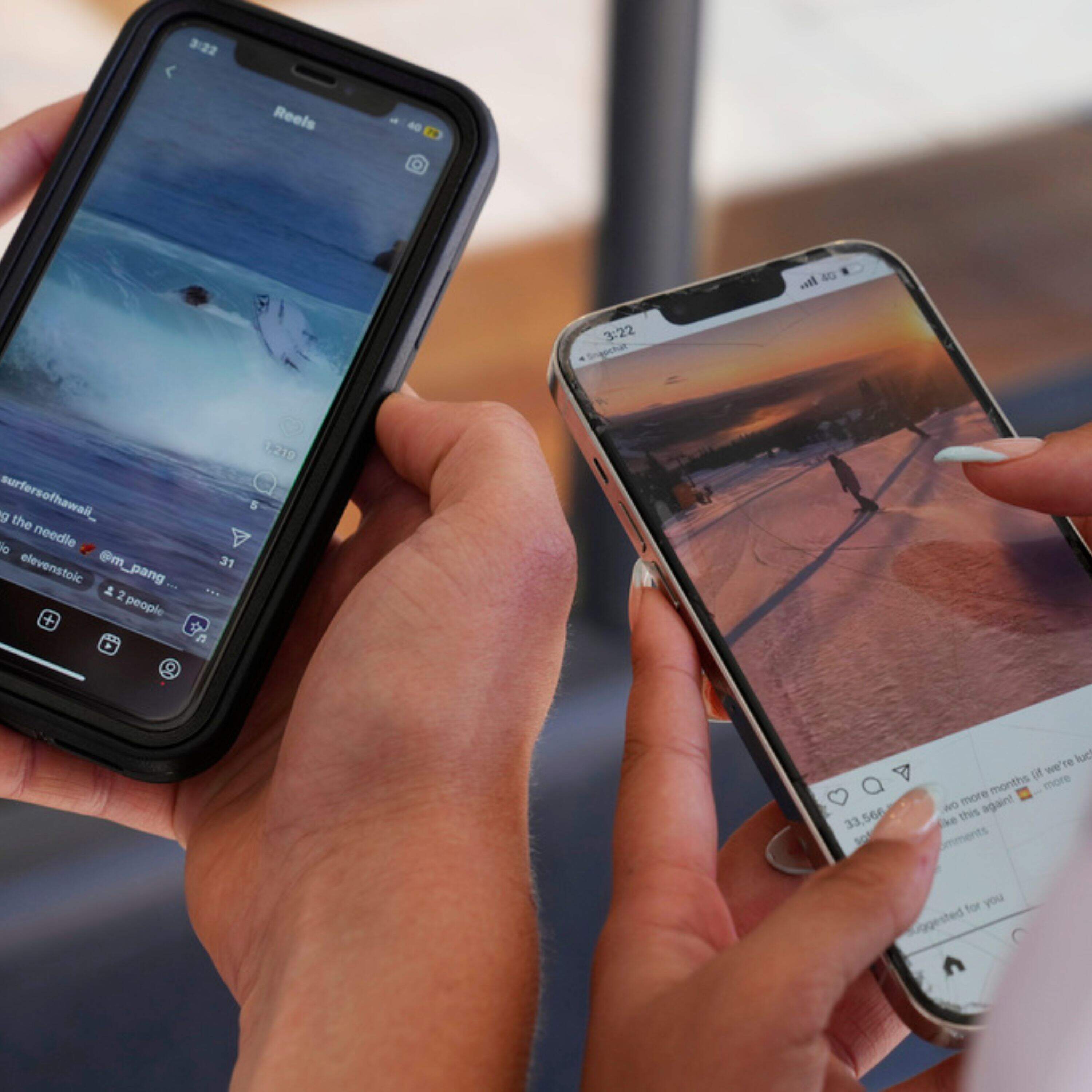
Endless Thread
Socials for Sale
00:31:28
This week, hosts Amory and Ben take a chilling look at how our social media is used for surveillance with Dell Cameron, an investigative reporter with WIRED covering privacy and national security.
Loading summary
Transcript141 lines
- [00:00]
Podcast Host / Narrator
Support for this podcast comes from Is Business Broken, a podcast from the Merotra Institute at Bu Questrom School of Business. A recent episode recorded at the WBUR Festival, asks what transforms an idea into a technology, a company, a job, or even an entire economy. Stick around until the end of this podcast to preview the episode.
- [00:25]
Dr. Lisa / Science Advocate
Good sleep is everything. That's why Olli's Science Back support is
- [00:29]
Amari Sivertson
made with a blend of melatonin and
- [00:30]
Del Cameron
L theanine for both Kidd grown ups. So when your mind won't switch off, you've got something that can help your
- [00:37]
Dr. Lisa / Science Advocate
racing thoughts and restless nights won't stand a chance. Find Ollie Sleep Solutions for the whole family@ollie.com that's o l l y.com
- [00:49]
Amari Sivertson
WBUR podcasts. It was like something out of a spy thriller. An intrepid reporter got his hands on a government file.
- [01:07]
Ben Brock Johnson
You might be picturing vanilla manila folder, classified, splashed across in a red stamp,
- [01:13]
Amari Sivertson
all caps, and you probably wouldn't be far off. The file did look particularly Hollywood esque, at least to the reporter who saw it.
- [01:23]
Del Cameron
It has like, the person's name and residency and occupation. It's just, it's done up in a way that makes it seem like this person is a criminal and like they are gathering, you know, tons of intelligence on them.
- [01:38]
Ben Brock Johnson
That's Del Cameron. He's an investigative reporter with Wired covering privacy and national security. And he's telling us about the time he got his eyes on a document out of Washington state.
- [01:50]
Amari Sivertson
The document was created ahead of a no Kings rally there last year.
- [01:55]
Del Cameron
This included something that they called, quote unquote, a threat escalator section. And it was built entirely around a single person who was a Harvard grad student living in Seattle. The document is sourced entirely to a TikTok video that she posted in the days before the event. And she's focused on kind of warning her viewers, you know, her audience, about impending ICE raids in the Yakima Valley. And she's saying, ice, these ICE agents are domestic terrorists and should be dealt with like domestic terrorists. So that intrigued the police, and they circulated a document to at least, you know, dozens of officers, probably hundreds in the area.
- [02:47]
Amari Sivertson
Dell got this particular file from Property of the People, a nonprofit dedicated to government transparency. It's what's known in law enforcement circles as a threat bulletin. And it had a lot of personal information about this Harvard graduate student.
- [03:03]
Del Cameron
That page that they circulated, you know, included her name, her social media handle, where they believed she lived, you know, occupation. They lifted photographs of her from social media and from the Video. And then interestingly, it kind of, it just characterizes her speech as spreading extremist ideology, attempting a call to action against a government entity and invoking fear and panic. And then it also, you know, it ultimately concedes that this person is not even likely to attend the protest itself itself.
- [03:41]
Ben Brock Johnson
And there was something else noteworthy about the file.
- [03:45]
Del Cameron
The word threat is misspelled on this document. It's. It looks like someone attempted to put this thing together to make it look really professional, but in the end failed. You know, to some degree.
- [03:57]
Amari Sivertson
Dell told us it's not unusual for the quality of these threat bulletins to be quite poor. The information in them, mined almost exclusively from social media, can also be flimsy. Still, they're circulated to officials. And the consequences of ending up in a document like this can be pretty severe.
- [04:19]
Del Cameron
It could put you on the federal government's radar, or it could put you on the radar of your local police department. That is something that could potentially affect you if they add a little flag next to your name in some database or something. Maybe you get pulled over for a traffic stop and you, you may not realize what's going on, but the officer is, you know, not treating you very well.
- [04:43]
Ben Brock Johnson
So when Dell saw this dossier like document about a private citizen built on a single social media post, it sent a tingle up his spine.
- [04:53]
Del Cameron
That was probably the most insane instance of something like that I'd seen.
- [04:59]
Ben Brock Johnson
Dell has seen some pretty insane things on his beat as a reporter. He spends a lot of time parsing out the ways the government is watching us and gobbling up our social media data.
- [05:11]
Amari Sivertson
Most of us know that nothing we say online is really private. Still, the Internet is a big place. There are millions of posts every day across TikTok X, Facebook, BlueSky, Threads, etc. Etc. It's easy to feel like no one's really watching you specifically, unless you have a habit of going viral.
- [05:31]
Ben Brock Johnson
Of course, most of us do not. Right, Right. We're just yelling into the social media void. Well, Dell has some bad news for us.
- [05:42]
Del Cameron
I don't want to tell anyone not to be on social media, but if you're using social media, you should assume that. You should assume that the government can read that information at least.
- [05:53]
Amari Sivertson
It gets worse. It's not just that some government agent is scrolling through your feed. It's that all that data, your profile, mine, everyone's, has been scooped up and put on the marketplace as a product the government can buy in bulk and use for its own intelligence purposes.
- [06:13]
Del Cameron
The truth is that, like the way that things are being architected now is that the social media companies or data brokers are really collecting information on everyone, and then the government can come along and run queries on that information.
- [06:31]
Amari Sivertson
The Trump administration is very interested in running queries on our online data. Here's just a sample of some of the contracts Dell told us about.
- [06:40]
Del Cameron
Palantir sits kind of at the center of all of this. There's a company called Zingle Labs. They supposedly process like 8 billion social media posts a day. Anytime you've posted a picture of your face online, there's companies like Clearview AI that are scraping those. They just got a $9.2 million ICE contract in September, and, boy, is that
- [07:05]
Ben Brock Johnson
just the tip of the surveillance iceberg. I'm Ben. Stop surveilling my data. Brock Johnson.
- [07:11]
Amari Sivertson
I'm Amari. Social media's a slippery slope, Sivertson.
- [07:15]
Ben Brock Johnson
And you're listening to Endless Thread coming
- [07:18]
Amari Sivertson
to you from wbur, Boston's npr today's
- [07:21]
Ben Brock Johnson
episode, socials for Sale. All right, Amrie, we know the government, more specifically the Department of Homeland Security and ICE is watching and lurking on our social media data.
- [07:40]
Amari Sivertson
The question is, what for?
- [07:43]
Del Cameron
I mean, I think the mission is to deport as many brown people out of the country as possible. You have, like, ramped up quotas over at DHS. They're trying to, like, kick 3,000 people out of the country a day or arrest them and put them in these camps. So it's used towards that. I mean, it's also used to silence dissent. I mean, they're using it against protesters. That's very clear. And they are using it as well for its chilling effect.
- [08:14]
Amari Sivertson
Is the purpose to build this massively comprehensive database that just has you put in a name and it can tell you absolutely everything about a person. Or are they looking for certain key words, key sentiments, key threats?
- [08:34]
Del Cameron
You can use it both ways. You can use a keyword search, maybe to pull a list of people out of this database, or you can have an individual that you want to investigate and put their name into it and pull out a ton of information about them.
- [08:52]
Ben Brock Johnson
Put simply, the government can use our social media data to create lists of people to target, or it can build dossiers on people they're already targeting.
- [09:01]
Amari Sivertson
When it comes to identifying targets, one of the key tools DHS is using is facial recognition.
- [09:09]
Del Cameron
If you are making comments online about the government that they don't like, which can be very benign, they may try to identify you. They have this face print. They know from that face print, like which protest you were at, maybe like what time, location, things like that. They can put a name to a face and then they can move you into a derogatory, what they call, like a derogatory list, which is a watch list of people who. They have. No, they don't necessarily have any evidence that you've committed any crime. But, you know, it's a secret watch list of the kind that the FBI has also run in the past.
- [09:47]
Ben Brock Johnson
So what kind of benign comment online might get you flagged? You know, just. Just asking for a friend.
- [09:54]
Del Cameron
The example that stands out most right now is anyone who is monitoring ICE activities. Like ICE is here. This is where they are. There was a lot of websites that people were circulating that were meant to track ICE activity. There were apps, websites that had maps on them. This is where ICE activity was happening. That kind of stuff drove them absolutely crazy. And they were not willing to interpret it as citizens observing law enforcement activity legally.
- [10:37]
Amari Sivertson
So the government can watch you, but they don't like when you're watching them. But let's go back to that facial recognition piece that Dell was talking about, because according to his reporting, ICE agents out in the field will take pictures of people and then they can see in real time if someone's face brings up a match in a database.
- [11:04]
Ben Brock Johnson
But there's a big problem with that. This isn't like running someone's fingerprints or driver's license through a database to see if they have a warrant or something. Dell says the facial recognition technology being used isn't entirely accurate, and the government knows it's not accurate, but it's getting used anyway.
- [11:25]
Del Cameron
There's a high possibility that when they take a picture of someone, they're not going to get the right result. And what we've seen in litigation and court filings and testimony over and over is that it doesn't really matter. Like, they run the face once, they'll get no match, they'll try to run it again, they may get no match, and then they just arrest the person anyway.
- [11:47]
Amari Sivertson
DHS told NPR that the app they're using for these facial scans does not rely on open source media or social media. But that doesn't mean they're not using that data elsewhere.
- [11:59]
Ben Brock Johnson
This February, Dell reported on a contract between U.S. customs and Border Protection and a company called Clearview AI that would give officials access to billions of images scraped from the Internet, including faces, for the tidy sum of $225,000 a year.
- [12:18]
Amari Sivertson
Which doesn't sound like that much money, actually.
- [12:21]
Ben Brock Johnson
Yeah, I mean, I basically pay that for my television subscriptions at this point.
- [12:28]
Amari Sivertson
So we know the government is interested in facial recognition as part of its anti immigration agenda, even when that tech is less than perfect. But there's more. They're interested in our location data too.
- [12:43]
Ben Brock Johnson
If the government can figure out where people are, it can use that information to better target them in immigration raids.
- [12:50]
Amari Sivertson
And they're going to use third party contract analysts to do that work for them. Last year, Dell reported On Ice's plans to station nearly 30 private analysts at agency facilities in Vermont and Southern California.
- [13:04]
Ben Brock Johnson
Those analysts would be tasked with one to scour our social media feeds and drum up new targets for immigration officials. Relying heavily on artificial intelligence and commercial databases to get the job done.
- [13:18]
Amari Sivertson
The analysts are digging for posts where people might mention their location, like, hey, I'm at a party at this person's house, or just grabbing a sweet treat from this coffee shop I love.
- [13:30]
Del Cameron
They're looking through your post, seeing what neighborhoods you're in. They, they build social maps so you'll have a post from someone that was at a barbecue with someone else, and, you know, they try to collate that information to figure out, you know, where this person they're hunting is likely to be, who their friends are, who their family is. That way that they can narrow down the scope of, like, what physical geographical location this person is likely to be in.
- [13:59]
Ben Brock Johnson
Once the analysts have enough information about someone's location, Dell says they'll put a targeting package together and send it to an enforcement branch who can then carry out the raid.
- [14:10]
Amari Sivertson
Even if you're chronically offline and you and your friends don't generally post about your location, that location data still isn't safe from the government because it's for sale.
- [14:25]
Ben Brock Johnson
Lots of apps on your phone collect location data, like the weather app. That data is usually used to advertise something to you, but the government can buy it too. And, well, it is basically they're buying
- [14:39]
Del Cameron
your location data from a data broker who is getting that location data from potentially your cell phone company is selling it, or apps that you're using on your phone are collecting your location data and selling it to these data brokers. And then ICE is buying it. So they're buying a ton of that every day.
- [14:59]
Amari Sivertson
Technically, your location data shouldn't be easily available to the government. Thanks to a Supreme court case from 2018, Carpenter v. United States.
- [15:09]
Del Cameron
The Supreme Court ruled basically that location data was sensitive enough that it required a warrant. The way that the government gets around that now is by, instead of demanding it with a subpoena they just pay the company to give them that data.
- [15:25]
Ben Brock Johnson
If you can't do it yourself, buy it from someone who can.
- [15:29]
Amari Sivertson
The government is still using subpoenas to try to get other information it's interested in. Like, for example, the email addresses and phone numbers of social media accounts criticizing ice. That's according to reporting from the New York Times from this February.
- [15:45]
Ben Brock Johnson
Social media companies don't always have to turn over the information, not right away at least, except.
- [15:52]
Del Cameron
So there's a lot of cooperation with industry to hand over this, especially if it's financially lucrative for them to do that. The other kind of aspect of it is that as social media was really becoming a thing and the Internet was kind of truly exploding through the 2010s and into the last decade, these companies like Facebook and Google, Twitter, would start getting flooded. I mean, they were just getting flooded with subpoenas and requests. And at some point it just became advantageous for them to set up their own offices and kind of begin cooperating with law enforcement to help walk them through the process, maybe help them tell them exactly where they, what they need to fill in to get the subpoena to go through.
- [16:41]
Ben Brock Johnson
Something about that really, like, bothers me.
- [16:44]
Del Cameron
It should.
- [16:45]
Ben Brock Johnson
It should, right?
- [16:46]
Del Cameron
Like Twitter used to fight subpoenas. Like before it was owned by Elon Musk. You know, that's Twitter deciding that it wants to spend money defending its users rather than comply with the request. So it's really up to the companies now. I mean, do you think Elon Musk is going to fight those subpoenas? The thing you kind of have to think about now is that most or nearly all of the major social media companies are also defense contractors or in bed in some way with the intelligence community.
- [17:21]
Amari Sivertson
We asked Dell for some examples of how social media companies are intertwined with the government. Like X Now owned by Xai, which is owned by SpaceX, a major government contractor.
- [17:35]
Ben Brock Johnson
And then there's Meta, which owns Instagram, Facebook, threads and WhatsApp. By its own admission, Meta has made its open source AI available for US Government agencies, including the military and the intelligence community to use.
- [17:49]
Amari Sivertson
And don't forget LinkedIn, owned by Microsoft, another defense contractor. Microsoft has a whole page on its website dedicated to how their services can support US Intelligence and defense.
- [18:02]
Ben Brock Johnson
Man, it is getting a little cozy in this bed. Amerie, Social media companies and the intelligence community all rolling around together. How is the. Is this a twin bed? Is it a queen? Is it a king? You know, I feel like everybody's poly, but are we actually conscious that we're poly in this bed right now, I
- [18:23]
Amari Sivertson
do not know, but I think it might be time to change the sheets. You know what I'm saying?
- [18:28]
Ben Brock Johnson
Yeah, it's getting, it's getting funky in a minute. Some of the consequences of this kind of surveillance and whether there's any remaining protections on our data in this brave new world.
- [19:00]
Podcast Host / Narrator
Support for this podcast comes from Is Business Broken? A podcast from the Mehrotra Institute at Bu Questrom School of Business. The breakthroughs that shape our future often start with years of fundamental research.
- [19:13]
Dr. Lisa / Science Advocate
We have to advocate for people continuing to believe that science matters, research matters.
- [19:20]
Podcast Host / Narrator
Follow Is Business Broken wherever you get your podcasts and stick around until the end of this podcast to preview a recent episode in which host Kurt Nickish talks with Boston University President Dr. Melissa Gilliam about the value of fundamental research. This summer, say I do.
- [19:40]
Del Cameron
I am marrying a stranger like never before.
- [19:43]
Amari Sivertson
Am I crazy?
- [19:44]
Podcast Host / Narrator
It's a whole new Married at First Sight on Peacock. Thank God I woke up in love with new experts.
- [19:49]
Dr. Lisa / Science Advocate
My name is Dr. Lisa.
- [19:51]
Del Cameron
My name is Paul Brunson.
- [19:52]
Amari Sivertson
More couples. This could be the start of a
- [19:54]
Podcast Host / Narrator
very successful marriage and more surprises.
- [19:57]
Amari Sivertson
Or maybe not Everything is just not enough.
- [20:00]
Del Cameron
You're a little bit crazy.
- [20:01]
Amari Sivertson
I don't know what's gonna happen.
- [20:03]
Del Cameron
I want my fairytale ending.
- [20:05]
Podcast Host / Narrator
Married at first sight streaming July 12th only on Peacock.
- [20:09]
Amari Sivertson
Dean Russell here, senior producer for WBUR podcasts. Scientist Carl Sagan once said finding truth demands the rigor of science and the the freedom of imagination. WBUR's New Kids podcast has both. The Midnight Rebellion uses the science of climate change to imagine a future gone wrong, and you need to set it right. All episodes are out now. The Midnight Rebellion. Listen@wbur.org midnight or wherever you get your podcasts. You know, Ben, sometimes when people talk about this kind of surveillance, there's this undercurrent of like, oh, well, the government says it's going after criminals, and I'm not a criminal and I'm a U.S. citizen. I don't have anything to hide, so it's fine.
- [20:56]
Ben Brock Johnson
But when the slope gets a little slippery for some people, it eventually gets real slippery for all people.
- [21:03]
Del Cameron
If you want to see a slippery slope. Last April, social media became a negative factor in the processing of immigration services. Social media became a negative factor in discretionary adjudication for anti Semitism. So that's all tied back into the, you know, the, the protests of the war in Gaza. And a few months later in August, they added anti Americanism, which is an now it's, that's an overwhelmingly negative factor for immigration services is processing.
- [21:42]
Amari Sivertson
And while the examples that privacy journalist Del Cameron is talking about there involve how the government is treating immigrants who are already in the country, he says the overall approach here reminds him of another turbulent time in American history.
- [21:57]
Del Cameron
You know, that really borrows from the Cold War era bar on communists and anarchists. There's a lot, there's a lot of parallels between kind of the McCarthy era, the use of red squads. What they didn't have in that era, you know, was the microchip. They had index cards that filled hundreds of cabinets where they would keep on people. They don't even need to build dossiers on people anymore, which is what they were doing in the 90s. And they have access to such vast databases all over that have all this information and collect it in one place that they can kind of hit a button and create a dossier on you at any time.
- [22:39]
Ben Brock Johnson
It's like more powerful and less accurate.
- [22:43]
Del Cameron
It's less accurate and there's no way for you to really contest what it says or possibly even know that it exists. But you can't contest the inaccurate information in the dossier that the government is using to make decisions about how it's going to treat you.
- [23:02]
Amari Sivertson
When we think about right now, what can't ICE do, Yeah, I mean, they
- [23:08]
Del Cameron
can do almost everything. The things that are really protected are the contents of your messages, texts and conversations. That receives the most protection, and it receives even more protection if it's in transit. If they're trying to intercept that information live, they're trying to wiretap you. Everything else can be bought and sold, basically.
- [23:34]
Amari Sivertson
So your text messages and DMS probably safe. Anything else you post, probably not. So there were some people who were in charge of making sure the government was using these tools in a way that didn't, didn't violate privacy.
- [23:52]
Ben Brock Johnson
Small itty bitty problem, though.
- [23:54]
Del Cameron
One of the things kind of you have to recall is that like in March 2025, that's when the reduction in force notices went out that gutted, for instance, the Office of Civil Rights and Civil Liberties, which was the body that handled complaints about facial recognition in particular, and social media monitoring abuses. There were also significant changes to the privacy offices inside of dhs.
- [24:26]
Ben Brock Johnson
Amory, I think anybody who's reasonably aware of everything that has happened since Edward Snowden assumes that there's a certain amount of just broad surveillance happening of Americans and people living in America, whatever their citizenship status is, all the time. Right. But we're Entering into this world where the government is outsourcing a ton of that work to algorithms and private companies, and the work is both bigger and broader than it's ever been. We're outsourcing it outside of the government, we're outsourcing it outside of humans. But the implications feel very dystopian and also very personal. They feel like the impact of this stuff is extremely personal and potentially traumatic. And that worries me.
- [25:22]
Amari Sivertson
Yeah, I mean, a lot of what Del is reporting on feels like the fine print of being an American in 2026. And a lot of people have been feeling the sort of like fine print vibe for a long time. You know, being an American is not the same from person to person. But now we're becoming more aware, at least I hope we're becoming more aware of the ways in which we're being surveilled that we didn't even know was legal. And it feels like the rules are suddenly changing right under our feet.
- [25:57]
Ben Brock Johnson
We're basically weaponizing data in new ways and we're doing it with way less oversight from government watchdogs that are supposed to protect us from government overreach.
- [26:12]
Amari Sivertson
But there are some people still watching. There's Del, who spends every day swimming in this stuff, which we realized is actually kind of a vulnerable thing. Yeah. Do you worry for yourself at all covering, covering this particular issue?
- [26:30]
Del Cameron
You know, I, I, I don't want to be vain and think like the government is spying on me specifically. Like, oh man, they must have read that thing I wrote last week. I bet they're really mad and they're listening to my phone calls. But, you know, they don't necessarily have to. I mean, the targeting doesn't have to be that specific. I think that they can. The technology, I mean, AI in particular, the technology is there now where it doesn't necessarily require a lot of people sitting around thinking about you. They can make a list of journalists and run that through a system and pull out whatever information they want. They're not supposed to. There's supposed to be someone there that says, no, you can't do that. But they mostly fired all of those people. So, yeah, I mean, I definitely worry about it. And certainly in every case, if I'm dealing with like a source, like we're using the utmost protection possible.
- [27:31]
Ben Brock Johnson
What does that look like? Is it like signal chats and whatnot?
- [27:37]
Del Cameron
I mean, yeah, certainly Signal is kind of the bar for encrypted communications. It's what I think most journalists use. There are other tools, but end to end Encryption is a must. And then, I mean, but in some cases it looks like, you know, getting on a plane and flying and sitting in a cafe and meeting someone.
- [27:57]
Ben Brock Johnson
Yep.
- [27:57]
Del Cameron
Which is very, you know, it sounds a little James Bond, but if you have a source and they're, you know, scared and they have a right to be scared, it can look like that.
- [28:08]
Ben Brock Johnson
Dell says if we want things to get better, maybe they have to get worse.
- [28:14]
Del Cameron
First you have to ask yourself whether you want your children growing up in a neighborhood where every time they go outside, they feel like they're being photographed or even recorded. I don't think that that's, like, the place that people want to live. I think we're trapped. I don't. You know, people use the, like, 1984 metaphor a lot, but it doesn't necessarily apply because to some degree, we are doing this to ourselves. We're buying this technology. We're normalizing it every day. In order to participate in society, you now have to make yourself vulnerable to the state surveillance. I think the rampant abuse of it that we're seeing may accelerate the amount of pushback to it that could. It could, could result now in some laws.
- [29:11]
Ben Brock Johnson
So what do you think, Amory? More laws? Should we have that?
- [29:15]
Amari Sivertson
Oh, I think. I think that's a piece of the puzzle of what maybe needs to happen here, because I don't have much faith that tech companies are going to regulate themselves either. No, but.
- [29:27]
Ben Brock Johnson
No, no, I don't.
- [29:30]
Amari Sivertson
But I guess my silver lining is, is Dell's reporting, knowing that there is someone out there talking about what's happening even when government oversight itself is falling short.
- [29:42]
Ben Brock Johnson
Major headline journalist thinks that journalists are important.
- [29:48]
Del Cameron
Yeah, I do.
- [29:52]
Ben Brock Johnson
I do, too. I do, too. The point is well taken that our world is kind of like built around this stuff at this point in a really complicated way. So you can't just like, necessarily. Well, you can technically go and live in the woods and never, never engage with it, but, you know, eventually it's possible also that people will just opt out of a lot of this stuff and not check that I agree box, not sign the eula, the End User License Agreement. And, you know, we have that individual power to not sign it, and we have collective power and a bunch of us not signing it it and not signing up for this stuff in a way that sort of changes the economy of how this stuff works and removes it as a tool that's useful for the government.
- [30:39]
Amari Sivertson
Yeah, yeah, it'd be hard for me to opt out of the weather app, but less hard for me to opt out of social media. It is possible. Just saying. And who knows, maybe eventually just the awareness of the ways in which we are being surveilled could translate into some real changes of behavior and real change overall. Or at least something that makes our privacy seem less like fine print and more like something that can't be negotiated or sold.
- [31:11]
Ben Brock Johnson
Yeah, I'm looking forward to Signal releasing its weather app. Can't wait.
- [31:18]
Amari Sivertson
We're waiting. One more note before we go. We asked the Department of Homeland Security a bunch of questions, including how the government uses social media data, how agents use facial recognition technology in the field, and we put the criticism to them that this enforcement is having a chilling effect on dissent.
- [31:43]
Ben Brock Johnson
While the agency didn't answer any of those questions directly, a spokesperson did write back to say DHS wouldn't, quote, confirm or deny law enforcement capabilities or methods, unquote adding quote DHS law enforcement methods abide by the U.S. constitution, including the Fourth Amendment.
- [32:05]
Amari Sivertson
And speaking of the Fourth Amendment, the Supreme Court ruled in late June that people have a reasonable expectation of privacy when it comes to smartphone location data. The opinion came in a case about geo fencing when law enforcement asks tech companies for information about all the people whose phones were near a particular crime scene. That case was kicked back to a lower court. And you better believe we are going to be watching where that goes, so stay tuned. Endless Threat is a production of WBUR in Boston. This episode was written and produced by Kalyani Saxena. It was co hosted by me, Amari
- [32:45]
Ben Brock Johnson
Sivertson and me, Ben Brock Johnson. It was edited by Dave Shaw and Meg Kramer, mix and sound design by Marquise Neil.
- [32:53]
Amari Sivertson
The rest of our team is Dean Russell, Emily Jankowski, Grace Tatter, our Production Manager, Paul Vikas, and Managing producer Samita Joshi.
- [33:00]
Ben Brock Johnson
Endless Thread is a show about the blurred lines between using the weather app for forecasts and using the weather app for surveillance.
- [33:08]
Amari Sivertson
If you have an untold history, an unsolved mystery, or some other wild story from the Internet that you want us to tell, hit us up endlessthreadbur.org and we figured we should also remind you if you have a story that you want to share more discreetly, we are on Signal. That number is 646-456-9095. Again, 646456, 9095. You can also find that in our show Notes.
- [33:48]
Ben Brock Johnson
Foreign.
- [33:57]
Podcast Host / Narrator
Support for this podcast comes from Is Business Broken? A podcast from the Mehrotra Institute at BU Questrom School of Business. Follow Is Business Broken wherever you get your podcasts and Listen on for a preview of a recent episode in which Boston University President Dr. Melissa Gilliam discusses why solving society's biggest challenges requires ideas from many disciplines working together.
- [34:22]
Dr. Lisa / Science Advocate
So in universities we run the gamut. We go from cells to society and our types of research that sets us up for entrepreneurship, innovation, company formation. It's very tempting to say what's the return on investment? I want to see these translate quickly to society. But what you have to remember is that that there's often a very long lead time to getting to those discoveries and there's a lot of serendipity. So in universities we focus on something called curiosity driven research. It's a place where we allow people to pursue things that matter, even if you cannot figure out what the application is. What we're now doing at our institution is we're focusing on something called convergent research. So you use the example of photonics. BU created something called neurophotonics, the combination of the study of light, but also thinking about how the study of light contributes to brain health. You created something called synthetic biology, how the insights of engineering can be used to advance biological processes. So convergence is this idea of bringing lots of fields together.
- [35:32]
Podcast Host / Narrator
Find the full episode by searching for Is Business Broken wherever you get your podcasts and learn more about the Merotra Institute for Business Markets and Society at ibms bu Edu.
- [35:55]
Del Cameron
Hey, it's Ryan Reynolds here for Mint Mobile. Now I was looking for fun ways to tell you that Mint's offer of unlimited Premium Wireless for $15 a month is back.
- [36:04]
Amari Sivertson
So I thought it would be fun
- [36:05]
Del Cameron
if we made $15 bills, but it turns out that's very illegal. So there goes my big idea for the commercial. Give it a try@mintmobile.com Switch upfront payment
- [36:17]
Amari Sivertson
of 45 for three months, $90 for six months or $180 for a 12 month plan. Required $15 per month equivalent taxes and fees extra initial plan term only greater than 50 gigabytes. Me slow when network is busy. See terms Stitch Fix Stop shopping. Get styled a plus on the outfit. Ms. Turner, you are about to slay parent teacher conferences.
- [36:33]
Ben Brock Johnson
Oh these just the most perfect fitting jeans my stylist sent me.
- [36:36]
Amari Sivertson
Oh hello you who didn't set one
- [36:39]
Del Cameron
foot in a mall and still looks amazing.
- [36:42]
Amari Sivertson
Just share your size, style and budget and your stylist sends personalized looks right to your door. Stitch Fix get started today@stitch fix.com to my stylist this look is dedicated to you. Thank you, thank you.