← Endocrine News Podcast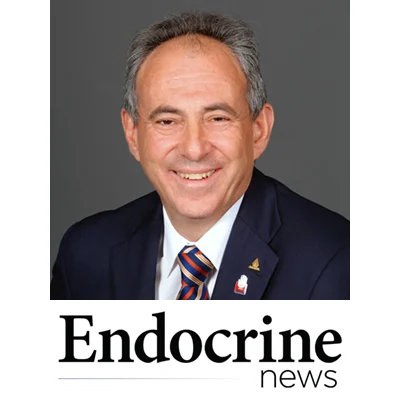
Loading summary
Transcript24 lines
- [00:00]
A
Hello, I'm Aaron Lohr, and this is the Endocrine News Podcast. Recently, the Endocrine society held its 12th annual Type 1 Diabetes Fellows Series Program. This wonderful program combines comprehensive education on type 1 diabetes with career development, opportunities to build knowledge, practical skills, and a lasting network of colleagues. We're going to discuss today one of the fascinating talks given at the program. But first let me say that this year's Type 1 Diabetes Fellows program and this episode were made possible by the support of Abbott Diabetes Care, Secure, Dexcom, Insulet, jdrf, Lilly usa, Mankind, Medtronic, Novo, Nordisk, and Vertex. Thank you. Today's guest is Dr. Desmond Schatz, professor of Pediatrics and Medical Director at the Diabetes Institute at the University of Florida. Dr. Schatz gave a talk at the Type 1 Diabetes Fellows Series program entitled Immunotherapies for Type 1 Need for Early Detection and Screening. Thank you for being here today, Dr. Schatz.
- [01:26]
B
Well, thank you very much, Aaron. It's such a pleasure to be here. And it was such a great honor to give a talk to the fellows who are really the next generation of caregivers, of physicians, of physician scientists who really working every day to improve their lives are patients with diabetes, in this case, type 1 diabetes. And hopefully talk such as this can inspire them and others to really become involved in our efforts again to prevent and cure type 1 diabetes.
- [02:00]
A
Thank you for that. So, yes, you're all going to hear a lot about the type 1 diabetes fellow series Program through today's talk. And if you're curious about learning more about that, we're going to include a link to more information in today's episode description, and we invite you to check that out. And part of your talk, Dr. Schatz at that program, was about prevention. Can type 1 diabetes be prevented? And what are the challenges there?
- [02:24]
B
Right now, we cannot prevent type 1 diabetes, and we have to sort of ask the question, you know, why is that? Is it that we're not smart enough? Is it that we're not working hard enough? How is it that we've never been able to, at this point in time, prevent the disease? And I think that there are several reasons, certainly for this. I think that we do not know the precise mechanisms to type 1 diabetes, and perhaps we can elaborate a little bit on that a little bit later, that we don't understand the complexity of type 1 diabetes, the heterogeneity of the disease, the fact that like every other autoimmune disease, it relapses and it remits and how do we define those kinds of things? You know, right now, we don't have enough informative biomarkers. And yes, we know that the cells in the pancreas, those that make insulin, are destroyed, but we really don't know enough about that process, that pancreatic pathology. And what we have access to is the peripheral blood. And the peripheral blood may not necessarily reflect what's happening in the pancreas. And in the past, we've also relied on animal models, but animal models themselves may not necessarily be indicative of human disease. When we have done human studies, there are challenges in enrollment to really identify patients prior to the development of type 1 diabetes. Our approaches have been always one of safety, and we've treated what do I think is just the immune response with really too few combinations. And really, up until now, unlike type 2 diabetes, where there are so many more patients, you know, 90% of all diabetes is type 2 diabetes, with just 10% being type 1. There's been perhaps limited big pharma interest really until now. And I think the movement is certainly gaining strength. And more and more people are getting involved in trying to understand what mechanisms may lead to the disease and to institute therapies, certainly early enough in the disease process.
- [04:44]
A
In your talk, you ask, is type 1 diabetes a primary autoimmune disease? Why is that an important question? And what's the answer?
- [04:55]
B
You know, I don't know the answer to whether it's a primary autoimmune disease. I perhaps put it into a slightly simpler way by saying, is this a suicide of the pancreas, where your own body's white blood cells, in this case T lymphocytes, attack and kill the insulin producing cells? Is this just due to the fact that you have bad genes and then you may encounter something in the environment and that switches on? Alternatively, is it a homicide where you actually have something that has now gone in, causing the beta cell to be destroyed, and then as a result, you see these cells that seemingly are there to clean up the process. So are they actually causing the disease or are they a result of the disease? You know, we like to think about autoimmunity as a breakdown intolerance, and that's a disorder, if you will, of failed immunoregulation. But again, we don't have enough markers really in the blood that are going to tell us, is this truly dysregulation? Is this truly a breakdown of tolerance? And what is the precise mechanism? Is it a suicide or a homicide? And I think the fact that we don't Know that mechanism precisely has led us to do several studies aimed at and obviously interdicting the disease with the hope that ultimately we'll eventually cure it.
- [06:25]
A
And we're going to talk about that hope a little bit later on. But I want to talk about one thing you mentioned in your talk, which was disease modifying therapy. Can you tell us more about that and why it's important when talking about type 1 diabetes?
- [06:39]
B
Yes. So we think right now about the current treatment and what is the perhaps up to date treatment? And that is, you know, we've now got continuous glucose monitoring, we've got hybrid closed loop systems, we've got multiple daily insulin injections, we've got target blood glucose targets in range, we've got target hemoglobin A1C. But none of those therapies, be it insulin, insulin is not a cure. These hybrid close list syps, if you will, are underway to an artificial pancreas. But we know that none of those interventions have led to the preservation of beta cell secretion, which we look at by C peptide. So disease modifying therapies, if you will, are therapies aimed at intervening in the disease process itself. We don't know the precise mechanisms, but we have had a wide variety of therapies, both antigen specific as well as non antigen specific, targeting the immune system. And the immune system would be B cells, really, T cells, various cytokine or JAK2 directed therapies, calcium channel blockers, tyrosine kinase directed therapies, all aimed at preserving the ability of those pancreatic beta cells to make insulin, which we measure in the blood by C peptide, which is the joining peptide, if you will, between the A chains and the B chains of insulin. When you give insulin by injection, it lacks the C peptide. So the C peptide, if you will, is an indicator, a marker of the ability of the pancreas to maintain endogenous insulin production.
- [08:36]
A
And what are current clinical trials telling us about immunotherapies for type 1 diabetes?
- [08:43]
B
So, you know, one of the questions that you pose is why are we doing trials? You know, we think about type 1 diabetes now and type 1 diabetes can really be broken down into several stages. And these are pre type 1 diabetes, if you will, those that have a genetic predisposition or have markers as indicated in the peripheral blood by a single autoantibody. And this is what we call pre type 1. We're not sure that it's ongoing, but then you get to stage one, which is really the presence of beta cell autoimmunity, which is two or more autoantibodies but have normoglycemia and that's really pre symptomatic. And then we get to stage two where there's progression, which is two or more antibodies. But now you've lost glucose tolerance as measured, you know, in an oral glucose tolerance test or just by blood glucose levels being outside of the norm. And then there's stage three, which is symptomatic, which is early onset type 1 diabetes. Now most of the studies that have been done have been in stage three, which is symptomatic early onset type 1 diabetes. And the whole goal there in my mind is twofold. The one is to preserve C peptide in itself, which we do know from the dcct, the Diabetes Control and Complications trial in the EDEC studies leads to a reduction in complications certainly later down the road. It's also easier to manage patients who have C peptide and there's less hypoglycemia in patients who maintain C peptide. So the one thing is, is you, you do it for itself, in other words, make it easier to manage and prevent complications. The other, which I also look at, is to get a signal that if in fact you can show that we've got some preservation of the ability of the pancreas to make insulin, perhaps we can take that drug if it's been shown to be effective, we can take it much earlier in the disease to try and prevent type 1 diabetes and take it to stage 1, which is much earlier, and even stage 2, which precedes the development of stage 3, which is symptomatic type 1 diabetes.
- [11:13]
A
And what have we learned from recent antigen based and immunomodulatory prevention studies?
- [11:20]
B
You know, right now we've learned that there are several agents, both B cell directed therapies such as rituximab. We've got polyclonal T cell antibodies such as antithymocyte globulin, we've got CTLA4 immunoglobulins, TAP, elizumab, anti CD3. They've all been shown, if you will, to preserve C peptide in new onset patients at least for a year or two. And that likewise you could extend that to some calcium channel, tyrosine kinase and JAK2 directed therapies. And this includes the bandit study with a JAK2 inhibitor. It includes an anti TNF alpha golimumab as well as verapamol, also a combination of liraglutide and anti IL21. So the bottom line is that all these therapies, if you will have been shown in the short term to be effective. One study, the antithymocyte globulin, seemed to be one of the most effective in that it reduced hemoglobin A1C in these new onset patients at 2 years, in addition to preserving C peptide, which is endogenous insulin secretion. So certainly based really on those results, some therapies were used earlier in the disease. And the one that's now been approved by the FDA is tepalizumab, which is a tepalizumab prevention study. And really what it showed that compared to placebo, in which about 28% of patients really were free of type 1 diabetes at two years, about 54% of tepalizumab treated patients were free of diabetes. So the delay in the medium time to clinical diagnosis was about two years. And there have been a few patients in which the efficacy has been extended, but again, the numbers are small. So I think that we do know that intervening early on in the disease is very crucial. And we also do know that in the future we're going to have to understand which people are going to be responders and which people are not going to be responders. So we do know, for example, there were certain patients in the tapalizumab treated group that responded to the therapies and others that don't. And this, I think is not surprising given the fact that we need to move into the arena of precision therapy, of personalized medicine to sort of say, you know, just as not every patient responds to an antihypertensive or responds to, for those that have cancer, chemotherapeutic agents, we have to sort of get to the point where we get to precision medicine, that we determine who's going to be responding. So if you could decide that certain people would respond to tepalizumab, that would be great. Others would respond to antithymocyte globulin, others might respond to verapamil. I think that we need to do those studies that are going to be so exciting. And I think that the fellows who are attending this and others who are attending can really be part of, of really something exciting. You know, moving on, if we can.
- [14:53]
A
I'd like to talk a little bit more about teplizumab and why does it show some promise in delaying type 1 diabetes?
- [15:00]
B
You know, I think as I mentioned, there was a two year delay in the median time to the development of type 1 diabetes. And it's really the first drug to demonstrate preservation of beta cell function, leading to delay in the onset and really potentially in some patients, the prevention of clinical type 1 diabetes. And I think that this really is the first drug to do this. I think that there are several other drugs that are currently in development that will be used not only in stage three, but earlier on in stage two and hopefully stage one. And wouldn't it be nice if we could develop a therapy that could prevent it entirely prior to the development of this immune attack? So I think that what it's told us is that it's the first drug to demonstrate some preservation. It is certainly, if you will, setting the stage for a lot more therapies that will be developed certainly in the future. It's an exciting time. We're trying to define who those responders may be. We certainly know that patients who had the ZNT8 marker, certainly the HLA markers, some responded better than others. And we also know that if patients who had a low pro insulin to insulin ratio certainly at the time appeared to be more protected as patients progressed on to developing diabetes. So I think it's really set the stage for future therapies aimed at delaying the onset and preventing the disease.
- [16:48]
A
One of the big points that you were trying to cover in your talk was the need for early detection and screening. Why is this so important and how can it be done more effectively?
- [17:00]
B
Screening or really the identification of at risk patients is currently recommended in relatives and those that have increased risk. So those that have other autoimmune disease or that have a high potentially genetic risk score, because it's an important health problem, we need to recognize the early stages of the disease. We do have fairly valid and reliable and affordable tests. And we need to institute therapies that can make an earlier diagnosis. Because we also do know that if you are screened from studies such as Teddy, as well as the German studies and other studies, I might add the Daisy study as well, that if you can identify patients early enough, then you can decrease morbidity and even mortality of the disease at diagnosis. Because there still is a significant morbidity. 40 to 60% of patients are still diagnosed in diabetic ketoacidosis. And in diabetic ketoacidosis, there is, as I said, a morbidity and a mortality. The cost for a hospitalization for diabetic ketoacidosis averages over $30,000. And we do know that it has significant impact itself both on the disease process as well as on the patient themselves. And hospitalization certainly can be avoided by early diagnosis. The other point is, is that if we can identify patients earlier in the disease. We could potentially get those patients identified and involved in prevention trials, because without prevention, there will never be a cure. Furthermore, if they participate in studies in which they're going to develop the disease, or a family member already has the disease, we might gain insight into the etiology, into what may cause type 1 diabetes, into the mechanisms, the immunopathogenesis and the mechanisms that lead to the development of type 1 diabetes. So certainly screening of relatives should be mandatory. I would encourage every provider that sees any patient with type 1 diabetes certainly to have their patients screened. They can be screened very easily. Just go onto the web in trialnet or there's an ASK study. And we do know that simply by being involved and being screened, particularly in relatives. So relatives have a 1 in 20 risk of developing type 1 diabetes. I don't believe we're necessarily ready for the general population because the risk there is 1 in 300. And the cost benefit is certainly at this point in time, questionable. And we don't have a therapy, if you will, a magical therapy that's going to say, yes, we're going to stop the disease. Yes, we have initial therapies such as teplizumab that show incredible promise. And once we develop therapies that are really going to have an even greater impact, then I think we will get to the point where, where we'll certainly get involved with, you know, more generalized screening.
- [20:41]
A
Now, we're just about out of time, but we mentioned the word cure earlier.
- [20:45]
B
So I have to ask, do you.
- [20:47]
A
Think we'll ever have a cure for type 1 diabetes and are we on the right path?
- [20:52]
B
You know, I think there's a difference between optimism, which is always having that outlook, and hope, which is doing something that we can in order to have an effective outcome. There's excellent research, outstanding and exciting research that's being done in which investigators are using stem cells in order to produce an unlimited supply of islets. There are other novel approaches, such as gene editing approaches that are being used to restore insulin secretion. We need therapies, probably combinations of therapies that are going to be used together that just like we've done for cancer, just like we've done for AIDS and even tuberculosis, we're going to need combinations of therapies that are going to halt that process until we find out exactly what it is, halt the process leading to diabetes, and then add cells because those cells have already been eliminated. Add a never ending supply of insulin producing cells. So do I think there will be a cure? The answer is yes. Is it going to be tomorrow? The answer is no. But some of the studies that are being done and have recently been published show incredible promise.
- [22:13]
A
Well, now we are out of time. And so let me just say thank you so much, Dr. Schatz, for being with us today and sharing all this wonderful information. Thank you.
- [22:22]
B
Well, it's been an absolute pleasure and certainly thank you again for the opportunity to speak to the Endocrine Society Fellows. And again, there really is hope for all patients with type 1 diabetes.
- [22:37]
A
That's all for this episode. I hope you enjoyed hearing from Dr. Schatz about immunotherapies for type 1 diabetes and the importance of early detection and screening. If you'd like to learn more about the Type 1 Diabetes Fellows series program or taken its online on demand courses, we'll include a link in today's episode description. We'll be back soon with another fascinating dive into the world of endocrinology. Until then, thanks for listening.
- [23:09]
B
Endocrine News Podcasts are a free service of the Endocrine Society. To learn more or to become a member, visit the society's website at www.endocrine.org.