← Endocrine News Podcast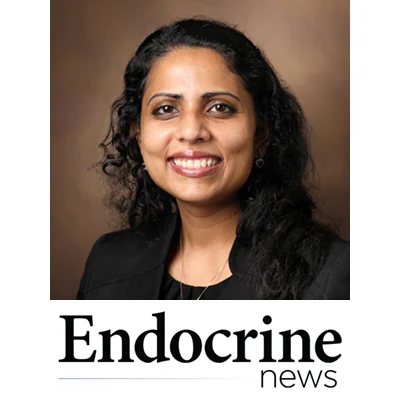
Loading summary
Transcript19 lines
- [00:01]
A
Today's episode is made possible by educational grants from Lilly and Novo Nordisk. Thank you. Also, listening to this episode can earn you 0.5 Abim Moc points and 0.5AMA PRA Category 1 credits. If you're interested in those points and credits, you'll need to take a pre test on the Endocrine Society center for Learning before listening to this episode. We'll provide a link in today's episode description after that pre test, listen to this episode on the center for Learning and then take the post test. Now on with the show. Hello, I'm Aaron Lohr and this is the Endocrine News Podcast. In recent years we've seen tremendous growth in not just the popularity of anti obesity medications, but also in the medications themselves. How effective they are, how many there are. What exactly has changed during this rapid evolution? How safe and effective are these medications today? What challenges still exist in using them? To help us answer these questions, our guest today is Dr. Geetanjali Srivasta. Dr. Srivasta is professor of Medicine, Medical Director of Vanderbilt Obesity Medicine and Founding Program Director of the Obesity Medicine Fellowship, all at Vanderbilt University Medical Center. Thank you for being here today, Dr. Srivasta.
- [01:38]
B
Thank you so much for having me today.
- [01:41]
A
So you recently presented at the Endocrine Society's Obesity Fellows Conference and the title of your presentation was Pharmacological Approaches to Treating Understanding Complicated Obesity. What do you mean by complicated obesity?
- [01:58]
B
When we think about obesity? Obesity is the root cause of disease, but it also exacerbates and causes many other complications. When patients present to us, they have myriad of other medical conditions such as cardiovascular disease, type 2 diabetes and organ damage that can lead to transplant status. For example, these patients are often sicker and they have a sicker phenotype in terms of obesity. And so this is referring to the sickest of the persons who actually have obesity and hence the complicated obesity. So this is referring to obesity causing the complications.
- [02:40]
A
And you mentioned in your presentation that obesity leads to comorbidities that affect every organ, system and medical specialty. Can you tell us more about that?
- [02:49]
B
Obesity affects us from head to toe. It affects every single organ in our bodies. We don't really think about it, but it also causes neuroinflammation, for example, and it can actually cloud our thinking, clarity of thought, executive decision making power. We're talking about organ inflammation everywhere, not only the heart, lungs, kidneys, but we're talking about neuroinflammation and meta inflammation as a whole in our body.
- [03:18]
A
Wow. What do you consider to be the biggest challenges in managing obesity and is accessibility. Is that one of those challenges?
- [03:27]
B
Initially there was significant bias and stigma in the medical and layman community and it still exists today. But we've done so much background grassroots campaigns to recognize obesity as a disease process and people are beginning to understand. So the tables are turning in that room and it was quite challenging for patients to even come up to their physician or to their provider to actually talk about their weight. Very sensitive topic. So the tides are changing in both directions. Physicians are recognizing it and providers and so are patients in terms of equity and access. I think that is a bigger challenge in today's era as the cost of obesity medications have risen significantly. However, in the next couple of years and we're already seeing changes, the cost of these medications is expected to go down as new medications enter the market and it's a more competitive landscape.
- [04:26]
A
I was really intrigued by that concept of eras because your presentation addressed the past era of anti obesity medications and compared it to today. What's changed between the eras in terms.
- [04:37]
B
Of the past era is that we were at the very beginning of sort of the obesity drug development pipeline line revolution. At that time, there were medications that we were repurposing for different indications. If you were an obesity medicine specialist then, and from what I remember, there were six of us internationally and in the United States trying to design the foundations of obesity medicine as we know today. But at that time, we were closely scrutinizing a lot of the data for, let's say, type 2 diabetes and cardiovascular disease that was coming into the play. So that actually fed forward the clinical applications in actual practice. It also informed the clinical trial design for future trials that came to market because you really do need evidence. And a typical drug development and discovery can take, you know, anywhere from 15 to 20 years. And so we've seen that revolution and changes happening as new medications have entered the market. And they have not only entered the market, but they have been able to have increased efficacy of the target. Right. Because before we were happy if we could get 5 to 7% weight loss. But now, you know, we are striving towards more than 10%, 15%, 20%. And the even more novel medications are able to surpass that and effectively almost reached 30%. And if you think about bariatric surgery, bariatric surgery is able to achieve anywhere from 25 to 35% total body weight loss. In terms of medicines, we are definitely bridging the gap to bariatric surgery.
- [06:20]
A
I love that talking about efficacy, I think a Lot of people are very concerned about that. So as of today, what does available clinical evidence tell us about the efficacy and the safety of anti obesity pharmacotherapy.
- [06:33]
B
In terms of the efficacy and safety of anti obesity medications, especially the novel game changer medications that we're talking about, the mutants that are coming out and plus some of the other agents, I think the data is very robust. These medications are effective and the fact that they can actually benefit patients with cardiovascular disease. For example, the results of the select trial show that there is a 20% major adverse cardiovascular risk reduction is significant. So these medications, especially the novel ones like semaglutide and enterzepatide, are very organ friendly and protective. They can protect the heart, they can protect the kidneys, they can protect liver. We're also getting into era of looking at liver health and Nash and cirrhosis. So a lot of these medications can definitely help healed organs that are really struggling or having dysfunctional metabolism. And so it can really benefit the overall health of the patients. I think in terms of tolerability, patients are able to tolerate well these medications, but just like with any medications, there is going to be, you know, some patients that are going to be able to tolerate this medication perfectly fine, but a small cohort of patients that will need closer monitoring and adherence and supportive and symptomatic care to guide them over the side effects that he or she may be experiencing and that we expect with any medications, regardless of the novel medications that are entering the market.
- [08:06]
A
So there's a lot of nuances depending on who the patients are, as to maybe what the strategy would be in employing some of these medications. So for those who are providers who are thinking through this, what are some key strategies for using anti obesity medications?
- [08:21]
B
In terms of key strategies for using these anti obesity medications, I think that the first thing is that you have to keep the patient first. Right. And so there's a mental algorithm that I actually go through in terms of determining what is the best medication. First of all, you're also looking at side effects and contraindications. If the patient has had a medication that he or she has trialed in the past and didn't do well, like for instance, Benjamin, and it had tachycardia and palpitations, you're not going to be prescribing that medications. Then you're looking at contraindications. If the patient has, let's say, significant gastroparesis and delayed gastric emptying, or has a significant history of chronic pancreatitis that has been adversely Affected, you may think twice about starting a GLP1 agonist. So side effect contraindications. Then you're also looking at double benefits. Right? So if a patient has, let's say migraines and headaches, I might want to complement the weight loss with, let's say topiramate because that treats the migraines and causes weight loss. Or if the patient has heart disease and type 2 diabetes, I'm looking more effectively at a GLP1 agonist. Then you also want to look at a patient preferences. Patients may not want an injectable. Patients may just want an oral or vice versa. Maybe he or she is not compliant with the oral medication and wants an injectable. I often have patients who say that their relative or family member really tried a medication and that medication worked on his brother, sister, mother, father, and therefore he or she wants the exact same medication. Patient preference feeds into it and then finally cost considerations, and that's a bigger one. Recently, some patients are able to afford cash pay. Cash pay is still expensive, but some patients are not able to pursue that option. And then we have to look at insurance coverage options and then we also look at those double benefits. Does the patient have sleep apnea? Does the patient have cardiovascular disease, type 2 diabetes? That would help with coverage of these medications. So there is a mental algorithm that we go through for each patient and I think that that's the best way to strategize. And we always start at the lowest effective dose. We are never starting at the highest dose. It's always at the lowest effective dose. And that's true for any medications that are started on a patient.
- [10:39]
A
We already talked about this a little bit in just your response there. But given that there are a lot of different anti obesity medications available, what's your best guidance regarding which medication to use?
- [10:50]
B
The best medication to use is going to be the one that actually is the most efficacious. So we are looking at efficacy of these medications and then again we're looking at that mental algorithm that I discussed. Typically when I am teaching my residents and fellows and that question comes up like, how do you decide which medication to use? So let's start with your first line and your first line is always going to be your medications that are the most potent in terms of efficacy in weight loss outcomes. So in today's era we have the GLP1 agonist or the combination the GLPGIP. And those are very powerful medications and they trump some of the other medications that we have. But we shouldn't necessarily negate the other medications and they are going to be more powerful agents. But then again, that mental algorithm that I discussed feeds into that. I mean, if you can't do your first line because of cost considerations or hindrance, what is your second line and third line and in terms of your approach to this patient?
- [11:55]
A
Thank you so much for your time today, Dr. Srivasta. I feel you covered a lot of territory. There's probably a lot more out there that we could cover. In fact, we're going to link to some of the recordings from the Obesity Fellows Conference for those who are unable to attend. So if you want to hear more, please check out that link. We'll include it in today's episode description and otherwise we're going to say thank you for being with us today, Dr. Srivasta.
- [12:16]
B
Thank you so much.
- [12:18]
A
And that's all for this episode. I hope you enjoyed hearing Dr. Srivasta talk about pharmacological approaches to treating complicated obesity. If you're interested in obesity, I invite you to join the Endocrine Society Special Interest Group on Obesity. There you can collaborate with peers on clinical care and research related to obesity obesity and the group provides education and networking activities, leadership and program development opportunities, webinars, event meetups, collaborative projects, and more. We'll include a link in today's episode description. We'll be back soon with another fascinating dive into the world of endocrinology. Until then, thanks for listening. Endocrine News Podcasts are a free service of the Endocrine Society. To learn more or to become a member, visit the society's website at www.endocrine.org.