← Endocrine News Podcast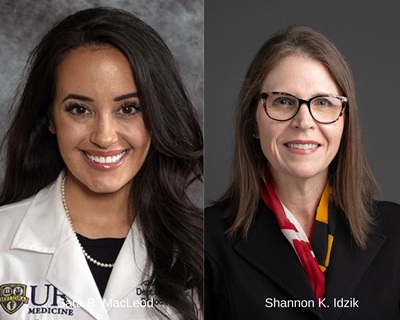
Loading summary
Transcript36 lines
- [00:01]
A
Hello, I'm Aaron Lohr and this is the Endocrine News podcast. The endocrine workforce shortage is having a tremendous impact on the lives of endocrinologists and the patients they treat. Many practices would benefit from any support that would give the endocrinologist more capacity to focus where they really need to. Could advanced practice providers like nurse practitioners and physician assistants be able to provide that support if they had a little more training? The Endocrine Society and the American association of Nurse Practitioners think so. Together they've developed a new program called Clinical Endocrinology Certificate for Advanced Practice Providers. What does a certificate represent? How does the program work? Joining us today to answer those questions, we have two guests who helped develop the program. Dr. Sarah McLeod, an endocrinologist and assistant professor of medicine at the University of Rochester, and and Dr. Shannon Eidsik, professor and Associate Dean Doctor of Nursing Practice program at the University of Maryland School of Nursing and also a practicing nurse practitioner at the University of Maryland, Upper Chesapeake Health. Thank you both for being here today.
- [01:13]
B
Thank you so much for having us. It's really good to be here with you all.
- [01:17]
C
Thank you, Erin. Great to be here with you, Sarah.
- [01:20]
A
So let's start by talking a bit about the endocrinologist workforce shortage. How bad is it and how long might someone have to wait to see an endocrinologist? And once they're about, how much time can the patient expect to have with the endo.
- [01:34]
B
Yeah. Thank you for setting the stage, Erin, for this conversation. I think you did a really nice job opening up, you know, the importance of the workforce shortage. And I think we as endocrinologists can feel the impact of the shortage on the day to day and see the impact of that in our patients lives. But you know, some groups actually try to look into this and define what the shortages actually are. I reviewed a paper from the JCEM from some leaders in endocrinology, names that we know like Dr. Young and Dr. Grigorsky, who's published a lot about endocrine workforce demands. The last paper I reviewed that they published really looked at the endocrine workforce needs from the late 1990s all the way up to 2020. And they define the work shortages in that paper. And you know, they really talk about how over the past couple of decades, office visits and services, especially in the diabetes space, have substantially, substantially increased. You know, wait times have increased just generally, but also compared to other physician types. And with those growing demands in our aging population and, you know, more people needing care for things like diabetes and osteoporosis, those growing demands are unfortunately matched with a shortage of supply. And they defined that. And again, this is a little bit of an older paper by this point point, but they, they estimated that this would be a 12% supply lower than the demand needed. And again, that, that's more of an older statistic at this point. So, you know, there's a lot of factors contributing. I think there's no doubt that there's a supply shortage of US endocrinologists and that's really matched with growing needs of our population. So they talk about strategies to overcome that, like increasing fellowship applications and focusing on mentorship. But also collaborative care with other types of healthcare providers is one potential opportunity to help increase the demand of endocrine or increase the supply of endocrine care to match this growing demand. And you know, I can't speak for all endocrinologists, but my wait time is at least a couple months for a new patient visit. And you know, getting in follow ups can be a challenge as well. And I know my peer endocrinologists that I've talked to are also struggling with this, these long wait times. Shannon, what's your take? What have you noticed that about the short supply of endocrinologists?
- [04:40]
C
So in my current practice, I see patients who are discharged from the hospital with medically complex conditions or high risk for readmission. And I focus primarily on the patients who have diabetes in that practice. And the wait time is significant. I will tell you we often are looking out months to get an endocrinology appointment. So much so that we now have a, a nurse who focuses on diabetes to do diabetes education and really get patients the care they need in that, in that practice until we can get them engaged in endocrinology. It's interesting. I did find a study on the, the number of days that came out in 2024 that said the average wait time for an endocrinology visit was 72 days when, which is pretty substantial, right? So that's a couple of months, which may be reasonable if they're engaged with a primary care provider. New diagnosis of type 2. And I know many endocrinologists reserve places for newly diagnosed type ones as an example. But gosh, 72 days is a pretty long time. I was thinking about your comment about the fellowships and I had also seen an article about the decrease in,
- [05:58]
A
the
- [05:59]
C
decrease in number of people applying for some of the endocrinology fellowships, in particular pediatrics. I saw a decrease in 5% over the, over a few Years and that's concerning. And certainly, you know, there's not a decrease in the disease state. We know that.
- [06:17]
B
So growing healthcare demands from our population and you know, obviously in the spaces like diabetes, but other osteoporosis and other endocrine diseases too. So we have this mismatch of a growing need for endocrinologists and the ability to provide populations with endocrinology care, but not as many people going into the field. And again, you know, things like maybe lower end reimbursement and growing my chart demands could also be contributing factors. But in any case we have to deal with this issue. And so one possible way to help that would be to increase our ability to provide collaborative care with doctors and NPs working together. One thing that we didn't really talk about is the ability to get people in for follow up visits. We've touched on the long wait times for a new patient visit. But know now that we have all these patients under our care, are we even able to get them in, back in to continue that care? And I know on my end taking care of people with diabetes, technology that can be really tough. And that's an area where I lean so heavily on my amazing apps that, that I work with and they are often able to get people in for that continuity a lot faster than I. So in summary Erin, to answer your question, we've got a supply and a demand problem and we think that, you know, maybe leveraging our ability to give collaborative care could be one part of that solution.
- [08:12]
A
So let's talk a little bit about the apps. Most practices have some advanced practice providers like nurse practitioners and physician assistants. What's their current role in the endocrine practice?
- [08:24]
C
So Erin, I think it varies a ton based on the practice and across the country and whether that's endocrine practice or primary care practice. I started my career as a nurse practitioner working in endocrinology with an amazing physician colleague who was very much wanted to make sure I had the knowledge and the skills to do the work and then said, you know, know, go forth and take care of people. He was, he was always there as a collaborator and I reached out to him, amazing, amazing fellow Mantra Shamali and he so, so we worked really closely together but I saw a lot of patients as the first patient in particular for the common conditions, diabetes, thyroid disease, and then managed them, you know, rather independently for a period for, for, you know, their care. Obviously occasionally I saw patients to get them in quickly that were, you know, less, you know, more complex diseases and I engaged him as a partner with those, with those patients, right. Patients with pituitary diseases or patients, again, you know, who are going to be getting IV bisphosphonates or something like that for osteoporosis. So I think APP or NP practice varies depending on the provider relationship, depending on state law too, as we all know. Unfortunately, still, there's. There are still, unfortunately, states where nurse practitioners don't have independent practice and there's a requirement for, you know, a different, you know, a different practice model, but in primary care as well. You know, I think many nps in primary care practices see endocrine, endocrine conditions and again, practice very independently. As many of you know, primary care practice is, you know, you're seeing, frequently seeing patients. You know, there's a lot of patients that come through and sometimes the visits are 10 minutes and 15 minutes, and there isn't a ton of time for either the physician, you know, colleague or the NP to spend a lot of time together seeing them. Right. They're seeing their, their own 35 patients that day. So we really need people to have an understanding of, of how to do this, at least initial management in primary care, so.
- [10:42]
B
Absolutely, absolutely. And you know what too, Shannon? Like, medical care is advancing so fast that, like, we have to have some kind of program to set these people up with, with a baseline knowledge going into care, primary care especially. I'm curious, have you seen any apps like, specialize in certain areas within endocrinology? Like, for example, one of our apps is like an inpatient diabetes only caregiver.
- [11:22]
C
Yes. And I actually love that because I think, and I would say for endocrinologists too. Right. So sometimes endocrinologists are really passionate about one area. You know, I have a colleague that I've worked on with various different presentations, Mark Lupo, who is, is a thyroid specialist. Right. That's his passion. Obviously he's trained in everything, but that's his, that's his, his thing. So I think nurse practitioners have their passion too. Right. You know, people develop, you know, their love for something and it might be diabetes. I will tell you, my love is diabetes. Right. If I had to pick an area of endocrinology that I really love, it's diabetes. It makes so much sense to me. I love the patient engagement part of it, where I can really help people change their life and help them understand the disease process. They come in so confused by it, so overwhelmed, and I love to be able to help them understand it in ways that they can understand it. And so I definitely see people do
- [12:23]
B
that person after my own heart. As a diabetes, I think there's a lot of different ways to practice. As in, of course, like you just described it so well here in my office, like I said, we have one person that just runs a machine of an inpatient diabetes service, which is so awesome. And the fellows and all of us even learn from her. And then we have a group of outpatient folks that only do outpatient follow up visits with us. And we're, we're paired in a way with certain people. So it's really collaborative already. But I've seen, you know, I've seen apps maybe not be so embedded into the practice and, or maybe not have like that attending like you had that's going to take the time to train you or maybe they don't have the time so, you know, just more interest in this product.
- [13:34]
C
So one of the other things that I think is important to remember is often as NPs are going through clinical training programs, they may have an opportunity to spend time in a specialty practice. I was, I'm an adult nurse practitioner and you know, I spent time obviously in primary care, you know, routine internal medicine. But I knew I had a passion for, for endocrinology and I spent a semester working with an endocrinologist. And so people come in with varying levels of experience or come out of school, I should say, with varying levels of experience in different specialty areas. But our hope, I think with this particular certificate is to allow people to have a base outcome of endocrine knowledge.
- [14:23]
A
So let me ask you all this. We've been hitting at it a little bit, but based on your experiences and what you've seen, is there a way that we can better leverage the app role to support the endocrinologist who just has too much to do?
- [14:37]
B
Yeah, I think I can speak to this a little bit. I think, you know, part of the thought in developing this educational product was to try to like level the playing field in a way for people coming into endocrinology. Shannon just touched on the fact that, that, you know, some nurse practitioners are joining endocrine groups with 20 years of experience as a nurse or even like primary care experience as a primary care provider. And other individuals are coming fresh out of schools. And you know, this is often the scenario where, you know, we're busy as endocrinologists and we don't always have the most time to carve out of our schedule to do like didactic teaching. So I think, you know, leveraging the time where they're training and going through like orientation kind of thing. This program could be easily embedded right into an orientation and like significantly increase their endocrinology specific knowledge right before they start practicing. So that's really how I imagine this being used to leverage that time when they're being oriented to really get their endocrinology knowledge up to snuff before they start taking care of patients. But maybe other ways this could be leveraged in a less endocrinology centric way would be to, you know, help our colleagues in primary care that are probably seeing the bulk of people with diabetes and seeing the bulk of people with garden variety hypothyroidism and you know, maybe they don't need to come and see an endocrinologist, but that person just isn't super comfortable managing those conditions. So we're trying to kind of leverage those scenarios by offering them a curriculum where they can improve their knowledge kind of to like a more basic endocrine centric way.
- [16:54]
C
And I think, Erin, when I think about nurse practitioners, I think, you know, Sarah works closely with nurse practitioners on a day to day basis and many, obviously there are many NPS in practice now, several hundred thousand. And so most people are familiar with the practice role. But again, talking about how people work in practice and how we could support the shortage of endocrinologists, I think there's a, you know, there's a variety of different ways and everybody's practice, everybody's practice model, right? People who, the people, whoever owns the practice is the one who really gets to make that decision. And so it could be in follow up visits and working with patients, you know, thinking about diabetes on, on, you know, escalating insulin dosing. If they're following up, doing follow ups on insulin, it could be initial prime, it could be initial appointments, it could be full care. I think there are a variety of different ways. But when you think about, as Sarah mentioned, those patients who you might start on, there's so much technology in healthcare now that's so different than it used to be 20 years ago. And the need sometimes to bring people back to review data that they're collecting in real time for us is challenging if you don't have openings on your schedule. And so I think that's one strategy, right, is to bring people back. Somebody puts a CGM on them and it could be the mp, it could be the physician, but somebody needs to see the patient, somebody needs to look at the data, otherwise why are we putting it on them?
- [18:24]
B
We need to be able to increase our access to endocrinology care and by having like a whole other group of people that can handle a lot of these problems. That alone is like leveraging their abilities.
- [18:42]
A
I think you've both done a wonderful job in setting up why this program is going to be so important. So why don't we shift gears and actually talk about this program. So the Endocrine Society and the American association of Nurse Practitioners, they, they partnered together. The program's called Clinical Advantage Endocrinology Certificate for Advanced Practice Providers. So what exactly is this program setting out to do?
- [19:05]
C
I'll start by saying I think the goal really Is to equip NPs advanced practice providers with, you know, practice ready knowledge to be able to assess, diagnose, manage, you know, the very common endocrine conditions, but also a few of the less common and complex endocrine conditions. The certificate really focuses on the physiology, trying to make sure people have the basic physiology, what the current guidelines are, what the current pharmacology is, how to do great patient centered care, which is I think such a huge foundational component of endocrinology. How to collaborate across disciplines. Who, who is out there besides you as a, as a nurse practitioner? Because again, endocrinology is a multi disciplinary specialty and really help people get that level of training. One to, to kind of start off in endocrinology working, working there, but also to be a good referring partner. I chuckled earlier saying, you know, not every person on Metformin needs to go to endocrinology. Those are things that primary care providers can manage or even on insulin. So how do we help offload some of that burden from our endocrine practices and do some of the care in primary care? And the other part is not every, not everybody can see an endocrinologist. I think sometimes I have a very East Coast, I have a colleague who tells me I have very, very East Coast, east coast centric mind. But there are people who are hundreds of miles away from endocrine care. And so we in this country, and so we need to make sure that people again have that basic understanding to do the right thing, at least initially first before they can make that 100 mile trip.
- [21:07]
B
Absolutely. That was a good description of what we set out to do, Shannon. And you're so right about proximity to endocrinologists. I think most people live more than 20 miles away from an endocrinologist. So I don't have too much to add about our goals. I think you covered that really nicely. And one thing that you tend to focus on that. I do not. Is like the appropriateness of referral. Well, I shouldn't say I do not. Of course, like I care about that very, very much. But my angle on this is, is really to like have an NP or PA come in and get some quality didactic material on endocrinology to make the transition to them practicing together with us smoother. And I think your angle is a lot of like empowering our primary care providers as well to be able to, you know, keep up with the diabetes meds and the thyroid meds and be able to take those, take and keep those patients without them ever seeing an endocrinologist. And I think kind of both angles are really valid and goals of this, of this whole curriculum.
- [22:28]
A
So let's talk a little bit about the program and how it's structured. How is it structured?
- [22:35]
B
Yeah, sure. So first of all, it's super easy to access, even more so than I thought it was going to be. You can access it online and it is set up in the sense of like modules. So there's seven modules. There's a module, a longer module on diabetes care that Shannon covers. You know, types of diabetes, diabetes medication, mostly heavy handed on the pharmacologic information there. We have a module on hypoglycemia and lipids and then we did a podcast about obesity for that module. And then a module on pituitary adrenal disease and then a longer module on bone calcium. And the modules come in like a PowerPoint slide format with an audio recording over it, like detailing the information on the slides and teaching about these various topics. There's pre and post like knowledge assessment so that we can make sure people are taking something away substantially. So of course, like we'd appreciate if someone is going to go through the program to do that. But yeah. Shannon, anything to add about the structure maybe that I didn't mention?
- [24:01]
C
No, I think that's great. I, and as you mentioned, we, we kind of swapped back and forth with these topics and tried to make, but we were all worked together to develop the content. You know, we, we spent a lot of time really making sure that the content of the modules was appropriate for and for endocrinology and, and that it was up to date and accurate. And the modules I think are, they're not, we're not going to say their podcast length, they're a little bit longer. But we do have, you know, we do have a podcast in the middle that may be a little bit shorter, but they're more, you know, class Class length and in order to, to cover the content in a way that people can really, you know, learn it.
- [24:51]
A
And in your. Oh, sorry, go ahead.
- [24:54]
B
I was just going to say it's super didactic, but you can kind of come and go as you want. So I think that is a very attractive feature of this. You could watch half of it and come back later. So that's a really good feature. I also wanted to just make the point very clear that there's topics about endocrinology that are not covered. Gender affirming care, diaper, a bit about diabetes technology, pumps, reproductive endocrinology. So this is not comprehensive. It does cover a lot of major important topics within endocrinology, but it's, it's not like a, it's. There's still more to come, I think on some of these other topics. So just pointing that out for more like completeness, full disclosure sake that we're not trying to pretend that somebody's going to do this and walk away as an endocrinologist. Right.
- [26:00]
A
So in your opinion, who should, who are the ideal candidates to be enrolling in this program and what can they expect to learn?
- [26:06]
C
I would say I think any nurse practitioner, advanced practice provider who's working either in endocrinology, works, wants to work in endocrinology, cares for patients with endocrine conditions or obesity, anybody's working in primary care. So really I think it's appropriate for, I'm going to say any nurse practitioner out there. I'm getting ready to do a, a talk with a cardiology colleague because of the, in such, the intersection now between endocrine pharmacology and cardiology. And so when you really start to think about who should have an understanding of this, it's pretty broad in my mind.
- [26:51]
B
Absolutely. I agree. I think it could be applicable to anyone, like any app at any stage of their career because of how advanced pharmacologic therapies have come over the past couple years. There's new things to learn about. One place where I am already starting to see this be used is we just have thankfully hired a new app and we also did hire two others a couple months ago. And so they're all going through these lectures now and providing me with very detailed and personal feedback, which is really great. But you know, they're, they're really enjoying it. They're feeling as though it's helping set them up to be able to provide care to our patients better. And I think they've been kind of asking for something similar for a long time. You know, like this was born out of the fact that we hire apps and then often, you know, don't have a lot of time to like do didactic kind of things with them to train them. So I would say a new app prior within endocrinology, this is perfect for.
- [28:22]
A
So if some of the endocrinologists listening today are interested in learning more or they wanted to share this opportunity with the apps in their practice, where could they go to get that info?
- [28:36]
C
So they can send them to the American association of Nurse Practitioners continuing education course list and they'll find it there, the Endocrinology Certificate for Advanced Practice Providers, part one. And they can just register and sign up for the certificate.
- [28:59]
A
Wonderful. Well, this has been absolutely fantastic. Dr. McLeod, Dr. Isaac, thank you so much for being with us today.
- [29:07]
C
Thank you so much for having us. It was amazing. It was a wonderful opportunity to work on something truly, hopefully life changing for not just the people who take it, but also the patients they care for.
- [29:21]
B
Yeah, I second that. Thank you for having us. It was really good to just kind of talk a bit more about this project that we both put a lot of heart into. And so I hope it, I hope it is productive and helps people and helps us take care of people with endocrinology needs.
- [29:43]
A
That's all for this episode. I hope you enjoyed it. Is there a topic you'd like to hear me cover in an upcoming episode? I'd love to hear it. Email your suggestions to podcastndocrine.org that's podcastndocrine.org we'll be back soon with another fascinating dive into the world of endocrinology. Until then, thanks for listening.