Podcast
Engineering Enablement by DX
Hosted by DX · EN
The show focused on developer productivity and the teams and leaders dedicated to improving it. Each episode features in-depth interviews with Platform and DevEx teams, along with the latest research and approaches for measuring developer productivity. Presented by DX (getdx.com), the developer intelligence platform designed by researchers.
39episodes
Episodes
Newest firstAll episodes
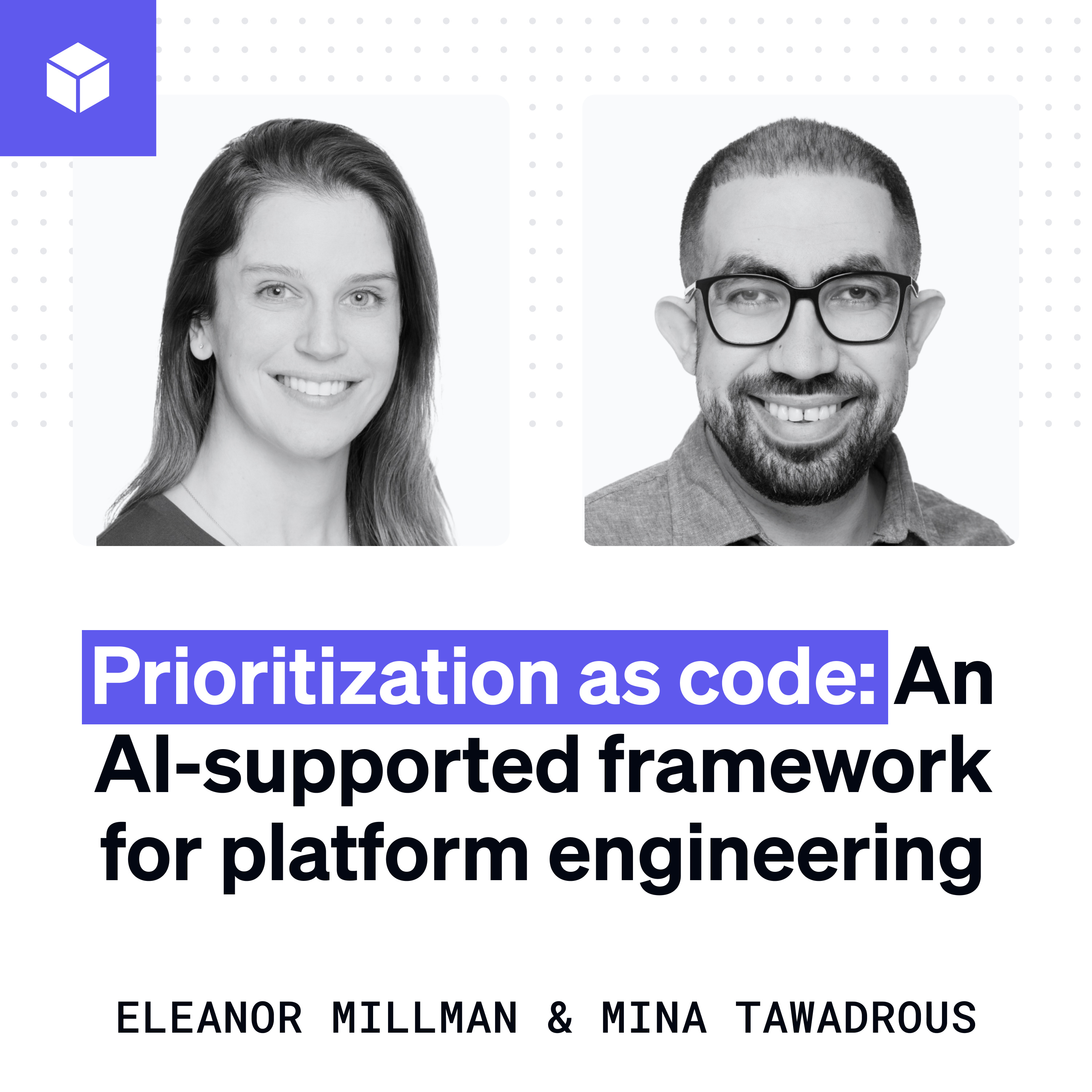
Prioritization as code: An AI-supported framework for platform engineering (Eleanor Millman and Mina Tawadrous)
Jun 1500:38:50Tap to summarizeIn this session from DX Annual, Eleanor Millman, Senior Staff Product Manager, and Mina Tawadrous, Associate Director of Product Management at SiriusXM, share how their platform engineering organization developed a prioritization framework for platform engineering teams serving hundreds of developers across a complex cloud platform.They explain how they define and weight platform-specific impact factors, use developer data to refine priorities, and score projects more consistently. They also explore why prioritization debates often stem from conflicting, invisible, or outdated assumptions, and how SiriusXM began treating assumptions like code by documenting, versioning, and reviewing them in source control.Finally, they demonstrate how AI can surface assumptions, connect initiatives to existing knowledge, and support project scoring while keeping humans in the loop. Throughout the session, they offer a practical framework for making prioritization decisions more transparent, data-driven, and scalable. In this episode, we cover:(00:00) Intro(02:58) Building a platform engineering prioritization framework(04:59) The seven platform engineering impact factors(09:38) Using impact factors to score projects(13:11) Using developer data to refine priorities(16:33) Three ways assumptions fail (17:40) Assumptions as code (21:00) New problems created by assumptions as code(22:00) Using AI to surface assumptions(23:44) Building an AI-powered feedback loop(25:44) Inside the AI prioritization tool(28:18) Three steps to build your own framework(30:02) Q&A #1: Evaluating high-cost projects(31:30) Q&A #2: The cadence of iteration (32:10) Q&A #3: When the framework conflicts with a stakeholder's priorities(35:26) Q&A #4: Using the framework for non-developersReferenced:• AWS• Databricks• RICE: Simple prioritization for product managers• Designing developer experience surveys• GSB Preserve | View | The Curse of Knowledge
Transcribe →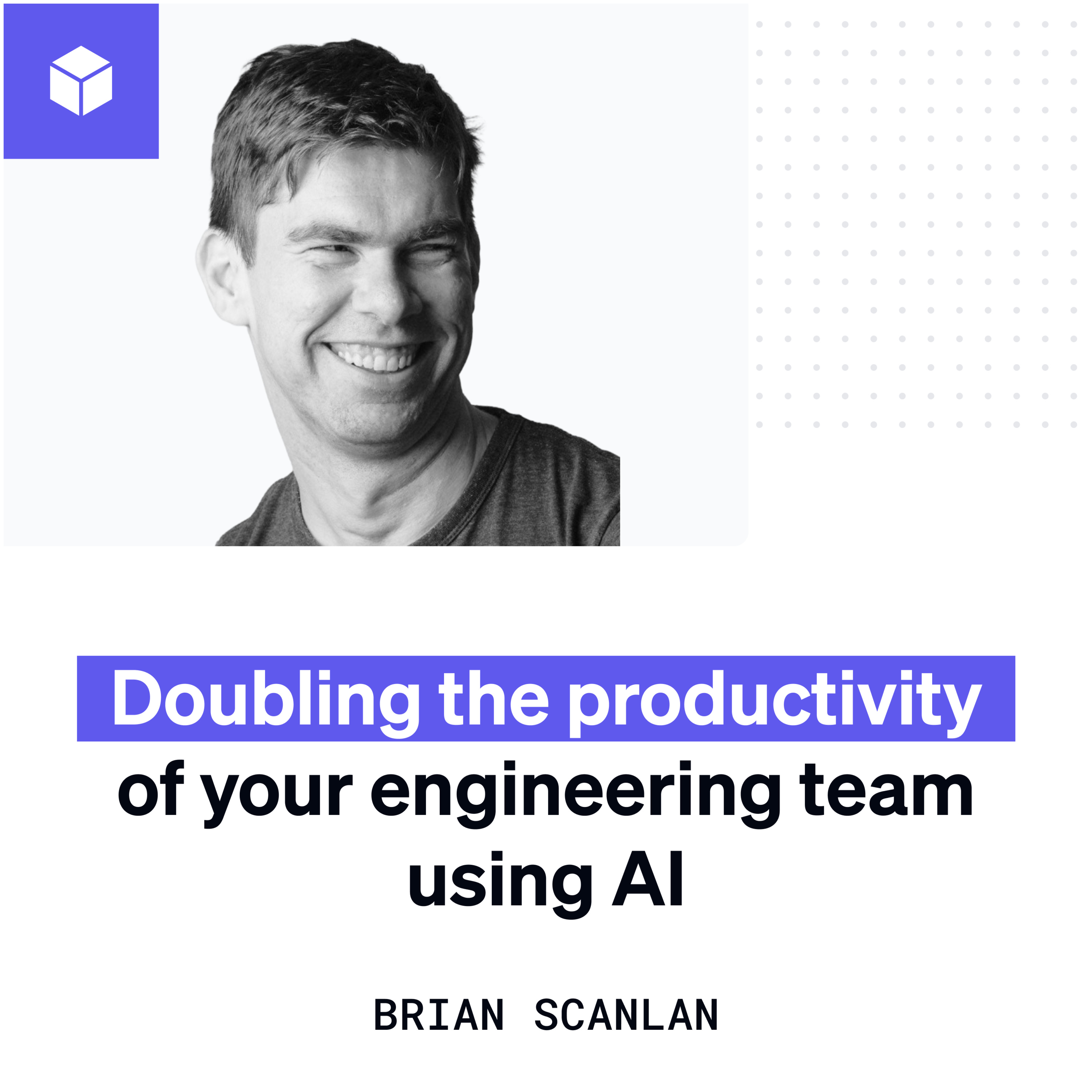
Doubling the productivity of your engineering team using AI (Brian Scanlan)
Jun 1500:39:30Tap to summarizeBrian Scanlan is a Senior Principal Systems Engineer at Intercom, where he works on platform engineering, developer productivity, and AI adoption across the company.In this session from DX Annual, Brian shares how Intercom set out to double engineering throughput and ultimately achieved that goal in nine months. Rather than treating AI as an optional productivity tool, the company standardized on Claude Code, updated performance expectations, invested heavily in enablement, and adopted an agent-first approach to technical work.Brian explains why Intercom views Claude Code as a platform rather than a tool, how the company is building domain-specific skills and workflows for agents, and why it believes agents should eventually be able to perform any technical task a senior engineer can complete on a laptop.He also shares the data behind Intercom's AI adoption efforts, including gains in throughput, reductions in defect backlogs, improvements in code quality, and the growing use of automated pull request approvals. Throughout the talk, Brian offers a practical look at what it takes to scale AI adoption across a large engineering organization and the lessons Intercom has learned along the way.Where to find Brian Scanlan:• LinkedIn: https://www.linkedin.com/in/scanlanb• X: https://x.com/brian_scanlan • Website: https://brian.scanlan.ie In this episode, we cover:(00:00) Intro(02:54) Intercom’s goal of doubling throughput (07:30) The platform strategy (09:30) Their agent-first strategy (10:58) Evergreen capabilities vs custom tooling (12:28) How Intercom works with agents(16:43) What the data reveals about AI adoption and impact(19:20) Using session data to improve AI workflows(20:20) Cutting the defect backlog in half(22:44) Inside Intercom’s Claude Code setup(28:09) Claude Code beyond engineering(30:49) Q&A #1: Token cost (32:52) Q&A #2: Preparing for AI pricing changes(34:14) Q&A #3: Stress testing and auditing skills(36:31) Q&A #4: Criteria for agents approving PRsReferenced:• Intercom• Software? No Way. We’re an A.I. Company Now! - The New York Times• Anthropic• Snowflake• Linear• LaunchDarkly • Fin AI• Microsoft Copilot• Cursor• Claude Code | Anthropic's agentic coding system• Steve Yegge (@Steve_Yegge) / Posts / X • Honeycomb• Fin Ideas• Fin CLI | AI Agent Command Line Interface
Transcribe →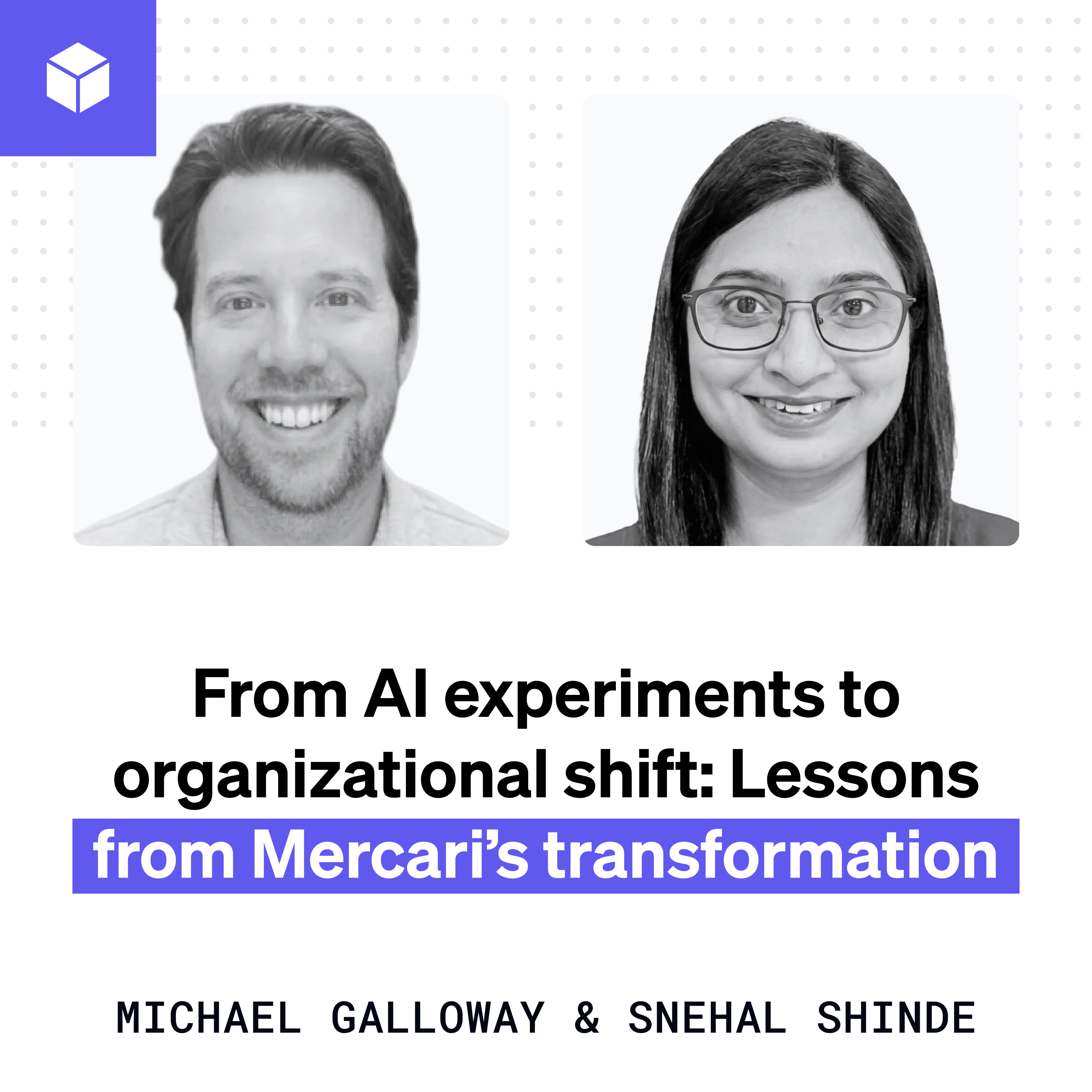
From AI experiments to organizational shift: Lessons from Mercari’s transformation (Michael Galloway and Snehal Shinde)
Jun 1500:44:38Tap to summarizeMichael Galloway leads Platform Engineering at Mercari, while Snehal Shinde leads Cost and Performance Engineering. Together, they have been at the center of Mercari's effort to become an AI-native company.In this session from DX Annual, Michael and Snehal share what happened after Mercari's CEO mandated 100% AI adoption across the organization. While AI accelerated code generation and increased engineering output, the team quickly discovered that their existing dashboards could not answer a simple question: was AI actually improving productivity?They discuss how Mercari built new visibility into AI usage and software delivery, the bottlenecks they uncovered across the SDLC, why faster coding did not automatically translate into faster delivery, and the lessons they learned rolling out AI at scale. They also share how Mercari is rethinking software development around agents, feedback loops, and new ways of working.In this episode, we cover:(00:00) Intro(01:46) Mercari’s scale and engineering culture(02:51) DX awards at Mercari(03:44) Mercari’s push to become AI-native(06:34) The mandate to rethink everything(08:02) Mercari’s AI visibility problem and how they solved it(11:30) Mercari’s early findings on AI implementation(18:47) Closing the AI awareness gap at Mercari(21:11) Mapping AI opportunities across Mercari(31:32) Unpacking the results from the second rollout(34:14) Agent spec-driven development and what’s next(37:37) A multi-loop SDLC(40:50) Some hard lessons(42:55) Closing thoughtsReferenced:• Mercari• Cursor• Devin• Claude Code | Anthropic's agentic coding system• GitHub• Datadog• Tim Bozarth - Microsoft | LinkedIn• Airbnb• Jim Collins - Concepts - The Stockdale Paradox
Transcribe →
Mapping the new SDLC at BNY: Codifying AI into every step of the delivery lifecycle (Jason Valentino)
Jun 800:33:24Tap to summarizeJason Valentino is Head of Software Engineering Strategy at BNY, where he oversees developer tooling, DevEx, platform workflows, and software delivery governance across more than 8,000 engineers.In this session from DX Annual, Jason shares how BNY moved beyond AI coding assistants to rethink the entire software delivery lifecycle. He explains how his team identified bottlenecks across the SDLC, prioritized automation opportunities, and applied AI to planning, peer review, testing, change management, and compliance workflows.Jason also discusses what it takes to scale AI inside a highly regulated enterprise, including rewriting policies, partnering closely with risk and audit teams, and building a culture that encourages experimentation and rapid sharing of ideas.Where to find Jason Valentino:• LinkedIn: https://www.linkedin.com/in/jasonvalentinoIn this episode, we cover:(00:00) Intro (01:20) Early results from AI coding tools at BNY(04:08) The 3X stress test: What breaks if engineering throughput triples?(06:56) Three ways to apply AI across the SDLC: IDE and CLI tools(08:07) Using autonomous AI agents for repetitive engineering tasks(09:16) Embedding AI directly into SDLC workflows(12:27) Why leaders should encourage experimentation and “start saying yes”(15:00) Q&A: How platform and productivity teams are evolving to support AI(16:33) Q&A: Rewriting policies and controls for AI-assisted software delivery(17:52) Q&A: How AI is affecting software quality and test ownership(19:00) Q&A: What Jason is most proud of: Practical examples of AI across the SDLC(20:30) Q&A: How BNY handles duplicated work across AI initiatives(22:30) Q&A: How BNY uses AI to support regulatory and compliance work(23:30) Q&A: Automating code reviews and change tickets(25:55) Q&A: How increased AI-driven throughput is affecting on-call and reliability(27:11) Q&A: How BNY works with risk and audit partners to move quickly with AI(29:01) Q&A: How BNY scales successful AI use cases across the organization(30:42) Q&A: What Jason is most proud of after BNY’s busiest year with AIReferenced:• AI-assisted engineering: Q4 impact report• Measuring AI code assistants and agents• Measuring developer productivity with the DX Core 4• Windsurf• Claude Code by Anthropic | AI Coding Agent, Terminal, IDE• Codex | AI Coding Agent
Transcribe →
The current impact of AI on engineering velocity: What 400 companies are seeing (Abi Noda & Brian Houck)
Jun 800:26:56Tap to summarizeRecorded live at DX Annual, Abi Noda, co-founder and CEO of DX, joins Brian Houck of Microsoft to share an early look at DX’s new research on AI’s impact on engineering velocity.Drawing on data from a sample of DX customers, they discuss what companies are actually seeing as AI adoption matures. Most organizations in the study saw pull request throughput increase by 10 to 15 percent—far more modest than the 10x gains often promised in industry headlines.They explore why coding remains only a small part of developer work, where time saved by AI may be going, and the unintended consequences of moving faster, from shifting bottlenecks to “false velocity.” Abi also shares how engineering leaders are applying AI beyond coding and how DX is evolving its measurement framework to account for both human and agent productivity.Where to find Brian Houck: • LinkedIn: https://www.linkedin.com/in/brianhouck/ Where to find Abi Noda:• LinkedIn: https://www.linkedin.com/in/abinoda In this episode, we cover:(00:00) Intro(00:53) What motivated DX’s research into AI’s impact on engineering velocity(02:36) How DX designed the study and selected companies(04:54) What DX’s data reveals about AI’s impact on engineering throughput(06:31) Why PR throughput was the most practical metric to publish(08:21) Why AI productivity gains are lower than many leaders expected(10:24) How an all-in culture can amplify AI productivity gains(12:35) Why it’s hard to track where AI-generated time savings are going(15:04) Unintended consequences of AI-driven productivity gains(17:12) Why leaders should look beyond coding to the rest of the SDLC(19:43) Cognitive debt and the human costs of AI-assisted development(21:33) How DX’s AI measurement framework is evolving(24:42) How to make agents more effectiveReferenced:• DX Core 4 Productivity Framework • DORA, SPACE, and DevEx: Which framework should you use?• Time Warp: The Gap Between Developers’ Ideal vs Actual Workweeks in an AI-Driven Era - Microsoft • Research• How Generative and Agentic AI Shift Concern from Technical Debt to Cognitive Debt• Measuring AI code assistants and agents
Transcribe →
Beyond AI tools: Evolving software engineering organizations for the agentic era
Jun 800:29:46Tap to summarizeJennifer St Pierre is Senior Vice President of Developer Experience and Transformation at Dell Technologies, where she leads the strategy for how Dell’s Infrastructure Solutions Group builds, operates, and evolves software.In this session from DX Annual, Jen argues that the biggest challenge in adopting agentic AI is not the technology itself, but the people transition behind it. Drawing on lessons from earlier shifts like Agile, DevOps, and cloud adoption, she explains why organizations that treat AI as a simple tooling rollout may get compliance, but not commitment.Jen outlines five leadership imperatives for navigating the transition: building a shared understanding of why change is happening, defining a clear future state, clarifying how roles will evolve, creating psychological safety for experimentation, and aligning metrics and organizational structures with new ways of working. Throughout the talk, she emphasizes that while AI may generate code, humans remain responsible for direction, judgment, and meaning.Where to find Jennifer St Pierre: • LinkedIn: https://www.linkedin.com/in/jennifer-st-pierre-4935a81In this episode, we cover:(00:00) Intro(00:13) Why every major technology shift is ultimately a people transition(05:00) AI-generated code and the evolving role of software engineers(07:43) The importance of developing a shared understanding(12:00) Defining a clear future state and how engineering roles will evolve(19:12) How psychological safety enables experimentation and honest feedback(22:41) Why metrics and organizational structure must evolve for the age of AI(25:40) Why leaders must drive AI transformation intentionallyReferenced:• Measuring developer productivity with the DX Core 4• Understand team effectiveness
Transcribe →
Designing the AI‑native engineering organization with 1Password, Microsoft and Atlassian
Jun 800:43:31Tap to summarizeAbi Noda is joined live at DX Annual by three engineering leaders shaping AI adoption at scale: Tim Bozarth, Corporate Vice President in Microsoft’s CoreAI division; Nancy Wang, CTO of 1Password; and Taroon Mandhana, CTO of AI and Teamwork at Atlassian. Together, they discuss how AI is changing engineering organizations, from team structures and planning cycles to hiring, governance, and measurement.The panel explores how the profile of a great engineer is evolving, why smaller cross-functional teams are becoming more effective, and what happens when product managers, designers, and customer support teams start contributing code. They also share why they are encouraging AI adoption through enablement, training, and local champions rather than mandates, and how AI is shifting more of the software development lifecycle toward planning and validation.Finally, they discuss where human judgment remains essential, how to measure adoption and manage token usage, and how to connect AI investments to business outcomes while preserving room for experimentation and learning.Where to find Nancy Wang: • LinkedIn: https://www.linkedin.com/in/wangnancyWhere to find Taroon Mandhana:• LinkedIn: https://www.linkedin.com/in/taroonmWhere to find Tim Bozarth: • LinkedIn: https://www.linkedin.com/in/tbozarthWhere to find Abi Noda:• LinkedIn: https://www.linkedin.com/in/abinoda In this episode, we cover:(00:00) Intro(01:08) Introducing the panelists(02:16) AI’s impact on engineering team structures and planning cycles(05:00) How the role of the engineer is changing and what makes a great engineer(10:11) The opportunities and challenges of non-engineers writing code(15:26) Encouraging AI adoption without mandating it(21:25) What an AI-native SDLC looks like and why human judgment still matters(30:56) Measuring AI adoption, token usage, and ROI(37:06) How to tie AI investments to business outcomesReferenced:• DX Core 4 Productivity Framework• Microsoft • 1Password• Atlassian• Jira• Confluence• Loom• Rovo • Amazon Operating Cadence - Working Backwards
Transcribe →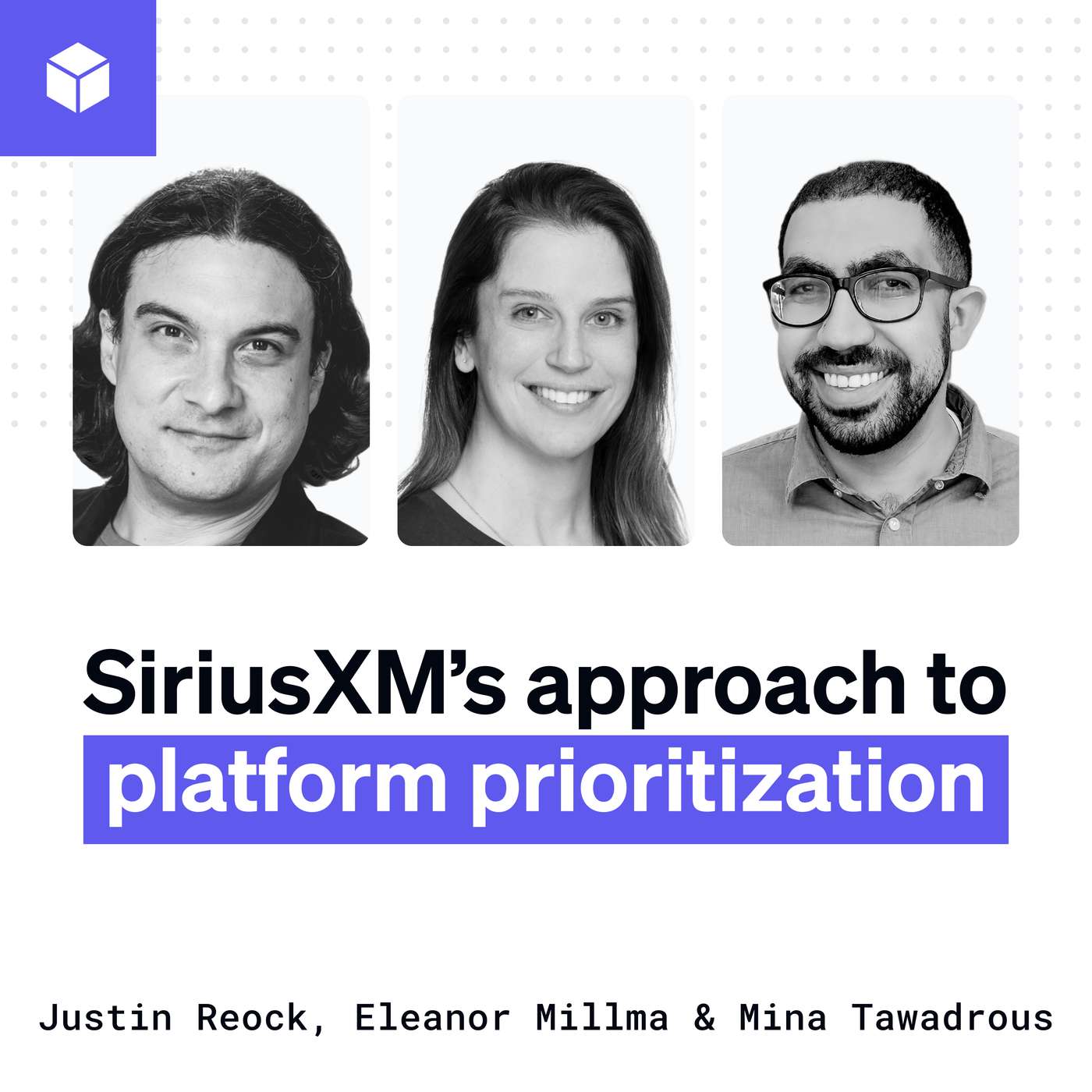
Assumptions as code: SiriusXM’s approach to platform prioritization
Apr 1000:50:23Tap to summarizeEleanor Millman, Senior Staff Product Manager, and Mina Tawadrous, Associate Director of Platform Engineering at SiriusXM, join host Justin Reock to discuss how platform teams can scale prioritization without relying on revenue.They share how SiriusXM moved beyond RICE to build a custom framework for internal platforms, using weighted factors like developer speed, reliability, cost, and trust to guide decisions across teams.The episode also explores their concept of “assumptions as code,” in which teams store and reuse assumptions in a central repository to reduce misalignment and improve decision-making, with AI helping to surface and validate those assumptions.They close with how this system is shaping SiriusXM’s 2026 prioritization approach and what it signals about a broader shift toward builder-driven product development.Where to find Eleanor Millman: • LinkedIn: https://www.linkedin.com/in/eleanor-millman-98b10350Where to find Mina Tawadrous: • LinkedIn: https://www.linkedin.com/in/mina-tawadrous Where to find Justin Reock:• LinkedIn: https://www.linkedin.com/in/justinreockIn this episode, we cover:(00:00) Intro(01:17) Mina’s role and path into platform engineering(02:03) Eleanor’s background and shift into product(03:15) Scaling prioritization across platform engineering teams(05:41) Aligning platform priorities with stakeholders(09:08) Evolving RICE into a platform-specific prioritization framework(11:33) Iterating on the prioritization framework over time(16:57) How the framework, data, and conversations drive alignment(19:06) Storing assumptions as code in a central repository(26:47) Resolving assumption conflicts with user interviews(30:47) How stored assumptions integrate with AI workflows(35:30) Standard mode and different user personas(37:20) The industry shift towards builders(41:04) The challenges of platform engineering(43:36) How SiriusXM is prioritizing in 2026Referenced:• Measuring AI code assistants and agents• SiriusXM • VMware• How SiriusXM revamped their platform and developer experience• RICE Scoring Model | Prioritization Method Overview• The evaporating cloud: A tool for resolving workplace conflict
Transcribe →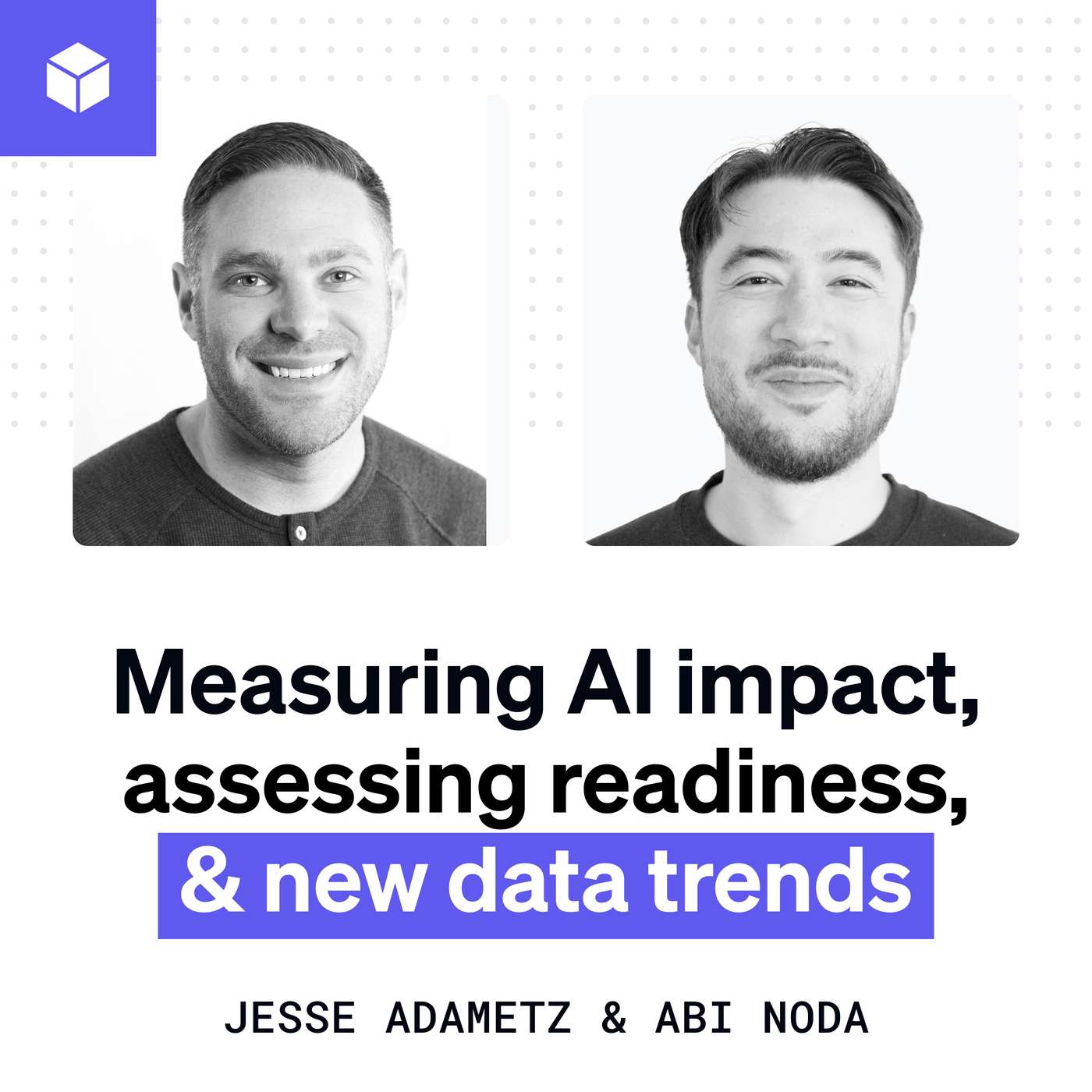
Measuring AI impact, assessing readiness, and new data trends
Apr 300:38:13Tap to summarizeIn this episode of Engineering Enablement, Jesse Adametz joins Abi Noda, this time to host. Together, they explore how AI is showing up across the SDLC, not just in code generation, and how it is shifting bottlenecks across the development process. They unpack what “AI readiness” actually means in practice, and why it often comes down to developer experience fundamentals like documentation, environments, and feedback loops.They also discuss why enablement matters more than tool choice, how teams are thinking about measuring ROI, and what changes as background agents become more common. Finally, they explore how the role of the engineer may evolve, the open questions teams are still grappling with, and the challenges of non-engineers contributing to codebases.Where to find Jesse Adametz: • LinkedIn: https://www.linkedin.com/in/jesseadametz • X: https://x.com/jesseadametz • Website: https://www.jesseadametz.com/Where to find Abi Noda:• LinkedIn: https://www.linkedin.com/in/abinoda In this episode, we cover:(00:00) Intro(02:12) Where AI is showing up across the SDLC(05:53) AI readiness and its link to developer experience(08:23) Why enablement, education, and experimentation matter more than tool choice(13:05) The case for a dedicated enablement team(14:50) Measuring AI ROI: challenges and tradeoffs(19:46) Background agents and token spend(24:12) Measuring agent output with PR throughput(26:58) How the engineer role might change(31:01) Specs and documentation in the age of AI(33:11) Non-engineers writing code(35:30) What’s changing in the SDLC and open questionsReferenced:• Measuring AI code assistants and agents• Lessons from Twilio’s multi-year platform consolidation• The Phoenix Project: A Novel About IT, DevOps, and Helping Your Business Win• How Claude remembers your project - Claude Code Docs• specIsJustCode : r/ProgrammerHumor
Transcribe →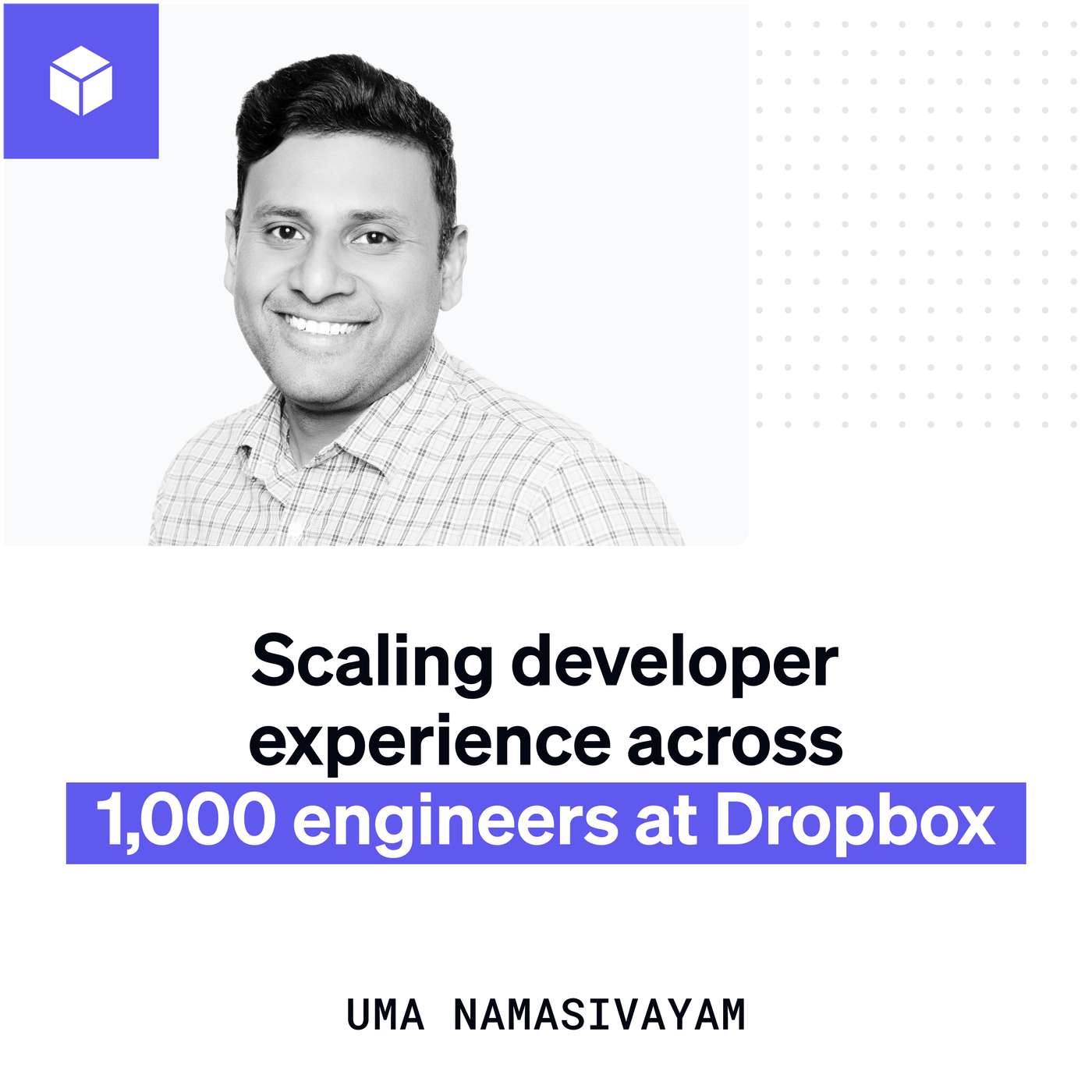
Scaling developer experience across 1,000 engineers at Dropbox
Feb 600:39:01Tap to summarizeDeveloper productivity is often framed as a tooling initiative or a morale issue. At scale, it’s a more complex socio-technical systems challenge that spans engineering foundations, leadership alignment, organizational structure, and culture.In this episode, Laura Tacho sits down with Uma Namasivayam, Senior Director, Engineering Productivity at Dropbox, to discuss how the company approaches developer experience across an organization of nearly 1,000 engineers. Uma explains why productivity must be treated as a business problem, how executive alignment enables sustained progress, and what it means to run developer experience like a product.The conversation also explores the intersection of AI and developer experience. Uma shares how Dropbox prepared its engineering systems to support AI adoption, why daily AI use depends more on habits than access, and how the company evaluates build-versus-buy decisions as AI tools struggle to scale in large environments.The episode concludes with a candid discussion of the open questions facing engineering leaders today: how to understand where AI-driven capacity actually goes, and how to connect improvements in developer experience to meaningful business outcomes in 2026.Where to find Uma Namasivayam:• LinkedIn: https://www.linkedin.com/in/unamasivayamWhere to find Laura Tacho: • LinkedIn: https://www.linkedin.com/in/lauratacho/• X: https://x.com/rhein_wein• Website: https://lauratacho.com/• Laura’s course (Measuring Engineering Performance and AI Impact) https://lauratacho.com/developer-productivity-metrics-courseIn this episode, we cover:(00:00) Intro(00:45) Dropbox’s engineering org(01:59) Why developer productivity is a business problem(04:08) The role of executive sponsorship in developer productivity(06:02) How DX’s Core Four framework created a shared language(08:13) Treating developer experience as a product(11:30) How Dropbox prioritizes developer experience work(14:20) The challenge of tying developer experience to business outcomes(16:38) How AI and developer experience intersect at Dropbox(18:35) The prerequisites for AI adoption to accelerate work(20:26) How Dropbox encourages daily AI use(23:12) AI use beyond code completion(25:00) Managing AI tool demand at scale(27:56) Early results from Dropbox’s AI efforts(30:05) Progress on developer experience at Dropbox(32:55) Advice for organizations investing in developer experience(34:25) Capacity tradeoffs for developer experience(35:59) The unanswered questions around AI and capacity in 2026Referenced:• DX Core 4 Productivity Framework• Dropbox.com
Transcribe →