← ESL Pod Official - Speak English Fluently by Listening (with Text)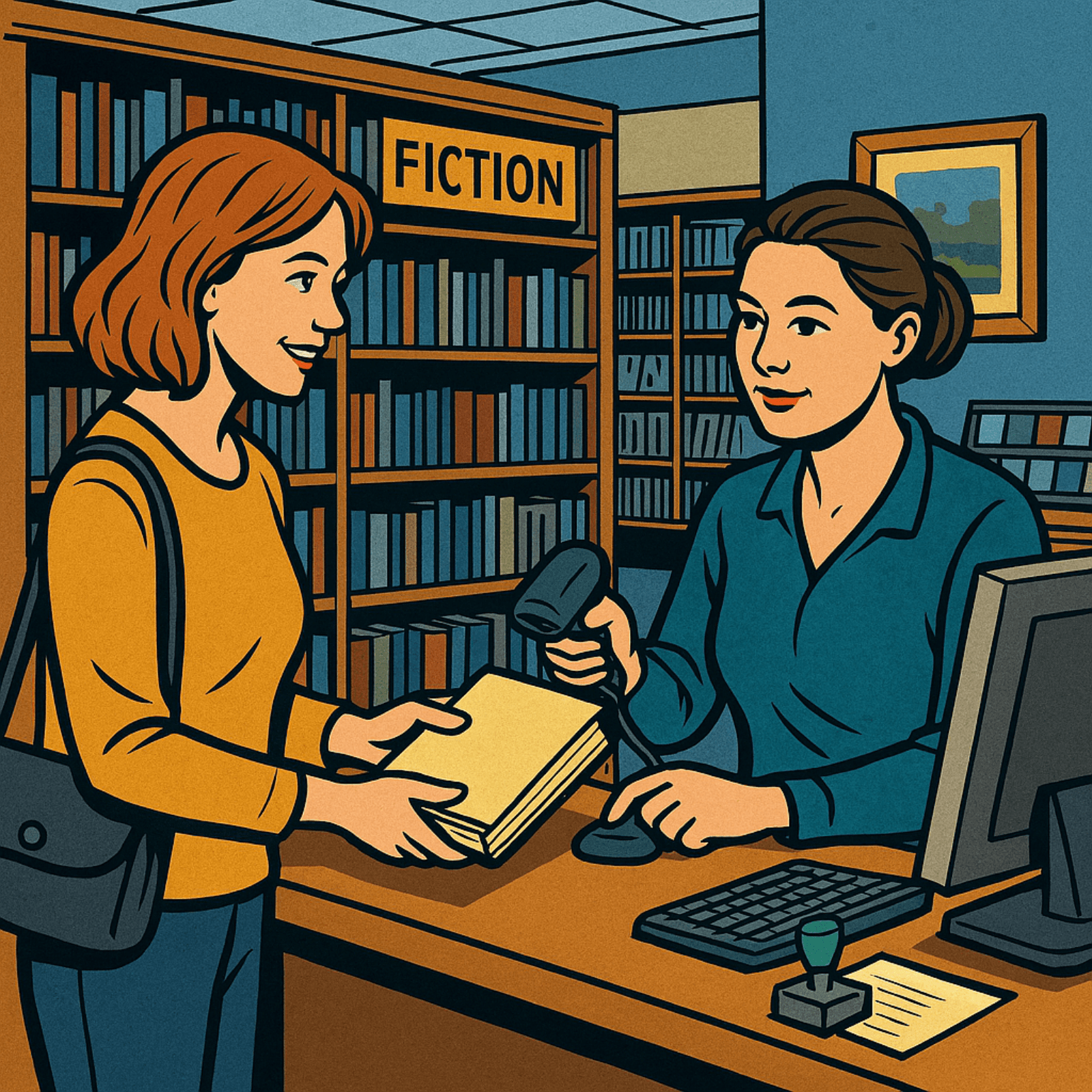
ESL Pod Official - Speak English Fluently by Listening (with Text)
ESLPodcast 55 - A Trip to the Library
00:20:50
Loading summary
Transcript38 lines
- [00:00]
Hayden
Howdy, howdy ho, and welcome to Fantasy Fan Fellas. I'm Hayden, producer of the Fantasy Fangirls podcast and your resident lover of all things Sanderson.
- [00:08]
Stephen
And I'm Stephen, your bookish Internet goofball, but you can call me the Smash Daddy.
- [00:12]
Hayden
And we are currently deep diving Brandon Sanderson's fantasy epic Mistborn. But here's the catch. Steven here has not read Mistborn before.
- [00:21]
Stephen
That's right.
- [00:21]
Edward Jones Advertiser
Hey.
- [00:21]
Stephen
Hey. So each week, you'll get my unfiltered raw reactions to every single chapter.
- [00:26]
Hayden
And along the way, we'll do character deep dives, magic explainers, and Steven will even try to guess what's next. Spoiler alert. He'll be wrong.
- [00:33]
Stephen
News flash. I'm never wrong. Episodes come out every Wednesday, and you can find Fantasy fanfellas wherever you get your podcasts.
- [00:40]
Edward Jones Advertiser
What does it mean to live a rich life? It means brave first leaps, tearful goodbyes, and everything in between. With over 100 years experience navigating the ups and downs of the market and of life, your Edward Jones financial advisor will be there to help you move ahead with confidence. Because with all you've done to find your rich, we'll do all we can to help you keep enjoying it. Edward Jones Member, SIPC At Strayer University,
- [01:12]
Strayer University Advertiser
we help students like you go from Will I? To why not? For over 130 years, we've been innovating higher education to make it more affordable, accessible, and attainable so you can reach your goals. Go from thinking, can I? To Yes, I Can. And keep striving. Visit Strayer. Edu to learn more. Strayer University is certified to operate in Virginia by Shevy. Many campuses, including at 2121 15th Street north in Arlington, Virginia.
- [01:43]
Dr. Jeff McQuillen
Welcome to English as a Second Language podcast number 55. Welcome to English as a Second Language podcast number 55. Hi, I'm Dr. Jeff McQuillen from the center for Educational Development in Los Angeles, California. On this podcast, we're going to take a trip to the library. Let's go. I read in the local paper that a new public library had just opened two weeks ago in my neighborhood. I wanted to check it out, but first I called the library to check the hours of operation. The librarian told me that they were open Monday through Saturday from 10 to 6. So I decided to see the new library for myself. I parked my car in the library parking lot and walked in. There were two library clerks behind the counter and a librarian at the reference desk. I walked around and spotted the nonfiction section and moved on to the fiction stacks. There was a pretty good collection in both of these areas. I wanted to see if they had a book been wanting to read. So I went over to the computer to check the online catalog. As it turns out, they had one copy and it had not been checked out. I wrote down the call number and went to the stacks. I found it right away when I walked in. I also noticed that the Library had music CDs, videos and DVDs that could be checked out. I looked briefly at the collection but decided not to check out any. Right then I had my book and I was all set. I stood in line and waited to check my book out. The library clerk said next please and I stepped up to the counter. I asked her what the loan period was for the book. She told me that the due date was three weeks from today. I gave her my library card. She scanned the barcode on my book and stamped the due date on the back of Was quick and easy. Was so glad to have a nice new library so close to home. I described a visit I took to my new public library in this podcast. I started by saying that I read about it in the local paper. By local paper I mean the local newspaper. We sometimes distinguish the local paper from a national newspaper. The New York Times, the Wall Street Journal, USA Today, the International Herald Tribune. These are all national or international newspapers. A local paper would be one that is read mainly in a city, single city or area. I said that I wanted to check it out. To check something out here means to investigate, to look into, to find out more about. You can say, for example, I'm going to check out his story. Means I'm going to investigate it. I'm going to see if it is true. We also use the expression check out to mean look at or pay attention. So it's an informal expression when we use it that way. You could, for example, say to your friend, hey, check out that car over there. It's really cool. Means pay attention. Look, you're calling someone or getting someone to look at or pay attention to something. There's a third, also informal use of check out when a boy or a man looks at a girl or a woman in a way that would suggest they are romantically interested. Let's say we can say I'm checking her out. Means I'm looking at her, admiring or liking her. I think she's pretty or beautiful. I don't check out women anymore because I'm married. The library has certain hours of operation. The hours of operation, you probably guess, are the hours that it is open the librarian is the person who works in the library. Actually, there are different people that work in a library. The librarian is usually someone with a college degree in library science. That's what we call it, library science or information science. And he or she has a college degree and is in charge of some part of the library. Other people who work at the library may just be library clerks. Clerk, you probably know, is a general term we use to describe a worker, somebody who works in a place. But clerk, not doesn't have any authority, not the boss. The librarian told me that the library's hours of operation were 10 to 6. And then I said, so I decided to see the new library for myself. That expression, see for yourself, means investigate it personally. Sometimes when people don't believe you. For example, I got an A on my essay and your friend says, oh, you did not. And you say, here, see for yourself. In other words, look at it yourself. So to see for yourself means to have personal experience, to personally look at something. I went into the library, I saw the library clerks and a librarian who was sitting at the reference desk. In a library, there are two main desks or two main areas of service. One is the reference desk. This is where you go to ask questions. If you're looking for a particular book or you don't know where to look in the library, it's sort of an information center. The other area of service in a library is the circulation desk. The circulation desk is where you go to get your books so that you can take them home.
- [11:23]
Acast Announcer
Acast powers the world's best podcasts. Here's a show that we recommend.
- [11:31]
Nikayla Matthews Akome
If you've ever dreamed of quitting your job to take your side hustle full time. Listen up. This is Nikayla Matthews Akome, host of side Hustle Pro, a podcast that helps you build and grow from passion project to profitable business. Every week you'll hear from guests just like you who wanted to start a business on the side. And if you can't run a side hustle, you can't run a business. They share real tips. And so I started connecting with all these people on LinkedIn and I saw target supplier diversity was having office hours. Real advice.
- [11:58]
Edward Jones Advertiser
Procrastination is the easiest form of resistance.
- [12:02]
Nikayla Matthews Akome
And the actual strategies they use to turn their side hustle into their main hustle. Getting back in touch with your tangible cash and sitting down and learning to give your money. A job like it changes something. Check out side Hustle Pro every week on your favorite podcast, Apple and YouTube.
- [12:21]
Acast Announcer
Acast helps creators launch, grow and monetize their podcast everywhere acast.com what does it
- [12:29]
Edward Jones Advertiser
mean to live a rich life? It means brave first leaps, tearful goodbyes, and everything in between. With over 100 years experience navigating the ups and downs of the market and of life, your Edward Jones Financial advisor will be there to help you move ahead with confidence. Because with all you've done to find your rich, we'll do all we can to help you keep enjoying it. Edward Jones Member, SIPC.
- [13:02]
Dr. Jeff McQuillen
The library usually has two sections. Just like a bookstore, it has different sections. One is a nonfiction section. These are books that are true about things that are true, factual books, history and science and art, and other things that are in the nonfiction section or category. The other type of book you find in the library are fiction books, novels, poems, plays, and so forth. I said that the library that I went to had a pretty good collection in these areas. When we talk about the collection for a library, we mean all of the books or all of the materials that are part of that area or that section. So you can ask, for example, does the library have a good collection of science books? Meaning do they have good books about that topic? The place where you look for books in a library is called a catalog. A catalog is a place that has the names and the call numbers of all the books. Most catalogs in libraries in the United States now are online. They're electronic catalogs. We don't have very many libraries that still have the old cards, little index cards, little pieces of paper where you find the title. Nowadays, it's almost all electronic online. I said that in a catalog you look up the call number, call, just like C A L, you call someone. But here, call number means it's the reference number that every book has so that you can find it on the shelf. In the United States, there are two systems that we use. One is called the Dewey Decimal System, and the other is called the Library of Congress system. And all libraries use one of those two numbering systems. And those numbering systems are the call numbers on each individual book. Every book has its own call number. I said that I looked in the catalog, and as it turns out, they had one copy. That expression, as it turns out, means the result was. Or sometimes it means, to my surprise, I wasn't expecting it. But you can also use that to mean it's it's one of those expressions we use when telling a story that we want to give the result of some action in a story. So I went to the store. I was looking for some milk as it Turns out they were all out of milk. That was the result in the story. The books in a library, each book is called a copy. It's not like a copy that you would make from a machine, like a photostatic copy or a Xerox copy. When we say how many copies does the does the library own of this book? We mean how many books of this same title, this same book? So a library, for example, may have 25 copies of Shakespeare's Romeo and Juliet. That would mean that they would have 25 of those books that you could find at the library. When you want to take a library book home, you have to check it out. Notice this is a different use from check it out that we said at the beginning. To check out a book or to check a book out means to go to the circulation desk, give them your book, and they will allow you to take the book home after they get your name and information. I said that I wrote down the call number and I went to the stacks. In a library, the shelves where the books are called are put. These are called stacks. Usually in a library, you have many shelves of books, many rows of books that are in a large area. And we call the area where all of the shelves are the stacks. S T A C K S so I went to the stacks and I found it right away, meaning almost immediately.
- [19:03]
Hayden
Howdy, howdy ho, and welcome to Fantasy Fan.
- [19:06]
Dr. Jeff McQuillen
Fellas.
- [19:06]
Hayden
I'm Hayden, producer of the Fantasy Fangirls podcast and your resident lover of all things Sanderson.
- [19:11]
Stephen
And I'm Stephen, your bookish Internet goofball, but you can call me the Smash Daddy.
- [19:15]
Hayden
And we are currently deep diving Brandon Sanderson's fantasy epic Mistborn. But here's the catch. Stephen here has not read Mistborn before.
- [19:24]
Stephen
That's right.
- [19:24]
Dr. Jeff McQuillen
Hey. Hey.
- [19:25]
Stephen
So each week, you'll get my unfiltered raw reactions to every single chapter.
- [19:29]
Hayden
And along the way, we'll character deep dives, magic explainers, and Steven will even try to guess what's next. Spoiler alert. He'll be wrong.
- [19:36]
Stephen
Newsflash, I'm never wrong. Episodes come out every Wednesday, and you can find Fantasy fanfellas wherever you get your podcasts.
- [19:44]
Edward Jones Advertiser
What does it mean to live a rich life? It means brave first leaps, tearful goodbyes, and everything in between. With over 100 years experience navigating the ups and downs of the market and of life, your Edward Jones financial advisor will be there to help you move ahead with confidence. Because with all you've done to find your rich, we'll do all we can. To help you keep enjoying it. Edward Jones Member, SIPC.
- [20:17]
Dr. Jeff McQuillen
I then decided that I didn't want to check out any music CDs or compact discs, videos or DVDs. A video usually means here, a video cassette, the old video cassettes. Nowadays, of course, everyone is switching to the DVDs. I said I didn't want to check any out right then. The expression right then means right at that time or immediately. So I go to the circulation desk, I wait in line, and the library clerk says, when it's my turn to come up to the counter or to the desk, she says, next, please. And I step up or I walk up to the counter. Counter is a general word we use for a desk where you have one person on one side giving you some service, helping you, and you have a customer or a client on the other side. You can have a counter in a post office. You, you walk up to the counter. The person working, the clerk working at the post office is on one side of the counter, and you are on the other side of the counter. The loan period of a book is how long you can keep the book before you have to renew it or ask to keep it for a longer period of time or to return it. The due date of a book. I said that the librarian told me the due date was three weeks from today. The due date is the day I have to bring it back. I have to return it. It's due. D U E. She said it was three weeks from today, meaning 21 days in the future. I gave her my library card. Your library card, as you can probably guess, is a card that has sometimes your name on it or sometimes just a barcode. A barcode are those little black and white lines that can be electronically read by a machine. Almost everything nowadays that you sell has a barcode on it. So I give the book to the librarian, and the book has a barcode, and she scans the barcode. The verb we use for reading a barcode is to scan it. S C A N. She scanned the barcode and then scanned my library card, which also has a barcode, and she stamped the due date of the book on the back of the book. Many libraries put a piece of paper, it's like a sticker that sticks to the book, and they stamp the date on it so you know when you have to return it. If you don't return it on time, then we say your book is overdue. Remember, we just heard the word due is when you have to return it. If you don't return it, then the book is overdue, meaning it's late. Finally I said that the checking out my book was quick and easy. That's a common expression. It was quick and easy means it was very simple. Well, we hope you found today's podcast quick and easy. We are always interested in hearing from you, so email us. Our email address is eslpodslpod.com or go to our website at www.eslpod.com. i'm Dr. Jeff McQuillen from Los Angeles, California. We'll see you next time on ESL Podcast. ESL Podcast is produced by the center for Educational Development in Los Angeles, California. This podcast is copyright 2005.
- [25:32]
Jack Myers
What makes a leader worth following? What should you really care about in your job? As technology is changing so quickly, is it just gonna be about machines talking to other machines? I mean, should you quit and start something on your own? What would that take? What does success and risk look like when we're all at the starting gate together? These are the questions we answer each week on Lead Human with Jack Myers and Tim Spengler. Join us each week and subscribe at your favorite podcast platform and YouTube. We'll tell stories, we'll hear from some of the best, and we'll try to figure this out together.
- [26:09]
Acast Announcer
ACAST powers the world's best podcasts. Here's a show that we recommend.
- [26:16]
Taryn and Cami
Do you want to know the best part about being married to a woman? That there's no man involved. I mean, true, but I was gonna say that it's a sleepover every single night with your best friend. Oh yeah, that part's cute too. I'm Taryn, she's Cami. We're married. And staying up is our weekly pillow talk out loud with you.
- [26:31]
Edward Jones Advertiser
We're giggling, we're gossiping, we're arguing.
- [26:33]
Taryn and Cami
Classic marriage stuff. Just having fun being wives while we navigate growing up and building a family together.
- [26:39]
Edward Jones Advertiser
Then our sleepover Gross.
- [26:40]
Taryn and Cami
Our listeners call the PP hotline with their own gossip, burning questions, late night spirals, all the stuff they'd only tell their best friends. So it's a private sleepover, but you are invited. Staying up with Taryn and Kami. New episodes weekly follow wherever you listen.
- [26:56]
Acast Announcer
ACAST helps creators launch, grow and monetize their podcasts everywhere. Acast.com.