Loading summary
Transcript152 lines
- [00:00]
Comcast Business Narrator
Modern enterprise. It's a lot of moving parts. Comcast Business helps orchestrate it all with SD Wan keeping 150 hospital locations connected and zero trust security protecting a bank's 2000 branches. No one does business like Comcast Business.
- [00:16]
IBM Representative
The thing about AI for business, it may not automatically fit the way your business works. At IBM, we've seen this firsthand. But by embedding AI across hr, it's and procurement processes, we've reduced costs by millions, slashed repetitive tasks, and freed thousands of hours for strategic work. Now we're helping companies get smarter by putting AI where it actually pays off, deep in the work that moves the business. Let's create smarter business. IBM.
- [00:46]
Max Shavkin
Max Shavkin here from Everybody's Business. Today we're sharing an episode from one of our favorite Bloomberg podcasts. The Big Take. A struggling agricultural town in Louisiana found themselves in the middle of a race to build the biggest data center ever for Meta, the company that owns Facebook. We'll be back with a new episode of Everybody's Business this Friday.
- [01:06]
Commercial Announcer
Bloomberg Audio Studios Podcasts Radio News
- [01:14]
Narrator/Transition Voice
all
- [01:15]
Riley Griffin
right, Riley Griffin, reporter with Bloomberg News, Here I am driving up to northeastern Louisiana, a rural part of the state called Richland Parish. This is cotton land.
- [01:30]
Narrator/Reporter (Sarah Holder)
Cotton, corn, sweet soybeans. Riley Griffin typically spends her days in Silicon Valley. She's a tech reporter for Bloomberg. But for the past year, she's been following a story that's brought her to a different corner of the country, a place called Richland Parish in the Louisiana Delta.
- [01:49]
Riley Griffin
Gas is cheaper than where I live in San Francisco, that's for sure.
- [01:54]
Narrator/Reporter (Sarah Holder)
Richland Parish is made up of a handful of towns and villages, Rayville, Delhi, Mangum, and some unincorporated land. All told, the parish spans about 550 square miles. It's nearly 12 times the size of San Francisco, but has a population 40 times smaller.
- [02:14]
Riley Griffin
I'm driving out here. I'm listening to Tim McGraw and Lainey Wilson, both of whom are from this area.
- [02:28]
Narrator/Reporter (Sarah Holder)
Richland, like so many agricultural and manufacturing communities around the US has spent decades on the decline. Farmers are struggling to break even. Most kids don't go to college. When they do leave, they often don't come back. Local leaders have been looking for something to revamp the area's economy, an opportunity that would bring new investment to town. And a few years ago, one came knocking. We Meta, which owns Facebook and Instagram, has been ramping up spending on artificial intelligence. Meta is worth one and a half trillion dollars and owns some of the biggest social media brands in the world. But the technology Landscape has been changing. AI is everywhere. And by many metrics, Meta has fallen behind.
- [03:16]
Meta Executive (Rachel Peterson)
This is an AI arms race.
- [03:18]
AI Industry Commentator
Inside the company called OpenAI, Anthropic is
- [03:21]
Narrator/Reporter (Sarah Holder)
building generative AI and a system that can draft content as if a human made it.
- [03:27]
Riley Griffin
Google OpenAI and Anthropic. These are known as kind of the frontier of the AI race right now. People don't often mention Meta in the same breath, and that's a problem for the company.
- [03:41]
Narrator/Reporter (Sarah Holder)
Just last month, the company laid off 8,000 workers, 10% of its workforce, as it ramps up spending on AI development and infrastructure. Infrastructure like data centers, which house the chips that power large language models. And Meta CEO Mark Zuckerberg has plans to build one of the biggest data centers in the world. Nearly 4,000 acres, the size of about 3,000 football fields. He's calling it Hyperion, after the Greek titan.
- [04:15]
Riley Griffin
Mark Zuckerberg is a man who loves a reference to the classics.
- [04:19]
Narrator/Reporter (Sarah Holder)
It's a project that will take a lot of investment, a lot of energy and water and a lot of land. Enter Richland Parish.
- [04:29]
Local Resident or Official
You know you've heard of Silicon Valley, right? We're the Silicon Bayou.
- [04:32]
Narrator/Reporter (Sarah Holder)
Meta's plans for this rural slice of Louisiana have captured the attention of some of the most powerful people in the world.
- [04:39]
Donald Trump
Look at that. That's the size of Manhattan.
- [04:41]
Narrator/Reporter (Sarah Holder)
But as Meta zeroes in on the parish, residents are grappling with what it could mean to become the epicenter of the company's biggest AI push yet. Twenty years from now, AI may be as obsolete as bag phones are today.
- [04:57]
Local Farmer (Dustin Morris)
You know, the math eventually becomes hard
- [04:59]
Commercial Announcer
math at some point.
- [05:00]
Narrator/Reporter (Sarah Holder)
I don't want it to affect detrimentally
- [05:03]
Commercial Announcer
our water nor the price of utilities.
- [05:08]
Local Farmer (Dustin Morris)
We don't fully grasp what's coming.
- [05:16]
Narrator/Reporter (Sarah Holder)
I'm Sarah Holder and this is the big take from Bloomberg News. Today on the show, Richland Parish's bet on a new kind of crop data. Could Meta's ambitions bring economic salvation? Or will the community trade one uncertain future for another?
- [05:39]
Community Member/Activist
No more unchecked data centers.
- [05:43]
Narrator/Reporter (Sarah Holder)
When a new data center arrives in an area, the community reaction can sometimes sound like this. We're not buying it. We want them to go away.
- [05:51]
Scott Franklin
We don't want to hear all of
- [05:53]
Donald Trump
their sugar coated promises, which we don't believe.
- [05:56]
AI Industry Commentator
It's a really, really bad deal. We don't get anything for it other than we're losing land, we're losing water, and we're losing air quality.
- [06:02]
Narrator/Reporter (Sarah Holder)
There are about 3,000 active data centers in the US and as the AI boom demands more and more computing resources, Their numbers are growing. According to Pew Research Center, 1500 more data centers are in development right now across the country. These facilities tend to be polarizing. Politicians, activists and residents near them have called out data centers for hiking local energy bills, draining water resources, making too much noise. Many data center projects have been delayed, canceled, or scaled back after communities oppose them. So some tech companies hoping to build new data centers have started shifting their strategy. They're looking beyond cities and suburbs and prioritizing areas that may not have the best infrastructure, but do have the right attitude.
- [06:54]
Riley Griffin
Companies that are building big are looking to these rural regions, but also regions that are demonstrating a willingness to have them.
- [07:04]
Narrator/Reporter (Sarah Holder)
Bloomberg tech reporter Riley Griffin.
- [07:05]
Riley Griffin
Again, there's actually a company I've been chatting with called Hamlet that is selling data to hyperscalers about communities. They're doing red, yellow, green. Is this a good place politically to put your data center? What do we know from town hall meetings about how this community will react to a data center?
- [07:28]
Narrator/Reporter (Sarah Holder)
That reaction is important because for companies competing in the AI race, speed is everything.
- [07:34]
Riley Griffin
All these data centers, they want to get them up and running as soon as possible. So any delays, be they from politics and PR or actual permitting, is a huge headline risk that they would like to take off the table.
- [07:49]
Narrator/Reporter (Sarah Holder)
And companies like Meta are putting a lot of resources toward picking places where they can move quickly.
- [07:54]
Meta Executive (Rachel Peterson)
Finding a data center site that works for us is like finding a needle in the haystack. Like, you have to look for a lot of combinations of the things that are going to work well.
- [08:03]
Narrator/Reporter (Sarah Holder)
Rachel Peterson runs Meta's data center strategy.
- [08:07]
Meta Executive (Rachel Peterson)
We started hearing from Mark directly that he wanted to have a very big cluster, the biggest cluster.
- [08:14]
Narrator/Reporter (Sarah Holder)
What Zuckerberg wanted was a huge cluster of GPUs, graphics processing units, the chips that power AI models. And to hold all those GPUs, Meta would need a very large data center.
- [08:29]
Meta Executive (Rachel Peterson)
We were going to put, like, you know, a million GPUs in it, and we were going to have this big AI cluster up and running.
- [08:35]
Riley Griffin
Each GPU, on average costs about $30,000. So that should tell you something. And putting 1 million together is a massive amount.
- [08:44]
Narrator/Reporter (Sarah Holder)
Data centers come with some big energy needs.
- [08:47]
Riley Griffin
You also need cooling abilities, so water, often to keep that technology from overheating, you need land. You need continuous land, in this case, and a lot of it, and preferably cheap land.
- [09:02]
Narrator/Reporter (Sarah Holder)
So Meta set out to find the right site. The needle in the haystack. Two thousand miles away from Meta hq, Richland Parish, Louisiana, was stuck in a rut.
- [09:14]
Riley Griffin
Richland as you can guess by the name, is known for its rich land, its soil born from the silt of the Mississippi.
- [09:22]
Scott Franklin
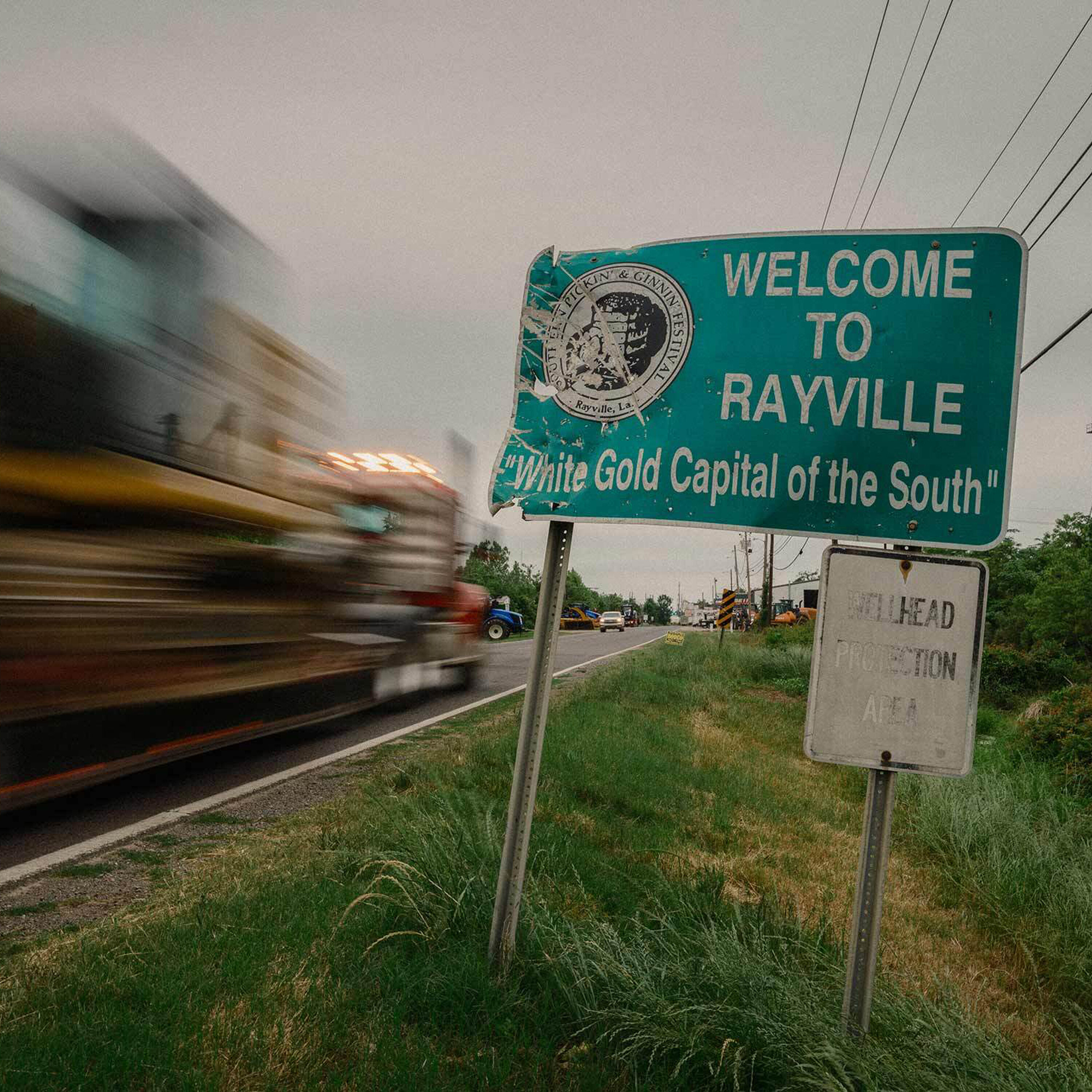
When I was a kid, rival was known as the white gold capital of the South.
- [09:26]
Narrator/Reporter (Sarah Holder)
That's Scott Franklin, a fourth generation Richland Parish resident and one of the region's largest landowners. That white gold he's talking about is cotton. For generations, cotton plantations built off enslaved labor were the economic engines of the South. Long after emancipation, cotton crops remained the backbone of Richland Parish's economy. But that economy took a turn.
- [09:53]
Riley Griffin
There was the 1927 flood. The great flood, which really devastated the region, was a huge natural disaster. It also sent a lot of black sharecroppers who bore the brunt of that devastation out of the region. There was also the great Depression. And all the while the agriculture sector is changing, it's modernizing, but when it does, it doesn't bring about more wealth. It really just consolidates wealth into fewer and fewer hands.
- [10:27]
Scott Franklin
You know, the old adage of like, if you drive over a pothole, you notice it. If you drive over a pothole every single day, you, you begin to forget about it. It's kind of that, you know, if you live here, you don't really quite day to day see the decline, but it's happened, you know, no question.
- [10:48]
Narrator/Reporter (Sarah Holder)
By the early 2000s, almost 30% of Richland Parish's population lived below the poverty line. And local leaders were trying to revitalize the area, diversify its economy away from just agriculture. Around this time, the state of Louisiana bought a roughly 1400 acre plot of land that once belonged to Scott's family, hoping to use it to convince a corporation to settle in the area. Economic development officials wanted a company to plant roots on that land, build a manufacturing facility and commit to bringing 5,000 local jobs over the course of two decades. Company after company came into town, got the Richland Parish pitch and then left.
- [11:32]
Scott Franklin
Toyota, Caterpillar, John Deere, Jaguar, Hyundai.
- [11:38]
Narrator/Reporter (Sarah Holder)
One former economic development representative named Tana Trichelle told Riley she went the extra mile to try and nab business from Mercedes.
- [11:46]
Narrator/Transition Voice
I courted them for nine years. I got a new puppy. I named it Mercedes and sent them
- [11:52]
Narrator/Reporter (Sarah Holder)
pictures, but no dice. None of the companies ended up coming to Richland Parish.
- [11:58]
Scott Franklin
You go through all that and you get on the mountaintop and you come down, you know, it's a hard fall and you get this feeling of always the bridesmaid, never the bride. It's not going to happen.
- [12:12]
Narrator/Reporter (Sarah Holder)
That's where Meta came in. In January 2024, Zuckerberg's hunt for a data center site caught the attention of Entergy, a major Louisiana power utility. Its CEO invited some Meta execs to the company's headquarters, New Orleans, to make the case for Louisiana. The CEO stressed that the state's government was pro business and that Louisiana had ample oil and gas reserves. Energy would not be a problem, he remembers telling Meta executives. Use all you want. We'll make more. But Meta wanted assurances about more than just power.
- [12:51]
Riley Griffin
Speaking with folks at Meta, the willingness of the government to kind of clear the way and be partners to them was also really important.
- [13:02]
Narrator/Reporter (Sarah Holder)
So the state's economic development secretary got to work. Her mandate was clear. This was Richland Parish's shot. Don't miss out on Meta.
- [13:12]
Susan Bourgeois
We huddled in a small table and he said, I need to share something with you. We're having very aggressive conversations with a large data center company and we think we've got a shot at it. But if this is ever going to become real, we all have to start moving.
- [13:30]
Narrator/Reporter (Sarah Holder)
Heaven and earth after the break, LA moves heaven and Earth.
- [13:42]
Comcast Business Narrator
Modern Enterprise It's a lot of moving parts. Multiple locations, a constant flow of data, endless applications, critical systems that can't go down. Comcast Business helps you orchestrate it all with SD Wan working at scale to keep 150 hospital locations connected and working as one. So patient data flows securely and keep care is delivered without interruption. That's a healthy approach. Plus SASE and Zero Trust Security protecting financial data across a bank's 2,000 branches. That means identities verified, transactions secure, threats blocked, nest eggs safe and sound and AI powered networking that optimizes traffic across five continents. So yeah, modern enterprise is complex. Comcast Business makes it simple when you add it all up. No one does business like Comcast Business,
- [14:40]
IBM Representative
So there's a lot of noise about AI. But time's too tight for more promises. So let's talk about results. At IBM we work with our employees to integrate technology right into the systems they need. Now a Global workforce of 300,000 can use AI to fill their HR questions, resolving 94% of common questions. Not noise Proof of how we can help companies get smarter by putting AI where it actually pays off, deep in the work that moves the business. Let's create smarter business.
- [15:09]
Commercial Announcer
IBM when you own your own business, you own every decision. Now own the card that rewards you for it. The Chase Sapphire Reserve for Business card brings the best Sapphire Reserve benefits to business owners who expect hard working rewards. Designed to meet the needs of business owners at scale, this Pay in Full card elevates your travel experience and offers premium benefits and value toward business services that will take your business to the next level, fuel your business and maximize rewards with 8x points on all purchases through Chase Travel, 3x points on social media and search engine advertising, annual partnership credits and more. Make every journey more rewarding with a $300 annual travel credit and access to a network of airport lounges. Whether you're looking for pre flight productivity or time to rest and recharge. Chase Sapphire Reserve for Business it's the card that gives back all you put in. Learn more@chase.com ReserveBusiness Chase for Business make more of what's yours Accounts subject to credit approval restrictions and limitations apply. Cards are issued by JPMorgan Chase Bank NA member FDIC.
- [16:21]
Narrator/Reporter (Sarah Holder)
So Meta's interest in Richland Parish, Louisiana was piqued. Conversations with a major state energy utility were underway. NDAs were being signed, and locals like Friday Ellis, the mayor of a nearby city, started clocking new faces around town.
- [16:38]
Scott Franklin
And we walked up and hit them with, y' all ain't from around here, are ya?
- [16:41]
Narrator/Reporter (Sarah Holder)
What Mayor Ellis didn't know was they were actually Meta executives who'd come to scout the area and meet with local lawmakers, lawmakers who were working hard behind the scenes.
- [16:53]
Susan Bourgeois
It just became this everyone pulling on the rope in the same direction. So it was just this massive Louisiana effort.
- [17:03]
Narrator/Reporter (Sarah Holder)
That's Susan Bourgeois. She was named Louisiana's new Economic Development secretary. At the same time, Meta was talking to the state's power utility, and her first big job was to make a deal with Meta. But the clock was ticking. Meta was looking at other states, too.
- [17:20]
Susan Bourgeois
The Meta folks were telling us that they wanted to have their final investment decision by the end of summer.
- [17:26]
Narrator/Reporter (Sarah Holder)
At this point, residents in Richland Parish didn't know this was happening. Not the parish's mayors, not the public. All this deal making with Meta was going on in secret and at the state level, lawmakers were already clearing the way to make it happen. For example, Meta wanted a sales tax break on its GPUs.
- [17:48]
Riley Griffin
And again, that is because, let me say it for the people in the back, the GPUs, the chips inside the data center, are the most expensive part of a data center built.
- [18:00]
Susan Bourgeois
In order to get a data center in your state, that is an incentive that must exist. And that's a go no go to
- [18:06]
Narrator/Reporter (Sarah Holder)
meet the non negotiable. The state actually changed Louisiana tax law by working in language about data center tax breaks into an existing rural broadband bill.
- [18:16]
Susan Bourgeois
In politics, that's called hijacking a bill.
- [18:21]
Narrator/Reporter (Sarah Holder)
In June 2024, that bill was signed into law. Meta, or any future tech company trying to build a data center, won't have to pay any sales tax on data center chips or equipment for 20 years with an additional 10 year renewal option. The government also agreed to change the state's property laws so Meta could buy that 1400 acre plot of land in Richland Parish without it first going to a public bid. Was there anyone pushing back on this deal?
- [18:51]
Riley Griffin
Well, at this stage, remember, this is all happening behind closed doors under NDAs, people who have signed on to really pave the way for the deal. Over those initial deal making months. There wasn't really public pushback to be had because the public didn't know.
- [19:11]
Narrator/Reporter (Sarah Holder)
And Louisiana leaders had given Meta assurances that once the public found out, they'd be on board.
- [19:17]
Susan Bourgeois
I remember early on the Meta team asking us, what kind of community pushback are we going to find? Or what kind of, you know, pushback are we going to find in the state? And, you know, we, from a Richland Parish perspective, we said none.
- [19:32]
Narrator/Reporter (Sarah Holder)
By late fall of 2024, the pieces of the deal were in place. And in December, Meta went public. For locals in Richland Parish, it was the first time they learned a data center would land in their backyard.
- [19:46]
Scott Franklin
Governor Jeff Landry and Meta officials announced a groundbreaking investment of a $10 billion AI data center Wednesday morning in Ravel.
- [19:55]
Donald Trump
This is something given to me by Mark Zuckerberg.
- [19:58]
Narrator/Reporter (Sarah Holder)
That's President Trump in a cabinet meeting in August 2025. He's holding up a piece of paper with an image printed on it.
- [20:05]
Donald Trump
But look at that. That's the size of Manhattan. So that superimposed over the island of Manhattan, it takes up a big part of Manhattan.
- [20:16]
Narrator/Reporter (Sarah Holder)
For folks in Louisiana, Trump calling attention to the plan was a big deal.
- [20:20]
Susan Bourgeois
We love having the President talk about us.
- [20:22]
Commercial Announcer
I mean, you hear just like President Trump talking about that.
- [20:25]
Scott Franklin
I think it made us kind of come back to the realization that this is real.
- [20:32]
Riley Griffin
Soon.
- [20:33]
Narrator/Reporter (Sarah Holder)
Mehta was trying to secure billions of dollars of funding from some of the biggest players on Wall street to pay for the construction. Speaker of the House Mike Johnson, who represents a chunk of Louisiana, started touting a new vision for his home state.
- [20:47]
Local Resident or Official
You know, you've heard of Silicon Valley, right? We're Silicon Bayou. I said, trademark it right now, brother. Trademark it right now.
- [20:56]
Narrator/Reporter (Sarah Holder)
But that sort of transformation wouldn't come easy.
- [20:59]
Narrator/Transition Voice
Life as we know it in Ravel is changing.
- [21:03]
Local Farmer (Dustin Morris)
We don't know what it looks like in five years or 10 years.
- [21:06]
Commercial Announcer
We're in this small rural area and
- [21:08]
Narrator/Reporter (Sarah Holder)
we're trying to figure it out. Right now everybody's just segregated.
- [21:11]
Community Member/Activist
You're either team met or
- [21:15]
Narrator/Reporter (Sarah Holder)
after the break. Can Meta deliver on its promises to Richland Parrish.
- [21:24]
LPL Financial Announcer
What if you could have more wins, more support, more sound effects? At LPL Financial, we like the sound of that because LPL offers more advisors. What if you could have more ways to help your clients ready to invest? What if you could find an advisor that really understands you when it comes to your finances, your business, your future? At lpl, we ask what if you
- [21:49]
Riley Griffin
could Paid Advertisement Investing involves risk, including
- [21:51]
Commercial Announcer
potential loss of principal. LPL Financial LLC Member FINRA SIPC when you own your own business, you own every decision. Now own the card that rewards you for it. The Chase Sapphire Reserve for Business Card brings the best Sapphire Reserve benefits to business owners who expect hard working rewards. Designed to meet the needs of business owners at scale, this Pay in Full card elevates your travel experience and offers premium benefits and value toward business services that will take your business to the next level, fuel your business and maximize rewards. With 8x points on all purchases through Chase Travel, 3x points on social media and search engine advertising, annual partnership credits and more make every journey more rewarding with a $300 annual travel credit and access to a network of airport lounges. Whether you're looking for pre flight productiv or time to rest and recharge. Chase Sapphire Reserved for business, it's the card that gives back all you put in. Learn more@chase.com reservebusiness chase for business make more of what's yours Accounts subject to credit approval restrictions and limitations apply. Cards are issued by JPMorgan Chase Bank NA member FDIC support for the show
- [23:01]
Community Member/Activist
comes from Public Lately it feels like there are two types of investing platforms. Some are traditional brokerages that haven't changed much in decades and others feel less like investing and more like a game. Public is positioned differently. It's an investing platform for people who are serious about building their wealth on public. You can build a portfolio of stocks, options, bonds, crypto without all the bugs or the confetti. Retirement accounts? Yep. High yield cash? Yes again. They even have direct indexing. Public has modern design, powerful tools and customer support that actually helps go to public.com market and earn an uncapped 1% bonus when you transfer your portfolio. That's public.com market ad paid for by
- [23:44]
Commercial Announcer
Public Holdings Brokerage Services by Public Investing Member FINRA SIPC Advisory Services By Public Advisors SEC Registered Advisor Crypto Services By ZeroHash all investing involves risk of loss. See complete disclosures@public.com disclosures
- [24:02]
Local Farmer (Dustin Morris)
now, have you ever been in a small plane?
- [24:04]
Riley Griffin
I have not.
- [24:04]
Local Farmer (Dustin Morris)
Okay, so it's a little different experience than being on a jet.
- [24:07]
Narrator/Reporter (Sarah Holder)
Late last year, Riley Griffin got an aerial tour of Richland Parish. She boarded a four seat propeller plane piloted by a local farmer named Dustin Morris.
- [24:18]
Local Farmer (Dustin Morris)
This morning we're gonna take a little flight in my little Cessna 182. Look around Richland Parish, kind of get a bird's eye view and let you see that from there.
- [24:30]
Riley Griffin
You see the cotton from above, just fields of white. And then all of a sudden, out of nowhere, there's just this massive dirt pit. And it's five miles long and one mile wide.
- [24:42]
Narrator/Reporter (Sarah Holder)
That dirt pit is Meta's Hyperion construction site. They broke ground in December 2024, and Meta's ambitions for Hyperion have only grown with time. At first, the company said they'd need three natural gas plants to power the project. By March 2026, there were plans to build 10. Once the center is live, its power needs could be enough to fuel the entire city of New York on a winter day. The site itself has also grown. Meta bought even more land, turning its original 1,400acre plot into almost 4,000 acres. For Dustin, it's a lot of change to reckon with for years, for my
- [25:25]
Local Farmer (Dustin Morris)
whole life, actually, you know, I bought into the idea that the land was some somewhat sacred and that the land was everything. And the production of the commodity, corn, soybeans, rice, cotton, wheat, whatever the commodity is, that was the end goal. And now, you know, I finally come around to the idea that the land is still that. But maybe it's not the commodity. Maybe it's selling it for 20 times more than what it's worth in row crop production. Maybe this is the future and this is how we secure our family's future. And I don't know, but I have come to grips that it doesn't have to have a growing green plant on it.
- [26:09]
Narrator/Reporter (Sarah Holder)
Already, though, Richland Parish residents are starting to feel the trade offs of green crops for concrete.
- [26:16]
Susan Bourgeois
There's a lot more traffic.
- [26:17]
Riley Griffin
There's a lot of trucks and a lot of dust.
- [26:19]
Narrator/Transition Voice
There's a rhythm to farming, and if there's a rhythm to construction, I can't find it.
- [26:26]
Narrator/Reporter (Sarah Holder)
Thousands of construction workers have descended on Richland Parish, working around the clock to build the data center. As many as 7,500 are expected overall. In a parish of 20,000 residents. That's a significant population bump. And all those workers need to be fed and housed.
- [26:44]
Riley Griffin
There are a lot of food trucks. That's one of the big businesses that have boomed. And new restaurants and the man camps, the RV parks that have cropped up everywhere in a housing strapped region.
- [26:57]
Narrator/Reporter (Sarah Holder)
Harry Lewis, the mayor of Rayville, says some people in town have given up their jobs for higher paying ones. On the Meta construction site.
- [27:05]
Floyd or Sheila McDade
See, we lost pretty much our whole police department because we pay them $14 and $15 an hour. They go a mile from raver and
- [27:15]
Narrator/Reporter (Sarah Holder)
get 20 nurses are leaving hospitals to do emergency medical work at Hyperion. Meanwhile, local landowners who own property near the site are also trying to cash in. Land that was once going for $2,000 has been listed for $50,000. But the growth they're responding to could be temporary. Local tax assessors and realtors don't know how to gauge how valuable this rich land actually is.
- [27:44]
Jason Bruninks
It's changed my job because it's a lot of unknown, not knowing the value of things.
- [27:52]
Narrator/Reporter (Sarah Holder)
That's a local realtor, Jason Bruninks.
- [27:55]
Jason Bruninks
And that's scary because you don't want to represent people and you not know what the value is. And you know, and that's what I've told a lot of people that have called me and hey, what do you think I need to do? What do you think it's worth? Well, to be quite honest with you, I don't know what it's worth.
- [28:12]
Narrator/Reporter (Sarah Holder)
It's a sentiment that's pretty similar to some of the uncertainty around AI itself, which has companies reporting sky high valuations and investors trying to get in while it's hot. And where some Richland Parish landowners see opportunity, lifelong residents Floyd and Sheila McDade see the potential for displacement.
- [28:32]
Floyd or Sheila McDade
We happen to live in a world where everyone can't be property owners, but it doesn't mean that they can't be treated with dignity.
- [28:40]
Narrator/Reporter (Sarah Holder)
The people were kind of struggling from
- [28:42]
Susan Bourgeois
the first, from the beginning, so they
- [28:45]
Narrator/Reporter (Sarah Holder)
were kind of pushed to have to find somewhere else to stay.
- [28:49]
Riley Griffin
Floyd and Sheila McDade are a wonderful couple, folks who have been very civically involved. Floyd was a principal and they described to me the effects of this data center differently. Right. Floyd came with a note card in his pocket. Of all the questions that he has, questions about who's investing in the metadata center, feeling like that hadn't been communicated. Curiosity about who will get the jobs, curiosity about the environmental impacts, just questions about the future.
- [29:26]
Floyd or Sheila McDade
You wish that there had been maybe some level of transparency, information. If Meta has done this before, you knew these interests was going to be there. What I would have liked is some of that information to be disseminated so that people wouldn't feel like they'd be bulldozed over.
- [29:49]
Narrator/Reporter (Sarah Holder)
Other residents told Riley they're worried about worsening water quality and higher energy prices when the data center goes online. Riley visited the parish after an ice storm this winter that left some residents without power for days.
- [30:03]
Riley Griffin
I had a lot of people ask me when Meta's plant is up and running and they're seeking the amount of power of New York City on a winter day. If there were a storm of this kind, who would the utility respond first to? The guy down the street with his power out or the data center?
- [30:22]
Narrator/Reporter (Sarah Holder)
Meta told Riley it's been working closely with Entergy to ensure the site's power needs are met and importantly so that Entergy's other consumers aren't paying our costs. But some residents have bigger questions about the risks of betting the farm on AI right now. Meta funded the site's construction using one of the largest private capital deals ever assembled, backed by $27 billion in debt. But Meta only has a 20% stake in the campus. The private capital firm Blue Owl owns the rest, and the joint venture they've assembled leases the facility to Meta. The company has the chance to back out of that lease every four years. It's left some in Richland Parish wondering if Meta ever pulls out or if the AI economy collapses. Where does that leave them?
- [31:14]
Riley Griffin
They're glass half full, people. This is a community generally that likes to choose optimism. They're hoping that industry will crop up around the data center, that it won't just be Meta, but things that could remain after the construction period.
- [31:30]
Narrator/Reporter (Sarah Holder)
But a school board member had a more sober take.
- [31:33]
Narrator/Transition Voice
I don't want people to think that Meta will be spending the amount of money that they're going to spend over the next five years in perpetuity. This goose laying the golden egg is not forever. So I hope people don't get greedy.
- [31:48]
Narrator/Reporter (Sarah Holder)
After all, those projected 7,500 construction jobs will only last as long as construction does. Meta has committed up to 500 permanent jobs at the site, but that's a lot less than the 5,000 local jobs the community had wanted a company to bring.
- [32:05]
Riley Griffin
A lot less than 5,000, in part because data centers aren't like manufacturing plants. There aren't products coming down a line. And what you need is to maintain those servers which are doing the work largely themselves. So a lot less jobs.
- [32:21]
Narrator/Reporter (Sarah Holder)
Why were local leaders willing to compromise on the job commitment that used to be so central to these kinds of conversations with corporate partners.
- [32:30]
Riley Griffin
I've asked folks about that. I think people have stopped thinking that's a realistic amount for this community. And regardless of who I speak to involved in the deal or who has wanted to court a business in the past, they say we'll take what we can get.
- [32:48]
Narrator/Reporter (Sarah Holder)
Meta told Riley that the company has made a concerted effort to hire locally and that it's working with many local businesses to support the data center's construction. They said they, quote, strive to be good neighbors in the communities where we operate and we make every effort to work with our local partners to address community needs. The company is committed to upgrading local infrastructure, paving some roads, fixing up wastewater facilities, and at least for now, Richland Parish is seeing an influx of economic activity. Residents like Dustin are hopeful that in the long term, the change will pay off.
- [33:24]
Local Farmer (Dustin Morris)
When you really start thinking about what is this land for? It's for providing opportunity to the next generation. You know, I think that we have to be open minded about it.
- [33:39]
Narrator/Reporter (Sarah Holder)
But this is just the first stage of Richland's transformation. There's a long way to go before it becomes the Silicon Bayou.
- [33:47]
Riley Griffin
This is a story about a place amidst change it didn't choose that has little recourse to resist that change given the way the agriculture sector has fared. It's about fears of another dying town along the Mississippi Delta, but it's also about putting faith in a data center. But it remains to be seen, will more land be bought? Who will get it, at what price? Will that offer them long term sustainability or an out from some of the challenges of the agriculture sector? You know, time will tell and we're telling this story at the beginning of its arc.
- [34:36]
Narrator/Reporter (Sarah Holder)
This is the big take from Bloomberg News. I'm Sarah Holder. The show is hosted by me, David Gura and Wan Hawk. The show is made by Aaron Edwards, David Fox, Jeff Grocott, Paddy Hirsch, Rachel Lewis, Christie, Emma Munger, Lauren Newcomb, Naomi Ng, Julia Press, Tracey Samuelson, Naomi Shaven, Alex Sugiura, Julia Weaver, Yang Yang and Taka Yasuzawa. Our executive producer is Nicole Beemsterborg. To get more from the Big Take and unlimited access to all of bloomberg.com, subscribe today@bloomberg.com.com podcastoffer thanks for listening. We'll be back on Monday.
- [35:21]
AI Industry Commentator
These days it seems like AI agents are just about everywhere. You turn every field and every function. But without identity, you can't trust they'll serve your business instead of jeopardizing it. Fortunately, Okta helps you get identity right by securing your AI agent's identity, giving you a single layer of control, a single standard of trust. So whether an AI agent supports a single user or your entire enterprise, with Okta you'll turn risk into opportunity. Secure every agent. Secure any agent. Okta secures AI Whatever your goal, trade
- [35:54]
Commercial Announcer
show giveaways, client Gifts or Team Gear 4 imprint has the promo products to match with thousands of options, from apparel and drinkware to tech and totes, it's easy to find the right fit for your brand and budget. With standout choices at every price point and with their 360 degree guarantee, you can be four imprint certain your order will show up just right, right on time. Explore more at 4imprint.com 4imprint for certain
- [36:19]
Community Member/Activist
when you're running a business, the best days are the ones where priorities stay on track. For midsize and large companies, risk can affect multiple parts of the organization at once, from property and liability to cyber and regulatory challenges. At that level, managing risk becomes an ongoing discipline. At the Hartford, the focus is on helping businesses manage risk before it turns into something more disruptive. And when losses do happen, that work is paired with insurance coverage shaped by years of underwriting, risk engineering and claims experience. Learn more@the Hartford.com riskmitigation policies provided by Hartford Fire Insurance Company and its property and casualty affiliates Hartford, Connecticut.