← Everybody's Business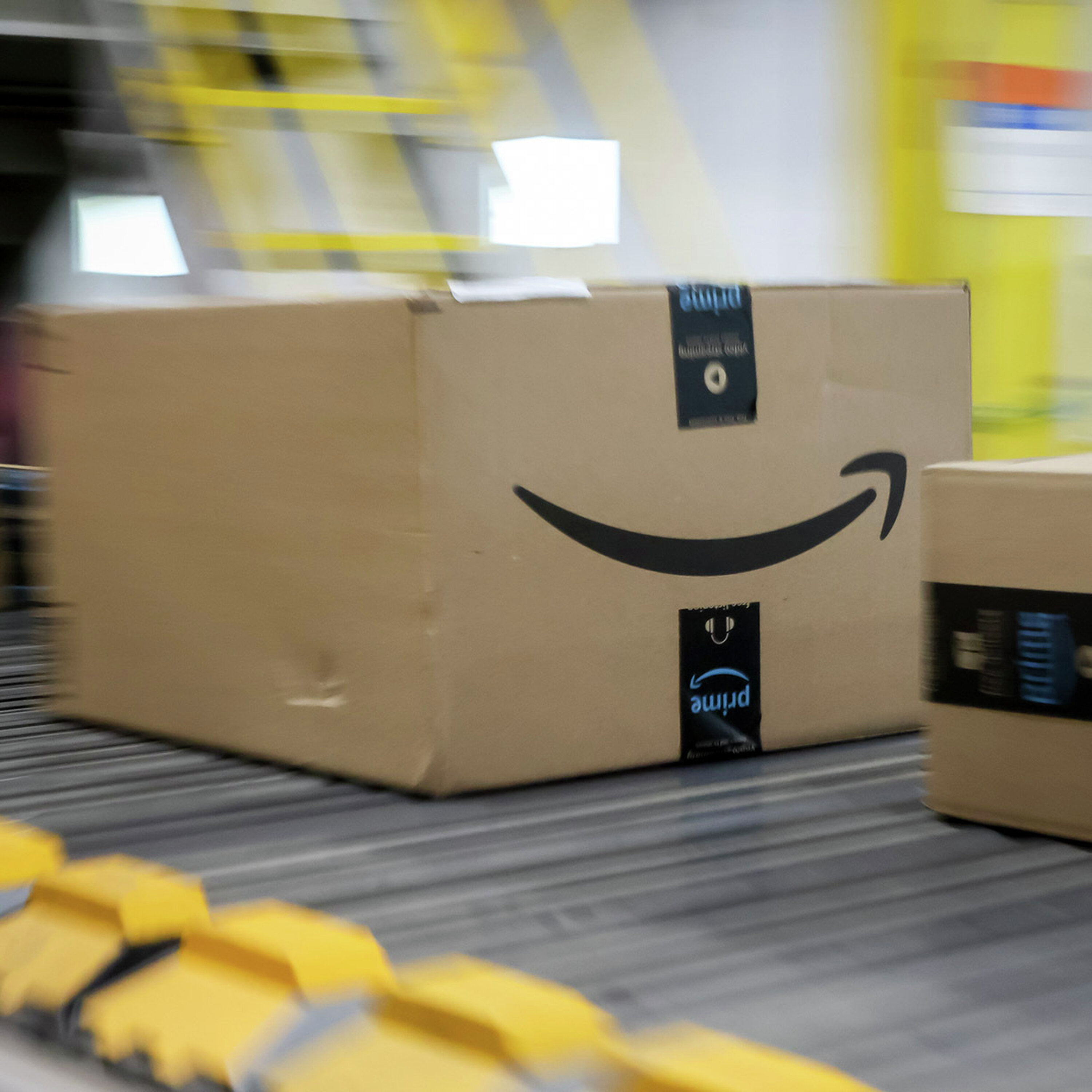
Loading summary
Transcript62 lines
- [00:00]
Comcast Business Representative
Modern enterprise. It's a lot of moving parts. Comcast Business helps orchestrate it all, with SD Wan keeping 150 hospital locations connected and zero trust security protecting a bank's 2,000 branches. No one does business like Comcast Business.
- [00:15]
Optum Representative
Healthcare doesn't always work great. If you've ever waited on a refill or couldn't schedule an appointment, you get it. That's the kind of stuff Optum is changing. They're using data and technology to integrate patient care, pharmacy and and everything else. So healthcare is connected, not complicated. What's that look like? Cheaper prescriptions that are easier to get and care that looks at the whole person how you need it. Optum is helping make healthcare work as one for everyone. Learn more@business optum.com Max Chaffkin here from
- [00:46]
Podcast Host
Everybody's Business Today, we're sharing an episode from one of our favorite Bloomberg podcasts, the Big Take. This episode is about friendly fraud and the uptick in credit card chargebacks. It features our Business Week colleague and friend of the show, Amanda Mull. And Stacy and I will be back with a new episode of this podcast, Everybody's Business, on Friday.
- [01:09]
Optum Representative
Bloomberg Audio Studios Podcasts Radio News Amanda
- [01:16]
Sarah Holder
Mull has been covering retail for years. She's tracked the demise of American malls, the explosion of fast fashion brands, and recently a growing sense of distrust between customers and merchants.
- [01:30]
Amanda Mull
People feel like they're being scammed left
- [01:31]
Sarah Holder
and right, sneaky subscription services that are hard to get out of, restrictive return policies, products that just don't meet expectations.
- [01:40]
Amanda Mull
It's a consumer environment where you feel like you have less and less purchasing power, less and less ability to, like, talk to another human about a problem you're having. So people look for ways to get back at retailers.
- [01:54]
Sarah Holder
One of those ways is something called a chargeback, essentially disputing a credit card transaction.
- [02:01]
Amanda Mull
It is when you go to your credit card issuer and go, hey, there's a problem with this transaction, or I didn't buy that, or I don't recognize this, I want you to reverse the charge. I'm not paying for this.
- [02:11]
Sarah Holder
Pushing back on a credit card charge isn't new, but Amanda found that it is happening more and more and more.
- [02:19]
Amanda Mull
From 2021 to 2025, the rate of chargebacks in the US rose about 29%, and worldwide it rose about 46%. So some of that is due to a greater number of credit card transactions overall. But most of that is because people are disputing more transactions for a variety of reasons,
- [02:41]
Sarah Holder
reasons that range from the
- [02:43]
Amanda Mull
legitimate Hey, I ordered this thing online. It never showed up. Yeah, they are not giving me a refund, but I didn't receive the product.
- [02:50]
Sarah Holder
To the deceptive, yeah, I bought this,
- [02:52]
Amanda Mull
but I don't want to pay for it. So I'm going to tell the bank that it was fraudulent, that it never arrived, that there was an issue with it. So I will just get this for free.
- [03:01]
Sarah Holder
I'm Sarah Holder and this is the big take from Bloomberg News. Today on the show how the rise of chargebacks is putting merchants on the defense and pulling banks into the fray. And what this growing trend says about shopper psychology and the health of the economy overall. For consumers, filing a chargeback can feel like a quick and easy path to getting a refund. But behind the scenes, a, it actually triggers what can be a long and complicated process.
- [03:32]
Amanda Mull
The bank goes to the merchant and goes. You have a transaction dispute, it charges them a fee, which can be, you know, 10, 15, $20, depending on the situation, depending on the vendors involved. And the bank investigates. The bank goes, okay, merchant, do you have a tracking number? Do you have shipper information? Can we contact the shipper? And then a lot of times for a very inexpensive transaction. On the other end of the spectrum, the bank may look and go, okay, you can have your $20. It's going to cost us $20 of labor to even start to look into this. So, like, we're not worried about it.
- [04:05]
Sarah Holder
Okay. So the rate of these chargebacks is increasing. And you looked at some of the reasons why. The biggest example being chargebacks that begin with a simple misunderstanding. What you call friendly fraud.
- [04:17]
Amanda Mull
Yeah. So you've bought something as a consumer in what the banking industry calls card not present transactions. So that's like all of online shopping. Plus things that, like, feel not so much like online shopping, but actually are, which is like ordering an Uber ordering doordash, like any, anything you use an app for that. Like, even if it summons something in real life, that is a card not present transaction. If you let your teenager put your card in Apple Pay and they start using it for stuff, because card not present transactions tend to bounce through a lot of, like, payments vendors in third parties. What they show up as on your credit card statement is sort of anybody's guess. So you, you might look at all of those things and go, I don't recognize any of these names who spent $50 on the app Store. Like, not me. Like, why would I do that?
- [05:03]
Sarah Holder
And you're like, where did that charge come from? I need to dispute that charge.
- [05:06]
Amanda Mull
And then there's also the issue of subscriptions. A lot of retailers will include seven days free or one month free, and then a recurring $12 every month that you may agree to. And like, it's a legitimate transaction in a legal sense. But like, you missed that it was put in a place where like, it was designed for you to miss it.
- [05:26]
Sarah Holder
Or you sign up for a free. You forget to cancel. But you meant to cancel, right?
- [05:29]
Amanda Mull
You meant to cancel and you look at your credit card statement and it feels like someone has stolen money from you.
- [05:35]
Sarah Holder
Yeah.
- [05:36]
Amanda Mull
So all of these transactions are disproportionately likely to be subject to chargebacks, when in reality none of those are fraud.
- [05:45]
Sarah Holder
Chargebacks have become really easy to file. Many banking apps have a button that lets you dispute a transaction. Consumers can often feel it's worth a try given that low barrier to entry and, and the high likelihood of getting a refund on a low dollar transaction.
- [06:00]
Amanda Mull
Especially if you have a premium credit card that's sort of like baked into the service where it's like, okay, if it's like, if you're disputing $7 on the app store that you don't think you bought, like, that's probably just getting refunded. The credit card wants to keep you happy. And also, like, it is a very labor and time intensive process to investigate credit card transaction disputes. So if below a certain dollar amount, and that can vary across card issuers, they just decide that, like, hey, we're just gonna honor these.
- [06:28]
Sarah Holder
So you also talked about this other category of chargebacks where people are basically intentionally using them to get free stuff.
- [06:36]
IBM Representative
Yes.
- [06:37]
Sarah Holder
Talk about this not so friendly fraud. How prevalent is this and how does it work?
- [06:42]
Amanda Mull
Well, it's growing in prevalence. I would say what you see with this type of intentional sort of malfeasance is generally younger consumers, you know, TikTok is a place where young people go sometimes invent classic types of fraud from first principles. And this is another one. You know, TikTok tries to take these down as they come up, but there's a lot of people on various social platforms telling you that like, oh, if you're like upset with how long shipping is taking, do a chargeback. If you're upset with how long it's taking them to like approve your return, do a chargeback.
- [07:17]
Sarah Holder
A weird trick to get your money back is fraud. Fraud.
- [07:20]
Amanda Mull
Yeah.
- [07:22]
Sarah Holder
But what you're describing is that, you know, in part this could be a nefarious impulse to get one over on a retailer. And in part it's responding to this feeling that consumers have that, you know, inflation is rising, companies are shrinking the size of their products and charging the same price. There is this feeling among consumers, I think, that they're getting scammed.
- [07:45]
Amanda Mull
Whether or not those scams are legally actionable, having subscription fees baked into everything in a way that like, is constantly surprising and that is hard to opt out of is like a bad consumer experience. It feels like being stolen from. Even if you as a company, you as a merchant followed the letter of the law, like getting rid of your customer service agents in order to divert everybody to an AI bot that like can't answer specific questions about non standard policy issues. Like that feels like you are being as a consumer sort of shunted into a system designed to keep your money even when something has gone wrong and you deserve some sort of redress or just want to talk to a person, like when you are spending your paycheck like you were supposed to have some sort of power in those transactions, like that, the American system is designed to tell you that that is where you assert yourself. And if it gets harder and harder to do that and things get more and more misleading and you feel like you don't have options for redress, you can see how people justify just reversing transactions.
- [08:49]
Sarah Holder
Yeah, using the chargeback as a way to claw back that power.
- [08:52]
Amanda Mull
And you might get a couple things that way. Like you, you might get a couple free T shirts, free app store stuff, but like overall, banks also, you know, card issuers look at who is filing a lot of chargebacks and they will close your account if you are doing it in a really egregious way. I don't think it's beyond the horizon of possibility that they will, you know, report you to law enforcement if they think you're doing it in felonious way.
- [09:19]
Sarah Holder
And to be clear, because this is illegal, it is illegal to erroneously file a charge back when you have not been defrauded.
- [09:26]
Amanda Mull
Yes, it is illegal to claim that you were a victim of that crime in order to gain a financial advantage over, over a merchant.
- [09:35]
Sarah Holder
Yeah, hear that? Hear that kids?
- [09:37]
Amanda Mull
Yeah, it's illegal. You know, there's a variety of consequences that can happen because of this. Like you can have your credit card closed which will ding your credit report, like will be in bad standing with that financial institution. And then also depending on like where you're doing the chargebacks, like they might decide that they don't want you as a customer anymore. You know, people get very mad at airlines and whether or not a service was rendered as promised is sort of in the eye of the beholder when it comes to the travel industry, the hospitality industry. But if you file a chargeback against Delta or against United, they might decide not to do business with you in the future. The same is true of hotels. Like if you are filing like a lot of chargebacks against these large businesses that have reason to suspect that you are filing them in a punitive way instead of because of a real issue, like they can choose to close your account, they can choose to ban you from their service like you can get banned from Amazon. People who do this a lot often have their purchasing options curtailed in certain
- [10:41]
Sarah Holder
ways after the break. The consequences of the chargeback craze for retailers, banks and society.
- [10:53]
Comcast Business Representative
Modern enterprise that's a lot of moving parts. Comcast Business helps you orchestrate it all with SD WAN working at scale to keep 150 hospital locations connected and working as one plus SASE and zero trust security protecting financial data across a bank's 2000 branches and AI powered networking that optimizes traffic across five continents. No one does business like Comcast Business,
- [11:23]
IBM Representative
so there's a lot of noise about AI. But time's too tight for more promises. So let's talk about results. At IBM, we work with our employees to integrate technology right into the systems they need. Now a Global workforce of 300,000 can use AI to fill their HR questions, resolving 94% of common questions. Questions, not noise. Proof of how we can help companies get smarter by putting AI where it actually pays off, deep in the work that moves the business. Let's create smarter business.
- [11:52]
4imprint Representative
IBM it's time to plan ahead and make sure your brand is showing up in ways that can have an impact. That's where 4imprint comes in. 4imprint have promotional products that work as hard as you do. Durable, useful and designed to make a lasting impression. Think quality apparel your team will wear again and again, including popular and exclusive brands. Drinkware that's enjoyed again and again, bags, notebooks, tools and tech items that don't just look good but actually get used with thousands of customizable options, 4imprint makes it easy to find what fits your brand and your budget. You'll get expert help, free samples and their 360 degree guarantee means you can be four imprint certain your order shows up just right right on time. Whether you're gearing up for fall events or simply planning ahead for the season, 4imprint can help your brand show up, stay useful and make connections that last. Explore the possibilities@4imprint.com for Imprint for certain
- [12:51]
Sarah Holder
so we've talked a lot about consumer psychology here, but I want to also talk about what this all means for merchants. What has the rise of chargebacks meant for these companies, either the big retailers like Amazon or the small businesses that are experiencing this.
- [13:06]
Amanda Mull
For big retailers, big companies, big merchants, to a certain extent, they're just going to roll it into the overall price levels that they charge, like it is the cost of doing business. A lot of them have engaged third party vendors, specialists who have particular like AI capabilities to separate the wheat from the chaff in these complaints and like figure out which ones they actually need to deal with versus which ones they can sort of IGN or, or just ban that customer or something like that.
- [13:34]
Sarah Holder
So third party companies that work with them to identify chargeback fraud, identify chargeback
- [13:40]
Amanda Mull
fraud and to sort of do the work of like gathering evidence and presenting a case to the bank and like trying to sometimes reach out to the customer and figure out if there's a way to come to a understanding before, you know, things go further. Because if retailers incur too many chargebacks, like that is a problem for them. Payment processors don't want to work with companies that incur a lot of charge. That makes you a high risk merchant. And it means that you were going to have to pay higher transaction fees to credit cards and it means that you were going to have to keep larger cash balances in escrow to deal with disputes that come up.
- [14:16]
Sarah Holder
These merchants are hiring these third party actors. How much is that costing them?
- [14:21]
Amanda Mull
It costs a lot of money for a lot of vendors. There's going to be a per investigation fee and then there's like the sort of general retainer and like the onboarding a vendor into your very large business is always quite expensive. I don't have like a specific number because it really depends on the size of the business, the suite of services. But it is, it is an enormously expensive thing because chargebacks are enormously expensive. If you lose a chargeback that you shouldn't have lost as a merchant, you're out the penalty, you're out the revenue, and you're out the product or the time.
- [14:54]
Sarah Holder
So it's expensive to fight chargebacks, but not as expensive as it is to lose a chargeback claim.
- [15:00]
Amanda Mull
Yes. For small merchants, the impact is more direct. If someone files a chargeback against you as a merchant, you were getting charged the chargeback penalty by the bank. Even if you win the dispute. That's $15, let's say out the door immediately.
- [15:17]
Sarah Holder
And what about banks? What does it mean for banks? To be sort of in the middle of this negotiation, this tug of war, how are they responding to the rise of the chargeback?
- [15:26]
Amanda Mull
Sort of like merchants, they are employing a lot of, like, new types of technology to sort of, like, figure out which are the disputes that they need to focus on, that deserve manpower, that deserve an actual investigator. Which ones are the ones that they can, like, deny pretty quickly, and which ones are the ones that they should go ahead and probably approve pretty quickly. There's various types of technology, various types of vendors that do that as well for banks. And then really, your recourse as a bank, if you're not going to refer someone to law enforcement, if it's not a situation where there's like, a massive scale of these fraudulent chargebacks, then if someone is abusing the system and creating a lot of work for you as a bank in a way that looks like probably, like, potentially criminal activity, then you can just close their account. And then, like, the payment processors also are trying to identify bad actors on the merchant side. A company that is constantly being disputed is probably doing something that, like, makes you not want to associate with them as a processor.
- [16:24]
Sarah Holder
Help me understand how big of a deal this phenomenon is. Like, is this something that's a warning sign about our economy writ large, that all this money is flowing into this chargeback economy, that trust between consumers and merchants is breaking down like this?
- [16:39]
Amanda Mull
I think it is a big deal. Like, I think that the financial implications for it, especially for small businesses, like, are a really big deal. We're talking about, like, hundreds of millions of transaction disputes. It is a really large number annually, and that's a lot of money that is sort of being sucked into this, like, weird gray area of, like, maybe it is involved in fraud, maybe it is not. But it's an indicator that, like, our interactions with the economy have gotten more confusing and more stressful. And more broadly, I think it is just like, another indicator of trust that undergirds a lot of elements of, like, living in a functional society is breaking down. Like, we have sort of, I think, lost a sense of, like, who it is we're dealing with and that, you know, whether or not there actually is a human on the other end of that transaction. And it makes us a little bit less trustworthy to each other. And I think it motivates people to act in untrustworthy ways.
- [17:38]
Sarah Holder
This is the big take from Bloomberg News. I'm Sarah Holder. The show is hosted by me, David Gura and Juan Ha. The show is made by Sean Carter, Aaron Edwards, David Fox. Jeff Grocott, Paddy Hirsch, Rachel Lewis, Kriskell Emma Munger, Laura Newcomb, Naomi Ng, Julia Press, Tracy Samuelson, Naomi Shaven, Victor Sweezy, Alex Sugiura, Julia Weaver, Yang Yang, and Taka Yasuzawa. Our Executive producer is Nicole Beemsterboer. To get more from the Big Take and unlimited access to all of bloomberg.com, subscribe today@bloomberg.com podcastoffer if you like this episode, make sure to subscribe and review the Big Take. Wherever you listen to podcasts. It helps people find the show. Thanks for listening. We'll be back on Monday.
- [18:37]
Podcast Host
When you're running a business, the best days are the ones where priorities stay on track. For midsize and large companies, risk can affect multiple parts of the organization at once, from property and liability to cyber and regulatory challenges. At that level, managing risk becomes an ongoing discipline. At the Hartford, the focus is on helping businesses manage risk before it turns into something more disruptive. And when losses do happen, that work is paired with insurance coverage shaped by years of underwriting, risk engineering and claims experience. Learn more@thehartford.com riskmitigation policies provided by Hartford Fire Insurance Company and its property and casualty affiliates.
- [19:16]
4imprint Representative
Hartford, CT it's time to plan ahead and make sure your brand is showing up in ways that can have an impact. 4imprint's promotional products are designed to work as hard as you do and make a lasting impression. From quality apparel, including exclusive brands, to drinkwear, tech and totes, they've got thousands of options to fit your brand and budget. Plus, you get free samples, expert help and their 360 degree guarantee. So you can be four imprint certain everything shows up just right, right on time. Explore more@4imprint.com 4imprint for certain as industries
- [19:51]
Michigan Business Representative
evolve faster than ever, companies need an environment that accelerates strategic growth and Michigan delivers on that promise. From emerging startups to global enterprises, Michigan offers what executives value most a resilient, innovative ecosystem, diverse communities that attract top talent, and a quality of life that supports work life. Balance with our unified Team Michigan approach, businesses scale faster and compete at the highest level. Michigan Pure Opportunity Seize your opportunity@MichiganBusiness.org.