Loading summary
Transcript169 lines
- [00:00]
A
There are two kinds of people in the world. People who think about climate change and people who are doing something about it. On the Zero podcast, we talk to both kinds of people.
- [00:09]
B
People you've heard of, like Bill Gates.
- [00:11]
C
I'm looking at what the world has to do to get to zero, not using climate as a moral crusade.
- [00:18]
A
And the creative minds you haven't heard of yet. It is serious stuff, but never doom and gloom.
- [00:23]
B
I am Akshat Rati.
- [00:24]
A
Listen to Zero every Thursday from Bloomberg Podcasts on Apple, Spotify or anywhere else.
- [00:29]
B
You get your podcasts.
- [00:33]
C
Bloomberg Audio Studios, podcasts, radio news.
- [00:42]
D
This is everybody's business from Bloomberg Businessweek. I'm Stacey Vanek Smith.
- [00:46]
B
I'm Max Chavkin. And Stacey, we're talking about prediction markets this week.
- [00:50]
D
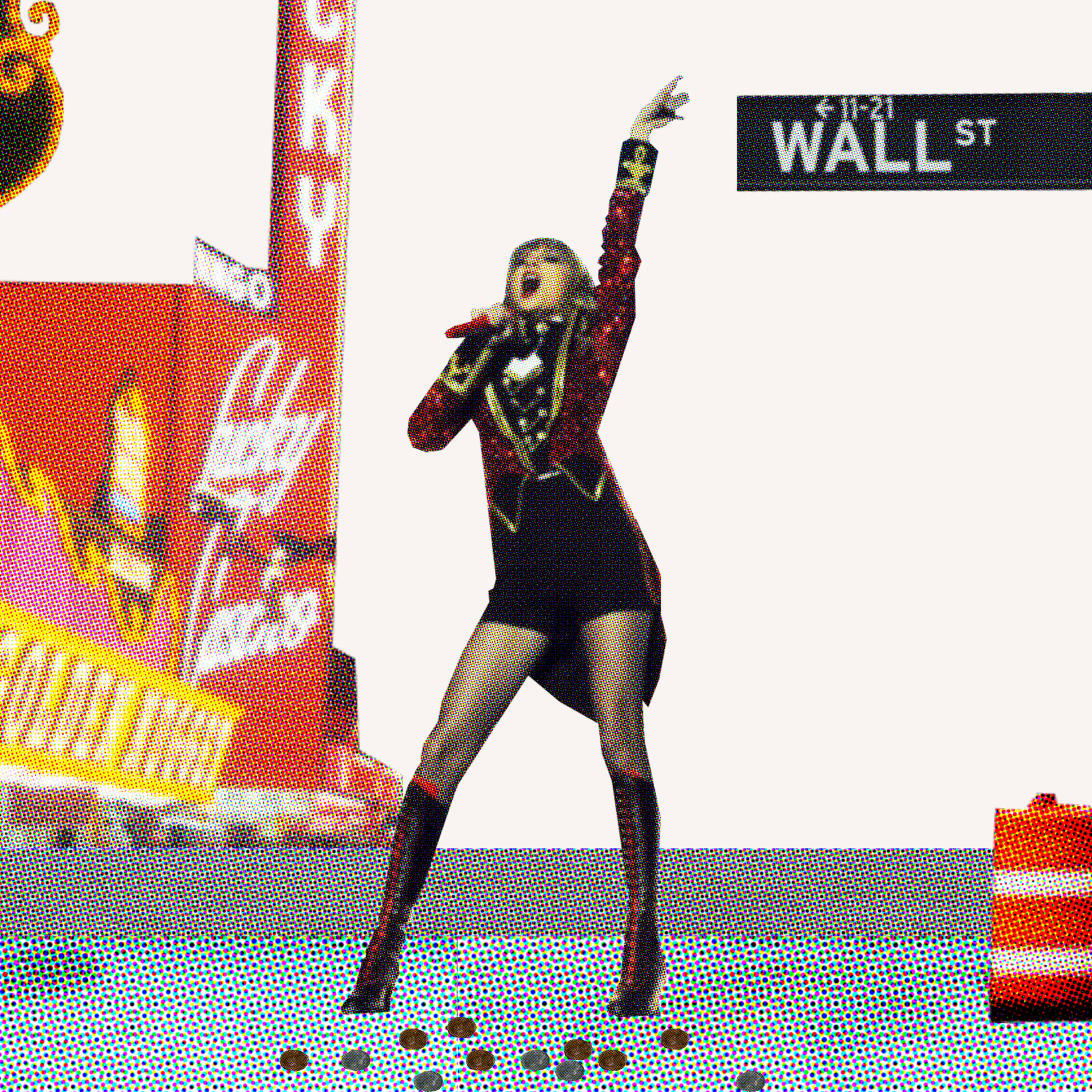
Yes. And we are not just talking about the stock market or the price of oil or things like that. There are huge, huge markets where you can predict everything from how many times Taylor Swift is going to mention Travis Kelce in her Tonight show interview to whether or not President Trump is going to pardon Ghislaine Maxwell. You can bet on it all. And it's big money. We've got the great Joe Wiesenthal coming to talk with us about that.
- [01:16]
B
Yeah. And then we've got another good conversation in the second half of the show. It's with Casey Newton. Stacey, there's been a lot of AI hate on this show.
- [01:23]
D
I think all the AI hate comes from you.
- [01:26]
B
Largely my doing. I agree. And we wanted to put provide a little balance because we care. This is a fair and balanced podcast. And so Casey Newton, reporter with Platformer as well as podcaster, his podcast called Hard Fork, about this question that we have been circling around for weeks and weeks and weeks, which is is AI any good?
- [01:46]
D
And Max, for our underrated story, I'm going to bring it all full circle with what is probably the oldest predictions market on earth.
- [01:54]
B
I'm just trying to think of what it could be.
- [01:57]
D
Maybe you should place your bets.
- [02:02]
B
Stacy, I think before we get into this conversation, prediction markets, I just want to touch on the big, like, economic story that's playing out right now, which is that basically AI slop is keeping the entire economy float. It feels like we've had these mega investments from OpenAI and Nvidia and money going from one into the other into the other. And you're seeing this increasing chatter. A lot of people starting to really worry that this might be a bubble, maybe apart from the question of does this stuff work, which we've spent a lot of time talking about. But whether or not it works or not, like we're heading towards something that'll look a lot like the dot com crash.
- [02:44]
D
One man's slop is another man's like blue chip stock. Max. I think there is skepticism and worry that things are overvalued in AI, but I think the transformational power of AI and the fact it could very much and is changing the foundations of our economy, I think that's pretty much.
- [03:03]
B
Are you reading a script that ChatGPT wrote for you right now?
- [03:07]
D
Because that.
- [03:07]
B
Yeah, that sounds like I am talking to ChatGPT right now.
- [03:10]
D
It felt very strongly about the economic transformational powers. No, I'm just like looking around the economy and talking to economists and I'm a believer if we had to place a bet on whether or not AI will transform our economy a foundational way, I would bet, yes.
- [03:27]
B
Now, the weird thing about this, and this is a nice segue, Stacy, into the prediction markets thing is you of course can make a bet on whether AI will change the world or not. It's called the stock market. You could buy some stocks in anything but the S&P 500, which of course is dominated by these companies. Like there are all these ways to bet on what's happening. And the main way to do that, of course, has been to buy stocks and bonds and, and to make investments. But. But there is this kind of new way which is sort of like halfway between financial services and gambling.
- [03:59]
D
Yes, these betting markets. So there was a big piece of news this week. The owner of the New York Stock Exchange just placed a couple billion dollar bet on polymarket, which is this site where you can place bets on just pretty much anything you can imagine. Like, you name it, you can bet on it. And we wanted to ask people on the street, like, are they betting and are they using these markets to bet? So our producers, Magnus Henriksen and Stacy Wong, went out to ask people, do you bet? What do you bet on? And are you using these new markets to place your bets? Here's what they said.
- [04:34]
B
Do you do any kind of betting or gambling?
- [04:37]
A
No, not in America, but in Australia we do.
- [04:39]
B
Like Australian rules football.
- [04:41]
C
Horse racing's pretty big.
- [04:43]
D
Never. I would want to gamble on something that I feel informed about, like the various dimensions of like Taylor Swift's wedding, like where is the wedding going to take place? Like how many dresses is Taylor going to have? Stuff like that.
- [04:54]
C
What I do in the stock market's more like gambling.
- [04:57]
B
Just trying to find chart patterns that.
- [04:58]
C
Look like it's Going to move and taking a bet on a position, whether.
- [05:02]
A
It'S going to go up or down.
- [05:03]
B
Have you ever tried betting on something.
- [05:05]
C
Like Polymarket or Kalshi?
- [05:06]
B
Like when you bet on, you know, random things, basically?
- [05:08]
A
No, not for me.
- [05:09]
C
I'll leave. I'll leave it to the youth of America to bet on Kalshi and Polymarket.
- [05:14]
A
Uh, no, not like elections wise. That's like really degenerate behavior. I remember I saw something. I think it was on Kalshee.
- [05:21]
B
It was like, what is the probability.
- [05:23]
A
That Jerome Powell will open his Federal Reserve speech with the phrase good afternoon? When I hear market people talk about.
- [05:31]
B
Polymarket and what polymarket's saying, I kind of pay attention. But I haven't looked at it myself.
- [05:36]
C
Could you consider doing that?
- [05:38]
D
Yeah, potentially.
- [05:39]
C
Yeah.
- [05:39]
A
Yeah, it's something I really should look into.
- [05:42]
D
Okay. I love this tape. I didn't realize so many people were into gambling, which is weird because I'm in New York and that's kind of what this whole city is built on.
- [05:50]
B
Mean. Listen. Regular listeners of Bloomberg Podcast may recognize at least one of those voices in there as David Papadopoulos, the host of Elon Inc. Who is famously to. To our audience at least, a degenerate gambler. So I was surprised, I was shocked.
- [06:07]
D
I would never. That he had never concede that David Papadopoulos is degenerate anything. If he is a gambler, he's an upstanding game, loves to gamble.
- [06:16]
B
And the fact that he hasn't tried, that's another one where you're like, wow, like people who like gambling haven't even tried this thing. It must have a long way to go. Like maybe a lot of growth ahead of different people.
- [06:26]
D
I feel like the stock market has all this lore and sort of math around it, and this is just newer. It's maybe it's like, maybe this is like a gateway drug.
- [06:35]
B
Yeah, I mean, we're going to be exploring this topic in a conversation ahead and again next week. So we've got to another little preview for. For folks. We'll have another interview with one of the biggest gamblers on Polymarket. I think the biggest actually the following week. So. So we're going to get an education.
- [06:52]
D
I'm very excited for this conversation. So, Max, as we talked about this week, the company that owns the New York Stock Exchange has said it is going to invest $2 billion in poly market.
- [07:09]
B
Yeah. ICE, which is kind of funny, is the owner of the New York Stock Exchange, the inner continental.
- [07:13]
D
It's not that ice. It's not the same.
- [07:15]
B
It's a different ICE. Intercontinental Exchange, I believe, is the, the name of the entity investing $2 billion in this thing, Poly Market, which is one of these prediction markets we're talking about.
- [07:24]
D
Yes. And in this prediction market, like I logged on this morning, you can bet on anything from how many times Taylor Swift will mention Travis Kelce on the Tonight show to whether or not Israel will bomb Iran, to who will win the Oscar for Best Actor. And all of these bets, by the way, had more than half a million dollars worth of bets placed on them.
- [07:44]
B
Yeah, and I know I'm stealing his line, but this is the perfect conversation for our guest. Joe Weisel is 100% the perfect odd loss podcast. He's joining us. Hey, Joe.
- [07:53]
C
Hey. Thank you for having me.
- [07:54]
D
Yes, absolutely. So, okay, Joe, before we get into the, the mechanics of this deal and what it means, what, what are these markets? Because these are kind of new and I was shocked to see, like kind of scruffy from what I understood.
- [08:09]
C
Sure. You know, they've been around for a while at very small scale. And it started, you know, even like longer than 20 years ago, people sort of theorized this idea that why can't we have bets on all sorts of things in real life, et cetera, and we could glean information for, from them if we could. So, for example, you mentioned a market on whether Israel is going to bomb Iran again at some point. Now, this is a question that has a lot of high stakes for people, Right. If you're invested in the oil market, if you care about other things, this is a high stakes question. And there are people out there who have informed views or semi informed views because they understand geopolitics or Israeli politics or whatever it is. And so the idea, and people have been talking about this for a long time, is that, well, wouldn't it be great if we could incentivize people to sort of put a price on these views that their knowledge, ability to monetize their knowledge so that we actually had some sort of way of measuring what conventionality.
- [09:03]
D
Crowdsourcing.
- [09:04]
C
A way of crowdsourcing. Right. Which was of course a very early Internet buzzword like that's been around for a while. And so the idea they were small for a while, the regulation was very difficult. Some existed for political events, but they're sort of constrained in terms of size. The thing with polymarket is they sort of went around, they circumvented the regulatory framework.
- [09:25]
B
They just didn't follow the rules.
- [09:26]
A
Rules.
- [09:27]
C
You could argue that they, it's all on chain, it's funded with stablecoins blockchain.
- [09:33]
D
Like you have to use crypto to bet on this market and you can't legally do it from the US Right.
- [09:37]
C
And so the rule was US users couldn't use it. Of course with a VPN and cryptocurrency and stable coins you could circumvent these things. But they sort of built up that critical mass of scale and liquidity outside of the sort of US regulatory perimeter. And then with the changing of the administration and the sort of new attitude towards crypto, there's a clear move whether at the cftc, the administration, it's like we want these to be real things, we're going to regulate them, et cetera. But these are allowed. And so you have the two big ones are polymarket which is sort of unregulated crypto based and then Kelsey which is more straightforwardly put your fiat currency on there and you know they have. But it's very similar structure.
- [10:21]
D
Why are these so big and popular? Because like you said, there are, there are serious things you can bet on that would require some knowledge. But there are also things like how many times is Taylor Swift going to mention her boyfriend's name on the Tonight show which.
- [10:34]
C
Right.
- [10:35]
D
It's not $700,000 worth of bets.
- [10:37]
C
Yeah, I mean I would say a few things which is that yeah, $700,000 is. Yeah, it's not nothing. But the real action on these sites is sports. Like there's so much money on these sites for like betting on a football game, etc. And so this is an alternative model to the sort of traditional sports book rather than a house sort of setting the odds or moving the line depending on supply. Why not just have a thing. I'm going to go long the contract that, you know, whoever Pittsburgh beats Detroit, you're going to go sell it. That is where so much of the activity is happening. And so what you have, if you really look at volume breakdown, what you have is a lot of interest in sports, some interest in politics, especially around big elections and then the everything else is like kind of niche.
- [11:25]
B
I'm glad you brought that up because when I look at Polymart and I see the sports bets and you're right. Like I think to myself, have you guys heard of like DraftKings? Like there are like other ways to bet on sports. There are also as you said, like other ways to bet on some of these. There's like, there's an oil price contract in here. Like you obviously can bet on Oil, like no, you know, yeah.
- [11:44]
C
So I think something for oil is that a lot of people, maybe they want to bet on oil, but do they have like an oil futures broker, etc. I don't think so in many cases. Now I guess the question is how many people really want to make a bet on oil that don't have a sophisticated oil trading platform? I don't think the population is that big. I think most people who want to place a directional bet on oil for some reason probably have the infrastructure in place to do it. But you can still sort of imagine that there might be some market out there. So for example, it's not polymarket per se. The CME Chicago Mercantile Exchange recently partnered with DraftKings. And so what they're going to do is essentially offer retail the opportunity for traditional financial markets.
- [12:32]
D
Really?
- [12:32]
C
Yeah, absolutely. Within the context of a sports betting company now they're going to have a separate app, etc.
- [12:37]
D
I feel like investing and gambling are just the this is the story dissolved.
- [12:41]
C
There's no this is the story.
- [12:44]
B
Are the gamblers, the sports bettors betting on other stuff or are the commodities traders betting on sports?
- [12:49]
C
No, the idea, I think the idea is like, okay, you're a sports better, you want to bet on football. It's like, well, why not bet on gold? It's like from the same app. So I think what you're the way to think about this is that every entity, whether they're in something that we traditionally called investing, whether something that we traditionally call hedging, whether we called it speculation, whether we called it gambling, they're all merging. Every one of these platforms is going to want to be able to offer everything from sports to politics to events, to crypto to finance.
- [13:18]
B
I think a lot of sports bettors, they don't think of it the same way they think about their investment portfolio. It's just fun. Right? And obviously there are people who are professional gamblers. There are also people who have like gambling problems. But I think a lot of people, people I know, they invest in index funds and they do smart things with their retirement savings, but then they also like have a little fun on the side. And, and I'm wondering, is that what's happening in these prediction markets or is the line blurring? Because if the line is blurring, that seems like really bad for people. I like remember when Wealth Front, which was like one of the early fintech companies like wouldn't let you buy stocks.
- [13:55]
A
Right, right.
- [13:55]
B
You, they would only let you buy these like broad based index funds because they were like, this is, you know, you should not be buying stocks. That's that, that is like even like.
- [14:03]
D
E trade I think. Was that the first time you could just go in without a, and just buy a stock?
- [14:08]
B
But, and so my point is like the idea of just like throwing that all out the window and being like, not only should, is it, is it totally great to just like buy Tesla or, or buy Palantir or whatever, but hey, maybe just, maybe just buy some derivatives in OpenAI or maybe buy some, you know, Bitcoin or whatever. Like it just seems like people are doing really, really, really dumb things with their money right now.
- [14:31]
C
Yeah, I'm not going to, I'm not going to argue, I'm not going to take the other side of that. But I think, you know, there's a range look like someone could have their sort of mass of their money in some low cost index fund that they never touch and just maybe buy a little bit more every month. And then their fun money, whether it's sports betting or betting on options or betting on what Taylor Swift is going to say, people like to have fun. That's not a crime, you know, But I think there is this cultural change underway where people do not think it's legitimate. The idea that, oh, there are some bets that I don't have access to. Who are you to tell me that I can't bet on sports? Who are you to tell me that I can't bet on gold? Who are you to tell me that I can't bet on a presidential election outcome? And technology has made it so that all these bets are capable of happening at any scale in theory and the regulatory environment has changed so that people could sort of do anything they want and sort of all come together.
- [15:26]
D
I mean this deal with the New York Stock Exchange owner values polymarket at $8 billion, which is big. I mean, with all this stuff opening up, which it seems like it just is, is that good or bad for the economy in your opinion?
- [15:43]
C
It's hard to know what the sort of real economic effects are going to be of any of this. I mean my hunch, my deep down hunch is that the world would, we would have a stronger economy if people weren't focused on betting and stuff. I would rather, I think I would prefer to live in a world, I guess, where there wasn't a sort of intense speculation culture. But I do think a concentrated number of entities are going to make a lot of money for this and a lot of people will lose money from this, which is the Story of all casinos, et cetera. And that probably has on the margin some negative macro effects. But I don't, I think this is just the world we sort of live in. Right.
- [16:24]
B
Can we talk about the upside? Like, one sort of positive thing about this, which is like, it has become. I was just expressing a lot of skepticism about the wisdom of investing in these things. But, like, I find polymarket and Kalshi just like, super interesting and very informative. And during the presidential election, like, it was a great way, if you, if there's a new poll.
- [16:45]
C
Yes.
- [16:45]
B
To be like, okay, like, how should I think about this new poll?
- [16:48]
C
I completely agree. From an information consumption standpoint, it's very interesting in some of these cases. I think getting a price on what's conventional wisdom is very useful. So, for example, people say, okay, Trump is the favorite going into the election, or we think. People think Trump is going to win. All right, but what does that mean? Does it mean he has a 90% chance? Does it mean he has a 55% chance? There's quite a big difference in what does it mean to be the favorite. And so I, the way I think about a lot of these things is what is conventional wisdom actually at. Because it used to be very vague. What. Conventional wisdom is a term that's been around forever. But actually putting a number on what some of these things mean is really helpful. New information comes out, a new poll comes out, the people who are informed about how. How seriously should we take this pollster? What is the information that's actually new in this poll, et cetera. It's nice to sort of have this information metabolized by people who are, who have money on the line by people, have some sophistication about these things. I find that useful. If you, if, if someone has an idea and they're like, you know what? This price is totally off base. The people are really uninformed. Well, that creates an opportunity to trade, to make money, to arbitrage that difference. So that creates an incentive for the price to move towards what more informed bettors actually think the price ought to be. These are, as a vehicle for information consumption. I am a fan. I find a lot of this stuff to be very useful.
- [18:17]
D
What about the possibility of insider trading in a lot of these cases? Is that a concern? I mean, are these markets fair? I mean, they're very open. Are they fair?
- [18:27]
C
You know, I think a lot of people would say insider trading is desirable if you want to get that price. No, for real. I think if you want to get.
- [18:32]
B
That it's the whole point of it.
- [18:34]
C
Yeah.
- [18:34]
D
If you want to get these, you're an insider.
- [18:36]
C
If you want to get real information, what is the odds of X or Y happening? What is the odds of the government shutdown coming to an end? Something where, like, someone actually knows something that, you know what? I, I have reason to believe that my boss is participating in negotiations that will bring these, the shutdown to a close sooner and then that can move the price, et cetera. That some would argue that this is a way of bringing greater transparency to the world. It's like, why is this market suddenly moving? And granted, it creates a lot of potential perversities, which we can all anticipate, but I do think a lot of people would say, no, we want you to trade on inside information so that the price of this market better reflects the real world.
- [19:23]
B
That was Joe Weisenthal from the Odd Lots podcast. His podcast is awesome and it's worth checking out. All right, Stacy, you and I have been talking about AI, Kind of puzzling over the sort of business story and all these companies that are growing very quickly as well as the kind of larger economic story. Also. The.
- [19:50]
D
One of the biggest forces shaping the economy right now. Yeah, unquestionably.
- [19:54]
B
And, and I wanted to have a conversation with somebody who's paying, I'd say, like closer attention to this than you and I are. Casey Newton, who is the editor of Platformer, which is an awesome technology substack that everyone should subscribe to. He's also the co host of Hard Fork. He's here right now. Hey, Casey.
- [20:13]
A
Thank you. We actually moved off of Substack last year because of all the Nazis. But it's, it is a newsletter, Sorry, Platformer News.
- [20:21]
B
Do you use Ghost now? I can't remember. It's called Ghost Takeover.
- [20:24]
A
We just have a website now. We build a good old fashioned website over at Platformer News and we encourage people to make it their homepage.
- [20:31]
B
I love it. But Kasey, I want to start with like sort of two pieces of news that cross my desk, probably across your desk. And the first one is a study that came out of MIT, I believe, and it was about AI generated work slop. So 40% of employees in this survey of, of a ,ousand or so US based full time employees reported having received work slops. So this would be like substandard work output from one of their colleagues. And then the other piece of content, I guess that I want to bring out was a letter from the new CEO of Open Door. It's full of excitement. You Know, Open Door is kind of a meme stock, and it. It talks about how basically everybody at this company needs to default to AI. If you're not defaulting to AI, you're going to get fired. I have to default to AI, he says. Everybody else does. And I bring these two things up because I feel like there's a disconnect. Like, on one hand, you have an executive class saying, like, you need to use AI. We're going to fire you if you don't, or we're going to try to incentivize you if you don't. And then a reality that is not living up to that expectation. And I was hoping we could kind of unpack that.
- [21:46]
A
Let's unpack it.
- [21:47]
B
Is AI making people more productive at work, or is it just kind of messing things up?
- [21:53]
A
Yeah, I mean, it's like, it's the boring answer that's always true. Which is. It depends. Right? Like, is it possible to get your work done a lot faster and better than you might have otherwise been able to by using AI? Absolutely. Is it also possible to just waste a lot of time and create subpar slop and make your coworkers endure it and possibly have to do more work than they otherwise would? Yes. But that's why I think letters like the one from the Open Door CEO are so silly, because there is no generally understood way to default to AI. Like, you read this man's letter. He says, if you use Google Docs, you're not defaulting to AI. Should I write my docs in the ChatGPT text box? Like, is that defaulting to AI? Like, so there's so much, like, silliness around all of this. And if I worked at Opendoor, I would be very afraid of this new CEO because I'm not sure he understands how any of this works.
- [22:50]
D
Okay, I have a really basic question that I wanted to put to you, which is, do you mind explaining exactly what workslop is? I mean, I think I understand, but I feel like it's this new term everybody's using, and I. I don't really understand it.
- [23:04]
A
Yeah, I mean, look, sometimes when I'm writing a piece and it's about some subject that I'm not super familiar with, I'll go to one of these AI tools and I'll say, hey, like, pull up a report for me about this. You know, like, maybe tell me some stuff I don't know about this thing.
- [23:17]
D
Yeah.
- [23:17]
A
And I'll read through it, and there's usually, like, a few gems in there that enhance my understanding of something. And then there's like 3,000 words of stuff that I sort of already knew or stuff that's just kind of like circling around the point. And I ignore that. But what I think is happening in a lot of workplaces is that people are running similar reports or they're using AI tools to generate similar sort of multi thousand word documents. And then they're just sort of passing them along to their coworkers and saying, hey, do something with this. Yeah, here's my, here's my, you know, hot new report about this. And that may indeed give your coworkers more work to do. So that's how I understand workslop.
- [23:54]
B
How sure are you that it's making you more efficient? Like, like that either the time or the money that you're putting in to these tools is actually paying back?
- [24:05]
A
Yeah, I mean, so I view it as part of my job to use these tools and understand the state of the art. I write about them and then people money to read what I wrote about them. So in that sense, like, yes, all of it is paying off, but do I also spin my wheels and waste time? Absolutely. And this was a conclusion I came to a few months ago that it's very easy to use AI tools for a couple of hours and tell yourself that you're getting a lot done. And then you look back at it and you realize you were just like kind of typing into a box that is maybe just telling you what you want to hear or telling you random facts that aren't actually contributing to your work. So I think the challenge if you want to use AI in your life in a productive way is understanding what are they good at and how do you sort of like get in and out without spinning your wheels a bunch.
- [24:52]
B
And it's tricky, you know, and there's some research backing this up, right? There's surveys of workers asking them, and we've talked about on the show, like asking them to estimate their. How productive they are and then comparing it to trying to at least trying to create some objective measures of productivity. And it definitely makes it seem like people think they're more productive than they actually are using these tools because it's, it keeps you busy.
- [25:17]
A
Yes, it absolutely will keep you busy. You know, you can sort of just let it run all day long and it's like kind of an attractive nuisance in that way.
- [25:26]
D
Okay, I have a larger question for you. I feel like one of the big debates coming up right now is how much is AI really going to transform businesses and our jobs. And this has become this like pivotal thing in the economy. Like there are people saying, oh, this has been way overestimated. All this value in the stock market is actually not real. And then there are other people saying this is going to take all of our jobs. And I really want to know what your perspective on this is. Like, what do you see?
- [25:55]
A
Yeah, so I mean I do lean a little more on the side of I think this stuff is really important and I think it's going to change a lot of people's jobs. You know, you look at anthropic announcement in May disclosure, my boyfriend works there that they had created a model that could work uninterrupted on a problem for seven hours at a time. And we all said, wow, that's like, okay, you're, you're almost at a full workday. Wow, you can get a tool doing that for seven hours. That probably would have been somebody's full time job before this. Fast forward to this week that we record this anthropic put out a new model and it works on a problem for 30 hours. So that's a more than four times increase over a period of five months. So I think the move here is less to try to put your yourself in the space of like, what will this all look like when all of this is over? Because that's just truly an impossible question to answer. What I do think you can do is try to observe the rate of change and understand that we're living through an exponential. The models are getting exponentially more powerful across these different dimensions and ultimately exponential.
- [27:00]
B
No, I mean I think across, maybe across certain benchmarks, but I don't think we know whether they're getting exponentially. Exponentially. I mean that is like a lot better.
- [27:11]
A
So you don't think there's been an exponential change in capability between GPT2 and GPT5?
- [27:15]
B
Absolutely not.
- [27:15]
D
I don't, I disagree.
- [27:17]
B
Exponential. That's, that's not like.
- [27:19]
D
But you don't use ChatGPT.
- [27:21]
B
I've used it enough to see that it's not exponential. But, but here's my question for you, Kasey. You and I have both been doing this for a long time covering tech. I mean and like we have seen this movie before, right? Where like AI technologists tend to overestimate the like, how, how close their technology is to being finished, right? Like it's very easy. This, this has come up with self driving cars, right? We were like 99% of the way there in like 2010. It is hard. It is very hard, maybe like hard in a way that is hard for a human mind to even appreciate, to get that last bit where it can actually do the thing that you want it to do reliably enough for it to work. And the thing that I just keep coming back to trying to think about what's happening with AI and, and is this a bubble or are we living through like a moment of incredible disruptive change that's gonna, you know, transform everything? There have been other big breakthroughs in work that have happened over the last 20 years. So we had the rise of cloud computing, we had the rise of smartphones, we had the rise of social media. And big companies fought every single one of those changes. Right? You, you probably remember, right, like companies that for, for a long time wouldn't let you use a cloud account, they wouldn't let you use instant message, they wouldn't let you use your smartphone. The way all these things happened is they bubbled up, people were just using them. And then companies were like, okay, fine, you want to use like Google Docs, here you go. And it's not happening this time. What's happening is you have this like open door guy who's like trying to appeal to Wall street because investors like AI or whatever essentially like forcing people to use this. And you really have to look hard to find ways in which it is making a big difference.
- [29:04]
A
I totally disagree. One of my note taking apps that I use, I tag every story that comes across my desk with the word capabilities and that's whenever I find a story that speaks to AI being used in an industry to change it already. So just in the past few months, I have stories about AI transforming Hollywood as studios and production companies experiment with AI tools. I have one about AI and automation, transforming agriculture with autonomous tractors and fruit picking robots. I have one about an early warning system that detected and issued alerts for 1200 earthquakes since 2021. AI being used by patients and doctors for diagnoses and treatment recommendations. So if you want to look at all of that and say this is just like cloud computing again, okay, but like, I think it's challenged by just the sheer number of industries and ways in which we're seeing the technology being deployed. Which isn't to say it's being deployed perfectly and has already replaced everyone's job. It's just like people are using this now, like they're finding useful things to do with it. And my assumption in technology having covered it for a while is like, usually when you see people using something and finding it A little bit useful. My assumption is that thing is going to improve and people will find more ways to use it.
- [30:09]
D
I'm wondering, like, where we are on the curve, because the cloud computing example is really interesting. You know, it's like something that early adopters use and then it slowly gets adopted. I feel like with AI, I'm seeing it kind of getting adopted all over the place. You know, people are just chatting with it, but also transforming businesses with it. I'm wondering where you think we are in the curve. Are we just at the beginning of how AI is going to be used? Are we in the middle? Where are we in this evolution?
- [30:39]
B
Yeah.
- [30:39]
A
So, I mean, like, it would be sort of funny to ask that question of a high school student and be like, where do you think we are in the curve? And what a high school student would tell you is, well, it can already do my entire education. So, like, that's where we are in the curve for high school. So the question is, do we think that that will become true of, like, people's jobs? And if so, when? My assumption is like, yes, someday, probably for some wide set of things. Which isn't to say there won't be any room for humans to be supervising these AIs or doing some sort of other creative or organizational work. But again, we now have models that are working continuously on problems for 30 hours at a time.
- [31:17]
D
These are coding problems, by the way.
- [31:19]
B
Yeah.
- [31:20]
A
You're refactoring a code base or making.
- [31:23]
D
Yeah, I don't actually know what that means, but I imagine it's a lot of work.
- [31:29]
A
I mean, but. But I. I think it's an important example because if you talk to people who work on this stuff, what they'll say is, where this technology is really good and really working right now is in software engineering.
- [31:39]
C
Right.
- [31:40]
A
And there are a number of software engineers who will tell you that their job right now is just a supervised AI. They're no longer writing code, they're just telling in a box what they want it to do. Now, again, these people, you could accuse them of hyping up their own, you know, companies and just trying to incorporate.
- [31:55]
B
Them or just being mistaken in the way that we we've been talking about. Right. Overestimating.
- [32:00]
A
They may overestimate the value of the work that the AI is doing. Yes. So all of that is true. I talked to a software engineer friend the other day who's like, this is a really useful tool. But recently I gave it this test that it sort of absolutely could not do. So we are not at the end of this, for sure. But I think we're past the beginning, and I think there are a number of folks who want to reassure themselves that this is just sort of crypto all over again and that they can close their eyes and eventually the bubble will pop and we can all go back to 2022. I just don't think that that's going to happen.
- [32:31]
D
That was Casey Newton, the editor of Platformer and host of the Hardcore podcast at the New York Times.
- [32:43]
B
I don't know what the underrated story is. All I know is it's the oldest betting market. What is it? What is the underrated story?
- [32:51]
D
So I've been thinking about markets all week as we've been looking into this poly market story and having these conversations. And it's just amazing to me how many places there are to, like, invest or gamble or store your money right now. But I think the underrated story of the week, and it has gotten a lot of attention, but I still think it is the underrated story of the week is the price of gold.
- [33:15]
B
Oh, my God, Stacey. That's the overrated story of the week.
- [33:20]
D
No, I don't think so. So gold has hit another record high of $4 for a Troy ounce.
- [33:28]
B
And what's a troy ounce?
- [33:29]
D
It's about the weight of a double A battery.
- [33:31]
B
Is it? Why is it a troy? Like, it's different from a regular ounce?
- [33:34]
D
Because gold is so old it has its own measurements.
- [33:36]
B
Okay.
- [33:37]
D
That is why.
- [33:37]
B
All right, so 4,000 bucks for a double A battery's worth of gold. Listening.
- [33:41]
D
And it is outperformed. There is a great article in Bloomberg. It has outperformed the US stock market. If you look at it since 2000, it is up more than a thousand percent, which is crazy to me because it's such an old investment. But at a moment when there are all these new places to put money and grow money and store money, that this investment has appeal.
- [34:01]
B
You know, to me, talking about the price of gold is like the most abstract financial conversation I can possibly think of because it is the. The asset I and most people are, like, least likely to invest in. Like, if you're investing in gold, what exactly. You've got, like, a bar of gold.
- [34:17]
D
People all over the world and central banks are doing it. I guess they. They haven't called you for advice yet, but I'm glad that you ment abstraction thing because I brought something for you.
- [34:28]
B
Okay, good. I'm glad that we've got. You brought a AA batteries worth $4,000 worth of gold.
- [34:33]
D
No, I brought. Here, I'll show you.
- [34:37]
B
All right. Stacy has just taken out a Ziploc bag, and she has pulled out a small coin and has put it on the table. It's like a Roman emperor type guy. What do we have here?
- [34:46]
D
That is Queen Victoria.
- [34:51]
B
It's Queen Victoria. Yep. And it's a very old coin.
- [34:54]
D
I assume this is a coin that my dad's grand brought over from England when she was 18 years old in 1896.
- [35:02]
B
Whoa.
- [35:03]
D
And she brought it over. This was, like, pretty much all she had with her, but it was like all of her wealth was in that coin.
- [35:11]
B
Okay. This is cool. I admit it. Thank you. How much is this worth right now? Is it's solid gold or what is it?
- [35:17]
D
I think it's solid gold. It's really light as you can feel. It's like the weight of a dime. I just. I love that, like, she trusts. Did gold with her money, and we still trust gold with our money. And it's weird to me that there. There are so many options for money that are so good and varied and new and crazy right now. It's interesting to me that everybody's both putting money into them. Like, polymarket's got so much money going into it. At the same time, it feels like the fact people are putting money into gold and things like Bitcoin, which is sort of the gold of crypto. I would argue that there's a nervousness about everything.
- [35:54]
B
Yeah, no, that's definitely true. Right. Like, when. When people talk about, like, well, why did the price of gold go up? It's like, feeling that any other asset is not going to create any kind of return. So you're going to put in this, like, very safe thing. I think the reason I kind of tune out is because there's so much, like, kind of scamming and. And just, like, shadiness around the marketing of gold investments. Like, I think about these, like, cable news ads where people are like, the world is going to end. Like, you need to get canned food.
- [36:22]
D
And gold, it is like, the currency choice. The choice currency for preppers. 100%. That's why people like it. Right. It's sort of like, don't trust the governments. But it's interesting to me that, like, crypto also has such similar narratives to gold. But I wonder if, like, if someone's going to take a crypto coin across the ocean to start their new life.
- [36:45]
B
This show is produced by Stacy Wong. Magnus Hendrickson is our supervising producer, and Amy Keen our executive producer. Kelly Guerra handles engineering and Dave Purcell. Fact Checks Sage Bauman heads Bloomberg Podcast. Special thanks to Jeff Muskus, Julia Rubin and Maria Ling. If you have a minute, please rate and review the show. It'll mean a lot to us. It'll help other people find it. And if you have a story that should be our business, email us@everybody's bloomberg.net.
- [37:12]
D
Or tell us what you're investing in on Polymarket or Kalshi.
- [37:15]
B
Yeah, just put a bet on something and send us a screenshot at everybody with AN S. Everybody's bloomberg.net thanks for listening and we'll see you next week.