Loading summary
Transcript193 lines
- [00:00]
A
These days, AI can help you adopt better time management, but it can't stop colleagues booking meetings during lunch. But how about being able to easily adopt industrial AI to streamline your business? Siemens Xcelerator helps you find the right AI providers and easily understand what they offer so you can use modular solutions to quickly scale up and grow your business. That's AI for real. From the global market leader in industrial AI, Siemens. Learn more on USA.Siemens.com AI your next.
- [00:31]
B
Product launch is coming fast. Don't let billing slow you down. Legacy systems can't handle usage based billing. That means your team is stuck gluing code together, piecing through spreadsheets and running ad hoc queries just to figure out what to bill. With Metronome, you can roll out new pricing in minutes instead of months, whether it's usage based, seat based, or a hybrid model. Visit metronome.com to see how companies like OpenAI and Anthropic launch billing as fast as they launch products. That's metronome.com.
- [01:03]
A
Bloomberg Audio Studios podcasts Radio.
- [01:07]
B
News this is everybody's business from Bloomberg businessweek. I'm Max Chaffin.
- [01:15]
C
And I'm Stacey Vanek Smith. And Max, this week I think is all about battles. We've got Trump versus the media.
- [01:24]
B
We've also got Trump versus the federal government.
- [01:26]
C
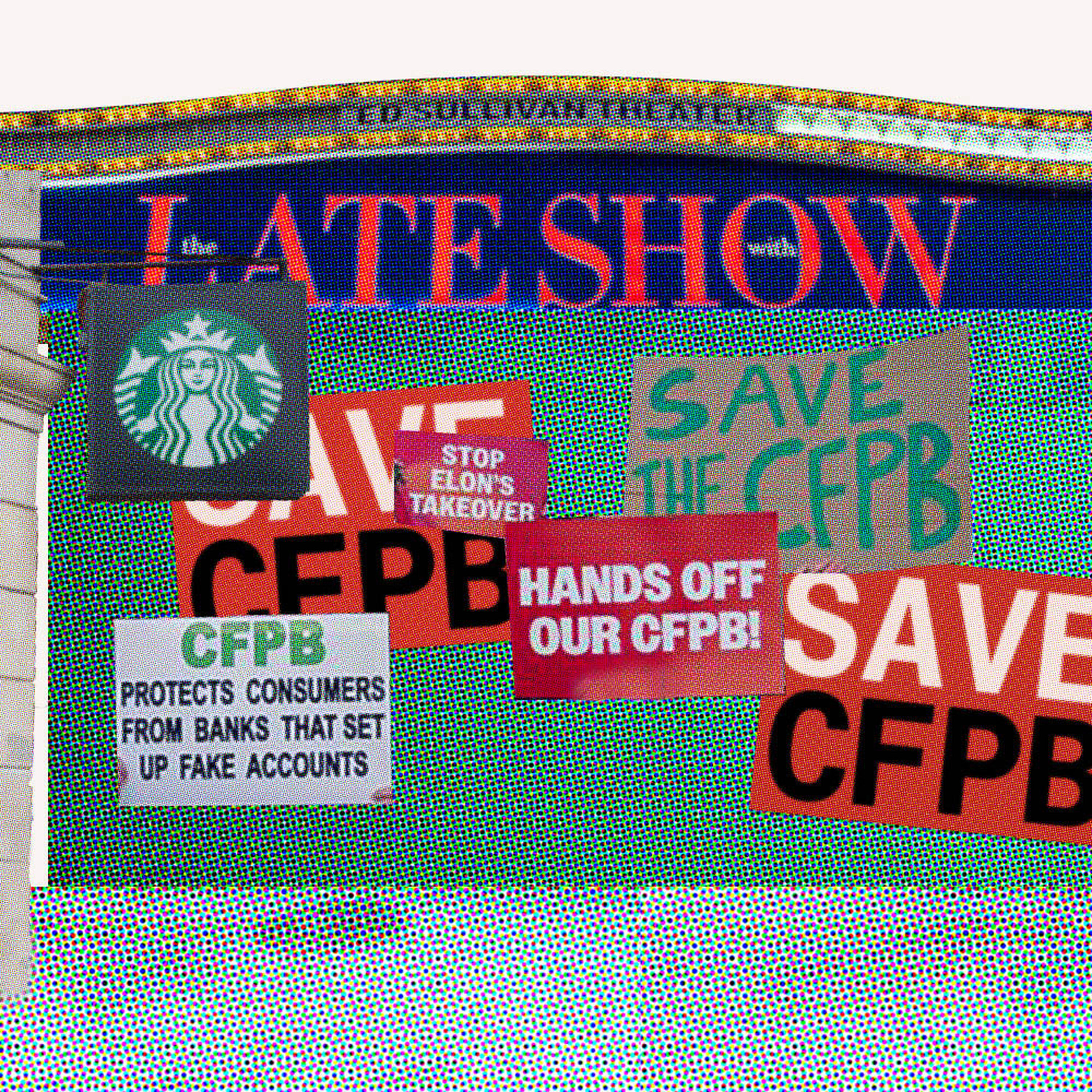
Oh yes, the battle royale. We talked to a former worker at the Consumer Financial Protection Bureau.
- [01:31]
B
And finally, our underrated story of the week, Stacey. Starbucks battling its way back from losses.
- [01:37]
C
Apparently the plan is selling coffee.
- [01:40]
B
Wow.
- [01:40]
C
Wild mind blown. So the latest issue of BusinessWeek is out and Max, you've got the COVID story. It's all about Elon and Tesla and it's great. You should check it out.
- [01:53]
B
Yeah. As you know, Stacey, I'm on the Elon Inc. Podcast that's you think about Elon Musk. Maybe part of why is thinking about Elon Musk all the time. And the story I wrote is all about the ways in which his empire has been stretched thin. It's been really interesting following this, just talking to people who've been around him and also just reflecting on my own kind of long relationship with Musk. I don't think things have ever been this dire in his business empire and he's been through some difficult times. And that's interesting because Tesla, which as we're recording this, the stock is down like 9% today. They just reported earnings.
- [02:28]
C
Wow.
- [02:29]
B
The earnings were bad. It's been like this meme stock. It's been this thing that no matter what they Did. Yeah, the stock price would go up. And what's, what's kind of funny is we're at this moment where all the meme stocks are actually doing quite well right now.
- [02:41]
C
Yes, Meme stocks are back in the news in case they have wandered out of the transom of your mind or you're new to meme stocks. So there's like this group of investors, these kind of individual investors. It's a group on Reddit social media site called Wall Street Bets. And they kind of pick stocks and they all kind of band together and buy them. And it's sort of counteract. The big, big short sellers of the world who will often target companies they think are failing. They'll bet on them failing. And so Wall Street Bets comes in and they're like, no, we love these companies, like GameStop, AMC Theaters. These have been kind of the big ones. Roaring Kitty.
- [03:16]
B
I mean, sort of Tesla, Nvidia. A lot of companies you've heard of, too, have been part of these dynamics. But like, right now, there's some new ones. There's a new name stock. All right, listeners, get out your Robin Hoods. No, just kidding. But beyond meat, which is like the fake meat company, Kohl's, the ailing department store. I always thought of Kohl's as like the worst department store in my town, but, but I guess that was like in the 1990s. But anyway, Kohl's is, is, is soaring. And then, and one other Stacy, Krispy Kreme.
- [03:49]
C
Krispy Kreme doughnuts. It's been struggling for, for a while.
- [03:52]
B
The taste of 2000 is back, but.
- [03:54]
C
In the last month, its Stock is up 75%. And so I thought I should go to a Krispy Kreme doughnuts. There's one in Times Square that gets just a ton of traffic. And so I stood outside and talked to some people coming out of the Krispy Kreme to ask them what they were ordering and how they felt about the company.
- [04:12]
B
Do they think that the future value of this company has increased by 75%?
- [04:16]
C
Yes. I feel like people on the street in Times Square have a lot to about frat valuation.
- [04:21]
B
Did I do that right? I can't remember how you, whatever it is, you know.
- [04:26]
C
Did you eat Krispy Kreme today? Yes. What did you get?
- [04:30]
B
One that was the classical, another with chocolate, and another with pink glaze.
- [04:36]
C
Oh, pink glaze.
- [04:37]
B
Glazed donut.
- [04:38]
C
Just plain glaze?
- [04:39]
B
Yeah, plain glaze. I got cake batter and that was busting.
- [04:42]
C
Would you buy Krispy Kreme stock?
- [04:44]
B
No.
- [04:44]
C
Why not?
- [04:46]
D
Because I'm all in on Solana.
- [04:47]
C
Would you buy Krispy Kreme stock? I don't know.
- [04:50]
E
Maybe Krispy Kreme is good in my eyes.
- [04:54]
B
More into crypto. So invest in dogecoin.
- [04:57]
C
Dogecoin. Did you eat Krispy Kreme?
- [05:00]
D
No, I didn't today. I've eaten a lot. Like raisin canes. Chick fil A.
- [05:06]
C
Too much chicken?
- [05:07]
D
Yeah, too much chicken. I would like to have one in my seat in Italy.
- [05:10]
C
Oh, are you from Italy?
- [05:11]
B
Yeah.
- [05:11]
C
You know, you guys have, like, the best food in the world.
- [05:14]
B
Yeah, yeah, I know we have the.
- [05:15]
D
Best food, but I love raising canes.
- [05:18]
C
Would you buy stock in raising canes?
- [05:20]
D
Yeah.
- [05:21]
C
Would you buy Krispy Kreme stock?
- [05:23]
B
No.
- [05:23]
C
What is the company that you would. If you had extra money, you would invest in that company?
- [05:27]
B
Amazon? So many questions here. If listeners don't know there was a reference to Solana, which is a cryptocurrency.
- [05:36]
C
I had not heard of it, but all these kids were super into it.
- [05:40]
B
Amazing. And kind of proves your point. You could imagine a case, I suppose, for buying Krispy Kreme stock. But I feel like what that clip shows us is just that this is a real thing. Like young people, at least the donut going public.
- [05:53]
C
Yeah.
- [05:54]
B
They like trading currencies and stocks and doing all kinds of financial speculation. That is new and different.
- [06:01]
C
Yeah. Everybody there seemed to own crypto except the Italian, who is really into fast food. Chicken.
- [06:13]
B
All right, Stacey. The big news of media this week has been CBS's decision to cancel the Late Show. This is Stephen Colbert's 11:30 show. This is the show that David letterman created in 1993.
- [06:24]
C
Most popular show in that time slot.
- [06:27]
B
Yeah. This is a business story, of course, because broadcast TV has been a declining business. But it's also a political story because, as you probably know, and as most of our listeners know, Donald Trump has been on this, like, revenge tour, basically going after everyone in media.
- [06:42]
C
Trump versus media, who was mean to him.
- [06:44]
B
We've seen 60 Minutes pay a $16 million settlement to Trump for what most people in the media anyway, see as a pretty normal interview with Kamala Harris.
- [06:55]
C
Former presidential candidate, which is, like, edited differently.
- [06:57]
B
Yeah, exactly. We had this passage of a bill that cuts funding to the Corporation for Public Broadcasting. That's the group that funds npr.
- [07:04]
C
Npr, where I spent most of my career.
- [07:06]
B
And the latest thing, of course, is Donald Trump suing the Wall Street Journal for, I believe, $10 billion. That having to do with a report on the President's alleged connections to Jeffrey Epstein. So we had this battle, media versus Trump, but also media maybe against its own declining business. And the perfect person is here to discuss this. Felix Gillette, Bloomberg Businessweek contributor, entertainment editor, author of it's not tv, the Spectacular Rise, Revolution and Future of hbo. Felix, how are you?
- [07:36]
D
Good.
- [07:36]
C
Hi, Felix. Hey, thanks for joining us, Felix.
- [07:39]
B
The cancellation of Colbert show, I think, surprised a lot of people. I mean, you saw it even in the audience reaction when Colbert told them that the show was getting canceled. As Stacey said, I don't think the ratings. You'll have to enlighten us. I don't think the ratings were awesome, but they also weren't terrible. Were you surprised by this?
- [07:59]
D
Well, the timing of it is a little sus, as you would say, as the kids would say. Yeah. Sherri Redstone, the controlling owner of Paramount Global, is still trying to get this deal done, to merge it with Skydance to cash out, finally to get out of the media business.
- [08:14]
C
This, like, would be this mega merger.
- [08:16]
D
Mega merger. It's an $8 billion deal. It's been just basically waiting for the FCC to sign off on it.
- [08:24]
B
And just so people know, Paramount owns CBS, which airs the late show, the Red Minutes. Yeah, 60 Minutes. Why would you want to have to can Stephen Colbert?
- [08:34]
D
In theory, this would just be another way to placate Trump. It's another one of his critics, someone he doesn't like. Oh, we're getting rid of him. And they're waiting for Brendan Carr, the head of the fcc, who's close with Trump, to finally give regulatory approval for this deal, which has been stuck in limbo. It's not good for the company. The media landscape is changing every day. It's evolving. They're kind of stuck in this awkward position waiting for this deal to get approval. They've settled the CBS lawsuit, which legal scholars have said had no merit whatsoever. And so this could be seen as another thing to do to try and get this merger approved. But I will say there's been no smoking gun yet so far for people that have really dug into this smoking gun about, in terms of like Sherry Redstone or David Ellison, who are trying to get this merger done, stepping in, saying, what else could we do to get the deal done to make Trump happy? Let's get rid of Colbert. Right. Like, there's been nothing that definitive showing.
- [09:33]
B
There is an explicit link between politics.
- [09:36]
C
However, like a week ago or something, Colbert did a whole segment about the settlement that you were just talking about that Paramount made with Trump over the over the Kamala Harris interview. And he, you know, he called it a big fat bribe.
- [09:50]
B
Now, I believe this kind of complicated financial settlement with a sitting government official has a technical name in legal circles. It's big fat bribe.
- [09:59]
C
The fact that a week later this happened to happen. Yeah, I mean, okay, correlation is not causation, but it's not not causation. Right.
- [10:07]
D
You have to look at the context. And when CBS made this decision, it came out, said, oh, this is for purely financial reasons, just coincidentally, just coincidental, and there are very good financial reasons for canceling the show.
- [10:18]
B
Can you just lay those out for us, Felix?
- [10:20]
D
Yes, the show costs $100 million plus to produce each year. But it's also like 10 years ago, you know, the show was profitable. All these late night shows were profitable. During COVID 19, during the pandemic, the advertising really started to fall down very, very precipitously. And for the past couple years now, the show has been losing money and not an insignificant amount of money. You know, the reports are up to, you know, $40 million a year in losses this year for the late show. And they've looked at, you know, potentially ways of cutting the costs. You know, Colbert makes $20 million a year, something like that. You have a staff of 200 people to produce the show. You could potentially cut the staff. I mean, there's a band, you get a theater. But in the end, the economics of the entire genre are just terrible. The advertising has plummeted, it's not coming back. And yes, you know, Colbert has since come out and said, how could this purely be a financial decision? Like, I'm the leader in late night. I have the best ratings. I'm beating, you know, Jimmy Kimmel, I'm beating Jimmy Fallon. But if the viewers aren't adding up to profits, if it's losing tens of millions of dollars, it's a loss leader. But if it's losing a bunch of money and it's causing you potential headaches, and it's slightly off brand from what the new owner wants, which is they don't want to be like, known as this big resistance network. They want to be presented as a very middle of the road American network. And at the same time, once this deal gets done, the future of the whole media world right now, and very much for Paramount Global when it merges with Skydance, is streaming. Right. Like, they're trying to transition from broadcast and cable era to streaming. And what does Colbert do for you in the streaming era? Well, the answer is he does nothing. Right. Like these Shows have not been able to make that transition from broadcast and cable to streaming. I mean, a bunch of people have tried, but for whatever reason, that comedian hosted late night talk show format has not transferred in the same way that like almost every other genre of show has made it over to streaming.
- [12:28]
B
I think anyone who's worked in media for a long time knows that, like media companies don't make decisions that are purely political or purely business. Right. They'd be willing to, to endure the ire of President Trump. I think if it was minting money. And part of the issue is it's like hard for an executive to justify a show that is losing money and is creating political problems.
- [12:51]
C
Yes. Do you think that the Colbert show would have been canceled if Stephen Colbert hadn't gone after Trump like that?
- [13:00]
D
Yes, it would be 100%. Maybe not now, but his contract is up next year. Right. So they were going to have to make a decision about this show and maybe they re up for another year, maybe two years, but it is going away. These shows are not going to sustain. And the question was just when was the whole thing going to disappear?
- [13:19]
B
So I think another reason to be somewhat skeptical of the business only argument is some of these other stories. Right. We should talk about the general sense that media companies are sort of bending the knee to President Trump, which is not something that is kind of unique to media. Right. We've seen it in tech and it came up during the inauguration and so on this thing with npr. Stacey, can you explain what the cuts to NPR mean for these radio stations? Because it's a story that's politicized, but I don't know that it's totally political in the end.
- [13:52]
C
That's interesting. I mean, I don't claim to have a super deep understanding of it, but my understanding is this. And Felix definitely correct me with what I get wrong here. But so the federal government gives a certain amount of money to NPR itself, which is the national organization, but also to the member stations. And the member stations operate like little businesses. And so they will take this money and they will use that money to pay staff and things like that, but also to buy programming from NPR. So one of NPR's biggest customers is these little stations all around the country, some not so little, which will, you know, pay them for Morning Edition and All Things Considered in all the flagship shows. So the major concern here is that those stations often rely enormously on money from the federal government. Npr not as much like little radio.
- [14:44]
B
Stations like, you know, in the middle of the country where Maybe the advertising market isn't great and maybe if you're.
- [14:50]
C
Shout out to Boise State Public Radio.
- [14:51]
B
Yeah. If you're, if you're like a person who lives there, this is like one of the only options you have.
- [14:55]
C
Yeah.
- [14:56]
B
For getting the news on the radio. I'm sure there's debate there. Felix, what do you make of this sort of argument, of the chilling effect? Are you hearing concern from people in media about this, about the sort of dangers that this poses potentially to speech or something like that?
- [15:10]
D
Yeah, I mean, I think it's been a concern. I think that, you know, the primary concern was the settlement of these lawsuits that had no merit. We've talked now extensively about what happened in CBS News, but similar thing happened at ABC with George Stephanopoulos. Again, Disney owns abc. This was another case where Trump sued for, I believe it was defamation, and another one where legal scholars were like, if they fight this, they go to court, they're going to win.
- [15:39]
B
Before we end here, I just want to say one thing, which is that I think Colbert is going to be fine here. Like, he's going to get more than $20 million in his next job.
- [15:49]
C
$20 million a year. Like, that's buy your own island money.
- [15:53]
B
And I feel like this is maybe hanging over the conversation. But, like, I think one reason these late night talk shows have failed to take off in streaming is because there's a competitor to them and it's podcasts.
- [16:03]
D
Yes.
- [16:03]
B
And those are generating tons of money. There was this article in the Times earlier this week about Joe Budden's podcast, which I have never listened to. I don't even know if I've ever seen a clip of the podcast before. And he's making 20 million bucks a year. He's making Colbert money. So. So I gotta think, like, I mean, part of this is some media company will pay Colbert to criticize President Trump.
- [16:24]
D
Yeah.
- [16:25]
B
It's just gonna be in a different.
- [16:26]
D
Format and he'll have a podcast. He'll have, you know, the clips will be on YouTube. The fans of Colbert will get their Colbert fix one way or the other. Maybe he'll have like a travel show where he goes to Italy or something like that. Like, he'll be around. He'll be fine. The difference really is just with those podcasts, one way that they're very different though is they have such tiny staffs, like, you know, no band. Yeah. And, you know, five people work on the show. Right. As opposed to 200 staffers for Colbert. You know, Joe Rogan has probably the, you Know, the most popular podcast in the world, and it's like, maybe a dozen people work on it.
- [17:01]
C
I mean, one thing that I do feel compelled to mention is that, like, the money might be the same, but a lot is lost in that transition. Because if you have a whole news organization, they can cover, like, conflicts overseas. They can send people to Ukraine. If you're Joe Rogan, even if you're making the same amount of money, just the scope of what you do is a little different. The idea that news is no longer, like, viable feels very scary.
- [17:28]
B
Okay for that here, though. But one more counterpoint, which is that Paramount also just paid $1.5 billion for the streaming rights of South Park.
- [17:37]
C
Did you South Park? Did either of you guys make me feel better? They're not going to send someone to Ukraine.
- [17:42]
B
They're not going to send someone to Ukraine. But did either of you watch last night's south park episode? No.
- [17:46]
D
Vicious.
- [17:47]
B
It is vicious.
- [17:48]
C
Was it about.
- [17:49]
B
I'm going to show you.
- [17:51]
C
Yeah, I want to see.
- [17:52]
B
Felix has probably watched this clip already. It's very convoluted, but it's essentially, the show is all about the merger with Paramount, all about the risks of free speech, and it ends. Spoiler alert, listeners. Fast forward the podcast if you don't want to hear this. It ends with south park, the show, essentially being forced to. To create a pro Trump infomercial. And the infomercial that they create is this. You're not gonna be able to describe it on Instagram.
- [18:18]
C
Trump walking through the desert. I mean, he's hot. He's taking his jacket off, his guitar music playing Donald J. Trump. Now he's. Okay, now he's taking his shirt off. He's in his. Okay, well, now he's naked except his socks. Oh, wow.
- [18:38]
B
Okay. But anyway, Stacy, I don't even think is gonna be able to describe this because her mouth is a game, but because it's a family. Oh, my God. It's a very unflattering everything. And also. But also Vicious.
- [18:50]
D
Yeah, the timing of it is amazing. This aired last night again from the company that's trying to get this regulatory approval in Washington that needs Trump to basically sign off on it to get the FCC to approve it. You gotta think Sherry Redstone and David Ellison woke up this morning just like, are you kidding me? What's next? This is crazy.
- [19:11]
B
But in a way, it makes their point, right? It shows in a strange way, if they're trying to argue that, hey, we're not silencing voices, maybe they have this.
- [19:21]
D
As a from purely financial reasons. The reason they're paying $1.5 billion to South park for whatever it is, dozens of new episodes, but also to control the entire library of south park for Paramount plus for their streaming service is because that is an incredibly valuable asset for your streaming service in a way that back old episodes of the Tonight show are worthless. Basically no one's going to go watch it like even like a week later. But those south park episodes, you know, young viewers, teens, tweens, college kids will be watching for potentially decades and they generate a huge amount of engagement for your streaming service. Incredibly valuable. And so yeah, if it's valuable and it makes fun of the President, then it seems like that's okay. At least for now.
- [20:10]
B
We'll see Felix Gillette covers entertainment for Bloomberg.
- [20:20]
F
In business they say you can have better, cheaper or faster. But you only get to pick two. What if you could have all three at the same time? That's exactly what Cohere, Thomson Reuters and Specialized Bikes have since they upgraded to the next generation of the cloud. Oracle Cloud Infrastructure OCI is the blazing fast platform for your infrastructure, database, application development and AI needs where you can run any workload in a high availability, consistently high performance environment and spend less than you would with other clouds. How is it faster? OCI's block storage gives you more operations per second cheaper. OCI costs up to 50% less for computing, 70% less for storage, and 80% less for networking better. In test after test, OCI customers report lower latency and higher bandwidth versus other clouds. This is the cloud built for AI and all your biggest workloads right now with zero commitment. Try OCI for free. Head to oracle.com strategic that's oracle.com strategic.
- [21:26]
A
Every business has an ambition. PayPal open is the platform designed to help you grow into yours with business loans so you can expand and access to hundreds of millions of PayPal customers worldwide. And your customers can pay all the ways they want with PayPal, Venmo pay later and all major cards so you can focus on scaling up when it's time to get growing. There's one platform for all business PayPal open grow today at paypalopen.com loans subject to approval in available locations.
- [21:57]
C
You can get the news whenever you.
- [21:59]
B
Want it with Bloomberg News now.
- [22:01]
C
I'm Amy Morris. And I'm Karen Moscow here to tell you about our new On Demand News report delivered right to your podcast feed. Bloomberg News now is a short 5 minute audio report forward on the day's top stories. Episodes are published throughout the Day with the latest information and data to keep you informed. Yes, there are other products like this from a variety of news organizations, but they usually rerun their radio newscasts throughout the day.
- [22:28]
A
That's not what we do.
- [22:29]
C
We create customized episodes that can only be heard on Bloomberg News now. And we don't wait an hour to publish breaking news. When news breaks, we'll have an episode up on your phone podcast feed within minutes. So you're always getting the latest stories and developments. Get the reporting and the Context from Bloomberg's 3000 journalists and analysts were all over the world. Listen to the latest from Bloomberg News now on Apple, Spotify, or anywhere you listen. So, obviously, Max, Trump versus the media is a big battle going on right now. But I would argue maybe the biggest battle going on since Trump took office is. Is almost Trump versus the federal government. And you have covered this a lot.
- [23:09]
B
Yeah, I've been covering this all year. And this is one of those stories that kind of, I think, receded the background for a lot of people because Elon Musk was sort of at the center of it. Remember, he created this thing called Doge, the Department of Government officials grabbing headlines. He was like, running around chainsaw, chainsawing the federal workforce. And that's a big part of the story I just wrote for BusinessWeek. And he was kind of bounced from the White House. And I think most people have assumed, okay, Doge is over, right? This, like, it turns out that, you know, no one liked what Elon Musk was doing. And this, and this kind of attack on the federal workforce had come to an end, which I think is politically what Trump was going for, because that was very unpopular. The problem is, Stacey, it is not really true.
- [23:54]
C
Yes, Doge is still going. And so we wanted to kind of check in and see what was going on there. We wanted to talk to some of the workers who were affected. We're really lucky to have right now with us. Nick Hand. He is a former employee at the Consumer Financial Protection Bureau.
- [24:08]
B
Yeah, Nick is a technologist, and he had worked basically as an investigator for the CFPB looking into potential cases of fraud or cases where. Where banks were behaving inappropriately towards consumers.
- [24:21]
C
Welcome, Nick.
- [24:22]
E
Thank you. I'm happy to be here.
- [24:24]
C
So you lost your job at the CFPB under Doge. If you don't mind, take us back to the, I guess, moment when you found out you lost your job. Like, how did that happen?
- [24:36]
E
Well, first we got locked out of our accounts in mid February. I was at home. It was dinner time. For the toddlers in the house. So I was cooking dinner for my kids and got an alert on my phone that I had to sign back into Outlook, which was not a good sign, and tried to do that, realized I couldn't, and then about an hour later got an email of standard form letter to my personal email account that said that I had been terminated due to the executive order from President Trump.
- [25:04]
B
Yeah, that was the executive order the President signed that called for a reduction in the federal workforce. Now, I'm guessing, Nick, you were braced for a moment like this because by February that there had already been news about the Trump administration's plans to cut federal agencies. You had Elon Musk doing his thing with Doge. And just a few days before this moment, we're talking about the head of the Office of Management and Budget. This is Russell Vogt. He's a figure within sort of the right wing movement, the conservative movement. He co Author of Project 2025, Big Guy in the sort of hard right world of Trump, had been appointed as the acting director of the cfpb, the agency you worked for.
- [25:44]
E
Yes, Russell Vote had been appointed, I think just a few days before that. And that was sort of the sign that we were all getting prepared for this kind of action. Elon Musk had tweeted, delete cfpb. I think a few weeks before that. But everyone at the CFPB is used to this kind of thing. They've been trying to get rid of the CFPB for a long time, really, since it has not been a popular agency with Republicans. But once, once Russell Bo got appointed, we sort of saw the writing on the wall.
- [26:11]
C
Nick, tell us about some of the work you were doing at the cfpb. You were a technologist. What does that mean?
- [26:17]
E
Yeah, I was in the enforcement division. And so my day to day was working with attorneys to investigate big banks or tech companies, digital payment apps, that were using technology in some way to violate the law or to steal from consumers or to cheat consumers out of money, things like that. So a lot of times these days, it's AI models, it's how they're using data, how they're using software. If you're applying for a loan, for example, and you get a sort of mysterious message that you've been denied because, you know, some algorithm that they have denied you. There are laws around how they can do that process, what kinds of data they can use to deny people things like that. And we would dig into their algorithms and their models and kind of find the proof that you know, oh, they, you know, they're not following this law and not following that law when they're dealing with consumers.
- [27:13]
B
Nick. There were a lot of enforcement actions that I guess over the last few months have, have been dropped or paused and so on. I'm kind of curious. Can you tell us, like, which one specifically you were working or.
- [27:25]
E
Yeah, I can. Yeah, you're exactly right. I think it's. I think it's been more than 20 now have been. Have been dropped. These were cases that were brought 20, 24, 2023, and have been. Have been since dropped. One of the cases I worked on was a case against the banks who.
- [27:41]
B
Created the Zelle app, the money transfer app, essentially.
- [27:44]
E
Exactly. Yeah. And we, you know, alleged in that case that we brought that these banks launched this product. They weren't the main player in the space when they launched it. Venmo was. And they sort of launched it without the proper controls in place, the proper safeguards to prevent people from being scammed or defrauded. And it cost consumers hundreds of millions of dollars that they got defrauded out of. They weren't reimbursed for it. Consumers would complain to these companies, oh, my phone was stolen. A thief used it to transfer away my life savings. I need that money back. But they weren't doing the proper investigations to then reimburse them. So they were just denying these requests for reimbursement. So we brought that case and unfortunately they dropped the case in court a few months ago. And sort of letting big banks off the hook.
- [28:39]
B
Yeah. And we should say that the banks maintain that the lawsuit didn't have merit. They called it, quote, legally and factually flawed. Nick, you mentioned there's been a contingent of both Republican politicians as well as lobbyists who really hate this thing. On the other hand, a lot of the stuff that the CFPB has been involved with has been, I think, pretty popular and matters to a lot of people. I'm kind of curious. Just you're like, I think, like a lot of people in government. Right. Like, you are a well educated guy who had a lot of job opportunities, I think. Right. You have a Ph.D. maybe in astrophysics?
- [29:16]
E
I do. In astrophysics, yes.
- [29:17]
C
You have a PhD in astrophysics.
- [29:19]
B
So that's a good job. Understand it. Physics PhDs are very employable. I mean, I know that the technology job market is not quite what it was maybe five years ago, but, you know, there's a time when people with your qualifications were getting like massive job offers from the likes of Google and Facebook. And so on. And I'm just kind of curious, kind of what prompted you to go into this work and like, why you went into this in the first place?
- [29:45]
E
Yeah, you're right. A lot of my graduate school colleagues went to work for, for Facebook or for Google. I went to.
- [29:51]
B
Yeah, you could have been working on the algorithms that the CFPB was trying to regulate.
- [29:56]
E
True, it's true, it's true. But, you know, pretty quickly I saw that these companies were just like hoovering up data and, you know, working every day to make Mark Zuckerberg more money didn't seem like something that I wanted to kind of dedicate my life to. And I came back to my home city, Philadelphia, started working for the local government here, doing data science work, and kind of fell in love with public service and was lucky enough to land at the cpb where every day you're fighting really to get money back into the pockets of people. The agency has returned over $20 billion directly to consumers since it was created, which is kind of a shocking number. It's one of the most efficient agencies in the federal government. And, you know, not only do they, we get that money back, but they stop that behavior, you know, moving forward. It's banks, overdraft fees, it's mortgage companies. If they, you know, mess up your mortgage, you know, people can lose their homes. This is how the agency was created in the aftermath of the Great Recession. Payday lenders, and increasingly it was, you know, tech companies, you know, these digital payment apps. And we were trying to supervise those companies as well.
- [31:09]
C
Now, shortly after you received this email, you got reinstated. Can you talk a little bit about, like, what that moment was, like, how much time went by and what happened?
- [31:22]
E
It was, yeah, very strange. I think I was laid off for about six weeks. It was just long enough to kind of go through the unemployment process and got reinstated. Of course I had mailed my computer back, mailed my laptop back, my ID card, all of that. So it actually took them another two or three weeks to send me my laptop back. So I was sort of being paid to do nothing for the first two or three weeks. It was sort of the model of inefficiency, if you will. It was just really an insane process. And then I'd been reinstated. I think I was back for about a month or so, but had already gone through the process of applying for jobs and all of that, and ended up putting in my two week notice and taking another role because, you know, I didn't have a lot of confidence that I would I would stay employed at the CFPB. They tried to fire 95% of the agency the day that I gave my two week notice. That was stopped by a court and is still stopped by a court. So people are still employed there. But I was at the time optimistic that I would stay employed for the long term.
- [32:26]
C
You know, we heard a lot on the outside about how DOGE has operated, but I'm wondering what it was like for you and your colleagues, watching it happen to your own agency.
- [32:38]
E
You know, it was, it was sad. It was frustrating. Everyone who works there does such good work. Really, everyone is necessary. And to have people come in and not understand what the agency was doing, not understand a lot of the functions were mandated by law that they were trying to get rid of was just really unfortunate and shocking a lot of times. I mean, some, some pretty shocking testimony came out in the ongoing court case about how they wanted to reduce the agency to, to five guys in a phone.
- [33:07]
B
Five guys in a room.
- [33:08]
E
Yeah.
- [33:09]
B
Or five guys in a phone. Yeah.
- [33:10]
E
In a room. Yeah. So it's just a complete lack of acknowledging that people at this agency are humans who, who are doing good work. But also this agency is just on the side of ordinary Americans. So it's just everything they were trying to do was just hurting, you know, ordinary Americans.
- [33:27]
B
I mean, what's weird about the cfpb? And I mean, and I think it's one of the reasons it's gotten attention, one of the reasons I focused on it in my own reporting. Nick said this already, but like, it wasn't that they tried to make it more efficient, they just tried to get rid of it, like, altogether. So it was in certain ways, like the most extreme version of doge.
- [33:47]
E
Yeah. And from the start, it was obvious that the goal was to just completely shut out the agency, you know, as much as possible without, without the input from Congress.
- [33:56]
B
Weird. Side note also, CFPB is not funded by the us it's funded by the Fed. So it's not congressionally funded. I mean, that this opens up a whole other can of worms. But, but it doesn't really cost taxpayers, at least not directly money. And I think you can make an argument. Nick's making the argument now that, you know, it actually it probably makes money for taxpayers money with these reclaiming settlements and so on.
- [34:20]
E
Yeah, that's exactly, exactly right. It costs taxpayers nothing and it just returns a lot of money to them. When you get screwed over by your bank or by your mortgage company, for.
- [34:28]
B
Example, we've touched on Elon Musk a couple times in this conversation, but I just was thinking about the fact that you mentioned Facebook. Right. But you could have probably got a job at SpaceX, right? Like your background, astrophysics. PhD, loves hiring those. Right. I'm just kind of curious if you could say something to him now about this or could have had a chance to say something to him, what would it have been?
- [34:50]
E
That's a great question. I don't know if I have something pithy to say to him. It's very clear to me that this was never about fixing government. It was about power, his corporate interest and things like that. His app, he's trying to turn it into a payments app. He filed for something called X Payments that they're supposedly launching this year. And you know, the cpb, they would be the regulator who would regulate that payment service to make sure people don't get, you know, defrauded, you don't get scammed. I mean, there's already a lot of scammers on X and you know, if you, you introduce payments, people are sending money around, it could be rife for, for fraudsters and scammers and, and the CFPB would be the government agency that was tasked with ensuring that they had fraud controls and they were following the law. You know, in terms of consumer protection.
- [35:50]
B
That was Nick Hand, astrophysicist and former employee at the Consumer Financial Protection Bureau.
- [36:00]
A
Every business has an ambition. PayPal open is the platform designed to help you grow into yours with business loans so you can expand and access to hundreds of millions, millions of PayPal customers worldwide. And your customers can pay all the ways they want with PayPal, Venmo, pay later and all major cards so you can focus on scaling up when it's time to get growing. There's one platform for all business. PayPal Open grow today@paypalopen.com loans subject to approval in available locations.
- [36:31]
B
Join Bloomberg in Houston or via livestream on November 4th for the Future Investor Finding the Opportunities. This 2025 event series will examine how companies are investing in their businesses to create efficiencies, innovating their products and services, and improving the customer experience. This series is presented by Invesco. Q. Q. Q. Register@Bloomberglive.com FutureInvestorHouston that's Bloomberglive.com FutureInvestorHouston all right, Stacey.
- [37:02]
C
Yeah.
- [37:03]
B
Time for the underrated story of the week.
- [37:04]
C
Yes, it is.
- [37:05]
B
We agreed on this one, I think for one season.
- [37:07]
C
Oh, we did agree on this one. Yeah.
- [37:09]
B
Stacey. Starbucks, the embattled coffee chain not totally dissimilar from the embattled donut chain or the embattled department store chain.
- [37:17]
C
So what goes better with coffee than donuts, right? Nothing.
- [37:21]
B
But. But the thing you may not realize, Stacey, is that Starbucks has been struggling in the last few years and it's partly because they kind of got away from coffee. There are all these donut eaters would go into a Starbucks and there would be just a mass of teenagers all buying these crazy drinks.
- [37:38]
C
Yes.
- [37:39]
B
And they got frustrated. The coffee buyers have gotten frustrated. The drink buyers, even some of them have gotten frustrated because the lines are so long. They got a new CEO. He's turning things around. And can you guess what he's doing? Stacy?
- [37:52]
C
I know that he's like trying to make the stores nicer, having people write on the cups with Sharpies again, kind of bringing things back to where they started.
- [38:01]
B
Re emphasizing coffee. Coffee. He's like, guys, guys, Starbucks, we're a coffee company. We make coffee. And we should say that this is a Businessweek story that just came out. How Starbucks CEO plans to tame the rush hour free for all. This is Brian Nicole. He is known as the guy who turned around Taco Bell and then moved from that great success. He introduced the Doritos Locos taco which.
- [38:25]
C
Okay, well, that was a stroke of genius.
- [38:27]
B
Exactly. He moved on to Chipotle, helped them recover from the incident where they were accidentally wrapping E. Coli up with their burritos, making people sick. And now he's here to fix Starbucks the problem. I find this fascinating as someone who used to go to Starbucks a lot, used to have a lot of love for Starbucks.
- [38:43]
C
Me too.
- [38:43]
B
And I guess people who spend time there know this, but Starbucks, especially during the pandemic, did this huge business in having people order stuff on their phones. And it kind of just totally screwed up their business because it taught everyone to order these insane, like the YOLO drinks. I don't even know what these things are, but it's like a red thing and it's got like a cold foam.
- [39:06]
C
The unicorn drinks, they went viral. They would like film videos on TikToks. There were like really beautiful kind of ice creamy drinks.
- [39:13]
B
And these drinks are awesome. At least Some probably like 12 year olds think they're awesome, but like, they're really hard to make and they take a really long time to make, which is okay, maybe in the pandemic era when you're ordering on your phone and maybe you're like not working that hard.
- [39:29]
C
And you also want to film yourself drinking something viral, but Terrible during rush hour.
- [39:34]
B
What's so funny here is. Okay, so it's like, it's like all the obvious stuff, the coffee having, the workers write little nice notes on the cups. They're sort of imposing, more of a dress code, I guess. They're basically trying to make Starbucks feel like the way probably someone Brian Nichols age maybe thinks of when they think.
- [39:51]
C
Of Starbucks, who are seasoned and correct in their thinking.
- [39:54]
B
In other words, it hasn't gone that well yet. The story has a funny line about a misstep where during pumpkin spice season, and listeners may remember this, they not only had pumpkin spice, but there were eight other apple and pecan flavored drinks.
- [40:08]
C
Eight, yeah, that's a lot.
- [40:10]
B
And like, some of the things they even still have still sound like pretty complicated to me. Like borderline mad Libs. Like, I guess one of the new ones is sugar free vanilla latte with banana protein cold foam. So like, which I guess is what people want. And so I don't know how you go back to coffee, but protein when people want the banana. Protein cold foam.
- [40:31]
C
It's the protein thing.
- [40:32]
B
Yeah, it's protein. The Mac.
- [40:34]
C
Having a moment. Well, I will tell you this, as someone who used to go to Starbucks a lot, it just takes so long to get coffee now. And they're all like all these crazy fancy drinks that are going out and the orders take a long time and are sort of mesmerizing.
- [40:48]
B
The weird thing is they're talking about going back to coffee. But I think maybe they're wrong here, Stacey. I think maybe the core identity of Starbucks, even this is sad for me as a coffee drinker to admit. It's crazy.
- [41:00]
C
Drinks like crazy, they just need to.
- [41:02]
B
Go crazier, just make a more expensive, make them more involved, more cold foam.
- [41:07]
C
More weird proteins, long lines outside the shop. People love a line in New York.
- [41:12]
B
It's going to be the coals of coffee shops. No. The show is produced by Stacy Wong. Magnus Henriksen is our supervising producer, Amy Keen our editor, and Brendan Francis Newnham is our executive producer. And Dave Purcell, fact checks. Sage Bauman heads Bloomberg Podcasts. Special thanks to Jeff Muskus, Julia Rubin and Maria Ling. If you have a minute. Listeners rate and review this show. It means a lot to us. And you know what, send us an email@everybody'sloomberg.net tell us what your crazy Starbucks order is or what your crazy meme stock is and you know, we will think about it and take that under consideration. Think about ignoring that in the next episode of the show. But that email is Everybody. With an slumberg.net, everybody's bloomberg.net thank you for listening and we will see you next week.
- [42:08]
A
On September 25, Bloomberg Green returns to New York to bring together leaders from business, finance and government during Climate Week nyc. Join us for a half day of timely insights and high impact networking backed by Bloomberg's global journalism and data expertise. Together we'll explore strategies for future proofing business and communities from the planet's most pressing climate challenges. Supporting sponsor Susano learn more@BloombergLive.com greenny.