Loading summary
Transcript126 lines
- [00:00]
A
These days, AI can help you adopt better time management, but it can't stop colleagues booking meetings during lunch. But how about being able to easily adopt industrial AI to streamline your business? Siemens Xcelerator helps you find the right AI providers and easily understand what they offer so you can use modular solutions to quickly scale up and grow your business. That's AI for real. From the global market leader in industrial AI, Siemens. Learn more on USA.Siemens.com AI your next.
- [00:31]
B
Product launch is coming fast.
- [00:33]
C
Don't let billing slow you down. Legacy systems can't handle usage based billing. That means your team is stuck gluing code together, piecing through spreadsheets and running ad hoc queries just to figure out what to bill. With Metronome, you can roll out new pricing in minutes instead of months, whether it's usage based, seat based, or a hybrid model. Visit metronome.com to see how companies like OpenAI and Anthropic launch billing as fast.
- [00:57]
B
As they launch products.
- [00:58]
C
That's metronome.com.
- [01:03]
A
Bloomberg Audio Studios podcasts Radio.
- [01:07]
B
News.
- [01:12]
D
This is everybody's business from Bloomberg Businessweek. I'm Brad Stone, filling in for Max Chefkin.
- [01:18]
E
And I'm Stacey Vanek Smith. And this week, Brad, I feel like the theme is the end of an era.
- [01:24]
D
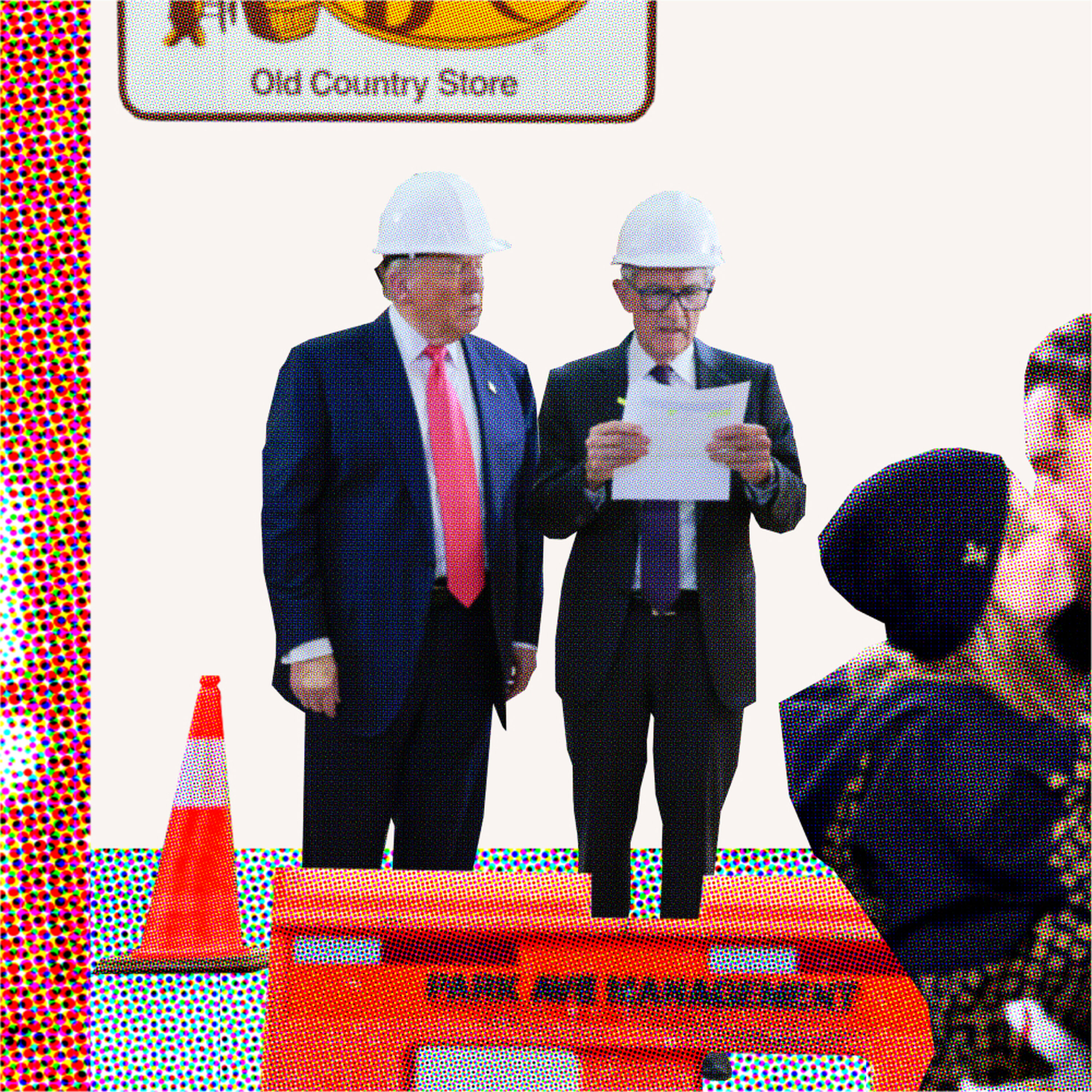
Well, it might be. It might be the end of the US Independent Fed era. And we're going to talk to Skanda Amarnath, a former analyst at the Federal Reserve bank of New York, about that.
- [01:35]
E
Also, the end of a new logo, the curious case of Cracker Barrel. We've got the great Amanda Mole about that.
- [01:41]
D
And for our underrated story this week, there's no such thing as a free tariff. Not even for the little guy. Stacy, the de minimis tariff exception is ending.
- [01:52]
E
Yes, indeed. Pour one out for de minimis. Now, Brad, we cannot talk about the end of an era without talking about the era's queen herself, Taylor Swift.
- [02:08]
D
Yes. Now this might be news to some of our listeners. I don't know if they've heard this, but after Taylor's appearance on the Travis Kelce podcast, the couple announced their engagement.
- [02:20]
E
They did. Although I feel like we could almost call this a merger because the two of them are such moguls. Taylor Swift apparently worth $1.6 billion. Travis Kelce worth 90 million, which is still pretty good.
- [02:35]
D
It's quite good.
- [02:36]
E
So, Brad, as you know, I am in Idaho right now and I thought I would go out onto the mean streets of Boise and ask people what they thought about the Taylor Travis engagement. And if they had any advice for the couple? Here's what they said. Do you know that Taylor Swift and Travis Kelce got engaged? Yes. How did you find out? On Instagram. What do you think? I think it's cute.
- [03:02]
F
My wife told me.
- [03:04]
E
Are you a fan of the Chiefs or of Taylor Swift?
- [03:08]
F
I despise the Chiefs and I think Taylor Swift's fine.
- [03:13]
E
Did you know that Taylor Swift and Travis Kelce got engaged?
- [03:16]
F
No, I did not.
- [03:17]
E
Oh, you didn't know? Yeah. So I'm just telling you now.
- [03:20]
F
Yeah, I know.
- [03:21]
E
It's quite surprising. What do you think about the engagement? I think they'll be happy.
- [03:26]
B
I think it's a lovely thing.
- [03:30]
F
You know, I really don't much care.
- [03:34]
E
Do you have any advice for the couple?
- [03:35]
A
I do.
- [03:36]
B
Make the compromises that you have to make in order to be married.
- [03:41]
F
You're in positions of great privilege and influence and wealth, and please use that to help others.
- [03:49]
E
I think together maybe they could create.
- [03:52]
F
Something really amazing and that it'll have.
- [03:55]
E
A good influence over her fans and kids. Any final thoughts for the happy couple?
- [04:02]
F
Well, I certainly wish them many years of happy marriage.
- [04:05]
D
What a range of commentary, Stacy.
- [04:08]
E
I knew people were less enthusiastic than I thought they would be. Especially like you said, Brad, that these are two of kind of the most powerful economic forces in the country right now.
- [04:18]
D
Yeah, I mean, this is a business story, I think. I mean, you saw what the ERAS Tour did for local economies. People are talking now about the Taylor trade, how there were bets about this engagement on polymarket. People talk about Swiftonomics and the spending that might associate this event. So even the President weighed in. Right. And he has generally not had nice things to say about Taylor Swift. And yet he complimented the couple.
- [04:44]
F
I think he's a great player.
- [04:46]
E
I think he's a great guy, and.
- [04:48]
F
I think that she's a terrific person. So I wish them a lot of luck.
- [04:51]
E
Well, I mean, Taylor Swift's ERAS Tour did make a noticeable economic impact all over the country. So imagine, Brad, what this is going to do for the wedding industry.
- [05:01]
D
I thought it was interesting that President Trump complimented the couple, even though he's had some words for Taylor Swift in the past. Clearly he's delighted that maybe this will be delivering, if not a distraction, a little bit of an economic bump.
- [05:14]
E
He is everywhere. He is everywhere.
- [05:29]
D
One place President Trump has definitely been spending a lot of time is on the Federal Reserve. And earlier this week, of course, Stacy, he declared he was firing Federal Reserve Governor Lisa Cook.
- [05:41]
E
Yeah. Dr. Cook has filed a restraining order saying the President does not have the authority to dismiss her. She's also suing the president over his decision to fire her.
- [05:50]
D
And this is unprecedented. She was appointed in 2022. Her term does not end until 2038. A president has never fired a central bank governor since the Fed was founded a century ago. While the law says a president can remove members for cause, it does not define what type of cause could satisfy that standard.
- [06:10]
E
And to be clear, right now, although the president has named a replacement for Dr. Cook, things are tied up in court. So we will just have to see what happens.
- [06:19]
D
Right. And there are a lot of issues at play here, political issues, legal issues, but they revolve around the big one, which is the independence of the Federal Reserve, the U.S. central bank.
- [06:30]
E
Yes. And here to talk about Fed independence with us is Skanda Abernath, a former analyst at the Federal Reserve bank of New York and now the executive director of the think tank Employ America. Hi, Skanda.
- [06:42]
F
Hi there. Thanks for having me.
- [06:44]
D
Skanda. I imagine this has been a very busy week for you. When did you first hear about the attempt to fire Lisa Cook?
- [06:52]
F
Oh, I was trying to wrap up my work that evening. I did the terrible move of checking my Twitter timeline, and it came up on my feed that President Trump announced on Truth Social that he was going to fire Lisa Cook. And, yeah, it obviously kind of delayed my plans for wrapping up work and plans for my vacation.
- [07:12]
E
You were, like, getting ready to go on vacation.
- [07:15]
F
Yeah, so. So clearly, President Trump managed to put a little bit of a span in the works there.
- [07:21]
E
Now, you have worked at the Federal Reserve Bank. You have a legal background. What went through your head when you saw this news?
- [07:30]
F
I think we kind of had an idea this was going to come at some point. You had heard some rumblings about trying to make moves like this. They're trying to right now rush through the nomination of Stephen Myron to the Federal Reserve Board. And they're doing that pretty aggressively and expeditiously. And these are all moves that are clearly a concerted attempt to just get his people in the building as quickly as he possibly can. That's the move. I think there are two things that are simultaneously true. It is clearly an attack on the Fed, on Fed independence, and just the desire for more presidential control. It's also not clear, like, where this will go. Isa Cook's going to try to try and fight this out in court.
- [08:11]
E
Yeah, she has said. She has said she's fighting it.
- [08:13]
F
Yeah, yeah. So she's going to fight it out in court. And also the implications for other members of the Fed, who I must add, we have currently not just Jay Powell, but also Chris Waller, Michelle Bowman. Those are three appointees from the past Trump administration from 2017 to 2020. And they are also people who I think generally get along with their colleagues. One thing that has distinguished the Fed, maybe on a cultural level, is that it has a relatively nonpartisan or apartisan culture. Obviously, there's always some whiffs of bias and political interest, but people try to leave that stuff at the front door when they enter the building. And when the Fed has made a lot of these decisions, they've been done by consensus. You don't typically see a lot of dissents. You don't see partisan splits where the Biden appointees voted one way and the Trump appointees voted another way. The Fed culturally has maintained a less than partisan culture. And that's remarkable in this age of polarization. And I do think that the more that President Trump tries to really push on this, the risk is obviously it becomes a more partisan institution. So basically every Fed decision, whether that be monetary policy or regulatory policy, if you thought that stuff was supposed to be stable over long periods of time, that stability is going to be put more into question.
- [09:35]
D
And Skanda, the President is trying to achieve these aims through controlling the Fed board. Now, these Fed board members serve a 14 year term. Lisa Cook has just started hers. He says he has the right to fire her for cause. And the cause presumably is that she listed two homes as her primary residences on mortgage applications. Is there a cause here? And is that, do you think that's even the right question to ask?
- [10:03]
F
I not sure it really is the right question to ask. But what I will say there is, there are clearly some accusations of misconduct. What we do not have is clearly set forth sort of judicial interpretation of what counts as valid cause. So far, the courts have not had to address this question or have dodged it. And so that's still some legal jeopardy there. Obviously, Lisa Cook has signals she will seek to block this attempt at removal. And we're going to have to find out through courts what comes of all of this.
- [10:36]
D
What do you think is really going on here? I mean, he's talking about renovation expenses for Chairman Jerome Powell. He's talking about mortgage applications for Lisa Cook. What is really at stake here and why is it so important to the President?
- [10:48]
F
I think the word you're looking for is pretextual, right? That the real reason for wanting to remove Lisa Cook is not because the grave sin of whatever she did on emergency applications. We are clearly seeing that there is a concerted attempt to remove people who are not seen as not even just allies on interest rates. Because I would argue Lisa Cook is probably one of the more dovish members, but rather it's about loyalty. I think that's pretty clear that the President has put a premium on filling the government with people who he feels he can trust, people who are more directly loyal and accountable to him. And Lisa Cook obviously was an appointee from the Biden administration. And so there's some sense of, well, even if she does align on policy currently, maybe not in the future, that might be part of the calculus involved. But I think they want an outcome and they are going to try and find every means available to them to achieve it.
- [11:40]
E
Is that a bad thing? I mean, I can see an argument that the Fed does not necessarily answer to voters, it does not answer to politics. And I think people sort of talk about that as if it is a good thing. Like what's so bad about the Federal Reserve, the central bank of the country, being politicized?
- [11:59]
F
I think that the risk with going down the road of just pure presidential control is you're effectively saying everything's valid for turnover every four years. And so that means like if you're President, you're thinking along the timeline of how well is your term going to play out. So that four year time horizon is probably pretty important. And it probably makes sense for a lot of things. It probably doesn't make sense for things like managing short term interest rates to solve long term problems. So take for example, right now we have about four to five interest rate cuts over the next 12 months, call it. And yet long term treasury yields have remained unchanged and they've been roughly on 4.2 to 4.35%. And when you make short term interest rate decisions that don't have as much bearing on long term interest rates, it's basically reflecting the fact that the institution doesn't have as much credibility in what it's doing. I think that is the real issue here. When you make promises in the short term that you're willing to reverse on, or you're putting yourself in a position to reverse on, then you run into problems. So let's say the Fed cuts rates all the way to 1% tomorrow because President has managed to fill the Federal Reserve Board 1. If that's not really being driven by data and objective analysis, who's to say in the future like those rates won't have to come up a lot? Or let's say Maybe because inflation, maybe because the political constellation pushes people to say I want higher rates. Maybe because the Democrats are the president and I don't know, Trump's a, Trump's appointees are not aligned with a future Democratic president. Or else let's take the situation where just it causes a lot of inflation or if it just coincides with a lot of inflation, then the instinct will be to raise interest rates. It's the notion of, hey, the Fed could do something today and it matters less than it otherwise would. The Fed could cut rates four or five times because he replaces Jerome Powell, he replaces all these other people. But the more that you see people doing things because they're just following some narrow presidential instinct. So for example, you have the, the current CEA chair who is up for nomination to the Federal Reserve Board, Stephen Myron. He seems to have pretty strong views now that interest rates should be cut. If you go back like a year ago, he was probably one of the most, had some of the hawkish, most hawkish views out there. He thought that even though the federal Funds rate was 5.33%, even though the unemployment rate was going up, inflation was just too high and financial conditions were too accommodative for the Fed to cut rates 12 months later. He seems to be of a very different view. Even though interest rates are already lower by 100 basis points, inflation is a little higher on the Fed's gauges than it was last year. It seems to be that he's clearly had a change of heart and that might be for a lot of valid reasons. But I do think it also kind of raises some questions about if the views of the Fed are really going to be determined by just what kind of political instincts are guiding the present. You can easily end up in a situation where interest rates can move all over the place short term. And then if you're a long term investor, you're going to have to price in some of the risk that interest rates either might have to go up in the future or else inflation is a good enough reason to demand more compensation.
- [14:59]
D
Skanda, I can imagine a world where markets would have really recoiled from the White House's intervention in the inner workings of the Fed. It kind of hasn't happened this week. Other than some key bond prices moving higher. What do you make of this apparent insouciance to, to what's happening right now?
- [15:18]
F
Yeah, I mean, I think this is probably where there is like a certain kind of conventional wisdom that is coming under more pressure. Right. Which is that central bank independence was sort of something so holy that it could not possibly be questioned. If you look across other countries, right. There are other countries with varying arrangements on central bank independence and attacks on central banks. And the movement of different asset prices, I would argue has generally underwhelmed asset prices.
- [15:52]
E
Meaning, like what happens with the markets.
- [15:53]
F
What happens with their stock market, what happens with government bond yields, what happens with exchange rates. Now, obviously there are some extreme examples. If you take like the current leader of Turkey has some pretty interesting views about how the central bank should use interest rates to fight inflation and removed the central bank chief at one point. And that had some effects on the Turkish lira. Turkish lira sold off a lot.
- [16:14]
E
Well, they have horrible economic crippling inflation, which I think is the worry here. Right. That if the interest rate keeps getting cut because it boosts the economy in the short term, could do a lot of damage.
- [16:25]
F
It could do a lot of damage. I think the question is the initial conditions matter a lot too. Right. So currently we are dealing with inflation a little closer to 3% than 2%. But like that's 3%, not 30%. We were born on third base here.
- [16:38]
B
Right.
- [16:38]
F
We have a lot of things in terms of what's going well for the US Economy that doesn't mean like changing the central bank. Central bankers is inevitably going to lead to a market crash. But I think it's also the case that it's going to be a more conflicted institution. And it's not obvious that just because Lisa Cook they're attempting to fire her, then it will have repercussions that ripple through financial markets broadly. Doesn't mean financial disaster overnight. But I do think we're probably flirting with some deeper tail risks that may not be relevant today, but maybe in a few years time or maybe maybe a little sooner. Hopefully we don't get to that point, but that's probably how markets have to react on some level because markets can't just explore every doomsday scenario. That's like maybe five years and a whole set of other events away.
- [17:22]
E
All right, well, Skanda Amarnath, former analyst with the Federal Reserve bank of New York, now executive director of Employee America, thank you for talking with us, especially on your vacation.
- [17:32]
F
Thank you for having me.
- [17:33]
D
Thank you, Skanda.
- [17:39]
C
In business they say you can have better, cheaper or faster, but you only get to pick two. What if you could have all three at the same time? That's exactly what cohere, Thomson Reuters and Specialized bikes have since they upgraded to the next generation of the cloud Oracle Cloud Infrastructure OCI is the blazing fast platform for your infrastructure, database, application development and AI needs where you can run any workload in a high availability, consistently high performance environment and spend less than you would with other clouds. How is it faster? OCI's block storage gives you more operations per second cheaper. OCI costs up to 50% less for computing, 70% less for storage and 80% less for networking better. In test after test, OCI customers report lower latency and higher bandwidth versus other clouds. This is the cloud built for AI and all your biggest workloads right now with zero commitment. Try OCI for free. Head to oracle.com strategic that's oracle.com strategic.
- [18:45]
A
Every business has an ambition. PayPal open is the platform designed to help you grow into yours with business loans so you can expand and access to hundreds of millions of PayPal customers worldwide. And your customers can pay all the ways they want with PayPal, Venmo, pay later and all major cards so you can focus on scaling up when it's time to get growing. There's one platform for all business PayPal open grow today at paypalopen.com loans subject to approval in available locations.
- [19:16]
B
You can get the news whenever you want it with Bloomberg News Now. I'm Amy Morris.
- [19:21]
E
And I'm Karen Moscow here to tell you about our new on demand news report delivered right to your podcast feed. Bloomberg News now is a short 5 minute audio report on the day's top stories. Episodes are published throughout the day with the latest information and data to keep you informed.
- [19:38]
B
Yes, there are other products like this from a variety of news organizations, but they usually rerun their radio newscasts throughout the day. That's not what we do. We create customized episodes that can only be heard on Bloomberg News Now.
- [19:53]
E
And we don't wait an hour to publish breaking news. When news breaks. We'll have an episode up in your podcast feed within minutes. So you're always getting the latest stories and developments.
- [20:02]
B
Get the reporting and the Context from Bloomberg's 3000 journalists and analysts were all over the world. Listen to the latest from Bloomberg News now on Apple, Spotify or anywhere you listen.
- [20:15]
E
So Brad, this week President Trump was weighing in a lot. Not only on the central bank of the United States, but but on corporate logos. I don't know if you caught this.
- [20:26]
D
I did. Now logos are important, right? They convey strategy, a company's identity, the way they present themselves to the world. When I think of famous logos, I think of McDonald's, the golden arches, Amazon, that arrow pointing from A to Z. But Logos don't often show up in the news. And you're right, like President Trump made headlines this week when Cracker Barrel tried to revamp its logo and drew some criticism.
- [20:53]
E
Yes, a lot of people felt like the new logo was kind of woke the traditional Cracker Barrel logo. The old one just has sort of an older man sitting in a chair, leaning on a barrel, I guess like a cracker barrel. And the new logo just took that graphic away and was just the words Cracker Barrel. But apparently people felt like this was like a not great departure from tradition and even, yeah, President Trump was, was tweeting about it along with a lot of people.
- [21:22]
D
Yeah, the old guy's name is Uncle Herschel. Apparently he's somewhat iconic. And President Trump said that the company would get a billion dollars worth of free publicity and emerge a winner if they backtracked. And they did backtrack. And so we wanna talk about it. And we knew exactly who we wanted to talk to.
- [21:38]
E
Yes, we did. Amanda Mole, she's a senior reporter at BusinessWeek, writes the excellent Buying Power column. Hi, Amanda.
- [21:45]
B
Hi, Amanda.
- [21:45]
E
Okay, so Amanda, let's start very basically, why do people care about the logo of, of a regional restaurant?
- [21:54]
B
Well, that's a complicated question because you have to figure out both why people care and exactly how much people do care. This is sort of slipped into the outrage cycle online, which is like a purposeful thing. You could see in this case, right wing political influencers sort of testing the waters to see if people would pick up on this, see if it would play, which is something that influencers of all types do about like all kinds of different subjects every day. You have to chum the waters to see exactly what's gonna get bring you engagement when engagement is your business. In this case, it seems to have played okay with a lot of conservative audiences. And it seems like among them, these, these sort of like outrage influencers have been able to gin up a little bit of, of genuine controversy, of genuine outrage. Why that is is like, not entirely clear to me. Like, we sort of go through these same beats with these outrage cycles over and over and over again. And it seems like we're getting to the point where the beats themselves are satisfying. People are excited to go through those beats in and of themselves, whether or not it makes like a great deal.
- [23:07]
E
There's like a life cycle of outrage now.
- [23:10]
B
Yes. And people who are responding to the sort of like bids for attention that are put out by these influencers know what they're supposed to do. They know the reaction that they're supposed to have if they want to get their way. And I think that the sort of, like, cycle itself and going through the motions itself is satisfying to a lot of people at some point, because nobody that I have seen online has really articulated why this is woke, why it is, like, worthy of outrage. I think that the logo rebrand is, like, sort of bad on a design level. I think it's sort of generic. Like, it's not cool. It doesn't really have any personality. Like, I get why people would be like, oh, this is just more of making everything the same, but I don't get exactly why it is woke. And nobody has really articulated why it's woke.
- [24:00]
E
Is it because the man sitting in the chair is like a white older man? I mean, and they feel like that's sort of like, not. Not very inclusive.
- [24:08]
B
He is not, like, explicitly raced one way or the other in the logo.
- [24:11]
F
He is yellow in.
- [24:14]
B
So it's. I don't know, it feels like a reach even more than, like, things in the past have been a reach to me.
- [24:20]
D
Well, here. Here's what I think. We have to sort of discuss this in its context. And this follows the banishment of Aunt Jemima by Quaker, which, you know, there was some racial stereotyping there. The mascot of the Cleveland Indians, Chief Wahoo of the. The rebrand of the Washington Redskins, and to the Washington Commanders, of course, Trump has had some things to say about that. And while Uncle Herschel, I guess, doesn't necessarily fall into that category, I think there are culture warriors out there that have turned logos and mascots into another battlefield. And so this is. They feel like maybe they've been defeated in these past battles, and so they picked on Cracker Barrel. I don't know. What do you think, Amanda? Because I don't see the racial dynamics to Uncle Hershel, but I think it follows with these other logo changes.
- [25:08]
B
So I think that, like, there is this lineage of making brand marks and brand mascots and advertising campaigns and things like that. The subject of culture warring. And I think that that sort of primes people to be upset about them, especially because that means that we're talking about brands that, like, people interact with. I think that so often advertising and marketing becomes fodder for the culture war because the general population does have some sort of emotional tie to these brands. In this case, I think that, like, where there genuine outrage among regular people, I think it is more of the variety of just, you know, people who want to, like, stand athwart history and yell, stop. People who just want things to be like they were when they were kids. People who have, you know, maybe an imagined past they'd like to return to. I think that's like a really huge proportion of the American population, and those people may envision those imagined pasts differently.
- [26:06]
D
Do you think this was a good week for Cracker Barrel? I mean, people have. At least I've thought more about this company.
- [26:14]
B
It's sort of hard to say because how. How any of these controversies will impact, like, the underlying brand and like its business once people move on, depends a lot on, like, what the controversy is and what the brand is for Cracker Barrel, you know, they've got locations in like, 43 states, but this is a southern chain. This is a chain that, like, I associate with driving from Atlanta to Orlando on vacations as a kid. And we would stop in Valdosta, which is approximately halfway, and have lunch at Cracker Barrel to get the kids out of the car, you know. So I think that because Cracker Barrel's audience is probably disproportionately conservative, having the president and having these influential Internet conservatives mad at the company, even if they do acquiesce, like, could potentially, like, actually make a meaningful difference in their business. Online conservatives getting mad at a business that serves primarily, you know, city dwelling, affluent consumers for being too woke probably doesn't hurt those businesses, probably helps those businesses in some sense. But because of Cracker Barrel's positioning and their, like, customer profile, I think this is probably not like, a clear win for them in any way.
- [27:23]
E
It's interesting, Amanda, you have a column out this week about kind of the power of brands and brands in general. But this is not the first brand that we've seen get politicized recently. In fact, it seems to be happening all over the place. There was very recently the American Eagle ads with Sydney Sweeney being criticized as maybe like a coded eugenics message. But there's also been Bud Light, Target. It seems like so many brands are kind of becoming politicized or becoming kind of dragged into a political fight. What do you think's going on here? It does seem in a certain way strange that brands, companies, products are being given a political affiliation.
- [28:06]
B
Well, I think that these are all examples of like, a situation where you should be careful what you wish for, because companies over the past several decades have really endeavored purposefully to insert themselves in more and more and more parts of American life, American culture, into larger roles in our personal identities, in our group affiliations. And that was in an effort to goose sales to make brands more relevant, to make them more salient for people, to make them something that people want to be even more loyal to and even more supportive of. But when you sort of worm your way further and further into people's identities and people's understandings of culture in society, and then culture and society get very, very splintered, get very, very combative, then you sort of put yourselves in the crosshairs. And if you want to be culturally relevant in a fractious time, then you are going to be part of those fractures. So I think that brands have sort of wished themselves into a very difficult position.
- [29:08]
D
I mean, what's so interesting about a lot of these recent examples is that the companies haven't necessarily been overly political. I mean, it's hard to look at this Cracker Barrel rebrand and say they were coding one way or the other. I mean, if anything, brands, I think, have been timid recently and cautious about inserting themselves into the divisive political climate, and yet they keep getting pulled back against their will. And it's everything. It's advertising, it's logo changes, it's how an artist expresses themselves on stage. I guess it's a divided world and we just look at it through that lens.
- [29:42]
F
Right?
- [29:42]
B
Right. Once brands have sort of wormed their way that far into into culture and into people's identities, it is very hard to undo that. It is very. Move back from that. And we're in a place culturally right now where there is no real way to avoid politics, because the cultural war has been such an effective tool at its sort of whipping support in most recent cases for conservative causes. So you can't make yourself a part of culture and then entirely avoid cultural conflict, even if you try to toe the line as best you can there. I think that Cracker Barrel is a great example of a brand not doing anything particularly political and still being unable to avoid politics.
- [30:26]
E
Is our relationship with brands now similar to our relationship with political parties? I mean, are those relationships becoming more similar?
- [30:36]
B
I think so. I think that everything is becoming more like fandom. Everything is becoming more like cheering for a particular team. And that team might be a retailer, it might be a restaurant chain, it might be a brand of clothing, it might be a political party, it might be a specific politician, it might be your favorite musical act. Like, our culture has sort of conflated our interactions with all of those things in a way that makes it very, very difficult to sort of exist in a different way in interaction with a significant size of audience.
- [31:10]
D
Amanda, last question. Cracker Barrel is not the only company that's listening to the White House. Coke introduced the real sugar version. Apple moved iPhone production back to India, then apparently back to the US intel selling a 10% stake to the US government. Is Donald Trump now the chief marketing officer at every US Company? I mean, what, what is going on right now?
- [31:34]
B
Well, Donald Trump, like throughout his life and especially throughout his online life, even before the presidency, was always very interested and very like, concerned with inserting himself in how different brands or different public figures sort of associate with their audiences and talk about themselves publicly and market themselves. So I think that this is sort of just Trump at his Trumpiest, you know, sort of indulging his most basic instincts about how you think about the public and how you think about interacting with the public. And he has an incredible amount of power, which means that a lot of these companies are sort of being forced to try to anticipate what those whims will be.
- [32:19]
A
Every business has an ambition. PayPal open is the platform designed to help you grow into yours with business loans so you can expand and access to hundreds of millions of PayPal customers worldwide. And your customers can pay all the ways they want with PayPal, Venmo, pay later and all major cards so you can focus on scaling up when it's time to get growing. There's one platform for all business PayPal open grow today at paypalopen.com loans subject to approval in available locations.
- [32:49]
F
Join Bloomberg in Houston or via livestream on November 4th for the Future Investor Finding the Opportunities. This 2025 event series will examine how companies are investing in their businesses to create efficiencies, innovating their products and services and improving the customer experience. This series is presented by Invesco. Q. Q. Q. Register@Bloomberglive.com FutureInvestorHouston that's Bloomberglive.com FutureInvestorHouston Brad, Amanda.
- [33:21]
E
It is time for the underrated story of the week. And Brad, you brought the this one to us. What is your underrated story of the week?
- [33:29]
D
Yes, well, Stacey, as you know, I'm kind of an E Commerce nerd.
- [33:33]
E
Yes, absolutely.
- [33:34]
D
For a long time the industry has talked about something called the de minimis exception. Now it sounds a little wonky but it's really this, yeah, this hundred year old loophole that was originally meant for kind of tourists bringing home souvenirs from abroad. They didn't want the post office or the, or the customs department to have to crack open folks suitcases and charge them tariffs. And so it basically Said I think the current limit was $800. Under that threshold, you would not charge a customs duty. Well, through a loophole, businesses drive and lots of, you know, Chinese exporters, companies like Temu and Shein use that exception to basically ship without customs duties from Chinese factories to American consumers. I mean, even Amazon use it quite a bit. So that exception ends today, on Friday, the day this podcast is coming out. And it's really going to reorder the e commerce landscape.
- [34:35]
E
I had not really ever heard of de minimis, but I guess it just means the companies, as long as you're shipping like a little bit on $800 or under, which I guess for a company's nothing, you could not pay a tariff. But now you will have to pay a tariff. What does this mean?
- [34:50]
D
I mean, let me take a shot and then I'm curious what Amanda thinks. So basically, Temu and Shein, these E commerce upstarts who have built business models basically on taking advantage of this exception, they're going to have to start probably marketing much more heavily in South America, in Europe, their businesses in the US will constrict. They'll probably advertise less, but they'll also probably ship more in mass to warehouses in the us Ship in bulk and then distribute from there. That's something that Amazon does and I think for the US Post office, for the custom service. It's a logistical nightmare and nobody really knows how it's going to play out, but suddenly they've got to wade through all these small parcels and fig out how much tariff to charge. So it's really going to have an impact, I think, across the board.
- [35:36]
B
Logistically, this is going to be a mess. Like the tariff situation that we've already had over the past few months has already sort of given border officials and shippers like a real issue with figuring out how much tariff should be charged on anything and like who is actually going to pay it. When you're checking millions of packages that are that are coming in per year, that just creates a huge workload for customs agents and it's a confusing type of work. There are not like a ton of great guidelines about a lot of these tariff policies and how to charge them yet. And then you're going to put like millions of packages on top of that. Beyond the logistics though, I think it also creates a situation for a lot of overseas sellers that are smaller businesses. You're going to see a lot of problems with sellers on Etsy is the first thing that comes to mind for me because a lot of those sellers overseas that maybe specialize in one type of good or another will ship directly to you. And in the past, as long as it wasn't something super expensive, they could ship it to you, you know, slowly, cheaply, and no tariff. Now all of those sort of like very small business owners overseas are going to have to deal with these, with these issues. It's going to, I think, drive a lot of them out of business or drive a lot of them out of business in the US and because the US Is such a large consumer market, it's, it's a market that a lot of these businesses have sort of constructed their livelihoods around. So for a lot of them, I don't think pivoting is going to be possible. Were going to happen cleanly. So you're gonna see a lot of hardship for people that sell caftans or wallets or, you know, other small goods on Etsy to individuals in the U.S.
- [37:14]
D
You know, if you're a U.S. seller who's found your market kind of undercut by Chinese goods, if you're a dollar tree store or hobby lobby, you know, you're probably looking at this with a little bit of optimism and saying maybe the playing field is no longer tilted against you.
- [37:28]
B
Right. This does definitely favor US Retailers that do a more traditional type of business.
- [37:33]
E
All right, thank you so much, Amanda, for joining us. And yeah, the caftan economy seems, seems like we're all in for a lot of change.
- [37:42]
D
Thank you, Amanda. I'll see you for lunch at the Cracker Barrel on Friday.
- [37:46]
B
See you on Friday.
- [37:52]
E
The show was produced by Stacy Wong. Magnus Henriksen is our supervising producer and Amy Keen is our editor. We get engineering from Blake Maples and Dave Purcell. Fact checks Sage Bauman heads Bloomberg Podcasts. Special thanks to Jeff Muskus, Julia Rubin and Maria Ling. If you have a minute, please rate and review the show. It means a lot to us. And if you have a story that should be our business, email us@everybody'sloomberg.net that is everybody's with an sloomberg.net thank you for listening and see you next week.
- [38:30]
A
On September 25, Bloomberg Green returns to New York to bring together leaders from business, finance and government during Climate Week nyc. Join us for a half day of timely insights and high impact networking backed by Bloomberg's global journalism and data expertise. Together we'll explore strategies for future proofing business and communities from the planet's most pressing climate challenges. Supporting sponsor Susano. Learn more@BloombergLive.com greenny.