Loading summary
Transcript155 lines
- [00:00]
Comcast Business Announcer
Modern enterprise. It's a lot of moving parts. Comcast Business helps orchestrate it all with SD Wan keeping 150 hospital locations connected and zero trust security protecting a bank's 2000 branches. No one does business like Comcast Business.
- [00:15]
IBM Representative
So there's a lot of noise about AI. But time's too tight for more promises. So let's talk about results. At IBM, we work with our employees to integrate technology right into the systems they need. Now a global workforce of 300,000 can use AI to fill their HR questions, resolving 94% of common questions, not noise. Proof of how we can help companies get smarter by putting AI where it actually pays off, deep in the work that moves the business. Let's create smarter business. IBM,
- [00:48]
Madison Mueller
Bloomberg Audio Studios, Podcasts, Radio news.
- [00:54]
Max Chaffkin
Brad Stone, Max Chaffkin, you speak to CEOs all the time in your capacity as editor of Bloomberg Businessweek. Is there a vibe shift? Are the CEOs feeling more down than usual?
- [01:06]
IBM Representative
Max?
- [01:06]
Brad Stone
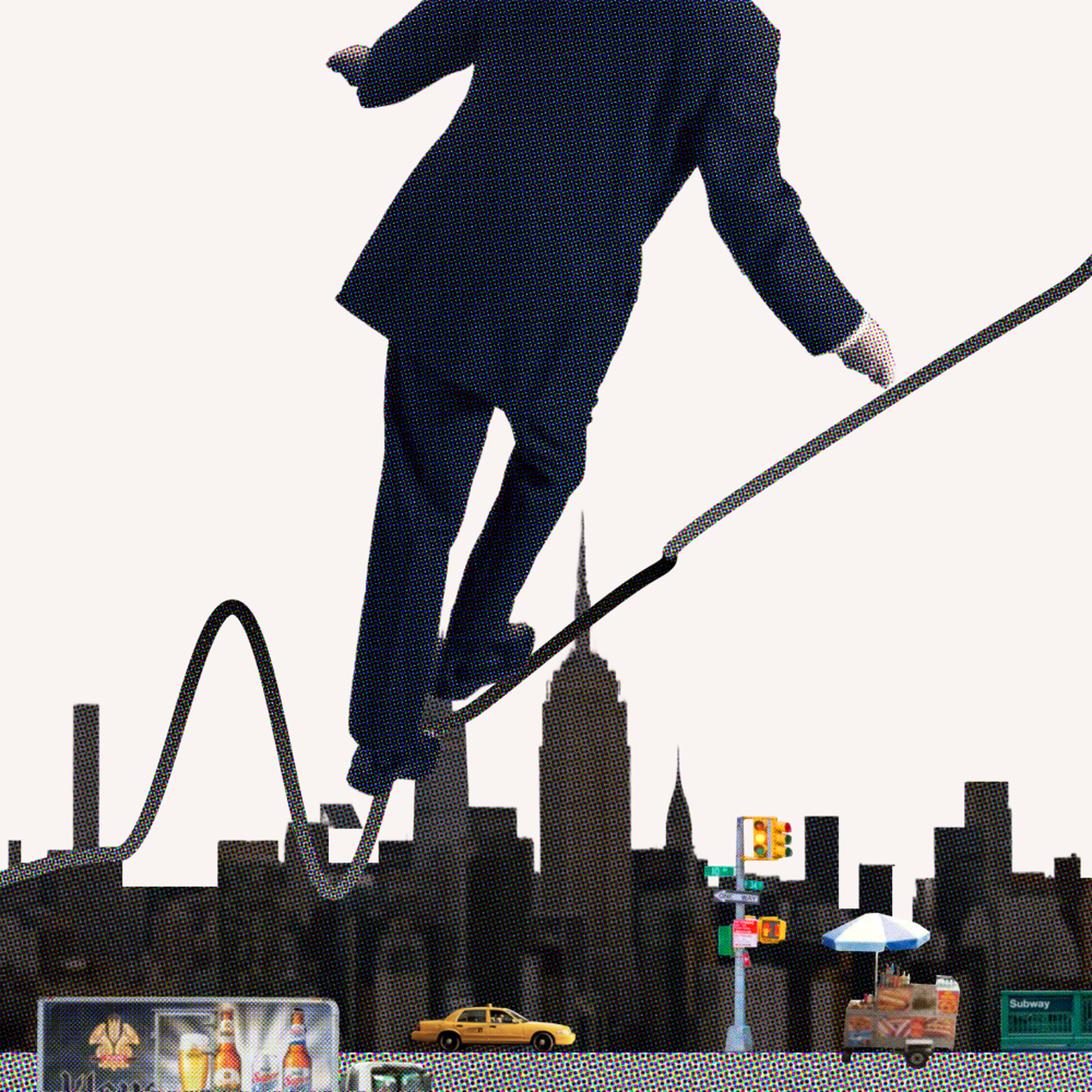
They're tired. The job of CEO has become exhausting due to the chaos of tariffs and the war and oil shocks and of course, AI and dealing with this White House. The job of CEO, despite the large paycheck, is becoming stressful.
- [01:24]
Max Chaffkin
No workers could become tired. That's very interesting, Brad.
- [01:27]
Brad Stone
We all have our limits.
- [01:30]
Max Chaffkin
From Bloomberg Business Week, this is everybody's business. I'm Max Chaffkin.
- [01:33]
Brad Stone
And I'm Brad Stone in for Stacey Vanek Smith.
- [01:36]
Max Chaffkin
And this is what we're going to get into this week. Two stories that look at both the inside and the outside, the up and the down of being a CEO. Now first we have the business of weight loss. It is huge. That's the upside. Eli Lilly has catapulted to a trillion dollar valuation.
- [01:53]
Brad Stone
And while these CEOs are managing their ey eye watering profits, we'll look at what their workers think about those that run their companies.
- [02:01]
Max Chaffkin
News flash, folks, it's not that good. Brad, you had your hands all over this big cover story that just went out as we're recording this. It's about Eli Lilly, the pharmaceutical company that has basically just been on a roll thanks largely to the popularity of its blockbuster GLP1 drug, Zepbound. Can you just, just real quick explain why this story right now?
- [02:31]
Brad Stone
Well, I mean, first of all, Max, I don't know if you've consulted your Bloomberg terminal recently, but Eli Lilly is worth over a trillion dollars.
- [02:39]
Max Chaffkin
It's plugged directly into my brain, right?
- [02:41]
Brad Stone
So you might want to look at that. And look, I mean, that is largely on the Strength of its anti obesity drugs that bounded Manjaro for diabetes. But there's a reason why pharmaceutical companies aren't valued this highly. Patents expire, competition comes in price. And so Madison Mueller, my colleague and I visited Eli Lilly's headquarters in Indianapolis to talk to Dave Ricks, the CEO, to ask him how he was going to extend this amazing run into the future.
- [03:13]
Max Chaffkin
I can't believe you mentioned Madison Mueller. That's such a coincidence because we have her in the studio with us right now. Hey, Madison.
- [03:19]
Madison Mueller
Hey, thanks for having me.
- [03:20]
Max Chaffkin
Madison is a health reporter at Bloomberg Madison. Welcome to everybody's business.
- [03:25]
Madison Mueller
I'm very excited to be here.
- [03:26]
Max Chaffkin
All right, how did Lily wind up in this position? Because I think when most people and I think what I went into in my own mind with a question going to the story was like, I've heard of Ozempic. You would imagine that the maker of Ozempic Novo, Doris, I guess Ozempic, the, the other one is called Wegovy.
- [03:45]
Brad Stone
Right.
- [03:45]
Madison Mueller
There's lots of them now. So.
- [03:47]
Max Chaffkin
But you would think, okay, that's going to be the one to win this market. That has not happened. It's this other company, Eli Lilly, this American pharmaceutical company that has, like BR said, the mega market share. It's even getting, you know, name recognition and things like that. What happened?
- [04:03]
Madison Mueller
Yeah, I mean, it's interesting. In the world of pharma, having the first mover advantage is not always what ends up making someone win in the end. So Lily kind of came from behind. We say that they fell backward into the obesity drug business. Lily and Novo have been rivals for like a century. Both of them were making insulin at the very beginning. So they have this long storied rivalry.
- [04:25]
Max Chaffkin
Insulin being a GLP1, right?
- [04:26]
Madison Mueller
Or not a GLP1, but it is, it is peptide. Exactly. That is correct. They've been competing for a very long time. One would iterate, the other one, you know, would come next. Sort of out innovate each other for years and years and years in this road of making better insulins, better drugs for diabetics. Both of them in like the late 80s, early 90s, stumbled into GLP1s. GLP1 is a gut hormone that these drugs mimic. You know, when this gut hormone is activated, it makes you less hungry, it makes you feel satisfied, makes you eat less. And that's why it's been such a great option for losing weight. I mean, both companies sort of didn't believe in weight loss, didn't believe obesity was a disease. But there were more resources at Novo that were dedicated to this whole GLP one thing. Whereas at Lilly, it sort of fell out of scope. So Novo was able to forge ahead and they were able to bring the first weight loss, GLP1 to the market and they really were able to have that first mover advantage. However, Lilly came sort of from behind. They were the underdogs. They were like, we've gotta get back in this. They went really fast and were able to develop a drug that was actually a little bit more effective than what Novo was doing.
- [05:40]
Brad Stone
Madison, I think you put your finger on something that's very important, which is that Eli Lilly really came up with just a better medicine. And part of the story is telling. We tell the tale of Dave Ricks, right hand guy basically at Eli Lilly. Dan Skavronsky, the chief science officer, and how he really discovered in clinical trials that tirzepatides were performing better than semaglutides.
- [06:03]
Madison Mueller
Yeah, it was, it was shortly after Dave Ricks became CEO and he was like, we need to come up with something better than what Novo's doing. He sent his top scientist, Dan Skavronski, hunting for the best science, the most promising science, and pretty quickly found in early trials that this drug was making people lose so much weight. They were dropping out and they were like, something is, something interesting is happening here and we need to move as fast as we possibly can to get this into trials and get this to everyone.
- [06:34]
Max Chaffkin
I want to get to Dave Ricks, the CEO in a second. But before we go there, just like stepping back, this has been this such a huge shift. I mean, Madison, you kind of hinted at it that there was a time where we didn't regard obesity as a disease. Now we do. Brad, you mentioned a trillion dollar market cap. I assume that's partly an assessment of the category's promise. Right? I mean, there are a lot of investors who see this as a game changer, you know, in ways that go far beyond kind of where we are today. Right?
- [07:07]
Madison Mueller
Yeah, exactly. I mean, a large part of that is confidence in the leadership at Lilly, in Dave Ricks ability to steer this company, to get in with the Trump administration, to invest in things like AI. People really think that Lilly's doing something
- [07:21]
Brad Stone
special and it's a bet on the potential of this category. I mean, if 12 or 13% of Americans are on GLP1s right now, you know, 40% of this country is probably classified as obese. So they see, you know, analyst firms, investors see like a long Runway in the US and around the world for this category of Drugs.
- [07:41]
Max Chaffkin
You brought up Trump. Madison, There is an interesting political angle here. Dave Rick's Republican political donor has had what feels like a close ish relationship with Trump. And as we record this stat news, which is like a trade magazine for the drug industry, reported that the Lilly has this new drug that's forthcoming. They reported that a very special 79 year old who was very well, very connected, high profile person within the US Government obtained compassionate use access to the hot new new Eli Lilly drug. I think there's a lot of speculation of who that very prominent 79 year old might be because Donald Trump, the president just turned, he was 79 at the time. But like, what is that relationship between the Trump administration and Dave, Rick's CEO of Lilly, and how has that helped the company? Like, what have they kind of gotten out of this?
- [08:40]
Madison Mueller
Yeah, I mean, I think we have seen across industries that you really have to have a good relationship with Trump. And these CEOs have to come to the table. Trump wants deals, he wants big splashy announcements. He wants to have these close relationships with CEOs. And Dave Ricks has been able to do that. I mean, he spent a lot of time in Washington over the first half of the year and after the Trump administration sort of came back in, Trump calls him out by name, often says that he's the hottest CEO.
- [09:12]
Max Chaffkin
Is that a comment on his good looks or the stock performance?
- [09:15]
Madison Mueller
No, I think both. He's also said that he looks much younger than his age. I mean, there is a little bit of a bromance going on there for sure. And so that has benefited Lily, you know, Lilly and Novo. To Novo's credit, they were able to strike this deal with the Trump administration to expand access to obesity drugs for patients with Medicare. So people 65 and older. TRUMP has also said that Lilly wouldn't be subject to tariffs because they were building in the U.S. like, it's just, it's whether or not they're actually like getting specific things out of this relationship with Trump. They do have a close, a very close relationship, Dave Ricks and Trump. And I think they're kind of able to like call each other about various things, which goes a long way in this administration.
- [09:58]
Brad Stone
I mean, it's interesting to look at this from a kind of public policy perspective. We make a kind of deal with the pharma industry. We say you're going to have, what is it, Madison, 15 or 20 years of a monopoly on your drug. You've made the massive investment in developing a bunch of drugs and trying to get A couple promising ones through clinical trials. So we're going to give you a monopoly on that. But then it expires, then competition opens, prices come down, you lose that asset. It's like if Amazon were to have to burn down all its warehouses after 10 years and start over. And that's the compromise we make with these companies and it's why it's so hard to maintain hegemony in the pharma market. Well, the arrival of this peptides market, the fact that there are labs in China that are maybe working off scientific studies and copying the formula for retatutrites and just selling them before Eli Lilly has even had a chance to profit from its massive investment. It really does question the entire industry and throw its economics and that fundamental agreement into question.
- [11:01]
Madison Mueller
Yeah, it's a massive threat to like the pharmaceutical innovation. I mean these companies spent spend billions of dollars and many, many, many years developing these products. For them to get ripped off before they're even able to reap any profits on them is, is not a great situation.
- [11:16]
Brad Stone
And by the way, a lot of them are doctors, they're scientists. I think they are genuinely appalled at the fact that people are buying these drugs over the Internet with, with these crazy names and just injecting themselves.
- [11:28]
Madison Mueller
Yeah, exactly. I mean, a lot of doctors are shocked to see patients showing up in their office. I was talking to a doctor recently who said that someone came in with a Ziploc bag that just had like three syringes in it and they were like, yeah, here's my Ozempic. And they were like, what that, what is that? That's. How do you know what's in there? And there's just no way to know. That's the thing.
- [11:50]
Max Chaffkin
All right, so Lily obviously is going to try to make as many versions of these, you know, GLP1s and weight loss drugs as they can and make as much money off this as they have patents. You and Brad talked to Dave Ricks about, you know, where the company's future is. And I found it so interesting because it's all of these categories that feel kind of similar to the weight loss thing where it's like, you know, beauty, it's stuff that could be conceivably consumerized psychedelics, like these kind of like drugs that don't seem to hit maybe conventional medical problems with conventional medical solutions, but that also maybe are super promising for the Eli Lilly scientific machine or something like that.
- [12:33]
Madison Mueller
Yeah, I mean, Lilly right now is just like, we're gonna do everything we have the money to do. Everything. Let's also look at these other areas that are maybe not super conventional, but that we know patients are interested in because of this whole peptides boom. So, I mean, Lilly is like, they're super big in neuroscience, they're super big in cancer, they're super big in immunology. But now they're also starting to think about, okay, we've gotten so close to our patients because of this whole GLP1s thing. What else do they want? Like, what other things do they want to make them sleep better or look better or perform better? And so they're starting to look sort of at more of those consumer categories. And, you know, as Brad knows very well with the tech companies also, there's this sort of, like, obsession at Lilly to be more like a tech company to move faster, but to also have like, more of a relationship like Apple would with its patients or customers and sort of invoke that same level of brand loyalty that those companies kind of have.
- [13:30]
Brad Stone
And I'll add one other thing. I think that they're trying to use this tremendous success and the accompanying kind of bank account that they have to take a higher probability bet. So they're making a lot of acquisitions of drugs and metabolism, correct me if I'm getting the terms wrong. Are farther along in the development cycle, like, are in phase two trials. So they're looking for sure bets to kind of fill out their pipeline so that when their patents on the GLP1s do expire, they've got other winners lined up. Now, nobody in pharma has ever pulled that off, including Eli Lilly, in the past coming off the strength of drugs like Prozac. So it's still a kind of long shot bet. But this is what they're trying to do. They're trying to defeat the historic boom and bust cycles of the pharma industry.
- [14:16]
Max Chaffkin
Exactly.
- [14:17]
Madison Mueller
It'll be really interesting to see what happens because like Brad said, no one really has been able to pull this off yet. And so, you know, if anyone is able to be in that position to do something different right now, it's Lily, because they have just such a massive windfall from all the success of their obesity drugs.
- [14:33]
Max Chaffkin
All right, Madison, thank you so much for being here.
- [14:35]
Madison Mueller
Thank you. It was fun.
- [14:44]
Comcast Business Announcer
Modern enterprise. It's a lot of moving parts, multiple locations, a constant flow of data, endless applications, critical systems that can't go down. Comcast Business helps you orchestrate it all with SD Wan working at scale to keep 150 hospital locations connected and working as one. So patient data flows Securely and care is delivered without interruption. That's a healthy approach. Plus SASE and Zero Trust Security protecting financial data across a bank's 2,000 branches. That means identities verified transactions, secure threats blocked, nest eggs safe and sound and AI powered networking that optimizes traffic across five continents. So yeah, modern enterprise is complex. Comcast Business makes it simple when you add it all up. No one does business like Comcast Business,
- [15:42]
IBM Representative
So there's a lot of noise about AI. But time's too tight for more promises. So let's talk about results. At IBM, we work with our employees to integrate technology right into the systems they need. Now a Global workforce of 300,000 can use AI to fill their HR questions. Resolving 94% of common questions. Not noise. Proof of how we can help companies get smarter by putting AI where it actually pays off, deep in the work that moves the business. Let's create smarter business.
- [16:11]
Commercial Announcer
IBM when you own your own business, you own every decision. Now own the card that rewards you for it. The Chase Sapphire Reserve for Business card brings the best Sapphire Reserve benefits to business owners who expect hardworking rewards. Designed to meet the needs of business owners at scale, this Pay in Full card elevates your travel experience and offers premium benefits and and value toward business services that will take your business to the next level. Fuel your business and maximize rewards with 8x points on all purchases through Chase Travel, 3x points on social media and search engine advertising, annual partnership credits and more. Make every journey more rewarding with a $300 annual travel credit and access to a network of airport lounges. Whether you're looking for pre flight productivity or time to rest and recharge. Chase Sapphire Reserve for Business it's the card that gives back all you put in. Learn more@chase.com ReserveBusiness Chase for Business make more of what's yours Accounts subject to credit approval restrictions and limitations apply. Cards are issued by JPMorgan Chase Bank NA member FDIC.
- [17:18]
Brad Stone
Max, I want you to answer this delicately. Have you ever, have you ever had a bad boss?
- [17:26]
Max Chaffkin
I've had bad bosses, but my current boss is the best.
- [17:31]
Brad Stone
But not everybody feels that way. And so we sent our producers Jasmine J.T. green and Stacy Wong out onto the streets of New York to get a pulse on what people think about CEOs these days.
- [17:42]
Max Chaffkin
I'm curious like what are your thoughts particularly around like CEOs and like management? I would, I would say that the reason people don't like CEOs and that CEOs in general are like starting to be afraid of having that job is because people know now that the only way to be a CEO of a large company is to like manipulate and essentially scam your workers with terrible labor. Just labor environments, terrible pay, oftentimes with terrible hours on top of just bad conditions in workplaces. It just feels a little bit weird, you know, because you're employing people, you're using their services, and to profit off of that, you need to charge a higher price to whoever you're selling it to. It felt a little bit exploitative. So I downsize. I don't want to be CEO. I guess you need to manage people.
- [18:44]
Brad Stone
I don't want that on my burden.
- [18:46]
Max Chaffkin
I don't want to be that person. Yes, I would want to be one. And I am one. I own a dance school in Brooklyn. It's a ballet school because, yeah, I'm a ballet dancer. So what is it like being like the owner and running of a space? It's like a double edged sword. I think it's very, very, very stressful. It's like you gotta wear so many hats. And it's very worth it though.
- [19:07]
Brad Stone
It's very worth it.
- [19:07]
Madison Mueller
I am my own employee. I like the freedom of being able to come out and work the hours that work for me and being able to create stuff that is aligned with who I am and my values. I think starting it was the hardest part. Maintaining it is just staying educated at the end of the day.
- [19:25]
Max Chaffkin
Is it worse now than it was like, let's say five, 10 years ago? I feel like it's always been, I feel like it's always been bad, but people were more complacent and like, like 10 years ago because honestly it was probably, it was most likely due to the economy being better. Because the economy is so bad now. People are looking at the billion dollar companies and saying, why are you not helping us? We gave you all this profit and now you just keep upping prices.
- [19:53]
Brad Stone
Okay, interesting accountability coming for CEOs. Well, we are joined by Bloomberg opinion columnist Beth Kowit, who also listened in on these New Yorkers. Beth, what did you think about what you just heard?
- [20:05]
Beth Kowit
I mean, I think that tracks with, with what we're seeing in the polling. Like people are, their opinions of capitalism, of business are declining. And I think that that is hurting the image of CEOs who are running these companies.
- [20:18]
Max Chaffkin
For sure we can get into what that means for CEOs and the fact that CEOs are now. It's harder to be a CEO. Maybe, arguably we can we talk about that. But before we get There.
- [20:27]
Brad Stone
Why?
- [20:27]
Max Chaffkin
Where do you see this shift, both of you? I'm actually curious, where is this shift coming from? Maybe, Beth, you start.
- [20:32]
Beth Kowit
Yeah, I think a big piece of it is rising inequality, right? We see some of these enormous pay packages and on the other end we have people who are really struggling. And I think that's visceral and people are feeling that. And I think this is why we're seeing threats against CEOs increase. You know, I just. CEOs definitely, they have an image problem right now for sure.
- [20:52]
Brad Stone
I thought it was so interesting. You know, Beth, you wrote the story for us. Being a CEO today stinks, except for the salary in the July issue of Business Week. And we promoted the story on social media. And the comments to our Instagram post were so rich. I just wanna read a few. World's Smallest Violin. One person writes, just no sympathy. So are we expected to feel empathy for the suddenly stressful plight of the people who are running our companies, running the economy?
- [21:24]
Beth Kowit
So I don't think so. Okay, so this is not a boo hoo story, right? I think again, they make a lot of money, they know what they're taking on. But I think the bigger point here is that the job has gotten more challenging and that has implications for who wants to do it. And I think that's the reason that we should all care. Not even so much that this job has gotten harder. I think, you know, they're, they're compensated, they're paid well, but that it's, it's going to mean that the pool of candidates is slimming down and that that really does matter when we think about who do you want to be your boss?
- [21:54]
Max Chaffkin
So to me, there are sort of two categories, maybe three in the way that this job got harder. And one of them applies to pretty much every worker.
- [22:05]
Madison Mueller
So.
- [22:05]
Max Chaffkin
So in your story, there are a lot of CEOs saying it's a 247 job right now. And like these are things that affect everyone. I mean, and, and CEOs have to deal with the fact that if they embarrass themselves publicly, it could affect them professionally again. That is a thing that affects everyone. And I think that may be part of the reason that some people reacted to the story the way they did. Because. Because you're saying, oh, being a CEO has gotten really hard, but working being a white collar worker has gotten harder since the pandemic as well.
- [22:36]
Beth Kowit
Sure, I think that's a fair point. I just think that the stakes are so much higher when you are at the top. You know, CEOs lose their jobs faster than they ever have. Boards are, have a lot less tolerance for mistakes than they used to. And maybe again you can say that for any boss, but I do think when you're operating at that level that the stakes, the pressure is, is, is higher.
- [22:55]
Max Chaffkin
How much bet do you think this is political? We have a CEO president or a president who you know, at times has been CEO and who, you know, really identifies himself, his public image as a, as a manager. He's the you're fired guy. He also, Donald Trump, you know, was elected with this kind of unprecedented, you know, there's this really close alliance between the business world and the Trump administration. So, so I, I do wonder if some of this has to do with politics where, where people are sort of, especially left leaning people, younger people, we heard a lot of young voices in that segment are sort of taking their political feelings and, and putting them on senior managers in a way they might not have like during the Obama era say.
- [23:42]
Beth Kowit
I think that's true. I do think that's true. And I think that we, I've written about this quite a bit, but I do think we have seen a real reversal here in terms of how CEOs respond to cultural issues. They've stopped. They've, you know, I think that the complete 180 there has made people question what do these CEOs really stand for? What do these companies really stand for?
- [24:05]
Brad Stone
It's interesting also, I mean in some ways like CEOs are taking themselves out of the political discussion publicly, but they're also expected to court the White House in a way that they haven't in the past. You know, Trump is a kingmaker. It's incumbent upon these companies to kind of woo this president. They can't rely on their lobbyists anymore. They gotta work the halls of power. Yeah, a lot of pressure in that regard too.
- [24:29]
Max Chaffkin
Well, and then the other side of this coin, I mean the reason they're in Washington all the time is that we have a very unstable policy environment. So like CEOs are always historically, they probably wouldn't say it publicly cuz they don't wanna get sideways, sideways with Trump. But like the general message from the business world from as long as I've been a journalist, just like, you know, over 20 years, is like we want stability, we don't want shifts in policy. And if there's one thing about the Trump administration, it's that it's been very volatile. You have a giant tariff one day and then we get rid of the tariff. You have super low oil prices one day and now all of a sudden we're fighting a war that causes strait of Hormuz the most, you know, the most important, you know, through way for, for petroleum to be closed. So, so these CEOs in addition to having to deal with the fact that the public and their workers may feel differently, just have to deal with policy changes like that. That's a, that's a headache. That's, that's not something that has anything to do with public opinion.
- [25:23]
Commercial Announcer
Right.
- [25:23]
Beth Kowit
And that means there's, it's impossible to do long term planning. That was something that I, that's something I've heard pretty regularly is that, you know, a lot of these executives, that's what they're trained to do, that's what they are good at. And how do you come up with a 5 to 10 year plan when things are changing so much day to day? I think it's, I think that is an enormous struggle and key to that
- [25:44]
Brad Stone
uncertainty has to be AI, right? And is it this productivity and efficiency boosting wave that is gonna, is gonna accelerate your growth? And if so, what happens to your employees? How do you manage growth with what the market is expecting? And in terms of layoffs as well.
- [26:03]
Max Chaffkin
Do you all remember the like it wasn't that long ago when I think CEOs were having this kind of really positive time. Right. The girl boss era, the, the rise and grind. Like there was a time in the not so distant past where it was kind of cool to be a CEO. Which it's kind of, of strange to think about today.
- [26:23]
Beth Kowit
Yeah, I think it's funny because I, I think especially if you look back to, you know, Trump 1.0, I think CEOs were viewed as a counterweight to the administration. They would push back, they would stand up for what they felt was wrong. And I think we're just, you know, it's now it's just get along. I think that really sort of encapsulates that shift you, you're talking about. Right. I think, I think they stood up for something then and now we just don't really see that anymore to nearly the same frequency.
- [26:54]
Brad Stone
But let's be real. Is anybody really deferring their ambition? I mean, I guess we could probably come up with a couple of examples, but it feels like it's still the top spot. Ambition is still real. People are still human. Being CEO really become unattractive.
- [27:13]
Beth Kowit
So I was a little skeptical about this too. But I talked to a number of executive recruiters who told me that they have heard from several candidates that this is. They're rethinking whether they want this job. Last year, we had this really interesting example of senior executive at JP Morgan explicitly say she did not want the CEO job. We had three very senior women leave CEO jobs to go work at OpenAI. And again, you can say that's for a lot of different reasons. Right. Enormous opportunity for one giant exploding valuation.
- [27:45]
Max Chaffkin
Maybe more money.
- [27:47]
Beth Kowit
Right. And I think maybe this idea of ambition is shifting, particularly for women, which is something I've written about. But it's maybe more about impact than it is about title. And I think people are looking at this job and saying, maybe there are ways I can have more impact without having to take on this burden.
- [28:06]
Max Chaffkin
There's only one way to fix this, Beth. We gotta pay CEOs more. I think, obviously, that's not paying them enough.
- [28:12]
Beth Kowit
We are not paying them enough.
- [28:16]
Max Chaffkin
How long before we get the vibe shift in the other direction? I mean. Or is that. Or do you think that's so far off that it's not even worth talking about?
- [28:22]
Beth Kowit
Ooh, that's a good one.
- [28:23]
Max Chaffkin
Cause there's gonna be, you know, eventually, like, political climate will change and we'll be back in the. What's the Sheryl Sandberg book called?
- [28:33]
IBM Representative
Lean In.
- [28:33]
Max Chaffkin
Lean in the Lean Air. The Lean in era 2.0 will come and we'll be back to, you know, feeling positive about being a manager.
- [28:41]
Beth Kowit
I think maybe that could happen, but I do think the skepticism from employees will last longer. I think they've been seeing a different side of corporate America than. Than they expected. I think some of the things that, you know, it feels disingenuous now.
- [28:58]
Max Chaffkin
I mean, I think this whole sort of rise of populism, there are going to be CEOs and marketers who figure out how to kind of harness this, who get to be the champions of the working class or whatever. And I think we'll see that. We'll see companies do that. We're obviously seeing, like, political leaders do that. I mean, they'll take advantage of this in some way, I imagine.
- [29:17]
Beth Kowit
Oh, for sure. Yeah, I think that's right. The diminishing trust in institutions. I think you're right that we are going to see CEOs capitalize on this at some point.
- [29:26]
Max Chaffkin
Beth, thanks for joining us.
- [29:28]
Beth Kowit
Thanks for having me.
- [29:29]
Max Chaffkin
Stick around. We're going to talk underrated stories, and we'd love for you to join and weigh in on both of these.
- [29:34]
Beth Kowit
These great. Love to.
- [29:40]
Commercial Announcer
When you own your own business, you own every decision. Now own the card that rewards you for it. The Chase Sapphire Reserve for Business Card brings the best Sapphire Reserve benefits to business owners who expect hardworking rewards. Designed to meet the needs of business owners at scale, this Pay In Full card elevates your travel experience and offers premium benefits and value toward business services that will take your business to the next level, fuel your business and maximize rewards with 8x points on all purchases through Chase Travel, 3x points on social media and search engine advertising, annual partnership credits and more make every journey more rewarding with a $300 annual travel credit and access to a network of airport lounges. Whether you're looking for pre flight productivity or time to rest and recharge, Chase Sapphire Reserved for business it's the card that gives back. Check all you put in. Learn more@chase.com reserve business chase for Business Make More of what's Yours Account subject to credit approval restrictions and limitations apply. Cards are issued by JP Morgan Chase Bank, NA Member FDIC Wise is the
- [30:46]
Comcast Business Announcer
smart way to manage the currencies you need around the globe. If you've ever sent money internationally using a traditional bank, there's a good chance you've paid more than you realize. Hidden fees, exchange rate markups, and extra charges can quietly add up before your money even arrives. There's a better way. Try Wise. Wise uses the exchange rate you'd usually find on Google, helping you avoid the unwelcome surprises that often come with international transfers. Whether you're sending money to family overseas, spending while on your holiday abroad, or paying bills across borders, Wise makes moving money simple, transparent and straightforward. Straightforward wise offers 24. 7 customer service and runs over 7 million daily checks to spot and stop fraud. And most transfers happen in under 20 seconds, which means your money arrives in less time than you've been listening to me. Join Millions Saving Billions. Be Smart. Get Wise. Visit wise.com or download the Wise app today. Ts and C supply.
- [31:47]
Brad Stone
Never bet against American Grit or American Energy through innovation. Venture Global is not only building some of the largest energy facilities in the world right here in the United States, but delivering American energy at a fraction of the cost in a fraction of the time. So while others are busy talking, we're busy building. That's Venture Global. That's unstoppable energy.
- [32:18]
Max Chaffkin
Brad, it's time for Underrated Stories. Beth is here. She is listening. She doesn't know what we're gonna say, but I'm sure I'm ready with the hot takes. What do you got for us?
- [32:27]
Brad Stone
Okay, well, you guys are New Yorkers I'm over here on the west coast, but I am gonna select a New York underrated story. It was, of course, the primaries this week. Zoran Mamdani, mayor in New York City, had a spectacular week. Three candidates for the House of Representatives that he endorsed. One two of them were Democratic socialists. And I just think, you know, it' a lot about Mamdani's political popularity, his movement. But I think the underrated story here is the surprising popularity of the Democratic socialist agenda. Issues like strengthening unions, a federal jobs guarantee, the Green New Deal is back in play, immigration rights, of course, hostility to Israel in support of Palestine. All of these things, I think, portend a very interesting 2028 election cycle.
- [33:19]
Beth Kowit
I think that's so true. And actually, one of them, one of the winners was in my district. So it was interesting to watch that play out.
- [33:25]
Max Chaffkin
I mean, the thing for me, and this comes back to Beth's story, like, do you all remember where kind of some of the most influential business leaders were on Mamdani's political chances? Like, as recently as, I don't know, nine months ago, I mean, you had some of the smartest minds in business basically saying, this guy is a joke, his supporters are stupid. Jamie Dimon said something along those lines, and, man, they really got it wrong. I mean, they really, really miss this one.
- [33:54]
Beth Kowit
Yeah. And I think to your point, it does show that they maybe have taken their finger off the pulse a little bit if you think that these candidates are not popular if they don't have traction with a large swath of the population.
- [34:06]
Brad Stone
President Trump likes to say America will never be a communist country. And he likes to sort of, you know, generalize and sweep this movement under one big rug. But I think that, you know, democratic socialism is something that will to be kind of contended with.
- [34:22]
Max Chaffkin
Well, I think also it's interesting, Trump, of course, sort of famously has embraced Mamdani. So he, in certain ways, has been much savvier about this than many of, you know, many of his friends in the business community. He even. Even as Mamdani criticizes him, he's. He's aware. And I think that's partly because Trump and Mamdani have a lot in common. Not. Not just in the sense that they are both good, you know, on social media and that they're savvy politicians, but they're both kind of tapping into some of the same stuff. As much as Trump is a, you know, an ally of the business world, he's. He's very much been able to channel some of these Anti boss feelings.
- [34:56]
Brad Stone
He recognizes game.
- [34:59]
Max Chaffkin
Exactly. All right, I. I've got an underrated story for the two of you, and I. I know you. You're probably following the drama around the reflecting pool. There are. There are more. Bigger problems to worry about. But I have just been delighted with this story about the reflecting pool in Washington that they are trying to get ready for the big sequicentennial. Let's just give a listen to how the. How the news is covering this.
- [35:27]
Brad Stone
We're out here at the reflecting pool. There are the usual collection of morning joggers, lucky them, who get to show up here in far more casual clothing. I did a lap around the pool a little earlier to check on things. It is definitely cleaner. There is far less algae. The ducks are out swimming. They are alive.
- [35:42]
Max Chaffkin
Are you two following this?
- [35:43]
Madison Mueller
Oh, I love that.
- [35:45]
Beth Kowit
Yeah, the duck wellness check there.
- [35:47]
Commercial Announcer
Love it.
- [35:47]
Max Chaffkin
Well, cause I think several ducks have been. Now, I don't know if that's unusual. Like, I mean, some ducks die of natural cause. I don't know if the reflecting pool is the cause, but it is also concerning.
- [35:58]
Brad Stone
I love the story. I mean, if you look back in sort of like, recent presidential history, there are certain moments that become metaphors. Gerald Ford stumbling on the stairs, George Bush vomiting on the Japanese prime minister. And what we have here is a fight over what could be the defining metaphor of the Trump administration. And he is savvy enough to know it. And so he is fighting tooth and nail with all of the tools at his disposal to try to change the narrative from the obvious, which is that he has inadvertently created this kind of oleaginous swamp in the Middle of Washington,
- [36:35]
Max Chaffkin
D.C. brad, you were talking about the metaphor. For me, the actual mechanics of this story have been the. It's like, the best part, because I feel like it's so relatable. Like, Trump is going through basically the personal drama that many suburban homeowners face, which is that the algae in their pool. Caring for a pool is very difficult, as my father can attest.
- [36:56]
Comcast Business Announcer
He.
- [36:56]
Max Chaffkin
I've never seen my dad, like, so relate to Trump as he talked about, talking about this algae issue, you know,
- [37:03]
Beth Kowit
so is this just a move to seem relatable?
- [37:06]
Max Chaffkin
Maybe. And, you know, I've spent a bunch of time going down the, like, pool, Reddit rabbit hole to try to figure out, you know, what Trump is doing. Does it make any sense? I mean, clearly, painting is not gonna fix the algae problem. The other thing that's funny is that Trump himself has offered some sort of practical ideas for what may be Going wrong. Let's, let's give a listen to that. We still can't find is that alleged 350 foot gash along the floor of
- [37:32]
Brad Stone
the pool that the President says is there.
- [37:34]
Max Chaffkin
Who would think that somebody would go into a pool and take a knife
- [37:37]
Comcast Business Announcer
and start cutting it?
- [37:37]
Brad Stone
But you have proof of that, that they used a knife? Your photos or video?
- [37:41]
Max Chaffkin
Well, let's put it this way. When you have a 350, I think
- [37:44]
Brad Stone
it's 350, not 250.
- [37:46]
Max Chaffkin
A 350 foot slit from one end to the other. You think that's proof? So he's referring to the fact that the paint on the bottom of the pool that they just painted has been peeling. There's also apparently a long gash in the, some foam.
- [38:02]
Beth Kowit
He.
- [38:02]
Max Chaffkin
The Trump administration has alleged that that's, you know, essentially antifa. You know, some, some, some activists defacing the pool in the parks department, I think has arrested six people. But doesn't it seem possible that, that, you know, it could have just been like, this could just be like a natural failure at the bottom of the pool.
- [38:20]
Beth Kowit
I don't know about you guys, but it makes me feel good that my president is so focused on the important issues. I mean this is, this is really what we should, what we should be talking about.
- [38:28]
Max Chaffkin
Okay, my counter contrarian take here is like, like the green wasn't that bad. Like why didn't they just. It looked nice. It just looked a little, a little green.
- [38:37]
IBM Representative
I love it.
- [38:37]
Beth Kowit
Let's just pretend it was supposed to be green.
- [38:40]
Brad Stone
Max, I love how you're approaching this. This is not about the details. This is about the memes, okay? And the memes are rich and they're damaging. My favorite one is there's one of Yoda lifting the X wing from the, you know, like at the swamp planet in Star wars out from the reflecting pool. And he knows these things are politically damaging.
- [39:01]
Max Chaffkin
The thing I need is a smell check. Does the algae, does it smell okay? Or is it starting to give an odor? Because I think once you get an odor that starts to become concerning.
- [39:10]
Brad Stone
It looks smelly. It does look smelly.
- [39:14]
Max Chaffkin
Beth, thank you. You will have to come back and join us on another episode to talk more about pool care, algae and metaphors.
- [39:22]
Beth Kowit
Thank you. I would love to. These are things I have deep abilities, opinions about.
- [39:32]
Max Chaffkin
This show is Produced by Jasmine J.T. green and Stacy Wong. Magnus Henriksen is our supervising producer. Sam Rogich handles engineering and Dave Purcell fact checks. Special thanks to Jeff Muskus, Julia Rubin, Angel Recchio. And Maria Ling. If you have a minute, please rate and review the show. It'll mean a lot to us. And if you have a story that should be our business, email us@everybody's bloomberg.net that's everybody with an slumberg.net thank you for listening. We will see you next week.
- [40:08]
Brad Stone
Okay tech leaders, Word on the street is security incidents are dropping way down with Windows 11 PCs built in. Security for the win upgrade to Windows 11 Pro at windows means business.com get
- [40:22]
Commercial Announcer
the news you need in just 15 minutes.
- [40:25]
Max Chaffkin
Start your day with Bloomberg Daybreak, the
- [40:27]
Comcast Business Announcer
podcast with a global view on the stories that matter.
- [40:30]
Brad Stone
I'm Nathan Hager.
- [40:31]
Commercial Announcer
And I'm Karen Moscow. Join us each morning for curated stories
- [40:34]
Beth Kowit
on current events, politics, business and foreign
- [40:37]
Brad Stone
relations, plus one conversation on the day's
- [40:39]
Max Chaffkin
biggest developments, all in just 15 minutes.
- [40:42]
Beth Kowit
Subscribe to Bloomberg Daybreak for a precise,
- [40:44]
Commercial Announcer
thoughtful take on the stories that matter.
- [40:47]
Max Chaffkin
Listen to Bloomberg Daybreak each morning on
- [40:49]
Comcast Business Announcer
Apple, Spotify, or anywhere you listen.
- [40:52]
Brad Stone
High interest debt can be a real vibe killer. Credit cards, personal loans, and more can make you feel uncomfortable even in the sanctuary of your own home. Well, what if you knew that SoFi can help you leverage your home's equity to feel more at ease? It's called a SOFI Home Equity Loan, and it could consolidate your debt at a typically lower income interest rate than existing debt with lower monthly payments, and all while keeping your existing mortgage rate. View your rate@sofi.com payoffdebt today, mortgages originated by SoFi bank and a member FDSC and MLS number 696891 terms and conditions apply. Equal housing lender.