← Everybody's Business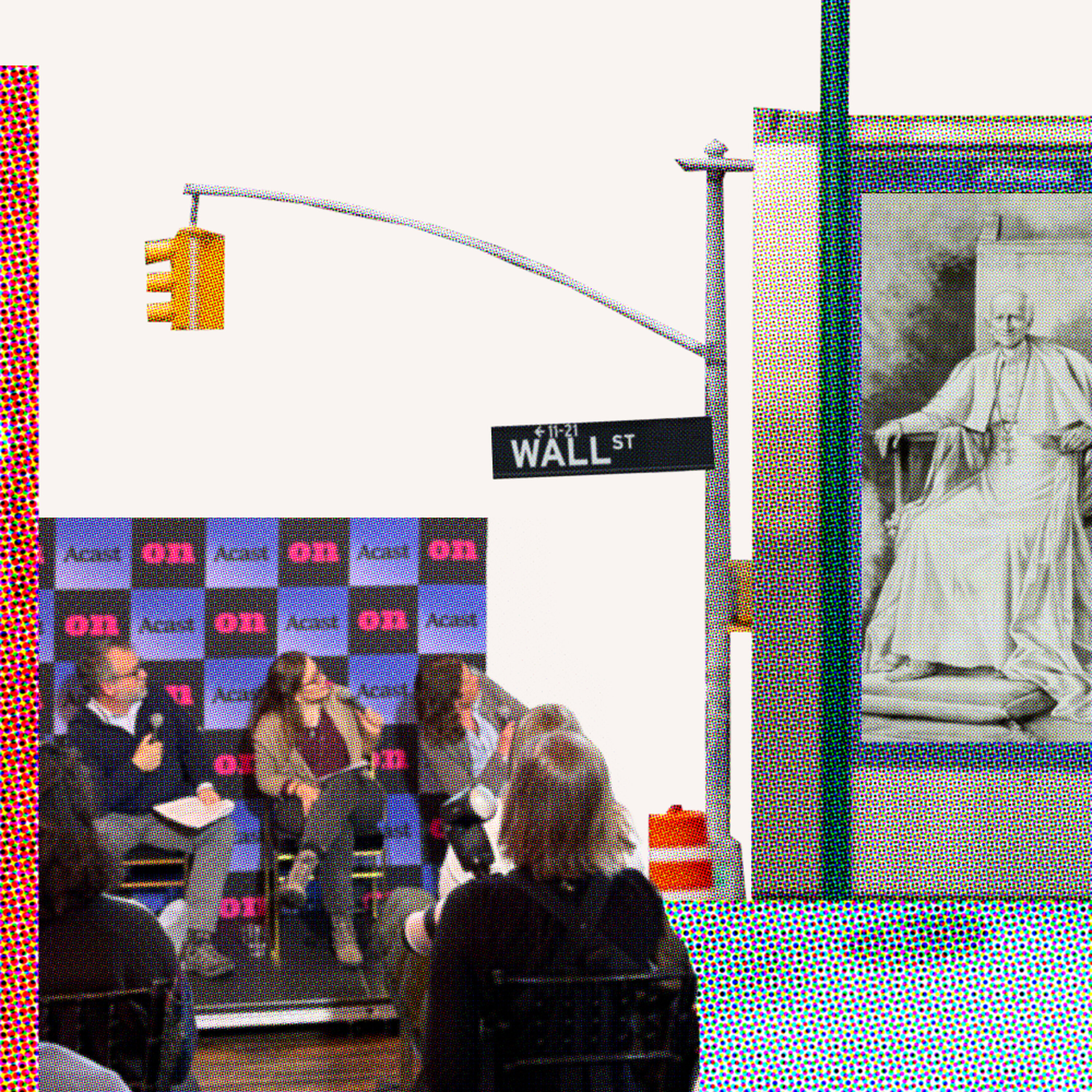
Everybody's Business
The Second Coming of Prediction Markets, Live at On Air Fest with Pushkin's Business History
00:43:06
Loading summary
Transcript231 lines
- [00:01]
Jacob Goldstein
The thing about AI for business, it may not automatically fit the way your business works. At IBM, we've seen this firsthand. But by embedding AI across hr, IT and procurement processes, we've reduced costs by millions, slash repetitive tasks, and freed thousands of hours for strategic work. Now we're helping companies get smarter by putting AI where it actually pays off, deep in the work that moves the business. Let's create smarter business.
- [00:29]
Stacey Vanek Smith
IBM, a T shirt and jeans, Mac and cheese, Oceans and sunsets. Some things in life are an obvious match, like RIAs and Schwab Advisor Services, the number one choice for independent advisors looking for a custodian who can help them go further. With all the wealth, services, technology and support an RIA firm needs, the difference is so obvious. It's Schwabius. Find your match and learn why custody is just the beginning@schwabias.com. Bloomberg audio studios podcasts radio news.
- [01:13]
Max Chaffkin
Welcome to everybody's business from Bloomberg Businessweek. I'm Max Chaffkin.
- [01:16]
Stacey Vanek Smith
And I'm Stacey Vanek Smith.
- [01:17]
Max Chaffkin
Stacey, you can almost hear the excitement in the background. We're at the Wyeth Hotel at the On Air Festival in Williamsburg, Brooklyn for a big live taping.
- [01:26]
Stacey Vanek Smith
It is true. This is a big gathering of the podcasters of America.
- [01:31]
Max Chaffkin
Lots of people in people in America.
- [01:33]
Stacey Vanek Smith
Lots of Bose noise canceling headphones. It is a great scene and we are about to do a live show, which is really cool. We're teaming up with a Pushkin podcast Business History with Robert Smith and Jacob Goldstein.
- [01:45]
Max Chaffkin
Yeah, this is huge. This is like the podcast equivalent of a mega merger. Business history X times. I don't know what the word is. Everybody's business. Stacey. I think the FTC might have to get involved. They might have to approve this one. A big deal.
- [01:58]
Stacey Vanek Smith
Everybody's business history is what we're calling it and we are talking today about prediction markets.
- [02:04]
Max Chaffkin
Okay, but Stacy, before we jump on stage, we've got to follow up on last week's emergency podcast episode on the Supreme Court tariffs ruling and President Trump's State of the Union address. We gotta get to that.
- [02:16]
Stacey Vanek Smith
Yes, indeed. It was quite a week
- [02:23]
Max Chaffkin
before we get there, Stacey, I thought we could just have a quick follow up chat on the tariff issue. I listened to last week's episode with Jonathan Lieberman, the trade broker. Good job on that emergency episode.
- [02:35]
Robert Smith
Thank you.
- [02:35]
Max Chaffkin
Working overtime for our listeners. And I figured we just unpack what we've learned over the last few days, especially with the State of the Union address. Yeah.
- [02:43]
Stacey Vanek Smith
So Jonathan said basically what he does is helps companies with the paperwork when they're trying to import goods. He figures out all the forms, and it's like a tax form, a tariff form, because a tariff is a tax.
- [02:54]
Max Chaffkin
And.
- [02:55]
Stacey Vanek Smith
And so he mostly deals in seafood. So if a company's trying to bring in, like, a $200,000 shipping container full of lobster tails and they have to figure out a tariff, that is what happens. Then he helps them figure out how much they owe and fills out all the forms.
- [03:08]
Max Chaffkin
Yeah, that was fascinating, just because I hadn't thought about the level of complication involved or I hadn't thought much about how complicated this is. And it kind of helps explain why these tariffs have been unpopular, because it's just this huge amount of not only attacks, which most people hate, but just a huge amount. And I think the takeaway from the State of the Union address, Stacey, is that uncertainty is going to continue.
- [03:33]
Stacey Vanek Smith
Oh, yeah. Yeah. In fact, Jonathan, poor Jonathan, when we talked to him, was getting calls the whole time we were talking from his customers, from these seafood importers who were wondering what was going on, and they were like, does this mean we don't have to pay tariffs anymore? What does the new 10% tariff mean? Can we get our money back? Because if these tariffs were indeed illegal, the. These seafood importers should be able to get the money that they paid back from the government.
- [03:57]
Max Chaffkin
And yet the Trump administration has, in all sorts of ways, suggested that they are gonna try to not pay the money back. Also, Donald Trump immediately after, and I think this came up in your conversation with Jonathan immediately after the Supreme Court ruling essentially said, we're just gonna do the tariffs through some other means. And he reiterated that point during the State of the Union address. Let's just quickly listen to that little segment now.
- [04:25]
Jacob Goldstein
But the good news is that almost all countries and corporations want to keep the deal that they already made. Scott, knowing that the legal power that I as president have to make a new deal could be far worse for them, and therefore they will continue to work along the same successful path that we had negotiated before the Supreme Court's unfortunate involvement. So despite the disappointing ruling, these powerful countries, saving. It's saving our country the kind of money we're taking in peace. Protecting many of the wars I settled was because of the threat of tariffs. I wouldn't have been able to settle them without. Will remain in place under fully approved and tested alternative legal statutes. And they have been tested for a long time. They're a little more complex, but they're actually probably better, leading to a solution that will be even stronger than before. Congressional action will not be necessary. It's already time tested and approved.
- [05:33]
Stacey Vanek Smith
Yeah. This tracks with what Jonathan said. He said a couple things. He said, number one, the president is right. There are all these avenues that he has and can use to put new temporary tariffs in place. One of them he did use, he invoked a 10% tariff immediately, then raised it to a 15% tariff, and then lowered it again to a 10% tariff.
- [05:53]
Max Chaffkin
They haven't actually done the 15%. So there was a little bit of confusion. The confusion continues, and it's confusing even for those of us who make it our business to try to help people figure this out. And just like Jonathan, I was surprised by the tone, I guess, of the State of the Union address. Trump has been super unpopular on these issues. It's been this huge turn for the
- [06:16]
Stacey Vanek Smith
Trump administration where it's hard on businesses, hard on consumers.
- [06:19]
Max Chaffkin
He'd always been pretty popular on the economy, but these tariffs and all the affordability stuff that we've talked about has really bit into that. There was speculation that there might be some sort of confrontation with the Supreme Court justices.
- [06:32]
Stacey Vanek Smith
Yeah, I thought there would be.
- [06:33]
Max Chaffkin
I was watching on tv. I'd say it was a little awkward. Not as awkward as it could have been. He shook John Roberts hand, although he did not shake Amy Coney Barrett's hand. And even in this little bit you just heard, he's quibbling with the decision, but he's not doing what he did in the immediate aftermath of the tariff ruling, where I believe Stacey called them lap dogs and was really slinging insults at the justices of our high court.
- [06:58]
Stacey Vanek Smith
And it's really interesting because that is at the top level, but practically, what this means for businesses and for customers is really interesting. Jonathan got into a little bit of this, but one of the things he said was that for every tariff that levied, like every terraform he filled out, for every single shipment of whatever, lobster tails or shrimp or whatever, it was a separate form. And if these companies want their money back from the government, they have to file a claim for every single one, which is tens of thousands. Yeah, it's tens of thousands of separate, tiny lawsuits. And so Jonathan was kind of losing his mind about how much paperwork this was going to mean. It's going to be a big, possibly expensive message for companies going forward.
- [07:37]
Max Chaffkin
Okay. I think there are two questions, Stacy. One is, when do we get our money back? Like, we ultimately paid some of these tariffs.
- [07:45]
Stacey Vanek Smith
I know.
- [07:45]
Max Chaffkin
Are we going to get a check?
- [07:48]
Stacey Vanek Smith
Well, this is where things get really messy, because let's say you're a seafood importer and you sell your seafood to Long John Silver's. So you've been paying tariffs. Let's say you do get your money back on the tariffs, but then Long John Silver's gonna go to you and be like, hey, you passed those costs along to me. I should get a refund, too. And suddenly you're in this really strange situation as well. So it is a mess that I think is going to be going years into the future.
- [08:11]
Max Chaffkin
Yeah. And I think it's gonna be a huge political issue going forward. Which I guess brings me to the other question. Do we think that this ruling helps Donald Trump in a weird way? Because maybe the Supreme Court did him a favor. Saying these tariffs are illegal allows him maybe to back away from these policies.
- [08:31]
Stacey Vanek Smith
I think it would have been amazing ground cover for two reasons. One, because he could have been like, if the economy didn't go well or prices continued to rise, he could have been like, listen, I tried with the tariffs. The Supreme Court struck me down. What can I do? It's their fault. Right. It gives him good ground cover. But he didn't take the win. And then he put new tariffs in place. So I don't know, I felt like there was a win right there.
- [08:52]
Max Chaffkin
But he's not taking it.
- [08:53]
Stacey Vanek Smith
But he didn't take it.
- [08:56]
Max Chaffkin
Stacey, I'm looking at the clock.
- [08:58]
Stacey Vanek Smith
Yes, I am.
- [08:58]
Max Chaffkin
And Robert Smith and Jacob Goldstein, the hosts of Business History, going to be here any minute. We got to go downstairs.
- [09:04]
Stacey Vanek Smith
Enough about tariffs. Time to pivot to prediction markets.
- [09:16]
Max Chaffkin
The news doesn't stop on the weekends.
- [09:18]
Stacey Vanek Smith
Context changes constantly, and now Bloomberg is the place to stay on top of it all.
- [09:24]
Max Chaffkin
Hi, I'm David Gura.
- [09:25]
Jacob Goldstein
Join us every Saturday and Sunday for
- [09:27]
Max Chaffkin
the new Bloomberg this Weekend.
- [09:28]
Stacey Vanek Smith
I'm Christina Raffini. We'll bring you the latest headlines in depth analysis and big interviews, all the stories that hit home on your days off. And I'm Lisa Mateo. Watch and listen to Bloomberg this weekend for thoughtful, enlightening conversations about business, lifestyle, people, and culture.
- [09:44]
Max Chaffkin
On Saturday mornings, we put the past week's events into context, examining what happened
- [09:48]
Jacob Goldstein
in the markets and the world.
- [09:50]
Stacey Vanek Smith
Then on Sundays, we speak with journalists, columnists, and key political figures to prepare you for the week ahead. Join us as soon as you wake up and bring us with you wherever your weekend plans take you.
- [10:00]
Robert Smith
Watch us on Bloomberg Television, listen on
- [10:03]
Max Chaffkin
Bloomberg Radio, stream the show live on
- [10:05]
Robert Smith
the Bloomberg Business app, or listen to
- [10:07]
Stacey Vanek Smith
the podcast that's Bloomberg this Weekend. Saturdays and Sundays, starting at 7am Eastern on February 28th. Make us part of your weekend routine on Bloomberg Television, radio and wherever you get your podcasts. This is everybody's business from Bloomberg Business Week. I'm Stacey Vanek Smith.
- [10:30]
Max Chaffkin
I'm Max Chavkin.
- [10:31]
Robert Smith
And this is Business History, a show
- [10:33]
Jacob Goldstein
about the history of business. I'm Jacob Goldstein.
- [10:36]
Robert Smith
And I'm Robert Smith.
- [10:37]
Stacey Vanek Smith
And today we are going to be talking about the world of prediction markets. This is Poly Market and Kalsheet. These are places where you can bet on how many inches it is going to snow in Brooklyn today or whether we are going to attack Iran. These markets are now worth more than $100 billion a year. They're growing all the time.
- [10:57]
Max Chaffkin
Yeah, I figured just for those people who haven't been following this in the pages of the Wall Street Journal or Bloomberg, just want to lay it out quickly. Prediction markets, you've probably seen them most with politics. There are two big companies. Stacey just mentioned them. Kalshi Polymarket. You go on a prediction market and you'll see essentially a price like a say $0.10 for AOC to be the Dem nominee. And what that means is that if you put $0.10 down and AOC becomes the Dem nominee, then you get a dollar and if she doesn't, you get $0. And you can bet on everything, pretty much anything under the sun. And we wanted to kind of give people a visceral sense of this via the DIY market, our own sort of prediction market. So this is our own prediction market. You should scan the QR code to. This is a financial opportunity for everyone in the room. You can enter and once people have had a chance to do that, I will read the market and the terms of the market. It's going to require you to look around the room and ask yourself, how's this talk going to go? The terms of this market are will at least 10% of the audience leave the room before the end of the show. So just to be clear, betting, yes. Is betting, I think you guys on a dud. Right. If they bet yes. They're betting that more than 10% are
- [12:17]
Stacey Vanek Smith
going to think is necessarily a dud because they're also like overlapping segments. So there could be another panel that people feel like they really want to see.
- [12:24]
Jacob Goldstein
Even stronger panel.
- [12:26]
Max Chaffkin
Who among us has a difficult to believe also bathroom. Right, Right. All factors are possible. There's also the prospect of insider trading, which we will get to. I mean, you could bet yes and then walk out.
- [12:38]
Stacey Vanek Smith
We could all leave.
- [12:40]
Robert Smith
Make sure you come back in case you Won.
- [12:42]
Stacey Vanek Smith
We are, by the way, counting.
- [12:43]
Max Chaffkin
And I just want to give people a sense of how crazy this gets. So Stacey mentioned a couple of markets, weather, there's politics. There are also these things called mention markets. And Stacey, you are a big fan of the Federal Reserve.
- [12:55]
Stacey Vanek Smith
I do love the Federal Reserve.
- [12:56]
Max Chaffkin
People who listen to the show know this. It's kind of. It's endearing. Strange.
- [13:01]
Stacey Vanek Smith
I think it's that strange.
- [13:02]
Max Chaffkin
It's a very important and powerful monetary policy is exciting. And there is a prediction market. There are prediction markets. As you know, Stacey, every time Jerome Powell gives a speech, and we wrote about one of these in the latest issue of Business Week, this is the lead of the story. But so basically, this is Jerome Powell's last press conference. You could bet on 44 words. So is he going to say the phrase good afternoon? That's a gimme, by the way.
- [13:28]
Stacey Vanek Smith
He always says good afternoon.
- [13:29]
Max Chaffkin
Always. Easiest $0.01 you'll ever make. But the thing that was kind of crazy about this market is as the press conference goes on, the odds change. You just saw that with our own market. Right. As people are entering the odds shift. And so during the last press conference, there was a question of the word renovation. Would Jerome Powell mention renovation? Remember, people who've been following this probably remember that there's a big controversy over the renovation of the Fed building. Donald Trump's very mad about it. And let me just play what happened.
- [13:59]
Robert Smith
Technological developments that raise potential output.
- [14:03]
Jacob Goldstein
Some kind of technological renovation revolution, like,
- [14:07]
Robert Smith
like happened in the 90s here. And like,
- [14:12]
Stacey Vanek Smith
insane.
- [14:13]
Max Chaffkin
Am I right? It's like the equivalent of a Hail Mary at the. When you're, you know, the game is almost over.
- [14:19]
Robert Smith
We need a replay.
- [14:20]
Max Chaffkin
Traders on Discord and on Twitter went absolutely berserk over this. You know the quotes and you can read these in the Business Week story. The most insane market I've ever traded. Somebody else wrote investigate Powell in all caps, suggesting that perhaps Jerome Powell had done this on purpose.
- [14:37]
Stacey Vanek Smith
Poly market bet.
- [14:39]
Max Chaffkin
But I do think, Stacey, this kind of raises a question which is like, is this valuable? Like, like, what is the point of these things?
- [14:47]
Robert Smith
Yes.
- [14:48]
Stacey Vanek Smith
Like, what is the economic value of these? Obviously, if you are betting on Jerome Powell saying renovation, you have personal value, but what about for the economy?
- [14:56]
Max Chaffkin
Okay, so let me give you the perspective of the founder of Kalshi, who's. This is one of the two big companies. Let's just listen to Tariq Mansour try to explain why this matters, like, why this is important beyond just an exciting opportunity for gamblers. The long term Vision is to financialize everything and create a tradable asset out of any difference in opinion.
- [15:18]
Stacey Vanek Smith
And I think if you do build
- [15:19]
Max Chaffkin
a general purpose exchange that can resolve differences of opinions on anything, like the TAM is quite massive. I think that might be the least relatable sentiment I've ever heard. We're going to financialize everything. Do you like finance? What if everything was finance? That's essentially what they're saying. And it sounds kind of crazy, but the argument is basically that this would be a way to sort of hedge your risk in areas where it might be hard to. So one example the Kalshi founders give is 4 flood insurance. Like maybe instead of buying flood insurance, or if the flood insurance were too expensive, you could buy a contract on the weather, you could buy a contract on rainstorms. And it sort of is. It's the way that, like Wall street hedge funds, you know, use futures and stuff like that. But it would be for all of us. And I want to say, as crazy as this sounds, anyone who bets on sports knows this phenomenon because there's this concept of emotional hedging where you bet against the team you're rooting for serve as a way to soften the blow. Like, my team loses, but you know, but I make a little money.
- [16:21]
Stacey Vanek Smith
If I lose, I win.
- [16:23]
Max Chaffkin
It feels kind of wrong, though. Like, here, let me just give you one last prediction market that's on Polymarket right now. Will Jesus Christ return before 2020, 27?
- [16:34]
Stacey Vanek Smith
It's gone up sharply since February.
- [16:36]
Robert Smith
It's also gone down. What has happened in the last month or so?
- [16:39]
Max Chaffkin
And who is betting on this anyway? There's a lot. But this would be good information to have if this were reliable.
- [16:47]
Stacey Vanek Smith
I'm not sure how you could possibly cash in, but yes, I mean, this is very informative.
- [16:53]
Max Chaffkin
If he with a capital H returns, do we think that polymarket's gonna pay?
- [16:59]
Stacey Vanek Smith
Oh, that's a good question.
- [17:00]
Robert Smith
There might be bigger problems at that point or opportunities, depending on how you've lived your life.
- [17:04]
Jacob Goldstein
And we should say for people listening, it's a 3% chance, which seems pretty high, right?
- [17:09]
Max Chaffkin
It does seem high.
- [17:10]
Jacob Goldstein
I mean, it's been 2,000 years.
- [17:14]
Max Chaffkin
We'll talk about this more, Stacy. But to me, like, this just kind of feels wrong. I'm not specifically talking about the Jesus market, although this does feel wrong to me. But the whole thing, the whole idea of financializing everything.
- [17:27]
Stacey Vanek Smith
I mean, yes, these markets are incredibly problematic, but I kind of like them. Okay, here's why I like them. So I really hate Gambling, I don't like taking risks and I don't like trying my luck. I like homework. You know, you do the work and you get the payoff. That makes sense to me. That feels fair to me. These are the markets. I mean, and homework does not help you in gambling.
- [17:54]
Max Chaffkin
This all tracks.
- [17:56]
Stacey Vanek Smith
Like, if you go to a roulette table and you know more about roulette and the history of roulette and the roulette wheel than anybody in history, it's not going to help you win at roulette. Right. In those cases, like the casino, it's got an edge.
- [18:08]
Robert Smith
Yeah. If you understand gambling, you don't go into the casino.
- [18:11]
Stacey Vanek Smith
Exactly. And I would argue in investing there's kind of similar things going on because, you know, these big investment houses and hedge funds, they have all this money and they have access to all this information that you and I have no access to. Like, they will look at satellite photos of Walmart's parking lot and they will see how many trucks are going in and out and they will estimate Walmart sales and they will figure out Walmart's profits and then they will place a bet on Walmart's share price. You and I don't have access to that information. It feels very unfair to me and I don't like it. It just feels like in these cases the house has the edge and homework is for suckers, and I don't like that. But this is not true. On Polymarket and Kalshi, we a couple
- [18:55]
Max Chaffkin
months ago on the show interviewed this big polymarket trader. I think we called him the Polymarket Whale. His name is. His pseudonym is Domer. We know his name, but he likes to be anonymous because I think partly because these markets are in sort of a legal gray area. But anyway, Domer had bet stacey, something like $400 million on polymarket. When we talked to him, he had a big money bet on Taylor Swift album sales. He had 1 million riding on the question of how many albums Taylor Swift was would sell.
- [19:27]
Stacey Vanek Smith
Yes. And we asked Domer, like, was there a bet that did it? How did you get down on these markets? Because this is his job now. He had been a professional poker player, but he had left the world of professional poker for this market. And he said, yeah, there was this bet that did it. It was back in 2008. So it was John McCain versus Barack Obama. We knew that, but they hadn't picked their running mates yet. And everyone was wondering, especially, who's John McCain going to pick? People thought maybe Mitt Romney, but they Weren't sure. And there was this old betting market, this old version of a betting market was not polymarket or cowsheet that went up. And Domer thought, I'm going to bet on this, and I wonder if I can get an edge. And here's what he told us.
- [20:04]
Robert Smith
The date for John McCain picking had been announced. And also the location. It was a small town in Ohio, which is obviously a swing state. Then it's okay, like, what are the logistics of it? And so we looked at the map, and we're like, okay, where's the nearest airport? And so we found the nearest airport, and we were looking at the flights that were coming in. And most flights are little podunk things, but there was this one random flight from Alaska that was coming in. And it's like, what is going on here? Like, why is that? Why is a flight from Alaska coming into this random town in Ohio? And we're like, okay, I think it might be Sarah Palin. And she was 25 to 1 odds. And I put $1,000 on it, which
- [20:45]
Jacob Goldstein
is a huge bet.
- [20:46]
Stacey Vanek Smith
And.
- [20:47]
Robert Smith
And it ended up being Sarah Palin, and I made 25,000.
- [20:50]
Max Chaffkin
Game change, baby. Yeah. Heartwarming story, right, Stacy?
- [20:54]
Stacey Vanek Smith
I think so. Homework for the win. To me, it is a heartwarming story.
- [20:57]
Max Chaffkin
Domer, by the way, he made 60k on that $60,000 on that Taylor Swift bet, which that was like a couple of days work for him, so. So this guy is pretty successful.
- [21:08]
Stacey Vanek Smith
Yes. And at this point, Domer is kind of a pro, but anybody can do this. So our Wonderful producer, Jasmine, J.T. green. Say hi. Jasmine told me about this story that I loved and have not been able to stop thinking about. This guy, Caden booth. He was 21, and he decided he wanted to bet on the super bowl, and he didn't want to bet on the game or the halftime show. He wanted to bet on the national anthem, which seems like a weird thing to bet on. He was betting on the length of the national anthem specifically, which doesn't seem like there should be that big of a range, because the song is the song is the song, but there's actually a huge range. So back in 1998, this is Jewel singing the national anthem. It's one of the shortest national anthems in super bowl history. Clocked in at 1 minute and 27 seconds. Now, in 2013, it was one of the longest national anthems in super bowl history. It clocked in at 2 minutes and 36 seconds from the lovely Ms. Alicia Keys. So now, Caden had to call this Year's super bowl national anthem. Charlie Puth was singing, and he had to figure out where Charlie Puth's national anthem was gonna fall on the, like, star spangled spectrum.
- [22:18]
Jacob Goldstein
Yeah.
- [22:18]
Robert Smith
Is he gonna do the vibrato? Is he gonna hold the high note for a minute and a half?
- [22:22]
Stacey Vanek Smith
Yes, exactly. Is he gonna be on the Jewel side or is he gonna be on the Alicia Keys side?
- [22:27]
Robert Smith
Yes.
- [22:28]
Stacey Vanek Smith
So he was kind of poking around and he came across. There was this moment, and he saw it and he was like, this is my moment. And what happened was he just saw a social media post from Charlie Puth being like, hey, headed to San Francisco. It's like a week before the super bowl. And he thought, this is my moment. He bought three things. He bought a stopwatch. He bought this weird listening equipment that really serious bird watchers use.
- [22:51]
Robert Smith
Like a parabolic mic.
- [22:52]
Stacey Vanek Smith
Yeah, exactly. To listen to, like, distant bird calls. And he bought a plane ticket to San Francisco. He went to San Francisco. He stood outside of the stadium. There he is. There's the weird bird watching. He stood outside of the stadium and he was like, at some point, Charlie Puth is gonna come and he is going to rehearse on site, and I'm gonna catch the sound with my bird watching listening equipment. I'm gonna time it. I'm gonna place my bet. And he waited and he waited and he waited. And then he heard the swell of the music. He hit the timer and clocked it in. I think you can see it there. At a minute 51, he placed his bet. He won thousands of dollars. Homework for the win.
- [23:32]
Max Chaffkin
Okay, two things, Stacey. One is, this is not heartwarming to me because if I'm going to bet on this, I have to bet against this guy with the parabolic mic and the plane ticket and the stopwatch.
- [23:41]
Stacey Vanek Smith
He did his homework. Okay, this feels fair to me.
- [23:44]
Max Chaffkin
Problem number two is what happens, Stacey, if Charlie Puth deliberately, you know, swayed the. You know, he held the high notes for longer than he intended to during the super bowl, placed a bet and took $5 million from this guy.
- [23:58]
Stacey Vanek Smith
Yes. So these markets, it is true, have always had an insider trading problem. But now that they're getting bigger and more money is going into them, the insider trading problem is getting much larger. This is especially true in sports. Of course, everyone loves sports betting. Sports betting. You can bet on everything from, like, the color of socks that some athlete is going to wear to how many fouls there's going to be to how many free throws. So you can bet on every aspect of Every sports game. And some people have really taken this kind of insider trading to almost an art form. So there is an athlete, John Tay Porter, he was with the Toronto Raptors, and he was accused of basically making bets on the sidelines, saying, I'm about to go in and fake an injury and place a bet, and he would go in and fake an injury and win all this money.
- [24:52]
Max Chaffkin
These aren't necessarily prediction markets, right, that you're talking about. This is traditional sports betting with Jontay Porter. And the other thing is this could happen in all sorts of other domains. And that, to me, is what's kind of so distressing about this.
- [25:07]
Stacey Vanek Smith
So Jontay was banned for life from the NBA, but these issues have happened on professional sports leagues and college sports leagues. And here's the thing that shocks me and makes me think that maybe this is all going in the direction of casinos and hedge funds. You'd think that sports leagues would be horrified by this, right? It's terrible for sportsmanship. Who wants to watch a game where people are throwing the game or wearing socks or missing free throws because they can get some side money? But no. The biggest thing the sports leagues are worried about is getting a cut of the action. National Hockey League, Major Leagues Soccer have signed deals with Polymarket, basically exclusivity deals, so Polymarket can offer bets on them. And they are cashing in. And the New York Stock Exchange bought a huge chunk of Polymarket. They too are cashing in. Which makes me think that Polymarket and Kalshi and all the glories of homework are now going in the direction of casinos and hedge funds and that these big, rich players can buy an edge or make an edge in this case. And that homework, once again, is for suckers.
- [26:21]
Max Chaffkin
Are you feeling a touch loss right now? Like politicians aren't collaborating to solve the world's most pressing issues. Then the Disorder podcast is the right place for you. My name is Jason Pakistan. I worked in D.C. during the first Trump administration. Been kidnapped twice in Syria. I've lived through disorder. I want to work on understanding how do we restore a semblance of order
- [26:44]
Jacob Goldstein
to our mad, mad world.
- [26:47]
Max Chaffkin
Search disorder in your podcast app to listen right now. I also just worry, Stacey, that we're trivializing important stuff. Like, let's look at this ad that Kalshee has been running. I think I saw this during the Olympics, but it's been out there for a couple of months. This is how Cali is promoting itself.
- [27:07]
Robert Smith
History has taught us anything.
- [27:09]
Jacob Goldstein
It's not to root against the underdog
- [27:11]
Max Chaffkin
all right, so you see David with a slingshot, Paul Revere. People are betting on whether the Wright brothers plane will crash. I guess, will prisoners escape Alcatraz, Sparta, win the war. It's like a 300 scene here. And I guess the point is, like, hey, all these historical events, you may think of them as historical events, but they're just betting opportunities.
- [27:37]
Jacob Goldstein
I will say they were betting opportunities. We know, in fact, that there were prediction markets on the Revolutionary War, and
- [27:45]
Robert Smith
we think that we've invented something new, as we always do on the Internet. But as we found at business history, people want to gamble and they want to know the future, and that has always been the case.
- [27:57]
Jacob Goldstein
So can we check you in on the market? Can we?
- [27:59]
Robert Smith
Yeah, let's just see how it's going.
- [28:02]
Max Chaffkin
Ooh, ooh, it's a tight one here.
- [28:05]
Robert Smith
It's at 56 cents. Oh, what?
- [28:07]
Max Chaffkin
Oh, it just dropped.
- [28:08]
Robert Smith
It is at 44%. The whale. Now, remember.
- [28:11]
Max Chaffkin
Remember the.
- [28:12]
Jacob Goldstein
On Airfest whale just bet against us
- [28:16]
Robert Smith
because we're partway through this session. People have looked around. They have determined that not a lot of people have left so far. And so they are reevaluating what they think of this question, whether 10% of the audience is going to leave the room or not.
- [28:30]
Stacey Vanek Smith
Do you feel like there's also pressure to not leave? Because then you.
- [28:33]
Max Chaffkin
100%.
- [28:33]
Robert Smith
Okay, we will close our eyes for 10 seconds. If anyone wants to make a bad leave. Anybody, Anybody, we will call you out. Okay?
- [28:44]
Jacob Goldstein
We know that prediction markets, not just gambling, but real prediction markets, go back at least 500 years. They go back to Italy in the 1500s, and the big market there, the big prediction market in Italy, Scomese affare il pappa. Betting on who's going to be the Pope.
- [29:02]
Robert Smith
The papa.
- [29:03]
Jacob Goldstein
Il papa. And it makes sense both that it's in Italy, and that's what they were betting on, because this was the time. Italy, in the 1500s, when modern finance is emerging in Europe. The first banks are being established. The Medici are running Florence. And so you see these laws being passed to give brokers in Rome and Florence a monopoly on these prediction markets. And then the il papa part also makes sense, because predicting the next Pope in the 1500s was like the super bowl and the presidential election rolled into one.
- [29:39]
Robert Smith
And a lottery.
- [29:40]
Jacob Goldstein
And a lottery, sure. You know, the Pope had a tremendous amount of political power. It mattered if you were a wool merchant in England or if you were the king of France or whatever. It mattered who was going to be the next Pope. And so you See ambassadors writing back home every time there's a conclave, like, who is papabile? Who's popable? They would ask. And these brokers who have the monopoly, they print up cedole like they would. That's like a voucher today, like tickets with each cardinals or all the, like, possible guys names on them. And they pay off for 100 scuti. And you buy it for whatever fractional probability the guy is selling at. Exactly like prediction markets work today. And for example, in 1549, there was a conclave. And at one moment, Cardinal Pole of England was at 80% in the voting, heavy favorite. And interestingly, we know now from the historical record that at that moment, he did in fact have 26 of the 28 votes he needed. That market was reflecting reality.
- [30:47]
Robert Smith
How could they possibly know that the people who are betting on it, could
- [30:50]
Jacob Goldstein
the cardinals have been insider trading?
- [30:53]
Robert Smith
Oh, mon du.
- [30:54]
Stacey Vanek Smith
No.
- [30:55]
Jacob Goldstein
Look, if you saw the movie Conclave, right, that the conclave is supposed to be sealed, like, literally the word conclave is like con kiave cum clavis, right? With a key. It's a room that's closed with a key. But yes, obviously the cardinals were insider trading, right? Of course they were. This is how it got out. And now there is this question, right? Stacy and Max, you guys just talked about why prediction markets are so bad. And fair enough, but put yourself in the shoes of the British wool merchant or of the ambassador or whatever, these people who really need to know who's going to be the pope, Lives depend on it. Livelihoods depend on it. And so this insider trading by the cardinals, yes, it's unfair, sure, it's gross. But it is useful information. And it's helpful. If you're the ambassador who needs to know, if you're the wool merchant who needs to know, it's good to know what's going on inside the locked room. Although I should say that Cardinal Pol, that guy who was trading at 80%, he did not win. A French cardinal showed up at the last minute and accused Pol of being a crypto Lutheran, not a bitcoin trader, but a secret Protestant. And the papacy went to an Italian cardinal instead. Your bet on poll was now worth zero weeping in the street.
- [32:09]
Max Chaffkin
It's basically the Jerome Powell renovation of the 16th century Italy.
- [32:13]
Robert Smith
Exactly right. Exactly right. We've done this sort of history of the opportunities of betting, but there's also a history of the backlash to betting on real events. We're gonna forget Europe for a second and move to America. In the 1800s and the early 1900s, the big question, of course was similar to the Pope one, which is, who is going to be the next President of the United States? There was not polling at the time. And so they tried unique things to figure out who the next president would be. Reporters would go to bars and count the number of toasts to the various candidates. They would be like, huzzah, William Harrison. And they'd mark that down. This was a terrible way to predict the presidency. Only drinking, but the most, but the most fun. And there were actual prediction markets in presidential elections. They tried that, but then states thought, this is a terrible idea. And in the 1920s they decide that they are going to basically outlaw this kind of betting in the United States of America. Now it does come back. And it comes back prediction markets from an unlikely source. At the beginning of the 21st century, the source of prediction markets is the US government. The US government decides they're going to see if people can bet on terrorism. Let me explain. All right, May of 2001, DARPA. Now I know it sounds like a James Bond bad guy, but DARPA is the research arm of the Pentagon. They're the people who helped bring us the Internet. And they put out this call for proposals for quote, electronic market based decision support. The proposal is basically asking, can prediction markets help the US Government predict what's going to happen around the world? Like maybe in the coming year? What's the probability of a revolution in Tunisia? What will the economic growth in Mexico be? These are things the US Government wants to know. And you know, the smart guys there are playing around with prediction markets because the Internet has just come in. People are obviously using the Internet for betting already. And so DARPA thinks we should give this a try and see what's going to happen. Now they put out the call for this in May of 2001. I don't need to tell you that on September 11, 2001 the World Trade center is attacked and it's the worst attack on America since Pearl Harbor. And this should affect the market. But DARPA thinks actually this is a case for having prediction markets for terrorism. There is all of this stuff happening in the world. We need better ways to predict the future. And for those of you who read the 911 report, there were people who knew parts of the story. It just was in different agencies, different people. It was hard to tell the signal from the noise. If there's one thing a betting market does is it aggregates all this information in one place. So DARPA decides they're going to go forward with this, they pay a million dollars and they start a market called pam, the policy analysis market. I don't know if that's their actual
- [35:12]
Max Chaffkin
logo, but I hope so.
- [35:13]
Robert Smith
It is. It's got rainbow.
- [35:16]
Jacob Goldstein
That's how the web used to look.
- [35:17]
Max Chaffkin
Drink it in.
- [35:18]
Robert Smith
Oh, I love it with the rain. It's got a rainbow world and a supply and demand curve, I believe, over there on the market part of it. So one of the main proponents of this is an economist named Robin Hanson. He's still a proponent of prediction markets. Former Silicon Valley guy. And the market is all set to open in the summer of 2003. Now it's just going to be a sample market in terrorism. It's just going to be about the Middle East. And they are only going to give testers $100 to trade. So you can't make a million dollars on predicting what's going to happen in the Middle east, but they're just going to play around with this. And then In July of 2003, a few Democratic senators learn about the plan and I believe get wind of is the official Washington term. They get wind of this plan. And the Democratic senators are not happy about this. They are Byron Dorgan of South Dakota and Ron Wyden of Oregon. Look at those guys. And on July 28, they call a press conference. They call a press conference. You're gonna have to. We have a picture up of them smiling, but you're gonna have to picture them being incredibly mad. This is what Dorgan says. The idea of a federal betting parlor on atrocities and terrorism is ridiculous and it's grotesque.
- [36:32]
Jacob Goldstein
Grotesque.
- [36:33]
Robert Smith
Yeah. Sounds bad when you put it that way, right? Wyden says, why wouldn't terrorists just hop online and start betting if they couldn't either mislead American authorities about their plans or make money to fund more Al Qaeda operations? They say that it is morally wrong. And this, of course, was a huge story boiled down not the subtle economics of it, but really just like Pentagon kills terror futures market. Sounds terrible, but there is something really deep here and something that gets to the heart of our relationship with prediction markets. People love to gamble. There are real reasons to gamble. But people hate the idea of gambling. Gambling. It's unseemly. And they find gambling on important things morally repugnant. Things like will there be a terrorist attack? So literally the day these senators hold the press conference, the deputy Secretary of Defense says, I have never heard of that program until I read about it in the paper today. And yes, obviously we're going to kill the program the government will do. Without the electronic market based decision support, there will be no betting on terrorism. And the prediction markets basically fade away until the rise of Kalshi and polymarket who took this lesson to heart. Because the one thing they do not call it is gambling. It's prediction sounds much better.
- [37:59]
Jacob Goldstein
We're going to wrap up the history section, but before we do that, I want to go back to Italy in the 1500s for just, I have money on that. You win. And the thing I want to point out is this tension between like, we want to gamble, we want information about the future, but also we hate it when people do that. That has always been there. That was there from the beginning in the 1500s. And in fact, in 1590, Pope Gregory IV issued a papal bull banning scomese al fare el papa, banning betting on who was going to be the next Pope. That is him. I don't know if that's his papal bull in his hand, but he is waving. Maybe he's waving goodbye. Arrivederces comeze afar il papa. The penalty was excommunication. And amazingly it worked. Prediction markets on who was going to be the next Pope seem to have gone away after this point. You don't see ambassadors writing home about it anymore. And so you know what has happened. The Church seems less gross and maybe less corrupt. The Pope talked about how we shouldn't combine the most holy thing in the world with the corruption of the market.
- [39:07]
Max Chaffkin
Right.
- [39:07]
Jacob Goldstein
And emotionally that is resonant. It's the Counter Reformation. Right. So it's also good for business at this moment if the Catholic Church seems less corrupt. But on the other hand, the people who really needed that information about who was going to be the next Pope don't have it anymore. They have less idea about this important thing that's going to happen. And so there is this trade off. Last thought before we talk it out is it's easy to think, oh, prediction markets, like the modern world is so gross, everything is just getting worse. That is clearly not true. Right. This is not a line where things are getting more and more gambly, more and more degenerate. This is a pendulum that has been swinging back and forth for literally hundreds of years. And so the question I would pose as we finish is, is there going to be a backlash? When is the pendulum going to swing back?
- [39:58]
Robert Smith
And just to be clear, this papal bull is still in effect. So the current Pope cannot bet on Jesus Christ returning.
- [40:05]
Jacob Goldstein
He would have to do it through maybe a cardinal.
- [40:08]
Robert Smith
Through a cardinal, but yeah. So what do you Think is this. Are we going to enter the era where everyone's betting on everything or will it swing back where it becomes morally repugnant?
- [40:18]
Stacey Vanek Smith
In a way, I think this is different than the papa voting because you can bet on everything and we are all so connected. I just think this betting is on another level.
- [40:31]
Max Chaffkin
I feel like there are so many ways in which you take these kind of things that have happened through history and then you turbocharge them with the Internet and you get something like Stacey's saying, different. And I don't know, I mean, putting these papal markets, for instance, how did you have to bet, Jacob? You had to, like, fill out a piece of paper and, like, physically hand it to someone.
- [40:53]
Jacob Goldstein
So much friction.
- [40:55]
Max Chaffkin
Yeah, I mean, more. Certainly more friction. And. And you didn't have all this marketing behind it. It does feel like there is just. It's hard to say that this isn't going to go away because this stuff just feels like it's everywhere right now.
- [41:08]
Stacey Vanek Smith
Just.
- [41:08]
Max Chaffkin
Just every part of life is being financialized, being turned into gambling.
- [41:13]
Robert Smith
Essentially including journalism, Journalistic organizations have partnered with betting platforms because what they see is that people are using this as a way to get information. Why wait on what the news is going to tell you about that was on Twitter or on the poly market, when you can sign up yourself and see the moment the bet changes, the moment something pops, that's a news item that may be considered in the future, like a news alert on your phone, except you're watching it. Well.
- [41:42]
Stacey Vanek Smith
And then I think they're counting on insider traders to have a correct market. They're counting on people who have more knowledge than the rest of us weighing in on the market. Well, in this, I mean, in my heart, yes, it is bad because it devalues homework, but I do think that it does make those markets more valuable. I mean, Domer actually told us this really interesting case that took place here in New York around the mayoral election, and it was when, wait, there was
- [42:08]
Jacob Goldstein
corruption around the New York mayor.
- [42:10]
Stacey Vanek Smith
I know, I know. Hold onto your seats. But Eric Adams was still in the race at this point, but it was clear he was dropping out. And so this question came up about when. And according to Domer, he told us there was this huge bet placed from a new user on polymarket, like, right before Eric Adams dropped out of the race, like, seconds before.
- [42:30]
Max Chaffkin
The suggestion being that maybe it was
- [42:32]
Stacey Vanek Smith
Eric Adams, the man himself.
- [42:34]
Jacob Goldstein
But I will say counterpoint, he couldn't be read for comment because he was on a flight to Istanbul.
- [42:37]
Max Chaffkin
He definitely had A Polymarket account before.
- [42:42]
Stacey Vanek Smith
That's true, actually.
- [42:44]
Jacob Goldstein
Look, I mean, I could imagine, like, what you guys are saying is true, but there could be some huge horrific event and two senators could stand up and say people are profiting from this huge horrific event. And, like, I do feel like there's a way to put a little skin in this game. Right? Like, I think what we need is a market that says, will Kalshee or Polymarket be banned by 2030.
- [43:10]
Stacey Vanek Smith
You want to make a betting market about betting markets?
- [43:13]
Jacob Goldstein
I mean, I guess the problem is if you say yes, they'll be banned. How do you collect?
- [43:17]
Max Chaffkin
It's like the Jesus bet all over it.
- [43:18]
Jacob Goldstein
It's the Jesus bet. Should we check in one last time on our.
- [43:22]
Robert Smith
Yeah, let's see who might have won here.
- [43:25]
Stacey Vanek Smith
Come on.
- [43:27]
Max Chaffkin
Wow.
- [43:28]
Robert Smith
Okay, so we're going to resolve this market.
- [43:31]
Stacey Vanek Smith
I don't understand this chart, though. Which way?
- [43:33]
Max Chaffkin
What does this mean?
- [43:34]
Jacob Goldstein
Bad for us. Stacey?
- [43:36]
Stacey Vanek Smith
No, bad for us.
- [43:38]
Max Chaffkin
This implies that the audience believes that it's a lower than 50% chance that half that the people will leave the room.
- [43:45]
Robert Smith
So you're right.
- [43:47]
Max Chaffkin
They're betting on a hit. And I would say that's great. We're going to get the official results shortly. But I would say I'm feeling pretty confident.
- [43:54]
Robert Smith
I don't know about you all, I'm going to declare this market closed. So if you have been waiting to
- [43:59]
Stacey Vanek Smith
leave, you can leave last minute bets,
- [44:01]
Max Chaffkin
put them in there, find out in
- [44:04]
Robert Smith
a real market, of course, if you made this bet, you would have bet a certain amount of money.
- [44:07]
Max Chaffkin
I have the resolution here.
- [44:09]
Jacob Goldstein
Oh, my goodness.
- [44:10]
Robert Smith
Okay.
- [44:10]
Jacob Goldstein
Okay.
- [44:11]
Max Chaffkin
So the market has resolved to know that's good for us.
- [44:18]
Jacob Goldstein
Thank you, everybody.
- [44:20]
Robert Smith
Thank you for sticking around.
- [44:22]
Max Chaffkin
Yes. Now, the. The app we created, that we vibe coded, created usernames for people and. And we have selected among the people who bet correctly. We've set. Selected three winners.
- [44:33]
Stacey Vanek Smith
So you should have a username if you placed a bet and if.
- [44:36]
Max Chaffkin
If you are on this list, come, come find us and we'll give you your prize.
- [44:41]
Stacey Vanek Smith
Come up. Claim your tote bag. There is a tote bag. This has been the very first mashup live show of everybody's business history. I'm Stacey Vanek Smith.
- [44:52]
Max Chaffkin
I'm Max Shavkin.
- [44:53]
Robert Smith
I'm Robert Smith.
- [44:54]
Jacob Goldstein
And I'm Jacob Goldstein. Thanks for listening.
- [44:58]
Stacey Vanek Smith
Thanks, everybody.
- [44:59]
Robert Smith
Thank you.
- [45:08]
Max Chaffkin
This show is produced by Stacy Wong and Jasmine J.T.
- [45:11]
Stacey Vanek Smith
green.
- [45:11]
Max Chaffkin
Magnus Hendrickson is our supervising producer. Sam Rogich handles engineering and Dave Purcell fact checks. Special thanks to Jeff Muskus. Julia Rubin, Maria Ling, Alex Shoukas, Melissa Rogers, and Loli Chan. If you have a minute, please rate and review the show. It'll mean a lot to us. And if you have a story that should be our business, email us@everybody'sloombird.net that's everybody with an sloomberg.net thank you for listening and we'll see you next.
- [45:44]
Stacey Vanek Smith
Bloomberg Daybreak is your best way to get informed first thing in the morning, right in your podcast feed. Hi, I'm Karen Moscow. And I'm Nathan Hager.
- [45:53]
Max Chaffkin
Each morning we're up early putting together the latest episode of Bloomberg Daybreak US Edition. It's your daily 15 minute podcast on the latest in global news, politics, and international relations.
- [46:05]
Stacey Vanek Smith
Listen to the Bloomberg Daybreak you US Edition podcast each morning for the stories that matter with the context you need.
- [46:12]
Max Chaffkin
Find us on Apple, Spotify, or anywhere you listen.