Loading summary
Transcript224 lines
- [00:00]
A
So there's a lot of noise about AI, but time's too tight for more promises. So let's talk about results. At IBM, we work with our employees to integrate technology right into the systems they need. Now a global workforce of 300,000 can use AI to fill their HR questions, resolving 94% of common questions, not noise Proof of how we can help companies get smarter by putting AI where it actually pays off, deep in the work that moves the business. Let's create smarter business.
- [00:29]
B
IBM Small businesses are the pulse of every community. They bring people together, create opportunities and drive growth. Chase for Business helps business owners like you with personalized guidance and convenient digital tools all in one place. With that guidance and your determination, you can take your business farther and help build a brighter future for your community. Learn more@chase.com business chase for business make more of what's yours the Chase Mobile app is available for select mobile devices. Message and data rates may apply JP Morgan Chase Bank NA Member FDIC Copyright 2026 JPMorgan Chase Co. Bloomberg Audio Studios
- [01:12]
A
Podcasts Radio news
- [01:16]
C
hey Stacy, Max Chaffkin. I have a question for you.
- [01:21]
A
Okay, go ahead.
- [01:23]
C
You are a car owner?
- [01:24]
A
I am a motorist, yes.
- [01:25]
C
Okay, this week, have you filled up your gas tank?
- [01:29]
A
I filled up my gas this weekend and it was like $3.20 a gallon or something like that, which I had filled up maybe, I don't know, 10 days before and I think it was less than 290. It was like 289 or something a gallon. So like a 30 cent per gallon premium. It hurt.
- [01:50]
C
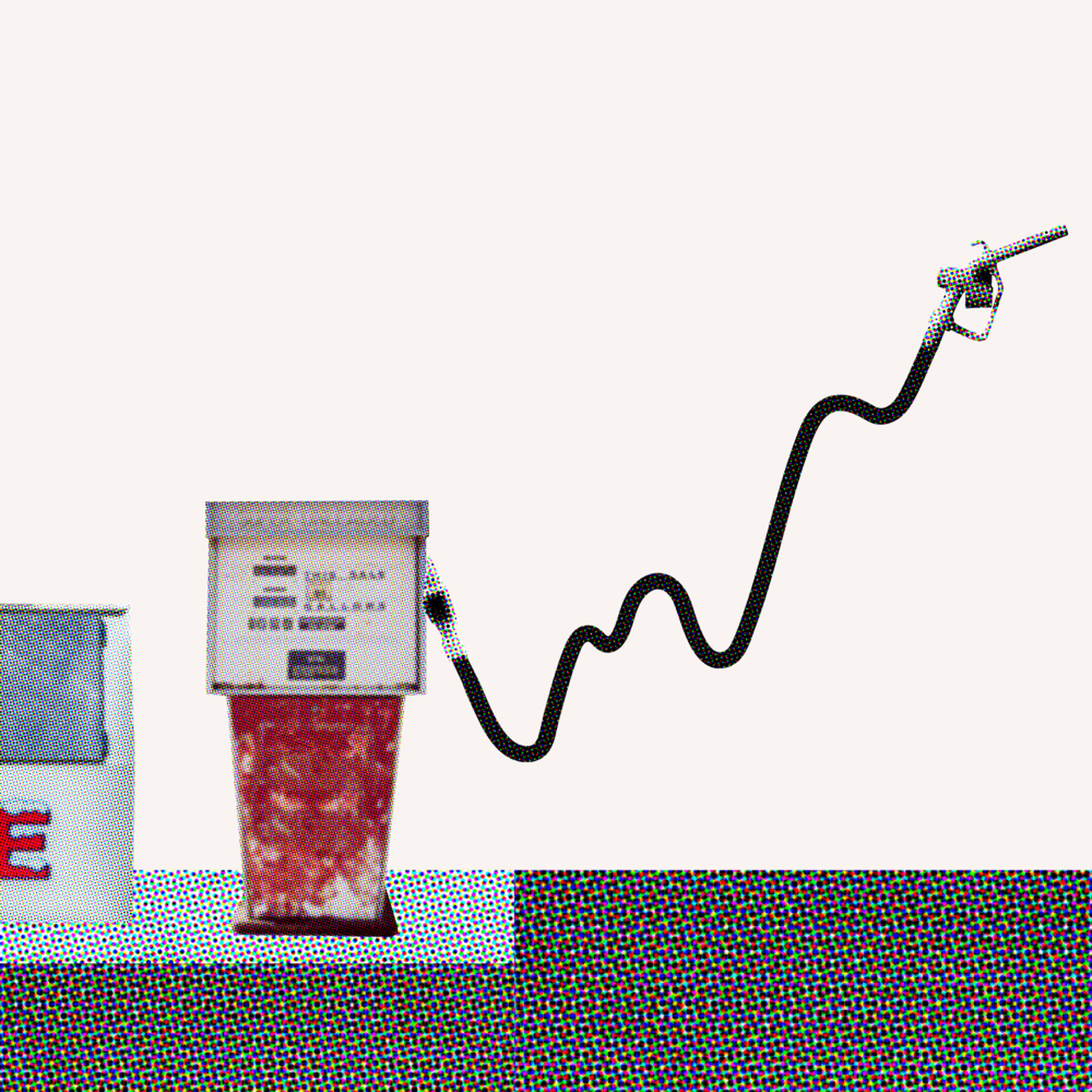
See, this is such an interesting conversation for so many reasons, not only because you you have seen the price of gas increase which people have been seeing all across the country. In fact, the price of gas went from a US average of around $2.95 a gallon to over $3.50 a gallon, but also because you remember the price of it more than almost any other price in our economy. Gas prices, they really stick with us. And of course since the US Attack on Iran, Brent crude, which is kind of the pricing standard that people talk about around the world, has risen from around $65 a barrel to almost $120 a barrel. At one point it's come down. But it is very volatile situation and you know, this affects countries all over the world, companies all over the world, and people like you trying to figure out how much gas is going to cost if you're planning a trip for your family. Max, we're going to have a longer conversation about but Today on the show, what the rising prices of oil means for you, you, the listener, and you, Max Chaffkin and Stacey Stacy.
- [03:00]
A
I have a question for you. Okay. Which is with all of the layoffs and the stories about AI and economic uncertainty, what is knowledge work?
- [03:11]
C
This feels very deep.
- [03:14]
A
It is what is knowledge?
- [03:16]
C
I mean, excellent question. It is work that one can do when one is extremely physically out of shape. That's my defin.
- [03:24]
A
We have Bloomberg reporter Ben Steven, who is in very good shape but also very knowledgeable to join us for this topic.
- [03:31]
C
This is everybody's business from Bloomberg Business Week. I'm Stacey Vanek Smith.
- [03:35]
A
I'm Max Chaffkin. Stay with us for a deeper dive into the true cost of oil in the US. We're here at a mobile gas station in like the Crown Heights bedside border in Brooklyn. Can you tell me what brings you here? Well, my chop new gas. It's really ridiculous. Do you remember how much things used to be when I bought it was 60 cents. Back in the days, 30 years ago, it was out here in New York.
- [04:06]
D
Yes.
- [04:07]
A
Oh my gosh. How much do you plan to spend today at the pub? Well, today it's looking a little bit different because Yesterday was at 3:15. Now all of a sudden today is at 329. So the price is at like drastically going up. It was, it used to be 253 for a regular. Before I used to spend 15. Now probably I'm gonna have to spend 20 today to, to put out like half of the tank so I can start working. How much did you end up filling your truck up with today? Well, a half of my tank because really ridiculous. So I'm putting about $35 in gas just to move around. I'm using diesel. It's $5. Oh my God. Yes. And I put in 100 gallon. It's $500. Five. Every day? Yes, every day. Every day. How often do you fill up? Every day. Every single day. Every day? Every day. Because what I did, what it is, is that I, I manage half a tank. So I make a certain amount of money with a half a tank. So as soon as I finish a half a tank and I come and refill, I think I could do better on the gas. When you say who can do better, who do you mean? Our president. A lot of this is happening due to like the current war. Like, is that something you've been following as far as like that and prices of oil and things? I was not even interested in that situation. But now that I see the effects. I'm looking forward to see what's going on because it's definitely hitting. Affecting the packets.
- [05:35]
C
That is producer Jasmine J.T. green at a gas station in Brooklyn. Here in New York, where the average price of gas right now is $3.48 a gallon, which is a little bit lower than it is in a lot of the country.
- [05:48]
A
One of the things that I think has been so strange to watch is just a couple weeks ago, President Trump was at the State of Union address. We talked about the State of the Union. I can't remember if we mentioned this or not, but one of the things he was touting was he's got, you know, gas prices are low. It's a thing people care about it. It actually felt like one of his best moments in that speech.
- [06:10]
C
Yeah. He talked about the price of gas in Iowa at a station in Iowa would be in about A$80 a gallon right now. Since the attack, the average price of gas in I $3.20 a gallon. So I looked into this for an article in BusinessWeek, and this is just, it's a really interesting situation for a lot of reasons, because of exactly what you said. This was really the breakout star of Trump's first year in office was inflation being pretty under control, energy prices coming down all across the country. This was just a big win for the Trump administration. And, you know, we're going into the midterms. These are going to be tight elections. We've talked about this on the show, and, and doing something that makes not only the price of gas go up, which people are very sensitive to, but, you know, gas goes into everything.
- [06:58]
A
It's not just something that goes into everything. It's something that people notice. I was thinking back to when I was just learning to drive in like 1997 or 98. Like, I remember 89 cents. One gas station in Jersey, you could go, you could gas for $0.89. And it's like everybody remembers the price of gas every time, everywhere.
- [07:19]
C
We don't interact with many prices like the price of gas. It's something people really connect with. They remember, they're emotional about it. I talked with Michelle Brohard. She is the head of policy and geopolitical risk at Kepler, and she looks at energy prices. She had all of her spreadsheets out, and she told me that she basically concluded when she was looking at all this data that there was no way that President Trump would attack Iran for exactly this reason. The question on high prices is how long will that straight be closed? Presumably, Trump will cry Uncle. If prices get too high. Right. His entire economic agenda rests on low energy prices. So this is why I thought there's just no way he would, he would do this.
- [08:07]
A
The thing that I wanted to talk about today is that relationship between what happens with the oil markets and what we pay at the pump. Because like gas and oil, oil are not the same thing. I think the first thing we got to do is just like explain what is gas and how does it relate to the black stuff that comes out of the ground?
- [08:27]
C
I mean, it's a great question. One of the things that people have asked me about a lot recently is like, wait a minute. I mean, the US Is the largest oil producer in the world, so why are we paying these higher prices? Right. I mean, the strait that Michelle was talking about, the Strait of Hormuz, where 20% of the world's oil goes through this little 12 mile passageway between the Arabian Sea and the Persian Gulf.
- [08:49]
A
Nicely done.
- [08:50]
C
Thank you. But you know, we have a ton of oil here, but our gas companies, oil companies basically trade on the global market. And so oil is sort of just the, the commodity. Right. It's like if, if you look at something like cotton, it's the cotton plants or this is, this is oil, the raw product. And then gas is what it gets refined into.
- [09:12]
A
Gasoline. Yes, petrol for those listeners.
- [09:16]
C
And it gets refined into different levels. Right. There's jet fuel at the very top. That is the purest and the most expensive.
- [09:22]
A
Good stuff.
- [09:22]
E
Yeah.
- [09:22]
C
And then there's like diesel and you know, there's also the really low grade stuff that gets used for like asphalt and things like that. But, but it all comes from oil. And so there is a relationship between oil and gas, but it's not one to one. Gas tends to be more expensive than oil. But there's a good rule of thumb that I heard about. Apparently this is very well known in the industry, which is that for every $10 a barrel of oil rises in price, our gas prices will rise by 20 cents.
- [09:52]
E
Wow.
- [09:53]
A
Okay, that's, that's super helpful. So when this conflict started, I believe the price of oil was around $60 a barrel.
- [10:00]
C
Yeah, 65 bucks.
- [10:01]
A
As we're recording this, Stacy, do you know off the top of your head, It's Wednesday around 12pm March 11th. Around 85 bucks a barrel.
- [10:09]
C
Yes, exactly.
- [10:10]
A
So we would expect a 40 cent increase in the cost per gallon, which is pretty close to what I think when you asked me at the top of the show what was, what the difference was. Yeah, about what I said, I think yeah.
- [10:21]
C
And prices have risen a little more than that, which indicates that people think this conflict is going to go on for a while.
- [10:27]
A
The thing that was crazy to me in the tape we played at the top of this segment was the people who are filling their tank up halfway full. It's a good reminder that when gas gets expensive, that could be the difference between, yeah, like how you plan your day or something like that.
- [10:43]
C
I talked to this, this man, he is the head of petroleum analysis at GasBuddy. And GasBuddy is this, this app that people use that like finds the cheapest gas in your area. And he told me that that active users on the app, it's more than doubled in the last week because everybody is like gaming out where the cheapest fuel is.
- [11:05]
A
As titled as Head of petroleum analysis at GasBuddy.
- [11:08]
C
Yeah. Patrick DeHaan.
- [11:10]
A
Cool title. I mean, that is. You want to put that, you want to put that on a little placard?
- [11:14]
C
On a placard, Absolutely. But one of the things he said was that this really highlights how because, you know, gas is so global, every economy needs it. Our entire economy, for better or for worse, really runs on oil. If we run out of it, that is just really bad news. And it all comes down to this tiny 12 mile stretch that Iran has kind of seized control of. And he's kind of got the whole global economy in this chokehold.
- [11:40]
A
People overlook the specifics, the nuances of infrastructure until something like this happens. And they realize that something that seems to be guaranteed is no longer guaranteed. And without infrastructure, oil is very much a just in time commodity. We consume so much of it and now things we take for granted, AKA, you know, the Strait of Hormuz, which is a massive choke point for the industry. Oil can't flow to the market.
- [12:07]
C
Yeah. I mean, it's just like the whole world's economy comes down to this one 12 mile passageway.
- [12:11]
A
Right. The issue isn't so much that we're getting gas from Iran, it's that if you create a choke point and you limit a bunch of gas from getting to where it needs to be, which is what's happening, the Strait of Hormuz prices are going to go up, and that means that American producers are going to be able to command higher prices for their petroleum as well. And that's why the prices are what they are. I mean, we make enough gas and enough oil to sustain ourselves. I believe this is more an issue of oil companies being able to charge the market rate.
- [12:44]
C
Yeah. Because Supply is down 20%. Demand does not and so obviously this, you know, prices are rising and rising, and now US Oil companies are able to charge a higher price. It's a global thing now. One of the things that Trump could potentially do is make it harder or impossible for oil companies to export oil.
- [13:05]
A
Yeah. You put the point to pointing this out in your Business Week story, but I did not realize that until fairly recently. There was a rule essentially saying that American oil producers could not export it. It had to be for us. And it only changed, I believe, what, 2015, once we started making just a total ton of oil because of the shale boom.
- [13:26]
C
Yes. And I, so I asked both Michelle and Patrick DeHaan, you know, well, why doesn't President Trump just do this, especially since the midterm elections are coming up? And that is, you know, this is such a big deal. And they both said, like, the whole global economy would just go into a terrible recession because we are one of the biggest exporters in the world, the largest producer of oil in the world. And if all of that supply went offline, it would just be, it would be really terrible. Also, US Oil companies would not want to do that.
- [13:52]
A
Yeah. Because you'd be just saying every, you can't Chevron. Yeah. You need to, to take a huge haircut in your. Prof. Well, I wanted to ask you, Stacey, if somehow we got a ceasefire tomorrow. Yeah. And if the new ayatollah and Donald Trump met together, they arranged a compromise or whatever, Strait of hormones opens, oil's back to normal. How long would it take for our gas prices to go back to where they were 10 days ago?
- [14:18]
C
I asked Michelle Brohart about this, and she said, because so it's 20 million barrels a day goes through the Strait of Hormuz. So every day that goes by that those 20 million barrels can't get through, that is a backlog. And so when the ceasefire happens, when traffic goes back through the strait and things normalize, there's still a big backlog of demand. And so places are gonna have to overproduce to sort of make up for this. And she said it would take at least until the end of the year.
- [14:48]
A
I have to ask, how important are gas prices really? Because there is a psychological question. It's this, this price that we all notice, that we all see. It's a way for, for anyone to measure inflation at any given time. It's, like, better than the Wall Street Journal. But also, it's not the only thing we buy. It's probably not the most important thing we buy.
- [15:10]
C
I asked this to all the people that I spoke with for the article and they all said the same thing, which I actually was not expecting, which is they said gas is a huge part of the economy. Right. It goes into everything we do. It's going to bleed into every product we buy because so much of it is trucked and shipped across things. Like the person that Jasmine spoke with who was spending $500 filling up their truck, you know, spread that out across the country. It affects all the huge part of
- [15:34]
A
the price of food, for instance.
- [15:35]
C
Yes, but they all said that, that the amount of emotion and attention oil prices get is probably bigger than the actual economic impact.
- [15:47]
A
Interesting.
- [15:47]
C
Yeah.
- [15:48]
A
Foreign.
- [15:53]
C
This message is brought to you by Apple Card.
- [15:56]
B
Apple Card members can earn unlimited daily
- [15:58]
C
cash back on everyday purchases wherever they shop. This means you could be earning daily cash on just about anything, like a slice of pizza from your local pizza place or a latte from the corner coffee shop. Apply for Apple Card and the Wallet
- [16:13]
B
app to see your credit limit offer in minutes.
- [16:15]
C
Subject to credit approval. Apple Card issued by Goldman Sachs Bank USA, Salt Lake City branch terms and more@applecard.com hello.
- [16:23]
A
Hello, I'm Malcolm Gladwell, host of the
- [16:25]
D
podcast smart talks with IBM.
- [16:27]
A
I recently sat down with IBM's chairman
- [16:29]
D
and CEO Arvind Krishna, and I asked
- [16:32]
A
him, how can companies use AI to its fullest potential to create smarter business?
- [16:39]
D
My one advice to them Pick areas you can scale. Don't pick the shiny little toys on the side. For example, if anybody has more than 10% of what they had for customer service 10 years ago, they're already five years behind it. If anybody is not using AI to make their developers who write software 30% more productive today with the goal of being 70% more productive. Yeah, so we are not asking our clients to be the first experiment on it. We say you can leverage what we did. We are happy to bring out all our learnings, including what needs to change in the process. Because the biggest change is not technology. It's getting people to accept that there's a different way to do things. To listen to the full conversation, visit IBM.com smarttalks Foreign.
- [17:44]
F
With volley from iShares, you get access to both monthly income and growth potential in one simple ETF. It's the best of both worlds. Discover Bali iShares Large Cap Premium Income Active ETF iShares the market is yours. Visit www.ishares.com to view perspectives for investment objectives, risks, fees, expenses and other information that you should read and consider carefully before investing. Risks include principal loss and the use of derivatives which could increase risks volatility. Month income is not guaranteed. Prepared by BlackRock Investments LLC.
- [18:11]
C
Max Shafkin. Stacy, I have a question for you.
- [18:14]
A
Yes.
- [18:15]
C
How much money do you make?
- [18:17]
A
Stacy, that's a taboo question. I'm not going to answer that.
- [18:21]
C
Well, I've spent a lot of my career asking people this question. It's very uncomfortable, right? I've had someone once asked me that on mic. It was Lizzie o' Leary actually once asked me that when I was in market. Oh my gosh, that was like. I panicked.
- [18:34]
A
Did you do a voice? I did a voice.
- [18:35]
C
You did? You did just now? Oh, I think I just, I think I made a joke.
- [18:41]
A
That's the only way to deal with it.
- [18:42]
C
You gotta deflect. But it is like such personal information. I, of course, you know, we both spent a lot of our careers asking people these questions. From heads of companies to, you know, everyday people work in regular jobs. But it is something, of course, we're all curious about. It's a question we don't wanna answer. But we do wanna ask, right?
- [19:02]
A
Or we wanna know. I think most people don't wan. And that's why the reason we're talking about this is because New York magazine did a big cover story that everyone is talking about, everyone in our world is talking about where they just asked a lot of different people, hey, how much money do you make and what do you do to make that money? And it's, it's a really.
- [19:19]
C
And they were anonymous.
- [19:20]
A
Anonymous people from all different jobs, careers, types of jobs. In New York City you got everything from the management consultant who is making $16 million a year to like healthcare workers who are making, you know, 20 or $30,000.
- [19:36]
C
Dog walkers, baristas, the person who helps
- [19:39]
A
get the lice out of your kid's hair. Everyone is in there. And we wanted to talk about this because it really gets at a bunch of the big economic things that we have been talking about in this show in particular. And the thing that really has grabbed me is just the nature of white collar work because one of the big areas of conversation around this story are the vast differences between certain kind of white collar knowledge work type jobs and others. There is a quote unquote, best selling novelist who reports that they're making $49,000 last year. There is, as I said, a management consultant making $16 million, 17 million, there's a sub 17, there's a sub stack are making like $250,000 and there is just this huge range. I think it raised a Lot of issues having to do with economic inequality, inequality of wealth, inequality of income. And we have Ben Steverman, who is a reporter at Bloomberg Businessweek, he covers money and culture to kick the tires on this story. Welcome, Ben.
- [20:42]
E
Thank you.
- [20:43]
A
Ben, you have been writing about this huge wealth gap that is appearing in society. You, you in January wrote a story where I think there, there's some, there's data quoted suggesting that the wealth gap is the greatest has ever been since the 1990s, 40s. You've seen this in your reporting and it's in this story. And I wanted to ask you. It feels like it's not just a wealth gap between again, people who are like working class people and very rich people. There's even this wealth gap between the rich.
- [21:14]
E
Yeah, I think that there's a lot of affluent people who are really scared about the future right now and about their jobs. I think it's sort of like a lack of confidence in their ability to continue at the status that they're at
- [21:28]
C
because of AI or I think it's
- [21:30]
E
because of AI, but it's also because either they're laid off, which is a good number of people. But so many people know people who've been laid off for a year or more. I certainly do. And we've entered this period, the last year was a very weak labor market. So it's this very fraught time where at least right now you have the fears, these sort of abstract, mostly abstract fears about AI because there's not that many people being automated yet. And then you have a precarious economy with the job market being very weak and you have cost of living has gone up. So a lot of the things people used to love to buy are a lot more, more expensive.
- [22:10]
C
When you were looking at this article and looking at all the salaries that people made, what stood out to you?
- [22:16]
E
I mean one of the obvious things is that the value of the, the work that the person does almost has no correlation whatsoever to how much they make.
- [22:26]
C
Influencer 320,000.
- [22:28]
E
I mean the heartbreaking ones you mentioned the daycare worker, but, but also the care worker for, for elderly people, for, for like terminally ill people. Like that is really hard work. That's, I can't really, can't imagine harder work.
- [22:41]
A
Yeah.
- [22:41]
E
And they're, they're like the, on the lowest end of the scale and this, I, I, I'm not sure where that is. $23,000. Those are poverty wages. And the person described in the description, like having to do sort of all night like work all night and not get paid for it because there's a. There's a limit in how much overtime they could. They could work, but they felt like they needed to because they needed to take care of this person who was, you know, really in tough straits. So the other thing I noticed looking at this is how many people they were able to find in New York. And I think this is a big city phenomenon. I don't know that this is a national or international trend, but so many people have come sort of put together a bunch of streams of income.
- [23:24]
A
They're like, yeah, you got the barista slash personal assistant slash nanny slash actor slash writer slash producer.
- [23:30]
E
That's the ultimate example.
- [23:31]
A
Yeah.
- [23:31]
C
Who's pulling down from all those jobs 63,000 bucks a year.
- [23:35]
E
Let's hope that they're young and they're still figuring it out and they're looking for a niche, and eventually they will find one, and one of those avenues will branch out into something really profitable over the long term. But the way you build wealth in your life is to have a consistent income over time. And these things don't seem consistent. They seem very much like they could be like one off things, you know, a little contract here, a little background work as an actor there. You know, like, I think that, that putting those portfolio jobs as. I think that one of the terms out that's out there together, these side hustles, it just seems like a lot of work.
- [24:12]
A
I mean, the thing that struck me is just how many of those of these fields you mentioned, AI, Ben, how many of them are buffeted by technology? So where it's not necessarily AI, maybe there's a little bit of AI coming into play, but you have a screenwriter who's kind of complaining that Netflix pays lower rates than they used to make in the era of big tv. There's a technology phenomenon there. You have The Uber Eats DoorDash guy who is complaining about how much the apps are squeezing him. And maybe this is why there's so much anxiety around AI, Even though we're not actually seeing a lot of AI in the. In the actual data, is that it's coming on top of this sense of a bunch of tech platforms just being able to exercise, like a lot of power over a bunch of different industries in ways that.
- [25:00]
D
That.
- [25:01]
A
That feel new.
- [25:02]
E
So I'm going to talk about the early 90s, if you don't mind, because I. I was thinking a lot this week, as we were in a Gulf
- [25:11]
A
war,
- [25:14]
E
the jobs report came out and it was pretty weak. It really Reminded me of the early 90s, which I was a kid then, but my dad worked in the insurance industry. And the insurance industry in that recession in the early 90s was having a huge cutbacks, I think largely because of technology. Insurance is such a paperwork intensive business and you didn't need those layers of secretaries and clerks that you used to. And I think we're going through another phase of anxiety about this stuff. And back then we, you know, Michael Moore wrote a book, downsize this. But something changed actually back then that sort of changed the relationship of like corporations with their workers. There was this idea that if you were working at a big white collar corporation, you would have a job for life. And like, we've lost that idea for,
- [26:08]
C
for like, and then a pension.
- [26:10]
A
So your retirement would be secur.
- [26:12]
E
And so you just put in your time and then you retire. And, and the only people who get that now are public sector workers who were hit really hard last year by these Doge cuts when the Trump administration came in. So now it feels like nowhere is safe. There's no safe harbor. And getting back to what you were saying, like, there's just so much precarity in all these income streams and all these jobs that there wasn't there before.
- [26:38]
A
I do think what's new that's happening right now is the precarity in what we call like the white collar workforce in this sense of like being a software engineer or a writer or a marketer or an accountant. There are a lot of jobs that in, for most of our lifetimes have been seen as secure. And even at the very front end of the conversation around AI, what you would hear is these long haul truckers, they're the ones who are going to be disrupted first. When you actually look at it, I think they're going to be like the last ones to be disrupted. Because even though, yeah, like maybe you can make a teacher computer drive a truck, you know, long haul, a single person driving a long haul truck is pretty efficient. There's safety risks and so on. The salaries for long haul truckers are going up, they're not going down. But I think you have a lot of people in what felt like very, very secure white collar jobs who now, for some of the reasons you're talking about and also for like, technology reasons, feel less secure. Including, of course, journalists, which is probably one of the reasons this conversation is being amplified so much. Like maybe it looms larger in our world than it looms in other worlds.
- [27:43]
C
I'm wondering when you think this started. Like, I'm wondering, like, there's obviously this iteration that Max was talking about and you were Referring to the early 90s, the inequality situation we're in now that I think people are getting very concerned about. Where are the roots of it? Is it more recent or do you see this as going all the way back to the 90s?
- [28:01]
E
I see this as going back to the 80s and 90s. Wow. Yeah.
- [28:04]
B
Okay.
- [28:05]
E
I think in the 1980s the stock market soared. And so much of the inequality that we're talking about here is sort of, there's sort of, in terms of wealth inequality, there's sort of a seesaw between incomes for middle income folks. And like those have been, they've been okay, but they've been pretty stagnant and they haven't kept up with, with stock market games by any means. And then home prices. So home prices actually did go up quite a bit in the 2010s and that actually it stopped the rise in inequality for a little while because a lot of middle class people were sitting on some, some home wealth. Well, home prices have stagnated and the stock market keeps going up and all a lot of those benefits are going to the top 0.1% or to people who service the top 1%, like, or top 0.1% or 0.0. There's a, there's a personal chef in here that was making I think quarter of a million.
- [29:06]
A
Yeah, 100. A dog walker making 100k too, which.
- [29:09]
E
Yeah.
- [29:09]
A
Or not like over 90,000, which again, like, I think a lot of these jobs, the cost of living in New York is kind of is, is higher than it is. The minimum wage is higher. Some of these jobs look better paid than they actually are. But, but, but even that, that dog walker kind of goes to your point. That's somebody who's servicing people with huge amounts of money, even if he's obviously much less paid than the.
- [29:31]
C
And the personal chef is.
- [29:32]
A
The personal chef. Yeah. There's also the $75,000 a year lice lady, which is, you know, I don't know if you all know about this, but like if you have kids, the lice scares are a thing. And if things really get bad, you gotta call in a lice professional. And I read this and thought that like, she needs to charge more money. Like this is, this should be an even more lucrative career. Ben, I just wanna circle back to the point you just made about stock wealth and home wealth. There was a quote in your, in the story I mentioned somebody saying essentially there's a race between the stock market, the housing market and the stock market's been, you know, doing a million times better. Or not a million times better, but substantially better.
- [30:09]
C
Maybe actually a million times better.
- [30:12]
A
I don't know. It depends on what, depends on what
- [30:14]
C
stock you're talking about.
- [30:15]
E
A million times one cent.
- [30:16]
A
But is that like how big a piece of the wealth picture is that? Because I would have said before reading that, I would have said that's not that important because most people, people don't own a lot of stock and that things like salary and so on would be the real drivers of. Of wealth and of a sense of inequality. But maybe that's not true.
- [30:36]
E
Well, the really important concept for. Not to explain this to you, but the very important concept is difference between income and wealth.
- [30:45]
A
Right.
- [30:45]
E
And income is more broadly distributed than. Than wealth. But one of the things about wealth
- [30:51]
C
is like the cumulative total of your assets. Like house, car, coin collection.
- [30:56]
E
Exactly.
- [30:57]
C
And then income's just like your wages.
- [30:59]
A
Do you have a coin collection, Stacey?
- [31:00]
C
I do. I actually do have a coin collection, come to think of it.
- [31:04]
A
I knew it.
- [31:05]
C
Yes.
- [31:06]
E
Right. So the bottom 50% or even bottom 60% is saving very little money every year. So they're not even irrelevant when you're talking about wealth inequality. They don't have, they don't really have any net worth, so they're irrelevant to this. A lot of the people that New York magazine is talking about are probably not saving anything. And I think that that in some ways is the big distinction in the economy between people who've been able to save, put some money into a home or stocks or other investments, and the people who can't. And that when we, when people talk about the K shaped economy and talk about how there's sort of two diverging paths, a lot of that just is really between people who've been able to save substantial assets and people who really can't.
- [31:54]
A
We're going to have to wrap up so Stacy can start working on the probably very complicated tax return involving her coin collection.
- [32:00]
C
Oh, you have no idea.
- [32:01]
E
I don't know if you have to
- [32:01]
A
mark those to market or what.
- [32:03]
C
Yeah.
- [32:03]
A
But I just wanted to share two things. Like, one is my favorite job on this list. I don't know if you all have favorites. Oh, tugboat chief engineer. This is a person in New York City who drives a tugboat in the harbor. And this job, he's making $145,000 a year.
- [32:19]
C
Okay.
- [32:21]
A
And okay, sounds pretty good. You're driving the boat. But it is like 14 days on the boat straight. So you gotta really love the waterways,
- [32:30]
C
I guess you can't get off the boat.
- [32:33]
A
I don't think you get off the boat.
- [32:34]
E
It's unclear, but. No, but don't you.
- [32:36]
C
I mean, how long you can't tug something for? 14 days. Where are you tugging it?
- [32:41]
A
Where are you taking these boats? Oh, well, so they have to. We probably should cut this from the podcast, but, you know, they need someone to. Who knows the ins and outs of the harbor. They have to take them in and out of the Harbo harbor because people who don't know the harbor, can't they
- [32:54]
C
just take a break?
- [32:55]
A
Like, just maybe they don't jump on
- [32:57]
C
shore and grab, like, show up? I think slice.
- [33:01]
A
No tugboat enthusiasts, if you know the answer to these questions. Right. Everybody's at.
- [33:07]
C
Also, if you tell us how much you earn, we're happy to keep your name anonymous.
- [33:12]
A
All right, Any alternate career possibilities here for you? All that you considered as you read this list?
- [33:18]
B
My.
- [33:18]
C
My sort of fantasy side hustle has always been barista. I love coffee. I like talking to people. I like coffee shops. I just felt like that would be a good. A good fit for me. But it is $63,000 a year, which is. That's a. That's tough to make it in New York City. So I would have to be a barista in somewhere less expensive. I'll have to live that dream later.
- [33:42]
E
I noticed on the COVID of the magazine they have of jazz singer 17 years.
- [33:47]
C
Are you a singer?
- [33:48]
E
No, I'm not. But in another life I would.
- [33:50]
C
Yeah, I would want to be.
- [33:52]
E
So I like that. But I don't see Jazz Singer in the description. So I want. I really want to know about that person.
- [33:59]
A
All right, Ben, you should stick around. We're going to do the underrated stories, and at least one of these stories, maybe both, has something for you.
- [34:07]
E
Okay?
- [34:07]
C
Oh, definitely mine does.
- [34:16]
A
Hello. Hello. I'm Malcolm Gladwell, host of the podcast
- [34:18]
D
smart talks with IBM.
- [34:20]
A
I recently sat down with IBM's chairman
- [34:22]
D
and CEO, Arvind Krishna, and I asked
- [34:25]
A
him, how can companies use AI to its fullest potential to create smarter business?
- [34:32]
D
My one advice to them, pick areas you can scale. Don't pick the shiny little toys on the side. For example, if anybody has more than 10% of what they had for customer service 10 years ago, they're already five years behind. If anybody is not using AI to make their developers who write software, 30% more productive today with the goal of being 70% more productive.
- [35:03]
A
Yeah.
- [35:05]
D
So we are not asking our clients to be the first experiment on it. We say you can leverage what we did. We are happy to bring out all our learnings, including what needs to change in the process. Because the biggest change is not technology, it's getting people to accept that there's a different way to do things.
- [35:22]
A
To listen to the full conversation, visit IBM.com smarttalks
- [35:30]
C
Foreign.
- [35:38]
F
From iShares, you get access to both monthly income and growth potential in one simple ETF. It's the best of both worlds. Discover Bali iShares Large Cap Premium Income Active ETF iShares the market is yours. Visit www.ishares.com to view perspectives for investment objectives, risks, fees, expenses and other information that you should read and consider carefully before investing. Risks include principal loss and the use of derivatives, which could increase risks and volatility. Monthly income is not guaranteed. Prepared by BlackRock Investments, LLC.
- [36:03]
A
Support for the show comes from Public. Public is an investing platform that offers access to stocks, options, bonds and crypto, and they've also integrated AI with tools that can assist investors in building customized portfolios. One of these tools is called Generated Assets. It allows you to turn your ideas into investable indexes. So let's say you're interested in something specific like biotech companies with high R and D spend, small cap stocks with improving operating margins, or the S&P 500 minus high debt companies. Chances are there isn't an ETF that fits your exact criteria. But on Public you just type in a prompt and their AI screens thousands of stocks and builds a one of a kind index. You can even backtest it against the S&P 500. Then you can invest in a few clicks, go to public.com market and earn an uncapped 1% bonus when you transfer your portfolio. That's public.com market ad paid for by Public Holdings Brokered Services by Public Investing member FINRA SIPC Advisory Services by Public Advisors SEC Registered Advisor crypto services by ZeroHash sample prompts are for illustrative purposes only, not investment advice. All investing involves risk of loss. See complete disclosures@public.com disclosures okay Stacy, it's time for underrated stories. I've heard some little bits and pieces about this one, but I've actually kept my brain pristine.
- [37:26]
C
I appreciate that.
- [37:27]
A
I don't know what this is really about. I don't think Ben knows either.
- [37:30]
C
You have avoided this story.
- [37:31]
A
We're really excited.
- [37:32]
C
So I feel so A couple of weeks ago, the CEO of McDonald's on his social media feed did a tasting of this New burger, the big arch burger that McDonald's is launching. And. And he's not a super charismatic person. And the video is strange.
- [38:00]
A
Chris K. Here with. You've heard about it. Here it is, the big arch. So here we go first. Holy cow. God, that is a big burger. I don't even know how to attack it. It got so much to it. Oh, there's also some crispy onions on here as well. I see those kind of coming out. All right. The moment of truth. That is so good. That's a big bite for a big arch. It's distinctively McDonald's. Only McDonald's could do this type of burger. But it also is unlike anything else on our menu. It's a delicious product. All right, so wait, Ben, I think just for people who haven't seen this video, could you just explain why we're laughing at this?
- [38:45]
E
I guess he's wearing like a sweater, sort of a V neck sweater. And he's just looks very corporate.
- [38:54]
A
I guess it is the most corporate video you could possibly imagine. It is. It is like a robot CEO.
- [39:01]
C
This is an excellent product. Yes.
- [39:03]
E
There's like beige walls behind him. It looks like a really boring office too.
- [39:09]
A
It looks his first ever encounter with hamburger, which is strange because he works at McDonald's.
- [39:16]
C
He has been getting absolutely trolled for a few reasons. One, calling the burger a product. The other thing, when he's just like, I don't know how I'm going to attack this. So big. And the other one is the tiny, tiny bite he takes. And then of course, all the CEOs are responding. Like the Burger King CEO responded with this thing where he like a really happy casual. He's in like a vest and he takes like this big sort of manly bite and he's like, I need a napkin. And like all of the CEOs are now responding with their own videos. Just been a kind of a disaster for McDonald's, which did try to respond with a social media post saying, try our product with the big art. It was just cute. But anyway, it's been very, very interesting to see this all play out.
- [39:59]
A
I feel like the takeaway here and like we've been living this for 20 years is that it is very hard for big companies to make like social media videos. And there are just a lot of. I can see what they were trying to do, but it's gone all wrong.
- [40:14]
C
To me, it's like the problem of the. This is the K shaped economy in a social media video because this is like a guy who's way at the top of the K, to the point where no one tells him things like, you should not call this a product. You should not wear the sweater vest.
- [40:28]
A
Oh, yeah, you should.
- [40:29]
C
You know, it's like he spin it so at the top of the K, he's, like, too insulated. And then his video is meant to for the whole K, and it's not. Okay.
- [40:37]
A
Okay, I have a thought. This is like an Elon Musk problem. So Elon Musk has gotten very rich by basically being himself, and he, like, he tweets what he's thinking. Donald Trump, too. There's this new trend among CEOs, which is you just tweet whatever's on your mind.
- [40:52]
E
You don't care.
- [40:53]
A
You're just yourself. And like some people, authenticity, not everybody. Authenticity doesn't work for everybody. Some people are better off trying to be somebody else.
- [41:02]
C
I don't think being authentic at work is a good idea. That's my hot take. I think being inauthentic at work is a better idea.
- [41:09]
A
If you went to business school or whatever, and you've been calling Things products for, whatever, 20 years, maybe you need to try to channel a different person, is my suggestion.
- [41:20]
C
Yes. A person who eats. Who calls a hamburger a burger instead of a product, who looks like he's
- [41:27]
E
actually been inside a McDonald's in his
- [41:29]
C
life, eaten a hamburger before.
- [41:31]
A
All right, my underrated story. Are you ready?
- [41:34]
C
Yes, I am.
- [41:35]
A
Okay. This is a headline from the Wall street journal from March 11th. As we record this today, we have been talking about this topic. So the. The headline won't. Won't come as a surprise, but I think it's interesting. Here it is. AI isn't lightening workloads. It's making them more intense. And it's basically citing surveys and analysis of workers, what they're doing, showing essentially that the people who are using AI are working even harder than they were working before. They were using AI, partly because they're more productive, but basically, if you're really using AI, it is hard.
- [42:11]
E
And they're probably like the people who use the cloud code and they tweet about it. They're like, oh, I created an app. I stayed up all night. And like, I created. They're not getting any sleep. They're just constantly using cloud code like they have.
- [42:24]
A
You have to grind even harder now that AI is here, which seems to be like, the opposite of what this was supposed to do. It was supposed to make things easier.
- [42:33]
E
I thought.
- [42:33]
C
I feel like this is always the trap of technological advancements. That like, they come and they're like, you're like, wow, this makes X so much easier. And then it's not like you use that saved time to like chill out and, you know, go walk in the park. No, you use that extra time to do more work.
- [42:50]
A
I wanted to bring this up because Gary Tan, who is an entrepreneur, he runs Y Combinator. I'm sure Ben's.
- [42:57]
C
Oh, Y Combinator's like the big.
- [42:58]
A
Yeah, Ben's probably come across him because he's kind of like active San Francisco. But anyway, he tweeted a couple days ago, I'm giving up drinking because of Claude code. I need my brain to be maximally pristine so I can sling 10k LOC lines of code a day.
- [43:13]
C
See, this is also. This is as out of touch as what the McDonald's CEO trying that burger. My brain pristine. Who talks like that?
- [43:23]
A
I think it's a bit.
- [43:24]
C
Honestly, Bray, I don't think it's a bit. I don't know. These guys, they. They just need. People need, like a court jester, right? Don't you think these guys need a court that needs to be a new job. On the New York magazine list is court jester somebody who can, like, somebody
- [43:42]
E
make fun of them to their face?
- [43:44]
C
Yeah, someone who can make fun of these people to their faces. I actually think you'd kind of kill it as a court jester.
- [43:53]
A
Ben Steverman, thanks for being here.
- [43:54]
E
You're welcome. Thanks for being.
- [43:55]
A
Thanks for having me. This show is Produced by Jasmine J.T. green and Stacy Wong. Magnus Henderson is our supervising producer. Sam Rogich handles engineering and Dave Purcell fact checks. Special thanks to Jeff Muskus, Julia Rubin and Maria Ling. If you have a minute, please rate and review the show. It will mean a lot to us. If you have a story that should be our business or you want to know how much money we make, email us@everybody's bloomberg.net that's everybody with an S@bloomberg.net and we will answer your question, but probably not the salary one. Thanks for listening and we'll see you next week.
- [44:38]
B
If you follow markets, you know the value of long term thinking. You plan, you diversify, you prepare for volatility. But in life, even the best strategies can't prevent every bad day. A fire, a loss, a disruption that demands immediate attention. When that happens, what matters isn't just what you planned. It's who shows up. That's where Cincinnati Insurance comes in. For more than 75 years, they've helped individuals and businesses navigate life's toughest moments with care, expertise and personal attention together with independent agents, Cincinnati Insurance focuses on relationships, not transactions. Their approach is grounded in experience, follow through and trust built over time. Bad days happen, and when they do, you deserve an insurance partner who understands risk, respects what you've built and is ready to help you move forward. The Cincinnati insurance companies let them make your bad day better. Find an independent agent@cin fin.com these days
- [45:39]
A
it seems like AI agents are just about everywhere. You turn every field and every function. But without identity, you can't trust they'll serve your business instead of jeopardizing it. Fortunately, Okta helps you get identity right by securing your AI agents identities, giving you a single layer of control, a single standard of trust. So whether an AI agent supports a single user or your entire enterprise, with Okta you'll turn risk into opportunity. Secure every agent, secure any agent. Okta secures AI.
- [46:14]
F
With volley from iShares. You get access to both monthly income and growth potential in one simple etf. It's the best of both worlds. Discover Bali Ishares Large Cap Premium Income Active ETF iShares the market is yours. Visit www.ishares.com to view perspectives for investment objectives, risks, fees, expenses and other information that you should read and consider carefully before investing. Risks include principal loss and the use of derivatives, which could increase risks and volatility. Monthly income is not guaranteed. Prepared by BlackRock Investments, LLC.