Loading summary
Transcript239 lines
- [00:00]
A
There are a million and a half.
- [00:01]
B
Bonds in the municipal market, each with its own coupon quality and risk profile.
- [00:06]
A
Given this complexity, can a passive strategy.
- [00:09]
B
Hold a candle to active, focused insights? Learn more later in the podcast sponsored by Fidelity.
- [00:17]
C
So let me get this straight. Your company has data here, there and.
- [00:21]
A
Everywhere, but your AI can't use the.
- [00:23]
C
Data because it's here, there and everywhere? Seems like something's missing. Every business has unique data. IBM helps your AI access your data wherever it lives.
- [00:36]
A
To change how you do business, let's create smarter business.
- [00:40]
C
IBM.
- [00:48]
A
Bloomberg Audio Studios, podcasts, radio news.
- [00:58]
B
This is everybody's business from Bloomberg Business Week. I'm Stacey. Matt. I'm Annex Smith.
- [01:02]
A
And I'm Max Chavkin. Stacey, Today's show, the big media story.
- [01:05]
B
The love triangle.
- [01:07]
A
Exactly. Are all the streaming apps just gonna be one big streaming app? Netflix came for Warner Brothers, Paramount came for Warner Brothers.
- [01:14]
B
Busted in on the wedding ceremony, declaring love.
- [01:18]
A
And now Trump is there somewhere adjudicating this. It's a big showdown. We're gonna talk about where it's going with our friend Lucas Shaw. And the big question, the important question is what is the future of media?
- [01:31]
B
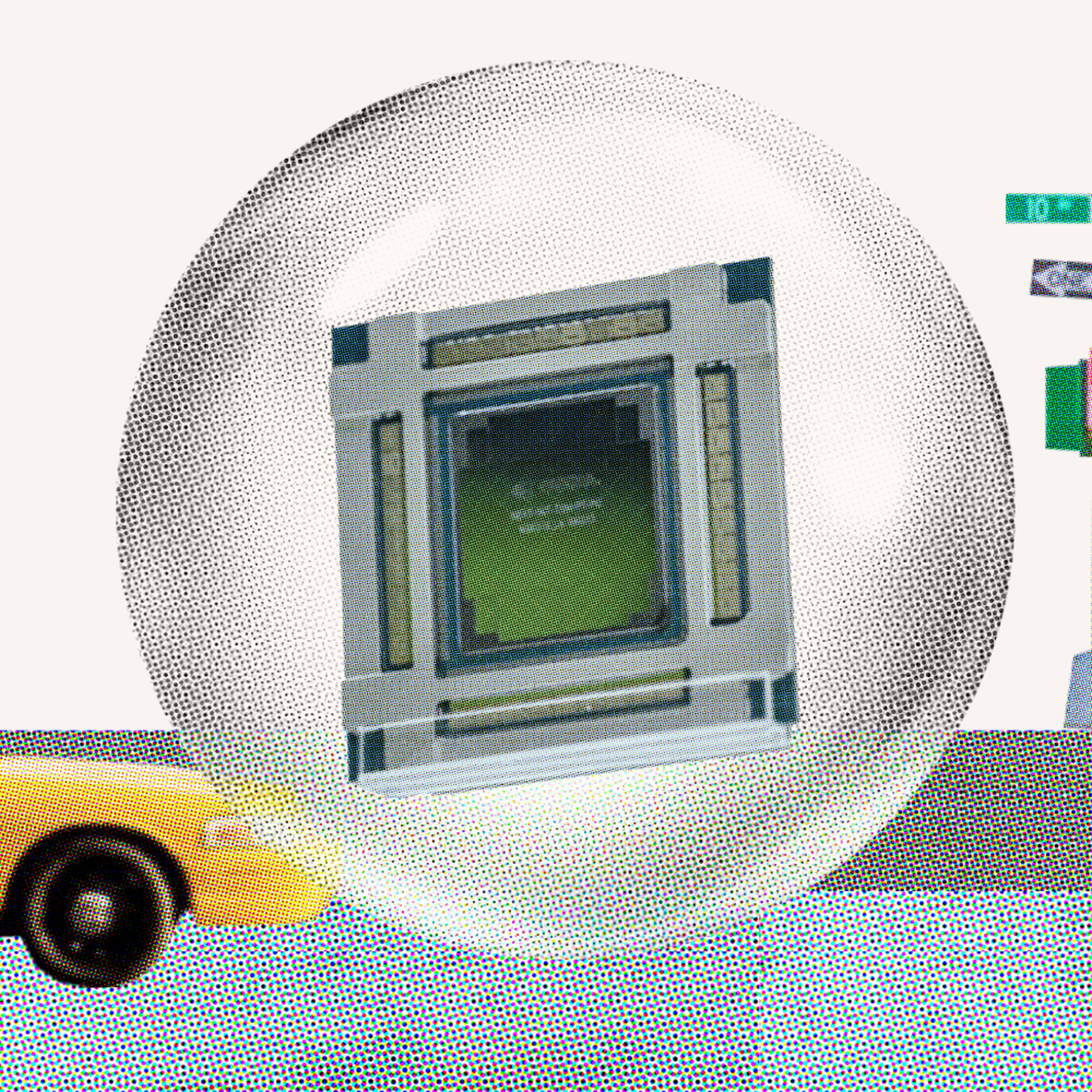
Yes. We also have the Verge's Nilay Patel joining us to talk about Trump's new move, which is going to allow Nvidia to sell chips to China. This has been a source of major controversy, kind of market forces versus national security for a long time. We're really lucky to have him to talk about that.
- [01:48]
A
And we are going to talk about two underrated aspects of two very well known subjects. One is the World cup, which I will be talking about.
- [01:55]
B
And Stacy, Federal Reserve. I love the Federal Reserve. We don't.
- [01:59]
A
She can't help herself, ladies. And talk about it enough.
- [02:02]
B
I think about it. It's my Roman Empire.
- [02:08]
A
Stacey, we got a great, very meaty show about two really important topics before we get there. I turned on my computer this morning, opened the laptop and the big story as we're recording this on Thursday, December 11, is Oracle, which is a really big, very valuable tech company that is probably underappreciated. It has come to sort of symbolize everything that is maybe enticing about the AI bubble for investors, but also some of the dangers.
- [02:38]
B
How so?
- [02:39]
A
Because they've been spending just gobs and gobs of money on data centers. And they have this plan for AI, for AI. They have all these deals with the Trump administration and with Sam Altman. Anyway, Oracle reported earnings, the earnings were a little bit below estimates. They missed their estimates. And Then the big thing is they said that they're going to spend, instead of spending $15 billion next year, they're going to spend $50 billion. So. So big difference there on data centers, total capital expenditures.
- [03:12]
B
Wow.
- [03:12]
A
But data centers are the big part of that.
- [03:13]
B
Missing earnings expectations at this moment, when people are just throwing money into the markets, throwing money at tech companies, that is a really bad sign.
- [03:22]
A
Yeah. And look, I would not bring this up because what happens over any couple of hours in the stock market, well, that can be very exciting for journalists.
- [03:31]
B
Yes. It.
- [03:32]
A
Ultimately, killing animal spirits doesn't necessarily mean anything. The numbers here are pretty big. Oracle was down as much as 16% this morning as we're talking now. I think it's, it's up a little bit. It's now down 13%. But the real, the thing that's really, I'd say a little bit concerning here is when you look, when you zoom out a little bit and look at where Oracle stock has gone since their last big AI announcement, it's down, like over 35%. So, like, there's been a steep drop off. And if you're like, thinking, like, what does this remind me of? When was there a time in the economy when Oracle seemed very valuable and then suddenly became much, much less valuable? It's the 2000, 2001 tech bust. And like, the, the Oracle stock chart from that period looks pretty similar to the Oracle stock chart today. Now, again, we'll see. Like, it's, it's.
- [04:23]
B
I also think investors, because tech stock become such a huge part of our economy and are like, really the engine powering it right now, everybody's so jumpy for any kind of bad news that if there's anything that even looks like a hint of the AI explosive growth being a bubble, everybody loses it and starts selling their stocks. I just feel like everybody's so jumpy.
- [04:45]
A
Or conversely, any sign of, of positive. Right. Can send the markets up. Like, Alex Karp does something cool. Alex Karp, the CEO of Palantir, does something cool on stage or whatever, and.
- [04:55]
B
Everyone'S like, the party continue.
- [04:58]
A
AI is going to save us. And conversely, Oracle, like, misses earnings and all of a sudden everyone's freaking out.
- [05:04]
B
Animal spirits are running wild on the markets these days.
- [05:08]
A
We'll talk about this in the conversation with Nilai Patel. But, like, it really feels like we're at this kind of inflection point. And some of the, some of the stuff that's happening, I think, in Washington with Donald Trump and with Nvidia, which, which, like, you Said Nvidia is one of those stocks that fell that down about 4% as we're talking now. I think, you know, in response to this kind of like, vibes thing, Trump administration, Silicon Valley, even us, right. We all want to keep this bubble going.
- [05:35]
B
Oh, I really want the bubble to keep going. I mean, if it's like. Or to deflate very gently. A gentle deflation.
- [05:42]
A
Right. Because a sudden deflation sounds very, really devastating.
- [05:47]
B
Of course, the other big story this week is this big entertainment industry merger triangle thing. Like you said, Warner Brothers seem to be locking things down with Netflix. That has been thrown into question. Paramount stepped in with an offer of its own. We sent our reporter Charlie Gorvin out into the streets of Brooklyn to ask people if they had opinions on this merger. And here is what they said.
- [06:11]
C
In particular, with the WBD and Netflix merger, there's a lot of creative projects that will get canned and a lot of people will lose work because of it.
- [06:23]
A
It just kind of perpetuates the idea that nobody wants to go to the movies and watch films anymore.
- [06:27]
C
Undoubtedly, like, the quality goes down.
- [06:29]
A
Literally.
- [06:30]
C
People say, like the Netflix look, which is like, you know, a thing that people flat lighting. It's just cheesy.
- [06:35]
A
No production design.
- [06:37]
C
Yeah. So where did you guys mostly get your content from? Well, we go to the movies a lot. We go to the movies at least once a week. I'd rather go to a movie theater to see something new than wait for it to come out on streaming. I have friends who work in the, like, Hollywood business. And so anytime I see news like that, it's kind of hard to stomach that, like, those are my friends that.
- [07:00]
A
Are losing their jobs.
- [07:01]
C
There is like a underlying current of people being like, this isn't right.
- [07:06]
A
It doesn't feel right.
- [07:07]
C
So maybe my hope is that, and I have hope that going forward there will be some sort of rubber band push back, that people will want to see much more creator driven stories and whatnot.
- [07:24]
A
All right, so I appreciate this perspective because what you're hearing there is, you know, a bunch of people who are invested in one way or another in kind of like preserving some competition in Hollywood. And if you talk to screenwriters or creatives in the industry, industry, right. Like, they are very concerned about this because removing a potential bidder from a creative project, which is what this will do, is going to be bad for them. I also think this shows that maybe Greenpoint Brooklyn is not representative of the United States.
- [07:57]
B
I would be interested if they like Greenpoint Brooklyn versus Wall street, like, ask a bunch of people like coming out of the Goldman Sachs building, how they feel about it. I feel like you might, they're like.
- [08:08]
A
It'S all fees, baby.
- [08:11]
B
I think you might get a different perspective that, that I would be here for that. You know it all. It's location, location, location, right? You're surrounded by municipal bonds. Picture the commute to work. You may drive by your daughter's middle school, the local hospital, the toll road that leads to the airport. Chances are those projects were financed by munis and each had its own complicated structure. It sounds overwhelming, but Cormac Cullen, a portfolio manager at Fidelity, believes that this fragmentation can actually be an advantage for active managers.
- [08:49]
C
You can break with the herd and.
- [08:51]
A
Find the mispriced security. Benchmarking is just a passive sampling of the wide array of issuers in our market. But we're looking for the stone that hasn't been overturned and picked up and looked at. In a municipal market worth $4 trillion.
- [09:07]
B
And counting, investors will want to turn.
- [09:10]
A
Over as many stones as they can.
- [09:12]
B
Learn more@Bloomberg.com focused insights sponsored by Fidelity.
- [09:24]
C
Hey, Ryan Reynolds here for Mint Mobile. You know, one of the perks about having four kids that you know about is actually getting a direct line to the big man up north. And this year he wants you to know the best gift that you can give someone is the gift of Mint Mobile's Unlimited Wireless for $15 a month. Now you don't even need to wrap it. Give it a try@mintmobile.com Switch upfront payment.
- [09:45]
B
Of $45 for three month plan equivalent to $15 per month required new customer offer for first three months only. Speed slow after 35 gigabytes if network's busy, taxes and fees extra. See mintmobile.com Zofluza Biloxavir Marboxyl is just one dose, but there's more than one way to save on your Xoflooza prescription. With the Xofluza coupon, eligible patients may pay as little as $35 up to 70 do off or pay $50 at select pharmacies. Visit sofluza.com to learn more.
- [10:10]
A
We're going to go into the next segment, but before we do, Stacy got to remind people for our 2026 predictions episode.
- [10:17]
B
We need Magic 8 Ball.
- [10:19]
A
We need your predictions. We want to know what you think is going to happen in the economy, in the world of business in 2026. Send us an email.
- [10:27]
B
Everybody's at companies AI strides people in the news. Elon Musk's next move Elon Musk's next baby, whatever it is, number 13.
- [10:40]
A
No. Stacy. Stacy.
- [10:42]
B
Naive.
- [10:43]
A
Naive. Anyway, everybody's with an s@bloomberg.net. send us an email or if you really like us, send us a voice memo.
- [10:52]
B
We would love that.
- [10:53]
A
We would love to play. We'd love to hear some of your voices on that episode.
- [10:57]
B
Yes.
- [10:58]
A
Dull said. Stacy will critique you.
- [11:00]
B
Yes.
- [11:01]
A
No, she won't. She'll hopefully.
- [11:03]
B
Only compliments. Only compliments.
- [11:06]
A
All right, let's go to our chat with Lucas.
- [11:09]
B
So, Max, one of the big stories this week obviously has had to do with the movies and entertainment and a hostile takeover.
- [11:17]
A
You know, Stacey, I have been a business news reporter for like 20 years.
- [11:23]
B
And.
- [11:23]
A
And there's nothing we like better than a hostile takeover. It is fun. It is good stuff.
- [11:29]
B
Yes, it does bring a lot of drama into what can be kind of like dry corporate doings. But we have the perfect person here to talk about this with us, Lucas Shaw, author of the Screentie Newsletter. Lucas, thank you for joining us.
- [11:41]
C
Thanks for having me.
- [11:43]
B
So if we look at this as sort of a cinematic love triangle, what is actually going on? Where do things stand right now?
- [11:49]
C
Well, Warner Brothers has agreed to sell itself to Netflix, the streaming giant, the most valuable, biggest entertainment company in the world right now.
- [11:58]
B
And it's just parts of itself, is that right?
- [12:01]
C
It is selling its studio, which is the biggest TV studio in Hollywood and one of the biggest movie studios in Hollywood, as well as its streaming service and the broader HBO business. It is not selling all of the other TV networks like cnn, tnt, tbs, Discovery, and so forth. Netflix triumphed after a sort of a two month, six week auction against Comcast and Paramount. Paramount initiated this process by trying to just buy Warner Brothers Discovery starting a few months ago with some unsolicited offers. And Paramount, which is controlled by the Ellison family, Larry Ellison, the billionaire co founder of Oracle, his son, David Ellison, newly appointed media mogul and CEO of Paramount, Skydance. They were not happy that Warner Brothers chose Netflix. They felt that their offer was better. They felt that the process was unfair. And so they launched sort of a pseudo hostile takeover the Monday after Warner Brothers and Netflix announced their deal. And so now we're in this process. You want to call it a love triangle? We can call it whatever we want. Where the, you know, the most valuable entertainment company in the world and an entertainment company controlled by the second richest man in the world are both competing for the affection of Warner Brothers. And they're not just trying to charm the Warner Brothers board and shareholders. They are also trying to charm the president and sort of any potential regulator who could stand in the way of the victor.
- [13:27]
B
I did want to say before we go forward that there is a little bit of a difference between these two offers. The Netflix offer was made with company leadership, whereas the Paramount offer is a so called hostile takeover tender offer where they just go straight to the shareholders. They basically go around company leadership.
- [13:44]
A
Lucas, what does this mean for like the, for entertainment, for like from the, from the point of view of somebody who just is interested in like watching movies and, and like who's following this news and, and wondering like, okay, like if, if Netflix buys Warner, what does it mean for me in terms of how much I gonna pay for streaming services? What does it mean in terms of the kinds of movies that are gonna be offered? To me there is this feeling like the, the movie theater business has been struggling and like, is this like the death knell? You have the, the company that like bet heavily in a lot of ways against theatrical releases swallowing one of the most important movie studios potentially anyway, like what is. How much does this change? Sort of like the, the, the creative side of the business?
- [14:33]
C
Yeah, it's sort of two different answers, I guess there's the consumer part of it and the kind of the B2B entertainment industry part. Both seem to be outraged about this deal. As a consumer, the consumer impact to me is much harder to predict and also likely not as grave as people would believe. Right.
- [14:55]
A
Cause a scary scenario if you're a consumer is like, okay, now Netflix has jacked up its prices pretty significantly over the last few years. Now they're gonna own both HBO and Netflix. They're gonna have tons of pricing power. Like long run. We are gonna be paying more than we were 20 years ago when all these futurists told us that streaming was going to make our cable bill less.
- [15:19]
C
It's already more expensive. So streaming came around. Netflix came around as a much more affordable alternative to cable, which it was. It was a superior product at a lower price. And that's why millions of people signed up for it. Now over time there has been more and more competition. And so all these services came in at low prices to sign people up. But they're all raising prices, right? Peacock's more expensive. Paramount plus is more expensive. Disney is more expensive. Hulu's more expensive. So if you add together all of the streaming services of the major entertainment companies, it costs more than cable would. Now you can also access more. But the notion of streaming as a budget alternative is mostly gone away. But I think the average person doesn't pay for all of them. Right. They pay for two or three or four. The concern about Netflix raising prices, I guess on the one hand, sure, they will have more market power, they will be able to raise prices. I think they're going to do that anyways. The contrarian take I have on that a little bit is like they want to get HBO to sort of bundle them and further, like Netflix. First of all, Netflix isn't doing this deal for hbo. They're doing it for Warner Brothers. They want the catalog, they want the library. But adding hbo, they will probably bundle it, at least initially at a discount or the package deal, at least in the short term, is lower. So I don't think the damage to consumers immediately is lower prices. The bigger risk is what does it mean to the balance of power in the industry and how will Netflix exert that power in a way that both harms creative people and may ultimately affect the consumer?
- [16:51]
A
Yeah. Key point though is short term because I think in the long run they will raise prices. And whether it's a direct, whether they're directly raising prices or in the way that, like the way lots of people use streaming now, right, because of the point you just made is they will drop services and pick them up when they're watching a show. But if you bundle, if you make, if you make the bundle bigger, it's just like cable, right? Like if you create a situation where it's all bundled together, you know, you can no longer do that. You can't drop HBO after you're done with the Pit and move on to like, what's a Netflix show? The, the Diddy documentary or whatever started it last night. Same.
- [17:29]
C
Yes. It's probably worth noting that Netflix has the lowest churn by far in the business. So I don't, I think for the most part people don't do the toggle on and off with Netflix in the way that they do with HBO and others. I don't know if it's a good news or bad news for you that the new season of the Pit is coming back next month, so you'll be having to re up your HBO subscription. But yeah, it would give them a lot more pricing power. I think we're frankly already sort of headed in that direction just in terms of the way that everyone has been raising prices. So I don't know how much this particular deal will influence it. I think it's. I understand the concerns that say a producer would have that Netflix, which is already feels like the 800 pound gorilla in Hollywood, would suddenly look invincible in many ways.
- [18:13]
B
What do you think is the ideal outcome? I guess from an economic point of view, like which of the pairings makes more sense to you as a business?
- [18:22]
C
I don't know if this is the answer from an economic point of view, but what I would say is if you look over the history of Netflix, it has generally been a very well run company, right? Whereas Paramount has been a total show for 15 years, if not longer. Now it's under new leadership. We'll see what it's like under David Ellison. But if you ask me if I'm looking at Warner Brothers as a valuable asset that produces things that I care about, right. HBO is one of the great producers of television in the history of the business. Warner Brothers has been one of the great film and television studios for the last century. It too has suffered from years of sort of changing ownership, which has made it very hard for them to set a coherent strategy. I would say in at least a couple of those owners cases, some mismanagement, I would lean Netflix. I think they'll do a better job with it and they have a more obvious need for it. Right. I think there are reasons to worry about Netflix's plans for movies. There are reasons to worry about what an already powerful company will look like if they have it. So the debate becomes who's the least bad option? And I think that depends on your point of view. If you really care about film and movie theaters, those people are petrified of Netflix. If you care about jobs and you're probably a little more scared about Paramount, if you are more political, you are probably more scared of Paramount because of the Ellison Trump axis and what that's going to mean for cnn. So there's a lot of different kind of conflicting point of view on what is the least bad option here.
- [19:50]
A
What do you think is most likely to happen? Like which of these suitors or none, do you think it's going to be Netflix or Paramount or neither, what do you think is most likely?
- [20:02]
C
I think it's pretty unlikely for it to be neither. Much as the entertainment industry would like Warner Brothers to remain independent, much as a lot of politicians like Elizabeth Warren would like Warner Brothers to remain independent. It's really hard to tell a company that if someone else offers to pay you two to three times your share price, that you're supposed to say no, unless there is a really compelling antitrust case. But so that would assume that they are going to at least pick someone before we get there. I don't see the board walking away and saying, surprise, we're not going to sell.
- [20:33]
A
Yeah, yeah, I would say the. Neither would be. It gets dropped because of antitrust opposition, which, by the way, is where I am. Would bet my money.
- [20:41]
C
But yes, Well, I guess I'll get to that. Of the existing bidders, Paramount was seen as the favorite pretty much the whole time. As time went on, it became increasingly clear to me that Netflix was very serious. And their odds of doing it went up and up and up until the point where they actually did it. Just because they've agreed to the deal does not mean that they will prevail. I think the Ellisons will be slightly less rational in the spending because they need it more. Netflix doesn't need it to the same degree. That's at least the conventional wisdom. So it gives the Ellisons maybe a slight advantage in the long run.
- [21:21]
A
The reason I would be worried if I were somebody who was counting on this deal going through is just because of the, the, the dynamics of Trump's presidency. This deal is gonna take like a year. And in that amount of time, there's going to be a midterm election. There is a potential for the Republicans to get hammered. It's going to create a lot of uncertainty. I think that the antitrust argument for breaking this deal up is pretty weak. But I would be a little worried if I were either of these parties about the political uncertainty and about potential blowback. There's potential for like, the Warren types and the, and the Republican antitrust talks to go after Netflix. There's also potential blowback on the like, kind of like Trump oligarch, brawligar thing. And I would. And Trump, you know, for all the ways that he can be kind of like strong willed and stuff, he reads the polls like, I would not be like, totally surprised if at some point he changed his tune. I mean, it happened to Elon Musk, it could happen to David Ellison.
- [22:27]
C
Yeah, no, he is not a reliable partner in that way. Just because he says he's your friend doesn't mean he's going to stay your friend. You set up an interesting dynamic, which is, you know, does that mean that these companies vying for Warner Brothers will essentially be pulling for the Republicans in the midterms because they're putting the interests of their company over the interests of their, you know, their personal politics?
- [22:51]
A
Oh, man. 100%, I think. They're rooting so hard, I would say, but maybe I'm wrong. All right, Stacey, before we let Lucas go.
- [23:00]
B
Yes.
- [23:00]
A
I've been getting a lot of feedback, a lot of negative feedback about some comments I made a lot of negative feedback.
- [23:07]
B
From where?
- [23:08]
A
From the Everybody's Business inbox. Everybody's@Bloomberg.net, that's everybody's with an S bloomberg.net, as well as my personal text messages around a description of mine of Rush Hour 4. Lucas, a couple episodes ago, I don't know if you're listening. Yeah, we talked about Trump sort of giving notes to Hollywood about Rush Hour four. And I, I think like summed up the critical consensus around the Rush Hour movies in a way that has upset some very, very committed Rush Hour fans. I pointed out that Jackie, Jackie Chan himself kind of crapped on the movies, that critics didn't like the movies and that some of the jokes were racist. Joshua, who wrote us an email subject line, do not come for Rush Hour. And Joshua says, I am a pretty liberal guy. You would never catch me voting for Trump or anyone like him. I'm also Asian and I grew up on Rush Hour. Rush Hour is not and will never be problematic. Every Asian person and black person I know loves Rush Hour. Not a single person I've ever talked to about it has ever had a problem with it. It's a shared bonding experience for our communities. Joshua's nose. Very nice. And I have to say, he is not the only person. I'm Team Joshua who reacted so strongly.
- [24:20]
B
I don't have any feelings about it because I have not watched it.
- [24:24]
C
Any of them.
- [24:25]
B
No, no. I'm more of a Merchant Ivory person.
- [24:29]
C
Yeah. Well, these are of an ilk of kind of the action comedy that was huge in the 80s 90s and to some extent the aughts. And I feel like that movie isn't as common as it used to be, which is a shame cause it's one of my favorite genres. Where you see is it.
- [24:44]
B
Should I check out Rush Hour?
- [24:46]
C
You can pair someone like Chris Tucker, who is funny, with someone like Jackie Chan who is sort of electric to watch.
- [24:52]
B
Jackie Chan's amazing.
- [24:54]
A
I love martial arts and you just.
- [24:54]
C
Need, you know, I love martial art. A relatively thin plot to let them do their thing. I remember quite liking both the first and second Rush Hour movies. I don't really remember the third one.
- [25:10]
A
But Lucas, what is the chances of the fourth and how does this merger affect.
- [25:14]
B
I feel like fourths are not usually good.
- [25:16]
A
So. So Trump, as I recall, was pressuring Ellison to do this. Now, will Trump have similar poll with the Netflix creatives to keep Rush Hour on track?
- [25:27]
C
Well, that, that wouldn't change. I don't think because that's a Paramount project, so Ellison can just continue to release it.
- [25:36]
A
Lucas Shaw, author of the Screen Time Newsletter thank you for being here.
- [25:40]
C
Thanks for having me.
- [25:47]
B
Get ahead with one dose Xofloosa, Baloxavir, Marboxyl Xofluza is available for delivery by mail or at your local pharmacy. Don't wait until it's too late. Be ready with Sofluza. Ask your doctor about sofluza and visit.
- [26:00]
D
Sofluza.Com it never happens at a good time. The pipe bursts at midnight. The heater quits on the coldest night. Suddenly you're overwhelmed. That's when HomeServ is here for $4.99.
- [26:13]
C
A month, you're never alone.
- [26:14]
D
Just call their 24. 7 hotline and a local pro is on the way. Trusted by millions, HomeServe delivers peace of mind when you need it most. For plans Starting at just $4.99 a month, go to homeserve.com that's homeserve.com not available everywhere. Most plans range between $4.99 to $11.99 a month. Your first year terms apply on covered repairs. Attention parents and grandparents. If you're looking for a gift that's more than just a toy, give them something that inspires confidence and adventure all year long. Give them a Guardian bike, the easiest, safest and number one kids bike on the market. With USA Made Kid Specific frames and patented safety technology, kids are learning to ride in just one day. No training wheels needed. It's why Guardian is America's favorite kids bike and the New York Times and Wirecutter's top pick three years in a row. This holiday season, Guardian is offering their biggest deal of the year. Up to 40% in savings on all bikes plus $100 in free accessories. Guardian bikes have become the most sought after gifts of the season and inventory is going fast. So don't wait. Join over half a million happy families who've discovered the magic of Guardian. Shop now@guardianbikes.com that's guardian bikes.com.
- [27:34]
A
Stacy all year, you and I on this podcast with many of our guests and and colleagues have been talking about two themes. I think one is the shakiness of the US Economy and the other is excitement over AI and all the questions around that. And I guess now that I think about it, is a third theme which is like Trump. And yes, this week there is a story that's playing out that's kind of bringing all of those themes together. So Donald Trump, as he does, went on Truth Social and posted a message, an announcement essentially saying that he is going to allow Nvidia, the big US chip maker, to sell its H200AI chips to China and is going to take a 25% cut of sales of that. Very excited about that plan is to allow lots of chip makers to sell their products to China, something that hadn't been allowed during the first Trump administration.
- [28:30]
B
Or the Biden administration or like national security reasons, right?
- [28:34]
A
Bingo. And I wanted to talk about this because it feels to me like we have two things coming together at the same time. And it's almost as if Trump is like throwing the AI industry a bone, which is to allow it to sell its chips to China as a kind of Hail Mary to help the economy or something. Anyway, I wanted to bring in Nilay Patel, who is the editor in chief of the Verge, who co hosts two great podcasts, Decoder and Vergecast for the Verge. He is here now. Nilai, thanks for being here.
- [29:04]
D
Thanks for having me, man. Excited.
- [29:05]
A
Neil, before we get to the Trump of it all, I would love to hear kind of your take on where we are on the AI question. Like, Stacy and I for months have been sort of debating about the AI bubble and is it useful like, like where. How do you see things from. From your perch?
- [29:22]
D
I think you just said it. You just said the AI industry and then you said sell its chips to China. The entire AI industry is Nvidia. That's the money. That's the whole industry. Nobody else is making a dime.
- [29:33]
B
Is no one else making a dime? Even with like the chips act and everything? I like Micron and all those other guys, no one's else is making money.
- [29:41]
D
Downstream of Nvidia, there's tsmc. I bet TSMC is making a lot of money, right? I think the EUV lithography vendor is making a lot of money. Asml, like, sure. I think the other chip makers are seeing increased demand. They are not seeing the multiple that we see Nvidia get, right? So AMD is not trading at the same multiple as Nvidia.
- [30:00]
A
To my mind, this is like a huge turnabout. Like we as a society have sort of decided that our critical technologies, these technologies that are potentially like weapons, should not be sold to our adversaries. You had all these efforts again, like under the first Trump administration, under Biden. What happened here? Like, why the shift?
- [30:18]
D
Well, I think some of it is very simply the passage of time outside of politics. If you'll remember the first, like iMac G3, like the Bondi Blue iMac G3. Those chips were classified as supercomputers and placed under severe export restrictions.
- [30:34]
B
When was this? I don't know about this chip.
- [30:37]
D
In the 90s.
- [30:37]
B
Oh, okay.
- [30:38]
A
This is like the iconic imac. The one that, like.
- [30:41]
B
That looked like a little suitcase.
- [30:42]
D
Yep.
- [30:43]
A
No, that looked like a big suit. It's sort of a biggish suitcase.
- [30:46]
D
A suitcase of debatable size. Okay, but so like, you know, this is a thing that happens where we, the United States in particular, tends to make bleeding edge technology and then we impose export restrictions on that. To solve geopolitics. Nvidia needs to see some growth. I think keeping China out of the race in this way is challenging over time. So I, I think Nvidia is being thrust into this situation where the market has grown way faster than they probably expected, but they're very excited about. And now they need. Because of AI and now they need to grow. Right. And they need to grow in much the same way as Apple grew the iPhone, which is just unlocking market after market. So the iPhone, you know, grew the way it grew in its early years because Apple would just light up a new carrier in a new country and it would immediately get 100 million new subscribers. It would light up Japan, it eventually lit up China and it saw massive growth for the iPhone. I think Nvidia has the same problem. They've needed to push very hard on the Trump administration. I think the argument that they've made is this is the previous generation of technology our companies in the United States are going to use the bleeding edge.
- [31:53]
B
If you were the president, would you allow these chip sales, do you think? It's like, if you were the president, like looking out for the country, national security concerns, knowing all that, you know, what would you decide, would you do?
- [32:08]
D
Boy, if I was president, I'd do a lot of things differently in this mission.
- [32:12]
A
Yeah, you're only allowed to do chip policy, though.
- [32:14]
B
You're David Sacks, dad, and you can issue a coin.
- [32:16]
D
I was David Sacks. I do a lot of things differently too. I think it is impossible to untangle the chip industry as it is presently constituted from our national security apparatus. In particular, the design of the modern chip industry is built to insulate Taiwan from China. Like, it is impossible to not put that at the center of your decision making process. So the Taiwanese government basically built and subsidized chip manufacturing so the United States would have a core dependency on Taiwan and protect it from a rising China. So if you're going to say, I'm going to hold China off from buying these chips that are, by and large made by TSMC in Taiwan. You're kind of incentivizing China to run the same playbook, right, and build its own chip fabrication capacity. And then you're kind of upstream of tsmc, and now you're saying, okay, the Dutch government has to prevent ASML from selling lithography machines to China, and you get really sideways really fast. And so I think it might be better to reduce the incentives for the Chinese government to build its own ancillary production line. It's very costly. You have to invest in a lot of talent. You have to invest.
- [33:28]
B
You would sell it to them so they don't start making their own chips.
- [33:31]
D
That has more or less been the strategy of the United States. I think when you come to AI and Nvidia again, the thing I would come to is I would want. I would say to Nvidia, you can do this. But see all these excess profits, you need to invest those back into fabrication facilities in the United States so that we are not beholden to this geopolitical cycle over and over again. And I think that would be the trade I would make. This is where I think I meaningfully differ from the Trump administration in that the coherence of their plan is actually not visible to anyone, right? They say a lot of things, they tweet a lot of things, right? Like, this is an administration that is defined by trying to tweet it into reality, but we have not actually seen a plan to take Nvidia's money and turn it into manufacturing capacity. And that's the. I think that is the. The tax I would extract on Nvidia to allow them to enter a market that has national security concerns.
- [34:28]
A
So Trump has done all this stuff this year, a lot of which has either not done what he'd hoped it would do, either trying to onshore US Manufacturing or lower prices or whatever. And it feels like increasingly, the Trump administration is kind of running this Hail Mary where, like, there are all these problems and they kind of boil down to stagflation, right? The economy may be slowing down, inflation may be going up. And it seems like there's really one hope here for not only for Trump's presidency, but maybe for our economy, which is for this AI bubble to just keep kind of inflating. And if it doesn't keep inflating, then we're in for some pain. And I'm wondering, first of all, do you buy that? And where are we? Like, how concerned are you about that? That is this Hail Mary, does it have any chance of working?
- [35:17]
D
I think this bubble is going to pop. I don't think, I don't think this Hail Mary has any chance of working for a few different reasons. Some of them are just, can these companies execute? Do you trust OpenAI to execute for the next 12 months in a way that supports that company's level of investment potential, valuation, exit to the public markets? I think that's up in the air, you know, like, I don't know. I don't know if they can do that. Then there's the core technology of LLMs, large language models, which is really the fundamental piece of this AI boom. Can it do it? Can you turn an LLM into digital Jesus?
- [35:58]
B
Whoa, wait, break that down.
- [36:00]
A
What do you mean?
- [36:01]
D
Like the, the thing that supports this ever growing bubble is an ultra capable AI system that can do an arbitrary task as well as a human employee.
- [36:15]
B
And that's the, Is that the Jesus move? Yeah, it's like water to wine.
- [36:18]
D
That's aging, right? Artificial general intelligence. You have an arbitrary AI system and you're like, you work here now do some Excel and it does it right. That's the goal. Like when you boil down replacing workers. Replacing workers.
- [36:32]
B
But if that happens, that also seems like it could cause an economic crisis.
- [36:35]
C
Sure.
- [36:36]
D
But I, I think that the investment thesis right now is we will get to a place where an AI system is good in an arbitrary, meaningfully. What's the right word? But I think the investment thesis right now, and Even I think OpenAI's working definition of AGI is we will get to a place where an, an AI system can replace sort of an average worker at an economically meaningful task. An economically meaningful task is the thing they keep saying, because they can't say.
- [37:02]
B
Labor, but they don't want to say like they're coming for your job.
- [37:05]
A
Even replacement, even if you leave aside the concerns about replacement, just, just like making these things make money, I don't.
- [37:12]
D
Know that LLMs can do any of that.
- [37:15]
A
Right, right.
- [37:16]
D
Like, there's a real big question in this industry about whether the core LLM technology can actually achieve that first goal. You can give it a task and it will do it. And I don't mean to say that.
- [37:27]
B
I'm standing in the way because it seems like they do do those tasks. Is it just that they don't do them well enough?
- [37:32]
D
Well, give me a second. I just had the CEO of Stack Overflow, Prashanth Chandrasekhar, on decoder. Stack Overflow is like the question answer site for developers. And so pre AI, if you were like working on a thing, you're building something, you got a question, you go ask and people would help you. And they've obviously been massively disrupted by AI coding tools. And what Stack Overflow has found is 80% of its users are using AI or interested in using AI in their workflows. Only 29% of them trust the AI systems to do a good job.
- [38:01]
C
Right?
- [38:01]
D
So there's this huge capability gap in what people think it can do, want it to do, and what it actually does and how much you trust it. And that is because the LLMs don't actually know anything, Right? The fundamental technology they are is token prediction. And token prediction does not imply knowledge, like, it doesn't imply insight. We just ran a story on the Verge called Large Language Mistake. It's my favorite headline of the year. And it is based on the idea that language is not intelligence. Right. And every piece of cutting edge research we have about language and intelligence suggests that you can absolutely have intelligence independent of language. And language itself does not imply any intelligence whatsoever.
- [38:42]
A
Yeah, this is like the Turing Test was like, not a good test, as it turns out. Like, because that the whole idea is like, if you can confuse the language of a computer with the language of a person, that would show that the computer is intelligent. But as it turns out, it doesn't show anything. It's just, it just shows that the computer is aping something and without actually understanding any of it, Right?
- [39:02]
D
And so a lot of people get confused. Like, you see something, demonstrate language, you automatically just dump your assumptions that it is as smart as a person on it. People get confused by parrots all day long, right? Like, this is like a real problem. And so, dude, my parrot knows things. Animals are intelligent. But is that using language the way you want it to? Like, it's, it's, it's challenging to overcome your, like, literal cognitive biases about your experience of language, because usually you only have one experience of language, which is it's being used by another person. And you can make a whole bunch of assumptions. And I think you can see it across Silicon Valley. People are like, I love my laptop. My laptop is definitely going to have sex with me. And you're like, I think you should pump the brakes a little bit.
- [39:43]
C
Right?
- [39:44]
B
Is this like, oh, because of like the romance, because it can talk inclined LLM models? Yeah.
- [39:48]
D
If you, if your MacBook is like, you know what?
- [39:50]
A
I love it.
- [39:50]
B
Hasn't that been the dream from the start?
- [39:53]
D
Yes. I think a lot of VCs would prefer to bang a MacBook.
- [39:56]
B
Isn't that like, what has been at the forefront of every technological breakthrough is porn? And. Yes, right. It's like people.
- [40:04]
A
No, I think. I think Stacey's right.
- [40:05]
B
People looking for love in all the wrong places, like that is pushed our.
- [40:10]
D
Technological advancements faster than money in this industry. You're like, yep, it's obvious that all these guys think they have a better chance with their MacBooks than a human lady. And here we are.
- [40:18]
B
And that might be true. Like, it's true, right?
- [40:21]
D
I mean, but I just want to say that, like, there's this thing, there's this problem, which is language is not intelligence. And then you see the industry itself, the bleeding edge researchers in the AI industry are now saying, hey, we've run this to the end. Ilyas Hutkever, who is one of the founders of OpenAI, the guy who left in all the Sam Altman drama, is on podcast right now saying, we're out of the age of scaling, where we're just going to add more data and compute. We're back to the age of research. This is a monstrous quote. That's the bubble popping.
- [40:52]
B
Wait, why is that big deal? What does that mean?
- [40:54]
D
Because it means you can't get to economically viable tasks for an arbitrary AI system unless you do more research.
- [41:01]
A
Eli Patel, editor in chief of the Verge. Thank you for being here.
- [41:04]
D
Thanks for having me. This is so fun.
- [41:09]
A
Stacy, what is your underrated story for this week? I know it's one of those topics we never talk about, that no serious economist ever would even consider the Federal Reserve.
- [41:19]
B
I talk about it too much. I know I talk about it too much, but I really do feel like there's an underrated story bubbling in the Federal Reserve. Jerome Powell made his announcement about interest rate cuts. It was what was expected.
- [41:30]
A
Quarter point. Yep.
- [41:31]
B
Yes, exactly.
- [41:32]
A
Snooze.
- [41:33]
B
Kind of snooze. Yes. And. But there was something interesting bubbling beneath the surface. So for a long time, for most of Jerome Powell's tenure, the decision has been unanimous because whether or not to lower inch streets, it's voted on by this board, this Federal open markets committee. 12 members of this committee, they always vote unanimously. They were always speaking with one voice. You know, I think they felt like that was really important, like we're all united here. We all agree that this should happen. Well, that has started to not happen. This happened when Stephen Myron joined the Fed board and started to sort of vocally dissent the agreements. Now, we had three dissents. The vote came out Nine to three.
- [42:13]
A
Got it.
- [42:14]
B
Now, I find this really interesting for a couple reasons. First, it sort of signals that the nature of these decisions is changing, that there's sort of politics has sort of entered the building. The other thing I think is really interesting. Seems like President Trump is getting ready to put Kevin Hassett into Jerome Powell's job when Jerome Powell's term is up in May. And it seems like there was never really a space for members of the Fed to publicly disagree with what the Fed did. It was always they spoke with one voice. But it seems like maybe that space is being carved out. I mean, not only is there sort of public dissent now, which is a little messy, but there's also this space now that there wasn't before of people able to express dissenting views about decisions being made, which is maybe setting up a very different kind of Fed, and maybe not one that Kevin Hassett is, like, necessarily excited about.
- [43:12]
A
Isn't it a good thing to have some transparent, like, I'm sure they disagree behind the scenes. Like, so it seems like. It seems like. All I have to say, like, when you said there's going to be an underrated Fed story, I thought this was going to.
- [43:27]
B
This is.
- [43:28]
A
I thought we were going to be a little more split Fed vote. I was like, did Jerome Powell not wear a tie? Did.
- [43:35]
B
Oh, my God. We'd have to break. We'd have to break the whole show open if that happens.
- [43:40]
A
Well, I'm glad I am here to make things a little less serious because.
- [43:44]
B
Okay, what does your underrated story tell me?
- [43:47]
A
All right, so you probably know that the World cup is coming to the United States, Mexico and Canada next summer, starting in June. This is like the biggest global sporting event. It's going to be one of the big economic events of the year. Maybe the biggest economic event of the year. I don't know. And there was a draw last week where basically the head of. Of international soccer, which is called FIFA.
- [44:11]
B
Picks the Italian guy.
- [44:13]
A
His name is Gianni Infantino. Although Donald Trump, who was there. Johnny, calls him Johnny. Johnny calls him Johnny, as if he's like, from Jersey or something. But anyway, so now, look, this was very well covered. It was a huge spectacle. You had the. The Village People were there, all of.
- [44:29]
B
Like, Trump's favorite Village People, like ymca.
- [44:32]
A
Ymca.
- [44:33]
B
Okay.
- [44:33]
A
Basically fif the time, right? They're sort of doing politics. They're trying to get on the good side of their hosts. There. There. There's some issues going on with visas and so on. Right? Like Trump, the Trump administration has Threatened to add all these extra visa requirements that could mess things up for football. It's not clear that fans for some of these teams, especially Haiti and Iran, which are both playing in the World cup, will be able to come to the games because of immigration restrictions. So there's this kind of interesting geopolitical dance. I don't want to talk about any of that. Oh, I should also say that Johnny Infantino gave Donald Trump a Peace Prize.
- [45:08]
B
I did see that. That was really weird.
- [45:11]
A
Peace prize. It's like a Tamu Nobel, I guess, like, Johnny Infantino realized that Donald Trump was sad about not getting the Nobel, so he gave him, like, Costco giving.
- [45:21]
B
Out a Peace prize.
- [45:22]
A
Yeah, frankly, the Costco Peace Prize, I. I think.
- [45:26]
B
Yeah, I know.
- [45:26]
A
I'm there for it. Okay, so I don't want to talk about any of that because all that news is overrated. I want to talk to you about semantics, and I think it's semantics what Trump said about the sport that is going to be played next year in the United States, Canada and Mexico during this World cup draw here. I'm going to. I'm going to play the clip for you.
- [45:45]
D
When you look at what has happened to football in the United States, again, soccer in the United States, we seem to never call it that because we have a little bit of a conflict with another thing that's called football. But when you think about it, shouldn't.
- [46:00]
A
It really be called?
- [46:01]
C
I mean, this is football.
- [46:02]
D
There's no question about it. We have to come up with another.
- [46:04]
C
Name for the NFL stuff.
- [46:07]
D
It really doesn't make sense when you think about it. It is really football.
- [46:11]
B
Just to see what happens when you give the President a Peace Prize, we.
- [46:15]
A
Can come up with a different name for the NFL stuff. The most popular sport in America, really, our national pastime, Donald Trump is ready to just toss it out, rename it. Are we gonna call it handball or, like, well, sometimes football? I don't know.
- [46:30]
B
I feel like what may be playing out here. Do you remember when President Trump went to the super bowl shortly after his election, and it was like kind of a mixed experience? Like, Kendrick Lamar seemed to be kind of speaking to the President. There was, like, the Taylor Swift one with the Eagles won and this amazing upset. I feel like maybe that left a bad taste in the President's mouth. And now here comes FIFA with a Peace Prize, and he's like, you know what? Forget old football.
- [46:55]
A
So the thing that really.
- [46:57]
B
This very cosmopolitan.
- [46:58]
A
This breaks my brain because.
- [47:00]
B
Why does it break your brain?
- [47:02]
A
An American soccer fan like, the one thing that national team soccer fans care about is not calling it football. And it's like a common insult. Like, if the US Beats a big European country, you know, you'll see a million social media posts that are like, sorry, it's called soccer now. I think when we tied England, even though we didn't beat England in the last World cup, just the tie, we're like, now you have to call it soccer. Sorry. Which is kind of funny cuz also they do call it soccer in England. But leaving that aside, the like, height of like American sports chauvinism is to not admit that the rest of the world calls it football. And if there's anything else I would expect from Donald Trump, it would be to continue that. What's he called? The weave. He's, he's really, he's zigging where others zag.
- [47:43]
B
I guess that is kind of delightful. I was now just thinking of like other sort of language controversies that could potentially flip under President Trump. Like, I don't know, could he get him to like, instead of trucks, we could do lorries maybe or like potato. I don't know. Where could this go?
- [48:00]
A
This is your worst sports friend. Like the sports friend who's like, oh, Arsenal are playing Liverpool. It's like, no, that's not.
- [48:09]
B
This is like the person who spends a semester in Spain and then is like Barcelona. Exactly.
- [48:14]
A
That's Donald Trump. Now he's going to Barcelona.
- [48:25]
B
This show is produced by Stacy Wong. Magnus Hendrickson is our supervising producer and Amy Keen is our executive producer. Sam Rogich handles engineering and Dave Purcell fact checks. Sage Bauman heads Bloomberg Podcasts. Special thanks to Jeff Muskus, Julia Rubin, Charlie Goravan and Maria Lang. If you have a minute, please rate and review the show. It would mean a lot to us. And if you have a story that should be our business, email us everybody's bloomberg.net that is everybody's with an s@bloomberg.net thank you for listening and we will see you next week. Hear that? It's holiday cheer arriving at Ulta Beauty with gifts for everyone on your list. Treat them to fan favorite gifts at the from Charlotte Tilbury and Peach and Lily. Go all out with timeless fragrances from ysl, Ariana Grande and Carolina Herrera. And you can never go wrong with an Ulta Beauty gift card. Head to Ulta Beauty for gifts that make the holidays brighter and even more beautiful. Ulta Beauty gifting happens here. Get ahead with one dose Zoflusa, Biloxavir, Marboxyl, Zofluza is available for delivery by mail or at your local pharmacy. Don't wait until until it's too late. Be ready with Sofluza. Ask your doctor about sofluza and visit sofluza.com@hill's pet Nutrition, we know that pet parent guilt is real.
- [49:51]
C
Leaving too long, playing too little. New homes, new babies. Waking them up when they look so comfy. Running out of patience. Running out of treats.
- [50:01]
A
Running the vacuum.
- [50:03]
C
You can only do so much.
- [50:05]
B
That's why there's hills.
- [50:07]
C
Science led nutrition to help you give more love than humanly possible, because you're only human. There's hills.
- [50:13]
B
Find the right food@hillspet.com Science does more.