Loading summary
Transcript180 lines
- [00:00]
A
These days, AI can help you adopt better time management, but it can't stop colleagues booking meetings during lunch. But how about being able to easily adopt industrial AI to streamline your business? Siemens Xcelerator helps you find the right AI providers and easily understand what they offer so you can use modular solutions to quickly scale up and grow your business. That's AI for real. From the global market leader in industrial AI, Siemens. Learn more on USA.Siemens.com AI your next.
- [00:31]
B
Product launch is coming fast.
- [00:33]
C
Don't let billing slow you down.
- [00:34]
B
Legacy systems can't handle usage based billing. That means your team is stuck gluing code together, piecing through spreadsheets and running ad hoc queries just to figure out what to bill. With Metronome, you can roll out new pricing in minutes instead of months, whether it's usage based, seat based, or a hybrid model. Visit metronome.com to see how companies like.
- [00:54]
C
OpenAI and Anthropic launch billing as fast.
- [00:57]
B
As they launch products. That's metronome.com.
- [01:03]
A
Bloomberg Audio Studios podcasts Radio.
- [01:07]
B
News.
- [01:12]
D
This is everybody's business from Bloomberg Businessweek. I'm Stacey Vanek Smith.
- [01:16]
B
And I'm Max Chaffkin. And Stacey, I think this week we're talking all about meddling.
- [01:22]
D
Oh yes, we've got President Trump meddling in government data.
- [01:26]
B
Also meddling messing with businesses like some big computer chip makers.
- [01:31]
D
We've also got gamblers meddling in sports.
- [01:33]
B
And AI meddling where you really don't want it to meddle.
- [01:38]
D
That's true.
- [01:39]
B
I feel like we've said meddle too many times, Stacy, and I've forgotten what it means messing. Stacy, we've been talking for weeks wondering when we're going to see the effects of Trump's tariffs show up in the data. And I think finally we're starting to see it.
- [01:56]
D
Yes, we got some inflation numbers out earlier this week and they are showing that indeed the tax on imported goods is starting to show up on store shelves.
- [02:04]
B
Also, just as we're recording this on Thursday, new producer price index numbers. These are wholesale prices also coming in super high.
- [02:12]
D
Yeah, and a lot of the higher prices are showing up in goods from China, which makes sense because the tariff on China is now more than 30%. There's also a really high tariff on goods from Brazil. It's about 50% right now.
- [02:25]
B
Yeah, that's the like get Bolsonaro out of legal jeopardy tariff, I believe.
- [02:30]
D
Yes, it is.
- [02:30]
B
But it's also a coffee tariff.
- [02:32]
D
Effectively it is a coffee tariff because we get about a Third of our coffee comes from Brazil. A third. If you add to that the fact that in this, because I happen to be very fond of coffee, looked specifically at it in the inflation report earlier this week for 14% more expensive than it was last year. This is like kind of pre. All the Brazilian tariffs. So I am, I am worried now.
- [02:58]
B
I honestly say. Z. I have been kind of like willfully blind to this mostly because I am so concerned, because I am so.
- [03:05]
D
You, you and your wife are very dependent serious coffee on coffee and like, fancy coffee. Yeah, like fancy.
- [03:12]
B
And I don't want to break the bank. We were just sort of wondering, like, looking at these inflation numbers come out and seeing like, real, like, increases, like, is coffee about to be the new eggs? Like, is this going to be the thing that everyone is talking about for years and years and is really frustrating. So our producers went out to ask people how much they are spending on coffee and are they willing to accept a massive price increase if it comes to it?
- [03:40]
D
My go to coffee order is just good old drip with half and half.
- [03:44]
E
Three sugars, half a half an iced.
- [03:48]
B
Oat latte with extra ice.
- [03:50]
D
The most I'll pay is like $3.50 without fully rolling my eyes. Eight or nine, maybe around $8 or so. If it is specialty and it's a weekend, I think $9.
- [04:04]
B
What would I replace it with if the price kept going up? I don't know. I would stay home, I would skip breakfast. It's not replaceable. No matter what price it is, you.
- [04:13]
F
Still, you still got to put gas.
- [04:14]
E
In your car because that's what it takes. Same thing with me for coffee.
- [04:18]
D
If it just got to be ridiculous, I would definitely stop paying for coffee. We're in a very specific slice of life because we're new parents and we don't really go anywhere. So this is my restaurant. This is my bar. This is everything. This is the movies. This is everything we do and spend money on.
- [04:35]
B
You gotta put gas in the tank, Stacy.
- [04:37]
D
I mean, gotta put gas in the tank.
- [04:38]
B
Does it matter, Max?
- [04:40]
D
But like, how much would you pay for coffee? What's your ceiling for, for, for a cup of coffee?
- [04:44]
B
$7,000, Stacy. That's the point at which I probably would stop paying.
- [04:59]
C
In business, they say you can have better, cheaper, or faster, but you only get to pick two. What if you could have all three at the same time? That's exactly what Cohere, Thompson, Reuters and Specialized Bikes have since they upgraded to the next generation of the Oracle cloud infrastructure. OCI is the blazing fast platform for your infrastructure, database, application development and AI needs where you can run any workload in a high availability, consistently high performance environment and spend less than you would with other clouds. How is it faster? OCI's block storage gives you more operations per second cheaper. OCI costs up to 50% less for computing, 70% less for storage and and 80% less for networking. Better. In test after test, OCI customers report lower latency and higher bandwidth versus other clouds. This is the cloud built for AI and all your biggest workloads right now with zero commitment. Try OCI for free. Head to oracle.com strategic that's oracle.com strategic.
- [06:06]
A
Every business has an ambition. PayPal open is the platform designed to help you grow into yours with business loans so you can expand and access to hundreds of millions of PayPal customers worldwide. And your customers can pay all the ways they want with PayPal, Venmo, pay later and all major cards so you can focus on scaling up when it's time to get growing. There's one platform for all business PayPal open grow today at paypalopen.com loans subject to approval in available locations. You can get the news whenever you.
- [06:38]
B
Want it with Bloomberg News Now.
- [06:40]
D
I'm Amy Morris. And I'm Karen Moscow here to tell you about our new on demand news report delivered right to your podcast feed. Bloomberg News now is a short 5 minute audio report on the day's top stories. Episodes are published throughout the day with the latest information and data to keep you informed. Yes, there are other products like this from a variety of news organizations, but.
- [07:03]
B
They usually rerun their radio newscasts throughout the day.
- [07:07]
A
That's not what we do.
- [07:08]
D
We create customized episodes that can only.
- [07:11]
B
Be heard on Bloomberg News Now.
- [07:13]
D
And we don't wait an hour to publish breaking news. When news breaks, we'll have an episode up in your podcast feed within minutes. So you're always getting the latest stories and developments.
- [07:22]
B
Get the reporting and the context from.
- [07:24]
D
Bloomberg's 3,000 journalists and analysts.
- [07:27]
B
We're all over the world. Listen to the latest from Bloomberg News now on Apple, Spotify or anywhere you listen.
- [07:35]
D
So Max, the Trump administration has been in place for about seven months and it has already been making some pretty major marks on the economy. I mean I would characterize it, I don't know what you would say. I'm kind of like free market out meddling in. Yeah, I mean meddler a little.
- [07:51]
B
A lot of meddling. I mean at least meddling with I guess what our conventional ideas about maybe our closed minded ideas.
- [07:58]
D
That's right.
- [07:59]
B
Free market capitalism, ideas of, you know, last week, listeners remember we had Erica Goshen, former head of the bls, the Bureau of Labor Statistics, on the show. We were talking about all the kind of weirdly politicized changes at the agency which continue this week.
- [08:15]
D
Oh, yes, the new BLS heir apparent, this man named E.J. antony, told Fox that he actually thinks the job numbers should not come out every month, but rather quarterly, which I'm, I, I'm on social media with a lot of economists. And this was basically like a bomb going off. I mean, like it was like for.
- [08:33]
B
The rest of us, maybe not, but, but I understand that no one seems.
- [08:36]
D
To be as emotional as I am about this particular topic. But, but yes. So I mean, those are potentially huge changes. But it's not just government data and the government, it's also private industry.
- [08:48]
B
Yeah. And we wanted to bring in Brad Stone, our colleague, Bloomberg businessweek editor, to talk about this. You know, businessweek just published this big cover story about Scott Bessant with a big interview with an interview with Scott Bessant. It gets into a lot of these issues anyway, and Brad is here now. Hey, Brad. Hi, guys.
- [09:07]
D
So before we, we jump in, Bloomberg talked with, with Scott Besson, Treasury Secretary, and he talked about a lot of, a lot of issues around the economy, starting with data from the Bureau of Labor Statistics. Here he is talking about the data.
- [09:21]
C
First of all, what if the BLS data had been the higher quality and we'd had those numbers, Jonathan. So if we'd seen those numbers in May, in June, I suspect we could have had rate cuts in June and July.
- [09:38]
D
So this is very interesting for several reasons. One, he does seem to criticize the government data a little bit, which is in lockstep with the Trump administration, but, but pretty radical for before then. Also, he is talking about cutting interest rates, which would help juice the economy, potentially worsen inflation. Brad, what are your thoughts about what Bessant had to say to Bloomberg and to BusinessWeek about his stance on the economy and kind of how he views things?
- [10:07]
F
Well, let me, let me address two things. First, on the, on the labor statistics, Stacey, you know, I learned a lot from everybody's business last week in our interview with Erica Groschen, the former BLS commissioner, about how they gather that data. And it is necessarily an imperfect process. There are surveys of businesses and entrepreneurs, and the data does change because the surveys come in at different times and they have to continue to revise the data. So you're almost like talking about just physics here. And so when the Treasury Secretary says, you know, the data was wrong, the commissioner, previous commissioner, deserved to be fired, I think they're being a little disingenuous. And this is part of the campaign to pressure the Fed to lower interest rates. And now why is the Trump administration so, you know, so impatient to lower interest rates? And I think reading this month's Business Week cover story is like a great clue. I mean, part of the Secretary's plan is accelerating economic growth to 3% and then lowering the budget deficit as a percentage of gdp. And, you know, when you think of the impact of the one big beautiful bill and the massive deficit impact that the Congressional Budget Office projects, accelerating that economic growth is really key. The tariff revenue is not going to make it up. Even though we just heard from the Treasury Department yesterday, tariff receipts grew to like 30 billion in July alone. But it doesn't cover the entire shortfall. So you really do need to accelerate growth. And that's why they want to see interest rates come down very quickly.
- [11:42]
B
I think there's kind of a boiling the frog thing here where, like replacing the head of the BLS or like, making some comments that are perceived to be, you know, an attempt to bully the Fed to, like, lower interest rates. Like, none of this stuff is that bad. Bad in itself. There is a case for a, maybe a different approach at the bls, not necessarily a politicized case, but, like, there are real challenges in terms of collecting data today. And same thing, like you could make a case for, for lowering interest rates here. But the risk is that if it's perceived to be politicized, which it clearly is, like Brad is saying, like, this is all political, that that over time was, will start to erode things and put you in a position where businesses and other central banks and so on that have hitherto been like, really confident in the US Government, essentially being a straight shooter on issues of the economy, not being that confident, and that seems kind of like low key, very, very bad.
- [12:42]
D
Well, first of all, hitherto does not come up enough in casual conversation. But I think you're absolutely right. And I was very surprised to read the, the Besson interview just because it seems like he's quite on board with this.
- [12:57]
B
I mean, to me, like, one of the most interesting parts of the interview is just Besant has sort of figured out that to survive in the Trump administration, you got to be deferential. And he's, you know, his whole thing is like, I'm not doing this like Wall Street.
- [13:13]
D
You got to drink the Kool Aid. You got to tariff.
- [13:15]
B
Yeah, yeah. Wall street is like, trust me to, like, save them from the, the kind of protectionist or whatever impulses of Donald Trump. But Besson is saying, no, no, no, no. This is all Trump. Like, I'm not, I'm not some kind of, like, counterweight to Donald Trump. I'm just giving him. I'm just helping him along. I think he's sort of learned from some of these other Trump world figures, including Elon Musk, who have kind of flamed out by taking, like, too much credit.
- [13:39]
F
He is a great salesman, and that does come through in the COVID story. I mean, when it comes to this unorthodox stewardship of the economy, tariffs on friends and foes, asking American tech companies to pay a percentage of their sales to products sold in China, I mean, there's just no one better.
- [13:57]
B
Brad just hit on something that we should talk about next, which is, like, it's one thing to kind of like, meddle with government data. Like, I think you could make a really strong argument that that, like, that is the prerogative of the chief executive. Right? Like, this is. This is what. Okay, relax.
- [14:12]
D
Hard disagree. Okay, but just hard, hard disagree.
- [14:15]
B
But okay. Like, like being able to appoint people who lead various federal agencies. Obviously that is part of what the President does. Now, what Trump has also been doing, and we want to talk to Brad about this, is he's been essentially trying to like, fire CEOs of private companies via Truth Social.
- [14:35]
D
Yes. Goldman Sachs, David Solomon, he was just like, he tried to fire him.
- [14:41]
B
I didn't try to fire him exactly, Stacey. What he did is suggest that maybe David Solomon, the CEO of Goldman Sachs, should focus on his DJ career.
- [14:51]
D
That's right. He did say that he would go back to dj. He should fire as a dj, which is.
- [14:57]
B
Yeah. Trump said that Solomon should fire his economist and maybe consider firing himself in lieu of DJing. He also, and I sort of think this was more significant, he basically told the. In the board of intel, which is the giant chip maker at times, you know, at various times in recent history, has been one of the most valuable companies in the world, one of the most important manufacturing companies in the United States, if not the world, basically said Intel's CEO Lip Bhutan is like, too conflicted, is too close to China and should be fired. And there's been this very strange back and forth.
- [15:34]
D
He definitely did. Yeah. Then, then he met with him and said he's great. And then also now said, in fact, that companies can sell chips to China. There was A big security concern, potentially, things like that. As long as the US government gets a 15% cut, I guess, which is so interesting to me because this is like a tariff coming and going. I mean, the US Businesses are already under so much stress paying these tariffs for all of their raw materials and products that they're selling. They're paying that tax. It's the whatever importer of record who pays the tax. But now they're potentially also having to pay taxes, attacks on exports, which is very interesting to me.
- [16:14]
F
Well, look, in one way Trump is consistent, right? He thinks that companies should pay for access to big promising markets. And that's the rationale, part of the rationale behind tariffs to the US but you kind of lose some of the logic in the, in the tax on the, on the chip companies selling into China. I mean, what is industrial policy? It's, it's, it's not general economic management. It's like specific action to promote or protect certain industries. Well, these industries don't really need any more promotion. They don't need any more protection. Nvidia is the largest company in the world by market cap. So it's really just, it's almost like clarifying about Trump's thinking. This is just a vig. It is just like somebody said in the New York Times, it's Casa Nostra capitalism. Right? He's, he just wants business to run through the White House to be seen as making a deal. And look, I mean, I think it sends a really dangerous precedent.
- [17:14]
B
I mean, it's just, there's something somewhat incoherent. Like back in April, the Trump administration essentially banned the export of these chips. These are H20 in the case of Nvidia chips. These are like kind of scaled down, like a crappier version of the high end AI chips that are sold around the world and that are essentially powering, you know, the, the great AI revolution. When you read about open by, you know, developing these next generation large language models are using chips, AI chips, and this is like a version of those. They're not quite as good, but anyway, a few months ago the White House was saying essentially that these are too good to, to, to let into China. That, that if we allow China or Chinese companies to have access to these chips, we would be sort of ceding an important strategic technology to a geopolitical rival. And now we're kind of saying the opposite or saying something that's like, well, I guess we're okay with letting them have them as long as we get paid a 15%, you know, vig, like Brad is saying. And that kind of raises the question, well, which is it? Are these strategically important? Are these so strategically important that, like, letting another geopolitical rival have them is going to put us at a huge disadvantage? Or are we. Is this just a cash grab? And I don't think we know. I mean, I guess I think we.
- [18:37]
D
Know a little because Besson came when Bezin was talking to Bloomberg. They asked him about this, and he said, quote, I think we could see this in a lot of industries over time, but now we have a model and the beta test, so why not expand it? And that would indicate a little bit of the Cosa Nostra capitalism, where it's like, okay, well, yeah, you can export if it's an important industry. But, like, we need. We're going to need a.
- [19:02]
B
A taste, you know, and the other thing, what is so disconcerting here is that if you've been following sort of the trajectory of AI, you know, that China has been doing really well, like deep seek, the ChatGPT competitor, obviously. One example. We've also seen lots of signs that, like, Chinese chip makers are getting closer and closer and closer to. To, like, catching up with the US Essentially. And they're probably not there yet, but these, you know, Nvidia chips are very valuable. But, like, if the US really is in this race, like, I'm not sure that, like, dickering over what happens to the H20 is really the best bet. You what you really want is, like, making sure that American tech companies are continuing to innovate. And that's part of why, like, the intel thing is so strange. Like, on one hand you have Trump saying, you know, like, here, like, sell these H20 chips as long as we get 15%. And then on the other hand, kind of pushing around this already beleaguered chip company that. That, you know, during the Biden administration was seen as a national champion and now is just like, you know, another pawn and what feels like some kind of weird, I don't know, like, political show.
- [20:14]
F
Can I add one bit of context? And I saw this in the Financial Times. They reported that Deep Sea had delayed its latest model because it had failed to train the language model on Huawei chips. And so that does suggest that China still is at a bit of a disadvantage and that the argument made most prominently by Dario Amodei of Anthropic, that, you know, that this is really a footrace and a national security concern, and companies like Nvidia should not, and AMD should not be selling their chips to China that it is a national security issue. And, and you know that. And like, it's funny, we, the Trump administration's been so inconsistent on that point. But it does suggest that this economic advantage of the 15% tax has trumped, pun intended, a real national security issue. This administration has to decide what is more important. Is it AI primacy and national security or is it economic deal making and the benefit, the political benefits of an appearance of a Trump deal making win? And I think the administration's been very inconsistent on that point.
- [21:22]
D
All right, well, Brad Stone, thank you so much for joining us. And I think maybe we should let David Solomon DJ us out.
- [21:36]
B
Stacey, we've talked about this before, but sports right now, the business of sports booming.
- [21:42]
D
Yes. It's like the only part of live television anybody watches anymore.
- [21:46]
B
Yeah, totally. Although maybe not for long because it's all moving to streaming. But in any case, we've had, we talked about this on an earlier episode, but the price of teams are skyrocketing. Private equity getting in on the act. There have been these massive payments for streaming rights, which we actually saw come up last week. Disney and ESPN struck a deal. Paramount paying $8 billion for the UFC. And a big part of, Stacy, of all this is gambling.
- [22:12]
D
Oh, yes, yes.
- [22:13]
B
And everywhere. And in particular, a specific kind of bet, Stacey, the prop bet. This is a bet on a part of a game. So you're betting on a player's performance. It doesn't usually doesn't have anything to do with the ultimate.
- [22:29]
D
It's like a little detail in the game.
- [22:30]
B
Yes, exactly. And these are a huge part of what has made gambling a big business. They're also super controversial. There are controversies in a bunch of sports around alleged manipulation. And to unpack this, we got Randall Williams. He is a sports reporter, BusinessWeek contributor, everybody's business regular. How are you doing, Randall?
- [22:52]
E
I'm doing all right. I don't know if I like the intro. Like, oh, you know, we're doing this gambling thing. Here's a gambler.
- [22:57]
D
You don't gamble on sports.
- [22:59]
E
I can neither confirm or deny.
- [23:01]
B
Oh, okay. I feel like. Randall, you okay, well, can you explain.
- [23:04]
D
What a prop bet is?
- [23:05]
E
Yeah. So let's look at this, this app and I'll just talk you through it a little bit. This is FanDuel. We'll look at baseball specifically. So if you wanted to go to pitcher props right here, it has how many strikeouts this pitcher is going to essentially, if you are betting, you could put together what they call a parlay. And let's Just say this is for eight strikeouts for Max Scherzer. And then you would go to batter props and you could do, let's say someone's going to hit a home run and you would put that there. And now you have a.
- [23:35]
D
You put together like a little mixture of things where you're like, I think there's going to be a home run and I think this pitcher's going to walk three people and that kind of thing. Yeah, I understand, like betting on a game. That makes sense to me or even betting on how a player will do or the spread as they call it. But why is there demand for. I mean, as a person who can neither confirm nor deny their betting habits, like what is the appeal of these prop.
- [24:02]
E
Well, I think that if you're a fan of the team, then yeah, you might want to bet on a daily basis. But however, you might want to track a player's performance versus someone. So in the NFL you would track. Let's say Justin Jefferson has had five catches in seven straight games and another receiver has had four catches in three straight games. Now that's not going to wield you a lot of money, but if you put a lot of money up, let's say you put 300 up, that might yield you a return of let's say 350.
- [24:27]
D
You say like, I think he'll run X number of yards or I think he'll. Okay, these are.
- [24:32]
B
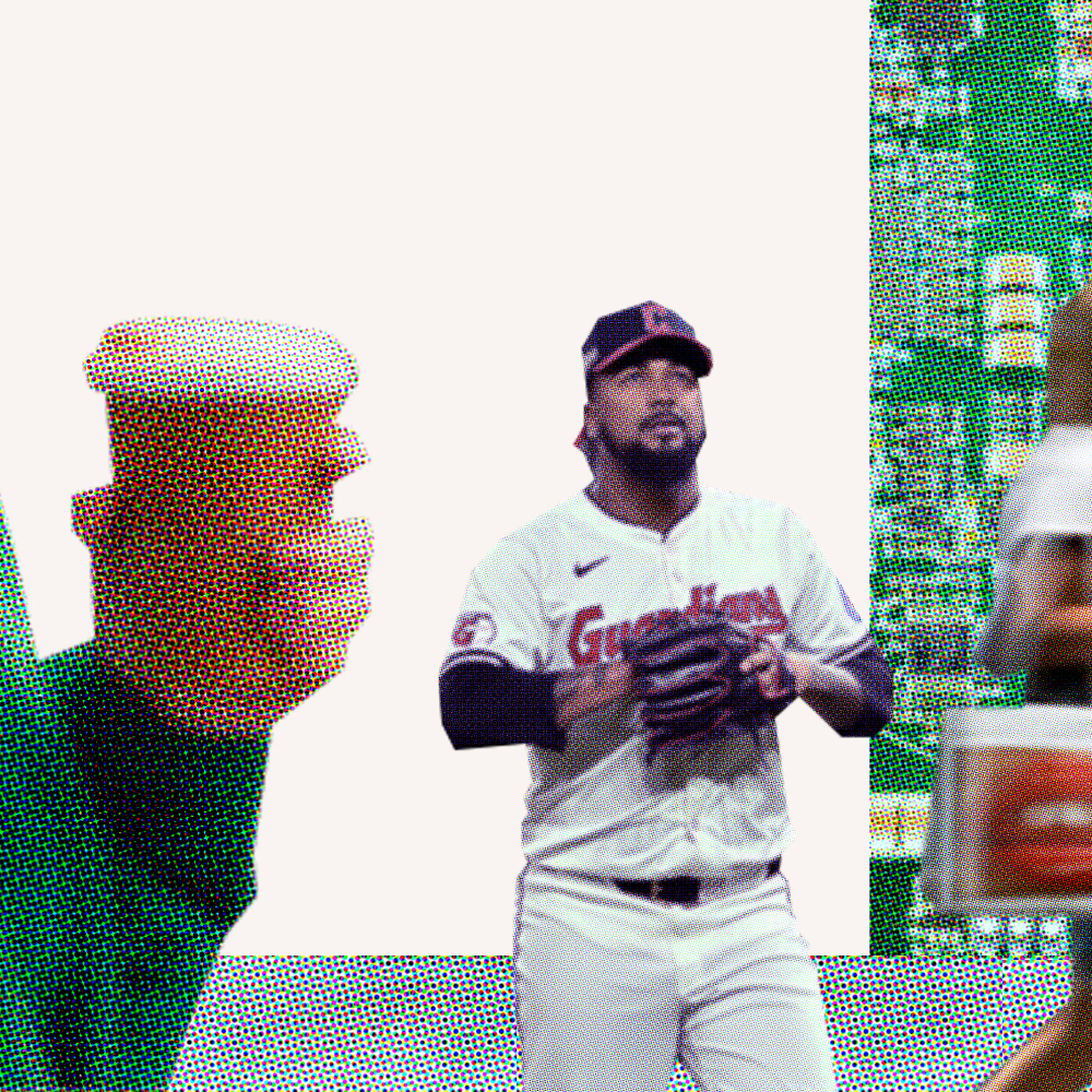
And the reason we're talking about this, we're kind of bearing the lead. These bets have become super controversial over the last couple of years. They're. They're both really popular. This is like when somebody says they're betting on sports. Your friend is like furtively opening the FanDuel app at work. This is kind of what they're doing. But it's also been sort of wrapped up in all these scandals. So most recently, Emmanuel Clase, who's one of the best pitchers in baseball. He's a closer for the Cleveland Guardians. He was placed on, you know, non disciplinary, basically administrative leave. Administrative leave in connection with g. A gambling investigation. There's also another pitcher on the team that was.
- [25:12]
D
Wait, what is he doing?
- [25:13]
B
Randall.
- [25:14]
E
What.
- [25:14]
B
What is the concern?
- [25:15]
E
The basis of the investigation is that they found that he would throw a ball on just about every first pitch.
- [25:23]
B
The suggestion is he's pitching deliberately poorly on his first pitch.
- [25:28]
E
It's not even coming close in order.
- [25:30]
B
To please the gamblers. Now we should say not. This is not. This is like allegation that I think has not been confirmed. There I don't even know that there's been an accusation.
- [25:41]
E
He could very well, the investigation could come up inconclusive. He could be playing in the next couple of weeks. He could also never play again. It's one of those things where the investigation has to conclude and then we'll find out what the result of his career is going to be.
- [25:53]
B
Now this has also come up in the NBA. Johnte Porter, kind of little known basketball player who was banned. Am I wrong?
- [26:00]
E
No, no, he. I think Johnte Porter is a funny example of this. And essentially what happened with Johnte Porter was he was part what I would consider a betting group slash organization. And he was getting a little playing time and he would basically check into the game and then within five or six minutes he would suffer an injury. And I put two fingers up there because it obviously was not an injury. And he would check out. Therefore all of his betting group would hit on whatever the bet was they were betting on.
- [26:28]
B
They were taking the under, which means they're betting that he would get less than a line on things like number of points, number of rebounds. And so essentially he would like take himself out of the game. And because of this, he's been banned. I mean, he's banned from basketball.
- [26:41]
E
In journalism terms, it's like if someone was betting on, you know, Stacey, you're going to do three stories today and you walk in here and you trip on, you know, the elevator and then you go home. Well, everybody that bet on you to doing three, three stories is now lost money. But the people that you insider traded.
- [26:57]
D
With these prop bets focus on, they're so granular. It's not like throwing a whole game or something. It's not. So it's like one person can, can actually control this in some aspect.
- [27:08]
E
Yes.
- [27:08]
D
And get paid off.
- [27:09]
E
Presumably the league's concerns with this is the integrity of the game portion. You don't want people and the sports books obviously don't want to lose money. The reason johntay Porter was, was flagged was because people put up an absurd amount of money. If it's small time money and it's not regular better, they're like, no one.
- [27:24]
D
Even knows who this guy is.
- [27:26]
E
Exactly, exactly. It's insane. The fact that, you know, someone put up whatever the amount of money that it was, but the sports book was essentially like, okay, that is not normal. We need to look into that. And eventually he was banned from the entire NBA for the rest of his life.
- [27:39]
B
Now, Randall, I feel like I'm old enough to remember and I Think most people listening to this podcast will be old enough to remember that sports leagues generally opposed gambling. Yeah, and so what. What happened here is just. It's just money.
- [27:54]
E
Basically, money started talking. I think as the rules and laws changed, you had leagues and organizations who were the first to embrace this. But over time it was like, are we going to get into this money or are we not? And, you know, I think some of the thinking is that if you don't embrace this, then you run the risk of people doing it illegally. And so the leagues have jumped all in and some leagues have dealt with some serious crisis. Obviously, we've seen it in the NBA and mlb. The NFL has also suspended players for. For different things as well, but nothing outright to the level that we're seeing from the MLB and the NBA.
- [28:29]
B
Wait, but you just said, okay, it was coming, people are doing it. So that's obviously part of it. Isn't another part of it that the league started to feel like this was a good way to get fans engaged? Like that this 100%.
- [28:40]
E
100%. It has different communities. Like fantasy football has been one of the biggest community builders in some ways. Fantasy basketball as well. And there are some people who play fantasy baseball too. But let's focus on fantasy football really quickly. Fantasy football is a community builder. Well, if you have betting, well, now that you can do betting instead of doing fantasy football, you can have a group of 25 guys, let's say they all subscribe to one person's 25amonth package. That person then sends out betting. And now you're hitting as a community. Now you could also be losing money as a community, but it's just a different way that I think sports leagues are looking at this as fandom.
- [29:14]
D
Well, and people are going to really be wanting to watch these games live. If they have money riding on it, they're going to care a lot. They're going to be. I mean, you're kind of locking in really dedicated fans. Even if they love the team to start with, they are going to super be super, super invested.
- [29:30]
B
You know, and it's funny because Randall, you pointed this out to me, but 2017, Adam Silver, he. He was asked about this. He said, one of my concerns is that I will be portrayed as pro sports betting. I view myself as pro transparency and someone who's a realist in the business. The best way for the league to monitor our integrity is for the betting action and move forward. Okay, so basically pragmatic concern. Roger Goodell, this is what he said in 2012. Roger Goodell, of course, the commissioner of the NFL.
- [29:59]
D
Of course.
- [30:00]
B
If gambling is permitted freely on sporting events, normal incidents of the game such as bad snaps, drop passes, turnovers, penalties and play calling inevitably will fuel speculation, distrust and accusations of put point shaving or game fixing. So that's what Roger Goodell said in 2012. But what's crazy is this concern expressed by Roger Goodell. I mean it hasn't really come up in football, but it's happening in other sports. Like the, this thing with baseball, you know, we talked about it. The same thing is happening in basketball. Randall sent me this amazing, like extremely nerdy episode of Pablo Torre finds out last night about Malik Beasley, who's another player who's been wrapped up in speculation around gambling. And you really get the sense that a lot of fans like this has now become part of fandom, is like not only are you sort of betting on games, but you're sort of worried if you see something funny. You're like, oh, maybe there's a gambling angle to this. Like if my, if our star reliever starts throwing the ball, you know, four or five feet outside the strike zone every time he starts his, you know, outing, I'm going to start thinking, wait, is he, is he on the take? Or whatever. I mean that to me feels very.
- [31:10]
D
Watch the game differently.
- [31:11]
B
Yeah, I mean this is, that feels like a long term risk to the.
- [31:14]
E
League, definitely in some aspect. I think it all depends on, you know, how much is being put up for some of these things. Like there are some real high rolling gamblers, but it has to be consistent in order for the books to catch it. And the biggest thing was Shohei Ohtani last year.
- [31:31]
B
Shohei Otani best, basically the best new age babe current baseball player. He's the Babe Ruth of our time. But also about a year and a half ago it came out that Shohei Ohtani had been, at least through a bank account of his gambling millions of dollars on sports.
- [31:48]
E
Illegally.
- [31:49]
B
Yeah, illegally. But Ohtani's story, which it seems like authorities have accepted, the league has accepted, is that it was actually his translator accessing his bank account. But anyway, but it's still at a time when the league is wholeheartedly embracing gambling. I mean it, it seems problematic, it.
- [32:06]
E
Looks a certain way. And all of these leagues have to avoid this. I mean everybody who covers sports business in some ways is waiting for the big sports story to happen in gambling. It, everybody thought it was going to be the Shohei Otani thing. As you said, it's since been accepted and with that in mind, now you're just waiting on the next one. Now we're looking at Malik Beasley and how many times this is going to come up again and again and again. And in large part because they have embraced the money. And for some players who even though they make millions of dollars, maybe the millions aren't enough. Maybe these groups that they're a part of stand to make more or you get in with the wrong people, you're in debt, which is what Malik Beasley is somewhat facing. And now it's like, okay, I have to cover this some way somehow. And they lean into this. Now the sports books are incentivized to of course catch these people because if you have high rolling organizations who are betting on this, then the books are going to be losing money if a player is rigging games. So the leagues and the or the betting organizations are working together to catch these individuals. But have all of them been caught? I mean, it remains to be seen.
- [33:13]
B
All right, I think our producer Amy had the under on keeping this under 15 minutes.
- [33:17]
D
Oh yeah.
- [33:18]
B
So we better help her out and wrap here. But before you go, Randall, stick around. We have one more segment here.
- [33:26]
D
Yeah, Randall, you might want to just like brace yourself.
- [33:29]
B
Uh oh.
- [33:37]
A
Every business has an ambition. PayPal open is the platform designed to help you grow into yours with business loans so you can expand and access to hundreds of millions of PayPal customers worldwide. And your customers can pay all the ways they want with PayPal, Venmo, pay later and all major cards so you can focus on scaling up when it's time to get growing. There's one platform for all business, PayPal Open grow today at paypalopen.com loans subject to approval in available locations.
- [34:08]
B
Join Bloomberg in Houston or via livestream on November 4th. For the future investor finding the opportunity, this 2025 event series will examine how companies are investing in their businesses to create efficiencies, innovating their products and services and improving the customer experience. This series is presented by Invesco.
- [34:28]
E
Q. Q. Q.
- [34:31]
B
Register@Bloomberglive.com FutureInvestorHouston that's Bloomberglive.com FutureInvestorHouston okay, so.
- [34:38]
D
It is time for our underrated segment and this story comes from Max and go for it. Max.
- [34:45]
B
Just, you've probably had this sense that AI like I have is kind of ruining everything, right?
- [34:51]
D
I don't think it's ruining everything.
- [34:53]
B
Let me just, I'll, I'll give you a few examples. Seems like it's kind of ruining the college essay. It's kind of ruining art. I'm sorry, it kind of is. I don't think so. Kind of ruining, like, social media. There's all this slop. It's kind of ruining search engines. And I have another thing that AI is ruining. Are you ready for it? Colonoscopies.
- [35:12]
E
Whoa.
- [35:14]
D
There's nothing to ruin. Like, I don't think there's anywhere to go but up for a colonoscopy. Well, well, how did we traumatize. I told you.
- [35:22]
B
All right, so I'm being glib, but you're probably aware that people, doctors and hospitals have been experimenting with AI for detecting cancer, like X rays and stuff. This is, like, a big area of opportunity as far as, like, software companies and healthcare providers see it. And we've seen some positive stories. There was a study that appeared in a journal called Lancet Gastroenterology and Heptology. Okay, okay. That's an important medical journal where they basically compared colonoscopies that were done by humans with colonoscopies that were done.
- [36:01]
D
The readings or the actual colonoscopy?
- [36:04]
B
No, no, no, no. The scope is operated by a doctor, but the. The looking at the camera. Because the way it works is they stick a camera inside of you.
- [36:13]
D
Yes.
- [36:14]
B
And they're looking for cancerous, precancerous, you know, issues. And the idea, the hope has been that you could sort of have a software algorithm looking at the feed and sort of flagging areas of concern to doctors and. And which kind of makes a lot of sense. Right. It probably looks pretty similar every single time. These polyps and so on are hard to spot. Maybe the software can do it for you. Now, this. When they use the software, according to this study, essentially the software did a little bit better than. In some cases, the software seemed to basically work. But when they took the software away, it actually made the doctors worse. Their skills degraded. And so, like, when they compared the doctor's ability to, like, detect problems pre AI with the doctor's ability to detect problems post AI, it got worse. And the authors of the study liken it to Google Maps. Like, if you rely on Google Maps all the time, maybe your ability to navigate, like, cities degrades, but do you.
- [37:20]
D
Still need to be able to navigate cities if you have the technology that can do it?
- [37:24]
B
The problem here, though, also is, like, it wasn't necessarily better either. Like, basically, so the doctors are getting worse. The doctors are getting worse because of the AI, at least according to this study. And I think this is, first of all, like, super troubling. Because it's. It just suggests that, like, we might want to just be cautious as we adopt these new technologies because it could. It could affect our, like, capacity. And what I'm wondering is, Stacey's basically already answered this question, but, Randall, does this give you pause? Do you. Are you. Do you want to. You worried that I might be degrading your.
- [37:59]
E
In this specific aspect? Absolutely. Absolutely. The next time or when it is my time to get this procedure, I will be asking, like, hey, using A.I. all right, well, I'm gonna have to find another clinic.
- [38:12]
B
You gotta ask them, have you ever used AI? Not just now. Because if they've used it before and maybe they got draw.
- [38:18]
E
It's not gonna be a thing where, like, the doctor walks into the office and, like, yeah, we're gonna do this. And then they walk out. No, you're gonna stay here the entire time. I need to see this.
- [38:25]
D
I wanna watch you read.
- [38:27]
E
No, seriously.
- [38:29]
D
Seriously. Yeah. I feel less worried about it. I mean, I just see it as, like, very natural evolution of technology. Like, we get worse at certain things because we use technology as a crutch and we can focus our. Our attentions then on other things.
- [38:43]
B
Like, I'll tell you, I would say two things. One is it is not standard, Randall, to stay awake during your colonoscopy. I'm just going to say it is possible, but not stand.
- [38:53]
D
Not standard, not advisable.
- [38:55]
B
The other thing I'll say is because there are a lot of instances where computers are very capable, but the, like, interface between humans and computers becomes problematic. And I think that this is like another one of those stories. So, like. And it probably, like, to your point, Stacey, there's probably a way to, like, harness this technology in a useful way. It's just. It just seems like this is a, you know, a little bit of a caution.
- [39:19]
E
I think it's like a question as to if there is a mistake, Would you rather the human make the mistake, or would you rather the human with technology make the mistake? I don't have the right answer to that, but based on what Max has told me today, I need a human. A 100% of a human. I don't need an Android or a satellite or whatever these doctors are using that is causing them to get worse. I'll just.
- [39:39]
D
I feel like the computer's more baseline reliable, though, because the human, yes, they could be an amazing colonoscopy.
- [39:45]
B
Tape reader skills are degrading.
- [39:47]
D
Someone comes in and they're hungover and they're distracted.
- [39:50]
E
Oh, good Lord.
- [39:50]
D
And they you know what I mean.
- [39:51]
E
That's a completely different issue.
- [39:52]
D
Hungover then the humans are less reliable than the A so all things being equal, I would rather have AI listeners.
- [40:00]
B
If you would rather have AI in your colonoscopy, don't have people write in about colonoscopy everybody's bloomberg.net no just say.
- [40:09]
D
Subject to Max Chapkin I don't want to read these emails about what you.
- [40:13]
E
Actually do like well I'm Stacy and I would advise you to go with the AI option because technology gets better and people get worse worse.
- [40:27]
D
This show is produced by Stacy Wong. Magnus Henriksen is our supervising producer, Amy Keen is our editor and Brendan Francis Newnham is our Executive Producer. We had engineering support from Kelly, Gary and Dave Purcell. Fact Checks Sage Bauman heads Bloomberg Podcasts. Special thanks to Jeff Muskus, Julia Rubin and Maria Ling. If you have a minute, please rate and review the show. It means a lot to us us and Max has not written a haiku in several weeks, so if you leave us a review I promise that he will do that on a topic of your choice. And if you have a story that should be our business, email us@everybody's bloomberg.net that's everybody's with an slumberg.net and if.
- [41:05]
B
You have reviews of your colonoscopy, send them to Max.
- [41:09]
D
Take care of Max Chaffkin. He's happy to look at photo attachments as well. Thank you for listening and see you Time Next next week.
- [41:22]
A
On September 25, Bloomberg Green returns to New York to bring together leaders from business, finance and government during Climate Week nyc. Join us for a half day of timely insights and high impact networking backed by Bloomberg's global journalism and data expertise. Together we'll explore strategies for future proofing business and communities from the planet's most pressing climate challenges. Supporting Sponsor Susano learn more@BloombergLive.com greenny.