Loading summary
Transcript180 lines
- [00:00]
Fidelity/Advertisement Announcer
Fidelity Active ETFs have the flexibility to shift and transform as markets do the same. So instead of just riding an index, they can seek to outperform it by adapting to market conditions and pursuing new opportunities as they emerge. And while you get the potential outperformance of an actively managed fund, you can still buy and sell it on your terms. Just like any other etf. Markets can change in real time. Make sure your ETF can too. Learn more@fidelity.com ActiveETFs before investing in any exchange traded fund, you should consider its investment objectives, risks, charges and expenses. Contact Fidelity for a prospectus, an offering circular, or if available, a summary prospectus containing this information. Read it carefully. While active ETFs offer the potential to outperform an index, these products may more significantly trail an index as compared with passive ETFs. ETFs are subject to market fluctuation and the risks of their underlying investments. ETFs are subject to management fees and other expenses Fidelity Brokerage Services LLC Member NYSE SIPC Introducing the all new Adobe Acrobat Studio now With AI powered PDF spaces do more with PDFs than you ever thought possible. Need AI to turn 100 pages of market research into 5 insights with a click. Do that with Acrobat. Need templates for a sales proposal that'll close that deal. Do that with Acrobat. Need an AI specialist to tailor the tone of your market report to sound real smart in real time. Do that with the all new Adobe Acrobat Studio. Learn more@adobe.com do that with Acrobat. Bloomberg Audio Studios Podcasts Radio News.
- [01:45]
Stacey Vanek Smith
This is Everybody's business from Bloomberg Businessweek. I'm Stacey Vanek Smith.
- [01:49]
Max Chafkin
And I'm Max Chaffkin. Stacey capitalism Death Watch 2025 New York City has elected a socialist mayor. We are going to talk about it. We're going to talk about all the people who who are mad and where things are going.
- [02:02]
Stacey Vanek Smith
I think capitalism, for what it's worth, is going to pull through. We will also be talking about the meteoric rise of the delivery business, how it's changing restaurants, how it's changing the way we eat, and how they solved the last mile problem.
- [02:17]
Max Chafkin
Yep, and our underrated story. The AI industry has created a clever new fundraising mechanism. Stacy, I'll give you a hint. It involves the two of us.
- [02:27]
Stacey Vanek Smith
Did they need funds?
- [02:33]
Max Chafkin
First, let's just talk about a couple of quick things that have happened in the last couple of days. So you and I have been talking offline. So many layoffs going on, you know, basically it's been crazy.
- [02:45]
Stacey Vanek Smith
It's interesting because for so long, for like a year now, the labor market's been kind of frozen and no one's known what to make of it. Hiring is, you know, near decades, like lows. But also layoffs are at like the lowest level in decades. Also it was sort of like this frozen thing. And now we are hearing a lot about layoffs, which is kind of scary. It seems like maybe the scale is tipping, although definitely remains to be seen. We did get some good news out of the job market this week too. All eyes are on jobs right now.
- [03:15]
Max Chafkin
Yeah, I mean you're seeing just a bunch of headlines if you're reading the news. So like Amazon, tens of thousands of people, UPS laying people off. Challenger Gray and Christmas, which is like a private company that tracks this stuff, said that in October, companies announced 153,000 worth of job cuts. That's the biggest number, I believe in 20 years. So like this is something that's really going on. I mean, it's not clear what it means though.
- [03:46]
Stacey Vanek Smith
And the unemployment level is still quite low. And of course we're not getting government data right now, which is because of the shutdown. But at the same time there was a report out from adp, which is a big data gathering firm too, and it said we added 40,000 jobs in October. So it's just the job market's so confusing now.
- [04:07]
Max Chafkin
Stacy, like the sort of conventional wisdom is that this is AI related. A lot of these companies, one of the things you can do when you're laying people off to make people feel better about it, to make Wall street feel better, is say this is something to do with AI because Wall street loves that. But there's another theory which is that basically companies just over hired during the pandemic, they basically just staffed up way too much because they were too worried about employees quitting. And that this is just like that part of the labor market sort of shaking out.
- [04:36]
Stacey Vanek Smith
Also there was so much growth happening during the later part of the pandemic, especially for tech companies, that I think a lot of companies really expected that kind of level of growth to keep going. But also I think you're right because it was so hard for companies to hire people for so long. Letting people go maybe feels a little different than it would have felt five years ago, you know, where it's, oh, we can just find people if we need them again. And there's so much uncertainty in this economy right now, it's really hard to say which way Things are going to go.
- [05:06]
Max Chafkin
Yeah, labor hoarding.
- [05:07]
Stacey Vanek Smith
That's the technical term, labor hoarding. Yeah, yeah, it's real. I mean, in a lot of ways though, it is really a feast or famine job market. You know, for a lot of, a lot of industries this is a time of layoffs, of fear for other industries like health care industry, like this is a time of major growth. And in some companies too, this is a time of major expansion. We just saw that Elon Musk got offered a record breaking pay package of I think a trillion dollars.
- [05:36]
Max Chafkin
Yeah, yeah, Elon Musk. So. So actually today we're recording this On Thursday the 6th, later today, Tesla shareholders are going to vote on this pay package that you mentioned. Enormous, biggest pay package in history. Remember a couple years ago when he got like a $50 billion pay package or we were talking about this $50 billion pay package and everyone was like, wow, like, how could a CEO ever get $50 billion in pay? Well, the Tesla board said hold my beer to the other members of the Tesla board and are now trying to give him a trillion dollars. And the crazy thing, Stacey, is I would be shocked if this thing doesn't pass. Like he is going to get this pay package. There's a little bit of nuance. It's not like they're going to hand $1 trillion to him tomorrow. I think it's almost certain that shareholders are going to agree to this.
- [06:23]
Stacey Vanek Smith
So why is this like an important moment in the economy? Like, why are people who don't like necessarily track Elon Musk? Why is this interesting?
- [06:34]
Max Chafkin
I mean, I don't know that it's an important moment in the economy. I think it's incredibly like you're kind of, you're kind of hinting at like it's kind of almost weirdly divorced from the real economy.
- [06:43]
Stacey Vanek Smith
It does seem like it.
- [06:44]
Max Chafkin
I do think, you know, we're in this moment where like parts of Wall street are doing very well, where certain stocks, especially any stock connected to the, to artificial intelligence or can someh claim that is, is basically killing it. And Tesla, you know, the company that Elon Musk runs, where he's CEO, that primarily makes cars, but also is kind of pitching itself as an AI company, their stock has been doing really well. The idea here is basically Musk is threatening to leave unless they give him a huge chunk of equity. He has about, I think it's about 12% of the company. He wants 25% and he says he wants that because if not he's going to start a different AI company someplace else. Bord essentially saying, hey, like, we had no choice. We gotta give him the money.
- [07:32]
Stacey Vanek Smith
Okay, but like, Max, can he possibly be worth a trillion dollars?
- [07:37]
Max Chafkin
I mean, Stacey, on one hand, the answer's probably no. Like, no one is worth a trillion dollars. On the other hand, Elon Musk is. Part of his media tour, went on the Joe Rogan podcast, and he started talking about Tesla's future product portfolio. Let's give a listen. Are you actively considering making an electric flying car? Is this like a real thing?
- [07:58]
Advertisement Voice 1
Well, we have to see in the, in the demo.
- [08:01]
Max Chafkin
So when you do this, like, are you gonna have a retractable wing? Like, what is the idea behind this? Don't be sly.
- [08:11]
Ellen Cushing
Come on.
- [08:13]
Advertisement Voice 1
I can't do the unveil before the.
- [08:15]
Max Chafkin
Unveil, but tell me off air then.
- [08:21]
Advertisement Voice 1
Look, I think it has a shot at being the most memorable product unveil ever. It has a shot.
- [08:35]
Max Chafkin
And when you plan on doing this, what's the goal?
- [08:40]
Matt Iglesias
Hopefully before the end of the year.
- [08:43]
Max Chafkin
All right, so, you know, maybe, Stacy, maybe by the end of the year, we'll be in a flying car and we'll feel, if we are Tesla shareholders, we'll feel really good about this gigantic pay package.
- [08:54]
Stacey Vanek Smith
I mean, if Elon Musk produces flying cars by the end of the year, then I will agree he should get a trillion dollars.
- [09:04]
Fidelity/Advertisement Announcer
Fidelity Active ETFs have the flexibility to shift and transform as markets do the same. So instead of just riding an index, they can seek to outperform it by adapting to market conditions and pursuing new opportunities as they emerge. And while you get the potential outperformance of an actively managed fund, you can still buy and sell it on your terms. Just like any other etf. Markets can change in real time. Make sure your ETF can too. Learn more@fidelity.com ActiveETFs before investing in any exchange traded fund, you should consider its investment objectives, risks, charges and expenses. Contact Fidelity for a prospectus, an offering circular, or if available, a summary prospectus containing this information. Read it carefully. While active ETFs offer the potential to outperform an index, these products may more significantly trail an index as compared with passive ETFs. ETFs are subject to market fluctuation and the risks of their underlying investments. ETFs are subject to management fees and other expenses. Fidelity Brokerage Services, llc. Member nyse SIPC Hey, Ryan Reynolds here from Mint Mobile.
- [10:06]
Max Chafkin
Now, I don't know if you've heard, but Mint's Premium Wireless is $15 a month. But I'd like to offer one other perk.
- [10:13]
Advertisement Voice 1
We have no stores.
- [10:17]
Max Chafkin
That means no small talk. Crazy weather we're having.
- [10:20]
Matt Iglesias
No, it's not.
- [10:21]
Max Chafkin
It's just weather. It is an introvert's dream.
- [10:24]
Advertisement Voice 1
Give it a try@mintmobile.com Switch upfront payment.
- [10:28]
Fidelity/Advertisement Announcer
Of $45 per 3 month plan $15 per month equivalent required New customer offer first 3 months only, then full price plan options available, taxes and fees extra.
- [10:33]
Advertisement Voice 1
Seemintmobile.com from providing extra support during busy seasons to replacing vacant roles, you need Express employment professionals on your team. Express can handle everything from contract placements to finding the right full time team member. Solve your workforce challenges when you let Express deal with the workers compensation, payroll, benefits and more so you can concentrate on what really matters growing your business. Go to expresspros.com if you've never used a staffing company, here's how Express has helped businesses like yours to balance their workforce to meet production demands, reduce stress and burnout, which reduces turnover Access a local talent pool ready to work for all types of jobs and a variety of reasons. Choosing Express employment professionals is the move to make this year with more than 870 locations. Find the one near you@expresspros.com that's expresspros.com.
- [11:35]
Stacey Vanek Smith
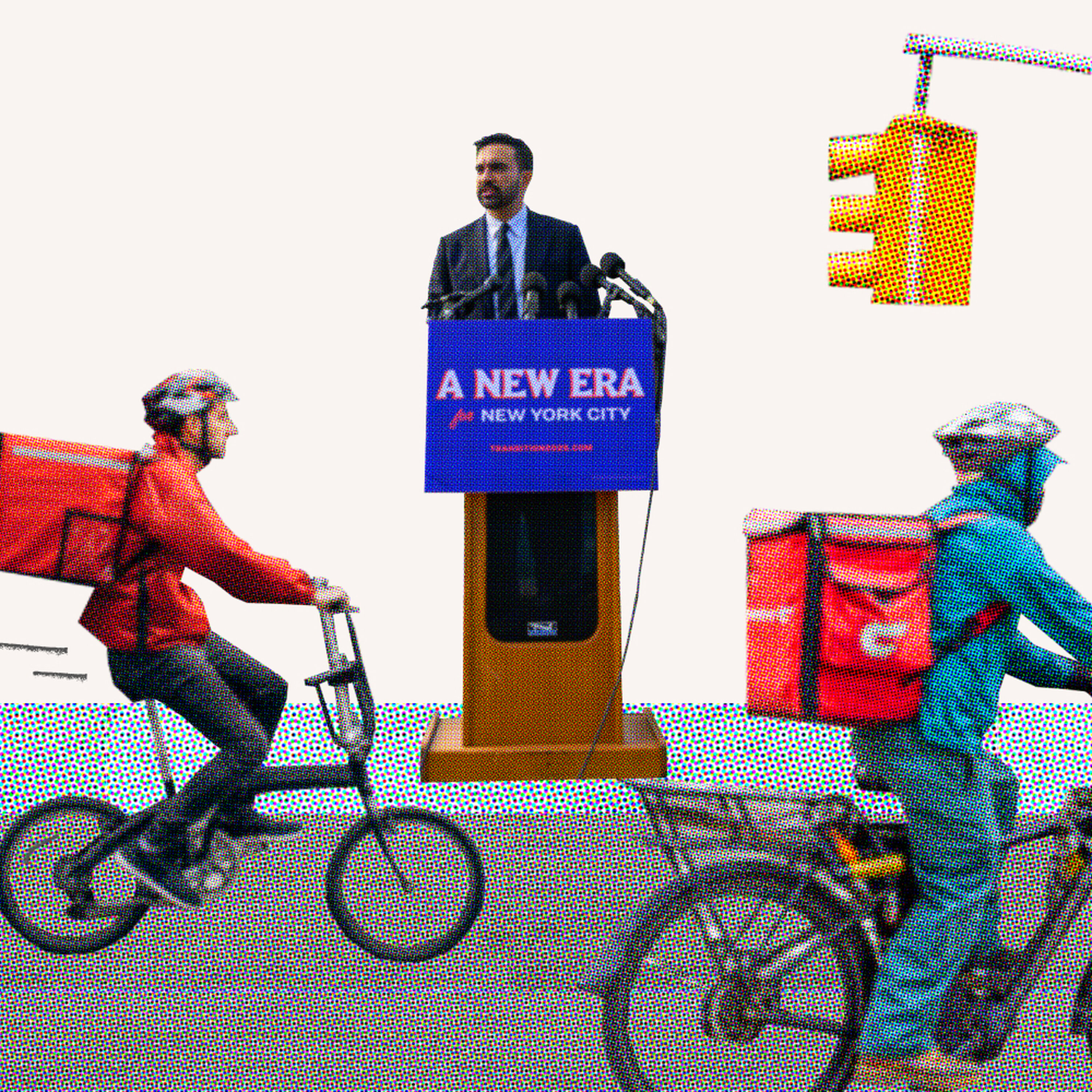
Max Shafkin we both live in New York and we both have as of this week, a new mayor.
- [11:42]
Max Chafkin
Yeah, I mean it's the last day we get to live with the billionaires, right? Or the first day after they leave. I don't know.
- [11:49]
Stacey Vanek Smith
Well, it is an interesting thing, right? So Zoran Mamdani is our new mayor or will be our mayor as soon as he is sworn into office. And he is a democratic socialist. This has caused a lot of stress I guess among like business owners, billionaires, a lot of catastrophizing, a lot of people swearing they will leave the city.
- [12:12]
Max Chafkin
Many lengthy tweets composed so many tweet threads by Bill Ackman. Hard to count the, you know, hedge fund billionaire who was very engaged in the race. You know, there were a bunch of other really interesting elections on Tuesday. I mean the top line is it was a great day from the Democrats, but we kind of wanted to talk about what the upshot is for business and kind of the, the interplay between politics and business that's been going on with this election and then going forward.
- [12:42]
Stacey Vanek Smith
Yes, absolutely. And so we are very lucky to have with us Matt Iglesias who writes the Slow Boring substack, which is awesome, you should subscribe. And he is also a contributor to Bloomberg Opinion. Welcome, Matt.
- [12:55]
Matt Iglesias
Hi.
- [12:56]
Stacey Vanek Smith
Okay, you wrote a great piece about the election of Mamdani. So before we get into kind of specifics, give us some sort of high level takeaways as you saw this election go down in one of the big financial capitals of the world.
- [13:10]
Matt Iglesias
Yeah, I mean, I think this is like, less noteworthy than it's being made out to be. If you go back in time 12 years to when Bill de Blasio was elected, you had this exact same discourse. You had left wing people who were thrilled, who were like, he said he was gonna end this tale of two cities, put inequality at the center of everything. He' teaching Barack Obama how it's done. Like, this is amazing. This is the future of Democrats. And you had a lot of wealthy people who felt targeted by that rhetoric, who were saying, this is going to be the end of the city. We're going to flee en masse, et cetera. You know, what actually happened across his first term was he had meetings with business people, like basically every mayor of every city, everywhere. He doesn't actually want businesses to close or rich people to flee. He raised taxes a little bit, he expanded pre K offerings. But, you know, it was so unremarkable in retrospect that people almost forget it happened and are now acting like this is the first time we've ever seen a progressive guy get elected mayor of a very heavily Democratic city.
- [14:22]
Max Chafkin
I mean, one takeaway, I think, and, and I got this out of Matt's piece and I've certainly been feeling it is the sort of business class took a big L on this election. You know, they billion a bunch of very, very wealthy people threw huge sums of money behind Cuomo and, and not only managed to get a candidate that they did not like winning the Democratic primary, and now they have a, you know, socialist mayor. Democratic socialist mayor. And it definitely feels like that is interesting, especially at a time when, you know, you've seen this kind of alliance between especially like tech CEOs, but, but maybe like the business world in general and Donald Trump, like where you have on one hand a bunch of these very wealthy guys suddenly feeling like, wow, like the White House is kind of open to us. Like, I've heard this from, from CEO types. And at the same time, you have Zoran Mandami getting up, giving this victory speech where he's, you know, explicitly attacking that. That class. Let's actually listen to that quickly.
- [15:25]
Matt Iglesias
As has so often occurred, the billionaire class has sought to convince those making $30 an hour that their enemies are those earning $20 an hour. They want the people to fight amongst ourselves so that we remain distracted from the work of remaking a long broken system. We refuse to let them dictate the rules of the game anymore. They can play by the same rules as the rest of us.
- [16:00]
Max Chafkin
And the way you know that like Bill Ackman and so on, took a loss here, is that Ackman did like the shortest tweet he's ever done in the history of his time on. On X. Cause he's known for doing these like 5,000 word galaxy brain.
- [16:16]
Matt Iglesias
It's like, congratulations on the win. Call me if I can do anything to him.
- [16:20]
Max Chafkin
Exactly. Like talk. Full capitulation. Not only is he not saying he's leaving New York, you know, not only is he offering to help, not only is he being conciliatory, but he's doing it in a very, very short number of words.
- [16:35]
Stacey Vanek Smith
Matt, I did want to ask you about one of the points that you make in your piece. I remember Bill de Blasio's campaign. I mean, it was a different moment in time certainly, but it seemed more measured than this one. Like, Mamdani's got a lot of fire and like, definitely his rhetoric seems stronger and leftier to me. But you made this point in your piece that actually when you get down to passing things and making the city work and collecting the garbage and things like that, that in the end all the extremism kind of ends up becoming more of a job. Will you talk about that a little bit?
- [17:14]
Ellen Cushing
Yeah.
- [17:15]
Matt Iglesias
I mean, what does the mayor do, right? Like, what does the mayor actually question? The mayor appoints a school's chancellor. The mayor appoints a sanitation commissioner, a police commissioner. And I could see, I mean, that, that Mondami speech, you know, if I was a billionaire, which I'm not, but you know, I would. I would take a little offense at that. Like, you think, like, what are the problems in New York City, right? Like, why isn't the subway more reliable? Why is it that New York has the highest per pupil spending in the country on its K12 schools, but below average results? Why is there like garbage on the streets all the time? Like, it's not billionaires fault, you know, like there's many things you could say about like, America or the world in which you might want to characterize billionaires as somehow being the enemy. But New York City is a place that already has very high levels of taxes and very high levels of spending. And it's a place that people love. But what people love about New York is The cultural amenities, restaurants, the nightlife. Nobody is like, what's amazing about New York is the mix of tax revenues and public services. Really, we've really got it nailed here. So to an extent, I mean, I think the L for the billionaire class here is how did they end up rallying behind Cuomo, who. You know, this is a guy who was driven from office by sex scandals, right. If you look at the video that he launched his campaign with, he's, he's talking about a sense that the city is out of control and he's appealing to people's concerns about subway crime and other stuff like that. But if you talk to like the real tough on crime guys, you know, the people, people from the Manhattan Institute, people in the nypd, the person who they blame for that is Andrew Cuomo, who signed these bail reform and discovery reform laws. So he just seems like a really bad champion of sort of the forces of reform. But again, if you think about, like, what are the authorities of city government, you can't, like, I don't know, you're not going to restructure the American economy. You can make things a little bit better or a little bit worse around the margin in certain very specific ways. You can maybe change housing in the city. You know, he wants to cut bus fares, but like, how that's not a city agency. He doesn't have any revenue to work with. He's going to find himself negotiating with the council over really painful, annoying fiscal trade offs. And I think that if he does a halfway responsible job, the people who are really enthusiastic about him are going to end up being a little disappointed by this sort of grubby, boring reality of being a mayor.
- [20:03]
Max Chafkin
In certain ways, like the New Jersey governor's race was a more surprising result. Like Mickey Cheryl winning by something like 13 points. A race that a lot of Republicans thought was going to be more competitive. You know, Virginia, not close. Even the attorney general's race in Virginia, which again, that was another one where it looked like maybe the Republican could win, like, not that close. I'm just kind of curious what you think the takeaways are from this, from this election as a whole.
- [20:30]
Matt Iglesias
Well, you know, like a lot of Democrats were going ahead and have sort of, you know, trauma from polling misses in the past. And so they were looking at Sheryl up five and Spanberger up nine. And they were like, oh my God, God, you know, what if the polls are off by five and we lose in New Jersey? And it turns out the polls were off by five and it was just off by five in the other direction. So these errors happen, you know, all the time. They are actually roughly symmetrical. And you see that Trump is performing about how you would expect an unpopular incumbent president to perform. There was a lot of worry about inflation a year ago. People voted for him because they wanted him to bring down the cost of living. He's done a lot of stuff in office, but he hasn't done that. He's renovating a ballroom. He's, you know, tweeting odd memes. He's doing a lot of stuff with AI that is of incredible interest to the stock market. But, like, regular people aren't seeing the kind of relief that they hoped for. So Democrats can, can ride that backlash, you know, pretty far.
- [21:40]
Stacey Vanek Smith
So seeing as how this seems to be a little bit of a national thing happening right now, and like you say, Matt, this could change. But if you're running a business, if you're one of the billionaires running a business or just a person running a business, like, what does this mean for people running businesses? Is this good news, bad news?
- [21:59]
Matt Iglesias
You know, I mean, it's not. The rising interest in socialism is obviously not something that business people are going to love. And, you know, I think that the cost of housing in big coastal cities is a huge pain point for lots of people, for lots of jurisdictions. I think that business people would tell you that this is not the excesses of capitalism, that it's regulatory constraints on housing supply, but one way or another, it's making people very upset and is causing a lot of people in these blue cities to embrace sort of far left kind of ideas and trying to work with people to develop constructive solutions. There were these housing supply ballot initiatives that passed yesterday in New York, and interestingly, they passed with Mamdani's support and against Cuomo's opposition. And a lot of times the practical sort of conservative political coalition in New York City has been these outer borough, NIMBY plus Upper east side billionaires, plus, like cops.
- [23:12]
Stacey Vanek Smith
What a city.
- [23:13]
Matt Iglesias
I mean, you know, it's a beautiful tapestry. I think that the billionaires may want to think about how that coalition works for them.
- [23:23]
Max Chafkin
I think what everyone wants to know who's listening to this is a, is Bill Ackman or the like, is anyone going to actually leave? And then the other kind of question I have is, which is a related one, is basically like, at what point do you think some of these results scare sort of the business community enough that we start to see some defections from Trump? You know, like, where it becomes right, like Right now, like, you know me.
- [23:52]
Stacey Vanek Smith
If I can help there.
- [23:53]
Max Chafkin
Yeah, well, more, I mean, more than call me if I can help. I mean, like, there are a lot of big companies putting huge amounts of money, or not huge, but, but significant money into this East Wing ballroom project. And meanwhile, in MSNBC and in, in kind of left wing media, every single day, people are really upset about this East Wing demolition. And like, I, I assume at some point we will start to see, like, movement and we'll start to see a handful of, you know, a handful of billionaires, maybe it's Benioff, I don't know, who say, oh, you know, actually, as it turns out, free bussing sounds pretty good or whatever it is, you know, tries to get. Because, like, a lot of these guys, like, as much as they are ideological, they just want to be on the team that's, you know, that's in power and they want to be able.
- [24:43]
Matt Iglesias
Yeah.
- [24:44]
Max Chafkin
So I'm kind of curious how you see that playing out.
- [24:46]
Matt Iglesias
I mean, there was a fascinating Politico story about this litigation about the Trump tariffs. And they were saying that the people who were litigating this, at first they were like, they thought all these giant companies are going to support our position because the tariffs are bad, but they didn't want to do it because they were afraid of angering Trump by joining an anti tariff lawsuit. So they wound up having a bunch of really small and medium sized companies being their kind of go to corporate plaintiffs. And I think corporate America should reconsider that kind of attitude. If you look at these election results, I mean, Hakeem Jeffries is clearly favored to be the next speaker of the House. There are going to be hearings about who donated to the West Wing, who bought the Trump crypto fund. Like, what is going on? And you want to be able to say, even if you're not going to talk about, you know, state owned grocery stores or free buses or globalizing the Intifada, like you want to be able to say, look, I'm running my business here. When Trump does stuff that's good for business, of course we're for that. But when Trump does stuff that's bad for business, we're against that. And when Trump shakes us down for bribes, you know, we believe in the rule of law and the persistence of American liberalism. And a lot of companies seem to me to have bought in on this idea that Trump was gonna be like Trump forever. Right. But we're seeing the laws of political gravity. Just like I think they will bring down the mom dummy hype among, you know, socialists in Brooklyn. The Trump bubble is popping now, too. Politics keeps happening with backlash, alternation of power, overreach, limits. If you're a committed ideologue, then, sure, you sign up with your team and you fight for it. If you're someone who's just trying to navigate these waters like you want to navigate prudently. Ackman deciding after all these long tweets that he wants to say something nice. And I think, you know, Mamdani would be wise to invite some Wall street titans to come have lunch with him, and they would be wise to say yes, right? Everybody ultimately benefits from having business growth in the city that they are the mayor of. Like, that's just the reality.
- [27:08]
Max Chafkin
I absolutely think if the Democrats have a good midterm, we are going to have the, like, Mark Zuckerberg free bus conversion. Like, he's going to go on. He's going to go on Hasan Piker's Twitch stream and proclaim that, you know, actually on third thought, democratic socialism brought.
- [27:26]
Stacey Vanek Smith
To you by Meta.
- [27:28]
Matt Iglesias
Well, like Waymo will.
- [27:30]
Stacey Vanek Smith
Oh, nice.
- [27:32]
Max Chafkin
See, we've worked it out already. Synergies, Waymo lobbyists call us. Matt Iglesias. Thank you for being here. Check out his newsletter. Slow, Boring. Thanks a lot.
- [27:42]
Matt Iglesias
Thank you.
- [27:43]
Stacey Vanek Smith
Thanks, Matt.
- [27:47]
Max Chafkin
All right, Stacy, you know that one of my favorite topics is the things that Silicon Valley is ruining, right?
- [27:55]
Stacey Vanek Smith
Yes, I do know that.
- [27:56]
Max Chafkin
Okay, so we got one to talk about today, and it's one that it's come up in my mind a couple times, but it really crystallized as I was reading this wonderful story in the Atlantic by Ellen Cushing, staff writer there. The story is about restaurants and the way that food delivery is changing food culture and the restaurant business. And Ellen is here to talk about it. Hey, Ellen.
- [28:17]
Ellen Cushing
Hi. Thanks for having me.
- [28:19]
Max Chafkin
All right, so I feel like this is a thing. And I said ruined, because that is kind of how I feel. I think they're different points of view, but why don't you just talk us through the premise of this story, like what you were trying to do. And, like, when we're talking about, like, how has food delivery changed the restaurant business? What are we actually talking about?
- [28:39]
Ellen Cushing
Yeah, so most people have probably noticed that delivery is more popular than it used to be. They have probably had the experience of being in a restaurant and it's, like, half empty, but there's 15 Uber Eats drivers, like, clustered in the front waiting for their orders. You've seen the plastic bags on people's doorsteps. If you live in New York, like I do. You see the E bikes everywhere. You kind of know this is happening, but you may not know. In 2024, three out of every four restaurant orders was not eaten in a restaurant. Wow. This statistic just kind of like bounces around in my brain.
- [29:19]
Max Chafkin
Wait, is that nationwide or.
- [29:20]
Ellen Cushing
Yeah.
- [29:20]
Matt Iglesias
Wow.
- [29:21]
Ellen Cushing
Like, that includes McDonald's, you know, that includes drive thrus, but it is a huge number. 30% of full service restaurants, which are like restaurants where you sit down and you have a waiter or a waitress and you have a napkin and a menu that you look at kind of restaurant. 30% of their orders are being eaten off premises now. So this is a huge change. And it has all of these downstream effects for restaurants, for eating, for cities, for traffic, for the environment. So I just got kind of obsessed with it and decided to figure out what I could figure out.
- [29:56]
Stacey Vanek Smith
I mean, I knew it's definitely an issue in New York, which started during the pandemic. New York's always been a very food delivery oriented place. But I guess the thing that kind of blows my mind about it is that these orders are so expensive. Like, I feel like I order a burrito and the burrito's like $12, and then somehow by the time I am paying for the burrito, it is $40. I mean, I am lazy enough that I do that math and it maths out for me. But I can't believe that this is a common thing.
- [30:27]
Ellen Cushing
I can't either. I talked to a driver in South Carolina who told me that he recently chauffeured like a single cup of ice cream to someone's house, like 20 miles away. And he estimates that this person spent, I think it was like $20 on this ice cream, you know, and he got paid like $3.
- [30:48]
Stacey Vanek Smith
Jeez.
- [30:49]
Max Chafkin
Let's just talk a little bit about the history here, which is, I guess, partly tied into the Internet and like that. One of the really cool things about your story is you spend time talking to one of the pioneers and in the kind of Internet based food delivery world, a guy who created a company that was sold to grubhub, who basically built some of the delivery infrastructure. These apps started to take off. What like in 2013, 2014, you had Uber Eats, you had DoorDash. Talk a little bit about those businesses. Like, where did those businesses, like, find an opportunity?
- [31:23]
Ellen Cushing
I mean, the thing about delivery is that everyone eats. So it is a huge potential market. So like you were saying late 2000s, early 2000s, all of these companies started, you know, figuring out that they could do this, the Internet was becoming something that people had more access to phones, et cetera. Restaurants in the beginning, didn't want to facilitate delivery because it's annoying. But what happened in this moment is that restaurants, like, turned over a core part of their business to Silicon Valley, and they just never got it back. So these businesses kind of swooped in, were the middleman. And it was peak, like, ZIRP era, huge subsidies. Every venture capitalist in California wanted to be the guy who funded the company that was, like, the leader in delivery. And so they were all massively discounting, you know, fighting with each other. This was an era where you could open your phone and, you know, just be, like, barraged with offers for, like, 50% off whatever you wanted. And so what happened is that basically Silicon Valley, like, created a market that did not previously exist for, you know, delivery, everything. And then they created the expectation that it would be really cheap.
- [32:52]
Max Chafkin
Yeah. Because they basically used you. You said zirp, the zero interest rate policy. There was tons of venture capital money flowing to these businesses, and they basically, like, heavily subsidized your food delivery order, which was awesome back in the day. Right.
- [33:06]
Ellen Cushing
It did rock.
- [33:07]
Max Chafkin
Because you talked about Stacy, just brought up, like, her burrito. It's like a $12 burrito. You end up paying, like, what Stacy, like, 30 bucks, 40 bucks, whatever it is. But, like, yeah, in 2013, it was $13. Like, basically all of the costs the driver got paid via the startup. The startup totally swallowed all of the technical costs and basically just passed on the full fare to the restaurant. Like, it was awesome back then. Those were the days.
- [33:34]
Ellen Cushing
Basically, those were the days. They lasted about five or six years. And then the other big inflection point is the pandemic. And this is a moment, obviously we all remember, where, like, ordering delivery kind of almost overnight became like, something really virtuous, like the way you could help your local small businesses. And if there were any restaurants that weren't already signed up with Uber Eats or grubhub or whatever, they signed up during the pandemic. Cause they had to, you know, stay open. And so then you have this second wave of every restaurant going delivery, and you have people who had previously been holding out, you know, are ordering delivery, getting used to eating restaurant food at home. And you don't go back from that. Like, once you have the experience of eating, like, a wagyu steak, like, in your bed watching tv, it's very hard to, you know, train yourself to think that's not possible anymore. You know what I mean?
- [34:39]
Stacey Vanek Smith
I Feel that very deeply. And to me, I think the other real appeal of these sites like grubhub and Seamless and things like that is that it was, like a centralized place. It could help you find restaurants. It would offer you deals. But one of the things that I understood from the early days, and I don't know, it seems like this has shifted, and I'm curious to know why is that for some reason, even though my burrito costs $30, like. Like, nobody along the way for a long time was making any money. Like, somehow everybody was losing money on my $30 burrito for a long time. The restaurant, the delivery person. And so what happened there? Because the business model was always such a problematic thing.
- [35:22]
Ellen Cushing
Yeah, I mean, delivery doesn't make sense. Delivery is really expensive. You're introducing a middleman to a process, and that costs money. You know, it costs labor, packaging, server space. You know, you order pad Thai from the place around the corner. And a company in California is facilitating all of this. That's kind of nuts. So it has always been really expensive. It's just that the cost of it was sort of obscured. And now some of the delivery companies are profitable. They've also really consolidated. So basically, two companies control, like, 90% of. Of the delivery market. They are making some money, but basically nobody else is.
- [36:05]
Max Chafkin
I want to talk about all the ways this is terrible and all the ways it has ruined food culture and restaurants. And like, I were a delivery. One of these delivery apps, and I were sitting here, like, I might tell a slightly different story. I think I would say that you're saying we addicted people to convenience, but actually what happened is people just decided they don't like restaurants as much as they thought they did. And that it isn't that we. Isn't that we tricked anyone. It's that people decided actually being at home is awesome.
- [36:37]
Ellen Cushing
Yeah, they would certainly mount that argument. You often hear the argument also that delivery is really good for people with young children or people who have mobility issues. Like, delivery itself is not, like, pure evil. You know, like, delivery really serves a purpose. But I think the problem is that we haven't really figured out a way as a society to account for all of the externality that it causes in the world, produces in the world.
- [37:10]
Max Chafkin
Ellen, can you talk about, like, the way that restaurants have changed because of this? Like, how the dining experience, like, even if you decide to go into a restaurant, you might be paying more because they have to charge more to. To make up for the doordash tax. But what about what are Some of the other ways that this has changed how it actually is to, like, operate a restaurant or dine in a restaurant.
- [37:30]
Ellen Cushing
The two main things that are changing are the food itself. Restaurateurs told me that they're doing more braises, more dressings on the side. You know, you have this sort of, like, fundamental physical problem with delivery, which is that if you put hot food in a plastic box, it starts to steam in its own heat and, like, immediately gets soggy. And so restaurateurs, like, want their food to be good for delivery. And so they're trying to develop dishes that can sort of withstand that.
- [38:02]
Max Chafkin
French fries out, mashed potatoes in, or whatever.
- [38:04]
Ellen Cushing
Something like that. Exactly. Or like, this is kind of one of the many reasons why everything is a bowl now. You know, like, that kind of food travels quite well. The other way that restaurants are changing is the physical space is changing. A lot of restaurants have redesigned their interiors to account for delivery, so a lot of them are hiring design firms to put in cubbies or create a special place for drivers to stand so they're not just clogging the door. You're basically trying to cram two experiences into one right now, where it's like, many restaurants in this country are both a place for people to sit down dad's 50th birthday and have a nice meal with their family, and also vending machine. And those two things don't, like, actually work that well together. Like, I've certainly had the experience of being in a restaurant, and there's an Uber Eats driver, like, one inch behind me.
- [39:00]
Max Chafkin
Right. Bumping you with the bag. Right?
- [39:02]
Ellen Cushing
Exactly. I don't blame that guy at all, but it's not that nice as an experience.
- [39:09]
Stacey Vanek Smith
Is there any way that this is a win for restaurants? Are they seeing more orders? Is there an upside?
- [39:15]
Ellen Cushing
Like, not every restaurant hates delivery, though almost everyone I cold called was really happy to talk about how delivery has been a problem for them. You know, the argument for restaurants is that it gets your food in front of more people. You know, we don't know. Totally the counterfactual version of this. If delivery didn't exist tomorrow, would people go out to restaurants or would they just sit in their house and eat, like, frozen pizza? We don't know. It is possible that more people are eating restaurant food as a result of delivery than they would before, but no, I mean, generally speaking, restaurants like the restaurateurs I talk to basically feel like they have to do delivery, because if they don't, they're leaving money on the table. But if they do delivery, they're forking over like 30% of their profits to another company.
- [40:12]
Max Chafkin
Have either of you all been to wonder, do you know what that is?
- [40:16]
Ellen Cushing
I know what that is. I've not been because I find it pretty sinister.
- [40:21]
Max Chafkin
It's like the final, the natural conclusion of all of these trends. It's like just a counter and it's basically like airplane food. It's like food that's pre prepared in a factory or a central catering kitchen. Then it's warmed up and you have a lot of choices and they're all like, branded. It like, really seems like airplane food. You can have a Wolfgang Puck, Puck something. And it's like entirely about the either pickup or delivery. And it's a restaurant that's created specifically for doordash.
- [40:54]
Stacey Vanek Smith
Is it like a dark store? You know, like the dark stores that are just made as like distribution points for Amazon. Or like, can regular people go in and just order something directly? Like, could I go in to wonder and order a burger?
- [41:08]
Ellen Cushing
And if you kind of wanted to a Ksunish yourself, you could walk into a wonder. Most of them have some seating and most of them you can order at the counter, but they're designed for delivery.
- [41:20]
Max Chafkin
It's so funny. The guy who started Mark Laurie, his previous company was Jet, which is like the Walmart.com. and I sometimes just feel like he is on a mission to destroy every small business in America. Like, he's like, we got Walmart and we brought it to the Internet. And now I'm gonna do the same thing to restaurants. You really like, something profound, like culturally profound is lost when you take away restaurants like it. It's not just sad for the business owners who are struggling to deal with. It's sad for us.
- [41:51]
Stacey Vanek Smith
I was gonna say, you know, this reminds me of back in the 50s. They used to have those diners where the food would be, you know, like in a little locker and you put like a slot. An automat. Yes, an automat. Thank you. Although it feels dissociative and dystopian, I definitely agree. I don't know, like, it doesn't seem that different from an automat to me.
- [42:13]
Ellen Cushing
It's not. I think the problem is the scale. Like, the thing that freaks me out here is not that delivery is available to people. It's that delivery is how America eats. And. And the thing I love restaurants, it's a cliche, but restaurants bring people together and delivery doesn't do that. And the thing I worry about is, like, what happened to movie Theaters happening. They still exist. You can still go see a movie in a theater, but they're, you know, struggling. You're always worried your favorite one's gonna close. It's no longer kind of a community gathering space.
- [42:52]
Max Chafkin
Any sign of a backlash? Sometimes these trends seem more certain. I don't know, like some of the stuff we're talking about. It seems in the same way that like young people are shunning Facebook or whatever. Any chance that they might shun Doordash or get more into that physical experience. Basically not go to the wonders of the world and instead opt for something, you know, that feels more like a conventional restaurant. Or are we just old?
- [43:21]
Ellen Cushing
I mean, I will say that 13% of people under 45 use delivery once a day.
- [43:27]
Stacey Vanek Smith
So once a day food delivery.
- [43:32]
Ellen Cushing
So I'm not like totally optimistic about this though. I mean, I think consumers are starting to a understand the dynamics a little bit better and balance, you know, experiencing some sticker shock when they get their burrito or whatever. I'm really curious what happens if we like enter a recession and people become even more price sensitive and you know, does paying like $40 for some like kind of tepid pasta feel like a good deal then? I don't know. So people may turn away from delivery, but I don't think it will be ideological. I think it will be all right.
- [44:12]
Max Chafkin
Ellen, that was great. Stick around. We're going to do our underrated segment in one second.
- [44:16]
Ellen Cushing
I can't wait.
- [44:23]
Advertisement Voice 1
From providing extra support during busy seasons to replacing vacant roles, you need Express employment professionals on your team. Express can handle everything from contract placements to finding the right full time team member. Solve your workforce challenges when you let Express deal with the workers compensation, payroll, benefits and more so you can concentrate on what really matters growing your business. Go to expresspros.com if you've never used a staffing company, here's how Express has helped businesses like yours balance their workforce to meet production demands. Reduce stress and burnout, which reduces turnover. Access a local talent pool ready to work for all types of jobs and a variety of reasons. Choosing Express Employment Professionals is the move to make this year. With more than 870 locations. Find the one near you@expresspros.com that's expresspros.com.
- [45:22]
Fidelity/Advertisement Announcer
There'S nothing like sinking into luxury. Anabe sofas combine ultimate comfort and design at an affordable price. Annabe has designed the only fully machine washable sofa from top to bottom, the stain resistant performance fabric, slipcovers and cloud like frame duvet can go straight into your wash. Perfect for anyone with kids, pets or anyone who loves an easy to clean spotless sofa. With a modular design and changeable slipcovers, you can customize your sofa to fit any space and style. Whether you need a single chair, loveseat or a luxuriously large sectional, Anna Bay has you covered. Visit washablesofas.com to upgrade your home. Sofas start at just $699 and right now get early access to Black Friday savings up to 60% off storewide with a 30 day money back guarantee. Shop now@washablesofas.com Add a little to your life. Offers are subject to change and certain restrictions may apply.
- [46:22]
Matt Iglesias
Attention parents and grandparents.
- [46:24]
Max Chafkin
If you're looking for a gift that's.
- [46:26]
Advertisement Voice 1
More than just a toy, give them.
- [46:28]
Max Chafkin
Something that inspires confidence and adventure all year long. Give them a Guardian bike, the easiest.
- [46:34]
Matt Iglesias
Bike to learn on, safest to ride.
- [46:36]
Advertisement Voice 1
And the number one kids bike on the market.
- [46:38]
Max Chafkin
With USA made Kid Specific frames and patented safety technology, kids are learning to.
- [46:44]
Advertisement Voice 1
Ride in just one day.
- [46:45]
Max Chafkin
No training wheels needed.
- [46:46]
Advertisement Voice 1
It's why Guardian Guardian is America's favorite.
- [46:49]
Max Chafkin
Kids bike and the New York Times and Wirecutter's top pick three years in a row. This holiday season, Guardian is offering their biggest deal of the year, over 40% in savings on all bikes plus $100 in free accessories. Each bike arrives 99% assembled, so setup takes minutes, not hours. Whether it's their very first ride or their next big upgrade, Guardian makes every pedal feel safe, smooth and fun.
- [47:14]
Advertisement Voice 1
Join over 500 happy families who've discovered.
- [47:17]
Max Chafkin
The magic of Guardian. Visit guardianbikes.com to shop now. That's guardianbikes.com.
- [47:26]
Stacey Vanek Smith
So we've now come to the part of the show where we talk about something that is underrated, a piece of news that maybe did not get the attention it should have. And this has been kind of an intense week, so a lot to choose from. But Max, this one's yours. Yeah, and I don't actually know what.
- [47:40]
Max Chafkin
It is and I wanted Ellen to stick around for this because it has a tech angle. But what I want to do is earlier this week the Wall Street Journal has their tech event going on in California, and the chief financial officer of OpenAI, the big chatbot company, she gave a talk and she said something that has a lot of people very angry. And I want to play the clip for both of you and you guys can try to tell me like what exactly people are angry about. Sarah Fryer, OpenAI Chief Financial Office but.
- [48:11]
Ellen Cushing
Even in areas like Open Source. We're attempting to put the state of the art model always out into the world. And in order to do that, we always want to be on the frontier. Chip. So the question is, how long does a chip remain on the frontier? Is it three years, four years, five years, or even longer? Now, in a world where we have no compute or compute constrained, we are absolutely using chips that have like a 100 equivalents that have been around like maybe six, seven years at this point in time. If that's the case, financing chips gets a lot easier. If the timeline on the chip stays.
- [48:46]
Stacey Vanek Smith
Short, that gets harder.
- [48:47]
Ellen Cushing
And so this is where we're looking for an ecosystem of banks, private equity, maybe even governmental. The ways governments can come to bear.
- [48:59]
Max Chafkin
Okay, what are people mad about?
- [49:03]
Stacey Vanek Smith
Ellen, what's your guess? I have an idea, but it's a little out there.
- [49:07]
Ellen Cushing
They're mad that this person's trying to get the government to pay for her chips.
- [49:12]
Matt Iglesias
Yes.
- [49:12]
Ellen Cushing
Do you think that's it?
- [49:13]
Matt Iglesias
That is it?
- [49:14]
Max Chafkin
The hottest company in the world, the most valuable private company, I think, of all time. A company that is supposedly on the verge of creating machine gods that will be worth many trillions of dollars. The CFO got up and basically suggested that they need the government to create a backstop, effectively an open AI bail.
- [49:39]
Ellen Cushing
Right, right, right. And OpenAI bailout, like, at the same time, as I'm sure they're fighting back against all kind of like actual regulation.
- [49:47]
Max Chafkin
So, first of all, everyone is very mad about this. As I said, Ron DeSantis has been tweeting up a storm.
- [49:52]
Ellen Cushing
Not Ron DeSantis.
- [49:53]
Max Chafkin
He is very unhappy. Let me find some of the DeSantis material that I can read to you just so you're fully up to speed on this. The rush to secure an unprecedented number of policy favors, from regulatory moratoriums to abrogation of intellectual property. A lot of big words for Ron here was always about using too big to fail as the industry's risk mitigation strategy. Now it's out in the open. OpenAI kind of backed off of this and said, well, we didn't actually mean we need a government bailout. We were actually just talking about, you know, policies and an industrial capacity and kind of trying to vague things up a little bit to say that we weren't specifically asking for money. But I think a lot of people who are following the space closely as well as people on Wall street are sort of worried about this. Just because so much money has gone into these data centers. There are all these circular deals, and there's the risk that if it starts to fall apart, it could spill over, and we might all need to become investors in OpenAI.
- [50:57]
Ellen Cushing
Right. Like, they can kind of hold the whole world, like, sort of hostage because this industry is so big.
- [51:04]
Stacey Vanek Smith
What's interesting to me is that, like, the whole banking industry has sort of operated in this way ever since the financial crisis, which is, like, the companies are private when times are good, and they're public when times are bad. And that has its own set of problems. What I find interesting now is, like, for AI, times are really good right now. So the idea of, like, somehow getting all the upside of being a private company while all the upside of being a government entity is. I mean, that's the dream for companies. I mean, I don't see anything wrong with, you know, a company wanting that, but I see something wrong with us doing it. I hope we don't, because it gets us into, like, suddenly this stuff gets priced in, and then the whole economy is depending on. But in a lot of ways, the whole economy is depending on AI right now. So if the AI bubble pops, it is such a systemic risk that maybe it's not an unrealistic ask. They're just leveraging. It's like any job interview. They're anchoring expectations.
- [52:03]
Max Chafkin
Yeah. The other thing is maybe they're just, like, trying to see, like, carpe diem. You've got Donald Trump in office. He's very close to many of these companies. Maybe they just see, essentially, there's a political opportunity to get some policy concessions that they won't be able to get from, like, even J.D. vance, maybe, but. Or obviously, Ron DeSantis. He's not on board with this.
- [52:26]
Ellen Cushing
Sounds like she's kind of saying, you know, like, we don't. We don't need your money, but if you wanted to give it to us, like, we. Like, that might be an interesting idea. You know, it's like this is a test balloon. Right.
- [52:37]
Max Chafkin
Same, by the way.
- [52:38]
Ellen Cushing
Yeah, sure.
- [52:39]
Max Chafkin
Ellen Cushing, thank you for being here. You're gonna have to come back and do this again some other time.
- [52:44]
Ellen Cushing
I can't wait. Sounds good.
- [52:45]
Stacey Vanek Smith
Next time, bring a cup of ice cream.
- [52:47]
Ellen Cushing
Yeah, I'll bring you a melting cup of ice cream.
- [52:50]
Max Chafkin
Just order it. We order it right now.
- [52:52]
Ellen Cushing
Exactly. Yeah, yeah, yeah.
- [53:01]
Max Chafkin
So, Stacy, before we go, I just got to. I got to apologize to you and to our listeners.
- [53:08]
Stacey Vanek Smith
Okay. Yeah.
- [53:08]
Max Chafkin
Correction. During the intro last week to the segment on the movie business, I called Superman a flop. Now, there are articles that you can find on the Internet describing it this way. But during the conversation with Sean Fennesee and this did not make it into the final cut of the show, he sort of explained why I was wrong and I just wanted to kind of pass that along just in case there are any Superman heads who heard that episode and were mad. Now here's the thing. It was not a flop. It did actually quite well in the United States. The problem for Superman is it has it did not do well in other countries, particularly in China. Now some of that has to do with US China relations and maybe some of it just has to do with Superman because it's like truth justice in the American way. It's seen as overly US Centric or something like that. So just I am sorry. I regret the error. Superman not a flop. Good job, Superman.
- [54:11]
Stacey Vanek Smith
This show is produced by Stacy Wong. Magnus Henriksen is our supervising producer and Amy Keen is our executive producer. Sam Rogich handles engineering and Dave Purcell fact checks. Sage Bauman heads Bloomberg Podcasts. Special thanks to Jeff Muskus, Julia Rubin and Maria Ling. If you have a minute, please rate and review the show. It means a lot to us. And if you have a story that should be our business, email us@everybody'sloomberg.net that is everybody's with an S us@bloomberg.net or.
- [54:38]
Max Chafkin
If you have something to complain about, send it. Send us the errors and we'll correct them.
- [54:42]
Stacey Vanek Smith
Yes, indeed. If we happen to incorrectly say that a movie did not make money when it did, definitely send us that email. Thank you for listening and see you next week.
- [54:59]
Max Chafkin
Ah, greetings from my bath festive friends. The holidays are overwhelming, but I'm tackling this season with PayPal and making the most of my money. Getting 5% cash back when I pay in 4. No fees, no interest.
- [55:12]
Advertisement Voice 1
I used it to get this portable spa with jets.
- [55:15]
Max Chafkin
Now the bubbles can cling to my sculpted but pruny body. Make the most of your money this holiday with PayPal.
- [55:21]
Advertisement Voice 1
Save the offer in the app ends.
- [55:22]
Max Chafkin
12:31 see paypal.com promoter points can be redeemed for cash and more. Paying for subject to terms and approval. PayPal Inc. And MLS 910457. You know what a girl's best friend is not diamonds.
- [55:32]
Fidelity/Advertisement Announcer
Her lawyers.
- [55:33]
Advertisement Voice 1
From executive producer Ryan Murphy comes a fiery new legal drama.
- [55:38]
Max Chafkin
It's our own boutique women representing women.
- [55:40]
Advertisement Voice 1
You can't afford to miss.
- [55:43]
Fidelity/Advertisement Announcer
Make it R Showtime, ladies. Stand up straight and breeze into that room like a storm no one saw coming.
- [55:53]
Advertisement Voice 1
Hulu Original Series All's Fair now streaming on Hulu and Hulu on Disney plus for bundle subscribers terms apply. This podcast is brought to you by FedEx the new power Move hey, you know those people in your office who are always pulling old school corporate power moves? Like the guy who weaponizes eye contact. He's confident, he's engaged, he's often creepy. It's an old school power move, but this alpha dog laser gaze won't keep your supply chain moving across borders. The real power move? Having a smart platform that keeps up with the changing trade landscape. That's why smart businesses partner with FedEx and use the power of digital intelligence to navigate around supply chain issues before they happen. Set your sights on something that will actually improve your business. FedEx the new power Move.