Loading summary
Transcript137 lines
- [00:00]
Stacey Vanek Smith
You need to make a huge presentation in an hour. Luckily, Adobe Acrobat Studio uses AI to take all your documents and generate a presentation with a single click, building slides faster than ever before. So if you need a last minute pitch deck, do that with Acrobat. Need to level up your presentation design? Do that with acrobat. You have 30 plus documents that need to be simplified into a proposal. Do that with Acrobat. Learn more@adobe.com do that with Acrobat.
- [00:33]
Derek Guy
With Voli from Ishares you get access to both monthly income and growth potential in one simple etf. It's the best of both worlds. Discover Bali Ishares Large Cap Premium Income Active ETF iShares the market is yours. Visit www.ishares.com to view perspectives for investment objectives, risks, fees, expenses and other information that you should read and consider carefully before investing. Risks include principal loss and the use of derivatives, which could increase risks and volatility. Monthly income is not guarant prepared by BlackRock Investments, LLC.
- [01:02]
Announcer
Bloomberg Audio Studios Podcasts Radio News.
- [01:12]
Max Chafkin
Welcome to everybody's business. I'm Max Chavkin.
- [01:14]
Stacey Vanek Smith
And I'm Stacey Vanek Smith.
- [01:16]
Max Chafkin
And Stacy, I can tell by the din of plutocrats chattering in the background that you are joining us from Davos, Switzerland. You are at the World Economic Forum where there's been a ton of news.
- [01:28]
Stacey Vanek Smith
Those are some amazing ears you have, Max. Yes, indeed. I am in Davos, Switzerland. Is that Larry Fink? Is that Jamie Dimon in the background? It might be. Honestly, it is quite a scene here. I've never been before, but there's been a lot of news this week and I'm excited to fill you in on it. And I'm also excited to be inside where it is warm.
- [01:51]
Max Chafkin
Harvard economist Ken Rogoff will join us to talk about some of the sort of big economic issues that have come out of this conference and Trump's speech. And then, Stacey, we have a treat. I will talk to Business Week contributor menswear guru Derek Guy about the do's and don'ts and maybe do maybe Don'ts of Davos, as well as his new essay about how to bring back American manufacturing in the fashion industry.
- [02:20]
Stacey Vanek Smith
I'm intrigued.
- [02:21]
Max Chafkin
Last but not least, underrated story, Stacy. It's deja vu Lululemon leggings. They are not covering enough skin anymore. Again.
- [02:33]
Stacey Vanek Smith
Again. Oh my gosh. So Max, yesterday was a very big day here in Davos. I believe it made worldwide news. But President Trump came and and gave a talk. He spoke for about 90 minutes here at the World Economic Forum on the main stage and brought up many things, but of course, the main event was Greenland.
- [02:59]
Max Chafkin
Were you there, Stacey? Were you in the room?
- [03:01]
Stacey Vanek Smith
I 100% was in the room. I waited in line for two hours because it was so intense. There were apparently around like, 900 people in the room. I mean, it was packed. And I have to say, I have never heard that many people be so quiet as they became at moments during his speech. It was really something.
- [03:22]
Ken Rogoff
It's great to be back in beautiful Davos, Switzerland, and to address so many respected business leaders, so many friends, few enemies, and all of the distinguished guests.
- [03:39]
Max Chafkin
It's a who's who.
- [03:40]
Stacey Vanek Smith
I will say that.
- [03:41]
Max Chafkin
Friends, enemies, and the distinguished guests. Stacey, you were among them. I mean, the big question going into this speech, Trump had basically been threatening to use military force in Greenland. That didn't happen. I guess that was the big news that came out of this speech. Trump was like, yeah, you were all worried that I was going to attack Greenland, but no, I'm not going to do that.
- [04:06]
Stacey Vanek Smith
That's true. Yes. That was a big moment. I feel like there were three big moments in the speech. The first one, for about 20 minutes, he just talked about energy and oil and his accomplishments as president. And I felt like everyone kind of started to relax, like, look around, look at their phones, talk. There was some nervous laughter. And then Greenland came up and everybody just went totally quiet.
- [04:29]
Max Chafkin
And then.
- [04:30]
Stacey Vanek Smith
Yes, exactly. There was the moment that Trump said, we will not attack. America will not attack. He said it a bunch of times, and there was like. People sighed and gasped, like it was.
- [04:43]
Max Chafkin
It was.
- [04:43]
Stacey Vanek Smith
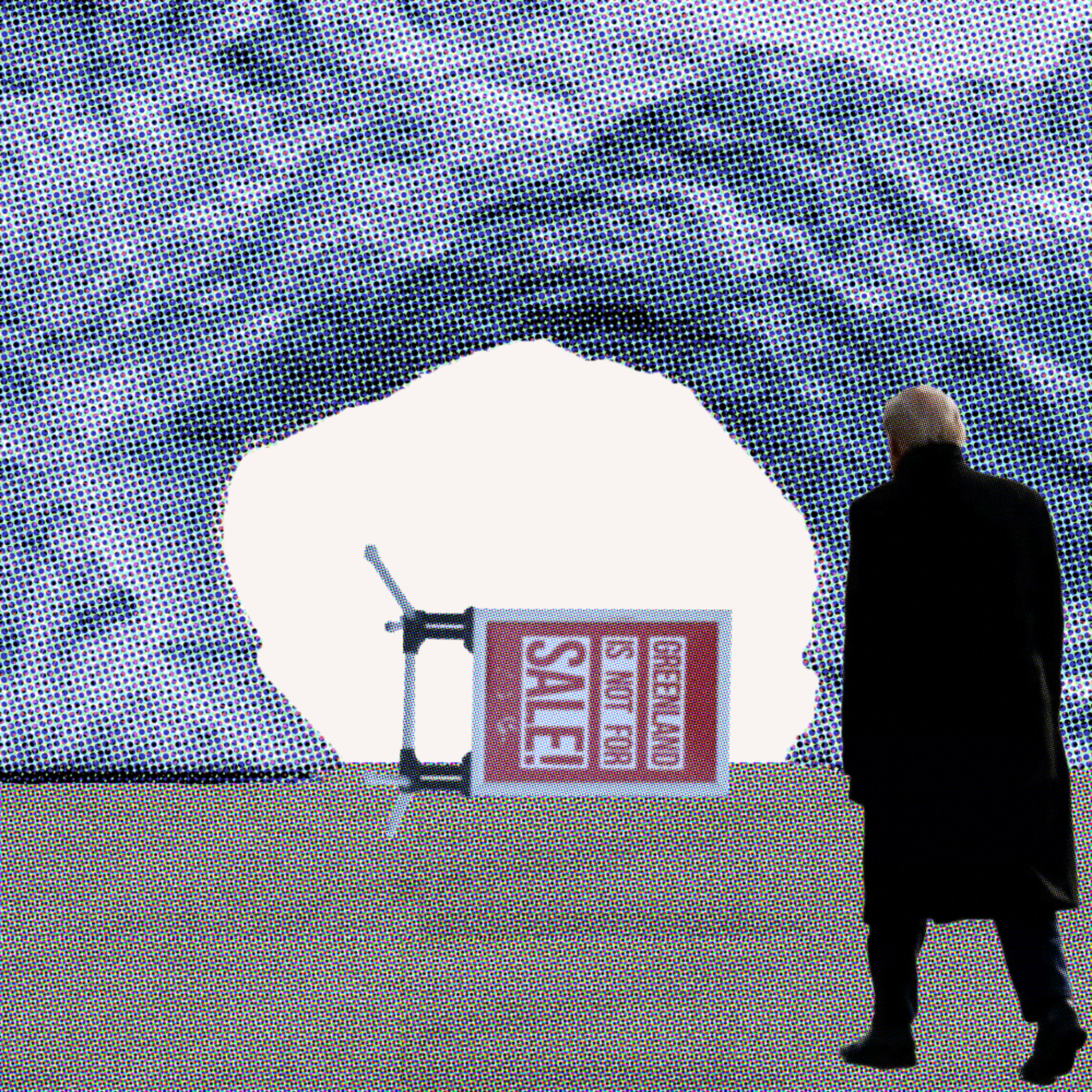
The mood was like nothing I've ever experienced. So I think people were quite relieved. But then there was also this moment after that, which did seem still kind of menacing, which is when President Trump said over and over, like, you know, we've paid into NATO. We've never gotten anything back. We want Greenland. Give us Greenland. He kept calling it this big piece of ice.
- [05:04]
Max Chafkin
Yeah. And then confusing it with Iceland. And then Caroline Levitt was like, he.
- [05:08]
Stacey Vanek Smith
Didn'T confuse it with Iceland.
- [05:09]
Max Chafkin
He didn't confuse it. It was ice, spaceland. So. But very unsettling couple of minutes there.
- [05:16]
Stacey Vanek Smith
Yes. I was actually quite confused for a minute because I was like, is Iceland at play, too? But it was Greenland. And then he basically kind of ended in this ultimatum that, well, I'll play you a little clip of this ultimatum. But it was. I'm still not quite sure what to make of it. I'm curious what you think they Have a choice.
- [05:34]
Announcer
You can say yes, and we will.
- [05:37]
Ken Rogoff
Be very appreciative, or you can say.
- [05:40]
Max Chafkin
No, and we will remember, you know, Trump. Trump watches these mob movies. You know, he's watched, you know, Goodfellas and the Godfather a million times. Like, it just. It does have that feel of a kind of. Yeah, like a mafia boss or something making a veiled threat. I mean, I will say, though, for all of this talk, all of the kind of chatter around, the speech, which was all about, oh, is the global order collapsing? You know, a couple hours later, we learned that actually this was just another illustration of the very famous Taco trade, the acronym that stands for Trump always chickens out. Trump got on Truth Social and said, actually, we have an agreement for Greenland. There's some reporting coming out suggesting that that agreement is basically what was maybe already on the table. It kind of now, in retrospect, looks like this whole thing was maybe just a stunt or something, or maybe people within Trump's inner circle sort of got him back on track at the very last minute. I'm not totally sure.
- [06:39]
Stacey Vanek Smith
It's interesting. I mean, he went an hour over time, so there was a lot. There were a lot of tangents. There were a lot of issues that came up, and there are a lot of things that go both directions. I think that is what can be kind of confusing sometimes about Trump, especially in this talk. I mean, it was like he said he wasn't gonna use force, but then he sort of demanded Greenland, and there was a little bit of an or else feeling about the final threat. So I don't know, honestly, what to make of it or where things stand. It does feel a little muddled. There was the Board of Peace that convened today, so that is sort of feeding into this that there might be sort of the attempted creation of this new world order. Certainly there's a lot of worry. People seem very worried in the halls.
- [07:27]
Max Chafkin
Well, we're going to get into all this with Ken when he comes on, because I want to go deep a little bit on Greenland and also maybe try to make the case that this was a nothing burger from the start, but we'll get to that.
- [07:37]
Stacey Vanek Smith
Oh, there's Ken. Oh, hold on. I see Ken. Hold on.
- [07:39]
Max Chafkin
Okay.
- [07:39]
Derek Guy
Yeah, I can just do the.
- [07:40]
Stacey Vanek Smith
Hold on. I'm going to go grab him.
- [07:46]
Max Chafkin
Stacey, we've been talking about tariffs and this. These threats to acquire various icy territories, and kind of wanted to talk in more detail and, like, try to understand, is this even a good idea? What is Trump's end game? And you have Brought over Ken Rogoff, friend of the podcast, professor of economics at Harvard, columnist at Bloomberg Opinion, the author of Our Dollar, your Problem, an insider's view of seven Turbulent Decades of Global finance and the Road ahead. Ken, thanks for being here.
- [08:21]
Ken Rogoff
Pleasure to be here. What fun. And actually, I've been trying to exchange thoughts with Stacy, so. What an opportunity.
- [08:28]
Max Chafkin
I just want to say for context, Stacy and Ken are in a booth somewhere in some kind of lodge looking thing at Davos. I see wood paneled ceiling behind you. Stacy is moving her microphone. This is a, a true guerrilla setup. And we were very excited to be in the action at Davos.
- [08:46]
Ken Rogoff
Oh, you are in the action. We're not in a small lodge. We're in a giant room with hundreds of Davos participants milling about. But Stacy's done such a great job setting up the shot that you feel like we're in private.
- [09:02]
Max Chafkin
Look, if Jamie Dimon walks by, I expect you to pull his puffer vest and bring him in. Okay?
- [09:10]
Stacey Vanek Smith
So, Ken, were you in President Trump's talk about Greenland or have you had a chance to see it?
- [09:17]
Ken Rogoff
So I watched it. My spouse Natasha actually sat in on it and had a few interesting insights that I wouldn't have had listening to it.
- [09:26]
Stacey Vanek Smith
What are your initial thoughts? Like, what were your takeaways?
- [09:29]
Ken Rogoff
You know, I thought he did a very good job of being himself. So, you know, if you love him, you loved it. I think I've heard from a few Americans that they thought that that was a better than usual performance. But on the other hand, the general reception was very frosty. I can't even describe it of how frosty it was. The most striking thing was that evidently when he came in, everybody stood up and clapped. When he left, there were a few, you know, puppets in the front rows that stood up and clapped. The audience sat muted, clapping. I've been at Davos for 25 years. I've never seen a world leader not get a standing ovation when they walk out of the room. Are you kidding? I mean, it was body language, you know, really saying how angry they were.
- [10:21]
Max Chafkin
Ken, I've had a hard time making sense of this Greenland discourse because I can't quite figure out what we're like. Do you understand? Like, is there a case for what Trump is even trying to do here? Like if, let's say, you, you credit this, that this is, this is not just. We had a successful sort of pseudo military operation in Venezuela. Now it's time to flex American muscle someplace else, which kind of feels that way, to be honest. But, but like that there is a strategy, but what, what exactly is the strategy?
- [10:51]
Ken Rogoff
So, I mean, maybe I'm putting. Being too generous, but if I were to go to political science classes, geopolitics classes, debates that I've seen over the years at Harvard, Princeton, Yale, other places, and I'm listening to my colleagues talk about where the world's going to be in 50 years and okay, I'm at a university, so pretty left leaning. These aren't right wingers. I think a common vision is there'll be some border movements, China is going to take over Taiwan and Lord knows what else. But if you said in the context of that, that the US Was going to get this Danish colony that's really part of North America, they would have just said, of course that's what the long run equilibrium is going to be. You know, just like Falklands isn't going to be part of the United Kingdom. I just want to say, you know, if, if you did that today, they wouldn't say that because Trump said it. But, but I know, because I went into a lot of those debates and stuff where people say, you have to understand the world isn't always static. There are changes that need to be made. But I mean, you can build a plant in someplace and they can write a lease and you have the land, but there are things they can do to you if you don't own the land around. They can tax you, they can change the rules, put in regulations on the various workers. I don't know. He very clearly said leasing. It's just not, not good enough. And it's going to be melting and you're opening up these paths and it is going to be a new frontier. And so I believe he won't be the last president. He wasn't, certainly wasn't the first. It goes back 80 years to our making offers on Greenland, so.
- [12:39]
Stacey Vanek Smith
Oh, really?
- [12:40]
Ken Rogoff
Oh, yeah, yeah, yeah, yeah. I'm. Truman made an offer, I think, in Greenland. I can't remember what he offered.
- [12:45]
Max Chafkin
Yeah, this is a big part of Trump's case for why this is like totally reasonable. And Trump, in his speeches about this, has also compared it to the purchase of Alaska during the Jackson administration.
- [12:58]
Ken Rogoff
Well, Alaska was for sale, of course, which was different, and Greenland's not for sale, but. And then he made a case after World War II that we actually chased the Nazis out. I didn't know that they were in Greenland, but he chased them out of Denmark and therefore we just should have kept Greenland.
- [13:16]
Max Chafkin
We.
- [13:16]
Ken Rogoff
Whatever. But I will say I've never Seen the Europeans so offended about anything? Nothing. They were so angry.
- [13:25]
Stacey Vanek Smith
Where's the anger coming from? I mean, I can take some guesses, but why so much anger?
- [13:31]
Ken Rogoff
Well, I mean, sort of. You read it, you know, it's part of Denmark, the territory of Denmark. Denmark fought alongside the United States in Afghanistan. Mothers lost their sons. We've been allies. When Putin invaded Ukraine, which they were mad about, well, we knew Putin was, you know, a bad person. Trump is stabbing us in the back. This is our friend, you know, our friend. Our country's our. The United States, our friend. They're just very upset, and I don't think it's gonna go away. I mean, he backed off big time.
- [14:03]
Stacey Vanek Smith
You don't think his, like. Like Greenland's obsession is gonna go away?
- [14:07]
Ken Rogoff
No, no, I think he did back off. I don't know for how long. No, I don't know if his obsession's gonna go away. He's a real estate guy. This is a hu. Land. He'd like to name the Trump something in it.
- [14:19]
Max Chafkin
You know, do you think this. This conversation around the quote, unquote, trade bazooka that the Europeans were gonna. We're gonna fire at the U.S. like, there was this kind of back and forth over. Trump was saying he threatened briefly, I believe was on Monday, that he was gonna add additional tariffs to a bunch of European nations that he perceived as hostile. You had. You had all this chatter about Europe, the European Union doing stuff, and I'm kind of curious, like, what is the trade bazooka, as you understand, or whatever, this. This kind of retaliatory action? And is that what caused him to. To. To sort of back down? Or is this a. Is this a case of, like, this is a reality show president? He's bobbing and weaving, and the. The sort of external threats are kind of a sideshow.
- [15:04]
Ken Rogoff
First and foremost. He knew he was coming to speak at Davos, and by making this statement, he sucked all the oxygen out of the room. Nobody's talking about why he's not helping in Ukraine. Nobody's talking about Epstein. Nobody's talking about anything. Everyone everywhere is talking about this. It was brilliant. I do think he talks about Greenland. There are some elements that are serious. But you asked about the trade war. I mean, I think the Europeans would have backed down at some level. I don't know what deal would have been reached, and I'm not sure what caused Trump to pull out. It might have been the stock market falling, I don't know.
- [15:43]
Max Chafkin
But wait, what is. What leverage does the European Union have. And like, I mean, like, it's, it is this big and economically large alliance, although it's a bunch of different countries and it, and they're very intertwined with the US So it seems like it's difficult for them to engage in a trade war. But what, what can they do or what could Trump be anticipating?
- [16:04]
Ken Rogoff
So the person who really stood up to Trump, and I think it's the only person who's really successfully stood up to him, is President Xi of China. And they fumbled around for a while. They tried something like the Europeans are doing with putting tariffs, but he came around to this idea, aha, you want to build all your AI, you want all your electronics. I have rare earth processing. That's actually what they have. And it's going to take you years. I'll give it to Europe, but you can't have it. And boy, it was like turning a surgical knife. And the Europeans instead have this blunt weapon, which isn't all that credible. I mean, throwing out a full scale trade war without getting into the nitty gritty. I think the US has what we would call escalation dominance. I mean, there's more stuff we can do to them than they can do to us. They were going to lose that. I think in truth, Trump got something important out of it. He made a point and most importantly, he got all the attention. He got people talking about something else. There's so many things to complain about with the United States and then he manages to redirect the conversation. You know, the guy is very good at this.
- [17:17]
Stacey Vanek Smith
What do you think is going to happen with Greenland? Do you think this is like a serious thing? Do you think this is going to be a targeted, consistent ask, or do.
- [17:25]
Max Chafkin
You think smoke and mirrors, within your.
- [17:28]
Ken Rogoff
Lifetime, Greenland will be part of the United States? That's what I would say.
- [17:32]
Max Chafkin
Really?
- [17:33]
Ken Rogoff
Yeah.
- [17:34]
Max Chafkin
Whoa.
- [17:34]
Ken Rogoff
I think there are many people prediction would have this. Well, I may not be alive for you to tell me I'm wrong, but many presidents have said this, many political scholars have said this. It's like some things when Trump says it, then it becomes unpopular. But the core idea that, you know, it's part of North America, that we have a big security interest in it and we need total control. This isn't just a Trump thing. I have said this to the European press too. I mean, they're shocked. But if you go, you know, it's very easy to go show that a lot of people have been saying this, not just politicians, that the world isn't.
- [18:13]
Stacey Vanek Smith
Static, would we potentially lose like Hawaii to Australia or something.
- [18:17]
Max Chafkin
Good question, Stacy.
- [18:20]
Ken Rogoff
Australia might lose itself to China, but who knows.
- [18:25]
Max Chafkin
I just want to say for the record, it is possible that people will come around to this idea, but the early polling on Trump in Greenland and it may have to do like you said, Ken, it's all about how people feel about Trump and maybe even Republicans are like, hey, I really wish you would focus on the price of eggs and not try to acquire Greenland. But Americans don't like this.
- [18:44]
Ken Rogoff
As far as the poll, well, when the president of the United States has to say in a speech and it makes news that I'm not going to put troops on the ground and I had half expected him to do some kind of CGI simulated background with troops landing in Greenland, you know, or something. But no, when I say that it's some negotiated deal where we give up something, we get something that they want, not something that's done by brute force.
- [19:10]
Max Chafkin
Well, Ken, we will have you back to follow this issue as it develops and all issues around the global economy. Thank you for so much for being here.
- [19:18]
Ken Rogoff
Thanks for having me.
- [19:19]
Max Chafkin
So Stacy is very busy. Stacy, you're going to run get a cup of hot of that delicious Swiss hot chocolate that I know is everywhere.
- [19:27]
Stacey Vanek Smith
I'm more of a coffee person, but.
- [19:29]
Max Chafkin
I will maybe a coffee and then come back because I want to talk to you about the underrated story right after I talk to Derek Guy.
- [19:41]
Announcer
Finding the right promotional products can feel overwhelming. But with 4imprint, it can be easy. They call it 4imprint certainty, which means the process is stress free, straightforward and backed by real peace of mind. Not sure what promo products to order? No problem. You can get free samples, product guidance, even free help with your logo so everything can meet your expectations. Need options? They've got thousands including branded apparel, drinkware, outdoor and all the tradeshow essentials. And when your order arrives, it's backed by their 360 degree guarantee. That's 4imprint's promise. Your order will be packed with care, show up looking great and right on time in a rush. 4imprint has quick turnaround options too to help you hit your deadline. Whether you're prepping for an event or just refreshing your promo lineup, 4imprint helps you get it done. Head to 4imprint.com to explore. That's 4imprint.com for Imprint.
- [20:37]
Max Chafkin
For certain, support for the show comes from public. On public you can build a multi asset portfolio of stocks, bonds, options, crypto and now generated assets which allow you to turn any idea into an investable index. With AI, it all starts with your prompt from renewable energy companies with high free cash flow to semiconductor suppliers growing revenue over 20% year over year. You can literally type any prompt and and put the AI to work. It screens thousands of stocks, builds a one of a kind index, and lets you back test it against the S&P 500. Then you can invest in a few clicks. Generated Assets are completely customizable and based.
- [21:16]
Ken Rogoff
On your thesis, not someone else's.
- [21:18]
Max Chafkin
Go to public.com market and earn an uncapped 1% bonus when you transfer your portfolio. That's public.com market paid for by Public.
- [21:28]
Announcer
Investing Brokerage Services by Open to the Public Investing Inc. Member FINRA and SIPC Advisory services by Public Advisors Advisors llc. SEC Registered Advisor Generated Assets is an interactive analysis tool. Output is for informational purposes only and.
- [21:41]
Max Chafkin
Is not an investment recommendation or advice.
- [21:44]
Announcer
Complete disclosures available@public.com disclosures these days it seems like AI agents are just about everywhere you turn, every field and every function. But without identity, you can't trust they'll serve your business instead of jeopardizing it. Fortunately, Okta helps you get identity right by securing your AI agent's identity, giving you a single layer of control, a single standard of trust. So whether an AI agent supports a single user or your entire enterprise, with Okta you'll turn risk into opportunity. Secure every agent. Secure any agent. Okta secures AI.
- [22:19]
Max Chafkin
Stacey and I have been talking on this podcast and in podcasts before, this one about Trump's big plans for remaking American manufacturing. He wants to export everything. He wants tons of factories. But there's sort of been this question hang over all of this, which is like, are these policies actually achieving the things that Donald Trump is saying? And we have a really cool conversation to get into that with Derek Guy. He is the author of the very beloved online account Die Workwear. He's also a contributor to Bloomberg Business Week. He wrote an awesome essay all about how you might try to remake American manufacturing, how you could actually do some of the things that Donald Trump is trying to do in the clothing industry and in the shoemaking industry. And Derek is here now. How you doing, Derek?
- [23:16]
Derek Guy
I'm doing great. Thank you so much for having me on.
- [23:18]
Max Chafkin
So just to start, you are an expert in kind of like menswear and men's fashion and. And of course that is a thing that people talk about as an aesthetic, as a sort of an as an art form or whatever, as an artifact of culture. But it's also a big business. And it's a big business for A bunch of countries, particularly European countries, as well as Japan. Talk to us about kind of your theory that you lay out in this essay of how the US could try to take some of that market share or maybe carve out a related space for itself.
- [23:51]
Derek Guy
Well, I think at the moment, Trump's reshoring program or strategy has mostly revolved around tariffs and mass deportations. And my proposal is that we should look at countries that have transition to post industrial economies and yet have still held on to a meaningful portion of their garment manufacturing sectors. And those places are Italy, France and Japan. In Italy, they make really high end suits and knitwear. In Japan they do denim and artisanal goods. And then in France they do high end leather goods. And when you look at those countries, along with the government support, like Japan has tremendous support for their industries, they've basically held on to the sectors that do high end craft production. They are not making $10 T shirts and $30 jeans. They're making things that cost thousands of dollars. And it's not like the average person within those countries is buying an Italian suit and Hermes handbag. Most of these products are being shipped abroad to a luxury foreign market. And so my proposal in the article is that instead of raising tariffs and focusing on mass deportations, we should use the arm of the government to move the US Garment industry upstream to high end tailoring, fine knitwear, complicated outerwear, Goodyear. Well, to choose things that reward craft production and can provide much more stable and high paying jobs for American workers.
- [25:20]
Max Chafkin
All right, there's a ton to get into here. But I just wanted to ask to start, what's the state of the US Garment industry today? Because there was a time. Now you're going. I probably have to go pretty far back maybe a century when the US Had a huge garment industry. And where are we today? What is made in the U.S. like, what are we starting with in terms of making clothing here?
- [25:44]
Derek Guy
There is some parts of garment manufacturing and shoe manufacturing in the US still operating. Alden Shoes, Raincourt, the Rochester Taylor clothing factory, all of these companies are still making high end goods. Some of these products are purchased domestically, but a lot of it is being shipped abroad. I think a lot of it has withered partly because the US Government has never really supported its garment industry. So to give an example, about 10 years ago, Cone Mills, denim wear maker. Yes. They were making Selvage denim in North Carolina. And Selvage denim is a much higher end kind of denim.
- [26:23]
Max Chafkin
That's the denim you never wash, right.
- [26:25]
Derek Guy
Well, you know, that gets into online debates of, sorry, I don't want to.
- [26:29]
Max Chafkin
Get us into a deep rabbit hole there.
- [26:32]
Derek Guy
But essentially when they closed, you know, that part of the garment manufacturing sector was gone forever. And I think what the government should have done was it should have provided subsidies to keep it running. And so that American denim manufacturers can do a true American made jean from fiber to finish and export that abroad. And we can say this is coming from the country that literally invented jeans. And that is, I think when you combine craft production and do it from start to finish in the U.S. fully made in the U.S. you can sell that gene abroad for 400, you know, possibly $500. There are Japanese makers that are selling jeans for that amount. And so my question is, why is it that the US invented so many amazing clothing styles, from the sack suit to jeans, the shot perfecto, the 6040 Mountain Parka? I mean, you could go down the list. The US has invented so many clothing languages and yet the people that are profiting off of US clothing language are other countries.
- [27:36]
Max Chafkin
Didn't protectionism or a lack of protection play a role in the decline of these industries? I mean, it's kind of partly why Donald Trump got elected is that we allowed our manufacturing base to move to lower cost countries. Right. And so I'm kind of curious, like, do, do these European countries, France and Italy, do they, have they been able to deploy kind of protectionist policies to protect their high end, you know, whether it's high end suiting in Italy or handbags in France. Or is this more just a sort of, just a just chance? It's just certain products have managed to stay in, in these high wage countries.
- [28:13]
Derek Guy
Well, to answer your first question, it is true that the US used to make much more of its clothing. In the, I think the 1960s, the average U.S. household spent something like 10% of its annual income on clothes. And about 95% of that was made domestically. Now it spends somewhere around, I think around 4% of its annual income on clothes, and only about 4% of that is made domestically. But I think, you know, protectionism doesn't really solve the issue because the average customer today is not the average customer. In 1960, in 1960s, men were wearing tailored suits and women were wearing pleated dresses. A lot of that has been replaced by much simpler clothing. If you think of a T shirt, that's just five panels, front and back panel, two sleeves and a collar, fairly straight seams, no interior structure, early 20th century is considered underwear. So people are buying much simpler clothes. They're buying cheaper clothes, and they are resistant to buying complicated, expensive clothing. So if you want to just make it a domestic market, the average person does not want expensive, complicated clothing. They want cheap clothing. And to me, that is not a reliable path to economic mobility for the average U.S. worker. I think the real economic upward mobility comes from sectors that reward craft production, especially since we're facing possibly an AI robotics revolution where factory workers could be replaced by robots. And so the future, I think, is for that kind of garment worker, the future is higher and craft skill and then products where the consumer values the idea that something was made by a person and not a machine. If you look at people buying Italian suits, they revel in the idea that something was sewn by hand. That's the reason why they're buying it. They want that kind of essentially a status marker.
- [30:13]
Max Chafkin
You know, it sounds like you're looking at Trump's policy and you're saying, like, this isn't actually necessarily helping. Are the tariffs counterproductive here, or are they just addressing kind of a different issue?
- [30:24]
Derek Guy
I think they are counterproductive for two reasons. The first and most obvious reason is that the US Needs certain inputs to build luxury goods. Let's say cashmere yarns, because we don't have the environment to grow those animals and to, you know, spin the yarns and, you know, kind of produce that kind of fabric. So that's the first and most obvious. The second reason why tariffs are counterproductive to building a luxury industry here is because other countries have agency. When we raise tariffs, as we recently saw with the eu, those countries can also raise tariffs which make it prohibitive for US Companies to access those markets. When US Companies can't access those markets, those countries are then turning to other trade partners to strike deals. So, you know, instead of exporting American denim and luxury goods to Europe, Europe then ends up striking trade deals with China.
- [31:17]
Max Chafkin
This idea of American fashion being cool, right? It's been a thing outside the US for 80 or something years, you know, at least since World War II. Do you worry that the United States could lose that cachet? Like, do you think that is threatened as Donald Trump and maybe other politicians sort of attack the existing world order? Like, is there a risk that people wouldn't want to buy American denim because we were invading Greenland or threatening to invade Greenland or something like that?
- [31:52]
Derek Guy
I absolutely think so. You know, American goods became really popular in some of these countries in the 1960s, 70s, and 80s because people associated the American brand with freedom and a kind of, like, confident, youthful, cool. And as The US has turned into a kind of more anxious, protectionist and almost kind of a bully like nation that turns foreign consumers off. And we've already seen that with informal boycotts in Canada. You know, for this article, I interviewed Angie Chen, who's the co founder of an American denim brand called 316. And he said explicitly that his foreign retail partners have bought less from him over the years. He saw this in the first Trump administration and in the current Trump administration, foreign stores will say, customers come into their store and say, we don't want to buy American made goods anymore. And that's because of Trump's behavior. You know, when you are insulting countries saying you're going to make Canada the 51st state, when they see a Made in America label, they don't necessarily aspire to own these products. And so how you portray yourself abroad partly affects how people view American made goods and whether they aspire to own them.
- [33:00]
Max Chafkin
All right, let's take a little trip to Switzerland right now where the World Economic Forum is going on for me and Derek. I gotta think for you because it's in your wheelhouse. The fashion question of Davos has to be top of mind. Like this is the time of year when we get to see the leaders of the free world in parkas and hats and sometimes in weird sportswear. And I thought we could play a little game here. I have some photos here for you to look at. And we're calling it Davos Hot or Not. And I was thinking we could go through them and just kind of get your reaction to the outfit. And also, what does it tell us about the current state of global relations?
- [33:44]
Derek Guy
Sure.
- [33:45]
Max Chafkin
I'm not sure if we're gonna get to such high levels of intellectual honesty, but if you could look at number one here. This is a picture of Javier Milei, the president of Argentina, friend of the show. What do you think about this look like putting the fleece underneath your suit jacket?
- [34:04]
Derek Guy
It is a increasingly popular look. So, you know, historically men kept warm by wearing heavier fabrics. But as tailoring has become more reliant on four season wools, things that you can wear year round, oftentimes that kind of material feels too hot in the summer and then not warm enough in the winter. But I assume Miele here is wearing a four season wool. So what he has to do in a chillier environment during, you know, the middle of January is tuck something under his suit jacket. Here it looks like he's wearing some kind of possibly fleece, but more likely a zippered knit, maybe some kind of vest and you know, it is becoming a more popular look. Sometimes it can look really dashing. I don't think it looks terrible here. I'm not the biggest personal fan of it, but I don't think it's the worst thing in the world.
- [34:53]
Max Chafkin
All right, the next one we have here. Nicolas Forecier, French economic Minister in this to me is the classic Davos. I'm doing a TV interview on Davos look. It's like a, it's like a parka with a little fur collar.
- [35:07]
Derek Guy
You know, most fond of. If you go back to, you know how people in these positions dressed in the 1950s and 60s they were wearing again a heavier tailored overcoat. I still think that looks better but I, I do generally think this looks good. You know, he's wearing a light blue dress shirt with a four in hand silk navy dotted tie and then this kind of black parka with a fur trimmed hood. I do think this looks kind of chic. I favor a more tailored top coat or overcoat instead. But in a more casual dress down world, I also think this works.
- [35:41]
Max Chafkin
All right, last one. Now this guy is a fashion icon. Whatever you think about him. Elon Musk sporting kind of a variation on his classic look which is like a T shirt with some kind of sports coat or suit jacket over it. I'm guessing you're not going to be a huge fan of this.
- [35:59]
Derek Guy
I just think it would look better if he got a fuller pair of jeans and swapped the suit jacket for sport coat which is a slightly more casual garment made from usually a textured fabric. I think the T shirt might be fine when you do a graphic tee that is this large. Where the graphic is that large, sometimes it can look a little bit strange when you tuck the T shirt into your pants. And then it also if you untuck it then it looks sloppy with a tailored jacket. I would encourage him to swap the T shirt for just something that doesn't have a graphic on it or is a smaller graphic or just choose a more casual button up shirt.
- [36:36]
Max Chafkin
Maybe a nice high end American T shirt. Some Alden, some. Do we have any American made sport coats? Derek Guy, thank you so much for being here.
- [36:45]
Derek Guy
Thank you so much for having me on. I really appreciate it.
- [36:47]
Max Chafkin
All right listeners, if you want to see all of the cool Davos fashion that Derek and I were just talking about, you can go to bloomberg.com everybody's that's everybody's with an S. Just like when you email us and we've got some of these visual aids up there right now.
- [37:06]
Announcer
Finding the right promotional products can feel overwhelming. But with 4imprint, it can be easy. They call it 4imprint certainty, which means the process is stress free, straightforward and backed by real peace of mind. Not sure what promo products to order? No problem. You can get free samples, product guidance, even free help with your logo so everything can meet your expectations. Need options? They've got thousands, including branded apparel, drinkware, outdoor and all the tradeshow essentials. And when your order arrives, it's backed by their 360 degree guarantee. That's 4imprint's promise. Your order will be packed with care, show up looking great and right on time in a rush. 4imprint has quick turnaround options too to help you hit your deadline. Whether you're prepping for an event or just refreshing your promo lineup, 4imprint helps you get it done. Head to forimprint.com to explore. That's 4imprint.com 4imprint for certain, support for.
- [38:03]
Max Chafkin
The show comes from public. On public, you can build a multi asset portfolio of stocks, bonds, options, crypto and now generated assets which allow you to turn any idea into an investable index. With AI, it all starts with your prompt. From renewable energy companies with high free cash flow to semiconductor suppliers growing revenue over 20% year over year, you can literally type any prompt and put the AI to work. It screens thousands of stocks, builds a one of a kind index and lets you back test it against the S&P 500. Then you can invest in a few clicks. Generated assets are completely customizable and based.
- [38:41]
Ken Rogoff
On your thesis, not someone else's.
- [38:43]
Max Chafkin
Go to public.com market and earn an uncapped 1% bonus when you transfer your portfolio. That's public.com market paid for by Public.
- [38:53]
Announcer
Investing Brokerage Services by Open to the Public Investing Inc. Member FINRA and SIPC Advisory services by Public Advisors llc. SEC Registered Advisor. Generated Assets is an interactive analysis tool. Output is for informational purposes only and.
- [39:06]
Max Chafkin
Is not an investment recommendation or advice.
- [39:08]
Announcer
Complete disclosures available@public.com disclosures these days it seems like AI agents are just about everywhere you turn, every field and every function. But without identity, you can't trust they'll serve your business instead of jeopardizing it. Fortunately, Okta helps you get identity right by securing your AI agents identities, giving you a single layer of control, a single standard of trust. So whether an AI agent supports a single user or your entire enterprise, with Okta you'll turn risk into opportunity. Secure every agent. Secure any agent. Okta secures AI.
- [39:43]
Max Chafkin
All right, Stacy, welcome back.
- [39:45]
Stacey Vanek Smith
Thank you.
- [39:45]
Max Chafkin
Now we're going to end this episode very soon. I'm going to let you get back to all the socializing and. And the. The. But I wanted to talk through the underrated story of the week. I have one for you and I wanted to ask, are you ready for it?
- [40:00]
Stacey Vanek Smith
Yes, I'm ready.
- [40:01]
Max Chafkin
All right. So Lululemon, which was, you know, one of the, like, really hot companies, about a year ago, the stock was doing really well. It was this huge comeback story. Lululemon is in trouble now, and it.
- [40:15]
Stacey Vanek Smith
Is kind of yoga pants. I mean, they were. They were the ones who kind of mass marketed yoga pants for people that didn't actually do yoga, of which I was one.
- [40:25]
Max Chafkin
Here's the story. Lululemon pauses online sales of sheer leggings that aren't, quote, squat proof. This is from Bloomberg. Lululemon having a. A bit of a sort of crisis around the fact that it's pants. The yoga pants that they sell, the iconic Lululemon pants are not covering up enough.
- [40:46]
Stacey Vanek Smith
What does squat proof mean? I don't know if I want to know, but I must know.
- [40:50]
Max Chafkin
I think it means that when you squat in the pants or down dog or whatever, do one of the many motions that perhaps puts stress.
- [40:59]
Stacey Vanek Smith
The yoga squat Max.
- [41:01]
Max Chafkin
Yes, exactly. I'm not a yoga man, but I understand that it's a thing that people do. And I guess the pants become see through. You can no longer. They no longer cover your body. They are now sheer. And what's so funny about this, Stacey, is that this happened, this exact same thing happened 12 years ago. There was. I don't know if you remember, this is the second Lululemon pants See through gait.
- [41:26]
Stacey Vanek Smith
Yes. No, I absolutely remember that because they had kind of been able to do no wrong. They were sort of the. I think it was Lululemon who was sort of responsible for the rise of athleisure. Like, they were like fancy clothes and they looked really good and you could wear them out and they were very expensive. But, you know, it was an investment. Yoga pants. But yes, then they had transparency problems. And I have to say, it's just like kind of. Yeah.
- [41:51]
Max Chafkin
I just don't understand how. How this happens. Like, don't. It just seems like that is an important thing that you and your R and D lab would want to check that. Do the pants work?
- [42:02]
Stacey Vanek Smith
You need like, instead of crash test dummies, you need like squat. Squat pant dummies.
- [42:08]
Max Chafkin
I mean, the other thing that's happening is Lululemon. Its stock has totally collapsed over the last I don't know, 12 months or so. It had recovered a lot. The stock was way up at the beginning of 2025. It's now down something like 50%. You have the founder of the company, Chip Wilson, the guy from the last sheer yoga pants kerfuffle, like writing open letters to the board, you know, arguing for changes. And I kind of think the problem is, is basically that these yoga have become a commodity. And then you also have these, these higher end brands, Aloe and so on that have kind of taken their market on the other side. Lululemon's kind of in the middle and then their pants don't work. It's. It just seems like a tough situation. Anyway, we will continue following this story. Listeners, if you have reports from the yoga pants wars from the fronts of this emerging story, please let us know. Everybody's@Bloomberg.net everybody's@Bloomberg.net, we'd really appreciate it and thank you all for the emails that you've been sending. This show is produced by Stacey Wong and Jasmine J.T. green. Magnus Henriksen is our supervising producer. Sam Rogich handles engineering and Dave Purcell fact checks. Special thanks to Jeff Muskus, Julia Rubin, Charlie Gorven and Maria Ling. If you have a minute, please rate and review our show. It'll mean a lot to us. And if you have a story that should be our business, send us an email@everybody's bloomberg.net that's everybody's with an S@bloomberg.net thanks for listening and we will see you next week.
- [43:46]
Announcer
These days, it seems like AI agents are just about everywhere you turn, every field and every function. But without identity, you can't trust they'll serve your business instead of jeopardizing it. Fortunately, Okta helps you get identity right by securing your AI agent's identity, giving you a single layer of control, a single standard of trust. So whether an AI agent supports a single user or your entire enterprise, with Okta you'll turn risk into opportunity. Secure every agent. Secure any agent. Okta secures AI with 4 imprint. Finding the right promo products can be easy. They call it four Imprint Certainty, which means you get free samples, expert help, art assistants, and their assurance your logo looks great. 4imprint offers thousands of options to choose from, including branded apparel, drinkware, outdoor and more. And it's backed by their 360 degree guarantee. That's 4imprint's promise that your order will be packed with care and delivered on time. Need your order faster? 4imprint offers quick turnaround options too. Visit 4imprint.com to explore 4imprint for certain.
- [44:55]
Derek Guy
With Volley from Ishares, you get access.
- [44:58]
Ken Rogoff
To both monthly and pricing, income and.
- [44:59]
Derek Guy
Growth potential in one simple etf. It's the best of both worlds. Discover Bali Ishares Large Cap Premium Income Active ETF iShares the market is yours. Visit www.ishares.com to view perspectives for investment objectives, risks, fees, expenses, and other information that you should read and consider carefully before investing. Risks include principal loss in the use of derivatives, which could increase risks and volatility. Monthly income is not guaranteed. Prepared by BlackRock Investments, LLC.