Podcast
Everyday Ethical AI
Hosted by Karen Smiley / She Writes AI, LLC · EN
Selected audio from Karen Smiley's free personal Substack newsletter on Everyday Ethical AI. Practical applications of AI, analytics, data, business, culture, equality, ethics, technology, and more. My posts are based on 30+ years of software industry experience. All episodes are 100% human-created (no AI).
karensmiley.substack.com
karensmiley.substack.com
10episodes
Episodes
Newest firstAll episodes

AI Transparency Now 🗣️
Sep 30, 202400:03:37Tap to summarizeWhat do US people think about AI and whether AI tools can be trusted for making decisions about us? Spoiler: we don’t trust them. Here’s a summary of one recent survey from Consumer Reports about what we think, and why we're not wrong to distrust the AI tools. Get full access to Everyday Ethical AI at karensmiley.substack.com/subscribe
Transcribe →
Big ears are everywhere, and everyone really IS out to get you ... 🗣️
Sep 25, 202400:05:31Tap to summarizeYou know those anecdotes we’ve heard about how some people feel like their cell phones might be listening to their ‘offline’ in-person conversations and selling that info to marketers? And we’ve wondered if there’s anything to it?Many people have scoffed at these concerns, and some technical people have put forth seemingly logical explanations for why this apparent behavior doesn’t mean we’re being spied upon. But those suspicions might not be wrong after all.This episode shares highlights of the evidence relating to Cox Media Group using 'Active Listening' to spy on people, briefly describes how they do it, how they get away with it legally, and what you can do to stop it. Get full access to Everyday Ethical AI at karensmiley.substack.com/subscribe
Transcribe →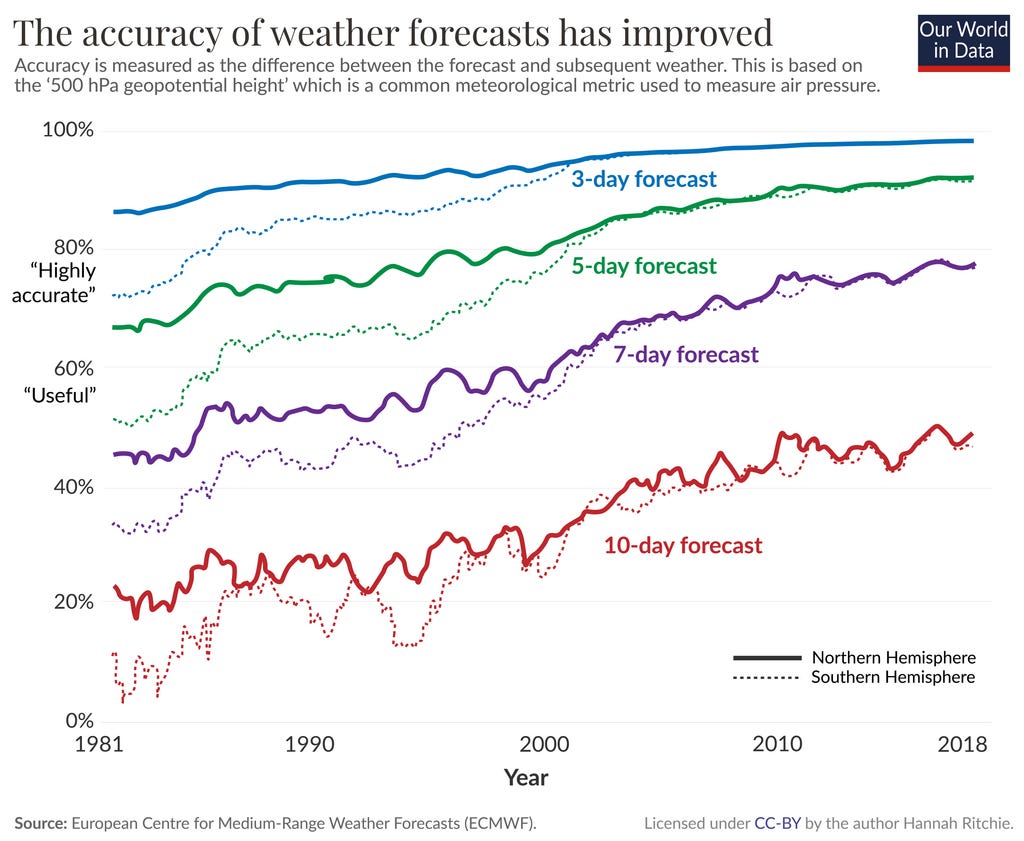
"But I don't use AI": 8 Sets of Examples of Everyday AI, Everywhere 🗣️
Sep 17, 202400:12:47Tap to summarizeI recently contacted someone who works in a non-technical profession to ask if I could interview them for “AI, Software, & Wetware”. Their initial response:“Not sure I would be of any help. I don’t even know what AI is.”And it’s obviously totally okay to not know what AI is or how it works under the hood! We don’t have to be auto mechanics to understand how to drive a car safely.And for our “AI, Software, & Wetware” interviews, I specifically WANT to talk to humans worldwide who DON’T write software or develop AI models for a living. Why? Because it’s actually very hard nowadays for most of us to get through a week, or even a day, of life without interacting in some way with a system using AI (artificial intelligence) or ML (machine learning). This episode shares concrete examples in 8 different areas of daily life to help folks see where and how AI is affecting our lives in ways that might not be obvious. 1. ‘Smart’ Cell Phone (smartphone)2. Social Media3. Streaming Movies or Music4. Shopping5. Traveling6. Health Care7. Weather Forecasting8. Web Browsing and SearchingBottom Line: The few examples in these 8 sections aren’t even remotely an exhaustive list of how AI and ML impact our lives today.If you can truly say that you don’t do any of these things, then maybe you don’t actually ever ‘use’ AI - congratulations, you’re a rarity nowadays, and I’d love to hear from you!Otherwise, congratulations, you’re an AI user too; welcome to the wild world of AI in 2024 and beyond! Agile Analytics and Beyond is a FREE, 100% reader-supported publication. To receive new posts and support my work, consider becoming a free or paid subscriber. Get full access to Everyday Ethical AI at karensmiley.substack.com/subscribe
Transcribe →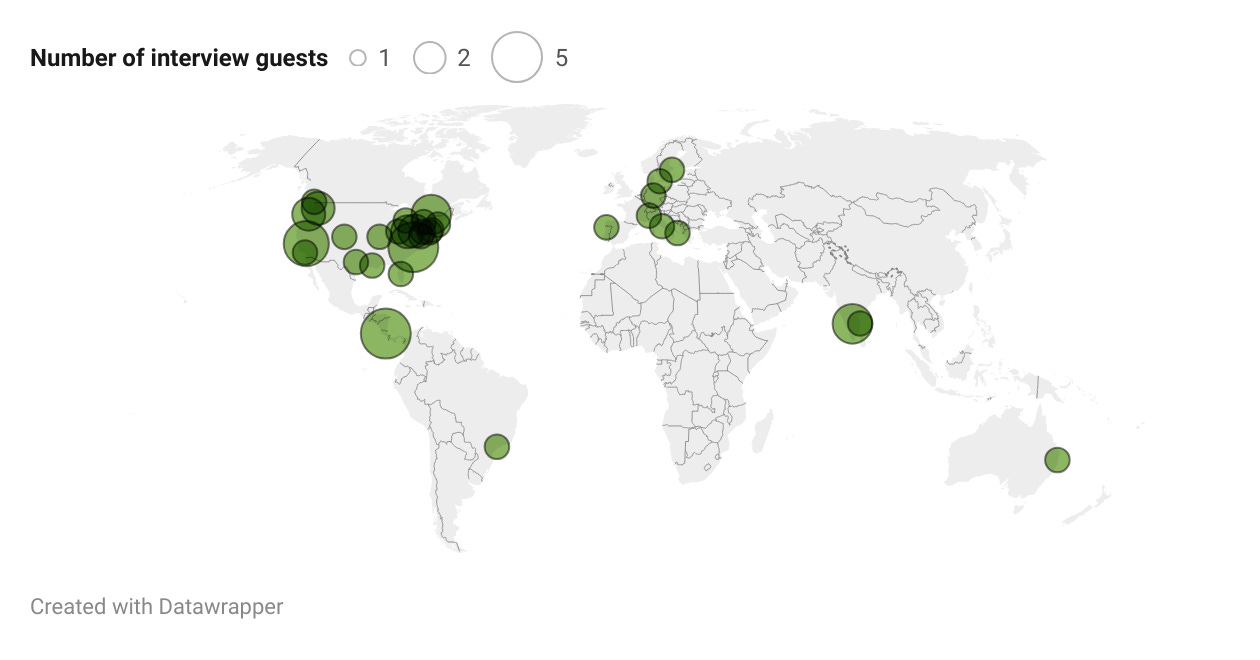
Mapping "AI, Software, & Wetware" interview guest locations 🗣️
Sep 6, 202400:03:57Tap to summarizeWhen I said I want to feature guests from all over the world to hear & share their views on AI and how it’s affecting their lives, I meant it. 😊 And that means I’m analyzing data on where committed and future guests for “AI, Software, & Wetware” are based (along with other demographics). Here’s a quick summary of how my global search for guests is coming so far, as of Sept. 5, 2024.The Substack article includes an interactive, zoomable view of the locations of interview guests. This dataset includes 53 guests for published interviews, completed interviews that are in production, and planned interviews.If YOUR area of the map is open or sparse, I’d love to chat with you about potentially featuring you as a guest! (anonymous or with credit, text or text+audio) DM or email me, or see these AISW Guidelines to learn more. Get full access to Everyday Ethical AI at karensmiley.substack.com/subscribe
Transcribe →
Using water and compute cycles to save lungs and lives 🗣️
Aug 28, 202400:06:27Tap to summarizeHere’s some good news about an AI tool I discovered today that adds real value to the world by improving accuracy and efficiency for diagnosing lung conditions from chest X-rays.This episode also includes some tips on the biggest myths about lung cancer, and a few things we can all do to reduce the hit it will take on us and those we love.For more information about lung cancer diagnosis and early detection, see lungevity.org, lungcancerresearchfoundation.org, and lcrfresources.org.This post is public. Please share freely to help raise awareness about lung cancer! Thank you. Get full access to Everyday Ethical AI at karensmiley.substack.com/subscribe
Transcribe →
Antidote to Neotoddlerism: Listening and Growing Up 🗣️
Aug 9, 202400:02:44Tap to summarizeA recent piece on "neotoddlerism" focused on dismay over HOW someone is protesting. It gives those feelings priority over WHAT they are protesting. The WHATs deserve more of our attention. And it's on us if the media focuses on the wrong things - the HOWs and not the WHATs - when they report on protests. We the people are “the system” that rewards this type of pandering by the media. We need to own fixing the system, together. Get full access to Everyday Ethical AI at karensmiley.substack.com/subscribe
Transcribe →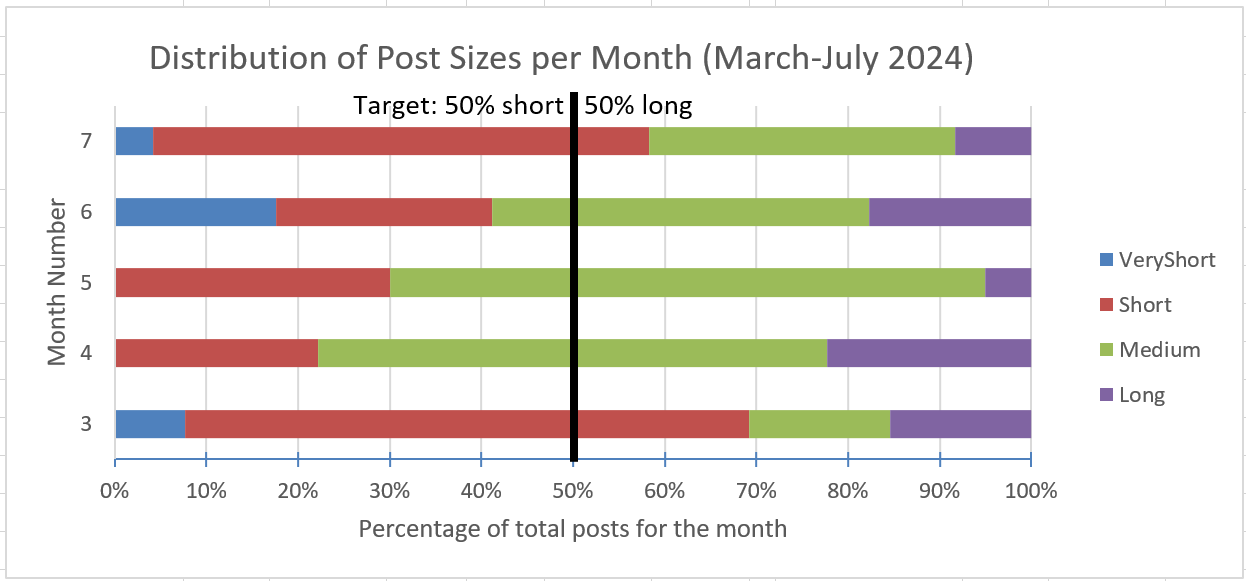
5 months in: Lessons learned on agile, data, and writing 🗣️
Aug 8, 202400:19:21Tap to summarizeI committed in March to doing (and sharing) a retrospective each month on how I’m doing vs. my “STELLAR” goals. Here’s what I’ve learned in my 5th full month on Substack, and what I’m going to do differently in August.How It StartedHow It’s GoingWhat’s NextThanks for reading Agile Analytics and Beyond! Subscribe for FREE to receive new posts (these retrospectives are monthly, in the agile section). Get full access to Everyday Ethical AI at karensmiley.substack.com/subscribe
Transcribe →
📣 "Humans of New York" for AI: real stories of people using AI, and AI using people 🗣️
Jul 27, 202400:02:56Tap to summarize📣 Coming soon: Announcing a new 'interview' series with personal stories on how AI/ML technologies are affecting the work and home lives of real people.AI technologies have great potential for good, as well as for great harm. We need to understand both. All of these real stories deserve to be heard.Do you have a story about how you're using AI & ML tools - or about how AI & ML companies are using you - that you'd be willing to share, anonymously or not? Message me and let's chat!We will start publishing these stories in August 2024 in our 6 ‘P’s in AI Pods newsletter under the People section. (Stories may also be shared on the 6P podcasts, only if the guest wishes). The series is called “AI, Software, and Wetware” and you can read more about it here. New interviews are being collected on this 6P Interview List page.Please heart, comment, restack, share, etc. to help me reach a diverse group of interview guests, on or off Substack. Everyone's experience with AI is different, and matters!This Agile Analytics and Beyond.episode is FREE and public, so feel free to share it widely!To be automatically notified when interviews are published, subscribe to 6 ‘P’s in AI Pods (all of it, or just the People section; instructions are here)! New posts are always FREE to read - no ads, no spam.Thumbnail image credit: Photo by Michal Czyz on Unsplash Get full access to Everyday Ethical AI at karensmiley.substack.com/subscribe
Transcribe →
"Equal rights aren't pie" 🗣️
Jul 25, 202400:16:30Tap to summarizeInsights and questions on why some people fear equity initiatives, why it's not a zero-sum game, and why equal rights for others isn't pie.Includes descriptions of 3 cartoons on gender inequality, Jane Elliott's famous seminar question about race, and two things we can all do to address these fears and biases, and help us all build a more equitable society.Like planting a tree and so many other things, the best time was 20 years ago, and the next best time is now. Get full access to Everyday Ethical AI at karensmiley.substack.com/subscribe
Transcribe →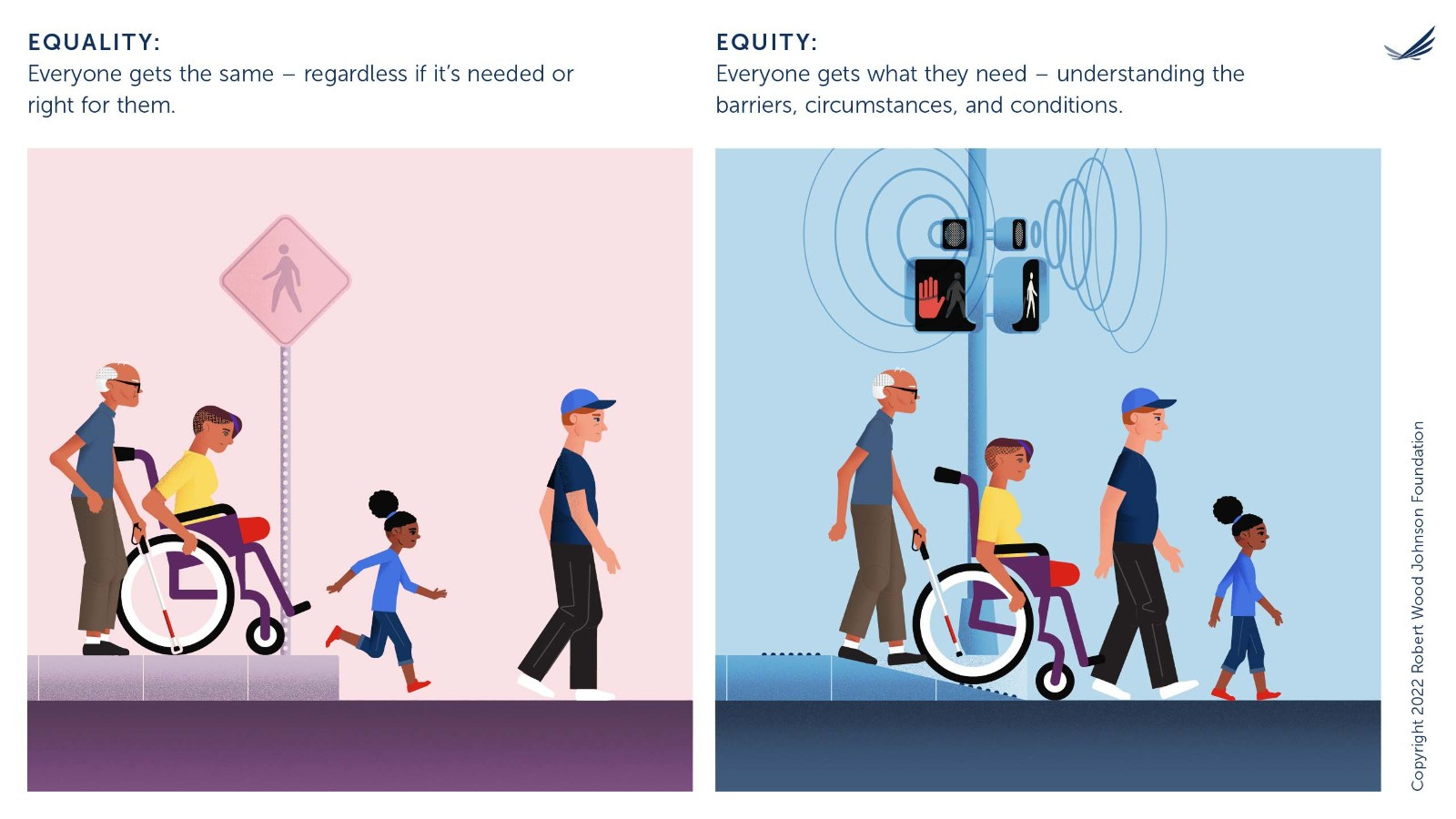
Baseball, bicycles, and crosswalks: better analogies & graphics for equality vs. equity 🗣️
Jul 24, 202400:09:21Tap to summarizeToday we're looking at the differences between equality and equity, and how the Robert Wood Johnson Foundation used feedback and data on an 'equality vs equity' analogy & graphic to improve on it twice. I'll cover 3 analogies: baseball games, bicycles, and a crosswalk.All images included in the online article and described in this episode are used with permission from RWJF and Raven Solomon Enterprises.Agile Analytics and Beyond is a 100% reader-supported publication. To receive new posts and support my work, consider becoming a subscriber! Get full access to Everyday Ethical AI at karensmiley.substack.com/subscribe
Transcribe →