Loading summary
Transcript1 lines
- [00:01]
A
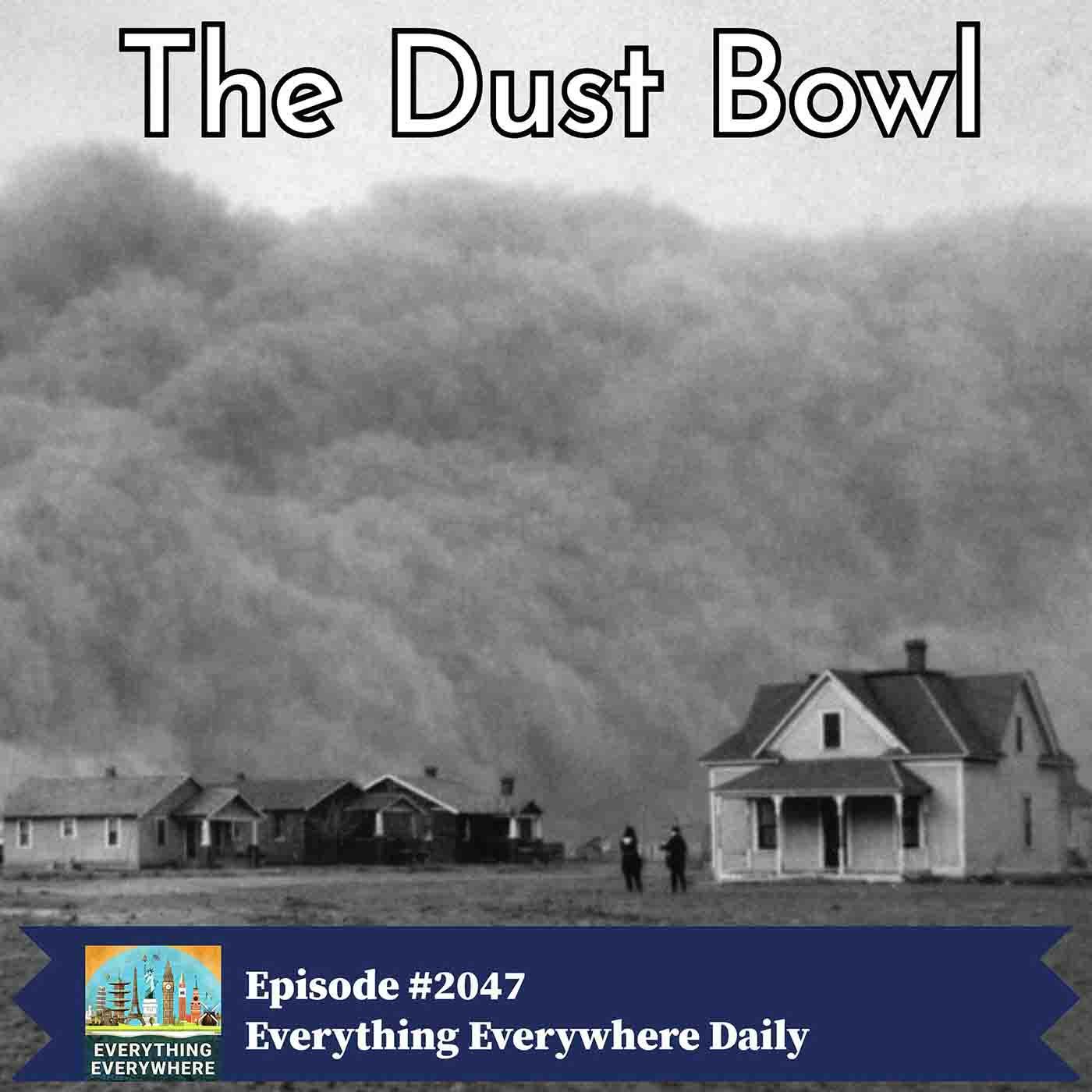
The Great Depression inflicted an economic disaster on the United States, driving employment to a staggering 25%. While urban areas faced widespread unemployment, poverty, and food scarcity, farmers in the Great Plains were grappling with an equally devastating the Dust Bowl. Shortsighted farming practices and historic droughts led to a decade of soil erosion, creating a series of suffocating dust storms that triggered a mass exodus from the region. Learn more about the Dust bowl, its causes, and its impact on this episode of Everything Everywhere Daily. This episode is sponsored by Mint Mobile. Everybody knows someone who insists on doing things the hard way. There's a friend who keeps paying for a subscription they forgot they had, or the one refusing to update their phone just because it still works. Mint Mobile exists purely to fix that problem. You get the same coverage, same speed, just without the inflated price tag. That's why I recommend Mint Mobile. For a limited time, get 50% off 3, 6 or 12 month plans of unlimited Premium Wireless Ready to stop paying more than you have to. New customers can make the switch today and for a limited time, get Unlimited Premium wireless for just $15 a month. Switch now@mintmobile.comeed that's mintmobile.comeed upfront payment of $45 for three months, $90 for six months or $180 for 12 month plan required $15 a month equivalent taxes and fees Extra initial plan term only. Over 50gb may slow when network is busy. Capable device required. Availability, speed and coverage varies. Additional terms apply. See mintmobile.com this episode is sponsored by Quint's. For months I have been telling you about the high quality products at great prices at Quint's. But I want to share with you a recent experience I had with them. I recently purchased a new laptop bag from Quince. I ordered it online and waited for it to arrive but it never showed up. It turns out the Postal Service lost it, not Quince's fault, but I went to their website to report it. I was able to contact a live customer service agent via chat. They confirmed the issue and had a new bag sent to me immediately. The entire process took about a minute. No hoops to jump through and no waiting. Quint's works directly with top factories and cuts out the middleman. So you're not paying for brand markup, just quality clothing. And they also happen to have amazing customer service. Refresh your wardrobe with quints. Go to quints.com daily for free shipping on your order and 365 day returns now available in Canada too. That's q u. I-N-E.com Daily free shipping and 365 day returns. Quints.com Daily. Life on the Great Plains has never been easy. The region faces a never ending cycle of droughts, blizzards, hailstorms, flash floods and tornadoes. Driven by Manifest Destiny, the Great Plains became a highway for westward pioneers. Many of these pioneers believed the Great Plains offered the agricultural promise that they sought. The Homestead act of 1862 offered opportunities for western migration in the form of free land to those who migrated to the United States or who were living in the East. Under the act, anybody could claim 160 acres of land if they committed to cultivating the land, living on it for five years, and building a home. These homesteaders flocked to the west, claiming more than 270 million acres. Technological breakthroughs in the late 19th and early 20th centuries made farming in the region possible. Homesteaders were motivated by advertisements in Eastern newspapers highlighting the possibility of turning a homestead into a Paradise using the McCormick Reaper or new steel plows powered by modern tractor technology. Despite the challenges, the upside appeared worthwhile for many settlers during the late 19th and early 20th centuries. The price of wheat, the primary crop grown on the Great Plains, remained steady after the panic of 1893 and even experienced a brief boom in the late 1890s. The outbreak of World War I changed the fortunes of the Great Plains farmers. The price of wheat nearly tripled during the war years, rising from $0.87 a bushel in 1913 to $2.12 a bushel by the time the United States entered the war in 1917. The struggles of farming in the Great Plains were finally bearing fruit. A migration of eager farmers, armed with heavy loans and new equipment, flocked to the region determined to gain their piece of the fortune. Seeking to capitalize on surging prices, farmers in the region doubled down on their investments. The price of wheat drove a movement called the Great Plow Up. Driven by the mantra the rains follow, the plow farmers plowed under nearly 32 million acres of sod between 1910 and 1930. Most of the plowing was done by new settlers to the region who lacked experience with the region's ecosystem and climate. The end of World War I saw the inevitable decline in wheat prices. As the war ended, European farmers returned to their fields and global demand declined and wheat prices collapsed. Faced with falling prices, farmers were faced with two choices. Option one, they could cut back and reduce acreage to reduce supply and drive prices back up, or option two, they could plant more and rely on the increased supply to offset the damaging decline in prices. Most farmers, not surprisingly, chose option number two, and the environmental consequences were dire. The plan might have worked, but rainfall in the region had been steadily declining. And by 1933, a full blown drought had set in on the plains. Plowing the grass cover in the region was a dangerous game. When they plowed up the indigenous grasses on the plains, they removed the root system that had held the soil in place. The region's soil is notoriously light and with minimal tree cover to block the Great Plains powerful winds. A prolonged drought spelled disaster. The Great Plains combination of persistent fires, a dry climate and relentless winds impeded tree growth ever since the Native Americans had first settled there. This lack of trees, coupled with the over plowing, accelerated the erosion crisis of the 1930s. In their quest to capitalize on the high wheat prices During World War I, the farmers of the Great Plains pushed the land beyond its limits. And there was a steep price to pay for this miscalculation. In 1932, 14 dust storms occurred, many lasting for days, and that number climbed to 38 dust storms in 1933. The dust storm's impact on plants was catastrophic. During a long storm, the plants were literally sandblasted. They were often so dried out by the wind that the outer layer of the plant's flesh was ripped off, making a natural recovery impossible. Storms also disrupted photosynthesis. In storms lasting more than 24 hours, the dust and debris in the atmosphere blocked sunlight from reaching the plants. Unlike on a cloudy day, when humidity might be high and plants are offered an alternative water source, in a dust storm, the air is so dry that it suffocates the plants. The severe dust storms literally buried plant life, often forming massive dunes that could occasionally reach the height of a barn. Consequently, the vegetation could not survive the onslaught of the dust. In 1934, the storms were intensifying and the damage statistics from that year paint a grim picture. According to the Yearbook of agriculture, erosion rendered 35 million acres of farmland incapable of crop production. An area the size of Wisconsin. The yearbook also suggested that an additional 100 million acres had lost most of their topsoil. An area the size of California. The storm that most people remember from the dust pole was unleashed on Sunday, April 14, 1935, a storm that became known as Black Sunday. It was already the 49th storm of the year, and and summer hadn't even started before Black Sunday. The most famous storm had occurred just a month earlier. Shortly after President Franklin Roosevelt's advisor, Hugh Bennett, took the podium in the House of Representatives to call for action to address the dust storms, storms from several days earlier actually reached the nation's capital, leaving Bennett only to say, see, this is what I've been talking about. Black Sunday, which was the worst dust storm in American history, was pummeled the panhandles of Texas and Oklahoma. The day had started with beautiful weather, but by late morning, two fronts had collided, gusting up to 50 miles per hour and dropping the temperature by 30 degrees. What surprised even veteran observers about this storm was the color. It was black as night. Dust bowl survivors always said that you could tell where a storm originated from by the color of the storm. Gray storms originated in Colorado, the red storms in Texas and Oklahoma, and the black storms in Kansas. Eva Carlson, a survivor of the storm, told the New Republic, people caught in their own yards grope for the doorstep. The Dust bowl got its name in the wake of the Black Sunday storm, when Associated Press writer Robert Geiger wrote a series of articles on the disaster and referred to what he had seen as the Dust Bowl. The spring of 1935 was the worst part of the crisis. Dalhart, Texas Survivor Melt White recalled the misery saying, in the spring of 1935, the wind blew 27 days and nights without quitting. The storm's effect on animals were as profound as those on plants. Cattle, a lifeblood of the region, suffered terribly during the Dust Bowl. During intense storms, the cattle were blinded by the relentless wind and dust. Many cattle suffocated from the storm's power. Cattle that were lucky enough to survive the storm often died of starvation because the winter wheat they depended on didn't survive and because most ranchers could not afford to feed their cattle hay. One animal that did flourish in the Dust bowl was the jackrabbit. The jackrabbit population was so prolific and damaging to the region that communities organized jackrabbit drives. Hundreds of people gathered, often after church and marched towards the hundreds of thousands of jackrabbits and caught them in pens and whacked them over the head with small bats or heavy sticks. What little grain was left after the storms was often attacked and eaten by the rabbits. After the Black Sunday storms, the government finally decided to intervene because the suffering was now immense. Aside from the economic costs, the greatest scourge was dust pneumonia. Death certificates from the time didn't list this as a cause of death. Instead, they just called it pneumonia. But doctors in Texas and Oklahoma estimated that the toll was in the hundreds. In 1935 alone, children were particularly susceptible and were kept under the watchful eye of nervous mothers. During the Dust bowl, children often missed school due to fear of storms. Schools across the Texas panhandle reported widespread absenteeism as parents kept their children at home to protect them from dust clouds. Just two weeks after Black Sunday, the Roosevelt administration labeled the dust storms a national menace and established the National Soil Conservation Service under the leadership of Hugh Bennett. Bennett launched a campaign to reverse the effects of the Dust Bowl. The Roosevelt administration produced films that were candid in explaining the causes of the storms. They explained that plowing the region's virgin soil made it vulnerable to the extreme weather. The films also highlighted how their relentless pursuit of higher yields had overtaxed the land, resulting in permanent damage across the plains. One of the most significant impacts of the Dust bowl was mass migration out of the region. Estimates of migration indicate that nearly 2.5 million people left the Great Plains, often packing all they could into their jalopy cars. They fled with what little hope they had and left to California, often to the Salinas Valley, the home of author John Steinbeck. This migration had enormous impacts on California. The arrival of an estimated 1 million Oklahomans, known as Okies to California significantly affected California's socioeconomic conditions. The arrival of this many people in such a short time depressed wages and created a shortage of land. For many, the optimism of California gave way to the stark reality of a state that lacked the infrastructure to absorb so many workers so quickly. This migration of people from the Great Plains was documented in John Steinbeck's famous novel, the Grapes of Wrath. The Dust bowl did not end until the rains returned in 1940 and the government programs to reshape the region's geography could finally take hold. President Roosevelt's New Deal initiatives focused on several programs pertaining to the Dust bowl and its impacts. In addition to Bennett's soil conservation programs, new farming strategies such as contour terrace farming were introduced to reduce soil erosion. The government also undertook to improve tree cover in the region as the Works Progress Administration planted more than 200 million trees. The goal of the massive tree planting campaign was to reduce wind via windbreaks that had such devastating effects. Despite the massive migration of people out of the Great Plains, not everyone left. Many people were determined to stick it out and survive. The Last Man Club was formed in Texas during the Dust bowl by a group of local men who pledged to remain in their drought stricken town regardless of how severe conditions became. Even as many neighbors abandoned their farms and headed west, they agreed that whoever was the last standing member would close the club and and symbolically turn out the lights. The Dust bowl was a disaster that befell the people of the Great Plains in the midst of the tragedy that was the Great Depression. It was a one two punch that caused millions of people to leave their homes, resulting in a demographic transition that can still be seen today. In the almost 100 years since the storms of the 1930s, there have been other droughts, some of which have been just as bad as but thanks to the lessons learned, the region has never had to experience another Dust Bowl. The executive producer of Everything Everywhere Daily is Charles Daniel. The associate producers are Austin Otkin and Cameron Kiefer. Research and writing for this episode was provided by Joel Hermanson. Today's review comes from listener Papaduck704 from Apple Podcasts in the United States. They write Completionist Club in the can. With the episode on canned food, I emptied the cupboard of previous episodes and became eligible for the Completionist Club. I drive a lot for my work and this podcast helped me to make the time behind the wheel go a little faster. So with that goal in the can, tell me where the closest clubhouse to Gastonia, North Carolina might be and what amenities await me there. I'm sure there is pork barbecue, but is the sauce tomato or vinegar based or do you have both? Well, thanks Papaduck. All of the local Completionist Club chapters around the world will serve dishes in accordance with the tastes of their local members. Which type of barbecue sauce you find will depend on which clubhouse in the Carolinas you visit. We have not only tomato and vinegar based sauces, but you will also find mustard based sauces in parts of South Carolina. Remember, if you leave a review on any of the major podcast apps, you too can have it read on the show.