Loading summary
Transcript1 lines
- [00:00]
A
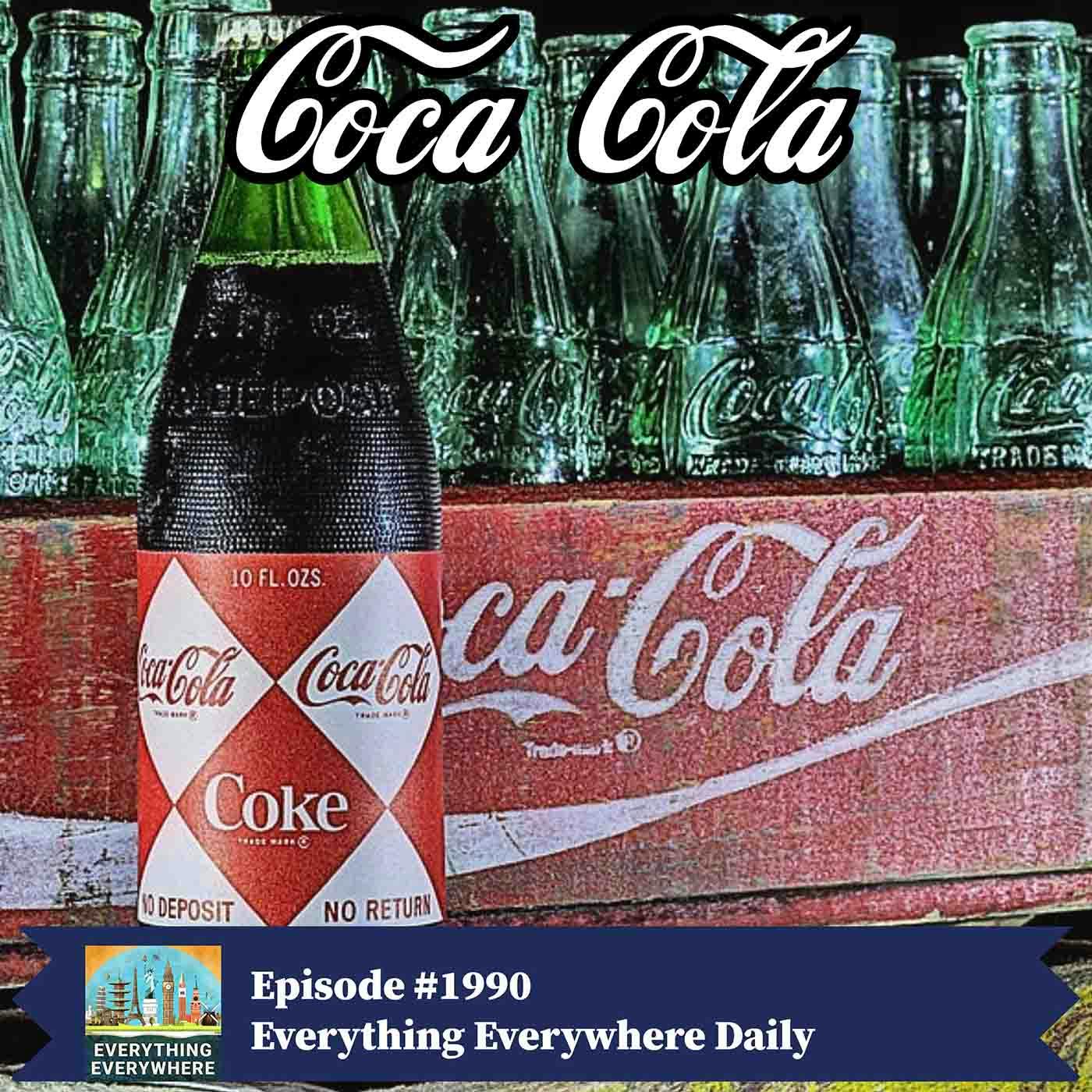
Perhaps the most well known brand in the entire world is Coca Cola. The company has become a global powerhouse in the soft drink industry through its original cola formula and through its visual branding. Its products can be found in every country in the world save for three, and it's one of the most consistently profitable corporations on earth. Learn more about the history of the Coca Cola Company and how it conquered the world on this episode of Everything Everywhere Daily. This episode is sponsored by Aura Frames. I've told you how much I love Aura Frames. However, I'm not the only one. It was selected three times as one of Opera's Favorite Things and named the 1 digital picture frame by Wirecutter, the Strategist, Wired Magazine and PC Magazine. It was also recommended by Good Morning America, the Today Show, Forbes, the Wall Street Journal, and more. With auraframes, you can set it up quickly, update it from anywhere, and be sure that the images will be displayed in the highest quality possible. If you want to give the gift of memories this holiday, there might be no better way to do it than with auraframes. For a limited time, save on the perfect gift by visiting auraframes.com to get $35 off Aura's best selling carver mat, named one by Wirecutter by using promo code daily at checkout. That's Aura Frames.com promo code daily. This deal is exclusive to listeners and frames sell out fast, so order yours now to get it in time for the holidays. Support the show by mentioning it at checkout. Terms and conditions apply. This episode is sponsored by Quint's. Temperatures are dropping and the holidays will soon be upon us. This is when you want your wardrobe to just work stuff that looks sharp, feels good and you'll actually reach for. That's why I go with Quint's. I recently purchased a Mongolian cashmere sweater at Quince. You can pick one up for $50 when you normally drop $200 or more for the same thing. They also have great denim pants and chinos as well as fantastic down jackets as well as wool and leather coats. By partnering directly with ethical factories and top artisans, Quinn's cuts out the middleman to deliver premium quality at half the cost of similar and often even bigger discounts. Get your wardrobe sorted out and your gift list handled with Quints. Don't wait. Go to quince.com daily for free shipping on your order and 365 day returns. Now available in Canada too. That's Q-U-I-N c e.com daily free shipping and 365 day returns quince.com daily. The origins of Coca Cola date back to May 8, 1886 in Atlanta, Georgia. A pharmacist by the name of Dr. John Stith Pemberton created the beverage after serving as a soldier during the U.S. civil War. Fighting for the Confederacy. During the war, he was wounded and developed an addiction to morphine. His goal in making the beverage was to find a substitute for morphine. Pemberton's first attempt at a beverage was completed in 1885. It was sold in his drugstore as Pemberton's French wine Coca and claimed to be a nerve tonic. Its key ingredients included alcohol in the form of wine extracts of coca leaves containing small amounts of cocaine and kola nut, a natural source of caffeine. It was inspired by European Coca wines and was the direct precursor to what would later become Coca Cola. Pemberton's recipe for his tonic was changed in 1886 following the Prohibition of alcohol in Atlanta, forcing him to change his recipe and make his new beverage non alcoholic. With this change, he created a new drink that he called Coca Cola. Pemberton marketed the beverage as a temperance drink which appealed to the popular temperance movement. The first sales of Coca Cola were made in Atlanta's Jacobs Pharmacy. The drinks were sold for 5 cents a glass and received positive reviews, with many customers finding the beverage delicious and refreshing. Coca Cola was sold in pharmacies at the time because they sold carbonated water, which was widely believed to be good for people's health. Pemberton marketed the beverage as a non prescription medicine that could cure nerve disorders, morphine addiction, indigestion, headaches and erectile dysfunction. That, plus the taste, led to the increased popularity of the drink. Pemberton began to expand his products. By 1888, three versions of Coca Cola were being sold by three different companies. Additionally, Pemberton had verbal agreements with four other businessmen who acquired a stake in the company. However, Pemberton ensured that the primary name, Coca Cola, remained under his control along with his son. The other businessmen were allowed to use the formula for the drink, but not the name. By giving his son Charlie control over the Coca Cola name, Pemberton effectively owned the Coca Cola brand. And this was a massive thorn in the side of other shareholders, in particularly Asa Candler. Candler had bought a third of the interest in Coca Cola's formula, allowing him to sell the beverage. But he couldn't sell it under the same name. Instead, Candler sold the drink as Yum Yum or Coke with a K. Chandler hoped to get a stronger legal claim over Coca Cola, something he made moves to obtain following the death of John Pemberton. Charlie Pemberton was an opium addict and an alcoholic, and Candler took advantage of his problems. In 1889, Candler approached the Pemberton family and purchased the name and formula for $2,300. With this purchase, Candler had complete control over the Coca Cola Company. Many sketchy details about this deal were revealed in later decades. One of the original co owners of The Coca Cola Company in 1888, Margaret Dozier, claimed that her signature on the bill of sale was forged. Later analysis of other documents signed during the transfer suggested that John Pemberton's signatures were also forged, a claim that Charlie supported. Once Candler had consolidated control, he formally incorporated the Coca Cola Company in Georgia in 1892. This step transformed Coca Cola from a loosely managed medicinal syrup company into a centralized corporation with clear ownership, standardized production and a defined brand identity. Incorporation also allowed the company to protect its trademark, expand distribution and attract capital in a way that had not been possible under the earlier informal or arrangements. When the company moved to their new offices in 1910, all the early Coca Cola Company records were conveniently destroyed. Following several more years of growth, The Coca Cola Company was purchased in 1919 by a group of investors for $25 million. And with this, the company went public. Coca Cola's name reveals two of its original Coca in reference to Coca leaves and Cola in reference to kola nuts. The currently listed ingredients for Coke include carbonated water, sugar or high fructose corn syrup, caffeine, phosphoric acid, caramel color and natural flavoring. There is no Coke or Cola currently listed on the ingredients. The former ingredients in the drink looked a lot different because one of the original parts of the main recipe was cocaine. The cocaine came from coca leaves. Pemberton's original formula contained about 5 ounces of coca leaf for every gallon of syrup. Candler reduced the recipe to roughly 1/10 of the original amount after he took over the company. Making a glass of Coca Cola during that time contained about 9 milligrams of cocaine. The fresh coca leaves which were responsible for the cocaine were removed from the beverage entirely in 1903. They instead changed to using spent leaves. These leaves were what were left over following a cocaine extraction process. This left only traces amounts of cocaine in the drink. Later in 1929, Coca Cola decided to make a change and start using cocaine free coca leaves. Today this can only be done at a single plant in New Jersey. This facility is authorized by the US Government to import and process coca leaves. These leaves are obtained from Peru or Bolivia, where they extract cocaine from them. The processed cocaine is then sold to a single medical company that experiments with and purifies the drug for medical use. Weirdly enough, the kola nuts also caused issues for the Coca Cola Company. In the early 1910s, the US government sued the Coca Cola Company in the case of the United States versus 40 barrels and 20 kegs of coca Cola. This case went all the way to the Supreme Court. The caffeine was an issue because the Food and Drug Administration added caffeine to the habit forming or deleterious substances list. This meant that the company would need to list caffeine on the product's label. Coca Cola lost the case, reduced the amount of caffeine in its drinks, and offered to pay a settlement to the government. This helped them avoid any future lawsuits. A modern serving of Coca Cola today contains about 46 milligrams of caffeine per 12 fluid ounces. The exact formula for Coca Cola is considered a trade secret. Very few employees are ever granted access to the recipe, which helps play into the brand's marketing. Because the beverage became so popular, competing brands eventually popped up. These competitors led to the creation of a new beverage category known generically as Cola. The natural flavorings are what make the secret recipe and what differentiates Coke from other colas. These ingredients are kept in a vault located in Atlanta. There is a popular belief that only two executives know the exact recipe for the original Coca Cola. The secret recipe is considered to be a big deal. There was actually a heist in 2006 committed by a secretary to a global brand director. The thief, Joya Williams, stole the recipe and offered it to Coca Cola's rival Pepsi for $1.5 million. Fortunately for Coca Cola, Pepsi gave this information to the FBI. The authorities set up a sting operation posing as Pepsi executives and arrested Williams and her accomplices. The recipe of Coca Cola is such a big deal that when the company tried to change it, the public grew outraged. New Coke was introduced in 1985, roughly a century after the company's founding. The drink was introduced following a series of taste tests conducted on the new recipe. The test showed that New Coke was more popular amongst the testers than the original recipe and amongst competitors. Confident in the change, Coca Cola unveiled New Coke, Expecting the public to love the drink. And that was not the case. Management was caught completely unprepared for the public's visceral reaction to the change. Caving to the backlash, Coca Cola eventually re Released the original beverage under the name Coca Cola Classic. New Coke remained on sale until 2002, when the beverage now called Coke 2 was finally discontinued. The entire New Coke fiasco was so legendary that it'll be the subject of its own episode in the future. One of the most iconic aspects of Coca Cola are its bottles. The Coca Cola bottle is considered a classic of product design and has been called the perfect liquid wrapper. The bottle's design, similar to the company's logo, has now become a pop culture icon, appearing in art, film and music. But how did something as simple as a bottle become so popular? As previously mentioned, during Coca Cola's first 13 years of life, the soda was sold as a fountain drink rather than being bottled. And the brand's popularity during those 13 years had been established with the beverage being sold in fountains in every US state. Capitalizing on its popularity, the company decided it was time to bottle the beverage so it could be consumed outside the constraints of soda fountains. Candler, still the owner of Coca Cola, decided to sign a contract with two entrepreneurs giving the duo exclusive rights to bottling Coca Cola for just $1. Bottling the soda proved to be a smart choice. By the 1920s, over 1,200 Coca Cola bottling plants had been opened, dramatically increasing sales of the product. The early Coca Cola bottles were fairly simple in design. Straight sided bottles with the Coca Cola logo stamped on them. This early design proved problematic as competitors copied it, creating confusion amongst consumers about which beverage they were drinking. Seeing this issue, the company decided to change its packaging to make it more distinct. To do this, they set out to make a new bottle. They launched a competition to find the best design, which was won by the Root Glass Company of Indiana. The team chose to make the bottle inspired by the shape of a Coca bean with long ribbed sides. The bottles were green because the company used sand from Indiana to make the glass. Since then, the bottle has slightly evolved in size and shape, but the essence of the original bottle with the curved sides remains the same. Coca Cola's logo dates back to the company's founding. John Pemberton had his bookkeeper Frank Robinson design the company's logo in 1885. Robinson was the one who developed the iconic cursive script known as Spencerian which we associate with the beverage today. Robinson's original design hasn't really changed over the years. There are aspects of the logo that were added later, like the addition of red light refinements to the script and a ribbon to give the design more of a flow. But the essence of the logo has remained the same from its conception. The decision to keep the logo similar to the one used in 1885 is a significant part of the brand, and it's helped maintain the Coca Cola Company's charm over the years. One way this is done is through the use of the color red. Red symbolizes warmth, excitement and energy. It's also used for boldness to help the logo stand out. Another reason why the Coke logo uses red is to invoke a sense of urgency and passion. Red is often associated with emotion, so it creates an unconscious urge to buy the beverage for refreshment. The choice of color also played into visual displays. Whether on clothing or on signs, the logo stands out while also cementing itself in pop culture. The reason why we associate Santa Claus with the color red is primarily due to the Coca Cola Company, which created the modern image of Santa in the 1930s. Keeping the logo the same has made Coca Cola one of the most recognizable brands in the world, with an estimated 94% of the world's population Recognizing the Logo from a Business standpoint, Coca Cola now does business in almost every nation on earth. As of the recording of this episode, the company does business in every country at some level, save for North Korea, Cuba and Russia, and even in those countries it may be imported and found in certain stores. One of the reasons why Coca Cola has such a global reach is World War II. During the war, the company promised that every US serviceman could buy a Coke for just 5 cents. To do this, they opened bottling plants around the world which were later used to meet consumer demand after the war. Without any exaggeration, I have seen Coca Cola products in every country I've been to. Regardless of whether you like their product or not, you have to acknowledge the success of Coca Cola. It regularly tops lists of the world's most well known brands. Yet this global behemoth company is all due to one 19th century pharmacist who tried to create a beverage that would help him kick his addiction to morphine. The executive producer of Everything Everywhere Daily is Charles Daniel. The associate producers are Austin Otkin and Cameron Kiefer. Research and writing for this episode was provided by Olivia Ashe. My big thanks go to everyone who supports the show over on Patreon. Your support helps make this podcast possible and I also want to remind everyone about the community groups on Facebook and Discord. This is where everything happens that's outside of the show. As always, if you leave a review on any major podcast app or in the above community groups, you too can have it read on the show.