← Everything Everywhere Daily: History, Science, Geography & More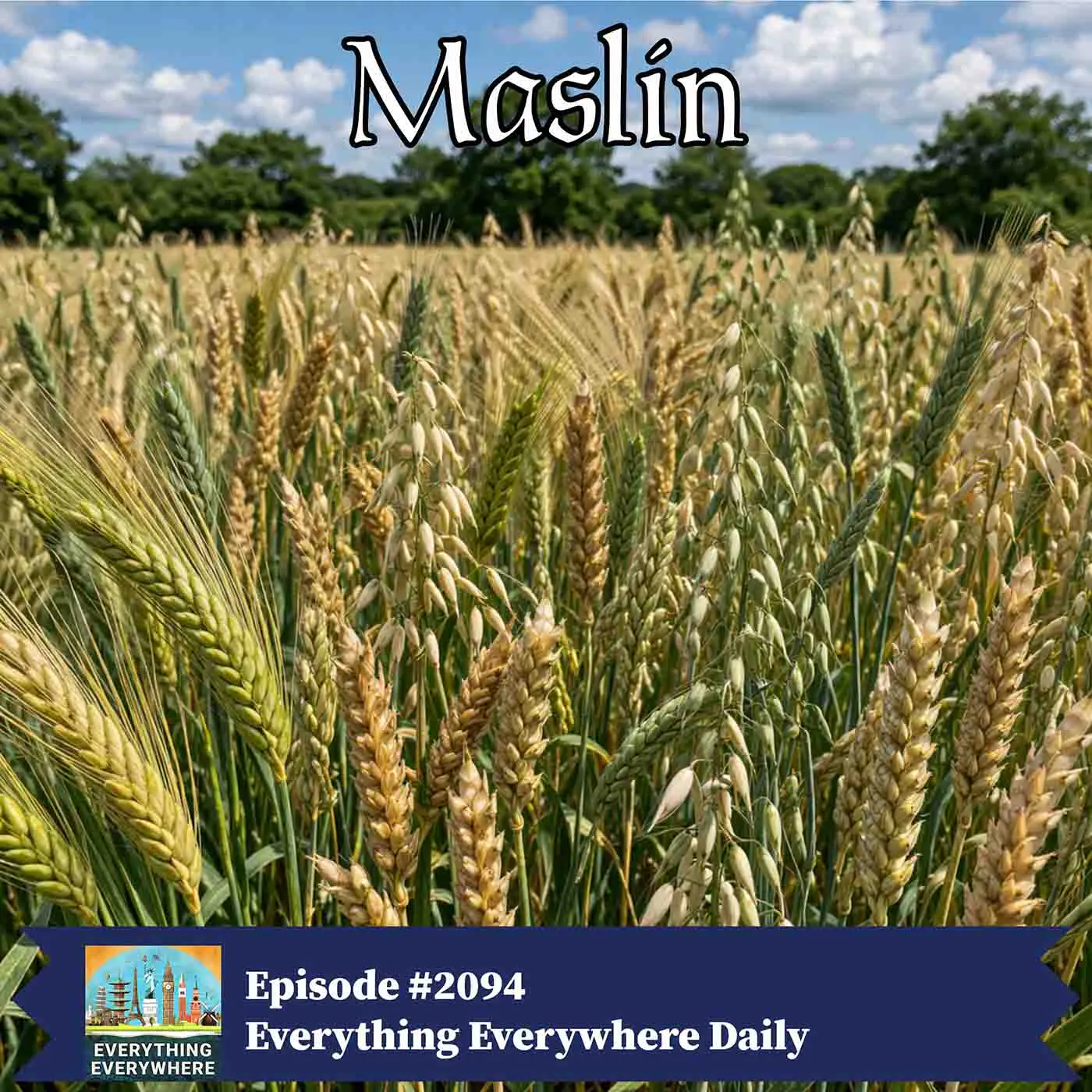
Everything Everywhere Daily: History, Science, Geography & More
The Rise, Fall, and Possible Rise of Maslin Agriculture
00:14:37
Loading summary
Transcript1 lines
- [00:00]
A
For thousands of years, farmers didn't just plant one crop, they planted many together in the same field. This practice, known as Maslin agriculture, once fed entire populations and offered a built in defense against famine and failure. And then, almost everywhere, it vanished. But today, as modern agriculture faces new challenges, this ancient method is quietly making a comeback. Learn more about Maslan agriculture on this episode of Of Everything Everywhere Daily. This episode is sponsored by Audible it's time to Believe in the Hail Mary, one of the most talked about science fiction adventures of the decade. Project Hail Mary by Andy Weir is now on the big screen, and there's never been a better moment to experience the audiobook that started it all. Ryland Grace is humanity's last hope. Alone in space with no memory of how he got there, he must solve an impossible scientific mystery before the Earth is wiped out forever. What follows is a smart, thrilling and surprisingly emotional journey that blends hard science with non stop suspense fans. Favorite narrator Ray Porter delivers an unforgettable performance, balancing humor, heart and escalating tension as the stakes grow higher with every chapter. Part scientific puzzle, part interstellar adventure, Project Hail Mary is a story about curiosity, intelligence, ingenuity and survival against impossible odds. Now that the blockbuster movie has finally arrived in theaters, there's never been a better time to start listening to the universally acclaimed audiobook Project Hail Mary. Listen. Watch Save the World Start listening today@audible.com Hailmary this episode is sponsored by Fast Growing Trees. Spring is here and that means it's time for planting and landscaping. And if you want to make things easy on yourself, check out fitness fastgrowingtrees.com Fast growing trees is America's largest and most trusted online nursery with thousands of trees and plants and over 2 million happy customers. They have all the plants your yard or home needs, including fruit trees, privacy trees, flowering trees, shrubs and houseplants, all grown with care and guaranteed to arrive healthy. Right now, they have great deals on spring planting essentials, up to half off on selected plants, and listeners to my show get 20% off their first purchase when using the code daily at checkout. That's an additional 20% off. Better plants and better growing at fastgrowingtrees.com using the code daily at checkout fastgrowingtrees.com code daily now's the perfect time to plant. Let's grow together. Use Daily to Save Today Offer is valid for a limited time. Terms and conditions may apply. I'm guessing that most of you might not be familiar with the term Maslin or what Maslin is With respect to agriculture, the general definition of maslin is a mixture composed of different materials. With respect to this episode, it has a more specific meaning. It is a mixture of different sorts of grain, such as wheat, rye, barley, or oats. This seems like a very simple thing, and it is, but its historical implications are profound. Unlike what most people envision, ancient farmers usually didn't have a field of just one type of grain, as they do today. Ancient peoples intermingled their cereal crops. Maslin agriculture made sense to ancient and medieval farmers because it solved multiple problems all at once, especially in a world without modern inputs, insurance, or reliable weather forecasts. Maslin farming involved several plant species growing together in a symbiotic relationship where the crops support one another. This wasn't a case of having a row of one crop and then a row of another crop. Ancient farmers would have a bag containing various grain seeds all mixed together. They would then toss them onto their field with their hands in a technique known as broadcasting. The seeds would land randomly with wheat, rye, barley, or whatever else they might have growing right next to each other. In the same way that a forest contains many different types of trees, maslin farming contains many different types of crops. In a forest, we'll find an oak tree next to a maple, adjacent to a birch or an elm. Each of these trees offers unique traits that ensure not only their survival, but the survival of the entire forest. One tree may need less sunshine or water. Its roots may grow deep instead of wide. And this diversity lets each plant meet its needs while coexisting with the others. Maslin farming emerged after the agricultural revolution in the Fertile Crescent and was first practiced across Mesopotamia. The very first farmers naturally found crops intermingled when they switched to planned planting. Besides its Mesopotamian origins, Egyptian farmers also used it. Egyptian farmers often used emmer and barley blends to brew beer. The Egyptians stumbled upon one of the great secrets of using different grains to add complexity and depth to beer's taste and mouthfeel. Ancient and medieval farmers weren't trying to maximize yield under ideal conditions. They were trying to survive in uncertain times. Maslin agriculture worked because it traded a bit of peak efficiency for resilience, adaptability, and reliability. In their contexts, that was the smarter strategy. In modern monoculture agriculture, a single pest or weather event can wipe out an entire crop. Different crops vary in their resistance to drought, pests, and moisture. If something affects one crop, such as wheat, it might not affect another crop, such as rye, quite as much. Moreover, the fact that everything is mixed together also provides an element of Protection Modern systems use rows of a single type of grain. If a pest or fungus strikes, these rows help it spread quickly across the field. A fungus can spread from host to host without any interference. In a maslin farming environment, however, the loss would be far less severe. Proper mixing and balancing of grain blends can build natural immunity to disease, fostering what agroscientists call systemic resilience in an ecosystem. In a maslin field, for example, wheat stalks may be affected by a fungus, but as spores move, they would reach a non host plant and the disease wouldn't spread any further. Maslin fields can face some losses, but the diversity of grains helps absorb and limit the damage. Commingled planting also helps fields avoid nutrient fatigue when properly combined. Wheat, oat and barley all help the soil in different ways. For example, oats have deeper roots than those of a typical cereal grain, accessing nutrients at a different level in the soil. This can promote a healthier root system in wheat and barley, which don't have to then compete with the oat roots. A key illustration of this principle could be seen in the Dust Bowl's destruction of the monoculture wheat crop. If Great Plains farmers had planted a more diverse selection of crops, they may have been able to avoid some of the devastation, at least in the early stages. Stages of the Dust Bowl Oats and barley respond differently to arid climates, so more ground cover from a greater diversity of crops may have stalled the intense erosion seen during the Dust Bowl. Maslin farming also may solve a problem that plagues almost every gardener on the weeds. Masland farming uses plants with differing growth patterns, so the ground cover provided by multiple grains can keep weeds at bay and eliminate or reduce the need for herbicides. Even in the Americas, prior to the arrival of the Europeans, a muslin like system was used in the form of the three sister crops. The three Sisters system, developed by many indigenous people of North America, involved maize, beans, and squash grown together in the same plot. These crops are intentionally interplanted because they support each other. Corn provides a structure for the beans to climb. Beans fix nitrogen in the soil, and squash spreads along the ground to suppress weeds and retain moisture. It isn't a traditional cereal maslin, but the same principles apply. Maslin fields could often be harvested together and used without strict grain separation. The resulting mixed grain could be milled into flour for bread or used as animal feed. This flexibility fits well with subsistence farming, where households need options rather than standardized products. Maslin bread made from mixed grains often had a broader nutritional profile than pure wheat bread. Rye added Fiber and micronutrients, creating a more complex flavor. In many regions, this wasn't just practical. It became a staple food culture. So there were a host of reasons why maslin farming was practiced in the ancient world. It was a way to reduce risk and avoid disaster that could have led to a famine for a family, a village, or a nation. So if maslin farming made so much sense, why did it stop? What brought about the rise of monoculture agriculture? Maslin agriculture didn't disappear because it failed. It disappeared because something more efficient, at least on paper, replaced it. One cause was the rise of cash crops. Europeans introduced cash crops to Asia and Africa. Things like rubber, indigo, sugar, and tea became the primary crops grown in colonies. These crops were almost always grown as monocrops. The goal was to maximize revenue by maximizing yields. As such, they were susceptible to occasional crop failures. For example, the indigo crisis, caused by years of drought in the 1870s, triggered one of the worst famines in history. Indian indigo planters were not allowed to cultivate food. They had to buy food from the British with their indigo profits. So if the indigo crop failed, they had no money for food. These monocrop techniques eventually spread into grain production. The biggest shift came with the rise of modern industrial farming. As agriculture mechanized in the 18th and 19th centuries, especially in places like England, farmers began favoring single crop systems that could be planted, harvested, and processed uniformly. Mixed fields of wheat and rye didn't fit well with new machinery, especially if the grains ripened at slightly different times. At the same time, markets were changing. Grain buyers, millers, and bakers increasingly demanded consistency. Standardized flour made it easier to control baking results, price commodities, and trade at scale. Maslin, by definition, produced variability, which became a liability in a system built on uniformity. There was also a productivity argument. As fertilizers improved seed varieties, chemicals, and scientific farming methods were developed. Monocultures could usually provide higher yields under ideal conditions. Governments and agricultural institutions encouraged specialization because it maximized outputs and simplified distribution. Finally, infrastructure locked the entire system in place. Grain elevators, rail transport, and global commodity markets are all designed around single crops. Once that system was built, it reinforced itself. Farmers who didn't conform had a harder time selling their harvest to the market. In the 20th century, Norman Borlaug and the Green Revolution established monoculture systems to address the looming threat to global food supplies. While Borlaug's achievements were significant in preventing disaster, a topic I covered in a previous episode, it's important to note that his efforts also entrenched monoculture agriculture and moved many farmers away from polyculture systems Maslin farming is making a comeback in the modern world, albeit not as quickly as some agroscientists would prefer. Ethiopia is probably the best modern example of maslin style farming still being practiced at scale among small farmers. Farmers in regions like Tigray and Amhara commonly sow mixed cereals such as wheat and barley in the same field. Locally, these mixtures even have specific names, reflecting how normalized the practice is. This is not experimental, it's practical. Ethiopian agriculture is heavily dependent upon rainfall and subject to drought and variable soils, so maslin systems act as a built in insurance policy. If one crop fails due to weather, pests or disease, the other usually survives. Research has shown that these mixed fields can produce more stable yields and in some cases even outperform single crop fields with better resistance to pets, weeds and environmental stress. But here is the hard Maslin isn't going to make a comeback at scale unless the economics work. Modern supply chains demand consistency. As I previously mentioned, grain elevators, millers and large bakeries are built around standardized inputs. A mixed grain harvest complicates everything from pricing to processing. Even harvesting can be tricky if the crops mature at slightly different times. There is also a big knowledge gap. Farmers today are trained in highly specialized systems, not mixed cropping, so reintroducing maslin would require new research, new equipment adaptations and a massive shift in mindset. That being said, there would be significant benefits from a large scale return to maslin agriculture. A return to maslin agriculture would offer modern farmers something that the current system often lacks resilience. By growing mixed grains such as wheat and rye together, farms could better withstand unpredictable weather, poor soils and pest outbreaks, rain, reducing the risk of total crop failure. It could also lower reliance on fertilizers and pesticides by improving soil health and naturally suppressing weeds. While it might not maximize yields in ideal conditions, it would likely produce more stable harvests over time, support biodiversity and open niche markets for distinctive mixed grain products, making agriculture more sustainable both economically and environmentally. Maslin farming survives today where farming is hardest, not where it's easiest. It persists in environments where variability, poor soils or limited inputs makes monoculture risky. And that's the key takeaway. Maslin didn't fail because it didn't work. It was abandoned because industrial agriculture didn't need its strengths anymore. In places like Ethiopia, where those strengths still matter, it never went away. The executive producer of Everything Everywhere Daily is Charles Daniel. The associate producers are Austin Otkin and Cameron Kiefer, research and writing for this episode was provided by Joel Hermanson. My big thanks go to everyone who supports the show over on Patreon. Your support helps make this podcast possible. And I also want to remind everyone about the community groups on Facebook and Discord, as this is where everything happens outside of the podcast. As always, if you leave a review on any of the major podcast apps, you too can have it running the show.