Loading summary
Transcript184 lines
- [00:05]
Dr. Ian Stevenson
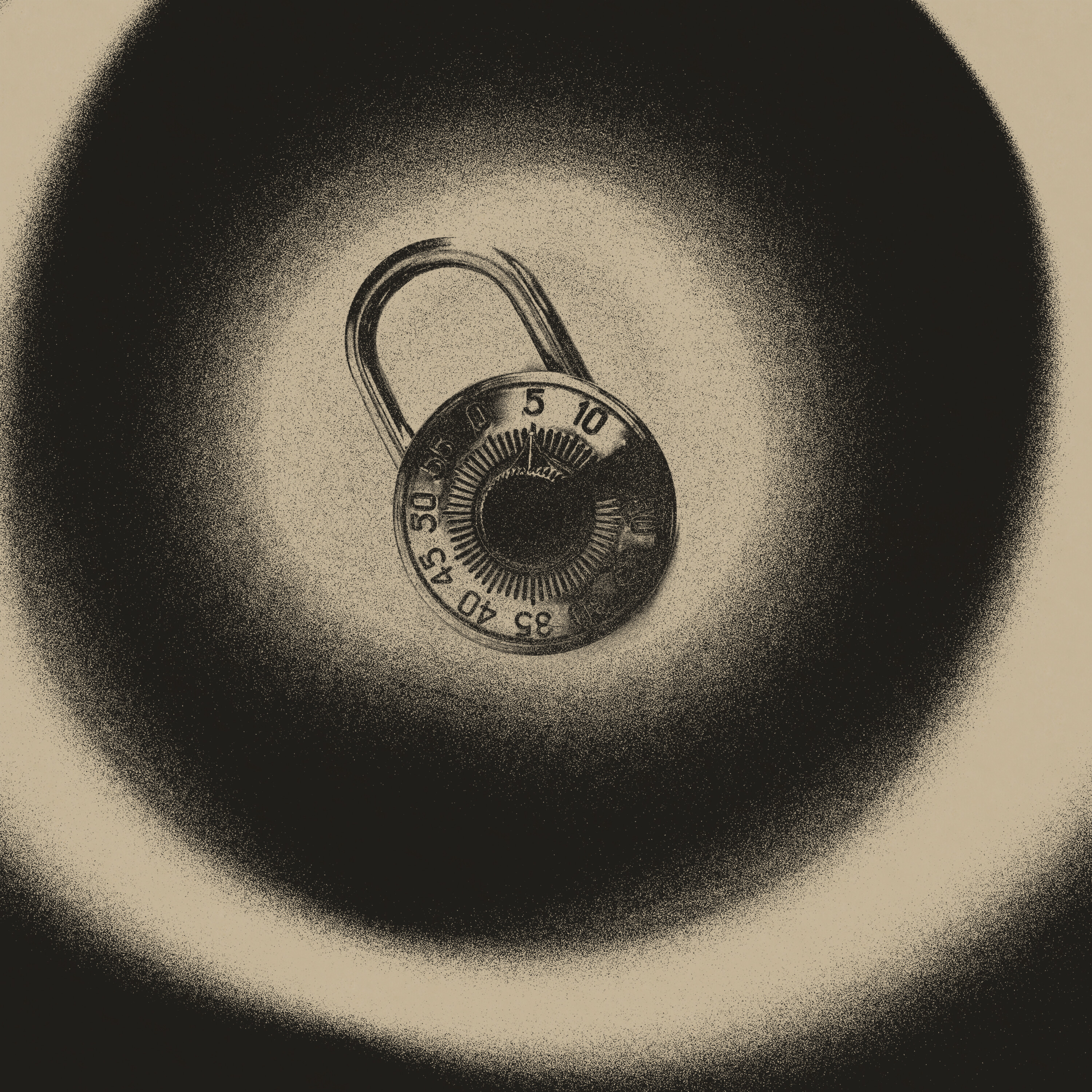
1967, Charlottesville, Virginia. Stevenson has had an idea. He's at the locksmiths, Brown's Lock and safe, to be precise. And no, he hasn't lost his keys. This is an experiment. He's buying a padlock, a combination padlock. $16.95, so about 160 bucks today. Not cheap. But then he wants this lock to last a long time. I mean, maybe for eternity. So it's worth getting a good one. The professor heads back to his office, and I think it's fair to say he's feeling pretty excited about all this. He's been inspired by an English woman, a Mrs. Greaves, whose dead husband left behind a safety deposit box, a locked safety deposit BO with a combination lock. She wants to get into it, see if there's anything valuable inside. But there's a problem. Mrs. Greaves doesn't know the combination, so she and her son try various random sets of numbers. They try and they try, but it's useless. A waste of time.
- [01:16]
Will Shar
Until one day, Mrs. Greaves had the experience of seeming to be in contact with her deceased husband, who was trying to give her the correct combination. When she tried the sequence of numbers which came to her in this fashion, the lock opened and the lid of the box sprang up.
- [01:40]
Dr. Ian Stevenson
So, yeah, this gives Stephenson his bright idea. He arrives back at his office with his brand new padlock and he selects a combination. It's like the lock on a Safe. It has one dial which goes up to 50, from which you choose three numbers. Are you following? That means 125,000 possibilities. Stevenson doesn't write the combination down. He doesn't share it with anyone. It's vital that nobody can work out this number. He remembers it using a memorable phrase that only he knows. Stevenson has thought all of this through. Of course he has.
- [02:19]
Will Shar
He says, I have no fear whatever of forgetting it on this side of the grave. And if I remember anything on the other side, I shall surely remember it.
- [02:33]
Dr. Ian Stevenson
He clicks the padlock shut and places it in his drawer. Then he tells a colleague that after his death, he will try to communicate the combination to whomever he can via whatever means he can. Maybe a dream. If he's successful, that's pretty darn good evidence that death is not the end. That in some way, shape or form, our personality, our soul, our essence survives. Then, of course, Stevenson does what he always does. He writes a paper on the subject.
- [03:09]
Will Shar
The Combination Lock Test for survival.
- [03:14]
Dr. Ian Stevenson
Stevenson's 49. How long before he has a chance to test his hypothesis? Well, for a man with a chronic Lung condition, all bets are off. So that padlock stays in Stephenson's drawer throughout all of those trips to the Pollacks, throughout all of those trips to India and the Far East. Gathering case studies, it's there still in that drawer. As the 60s turns into the 70s, as Stevenson gathers even more case studies, it's there as Florence Pollock dies. As the 70s turn into the 80s, as Stevenson's first wife, Octavia, dies, as John Pollock dies, as Lauren Pollock is born, as Stephenson amasses yet more case studies, it's in there as Stephenson gets remarried to his second wife, Margaret, that lock is still there. As the 1980s turns into the 90s, as Stevenson takes his last field trip, it's there as the new millennium dawns, as Gillian pollock dies in 2002. And it's still there in his desk drawer in 2007, as Stevenson lies in his bed in the nursing home, a very, very sick man, watched over by his wife and brother. Stevenson is 88 and he's breathing his last breaths. It's time. Time to crack open the padlock. Time to unlock the truth. This is extrasensory. An Apple original podcast produced by Blanchard House. I'm Will Shar. Episode eight, Isn't Love Enough. The following episode contains mentions of sexual abuse. Discretion is advised. If you or someone you know need Support, go to apple.com heretohelp John's granddaughter, Joanna, thinks the Pollock family have experienced more bad luck than most. In fact, she has a term for it, as she told producer Poppy.
- [06:06]
Joanna Pollock
The Pollock curse, we call it.
- [06:08]
Poppy Damon
And when you say the Pollock curse, what do you mean?
- [06:11]
Joanna Pollock
If anything can go wrong, it will go wrong. I think it started with Joanna and Jacqueline, because he was on the milk round, the kids were killed and it was just everything after that failed.
- [06:26]
Dr. Ian Stevenson
And certainly Jennifer Pollock has had some pretty tough times in her life. Her first marriage wasn't a happy one. They divorced. Then she lost a partner in a completely horrific way.
- [06:37]
Jennifer Pollock
He fell 30ft to his death. He fell 30ft. I don't know whether he was pushed or whether he fell because I heard this almighty bang and I thought two cars had crashed together. They opened my flat door upstairs and I saw him lay down on the floor with his arms spread like that.
- [06:53]
Dr. Ian Stevenson
So unimaginable. And as we've heard, Jennifer lost her parents, John and Florence, when she was in her 20s. Both had heart attacks. Then she lost her twin sister, Gillian. She was just 44. She had a series of heart attacks, then died from an infection following heart surgery. It was their brother, Ian. Who broke the news?
- [07:15]
Jennifer Pollock
Ian came up to me, just said, jill's dead. And I just could not. We just couldn't, could we? It was just horrendous. It was the most awfulest thing I ever. One of the awful things I've been through.
- [07:27]
Dr. Ian Stevenson
Awful. So early deaths, failed relationships, estrangements, failed businesses. If anything can go wrong, it will go wrong. And when Joanna talks about the Pollock curse, she's clear on who it all comes back to. Where the blame lies. All of it. She pins it all on John.
- [07:48]
Joanna Pollock
I don't think there would have been a Pollock curse without him because he was the root and stem of everything, you know?
- [07:58]
Dr. Ian Stevenson
Now, we've heard these next clips before, but they're worth hearing again. Remember, this is how Joanna and Lisa described their grandfather and his reincarnation claims.
- [08:09]
Joanna Pollock
Truthfully, narcissistic, gaslighting little man. Pathological, narcissistic, liar, self aggrandizing, hateful, pathetic little man. You know, and he roped everybody into it. Everybody. He tainted everybody. He didn't care who he upset, who he hurt in the process. It was all about John Pollock. And it's to set the record straight that it was him, nobody else.
- [08:45]
Dr. Ian Stevenson
So, yes, it was all John's big lie. And everyone in the family paid the price. None more so than Jennifer and Gillian.
- [08:54]
Joanna Pollock
The twins were. You know, they had their 15 minutes of fame and then they were thrown aside. My grandfather destroyed them, just destroyed them, you know, to aggrandize himself.
- [09:15]
Dr. Ian Stevenson
Strong words. But Jennifer sees things differently. Like, really, really differently. As Poppy finds out.
- [09:23]
Poppy Damon
Joanna and Liza were very strongly felt that your dad kind of made it all up, basically, and felt really like he intentionally made it up because he wanted the attention. That's his position.
- [09:36]
Jennifer Pollock
No, that's not right. No.
- [09:37]
Poppy Damon
But I just wanted to ask you because to be fair to you, to say what they're.
- [09:40]
Jennifer Pollock
He wasn't like that. He wouldn't even make lies up. I think what he said was the truth, the whole truth as he believed it and his prediction came true about us being born. I think he would have gone through all that and with us as well and put us all through that if he was lying about it. He was a very, very, very big spiritualist and he really and truly, from the bottom of his heart, he believed that we were reincarnated.
- [10:07]
Poppy Damon
So you think they've got it wrong?
- [10:09]
Jennifer Pollock
I think they definitely got it wrong.
- [10:11]
Dr. Ian Stevenson
So maybe John didn't lie. John wasn't the sort of man who would lie. He just wasn't a liar. He believed it all from the bottom of his heart. And according to Jennifer, he certainly wouldn't have coached the twins or told them what to say because that's what Lisa suspected. Yeah.
- [10:26]
Poppy Damon
I hope you don't mind me asking, because I say. Because they say different. I've got to ask you, you know what they said and that's true. You know, their perception was that maybe you'd been told what to say.
- [10:36]
Jennifer Pollock
No, my mum and dad would never push anything or anything. If they say if we can't remember, don't say nothing. But if he can remember something, tell them, then make sure it's the truth. Yeah. Don't lie about it, just tell the honest truth.
- [10:48]
Poppy Damon
So he did say that. He said, actually tell the truth and.
- [10:50]
Jennifer Pollock
Don'T lie about it.
- [10:52]
Dr. Ian Stevenson
And there's one other important thing. Remember this?
- [10:56]
Will Shar
Did the twins know they had two sisters who passed away?
- [11:01]
Florence Pollock
Oh, no, we've never told them. Never told them. As you can see, we don't even have any photographs up. We keep all the photos in a drawer.
- [11:09]
Will Shar
Have you ever talked to them about the accident?
- [11:12]
Joanna Pollock
Oh, no, no, we've never talked about it, no.
- [11:16]
Dr. Ian Stevenson
No. Which is important because if the twins didn't know about their sisters and the crash, it makes what the twins said as little kids much more credible. So when did Jennifer find out about the crash?
- [11:31]
Jennifer Pollock
We didn't really know anything about the girls until we were well into our teenage years. So we just lived a normal life, really. I mean, I suppose if we knew about the girls before we were teenagers, things might have been different. But nobody ever mentioned it till we're well into our teens.
- [11:51]
Dr. Ian Stevenson
Jennifer says that John and Florence never spoke about it. Her brothers never spoke about it. It was all a tightly kept secret until that documentary team came to visit. Only then does she remember John and Florence sitting her and Gillian down and.
- [12:05]
Jennifer Pollock
Telling them, you're old enough now to understand this, that you lost two sisters, one was 6 and one 11. In a car cry. A car come up in the pavement and kill them. God, that would mean Jillian got smacked.
- [12:19]
Dr. Ian Stevenson
So according to Jennifer, it's all just as John told it. The truth, the whole truth and nothing but the truth. And Jennifer's husband, Steve, doesn't doubt that either.
- [12:31]
Steve
Yeah. In nearly 30 years. The story she told me eventually, which she didn't tell me about at first, only after we were married. But the story's never changed at all, not one bit. You know, it's all the same.
- [12:44]
Poppy Damon
And you understand the skepticism?
- [12:46]
Steve
Yeah, I understand the skepticism very well. I wasn't myself at first. Because I thought, is John on the. You know, I try and make a few pound here or something, you know, but no, the guy.
- [12:57]
Jennifer Pollock
That's.
- [12:57]
Steve
All the years I've come to realize, he's a very honest man. Yeah, he just called it as he was. He never told the twins, as I know. He never told them what to say or prepped them in any way for these interviews with Dr. Ian Stevenson. In fact, he never spoke about it to him.
- [13:16]
Dr. Ian Stevenson
So. Okay, let's take one last look at the evidence, shall we, in detail. The evidence that John put forward. The evidence that Stephenson scrutinised on his many trips to see the Pollacks. Trips which started in the 60s and continued right through to the 1980s. And let's start with Hexham. Remember Hexam? That was where Jacqueline and Joanna were killed in the car crash. John and Florence took the twins there for the first time when they were four years old.
- [13:47]
Florence Pollock
And they pointed towards the playground. Right, Flossie?
- [13:50]
Dr. Ian Stevenson
Yes.
- [13:51]
Joanna Pollock
But again, the playground was out of sight. They couldn't have known it was there.
- [13:58]
Dr. Ian Stevenson
Really.
- [13:59]
Florence Pollock
Yes, it was Jacqueline and Joanna that played there. The twins, never.
- [14:04]
Will Shar
Extraordinary. Extraordinary.
- [14:09]
Dr. Ian Stevenson
But there's a bit of a problem.
- [14:11]
Poppy Damon
Do you remember being in Hexham in that moment happening?
- [14:15]
Jennifer Pollock
No, I don't.
- [14:16]
Dr. Ian Stevenson
Then there's the dolls. Remember, as little kids, Gillian and Jennifer apparently knew the names of their dead sister's dolls without being told. Well, Jennifer remembers the dolls, but the whole names thing, that's all very, very hazy. Okay, fair enough. She was only four. So what about the phobia of cars? Kids who say that they're reincarnated often have phobias. Phobias related to how they died in a previous life. Do you remember this?
- [14:48]
Florence Pollock
The twins act very strangely around cars, Dr. Stephenson.
- [14:53]
Dr. Ian Stevenson
Yes.
- [14:54]
Joanna Pollock
I mean, they're much more scared of the road than other children their age. I. I'm sure of it.
- [14:59]
Will Shar
You mean when they're crossing the road?
- [15:01]
Joanna Pollock
Yes. Well, I remember Joanna and Jacqueline were very careless. Very careless. And not so the twins. Not. Not Jennifer and Jillian. No, no. They always stop, always hold my hand. Very, very careful.
- [15:24]
Will Shar
I see.
- [15:25]
Florence Pollock
And remember, of course, they know nothing about the accident.
- [15:29]
Jennifer Pollock
Of course I can remember that. Me and Jill were absolutely terrified to cross a road from one side. Yeah. When we were younger, my mum used to, when you're crossing the road to go over the other side. We were absolutely terrified crossing the road. And I don't know why. I just think it was a frightening. Of the traffic. I don't know what that was.
- [15:49]
Dr. Ian Stevenson
Okay, so maybe we are getting somewhere. In fact, even now, Jennifer doesn't like cars.
- [15:55]
Jennifer Pollock
No, I'm not keen on traveling in cars at all, me.
- [15:57]
Poppy Damon
Really? So to this day, you still are not keen on cars?
- [15:59]
Jennifer Pollock
No. In cars? No.
- [16:02]
Dr. Ian Stevenson
And there's this.
- [16:05]
Will Shar
John, there's something I had in my notes from last time and I wanted to ask you about it. Something about brushing hair.
- [16:12]
Florence Pollock
Oh, yes, correct. Joanna and Jacqueline loved combing and brushing other people's hair, especially mine. And, well, the twins started doing that as well. They like combing my hair as if it's the most natural thing in the world.
- [16:31]
Poppy Damon
Do you ever remember combing each other's or other people's hair, Particularly your dad's hair? It says Stevenson reported that you both loved to comb people's hair, especially your father's, and that this was something that your sisters had also loved to do.
- [16:42]
Jennifer Pollock
Absolutely spot on. 100 million percent, yes. Used to love coming me dad's hair. Used to love coming my mom's hair and then get some curlers and pretending we're putting curlers and curling her hair. Yeah, I remember that. 100%.
- [16:54]
Dr. Ian Stevenson
So, yes. This is strong stuff. Jennifer's memory of that feels very clear. Crystal clear.
- [17:01]
Will Shar
Anything else like that?
- [17:03]
Florence Pollock
Yes. Yeah. The way Jennifer holds her pen. She holds it in her fist. And that's exactly how Jacqueline used to hold her pen, isn't it, Flossie?
- [17:14]
Joanna Pollock
Yes, that's right.
- [17:16]
Poppy Damon
They used to say that you held your pen like the sister who died. You kind of wrote like this, with a fist. Do you remember that at all?
- [17:24]
Jennifer Pollock
Yes, I can remember that. Yeah. Because Jill used to hold it like that, in between the two fingers or something like that.
- [17:28]
Dr. Ian Stevenson
I see.
- [17:29]
Poppy Damon
And you held it in her fist.
- [17:30]
Jennifer Pollock
I had it like that again.
- [17:33]
Dr. Ian Stevenson
Jennifer doesn't seem to be in any doubt about the whole pen thing. So this is all starting to feel like much more solid ground.
- [17:41]
Florence Pollock
Also, the way Jillian walks, her gait, the way she holds herself, it's exactly the same as Joanna walked. Sort of a splay footed, you might say.
- [17:53]
Poppy Damon
Did you and Gillian walk differently?
- [17:56]
Jennifer Pollock
Yeah, because when Jill walked. It was funny when Jill walked, she walked with her feet like that, like a penguin. That's what people used to be. Our nickname at school said you're penguins.
- [18:05]
Poppy Damon
It's called penguins because that's what it says in the report, was that you had different gates, as they call it, and that she did have sort of angled feet.
- [18:13]
Jennifer Pollock
Yeah, she used to walk with them for feet up like that.
- [18:15]
Poppy Damon
Wait, hang on. Did she do that just to goof around or did she actually walk like a penguin?
- [18:19]
Jennifer Pollock
No, she actually walked like that, honestly. They called Gillian Pollock the penguin.
- [18:23]
Poppy Damon
So you walked. You walked normally, like just straight footed. You're going to walk for me now.
- [18:32]
Dr. Ian Stevenson
So, yes, Jennifer gives Poppy an extensive demonstration of how she walks. And we can confirm firsthand, Jennifer does not walk like a penguin.
- [18:42]
Poppy Damon
So actually on that point, that's completely true, that. Because again, apparently he noticed that she walked differently.
- [18:49]
Dr. Ian Stevenson
To you.
- [18:49]
Jennifer Pollock
That one is spot on. 100%. That one defeat.
- [18:52]
Dr. Ian Stevenson
Once again, Jennifer's memory is very clear on all of that. And of course, most important of all, there's this.
- [19:01]
Florence Pollock
Jennifer, love, come here a moment. Stand here, love. Stand in front of Dr. Stevenson. Show me your waist. There it is. There's the one birthmark. And there, just above the left eye, that's the other. Can you see that? Just there.
- [19:23]
Dr. Ian Stevenson
Poppy asked Jennifer if she still has that birthmark on her waist.
- [19:27]
Poppy Damon
I don't know if I can see it. Nothing there. Is it on the other side? Or maybe it might be a bit lower, but. Oh, there it is.
- [19:35]
Jennifer Pollock
Yes.
- [19:36]
Poppy Damon
Little brown. Little tiny brown birthmark there.
- [19:40]
Dr. Ian Stevenson
Birthmark on waist. Check. But what about the birthmark above her eye? That's the crucial one because Stevenson saw a photo of her dead sister Jacqueline, which seemed to prove that she had a scar in exactly the same place. Does Jennifer still have that birthmark?
- [20:00]
Jennifer Pollock
I've got a birthmark just in between there. And it just goes just a tiny little bit there.
- [20:05]
Poppy Damon
Cause from here, I can't really see it. So you do have that birthmark.
- [20:10]
Jennifer Pollock
Yeah, just in between my eyebrows. There, there.
- [20:14]
Dr. Ian Stevenson
One of the reasons Poppy can't see the birthmark is that Jennifer usually wears makeup.
- [20:19]
Poppy Damon
And then maybe I was thinking we could use your magnifying glass and, like, have a look at it.
- [20:23]
Dr. Ian Stevenson
Yeah, if you need a magnifying glass, this is the right place. Jennifer and Steve have two rather good ones.
- [20:31]
Steve
Double magnificent problem together.
- [20:34]
Poppy Damon
Oh, my goodness. You just went and removed your makeup, did you?
- [20:37]
Jennifer Pollock
Yeah, just. Just off the top of me.
- [20:39]
Dr. Ian Stevenson
Okay, great.
- [20:39]
Poppy Damon
I'm just going to use your magnifying glass and get really close. Yeah, okay, I can see that. Yeah, yeah, you've got. There it is. It's like a little tiny birthmark. You wouldn't notice, but it is sort of a penny size and kind of pinky in color.
- [20:56]
Jennifer Pollock
That's right. Yeah.
- [20:57]
Poppy Damon
It's a pale pink next to your kind of natural skin tone, but it is very distinctly different color.
- [21:02]
Jennifer Pollock
Like a red. Yeah, that's it. Yeah.
- [21:05]
Poppy Damon
If I look at the picture of Jacqueline and the Location of it. Let me have a look. By comparison, it's pretty spot on. Yours kind of moves into the center a little bit more. Maybe hers is a bit more distinctly over her left eye, but it's a similar discoloration and probably about a penny size as well. So, yeah, it's sort of spot on.
- [21:28]
Jennifer Pollock
I think she's perfect.
- [21:29]
Poppy Damon
So, yeah, you would say it's a pretty good match.
- [21:32]
Jennifer Pollock
Yeah, definitely.
- [21:33]
Poppy Damon
I would say it's a pretty good match. Bang on.
- [21:35]
Jennifer Pollock
Bang on, yeah.
- [21:37]
Dr. Ian Stevenson
So Jennifer still has that birthmark, seeing is believing. And it's in pretty much the same place as Jacqueline's scar. So I guess what this is all building up to is the big question. We know by now what everyone else believes, but what does Jennifer believe?
- [21:57]
Poppy Damon
So on the question of do you believe you are reincarnated, what would you say?
- [22:01]
Jennifer Pollock
I'm like, I'm 88, 80% think it's reincarnation. Any other amateurs? A bit, because I think there must be something there. Definitely.
- [22:13]
Steve
It'd be nice to solve the mystery once and for all, but I think it's always going to remain a mystery. It's up to people. They make their own minds up. They can believe it. They cannot believe it. It's what we've told you is true. To best of her abilities. Her father never lied, as we know of.
- [22:34]
Jennifer Pollock
No me, dad, no. I guarantee he didn't know. He wouldn't like anything about that. He wasn't that sort of person.
- [22:40]
Dr. Ian Stevenson
Jennifer is certain that her dad didn't lie about his beliefs. But even Jennifer says that John was no angel, far from it. That he had affairs, more than one. And then she told us this story from when she was about 16.
- [22:55]
Jennifer Pollock
We knew that he had an affair because he took us to a woman's house. And my dad said, if the husband comes back first, just say that you've come to see his wife. But actually, my dad was seeing his wife. He put me in an absolutely awkward position to say I'm lying for my dad. He's coming. That guy walks in from work and he said, what are you doing? Oh, we just come to see your wife.
- [23:18]
Poppy Damon
And just you. He brought you along as his cover story.
- [23:20]
Jennifer Pollock
Yeah, just. Yeah, he did. So I said, it's nice seeing you again. I said, I'll see you soon. To the wife where I've never even met or even seen. And when I got back and I said to me, dad, don't ever put me in that blooming position again. I said, you really embarrassed me. He said, no. He said, I know, I'm sorry, but what could I have done? I said, you should have left her alone.
- [23:41]
Dr. Ian Stevenson
So that is a significant story because it shows that John was more than capable of lying. Not only that, but it shows that he wasn't beyond using his children to perpetuate these lies. And then there's John's study, John's retreat, where he'd smoke, drink scotch, listen to his classical music and read his books. That all sounds pretty mainstream stuff. But that's not all that went on in there.
- [24:12]
Jennifer Pollock
His office was just up the stairs, and he used to go on top of his. Said to me, what the heck have you got now? New stuff is like voodoo dolls, needs to be sat on his desk. And he said to me, with pins. No, no, no. That would like pins into the voodoo. Voodoo doll. And I'm thinking to me, dad, what? Anyway, eventually he got rid of them.
- [24:31]
Dr. Ian Stevenson
Using his children to cover up his affairs. Voodoo dolls. Even Jennifer thinks this stuff is a bit off color. But voodoo dolls are trivial in comparison to what comes next. This is something else entirely. And it's where things get really, really dark. And this bit is definitely not suitable for kids. So feel free to skip ahead two minutes if you need to, but we have to tell you because Joanna wants us to tell you. And, no, it certainly wasn't just drinking and smoking and music and voodoo that went on in John's office.
- [25:08]
Joanna Pollock
Come on up to the study, Joanna. You know, we'll read some books. And you just knew. You just knew.
- [25:15]
Dr. Ian Stevenson
And these books, well, let's just say these were not books suitable for little.
- [25:20]
Joanna Pollock
Children, all about autopsies and murder victims. I'm just like. I'm sure I was only like three.
- [25:27]
Dr. Ian Stevenson
Violent things, horrible things. In fact, the worst things you can.
- [25:33]
Joanna Pollock
Imagine when I'm just flicking through and not thinking anything of it, you know, and that's when, you know, the touching starts. And you're my good little girl, and I just. You would always be on your own because then there's no witnesses, you know?
- [25:57]
Dr. Ian Stevenson
Remember what Joanna told us about the doll's house that she loved playing with?
- [26:01]
Joanna Pollock
I. Oh, God, this is gonna sound so terrible. I asked him if I could have it once. I said, when you die, granddad, can I have the doll's house? And that was my payment. Of course you can, Joanna.
- [26:21]
Dr. Ian Stevenson
Payment. So, yes, what happened in John's study, that was the payment.
- [26:28]
Joanna Pollock
He was a monster. He really was. He was a pathetic monster. You know, just a pathetic, fat, little old man monster. God, I still hate him. I do. He's A he was a vile human being.
- [26:48]
Dr. Ian Stevenson
OFF MIC we asked Jennifer about the allegations of sexual abuse and she said it was the first time she'd heard about it. She told us that she'd never seen or heard anything like that. Stevenson dies on February 8, 2007. His brother and wife are living in the same nursing home and a friend is visiting later. The friend writes, we all waited, perhaps as if he might come back. We all sat or stood silent.
- [27:22]
Will Shar
He did not come back.
- [27:24]
Dr. Ian Stevenson
But as we know, it's not as simple as all that. Remember, Stephenson had a theory about the intermission between lives. So Stephenson could well be there, waiting in the middle of his own intermission, maybe enjoying a gin and tonic. But the big question is, did Stephenson himself believe in all that? Where did Stephenson think he was off to as he took his last laboured breaths? Well, the truth is, the man himself kind of dodged the question.
- [27:57]
Will Shar
I am frequently asked whether I myself believe in reincarnation. I decline to answer this question because my beliefs should make no difference to anyone asking such a question.
- [28:11]
Dr. Ian Stevenson
But he does say, before the modern.
- [28:15]
Will Shar
Investigations, a belief in reincarnation had to rest on the basis of faith, usually inculcated by the scriptures or oral teachings of a traditional religion. Now one may, if one wishes, believe in reincarnation on the basis of evidence.
- [28:39]
Dr. Ian Stevenson
Yet it seems not enough people wished to believe. Remember, Stevenson saw himself in the same mold as Charles Darwin. The problem was most of his academic colleagues did not see him that way at all. Tom Schroeder, I think he never really felt that his work had gotten the acceptance that he had always hoped it would. So, I mean, it was a little.
- [29:01]
Jim Matlock
Bit sad at the end, I think, for.
- [29:04]
Dr. Ian Stevenson
And here's Jim Matlock.
- [29:05]
Jim Matlock
Stevenson did have a difficult time. He really did. A lot of the skeptics, most of them didn't even bother to read his work. They just criticized it. And he was really not prepared for the degree of pushback that he got. And I think he was disappointed, really, for the rest of his life.
- [29:22]
Dr. Ian Stevenson
So was it all in vain? Jim Matlock says no. According to Jim, in the west, before Stevenson, reincarnation just wasn't a thing.
- [29:33]
Jim Matlock
It wasn't really known in Britain or in the States. It really wasn't known. But Stevenson put all that out there and on the table. And by spending 40 years at it, he put out so much data that now it's impossible to ignore it.
- [29:47]
Dr. Ian Stevenson
Jim is a true believer. He's a research fellow at the Parapsychology Foundation. Though for him, belief is completely the wrong word.
- [29:56]
Jim Matlock
For me, it's not a belief, it's a conclusion that I've reached on the basis of the evidence. I see enough evidence for the survival of bodily death. What I want to do is understand how it happens. Because if reincarnation is a fact, then this changes just about everything about life, right? It's going to change everything.
- [30:14]
Dr. Ian Stevenson
Jesse Baring has sifted through hundreds of Stephenson's cases for his forthcoming book, the incredible afterlives of Dr. Stephenson.
- [30:23]
Jim Matlock
He was a sort of rogue but almost necessary figure in the history of science because there are a set of.
- [30:30]
Dr. Ian Stevenson
Findings that if you look at them.
- [30:33]
Jim Matlock
In the right light, at least really.
- [30:36]
Dr. Ian Stevenson
Makes you second guess everything you thought you knew. Here's Jeffrey Long of Elizabethtown College. I'm looking forward to the day that this is taken seriously as a field that science explores. And I think Stevenson is an important pioneer in that regard, that if that time comes, we'll look back on Stevenson as someone who helped pave the way for the new paradigm. And here's how Stevenson saw himself.
- [31:00]
Will Shar
I am the scientist who provides the evidence with which others can form their own conclusions.
- [31:09]
Dr. Ian Stevenson
So back to the Pollock case. What if the whole thing was just a hoax? John Pollock was faking it all. Where would that leave Dr. Stephenson and his science? Well, you'd have to say it would be a pretty massive fail. Right. Remember, Stephenson said that the Pollock case.
- [31:27]
Will Shar
Provided some of the strongest evidence known to me in favor of reincarnation.
- [31:36]
Dr. Ian Stevenson
But what did he really have? What was that evidence? Well, here's where we're at. There's really only two pieces of evidence that don't rely on John and Florence for verification. The birthmark, which Stevenson verified and Poppy has now verified, too. And the phobia of cars, which Jennifer has confirmed. Everything else is down to John and Florence's word, their word, that the behavior of the twins was consistent with the behavior of their dead sisters, Jacqueline and Joanna. As we know, Stephenson saw himself as a man of science. He was rigorous and he was a shrink. A shrink who read people for a living. Who prided himself on having a really well honed bullshit detector. So if it was John's big lie, it was Stevenson's epic fail. But beyond the Pollock case, is Stevenson part of an even more epic fail? Because our story starts in the 60s, right? And there's an argument that says everything changes in the 60s. And it's not us saying this, by the way. It's people like Kurt Andersen in his book Fantasyland. And the theory goes something like this up until the 60s, science and reason were one thing, faith and belief were something else entirely. But during the 60s, serious scientists like Stevenson start dabbling in stuff like parapsychology and studying reincarn, that kind of thing. Suddenly science and reason and faith and belief get all muddled up. What is real, what is fiction, what is fantasy, what is reality? That's Kurt Anderson. So, yeah, science and belief start to challenge each other in the same space. The danger being nobody can tell one from the other anymore, which grows into the political space. I am most troubled about the direction in which we're going, you know, and the post truth, post scientific age that.
- [33:38]
Jim Matlock
We may be entering.
- [33:39]
Dr. Ian Stevenson
That's one theory that Stevenson was part of a really big cultural change. Interesting idea. So how do we square it all? All the different accounts, all the contradictions, all the inconsistencies. The John that Lisa and Joanna knew. John, the grandfather, controlling, abusive. And the John that Jennifer knew. John the father, loving, fun. Well, maybe Lauren can help us out here. Remember, she's John's granddaughter, but he died two years before she was born. We told her everything and we asked her what she makes of it all. Now, she already knew that her dad, John's son Keith, hated John. And she knew the rough outline of the family legend. Saw it on that grainy VHS in that religious studies class in high school. But beyond that, most of it Lauren's been hearing for the first time.
- [34:35]
Lauren
I believe that, yes, he was not a very nice man and I think he probably did some really horrible things. But with the twins, he was probably an absolutely wonderful, doting father who treated them like princesses because they, you know, were his absolute joy there with his daughters back from the dead that he was so grateful for. He probably wanted to protect them and pretend like nothing had ever happened. And maybe the boys were a reminder of that awful past. I definitely think parents can do that. But, you know, you change in life, don't you?
- [35:09]
Poppy Damon
So the other thing is they say that it was a hoax. And Joanna specifically says she believes that the girls were coached or encouraged.
- [35:18]
Lauren
I could easily think like that as well. The only thing that makes me believe that it's real is because I have a belief in spirituality. I believe that people don't pass away. I believe that spirits live on. And I know that I feel spirits. So I feel my sister and my mum and my dad. And so for two little girls that had died, it's not weird for me to think that they would come back in another way through other people, you know, that could make sense. To me, whether or not it's the truth, whether or not anything that John said or the twins, whether or not anything like that actually happened, I've always grown up with a belief that something could happen. I'm open to the idea.
- [36:07]
Dr. Ian Stevenson
Lauren and Jennifer have never spoken about any of this stuff. They're hearing most of it for the first time in this podcast. And in truth, they barely know each other. They haven't seen each other since Lauren was a kid. But now Lauren is keen for them to talk. And let's face it, they've got plenty to talk about. They've got a lot in common. I mean, they're both Pollocks at the end of the day, but it goes much further than that. They've both lost a lot of people in their lives. Both lost their parents young, both lost a sister young. And they're both spiritual. Lauren feels spirits all around her, the spirits of her loved ones. And Jennifer does, too. The spirit of her twin sister, Gillian, who died over 20 years ago, still with her, in her all the time.
- [37:03]
Jennifer Pollock
Because on nighttime, I can feel somebody touching me. I can literally feel something like I'm sitting here now. I can feel Jill's body coming through mine now. I can hear her, the way she used to talk and the speech. And I can feel it on me now. Can't explain to anybody what it's like if I'm upset or something like that. Somebody whispered to me, don't cry, don't cry, Jenny.
- [37:23]
Dr. Ian Stevenson
Don't cry.
- [37:25]
Jennifer Pollock
And I thought, is that you? Chill. And it just went, wow. You know, I've sat there and said.
- [37:30]
Dr. Ian Stevenson
Don'T cry, don't cry, don't cry, Jenny. Don't cry. So Lauren and Jennifer believe big time. But not all the Pollocks are believers. Joanna in particular.
- [37:45]
Joanna Pollock
I'm not spiritual. I have no faith in any sort of invisible being. Have faith in human beings killing each other and doing shitty things to each other. But as long as you personally live your life and don't cause harm to others, when you die, you're done. You know God. Cause I couldn't do this all over again. No, I don't have the closet space.
- [38:20]
Dr. Ian Stevenson
Okay, that's fair enough. And now there's one last thing we want to tell you. This one time, Stephenson was caught off guard. He was with Carol Bowman, who we've heard from, and she asked him a question to which the answer is very revealing. For once, it gives us a glimpse into the real Stevenson. Not Stevenson, the man of science who fancied himself as the next Charles Darwin. But Stevenson, the man Stephenson, who lost a child and who nursed his first wife through her final months. And maybe this gives us a glimpse into his motivation, why he dedicated a lifetime, a long lifetime, to reincarnation in the face of hostility and ridicule, even though it was a trial across to bear. So Carol asked him why he thought we'd be reincarnated into the same family. Stevenson, whose defining work is 2,268 pages long, answered in just three words, isn't love enough? Isn't love enough? Now, Lauren really liked this idea and it got her thinking about Joanna and Jacqueline.
- [39:42]
Lauren
I think that's really lovely. I think as two little girls, you know, you can imagine whether they would have, like, talked about it together, you know, and been like, oh, where should we go once they died, you know, been like, what do we do now? You know, where do we go now? Yeah, well, let's just go home. And it's nice to think that maybe they had each other. They weren't acting alone, they were working out together what they wanted to do and where they wanted to go and how to move forward after they died. You know, your comfort is your family. So it's like that's where you feel the most safe and the most loved. So you return there because, yeah, that's, that's, that's all you ever want in life.
- [40:32]
Dr. Ian Stevenson
Love. That's all you ever want in life. And isn't it love that sustains Lauren and Jennifer's beliefs? It's not evidence, not proof, not those things that Stevenson spent so many years hunting for. But love, Love is enough. So what of the Pollock curse? Even Joanna, the non believer, believed in that. Well, she thinks that the curse is now broken, consigned to the past. She's living in California, surrounded by those pistachio farms, sewing her Renaissance costumes. The north of England feels a very, very long way away and she's still intending to repair that doll's house. Her sister Lisa, meanwhile, loves spending time with her mum and her grandkids. She drives over every week to see them. Lauren had a very happy childhood. She lives by the sea now, the spirits of her lost loved ones all around her. She's moving in with her partner any day now and they're expecting a baby. While Jennifer and Steve, they just seem very happy together. After nearly 30 years of marriage, Jennifer watched over, protected, comforted by the spirit of her twin sister, Jillian. All is well. So this is the end. But what do we make of it all? What's the takeaway? Well, faith, surely does have something to tell us about this story, about the Pollock story, and about John Pollock. Because remember what we said at the start. Everything in this story does come back to John. So let's try this. And you can take it or leave it. Beware of false prophets who come to you in sheep's clothing, but inwardly are ravenous wolves. And reincarnation or not, maybe that's about as close as you can get to an eternal truth. But I reckon the question that you're really asking is this. What about Stevenson's padlock? Has the spirit of our professor managed to crack it open? Well, the answer to that is no. Sorry about that. The padlock is still firmly locked, but. Oh, hang on a minute. What's this? Dr. Stephenson.
- [43:28]
Will Shar
Six, five, two.
- [43:30]
Dr. Ian Stevenson
Dr. Stephenson, you've been listening to Extrasensory, an Apple original podcast produced by Blanchard House and hosted by me, Will Sharp. The producer is Poppy Damon. Extrasensory is written by Lawrence Grissell. Additional production by Seren Jones. Original music by Daniel Lloyd Evans, Louis Nank Mannell and Toby Matt. Sound design and mix engineering by Vulcan Kiseltug and Daniel Lloyd Evans. The part of John Pollock was played by Peter Peverly, Florence Pollock by jasmine hyde and Dr. Ian stevenson by Mark Arnold. Research by Alan Sargent. Fact checking by Jesse Baring and Karen Walton. Our head of rights is Jim Peake. Legal counsel is Angie Mel. Our managing producer is Amica Shortino Nolan. The creative director of Blanchard House is Rosie Pye. The executive producer and head of content at Blanchard House is Lawrence Grisel.