← Eye On College Basketball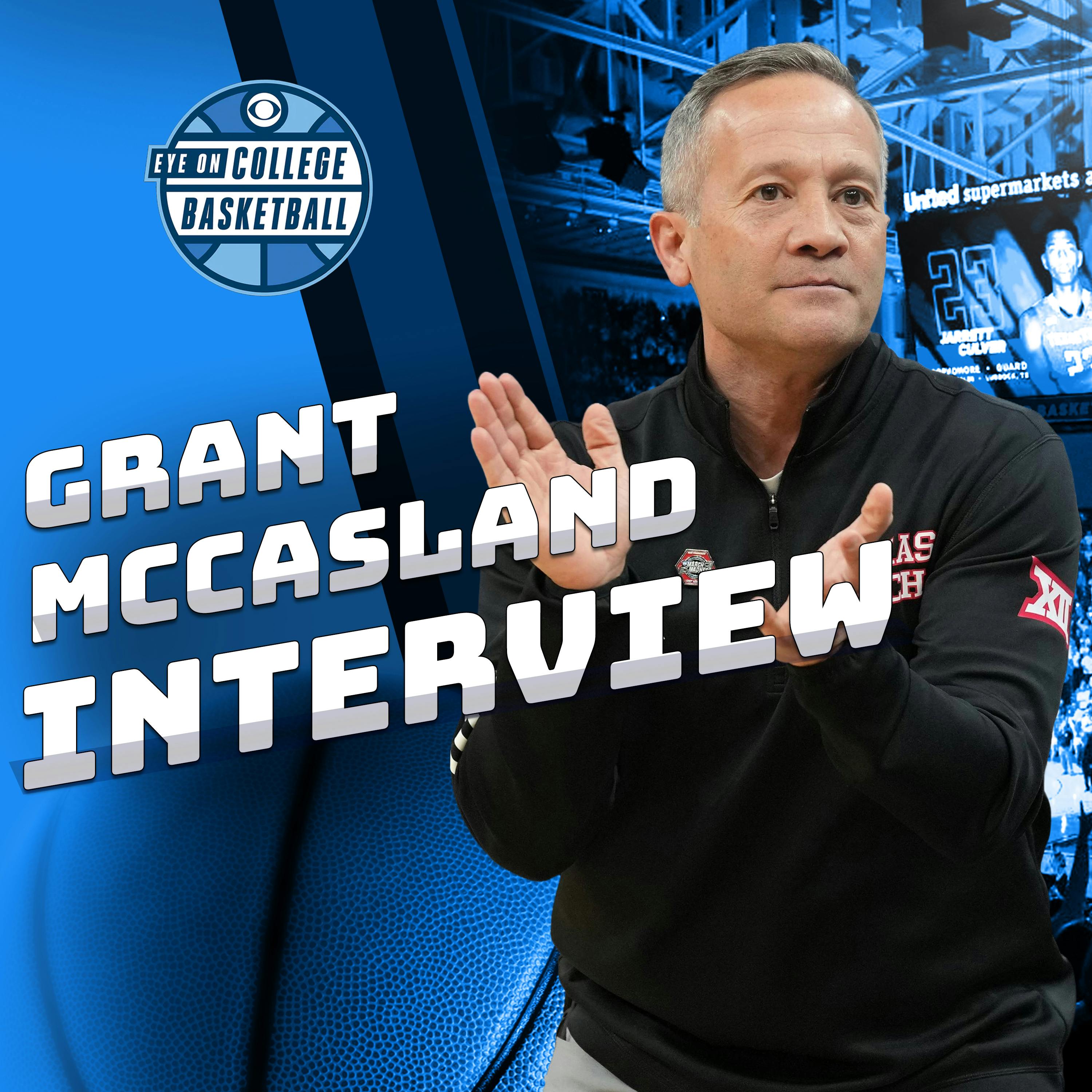
Eye On College Basketball
Grant McCasland On What Separates Texas Tech From Other Schools + Why He Re-Watches Elite 8 Loss
00:19:48
Loading summary
Transcript33 lines
- [00:15]
A
Gary Parish here. I own College Basketball podcast, joined by Grant McCaslin, the head coach at Texas Tech last season. In year two, you take it all the way to the Elite Eight. That's obviously impressive stuff, but I know it didn't end the way you wanted, and this was interesting to me. I heard you explain that not only have you gone back and watched it, you watched it the night of, and you go back regularly and watch it. I've talked to other coaches who have had, you know, season ending losses that got away from them at the end, and they've never gone back and watched it. They can't sit in front of it. What is it that made you want to do it that way?
- [00:52]
B
Honestly, I've lost a lot of those before. And so, you know, I've played in junior college or coached in junior college, lost in national championship game and then lost in the Elite Eight on a tip dunk at the buzzer, then coached in Division 2 and lost in two Elite Eights at the end of it. You know, just honestly, there's a significant part of those that the more you can stare it in the face, and not in a way that's like, I don't know, like morbid, but more in a way that's, let's just be honest with who we are and what we are and what we gotta be about. And I think that's endearing to players when you can just show them that you're not identified by what you did, but how you get better from it. And honestly, I want that to be the heart of what we do, so it's easier for me to tell our players that's what I want them to do if I'm willing to do it myself.
- [01:41]
A
Not to make you walk back through that memory, but you're up 10 on the eventual national champions with less than six to play. When you go back and watch it, what do you see and can you learn something from that?
- [01:52]
B
Yeah, I've told people this, and this is probably something a little bit new that I haven't shared enough, but I think it goes back to what I probably didn't do in the summer. Weirdly enough, just in organizationally within our group of how we communicate. And I've tried to improve some processes in that that I think showed itself at the very end, you know, and that has to do. You know, our staffs these days, we got 100 people wearing suits and like five guys playing basketball. It's wild, but I just think there's a relationship depth there that's really important of how you keep everybody connected when everybody's pulling it every with these guys. And so that one is one. But truthfully, I specifically, I didn't do a great job of an offensive defensive sub, and I haven't done that much in my career where I've always just said, let's keep our best players out there. But we've got so many good players on our rosters that do things individually. But you look at these combinations and you try to kind of survive the end of games. And I think I've. I've looked at a lot of different ways to finish games with lineups, with the way timeouts are called and how much stoppages. And that'll change now because of the new rules. But honestly, there's some tactical things that I would do differently, but there's also some program wide relationship things that I looked at differently because of those games.
- [03:09]
A
Are you the type who allows yourself to daydream a bit like, if this goes a different way, I'm now in the Final Four for the rest of my life. I'm introduced as a Final Four coach, and if that's the team that won the national championship, maybe we could have done it. Does your mind ever go there?
- [03:25]
B
Yeah, it does in the way that in belief. It doesn't do in a way that, like, man, that could have been us, like, hopeful of that. It's more of what, what can we do if this is what we did? And I can tell you, in 2004, five, my first year as a head coach in junior college, When I was 26, 27, we lost on the tip dunk at the buzzer. And I, before that, I was just happy to be in the tournament. And then afterwards I was like, we are never going to compete for anything but to win it all. And then in 07, we won it. It was the first time since Spud Webb and Mookie Blaylock in Midland, Texas. And it had been 25 years. So just it like the similar kind of deal, like the first year was like, man, I get to be in the tournament as a head coach. And my mindset wasn't like, let's win. I wanted to win the whole thing. But still you're just trying to take it all in. And I think there's. Our feet are firmly in the ground on this. And so the daydream would not be necessarily looking at it like what could have been, but more like what could we do?
- [04:23]
A
It's interesting because I was talking to Matt Painter, the Purdue coach, about Similar stuff a couple of weeks ago at Big Ten media day. And he said one of the things he didn't think he did enough last season was talk about Final four national championship. Like I don't want to hide this from my team. I want them to know that is what we're chasing, that's what we're trying to do. So I, at least he thinks it's sometimes helpful to put everything on the table. The good news for you is that this wasn't like a one shot deal. Sometimes coaches get that close and I think realistically they understand, like I might never be in that position again. You got a preseason top 10 team, you've got a consensus first team all American. Let's talk about J.T. toppin. Player retention is I think arguably the most important thing connected to a college basketball program right now. You obviously, you and your, your, your athletic department prioritized him and was able to not only get him back to school, but not even go through the draft process. Talk to me about that. How quickly did you make it goal number one, make sure that young man is back in school.
- [05:25]
B
Okay. A lot of people make decisions during the year of what puts them in the best position at the end of it, you know, and I think that's a mistake first and foremost, like invest in team, pour your whole heart into it. And did it at North Texas, going to Texas Tech because we're on this run. Everybody says you're leaving for Texas Tech. And I was like, let's win the NIT championship. So you know, I wouldn't communicate with anybody from Texas Tech outside of that. I just wouldn't. And so I think where we did, what we did with JT was just pour into him to the very end about how this team can win and what he can do to help the team win and what fast forwarded to it. What helped us was he had been through the draft process the year before when we recruited him from New Mexico. And so he. We didn't have any like, like this is fun to do this. Like it's, it's hard. They travel from city to city. You're doing these work, it's it. And he was on a FaceTime with me when we first recruited him from a hotel room in Orlando or something. And he was. Looked like a mess. So that's where I will tell you. Like I. There was a lot of things that were best for us. But what I will tell you I think was the most significant was the people around our program were really ready right for us. To be like, let's. Let's invest in this. And there was some like, hey, what's financially responsible?
- [06:41]
A
Right?
- [06:41]
B
And then like, what gives us the best chance to win? And I think there we have so many great people at Texas Tech.
- [06:48]
A
It's well documented in all sports.
- [06:51]
B
And all those people honestly were all in on. Let's figure out a way to get JT back and let's figure out a way to be great. Why? Because JT's character is awesome. I mean, like, you talk to him and the more you know him, what you see is what you get. What he says is who he is. And he loves being in Lubbock and just that simplicity of who he is. And not just the sport support financially, because it's real, but the support from our community of 15,000 people coming to games. And he grew up in the Dallas Fort Worth area where not many people always come to basketball games in that area. They do for his school, but not like we have the best attendance in the state of Texas. And it's not close.
- [07:31]
A
Right.
- [07:31]
B
And so there is a real love and passion that he feels, and I think he just loves being a part of it and there. But I do think he'll be ready and it'll be. It won't be. Won't be one of those deals that does it.
- [07:42]
A
Again, I want to get back to JT in a second. You touched on something interesting there about the support system in place at Texas Tech. I talked to other coaches at other power conference universities and they're struggling. They do have the resources they need. They don't feel like they're getting a proper share from their athletic director and revenue sharing. The nil stuff's not there. You're very good at this. So someday somebody is going to try to get you to leave Texas Tech. How much does the. Just the support system that's in place there make it a good place to be? Because I gather you're not having to fight a lot of the financial fights that other coaches, even coaches in this league are having to fight.
- [08:20]
B
I think what's. What you find in college athletics these days is everybody's looking for money. And this is what I'll tell you, I think separates us. Okay. It's well documented that Cody Campbell is doing significant things. His partner, John Sellers, Dusty Womble. If you look at those guys and who they are as people, they're awesome husbands, they're awesome fathers. And this is where I will tell you, I think it separates us. And this is Kirby Hocut. He's an awesome husband and father. Like, I honestly love being around these guys and I honestly trust them. And I think they're doing it for the purpose that they love this and they're not trying to be fast in regards just to, like, let's win. To win. I do think they have a bigger purpose in this and they approach it that way. And I think that's the most rare thing we got going that people do not talk about is, yes, there's a financial investment, everybody's excited about it, but the people doing it really do have a heart for people. It's not just for the fame, because it's the we like. They love Texas Tech, they love Lubbock, Texas, they love the Red Raiders, but they love being a part of this community and they want the opportunity to put everybody in the best position to win. And it's not just tied to fame, it's tied to, like, real people. That's what I love about this man.
- [09:40]
A
Back to J.T. when did you know that you had the best player in the Big 12 on your roster?
- [09:49]
B
We played at St. Joe's in Barclays arena against St. Joe's in Barclays arena in a in a Thanksgiving MTE and lost the game. And JT had 18 rebounds. He had his best college game ever and he was the first one to locker room and he was unbelievably upset. And I told our staff, like, everybody was really upset because if we'd have won that game, we would have played Texas. We'd lost, so we played Syracuse and it would have been the last time we played Texas and we'd already lost to him the year before. And it was just like a felt like, like that's one we needed to win and we didn't. And I'm telling you, J.T. toppin was so upset. And I just told our staff, like, I know this is a loss, this stinks. But we're going to be really good. Why? Because J.T. toppin was more upset that we lost and he didn't care that he had an unbelievable game. And I was like, that's the competitiveness that it takes to be special. A lot of people are talented, can go out and win games and or play good and not win. And they're cool with that. He was never okay with that. And I'm like, okay, that's a separator.
- [10:50]
A
Another important returning player, Chris Anderson, who was really good for you as a freshman last season. After being a sub 100 recruit coming out of high school, we are now operating in an era in the sport where some coaches at your level are telling me I'm not recruiting sub 100 high school players because they can't help me immediately and I'm just going to develop them for somebody else. You obviously didn't take that approach with Chris and it paid off for you. What did you see that you thought, this is the type of freshman I can take and actually use in his first year?
- [11:22]
B
Well, you know this, there's relationships and all this. So there's kind of this like, who do you have connections with and who you have relationships? So we did have relationships with people around him that knew him and he was getting out of his situation with Michigan Michigan because of a coaching change. So there is a little bit of this like, hey, it wasn't evaluated since he was a freshman. I mean we watched him play, but we looked at the numbers. He was one of the best shot makers contested in college basketball and shot one of the highest percentages. And you know this. It's like with the young guys that can really shoot and score, their physical abilities sometimes are late bloomers, but their shot making and his ability to win games at a young age, even though he hadn't kind of hit his growth spread, he was a young 17. I'm like, this dude's going to be really good. So you talk about the development, but his character and his love for the game was real. And when you talk to him, you saw a brightness in his ability to learn and grow that I felt like he can help us as a freshman and you don't know the level at which they can help us. But I think that was a key component for us is we appreciate shooting. We appreciate guys that have skill and their competitiveness and sometimes people overlook it because of size and we don't. And maybe it's just the nature of what we appreciate. But I think shooting is such a premium in college basketball because of space and because of the the lane and how do you create twos and how do you create space? And we just trusted his character and his family's awesome. And when you get to around him and relationally you just see there's a commonality. Your approach, you believe in people and when you believe in people, they do things that people didn't think could happen. And that's the fun part about being a part of a team.
- [13:00]
A
Couple more things before I get you out of here. I'm assuming you're aware of this, but it got a lot of attention in recent weeks. Kenpom.com released coaching rankings and you were in the top two. And it seems to be tied to the fact that in nine years as a Division 1 head coach, you have outperformed your preseason Kim Pom ranking without exception. That is data to back up something I said earlier, which is, you're very good at this in your head. And if. I know this can be a weird question, if you accept the compliment, what makes you good at this? Do you have an idea, a sense for what makes you a good basketball coach?
- [13:42]
B
It's we win with people, man. And how you love them and how you care for them and how you live your life in a way that I think is not tied to a result is really important in a world where everybody wants something for some from somebody, like, how do you put the focus on giving? And I think it's hard because when you're recruiting, you want to give people something and give them hope to make them think that they're the best. And we kind of take an opposite approach. And like, let's be honest with how you're going to improve and how you fit, and let's figure out if the rest of it works. So to me, what you do is. And I didn't learn this because I'm good at it. Honestly, I learned that because I sucked at it and I did it poorly at such a young age. But how many people get to be a head coach at 26?
- [14:26]
A
That's right.
- [14:27]
B
Not very many. And so I honestly attribute to the fact that I've got an unbelievable family. My parents are awesome. I've been loved. I didn't try to figure out how to get loved because of money and fame. I don't care about it. I really don't. So how do you help people see what they can be at their best? And how do you put people together that love the same thing? And then you end up caring about each other in a way that's real, and then it shows in the way you compete. And so our separator, I think, has been the honesty and the approach of how people get better and why they want to be a part of something and focus on that every day as opposed to focus on the external rewards of what you get, which is hard to do. And then what we've been able to do is be a part of great teams at great places at the right time. And honestly, Texas Tech's a great example. Before this, I've worked for unbelievable ads that gave us the most resources in the league, and that's understated in this is all the resources we got and look at what we're doing at Texas Tech and we have some of the. So I just think it's a, there's such a team component to this and I'm so thankful to be on these teams where we've been at a place that could do it at this level at the right time.
- [15:40]
A
Last thing before I let you go. You put together an interesting non league schedule. You've got a game at Illinois, true road game, you're rematching with Arkansas, that's a rematch of the Sweet 16 game. And then you go down to the Bahamas where I know you take them one game at a time. But we could have a top 10 matchup in the title game with Texas Tech against preseason number one Purdue. That would also give us two consensus first team all Americans on the court together again. I know you don't look ahead, but that is sort of the idea behind creating these types of schedules to create interesting matchups and memories for your fan base. And that trip to the Bahamas seems like it's got an opportunity to be one.
- [16:22]
B
Well, we continued to grow our program in a way that those opportunities were available. And that's the hardest part is like can you play well enough and have the right components to get those games? And it's an honor to be a part of it. But we do feel like if you want to compete for a national championship and you say you do, you got to have a great non confidence schedule. And we have not been able to do that up to this point for a lot of different reasons. And I felt the need to really push this group and thankful for all the opportunities that we do have this year. And it was intentional obviously, but it was built that way because of guys like Chris Beard and Mark Adams and Bob Knight and just the plethora of great coaches that have been a part of this. And Tubby Smith, I mean think about the names that you know. Billy Gillespie, I'm just great coaches that put us in this position. This didn't happen overnight. And so I just say it's a build to this point and we needed this though if we want to really be serious about competing on the biggest stage.
- [17:25]
A
Grant, it's always good to see you. I appreciate your time gp Great man.
- [17:28]
B
Thanks for having me. The CBS Tonight I run to the.
- [18:07]
A
Chaos and Survivor is chaos.
- [18:09]
B
As a mother of a four year old, this is vacation this season.
- [18:14]
A
They're going back home.
- [18:15]
B
It's trial by the elements. Surprise. I'm on Survivor. That's how you do it. Survivor feels like a culmination of my entire life. Everything has led to this moment. Who will have what it takes? Survivor. New CBS tonight at 87 Central and streaming on Paramount.
- [18:33]
A
Plus.