← Facts Matter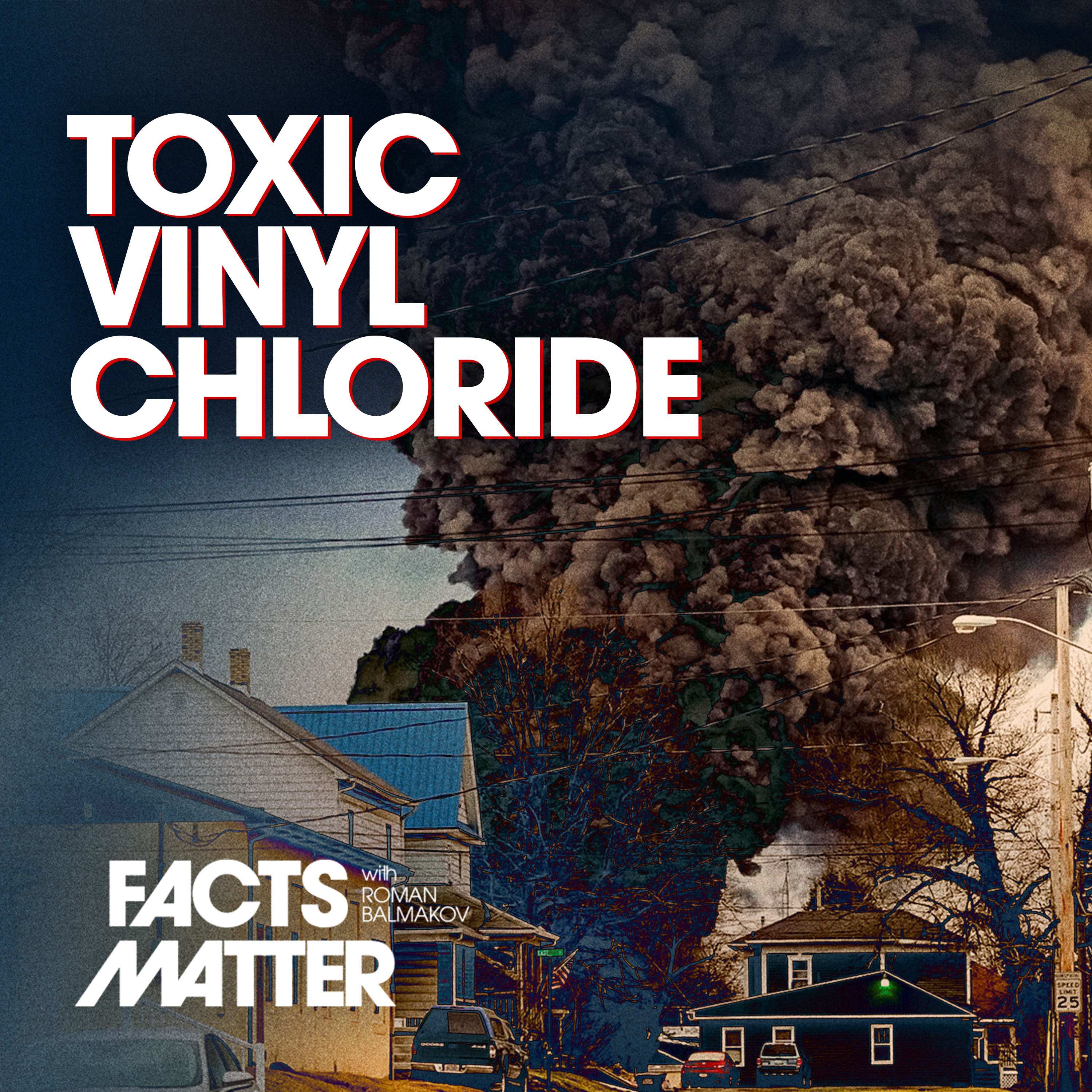
Facts Matter
3 Years After East Palestine Train Derailment, NIH Gives $10 Million to Study Health Effects
00:12:39
Loading summary
Transcript1 lines
- [00:00]
A
It has now officially been three full years since the Ohio state government decided to detonate those train cars containing vinyl chloride in the village of East Palestine. You probably remember the apocalyptic imagery that came out after that explosion. It looked pretty much like a nuclear bomb had gone off in the middle of that town. And three years later, unfortunately, anecdotal evidence is piling up showing that the residents there are experiencing things like thyroid disease, cancers, respiratory problems, neurological issues, asthma, and things like that. It's to the point now that the NIH has just announced a $10 million research project in East Palestine to study the long term health effects of the people living there. And so today, let's review what actually took place three years ago, what the effects appear to be now, as well as what the NIH, under the leadership of RFK Jr are doing about it. And as always, if you appreciate content like this, please do smash those like and subscribe button so that the video can be picked up by the YouTube algorithm and shared out to Evermore people. Thank you so much for that. Now, a little bit background here, in case you just don't remember. In 2023, a freight train with more than 100 cars derailed in a small town called East Palestine, Ohio. It's located in the eastern part of the state, right there near the border with Pennsylvania. Now, fortunately, nobody was killed in that accident, but unfortunately, that accident launched 38 cars off the tracks. And among those derailed cars, 20 of them contain hazardous chemical materials. Specifically, those train cars contained pressurized vinyl chloride, hydrogen chloride, as well as ethyl hexylacrylate, all three of which are toxic to human health as well as carcinogenic, meaning those chemicals can cause cancer in the human body. And for your reference, in case you've never heard of it before, vinyl chloride is the chemical that's used to make things like PVC pipes. Now, this scenario was already bad enough, but it only got worse. 11 of the derailed cars which contained these toxic chemicals, they ignited, they caught on fire, and they began to spread vinyl chloride in both the air as well as into the grounds. And it kind of goes without saying, but this was very bad for human health. Quote the National Cancer Institute notes that the toxic chemical has been linked to cancers of the brain, lungs, blood, lymphatic system and liver. Vinyl chloride creates carbon monoxide and hydrogen chloride when it burns. When the latter mixes with water, it generates hydrochloric acid, a corrosive substance that can burn the skin and eyes and is toxic if inhaled. Burning vinyl chloride also produces a Small amount of phosgene gas, which was used as a chemical weapon on World War I battlefield. And so at this point, you had the train derailment. You had chemicals leaking into both the soil as well as into the water. You had the fire burning chemicals into the air. And this goes on for roughly three days. After three days, local officials in Ohio, they were worried that if the remaining derailed train cars, the ones that contain toxic chemicals, if those cars also exploded, they might blast shrapnel everywhere. And so, out of fear of that scenario, the Governor of Ohio, Mr. Mike DeWine, he took the suggestion of the Ohio State's emergency Management Agency, and he authorized state officials to conduct a controlled burning of the remaining toxic materials. Basically, what he authorized was for state officials to detonate the five remaining cars, which contained vinyl chloride. This controlled explosion then sent a massive black cloud of smoke into the air, which was visible for miles. And again, it pretty much looked like a mushroom cloud that you see after a nuclear weapon goes off. Now, I'm not going to judge anybody. I'm sure that it was a very, very, very hard decision to have to make. But as a matter of fact, at that moment three years ago, to the people who were actually in charge of the Ohio state government, it seemed like the best thing to do to blow up those cars. And so that's what they did. But while that decision of theirs might have averted an even larger explosion with shrapnel flying everywhere, it did not avoid the release of toxic chemicals into the air. And also, besides the era, I should also mention that a lot of chemicals were also released into the nearby waterways. The train cars were ruptured in the detonation and spilled the rest of their contents into a drainage ditch connecting to Sulfur Run, a stream that flows through the heart of East Palestine. This contamination also wound up killing a lot of the fish, but we'll get to that in a moment. Now, when the control burn was first announced, you had the Ohio governor send out an evacuation order to anyone living within a mile of the blast radius, telling them to get away from their homes and to basically just stay away from the area altogether. However, within just three short days, the evacuation order was lifted, and local officials said that it was fine for people to go ahead and return to their homes. And actually, the officials, they went even further than just telling people to return home. Within a few days of the fire, you had the East Palestine fire chief hold a press conference during which he said that the air and water samples that they were able to collect and Then test showed that the air and water quality were perfectly safe. Federal officials at the same time said the very same thing. And so that was basically the official narrative coming out at the time. It was telling people to come back to their homes and that everything was perfectly fine. Anecdotal reports, however, painted a much different picture. You had farmers saying that there are chickens, their foxes and their other livestock animals were getting sick and some of them were even just straight up dropping dead. You had tens of thousands of fish being found dead in the waterways. Thousands of frogs were also seen lying around lifeless. The cats and dogs in people's homes, meaning people's pets were getting sick and the people themselves were getting sick as well. At the time, there were hundreds of reports coming from East Palestine residents of them getting headaches, coughs, burning, sore throats and irritation in the eyes, nausea, things like that. Now, both myself and probably everyone else who was watching that situation unfold, I think we all hoped that it would be all right, that there might have been some acute symptoms right there after the explosion, like the fish dying and people getting sore throats. But hopefully the vinyl chloride and the other chemicals would just go away after getting burned and the local residents would not be worse off for it in terms of their health in the long term. However, unfortunately, anecdotal evidence appears to be pointing in the opposite direction. This fact it's led the NIH to form a new task force. Last week, on Tuesday, February 3rd, which was actually the three year anniversary of the train derailment, RFK Jr announced a new NIH initiative to actually study the long term health effects of the people living in east Palestine. On February 3, the disaster's third anniversary, the National Institutes of Health held a grand opening ceremony for the East Palestine Train Derailment Health Research Program Office. The office will serve as the home to a five year, $10 million research initiative to assess and address the long term health outcomes stemming from the derailment. You have the Director of the NIH, Dr. Jay Bhattacharya, add the following during the opening ceremony. Quote, this research program is designed to bring rigorous independent science directly to the community. By establishing a local presence, we can better engage residents, support enrollment in studies and and ensure the research reflects the real experiences and concerns of the people affected. Now, after the grand opening ceremony for this program office in East Palestine was held, they had a community event where people could actually go and share their experiences with the researchers on site. And one of the people who was there was a woman named Jamie Wallace. Jamie was a lifelong Resident of East Palestine until the train derailment. She doesn't live there anymore. Instead, she co founded an organization called the Chemically Impacted Communities Coalition. And she basically serves as an advocate for those in the community who basically continue to experience health problems after the train's derailment. And here's what she said during that meeting. Quote, I was diagnosed after the derailment with hypothyroidism. I've been diagnosed with asthma. I've been diagnosed with an adult chronic cough. I have a cyst on my right ovary that I have to have an operation on. I get phone calls every day from people who are seeing cancers and thyroid disease, respiratory and neurological issues. You can't tell me it's not from those chemicals. I'll fight Norfolk Southern, which is the train company, and I will fight my own government until we get accountability and we get justice. After seeing that vinyl chloride mushroom cloud, that's rough to read. However, at the very least, the research might actually prove fruitful. To that end, one of the researchers who was there, she said that their budget of $10 million alongside their staff of 16 researchers in the local community, well, those two facts gave her confidence that they will be able to actually get to the bottom of what's happening in the East Palestine community. Quote, since the beginning, we have seen the public experience respiratory issues. We've seen and heard about rashes, nosebleeds in children, eczema, reproductive health questions and concerns. So now we have a team of about 16 scientists on our team that can help answer those questions for the public. We have learned that the communities experiencing health conditions are from the derailment and we want to be able to give them answers to know if it's a true direct association. A lot of things are unanswered, but this large scale study that we now have funding to do will really help answer those questions. And yeah, if you check out their website, you can see it up on your screen. You can see that they're working on both a health research study as well as a water research study. And if you happen to live in the area and you want to participate, you can do so. I'll throw a link to that University of Kentucky East Palestine Train derailment Health Research Program website. The link will be down in the description box below if you want to read more about it or if you want to participate yourself. And then also if you want to just generally go deeper into the story, I will throw the links to my research notes. You'll be able to find those down in the description box below this video as well, which again is description box right below those like and subscribe buttons, both of which I hope you take a moment to smash. And then also I'd love to know your thoughts. Leave your thoughts in the comments. Regarding the controlled burn that was conducted three years ago. Do you agree with it? Do you think it was a good idea? Do you think it was a good idea at the time? Because of course, you know, hindsight is 2020 and everybody can be a great. A great coach or a quarterback on Monday night. But was it a good idea at the time? What's your opinion on that? Because that mushroom cloud was very big. But even before that mushroom cloud, you already had 11 of those train cars burn up. So it's like how much more vinyl chloride was released by burning those additional five? I don't know. Right. It'll take a lot of research to figure out. Just leave your thoughts in the comments. I'd love to know what. What you and people in general think, because for me, I just know that I'm glad that I was not in the position to have to make that decision, right? Because it's so easy to kind of sit back in your armchair three years later and go, I wouldn't have exploded it, but, like, if you have to make a decision, you have basically a time bomb sitting there. You think it's a time bomb, you know, fire around five different derailed cars that are filled with vinyl chloride and they can explode at any minute and just like blow shrapnel everywhere. You might want to explode them yourself, right? Because it seems inevitable. Leave your thoughts in the comments. I honestly don't know what the answer is. Also, kind of in a totally unrelated topic I'll mention again, I mentioned in the last episode too, we here at the Epic Times, we recently published a phenomenal documentary on Charlie Kirk. It's basically both a in memoriam to him, to his life, and also it sort of traces the extremist label that he was slapped with. It basically traces the. The labeling industry, so to call it, of how the label started, of which publications and which forums it originated from, how it spiraled out of control, took a life of its own to the point where you had a deranged individual actually shoot Charlie Kirk in front of the world. It's a good documentary. It serves as both, again, sort of a memorial to Charlie Kirk as well as his legacy, but also as an examination of how these extremist labels are born and take on a life of their own and spiral out of control. It's a good documentary. Check it out. I'll throw a link to it. You can find it down in the description box below. Check it out. It comes with a subscription to the Epic Times. So you can watch that documentary and get access to all the great content that we have over in the Epic Times. All the other documentaries, the shows, the infographics, the analysis pieces, the articles. It's a great kind of bundle pack. Costs barely nothing. That's why we put it together. Hope you subscribe to the Epic Times, check out the documentary and stay informed and stay free. So until next time, I'm your host, Roman from the Epic Times. See you next time.