← Facts Matter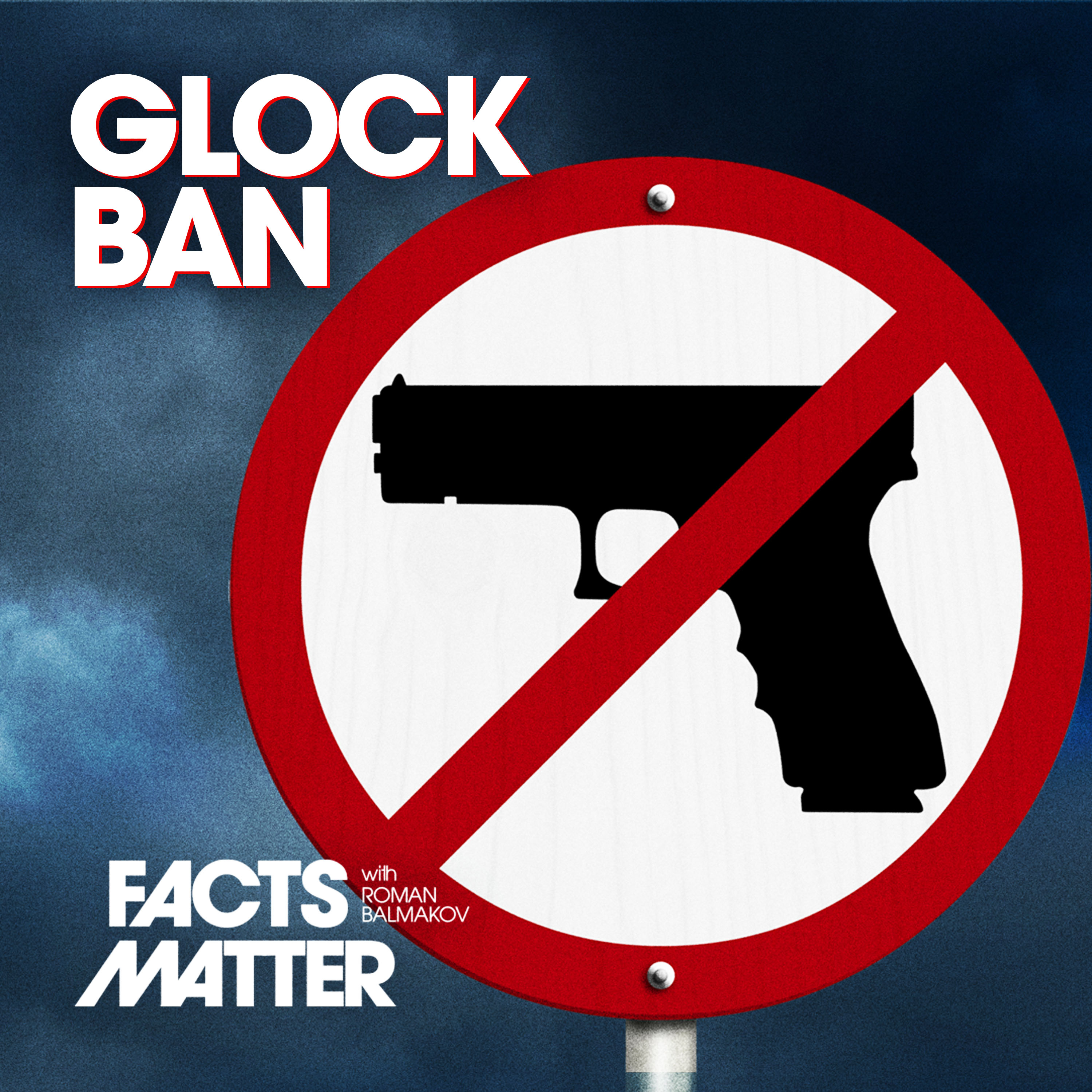
Facts Matter
California’s New Law Redefines Glocks as ‘Machinegun-Convertible’ Pistols, Bans Them
00:15:00
Loading summary
Transcript11 lines
- [00:00]
Roman
Well, California is at it once again because you see in this country for the past several years now, you've had two different tracks that states are going down. On the one hand, you have over half of the states going constitutional in terms of the Second Amendment, meaning they've enshrined laws in their state books, whether that's in the state constitution or just in the state statutes, ensuring that their citizens have access to their Second Amendment rights. On the flip side, however, you have other states restricting their citizens access to firearms. And for that group, California is basically leading the charge. Over the past half decade, actually decade now, they have passed one law after another that in one shape or form restricts their citizens access to firearms. And this latest law is the subject of today's episode. On Monday, October 13th, Governor of California Gavin Newsom said signed into law a state ban on Glock handguns. Specifically, this was Assembly Bill 1127, or as it's otherwise known, the Responsible Gun Manufacturing Act. And what this law does in practice is it redefines what a Glock is. Instead of being just a handgun, a Glock is now considered a machine gun convertible pistol. And Therefore, starting on July 1, 2026, all sales of this machine gun convertible pistol are banned in the state. Now, the thinking, at least on paper, behind this reclassification is that a Glock can easily be transformed into an automatic weapon using a screwdriver and a pistol converter. Here's specifically how it's actually laid out in the text of the law. Quote, a machine gun convertible pistol is any semi automatic pistol with a cruciform trigger bar that can be readily converted by hand or with common household tools into a machine gun by the installation or attachment of a pistol converter. And then the law goes on further to define what a pistol converter device actually is. Quote, Any device or instrument that, when installed in or attached to the rear of the slide of a semiautomatic pistol, replaces the back plate and interferes with the trigger mechanism and thereby enables the pistol to shoot automatically more than one shot by a single function of the trigger. And therefore, the law prohibits firearms dealers in the state from from selling, buying, giving or transferring Glocks, because again, Glocks are now considered, at least according to state law, to be machine gun convertible pistols. Now, the irony to this new law is that Glock switches like the ones that they described were already illegal since the year 1986. That was the year that the Federal Firearm Owners Protection act went into effect nationally and it prohibited civilians from owning either new machine guns as after the year 1986 and or conversion kits to turn their guns into machine guns. And so Glock switches have always fallen into this conversion kit category and therefore have been illegal in the state of California. However, now the Glock itself will become illegal, although very obviously this new law will be challenged against in court on their second Amendment grounds in the very near future. And objectively, it's gonna have a hard time squaring itself with some of the more most recent U.S. supreme Court precedents in this particular area. Let me break down for you the two main Supreme Court decisions that are most relevant here, with the first one being from the case District of Columbia vs. Heller, which was a 2008 case and it established that gun ownership is an individual right. And secondly, you have the other precedent, the New York State Rifle and Pistol association versus Bruin, which is a more recent case and it set up a new, much more stringent legal test that local governments have to pass in order to enact restrictions on guns. And so let's go through these two precedents together as they relate to this law in California, right after you take a super quick moment to smash those like and subscribe buttons so that this vital information can reach evermore people via the YouTube algorithm. And so the first precedent that was put forth in front of the U.S. supreme Court back in March of 2008 was the first case I mentioned, which was the District of Columbia vs. Heller. In that particular case, what happened was that the city government of Washington D.C. they issued a host of different anti gun regulations, including one that made it illegal to own a gun unless the person received a license from the chief of police. And those gun licenses, they could only be issued for one year at a time, meaning as a practical sense, they needed to be renewed every single year. And so in Washington D.C. there was a man named Richard Heller who was denied a gun license and then took the city government to court. After a bunch of legal back and forth, the case eventually wound up in front of the US Supreme Court where the principal question in this particular case became whether or not the second Amendment to the US Constitution protected the right of an individual to keep and bear arms rather than a militia. And after hearing the case and listening to oral arguments and deliberating for over three months, and the majority decision by the US Supreme Court was that it does, the second Amendment does protect the people's right to keep and bear arms. Here is a short summary of the conclusion from the majority opinion in the Heller case. The term militia should not be confined to those serving in the military because at the time the term referred to all able bodied men who are capable of being called to such service. To read the amendment as limiting the right to bear arms only to those in a governed military force, which would be to create exactly the type of state sponsored force against which the amendment was meant to protect people. Because the text of the amendment should be read in the manner that gives greatest effect to the plain meaning it would have had at the time it was written, the operative clause should be read to guarantee an individual right to possess and carry weapons in case of confrontation. This reading is also in line with legal writing of the time and subsequent scholarship. Therefore, banning handguns, an entire class of firearms that is commonly used for protection purposes, and prohibiting firearms from being kept functional in the home, the area traditionally in need of protection, violates the second amendment. And so that was the first precedent ensuring the people's right to own handguns. The second precedent came from a much more recent case. It was a 2022 case called New York State Rifle and Pistol association versus Bruin. Now we've covered that particular case in much greater detail in a prior episode. But but let me give you a brief refresher on what that particular case was all about. You see, up until the year 2022, if you were a resident of New York, it was almost impossible to get a concealed carry permit. That's because the State of New York has been for 111 years up to that point, been forcing people to prove that they had a quote unquote special need for self protection. Now the relevant statute in the State of New York was the Sullivan act of 1911. And that particular law, it made it such that concealed carry permits can be issued at the sole discretion of local law enforcement. And in order for a New York state citizen to obtain one of these permits, he or she must demonstrate a special need for self protection distinguishable from that of the general community or of persons engaged in the same profession. Meaning in a practical sense that only if the local police chief agree that you had a special need for self protection, more more than the general public would you be given a concealed carry permit to carry a gun outside the home. And proving that you had a special need was not easy. It frankly didn't matter whether you lived in a high crime area. It didn't really matter if you were robbed multiple times that year. Unless you were a celebrity or if you were some type of security guard or security personnel, you were frankly just out of luck. It was nearly impossible to get a carry permit now, eventually, in the year 2018, the New York State Rifle and Pistol association, they filed a lawsuit against the superintendent of the New York State Police Force, arguing that the gun laws on the books and that have been on the books for the past 111 years were actually unconstitutional. And after several years of legal back and forth, the case wound up in front of the U.S. supreme Court, where the conservative majority on the court ruled in favor of the plaintiffs. And relevant to our discussion today, in the majority opinion, which was written by Justice Clarence Thomas, there was a sentence in there that opened the door for other gun restricting laws to be rolled back. Here's specifically what Clarence Thomas wrote again in the majority opinion of the 2022 Bruen case. The burden falls on the defendants, meaning the government, to show that New York's proper cause requirement is consistent with this nation's historical tradition of firearm regulation. Constitutional rights are enshrined with the scope they were understood to have when the people adopted them. With these principles in mind, the Court concludes that respondents have failed to meet their burden to identify an American tradition justifying New York's proper cause requirement, meaning, interestingly, it didn't matter that this is the way it was done for the past 111 years, because it wasn't the way that it was conceived of being done when the actual Second Amendment was written. And so with that opinion statement, Clarence Thomas essentially. Well, and the Supreme Court in total established a new legal precedent. Moving forward, federal, state and local governments have to prove in court that their restrictive gun laws are, quote, consistent with this nation's historical tradition of firearm regulation. And so this brings us neatly back full circle to what's taking place in California. Their new state law to ban Glocks is probably one of the most ambitious gun bans since the year 2008, when gun ownership was actually established to be an individual right by the U.S. supreme Court. That that's because the Glock is one of, if not the most popular brands of handgun, according to their official statements as of 2023. So as of two years ago, they've produced north of 20 million units. Also, according to Law Enforcement Today, roughly 65% of U.S. police departments across the whole nation use the Glock as their standard issue handgun. Even our former Vice President, Ms. Kamala Harris, who by the way is also a California resident, she chose the Glock to be her handgun of choice as well. You here was her speaking on Oprah about it during the campaign trail at the debate. I'm a gun owner.
- [09:55]
Tim Walls
Tim Walls is a gun owner.
- [09:56]
Roman
I did not know that.
- [09:59]
Tim Walls
And I thought it breaks in my house, they're getting shot.
- [10:02]
Roman
Sorry. Yes, yes, I hear that. I hear that.
- [10:05]
Tim Walls
Probably should not have said that.
- [10:09]
Interviewer
You recently surprised people when you said that you are a gun owner and then if someone came into your house.
- [10:16]
Tim Walls
That was not the first time I've talked about it. That's not the first time I've talked about it.
- [10:20]
Interviewer
So what kind of gun do you own and when and why did you.
- [10:23]
Tim Walls
Get I have a Glock and I've had it for quite some time.
- [10:28]
Roman
And so obviously the Glock is a popular weapon that's in common use. And interestingly, even though technically it was not in common use at the time that the Second Amendment was ratified into the US Constitution, it doesn't seem to matter. In fact, to that very end, here is what Justice Clarence Thomas wrote in a dissenting opinion back in the year 2015 and this was in a case where a local Illinois government was trying to ban semi automatic firearms like the AR15, which also was not in common use at the time that the Second Amendment was ratified. But to that argument, here was what Clarence Thomas wrote Several courts of appeals have upheld categorical bans on firearms that millions of Americans commonly own for lawful purposes. Such rulings are in non compliance with our Second Amendment precedents. Such rulings suggested that states could ban AR style semi automatic rifles, even though an overwhelming majority of citizens who own and use such rifles do so for lawful purposes, including self defense and target shooting. Under our precedents, that is all that is needed for citizens to have a right under the second Amendment to keep such weapons. That's what he wrote about the AR15, and arguably the Glock is an even more popular weapon nationwide. And so we'll have to wait and see whether the same logic will apply to this ban on Glocks. The only thing I guess we can do is wait as the case gets taken up by some court, makes its way through the legal channels, and maybe like one or two years actually gets its day in court in front of the U.S. supreme Court. In the meanwhile though, starting in July of next year, sales of the Glock, which is now considered a machine gun convertible pistol, will be banned in the state of California. If you'd like to read the text of the law that actually enacts this band, or the different Supreme Court precedents that we went through in today's episode, I'll throw the links to all them down in the description box below this video for you to peruse at your own leisure. If you're the type of person that likes to dig into the wheat. And then lastly, I'll quickly mention that if you are looking for an excellent source of news, and perhaps you've been thinking about trying the Epic Times, you're on the fence. You're like, okay, you know, seems interesting, seems like a good alternative to the mainstream media, but maybe I'll wait and see. Well, wait no longer because we are running a phenomenal promotional sale. You can try the Epoch Times with a trial subscription, and you can even cancel at any time, so there's no real risk. So I hope you check it out. By getting that trial subscription, you'll get access to everything, all the infographics, the articles, the videos, the documentaries, the analysis pieces. I think I already said the infographics, but we have a lot of infographics, so it's perhaps worth mentioning twice. But there's a lot of great content on there. And basically, even as events are unfolding across the world, we have teams literally across the world in over 30 countries. We report on things without any narrative. We don't spin the facts. And because we have these local reporters embedded throughout the whole world, we kind of pool our resources together and we're able to present to you an excellent picture of what's happening across the world so that you can actually be informed. You're not led to believe one thing or another. You're just informed with the facts, and then you can make up your own mind about what's actually happening and how it fits into your own worldview. In my opinion, it's an excellent independent news organization. We have over a million subscribers. So if you want to join that growing movement of people who really are trying to break away from this, like, mainstream media complex and move over into a better system, check it out. Right now is a great opportunity with a trial subscription. I think you'll like it. I think you'll like it. I like it. I check it every single morning. I read it for, let's say, like 20 minutes to an hour. And. And I feel informed. And at the same time, I feel uplifted because the content on there, because they break the editorial and the opinion so well, I feel informed. I don't feel like. I don't have this dirty feeling like, oh, gosh, I feel like they're pushing me to believe in a certain direction. It's like, no, I actually just feel informed. And then that's it, that I can move on with my day. And when I talk to people, I know the actual underlying facts of an issue. And so I feel like even if I don't argue with someone on a point, I feel like I know what the underlying reality is, and so I feel like I can't be misled as easily. So check it out. It's a great publication, and with that trial subscription you can try it out pretty much risk free, and I hope you like it. So again, the link will be right there in the description box below. That was kind of a long winded way of hoping of saying that I hope you subscribe to the Epoch Times. And then until next time, I'm your host Roman from the Epoch Times. Stay informed and most importantly, stay free.