← Facts Matter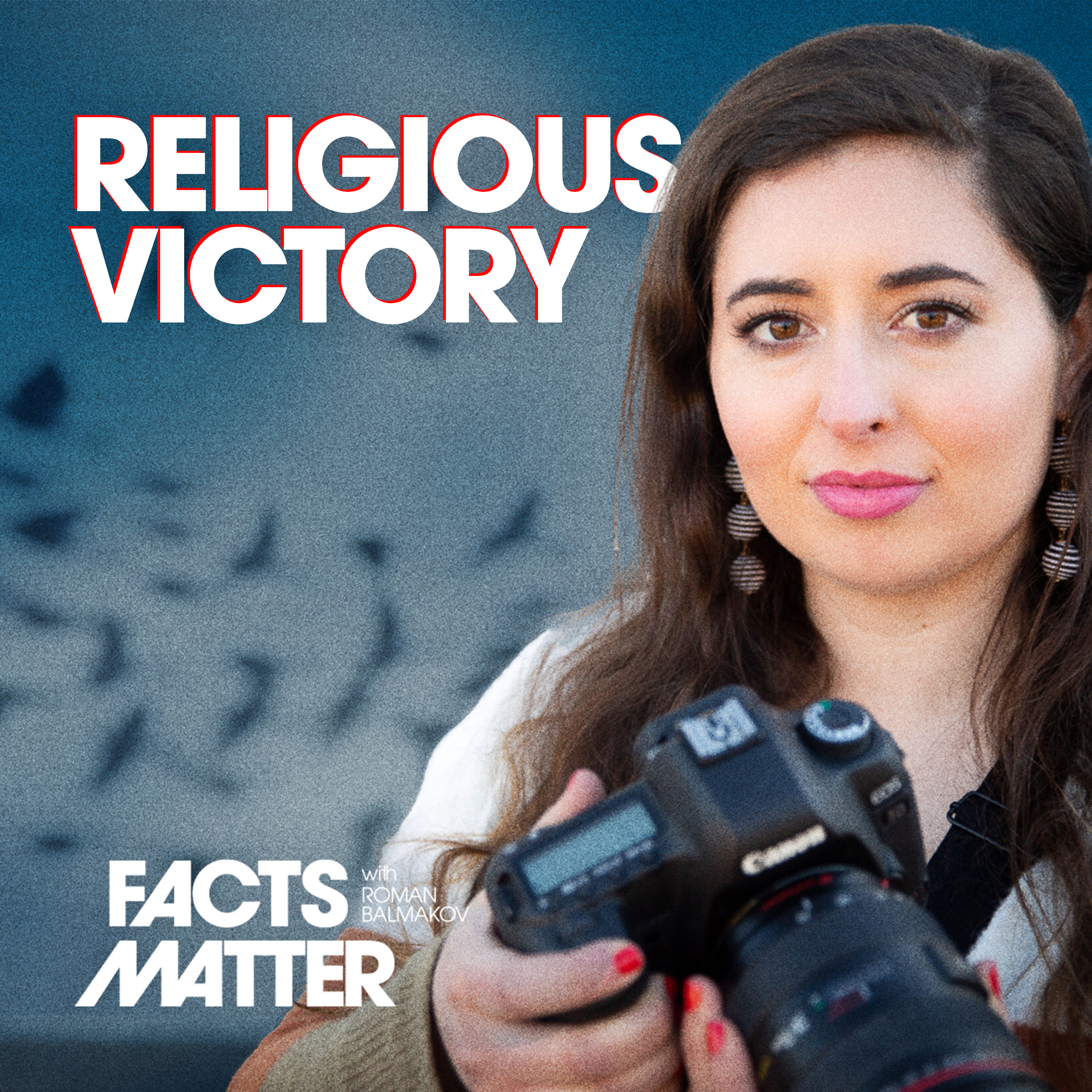
Facts Matter
City Ordered to Pay $800,000 to Christian Photographer for Unconstitutional Ordinance
00:09:27
Loading summary
Transcript1 lines
- [00:00]
A
A Christian photographer over in the state of Kentucky was just awarded $800,000 in a settlement in a case that lasted well over six years because of the unconstitutional demands placed on her by the city of Louisville. Let me give you the backstory of this particular case. If you happen to be in your 30s or older, then you likely remember Mr. Jack Phillips. He was that Christian baker over in Colorado who refused to make cakes celebrating celebration same sex marriages. And because of it, Jack and his bakery were really put through the wringer during the Obama years. He was vilified in news reports, there were constant protests outside of his store and a gay couple spent five years suing him only to lose at the U.S. supreme Court. However, in their decision, the U.S. supreme Court basically they punted the actual underlying issue down the road because even though technically they did rule in favor of Mr. Jack Phillips, they only based their ruling on a technicality. They found that the local Colorado commission, they showed anti religious bias against Mr. Phillips. Here was a summary of that decision and what it meant for other cases moving forward. Quote In a 7:2 decision, the court held that the Colorado Civil Rights Commission's conduct in evaluating a cake shop owner's reasons for declining to make a wedding cake for a same sex couple violated the free exercise clause. The court explained that while gay persons and same sex couples are afforded civil rights protections under the laws and the Constitution, religious and philosophical objections to same sex marriage are protected views and can also be protected forms of expression. The Colorado law at issue in this case, which prohibited discrimination against gay people in purchasing products and services, had to be applied in a neutral manner with regard to religion. The majority acknowledged that from Phillips perspective, creating cakes was a form of artistic expression, oppression and a component of his sincere religious beliefs. That ruling, by the way, it came down all the way back in the year 2018. However, several years later there was another case that did actually solidify the underlying legal issue at play. That was when in the year 2023 the U.S. supreme Court ruled in a case called 303 Creative vs Ellenist. And in that case they determined that a Christian website designer could refuse to provide services with for same sex marriages. Essentially, the Supreme Court found that Americans they do not have to provide creative services that violate their religious beliefs. That was a more broad ruling. In the majority opinion of that 2023 case, Neil Gorsuch, he wrote the following, quote, the framers designed the free speech clause of the First Amendment to protect the freedom to think as you will and to speak as you think. They did so because they saw the freedom of speech both as an end and as. As a means. However, it appears that no one informed the lawyers for the city of Louisville, Kentucky. That's because a local Christian photographer there named Chelsea Nelson, she sued the city over a law that would have required her as a photographer, to shoot gay weddings. It was called the Fairness ordinance, and it prohibited against discrimination based on a plethora of characteristics, including sexual orientation as well as gender identity. Quote, Nelson claimed Louisville's fifth fairness ordinance could require her to photograph same sex weddings and prevent her from sharing her views on marriage on her studio's website. The ordinance passed in 1999, prohibits discrimination based on sexual orientation and gender identity in housing, public accommodations, and employment. Now, the opportune word there in that summary was the word could require. You see, that local law, it had been on the books since the year 1999, and the phrasing of it made it such that it could have been used to force a Christian photographer like Chelsea to both shoot a gay wedding, and it could have been used to prevent her from sharing her views on marriage on her company website as an example. And so Chelsea, what she did was she preemptively filed a lawsuit against the city arguing that the Fairness ordinance, as it was written and as it was written on the actual books, infringed on her first amendment rights. Now, the city, they dragged out the case for a long time. It took six years, but. But eventually, as you would have expected, given the Supreme Court precedents, Chelsea wound up winning the case. In a final judgment filed in October, U.S. district Court Judge Benjamin Beaton kept in place a permanent injunction that bars the city from enforcing the law against Nelson, and ordered the city to pay Nelson $1 in nominal damages, which are typically small symbolic payments, acknowledging that the plaintiff has suffered a legal wrong. Then, in addition to the cool $1 she received as a nominal damage check, Chelsea was also awarded $800,000 in legal fees. Meaning, if you think about it, the officials in the city, they spent six years of time, $800,000 in settlement money, as well as at least that much for their own attorney fees to basically fight a losing case. And it's fair to say that it was obviously a losing case, given that former Supreme Court precedent, which is something that the judge himself mentioned in the ruling. Quote, that 2023 Supreme Court decision confirmed this court's interpretation of the First Amendment to bar the city of Louisville from enforcing an ordinance prohibiting wedding photographer Chelsea Nelson from stating her traditional, now dissenting views on traditional marriage or declining to participate in those ceremonies. And so, yeah, following the ruling and the $800,000 settlement, the lawyers for Chelsea, they released a statement saying they were thrilled with the ruling. And they added the following quote, the government cannot force Americans to say things they don't believe. For almost six years, Louisville officials tried to do just that by threatening to force Chelsea to promote views about marriage that violated her religious beliefs. Louisville's threats contradicted bedrock First Amendment principles, which leave decisions about what to say with the people, not the government. This settlement should teach Louisville that violating the U.S. constitution can be expensive. Then, on the flip side, though, you had the press secretary for the mayor's office of Louisville play down the ruling and basically say that the settlement only provided for attorneys fees. And he added the following quote. We are committed to fully enforcing Louisville's anti discrimination ordinances, including the Fairness Ordinance, which bans discrimination against LGBTQ people. There you have it. If you'd like to go deeper into this particular case, I will throw the links to the PDFs of the court documents, including the one in this case, as well as the prior Supreme Court precedent documents. You. You can find them all down in the description box below, which is that description box right below those like and subscribe buttons, both of which I hope you've already smashed. If you haven't, though, now. Now's a great opportunity. Smash that like button so this video can reach ever more people via the algorithm. Smash that subscribe button so this video can also reach more people via the algorithm. But that also, next time we publish a video, you'll be informed of it if you're subscribed. And then lastly, over on EpicTV, which is our own exclusive, no censorship platform, we just published a phenomenal documentary called Healthcare Decoded. Basically, through a series of great interviews with doctors, the film exposes some of the actual problems with America's healthcare system, because, I mean, we all kind of feel it intuitively, this dichotomy. Whereas, on the one hand, the US has the best, most advanced medical care in the world that everybody flocks to, but at the same time, the system is complicated, convoluted. And because of years of these government patchwork solutions, it's become like a maze to navigate. I heard of the story of this guy. For instance, he went to the hospital because he had some emergency care that was necessary. And when he left, he was given a $4,000 bill because they assumed that he did not have insurance. So, uninsured, they gave him a $4,000 bill. Okay, so he came home, he called up the hospital, the billing department, he talked to them and he said, hey, I actually, I do have insurance. And he gave them his policy number and his insurance plan. And they said, okay, since you have insurance, you owe us $5,000. So it went from $4,000 to $5,000. He was on the phone, he said, how could that possibly be? How could I owe more for having insurance? And they explained to him that if he was uninsured, the procedure was only $4,000. But because he was insured, the procedure was actually $18,000. And the insurance company, they negotiated a price where he would only pay 5,000 of it and then, and they would pay the remainder. And he said, that's crazy, I owe more. He said, okay, forget I told you anything, forget I'm insured, I'll just pay the $4,000. And the billing department on the phone, they said, no, we can't do that anymore, because legally you were insured during the period of time when you were given care. And so you have to pay us $5,000 because that's the way the law works. And so that's just one example of many showing the convoluted nature of that healthcare industry. The fact that such a story could actually exist shows that there's something going on that's broken. Because I'm sure there's a. There's an explanation for it that makes sense, but nothing, you know, it breaks common sense when some stuff like that happens. And so anyway, the documentary, it lives the veil a little bit about how the system actually operates and what the machinations are behind the scenes that create opportunities like this. But most importantly, the documentary provides actual practical tips on how you can, can navigate the complexities of the system in a smart way. And so, yeah, that's all to say it's a great documentary and you can find a link to it. It'll be right there at the top of the description box below. Just click on that link, it'll take you to a page. If you're subscribed already to EpicTV, great, you can watch the documentary right away. If you're not just subscribe, it's only a few bucks. And then you can watch both the documentary as well as all the other great content on there. Again, that link is right there at the top of the description box below. Click it, watch healthcare, decode it, and then until next time, I'm your host, Roman from the Epic times. Stay, stay informed, and most importantly, stay free.