← Facts Matter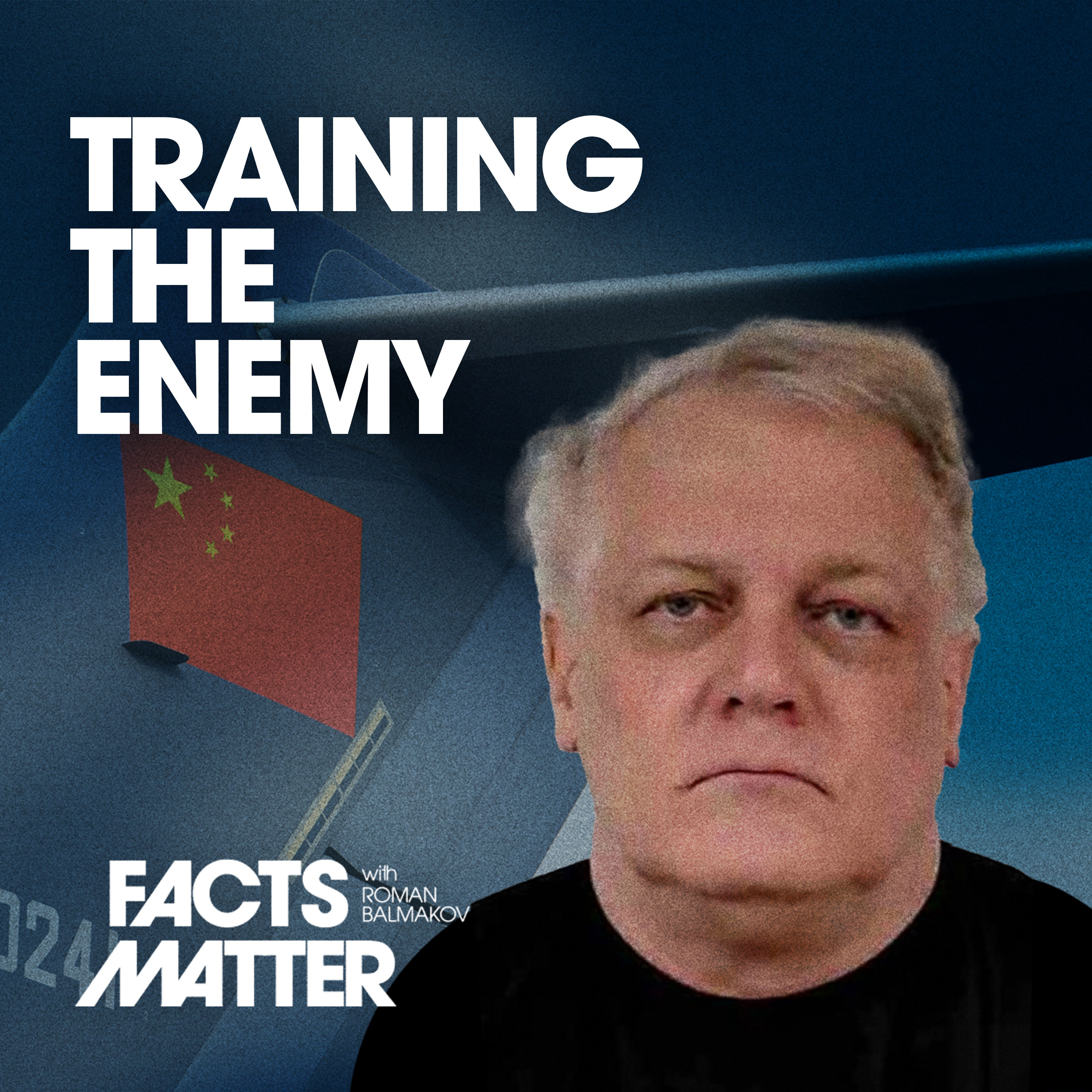
Loading summary
Transcript1 lines
- [00:00]
A
An elite U.S. air Force pilot was just arrested because he did the one thing you really shouldn't do after leaving the service, which is training your Chinese military counterparts. Allegedly, the man's name is gerald Eddie Brown Jr. And he had a fairly solid career in the US military for 24 years. Starting in 1972, he spent 24 years in the US Air Force and reportedly he had vast experience with the F35 stealth jet and as well as with America's nuclear delivery systems. Here was how the doj, the Department of Justice, described his service. Brown served for over 24 years in the US Air Force, leaving active duty in 1996 with the rank of major. During his lengthy military career, Brown commanded sensitive units with responsibility for nuclear weapons delivery systems, led combat missions, and served as a fighter pilot, instructor and simulator instructor on a variety of fighter and attack aircraft and including the F4 Phantom 2, the F15 Eagle, the F16 Fighting Falcon, and the A10 Thunderbolt 2 Warthog. Now, Gerald did retire in the year 1996, but he didn't totally step away. After retiring, he worked as a commercial pilot for cargo planes, but he also continued to work with the US Air Force in the capacity of both an advisor as well as an instructor. Quote. After retiring, Brown then served as a commercial cargo pilot and and most recently as a contract simulator instructor for two different US air defense contractors training US military pilots on flying the A10 and the F35 Lightning II joint strike fighter. But apparently Mr. Gerald Brown was also moonlighting on the side by training Chinese military pilots for the pla, which is again one of those few things that you really should not do as a retired Air Force pilot, which is training our biggest adversary on our flight tactics. But that's what happened, allegedly. And here's where I need to introduce to you. Another man. This man's name is Steven Su Bin. And if that name sounds weirdly familiar to you, that's because back in the year 2014, Stephen was arrested over in Canada and extradited to the United States in order to face charges of cyber espionage. And according to those earlier indictment papers, here is what Stephen did again back in 2014, quote, Steven Soo Bin, a China based businessman in the aviation and aerospace fields, was indicted in the criminal conspiracy to steal military technical data, including data related to the C17 strategic transport aircraft and certain fighter jets produced for the US military. Basically, back in 2014, Stephen was the inside guy in the west, helping Chinese military hackers target Boeing and Lockheed Martin in order to steal the designs for things related to the F22, the F35, as well as the C17 aircrafts. He was eventually sentenced to four years in prison. And after getting released, he reportedly went back to China. And the reason that I bring up Mr. Stephen Bin's story is because Steven was the contact for Gerald Brown Jr. The Air Force pilot. Here's what the Department of Justice said regarding what was happening behind the scenes. Starting in August of 2023, quote. In or around August 2023, Brown began arranging the terms of his contract to train Chinese military pilots, using a co conspirator to negotiate with Steven Su Bin, a Chinese national who in 2016 pled guilty to conspiring to hack into the computer networks of major US Defense contractors and steal sensitive military and export control data for the People's Republic of China. Throughout these communications, Brown consistently stated his intent to train PRC military pilots in combat aircraft operations. Which by the way, just as an aside, really amazing that Stephen here was caught in Canada, extradited to the us served four years in prison for essentially treason. But then when he was released from treason, he goes back to China and almost immediately starts recruiting American fighter pilots to train Chinese military pilots. It's amazing. It almost feels to me at least, like maybe four years in prison did not teach him the lesson that it was supposed to. Regardless, though, reading through this criminal complaint from the doj, it's not exactly clear whether there was an ideological reason for Mr. Brown's actions, or perhaps he was just in a late stage of life and was just happy to train fighter pilots once again. And the reason that I say it this way is because included here is a few snippets of Mr. Brown's discussions with his Chinese counterparts. And here's how they go. Quote in. In the resume he prepared for his application, Brown wrote his objective as instructor fighter pilot. A co conspirator told Brown that he hoped Brown would be assigned to my base, but otherwise you'll go where is the local equivalent as the U.S. air Force weapons School. Later, he stated to a co conspirator that upon his arrival in China, now I have the chance to fly and instruct fighter pilots again. And so that's basically how it began. In August of 2023, Mr. Brown began arranging this training in China with Stephen. And within a few months, By December of 2023, he began traveling to China to actually offer this instruction in person. Quote In December of 2023, Brown traveled to China to begin his work training PRC military pilots. After his arrival, Brown answered questions for three hours about the US Air Force on his first day in the PRC, and then on his second day prepared and presented a brief about himself for the People's Liberation Army Air Force. Brown remained in China until he traveled to the United states in early February 2026. So he basically stayed there for three full years until he returned to the US just last month, and exactly what you would think happened, happened. He was arrested by the Feds in Jeffersonville, Indiana, and he was charged with a fairly serious crime violating the Arms Export Control act, which I will mention, I previously assumed you, based on the name of that law, that the law only referred to physical weapons. But for this case, I read the text of the law and it does specify that selling military knowledge and know how without prior US government approval is also illegal. If found guilty, Mr. Brown faces the prospect of upwards of 20 years in prison, alongside a potential fine that can go as high as US$1 million. He is, of course I should mention, innocent until proven guilty. Now, alongside the charging documents, he Here was a statement that was released by the Assistant director of the FBI's Counterintelligence and Espionage Division. Gerald Brown, a former F35 Lightning II instructor pilot with decades of experience flying US military aircraft, allegedly betrayed his country by training Chinese pilots to fight against those he swore to protect. The Chinese government continues to exploit the expertise of current and former members of the US Armed Forces to modernize China's military capabilities. This arrest serves as a warning that the FBI and our partners will stop at nothing to hold accountable anyone who collaborates with our adversaries, to harm our service members and jeopardize our national security. And so, there you have it. I will be following this case as it unfolds in the court system, and I'll give you any updates as they become available. But in the interim, for one, all the links to the PDFs of the court documents, they will be available down in the description box below. You can peruse them and read the details for yourself if you'd like. Secondly, please do smash those like and subscribe buttons so that this video can get more play from the algorithm. Thank you so much for that. And thirdly, I'd love to know your thoughts. Is the prospect of facing 20 years in prison enough for something like this? And also, generally, is it starting to feel like the people who get caught doing these things for China, are they getting really light sentences? I mean, even that guy that Mr. Brown was coordinating with, the one named Stephen Bin, he was only given four years behind bars for helping the Chinese military hack into our contractors and extract the schematics for US military fighter jets. He was given just four years. And then afterwards, he goes right back to China and continues his work recruiting Americans like Mr. Brown to train Chinese fighter pilots. I mean, that's essentially treason. Maybe it's treason by another name, but. But it is treason. And he was given four years for that sentence. I mean, for that crime. And it's a sentence that didn't really teach him a lesson, obviously, since he went right back to China and with the immunity that China affords him because there's no extradition treaty with the US he went boom, right back to recruiting American fighter pilots. And so, I don't know, is it starting to feel like you get caught doing these types of things for China, you get a slap on the wrist and then some US official comes out and says, hey, this is an excellent case to showcase how we're taking this very seriously and setting an example for anyone that's thinking about doing this for China. And then the guy gets four years. Or for instance, those. It's another case. And there's more details there and more nuance. But those Chinese college students, the scholars that were importing those fungi and those pathogens into the US While they were flying in, and they are getting off, by the way, one of them was recently just deported back to China without facing any jail time. And the others are still going through the system, but it's kind of looking like they might get very either light sentences or also just get deported. And so I don't know. I don't know. I'm happy at the prospect that our, our intelligence services are good enough that they can find something like this that, you know, former U.S. air Force pilot is over in China training the PLA military pilots crazy. So they can find them and arrest them. Allegedly. But at the same time, I am getting a little unnerved by the extremely light sentences that these people are receiving. I mean, we'll never know with Mr. We will know later with Mr. Brown how much he receives. But I'd love to know your thoughts. Is it equivalent, Am I perhaps reading a bit too much into it and I should look at it on a case by case basis? Or am I correct that looking at it kind of from a broad overview, they are getting sentences that are too light? Leave your thoughts in the comment section below. I'd love to know what you think. And then, until next time, I'm your host, Roman from the Epoch Times. Stay informed. Most importantly, stay free.