← Facts Matter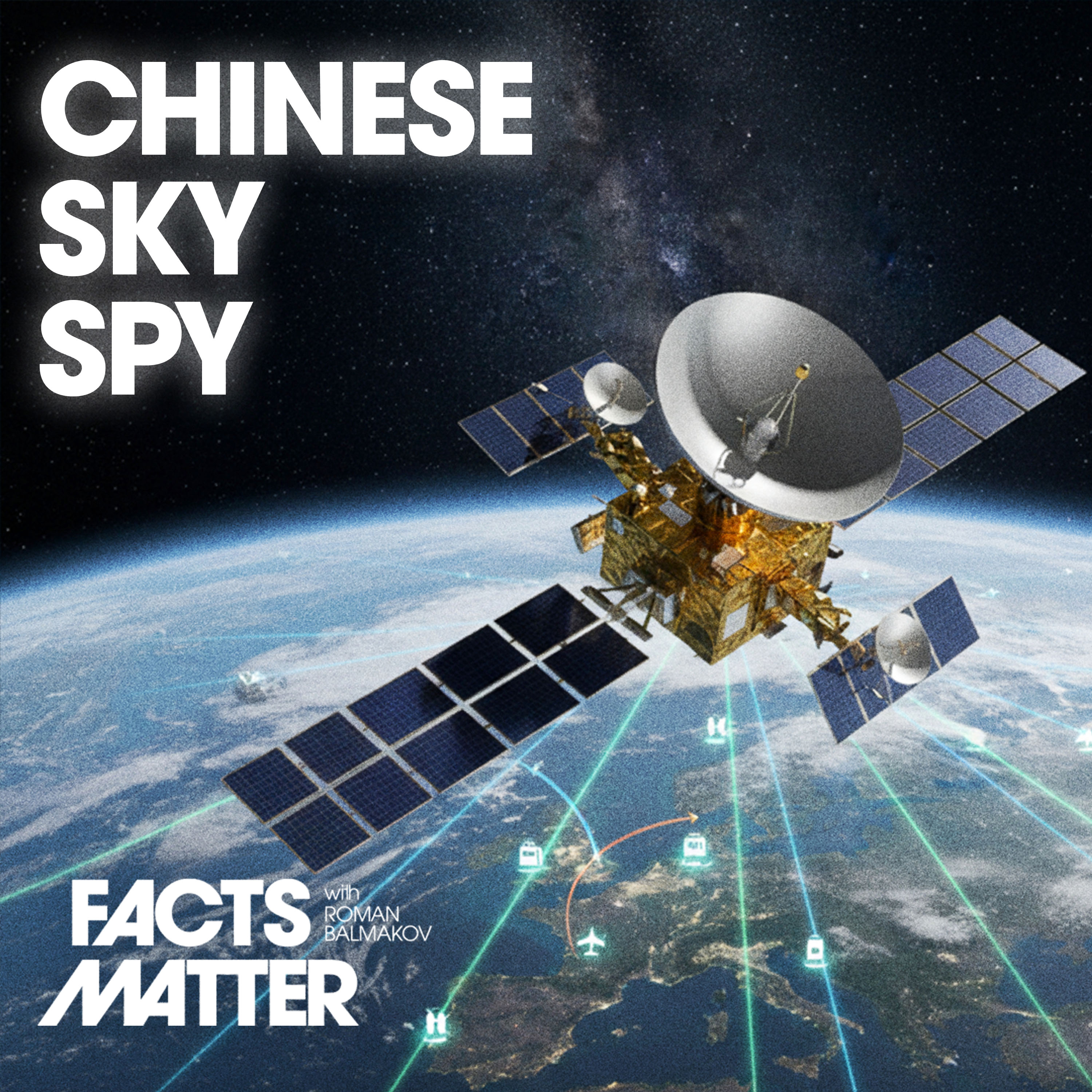
Loading summary
Transcript1 lines
- [00:00]
A
In August of 2023. So exactly three years ago, China launched a rocket that they said was carrying the Ludi Tanzi 401 satellite up into geosynchronous orbit some 22,000 miles above the surface of the Earth. Chinese authorities back then publicly framed the satellite as being totally benign. They said that it was a civilian remote sensing research satellite designed to support things like disaster prevention, resource exploration, meteorology as well as agriculture. Now, the reason that this is even worth bringing up is because that particular satellite was one of a kind. What made that satellite so special is that it was the world's first and only synthetic aperture radar, otherwise known as SAR satellite satellite in geosynchronous orbit. Now, before we continue, I'm going to have to quickly define those two terms, so we're going to be on the same page here. The first term is geosynchronous orbit. That is the precise distance from Earth that an object in orbit will complete a full rotation around the Earth in the same time that it takes the Earth to spin around once. And so basically a satellite in geosynchronous orbit will always remain over top a particular spot because, because it moves at the same pace as the Earth spins, this allows for a constant and stable view of a particular segment of the planet. Then secondly, in terms of the Synthetic Aperture Radar satellite, otherwise known as the SAR satellite, it uses radio waves to take sharp and clear pictures of the Earth's surface. And unlike a regular camera that uses an optical lens, these SAR satellites, they can actually work day or night and they can see through clouds as well as smoke because they don't need sunlight like a regular camera does. Essentially, they can take high resolution photos, day or night, regardless of the weather conditions. You can think of it as basically a new Chinese super satellite that because of its distance from the earth, can maintain 24, 7 surveillance and approximately one third of the planet's surface, specifically over the Asia Pacific region and as well as the entire Indian Ocean. Their view, it basically spans a circle which includes all of Australia, the eastern part of Africa, all of the Middle east, as well as everything south of Russia within Asia. Now, the resolution on the satellite of theirs is estimated to be around 20 meters, which is about 65ft. That's enough to be able to detect large objects like ships or buildings. But the Chinese capabilities actually got a lot stronger because within a few months of launching the first satellite in August, In December of 2023, China launched another satellite also into geosynchronous orbit. This one was an optical imaging spy satellite. And unlike the radar satellite, this one could not see through cloud cover, but it was capable of producing images with a resolution of about 2.5 meters, which is like 8ft. And that level of clarity, it would allow the Chinese government to spot vehicles, aircrafts, as well as vessels across wide regions. And of course, those two satellites, being both owned by China, can be used in tandem with one another. Now, when it happened, the launch of these two Chinese satellite systems was really enough to put the US Space force on edge. That's because the optical sensors on those Chinese satellites, they would be able to spot American stealth, stealth aircraft, which are designed to be undetected by conventional radar. And to that end, you had a former US Intelligence official writing the following. Just one month after the second Chinese satellite launched, quote, relentless advances in Chinese surveillance capabilities could soon produce an Indo Pacific region where there is no place to hide. Going forward, the Pentagon should consider that China might be able to detect and track aircraft, even those designed to evade radar. And the concern with that is obvious. For one, these satellites will be extremely valuable assets to the Chinese military if the tensions between China and the US And Taiwan ever boil over into some kind of actual kinetic warfare. But then, even outside of a war, a kinetic war with the US there's the real threat of the Chinese allowing some of their geopolitical buddies to use those satellites against the US as well. For instance, there were some reports by the Financial Times about how China was helping the Iranian government keep surveillance on U.S. military bases in the Middle east using Chinese satellites that were already in low earth orbit. Those allegations were unconfirmed. But obviously, if you just think about it, the Chinese government could do something like that if they wanted to hurt the US by helping out our enemies with their intelligence. The two new satellites just give them more intelligence to use. All right, just to pause here for a super quick moment. If you've watched our program, Facts Matter, then you know that we focus on one thing, which is the facts, not speculation, not narratives, just what the data shows. And right now, the data globally is pointing in a direction people should really be paying attention to, which is the fact that global conflicts are fueling market uncertainty. That's why I believe in owning something real, something physical, something. Something that the government can't just inflate away, which is physical gold and physical silver from today's sponsor, which is American Hartford Gold, the company that I trust and who I've been personally buying from for many years. Now, these are tangible assets. They're not tied to policy decisions or shifting narratives. Gold has held its value for thousands of years through inflation, currency changes, the rise and fall of empires as well as general global instability. In a certain sense, gold actually thrives in periods of global instability. And American Hartford Gold is a good company. They have an A plus rating with a Better Business Bureau, thousands of five star reviews. They can deliver your gold and your silver directly to your doorstep or they can help you set up a gold IRA if you're trying to diversify your retirement. And right now, when you call and mention my name, Roman, you can get up to $20,000 in free silver with your first qualifying purchase. So give them a call if you 866-242-2352 or just text Roman to 65532. That's again 866-242-2352, or text Roman to 65532. I'll also throw all their details. You'll be able to find them down in the description box below. Now at this point in the story you might be asking yourself the obvious question. How come it is that the US with all of our technological superiority, don't already have one of these geosynchronous SAR satellites in space? And as a caveat, maybe we do. Publicly, we nobody has ever said that we do have one of those. But you know, maybe it's a military secret, but I'm going to go with the public knowledge that we do not have one of these satellites in space. The reason for not having it in space therefore is twofold. Firstly, it has to do with the power source. You see normally radar satellites maintain an altitude of around 370 miles above the surface of the Earth. It's called LEO Low Earth Orbit. One major reason that satellites fly in this region of space is because the strength of the radar signal, it really begins to dwindle the further away you move. And so the satellites over in geosynchronous orbit, which are on average something like 22,000 miles above the earth, it allows them to cover more area but then they need a lot more power to achieve the same imaging capabilities as the satellites that are closer to us. It's basically a trade off. Further away you can see a lot more, but it takes a lot more power. And so to overcome that problem, the Chinese Ludi Tanzi 401 satellite, it relies on gallium nitride technology to power all of its onboard sensing equipment. To that end, just last month you had the South China Morning Post run an article which was titled China's Unique High Orbit Satellite Rare Metal. The US struggles to obtain. The article basically highlighted this accomplishment by the Chinese and it took a victory lap around the US and very specifically it attributed China's success in this particular endeavor to their stranglehold on the gallium industry, of which China produces something like 95% quote the Ludi Tanzi 401 radar satellite powered by Gallium nitride semiconductors, is the only satellite of its kind. China has near total dominance of the global supply of gallium nitride, a key component in active electronically scanned array radars, electronic warfare systems and next generation defense platforms, and has restricted gallium exports since the satellite launched in August of 2023. And it's that last part that might actually prove to be the undoing of the ccp, because as this article alluded to the Just one month before the Chinese launched their first satellite, they began to restrict gallium exports to the whole world. And then a little over a year after that that restriction turned into a full out ban on gallium exports. And in terms of why that type of an export ban hurts the US militarily, let me read to you an excerpt from SFA Oxford. It's a little bit lengthy, but it's a good breakdown of the various critical elements that go into various military technologies and why gallium is so important within that FR Quote Gallium is critical for high frequency and high power electronic systems due to its use in gallium arsenide and gallium nitride semiconductors. These materials are foundational in active electronically scanned array radar systems which provide enhanced targeting accuracy, faster threat detection and greater resistance to jamming. Gallium nitride based components offer high thermal conductivity and voltage tolerance, making them ideal for directed energy weapons and high power microwave systems. Gallium also plays a vital role in advanced communication systems and satellite payloads supporting secure high bandwidth data transfer in combat environments. Its role in amplifying signal strength and energy output makes it indispensable for precision guided weaponry and next generation targeting technologies. And so that is rough when your largest geopolitical rival controls 95% of that and then bans the export of that to you. And well, the US found itself in a pretty precarious position, you can say now Technically this Chinese export ban was later paused during the Trump Xi trade negotiations and technically it's on pause right now up until the end of November of this year. But that's only for civilian use. China's ban on military exports of gallium does remain in place, meaning the US must source its gallium from elsewhere. And here's the Ironic twist to the whole story. Despite China controlling 95% of gallium, the situation is not as horrible as you might think. According to the most recent Mineral Commodity Summaries report that came out of the US Geological Survey, the US is currently 100% dependent on gallium imports from four countries, mainly from Canada, from Japan, from China and from Germany. And then if you look a bit more granularly, we get 28% of our gallium from Canada, 22% from Japan, and 18% from China and 16% from Germany, while the other 16% come from the other countries combined. The report also found that the US has a consumption demand of just 19 tons of gallium, meaning that despite China making up 95% of global production, we only get 18% of our gallium from them. And furthermore, we don't even need that much of it per year. It's very important in military applications, but you don't actually need that much of it per unit produced. And again, while China currently dominates the globe in gallium production, it's not because of any raw material limitations on the rest of the world. It actually seems like what happened was that the rest of the world was just content with letting China do all of its dirty work when it comes to things like mining, refining and polluting their environment, and then just taking the gallium from them. Quote the metal, meaning gallium is mainly extracted as a byproduct of alumina production rather than mined independently. And China, the world's largest aluminium producer, accounts for more than 95% of global primary gallium production. Meaning that the state of affairs was such that China was producing the most aluminum in the whole world. And then as a byproduct of that, they also happened to become the world's largest gallium producer as well. However, ever since, I guess you can say they overplayed their hand. And ever since the Chinese government began to withhold access to to critical and rare earth minerals, including gallium, to the rest of the world, but also including the us The US government has been proactively working to establish different and new supply chains and then also move away from China altogether. To that end, In September of 2025, you had the Department of Energy announce a six million dollar funding program for domestic R and D to help establish domestic supply chains for gallium. Then two months after that, in November of 2025, you had the U.S. department of War give an almost $30 million grant to a company called Element USA Minerals. And then just earlier this year, in June, that same company announced that The Department of Energy had awarded them an additional $67 million as well for that project. Now, that company's plan, without getting into the nitty gritty, their overall plan is to develop a facility in Louisiana in order to recover gallium. And as well as something else called scandium from industrial waste, this company has allegedly developed a process to pump in a byproduct of aluminum production. It's a red colored mud called bauxite residue, and normally just a waste product, but they alleged to have found a process that can extract gallium as well as other things from this mud. And if we just do some back of the envelope math, their Louisiana facility has a target of approximately 1 million tons of thin throughput per year, meaning they plan to pump 1 million tons of this red mud through their system every single year. Now, within that mud, the concentration of gallium is roughly 50 parts per million. And so if you just do the math, 1 million tons of bauxite fed through this system, it could theoretically generate about 50 tons of gallium per year from just this one single source, which is a lot more than the 19 tons of the US uses every year. That, and that one factory alone could basically more than cover what the rest of the world combined sells to us. There's also another project based out of Tennessee that's getting funding through the Department of Commerce. Basically, things are happening in the space. And so that article from the South China Morning Post that was published just last month, the one that basically attempted to scare Americans into a state of panic over our access to gallium, it's a little far fetched to say the least, especially since we only get 18% of our gallium from China to begin with. And so that's all to say that soon we will probably have enough domestically made gallium to launch many geosynchronous SAR satellites into space. However, we might not actually want to, because this gets to the second reason why the US hasn't launched them yet, which is that we just might not want to. The US military appears to prefer to use a constellation of lower cost, higher resolution, low earth orbit satellites. That particular type of a system appears to be a lot more resilient. It's a lot harder for an adversary to take out dozens of our satellites compared to just one satellite. And it's a lot more flexible. Our smaller satellites flying closer to Earth are easier to mass produce, they're easier to launch, and they're easier to maintain compared to a single more expensive satellite flying somewhere up 22,000 miles away. Especially when there are already robots out there in geosynchronous space, 22,000 miles away that are designed to grab satellites and to manipulate them at will. The robots of course, are meant to fix broken satellites that have a benign purpose, but in a wartime scenario they could easily be used for offense as well. And so having just a single SAR satellite out there in space, providing you with a view of a third of the planet is a bit like putting all your proverbial eggs into one basket. It's not a very good military strategy, which, by the way, that what I just described might sound a little bit like literal Star wars science fiction, but it's not. Because just earlier this year, the US Air Force's Geosynchronous Space Situational Awareness Program, otherwise known by the acronym gssap, they did launch two space surveillance satellites whose mission is to monitor the satellite activity in geosynchronous orbit, basically to make sure that everyone is behaving up there. Here is from the Air Force themselves. Quote they provide neighborhood watch services in the geostationary earth arena using improving flight safety for all space faring nations operating in that orbit with better information about the position and activities of satellites within the increasingly crowded geosynchronous orbit drastically speeds up US Space Force space operators ability to warn others if another object is anticipated to approach too closely or create a hazardous situation. And so there you have it. In sum, what happened is that China achieved a milestone. They launched the world's first geosynchronous orbit SAR spy satellite. They were able to do it because of their chokehold on Gallium, but that milestone of theirs might have actually backfired on them in a huge way because now the US is building out its own Gallium industry as well as sending up satellites and in the near future robots up to geosynchronous orbit in order to maintain the piece. If you'd like to go through anything that we discussed in today's episode, if you want to go into greater detail into basically this new frontier of space, I'll throw all of the links to my research notes. You'll be able to find them down in the description box below. If you're the type of person that likes to dig into the weeds and all I ask in return are two things. Firstly, please do smash those like and subscribe buttons so this video can be picked up by the algorithm and shared out to ever more people. Thank you so much for that. And then lastly, on a totally unrelated topic, if you've ever wondered what happens to humans after we die, very Interesting topic. I'm sure many of us have thought about it. Well, well, you're in luck, because over on EpicTV we just published a phenomenal documentary called Final Hours. In this movie, we sat down and interviewed many people who had died previously. Either they were clinically dead, meaning no heartbeat, no breath, no brain activity, nothing, just they were dead. Or alternatively, they were in a coma, so they were brain dead, but which either camp they fell into, they were eventually resuscitated, they came back to life, but they remembered everything that they saw on the other side. And in the interviews, it really was amazing how similar the pictures that these people painted were. Even though these people didn't know each other before the interviews, they were from different walks of life, they were completely unrelated to each other, but they all spoke in agreement of the lights they saw, the heavenly beings they were able to encounter, the heavenly realms they experienced. Being able to see their entire lives from outside the constraints of time and space, being able to see their own lives from the vantage point through the eyes of other people, the people who love them or the people they hurt. It was a fascinating film because it really opens up well. It explicates on this new growing scientific body of research which you can either call near death experiences or post death experiences, but it's a real growing scientific body of research on what happens after we die, which gets closer at the heart of what life actually is. Would highly recommend the film because a lot of people who've watched it, they left us comments and messages saying, wow, this film opened up my eyes and it gave me a new understanding of what life itself is. Which I, for a film, I don't even know what's a better praise than that. And so that's all to say, I would highly recommend it. It's called Final Hours and you can watch it by clicking on the link. It'll be right there at the top of the description box below. Just click on that link, head on over to EpicTV and watch Final Hours today. I'd highly recommend it. Technically I was dead, but I felt that this was more real than real. And I felt more alive than life itself. Thousands have glimpsed something vast and loving waiting on the other side. I was surrounded by beings, some of them I recognized from this life. It's more just like a light, the light of God. I was so happy. I just felt like more and more of the pain of this world was just floating away. What do these human experiences mean for our collective soul? The more we come into harmony, love and kindness, the more. We're aligned with the essence of the universe. And then, until next time, I'm your host, Roman from the Epoch Times. Stay informed, and most importantly, stay free.