← Facts Matter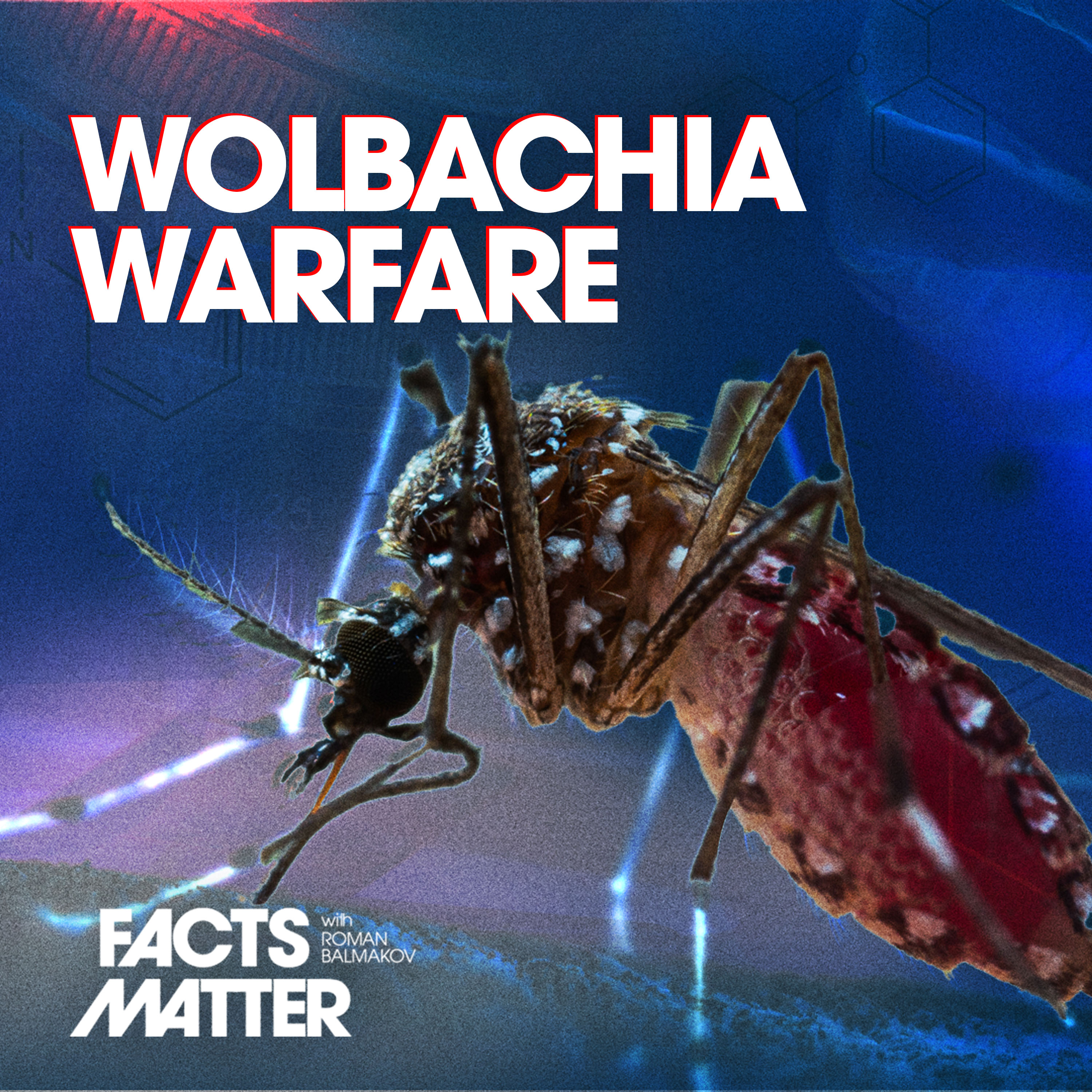
Facts Matter
Google to Release 32 Million Bacteria-Infected Mosquitoes in Florida and California
00:16:07
Loading summary
Transcript1 lines
- [00:01]
A
Now, to start our next segment, I would like to play a short game with you, if you don't mind. Up on your screen are four options. You have snakes, lions, mosquitoes and sharks. Which one of those do you believe is the most deadliest creature in respect to humans? Now, if you saw through it and you guessed that this was a trick question, you are right. Or I mean also, if you just happen to see the thumbnail of this video, you probably guessed it as well. It's the little mosquito I who is responsible for upwards of a million human deaths a year globally, which for your reference is five times more than the combined death toll of those other three animals. And the mosquito death toll, it doesn't even include the additional millions or even tens of millions of people who get sick every year from things like West Nile virus, dengue, Zika, malaria and yellow fever and wind up surviving. So given these numbers, you would assume that a new initiative by Google of all companies to help eradicate the population of deadly mosquitoes here in America sounds like great news. And it is great news. However, the way that they're going about it doesn't sound so appealing to many people who hear it. That's because Google's debug program, as they're calling it, it involves releasing upwards of 64 million specialized mosquitoes and into Florida and California. Their plan is to basically release 16 million mosquitoes per year over the course of the next four years. Which sounds diabolical, but there is a method behind the madness. And the method is described fairly well on their website, which is also a well designed website, and it says the following quote. We're using an idea that's been around since the 1950s. It's called the sterile insect technique and it has worked on other kinds of bugs like fruit flies, snow screwworms and coddling moths. The idea is simple. Raise sterile males and release them into wild insect populations. When a wild female mates with a sterile male, her eggs won't hatch. The population gets smaller with each generation. Now the debug program is run by Verily Health. A little background on them. They started as an internal moonshot division inside of Google called the Life Sciences Team. They were formed all the way back in the year 2012 and their first project was a contact lens for diabetics that could monitor their glucose levels through their tears instead of having to prick their finger. Eventually, though, in 2026 this year verily became an independent corporation. But to this day, Alphabet remains a major investor in it. And their mosquito program is actually a direct Product of Google's internal engineering and biotech incubation. Meaning it is fair to say that this debug program is a Google initiative. Now, how exactly this process is supposed to work is laid out fairly well over on their website. And so let's go through it step by step. There are six steps in total, with step one being find a way to raise sterile male mosquitoes. And from the way that it's written, it sounds like they haven't yet fully realized this step, but they do have a method in mind that they believe will get the job done. Quote we're working on a number of methods to raise sterile male mosquitoes. One approach we're testing is to use mosquitoes infected with a naturally occurring bacteria called Wolbachia, which is present in many insect species, including some mosquitoes. This bacteria makes the mosquitoes unable to breed with wild mosquitoes which don't have Wolbachia, so we can raise and release sterile males to mate with wild females. This approach to mosquito population reduction has been tested in small scale trials around the world since the 1960s and with many more studies starting in the past few years. Those studies that they're referencing, by the way, they come from disparate places including French Polynesia, Kentucky, Singapore as well as China. And just for your convenience, I will throw the links to all those relevant studies. You'll be able to find them down in the description box below this video, which I'll mention, of course is that same description box right below those like and subscribe buttons, both of which I hope you smash so this video can reach ever more people via the algorithm. Thank you so much for that. Now, now moving along. Once they figure out how to create these mosquitoes infected with this bacteria, the second step of Google's debug program is to basically set up a mosquito making factory. Quote to stop mosquitoes that can spread disease, we need to raise millions and millions of sterile male mosquitoes. That's why our team of engineers and scientists are building automated rearing systems that can raise enough good bugs to to decrease the wild mosquito population. Then once they have millions or potentially tens of millions of these, what they're calling good bugs, which are really just these infected mosquitoes coming off the production line, the third step will be to separate them into male and female silos. Quote Male mosquitoes can't bite, so they don't spread disease. That's why we'll only release males. Separating male and female mosquitoes is currently a slow manual process. We're developing new technologies that combine Sensors, algorithms, and novel engineering to take advantage of unique aspects of mosquito biology to quickly and accurately sort males from females. And the new technologies that they mentioned there for sorting these different mosquitoes by sex, as you probably guessed, they're being made possible by the recent advances in AI technology. They later wrote that they're going to be actually accomplishing that step by step by using a computer vision algorithm and artificial intelligence to basically create a mosquito automatic sorting machine. And so, okay, then once you manufacture these Wolbachia infected mosquitoes, sort them by sex, I assume, incinerate the female so they're not able to be released. You then move on to step number four, which is to release the sterile males, the bacteria infected sterile males in into the wild population. After we separate the males from the females, we'll release sterile males into the wild. Male mosquitoes seek out females to mate with, finding them in places that pesticides could never reach. Releasing the right number of good bugs in the right places is critical. So we're building software and monitoring tools to guide each release. And since male mosquitoes can't bite, people in the areas where we release them won't get bitten any more than usual. And here's basically the crux of the plan, here's where it lies. Once these sterile male mosquitoes are released into the wild habitat, their sterility will gradually begin to lower the number of mosquitoes with each successive generation. Here's how this is described in step number five. Quote. When a sterile male mates with a wild female, she'll still lay eggs, but because those eggs won't hatch, the next generation will be smaller. We will continue to release sterile males to significantly reduce or possibly eliminate the local population. And so in short, when a male mosquito infected with this bacteria mates with a female mosquito, she lays eggs, those eggs don't hatch, and over time the population gets smaller and smaller. If for some reason you ever need to know what this is officially called on a test or something, it's called cytoplasmic incompatibility. And so that's pretty much it. Over time, the idea is that the mosquito populations in both Florida and California, where this is going to be, will gradually decrease over time. And the last step, step number six, is described as basically a monitoring and repeating process, keeping an eye on the project, seeing if the local mosquito population is really reducing and adding more sterile mosquitoes as need be. Quote we need to monitor where bad bugs live and how quickly the population size changes before, during and after we release sterile male mosquitoes. Even if we eliminate Bad bugs in an area, they could still come back without proper monitoring and targeted releases. That's why our engineers and scientists are developing new sensors, traps and software to better determine which areas need to be treated and retreated. And so that is the plan. And as you can tell from their description, there appear to still be a few technical bugs to work out in the process. But the overarching method is as such, and in theory, over several gener mosquito generations, the mosquito population should really plummet in these areas in Florida and California where these ecological tests are going to be conducted. And a couple of other things here. Firstly, if this whole plan sounds strangely familiar to you, that might be because this has actually been tried several different times before and actually in several different iterations. For instance, there was a British company called Oxitec that was funded in part by the Bill and Melinda Gates Foundation. We reported on them many years ago and what they did was they released genetically modified mosquitoes into several places in Asia, South America, Central America, as well as Africa. And their concept was a little bit different because they were actually genetically modifying the male mosquitoes with a gene that would kill off any female offspring before they the offspring reached adulthood. But so that that was one plan, basically a GMO mosquito release. But even this type of a plan, which is releasing Wolbachia infected mosquitoes, it's also been tried before to relative success. In fact, the same team based out of Fresno County, California, working on this Wolbachia project, they actually tried this eight years ago, back in the year 2018, and they wrote a piece in Nature magazine describing their results. Quote, In 2018, we released 14.4 million males across three replicate neighborhoods encompassing 293 hectares. At peak mosquito season, the number of female mosquitoes was 95.5% lower in release areas compared to non release areas, with the most geographically isolated neighborhood reaching a 99% reduction. 99% less mosquitoes is not bad. Likewise, the Debug group previously ran a similar project over in Singapore, and according to their blog post on the results, releasing mosquitoes in parts of Tampunas town in Singapore, quote, achieved a greater than 90% reduction in mosquito population, resulting in 65 to 80% reduction in dengue cases. And so frankly, it looks like the technique does work. However, at this point, I'm sure the big question that a lot of you are wondering is what could go wrong? And it's true that looking through historical records, while it really does seem like this sterile insect technique is pretty solid, and it's generally, it's it's widely believed to be better than just blasting an area with pesticide chemicals. It is not foolproof. Firstly, is the reliance on this new AI system. If for some reason the male female sorting process is not perfect, even a small number of females released amongst the sterile males, it can basically lead to the local biting population of mosquitoes being bigger and that would lead to more disease transmission in the short term as the mosquitoes are slowly dying out generation after generation. And so that AI system really has to be doing its job well. Secondly though, there's also the risk of basically ecological whiplash when a pest like the mosquito is eliminated from a geographical area. And just as that debug team alluded to, and I think step number either 6 or 7 or 5 in their description, this has happened before. Back in the 1950s, the flesh eating screwworm fly was causing annual losses of something like $200 million to American meat and dairy farmers. And so two scientists, they developed these sterile insect technique for the fly and over the course of just a few decades it was completely wiped out. The screw worm basically was completely wiped out here in America. But 60 years later, in the year 2016, there was a screwworm detected in the Florida Keys. By that point the screwworm had become extinct in that area for so long that local wildlife populations lost all of their adaptations to that parasite and they had absolutely no natural resilience to it. And so this wound up leading to a brutal and rapid infestation that killed over 130 endangered deer before the stage sterile insect technique could be ramped up once again to stop the screwer. And so there are some risks involved. And basically you gotta really iron out step number six and monitor the situation, looking out for any comebacks. That's I guess, the sacrifice you have to make when you play God with the environment like they are doing here. And so yeah, that's what's happening. Google and their partners have already released upwards of a billion mosquitoes across four different continents. And however, this new project would be the biggest operation that they've undertaken here in the United States. And again, just for reference, their plan is to release 16 million mosquitoes per year over the course of four years in Florida as well as in California. Let's see how it goes. If you'd like to know more about either this specific operation or past operations like it, I will throw the links to my research notes. They'll be down in the description box below, below. And then lastly, I'd love to know your thoughts because to me sounds like a good technique. But at the same time, you know, you I. Human wisdom is limited. So it's always like it sounds like a good technique and you can kind of see it working well and working better than pesticides. And mosquitoes are annoying, they kill people, they transfer diseases. But you, you do have to wonder what, you know, what are the third, fourth and fifth order effects of doing something like this? I've read a report before that the mosquito is this weird sort of insect that if you wipe it off the map, apparently there's no negative effects at all to the environment. Allegedly. That's what I read in a paper published along like, I think something like 10 years ago there was a paper published saying that if you just kill off the mosquito, it literally has no net negative effects. But that paper was also published by humans. So the wisdom is limited. Let me know your thoughts if you think this is a good idea. And yeah, otherwise smash those like and subscribe buttons if you haven't already. And then lastly, I'll mention it again I mentioned in the previous episode, but over at the Epoch Times, we recently published a phenomenal documentary film sort of broaching the subject of the new scientific field of near death experiences. Basically, it's a great documentary where we sat down with people who literally died like they were brain dead. They had no pulse, they had no breath, no signs of consciousness, just they were clinically dead. But eventually they were resuscitated and they came back to life. And these people all spoke kind of of a similar phenomena that they experienced. Even though they didn't know each other, they've never met, they're in different parts of the world. They all spoke of a similar phenomena, seeing lights, seeing their life flash before their eyes and such granular detail that they can see every decision they made, every scene throughout the entire course of their lives. It's a phenomenal documentary and it really kind of delves into this new, I guess you would call it because it is a scientific field because you really are talking to people who have experienced this. But it's an interesting scientific field because it's a very sort of subjective experience. There's nothing you can really measure in this respect, but it's a. But you can talk to the people and when they tell you the same story over and over and over again, I guess you can look for patterns and sort of start to piece together something. I don't know. It's just a phenomenal documentary and it definitely broadened my view and it might broaden yours. So check it out. The link to. It'll be right there at the top of the description box below. Just click on it. It'll take you over to the Epoch Times where you can watch it right away. And then, until next time, I'm your host, Roman from the Epoch Times. Stay informed. Most importantly, stay free.