Loading summary
Transcript5 lines
- [00:00]
A
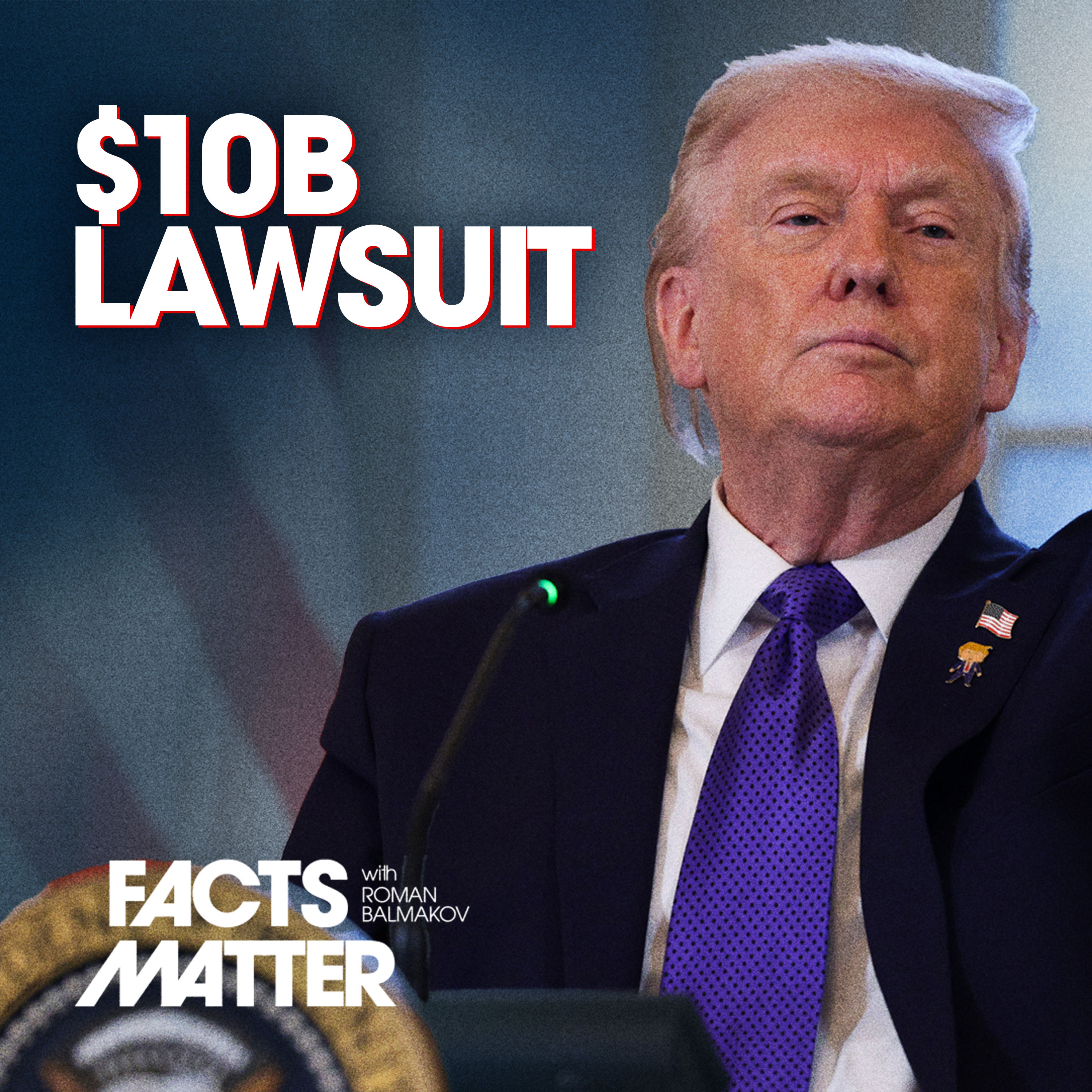
President Donald Trump, the current chief executive of the United States government, has just himself filed a lawsuit against the Treasury Department for $10 billion due to the IRS leaking his tax returns back during his first term. President Donald Trump on January 29 filed a lawsuit against the IRS and the Treasury Department over leaks of his confidential tax returns during his first term in office. The lawsuit, filed in the U.S. district Court of Southern District of Florida in, is seeking at least $10 billion in damages, alleging that the IRS and Treasury violated federal privacy laws. Trump brought the lawsuit in his personal capacity. His two eldest sons, Donald Trump Jr. And Eric Trump, together with the Trump Organization, are also listed as plaintiffs in the filing, which, again, having the sitting US President sue the Treasury Department, might be the biggest example of the bully pulpit and practice that I've ever seen. Regardless, a little bit of background here. In case you don't Remember, during the 2016 presidential cycle, the campaign cycle, the media made a sticking point of the fact that Trump would not release his tax returns while he was on the campaign trail. And to be fair, that was a little bit unusual given the fact that since the 1970s, pretty much every major presidential candidate did release his or her tax returns. Now, Trump claimed that his returns were under an IRS audit and and that he would release them once that IRS audit was complete. And then this tax return controversy, it followed him from the campaign into his actual presidency, wherein one of the major lines of attack by the mainstream media against Trump, besides the Russiagate stuff, had to do with his taxes. And it's actually funny looking back on that period of time now, because it really was mentioned in the news all the time. Trump's taxes, what's in them, what's he hiding? Release the returns, and so on and so forth. But 10 years later, that literally came to nothing. All that airtime, all that newsprint media, and literally nothing. You'd never even think about it. However, what wound up happening was that during Trump's first year in office, his tax returns wound up getting leaked to the media by an IRS contractor. Now, that contractor's name was Mr. Charles Littlejohn. And here's how he did it. Quote, the former IRS employee allegedly stole tax return information from an IRS database by using broad search parameters designed to conceal the true purpose of his queries. Little John uploaded the data to a private website as a way to avoid IRS protocols, which the agency had put in place to detect and prevent large downloads from its devices or systems, and then saved the stolen tax returns to multiple personal storage devices, including an ipod, before disclosing them to the media. Mr. Little John, he then leaked the tax returns to several different news outlets, including the New York Times as well as ProPublica. And even though this excerpt from the article I read to you, it said allegedly, it is worth mentioning that Mr. Littlejohn is currently in prison for what he did in October of 2023. He pled guilty to one count of unauthorized disclosure of tax return information and he was sentenced to five years in federal prison where he is right now. However, Trump's lawsuit, it states that this fact, the fact that he's in prison is not satisfactory and that IRS failed to take the mandatory precautions to prevent the leak in the first place. Quote, the Treasury Department and IRS had a duty to safeguard and protect Trump's confidential tax returns and related tax return information from such unauthorized inspection and public disclosure. Accordingly, the Treasury Department and IRS were obligated to have appropriate technical, employee screening, security and monitoring systems to prevent Little John's unlawful conduct. They failed to take such a such mandatory precautions. And as a concrete example of what could have been done differently, in a practical sense, Trump's lawsuit states as follows. Quote, to illustrate, if the IRS had ensured that Mr. Littlejohn had all IRS based information in his possession connected to IRS approved cybersecurity programs, they would have detected that Mr. Littlejohn was removing plaintiff's taxpayer information from his devices, prevented Mr. Littlejohn from leaving his office of employment carrying taxpayer records with him for the purpose of disclosing them at a location in Gallaudet University, and detected and prohibited his use of a burner phone to orally disclose protected information. Trump's lawsuit then goes on to state that the security procedures at the IRS were so inadequate that it took three full years for the IRS to detect the breach of tax records. Here's what it says. Quote, this caused Trump, his sons and his organization reputational and financial harm, public embarrassment, unfairly tarnished their business reputations, portrayed them in a false light, and negatively affected President Trump and the other plaintiffs public standing. And as such, President Trump, his two sons, as well as the Trump Organization are seeking $10 billion in damages from the US Treasury. Now, if at this point you're thinking to yourself that while yes, it does seem that they have a case, I mean, after all his tax returns were for sure illegally leaked to the public, it does also seem like a big conflict of interest. I mean, you have the chief executive of the United States suing the Treasury Department, of which he is basically the boss, for $10 billion, and President Trump, he was actually asked about this very thing, about this conflict of interest in a recent interview, to which he responded that if he were to win this lawsuit, all of the $10 billion in damages would be donated. Take a listen.
- [05:27]
B
I sued because they broke into Mar A Lago. That was before I became president. Now it goes along, and it turned out that the suit is a very strong suit.
- [05:35]
A
You're going to tell them to pay you, though, because you're the boss?
- [05:38]
B
Well, what I would do, tell them to pay me. But I'll give 100% of the money to charity. I don't want any of that money. If I give money to American Cancer Society, I will give 100% of the money away to charity.
- [05:50]
A
We'll just have to wait and see how this case plays itself out. We here at the Epoch Times, we did reach out to both the IRS as well as the Treasury Department for comment on this particular lawsuit, but neither of them have gotten back to us. All right, just to pause here for a super quick moment, I'd like to introduce today's sponsor, Shen Yun Performing Arts. It is the preeminent, best Chinese classical dance performance in the world. But funny enough, they're actually based right here in the US and they're not allowed to perform in China. Part of the show, it exposes the crimes of the Chinese Communist Party. And so, ironically, they can't even go there. But the show itself is great. I've personally seen it several times. And the athleticism, the. The artistry, the stories are phenomenal. Some of them are touching, some are funny. A lot of them are thought provoking. And you're not really allowed to film the show. But basically, it looked exactly like the commercials do. Beautiful colors, a full orchestra right there in the theater. They also have the screen in the back that's perfectly timed with the dancers. So sometimes it looks like they're jumping in and out of the screen to tell the story, which is cool. But the best part is that it's just super uplifting in a moral sense. I feel like every time I watch it, I leave the theater as a better person than I did coming in. And most shows nowadays, at least in my opinion, are really subversive, and they sneak in some communist elements. But Shen Yun is different. They really showcase traditional culture. And even though it's Chinese, it actually probably resonates with everyone. So check it out. They have shows coming up in, like, a hundred different cities. Dallas, Houston, New York, Memphis, Charlotte, Las Vegas, Phoenix, Seattle, pretty much everywhere else in between. And the best part is that to our viewers, they're offering a special promotional deal. Just buy your tickets on the Shenyon website and use promo code Roman26 to avoid paying both the ticketing fee as well as the facility fee. That's again, promo code R o M A N26. I'll throw a link to the website where you can find all the different show dates and cities. It'll be down in the description box below. However, having said that, there is, I guess you can call it, legislative pushback in this case from Democratic lawmakers. Quote, Senator Ron Wyden, a Democrat from Oregon, plans to introduce legislation next week to to prohibit Trump from receiving any payout from the lawsuit. According to spokesperson Ryan Carey, the bill will propose a 100% tax on any litigation proceeds and settlement in the case. Likewise, in that same vein, you have several watchdog groups alongside a former IRS commissioner asking the federal court to delay the case until after Trump leaves office in 2029. Quote, the watchdog group's Common Cause and the Project on Government oversight, along with four former federal officials, submitted a 23 page friend of the Court brief asking the court to consider delaying the case until Trump leaves office in January 2029. Among other requests, the brief contends that the conflicts of interest make it uncertain whether the Department of Justice will zealously defend the public treasury in the same way that it has against other plaintiffs claiming damages for related events, which is actually also another funny element to the case because you have the chief executive suing the Department of the treasury, but it's actually the Department of Justice whose lawyers will have to defend the Department of Treasury from the chief executive. The same brief, by the way, it also argued that President Trump's legal claim, even if it's valid, is actually time barred given the fact that it was filed long after that two year window following the disclosure of what happened. And that disclosure was made back in the year 2020. And so we'll have to wait and see how the case ultimately plays itself out. In the meantime, though, if you would like to read the entirety of the 27 page lawsuit from Trump for yourself, I'll throw a link to the PDF version of it. You'll be able to find it down in the description box below, which I should mention is that description box right below those like and subscribe buttons, both of which I hope you take a quick moment to smash so that this video can be picked up by the YouTube algorithm and share it out to ever more people via the algorithm. And then I said algorithm twice. Regardless, until next time I'm your host, Roman, from the epic times. Stay informed. Most importantly, stay free.