← Facts Matter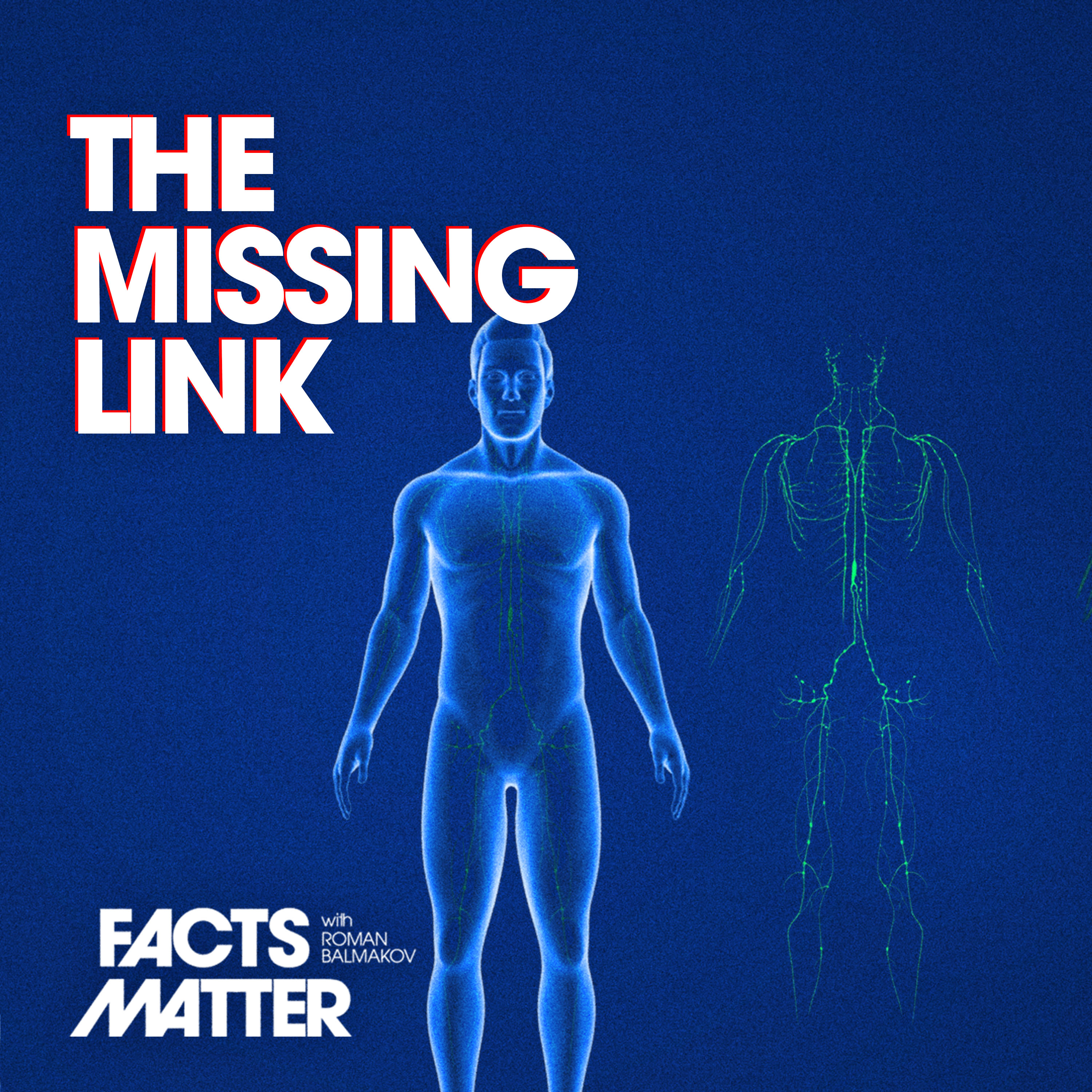
Facts Matter
Scientists Discover 3rd Circulation System in Humans That Could Bridge Eastern, Western Medicines
00:12:27
Loading summary
Transcript1 lines
- [00:00]
A
A new scientific breakthrough has come out in the study of the human body. Researchers right here in the US Discovered something you can really say borderline amazing. A third circulatory system within the human body alongside the previously known cardiovascular system and lymphatic system. This new interstitium system, as it's being called, appears to allow the different organs of our body to pass things along to one another, something which previously was thought to be impossible. And this in and of itself is already an amazing discovery. But it's made even more exciting by the fact that this newly discovered system maps almost perfectly onto the model of the human body that's been used in traditional Eastern medicine for thousands of years in practices like acupuncture, for instance. Meaning this discovery might very well be the missing link that connects Western and Eastern medicine together. And so, with that as an introduction, let's smash those like and subscribe buttons, please, and dive right in, starting with a bit of needed context for this discovery. For hundreds of years, Western medical science has recognized only two transportation networks within the human body. You've got the cardiovascular system, which was first mapped out all the way back in the year 1628 by an English physician named William Harvey. And the cardiovascular system, it delivers oxygen, nutrients and hormones to the cells of the body, and it also removes metabolic waste. And of course, it does this by having the heart pump blood through the veins and the arteries and the capillaries throughout the whole body. Then, separately, secondly, you've got the lymphatic system, which was first mapped out all the way back in the year 1652 by two separate men independently, one from Denmark and the other from Sweden. And the lymphatic system, it is separate from the circulatory system, and it basically acts as a drainage and waste disposal system, filtering out harmful substances from the tissues before safely returning those clean fluids back into the bloodstream. And through its mechanisms, the lymphatic system maintains the body's fluid balance, it defends the body against infections, and it absorbs dietary fats from whatever it is that you eat. Also relevant to our discussion is that in the year 1906, you had an American researcher discover a physical structure made up of fibrous connective tissue. This became known as fascia, and it basically functions like the studs of a house. It supports and it keeps in place the internal structure of the human body, the organ, organs, the nerves, the blood vessels, the bones, the muscles and everything else. And so, for the past 100 plus years, it's been understood that you have all the physical structures of the body being undergirded by the fascia tissue. And then among those things that were being held into place were the heart, the blood vessels and the lymph nodes, etc, for a visual of what it actually looks like, up on your screen is a diagram. This diagram, it shows you the area that's basically between the organs and for instance, like between the liver and the stomach. And those collagen bundles are what are known as fascia. They basically hold everything in place so it doesn't just move around by itself. Now, up until very recently, the understanding was that those interstitial spaces, those fluid filled interstitial spaces, were isolated from one another. They were little pockets of fluid here, there, here, there, basically everywhere. But they were completely unconnected to each other. However, here's where the new discovery came in. In 2021, a team of researchers led by Dr. Neal Teas, who is a of pathology over at NYU, they found something unusual. When they were examining biopsy samples from tattooed skin, they found that the tattoo ink from the surface of the skin had traveled a lot deeper than was expected underneath the skin. They essentially found that the ink had traveled from the surface skin down into the fascia. Speaking to the New York Times about his discovery, Professor Theise simply said the following quote, that wasn't supposed to happen. And indeed, before this discovery of his theory, there was not a known mechanism for that type of thing to happen. At the time, there was no known connection between our surface skin and the fascia beneath it. They were seen as completely two unconnected layers. Quote the ink particles had traveled deeper than anticipated through interstitial spaces into the tissue underneath the skin or the fascia. The existence of an apparent conduit between skin and the fascia beneath it. Two tissue layers not known to connect with each other in this way broke accepted an atomic boundary. Now, him and his team continued to do research in this direction and they also found a similar microscopic connection between the different organs within the human abdomen, which were previously thought to be entirely separate. And it was previously believed that the only way for different organs to in any way exchange materials from one another will be through either the cardiovascular system and or the lymphatic system. However, here what they were discovering was an entirely new mechanism for one organ to be able to essentially share materials with another. Quote this is clearly a third bodily system for the circulation of fluids in addition to the cardiovascular and lymphatic system, says Rebecca Wells, a professor of medicine at the University of Pennsylvania and a senior author of the Study, the human body suddenly looked less like a patchwork quilt and more like a knitted blanket. Their discovery and subsequent research implies something fascinating, that those interstitial spaces, those fluid filled sacs basically, that are present throughout the entirety of the human body, they're not just isolated pockets here, there and everywhere. Instead, they are part of a large interconnected system, a system that's now being called the interstitium. And to get a good sort of a mental model picture of what this new discovery, with this newly discovered network, actually looks like in practice, one of the lead researchers in this discovery, he explained it as follows to the New York Times quote, To get a sense of the inside of the interstitium, picture a sheet of chicken wire embedded in a gel. The chicken wire represents collagen, a type of protein. Inside the interstitium, the bundles of collagen interlock with one another, providing strength and structure. The sponge like gel, able to absorb and store water, is made from hyaluronic acid and fills the spaces between the collagen bundles. Fluid cells and other molecules slowly flow through this gel. In this new view of the body's interstitial spaces, these microscopic areas connect to one another within a larger web through which fluid moves before re entering the lymphatic and cardiovascular systems, like groundwater flowing through the earth's crust and before returning to the surface in springs and rivers. Essentially, they discovered a previously unknown circulatory system within the body's connective tissues, which is exciting in and of itself. I mean, it's equivalent to finding a continent. I've never before seen continent on the surface of the earth. But it gets even more exciting when you map their discovery atop the model of the human body that has been used in traditional oriental medical systems for thousands of years. Acupuncture is used to treat conditions as varied as chronic pain, migraines, seasonal allergies, and nausea caused by chemotherapy. But some of its actions have never been completely explained. The discovery of the interstitium may help us understand in modern biomedical terms how acupuncture works. Now for your reference, your general reference. The practice of acupuncture uses an energy called qi, which allegedly flows along 12 different tracks of the body, which, with each tract being called a meridian. And if there's a blockage of qi somewhere in the body, a doctor of traditional Chinese medicine can insert a small needle into a point alongside the meridian in order to facilitate the flow of qi and thereby bring the body back into balance. That's a simple summary, obviously, but it's fairly accurate. And in terms of the correlation between this newly discovered interstitium and these acupuncture meridians quote In a 2002 study, Helen Langevin and Jason Yandow mapped the locations of acupuncture points in the arms to the fascia between and around muscles. These acupuncture points have since been found to lie within the same areas of connective tissue where fluid flows through the Interstitia. Then, 17 years later, a 2019 paper by researchers in China led by Dr. Hong Yi Li explains how they injected chemical tracers into acupuncture points in the hands and feet of cadavers and and used chest compressions to push fluid through the bodies. Fluorescent photography enabled them to see the tracers traveling toward the heart within interstitial spaces of the arms and legs. Li and colleagues clearly recognized that they had glimpsed evidence of an interstitial circulation system. And then two more years after that quote In 2021, a group of researchers conducted a similar experiment in China on living subjects, injecting dye into acupuncture points in the forearms of 15 volunte. In almost all of them, the dyes slowly migrated upward along a route corresponding to the pericaridium meridian, which passes through the wrist and along the inner arm. This pathway doesn't go in the veins, it doesn't go superficially, says Andrew Ann, the study's senior author and an assistant professor at Harvard Medical School. It goes instead into the interstitium between the muscles. When I saw that, I said, we're onto something. This truly has to do with acupuncture. And so that is thus far where we're at in the story, the discovery of the interstitium. It might be the link, the missing link, connecting Western medicine with Chinese medicine, although obviously more research is needed. And frankly, it seems like given the sort of potential here, this is an area where a lot of smart people are going to be moving into, and maybe a lot of new discoveries will be made in the coming years. And besides just being an amazing discovery in and of itself, I mean of course connecting literally traditional Chinese medicine and modern Western medicine together, more knowledge of the intestidium might actually lead to new medical pathways that can be studied and potentially used to treat diseases that currently don't have treatments, quote much more research is needed to begin to understand the full implications of the discovery of an interconnected interstitium. But there are some promising leads. An interconnected interstitium also seems to play a critical role in cancer metastasis. It is well established that cancer cells can Spread to the rest of the body by hijacking the lymphatic system. But evidence suggests that tumor cells may reach the lymphatic system by first navigating through the fluid Flowing through the interstitium like fish swimming downstream. Numerous cancer types have been seen spreading through the interstitium, Breaking down hyaluronic acid as they spread. These include breast, lung, colon, Pancreatic and skin cancers, among others. A drug called narmofotinib, which disrupts how tumor cells invade and move through the endostinium, has shown promise in early clinical trials for treating pancreatic cancer when combined with chemotherapy. And so there you have it, a really promising discovery, the discovery of a third circulatory system in the human body that could potentially transform our very understanding of how the human body operates. And I think it's also a great reminder that even after centuries of study, the human body really does still hold incredible secrets. I mean, if you think about it, we're already at the point now, technologically speaking, where we have robotic rovers on the surface of Mars Mapping out the terrain on that planet, and yet, at the same time, we know so little about the human body that an entire transportation conduit that we. In the body that we all walk around in, right, an entire transportation conduit has previously been completely unknown. It's also, I guess, an interesting case study of how, even though obviously western medicine has given us so many benefits and improved our lives in so many ways, the ancient knowledge that's present in these traditional systems that have been passed down for thousands of years Might actually still have a lot to offer. Who knows, maybe in the future we'll even find out that using leeches to cure headaches is a good idea, Although I hope that's not the case. Regardless, if you'd like to go deeper into the particulars of this story, I will throw the links to these several research papers that are referenced, Both the findings as well as sort of the auxiliary findings in relation to acupuncture and those meridians, you'll be able to find them all down in the description box below if you are interested in diving deeper into the story. And then, until next time, I'm your host, Roman from the epoch times. Stay informed, and most importantly, stay free.