Loading summary
Transcript1 lines
- [00:00]
A
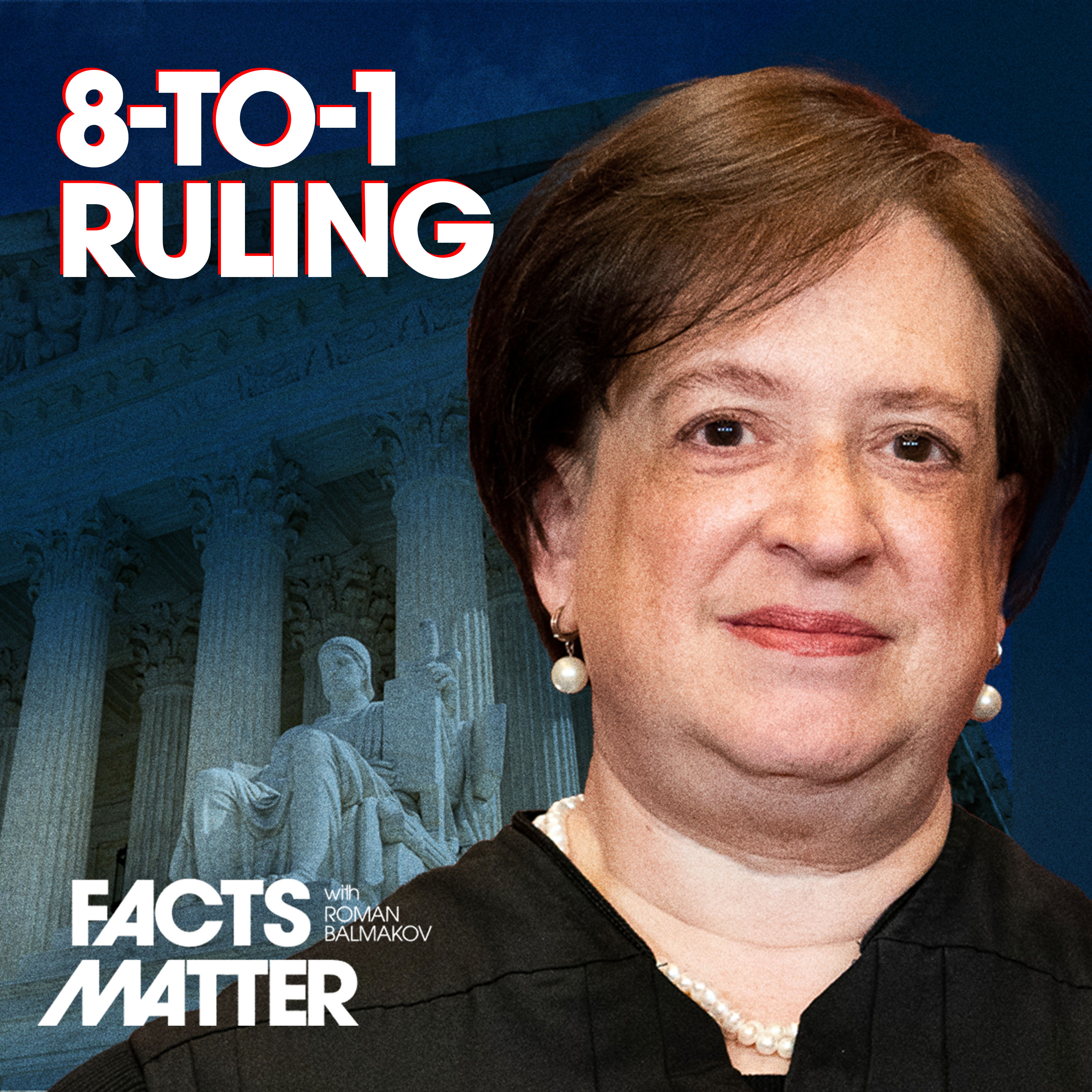
The U.S. supreme Court just ruled in favor of a criminal defendant in a case which was rather interesting. And it presented a simple question. Are prosecutors in the country allowed to force people to sign away their right to appeal and then slap them with a potentially unconstitutional punishment? Basically, can plea deals be formulated such that you get hit with an unconstitutional penalty, but then also you. You sign away your right to appeal that penalty? And the answer to that question is no, they cannot. Although, as always with things related to the Supreme Court, there is a lot of nuance. And so let's go through the details together right after you take a super quick moment to smash those like and subscribe buttons. Thank you so much for that. That way the video can reach ever more people via the YouTube algorithm. Now, to start with, let's get into the background of the criminal in question. The man's name is Munson Paul Hunter iii. And with a name like that, you are either minor royalty somewhere in Europe or you are a white collar criminal here in America. Mr. Munson fell into the latter category. In the decade from 2013 up until 2023, Mr. Hunter carried out an elaborate series of fraud schemes. He would steal or sometimes just fabricate Social Security numbers alongside with fake identities to open up real world bank accounts. Using his methods, he opened at least 14 different bank accounts, and he acquired at least 18 different credit cards. He would then use these to get loans, including government backed SBA loans. He would get blank checks that he could use to do whatever he wants with. And he also made fraudulent electronic transfers, such as in one case that prosecutors were able to find, wherein he wired roughly $38,000 from a victim's bank account in order to pay for his fake credit card. In total, over that 10 year span, prosecutors claim that Mr. Hunter caused roughly half a million dollars in losses to both institutions as well as to individuals. However, in the end, he was caught. And in 2023, he was indicted on 10 counts, including things like conspiracy to commit bank fraud, conspiracy to commit wire fraud, committing bank fraud, as well as multiple cases of wire fraud. However, within just about a year, he was given a relatively good plea deal. He was able to plead guilty to only one count. The other nine were dropped. And as a part of that plea deal, here was what he agreed to. He would, for one, give $235,000 in total restitution to several of his victims. He would serve 51 months in prison, and then after the prison sentence, he would be given an additional three years of supervised release. And as a condition of that supervised release, he would have to attend a mental health treatment program as well as, and here is the critical parts of the case. He would also be forced to take all of the mental health medications that were prescribed to him by his physician, meaning he would have to take all of his meds that he was being prescribed, whether he wanted to or not. And just for your general reference, the meds he was assigned that he was being prescribed weren't for things like schizophrenia or bipolar. Instead, Mr. Hunter was diagnosed at the age of 10 as having anxiety and depression. But he didn't want to take drugs to medicate himself. He wanted to do it the natural way, which is, I guess, by enacting a relatively large fraud scheme. But that's a separate matter. He chose to not take the drugs. However, given the terms of his parole, he would have to medicate himself if he was to stay out of prison for those three years. Also relevant to this case, as a part of the plea deal, Mr. Hunter signed away his right to appeal. Quote, Hunter signed a plea agreement that provided he was voluntarily waiving the right to appeal, even except to raise a claim of ineffective assistance of counsel or uncollateral review. Collateral review refers to a legal proceeding challenging a court ruling outside the standard appeal process. And so that was the general setup. He was agreeing to take this medication while at the same time signing away his right to appeal. However, during the sentencing, here's what happened. Quote at the May 2024 sentencing hearing, Hunter, who suffers from anxiety and depression, objected to a proposed special condition of Superv revised release that stipulated he must take all mental health medications that are prescribed by his treating physician. Mr. Hunter told the court at that time that he didn't drink, use drugs, or even curse and that he didn't want to be forced to medicate. The court imposed the medication requirement anyway, advising Hunter that he had a right to appeal. However, when he did appeal, when he used his right to appeal, the fifth Circuit Court of Appeals threw his case out, saying, saying that he had actually signed away his right to an appeal when he signed that plea agreement. The Fifth Circuit they added that even though during that sentencing hearing, the district court said out loud that he could appeal later, that part doesn't matter. It did not override the document that he actually signed. Or to be precise, in the actual words of the fifth Circuit, quote, the district court's statement at the sentencing hearing that Hunter had a right to appeal did not impact the validity of the appeal waiver. However, Mr. Hunter appealed that decision all the way up to the U.S. supreme Court and this U.S. supreme Court wound up taking up his case. And then eventually, just last week, they ruled in favor of Mr. Hunter. Now, very notably, they did not rule on the issue of the psychiatric medication itself, whether it can be mandated or not. But they did rule on the question of the appeal waiver. And in an 8 to 1 ruling, they found that waivers like these do not hold given the circumstances. The only justice to dissent was Justice Clarence Thomas. And writing for the majority of the Court, you had Justice Elena Kagan write the an agreement not to appeal a sentence is unenforceable when it would result in a miscarriage of justice, meaning when it would leave in place the kind of egregious error that would bring the judicial system into disrepute. If a court always carried out those waivers, no matter the kind or degree of error attainting a sentence, the judicial system's integrity may come into question. And then separately, in a concurring opinion, you had Justice Neil Gorsuch add the following quote. In our times, the jury trial has given way to a conveyor belt of plea bargains, and the Supreme Court has often condoned those practices or let them pass in silence. Today, the court begins to correct course. It rules that prosecutors may not always leverage their plea bargaining power to induce a defendant to forego the right to contest his sentence on appeal. So there you have it. Now, in terms of Mr. Hunter, his case was remanded. It was sent back down to the lower courts where they now have to accept his appeal. And then actually look at the psychiatric medication question itself. They can't unilaterally ignore it just by saying that he does not have a right to appeal. They actually have to take up the appeal. And then for the rest of us moving forward, these appeal waivers cannot be used to just allow the government to impose potentially unconstitutional punishments, which at least in theory, creates more of a safety net for all of us if we ever find ourselves on the wrong side of the courtroom. And so there you have it. If you'd like to go deeper into the court documents for this particular case, I will throw the links to the PDFs. You'll be able to find them down in the description box below this video, which is of course that description box below this like and subscribe buttons, which if you haven't already, now is a good opportunity smash them so it can reach ever more people, informing those people of their newly found rights. And then lastly, I have nothing to say until next time. I'm your host, Roman from the Epoch Times. Stay informed. Most importantly, stay free.