Loading summary
Transcript3 lines
- [00:01]
A
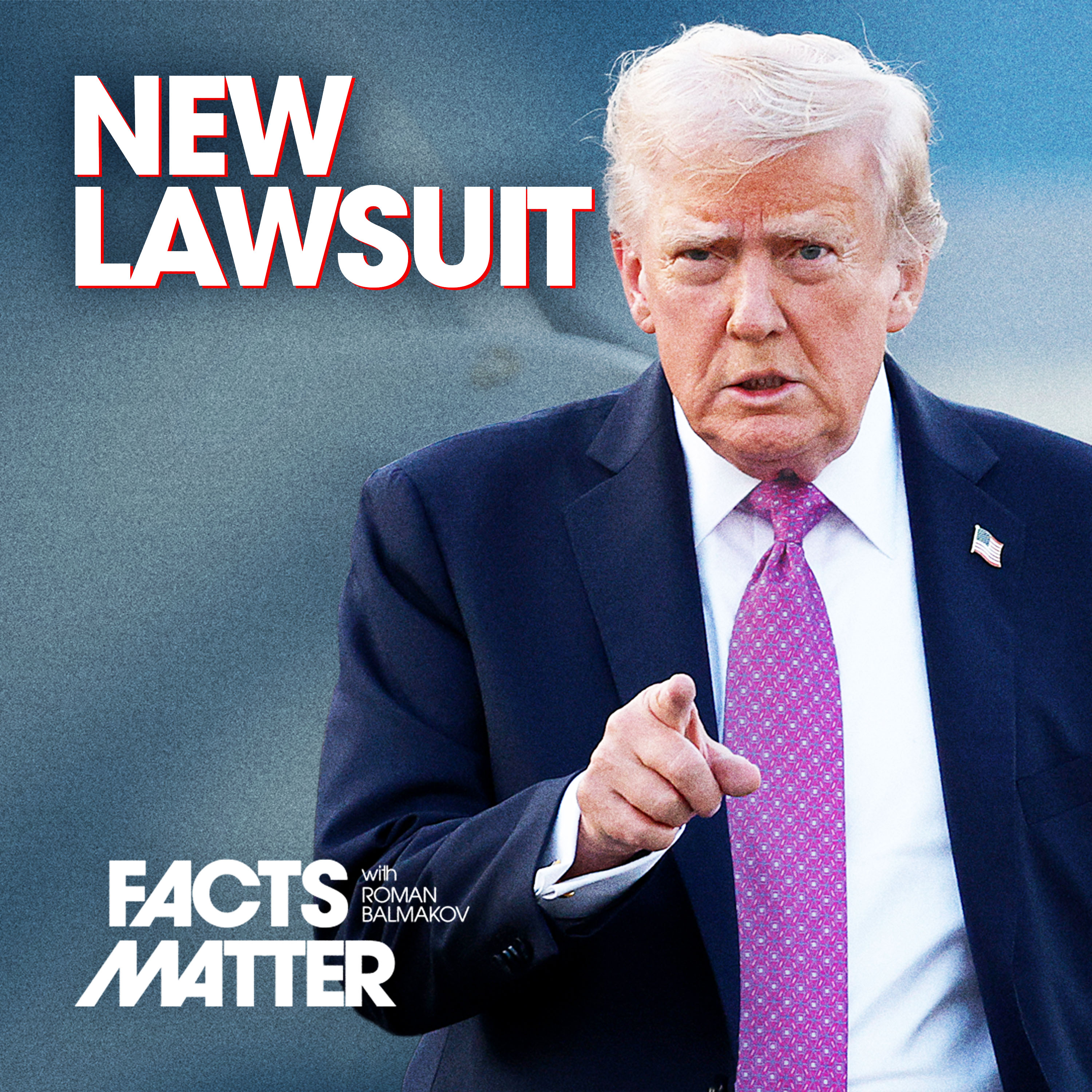
All right, let's begin today's discussion over in New York, where you just had a state judge dismiss two of the terrorist charges against Luigi Mangione, which sounds bad, but in order to understand the full context, this action does require a bit of explanation. You see, the prosecutors in this case, they were arguing that Luigi's actions, they met the threshold for domestic terrorism. And to that end, the state prosecutors, they wrote the following in a recent court filing. Quote, mangione's intentions were obvious from his acts, but his writings serve to make those intentions explicit. His writings convey one clear that the murder of Brian Thompson was intended to bring about revolutionary change to the healthcare industry. Law enforcement indicates that the words delay, deny, and depose that were etched into the bullet casings echoed a phrase commonly used to describe how major insurance companies avoid paying claims. And so that's what these state prosecutors were arguing. However, New York Judge Gregory Caro, he ruled that although Luigi's actions were obviously ideologically motivated, they didn't actually meet the threshold to warrant a terrorism charge being lobbied against them. That's because under New York State law, the word terrorism is defined in a lot more of a narrow sense than how it's typically used by you and I colloquially in everyday speech. According to New York State penal code, you can see it up on your screen. Subsection 490.25, it says that an act is terrorism only if it's committed with intent to intimidate or coerce a civilian population, influence government policy, or affect government conduct by murder, assassination, or kidnapping. Basically, the prosecutors had to prove that Luigi had an intent to achieve one of those three goals with the murder of Brian Thompson. But the judge in the case, he found that the prosecutors failed to present concrete evidence that Luigi was attempting to do one of those things when he killed Brian Thompson, either to coerce a civilian population to influence government policy and or to affect government conduct. Although for just a quick moment, I will mention sort of an ironic development in this particular case, which is the fact that despite prosecutors not being able to come up with concrete evidence of Luigi's proof of terrorist intent, in a practical sense, his actions did have concrete effect on government policy. As just one example of what I mean by that, over in the state of California, a new ballot initiative was recently introduced called the Luigi Mangione act, which would prevent health insurance companies from denying medical care to patients within the state. Quote, a newly proposed California ballot initiative aims to prevent health insurance companies from denying medical care to patients. Retired litigator Paul Eisner has submitted the Luigi Mangioni Access to Healthcare act to the state Attorney General's office, sparking both attention and criticism for its provocative title. The proposed measure would make it illegal in California for anyone other than a licensed physician to deny, delay or modify medical procedures or medications. The measure would allow patients to sue insurers and potentially receive attorney fees and triple damages if successful. Now, regardless of whether you agree with the content of this proposed legislation naming your bill after a murderer who killed the UnitedHealthcare CEO, it's rather crass to say the least. And you actually combine that with these pro Luigi demonstrations that have been popping up all over the streets of New York and, well, it's fair to say that it probably encourages that type of behavior. And by that type of behavior, I am referring to assassination. Despite that, though, getting back to Luigi himself. With the two terrorist charges having been dropped, he is nowhere near out of the water. He still faces second degree murder charges at the New York State level, as well as firearm murder and stalking related charges at the federal level. And it's worth mentioning that in the federal case against them, federal prosecutors are actually seeking the death penalty, meaning that despite the terrorist charges having been dropped, Luigi still faces anywhere from 25 years to life to even death if found guilty. If you want to read either the full indictment against them or if you want to read the text of the ridiculously named Luigi Mangione Healthcare act out of California, I will throw the links to both down into the description box below, which I should mention is right below those like and subscribe buttons, both of which I hope you take a quick moment to smash. Now shifting gears a little bit, let's move on over to Florida where President Trump has just filed a $15 billion defamation lawsuit against the New York Times. Now, the announcement of this lawsuit came in the form of a late night post on Truth Social with President Trump writing the following quote, Today I have the great honor of bringing a $15 billion defamation and libel lawsuit against the New York Times. I view it as the single largest illegal campaign contribution ever. Their endorsement of Kamala Harris was actually put dead center on the front page of the New York Times, something heretofore unheard of. The Times has engaged in a decades long method of lying about your favorite president, me, my family business, the America First Movement, MAGA, and our nation as a whole. Now the lawsuit itself was filed in the US District Court for the Middle District of Florida on late Monday afternoon and in a statement, lawyers for Trump, they accused the New York Times of quote, spreading false and defamatory content about Trump. The New York Times has betrayed the journalistic ideals of honesty, objectivity, and accuracy that it once professed. The outlet published such statements negligently with knowledge of the falsity of the statements and or with reckless disregard of their truth or falsity. And even if you just scroll through the lawsuit PDF, you'll find many examples and screenshots of the types of content that the legal team is referring to. Now, there are both headwinds and tailwinds in this lawsuit. For instance, over the past year and a half, President Trump actually did successfully sue several other media companies under similar accusations. In those cases, he was able to receive both multimillion dollar payouts as well as public acknowledgments from those different media outlets of inaccurate reporting. The cases I'm referencing, by the way, were against ABC as well as Paramount, cbs, and actually Paramount went so far as to actually assign former Trump adviser Kenneth Weinstein to be CBS News's ombudsman. That's actually, if you never heard of that position, is the guy in the media outlet responsible for bridging the gap between the newsroom and the public. And now in cbs, it's a former Trump advisor. Quote, Paramount Global named former Hudson Institute CEO Kenneth Weinstein to serve as ombudsman of CBS News, assigning someone who led a conservative think tank and largely work outside the traditional world of journalism to to monitor the news unit's reporting and scrutinize it against claims of bias. Assigning him, by the way, was on top of a $16 million settlement that they wound up paying to Trump after he sued CBS for editing that Kamala Harris interview over on 60 Minutes. And so the latest lawsuit against the New York Times, it comes on the heels of several victories like that. Now, in terms of the specifics, the New York Times itself actually published a story. It was titled, Trump Sues the New York Times for articles called Questioning His Success. And in that article, they broke down the major points of the case that was brought forth against them. Quote, president Trump accused the New York Times and four of its reporters of defaming him ahead of the 2024 election, claiming that a series of articles sought to undermine his candidacy and disparage his reputation as a successful businessman. Mr. Trump said the articles and a book published by two of the journalists were specifically designed to try and damage President Trump's business, personal and political reputation. According to the complaint, the articles and the book were published with actual malice toward Mr. Trump and caused enormous economic losses and damage to his professional and occupational interests. The lawsuit asked for damages of at least $15 billion. The complaint claims that the defendants timed the publication of the articles and books at the height of election season to inflict maximum electoral damage against President Trump. Then, alongside that editorial, you had an actual statement from a spokesperson for the New York Times Company saying the following, quote, this lawsuit has no merit. It lacks any legitimate logical claims and instead is an attempt to stifle and discourage independent reporting. The New York Times will not be deterred by intimidation tactics. We will continue to pursue the facts without fear or favor and stand up for journalist First Amendment right to ask questions on behalf of the American people. And so we'll have to wait and see how this whole case develops. And it's obviously, I should mention, not a surefire win at all for Trump, just because he had those two recent successes at suing other media outlets. In fact, back in the year 2020, in specifically regards to the New York Times, quote, In 2020, Trump sued the New York Times over an opinion column that claimed that the President and his campaign were influenced by Moscow. That lawsuit was dismissed as protected speech. And so we'll have to wait and see how the case actually plays itself out in court. If you'd like to read the full text of the lawsuit, which in my opinion, again, is pretty interesting, it has a lot of screenshots and concrete examples of the types of reporting that the legal team is claiming was liable. I'll throw a link to the PDF version of it. You can find it down in the description box below. And now let's shift gears once again and move on over to the great state of Tennessee. If you happen to look at a spreadsheet of crime across the country, and then you sort that spreadsheet by the per capita number of murders, rapes, robberies, and aggravated assaults in a given year, you'll find that Memphis, Tennessee, is number five, meaning in a practical sense, it is the fifth most dangerous city in the US at least according to those stats. All right, just a quick addendum. I don't know why this happened, but on Tuesday, when I actually did the research for that script and put it together, I sorted those and it was number five. Memphis was number five. But then afterwards, it was number one and all the total categories. So I wonder if somebody was on the back end of Wikipedia messing with the numbers on Tuesday, when Trump actually signed that executive order in order to make it lower and to make what he was saying false, because I did it multiple times when I wrote the script just to double check, and it was number five each time, but now it's number one. So I guess it is the most dangerous city in the country. And so with that as the backdrop, just earlier this week, President Trump issued an official memo which authorized the National Guard to be deployed into Memphis to crack down on crime. Speaking in the Oval Office at the White House right after signing the memo, here's what President Trump said in explaining his rationale for why he's deploying the National Guard and why specifically to Memphis, Tennessee.
- [10:38]
B
The task force will be a replica, as I said, and it's going to be, I think, equally successful. This is a tremendous success we've had in Washington, I can tell you, and everyone knows it. And people in the White House that work here and other people that I know are calling me and thanking me. They're going out to dinners. They're doing things that they haven't done in years. The effort will include the National Guard as well as the FBI, atf, dea, ice, Homeland Security Investigations, and the US Marshals, and more along the prosecutors. We're going to have DOJ led by US Attorney for the Western District of Tennessee.
- [11:16]
A
Now, what appears to be happening here is that President Trump is attempting to use his D.C. strategy, the one that he started in Washington on August 7th in other high crime cities across the country. Now, present at that signing ceremony was Mr. Bill Lee, the governor of Tennessee, the Republican governor, and he was all aboard for this development, saying the following, I'm tired of crime holding the great city of Memphis back, and this will be one more step in the right direction for Memphis. Now, what's not clear, though, at the moment at least, is what this order means in practice, because unlike Washington, D.C. which is a federal city, and so the president has outsized control there, it's not exactly clear what the National Guard troops can do over in Memphis, because even though the Republican governor is on board, the Democrat mayor of the city has actually come out in opposition to the plan. And so right now it's unclear, but here are some possibilities of what this National Guard deployment could look like in practice over the next week or so. Quote, the presidential memorandum that Trump signed mobilizing the National Guard did not include details on when troops would be deployed or exactly what his promised surge in law enforcement efforts would look like. But it did specify that some out of state help might be available, including state police in Memphis, bordering Mississippi and Arkansas, and and National Guard members from other states as necessary. And so I will keep you updated on what exactly is going to be happening in Memphis. But also, I'll also keep you updated on this broader push by the federal government to send in their own forces to clean up local cities. In the meantime, if you would like to watch President Trump's entire back and forth in the Oval Office, right after he signed the memo authorizing the deployment of these National Guard troops, I'll throw a link to that video. You can find it down in the description box box below. And then, until next time, I'm your host, Roman from the Epoch Times. Stay informed and most importantly, stay free.