Loading summary
Transcript3 lines
- [00:00]
A
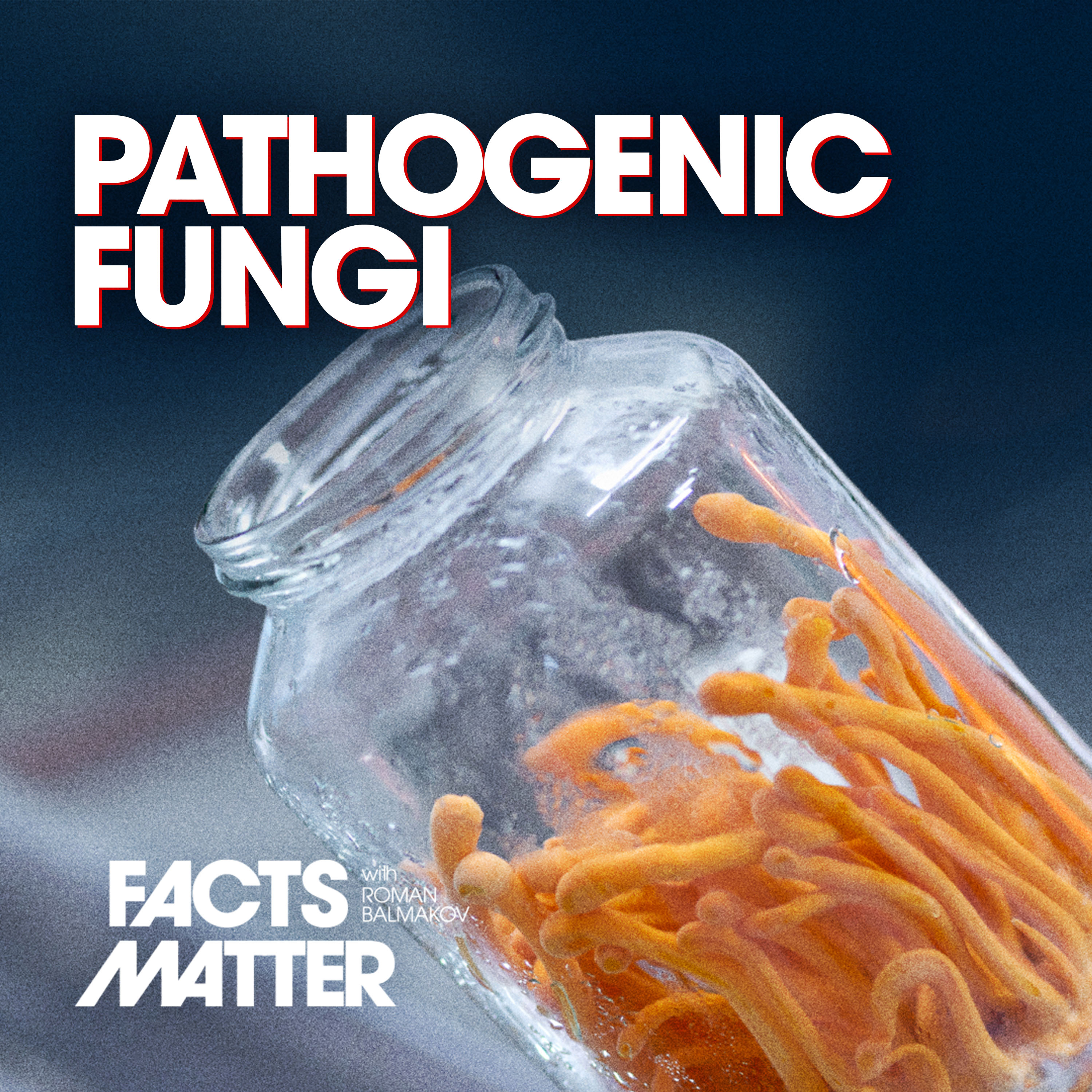
The premise for the Last of Us, both the video game as well as the HBO hit series, it centers around the survival of two people who are navigating a post apocalyptic wasteland after a mutated fungus infected most of the world's population and basically turned them into infected mindless zombies. Now, at first glance it appears just like any other interesting take on the zombie genre, but believe it or not, the game is actually based on a real life genus of fungus called Cordyceps, which survive by infecting insects, hijacking their immune systems, and turning them into vessels that the fungus then controls. Sort of like a Japanese anime mech suit the fungus parasite, it then guides the insect's body to a desirable location where they can then spread to other hosts. If you ever want to see some creepy but absolutely fascinating nature videos online, just search for Cordyceps Takeover Insects through mind control on YouTube. It basically looks like the insects are alive and well until the fungus makes them bite down into the ground. It's called a death bite and they're basically stuck there forever. And then a giant parasite sprouts out their back, sucks the life out of them, but blooms itself and releases thousands of spores in order to infect more insects. It's brutal to watch, but getting back to the last of us. While the concept of a fungus like that being able to turn humans into mindless zombies might still seem far fetched, there is already mounting concern within the scientific community that actually studies these things that mutating strains of fungi are are rapidly evolving in a response to a warmer climate, to the point where they're actually beginning to present a real threat to human health. And along that line, over the past several years you've had several genuses of fungi, or rather thinking back to biology class, several genera of fungi, because genera is the plural of the word genus. Several genera of fungi that have never been a problem before for human health are suddenly now able to infect humans. Now, it is not to the point where the fungus is mind controlling people and then popping out their backs, but it is a step in that direction. And so today, let's go through the current state of pathogenic fungi right after you take a quick moment to smash those like and subscribe buttons so this video can reach ever more people via the YouTube algorithm. Now getting back to the fungi. To start with, until very recently, it was believed that we as humans were relatively immune from serious fungal infections. And because our core body temperatures were just Too hot at 98 degrees Fahrenheit, they were too hot for most fungal strains to survive. If some form of fungal spore did manage to infiltrate the human body, the temperature of our bodies typically would kill off the fungi and then our immune system would be mobilized to remove it to that effect. Here is Dr. George Thompson. He is a professor of infectious diseases over at UC Davis. Here's him explaining the general process. A lot of different fungi really have a particular thermal barrier, a temperature that they like to grow at, and some people think, think that our human body temperature has evolved specifically because of fungi and we're just too warm for the vast majority of fungi to grow. But despite those reassuring claims, Dr. Thompson then went on to describe how a warming climate is causing fungi to adapt and to thrive at higher and higher temperatures. This is then leading to species of fungi that up until now have never been a problem. But suddenly they're popping up and able to actually infect human bodies. And much like with COVID it's people who are immunocompromised, meaning those who already have some form of a weakened immune system that are being targeted the worst. Let me give you a breakdown of the two most prevalent genera of fungi making the jump to humans. The first is called Candida auris. First discovered back in the year 2009, Candida Auris is a type of yeast that can easily spread among patients in healthcare facilities and cause severe illness, especially for those who are already immunocompromised. It can cause a variety of problems ranging from superficial skin infections to even more severe life threatening infections such as in a person's bloodstream. And then compounding the problem is also the fact that for one, Candida auris is very hard to get rid of on surfaces. It's highly resistant to cleaning and decontamination procedures. And then secondly, working with the alongside the first problem, it's very hard to detect on an actual person until the fungus actually takes hold and the symptoms begin to manifest. Meaning people can have Candida auris on their skin without presenting any outward symptoms. People in health care, they refer to this process as colonization. People who are colonized can spread Candida auris onto surfaces and objects around them, as well as to other patients in a healthcare facility without even knowing that they have the fungus themselves. And this is why it's spreading so quick. In March of 2023, the CDC put out this national bulletin naming Candida auris as an emerging health threat. This was due to two factors. Firstly, its resistance to antifungal treatments and then secondly, the fact that it was spreading at an alarming rate in US Healthcare facilities. And by spreading, they meant both in terms of the raw number of cases as well as the geographical areas that it was actually being found at. In terms of the raw numbers, the CDC found that over the prior two years, there were triple the number of cases that were resistant to the most common types of antifungal medicine. You can see the graph up on your screen right there, and it shows the fungus infections growing in an exponential manner. Also, Candida auris was beginning to be found in a lot more locations. By 2021, you had 17 states identify their first ever human Candida auris cases. But by 2025 last year, new cases were found in over 30 different states, with the bulk of the cases coming from California, Nevada, Florida, New York, as well as Illinois. Furthermore, despite having only been discovered 17 short years ago, Candida auris is already resistant to antifungal medications. This fact, it's leading some researchers in this general field to warn against a possible future fungal pandemic. Now, one Such researcher is Dr. Arturo Casadevil. He is the chair of the Microbiology and Immunology Branch at John Hopkins Bloomberg School of Public Health. He is also the author of the book what if Fungi Whim? Humans and Fungi share nearly 50% of the same DNA. Because we're related, designing drugs to combat the varieties that attack us is a challenge. Meanwhile, in an ever hotter, wetter world, fungi may be finding new ways to thrive, queuing up global outbreak potentials for which no vaccine and woefully few medications exist. Some fungi are already beginning to resist treatment among other life forms like bats, amphibians. And essential crops are also increasingly threatened by these pathogens. Now, Dr. Casadevil's work, I hope I'm pronouncing his name right. It focuses on studying natural defense mechanisms against fungi, how fungi cause disease, as well as the development of antibody based therapies. And just about four months ago, he appeared on the Big Brains podcast, speaking specifically about Candida auris. And on that podcast, he laid out the thread that it possesses, even though the current case numbers are still relatively small. Take a listen. And please note, I'm gonna speed up that podcast segment a little bit. That way we can just get through it faster.
- [07:31]
B
So here is something. This fungus was unknown to medicine till 2009, and then a couple years later, it begins to show up in patients in three different continents. And the isolates are not related. You can't say, well, some happened in Venezuela, happened in South Africa, happened in the Indian subcontinent. You can't say, well, you know, somebody brought her on a plane and infected. No, these things are not related. They're in fact, quite different. And now we have a major problem with Candida oryx, which is rapidly disseminating and causing problems throughout the United States. So the question I pose to you and to our readers is what's going on here? Fungus not known to medicine shows up simultaneously in three continents, and they are not related. They appear to be independent eruptions. And I give you something. What is the one common denominator? It isn't soils, it isn't culture, it isn't food. It's. All three places are experiencing global warming. So we have proposed that this is the canary in the coal mine. It is the first example of a fungus that was living in the environment, not bothering any humans with the capacity to cause disease. But then it adapted. And even though we can treat it, I don't want to scare any listeners off. And even though the likelihood of anybody getting it is very small, the bottom line is the fact that it happens should be a big warning signal. So here is the big concern. The big concern is the fungi are adapted, and if they adapt to higher temperatures, they will defeat our temperature barrier. Because if you have a fungus that can't grow, let's say, let's use the Fahrenheit scale, above 95 degrees, well, it's not pathogenic today. But if in two or three years it can go to 98 degrees, well, you're not going to keep them out.
- [09:18]
A
Now, moving along, aside from Canxida auris, the second troubling fungi that's been raising alarm bells is called Spirothrix. It too has had a recent change in its infection mechanism and therefore has been able to make the jump to target human beings. Now, Sporothics is what's known as a suprobic fungi, meaning it derives its nutrition from the decomposition of dead or decaying organic material. And for the longest time, Spirothrix could not survive at high temperatures, and therefore it really was not a threat to either animals and or human beings. But in the last few decades, this fungi has made the leap, and certain species of Spirothrix can now do two distinct things. Firstly, they can survive in much higher temperatures than before, and then secondly, they have become dimorphic. Dimorphic fungi are organisms that can switch between two forms and yeast and hypha during their life cycle, with morphological changes often induced by temperatures. Now, that understandably, probably was a bit technical sounding, but what it basically means is that certain species of Spirothrix can now grow as molds in the environment at lower temperatures and then switch to a yeast form when they infect a mammal at higher temperatures. And ever since making the leap, Spirothrix has been infecting mostly cats, but other mammals as well, including armadillos, rats, dogs, and even human beings. Now, for the animals, once infected, they shed massive numbers of yeast cells through lesions in their skin, as well as through oral and nasal secretions. These lesions, as well as secretions, can then go ahead and infect humans. Humans can also get infected by getting bitten or scratched. And then, once infected, Sparathrix creates a condition in human beings known as sporotrichosis, a severe skin infection. Symptoms of this infection, they include the presence of colored bumps on the skin that eventually start to pus and become open sores and then spread across the whole body. It can also cause vision impairment as well as lung problems. It's also been found to spread throughout the body, infecting bones, joints, as well as the central nervous system. And unfortunately, just like with Candida auris, Spirothrix's spread has also followed an exponential curve pattern. The first documented case of spirothric spreading to a person from a cat was documented in the 1990s. It was a case over in Brazil, but since then. So basically in the span of, let's say the last 35 years, the CDC now lists it as an emerging public health threat. And to that end, this report right here up on your screen, it was published just two years ago in 2024, and it details what researchers call a striking rise in the number of human and animal cases of of Sporothrix infection. Quote. A striking rise in both human and animal cases was observed from 2020 to 2023, totalizing 950 human and 2,823 animal sporotrichosis. The study emphasizes the correlation between animal and human cases, as well as the spatial and temporal progression of the disease moving from downtown areas to the periphery. Now, that last sentence is a reference to what the researchers found, which was that the cases, they appear to be spreading from urban centers to more rural areas. Also, while initially limited just to South American countries, cases of Sparothrix infection are now popping up across the whole globe. In 2023, a report published in Medical Mycology Case Reports identified the first three reported cases of the cat transmitted disease outside of South America. All three cases came from the UK after people had some kind of an interaction with an infected cat that was taken abroad years earlier to Brazil. All three of those UK patients they exhibited ulcerated lesions as well as open sores on their skin that were then treated with a months long course of antifungal agents. Also, all three of those UK patients they were noted to be healthy prior to getting infected. They were not immunocompromised, which as a fact indicates that anybody can contract fungal infections. Since then outbreaks have also been reported over in China, but Guatemala, Mexico, Peru as well as South Africa. Now here in the us, while there have been some reported cases from people who were returning from a trip to Brazil after they were in contact with infected cats over there thus far there have been no just purely US based cases of Spirothrix infection as of yet. And so there you have it. These are the two pathogenic fungi making the jump to humans that we collectively should watch out for now. At the moment they are still relatively small and neither of them cause you can say the last of us style zombie symptoms. But better to still be vigilant if you happen to be interacting with any cats in South America, be careful about that. And if you find yourself in a healthcare facility, I guess just try to clean things up. But I guess it's resistant to most cleaning agents, so I guess just be careful and try to get out of there as soon as possible. If you want to read more about either Canxida auris or Spirothrix, I'll throw my research notes. You'll be able to find them down in the description box below this video so you can get deeper into the weeds for yourself. Also, if you haven't already, smash those like and subscribe buttons. And then until next time, I'm your host Roman from the Epoch Times. Stay informed and most importantly, stay free.