Loading summary
Transcript294 lines
- [00:01]
David Duchovny
The Defender 110 is a vehicle made for the modern explorer. It's built with purpose and it's naturally capable and ready for expeditions. The Defender 110 has the endurance to take you further than you thought possible and you'll drive with on road presence and off road prowess. This is a vehicle that looks tough because it is tough. Its exterior is designed for optimum durability and the raised hood and sculpted grille give the defender 110amodern edge on the inside. It's ready for the whole crew with five seats and the option of expanding to seven. That's capability, meeting comfort and the tech is no joke. 3D surround cameras with Clearsight Ground View let you see underneath the vehicle. You can anticipate obstacles and rough terrain, anything you encounter on your adventures, and Clearsight Rear View offers unobstructed views even when you can't see through the back window. Driver aid technologies also make driving and parking simpler, and the next generation infotainment system helps you make even more of your experience. You can also customize the driver display to match your needs and your journey. Design your Defender 110 at landroverusa.com.
- [01:15]
Unknown (Discover Card Advertiser)
Guess what? Discover is accepted at 99% of the places that take credit cards nationwide. You heard right, 99%. If you don't think so, maybe it's time to face facts. You're stuck in the past. Based on the February 2024 Nielsen report. Learn more at discover.com creditcard.
- [01:34]
Justine Bateman
Lemonade.
- [01:46]
David Duchovny
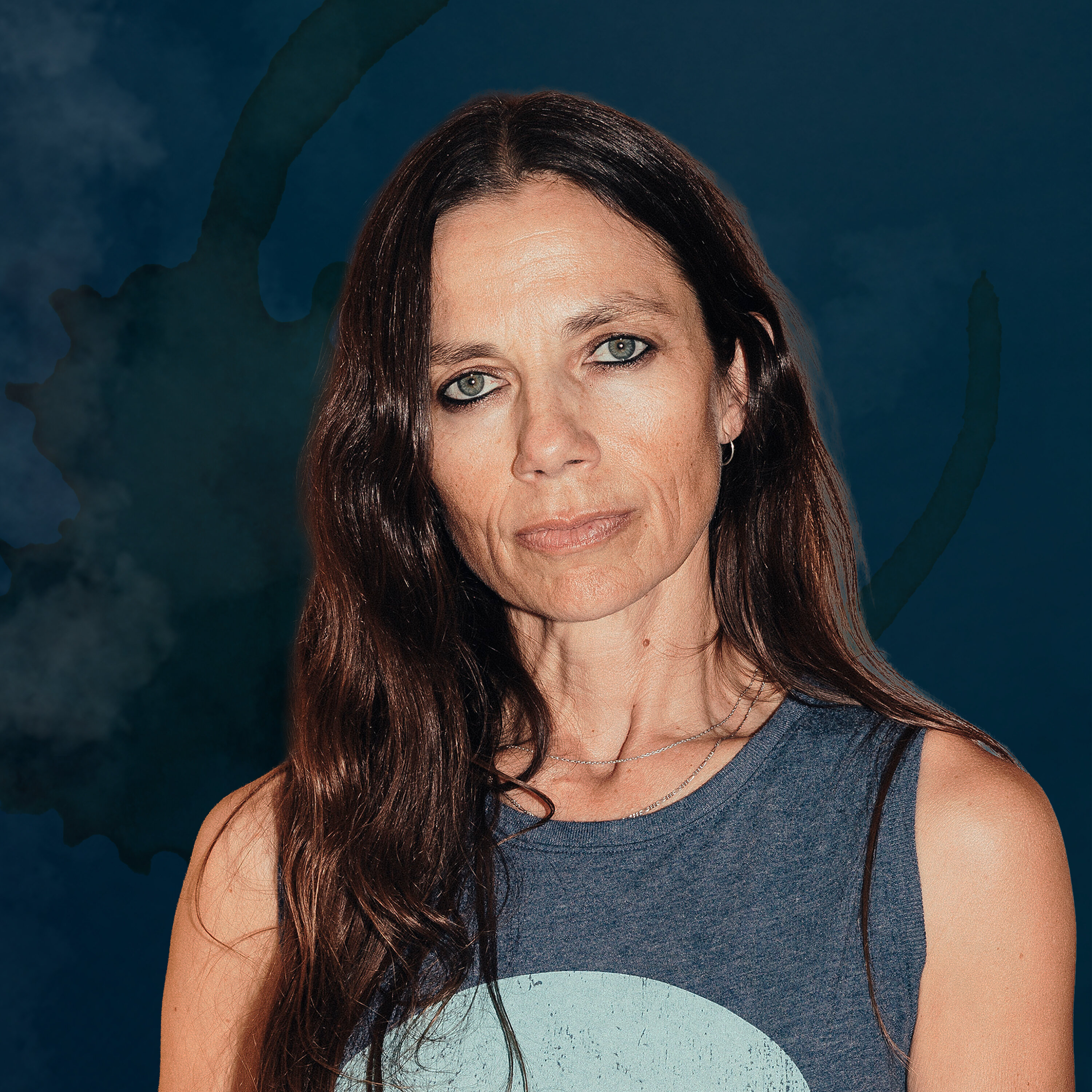
I'm David Duchovny and this is Fail Better, a show where failure, not success, shapes who we are. Justine Bateman is a filmmaker, author, and former third grader. She rose to fame at a young age playing Mallory keaton in the 1980s sitcom Family Ties and received Emmy and Golden Globe nominations. A few years ago, Justine made her directorial debut with a film called Violet, which is about grappling with fear and self doubt, topics we'll discuss today. As a vocal advocate for natural aging, Justine promotes self acceptance, challenging both society and Hollywood's standards. She wrote about this in her most recent book, Face, which delves into the cultural and psychological aspects of growing older. The previous book, Fame, dissects that topic at length. Your movie that I'm in called Feel, which friends of mine saw at your film festival and we were at a Barnes and Nobles because you very generously moderated talk.
- [02:59]
Justine Bateman
Yeah, that book is so great.
- [03:00]
David Duchovny
Thank you. The reservoir over there and you came into the green room and said, and I forget what your direction was.
- [03:07]
Justine Bateman
Oh, it was just with all these different people, I just put a camera on them and said, we're just gonna sit here for 30 minutes. And you can.
- [03:16]
David Duchovny
It was 30 minutes.
- [03:17]
Justine Bateman
Yeah. You can talk or not talk. Totally up to you. And then for anyone who didn't talk near the end, I would ask, what's been on your mind mostly lately?
- [03:28]
David Duchovny
Was I still on camera when you asked me that? Because when I saw the film, it's me just sitting there, but then there's a bit of a voiceover. So that was.
- [03:37]
Justine Bateman
Yeah, what I had was. I also did all this color dye art.
- [03:42]
David Duchovny
Yeah, that was beautiful.
- [03:43]
Justine Bateman
But, yeah, just had what people had said over. Just the sound, over them sitting there silently and also over the color dye. So I matched like a color dye piece to each person.
- [03:57]
David Duchovny
And did you have a sense of. It's called feel. I don't know if you told me if it was called feel or not. And I don't know if you gave me any direction aside from what you just said. Yeah, but was there in your mind, did you know what that film was going to be about when you started it, or did you just. No. Tell me what you thought when you started it, why you thought that was going to be a generative idea.
- [04:24]
Justine Bateman
I didn't. Okay. Usually I do project. I know exactly. Or I believe I do. Right. Know exactly what it's gonna. What it's gonna. What the objective is, what the thesis statement is and all that. And I was interested in everything everybody was saying. And a lot of people said very profound things. And it's not like I pushed them to. That just happened to be. I know a lot of people who think profound thoughts, I guess, you know. Cause I just say, what have you been thinking about? And then what came to my mind next was, oh, you should record. You should do an audio recording of all your journal entries about this process of making a film in this manner. And I was like. Me personally, as a person, I was like, no fucking way. Like, I don't wanna.
- [05:12]
David Duchovny
Don't wanna share that.
- [05:13]
Justine Bateman
I don't wanna do that. But then me as a director was like. I knew that was the thing that was going to sort of be the spine through it, the progression through it, because the rest of these are standalones and it's not. And I was like, what would compel me to watch the next one? And it's like, oh, if there was a progression, a thread through it that kept me that way, I wanted to know what.
- [05:38]
David Duchovny
And what do you think that thread was in terms of?
- [05:40]
Justine Bateman
Well, the thread was Me having such a problem with doing a film in this manner. I had a real problem with it. And my pattern is like, I have to dig then and find out why do I have a problem with this? Why is this pushing my buttons so that I can get rid of whatever irrational fear or whatever I had under that. And so the journal entries were, like, exposing that as I. As I did the project.
- [06:04]
David Duchovny
Right.
- [06:04]
Justine Bateman
Like, oh, these actors are gonna think I'm a fucking idiot. They asked me, what are you doing with this? And I say, honestly, I don't know.
- [06:11]
David Duchovny
You know, it's very interesting because I want to ask you about, like, this. Not the standards, but the criteria. Because, you know, this is nominally about failure. The criteria. When you go into an experimental. Experimental movie, a movie like that.
- [06:25]
Justine Bateman
Avant garde. Yeah. Like unchartered.
- [06:28]
David Duchovny
The criteria is different. Like failure. You know, you're not talking about box office or whatever. So you have an intrinsic sense of, am I. Did I do it or did I not do it? You know, I think.
- [06:39]
Justine Bateman
Yeah. I mean, we should always though.
- [06:41]
David Duchovny
I know, right?
- [06:42]
Justine Bateman
That should always be. I always. I see writing, directing, producing as a service position.
- [06:48]
David Duchovny
Great.
- [06:49]
Justine Bateman
You know, you're servicing. We have to understand what the project is about. Right. See if you agree, and then you have to service that.
- [06:55]
David Duchovny
Well, I. But what I hear you saying, ideally. No, no, but what I hear you saying is you are doing the project in order to understand why you're doing the project. Like, it's almost like you talked about fear. Like, okay, I'm afraid of something. It seems like the movie is an answer to that in a way. But you don't know that going in. So, like, I think the best stuff that I've ever done has been, like, I have no idea. Aside from, like, okay, it's a paycheck, Whatever, I'm doing it. But then I find out later, oh, oh, that's why I did that.
- [07:31]
Justine Bateman
Yeah. That's great. But, you know, you're a director, too, so, you know, like, as an actor, you can walk in like that. Cause also, you know, acting is more ephemeral compared with directing and writing. And, you know, you can. I was gonna make a construction comparison, but I can't think of a really good one right now. But when you're writing or directing, you have to be setting. I mean, acting, you're setting a structure too, but it's more ephemeral.
- [08:02]
David Duchovny
I feel like. Well, you talking like this. I think you're talking about, like, you have to make a foundation.
- [08:08]
Justine Bateman
And because you're setting something that every other department is gonna be following. So it can't. I mean, I guess it can. Warhol did it. I mean, you know, to just set something that's like, I don't know what this is. Let's see. I guess maybe I was able to do that with these two films because they cost almost no money.
- [08:30]
David Duchovny
Right.
- [08:30]
Justine Bateman
And I didn't have any financiers asking what's gonna be done with it.
- [08:35]
David Duchovny
Yeah.
- [08:35]
Justine Bateman
Yeah.
- [08:36]
David Duchovny
I just remember to go back to the direction you gave me, which I hadn't remembered till now. And in my memory, it was like I was sitting there for five minutes. You tell me it's 30 minutes. Interesting. I just remember feeling, what does she want? You know, at first, like, what? What does she want? And then I thought, okay, well, that's probably not the right question to be asking myself. What. What do I. What am I feeling? I don't know if you told me if it was. Yeah. If it was about feeling or if you told me to look at you or not look at you or.
- [09:12]
Justine Bateman
No, I think it was just like, maybe you asked and I said, whatever you want. You can. You know, you just can't go to sleep, can't get up, can't look at your phone.
- [09:23]
David Duchovny
I. What I. What I would feel. My shortcoming as a interviewer would be, is, like, I don't want you to feel uncomfortable. And I think as a director, sometimes you have to deal with people who work best if they're comfortable, and then they work best if they're uncomfortable. You know, people are very different in what they respond to, you know, what they give their best to. And that's what I was thinking. I was like, you know, I was dealing with, like, how do I give Justine? What does she want? Like, how can I give her what she wants? Here? That's. 30 minutes is a long time. So I probably got past that, and it's like, well, I'm sure it's. Whatever it is, it's. I don't really understand it, but should I try to feel something? Should I not try to feel something? Okay, now I'll just, like, sit here and think. I don't mind sitting here and thinking. And then that's all I remember. And I. And I thought. I didn't think about it again, you know, until my friend said, I saw that movie, and I was like. And she said, it's really good. And I was like, well, oh, I'd like to see it. And then I watched it, and I was like. I was moved in some weird ways. You Know, it doesn't move you in the way that movies move you when you go, you know, it's like, I'm not like caught up in the story.
- [10:43]
Justine Bateman
The story. Right.
- [10:44]
David Duchovny
But I'm caught up in something, you know, and that's why it works. I'm caught up in an ambiance, a mood, a something, a question. I think it does things that movies can do but we don't often ask them to do, you know?
- [11:03]
Justine Bateman
Yeah. I mean, I think, and I really think that's part of where, where the new genre in film is going to go. Like, it's something like that's really, like really real and human and raw.
- [11:17]
David Duchovny
Yeah.
- [11:18]
Justine Bateman
Whereas this sort of shadow of what, you know, the film business that we know, as far as I'm concerned, is it died, it's done. But now there's this.
- [11:29]
David Duchovny
What do you mean by that?
- [11:31]
Justine Bateman
I mean the business that. Where there was enough room for every genre, there was enough room for every, you know, there was Suzanne Somers and Sir John Gielgud.
- [11:41]
David Duchovny
Right.
- [11:41]
Justine Bateman
You know, and everyone coexisted. There was enough money to go around. Our financial ecosystem was really healthy. It worked. Yeah, it worked. You know, the way the audience paid us, the way advertisers paid us, residuals, all of that. And then the streamers came in and really carpetbaggers as far as I'm concerned.
- [12:07]
David Duchovny
Can you define carpetbaggers for those who haven't studied American history?
- [12:11]
Justine Bateman
Sure. Come on into an arena and basically fuck it all up, undercut everyone, get it to a point where you've eliminated the competition that existed when you stepped in. And then do whatever you want and, and just for this, almost for the sake of it, or, you know, because.
- [12:33]
David Duchovny
In the beginning, when, you know, Netflix is starting to get really active, 2016, 2017, and then, you know, Apple and then Amazon and you know, everybody starts making streamer entities. I thought, wow, there's so much more. There's so much more opportunity. This is fantastic. But in fact, what you're saying happened, happened.
- [13:00]
Justine Bateman
Well, here's how it seemed to me. So we go back like I think 2013, 2014 was when House of Cards.
- [13:09]
David Duchovny
Right.
- [13:09]
Justine Bateman
Okay, so we go a little bit before that and the studios were, they weren't really doing those mid level projects anymore. Right. We still had some independent film being done. But they were like loving this pattern of spending $100 million to make $100 million. Right. To clear $100 million. And even though you're only doubling your money, they don't want to spend time with smaller Films that are maybe gonna quadruple or, you know, 10 times what the budget was.
- [13:42]
David Duchovny
If it's only a 5 million budget, you're only making 50 million.
- [13:45]
Justine Bateman
Exactly.
- [13:45]
David Duchovny
Yeah.
- [13:46]
Justine Bateman
So why put the, you know, you put the same amount of effort into the promotion and, you know, looking over the script beforehand and all of that. But they were smart about one thing. When they first came in, they saw what was missing, that mid level. And like Amazon did Manchester by the Sea, Netflix did House of Cards, and there was some good stuff being done, either acquired or being produced. And they were also doing a lot of licensing of studios stuff. But then as they became more popular, the studios were like, hey, I don't want to make this licensing deal with you anymore. Like, screw you. What are you guys, you know, this is. You guys are becoming bigger than us. So then they went, well, we'll make our own stuff then. And then their DNA though, is, is a tech company DNA. It's a scaling DNA. Their whole business model is completely different. They have investors they don't have to, and they also, for most of those companies, this isn't their primary business at all. So they don't really care if it does well or not. It's a loss leader.
- [14:54]
David Duchovny
It's branding.
- [14:55]
Justine Bateman
It's branding and especially something like Amazon, it's like, oh, well, you can, while you're here, why don't you buy all this other stuff that we're selling anyway? So then, you know, just wanting to scale and wanting to get more subscribers and all this, then they just started looking at keeping people there and thinking on an international level, which means genre stuff. Not all the genres, but just the stuff where you don't need to know the language, action, horror. So then they just started just churning it out, churning it out. And then you had the studios, instead of like sort of retreating, going, okay, what's our competitive advantage over these people? Right? We know how to make films and we have relationships with all these stars, you know, Then you got the problem of all the streamers, like throwing, throwing the money, buckets of money at them anyway. And then they started chasing the streamers, started chasing the tech model, and on top of that, introducing AI, which can automate this content factory generation. And now it's just all fucked.
- [16:22]
Julia Louis-Dreyfus
Hey, Julia, Louis Dreyfus here. If you listen to me on my Wiser Than Me podcast, you probably already know that I'm an investor and an evangelist for the mill food recycler. There are a lot of reasons to love mill, but for me it's all about the impact. Keeping food out of the garbage is one of the most powerful things we can do to help the planet every single day. We're talking banana peels, carrot tops, old takeout. When that stuff heads to the landfill, it becomes a huge driver of climate change. If you already compost, great. But of course there's the smell, the flies, the running to the curb every day with a little leaking compost bag made of cornstarch. That's where mill comes in. It makes keeping food out of the trash as easy as dropping it in. It can handle nearly anything from a turkey carcass to like 20 avocado pits. It works automatically while you sleep. You can keep filling it for weeks and it never ever smells. Mill makes dry, nutrient rich grounds that you can use in your garden and add to your compost feed to your chickens. Or mill can get them back to a small farm for you, but you kind of have to live with mill to really get it. And that's why they offer a risk free trial. Go to mill.comweiser for an exclusive offer.
- [17:36]
David Duchovny
The Defender 110 is a vehicle made for the modern explorer. It's built with purpose and it's naturally capable and ready for expeditions. The Defender 110 has the endurance to take you further than you thought possible and you'll drive with on road presence and off road prowess. This is a vehicle that looks tough because it is tough. Its exterior is designed for optimum durability and the raised hood and sculpted grille give the Defender 110amodern edge. On the inside. It's ready for the whole crew with five seats and the option of expanding to seven. That's capability, meeting comfort and the tech is no joke. 3D surround cameras with Clearsight ground view let you see underneath the vehicle. You can anticipate obstacles and rough terrain anything you encounter on your adventures, and Clearsight Rear View offers unobstructed views even when you can't see through the back window. Driver aid technologies also make driving and parking simpler, and the next generation infotainment system helps you make even more of your experience. You can also customize the driver display to match your needs and your journey. Design your Defender 110@Land RoverUSA.com.
- [18:51]
Unknown (Discover Card Advertiser)
Are you still quoting 30 year old movies? Have you said cool beans in the past 90 days? Do you think Discover isn't widely accepted? If this sounds like you, you are stuck in the past. Discover is accepted at 99% of places that take credit cards nationwide and every time you make a purchase with your card you automatically earn cash back. Welcome to the now it pays to Discover. Learn more@discover.com credit card based on the February 2024 Nielsen report.
- [19:36]
David Duchovny
What I thought was very perceptive about the way you've spoken about AI is. Well, I mean, my feeling is you cannot stop a technology.
- [19:49]
Justine Bateman
I'm not even trying to. I hope they do it faster so that it all comes.
- [19:56]
David Duchovny
Yeah, but even if it's weaponry, you look at the history of the human race. We've never invented a weapon that we didn't use. You go to the. It's just.
- [20:08]
Justine Bateman
That's interesting.
- [20:08]
David Duchovny
We don't do it like it's. Eventually it's gonna happen, like whether or not AI is this thing that's gonna destroy human life. I personally think that's a bullshit kind of a fear that they're throwing at us because I don't see it. But what you're talking about, what I've seen you talking about, what I've read about, is the chatgpt, the generative. The generative of the script, feeding it Justine Bateman's writing, and then saying, give me a script about two characters who meet in a pet store in the style of Justine Bateman. And now I've got this cute little rom com here and now. So you're saying, how do I compensate Justine Bateman for her style, for her previous work that's gone into the mulch in this ChatGPT thing? And that's a great question, and I don't know how to answer it, but that is the question, because ChatGPT and all this AI stuff has been educated using our experience. So how do we compensate? And we don't know at this point because they've put everything in there. It's already educated.
- [21:14]
Justine Bateman
No, the answer is super easy.
- [21:16]
David Duchovny
Oh, it is good.
- [21:17]
Justine Bateman
It's super easy. But they're not going to do it.
- [21:20]
David Duchovny
What's the answer?
- [21:21]
Justine Bateman
It's just that, look, generative AI is absolute 100%, 100% theft, wholesale theft. It's the biggest violation of copyright violation in the history of the Copyright office in the United States. Absolutely 100%. Unless they are. So for people that don't know, it's something like a blender, the AI models. And if you, like you said earlier, if you wanna write a book, you just put in as many examples of books as you possibly can, as you like, or whatever.
- [21:56]
David Duchovny
Yeah.
- [21:56]
Justine Bateman
Every book you can think of and then write, you give it a prompt, sort of a Frankenstein spoonful of what you've put into the blender and you know, about, like you said, you know, a ROM com about bananas or whatever. And provided you've given the model information about bananas and ROM coms, it'll give you this Frankenstein spoonful of it. Well, what you put into the blender, they didn't ask any. Unless that model is fed only the programmers or the CEOs of these AI companies, only their journals and home movies and photos. You want to do that, then great. But you can't train a model with a small subset like that. It has to be with absolutely. As much as possible. And, and yeah, the whole, like, you know, do it and I don't know the term, like, go ahead and, you know, break rules and apologize later or whatever the phrase is, but this is bullshit. This is like you just said, like everybody's, you know, blood, sweat and tears and IPs, and then for anybody who says, you know, IP should just go away, I'm like, well, sure, you know, why don't we all just.
- [23:08]
David Duchovny
Let's make all property go away.
- [23:09]
Justine Bateman
Then we'll all just, yeah, we'll all just live at your house and drive your cars and just have this sort of free for all, you know, I don't know, socialist structure. And then what you have is the, you know, the. I think it's the tragedy of the commons where, like, there's nobody's making anything then, right? Because, like, why should anybody. Like these two films that I made, I'm not putting them up online. I may have them behind a paywall in my substack, but beyond that, why should I?
- [23:39]
David Duchovny
Because you want people to see them.
- [23:41]
Justine Bateman
I want people to see them, but I don't want them to be AI fodder. I mean, you know what? I'm just one small component. I'm just one filmmaker, but it's offensive. And these tech bros are repulsive to me. What have they to me? They're not. I have a computer science degree, you see. I know science degree. So I think programmers are fantastic and there's such a genuine love of programming that software engineers have, and it's really kind of wonderful. But these tech bros that are, to me, it's another category. They're the carpetbaggers. They're just, they're powered. They seem to be powered by greed and that's it. Like, how does this benefit anybody? It doesn't. You want to sell our product, by the way, our product sliced and diced to this much larger audience of non artists and make them pretend that they're artists?
- [24:49]
David Duchovny
Well, it's also, and this Gets into the tricky part for me. I think I agree with you. And I want to talk about computer science as well, because you seem to be perfectly suited to talk to both.
- [24:59]
Justine Bateman
It's a good combo.
- [25:00]
David Duchovny
You can talk to both sides. You can talk to the artists and you can talk to the programmers. So I think, I think we should listen to what you're saying because you have those two brains. I cannot. I cannot do math. So. And it's just amazing to me that you went back to school in your 40s. I mean, I. Yeah. And talk about it's cool, the failure of homework and shit like that, you know, like having to go back into that. And I'd love to hear about that. But where. What was I? Oh, most technology, most disruptive technology is making things easier and more cheaply and that. My grandfather was a barrel maker. It's called a Cooper. World War I happened. He went at the age of 18 and was wounded three times. He fought with the Scottish army, the British army. And when he got back home in 1918, barrel making was automated. It was one of the things that, you know, war often drives technological innovation. He had nothing to do the rest of his life, you know, so he was a casualty of advancement of how do we make things better and more cheaply. But that again, the great mass of people wants their barrels cheap. Like, my grandfather is a one person casualty.
- [26:25]
Justine Bateman
Yeah.
- [26:25]
David Duchovny
But the world gets the benefit of cheap barrels or whatever. So I think that the argument what AI is going to make is, oh, you know, we have to pay Justine a lot of money to write that script. And then we're going to have to charge you a lot of money to see that movie because we paid Justine a lot of money and all those actors. We're going to make it cheaper this way. We're going to do it. We're going to, you know, you like these Middle Eastern rugs that are handcrafted. But I've got something that you can't really tell the difference that was made by a machine, you know, And I'm going to charge you one tenth of what you would charge here. So I think. I see that's the argument that those tech bros might make is like, hey, we're just making it cheaper for people to enjoy, you know, but they're.
- [27:12]
Justine Bateman
They're not though.
- [27:13]
David Duchovny
I know.
- [27:14]
Justine Bateman
They're making it. They're making it cheaper. Not financially cheaper, creatively cheaper for someone to feel like an artist. That's really what it is.
- [27:27]
David Duchovny
You think people really want to feel like an artist. That's a dream of people.
- [27:31]
Justine Bateman
Yeah, yeah. I think it's that. And also it taps at a heavy resentment that some people have. A resentment or a confusion about how creativity works. Yeah. How artists come up with anything.
- [27:50]
David Duchovny
There was that great line in the Dylan movie where he says, you know, when people ask me how did I write that song? All I hear is, how come I didn't write that song? You know? And I think this goes back to something you were alluding to but hadn't gotten into about different kinds of stories or different kinds of filmmaking that you see coming up. You know, I think about the disruptions of technology and art in art, most obviously photography. Oh, my God. I grew up. I thought I was a painter. I paint things as they are. I paint these beautiful landscapes. Why would I. You've got a photograph of the damn thing. That's what it looks like. Not that. What do I do? What am I going to do now? I've trained as a painter. This is my life. You know, it's reductive to say, okay, here comes modern art. Where we're no longer showing the world as it is. We're showing more of an interior unconscious. But it's got to be a response to photography in some way of going like, fuck it, I can't compete with that computer. Yeah.
- [29:03]
Justine Bateman
A friend brought that up to me. And I don't remember in the line of art, of art history.
- [29:09]
David Duchovny
I don't know either. I could be sticking out of my ass like.
- [29:12]
Justine Bateman
No, but my friend Paige brought that up. That the arrival of photography allowed for impressionists. But again, I don't have. I don't think timing wise. I don't know that I'm exactly. With the introduction of photography. And when impressionistic art or Dada art or Cubism, Surrealism and Surrealism. I don't know if I have that timing right with photography, but it didn't exist before photography.
- [29:46]
David Duchovny
Right, right.
- [29:47]
Justine Bateman
Yeah.
- [29:48]
David Duchovny
And we could say this is a net good. We could say, oh, wonderful that now we have this whole other style of art that was.
- [29:55]
Justine Bateman
But in a few years, I think we will be able to. But I think the problem right now is that we can see the individuals who are perpetrating this for no motivation but greed. And that's what's. I mean, I want all these. As much as I know this has to happen in order for this all to be destroyed so that we can have finally a new genre in the arts. Cause we really haven't had a new genre in the arts since the 90s of any real Significance.
- [30:26]
David Duchovny
What was the new genre in the 90s? Websites or.
- [30:30]
Justine Bateman
Well, we need. Oh, if you think about it, in film, it's, you know, the rise of the independent film world.
- [30:36]
David Duchovny
Yeah. But I think it's more like that's the 60s, you know, French avant garde really coming to America and then grunge music. Yeah, okay. Okay. Yeah. No, I'm sure. I don't mean to put you on the spot, but.
- [30:47]
Justine Bateman
No, not at all.
- [30:48]
David Duchovny
Whatever.
- [30:48]
Justine Bateman
No, no, I welcome it. But relative to that. Okay, so even saying, like, okay, that was a revisit. Yes, but even relative to that, what's happened since 2003.
- [31:00]
David Duchovny
It's a lot of nostalgia. A lot of nostalgia.
- [31:02]
Justine Bateman
Oh, my God, it's like refried beans, like, all day.
- [31:05]
David Duchovny
All day and the Marvel Universe and this stuff that I can't comprehend. But, you know. And I'd even go through, like, in terms of acting, you know, you've got stage actors, and all of a sudden now film comes in and it totally revolutionizes the way actors act, because it's no longer the Yiddisha theater, where you're, you know, or opera, you know, where you're. You've got to use this fucking body and voice, and that's all. I'm not getting any help. I've got to reach the back seats and they got to feel me. And now I've got this camera in my face, and I don't really. I mean, I've just got to feel it.
- [31:41]
Justine Bateman
I barely move.
- [31:43]
David Duchovny
I'm going to feel. If I move, I'm out of frame. And then you've got. Silent movies become talkies, and then you've got. You know, you hear these stories about these wonderful silent actors who didn't have great voices or who had Eastern European accents, you know, whatever. And then they could not translate. So there's often these kind of leaps, these technological leaps that force you into different areas.
- [32:05]
Justine Bateman
Yeah.
- [32:06]
David Duchovny
And I was wondering, you know, when you said, I've got this. You said, I've got this vision of things changing. I've been. You know, I'm not really. I'm not on the Internet, but I hear about TikTok, and I've seen the TikTok stuff and being involved in music. I know that songs have basically changed from the form that we grew up in, which is like intro, verse, second verse, chorus, third verse, chorus, outro. You know, like just the way rock was. Songs are now all hooks. It's like, if you don't give the hook in the beginning of the song, you're fucked. Because you really. People aren't gonna be hanging around for the chorus.
- [32:48]
Justine Bateman
So it's like the end of the second act in a film. That's your first scene.
- [32:50]
David Duchovny
Exactly. And that's what TikTok probably is, you know, in a way. So I'm wondering, I wonder, like, narratively, because I'm like, a narrative guy. I love a good story. That's where my heart is. I grew up in it. I was educated in it. I feel it. I desire it. I want it. I'm probably not gonna change. I'm not gonna be satisfied by looking at TikTok all day. I might be diverted, but I won't be satisfied. So I belong to a time that maybe is in the past or whatever, or maybe an art form that is dying or a way of narrative storytelling that is. And I wonder, you know, when I look at your films, that's not a narrative, you know, And I'm impressed because I know you come from the same cultural education. You come from the same need, narrative need, same era, to sit there in the dark and watch people go through shit and go through it with them. Yet you're moving away in those two movies anyway. And even in your books, which are not narratives, they're more like meditations. So I do think you are looking at a different way of storytelling that is driven by, a little bit by the disruptive technology that we've been witnessing.
- [34:07]
Justine Bateman
Yeah. And even in even, you know, just growing up and everything, I was always more interested in films that brought me into. I think it's fascinating that you could watch a film that'll bring you into a whole. I don't mean a world, like, world building.
- [34:29]
David Duchovny
I hate that.
- [34:30]
Justine Bateman
I mean, this is ridiculous. I mean, you're being brought into. You're kind of time. It's beyond time travel. You're traveling into an experience. You're like, experience traveling. Like, eight and a half. I can watch eight and a half and be brought into this kind of experience that Fellini made with music and camera movements and these actors and this attitude and what was going on at the time in Italy. The attitude then plumy. And I'm fucking there every time I see the film. Like, it's this capsule. You can go in and have this complete experience. And it's. And it's always there. You can always, like, open it up and go in and have that experience.
- [35:26]
David Duchovny
And it's immersive, is what I say.
- [35:28]
Justine Bateman
And it's immersive.
- [35:28]
David Duchovny
But the way. The way we now see immersive film is like, we beat you over the head until you're immersed.
- [35:35]
Justine Bateman
It's lame. Or you got a VR. I knew VR wasn't gonna go anywhere because it makes people feel nauseous, you know. And also you don't know what's going on around you. You know, the thing is, we're humans. Like, we're not going. You can't. Evolution doesn't move that quickly. Like, we're not all suddenly gonna be into this, you know, like you, like, I don't really think that all these people watching TikTok don't want story like you said.
- [35:59]
David Duchovny
I hope not.
- [36:00]
Justine Bateman
Because I think there's something.
- [36:01]
David Duchovny
I still wanna make them.
- [36:02]
Justine Bateman
There's something in humans that really want that.
- [36:04]
David Duchovny
But for me, like, yeah, well, what you make me think is everybody's terrified that AI is going to become human that way. And for me. And destroy us. And for me, I'm looking at it as like, no, I think we're asking the wrong question. I think AI is making humans more mechanistic. And to me, that's really the problem. It's like we are becoming more programmable in a way, and we are desiring things that computers might desire as information or input.
- [36:40]
Justine Bateman
That's good. It's really like in an effort to make sure we're, quote, not left behind on leading edge of technology. I think technology is just like a while ago. And you could say this about journalism too. They just ran out of things to do. They ran out of problems to fix. You know, like, you think about like PayPal. What were we doing before PayPal? Well, we were calling, you know, you want to order something at catalog. We were calling, you know, first of all, before the websites. Right. We were calling.
- [37:16]
David Duchovny
It's all ease too. They didn't figure out how to solve.
- [37:20]
Justine Bateman
No, but it was problems.
- [37:21]
David Duchovny
They just wait.
- [37:22]
Justine Bateman
But there was a problem once. Once we were ordering on websites after we were doing the 800 numbers. We're ordering on websites and every time you wanted to order something, you were putting in your credit card and address information every single time. So when PayPal came, I was like, oh, this is a good solution. I just hit the PayPal thing and it goes through. I mean, there were a lot of things that.
- [37:44]
David Duchovny
But it's ease again. It's all ease. It's not a new thing.
- [37:48]
Justine Bateman
But then I think they ran out.
- [37:49]
David Duchovny
Yes, I agree with you.
- [37:50]
Justine Bateman
And they didn't want to do the hard shit, like how do you get all the plastics out of the ocean? Or how do you do this, how do you that? And they Just went, oh my God, what low hanging stuff can we go for now?
- [38:00]
David Duchovny
Well, taxis.
- [38:02]
Justine Bateman
Taxis, yeah, Uber, you know, Uber, sure.
- [38:05]
David Duchovny
Airbnb. I mean, these are things that work really well and that you. And I would say, yeah, it makes life easier, but at what expense, you know, and how much easier is your life ultimately at the expense of these kinds of successes?
- [38:19]
Justine Bateman
And then talking about ease, you know, a lot of these AI companies are trying to sell, trying to sell you on this learned helplessness, sell you on.
- [38:30]
David Duchovny
Ease is not a goal now.
- [38:32]
Justine Bateman
It's like everybody seems to be fine. And this is the old thing in advertising, you know, if you have to show that your product solves a problem and if there is not currently a problem, you better create one.
- [38:44]
David Duchovny
The armpit.
- [38:45]
Justine Bateman
But now it's. Oh, it's a lot of like, to me, I think it's really kind of sick. It's this like shit. Shh, shh. You can't do that. You can't write your own email. You can't make up your own bedtime story for your daughter. Come on, let us do it. Let us do it.
- [39:02]
David Duchovny
Shh.
- [39:03]
Justine Bateman
Lay down.
- [39:03]
David Duchovny
Shh. Yeah, you relax.
- [39:04]
Justine Bateman
And I think it's very fucked up. And it's like, oh, I'm sorry, did you lose your job? We'll get you a ubi. And I'm thinking, you think people are depressed and anxious now. Now you're gonna say like, oh, so don't worry, you're not gonna need any jobs. We'll just hand you some money anyway. First of all, you're going to let. The government's going to be then in charge whether or not you have enough money for rent or your mortgage or anything like that. And then you're going to take away people's sense of purpose at all. Even if they're at a job they hate. There's still something about doing work in exchange for money.
- [39:36]
David Duchovny
There's a struggle. Yes, there is.
- [39:37]
Justine Bateman
And you're going to just think you can just take.
- [39:39]
David Duchovny
What you're saying makes total sense to me because what I talk about, the original impetus for this whole conversation and for fail Better.
- [39:47]
Justine Bateman
Yeah.
- [39:48]
David Duchovny
Failure is a spiritual exercise. You know, failure is a religious exercise. Failure is human. That is what we do most of the time. And if you're, you're, you're talking about companies that are telling you you don't need to struggle anymore, it's going to be easy. We're going to make it easy for you. You won't have to fail because I have the answer, you know, oh my Memory fails me. I don't remember who directed that movie. Oh, here. There it is. Okay, I got it. I'm not embarrassed. I don't have to study some more. I don't have to refresh my memory. I don't have to learn. I don't have to learn because this thing has the answer. And learning's hard. Learning's a process of failure. Because you have to master something, you've got to fail thousands and thousands of times. And I think what you're saying is even if you're in a job that you hate, you're engaged in that struggle.
- [40:41]
Justine Bateman
Here's a theory I've got. And I think if I think I could do a good essay, I think I could find enough evidence to support this. That generative AI is a kind of. I know people have ideas about this term I'm about to use, but think of it just in an academic sense. It's a kind of Antichrist because it's trying to replace. It's trying to replace how people are to relate to God or a God. It will always be there for you. It will always give you the answer. Whatever you need, it will give it to you.
- [41:34]
David Duchovny
I'm not big on trends, but I am big on clothes that feel good and last. That's why I have so much respect for quints and their high quality staples. Quint's has the things you'll actually want to wear with summer on the horizon. Check out their organic cotton silk polos and European linen beach shorts to wear together or not. The colors, materials and styles make it easy to mix and match with your wardrobe or with other items from their collection. Another great thing is that all of Quince's products are half the cost of pieces from similar brands. How is that? Quince works directly with top artisans to cut out the middleman, which means you get luxury pieces without the markups. And you can feel good knowing they're only working with factories that use safe, ethical and responsible manufacturing practices. Personally, I'm looking forward to wearing the cashmere hoodie that they're sending my way. And I have really enjoyed the long sleeved polo. I've gotten a lot of compliments on the polo shirt that I look pretty good in it. That's what they say. That's what the kids are saying. Stick to the staples that last with elevated essentials from quince. Go to quince.com failbetter for free shipping on your order and 365 day returns. That's Q-U-I-N-C-E.com failbetter to get free shipping and 365 day returns. Quince.com failbetter from the author of Fleischman Is in Trouble Long Island Compromise is an exhilarating novel about one American family and the dark moment that shatters their suburban paradise. Now in paperback for a perfectly portable read you won't be able to put down. As author Taffy Brodess or Ackner writes of the protagonists, the Fletchers were not just rich, but extraordinarily absurdly kidnapped rich. What ensues is a drama filled story for the ages. Tracing the entirety of one family's history. The novel spans decades and generations all the way to the present day and it confronts the mainstays of American Jewish life. There are themes of success, ambition and inheritance, and even pyramid schemes, right wing capitalists and psychics. And at its core is the mostly unspoken love and shared experience that unite a family forever. Long Island Compromise has been named a Best Book of the Year by numerous publications including the New York Times Book Review, Oprah Daily, the New Yorker, Time, and the Washington Post, to name just a few. Kirkus Reviews described Long Island Compromise as a great American Jewish novel and the Los Angeles Times ranks it among the pantheon of great American novels. Find it now in hardcover and paperback wherever books are sold. This is an ad by Better Help When I think about my health, I'm proud to say that I care about my mind, my mood, and my psychological well being. I know that for many men there's an expectation to ignore feelings. Yeah, and put on a tough exterior. So I'm here to say that there's strength to be found in opening up what you're carrying and doing something about it, not pushing it away. Therapy is a great place to start. It's a way to work on what's important for you and your lifestyle, whether that's getting some help, understanding your responses to the world, or developing positive coping skills for when you face obstacles. Fortunately, giving therapy a try has never been easier, especially with BetterHelp. You can join a session with a therapist at the click of a button, helping you fit therapy into your busy life. Plus, you can switch therapists at any time. And as the largest online therapy provider in the world, BetterHelp can provide access to mental health professionals with a diverse variety of expertise. Talk it out with better help our listeners get 10% off their first month at betterhelp.com failbetter that's betterhelp.com failbetter so when you start out and this is very Similar to my question about you starting out with the movie feel, when you start out with face, you're not. What I don't see you saying is, hey, fuck you. Male, straight white male, patriarchy. You're making me feel bad about getting older, but you're saying, I'm feeling bad. Something is making me feel bad about getting older. Or there's a fear. I'm working something out here. Let me try to work this out.
- [46:28]
Justine Bateman
Well, with that one and also with fame, yeah, I had issues. I had issues with when my fame was descending and people would say, oh.
- [46:41]
David Duchovny
Are you acting anymore?
- [46:42]
Justine Bateman
Yeah. Do you still act? Back when I was acting and I thought, yeah, of course I am. So, yeah, I had to get at what the. So those two books were after I had worked it out.
- [46:54]
David Duchovny
Yeah, so you'd worked it out. So in a way, I'm trying to kind of like guide it to this area around failure, which may or may not. No, no. Which may or may not be germane to anything. But I'm thinking that you're feeling. Let's go with fame. You're feeling. There's a sense of failure around not being as famous as you were. For sure. How do you unpack that nonsense, you know?
- [47:27]
Justine Bateman
Well, for me, I had to get at why did that. You know, okay, this is a while ago, right. Where I was still acting. And yeah. I'd ask myself, why did that bother me? Yeah. And that's exactly the thoughts that came up exactly. Were that about failure. Oh, I feel like an absolute failure. And it's interesting to think about. It's like. And then I go into, in the book, the idea that you were given this fame and then you fucked it all up. What'd you do? You dropped it. You broke it as if it was really famous. You have no control over it whatsoever. You really don't. Even people who try to manipulate it, you know, you can't. It's not. It doesn't work that way.
- [48:16]
David Duchovny
Well, it's become brand now. People turn their fame into a brand, which to me is hideous. But.
- [48:22]
Justine Bateman
Yeah, but.
- [48:24]
David Duchovny
Yeah, but people are so fascinated with fame, you know, And I think they are.
- [48:28]
Justine Bateman
I think because it's like love. They're like, oh, it's. It's similar to love in the. You know, like you're. When you. When somebody wants to be famous, it's because they want to be provided for. They want the money that comes with. They assume comes with the fame.
- [48:50]
David Duchovny
But did you want to be famous? I don't think you did. You didn't want to.
- [48:53]
Justine Bateman
No, no, no, never.
- [48:54]
David Duchovny
You had just started acting.
- [48:55]
Justine Bateman
But this is why people are fascinated. I think white people are fascinated with people who have fame because they assume all these things. They assume that you're being provided for, you assume you have lots of money. They assume that everybody loves you. They assume that you can do anything you want.
- [49:09]
David Duchovny
It's easy.
- [49:10]
Justine Bateman
It's easy.
- [49:11]
David Duchovny
You got big.
- [49:12]
Justine Bateman
Yeah. You get all these offers for all of these jobs, you, you. All these opportunities and you know, you.
- [49:17]
David Duchovny
Get to go to meet other famous.
- [49:19]
Justine Bateman
People, you know, Candyland and get. Yeah. And you're. With all these. Yeah. They just assume and that every. Yeah. And that everything is easy and you're good looking too. And you know, I think people wanting that is like a fear that they will. That they'll be forgotten or is a kind of eternal life, inconsequential.
- [49:36]
David Duchovny
But I think we all will be and are.
- [49:39]
Justine Bateman
Yeah. And I think once you accept that, nobody's gonna remember you. It's very freeing. I mean, look, we're in the business and we can go down, so we should know everybody that's on the Hollywood Walk of Fame. Right? All the stars. And we only know like a quarter of them. And yet those people were famous enough to, or had, you know, enough money to buy a star, you know, at some point. And yet even they are, we don't know who they are, you know, but it's very freeing, you know, instead of spending all your time trying to, you know, maintain your brand, like, why are you spending all that time doing that? Like, don't worry, it's not going to outlive you.
- [50:17]
David Duchovny
Yes. But also for me, it's like I worry about sounding egotistical, but fuck it. I had all these experiences. I was given a great education, I read a lot of great books, I saw a lot of great movies, I met great actors and directors. I learned so much. And I also got to work on arts in that way. And all that stuff is soil, you know, and like I want to grow stuff out of that soil. And when I'm part of it, the. When I'm gone, part of it is I kind of do want to leave behind a record of how I saw things. Like, I don't mind doing that. Like, even if it's going to be.
- [51:07]
Justine Bateman
Forgotten, that's your task. Like that's what you're called to do. Like that's your task.
- [51:11]
David Duchovny
Yeah.
- [51:11]
Justine Bateman
So I don't, I mean, you tell me. I don't think it's cause you want to be famous.
- [51:20]
David Duchovny
No, no. The only way I looked at fame was like, oh, it makes that stuff easier for me to do. Like, oh, you'll give me this money to go do that, because I'm famous at this moment. And that's kind of a tail wagging the dog business that can really get you into trouble. But this quote where he said, if something pushes my buttons, I want to get to. What is the fear beneath that? What's your personal fear that's making you susceptible to these things? What life was like when fame was descending for me, you know, the.
- [51:53]
Justine Bateman
Yeah, yeah. So that. Yeah, that was. That was an interesting experience. Yeah. I had to. But, you know, you know, you're talking about failure and feel better. And to me, failure is truly the situation. Whatever the situation is, came about exactly the way it's supposed to. So me assuming it's a failure is really just my expectation. Didn't match the glorious result.
- [52:26]
David Duchovny
Right.
- [52:27]
Justine Bateman
That's all. It just didn't match. Okay, I'll tell you, this is good. Here's a. Okay, so I did this film, Violet, I wrote, directed, and produced with Olivia Munn and Justin Theroux, and it didn't get any nomination. I mean, you know, in the end, it got like a couple of something. You know, it's hard for me to be totally objective of it, but I thought it was really different and fresh and new and profound and creatively really beautiful.
- [52:57]
David Duchovny
And so when you sat there and you watched right before you went to film festivals, you had the movie finished, you sat there and you watched it, and you were like, that's something close to what I meant to be doing.
- [53:10]
Justine Bateman
Oh, yeah. But I also, like, if. If somebody else had done it and I'd seen it, I would have been really jealous.
- [53:15]
David Duchovny
Oh, good.
- [53:17]
Justine Bateman
But it didn't get any nominations for anything.
- [53:20]
David Duchovny
Yeah.
- [53:20]
Justine Bateman
I mean, like I said, with the exception of a couple of small things. And I was like, okay, that feels like a kind of failure.
- [53:28]
David Duchovny
Sure.
- [53:29]
Justine Bateman
Right. You know, even. I'm not saying Oscars, but, like, you know, Gotham Awards, something. Yeah, right.
- [53:36]
David Duchovny
Or make some money.
- [53:37]
Justine Bateman
And. And then I went, well, wait, you know, with my, you know, theory that it's really just my. This went exactly the way it's supposed to.
- [53:48]
David Duchovny
Yeah.
- [53:48]
Justine Bateman
And my expectations didn't match this glorious result. And what I realized in writing about that, and, you know, what's my fear or my fear that, you know, I forget what it was, but something like. I'm sure it was something like, you know, then people wouldn't take me seriously. You know, I want to be Taken seriously as a filmmaker, and this is going to, you know, whatever it was. And I thought, okay, well, if this was designed, you know, like God looked at this situation and said, you know, what the best outcome would be here is if she doesn't get any nominations at all. No wins, no nominations. And I thought, okay, if God. God loves me, why would he say that's the best outcome possible?
- [54:28]
David Duchovny
She likes struggle.
- [54:30]
Justine Bateman
And what I realized is, no, this makes me. And also, I'd been through the whole, like, doing the camp. The whole awards campaigns myself, and I know how much money. I've seen the menus now of how much it costs to get. So really, it's a marketing award. And if you can afford to play the game.
- [54:48]
David Duchovny
Which is why I love the Golden Globes, because they're just crazy, right?
- [54:53]
Justine Bateman
Yeah. And they had to, like, jack the craziness out of that. But I realized, like, oh, in having this experience and then doing, you know, like I said, doing the journaling and stuff and figuring out what my issue was with it, I went, no, this is great. Now I really actually don't ever want a nomination or a win in anything as a filmmaker. And in that feeling, then I will be exempt from ever trying to make a film that I think will get an award or a nomination that creatively is an enormous freedom.
- [55:31]
David Duchovny
Wow.
- [55:32]
Justine Bateman
So that's what I got from that. So that's an example of, like, something that looks like a failure. And I go, like, hold on, let me get the. Right.
- [55:38]
David Duchovny
There's that moment where you're like. You get into the crouch, right?
- [55:42]
Justine Bateman
Oh, totally.
- [55:43]
David Duchovny
Oh, fuck.
- [55:44]
Justine Bateman
I totally. I was like, no, I know. I was faithful to what this film needed to be, but why then is this my result?
- [55:50]
David Duchovny
Yeah.
- [55:51]
Justine Bateman
Out there in the world, who do I blame? Well, like I said, I'm so used to the. No, what is it? Why is it affecting me like this right now? Why aren't I just going, yeah, so what? And then digging up. Trying to dig up that. Because I don't want to feel like that again.
- [56:09]
David Duchovny
Have you had that experience with your children? Because kids fail all the time. And you've got to. You've got to somehow get them to that point that you're at somehow. You know? But you can't do it for them. You can't say, right, fuck those people. They don't know how great you are. Or.
- [56:24]
Justine Bateman
But you still. You still try. You say that to them.
- [56:26]
David Duchovny
Yeah. Because you don't want them to suffer, even though, you know, suffering is probably the best thing, not eternal. Suffering. But just that struggle.
- [56:35]
Justine Bateman
Yeah.
- [56:35]
David Duchovny
Through the failure.
- [56:37]
Justine Bateman
Yeah. But.
- [56:39]
David Duchovny
So it's so hard to watch your kids struggle. I mean, for me, it was very hard.
- [56:44]
Justine Bateman
Yeah. To have to go learn it themselves. But, you know, the empirical experiences. Well, that's redundant. To find out empirically that such and such is true or not is what really drives it into a person, I think.
- [57:04]
David Duchovny
Right.
- [57:05]
Justine Bateman
To have the experience that. You know, for me to say, oh, you know, don't pull that curtain. There's something behind it. I don't want you to. You know, it'll do something bad to you.
- [57:14]
David Duchovny
Yeah.
- [57:15]
Justine Bateman
And you believe it and you believe it and you believe it. And then someday you go, I don't care what the results are. I just have to find out. To then see that that was a lie. Like that that then plants in you and makes you more. More fearless versus somebody telling you, oh, don't worry, there's nothing behind there. I don't know. There's something about experiencing it. So I understand them having to find out themselves or having to hear it from someone else. And you're like, I've been telling you that for years, but we did it too, right?
- [57:44]
David Duchovny
I can't remember. I remember, like, as a kid, I had this really weird moment with my dad where I was a. I swam competitively when I was really young, and I guess they just always assumed I would win. And I came home from a swim meet and my dad was, like, laying on the couch Sunday, whatever. Laying on the couch. And he said, how was it? I said I came in third. And he laughed like he thought I was lying. And I remember it to this day, it was like. Cause somehow I got the message. Like, oh, my God, I'm in a really dangerous position. I've, like, set up my life so that nobody believes if I don't win, you know, like, I gotta win all the time or else I won't be. You know, it's like, otherwise, I'm joking.
- [58:37]
Justine Bateman
You know, it's interesting, right? You're born, like, you don't really know. No, you don't really know. You don't know what's of value. You know that you have a need to survive. Okay. When you're a child. But I mean, imagine, or let's say just as an adult, you step into some society that's completely different, and you have to learn, oh, what do they value? And then we then, because we want to be part of that society, then we have this mimetic desire. We will desire what they're desiring, and we Count that as important.
- [59:07]
David Duchovny
Now we're in a club.
- [59:08]
Justine Bateman
Yeah. And the shame of it is now kids are, you know, just side note, you know, that kids are now looking around. What do adults value? Oh, they value influencers or quantitative value of people on social media. And they're like, okay, then I'll be like that. Okay, then I'll do videos too. And all this. And I'm like, oh, my God. And also just being watched. Just being watched or also, you know, surveilling yourself, surveilling others. I don't think it's possible for a human to evolve properly if they're always being watched. And we know from experience of having been watched in a time when there was not surveillance on everybody, only on those that were famous. And we remember how, or at least I felt that I couldn't experiment with going forward as a person in my own personal. When I was in public being watched.
- [60:12]
David Duchovny
Yeah, yeah.
- [60:13]
Justine Bateman
But now everybody's doing that to themselves. I know I've kind of taken it off in a different direction.
- [60:16]
David Duchovny
No, no direction. No, it's fine. But it's like, it's the end of your book.
- [60:20]
Justine Bateman
Yeah.
- [60:21]
David Duchovny
It's the end of Face, where you basically. Oh, and Face, give a rundown of the shit you've done.
- [60:29]
Justine Bateman
Oh, in the end of fame. Yeah. Oh, no, no, you're right, it is Face.
- [60:32]
David Duchovny
Yeah. So you say.
- [60:34]
Justine Bateman
Yeah, say. Well, here's what you're looking at.
- [60:37]
David Duchovny
I had all these great experiences. Experiences.
- [60:39]
Justine Bateman
Yeah. This is, this is life skiing and going dancing at clubs and laughing and going on boats and. Yeah, yeah. And. And crying and being upset and being confused.
- [60:52]
David Duchovny
I mean, just the idea of like looking at people sorrowfully, what Botox does.
- [60:56]
Justine Bateman
Yeah.
- [60:57]
David Duchovny
It paralyzes you. Like, do you want, do you want, you want to be paralyzed?
- [61:01]
Justine Bateman
You know, and, well, that's the big, like, paint whatever you want. Imagine whatever you want on me. Let me be a blank slate for you. I mean, it's the ultimate people pleasing.
- [61:10]
David Duchovny
When you think about it, to paralyze your face. Yeah.
- [61:14]
Justine Bateman
Because you're saying, project whatever you want on me. I'm not gonna look at you. I mean, you know when some people are talking and I'm thinking like, are you fucking kidding me? Like, you can do that with your just like slight eyebrow. Right. But if you don't want anyone to think. If you don't want anyone to know what you're thinking, paralyze your face.
- [61:35]
David Duchovny
Well, what insanity for an actor to do that then.
- [61:38]
Justine Bateman
Yeah. Especially as you get older. Because I think when you're younger, your face is full of fat and moisture and everything. And so it's a little harder, less expressive. It's less expressive. So as you get older, because the skin is looser, you don't have to move your face as much at all to get certain expressions across. So it's a real asset to be able to, It's a real asset as you get older for an actor. So, yeah, I agree. For.
- [62:10]
David Duchovny
I was always attracted to, like, the deadpan, you know, the Buster Keaton, you know, and all that stuff. Just like to be able to somehow do it. The slightest something. The slightest something. But, you know, Abraham Lincoln said, I think you'll be interested in this quote because he was famously ugly. You know, people said, you know, this guy's ugly. We see pictures of him now. He doesn't strike me as particularly horrible looking, but I guess, you know, he was awkward.
- [62:38]
Justine Bateman
Yeah.
- [62:39]
David Duchovny
And he said, no man is responsible for his face before 40, and every man is responsible for his face after 40. And it's kind of what you said in the book. It's like, you want to talk about my face? Well, this is why my face is the way it is, and I'm taking responsibility for it because I live.
- [63:01]
Justine Bateman
I live. But it's also, I kind of disagree with him.
- [63:05]
David Duchovny
Do you?
- [63:06]
Justine Bateman
And also, we're talking about a time where, like, was it 40? Like, you're gonna, you're going to die soon? I think it's more so you have.
- [63:18]
David Duchovny
I think what he means is, like, your character comes out in your face.
- [63:21]
Justine Bateman
That's true. But I do think as far as, like, how your face is gonna age, sure, if you smoked all your life, that will probably affect it if you stay, if you were outside. Yeah, you'll see evidence of.
- [63:34]
David Duchovny
It was more of a character thing for him.
- [63:35]
Justine Bateman
But really, the way my face changed, I mean, part of the reason why I would never get plastic surgery is, like, this is really, I mean, yes, all those things. Okay. The snow, skiing, all of those things. But also, I have to, also, I think it's impossible not to acknowledge that this is the way God wants my face to go, too.
- [64:03]
David Duchovny
You speak of God in a amorphous sense, or do you speak of it in an institutional sense? Jewish, Christian?
- [64:13]
Justine Bateman
Oh, no, just in a. Here's my pal. Okay, here's my pal.
- [64:19]
David Duchovny
I, I, I started pivoting to what I call stupid questions because I, I, because I started to, I started to lean into this, being a good student in this podcast. And I don't want to do that because it's just repeating that I'd done before. You know, I want to get an A at this, whatever, or be successful at it or somebody say, oh, he's really good at that. All the stuff we've been talking about. And then I was like, well, there's like Socrates. Like he says he doesn't know anything and he's the smartest guy ever. So it's like, can there be a value in stupid questions? So I've written down some stupid questions.
- [64:55]
Justine Bateman
I'm curious what you think is a stupid question.
- [64:58]
David Duchovny
I've got a lot of them, but if I could have maybe five more minutes because you don't have to get deeply. Is there female failure versus male?
- [65:07]
Justine Bateman
Yeah, yeah, sure.
- [65:09]
David Duchovny
Okay.
- [65:10]
Justine Bateman
Oh, this is just what, yes or no questions? No.
- [65:12]
David Duchovny
I mean, I don't know if you're inspired to.
- [65:13]
Justine Bateman
Oh, yeah, no. I think what men see as failure and what women see as failures is pretty interesting. I think there's a big difference. Yeah, yeah.
- [65:24]
David Duchovny
Could you wrap it up in 30 seconds? What it is?
- [65:27]
Justine Bateman
Yeah, no, yeah.
- [65:36]
David Duchovny
Good. Is old failure different from young failure? Failure as an older person as opposed to a younger person?
- [65:48]
Justine Bateman
Yeah. I think there's far less for younger. I'll say just this as an example. Like when I went to school at 46 as a freshman, I realized that I don't think brains are unable to learn later. You know, they say you can't teach an old dog new tricks. Not at all. I think our ego grows so accustomed to knowing the, you know, and thinking we need to know the answer. And if we don't look like we know the answer, people are going to think we're stupid and that we don't know what we're doing and, and think poorly of us. But as a child, you're so accustomed to not knowing the answer. You're accustomed to going into classrooms and not knowing, you know, algebra one, algebra two, you know, whatever the progression and that's normal. But when we become adults, that's not seen as normal.
- [66:39]
David Duchovny
Right.
- [66:40]
Justine Bateman
And I think if more people just accepted that there's a lot of things you don't know and walk in and go like, yeah, I don't know the answer. I'd like to learn about this, then I think it'd be easy to go back to college for. I mean, there's other reasons, financial and time wise and all that. But I think just as far as the brain being plastic, it is, it's hungry for it. It's like a stomach wanting food, I think. I mean, you've done A lot of school. You have a PhD? No. In literature?
- [67:11]
David Duchovny
No, but close.
- [67:12]
Justine Bateman
Oh, you're just one dissertation away from it.
- [67:14]
David Duchovny
Just one.
- [67:15]
Justine Bateman
Just one little dissertation book away from it.
- [67:18]
David Duchovny
I like Zen mind, beginner's mind. I like what if I didn't know anything about this thing?
- [67:23]
Justine Bateman
But I think it's the admitting that you don't. I think that's where people have a problem with it, and that's what keeps them from learning new things, I think.
- [67:36]
David Duchovny
Is there failure? Is there failure?
- [67:40]
Justine Bateman
Maybe that's to a person, maybe that's. To me, failure would be if I don't go in the direction I know I'm supposed to go in. Absolute, total failure. Or if I know what a film needs to be or a book needs to be or something, and I don't do it. Like, I can't even. That just feels awful.
- [68:06]
David Duchovny
Yeah. And you know it.
- [68:08]
Justine Bateman
You do, don't you?
- [68:09]
David Duchovny
Yeah. I mean, you know, it's. And no amount of awards is going to make that go away either.
- [68:15]
Justine Bateman
And you feel when you're like pulling away from it or veering off it and stuff, and it's a really bad feeling that to me, feels like failure.
- [68:23]
David Duchovny
My last stupid question is, is it a window or a door?
- [68:29]
Justine Bateman
I think it's always a door.
- [68:31]
David Duchovny
Okay. Yeah, it's a door.
- [68:34]
Justine Bateman
It's a door.
- [68:34]
David Duchovny
Okay. That's totally legitimate.
- [68:38]
Justine Bateman
Something to. Something to move through.
- [68:40]
David Duchovny
Yeah.
- [68:41]
Justine Bateman
Yeah. I'm really excited about going forward, and I think it's been a long time since we have as a society.
- [68:51]
David Duchovny
Well, I'm excited to see what you do. Was just laughing about how, with Justine Bateman, since we're now videoing or filming these discussions, I am reading the introductions or this is the first time I read the introduction of the person in front of the person, which is very odd. Right. Kind of giving that person's resume to their face. And she had said before I read it, you know, just don't say that I'm an actress. And I said, former actress, you know, and she said, well, I mean, I was also a third grader at one point. So that's how I introduced her as a former third grader. But I think she was speaking to a deeper point, which is in our joke about being a third grader that, you know, we all contain multitudes. We all. We all change. We are. We are not identified by what we do. From time to time. We can take on a label if that's easier to handle for other people to get a handle on us, or we can just hyphenate to infinity as I seem to be trying to do be doing. But that is not what you are. That is what you do. Thanks so much for listening to Fail Better. If you haven't yet, now is a great time to subscribe to Lemonada Premium. You'll get bonus content like my thoughts on conversations with guests including Alec Baldwin and Rob Lowe. Just hit the subscribe button on Apple Podcasts or for all other podcast apps, head to lemonadapremium.com to subscribe. That's lemonadapremium.com Failbetter is production of Lemonada Media in coordination with King Baby. It is produced by Keegan Zema, Aria Brachi and Donnie Matias. Our engine. Our engineer is Brian Castillo. Our SVP of Weekly is Steve Nelson. Our VP of New Content is Rachel Neal. Special thanks to Carl Ackerman, Tom Kupinski and Brad Davidson. The show is executive produced by Stephanie Whittles, Wax, Jessica Cordova Kramer and me, David Duchovny. The music is also by me and my band, the lovely Colin Lee, Pat McCusker, Mitch Stewart, Davis Rowan and Sebastian Modak. You can find us online at Lemonada Media and you can find me at David Duchovny. Follow Fail Better wherever you get your podcasts or listen ad free on Amazon Music with your prime membership.
- [72:02]
Justine Bateman
Hey, I'm Nicole Norfleet.
- [72:03]
David Duchovny
And I'm Erin Brown and we work at the Minnesota Star Tribune and we've.
- [72:06]
Justine Bateman
Got a brand new show called Worth It.
- [72:08]
David Duchovny
Every week we get together with a group of people who know Minnesota inside and out.
- [72:12]
Justine Bateman
We skip the Minnesota nights and get right to the good stuff. We share the stories and the happenings around the state. Worth your time and your money.
- [72:21]
David Duchovny
Worth it from the Minnesota Star Tribune and Lemonada Media Every Friday, wherever you get your podcasts.
- [72:31]
Justine Bateman
Tired of the same old political shouting matches and talking points? Looking for thoughtful conversations that go beyond the headlines and help you understand issues that matter. I'm Sarah and I'm Beth. Together we host Pantsuit Politics, a podcast where we bring grace, nuance and perspective to the news because democracy deserves more than hot takes. Join us as we approach politics and current events with curiosity, empathy and a commitment to understanding the bigger picture. If you want to stay informed without the anxiety, we're the show for you. New episodes drop on Tuesdays and Fridays. Subscribe to Pantsuit Politics wherever you get your podcast.