← Fail Better with David Duchovny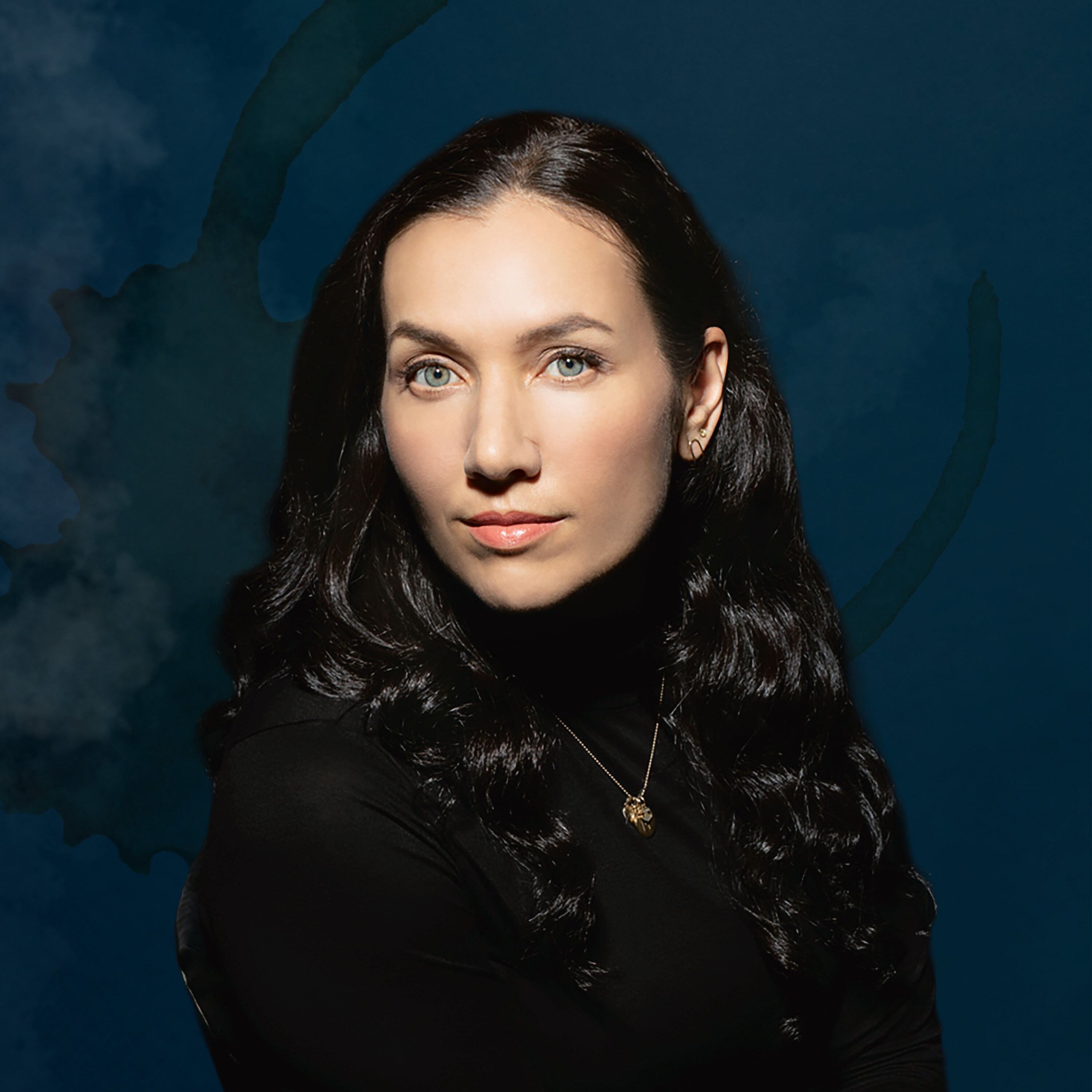
Loading summary
Transcript167 lines
- [00:00]
Melissa Febos
A 15 year old girl who chewed through a rope to escape a serial killer. I used my front teeth to saw.
- [00:08]
David Duchovny
On the rope in my mouth.
- [00:10]
Melissa Febos
He's been convicted of murdering two young women but suspected of many more.
- [00:15]
David Duchovny
Maybe there's another one in that area.
- [00:18]
Melissa Febos
And now new leads that could solve these cold cases.
- [00:22]
David Duchovny
They could be a victim that we have no idea he killed.
- [00:26]
Melissa Febos
Stolen Voices of Dole Valley breaks the silence on August 19th. Follow us now so you don't miss an episode. Lemonade.
- [00:42]
David Duchovny
Hey, just a quick message before we get started. You can now listen to every episode of Fail Better Ad free with Lemonade Premium on Apple Podcasts. You'll also get ad free access to and exclusive bonus content from shows like Wiser Than Me with Julia Louis Dreyfus, the Sarah Silverman podcast, and so many more. It's just $5.99 a month and a great way to support the work we do. Go ad free and get bonus content when you hit subscribe on this show in Apple Podcasts. Make life suck less with fewer ads with Lemonada Premium. I'm David Duchovny and this is Fail Better, a show where failure, not success, shapes who we are. Melissa Febos is an author whose writing explores identity, trauma, addiction, and sexuality. Her debut memoir, Whip Smart, chronicles her years spent working as a dominatrix in a midtown dudgeon. Her subsequent works, Girlhood, Abandon Me, and Body Work, establish Melissa as a writer who can seamlessly weave personal experience with broader cultural feminist perspectives. She's also a professor at the University of Iowa, where she teaches in the nonfiction writing program. Most recently, she released a new memoir, the Dry Season, where she documents a year of celibacy, or, as she sees it, a new beginning. I asked her about serial monogamy and how her view of intimacy has changed since that withholding period. I really enjoyed this interview and I got to ask some dumb questions, which is my new favorite thing to do. And to my dumb questions questions, Melissa gave some very smart answers. So I'm. I'm looking forward to you hearing that back and forth. So excited to talk to you. I loved reading your work. I hadn't, I hadn't known much of it. I'd heard of it, but I hadn't actually read it before. And it was a lot. I mean, I tried to read it all, you know. I didn't say that I did. I said I tried. I didn't read the books of essays.
- [03:07]
Melissa Febos
Okay, yeah, those are probably the least relevant. I could summarize them for you.
- [03:14]
David Duchovny
Yeah, I think I like the irrelevant.
- [03:18]
Melissa Febos
Yeah. Yeah.
- [03:20]
David Duchovny
So I was scrolling through my London Review of Books on my phone, which is fun to read those articles because you can get a really good thumb muscle because they're thousands and thousands of words.
- [03:32]
Melissa Febos
It's so long. Yeah.
- [03:34]
David Duchovny
Have you written one? Have you written one of those?
- [03:36]
Melissa Febos
I actually haven't written one. New York Review of Books, but not London Review of Books and London Review of Books seem like much weirder and longer and sometimes crueler. It's a little bit more interesting.
- [03:48]
David Duchovny
Yeah. What is it? Academia. The fights are so horrible because the stakes are so low.
- [03:53]
Melissa Febos
Isn't that right? I can. Yeah, I can definitely ratify that.
- [03:59]
David Duchovny
Yeah. Well, I mean, I have some experience with academia, so. And I have a very kind of rosy view of that road not taken for myself. You know, any. Any road not taken is always going to be rosy.
- [04:12]
Melissa Febos
So I. I feel you have an unfinished PhD, right.
- [04:16]
David Duchovny
There's no. No reason to start name calling, like, right off the. Right off the bat. Yeah. That, as you. As you probably know, it's called an abd, which is. Everybody else gets a nice Latinate term, but you get all but dissertation, which is what that means, which is just kind of a silly way to put it. But. Yeah. Yeah, I. I haven't finished and I. I don't think that I will. I mean, I think that there's like a statute of limitations that happens on. On a PhD. I think I might have to go back to kindergarten.
- [04:48]
Melissa Febos
I'm not sure. But, you know, ABD also seems to me to be the sort of ongoing state of most writers and artists and curious people or intellectuals is like, you just want to read the books and have the conversations and think about it. You don't really want to write a really long, dry argument about it. You know, you just. You just want to be a student forever.
- [05:10]
David Duchovny
This is. I was reading. This is going to sound super ABD of me, but I was reading about Derrida. The article was about a book he wrote called something about mourning the grievous morning, not the. The time of day. And in it, Derrida was talking about. It was a late book for him. I think it's his last book, maybe. And in it he was mourning the writers that came before him and realizing that he would not be a writer without it, that he couldn't be a writer without these important precursors that had come before him. But the quote was supposedly attributed to Socrates or is considered Socratic as. How do you finally respond to your life and to your name being the final question of somebody Looking back on their life and somebody who is such a busy memoirist as you are, you have done this a number of times. One usually considers memoir to be one and done. You're four and counting, right?
- [06:28]
Melissa Febos
Yeah.
- [06:29]
David Duchovny
Is it. Is it four and counting or is it. Is that right?
- [06:32]
Melissa Febos
Yeah, yeah, it's five books before and definitely personally driven, for sure.
- [06:37]
David Duchovny
And counting. So I guess without a question.
- [06:41]
Melissa Febos
Yeah. Yeah.
- [06:42]
David Duchovny
Is there any. Any response to any of that?
- [06:45]
Melissa Febos
Sure, yeah. I mean, yeah, no. I love. I love the fog. I'm really enjoying the atmosphere in here. I. I also thought memoir was a one and done, and I never imagined that I would write it. I was like you. I. I started out as a poet, and then I became a fiction writer. I studied fiction writing. Reading fiction is sort of my great love as a reader. But I think partly because of that dynamic that we were just talking about, that way of sort of looking at a constrained set of prompts and having to figure something out or make meaning out of it, like, that's very much what memoir is. It's a very limited sort of scope in which to sort of make meaning and figure something out. And that just works for me. And I think because I am also a person, and maybe we're getting a little bit into the failure theme now, I. I just have like a really, really strong set of drives. And I think because I've written so many memoirs, people think that I'm like, really into self reflection and really into like, insight and self appraisal. And actually I am not. I'm totally wired kind of biologically to turn away from all of that. And just like.
- [08:09]
David Duchovny
Well, how do you. How do you mean by that? And what.
- [08:12]
Melissa Febos
I'm a very. By nature mostly, I think maybe partly just behaviorally, but. But by nature, like, I identify as an addict. I am. I tend to move really fast. I want to avoid discomfort. I don't know when to stop, and I just kind of barrel ahead. I'm avoidant.
- [08:32]
David Duchovny
And sort of what you're describing to me right now, what a human being.
- [08:37]
Melissa Febos
Yeah, it's true, it's true, it's true. But I think with that particular fairy dust of, like, compulsion and sort of addictiveness, like what is maybe just like regular foibles of a human becomes life threatening in certain people. And for me, like, if I don't slow down and look at myself and look at my experience, I will just take my own mistakes to a fatal end. Like that the final word will just be me having been sort of running away from discomfort and toward the things that once felt good, like, to my demise, you know. And so the work that happens in memoir for me is really in some ways a survival strategy. Like every time I write a memoir or personal, personally driven work afterwards, I think, so, glad that's done. Glad I can go write my novel now. And then some other big life shit happens. And I think, oh God, I don't ever want to think about that again. But I know myself and I know that I will absolutely go recreate those exact circumstances again. And we can talk about what some of those circumstances are maybe later. But I think if I don't look at it and figure out what happened here, I'm going to do it again and I'm going to do it worse because I know myself, myself, and that's what I do. I don't change unless I really stop and like, get honest about what happened. And so in this way, memoir is like really sort of keeping me afloat and keeping me kind of a decent.
- [10:08]
David Duchovny
Person in the world, it seems. What, what I get from what you're saying is your life is lived very quickly. I feel like the, the life you describe is one of sensation and of compulsion and movement. And what happens when you write is you stop time. You stop time. One thing you did write at some point or said, here it is, this quote. Writing is my best way of thinking too. So it's not just the sense in which you're saying, okay, I'm going to stop time or I'm going to take time out of my fast paced, moving life and reflect. And I have another quote from you which kind of dovetails really nicely into this. Art is a form of worship, a medicine, a solitary act, a solitary and a social act. It is an ancient process through which I draw closer to my ancestors. And I think that's exactly what I was trying to get at with the Derrida stuff, is like, not just your ancestors. I mean, I assume you're. I don't know who you mean by your ancestors, but I also assume you mean your literary ancestors.
- [11:21]
Melissa Febos
Absolutely, yeah. The large sort of lineages. And I, you know, I think for me this has been true since I was a kid where I, you know, I'm a human, I have big feelings and thoughts and, you know, we, there's a lot of aspects of human experience and interior experience that we don't regularly talk about or name. And I think as a very young person, I thought, is it just me? And I got so much comfort out of reading books or poems and finding that moment of recognition, finding some articulation of my own experience that gave me company and showed me that I wasn't, you know, I wasn't alone in that experience. And so it's always been like, a great comfort and a very sort of grounding experience for me to take any thought or idea or struggle or emotion and to look to the people who have written about it, because someone always has, you know, and there is such a beautiful pleasure for me in finding it in Greek mythology or dead French philosophers or novelists, or just in the most unlikely places, like in my latest book, in these medieval nuns.
- [12:40]
David Duchovny
Yeah. How do you pronounce those? Beguine?
- [12:43]
Melissa Febos
The beguines. Yeah, the beguine.
- [12:46]
David Duchovny
Begin. Begin the beginning.
- [12:48]
Melissa Febos
Yeah. Begin the beguine. Yeah. That's.
- [12:51]
David Duchovny
What are the beguines?
- [12:53]
Melissa Febos
The beguines are the sect of religious lay women who existed in the Middle Ages. The sort of first big wave of them happened in the 13th century. And this is a time when women were, you know, had no rights, were basically just functioning as domestic servants and. And, you know, reproductive vessels and no career opportunities. No career opportunities. Very, very rare for there to be of route outside of that. And the beguines, they functioned sort of in the model of nuns, but they weren't under church rule. And so they were just these groups of women that sort of left their lives, joined the binage, which is the structure that they lived in, which was this, like, apartment complex with a great big stone wall around it. And they were financially independent, they started businesses, they worshiped together, they.
- [13:42]
David Duchovny
So they didn't take money from the Church?
- [13:45]
Melissa Febos
No, they took no money from anyone.
- [13:47]
David Duchovny
They weren't overseen by the Church?
- [13:49]
Melissa Febos
No, they weren't overseen by anyone. Their. Their creed was independence. They were obsessed with independence. And they were really into preaching and teaching literacy and sort of helping the old and infirm and orphans in their communities. I mean, they really just lived these kind of super radical, independent lives at a time when it was virtually impossible. And the thing that, like, really sort of lit my fire when I was reading about them is that they all had this tradition of writing what they called their vitas, which were basically their memoirs, like their autobiographies. They would sort of speak them out loud and have, like, a transcriber write them out their life stories through the context of sort of their work, their creative work, their spiritual work. And then when the church figured out sort of how independent and sort of radically they were living, they started burning them as heretics and trying erase any history of them and sort of make the world forget that they ever existed.
- [14:51]
David Duchovny
Which was successful in my case because I had never heard of them. And the reason that you're speaking about them now and the reason that you went to that is I should just give the listeners just the heads up or the knowledge that the newest book is called A Dry Season, and it's when you took a year off of sex. So your research at that point would have taken you to finding out about this sect, but had you known about them before?
- [15:23]
Melissa Febos
I hadn't. I hadn't known about them before. And then, you know, so I was taking this time and I was, like, trying to figure out what was wrong with my life and trying to find some new role models. And so I was reading about, you know, voluntarily celibate people throughout history, and I came upon them pretty quickly. And sort of feminist historians and academics had been writing about them, but otherwise people don't really know about them. And when I first read about them, I thought, oh, my God, like, these ladies were leading lives in which their behavior, their treatment of other people really corresponded so closely to what they really believed. Like, they used the word love interchangeably with the word God. Like they were really about, you know, very sort of Jesus y kind of preaching love, preaching healing, letting, you know, and independence, of course. And I thought I was just inspired. I thought I was having a lot of trouble having my behavior correspond with my beliefs. And I thought, if these women in the Middle Ages could do this when they were being burned at the stake, I can probably do a little bit better.
- [16:38]
David Duchovny
And do you not think there was some hanky panky going on there with the beguines? Or do you think really.
- [16:44]
Melissa Febos
Like to think so, David. Like to think so. I looked pretty hard for proof of that. And it's interesting because I think for.
- [16:52]
David Duchovny
Them, they called it hanky panky too, by the way.
- [16:55]
Melissa Febos
I think they did, you know, in, like, old. They added some extra ease in there for the old English. But, yeah, I mean, for them it was interesting because, like, celibacy was really. It referred mostly to marriage, like, because women's sexuality wasn't really talked about or named or thought of in a way. And they really were like, okay, you can't be married. Like, you can't be. You have to be chaste. You can't be sort of having sex with men, and you can't be married while you're in the big ganage. But there wasn't any language about, like, autoerotic pleasure or like, hanky panky with other beguines and like they wouldn't have even had a word for what that was, I don't think so. In a way, the lack of acknowledgment of it, I think creates this large murky area where they could be doing things. Being like, I don't know, maybe I'm have just having a holy experience. Maybe this is a gift from God, you know?
- [18:04]
David Duchovny
Today's episode is brought to you by Square, a smart, streamlined platform that simplifies running a business because the right tools make all the difference. I know Varsity Bakers and Thorne Family farm in the Los Angeles area. Use Square, and what I've seen feels like a good sign. Long enough lines that you know customers love the product, but not so long that you worry that transactions are taking ages. With Square, checkout is quick, easy and all about getting what you need. Square is easy to use on the business side too. No tech expertise required. And Square isn't just a way to accept payments, which I didn't know. You can also track inventory, manage staffing and send invoices. And if your business needs change, you can also use Square's customizable plans to integrate features like payroll or loyalty programs. Square keeps up so you don't have to slow down. Get everything you need to run and grow your business without any long term commitments. And why wait? Right now you can get up to $200 off square hardware at square.com go failbet that's s q U-A-R-E.com geo failbetter run your business smarter with Square. Get started today. Tell me, why would you spend a fortune on wardrobe basics if you didn't have to? If there were high quality classic options at more affordable prices? In other words, why splurge when you could get solid staples from Quint? Quince has closet staples you'll be reaching for for years with breathable flowknit polos, lightweight pants and cozy cashmere. Starting at just $50, Quince has you covered for weekend hangs, dressy dinners and everything in between. And Quince's collection is half the cost of similar brands. Quince goes directly to top artisans and cuts out the middleman, which means you get luxury pieces without the markup. Normally I go for basic cuts and colors, we all know that. And it's surprising how swapping in a Quint shirt like a merino wool tee really elevates the look. The quality is noticeable, and it's an easy and comfortable way to look even sharper than usual. Keep it classic and cool with long lasting staples from quince go to quince.comfailbetter for free shipping on your order and 365 day returns. That's Q U I N C E To get free shipping and 365 day returns. Quince.com failbetter One of the scariest parts of being a modern business owner is the unpredictability of the market, the economy and all the happenings online and how they all influence each other. It can really cost you if you're not sure how to plan or react when conditions change, and they sure change fast. When the future of business feels beyond your control, turn to the professionals at Constant Contact. Constant Contact's marketing platform is easy and effective, not to mention award winning, and it's here to help small businesses like yours. You can create and manage campaigns in just a few clicks and all in one place. Email, text, social media, events, landing pages, you name it, it's there. Take advantage of automated sending, real time reporting, and tools to help drive sales. And if you ever get stuck, friendly phone support is included with every plan. That's why over half a million small businesses trust Constant Contact to get them where they need to go. My favorite thing about Constant Contact is that you call all the shots, even while they're doing a lot of the hard work behind the scenes. Their platform makes your approach to marketing both comprehensive and customizable, regardless of how much you know about marketing itself. Get a free 30 day trial when you go to constant contact.com. try Constant Contact free for 30 days at constant contact.com constant contact.com since we're on the dry season, let's, let's stay on this for a minute. Does it start out as a this is something I could write or does it start out as this is something I should do?
- [22:45]
Melissa Febos
It definitely started as this is something I should do. And it's funny, you know, because I, when people read my work, they often ask me or wonder like, oh, did you do this so you could write about it? And I think part of the reasoning there is like, maybe less with this book, but sometimes with other books like, why would you do that otherwise?
- [23:09]
David Duchovny
I didn't think that. I thought it was more like, you know, who I loved growing up and you know, he's really part of like the ancient WASP patriarchy at this point, but George Plimpton, you know.
- [23:20]
Melissa Febos
Yeah, yeah.
- [23:20]
David Duchovny
Because he would go, I'm gonna see what it's like to be a pro athlete. I'm gonna go, you know, play with, you know, and it was like, wow, what a life. What A life to think of things to do and then know that you're gonna write about them.
- [23:33]
Melissa Febos
Yeah. It's funny because, like, I do. I do love that. And I love that about him. And I do. I was definitely a kid who was like, so interested in so many things and so curious that I think it was actually pretty canny of me to decide to be a writer, even though I wasn't thinking that way. Because being a writer and maybe being an actor is. Yes. You get to, you get to do it all. You get to be kind of a forever dilettante, like immersing yourself in whatever you're interested in.
- [24:04]
David Duchovny
I like to use the word iconoclast. Please try to stay away from.
- [24:07]
Melissa Febos
I identify with both of those. Yeah.
- [24:10]
David Duchovny
And.
- [24:11]
Melissa Febos
But to sort of get a. Like, I thought of this when you were talking about being abd, where I feel like I've done. I've been abd in so many different subjects where I just sort of. Every book is like three to five years of studying and obsessing and just fully delving into something to the furthest extent and like seeing what it means to me. And then I pop out and like move into the next thing. It's kind of. It's just like a perfect life. Anyway, I was not thinking about writing about it. I think I would have been so embarrassed or, I don't know, at the time that I decided to spend the time celibate. I was in rough shape and really in a lot of pain and felt like I just, you know, it was, it would have been too vulnerable. I think at that point. Like, I have written about some things while I'm living them, but this wasn't one of them where I really was like, okay, I thought I was. I thought I was good in this area. I thought I was good in the area of sex and love. Like, I've been in therapy a long time. I've been sober for 10 years, like, but I just was at a loss because I didn't know I'd hit a kind of bottom and I didn't really know what my problem was. And so it really was just like a, a personal decision that I didn't think about writing for a few years after I lived it.
- [25:31]
David Duchovny
Well, I find it interesting the, the whole, the whole area that you get into before you embark, you embark upon a three month course of no sex first, and then you're like, this is going well. But I'm. Yeah, but I'm not quite sure I've gotten all the benefits. So I'm Gonna go another three months and you're like, this is going better, I'm gonna give it another three. And then you get to a year. You go by the three month installment process. When I went to figure out my own relationship to sex and love and to investigate this notion of sex addiction, which at first sounded to me like what a ridiculous term. I've never heard of something so stupid in all my life. I too went about a year. They, they cancel, I think. I think they cancel a year. I'm not sure it's been a while since I recall, but I think, I think I might. Maybe I did nine months, maybe I did a year. But they also have this notion and I wonder if you thought about this within that program, which I don't. I'm neither proselytizing for or against. I think ultimately we have to figure out our own programs in our own lives. But there are crisis moments that, where these programs are very helpful, I think, but they talk about sexual anorexia, you know, like the, the, the, the, the flip side of the profligacy. Right. So I'm wondering, I'm wondering if that ever crossed your mind. It's like, is this, is this obsession from the other side, from the side of, of no. Rather than the side of. Yes.
- [27:27]
Melissa Febos
Yeah. I didn't, I never really identify with that in my own experience. And some of that is like, because it didn't feel avoidant. And for me it was very like, I don't know, with drugs and alcohol, it was very simple. It was like, these substances are a problem. Don't do them ever. And like.
- [27:52]
David Duchovny
That'S the tricky part of food or sexual compulsivity or whatever you call it.
- [28:00]
Melissa Febos
Yeah. It's like these are things. Yeah. That, that we want in our lives.
- [28:04]
David Duchovny
It has to be integrated. They can't be shut off as you did. They can be, you know, and you, you reap the rewards of what that was. But the, the ultimate goal wasn't to shut off forever. The ultimate goal was to, to integrate.
- [28:17]
Melissa Febos
Yeah.
- [28:18]
David Duchovny
And what I find deep and fascinating about your work in, in this area is that you trace it back to, you know, it's, it's, it's like sex isn't about sex. Sex is usually about power or love. And you really focus on the parts of yourself that were misfit or failure. And I'm going to try to bring it back to that. Forgive me, failure is an all inclusive kind of umbrella. But that you. There's a great line that somebody gives you in the book where you're like, yeah, I'm just a people pleaser. And that person says, a people pleaser is a people user.
- [29:02]
Melissa Febos
Yeah, brutal moment.
- [29:04]
David Duchovny
Brutal moment.
- [29:05]
Melissa Febos
Unforgettable.
- [29:06]
David Duchovny
You say, yeah, because you go through your life and you're thinking, I just like to make people happy. You know, that's my thing. I like to please people.
- [29:13]
Melissa Febos
I like to serve others, you know, and it's like, no, sorry, babe, you've been serving yourself.
- [29:18]
David Duchovny
So that was a, that was a real moment for you, huh?
- [29:21]
Melissa Febos
Yeah, it really was. It really was. And for me, you know, and it was indicative of like, you know, I started with sex and the celibacy because that seemed really obvious and sort of concrete and because it had been a common denominator in all of my relationships. But within those first three months, I came pretty quickly to the realization that for me it was much more about the emotional dynamics and sort of from chasing the like, psychological high of seduction and flirtation and intrigue, like the pre sex stuff or the early sex stuff. And then after that, once I was.
- [29:57]
David Duchovny
Similar to drug use where. Yeah, it's, it's the driving to the neighborhood, it's. It's meeting the guy who's going to sell to you. That's all part of the high.
- [30:05]
Melissa Febos
Yeah, it was like the ceremony of. It was so absorbing. It just, I. And it never got old. I just always felt good. And then once I was in relationships, I would be doing what I had called people pleasing. And really what I had learned as a young person meant being a good partner, you know, being sort of compromising and accommodating and. But also for me, avoiding conflict, avoiding other people's disappointments. And really like now I know it's called codependency. Like other people's displeasure or other people's feelings made me really uncomfortable and keeping other people happy made me feel safe.
- [30:46]
David Duchovny
Where do you trace the roots of that too?
- [30:50]
Melissa Febos
A lot of different sources. And that's part of the sort of animating question of, of the book. Right. Is like, how did I get like this? And I think part of it is like the culture, you know, getting messaging, like particularly I think as a woman, but really just as a person that like, you know, it's, it's, it's valorous to sacrifice for your beloved or for other people. Like, to give up and to be selfless is seen as a huge.
- [31:19]
David Duchovny
You.
- [31:19]
Melissa Febos
Know, it's a positive quality.
- [31:22]
David Duchovny
I think. I love this idea of sacrifice because. Yes. Well, it's at the heart of our religious culture. Right. I mean, it's it's the sacrifice of Christ. And this is a beautiful thing. And I think what, what we're. What we're venturing on, which is super interesting to me, is there is a cultural sense of personal sacrifice that is emotionally stunting, but there is also a greater sense of human sacrifice to one another, for one another, which is a goal, which is a beautiful goal. And not to be confused with the smaller forms of sacrifice. I think.
- [32:05]
Melissa Febos
I think that's really deep and that in many ways, that's the point that I sort of arrived at at the end of this experience was because you.
- [32:12]
David Duchovny
Sacrificed your sex life.
- [32:14]
Melissa Febos
Yeah, yeah. And. And also, you know, I, I. During that year, part of the work I did was sort of trying to come up with a new ideal for love. And like, it does include. It's the same words, right? It includes compromise, it includes sacrifice. It includes sort of serving the other, but in a. In. In a less dependent, less like, small s. Sacrifice way. You know, it's like, I definitely believe in sort of serving the growth of other people, but I think there's a way to do that that doesn' Stunt ourselves. And that isn't small and about, like, it's not fear driven. Right. That it's out of a place of true generosity and true love and tenderness. And I want to sort of love and sacrifice out of that spirit rather than like, oh, no, I'm gonna. They're gonna be mad at me if I don't do this. Or I'm. I should do this. But to really genuinely, you know, and it's sort of like not to bring into this. Yeah, exactly. Like, teaching for me feels like very much the sort of. Right.
- [33:19]
David Duchovny
You have that great quote, which I've misplaced, but it's Edward Hirsch, where you say teaching can be a. Can you give it to me? Passionate conversation between strangers.
- [33:29]
Melissa Febos
That's right. Yeah. I think it's unnatural in some ways, the way that we like to categorize certain kinds of. It's little, like, prudish too, sometimes, where it's like romance and passion and the erotic only exist in this one category. It's your lover, it's your partner, it's your sex life. And it doesn't exist in friendships or the workplace, and it's simply not true, you know, and, and one of the beautiful things that happened for me when I sort of shuttered that part of my life in terms of interacting with other people was that I really experienced this sort of blooming awareness of how my friendships could be highly romantic and even Erotic in sort of a larger sense. Not sexual necessarily, but like, you know, my wife and I often talk about how in early friendship, like, when you make a new friend, I almost always have a huge crush on that person, and I'm sort of, like, obsessed and curious about them, and I want to know everything, and I want to be around them. And I think when I was younger, I would always sexualize that or sort of push it into that place and kind of mess up friendships because I didn't recognize that there was often a romantic stage in a friendship, just like there is a passionate interaction that can take place in the classroom where I am a person. Like, I bring all of my. Myself into my writing life and my relationship with art. And so I need to bring all of myself, in a sense, into the classroom when I'm trying to transmit that passion to my students. And I want to be seen as a full human being. You know, I can't become like, you know, just this one sort of stripe of a human being because it's like, I worry that it'll be seen as inappropriate or whatever, you know.
- [35:16]
David Duchovny
What you're saying reminds me of so much. And what I like very much in your description in the book is. And I can't point to a certain spot, but it's a feeling I get. I'm sure it's written in there somewhere. But you talk about. I think at one point it's like the sexual obsession is like looking through a keyhole at the world, you know?
- [35:43]
Melissa Febos
Thank you so much for remembering that. That's an image that. That came to me when I was celibate, that I carried around for years before I put it in the book.
- [35:52]
David Duchovny
Oh, really?
- [35:53]
Melissa Febos
It means a lot that you.
- [35:54]
David Duchovny
Oh, okay. Okay. Yeah. Well, it resonated with truth to me, because what you're describing is a way in which, you know, if you're. If you're habitually responding to the world in a. In a predominantly sexual manner, you're really limited. It's a keyhole on the world rather than the expanse. And you talk about even opening up to nature, and obviously not in a sexual way, but there is that energetic component to your embrace of the world when you shut off this sexual relationship to the world. And I think that that's real instructive and real interesting and. And always I want to get away from any kind of Christian moralizing against sex as bad, and I know you do, too. So it's not that it's not like sex bad, but it is sex limiting, maybe. Sex limiting?
- [36:51]
Melissa Febos
Yeah. Yeah. And in some ways, like, I mean, that experience also of like allowing those elements of like the spiritual part of eroticism, the path, the romantic, the passionate, the playful, like, letting that into other areas of my life actually made. It didn't make me less of a sexual person. It actually made my sex life feel more genuine and more expansive there too. Because it didn't have to just be the place where I had to feel these specific things.
- [37:24]
David Duchovny
Well, there's a lot of pressure on. A lot of pressure on sex if it's gonna mean everything to you too.
- [37:29]
Melissa Febos
Exactly. Yeah. When I think it's like we're humans and you know, it's funny. Cause when I teach, I talk about this in writing where it's like you can't just locate particular emotions and particular kinds of scenes. Cause that's not how we live as humans. We bring ourselves into every room we enter and every relationship we have.
- [37:56]
David Duchovny
Today's episode is brought to you by Square. A smart, streamlined platform that simplifies running a business. Because the right tools make all the difference. I know Varsity Bakers and Thorne family farm in the Los Angeles area U Square. And what I've seen feels like a good sign. Long enough lines that you know customers love the product, but not so long that you worry that transactions are taking ages. With Square, checkout is quick, easy, and all about getting what you need. Square is easy to use on the business side too. No tech expertise required. And Square isn't just a way to accept payments, which I didn't know. You can also track inventory, manage staffing and send invoices. And if your business needs change, you can also use Square's customizable plans to integrate features like payroll or loyalty programs. Square keeps up so you don't have to slow down, get everything you need to run and grow your business without any long term commitments. And why wait? Right now you can get up to $200 off Square Hardware at square.com go failbetter. That's S Q U-A-R-E.com geo run your business smarter with Square. Get started today.
- [39:18]
Melissa Febos
Our healthcare system is broken in so many ways.
- [39:23]
David Duchovny
We have a healthcare system that's supposed to be taking care of people that.
- [39:27]
Melissa Febos
Is making it literally more difficult for.
- [39:29]
David Duchovny
People to put food on the table.
- [39:31]
Melissa Febos
So this season we'll dive into the challenges head first while also thinking about how we can find a better way way. Because we all deserve better. Uncared for season three from Lemonada Media available August 6th. Wherever you get your podcasts.
- [40:07]
David Duchovny
I want to ask You. Because the, the phrase that I like, that I just learned recently through my good friend Jay Clark is he calls it the inside drugstore. And I'm fascinated to talk to somebody, you. Who identifies both as a drug addict and sex love addict, whatever that is, and also somebody who considers themselves in recovery. And I'm wondering, because you've like, seen, you looked at clouds from both sides now, the inside drugstore and the outside drugstore. And can you talk a little bit about the differences in, in the, in the drugs and the difference in the recovery? Because I'm fascinated because I, I personally never had the drug problem. You know, like, I don't relate to that as much. Yeah, I mean, not yet. I haven't had it yet, but still.
- [41:07]
Melissa Febos
Time, David.
- [41:08]
David Duchovny
I know, I'm. I'm growing. I'm growing.
- [41:12]
Melissa Febos
Yeah, I'd be happy to speak to that. And, you know, I don't know if.
- [41:15]
David Duchovny
I've ever heard that discussion from both sides.
- [41:18]
Melissa Febos
Yeah, I think for me it's, in a way, it's all the inside drugstore. Right. Like the outside drugs are just triggering the response. It's the, it's the fastest shortcut. Right. You can go through a whole courtship process with another person to get the brain chemicals or have a physical interaction, or you can just snort powder. Boom. It's very fast, you know, and so it's, it's, it's really interesting. Like, thinking about this, you know, from both sides now has really made me think about our wiring as human beings and the potential we have for so many kinds of interior experience. And the way that, I don't think, I think we conflate what drugs and what they do inside of us. And, you know, a lot of the sort of rhetoric in, in the way I think about addiction and recovery is characterizes it as. You know, Carl Jung wrote a letter to Bill Wilson, the founder of aa, and he likened addiction to a low level spiritual quest and basically said, like, people are looking for God, they're looking for a shortcut to God, you know, and I use God as kind of a shorthand too, like looking for community and fulfillment and spiritual wholeness. Right. And they're looking for transcendence. They're looking for the easy route to it. Right. Because how we actually get to those things is pretty slow and deliberate and it requires other people. Yeah, it's like a process and a set of practices that you have to do for life. Exactly. Yeah. And so, so I think, like, I don't think of drug addicts as like, depraved and anyway, my point being, like, I don't think that urge has a moral value. Right. I think the consequences of the shortcuts we find cause us to take actions that have moral meaning in the world. But actually, we all want to feel good. Like the Buddha wanted to feel good, meditating for, like, however many days under the Bodhi tree or whatever. Like, we're. We have the same goal. We're just trying to approach it from different means, and some are more destructive than others. And for me, like. Like, I could take anything that gives me that shortcut feeling and hurt myself and other people by doing it. And so I need to, like, be pretty strict with myself about the ways that I interact with those feelings. But I don't think they're bad, and I think they're useful and. And I think they're part of what make me an artist and help me connect with other people. And, you know, there are like, right directions for pointing them, like teaching or making art or doing community work or like, you know, pursuing true forms of joy. But I think when it becomes like, you know, like the little rat pressing the lever, like, more, more, more, more, more, then it's not no longer sort of a spiritual experience, and then it becomes one of addiction. So I don't actually see it as that, as that different. Right. I mean, I think for me, the drugs option, there is no healthy application of that in the world. For me, like, I just can't ever. It doesn't work. But in terms of other people, like, when I fell in love with my wife, I got to experience all. I went to the inside drugstore for sure, we experienced those things. But I didn't treat her like a. Like a substance. You know, I was like, very. Because of that year, celibate. I was like, okay, let's slow down. Let's get to know this person. Let's remain aware of their humanity, you know, so that it didn't get into that realm.
- [44:49]
David Duchovny
They are not a savior. Savior. She's not a savior. Right. Which is what it's like.
- [44:53]
Melissa Febos
Yeah. Like, this person isn't a route out of myself. This is another human being with a consciousness and a whole world inside of them. And, like, how do I respect that?
- [45:03]
David Duchovny
Well, that's the impossible epilogue of your book. Because, I mean, talk about over promising. I mean, you're saying, take a year off sex, you'll meet the love of your life. You know, it happens in your book. I. Sorry, I don't believe. Believe it. I mean, I know it. I know, and I do Believe it. But it's. It's almost too good to be true, isn't it?
- [45:23]
Melissa Febos
I wanted to leave it out. My first idea was to leave it out. And actually, yeah. Yeah. Because I was like, I don't. This is not my promise. Like, I. This is not going to happen for everybody who spends a little bit. But my editor just absolutely shit a brick when I was like, I'm not going to have that at the end. And she was like, you're joking. Like, life hands you this happy ending, and you're not gonna put it in the book. And I was like, I don't want people to get confused. This is not a. Like, I do this and I get this.
- [45:54]
David Duchovny
Yeah.
- [45:56]
Melissa Febos
No. And the true ending was like, I feel content with myself. I don't need to go to this particular drugstore in order to, like, feel fulfilled in order to, like, have an erotic connection to myself. Like, I don't need that. But then I did think, like, well, it is literally what happened. It actually felt like a little bit manipulative to leave out what actually happened, because I don't think, like, the relationship that I ended up having with her. And at the very end, I jump ahead to sort of show, like, it wasn't just, like, walking off into the sunset, you know, but, like, we've been together since then. It's been, like, by far my longest relationship, hardest, best. And I don't think I would have been capable of this relationship if I hadn't spent that time. So, like, there is, like, a causal relationship, but it isn't like, a reward. You know, it just did sort of open a gate into a new kind of experience, a new kind of challenge.
- [46:52]
David Duchovny
Aside from your editor, did you speak to your wife about including it or not?
- [46:56]
Melissa Febos
Oh, of course.
- [46:57]
David Duchovny
How did that discussion go?
- [47:00]
Melissa Febos
Yeah, she is very. You know, she's a writer and a poet, and so she understands the nature of my work. She read it before she met me, so she knows what I do. But she definitely gets veto power. Like, I. I definitely show her anything that she's in and talk to her about it before I include her.
- [47:22]
David Duchovny
It's so tough in that sense to be a writer, tougher to be a memoirist, because, as Joan Didion said, a writer is always selling someone out. And it's hard to be in relationship with the people in your life this way. And it's noble. It's a noble sacrifice for your relationship, but it is a sacrifice to your art to say, I'm gonna give somebody veto power over what I'm Gonna write.
- [47:48]
Melissa Febos
That's true. There's very few people. I mean, she's really the only person who has it, I think. I mean, unless I have some particular guidelines. Cause, you know, having written four books like this, I've fielded every kind of response, and I've sort of handled it a lot of different ways, and some of them I regret. So I've learned along the way, but. But nobody else gets veto power unless the thing that I'm writing about was a bigger event in their life than it was in mine. I've learned, especially if it's someone who is in my life that I have a relationship with. Like, I do sort of ask permission. That's the only time I really ask for permission. But mostly I just show. I show what I've written to people, and I say, you know, this is. If we have an ongoing relationship that I want to preserve. I say, I want to know how this reads to you. I'm. I want to know how it feels. And I don't make any promises, but I try to show up for those conversations, which, you know, has. Is a way of showing up in my relationships that, like, writing makes me braver than I am. Otherwise, I'll say that I would not be initiating those conversations if my work didn't depend on it, you know. But also, I think in my family, there are definitely moments where, you know, my family has my family of origin. Like, sometimes my mom will preface things that she's about to say, like, I don't want to see this in a book.
- [49:15]
David Duchovny
And she's a therapist, you know.
- [49:16]
Melissa Febos
She's a therapist. Yeah. And she's, you know, handled it probably more gracefully than just about anybody, any parent. I mean, I kind of specialize in writing about things that no parent ever wants to read about their child.
- [49:27]
David Duchovny
You know, I wanted to know. Let's just.
- [49:29]
Melissa Febos
Let's just.
- [49:29]
David Duchovny
Just sit there for a moment. Because, sure, there is a scene in Whip Smart where you tell her, your mom, the therapist, what you're doing, and you kind of sugarcoat it for her even like that. You're like, you know, we're. You kind of make it seem like you are both reenacting some trauma for yourself in some way, which is healthy, but also helping these people and reenacting their trauma for them, which is healthy. And you're trying to couch it in a way that is palatable for her. And I thought, oh, how interesting, that moment, because it was definitely still a mother, daughter, and not this kind of fearless writer that we've been reading for the pages beforehand.
- [50:12]
Melissa Febos
Yeah, there was a lot of spin in that conversation, for sure.
- [50:16]
David Duchovny
Do you remember that moment?
- [50:19]
Melissa Febos
I do, I do. And that was sort of one of the hallmarks of that experience, you know, And I was a. A Pro Dom for three and a half years in my early 20s, and I spun it for everybody. I gave everybody the version that I thought they could stomach. And that was probably true of a lot of things about myself. It wasn't just my job. I was sort of serving the version of myself that would be most palatable to any given sort of recipient because I was really uncomfortable being seen, you know, and I wanted to be approved of. And, you know, there's definitely a way of talking about this in terms of failure too, where I sort of had been kind of weird and different and felt like an outsider in my life. And I thought, I wanna. It's just easier if you become the person people want you to be. You know, how.
- [51:20]
David Duchovny
What were those? If you don't mind going into the specifics of how you felt weird and as an outsider, just so that people can understand what you. By that.
- [51:29]
Melissa Febos
Yeah, I think, you know, my family growing up, I grew up in, like, a smallish town in Massachusetts, like in the 80s. And my family was just different from other families. Like, my mom was a therapist and a Buddhist and a feminist and a bisexual, and my dad was a Puerto Rican sea captain, and we were raised vegetarian and we didn't have a tv. And it was very like, we would have done much better in California. You know, I would have fit in. I know it was. It was really lovely in a lot of ways, but it was really weird in the place where I grew up. And so that was sort of like the baseline. And then on top of that, I was, you know, I was like a little kid artist. I was, like, not heterosexual. I was a young age. I always kind of knew that. I think partly because it was like, because of my mom's side. It was just like, not a big deal where it would never have been an issue. So I just, like. I think even before I was like, like, sexually attracted to other people, I was like, well, bisexuality makes sense to me. I can't imagine that I'm not going to be attracted to all kinds of people. And then that turned out to be true. But then on top of it, I was just. I was, like, really passionate and really creative and really obsessed with reading, like, kind of nerdy, but also, like, really emotional and passionate and, like, moving really quickly. And I just didn't have the Thing that was like. Like, I just didn't fit in. You know, I had very specific interests and was really creative and kind of political and kind of outspoken. And I don't think I wasn't like one of these kids who was sort of like an outcast, but I felt outside of things, it was, like, really obvious to me and to other people that, like, this one is kind of not like the others. And I really sort of internalized that. And I ended up dropping out of school. When I was in, it was like, after my freshman year of high school, I was like, I don't know. I started skipping school a lot, and my mom, bless her, was like, what's going on? You know, she didn't punish me. She was like, what's the deal? Like, you've always liked school or, like, liked learning? And I was like, I want to be a writer. I have these, like, these very intense interests and ambitions, and these. My peers are, like, not into it. Like, that's not what's happening there. And she was like, all right, let's figure something out. So I, like, homeschooled for a year, got my GED moved out. I just, you know, so I had this early conception of myself that was like, I don't fit in. I'll never have institutional acceptance, or, like, I'll just never be in the mainstream in any kind of way. And in some ways, I think that young person would have been really shocked at my life now that I'm, like, a college professor and. And, you know, times change, and I moved into more cosmopolitan spaces as I got older, as, like, weird artist kids do who grew up in small places. But I really, you know, those early conceptions of ourself can be pretty lasting. And I thought, when I'm myself, people don't, like, makes other people uncomfortable.
- [54:47]
David Duchovny
Yeah, that's. That's kind of a common motif in this podcast is the. That, you know, early on the. The. The game is set of, like, failure or success. And I. I think you had the good fortune of having, you know, a situation at home where society's version of failure and success wasn't reinforced. But definitely you internalized plenty of what society was telling you was going to be the factors of your failures and success. And you realized early on that you were going to have to find your way around it, and that writing was going to be the antidote to this sense of failure, sense of being an outcast. It throws me back upon myself in kind of the opposite way, because I, too, felt. Feel like an outcast. Or a misfit. But everything else about me looks like, feels like I'm just created to succeed in the patriarchy or whatever it is we're going to call this thing. It's like, man, I've got, I've got it made, you know, and I can do it.
- [56:07]
Melissa Febos
Yeah. Yeah.
- [56:08]
David Duchovny
And so I guess I became an actor when I was like 28. You know, it took me 25, six, seven years of feeling the pull of like, yeah, I could slip right into that. You know, that would be, that's ready made for me. I can, I can have that life and it would, it would be safe. I could, I could have things. I could have a house, I could have a family. I could do those things that people seem to want to have. And I had to rebel in a way against my own ability in some ways and to unearth the real ability that I felt was underneath all that. The misfit ability, the failure ability. But enough about me. You say that you end your journaling and maybe always end your journaling with today I reject the patriarchy's bad ideas. Can you tell me some of those bad ideas and can you tell me one good idea of the patriarchy?
- [57:17]
Melissa Febos
I actually don't do that in my journal anymore, but when I did.
- [57:20]
David Duchovny
Well, then you don't have to answer.
- [57:21]
Melissa Febos
Yeah, that was some years ago. No, I'll answer it. I'll answer it. I mean, and maybe it's also like I can expand it a little bit so it's relevant to today because I do still do this in my journal where I sort of write just like reminders because there's always like a set of things. There's like the ideas that have been sort of implanted in our heads that are not our ideas. And I think at the time that I wrote about that, I was dealing with like, I don't know, some body stuff, some like self image stuff or like this is what I should look like, this is what my body should look like. So like beauty ideals or like this is what being a good partner should look like. You know, ideas of how to be in the world that don't actually bring me closer to other people, you know, And I think just reminding myself not to reset to that default and to really sort of take the day with what I actually know about myself. And what I know actually sort of serves other people and brings me closer to them. And so I, even though I don't write that anymore, I do write like little sort of, I guess they could classify them as like affirmations or reminders, like, maybe I'll write the serenity prayer, or I'll just write like, you know, the best work I can do today is for my art or like spiritual work or sometimes actually what has happened and what I've been writing recently is like, other people's emotions are not an emergency.
- [58:53]
David Duchovny
You know, can I ask a really dumb.
- [58:56]
Melissa Febos
People come at you.
- [58:57]
David Duchovny
Can I ask a really dumb question? And I ask it from a real place of not knowing. And please forgive the ham handedness of it.
- [59:12]
Melissa Febos
It's okay.
- [59:13]
David Duchovny
This is one of the things I don't want to lose in the way we talk because I feel like we should be allowed to be stupid and ask dumb questions. And I think people have gotten really afraid of that because they're afraid of offending people.
- [59:29]
Melissa Febos
I agree, too. I talk about it in my classrooms all the time. I'm like, we can't punish people for not knowing. That's what we're here for, right? It's. It really shuts down, learning.
- [59:40]
David Duchovny
I hear a lot about the male gaze. The male gaze. The male. And it's not something that I heard about, you know, before five or six years ago, I guess because I'm. I'm not reading feminist literature necessarily, you know, maybe by mistake sometimes, but, you know, I'm not seeking it out. And one of the things in the dry season is, you know, you are trying to deal with that part of you that needs, that wants to be attractive. And you mostly couch it in terms of being. Even though there's the first flirtation scene with a woman. But mostly you kind of lay it at the feet of the male, the white male, the patriarchy, this gaze. And I'm wondering, wondering, is there a difference between you trying to heal yourself of the need to be attractive to a man or to a woman or. I feel dumb.
- [60:44]
Melissa Febos
Yeah, yeah, no, I totally get what you're saying, and it's a really good question, actually. And because I think we use that phrase as a shorthand but don't really talk about what you mean by it. And so I'm really, really happy to. No, I think it's a great question. I wish that people felt more comfortable asking questions like that so that we could understand each other better. And I think when I talk about it, I don't actually. I'm not thinking of actual men. I am thinking of a mechanism that goes back centuries where there is like a kind of messaging that I grow up with, which is actually enforced in many ways, ways more by other women than by men. But Certainly by everyone and by myself, by images in fashion magazines or whatever, that you need to look a certain way in order to be appealing, and you need to be appealing in order to have value in the world. And so if you can imagine that sort of implanted in me so that I'm correcting myself or looking in the mirror and thinking, oh, no, like, I can't wear this outfit because it's. It doesn't hue to this particular, you know, beauty standard or whatever, or I'm talking too loud, I'm too ambitious, I'm taking up too much space that's not attractive to other people. It's coming from this very old value system. But I'm always imagining being looked at by an imaginary enforcer, right? And there's like, Laura Mulvey, this cinema studies person, called it the male gaze. And so that gets used as a shorthand for it. But I do think it gets mistaken as, like. Like, I'm not saying men are looking at me and constantly being like, you're talking too loud. You need to be skinnier. Because they're not necessarily. Maybe sometimes. But it's not relegated just to men. Certainly. It's like everyone, and most of all myself, it's like the call is coming from inside the house. Like, I think we've all absorbed it the same way. I think, like a man could say I'm suffering from the male gaze if he was thinking, like, oh, I can't share this with my partner because I'm going to get emotional.
- [62:47]
David Duchovny
And that'll be exactly. This is the thing that. This is the thing that I'm trying to do in my life and with this podcast in a way, too, is, you know, because I think we. We do. We are. We are tossing around words, phrases like toxic patriarchy and stuff like that. And what it does or it doesn't exist. I mean, it's a way to talk about certain things, but it's. It's a phrase. It's not a thing.
- [63:13]
Melissa Febos
But, yeah, exactly.
- [63:14]
David Duchovny
To. To. Men are also victims of it, Perpetrators and victims of it, and we can join. Join hands as. As victims, you know, and it's. So it's not just one against the other. It's like, okay, we've all inherited this culture or whatever it is, this tradition. Sure, there are some right. Righteous out there that are just, you know, them, whatever. But for the most part, I think men are trying to find their way through too. So I like to have that kind of discussion where I can kind of unpack a little bit a phrase that might turn somebody off right away. Like you. You say the male. You say the male gaze to me normally, I go, yeah. And, yeah, to hear it kind of.
- [64:08]
Melissa Febos
Yeah.
- [64:09]
David Duchovny
Unpacked in a way that you did. And nuanced.
- [64:13]
Melissa Febos
Yeah.
- [64:13]
David Duchovny
Which is tough to get nuance because everybody. Everybody immediately responds to these. To these names anyway.
- [64:21]
Melissa Febos
And I do think that is the problem with jargon, too, is that it comes to me in a certain thing, and it comes to mean different things to different people or there are assumptions baked into it, when actually, I mean, that is my deepest belief about it all, is that. That we all suffer from it. I think men and women, everybody suffers under power systems that keep us separated from each other and from ourselves. For sure.
- [64:44]
David Duchovny
Yeah. And, you know, we're in. We're in a world where, you know, a Twitter or X world where, you know, nuance goes with 144. How nuanced can you be at 144 characters?
- [64:54]
Melissa Febos
So it's. No. I really appreciate your interest in sort of unpacking that and. And also for not turning away from. In ways that you might. That might be more instinctive.
- [65:06]
David Duchovny
And I'll even say, like, in terms of beauty, you know, I'm a guy who's decided to be an actor, and so I feel. I feel it the same that. Not the same, because I'm not a.
- [65:17]
Melissa Febos
Woman, probably more so.
- [65:18]
David Duchovny
Well, I'm not gonna. I don't want to. You know, it's. I'm not gonna get into the suffering Olympics, but it's like. Yeah, I'm thinking. I. I'm thinking about the male gaze, too, that way, you know, or the female gaze.
- [65:31]
Melissa Febos
I'm sure, you know, I'm sure as a writer, you know, I often feel grateful that I get to sort of age in peace. I can, like, do my job in, you know, sweatpants with dirty hair and.
- [65:42]
David Duchovny
Yeah, well, I was doing that. You know, I had this podcast, and I was just going to be a voice. A voice. But now we. Now we film it. So I've really screwed myself there.
- [65:50]
Melissa Febos
So I know it is. It is a little. It is a request. Requires a little more preparation, but it is nice to be able to see faces. I've appreciated it.
- [65:58]
David Duchovny
Well, thank you so much. And I love the book and I really appreciate your. The way you go about living and writing, and I hope to. I hope. I hope you have 10 memoirs in you.
- [66:09]
Melissa Febos
Thank you so much. David. It's really been a pleasure.
- [66:25]
David Duchovny
After speaking with Melissa Febos, I come back to the end of our discussion, which is when I asked permission or I floated the idea of asking a dumb question. And the more I do this podcast, or the more I talk to people on the podcast and have these extended discussions, people that may hold different views of the world than I do. I mean, that's the hope too, that they hold different views of the world than I do. And I get to explore that, I get to stretch, and I get to take more in and grow. But that doesn't happen without dumb questions. Or maybe dumb questions make that happen more radically and it goes back to Socrates. You know, know, it all seems to come back to Socrates, which the dumb question that's that was his whole ruse. I mean, they're not really dumb questions, but they're simple questions. Thanks so much for listening to Fail Better. If you haven't subscribed to Lemonada Premium yet, now's the perfect time. Because guess what? You can listen completely ad free. Plus you'll unlock exclusive bonus content like the full version of my post interview thoughts that you won't hear anywhere else. That's more of my recaps on interviews with guests like Chris Carter and Emily Deschanel. Just tap that subscribe button on Apple Podcasts or head to lemonade premium.com to subscribe on any other app. That's lemonade premium premium.com don't miss out. Fail Better is production of Lemonada Media in coordination with King Baby. It is produced by Keegan Zema, Aria Brachi and Donnie Matias. Our engineer is Brian Castillo. Our SVP of Weekly is Steve Nelson. Special thanks to Carl Ackerman, Tom Krupinski and Brad Davidson. The show is executive produced by Stephanie Whittles Wax, Jessica Cordova Kramer and me, David Duchovny. The music is also by me and my band, the lovely Colin Lee, Pat McCusker, Mitch Stewart, Davis Rowland, and Sebastian Modak. You can find us online at Lemonada Media and you can find me at David Duchovny. Follow Fail Better wherever you get your podcasts or listen. Ad free on Amazon Music with your prime membership.
- [68:58]
Melissa Febos
Hi, I'm Erica Mahoney. You don't know me, but you know a version of my story. Because by now we've all felt the impact of senseless gun violence.
- [69:07]
David Duchovny
I think a stray bullet flew past me because I hear the it was that horrible feeling of dread. Something's wrong.
- [69:15]
Melissa Febos
Four years ago, my dad was killed.
- [69:17]
David Duchovny
In a mass shooting.
- [69:19]
Melissa Febos
My podcast, Senseless is about moving forward after the unthinkable Senseless from Lemonada Media, premiering June 17.