Loading summary
Transcript224 lines
- [00:01]
Podcast Advertiser
Let's talk about protein. It's all anybody seems to talk about lately, and for good reason. So many people want to build muscle and support their existing muscle. But getting enough doesn't have to mean eating yet another bland chicken breast at the end of the day. To hit your protein goal, Ratio protein yogurt has 25 grams of protein per cup. That's more protein than four whole eggs. Not only is it packed with protein, but Ratio protein has a smooth and creamy texture, so there's no need to compromise. Great taste hitting your wellness goals, whatever they are. If you like a blend of citrus and sweetness, you might want to try their Key lime pie flavor. And get this ratio protein's 25 grams of protein is the most protein per cup in the yogurt aisle, plus zero added sugar. This helps you get the fuel you need to power through your day. Ratio does the math so you don't have to head to ratiofood.com to find a retailer near you.
- [01:01]
Kenya Barris
It's morning in New York.
- [01:07]
David Duchovny
Hey everybody, I'm Mandy Patinkin. And I'm Kathryn Grody, and we have a new podcast. It's called Don't Listen to Us. Many of you have asked for our advice.
- [01:16]
Kenya Barris
Tell me, what is wrong with you people. Don't listen to us.
- [01:20]
David Duchovny
Our take it or leave it advice show is out every Wednesday, premiering October 15th. A Lemonada Media original.
- [01:33]
Kenya Barris
Lemonada.
- [01:43]
David Duchovny
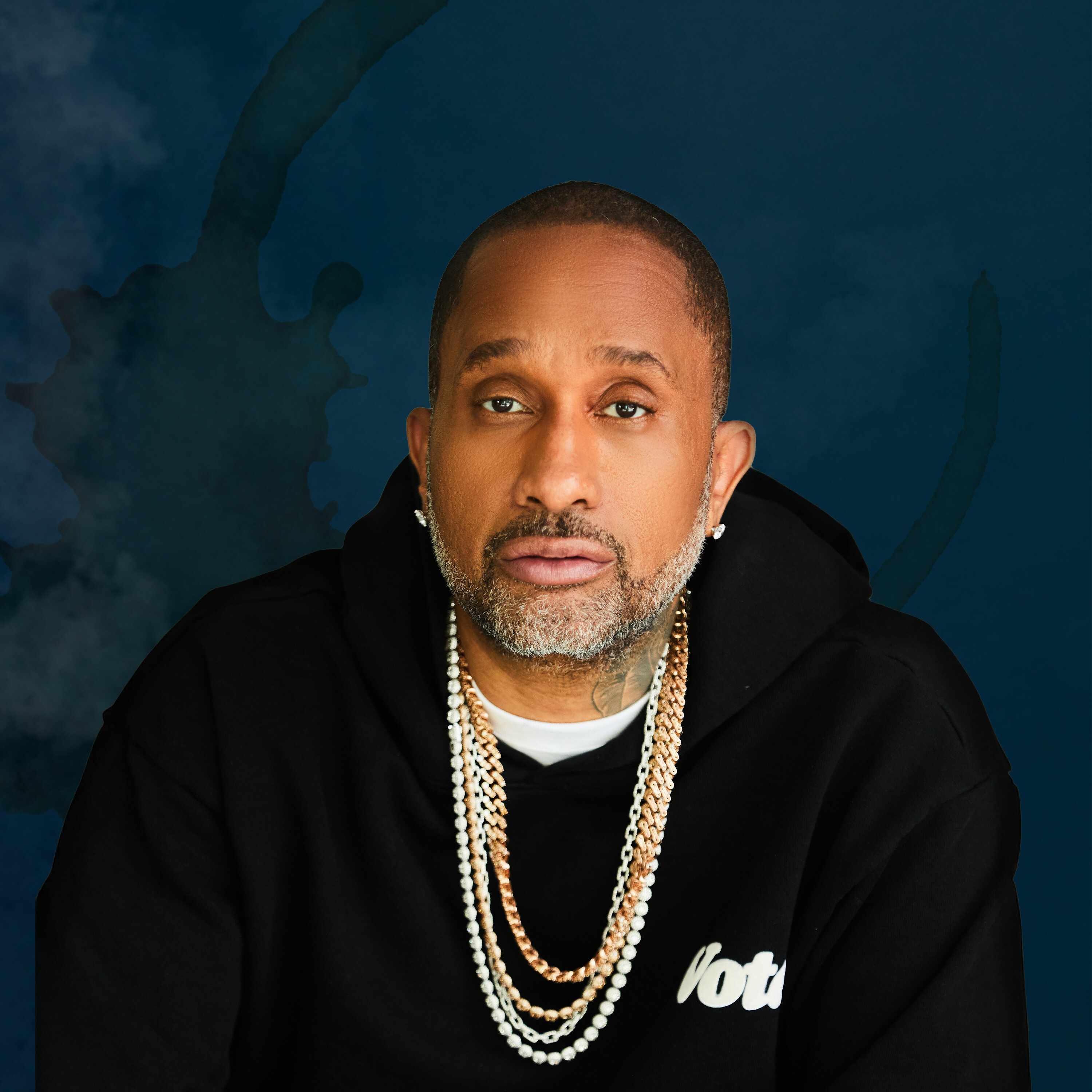
I'm David Duchovny, and this is Fail Better, a show where failure, not success, shapes who we are. Kenya Barris is a movie and television writer, a producer, a director and an actor. He is best known for creating the ABC sitcom Blackish, which ran for eight seasons from 2014 to 2022. Kenya has been working his way up the ranks of the entertainment industry from a young age, and now he has more projects to his name than I'm able to name right now. One that's near and dear to my heart is the 2023 movie you, people, which I acted in, and Kenya co wrote and directed for Netflix. He also has a new podcast called the Unusual Suspects, which he co hosts with the writer Malcolm Gladwell. They talk to the world' extraordinary individuals about their specific paths to success. I'm waiting for a call. Kenya is a thoughtful, vulnerable guy, beautiful guy, and I always enjoy talking to him. I'm very, very fond of Kenya. I think you'll enjoy listening. So without further ado, Kenya Barris. It's been a while since we talked and I still love you. I love you too. I wanted to the burning Question for me is, I don't know if you remember, but I'm wondering if you've ever worn the onesie that I gave you as a wrap gift.
- [03:10]
Kenya Barris
Of course I have. I actually wore at Christmas.
- [03:15]
David Duchovny
You did?
- [03:16]
Kenya Barris
Yeah.
- [03:18]
David Duchovny
That's warm for me. I'm glad. I'm glad. I was thinking about, you know, supposedly the show is about failure, you know, but we kind of go everywhere with that. But I was thinking about. Because, you know, one of the interesting things about doing a podcast, which I'm sure you can talk about too, because you're doing one now as well, is I find myself learning about somebody who I consider a friend, who. Somebody I know a little bit. You.
- [03:48]
Kenya Barris
And.
- [03:48]
David Duchovny
And finding out things about you that I, you know, I didn't know at all. And I find that to be a fascinating aspect of this. But, you know, I guess it's common knowledge that you had 18 pilots before Blackish hits right at number 19. So was there something along the route of those 18? I'm not gonna call em failures, but, you know, 18.
- [04:13]
Kenya Barris
They're failures.
- [04:14]
David Duchovny
Well, no, I mean, they're failures in.
- [04:16]
Kenya Barris
The sense that if they don't work, they're failures. You know what I'm saying?
- [04:18]
David Duchovny
Like, you know, well, they don't get on the air, you. Yeah, that. That really worked. It just wasn't the right time or whatever. But what was it like in your head as you're going through 13, 14, 7, you know, are you. Are you saying, what is wrong with me? What is wrong with this subject? What am I not getting? Or are you just like, next one, next one's gonna hit?
- [04:44]
Kenya Barris
I think the last, like, five or six, I kind of was like, it's gonna happen. You know what I'm saying? Like, you get, you know, like the last, like, couple years I was doing, starting with like, two and two and three years. So the last two or three years of them, I was like, something. You could tell they were getting too close. I started understanding it's like over the. At 12 and 13 and 1112, you start being like, okay, casting really matters, so get up. You know, start talking about, get. Who's your actor? You know what I'm saying? Then you start thinking about, like, who's going to direct this? Then you start thinking about, is there something that sort of like, you start, like, realizing that the package really counts. You start really. How do you sort of stack the deck, you know, a little bit more? And then I think toward the end, I really got. So I was getting so frustrated. I think I said, Fuck it. And I was like, I'm not going to tell someone else's story. I'm going to really just tell my story. I used to write pilots in, like, there were in the earlier years. I would write pilots about, like, my family or about a job situation. And I would change the characters into white characters because I was like, nobody. Like, I want to make this sell. So I'm going to make the characters. It's for abc, so. Or NBC. I want to make the characters white because I. You know. But I would write them originally as I heard them in my voice, and then I would change the names and all that. Just. I started just. I was pandering.
- [06:07]
David Duchovny
Yeah.
- [06:07]
Kenya Barris
And I think I. Once I start pandering, and I got Laurence Fishburne, I'm saying, and then Anthony Anderson as well. But Laurence Fishburne really was like this movie star, and he. People had not seen him do comedy in that way.
- [06:22]
David Duchovny
Right.
- [06:22]
Kenya Barris
And for him to come and sort of really embrace that character and be so good with Anthony. And Tracy came in. We cast her, but it was written for. Tracy came in. And we knew at that point. And those kids were so, so good. I started getting good at kids. Those kids were so good. So good. It just. It really helped.
- [06:41]
David Duchovny
Well, you say pandering. It's interesting because you know what you're talking about. Over the course of 18 pilots that you tried, you were learning the business aspect of it. You say, I'm learning the business of it. But the pandering part could be called a business move as well. I mean, that was kind of maybe your naive notion of how you should go about this business.
- [07:05]
Kenya Barris
Yeah, I think that that is normally, actually, you know, what you do is you pander a little bit. Right. I'm saying, like, you're like, it's for this. This station. It's kind of this type of thing. You pander. But that doesn't necessarily work when you haven't made it. You know, I'm saying, I guess kind of feels like you're pan. They feel the pandering. Right. But once you.
- [07:29]
David Duchovny
They feel the pandering.
- [07:30]
Kenya Barris
Yeah. Once you get on a little bit, then you can sort of pander but not feel like you're pandering. Yeah. I think it also really. Timing is everything. Yeah. I also, like, during that time was like, you know, people wanted to hear something different. You know what I'm saying? And we also sold that pilot in to a lot of people. It was a bidding war. And we sold that pilot to a lot of people. And so it was a big commitment from abc. If it didn't go. And from the moment we started shooting it, you started. I don't know, you've. I'm sure you've been a part of Swarth is. I just. And I don't. You don't like to say it. It's kind of like a pitching a no hitter, but you kind of, you kind of knew, you know what I'm saying? From the moment we were on the pilot, we were like. So, you know, it was. We were wrapping pilot days early. We were like, you know, doing takes for safety that we. After like two takes, it was like, this is for safety. Like we kind of, you know, I kind of. It was like, o, this is this. That worked, that worked, that worked. And you kind of just knew it was. It was clicking.
- [08:36]
David Duchovny
Yeah. What I remember about you know, shooting with you as a director, I found you extremely collaborative and supportive and willing to, you know, wanting to improvise within the structure of the movie. And I thought, you know, you reminded me a lot of, for me, of working with Shandling because you guys are both really sharp and funny. But you, I don't think I'm wrong here. That to you, like the backbone of the thing, the structure of the thing is all important. You know, if you don't have that, if you don't have the character and if you don't have the structure of the piece, then you can have as many fucking jokes as you want. They're not going to.
- [09:24]
Kenya Barris
They're not going to. You need the skeleton. And if you get the skeleton and we have the right, just such a blessing to have that group of people together, but you get the skeleton and you get the right people together, then you can work from it. But you do need the structure, you know what I'm saying?
- [09:37]
David Duchovny
But that's not, that's. I think people forget that, you know, when I see comedies and I'm wondering, you know, it's not something that somebody is going to come into this world knowing, you know, you think, oh, I'm a funny person. I'm going to do funny shit. I'm going to write jokes, I'm going to say funny things. But where did you learn not only the structure, but where did you learn that the structure was. Was make or break for something?
- [10:04]
Kenya Barris
I think I was always like, I had a kid, was a kid, asthma. I just read a lot of books. I got like super into the love of like reading, like literature, comic books, anything that I can know, told a story that kind of Took me out of, like, having to sit in the house all the time. And the thing I learned, like, the best writers, the best storytellers, their structure and their character, right? You can just find. You can hear the character on page, you know, 450, the same as you could on page 10. I'm saying you understood who that character was. And I think that's still the same thing in film, you know, saying, like, the best art, the best filmmakers, the ones that we love. If someone didn't tell you we're walking into, I don't know, a Wes Anderson movie, right?
- [10:53]
David Duchovny
Yeah, right.
- [10:54]
Kenya Barris
Ten minutes into it, you'd be like, is this a Wes Anderson movie? Like, you can hear the voice and the structure come out from how those filmmakers tell their stories. And I think that's the thing that really counts.
- [11:07]
David Duchovny
And for you, when you're writing, when you're making something, like, it's. It's your voice now. It's your voice. It's Kenya's voice now. You've worked long enough. You probably. You probably, you know, kind of moved within it and outside of it enough to know when it's there. How do you court it? You know, how do you. Because it's not easy. No matter whether you know the structure, whether you've been there a thousand times, it's always going to be hard. How do you get into that zone? And is it just like, oh, here's an idea that got pitched to me. I feel it. I understand that. I can see it. That could be in my voice. Is there a way that you get into your voice? Or is it just something that comes naturally?
- [11:51]
Kenya Barris
Yeah, I think the voice thing is the most important thing. Damn near anybody, no matter what they do. But if they do something passionately, can have. Like, you can look at a trade on Wall street, right? And you can be like, that's a Warren Buffett trade. Like, the street will know. Or you can look at, you know, a piece of architecture, and you'll be like this. Such. Such built this. You know what I'm saying? You can hear. Same thing with an actor, you know, certain actors. But as a writer, I felt like. I think the key is to not make it your voice, per se. I don't mean, quote, quote science, but make it, like, the type of thing you like to say in the way you like to say it. But make sure you keep each of those characters an individual person. So that. I think one of the things that helped me with that is TV doing. Doing TV every week.
- [12:36]
David Duchovny
Yeah.
- [12:37]
Kenya Barris
You have to, like, learn that each of those actors is special and they make. They make your show. That's why casting is so important, is so, so, so, so, so, so, so, so important. It's like, this is the place where I say actors are magic.
- [12:52]
David Duchovny
Yeah.
- [12:52]
Kenya Barris
I'm saying because I have a great Jason Alexander moment. We worked in this. This show called Listen Up. A lot of good writers in there, but Jason comes in one day before the table read. He has a script in his hand. He's like, guys, this isn't it. And it was like right before the table read, we're like, what? He's like, this isn't it. This didn't work. And I'm like. We're like, oh, okay. And he goes to the table read and he fucking murders. I mean, like, uproarious table read, like, brings the house down, right? Comes in after the table read, back to the writer's room. He goes, guys, still need this tape. This still isn't it. And he. Because what he said was. And what was true is that a great actor as, you know, as you've done, like, you can sort. You can take material and make it work, work. You know how to make your put your thing, because that's what actors do. There's the magical part you know how to make, but you also know when that structure, that story part is. Is not right, and it's hard. You're like, I'm going to put you in a position where all we. You're going to be struggling to make this work, you know? And he was like, I. I made it work, so I didn't embarrass you at the table read, but this is wrong. And I was. It was such a pro move. I will always remember that.
- [14:02]
David Duchovny
It. It reminds me of. I had a meeting with Robert Town because I had. We got to know each other a little bit, and he was kind enough to read a script of mine. And we had a meeting afterwards. After he read, he was talking to me about the script, and he said, the first thing I do when I read a script is I look at the last 20 pages and I see if there's a lot of dialogue. And if there is. If there is, I worry because in my mind, in the last 20 pages, the audience should know what the characters are thinking.
- [14:38]
Podcast Advertiser
Mm.
- [14:38]
Kenya Barris
I love that.
- [14:39]
David Duchovny
And in a way, that's what you're saying in the Jason story, I think, is that he was saying, yeah, these jokes are funny or whatever, but it's like the character's not there. And in a way, some of those Jokes wouldn't have to be even said. Some of those are just looks, you know?
- [14:55]
Kenya Barris
Yes.
- [14:56]
David Duchovny
Once you get to know the character. Now, as an actor, I like that you say actors are magic. That's great. Do you feel. What were you. You know, I look at you and you're doing so much. You're producing, you're writing, you're directing, you're acting. You know, you're doing it all. And it's. For me, I do a bunch of stuff, too. And in a way, it's like me hiding from, you know, being shot at as one thing, in a way. You know what I mean? And it's also just exercising different, like, limbs or different skill sets somehow. And I'm wondering, what was it about acting that you needed to do that you needed to find out at that point when you did Black af, was that the first time that you acted?
- [15:46]
Kenya Barris
Yeah, I mean, I did little parts here and there, just.
- [15:49]
David Duchovny
And I told you, I really. I. I love watching your work, and I love that show. Is it. Are there going to be more seasons of it?
- [15:57]
Kenya Barris
No more seasons of that, but we're hoping me and Rashida do some stuff. But it was. I did it out of fear because there's. You can rob me with a camera if you wanted to. You know, saying a camera or a snake, you could rob me. I feel. And I feel like the idea was to, like, confront your fear, really. You know, I'm saying, like, we had. I think Jamie Foxx has talked about. We had had a great. Another actor that actually, his deal closed. It was like, super demand. And Rashida being as smart and talented as she is as a director, writer and actor, she was like, you should do it. And I was like, what? And then, you know, we worked with a lady who worked with Larry David and had a conversation with him, and I felt like, you know what? It started resonating, like, maybe I was like, because black people don't really get to do satire. And I was like, oh, maybe this actually will come off, like, in a satirical way. And I kind of like, give us, like, open a little bit of a different door. And she supported me the whole way through. I mumble and, you know, we'd be in the middle of scenes, and she'd say, the middle of the scene, she's like, you know, no one can understand you. Right. You know, no one listening to this could understand a word you're saying. Right. And actually just was like, no one else would have supported me like that. But it was. I'm so glad that I did it. It taught me so much about writing. And you know that because you act as.
- [17:19]
David Duchovny
What does it teach you about writing?
- [17:21]
Kenya Barris
Oh, my God. That you. We write words sometime and we're not realizing that someone has to read these words and act this out. And we're just like. We're just writing words. You're like, this isn't as you. If you don't. If you haven't done it, you don't really think. Like, this is impossible. What you're asking of this person, right? You're asking this person. That is not. It's like you're asking them to play a game of Twister that they can't finish.
- [17:44]
David Duchovny
Right?
- [17:44]
Kenya Barris
I'm saying. Yeah, yeah. And I think it changed the way I wrote blocking, the way I wrote character, the way I wrote, you know, thing. Because you have to understand, like, a person has to be these words I'm saying and live this, this, this.
- [17:59]
David Duchovny
Yeah. When you say black satire, I'm not exactly sure I understand what you mean. Or when you say satire, can you just. Can you maybe explain what you mean by that to me?
- [18:11]
Kenya Barris
Like, we don't get to like, take, you know, satirical things are like, when you look at really real stuff, grounded things, and you're able to sort of like, in a purposedly real way, make light of, you know what I'm saying? Like, our stuff is we have to be broad, you know what I'm saying? Like, George Jefferson, like, should have been able to be satire, but he had to be so broad, you know what I'm saying? And he had to, like. Because it wasn't able to be played with a level of groundedness, you know I'm saying? And so, like, if you think about it, like, that's not really something that we get to do. Like, you can't like, like Spike.
- [18:49]
David Duchovny
Right.
- [18:49]
Kenya Barris
Plays with it. But he's more on the dramatic side, even though he's a super funny guy. And the things are the characters, whatever. But like. And because it's features, he doesn't like it in a television show, like, to do satirical, supposedly grounded things, but talk about them from a grounded but honest place. That's not something that culturally we have been able to do. We have. We are set up, set up and show broad, big comedy, you know what I'm saying? Chitlin Circuit, you know? You know, like big, big Def Jam. Def Comedy Jam. Laughs. You know what I'm saying? It's why Dave Chappelle is so important for us, because he provides a real grounded prior. But even he makes us Prior with Carla and with with, you know, new heart and but he it's from a crown. His his newest Saturday Night Live monologue was genius to me.
- [19:44]
David Duchovny
It was.
- [19:44]
Kenya Barris
Yeah, I really, really was. He's had a couple of them. This one really worked.
- [19:49]
David Duchovny
So do you see that as your that's your ambition or that's your past? That's what you're doing, that's what you intend to do. That's what you've done?
- [19:57]
Kenya Barris
I don't know that that's what I've done. That's why I know that the people that inspire me are like thinkers. I know that Prior was a thinker. I know that, you know, Seinfeld's a thinker. I know that Chappelle is beyond a thinker. I love comics like Shane Gillis. I love, you know, people who I think are thinkers and really aren't afraid to sort of like have a point of view that doesn't necessarily just come from just one side or the other.
- [20:27]
David Duchovny
Foreign. This episode is sponsored by Better Help. When the calendar flips, we hear a lot of talk about finding a new you. But what if we looked at it differently? Instead of a new you, what if it was the same you but with less holding you back and weighing you down? Personally, I'm going to be trying my best to stay calm amongst the chaos of the world. Sometimes that's taking a walk or delving into a great book. Sometimes therapy can help. BetterHelp therapists work according to a strict code of conduct and are fully licensed in the US plus they do the initial matching work for you so you can focus on your therapy goals. A short questionnaire helps identify your needs and preferences and our over 12 years of experience and industry leading match fulfillment rate means we typically get it right the first time. If you aren't happy with your match, switch to a different therapist at any time. From Our tailored reqs, BetterHelp makes it easy to get matched online with a qualified therapist. Sign up and get 10% off@betterhelp.com failbetter that's betterhelp.com failbetter There are lots of.
- [21:43]
Podcast Advertiser
People right now focusing on hitting their protein goals. Maybe they want to help build and maintain muscle or recover after a workout. At the same time, life can get pretty busy. That's why so many people are looking for easy protein packed options and this one actually delivers ratio protein yogurt has 25 grams of protein per cup, making ratio the most protein per cup in the yogurt aisle. That's more protein than four whole eggs plus zero added sugar. You get a complete protein with all nine essential amino acids, zero grams of added sugar, and real staying power. It's protein that can help your body build and repair tiss, making it an easy post workout snack or just a midday keep going moment. Not only is it packed with protein, but ratio protein has a smooth and creamy texture, so there's no need to compromise. Great taste when hitting protein goals. It's the kind of thing that slips right into a chaotic day. No cooking, no cleanup. Just open, eat and you're on your way to hitting your protein goals without having to worry about baking yet another chicken breast. Ratio does the math, so you don't have to head to ratiofood.com to find a retailer near you.
- [22:58]
Gretchen Rubin
Hello, I'm Gretchen Rubin. And I'm Lori Gottlieb. We're two friends, one a happiness researcher and the other a therapist. And we are here to tackle the problems of everyday life with all of you, from big issues to small. We'll share advice and fresh perspectives and we'll also highlight responses from you, our listeners, to the questions we discuss. Whether it's that pet peeve that's been bugging you for years, a tricky dilemma, or just something you've got always wondered about, we'll talk it through the since you asked podcast from Lemonada media premieres on September 23rd. Wherever you get your podcasts.
- [23:47]
David Duchovny
I know that, like me, you went to school for another discipline. You were, I guess, were you pre med or you were going, yeah, I was pre med. Yeah. So when you, when you flipped and started to say, I'm a writer, I'm gonna be a writer, was there like guilt involved in that or a sense of cause?
- [24:05]
Kenya Barris
There was organic chemistry.
- [24:09]
David Duchovny
I remember that. I remember Orgo. That separated the men from the boys, didn't it?
- [24:14]
Kenya Barris
It does. The only time in my life I ever felt dumb.
- [24:18]
David Duchovny
Why is that? What is it about organic chemistry that's so hard? Let's.
- [24:21]
Kenya Barris
Let's figure it out.
- [24:22]
David Duchovny
I don't know.
- [24:23]
Kenya Barris
I don't know. My wife became a doctor and. But she always said that was the thing they always told you. Like it was. That was the turning point. You know what I'm saying? And I don't understand because I was pretty good at math. I wasn't great, but I was pretty good. But I was really good at science. That's what I thought. Right. But it combined math with science in such a parallel congealed way.
- [24:50]
David Duchovny
Yeah.
- [24:50]
Kenya Barris
That you had to have like a handle on both of them in a way that I did not. That's like I was getting like 12s and 14s on tests. You know, 12%, like, bad fails.
- [25:02]
David Duchovny
Double figures. You got double figures.
- [25:05]
Kenya Barris
Bad fails. I was like.
- [25:09]
David Duchovny
I. I was so bad at math and science, and I was not pre med. I was liberal arts, Whatever. They made up these phony science courses that people that were scared of that stuff would take. I took a course called physics for poets for my science requirement. Yeah, but was there a sense for you at that point was like, ah, you know, it sounds like it was so clear that you weren't gonna go there. So there wasn't a sense of like, I'm making the wrong decision or I'm failing at this, or is there one? What am I gonna do now?
- [25:47]
Kenya Barris
It was definitely a sense of failure. Cause I felt like, you know, you're in college. I was, you know, I was broke growing up, and like, you kind of choose a career that you feel like is a little bit of, like a sure shot, you know what I'm saying? So I felt like being a doctor was like, oh, this is gonna work. You know what I'm saying? If I do this, I'll be okay. So once I wasn't gonna be able to do that thing that I knew if I could do, I was gonna be okay. All the rest of the career is like, I didn't want to be a lawyer. And I knew a lot of broke lawyers growing up, so that didn't feel the same to me. And I. So I felt like taking the other side of, like, really diving into the thing that I actually really always loved, which was, you know, trying to be. Tell stories and make people laugh and that felt like what you're supposed to do and what, you know, you know, parents of kids who are a little bit more entitled and have a little bit more freedoms tell their kids to do. But, you know, I took that. That jump and my mom was not supportive.
- [26:50]
David Duchovny
I understand.
- [26:51]
Kenya Barris
Yeah. Yeah. So it was, it was. It was a. It was a different thing.
- [26:58]
David Duchovny
Yeah, I. I have a similar story in that I went to graduate school for English literature. And. And my. When I was a kid, I had the same two choices that you did. I thought lawyer or doctor, because they seem like sure things, as you say.
- [27:12]
Kenya Barris
Yeah.
- [27:13]
David Duchovny
And I just knew that I. I couldn't do either. So I was gonna be an academic, you know, and I thought, oh, well, then I'll get great vacations. I'll get three months off a year, and I'll be able to write. I'LL be able to write novels in my off time, you know, so that's kind of where I was going. And I was in a PhD program, and then when I.
- [27:32]
Kenya Barris
You were a Rhodes scholar, right?
- [27:33]
David Duchovny
No, I wasn't a Rhodes scholar. I tried to get a Rhodes Scholarship, and I might have made it, you know, to the regionals. It's a lot like the Final Four.
- [27:41]
Kenya Barris
Okay.
- [27:42]
David Duchovny
If you had me in your bracket, you would have been busted.
- [27:44]
Kenya Barris
You got to, like, the sweet 16.
- [27:49]
David Duchovny
Oh, Kenya. It's a weird thing that they do when you make, like, the 32 from your region. Everybody's got a region. They do. And so I was in the Northeast region, and they have a cocktail party, and you mill around and you don't even know who the selectors are as you're milling around this party with the other applicants. So I knew I was lost. The first question they asked me was. I think they asked me if a writer had any responsibility to be moral. Not in his life, but in the writing. And of course.
- [28:29]
Kenya Barris
What'd you say?
- [28:31]
David Duchovny
Not the right thing, whatever it was, you know.
- [28:35]
Kenya Barris
What do you think now in hearing that question back?
- [28:37]
David Duchovny
I think. No, I mean, I think a writer's responsibility is to tell a story and to raise questions instead of answering them. I think great art has a certain sense of morality, but it's not necessarily as cut and dried as the one that we like to abide by in our lives.
- [29:01]
Kenya Barris
Well, isn't it interesting when you, like, really break down that emoji of words? Morality doesn't necessarily mean the positive for morality is the spectrum. Right. And if you. If we're really being honest, like, morality is a spectrum. If a character is corrupt and lacks what we consider positive morality, that is his morality. I'm saying in some aspects, I'm saying, like. And I feel like that is. I think we sometimes forget that. I'm saying the idea of a lack of morality is. Morality is a form of morality. I'm saying it's. It. It's just a spectrum. You know, saying morality is. Is often thought of like we. We look at. I think that's one of the problems I have. Just, like, is, like, there's such, like a formulated. Like this is what we're supposed to be.
- [29:54]
David Duchovny
Yeah.
- [29:54]
Kenya Barris
But then we look and we're often some of our heroes, whether it be in film or in politics, like, you know, jfk, I'm saying, But by a lot of definitions, I don't know. I didn't know the man personally. But from the research and reading, I've done by a lot of definitions, he may have not been as high on the morality spectrum. I'm saying. Yeah, but he, but I wouldn't say that he was. Didn't have a morality to him. So anyway, it's just interesting.
- [30:24]
David Duchovny
No, it is interesting. And I think, you know, we're in a time where, where that discussion is really appropriate, you know, because, you know, we, we are. We have often been recently, I think, judging works of art by a morality or even by a political position that they're putting forward, as if that was what an artwork or a work of entertainment was supposed to be judged by.
- [30:49]
Kenya Barris
Close the museums.
- [30:50]
David Duchovny
What's that.
- [30:52]
Kenya Barris
My term to that is close the museums. If we start doing that, close them. Because a lot of seemingly really bad people made a lot of beautiful things.
- [31:02]
David Duchovny
Yeah. And even the things that are challenging, even the things. Works that might seem ugly to us today are for the future in a way, are kind of opening a door into another time. So, I mean, I've felt the pressure as somebody who writes and somebody who's trying to get things done, you know, is this gonna be seen as saying the thing that people want to hear right now? You know, and I find that that's a time to close the museum as well. And I'm sure you have. Have been dealing with that more than me as a, As a, as a white person. Like, you know what? I think I have less kind of a sense of responsibility to be a certain thing for a certain group of people. As somebody in your powerful position, that's interesting.
- [31:59]
Kenya Barris
A lot of my guy, my friends that are white, actually, particularly the men, they feel more obligated to, like, be certain ways than they ever have before. So it's interesting. You say you feel less.
- [32:11]
David Duchovny
Yeah, well, I, I think, I think I do feel more obligated to do that, but I, I, to, to, to. To be that way. But I, I feel like that's not going to lead to the best work for me. No, that's coming from a. The consciousness or whatever rather than the unconscious, where the, where the good stuff is going to come from.
- [32:32]
Kenya Barris
Yeah, I feel like that in political conversations, which you're not supposed to have, but, you know, is the idea that I feel like that so much now in terms of. As a writer of what's right, what's wrong, which you can agree with. Like, I think it's almost become like, you know, a cult of politics, you know what I'm saying, on the left and the right, that like, we have to sort of like, you buy Everything one side says or you're not truly a part of it. And that really. I think that that's caused a real. You know, it's interesting when I went to a dinner with some friends, and one of the. One of the people were helping Biden run for office at the time. He will remain unnamed, but he's a, you know, friend, you know, wealthy contributor and really smart guy. And he wanted Biden to get in one of the commercials. They were going to do a commercial or ad with Mick Jagger, and it's going to be Biden and Mick Jagger. Mick Jagger was going to start him up and kind of like dance around Biden and then fist bump him at the end. And everyone was like, you know, yeah. Nodding like, oh, that sounds good. And I was like, what?
- [33:38]
David Duchovny
Have you. Have you seen Dancing in the Streets? When Jada was Bowie, it was like, shit, 30 years ago.
- [33:45]
Kenya Barris
I was like, what are you talking about? That sounds like an awful idea. And I was like, I guess I wasn't supposed to say it, but it just was the idea of. At that point, I. At that moment, really, really felt like Joe did, who did an amazing, you know, some amazing things and did a great job. But I thought that he was. Was, you know, too long in the truth and passed his pride. And I was like, we need to get out of this now. And I was supposed to say that, but I felt it at that point. And I just. I think that sometime, like, they were asked, I said, if I was on the Democratic Party, I would have taken and made a blue Maga hat. You know what I'm saying? And that would have been my political. I would have said, I made a blue Make America Great Again. I'm like, what can they say? He took it. He took it from Reagan, so take it again and be like, we're gonna do it. And, like, I feel like. I think, you know, with all we talked about, having a voice and all that, like, I felt like I looked, you know, in. When Hillary ran, I asked so many of my friends. I was like, after it's over, I was like, what was her campaign slogan? People were like, I'm with her. I was like, nope. You know what I'm saying? And I was like, but you knew drums. And I was like, when, you know, Congress, I was like, what was her campaign slogan? And I was like, no. You know, I was like, the idea that we get so caught up in ideology and who's right and who's wrong and that we're on the right side and the right side is going to.
- [35:13]
David Duchovny
Win and the rights.
- [35:15]
Kenya Barris
That's not what it's about. It's about, you know, the idea of how you as a writer, if you're not. If you're not worried about being moral, you act, but what you do actually compels someone from the inside, I'm saying, touches their. Their core, Then you are a success, you know? And I think it's not about you writing the story that's the most moral. It's about you writing something that actually touches and affects the most people. And I think that we. We're kind of like. We kind of get away from that sometimes.
- [35:46]
David Duchovny
Well, yeah, I mean, I think we're. We're kind of siloed off. I mean, pretty clearly preaching to the choir a lot and that kind of stuff. But, you know, the idea. And I think that you're. Your work does this, which is one of. One of the things I love about it is that I can see the guys in the maga hats laughing their asses off at your stuff, you know, And I'm sure that would be really satisfying for you as well. I don't feel like you're. I don't feel like. And correct me if I'm wrong, it's like, okay, I'm. I'm going after a black audience. I'm going after a white audience. No, you're going after an audience that thinks your stuff is funny and moving.
- [36:24]
Kenya Barris
Yes. I think the. The whole. As artists, we can say whatever we want, but the true, true, like, definition of us, inside of us, of success is mass appeal. I'm saying when someone tells me, like, I don't want, I'm like, you're full of shit. I'm saying, like, I'm like. Like, you want as many people as possible to enjoy your work because that is, you know, it's. It's why writing is so. Acting is hard. When I. When I. When actors come in and they audition or actors, you know.
- [36:59]
David Duchovny
Yeah.
- [36:59]
Kenya Barris
Do something and they get turned down, I'm like, God, this is a rough job. They have to go on three more of those today, right? Yeah, but maybe they just weren't. There's time when actors walk in and, you know, before they speak, they're just not right for the role. Right.
- [37:11]
David Duchovny
Well, that's probably 90% of the time.
- [37:13]
Kenya Barris
Yeah. You just know before they say anything. But when someone reads your work and they don't like you. They don't like. They don't like you.
- [37:21]
David Duchovny
You know what I'm saying?
- [37:23]
Kenya Barris
What's inside, it hurts. Because that's like, what's inside of you they don't fuck with. And there's something about that that really stings. Yeah.
- [37:34]
David Duchovny
There was one episode of Black AF that I thought was like the best episode of TV that year. And I was pissed off. You know, I wanted more of that show. Cause I loved watching you. I loved Rashida. And there was one episode. I don't remember the name of it, but your character was. You were having a hard time because you were supposed to either give an award to or say some nice things about the work of a Black Director.
- [38:06]
Kenya Barris
Episode 105. That's the one. Everybody.
- [38:10]
David Duchovny
Everybody asked you about that one.
- [38:12]
Kenya Barris
Tyler Perry was on it, and it was talking about the sort of policing of ourself and that sort of black woke majority and woke morality and all that type of stuff. It was. I'm so glad I got a chance.
- [38:25]
David Duchovny
To do that episode that I. I was. My mouth was dropped open when I watched that because it was just such a. It was so smart and so full of pain as well, you know, and confusion. You know what I mean?
- [38:40]
Kenya Barris
Yes.
- [38:40]
David Duchovny
And again, it's not something that, you know, art is not supposed to be a position piece. And that's why I come out of it not knowing where you stand and not caring where you stand, because I got the confusion of that episode was what I was supposed to get. And I just really thank you for doing that one. And I think that should be put in a time capsule.
- [39:04]
Kenya Barris
You know why that episode, to me worked is that I talked about doing black satire.
- [39:10]
David Duchovny
Yeah.
- [39:10]
Kenya Barris
Is that Tyler was a really big part of that. Right. Because he came on, he spoke in a way that people don't really hear. Tyler, the criticisms were put in his face on a TV show, and he spoke about him, you know what I'm saying? But also, like, you had Issa and Ava and Will Packer and all these, like, prolific Black, you know, auteurs and. And, you know, filmmakers, and they were having a conversation that, like, it's sort of like home talk that we don't usually say outside, you know what I'm saying?
- [39:41]
David Duchovny
Right.
- [39:41]
Kenya Barris
And we got to, like, say things that you don't really hear black people talk about. You know, I'm saying. But we talk about inside. We don't get to say it outside. And I think we don't get to say it outside because we haven't made that leap yet. And because we haven't made that leap. You're. You're the. You had. Everyone has to just support everybody. Right?
- [39:58]
David Duchovny
What's. What leap do you mean?
- [40:01]
Kenya Barris
We haven't made that leap to, like, mainstream acceptance? You know what I'm saying? Like, I can talk to you about. And we can have a really open conversation about the best point guard ever. Right? Because we. There's enough black point guards. But if you, like, if you want to say John Stockton, I'm not going to say Johnson, I'm not going to say you're crazy. And if you don't want to say. If I want to say Ivers, even though it was a shooting guard. But I want to say Iverson, Steph or Magic, you know, there are, you know, if you. You know, if you like Jason Williams or you like, there's enough black of. In blacks in the NBA that we can have an open discussion about it and not feel like we have to, like, sort of, like, hedge our bets. But there haven't been enough black filmmakers, you know, I'm saying, and writers and directors and creators that we can feel like there's an open. Open. We can speak openly and be critical of one another in public. And so in public, if we. If we walk out of a screening and we're like, that was garbage. When we walk past the person, we're like, oh, my God, that's so good. Because we're like, you can't. We cannot speak, you know, ill of our work because we haven't had mainstream acceptance yet. And so the idea that. That sort of, like, let the world in on a little bit of secret, that we kind of police each other internally, I think that was like, something I was so happy to do because gave us real. It gave us real intentionality. It gave us real awareness. Awareness, you know, of. Of our own work.
- [41:40]
David Duchovny
Yeah.
- [41:40]
Kenya Barris
And, like, the idea that we're not blind, you know what I'm saying? That we see our own stuff and, like, you know, we understand and we have our own conversations. And that was something I was really happy to be a part of.
- [42:00]
James Corden
Hello, I'm James Corden, and on my new show, this Life of Mine, I sit down each week with some of the most fascinating people on planet Earth, from Dr. Dre to Julianne Moore to David Beckham to Cynthia Erivo to Martin Scorsese to Jeremy Renner to Denzel. Denzel Washington to Kim Kardashian. We talk about the people, places, possessions, music, and memories that made them who they are. These are intimate conversations full of stories that you've never heard before. This Life of Mine premieres October 21st. Wherever you get your podcasts.
- [42:54]
David Duchovny
I think a Lot of. When I look at your stuff, I feel a lot of your identity as a father in your work.
- [43:04]
Kenya Barris
That's my life.
- [43:05]
David Duchovny
Yeah. A lot of your comedy, a lot of your wisdom, a lot of your questioning. Guilt. Guilt. Yeah.
- [43:15]
Kenya Barris
Seriously, guilt.
- [43:17]
David Duchovny
What do you mean?
- [43:19]
Kenya Barris
Like, like, I think that men. There's not enough, like, talk about, like, when we get divorced or when our kids mess up, or when things, like, we feel awful. You know what I'm saying? Because even though we're.
- [43:35]
David Duchovny
Let me just tell you the numbers. It's 3:45 in the morning. That's when David wakes up and thinks about the. That he's done and how he's been.
- [43:43]
Kenya Barris
Yes.
- [43:43]
David Duchovny
Yeah. And it's always like, why is it 3:44? Why can't I sleep past this number? But that father wakes up at 3:44 and thinks, what have I done?
- [43:54]
Kenya Barris
Yes, man. I. I went to this program, Hoffman, and it was really interesting. You know, I'm saying it was like a, you know, psychoanalyst, but, like, just intense thing. But it just was like, as a father, all I could think was just like, you just start to feel like your job is to protect your family. Right? Yeah. But your job is also to provide, Right?
- [44:18]
David Duchovny
Yeah.
- [44:19]
Kenya Barris
And sometimes those things don't necessarily coincide. And then we also have our own trauma and toxicity that we grew up with that we sort of bring with us into stuff. And whenever something goes wrong, mom knows that she did her best. Mom was there. Mom knows she did her best. I feel like I don't think there's enough talked about as a father. The guilt that we sort of, like, take with us, and we're sort of good at masking things sometime, and not necessarily, but, like, we take a lot of guilt with us. And that guilt is, for me, comes out in a lot of my jokes, a lot of my shit. But it is definitely, like, something that I think you take with you.
- [44:59]
David Duchovny
I think that's what I. That's the stuff that I laugh. I mean, I laugh at your stuff a lot, and I'm not an easy laugh, but I. No, seriously. And the lines. The lines, like, I don't even know. Maybe it was from Black af. But whenever one of your kids would say something that you liked and you say, that's why you're my favorite, you know, it's just like, that kind of stuff that's so honest about the stuff that's so difficult to navigate when you have kids and stuff like that. You know, playing favorites or not playing favorites, but you have favorites as a parent.
- [45:36]
Kenya Barris
Anybody who says differently is fucking lying. You love all your kids the same, but at different times, you like them differently, Right?
- [45:44]
David Duchovny
Yeah. Yeah.
- [45:45]
Kenya Barris
And that's just life.
- [45:47]
David Duchovny
Yeah. That's like. With people. And there are kids, you know, when my kids had friends, there were kids. I didn't like that kid. Whatever. I just don't. Do I have a reason? No, I just. I don't like that fucking kid.
- [45:59]
Kenya Barris
Just think about your face. Just something about your face.
- [46:04]
David Duchovny
Yeah. And. And what I see in. What I see in. In your work that. That really resonates with me is. And because I. I feel like a lot of my writing work has been changed drastically when I became a father. And it's like. And as a parent, you know, the question is. And that famous episode that I read about Hope on Blackish, and also that the kids on Blackish had never known that there wasn't a black president. We always had a black president. So the question for the father, for a father of any color is, do I prepare my kids for the world as I want it to be? The world as it was for me? Because that's the one that I know I can really prepare him for, you know, life in New York in the 1970s, I could do that really well. Or for the world as it is, which I really don't know what it is, but I'm trying to figure it out as they are, you know, and it's like, between protecting, between. Like trying to get them to be. Use that word. Be moral in a way that is not necessarily lining up with the world at this point. You know, it's like. Or do they. How much history do they have to know as to, like, why don't I let them forget a little bit and, like, enter into it as newborns?
- [47:31]
Kenya Barris
You know, this kind of shit that's poetic. It's. Want was at. Want was. Is as I want it to be as it was and as it is. That's such a poetic, fatherly sort of like, you know, but that's at 3.
- [47:45]
David Duchovny
44 in the morning. That's what I'm thinking is like, what did I do? How did I. How did I develop them? How did I stand by? How did I. Did I get enough involved? Did I. Was I. Did I back off enough? You know, all that stuff? And it's. It's an impossible Rubik's Cube to fix at any point in life, right?
- [48:06]
Kenya Barris
Which. And which Instagram has told me Rubik's Cube is very, very possible to solve. Now.
- [48:13]
David Duchovny
Not for this. I took Physics for Poets. I Look at a Rubik's Cube. I can't. I could. No, I could never solve it, dude.
- [48:21]
Kenya Barris
It's like such a trick. And I'm like, oh, man, it broke the Rubik's Cube for me.
- [48:27]
David Duchovny
But. So you feel that, you feel like that's where you're coming from, parenting 100%.
- [48:35]
Kenya Barris
I tell my kids, I was like, you're only getting inheritance because I stole everything I got from you. All my stories come from them and what they have, you know, sort of given to me and like, what they continue to give to me.
- [48:50]
David Duchovny
And as they, as they get older, are you going to have to have more kids to get more material or what are you going to do?
- [48:57]
Kenya Barris
You know, it's crazy. I had said I was done recently. I was just like, I, I know there's something about baby energy, I'm saying. And my, my youngest is still, like.
- [49:08]
David Duchovny
Hearing that out of your mouth makes me laugh. Baby?
- [49:10]
Kenya Barris
He's 8. He's kind of a baby. You know what I'm saying? Still. But like, it's something about an 8 year old now.
- [49:14]
David Duchovny
You have an 8 year old?
- [49:15]
Kenya Barris
I do, yeah, I do. And there's something about that baby energy that, like, it is, you know, I don't know, like people's like, belief in like a higher being or whatever, but you feel like you look down at that baby and you're like, nah, it's gonna be okay. Like this guy, I'm saying, like this, this guy or this girl, like this person. Like, I see divinity in this face, you know, saying I see something beyond the sort of whatever, you know, morose place I'm allowed to get because of whatever day I've had. I'm saying you look into that face and you see something that, like, it's like looking through a telescope and looking into the stars. You just see divinity. Wow.
- [49:57]
David Duchovny
Yeah. I mean, you're, you're, you're seeing where they came from. You know, they still had, they still have that, that smell on them from that new car.
- [50:05]
Kenya Barris
Celestial smell. They do. Seriously. Yeah. Nobody can explain that. Why do they keep that smell for so long? Like, you wash. Like you don't wash your kids.
- [50:16]
David Duchovny
So you don't. So you don't. So you don't throw them away. Probably.
- [50:19]
Kenya Barris
No, you're, you're probably more right than wrong. There's so much shit like that. My wife told me there's a thing that babies actually look like their fathers.
- [50:28]
David Duchovny
Yes, exactly. So you don't kill them, you know.
- [50:31]
Kenya Barris
Which is so crazy. Like, that's why? But they go through a drastic change.
- [50:35]
David Duchovny
They do. Like, okay, I got them on my side. Now I can look. I really look like I started to look like mom. Yeah, that's. I've heard that as well. And also that they know, they learn very young that a smile gets them.
- [50:51]
Kenya Barris
Yes.
- [50:52]
David Duchovny
They want.
- [50:52]
Kenya Barris
Yes. You know, yes.
- [50:53]
David Duchovny
Like, like they're fucking manipulating us.
- [50:56]
Kenya Barris
You know, that's so crazy.
- [50:57]
David Duchovny
We're not making them smile. They're smiling because they know it.
- [51:04]
Kenya Barris
Yes. So true.
- [51:07]
David Duchovny
You're also, you're. I know you're making a documentary about Jerry west. Right, right now.
- [51:12]
Kenya Barris
Oh, every. I just left it. I'm in it every day.
- [51:17]
David Duchovny
What, what is it about the west story that is, that is calling to you? Why did you decide to go there and, and, and start it in the first place?
- [51:27]
Kenya Barris
I was. I'm a basketball fan.
- [51:28]
David Duchovny
Yeah.
- [51:29]
Kenya Barris
Like, I feel like when you start looking at the teams that he made and what his contribution was to who it is. Jordanesque, you know what I'm saying? Like, not just as a player, but as a, as a GM and as an ambassador to the game. Like he. The game was like, the warriors wouldn't be the warriors. You know what I'm saying? Like Memphis would have maybe not made it as an expansion. Clippers, who's. My team wouldn't be Clippers. Lakers. Definitely wouldn't be the Lakers, you know, and I feel like, you know, he's the only player to ever be inducted into the hall of Fame three times. You know, he still has to this day the highest points per game playoff average in basketball without a three point line.
- [52:08]
David Duchovny
Does he. I didn't know that.
- [52:10]
Kenya Barris
And I'm like, this is a white dude who just had mid range jumper. And I'm like, you have to like give it up. And then. But the big, the big thing is when you. When I met him, yeah, it crossed lines. It was like I met a great man. I met a great man who put an amazing amount of trust in me, you know, who, who I felt was a civil rights hero, a sports legend, a troubled father, like I felt in myself, you know, And a questioning man, a man who constantly questioned the world. And I just felt like I wanted to do a good job for him. I wanted to please him.
- [52:58]
David Duchovny
That's wonderful. I can't wait to. It sounds huge. It sounds like a huge.
- [53:05]
Kenya Barris
It's awful. It's awful. It is awful.
- [53:12]
David Duchovny
Is this your first doc.
- [53:14]
Kenya Barris
First doc that I've directed. I produced a few. You know what I'm saying? First. But style and you know, Ava DuVernay produced a doctor 13th, which I really loved. I really loved the. The Beckham series. For me, Senna probably is like one of the docs that, like. It's just defining docs. You know, kid stays in the picture. One of the defining docs. Fog of War, one of the defining docs. But like, all those docs, they had something leaving a. Was out. It's. They. They. They got on a horse and they rode it, and it wrote that saying, you know how you hear a horse and, you know, the footsteps. That's the key to a dock is riding that dock out. And I realized that that's sort of like it's such. You know, we talked about, like, wanting to act or wanting to write or direct. The fear of doing it made me want to do it, because I'm like, now I'm like, I want to do this, and I want to do it great.
- [54:07]
David Duchovny
The fear that you talk about with acting and then with doing a doc is that the fear of failure, the fear of humiliation. What is it?
- [54:15]
Kenya Barris
Yeah, it's. It's, you know, like, when you get up every time you go take a role, when you walk out, when you go to that premiere, if you. If you didn't do good, that's. That's you, bro. You blew that. You know what I'm saying? But. But if you did and you can hold your head high and go do it again, there's something really empowering about that. And I think that's the thing about our industry is, like, when you're able to actually succeed, it's very in your face.
- [54:44]
David Duchovny
Yeah.
- [54:45]
Kenya Barris
You know what I'm saying? It's like the rush I think comics get from being on stage. You know what I'm saying?
- [54:49]
David Duchovny
Well, the fear. Fear gives you more life, you know, it makes you aware. It's like, if you just think of it, like, physically, obviously, you know, and if you can extend that to the. To the duration of a undertaking of a film or something, then it's. You're living your life in those moments, even though you're making a movie, which is the opposite of living life, but you're living in your psychic life, in living in that fear, everybody, you know, people are always talking about, you know, get rid of fear and stuff like that. But, you know, on that side of failure, if fear and failure are brothers in some way, you know, it does bring you into the present moment, and it does make you feel alive, you know, and it doesn't necessarily have to be seen as a negative thing. It can be seen as a. As a life.
- [55:35]
Kenya Barris
Yeah. Tracy Ross is a. A friend of mine, and her mom is Donna Ross, and she's had such. Done such amazing job having such amazing children and having such an amazing career. But she told me one time that her mom was like, after all the time she's performed, after all the things, she still gets a little nervous, like, getting on stage. And she was like, the moment that you're not. You don't feel that.
- [55:57]
David Duchovny
Yeah.
- [55:57]
Kenya Barris
You probably shouldn't do it.
- [55:59]
David Duchovny
Yeah.
- [55:59]
Kenya Barris
I'm saying the moment you don't. It doesn't matter how many times you've done it, the moment you don't have that, like, a little bit of fear, of anxiety, of angst, of what's going to happen, you probably. You're probably done.
- [56:10]
David Duchovny
You know, I. I'll get that. I always get that. Where some days are worse than others, but I'll be standing there, you know, waiting for the take to start, and I'll just think I'm terrified, you know, and I'm like, why are you terrified? What. Just. And. And what I'll do is I'll just. I'll just touch something. You know, I, like, learned this trick a while ago. Like, okay, I'm just going to touch this desk here and bring me back into the present moment, you know, because I'm spiraling into some. You know, certain fears are good, but there are certain fears that are paralyzing, you know, and if I can, like, if I'm spiraling into this, like, oh, my God, this is life and death, you know? No, this is just play. And it's a play at life and death, you know, I'm just playing at it being.
- [56:53]
Kenya Barris
I have a question for you. What's your hardest the. What's your. The role that you were most challenged by?
- [57:09]
David Duchovny
I know, probably Californication, because we were. We were trying to make a comedy, you know, but there was. There was a lot of other stuff going on. There was a lot of heart, and there was a lot of, like, bells and whistles with nudity and stuff like that. So it was just like, how do I not, you know, give in to the absurdity of some of these situations, keep it grounded, and yet still have fun, you know? How do I. How do I. How do I make this guy who on paper is not very lovable or even likable, you know, and how do I make him kind of undeniable?
- [57:45]
Kenya Barris
I just spent three months studying you in Californication. I'm doing a pilot at Netflix and it's about divorce, and it's about my own divorce. And, like, the notion of. But it was the closest thing I could think. I watched Fleabag, and I watched Californication, and the closest thing I could think of, like, you know, there's no version of going through a divorce where the guy is not the bad guy. You know what I'm saying? And the idea of how do you sort of take this flawed character and sort of make him palatable and in some aspects, likable and then heroic? And I feel like what she did on Californication was nothing short of this, like, brilliant.
- [58:31]
David Duchovny
Well, again, all I can say is that's definitely gonna be in this podcast. Thank you for saying that.
- [58:38]
Kenya Barris
It really was.
- [58:39]
David Duchovny
But I, you know, it kind of. It was something I wanted to ask you, and you don't have to get into any details or specifics, but, you know, I'm always like. I always think of ideas to pitch you, and I like pitching in public to you right now. But I was. When I was looking, I didn't know that you had filed for divorce twice and I had separated. I separated once, got back together with my wife, and then we eventually did divorce. So to me, like, an unexamined period of relationship is that time after you've failed and gotten back together. It's like, I haven't seen. I haven't seen many shows or movies that are about that moment where we've already said we failed, we split up, and now we're. Now we're back together. And you went through that twice. I guess I went through it once, twice. And it's kind of an interesting dynamic at that point, because all the illusions are gone because we've already fucked up. The blinders are off. We kind of see each other for who we really are, hopefully at that point. And even then, it doesn't necessarily work.
- [59:50]
Kenya Barris
Yeah, there's this. I learned this thing. I don't know if it's the infinite pause or the. Viktor Frankl has this phrase, like, between a reaction and incident reaction, there lies a pause. And in that pause is like a world of everything. And I think that's what. If I could go back and do my marriage, I would look at that. You know what I'm saying? Like, how you react to things, how I react to, like, getting breaking up and getting back together, especially whenever your breakups and get back together are going to be put in the newspaper, you know what I'm saying? That's really fucking sucks. But the idea of, like, taking a Little bit more time between the acts, between what happens and my reaction. You know what I'm saying, I think is really something I'm learning. Relationship in life, just in general. Take a little bit more of that moment before I react. It's hard.
- [60:50]
David Duchovny
Well, I can say I totally relate to this idea of a moment of being less reactive or of even kind of thinking through or feeling through a reaction rather than just reacting. And it's something that I go through with Monique, my girlfriend now, because she's way better at taking that moment than I am. If we're having an argument, I want to get to the end of it and not be in the argument, you know, and she's actually there going, well, wait a minute. I really want to think about this.
- [61:23]
Kenya Barris
This.
- [61:23]
David Duchovny
You know, I don't want to finish this until I know what I'm feeling. And I'm like, that's so stupid. No, that's brilliant. You know, that's really how I used.
- [61:35]
Kenya Barris
To cut my girl off in the middle of her sex talking. Like, what are you trying to say? What is your point? Like, that's gonna make the argument better. Hold on. What. What are you. What is your point? What are you getting at? Stop the next 15 minutes of what you're saying and just get to what you're getting at. And I was like. And I realized that that probably wasn't. Probably wasn't great.
- [61:55]
David Duchovny
No. But I think it's a good perception to start something new with. So I. You know, I wish you luck, my friend. You know, I feel like it'll be okay. I think that's a good place to end, Kenya. And I hope I get to speak to you more. You know, not in this form necessarily, but I'm really so fond of you.
- [62:21]
Kenya Barris
I felt the same way immediately. And I. You have no idea. That movie being you and Julia at were such menes. Like, the way that you guys sort of, like, brought professionalism every day. I was so terrified. All these big stars, and you guys every day brought it and made me feel so comforted. So I would. I would always be, you know, thoughtful to and remember those moments. Kindly.
- [62:48]
David Duchovny
I appreciate the hard work that you put in and. And built a brilliant career.
- [62:54]
Kenya Barris
I appreciate you, bro. Thank you so much.
- [62:56]
David Duchovny
Thank you. Thanks for taking the time.
- [62:58]
Kenya Barris
All right. All right, guys. Peace.
- [63:13]
David Duchovny
Okay. Just some post talking to Kenya Barris. Thoughts on a rainy. Thank God, Sunday afternoon. Been a rough couple weeks in the City of Angels. Everybody knows about that. I think I ended where I began the conversation with Kenya by saying how fond I am of him. And I keep on using that word when I think of Kenya. It's fond. And I wonder why I come back to that word. It's not a word that I use with a lot of people. And speaking to him again, I realize, or at least for me, my perspective on it is this, that the word fond comes to mind. Because, you know, Kenya's super funny, right? I mean, his, his shit is funny. Blackish is super funny, black AF funny talking with him. Funny, funny guy. Strictly his POV like we talked about. And what informs that point of view is the heart of the man. And that's kind of where we got to we're talking about, like his love of babies, that everything he writes comes from a point of view of being a father. Now that surprised me, but it made sense when I thought about it, because that is where the fondness comes from. And I'm not saying he doesn't cut, but his cuts are also informed by love, by this fatherly type of love. And that's where I'd. That's where I'd put my estimation of Kenya and why, why he works so well for me, why his point of view, why his art, why his humor works so well for me, and why I'm so fond, why I'm so fucking fond of them. Thanks so much for listening to Fail Better. If you if you haven't yet, now is a great time to subscribe to Lemonada Premium. You'll get bonus content like my thoughts on conversations with guests including Alec Baldwin and Rob Lowe. Just hit the subscribe button on Apple Podcasts or for all other podcast apps, head to lemonadapremium.com to subscribe. That's lemonadapremium.com Failbetter is a production of Lemonada Media in coordination with King Baby. It is produced by Keegan Zen, Emma Aria Bracci, and Donnie Matias. Our engineer is Brian Castillo. Our SVP of Weekly is Steve Nelson. Our VP of New content is Rachel Neal. Special thanks to Carl Ackerman, Tom Krupinski and Brad Davidson. The show is executive produced by Stephanie Whittles Wax, Jessica Cordova Kramer and me, David Duchovny. The music is also by me and my band, the lovely Colin Lee, Pat McCusker, Mitch Stewart, Davis Rowland and Sebastian Modak. You can find us online at Lemonada Media and you can find me at David Duchovny. Follow Fail Better wherever you get your podcasts or listen. Ad free on Amazon Music with your prime membership.
- [66:43]
Lemonada Premium Promoter
Want to listen to your favorite Lemonada shows without the ads? Subscribe to lemonada Premium on Apple Podcasts. You'll get ad free episodes and exclusive bonus content from shows like Wiser Than Me with Julia Louis Dreyfus, Fail Better with David Duchovny, the Sarah Silverman Podcast, and so many more. It's a great way to support the work we do and treat yourself to a smoother, uninterrupted listening experience. Just head to any Lemonada show feed on Apple Podcasts and hit subscribe Make Life Suck Less with Fewer Ads With Lemonada Premium, are you looking for ways.
- [67:18]
Gretchen Rubin
To make your everyday life happier, healthier, more productive, and more creative? I'm Gretchen Rubin, the number one bestselling author of the Happiness Project, bringing you fresh insights and practical solutions in the Happier with Gretchen Rubin podcast. My co host and happiness guinea pig is my sister, Elizabeth Craft.
- [67:35]
Kenya Barris
That's me, Elizabeth Craft, a TV writer.
- [67:37]
Lemonada Premium Promoter
And producer in Hollywood.
- [67:39]
Kenya Barris
Join us as we explore ideas and.
- [67:41]
Gretchen Rubin
Hacks about cultivating happiness and good habits. Check out Happier with Gretchen Rubin from lemonada Media.