← Fail Better with David Duchovny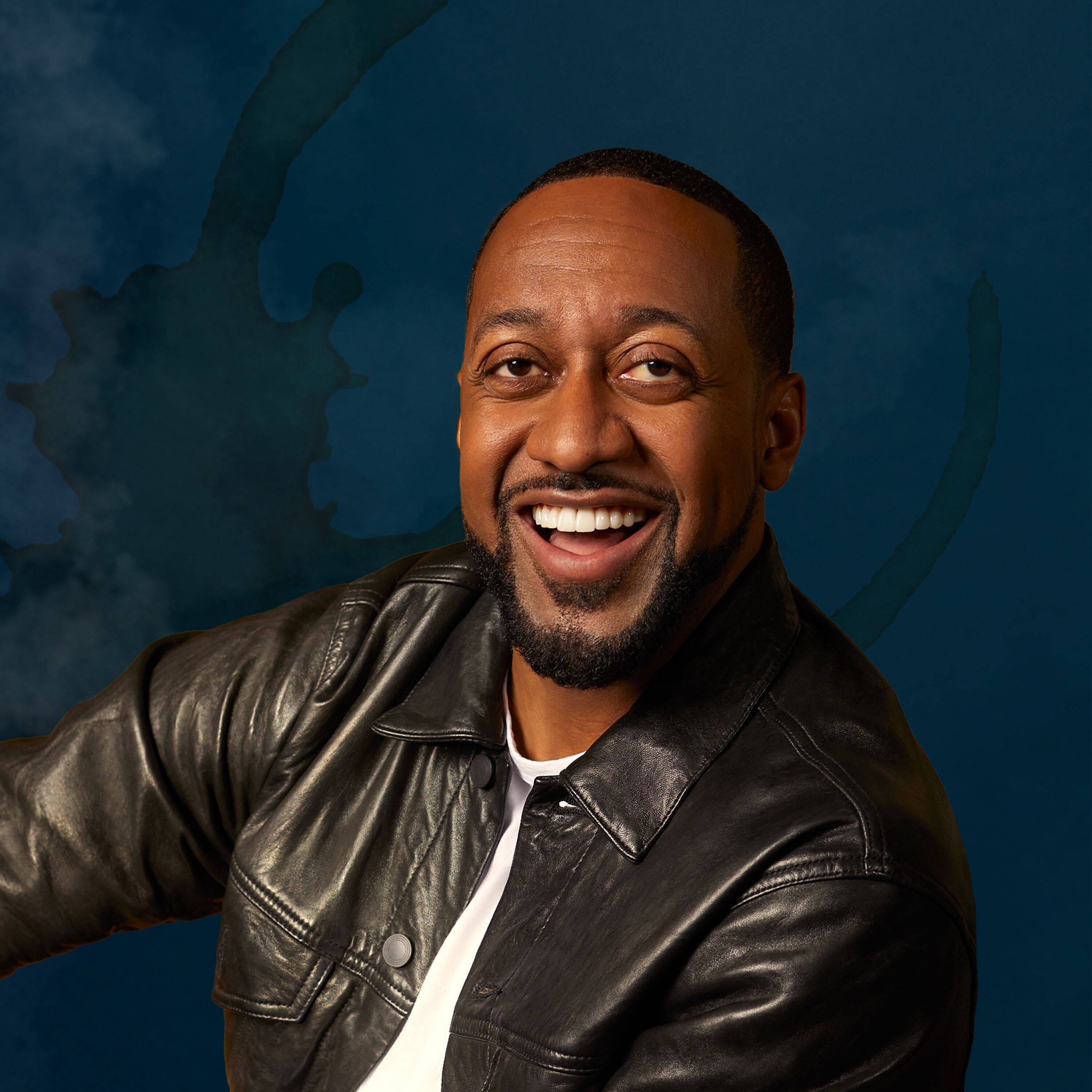
Loading summary
Transcript313 lines
- [00:00]
David Duchovny
Fail Better is brought to you by Progressive Insurance. Fiscally responsible financial geniuses, monetary magicians. These are the things people say about drivers who switch their car insurance to Progressive and save hundreds because Progressive offers discounts for paying in full, owning a home and more. Plus, you can count on their great customer service to help you when you need it. So your dollar goes a long way. Visit progressive.com to see if you could save on car insurance, Progressive Casualty Insurance Company and affiliates. Potential savings will vary. Not available in all states or situations.
- [00:37]
Jaleel White
Hey, it's me, Steve Burns. And I'm so glad you're here because you and I go way back, right? Yeah. And look at us now like we're all grown up. We've got this new podcast where we talk about all this grown up stuff and there's special guests like Jamie Lee Curtis and Bill Nye, but for the most part, it's about you. I mean, it's always been about you. From Lemonada, Media Alive with Steve Burns is coming September 17th. Wherever you get your podcasts or you can watch every episode on YouTube. Lemonada.
- [01:20]
David Duchovny
I'm David Duchovny and this is Fail Better, A show where failure, not success, shapes who we are. Jaleel White is an actor, writer and producer. He is most famous for his portrayal of Steve Urkel on the hit 90s sitcom Family Matters. At just 12 years old, Jaleel created an iconic character defined by his nasally voice, high water pants, thick glasses and memorable catchphrases. Urkel and his alter ego Stefan Urkel challenged assumptions about black characters on TV and came to be cultural touchpoints. But in his recent memoir, Growing Up Urkel, Jaleel opens up about why being so defined by that role impacted his identity and career. Afterwards, Jaleel doesn't hold back about the downsides of rising to fame at such a young age. And his honesty was super refreshing and fun. Here's our conversation, by the way. We had a little bit of a traffic jam almost derailed us when we recorded this before. And on the same day I stumbled on the news that Alvin Poussin had passed away. He was a renowned psychiatrist and often looked to as a black culture commentator in the 80s and 90s, which really got me thinking about Jaleel's most famous role. And so that's where we started this conversation. I just want to thank you for coming and talking to me. I really enjoyed your book.
- [02:43]
Jaleel White
Thank you bro.
- [02:45]
David Duchovny
And you know, today, as you know, I was, we were trying to do this in Santa Monica and I was stranded on the 101 for about two hours.
- [02:52]
Jaleel White
All is forgiven.
- [02:53]
David Duchovny
It happened. So he turned it around. And sometimes I think, you know, I hate when people say everything happens for a reason. I mean, but it's our job to kind of figure out what that reason is. And in the time between not being able to talk to you this morning and now, I just. I just got on my. My iPad to look at the times, and two things I saw, two alerts, which made me think, well, maybe this is how we should start talking. The most important one is that Alan Tucson died. The black psychologist who was Cosby's main guy.
- [03:32]
Jaleel White
Y.
- [03:32]
David Duchovny
Right. Yeah. Yeah. So. And I'm reading this. This obit about him. An amazing guy with revolutionary kind of ideas. I mean, he said. He said at one point, it's time for the American Psychiatric association to designate extreme racism as a mental health problem. You know, as an actual diagnosis. I wouldn't disagree with that, which I find interesting. But he also said Here it says Dr. Poussin became a go to commentator for journalists looking for insight into black culture. When Family Matters, another sitcom centered on a black family, featured a brainy, goofy teenager named Steve Urkel. Dr. Poussin was on the case. This is what he said, Quote, the fact that he's a nerd and very bright may be a step forward, he told the New York Times in 1991, accepting that a black kid can be bright and precocious and might end up in an Ivy League school. So I just thought, I like that.
- [04:31]
Jaleel White
Kind of deep dive. Wow.
- [04:33]
David Duchovny
Well, I wonder what Jaleel would think of that, you know, because I didn't necessarily want to get into this stuff right away, but here we are, because that's what happened. And I want to tread lightly because I want your experience, But I'm wondering how you've been able to navigate the past kind of refocusing of black artistry of the last 10 years, especially in Hollywood, and being attacked, as you were in the UCLA class, kind of that kind of judgment on your character. And I wonder where you sit today and tell me about Toussaint or whatever you want to talk about with. With Urkel and in its place in the culture, in that character's place.
- [05:16]
Jaleel White
Well, one that was. I never knew he said those words. I actually sat right next to him at the Final Four in the Meadowlands. Wow.
- [05:25]
David Duchovny
Who was playing?
- [05:28]
Jaleel White
I want to say Seton Hall.
- [05:29]
David Duchovny
We'll get to basketball. No, because we're both players. And I think I heard it was a rumor. I heard it's not A rumor. It's the absolute truth.
- [05:37]
Jaleel White
I can't wait till we get to that then. I can't wait. Nah, you know, I mean, that's a broad question. Considering my age and I'm a father now, I think the easiest way for me to answer that question is for me at least when I had my daughter, it put a lot of life just in the context. That character which people would think hurt me so much, or he hates that he gets over that. Nah, that character saved my ass. My participation in that show, financially, it allowed me to bring a child in this world and focus on providing the best there was for her.
- [06:25]
David Duchovny
So you came to a place of gratitude around that.
- [06:30]
Jaleel White
I always lived in gratitude, even when people would give me a hard time because I knew what the reality of my life was. We do some pretty cool stuff, David, right? We meet some pretty cool people, we see some far off lands that people would not, you know, may never even get a chance to lay eyes on in their lifetime. So my daughter just put a lot of things in proper context. I even remember, I always do this. I always kind of venture into a story about that kind of like answers your question, but at the same time it expresses how I feel. And I remember I was trying to get her into this particular elementary school. That's not an easy elementary school to get kids into. And I was not married, I was very much a single dad. So I'm kind of like toughing it out in the back while all of these other couples around me present themselves as the power couples, elite couples of la. And I was just by myself. And what they did at the school was cool. They had six kids up there that were in the sixth grade. And as parents we got a chance to ask questions to the kids. And that's actually the best way I'm telling you to evaluate a school ever is just pay attention to the kids. Because your kid is going to become a version of the kids that you see on the kids.
- [07:38]
David Duchovny
That's absolutely true. You know, when, when my kids were applying for colleges, you know, they, they spend all this money to go all over the country just to look at a school, when in fact it's all about the kids. Because those are your peers and those are the people that are going to define your memories at the college. Not whether or not you like that building or you like their sports team.
- [07:58]
Jaleel White
That's right.
- [07:59]
David Duchovny
But go on.
- [07:59]
Jaleel White
So, yeah, you're right, I think. Do you want to be one of these guys you see walking around?
- [08:03]
David Duchovny
Right.
- [08:04]
Jaleel White
And we were done with The Q and A with the kids. It was predominantly white kids, just to be real, though. And it was a couple of black kids on the stage, though. But they all came running down off the stage to me in the back, and the kids were like, is it really you? Is it really you? This is like, you. This is like 12, 13 years ago at this point. And he was like, you're the guy from that show. And. And it turns out all of them were watching me in syndication.
- [08:40]
David Duchovny
Sure.
- [08:41]
Jaleel White
But one in particular, I remember his name was Mike White. My dad's name is Michael White, and the kid's name was Mike White. And I said, I'm curious. When are you watching my show, though? And he said. He said, oh, I watch it every morning before I come to school. So I checked the dial, and I figured I was like, ah, rich kid Bel Air. I was like, where's he watching it? And it was. Our show was airing on bet.
- [09:04]
David Duchovny
Right.
- [09:04]
Jaleel White
But on the dial that is near Nickelodeon and Disney Channel, and those are the neighboring stations.
- [09:12]
David Duchovny
So do you think he got there by mistake one day?
- [09:15]
Jaleel White
I think so. What was that? You know where I'm headed. So I thought that was so cool that I had this white kid in Bel Air watching our show unknowingly on BET every morning. And I was able to just. My performance was able to create that bridge.
- [09:32]
David Duchovny
But also, I was thinking, you know, the gratitude around the public, you know, it's something that I have dealt with, too. When you get such a mega success around one and you feel trapped a little bit at first, and then you realize that that's your problem, you know, and. And it's up to you to continue to work and continue to grow or whatever it is you're gonna do. And then time passes and you just come to this sense of gratitude.
- [09:58]
Jaleel White
I didn't really feel that trap, though, to be quite honest, until I got to college. A little past that.
- [10:02]
David Duchovny
Yeah, but that's young. That's still young. So. So to feel trapped at 21, that. That's when people are starting to feel open.
- [10:08]
Jaleel White
Yeah. And it was just like, that's when all of a sudden I was. Another level of cool had kind of caught up to me. And, you know, they were, you know. Yeah. But anyway, the point was, in that moment, I could see in the other parents eyes of, like, oh, they still know you. And all of a sudden, the faculty was really nice to me. And needless to say, my daughter got into the school, and it was just, you know, it was one of those kind of moments. Where it was just realizing that just like, life is very cyclical and, you know, be patient. Be patient. I went to see Laurence Fishburne performance Thurgood Marshall on Broadway. One man show. He crushed it. And he had one of his employees obviously scouring the audience for anybody that was in the business. And I got tapped, and he said, hey, if you want to come back and say what's up to Lawrence at the end, yeah, absolutely, man. I went back, I paid my respects, and I just remember him offering me the most subtle words of encouragement. He said, you know, everywhere I went, people would recognize me for this. Gosh, this basketball movie he did. Now I'm forgetting the name of the basketball movie.
- [11:27]
David Duchovny
I would have thought Apocalypse now or no.
- [11:31]
Jaleel White
Gosh. And Earl And Earl.
- [11:33]
David Duchovny
Cornbread, Earl and me.
- [11:34]
Jaleel White
Cornbread and Earl. Bingo.
- [11:35]
David Duchovny
Cornbread Earl and me.
- [11:35]
Jaleel White
Bingo. There you go. I knew you'd know it. All right. Bing, bing, bing. Twitter points for David.
- [11:39]
David Duchovny
Was he Cornbread Earl or was he.
- [11:40]
Jaleel White
Yeah, Cornbread. So he was like. He said, man. He was like, you know, when I would come to the theater, everybody would say, cornbread, Cornbread, Cornbread. And he's like, I got so sick and tired of it.
- [11:48]
David Duchovny
Sure.
- [11:48]
Jaleel White
And, you know, all these years later, now I have the opposite problem. He's like, I can't ride the subway anymore, and everybody calls me Morpheus. And he just kind of gave me a pat on the shoulder and. Which is like, he hanging there. You're on the right path.
- [12:01]
David Duchovny
I miss Cornbread.
- [12:02]
Jaleel White
Yeah, exactly. Exactly.
- [12:03]
David Duchovny
But going back to Tucson and that stuff, and I'm just wondering, you know, as you've watched Hollywood kind of try and catch up to the social movements of the last five or ten years or trying to break out of certain stereotypes, I wonder, were you ever, first of all, were you ever aware that you're. You're kind of breaking a black male stereotype by, as Toussaint said, you know, this is a new. This is a new type. And then probably on the. On the backside of this kind of getting called out for not being a different kind of black person. And I wonder if you went through any of that.
- [12:45]
Jaleel White
Oh, no, you mean you. You nailed it right on the head. You know, growing up as a kid auditioning, I was never black enough. I was on the short side. I had braces towards the end of my child acting auditioning period. So when that character came along, when Urkel came along, I was actually relieved because I was like, oh, man, this actually fits what my look was. I always loved film. That was A thing between my dad and I, we always went to the movies. So I watched everything. And I think to. In short, I don't think show business has ever given brown and black faces credit to the degree to which we were influenced by faces that were not brown and black.
- [13:31]
David Duchovny
That's interesting.
- [13:32]
Jaleel White
So that would be considered heady, scholarly, academic to be influenced by something so different.
- [13:40]
David Duchovny
Not instinctual.
- [13:41]
Jaleel White
Not instinctual. There you go.
- [13:42]
David Duchovny
Right? And.
- [13:45]
Jaleel White
And it was like, nah. So at the end of the day, I always tell people and I don't hide it. Even in my book. Growing up Urkel, I'm like, I was basically a black kid that was doing a really bad Ed Grimley and Pee Wee Herman impersonation. And because I would inject soul here and there at times, that was closer to what I really was in real life. It came off as an original character. And that's the way I kind of taught myself and then refined what it was to create characters was to find an archetype and be like, oh, just kind of impersonate that guy. But right, put a twist on it here. Put a twist, put a twist on it.
- [14:22]
David Duchovny
That's what everybody does.
- [14:23]
Jaleel White
Put a twist on it there. Exactly.
- [14:24]
David Duchovny
I mean, you listen to rock and roll, it's all coming out of Jimi Hendrix at some point.
- [14:28]
Jaleel White
There you go.
- [14:29]
David Duchovny
And you know, we're all coming out of Brando. You may think you're coming out of Martin Short, but you know, everybody, everybody who's doing serious screen acting now is coming out of Marlon Brando. So we're all doing imitations of imitations of imitations. And if you're using your imag and creating, putting your own soul on it, then it is a new character, because you are. I am unique. And it's gonna come out in a unique way. But I'm wondering, you know, you Never, like a 12 year old is never thinking, oh, I'm gonna be an archetype of some kind. And then. But then when you get older, and let's take it to that, just that moment in ucla, explain to people.
- [15:08]
Jaleel White
So they know.
- [15:09]
David Duchovny
They know. But you explain it. Cause you know it better than me.
- [15:12]
Jaleel White
But I know I'm impressed you read it though, a lot of people will talk to you.
- [15:14]
David Duchovny
They didn't even look at my book. Look at all the markings.
- [15:19]
Jaleel White
This dude is dope, man. This dude is dope.
- [15:21]
David Duchovny
I'm humble. Those could be nonsensical markings. I could have just done that in five minutes before, but it's not true. I'm ready. I'm ready. To talk to you. And I find it very interesting. But, you know. Yeah, tell us. You're 20 years old now. The show is over.
- [15:37]
Jaleel White
Yeah, the show probably actually wasn't over. I did the show from 12 to 21, so I was still doing the show. That was what was. But once again, the show was aging out of my own demographic, so. Meaning my actual peers were probably not watching our show.
- [15:52]
David Duchovny
And also, the culture is changing too.
- [15:54]
Jaleel White
Oh, man, it's east versus west in rap. It's Pac versus Biggie. You know, everything's baggy, everything's hard, everything's tough image.
- [16:02]
David Duchovny
And you've got an all white writer's room.
- [16:04]
Jaleel White
Yeah, that's. Yep. Yeah. And I was just sitting in class one day for a.
- [16:11]
David Duchovny
This is ucla.
- [16:12]
Jaleel White
Yeah, ucla. History of Broadcast Television. And so she starts at the beginning, you know, from radio, and then after a while she starts talking about tgif. And I'm sitting in the classroom squirming like, oh, shit. And I could feel it coming. And she starts talking about family matters and my character specifically. And she was a black woman too. And she starts describing the character as a Sambo and a character that was intentionally created to. For whites to enjoy because it was non threatening. Those were her comments. And people are just. I mean, this is before camera phones, so people are just squirming horribly for her because I'm in the class and she has no idea. And she actually wrapped up her lecture uninterrupted. I didn't interrupt at all. But somebody told her and she came walking up.
- [17:10]
David Duchovny
Had you dealt with that kind of an interpretation of your character before?
- [17:14]
Jaleel White
I had, you know, what I had. Again, not being. Not being. Not falling into the category of being. The 90s black male image, which I just have to say, just to make it easy, was like Michael Jordan or Tupac. You know, it's just, you know, that's pretty much what it was. And then comedically, you could say Eddie Murphy, you could say, you know, Right. Not falling into any of those clear defined archetypes, you know, left me, you know, searching for myself a bit. But I had never felt attacked. You know, black folks show me so much love wherever I go. And I have to. I always have to clarify that. That the opinions of a few academic elite or the opinions of, you know, some wannabe thugs is not necessarily the opinion of the majority. And the majority is. I've been shown an incredible amount of love by my community in hindsight, especially millennial black males too. Like millennial black males. They show me so Much love. Because they grew up being two things at once. See, being a kid of the 80s and the 90s, you were one thing. You were the jock, you were the nerd, you were the right. And now because everybody looks at themselves as a personal brand, as a, you know, it's not even shocking when I see, you know, Nigel Sylvester for, by brand Jordan. So I just, I don't know. I'm at. Because I know that at the end of the day, I'm here to inspire people, you know, spread joy, toil in comedy. When I get the chances to. Once I had my daughter, any attacks like that just kind of went away. I'm not going to hear that because I realized I was like, I'm a dad who gets to take care of my child though, at a high level. And that's a super duper blessing anywhere on this planet.
- [19:18]
David Duchovny
So what happened at the end of class? Did you went and you spoke to her, right?
- [19:22]
Jaleel White
No, I didn't. She came up to me.
- [19:24]
David Duchovny
Oh, somebody told her.
- [19:25]
Jaleel White
Yeah, I was salty. I won't lie. I was salty and I didn't want to say anything to her. And it's just one of those kind of moments where I look back and I'm glad I didn't challenge her in class. And I just kind of took it on the chin because in hindsight, there was nothing to gain. But she tried to offer me some meager apology. But what was more annoying was you and I both know, David, there is the reality of the business and then what it is to study our business. Right. And so everything coming out of this woman's mouth was just so woefully incorrect about how things get fixed on the fly, how development processes break down. I mean, I talk about that in the book extensively, that it was like, listen, we are a result Family matters, at least as a show of failed development, you know, that character was allowed to blossom because we were at the. The show was at the end of a 13 episode order.
- [20:26]
David Duchovny
It wasn't even a Wii at that point.
- [20:28]
Jaleel White
Yeah.
- [20:28]
David Duchovny
Cause you didn't start.
- [20:30]
Jaleel White
Exactly.
- [20:31]
David Duchovny
So you were the savior. Let's get this straight.
- [20:34]
Jaleel White
I literally came in on episode 12 of a 13 episode order.
- [20:37]
David Duchovny
So imagine you were the deus ex machina. You were the savior. You came in and saved that show. So that show was a failure.
- [20:45]
Jaleel White
Right. So, you know, I'll let you say, I'll let you say for me, I just, I just marvel at the, the timing of it all. It just got it work.
- [21:02]
David Duchovny
Listen, if you've been putting off getting life insurance. I don't blame you. It can feel daunting, but it's really about protecting those you care about the most. Most Americans overestimate the cost of life insurance, but it's more affordable than you think. Fabric by Gerber Life makes it so quick and easy to make sure your family has more financial protection this year. Fabric by Gerber Life is term life insurance you can get done today. Made for busy parents like you all online on your schedule right from your couch. You could be covered in under 10 minutes with no health exam required. Even if you have life insurance through your employer, it may not offer enough protection for your family and it may not follow you if you leave your job. Fabric has flexible, high quality policies that fit your family and your budget like a million dollars in coverage for less than a dollar a day. Join the thousands of parents who trust fabric to help protect their family. Apply today in just minutes@meetfabric.com failbetter that's meetfabric.com failbetter M E-E-T fabric.com failbetter Policies issued by Western Southern Life Assurance Company not available in certain states Prices subject to underwriting and health questions Imagine an end of day ritual that feels just as indulgent as a cocktail, but without the alcohol. Lately I've been reaching for Little Saints to do exactly that, allowing me to keep the ritual while ditching the chaos. At just 5 calories and 0 sugar, these non intoxicating spirits are designed for intentional winding down. They are powered by nature's neuroscience functional botanicals like lion's mane, reishi and damiana, helping you stay present tonight and wake up feeling refreshed tomorrow. My current favorite is Saint Oak. It's crafted for those who love the deep, comforting warmth of bourbon or rye. It perfectly captures the soul of an oak aged whiskey with smoky woody notes of vanilla, caramel and spice. Check out Little Saints and discover your magic hour. Visit littlesaints.com to explore the cocktails and spirits. Use code FAILBETTER to get 15% off your first order. That's littlesaints.com code FAIL Better Little Saints products are non alcoholic. Functional ingredients are not intended to diagnose, treat or cure any condition. So many people are focused on where their money is today. Acorns is the financial wellness app that cares about where your money is going tomorrow and with the Acorns potential screen you can find out what your money is capable of. Acorns is a smart way to give your money a chance to grow. It's so easy you can sign up in minutes and start automatically investing your spare money even if all you've got is spare change. Plus Acorns Grows with you Whether you're just starting out or thinking about settling down, Acorns supports your big and small goals across every life stage. The Acorn's potential screen shows you the power of compounding and how your money could grow over time. Plus, you can quickly adjust how much you're investing every day, week or month to make sure you're building towards your goals. For my producer Keegan, investing wasn't a huge priority until recently. Thanks to tools like using Acorns, he's been able to start growing his money. To see how a little set aside can really go a long way over time, sign up now and Acorns will boost your new account with a five dollar bonus. Investment join the over 14 million all time customers who have already saved and invested over $27 billion with Acorns. Head to acorns.com failbetter or download the Acorns app to get started. Paid non client endorsement compensation provides incentive to positively promote Acorns tier 2 compensation provided potential subject to various factors such as customers accounts, age and investment settings does not include Acorns fees. Results do not predict or represent the performance of any Acorns portfolio investment results will vary. Investing involves risk Acorns Advisors, LLC is an SEC registered investment advisor. View important disclosures@acorns.com Failbetter. I go back and I look at your work and knowing that you're a ball player, it's very athletic like and I can see your approach to acting is is athletic which is like mine because I come from sports too. I found acting after I fell in love with sports.
- [25:50]
Jaleel White
That's what's up.
- [25:51]
David Duchovny
And then I I love the team aspect of it and I also love the preparation and I love game time, you know. And I can see it even when you're 12, you know, I can see you, you're like ready to go at the buzzer, you know. And I just want to maybe talk a little about your approach to acting because I think what gets lost in your always having to discuss Urkel or whatever, whatever you're going to discuss is like Urkel the phenomenon. But what I find fascinating, I really think that character is one of the greats. I don't know that that show is one of the greats.
- [26:26]
Jaleel White
Agreed.
- [26:26]
David Duchovny
But I think that character is a piece of genius from a 12 year old kid. You know. And I'm wondering how you, you know, how does that 12 year old approach it? How do you now approach your work? Is it, is it the same kind of a thing? Or like, take me back to that point where I'm imagining, you know, you're 12, you're just doing everything that comes to you. You're like, you're just making decisions on the fly that are happen to be great decisions.
- [26:53]
Jaleel White
So.
- [26:54]
David Duchovny
But just talk to me a little about that.
- [26:55]
Jaleel White
No, I mean, first of all, man, thank you for the compliment, dad. Nah, thank you for the compliment, man. You know, I definitely approached acting for the. From an athletic point of view. Even my dressing room, I actually had remade as an NBA locker room.
- [27:12]
David Duchovny
Yeah, I think that's in the book, isn't it?
- [27:14]
Jaleel White
Yeah, NBA logger.
- [27:17]
David Duchovny
And you like to have a little, not a sweat going, but you like to be, you like to warm up.
- [27:21]
Jaleel White
I just, I just, I. I like to be hyped, you know, I would.
- [27:25]
David Duchovny
You work with that energy?
- [27:27]
Jaleel White
Yeah, I would like to try to keep things as fresh as possible. So even when it came to rehearsal, I think I always was inclined to rehearse to the extent that I felt I got it. And then let's pull back on the rehearsals. I think like some of the Disney Channel ways, sometimes they just drill it into the ground with those kids five, six times and do it. It was like, come on, guys, come on, come on, come on. So I always loved the rehearsal process, but I always loved leaving a little on purpose that I knew I might add in on tape night. And I didn't realize at that age that I was being afforded a comedic power that most people are not privy to. Being allowed to ad lib, being allowed to not show your whole hand until show night. Being trusted by your showrunners and the studio like that.
- [28:24]
David Duchovny
How soon did that start happening?
- [28:26]
Jaleel White
That started happening as early as 14. Like 13. 14.
- [28:29]
David Duchovny
Two episodes in.
- [28:30]
Jaleel White
No, no. Age 14.
- [28:30]
David Duchovny
Oh, age 14.
- [28:31]
Jaleel White
You know, 12 and 13. I'm just, I really am just a kid out there that's under the. I'm under some pretty good direction too.
- [28:40]
David Duchovny
You're just playing.
- [28:40]
Jaleel White
Yeah, I'm just playing. I had Rich Carell and Joel Zwick as our primary directors. John Tracy was one of them too. We had a rotation of directors. You're talking about 22, 24, 25 episodes a season where if I do anything, David, at a regular clip with rehearsal, I'm just gonna get better. That's just the way my brain works. So just repetition for me is a good thing. Anything that I decide to do, it.
- [29:08]
David Duchovny
Doesn'T get stale for you.
- [29:09]
Jaleel White
Nah, nah. I will see myself. I'll watch myself improve. Like, oh, okay. I saw that move. I saw that move. In basketball, our coach had one of those shooting machines that we have to shoot over the top of it into the giant defender. Yeah, right. And so the ball would always spit out at the elbows, and he'd just move it into the left elbow and the right elbow. Well, for. He ran this flex offense that was outdated, but that's my best shot in basketball to this day. Because repetition, you're always coming off, catching it at the elbow.
- [29:44]
David Duchovny
Muscle memory.
- [29:44]
Jaleel White
It's muscle memory. Exactly. So learning that about myself, once I start to love something, I want to just. Like, I want to just do it over and over and over and over and over again. Because once you can get to muscle memory now, you can really start to create.
- [29:58]
David Duchovny
And then the nerves go away, too.
- [29:59]
Jaleel White
Yeah. Oh, man. Absolutely. Yeah.
- [30:01]
David Duchovny
Like, did you have to deal with nerves at all when you were a kid?
- [30:03]
Jaleel White
You know, every now and then I would. Because I would put a lot of pressure on myself to nail it the first time out.
- [30:09]
David Duchovny
Right.
- [30:10]
Jaleel White
Because in front of a live studio audience, once they see it, the laughter is just gonna die down after that a little bit and a little bit. And I can hear it. So if I had very involved scenes, I would get a little nervous sometimes before I hit that door, that Winslow front door.
- [30:29]
David Duchovny
Yeah, yeah, that makes sense. But, you know, aside from the physicality of it or the. The athletic quality of acting, which I think we share, what. Where did you find. When did you know that you had that sense of timing that is. That is unteachable? Because the things that you're talking about are practicable and teachable in a way. You know, you can have help. Somebody's blocking with you, somebody's directing you run you through that program, you know, 10 times, and you're starting to get it. But there's something about. Which you can see when you watch your work and about, you know, really fine comedic actors, which is just a timing that is natural or to them and is their timing is really their signature. And you mentioned listening to the audience. So there's a feedback loop you're engaged in there. And it's also affecting your timing because you can't. Like, there's often two jokes in a row. You gotta wait, you know, so where at 12, you're just feeling your way through. You just have it. Was that your experience of it? That. I have this gift and I'm just gonna keep doing it again.
- [31:37]
Jaleel White
I Think the beautiful part about having grown up in the 80s and 90s is I didn't see it as a gift. It was just me being me. And if anything, I was in awe of your Eddie Murphys. And suffice it to say, I wish I could say another name, but your Bill Cosby's at the time.
- [31:57]
David Duchovny
Yeah, sure.
- [31:59]
Jaleel White
Everybody on Their Living Color. Oh, my gosh. You know, so all of my inspirations were always generally coming from adults. Every now and then, there'd be a kid who I saw was like, oh, this dude is funny, too. And they wouldn't even necessarily be the most celebrated kid I remember. I loved, and I always remember his name. Bryce Beckham. He played Wesley on Mr. Belvedere. I don't remember exactly.
- [32:24]
David Duchovny
You know, it is for me. And I don't. I don't remember her name, but she actually wrote a memoir, too. She was on iCarly. She was.
- [32:32]
Jaleel White
Oh, Jeanette McCurdy.
- [32:33]
David Duchovny
Yeah. I remember seeing her and Shia LaBeouf I saw on Even Stevens, and I was like, I tried to cast them in a movie I was shooting, and I couldn't do it.
- [32:42]
Jaleel White
Yeah, they're both operating. They were both acting well below their capacity.
- [32:50]
David Duchovny
Yes, material wise, but it didn't matter.
- [32:52]
Jaleel White
But it did matter. Yeah.
- [32:53]
David Duchovny
And that wasn't an interesting thing about you as well.
- [32:56]
Jaleel White
They were elevating material that was beneath their understanding. They could have taken on much better material and just done incredible things.
- [33:03]
David Duchovny
And, you know, for me, what it is. I don't know about Jeanette, but what I saw in Shia and what I saw in you, and part of it was. And I guess what I want to ask is, like, what was it like when you get that first laugh? Do you remember your first laugh? But also Shia as a kid, maybe he wasn't enjoying it, but he seemed to be enjoying himself. There's something about performers that enjoy themselves. And I saw you. You loved to be out there. You know, like, as a little kid, it looked like you loved to be out there and you were having a good time. And that, in turn, makes me have a good time.
- [33:42]
Jaleel White
I only love to be out there when it works well. Otherwise, it's my mug that's hanging out there, and it's not, and it doesn't work.
- [33:51]
David Duchovny
Yeah, I. I fight hard to make it work. I was just giving. I was just presenting at the SAG Awards yesterday, and I was talking to Harrison Ford, who's in an ensemble now, and we were saying. I was saying, do you enjoy it? And he was like, yeah, ensemble. To me means not my fault.
- [34:09]
Jaleel White
I like that. I remember my first hearty laughs episode called Big Fix. It was probably about five episodes in the first season.
- [34:20]
David Duchovny
But even as a kid, before you were performing, were you a kid that liked to make your parents laugh?
- [34:24]
Jaleel White
Oh, yeah. You know, I was always. I'm not gonna say I was a class clown, but I was definitely a recess clown. You know, a lot of joking on other kids. I had a sharp tongue. I was a little bitty dude. I was undersized and I couldn't fight very well. So I could talk smack about you and I could run really fast away from you.
- [34:46]
David Duchovny
Right. Well, that's the other thing that's amazing about your charact, not, not about the character, but about you as an actor, is you had to play that kid from 12 to 21. It's a different person.
- [35:01]
Jaleel White
Oh, yeah.
- [35:02]
David Duchovny
And you're playing the same guy. I mean, I've seen like the older footage, and you're, you're, you're trying to, like, constrict your. You know, you're 6 2. What are you?
- [35:12]
Jaleel White
I'm 6 11. Don't give me the 6. I'm 5 11.
- [35:15]
David Duchovny
6.
- [35:15]
Jaleel White
I'm 5 11.
- [35:17]
David Duchovny
Well, you know, you're a man and you're playing. You're still playing this kid, you know, or playing Urkel. And I think that's kind of an amazing thing as well. Like just the pure kind of performance as a 21 year old trying to play that character. And I wonder, like, were you panicked at every point?
- [35:34]
Jaleel White
Oh, yeah.
- [35:35]
David Duchovny
At any point?
- [35:36]
Jaleel White
No. Around the ages of 15 and 16, I definitely was starting to panic a little bit. Because your earnings jump. The earnings jump so much more.
- [35:46]
David Duchovny
You want it to continue for a few more years.
- [35:48]
Jaleel White
Yeah. You want to continue for a few more years because you know the difference that it's gonna make in your life. But realistically, you can feel these changes happening inside of you and, you know, they're resonating with audiences. And so the character is starting. The performances are starting to become a little more cartoonish. But I even noticed that even with a character like Kramer's, you know, if you notice in the early days of Seinfeld, by the time he was hitting doors in the nightstand, I think he.
- [36:16]
David Duchovny
Also went through puberty is what happened.
- [36:21]
Jaleel White
You know, so over time, you know, all of our characters tend to become caricatures of themselves.
- [36:28]
David Duchovny
Do you remember having discussions with the writers? Like, we can't. How much longer can we do this? We have to adjust. We have to admit, reality is Happening here.
- [36:37]
Jaleel White
You know, reality. I have to point this out, though. Reality was different back then. David, you're talking about a time when.
- [36:44]
David Duchovny
Well, it is a sitcom, so reality is suspended.
- [36:47]
Jaleel White
MC Hammer would do Taco Bell commercials, and he would float down into the scene in billowing pants and try to sell you a taco. You know, that's the thing.
- [36:55]
David Duchovny
Are you telling me MC Hammer couldn't really fly?
- [36:58]
Jaleel White
I'm saying surrealism was alive and well, and we just didn't take ourselves so seriously back then in our entertainment. The, you know, the sappy music to end every episode, you know, that would be so loud now, you know, we hear hot audience laughter. Now, that sounds fake. We didn't hear it so much back then. So I think we got away with something for a lot longer than you would ever be able to get away with any of that right now because of the times and the business model around television, quite frankly. I mean, again, like I said, we did 24, 25 episodes, and then we had reruns in the spring. You could have a normal life. And then you came back. It's all so different now. Everything has to be grounded in reality, even things that are surreal.
- [37:47]
David Duchovny
And how do you see yourself? Are you excited to perform in this new world as well?
- [37:56]
Jaleel White
You know, I'm a game show host right now. That's my primary job. Again, I've had to adopt this.
- [38:01]
David Duchovny
No, but you're an actor completely.
- [38:02]
Jaleel White
I'm an actor at heart, but acting has been under duress for, like, I just feel like the last four or five years as an industry, there are a few people who get a chance to practice it every day. Again, when I told you, I said, I'm a man of repetition. So, you know, I would. I relish the opportunity to get back on that bike, be in shape, you know, to memorize your words. I remember I worked with Spader on Boston Legal, and, you know, this guy would run off a page and a half like it was nothing. And he would literally back the words up and forward, backwards and forwards, like he was backing up a car.
- [38:40]
David Duchovny
Did you watch him work?
- [38:43]
Jaleel White
I wanted to watch him film one of his scenes. So he didn't know I was on the set. But I watched him. I watched him film. And that's where, from an athletic point of view, I was like, oh, this guy's in shape, this dude. You know, he's got it. But you gotta be in shape to do that. You do, you know, I don't. If I got hired to do a show where I had to give a two page monologue like that, you know, every single week, you know, I would have to train for that. To make sure that day one on set, people knew that I was, you know, that I was, I was, I was for real. And the opportunity to do that, you just brought it up yourself. Given all of the changes in rehearsal time and the amount of time you're given to do anything in our business, it's not easy. It's not easy.
- [39:29]
David Duchovny
Take me to the moment when you wanted to pitch a reboot of the show with Middle Boy. And I will tell you that I, I, when I first started auditioning, I came out to LA in like 1987. Yeah. So I was already 27 years old. I, I started acting late. You started early. I started late and I auditioned for Full House.
- [39:52]
Jaleel White
Stop it.
- [39:52]
David Duchovny
Yeah.
- [39:53]
Jaleel White
Which character?
- [39:54]
David Duchovny
All of them. They, they, they kept, they kept trying to bring, you know, they liked me, they just didn't know where I fit.
- [40:00]
Jaleel White
Right, right, right.
- [40:01]
David Duchovny
And I was desperate to get any kind of job.
- [40:03]
Jaleel White
Oh, my God.
- [40:04]
David Duchovny
And objection.
- [40:05]
Jaleel White
It's got God's protection.
- [40:06]
David Duchovny
Exactly, exactly. I was going to bring up that, that quote, I like that very much in your book. So I remember Miller and Boy because they, I forget. I think we're in abc. I don't remember. But you know, in Century City and there's kind of a, kind of a theater. Yeah, they were sitting there.
- [40:22]
Jaleel White
Oh, my gosh.
- [40:23]
David Duchovny
Yeah. So I read for.
- [40:24]
Jaleel White
That was when ABC Entertainment used to be in Century City.
- [40:26]
David Duchovny
Exactly.
- [40:26]
Jaleel White
Holy smoke.
- [40:27]
David Duchovny
I got flown out to la. My first view of LA is Century City. And I'm like, oh, so this is la. When in fact, Surgery City is unlike.
- [40:36]
Jaleel White
Unlike any aspect of la.
- [40:38]
David Duchovny
It looks like, like a model New York.
- [40:40]
Jaleel White
Your story's better than mine.
- [40:41]
David Duchovny
Keep going. And I'm, I'm just like, I remember the limousine met me at the airport.
- [40:47]
Jaleel White
Limousine?
- [40:48]
David Duchovny
Yeah.
- [40:48]
Jaleel White
Look at this guy.
- [40:49]
David Duchovny
Like, that's a word I use. Because I, I'd never been in one, I don't think. No, I've never been in one.
- [40:54]
Jaleel White
I never had anybody send one for me to go on an audition.
- [40:56]
David Duchovny
No, no, no. This was like, I was testing, like, because I'm from New York.
- [41:00]
Jaleel White
That's still it. That's still an audition, bro.
- [41:02]
David Duchovny
I know. They fly me, they fly me to la. So anyway, that's, I don't really have a personal story about Miller and Boyette, but I remember them. I can see them in my mind's eye. Because all your first experiences are so vivid, you know, forever. But I found that story of you pitching the reboot, which. I really dug your idea.
- [41:23]
Jaleel White
Thank.
- [41:23]
David Duchovny
You know, if you could just tell us a little about that. I'm not asking you to throw Miller and Boyette under the bus, but just, you know, whatever it is that happened.
- [41:29]
Jaleel White
Well, first of all, Tom Miller's no longer with us, so there's no bus to throw him under. You know, And I never had any falling out with Tom Miller at all. You know, he was great at what he did. He's one of the great producers of all sitcom producers, at least of all time. And times change. But I always saw the reboot as involving another kid that didn't necessarily play Urkel Jr. That just felt like that was a trap for another kid, quite frankly. I've pointed this out, and I don't point this out with any malice at all, but, you know, the kids from Fuller House, they don't work anymore, you know, and yet they work for Warner Brothers, who has HBO and a very healthy arm that features a lot of young performers. But the fact of the matter is, those kids are considered, you know, done.
- [42:23]
David Duchovny
Yeah, it's like it's no longer. It's also no longer a studio system in any way. So it's like, you know, you do great work for a studio. It doesn't necessarily translate into future work.
- [42:31]
Jaleel White
Bingo. Exactly. So, you know, I thought the show should be about a kid, period, who goes onto a failing sitcom in the 90s and upsets the apple cart, but ends up saving the day. And the show should really be about this kid's normal life behind the scenes, going to public school. Cause I went to public school the entire time I was on that show. And his parents, who know nothing about the business at all.
- [43:00]
David Duchovny
So did you see it as a sitcom, or did you see it more as, like, a streaming service half hour?
- [43:04]
Jaleel White
Saw it more as a streaming service half hour show that really tugged at your heartstrings. More along the lines of the original Wonder Years. Not necessarily the Wonder Years reboot, but I felt like the Wonder Years reboot even missed the opportunity to do something special for the 90s. The 90s, man, is this incredible canvas. Like, it's our 60s now.
- [43:24]
David Duchovny
Pre Internet.
- [43:25]
Jaleel White
Exactly. And it's, you know, you get to see the evolution of the cell phone, you get to see the evolution of the Internet. You get to see all of these things and just use that.
- [43:35]
David Duchovny
Can we skip the evolution of the Internet, please?
- [43:38]
Jaleel White
Well, by the way, look, just use. Use this. This nucleus of three. This mom, dad, and this kid as. As a journey back into the 90s during to explore a completely different time that I thought would have been a compelling show that you could get a lot of different generations to appreciate.
- [43:52]
David Duchovny
I think so, too. I still think. I don't think that's dead in my mind.
- [43:57]
Jaleel White
No, it's not. I'm cooking out here. I'm actually cooking.
- [44:00]
David Duchovny
Yeah. In your reboot, are you in it?
- [44:04]
Jaleel White
I don't know. I think that would take some development. There's a version of it where I could participate and then there's a version of it where I maybe just voiceover. And there's a version of it also that could be more like Survivor's remorse, which is LeBron James story on Starz where it's all new characters and you know what it's inspired by, but it's not necessarily me at all. It was never about me about telling the best story for the times. That's what I, you know, even as I get older, that doesn't get, that doesn't die in me of knowing a story that works for the times that we're living in.
- [44:53]
David Duchovny
This episode is sponsored by Better Help. When the calendar flips, we hear a lot of talk about finding a new you. But what if we looked at it differently? Instead of a new you, what if it was the same you but with less holding you back and weighing you down? Personally, I'm going to be trying my best to stay calm amongst the chaos of the world. Sometimes that's taking a walk or delving into a great book. Sometimes therapy can help. BetterHelp therapists work according to a strict code of conduct and are fully licensed in the US plus they do the initial matching work for you so you can focus on your therapy goals. A short questionnaire helps identify your needs and preferences and our over 12 years of experience and industry leading match fulfillment rate means we typically get it right the first time. If you aren't happy with your match, switch to a different therapist at any time. From our tailored recs, BetterHelp makes it easy to get matched online with a qualified therapist. Sign up and get 10% off@betterhelp.com failbetter that's betterhelp.com failbetter hey everyone, it's Leah.
- [46:03]
Jaleel White
Greenberg and Ezra Levin. You might know us as two of the lead organizers of the no Kings protests. We're also the co founders of Indivisible, the grassroots movement organizing against Trump's regime. And this is what's the Plan? Your weekly guide to the state of our democracy and how we fight back. This is not canned talking points. It's a real, real live discussion space for the pro democracy movement. We wrestle with strategy together. We take your top voted questions in real time, and we talk about the.
- [46:25]
David Duchovny
Most impactful actions we can take.
- [46:27]
Jaleel White
Right now.
- [46:27]
David Duchovny
Democracy is a participatory sport.
- [46:29]
Jaleel White
The fascists win. When we sit on the sidelines. What's the Plan? Is about how we get into the game. What's the plan? Available Friday, January 23rd, wherever you get your podcasts, subscribe, recruit, discuss, organize, and win. That's the plan.
- [47:02]
David Duchovny
Your identity as a writer, that surfaced early on when you were doing family matters, right? It's something that you've always wanted to do. It's something that you always have done. I wonder, are you still interested in, you know, as when you were playing Urkel, you were suggesting storylines, not necessarily writing them. You're 14 years old, whatever. But, you know, you've written this book. I wonder how, what your experience of writing this book growing up Urkel taught you about writing about, you know, every day as a writer is kind of a failure. You know, like every day you're. You smack up against the inspiration in your mind versus what dribbles out onto that page in front of you. So I wonder what you learned, what your experience writing this was, and whether it kind of invigorated you to go forward and write some more. Not necessarily prose, but shows.
- [47:59]
Jaleel White
I always had a deep desire to write, especially comedy for television. And so when I came up against an industry that, that, you know, that had a. I was. I was not necessarily invited to participate in that. I was really thrown for a loop, to be quite honest. And the book definitely has reinvigorated my desire to write. But I also have a separate respect for what it is to be a literary author. You know, I actually think it's far more challenging than what it is to write for television. Writing for television almost is just.
- [48:37]
David Duchovny
I would have to agree. Cause I've written four novels, so I wanna say you're right.
- [48:40]
Jaleel White
Okay? So I'm like, listen, when you set out to write a book, book, book, you know, the deliverables, the, you know, the toiling over.
- [48:51]
David Duchovny
You can't have a Jaleel White come in and save you.
- [48:53]
Jaleel White
Yeah, yeah, yeah. No, you on your own. You're really on your own island. I definitely had a lot of help, but I always want people to know that, no, I wrote this damn book.
- [49:05]
David Duchovny
And you had help shaping it.
- [49:07]
Jaleel White
You had help. Yeah, exactly. And I wouldn't even advise anybody write a book now without having Ghostwriters and people in the background and say, you might wanna change this. This is coming off this way. You know, we just live in a different world now.
- [49:19]
David Duchovny
Was there anything that you wanted to include that you were advised not to or anything?
- [49:23]
Jaleel White
Oh, yeah, There's a lot of different stuff.
- [49:25]
David Duchovny
Do you wanna tell us what those things are? One or two of em?
- [49:29]
Jaleel White
I mean, I'll give you one. You know, I talked about corporal punishment, and I come from a generation where you got.
- [49:40]
David Duchovny
You mean like spanking or something?
- [49:41]
Jaleel White
Yeah, you got. Where you got paddled, you got whipped, you know, you got beat, and I didn't. You know, we all felt collectively that if I talked about, you know, times where my mom exacted corporal punishment, that it would come off as child abuse.
- [49:58]
David Duchovny
Well, isn't this. But isn't this what we run into constantly, all the time now? Because. Because cultural norms change.
- [50:06]
Jaleel White
Right.
- [50:06]
David Duchovny
Not just parenting, but also racial, sexual, religious.
- [50:11]
Jaleel White
Exactly.
- [50:12]
David Duchovny
You know, and we have to be able to contextualize the behavior.
- [50:17]
Jaleel White
Yeah, yeah.
- [50:19]
David Duchovny
Without condoning or condemning. Right.
- [50:21]
Jaleel White
I even write about, you know, I wrote about, you know, Mr. C in my book a lot.
- [50:26]
David Duchovny
And.
- [50:27]
Jaleel White
And there's certain people that still. Even though I devoted several pages to put it in the proper. Putting my interaction with him in the proper historical context, that'll still be.
- [50:37]
David Duchovny
Like, you said, Mr. C, I thought you meant cocaine.
- [50:40]
Jaleel White
No, Mr. C, I'll let you save that. Cause I'm telling you, you a fool. That's hysterical. Yo. You know, there's gonna be a clip.
- [50:48]
David Duchovny
Now, like, Mr. C. Mr. C. He's like, I never heard it, but I like it.
- [50:55]
Jaleel White
Okay, we're gonna say Cosby.
- [50:57]
David Duchovny
Okay.
- [50:58]
Jaleel White
But some people still felt like I was celebrating him too much. And it's just like, nah, man. I don't think you really understand what a loss that was for us culturally as black people and as people who just toil in comedy, not even black. What that man did for it and what a letdown it was for us to see his legacy come down. Like, fricking A statue of. I can't even say what kind of statue.
- [51:23]
David Duchovny
I understand.
- [51:23]
Jaleel White
You understand what I'm saying. It's like a fallen statue of. This was a monument, this dude. And so I would always love for the show if I got a chance to do the show, and I think we will. I could feel it. There's some good things happening around the corner that we're able to depict history with respect, but at the same time create conversation between people as they're watching. Hey, this is the way it was then, and this is the way it'll never be.
- [51:49]
David Duchovny
The question becomes, do we throw out the entire existence of the person and the legacy of our art and comedy, or do we try and, you know, in an adult way, see the difference between the person and the art?
- [52:04]
Jaleel White
I think it all goes out, man.
- [52:05]
David Duchovny
And it does seem. I think we have been in that place. I'm not. I think we might be moving out of that place.
- [52:12]
Jaleel White
I mean, I'd like to see us move out of it, only just because I let God do the judging. But that might be wishful thinking, man. It's like, I think it. It all goes out.
- [52:21]
David Duchovny
You say. You say you let God do the judging. I would not say that for myself, but I. I try to separate, you know, the person from the work as much as I can.
- [52:32]
Jaleel White
I do, too.
- [52:33]
David Duchovny
And, you know, yes, there's crimes, there's. There's. There's horrible shit that can happen and be perpetrated by certain people. But, you know, you look back at some of the great art that we have in history, and they weren't saints and they.
- [52:53]
Jaleel White
But it wasn't covered the same way.
- [52:55]
David Duchovny
No, it wasn't.
- [52:55]
Jaleel White
And so, because it wasn't covered the same way, it's strange. It's weird. It was like I actually went to see one of my favorite art exhibits I've ever seen was in San Francisco, and it was a combination of Walt Disney and Salvador Dali. I had no idea that they were great friends. And, I mean, neither did I. And Salvador Dali art is just captivating. Like, you can just. You just stare at it. Cause you're constantly seeing the movie.
- [53:20]
David Duchovny
I can see his influence on Fantasia, maybe.
- [53:21]
Jaleel White
Right, okay. And so they were great friends. And then after having seen that art exhibit, I did my own research on Salvador Dali. And this dude. This dude was a monster.
- [53:34]
David Duchovny
Yeah.
- [53:36]
Jaleel White
I'm not even gonna describe what this dude's afflictions were. But we didn't live in Internet times where you could learn of Salvador's afflictions in 30 seconds around the world, everybody hitting their phones.
- [53:51]
David Duchovny
Well, I. You know, if I could just boil that down to where we are at, you know, in this podcast, which is as well. It's like, we can't. It's harder to get beyond your failures now because they're curated forever on this thing in this class. You know, it's like you used to be able to forget some stuff.
- [54:12]
Jaleel White
Yep.
- [54:13]
David Duchovny
Some stuff used to go away. And I'm not talking about crimes. I'm just talking about human failure, whatever. Bad Judgment, mistakes, flops. And you know, part of what I like to talk about on this podcast is, you know, forgiveness and forgetting and kind of accepting of those moments when we fail, you know, as long as they're not like, pathological and we don't continue to do the same thing. And it's just one of the things I like to. To go through on this. And I think that your. Your personal journey is kind of exemplary in that way. Not as a failure, but as such a huge success.
- [54:55]
Jaleel White
Ah, thanks.
- [54:55]
David Duchovny
That you. That you continue to have to deal with, you know, in both in good and bad ways. And I guess the final place that I want to go, I do want to get to Purple Urkel. Well, you say something at the beginning of the book where in your dedication, you say, it's for your daughter, who's the only one who really knows who I am. Which is interesting to me in a book where you're trying to tell us who you are. And you say, what would you say that is, what does your daughter know about you that we never will?
- [55:29]
Jaleel White
My daughter just knows me in a nuanced way. And it's a special kind of love, man. And I know her equally in the same way. My favorite moment with my daughter, at least me realizing her capacity to observe and absorb on her own, having nothing to do with me, is I went to our open house in the second grade and all the kids had to write about someone that they admired. And so I'm reading, you know, my daughter's not there, but all the parents are looking for their kids essay that they've written in second grade. And it's Kobe Bryant and it's all these actors and famous people. And my daughter chose to write about me. And I literally had to step out of the classroom. Cause I started crying almost where she said, I love it when my dad takes pictures with other people, when they interrupt us. And I know he doesn't want to do it.
- [56:24]
David Duchovny
Oh, yeah.
- [56:25]
Jaleel White
But he's nice enough and he still does it.
- [56:27]
David Duchovny
Yeah.
- [56:28]
Jaleel White
And for her to observe my body language and my facial expressions at that level, at seven years old, she knows you. Like I said, I just found it to be very, very touching.
- [56:37]
David Duchovny
Yeah, I had a moment. I forget how old my daughter was. Very young. Like three or four, maybe a little older. But she said, I want to. When I get older, I want to marry a lion, a monkey, or my dad. And I was like, that's the. That's the nicest thing. I'll never forget it, you know, because I'm like I know how much lines and monkeys meant to her. So I was like, all right. So just like, you're gonna give me that Purple Urkel. Hey, man.
- [57:07]
Jaleel White
You got it, babe.
- [57:08]
David Duchovny
All right.
- [57:08]
Jaleel White
I got these noodles for you, man.
- [57:10]
David Duchovny
Okay.
- [57:11]
Jaleel White
I got this noodle for you.
- [57:12]
David Duchovny
That is.
- [57:12]
Jaleel White
That is a rotini pasta filter.
- [57:14]
David Duchovny
We're not going to be like Joe Rogan and actually light up. But. But this smells delicious.
- [57:19]
Jaleel White
You're going to love it.
- [57:20]
David Duchovny
And it's pretty damn fat, I got to say.
- [57:22]
Jaleel White
You're going to love it, man. We call him the Noodle.
- [57:25]
David Duchovny
Noodle. That's not a noodle. That's a.
- [57:27]
Jaleel White
It's got a.
- [57:28]
David Duchovny
It's fatter than a noodle.
- [57:29]
Jaleel White
It's got a rotini pasta filter.
- [57:30]
David Duchovny
That's the best. Is it really?
- [57:31]
Jaleel White
Yeah, no, it's just. Just pasta.
- [57:34]
David Duchovny
That's clever.
- [57:35]
Jaleel White
That's just positive.
- [57:36]
David Duchovny
And Purple Urkel just. It makes you happy just to say.
- [57:38]
Jaleel White
It, you know, The. The streets came up with that name, man.
- [57:41]
David Duchovny
Oh, they did?
- [57:41]
Jaleel White
Yeah. I didn't come up with that. Are you kidding me? I take no responsibility for the creation of that. The name of my company is. It's Purple. And there's, you know, there's a whole ideology behind that. But for me, I just love it, because anytime I hand somebody the best joint they've ever had, the look on their face is just absolutely amazing. And the thank you I get is out of this world.
- [58:00]
David Duchovny
Well, it's just. It's just a lesson that you have to hang on, you know? Because if you don't hang on, you don't live long enough or stay awake long enough to see Purple Urkel come into being. You know, like, to see the. You know, your legacy is multifaceted. Right. Like, I started by saying, like, you know, just look at the work. The work stands on its own. Like. But people, they're not going to do it because they're going to see it's a sitcom. They're not going to. But I'm telling you, man to man, actor to actor, I see it. But, you know, to have. To have a joint named after you, that's. That's. I don't think you saw that when you were 12.
- [58:36]
Jaleel White
I didn't see that, bro.
- [58:37]
David Duchovny
So there you go. There's many surprises to come.
- [58:39]
Jaleel White
Exactly.
- [58:40]
David Duchovny
So thank you so much for coming by today. I'm happy that we got to do it amidst all the chaos on the freeways and. And I. I enjoy the book a lot. I enjoy you. I think you're a terrific physical comedian. I Hope you get to do more of that.
- [58:54]
Jaleel White
Nah. Thank you, man. I really appreciate that. I had a. I had a funny feeling that I would enjoy talking to you. Obviously, you're pretty damn iconic yourself.
- [59:01]
David Duchovny
Thank you. And this is going into my pocket.
- [59:04]
Jaleel White
Oh, I'm telling you, dog, you're about to have a good time right now.
- [59:07]
David Duchovny
All right, we're good. Thank.
- [59:11]
Jaleel White
You.
- [59:26]
David Duchovny
Thinking about the really good conversation I had with Jaleel White yesterday and just some thoughts about that, you know, in his book, I was struck by the fact that, that he does express some regrets, some bitterness over the way things were handled by mostly agents, managers, sometimes executives in position of power. Although he does say rejection is God's protection. I like that a lot. You know, he does shuttle back and forth a little bit between the forgiveness and the kind of his willingness to follow kind of God's plan, I would imagine, through failure and success or whatever comes his way. But also, you know, kind of jitterbugs back and forth between forgiveness and then some anger, some regret, even though he realizes and writes that those are wasted kinds of emotions or feelings. And the last thing I'd like to say about Urkel, he's such a great kind of emblem for a Fail Better podcast because his catchphrase, did I do that? That thing? It's really the best fucking response to failure that one could ever have. And I know I'm getting into the heady critical space that Jaleel and I were trying to mitigate against yesterday, but it occurred to me driving home, Jesus, I wish I could have said that to Jaleel. Like, if I could teach resilience, if I could teach a formula for resilience to failure, did I do that? As a response to any kind of fuck up or failure? It's pretty damn good way to take ownership and move on and laugh at the same time. So yeah, did I do that? Foreign thanks so much for listening to Fail Better. If you haven't yet, now is a great time to subscribe to Lemonada Premium. You'll get bonus content like my thoughts on conversations with guests including Alec Baldwin and Rob Lowe. Just hit the subscribe button on Apple Podcasts. Or for all other podcast apps, head to lemonade premium.com to subscribe. That's lemonadapremium.com Failbetter is production of Lemonada Media in coordination with King Baby. It is produced by Keegan Zema, Aria Brachi and Donny Matias. Our engineer is Brian Castillo. Our SVP of Weekly is Steve Nelson. Our VP of New content is Rachel Neal. Special thanks to Carl Ackerman, Tom Kupinski and Brad Davidson. The show is executive produced by Stephanie Whittles Wax, Jessica Cordova Kramer and me, David Duchovny. The music is also by me and my band, the lovely Colin Lee, Pat McCusker, Mitch Stewart, Davis Rowan and Sebastian Modak. You can find us online at lemonada Media and you can find me at David Duchovny. Follow Fail Better wherever you get your podcasts or listen. Ad free on Amazon Music with your prime membership. Foreign. To listen to your favorite Lemonada shows.
- [62:50]
Jaleel White
Without the ads, subscribe to Lemonada Premium. On Apple Podcasts, you'll get ad free episodes and exclusive bonus content from shows like Wiser Than Me with Julia Louis Dreyfus, Fail Better with David Duchovny, the.
- [63:02]
David Duchovny
Sarah Silverman Podcast, and so many more.
- [63:05]
Jaleel White
It's a great way to support the.
- [63:06]
David Duchovny
Work we do and treat yourself to a smoother, uninterrupted listening experience. Just head to any Lemonada show, feed.
- [63:13]
Jaleel White
On Apple Podcasts and hit subscribe Make Life Suck Less with Fewer Ads with Lemonada Premium, are you looking for ways.
- [63:22]
David Duchovny
To make your everyday life happier, healthier, more productive, and more creative? I'm Gretchen Rubin, the number one bestselling author of the Happiness Project, bringing you fresh insights and practical solutions in the Happier with Gretchen Rubin podcast. My co host and happiness guinea pig is my sister, Elizabeth Craft.
- [63:39]
Jaleel White
That's me, Elizabeth Craft, a TV writer.
- [63:42]
David Duchovny
And producer in Hollywood Hollywood.
- [63:43]
Jaleel White
Join us as we explore ideas and hacks about cultivating happiness and good habits.
- [63:48]
David Duchovny
Check out Happier with Gretchen Rubin from lemonada Media.