← Fail Better with David Duchovny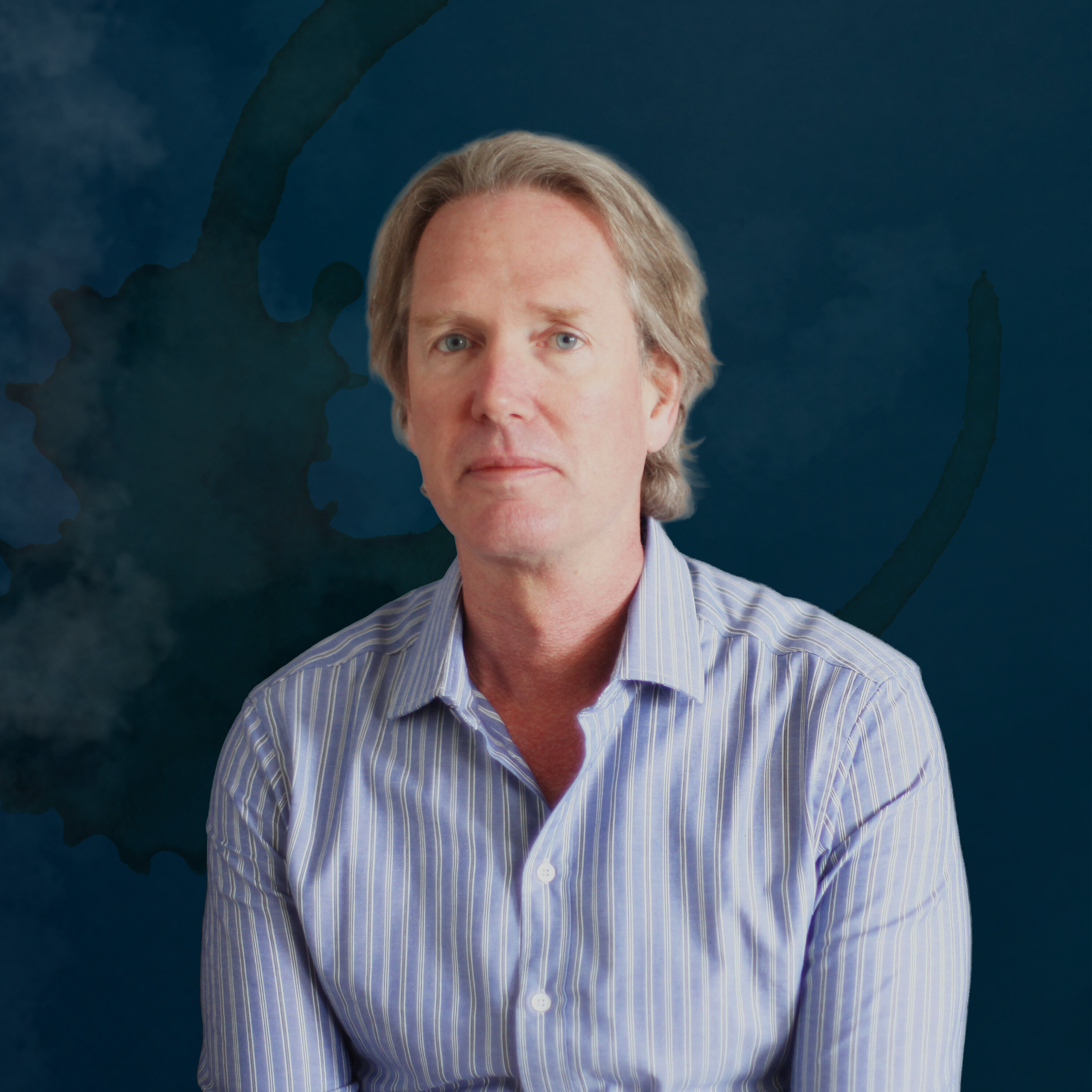
Fail Better with David Duchovny
John Seabrook’s Family Was the Vegetable Version of ‘Succession’
00:46:30
Loading summary
Transcript161 lines
- [00:01]
A
The US Military deployed on the streets of America. Whole communities targeted for removal.
- [00:06]
B
There was tremendous anxiety as they saw.
- [00:10]
A
Neighbors and friends being taken.
- [00:12]
B
And when accountability finally came knocking, the Berne Order to cover it all up. I never believed that America would be doing this. A stain on this country. One that we said we would never repeat. Rachel Maddow presents Burn Order Listen now wherever you get your podcasts. It's morning in New York.
- [00:37]
Hey everybody, I'm Andy Patinkin.
- [00:39]
A
And I'm Kathryn Grody and we have a new podcast.
- [00:42]
B
It's called Don't Listen to Us. Many of you have asked for our advice. Tell me what is wrong with you people. Don't listen to us. Our take it or leave it advice show is out every Wednesday, premiering October 15th. A Lemonada Media original.
- [01:02]
Lemonada.
- [01:07]
A
Hey, just a quick message before we get started. You can now listen to every episode of Fail Better Ad Free with Lemonada Premium on Apple Podcasts. You'll also get ad free access to and exclusive bonus content from shows like Wiser Than Me with Julia Louis Dreyfus, the Sarah Silverman Podcast, and so many more. It's just $5.99 a month and a great way to support the work we do. Go ad free and get bonus content when you hit subscribe on this show in Apple Podcasts. Make life Suck Less with fewer Ads with Lemonade Premium.
- [01:48]
I'm Dave Duchovny. This is Fail Better, a show where failure, not success, shapes who we are. John Seabrook is a staff writer for the New Yorker, where he's worked for over 30 years. He's also the author of five books, including his most recent release, the Spinach King. We go through all the ins and outs of the book throughout our conversation. John is a friend. We actually both went to that Jersey school I talk about sometimes when I have to, and I'm excited to catch up with him and learn about the power the Seabrooks and the Spinach. Hope you enjoy.
- [02:28]
I kind of wanted to start with.
- [02:32]
I saw that you wrote a novel for your senior thesis for Joyce Carol Oates, right? I mean, nominally this is about failure, but you know, this is who knows where it goes. But I wanted to start with what it seems that you kind of saw as a failure in yourself is you don't have the quote fiction gene is what you, I think you said, you have said.
- [02:57]
B
That's right.
- [02:58]
A
And I wonder, firstly, what was the book about? And what was what was that realization like? What led to that realization? And how did you adjust yourself because obviously you had a vision of yourself as. As being a novelist.
- [03:13]
B
Thanks, David. Yeah, it's an interesting question. I think the reason I wanted to be a novelist was mainly because that was the highest form of achievement.
- [03:23]
Maybe it still is. I do think that fiction writing.
- [03:28]
Is more. Requires a different sort of kind of imagination than nonfiction writing. And that's the gene, I guess, that I lacked. It's really just feeling comfortable with making things up, I think.
- [03:45]
And trusting in the truth of what you invent. I could never believe in the truth of what I invented. Whenever I would write like a made up thing in a story, I would sort of like recoil from it a little bit. Like, you know, maybe Plato would have had the same response. I don't know. But, you know, it was. It was like, this isn't what I'm supposed to be doing with writing. But it actually took me a long time to figure that out.
- [04:16]
I had come to Princeton as a rower. I was actually rooted as an athlete because I hadn't had very good grades in high school. And so I had to row for two years. But the culture of rowing and the people, after two years with a lot of time with them, I was really ready to move on. And so Richard, fortunately Ford, was the guy who became kind of my mentor because he was pre sports writer, but he was working on the Sports Writer, which is set in New Jersey.
- [04:52]
But he was a young guy, maybe 32, 33, very dynamic guy, handsome guy. And then Joyce Carol Oates was my advisor senior year. And so that was thrilling too, because she had a major novelist.
- [05:10]
She said very little about my work. The book I wrote was called Missing Pieces, and it was about a twin who had lost.
- [05:21]
The other twin in their family. And.
- [05:26]
It was somehow trying to figure out why that twin died. I can't really remember the plot, but it wasn't very good. But Joyce thought that. I remember she noted one detail, like he wiped his fingers on his jeans or something. And she said, wow, you really are a writer. And said very little else, but gave me an A.
- [05:52]
But that actually kind of inspired me, just that little detail. I realized. I think I was beginning to realize I had kind of a knack for sort of descriptive writing.
- [06:03]
A
I know that you took the McPhee course and maybe the Jeffrey Wolf course. And.
- [06:09]
That'S why I was interested to see that you had considered writing novels at first. Because it seemed to me my memories of you and Buchanan were. You were these kind of McPhee acolytes at that point.
- [06:20]
B
Right.
- [06:21]
A
So that's to me, the story always was, oh, he knew exactly where he was going, and it's not the case.
- [06:28]
B
No, that's not true.
- [06:29]
A
Yeah.
- [06:29]
B
No, I didn't think I was. I didn't really. I didn't leave Princeton thinking of a career in journalism. I still thought I was going to be able to write a novel. But by the time I returned to New York two years later, I just realized that.
- [06:44]
Either I couldn't do it or I didn't want to spend my life in a room doing that. I wanted to be out and about more, and magazines sort of drew me in at that point.
- [06:55]
A
Yeah, right. Do you recall.
- [07:00]
Anything specific from either McPhee or Wolf that you have kept with you this whole time? Because I find that there are certain things that pivotal professors have said, and they weren't necessarily.
- [07:15]
Big pronouncements, but they have helped me, you know, usually, like, simple things that have helped me, you know, in my creative life. And I wonder if Everybody who took McPhee's class seemed to be blown away by him. And I'm just wondering, you know, I didn't take.
- [07:31]
B
I took class with Jeffrey Wolf. I didn't actually take it with. I took the Liquor act, which I actually then went back and taught some years later. But, yeah, I took it with Jeffrey Wolfe, not with McPhee, because I couldn't take it in the fall, and Jeffrey taught it in the spring.
- [07:51]
You know, Jeffrey had just published the Duke of Deception.
- [07:54]
A
Right. Which kind of rhymes with your book in a way, which is fascinating.
- [08:00]
B
Very much so. And it was really the first time I began to think that, like, I could somehow write about my grandfather, this kind of great Duke of Deception, in his own way. And it was always the touchstone, all through the years that I sort of contemplated writing about it. And it's the first book I. I mentioned, when people ask me for a.
- [08:21]
A
Comparable book, what that makes me think of just before we get into the book, which I think is brilliant, by the way. And.
- [08:33]
It'S so surprising because.
- [08:37]
It starts off as a really. I mean, it is a memoir, but it's also a history. For me, it starts off as a history, and then it kind of swerves into a memoir and the Last word. And I don't know of another book that actually does that, that goes from, you know, this kind of macrocosmic view to a microcosmic one. And I really appreciate the honesty and the bravery and mostly just the ability to look clearly at your family and yourself, but then yourself, which is the swerve at the end. But before getting into that.
- [09:14]
While you were talking, it just made me think. When one is engaged in the journalism that you've been engaged with for so long, you're having to talk to people. That's one of the things I love about.
- [09:28]
Fiction writing, is I don't have to talk to anybody. And one of the things that I'm. That I struggle with doing this podcast is I'm like, oh, shit, I gotta. I gotta. I gotta Not. Not. I gotta talk to John. But I, you know, I gotta. I gotta talk to people. And because it takes me out of my own world or head, now I've got to get into yours in a way. And I'm just. And. And I have found as. As I've asked questions, you know, this kind of. I'm looking for the sweet spot, and I guess I'm asking for your history as a journalist. You go in with certain questions that are demanding a certain answer. Sometimes those are not the best questions. You go in doing your research. Sometimes maybe you've done too much research because it precludes certain things. And I wonder how your experience, as you grew as a journalist and as a writer, how it informed the way you spoke to your subjects.
- [10:29]
B
I think I was a lot more sort of programmatic in the beginning. Naturally. You sort of do. I don't know if I ever actually wrote out questions and had the list in front of me when I interviewed somebody, but I did try to commit them to memory and kind of stick to the script.
- [10:48]
A
You did.
- [10:50]
B
And I think over time, a couple things have changed about. Well, one thing that has changed a great deal about the whole experience of interviewing somebody is this thing, because it used to be that you either had to put a tape recorder down in front of you or. Or you had to take notes. And both were kind of opaque mediums through which to actually get the way people really talk and capture a flavor and also to realize that you didn't have to. Well, in the case of taking, I hated tape recorders because I felt like they did kind of ruin the vibe. So I took notes a lot. But when you take notes, you come.
- [11:36]
A
Out of the conversation for a moment. You're starting to have a conversation with yourself.
- [11:42]
B
Yeah. It's like you're on a different plane and the person's watching you taking notes and thinking, oh, what I'm saying is kind of interesting here. I'll keep talking. Or. So it just adds a weird dynamic. And also you're writing down what you think is important, but actually later you discover that what you thought wasn't that important is actually the important thing. The great thing about these things is you can just like people. You put your phone down in front of somebody, it doesn't seem weird. They don't feel like they're being recorded. And you can instantly. The other thing is now with AI, you can instantly transcribe that stuff into text. So you're going from words to text to quotes in your piece in this way that it used to be very laborious yet to transcribe it and all that. So the technology, I think, of interviewing, at least what I do, has changed a lot. But I also think that, yeah, I realize that the spontaneous moments are always the best moments, the unplanned moments.
- [12:52]
Because I'm writing narrative scenes. Often in interviews, it's not just an interview. It's. You have to create a narrative and you're looking for details, and so you're not sure what you're going to get until you get there with that. You hope you're in a scene where something is actually happening.
- [13:10]
A
Well, you're kind of spying on the person as you're interviewing them in a way. If you're looking for. Yeah, if you're looking for. Well, you're the talking fly on the wall, though. So it's this weird kind of dynamic that. That I have found is also to just be comfortable in a silence.
- [13:30]
B
Well, it's hard to be comfortable in a silence. It's very hard. In fact, that's the hardest thing.
- [13:35]
A
You had to learn that.
- [13:36]
B
Totally. And you listen to yourself barging in, in these recordings.
- [13:40]
A
When you.
- [13:41]
B
When you've done it, you think, shut the fuck up. You know, just shut your mouth. Shut your mouth. Because, like. Because it silences. Yeah. That's what I learned from.
- [13:57]
Thin Blue Line.
- [13:59]
A
Errol Morris.
- [14:01]
B
Yeah. Errol Morris talks about how if you just keep quiet and let people talk, they'll really tell you their story because they're uncomfortable, too, and they kind of fill it up with silence. So absolutely, silence is your best friend as an interviewer, I think.
- [14:21]
A
Yeah. I started one of these podcasts by asking Rosie o' Donnell if we could just stare into each other's eyes silently for a minute.
- [14:33]
Because I had this idea that it would be. It's like a trust exercise, but also that silence. And, you know, it's the most riveting minute of radio that anybody could imagine.
- [14:43]
B
But you were the memoir thing into the reported thing and is, like, key to, I think, what made this book really challenging to write. Because sure, because the way I first conceived of it was just as, like, kind of a straight history.
- [14:59]
A
That's what it seems.
- [15:00]
B
Yeah. And it just didn't work because they weren't like the Fords or the Rockefellers, you know, it wasn't like they changed the world in some major way. And you want to know all this stuff about them. It was really more like how I kind of saw it all. And so it was important to sort of begin it and end it with a sort of me writing a memoir, but then to pull. To gradually ease out of that into the kind of narrative history of Seabrook Farms in which I occasionally do make a comment or an aside as me, you know, but often that didn't work, and I had to remove myself. The other thing I found was once I had established my father as a character in, like, my memoir, like, there were scenes with me and my dad, then I could kind of write about him historically, and you would kind of know who this guy is, you know, without me being there. Because that was the thing I wasn't there for the meat of the book. And that was always going to be, like, a challenge.
- [16:26]
A
You spend a third of your life working. Are you spending it well? For so many of us, we're spending that time in jobs that feel more draining than fulfilling. Maybe it's a job you've outgrown or one you never wanted in the first place, but still you stay and you tell yourself, I've already put years into this place. What if I make a change and it's even worse? I mean, isn't everyone kind of miserable at work? Let's be honest. Those aren't reasons to stay. They're excuses for not moving forward. But you don't have to stay stuck. That's where today's sponsor, Strawberry Me, comes in. Strawberry Me matches you with a certified career coach who helps you go from where you are to where you truly want to be. Your coach helps you get clear on your goals, uncover what's holding you back, and build the kind of confidence that doesn't just dream big, but takes action. You'll make a plan, you'll follow through, and most importantly, you'll stop feeling like your future is happening to you and start shaping it on your terms. So if you're ready to get unstuck, visit Strawberry Me Fail. Better to claim a special offer and get started today. That's Strawberry Me Fail. Better Stop settling. Start building the career and life you actually want.
- [17:52]
I know when I'm taking my daily dose of creatine, I'M doing something to help my body and my mind. It's simple, safe and effective. You don't need to be someone who spends hours in the gym to feel the benefits. I truly believe it can help anyone and everyone. Creatine isn't just for building muscle. It has become a daily essential for your strength, focus, recovery, aging and cognitive performance. And now Momentous is making your daily creatine routine even easier with new creatine chews. These bite sized lemon lime chews make consistency effortless. You just chew and go. Each chew delivers exactly one gram of creapure Creatine monohydrate. The gold standard single sourced from Germany and NSF certified for sport, which means it's independently tested for purity, safety and label accuracy. Trusted by Olympic athletes and pro sports teams, Momentous spent years testing until they created the first chewable that actually meets the Momentous standard. Uncompromising science, meticulous sourcing and real transparency. No artificial sweeteners, no fillers, just science backed, clinically proven performance in a portable craveable format. Whether you're training, working or traveling, this is performance without pause. Made to support your body and your brain every single day. This is creatine done right. Right now, Momentous is offering our listeners up to 35% off your first order with promo code FAIL BETTER. Go to livemomentous.com and use promo code FAIL BETTER for up to 35% off YOUR first order. That's livemomentous.com promo code FAIL Better.
- [19:43]
In times like these, rights and dignity need champions like you. Across the world, from Sudan to Gaza to right here in the US People are losing access to essential health care. Attacks on contraception, abortion and gender affirming care are spreading fast. It can feel like fear is winning, but here's the truth. Fear only wins when we stay silent. That's why ippf, the International Planned Parenthood Federation, is calling on all of us to give fearlessly. When you donate, you help local providers deliver life saving services in more than 150 countries. You fuel the fights for policy change and empower organizers to stand up for reproductive freedom. Give fearlessly today and your gift will be matched. Visit ippf.org fail better to make your match donation right now. That's ippf.org failbetter.
- [20:59]
And I'd love for you just to give. Like if you can give a thumbnail sketch of. Yeah, yeah, the Seabrook. Because most people aren't going to know.
- [21:06]
B
Yeah, let me just give you the thumbnail and we'll explain that. So my grandfather C.F. seabrook was born in 1881. He was born on a small vegetable farm in New Jersey. His father had been an immigrant from England as a child, and he hated farming. As a young man, he wanted to leave the farm. My grandfather, Henry Ford, was his idol. He wanted to find an industry to grow in. But he was early 20th century. He was in his early 20s. The farm was mechanizing. His father had pretty progressive ideas for a farmer in New Jersey. Since southern New Jersey.
- [21:53]
He stayed on the farm and he and his father worked together for a while. But he had much bigger ambitions than his father. And so he found these investors to loan him money to create this kind of vegetable factory that was modeled on Henry Ford's car factory. That was like what he was going to do. A little quixotic, because vegetables are very different from cars. But that was his plan, and he borrowed all this money. He cheated his father out of the value of his half of the land, and he launched himself. As was the First World War. Food prices are high. There's lots of labor coming in from southern Italy, and he's very successful. But after the war.
- [22:44]
A
Let me jump in, right. Just for one second. And I do want you to go through the bare bones of the book, because it's all fascinating to me, and it's all. It's all part of American history that most people don't know, but you just gloss over. Like, you just say he cheated his father out of the business. That's like the inciting incident of the book. Right?
- [23:07]
B
And then it's the original sin.
- [23:08]
A
It's the original sin. And, you know, people talk about. Now they talk about the toxic patriarchy or whatever, and they talk about this kind of generational privilege as if it was handed down from generation to generation. But what's very interesting about this story is there's this kind of internecine, if that's the right word, the patriarchy is undercutting itself within the story of. One would think from a distance, like, oh, this is really a story of what they call the American patriarchy or American business Trumpian. Ford like all these things. But it's fascinating when you bring it down to the psychological component of. Wait a minute. So this is not the story of privilege being handed down from generation to generation, but it's each generation kind of trying to swallow the next, betray the.
- [24:03]
B
Next, betray the former generation. Yeah, yeah. There's betrayal at the heart of this story. And it's a driver for. Not only for my grandfather's crazy paranoia that his Sons were going to do the same thing to him, but also in a way, kind of created the conditions in which his sons did do the same thing to him in a way that led to the final denouement.
- [24:34]
Yeah, it's a patriarchy. It's like a poison patriarchy or something.
- [24:38]
A
Yeah, a different kind of poison than people are. Want to talk about it today? You know, it's a different. It's more of an inside view of this phenomenon that people are seeing as kind of a seamless kind of handing down from generation to generation of privilege.
- [24:56]
B
But, you know, Trump, you know, Fred Trump had similarities in my grandfather. And the reason Trump's brother ended up, you know, as an alcoholic was because he abused him like being an airline pilot. And the reason Trump is such a narcissist, I think, is because that's the way to survive a person like that. And I can see parallels with my dad, although he was not Trumpian in his personal style, thank God.
- [25:25]
He had that kind of survival by letting things really get inside you mechanism that I think Trump has to a toxic degree.
- [25:39]
A
Well, I think that's the not so hidden shadow of this book, the shadow family behind this book. I'm wondering if you were.
- [25:50]
When you became aware of that or if that was always something that was in your mind that you were writing. Kind of.
- [25:58]
A shadow companion to kind of the Trump story. But we can talk about Trump and all that shit. But I'd love for you to like, get through the, you know, the. Yeah, the high drama of your actual family from where we left cf.
- [26:12]
B
Yeah. So where we left CF just now was ripping off.
- [26:17]
A
He's ripping off his dad.
- [26:18]
B
He's ripping off his dad. He has a big success, but then every food prices collapse. He has this overbuilt company. His investors don't like the way he is sort of the autocratic leader of it, even though he's not the majority owner of it. And so they pull the plug on him and he's bankrupt in 1924. But he knows Clarence Birdseye. Clarence Birdseye, who a lot of people don't even realize is a real person, invented the flash freezing process. But he didn't do it for vegetables. He didn't figure it out. He asked my grandfather who knew him.
- [26:58]
My grandfather and his sons. He had three sons and one daughter.
- [27:03]
Worked out the process and became the major vegetable freezers for Bird's Eye. And after the war, started their own brand, the Seabrook family, Seabrook Farms. And by the 50s, they were really major.
- [27:23]
They packed a third of the nation's lima beans, six of the nation's frozen vegetables. They had 25,000 acres, 8,000 workers who lived in Seabrook Housing. There was a town of Seabrook. My grandfather owned all the housing as well as the company. So it was like he was the drugstore truck driving man of Seabrook, New Jersey, and they paid him rent.
- [27:53]
But the workers, his relationship with his workers.
- [27:58]
Was. Well, not all of his workers, but during the it all, it was always hard to get people to do farmer. While this company is growing up, fewer and fewer Americans want to do farm work, right? It's like, you know, people can now work in factories, live in cities. So he had to look farther and farther afield. He had relied on black workers in the 30s, but they then decided to call a strike to get fair treatment. And he was so outraged that he crushed the strike with hired vigilantes. And then he fired them all and kind of wrote them out of company history until really this book. So he used Japanese Americans who were interned in internment camps during World War II. Two thousand of them came to Seabrook Farms to work and live with their families. And then after the war, Estonians from displaced persons camps came to Seabrook and became American citizens. And those workers saw my grandfather as this kind of humanitarian man, you know, sort of in their family stories, sort of saved them from something worse. And so part of the challenge for me was kind of honoring those stories, even if they were false.
- [29:25]
A
You also mentioned at some point that there was.
- [29:29]
An article that you wrote that caused some family drama.
- [29:31]
B
Well, part of the whole process of writing this book was going from a limited understanding of the family story, which I wrote in 1995 for the New Yorker. I wrote a story about.
- [29:47]
What I knew to be the rise and fall of Seabrook Farms. And in the course of researching that story for the very first time, I learned not only about the strike that had occurred at Seabrook in 1934, but about the role that both of my uncles had played in the strike. Now, Alfred and Courtney, who were known to me as always sort of gentlemen in every sense, but in a friend, Katrina Vandenhuvel, actually, who was a friend from Princeton, who at that point was at the Nation, where she remained as distinguished editor in chief for many years, she sent me a clipping from the Nation in 1934 that described how my Uncle Belford had thrown a tear gas bomb into a worker's house with children. It caught it on fire. The children had run out. And it also described how my Uncle Courtney had Run over a striker with a truck. This guy Mack Bradwell, whose family I later interviewed and who appears in the book. And so those were the first times I'd ever heard anything about this. And so then I, you know, I mentioned it in the article, and I asked my father about it, and he, you know, I expected him to say that, you know, he wasn't there or, you know, he didn't know much about it. But it turned out that he was present and very involved, although I'm not sure if he really did anything, but he sounded like he was involved. And that actually sort of was the first time, I think, that my father realized that my interest in the family history wasn't necessarily going to end well. And so I think when I said, I'm going to write a story about Seabrook Farms in the New Yorker, I mean, my mother was always against it, but my dad was, you know, he was basically, oh, we're going to get 10 pages in the New Yorker. This is the best. This is good. And didn't realize that. And then when he realized that I wasn't necessarily just promoting the family and actually might undermine the family, he was less reluctant. He was more reluctant to talk to me, and he didn't really talk to me much about the company until.
- [32:19]
And he never talked about what had happened with his father, even though his father basically disowned him. So just to bring it to the end, please. In the 50s, my grandfather started behaving very irrationally. He was also drinking a lot. Alcohol was another one of the sort of pathways the Seabrooks followed to the elite. They learned everything they could about cocktails and wine, and at any dinner, you turn to the Seabrooks, and they had all the knowledge that you need it. At any rate, alcohol kind of got the better of him. There are these investment bankers on the board now because the company has borrowed a lot of money. The investment banker said to my father and his brothers, look, your father is out of control. He's ruining the company. And so convincing themselves that they were saving the company. And maybe they really did think that. I think they did.
- [33:22]
They did take him to a sanatorium in Philadelphia and leave him there, where he was confined for about a month. But he got out. His daughter never supported what the boys did, and so when she broke with them, they realized that they weren't going to be able to win. And then he sold the company, disowned them, gave a lot of the money to his daughter, and after he died in 64, they sued the estate to try to have the will thrown out. And they interviewed all these people around him and gathered all this horrific accounts of his behavior. Sexual predation in the plant being the worst of it. And even though the suit was settled, my father saved all that material. And so even though he never really criticized his father, and the book actually begins with him trying to give a speech about his father and me realizing there's a lot more to say, but he never really was able to say it or.
- [34:31]
Entertain it in his head. But he left me all those boxes when he died.
- [34:38]
Save for JMS Jr. With this just absolutely, unbelievably awful stuff in it.
- [34:45]
A
And this is 2009.
- [34:47]
B
He died in 2009. 2009. And so that's really where this project started. And it started with me trying to figure out why my father left it for me. And it seems like he wanted revenge on his father. It seems like he was kind of using me as, like, an instrument to get back at his father, but in a way that made me closer to my father. You said, like, the book is kind of, like, in the end, it sort of ends up being kind of a love story about my father. That's because I felt like now we're really united for the first time. I'm restoring, you know, your, like, rightful place that your father denied you. At least, you know, your reputation and what you actually did for the company, and showing the kind of abuse that you endured and survived, which a lot of men might not have.
- [35:46]
A
Well, it also seems to.
- [35:51]
Open up in you a.
- [35:56]
Not necessarily forgiveness or. I'm not sure what that word means anymore, but just an understanding of the kind of father he was to you. Yeah.
- [36:06]
That'S a very important part of the book that this is kind of a description of a deeply traumatized dad who then has trouble being a dad in the way that you might have wanted at some point.
- [36:21]
B
That's exactly right, because he was so. He was both traumatized by his father and yet completely shaped by his father. Like, he didn't really know how to be a father because his father really was. They were so sort of mono. Focused on success and on success in this peculiar endeavor of controlling nature in this kind of industrial way. And so the level of control that they had to kind of create and then maintain really was just so deep in the family's DNA that I don't think that's one reason my grandfather really just couldn't let go is because it was all about control. And then for my father, you know, I mean, he didn't have. He didn't have a company to hand to me, but I think he wanted me to still be the person who would have inherited that company if the company were still there, which was basically a person like him. You know, he wanted me to be like, I'm a junior. He wanted me to be a little sort of version of him. And because that's really, he was the greatest person he ever met. I think.
- [37:51]
A
If you're not failing, you're not learning. And I definitely believe in lifelong learning. That's why I love Masterclass. For the people in my life who I know share that commitment, there's no better gift than the gift of knowledge. Whether that's learning a new skill or hobby or just expanding your horizons. You can find it all on Masterclass. Some of their offerings you can apply the principles of improv to your life with Amy Poehler, strengthen your personal and professional relationships with help from renowned psychotherapist Esther Perel, or look and feel better with courses on gut health, brain health, and skin health. All of these are perfect options for anyone looking to start the new year off right. Need proof? 88% of surveyed members feel that Masterclass has made a positive impact on their lives. With Masterclass you can learn from the best to become your best. With plans starting at $10 a month billed annually, you get unlimited access to over 200 classes taught by the world's best business leaders, writers, chefs, and more. With Masterclass you get thousands of bite sized lessons across 13 categories that can fit into even the busiest of schedules. You can learn wherever you are on your phone, laptop or even your tv. Masterclass always has great offers during the holidays, sometimes up to as much as 50% off. Head over to Masterclass do.
- [39:18]
For the current offer that's up to 50% off@masterclass.com failbetter masterclass.com failbetter.
- [39:30]
Are you still stressed out about what to give the special people in your life? Sometimes the simplest answer is also the best one. In this case, that means giving your loved ones a personalized gift from Aura Frames not only do they make the best digital picture frame out there, it couldn't be easier to set up and give. Your memories are ready to be shared and enjoyed right out of the box. Plus, Aura frames have a luxe look and crystal clear displays. With Aura Frames you get unlimited free photos and video. Just download the Aura app and connect to Wi Fi. You can preload photos before it ships, so it's all ready to go. Keeping it simple for parents or grandparents and you can keep adding from anywhere, anytime. You can also personalize your gift and add a message before it arrives. Speaking of, every frame comes packaged in a premium gift box with no price tag. Don't wait. Win the holidays now with Aura Frames for a limited time. Save on the perfect gift by visiting auraframes.com to get $35 off Aura's best selling Carver mat frames. Name number one by Wirecutter by using promo code failbetter at checkout. That's a U R A frames.com promo code FAILBETTER. This deal is exclusive to listeners and frames sell out fast, so order yours now. To get it in time for the holidays, support the show by mentioning us at checkout. Terms and conditions apply.
- [41:04]
Are you traveling over the holidays? Have large family gatherings. With all the hustle and bustle coming up, it's extra important to be proactive about your health. And you can do just that with AG1. AG1 is a daily health drink that combines a multivitamin, prebiotics, probiotics, superfoods and antioxidants into one simple green scoop. It's one of the easiest things you can do to support your body every day. Who says you have to wait till the new year to start a healthy habit? The holiday season is as good a time as ever to fill nutrient gaps, support gut health and digestion, and support your immune health. The holidays have always tended to wear me down and throw me off my game. Overall, I just don't feel my best during or after. I'm sure you know what that feels like. I Wish I had AG1 in years past to give me that much needed boost. It's such a simple all in1 solution. AG1 has their best offer ever. If you head to drinkag1.comfailbetter, you'll get the welcome kit, a morning person hat, a bottle of vitamin D3 plus K2, an AG1 flavor sampler, and you'll get to try their new sleep supplement, AGZ for free, which has been a game changer for my nightly routine. That's drinkag1.com failbetter for $126 and free gifts for new subs.
- [42:44]
The the other shadow family I think is the Kennedys here. You know, I mean it's, it's very and of course their family revolves around alcohol as well, but in selling it illegally at first. That's how the the fortune was made.
- [42:59]
And alcohol plays a very important part of not only your family, but also the turn that the book makes at the end, right? And you turn it into this. Not only a personal family story, your family, your wife and your kids, but also personally thinking about the idea of repairing. Of making reparations as you do, by trying to tell the true history of your family.
- [43:26]
B
The.
- [43:26]
A
The way that the workers were treated, the way that the. The black workers were treated, the Japanese workers were treated, as you said. And I find.
- [43:36]
That'S. That's a heroic turn at the end of. At the. At the end of this book. And I'm wondering if you saw that coming or if that was something that you discovered along the way. Was it always part of the plan that it was going to be, okay, I'm gonna have to deal with my drinking here. I'm gonna have to deal with myself by the end of it?
- [43:57]
B
No, it wasn't part of the plan, no. Although it wouldn't have happened had I not dealt with my drinking. But originally, I mean, I found myself writing a lot about my.
- [44:10]
Father'S wine cellar because, you know, going there with him as a kid and that was another thing he instructed me very carefully in, was how to pick wines and how to open them and how to pour them. And, you know, those were also intimate moments that I share with my dad. So I found myself kind of writing a lot about the wine. And I actually wrote, like. Kind of like I was thinking I'd write a New Yorker piece maybe about my dad's wine cellar. And I kind of. I sort of wrote about the wine and gave it to my editor. And they were like, well, this is great, but I think there's another how to this, John.
- [44:59]
And it was like, if you're going to do this, you're going to have to really get into, because at this point, I was sort of struggling with drinking. Maybe I tried to quit a couple times. Moderation had failed for me. But the other thing that's kind of key there is I started doing therapy and started doing this particular kind of therapy called internal family systems that allowed me. That sort of got me back into the wine cellar and sort of realizing that my obsession or attraction or relationship with alcohol really was very deeply connected to my relationship with my dad. Both, like, how I acquired the taste and then a sort of medicine for the pain of that relationship.
- [45:51]
A
But also, let me ask, because it's something that I remember from the book is either you started drinking when you were 13, or that was something that your father kind of introduced you to wine when you were 13. Is that right? So that became part a foundational part of the relationship, was actually drinking wine.
- [46:07]
B
Yeah. I'm wondering if my. My battery is going to run out here. David.
- [46:12]
Hold on. I'm gonna. I'm gonna move while we speak. Okay.
- [46:16]
A
This is the action part of the podcast.
- [46:18]
B
Is that weird?
- [46:20]
A
No.
- [46:22]
B
Yeah. Sorry. That. What was the question?
- [46:26]
A
That either you started drinking wine when you were 13 or was something that your father consciously brought you into the world of wine drinking as something that father and son could bond over when you were 13?
- [46:37]
B
But a lot of people do this with their kids. I think they.
- [46:42]
Don'T.
- [46:42]
A
They. They.
- [46:43]
B
I think they. They kind of try to instruct their kids in wine and liquor before they're able.
- [46:51]
A
I don't come from a drinking family, so. Right. That was never. That was never something that was. But I do think, you know, I do think it's a way for. Sadly, I think it's a way for fathers to share their passions with their kids. You know, I mean, and certainly in your family, that was one of your father's passions, and it was one of his passions.
- [47:16]
B
But I also always felt there was like, kind of this test involved in it, like to see how I would handle it.
- [47:22]
A
Yeah.
- [47:23]
B
And. And whether I could hold my liquor.
- [47:27]
That was a huge part of manhood. Right. Like, for my dad, I think. And maybe for a lot of dads of certain era is like holding your liquor, you know, learning how to drink.
- [47:37]
A
Yeah.
- [47:38]
B
My kids came to some of these therapy sessions, you know, when I was struggling and when I stopped drinking and to try to get them to understand about alcohol and our family and where it came from for me. But to have, like, Lisa Spiegel, who was my therapist, kind of there as. As a way of sort of like mitigating or processing, you know, because those conversations, you. It's hard. They can be hard, Right?
- [48:06]
A
Yeah. Well, so it's hard to not panic, you know, it's hard not to totally regress into some. Into some. So it's good to have a. Certainly good to have a moderator there.
- [48:21]
And one. I don't know what your feelings are. If you went through AA or the kind of.
- [48:30]
It's very. I have found this interesting because when you go through the kind of.
- [48:36]
Like, say, the education that you and I got at the time when we got it.
- [48:43]
There is something super sophisticated about it in a way that AA punctures, you know, and one of the things that I struggled with when I started, like, looking at 12 step stuff was the one size fits all. How can that be? I'm special. I'm. I'm too complicated for this simple thing. And I'm wondering if you. Because your mind was so cultivated. I know exactly how it was cultivated. And I wonder if you struggled in that same way too, at first, at least with the simplicity of the program or the simplicity of the accountability of the. Of. Of the philosophy.
- [49:21]
B
Yeah, it was really just so mind blowing to go into those rooms and realize that we're talking about alcohol. I mean, I came from a world where people sat around the dinner table and praised the quality of the nose of the wine and that it rained that year in the Wire Valley. And that's what gave it its. It was like that people spent the whole dinner talking about. And then to get there where people are talking about how alcohol ruined their lives was really. Actually, I loved it right away. I just, I love.
- [49:58]
The no bullshit and just that sort of dissonance of that and found it freeing, you know.
- [50:08]
For my own journey to be able to get up and say, yeah, I'm an alcoholic and to tell these stories. The Christianity thing always kind of like I never could quite get my head around the higher power. I mean, I tried to find my higher power here in nature. I think it's kind of where.
- [50:28]
A
I guess for me.
- [50:33]
It was a blow to the ego to think, oh, there's a higher power aside from my ego. And then I would just. I could never conceive of it in a religious term either, but for me it was. It's just not me. I'm not my higher power. You know, it's. It could be just the will of the room, could be just the will of the world. You know, I've got to go. I've got to go along with it. I wanted to just quote before we, we wrap up and I want to thank you for your time. I'm sure you have. Have nature to go back to, but what I. What I really. What I really want to impress upon people who are listening to this is in terms of succession and in terms of.
- [51:15]
American meritocracy or, or generational patriarchy handing down stuff. You quote a psychologist named Kenneth K. Who says the dynamics of American family businesses and the reasons why they fail. K identified several causes including toxic relations between the founder's children and the hired workers, the founder's habit of both over trusting and under trusting his offspring, confusion of love and money, the founder's inability to let go of power and the self doubt that cripples the children when they finally do assume command. Like an addictive drug, the family business creates a high with delusions of grandeur and power. It Creates a market for services that exploit those delusions and thereby unfortunately feeds the addiction.
- [52:03]
That's drama. I'd watch that. That rhymes with a lot of stuff that's, you know, we're living through a family business right now.
- [52:12]
B
That's right.
- [52:13]
A
We're living through a dysfunctional, toxic family business right now as a world, forget as a country. And yeah, this story is instructive. It's beautifully written, it's surprising, it's brave, it's personal and it's historical. And.
- [52:36]
As soon as I read it, I was like, I got to get in touch with John. It's, it's been 40, 40 years. So I just want to, I just want to let people know how interesting and provocative and.
- [52:53]
Apropos this, this book is for the present moment. And I, I do think it's a, it's some kind of a filmed entertainment at some point, but that's up to you.
- [53:03]
B
Oh, it's up to Hollywood, I think, but Hollywood. But I appreciate it, David. No, that's very kind of you. Thank you for that.
- [53:10]
A
All right, John. It's a pleasure.
- [53:25]
I really was interested in asking John how we, how he used to, as I asked him in the, in the podcast, how he used the education that we both got in the English department at Princeton in the early 80s.
- [53:43]
How he's used it to navigate.
- [53:46]
A role in pop culture. Because that's kind of what he writes about, mostly investigating how the moneyed classes in America used or use a high culture or quote unquote, high art to distinguish themselves from the non moneyed classes in this country. And I think in the last 10, 15 years, I've tried to reach out, you know, as an author of.
- [54:16]
Literature, to try to reach back to what I learned, to try to restart the conversation with the culture that I was seeped in through my education. So it was a real kind of looking in the mirror aspect with John for me to see another fellow traveler, in a way. A fellow traveler through.
- [54:43]
The wilds of no brow, of highbrow, low brow. No brow.
- [54:48]
And do I have any answers? No. But it's nice to meet a fellow traveler, I guess. Or to re meet a fellow traveler.
- [55:02]
Thanks so much for listening to Fail Better. If you haven't subscribed to Lemonada Premium yet, now's the perfect time because guess what? You can listen completely ad free. Plus you'll unlock exclusive bonus content like the full version of my post interview thoughts that you, you won't hear anywhere else. That's more of my recaps of interviews with guests like Charlie Sheen, Gene Simmons and Judd Apatow. Just tap that subscribe button on Apple Podcasts or head to lemonade premium.com to subscribe on any other app. That's lemonade premium.com don't miss out. Fail Better is production of Lemonada Media in coordination with King Baby. It is produced by Keegan Zema, Aria Bracci and Donnie Matias. Our engineer is Brian Castillo. Our SVP of Weekly is Steve Nelson. Special thanks to Carl Ackerman, Tom Kupinski and Brad Davidson. The show is executive produced by Stephanie Whittles, Wax, Jessica Cordova Kramer and me, David Duchovny. The music is also by me and my band, the lovely Colin Lee, Pat McCusker, Mitch Stewart, Davis Rowan and Sebastian Modak. You can you can find us online at Lemonada Media and you can find me at David Duchovny. Follow Fail Better wherever you get your podcasts or listen. Ad free on Amazon Music with your prime membership.
- [56:27]
C
Want to listen to your favorite Lemonada shows without the ads? Subscribe to Lemonada Premium on Apple Podcasts, you'll get ad free episodes and exclusive bonus content from shows like Wiser Than Me with Julia Louis Dreyfus, Fail Better with David Duchovny, the Sarah Silverman Podcast, and so many more. It's a great way to support the work we do and treat yourself to a smoother, uninterrupted listening experience. Just head to any Lemonada show, feed on Apple Podcasts and hit subscribe Make Life Suck Less with Fewer Ads with Lemonada Premium are you looking for ways to make your everyday life happier, healthier, more productive, and more creative? I'm Gretchen Rubin, the number one bestselling author of the Happiness Project, bringing you fresh insights and practical solutions in the Happier with Gretchen Rubin podcast. My co host and happiness guinea pig is my sister, Elizabeth Craft. That's me, Elizabeth Craft, a TV writer and producer in Hollywood. Join us as we explore ideas and hacks about cultivating happiness and good habits. Check out Happier with Gretchen Rubin from Lemonada Media.