← Fail Better with David Duchovny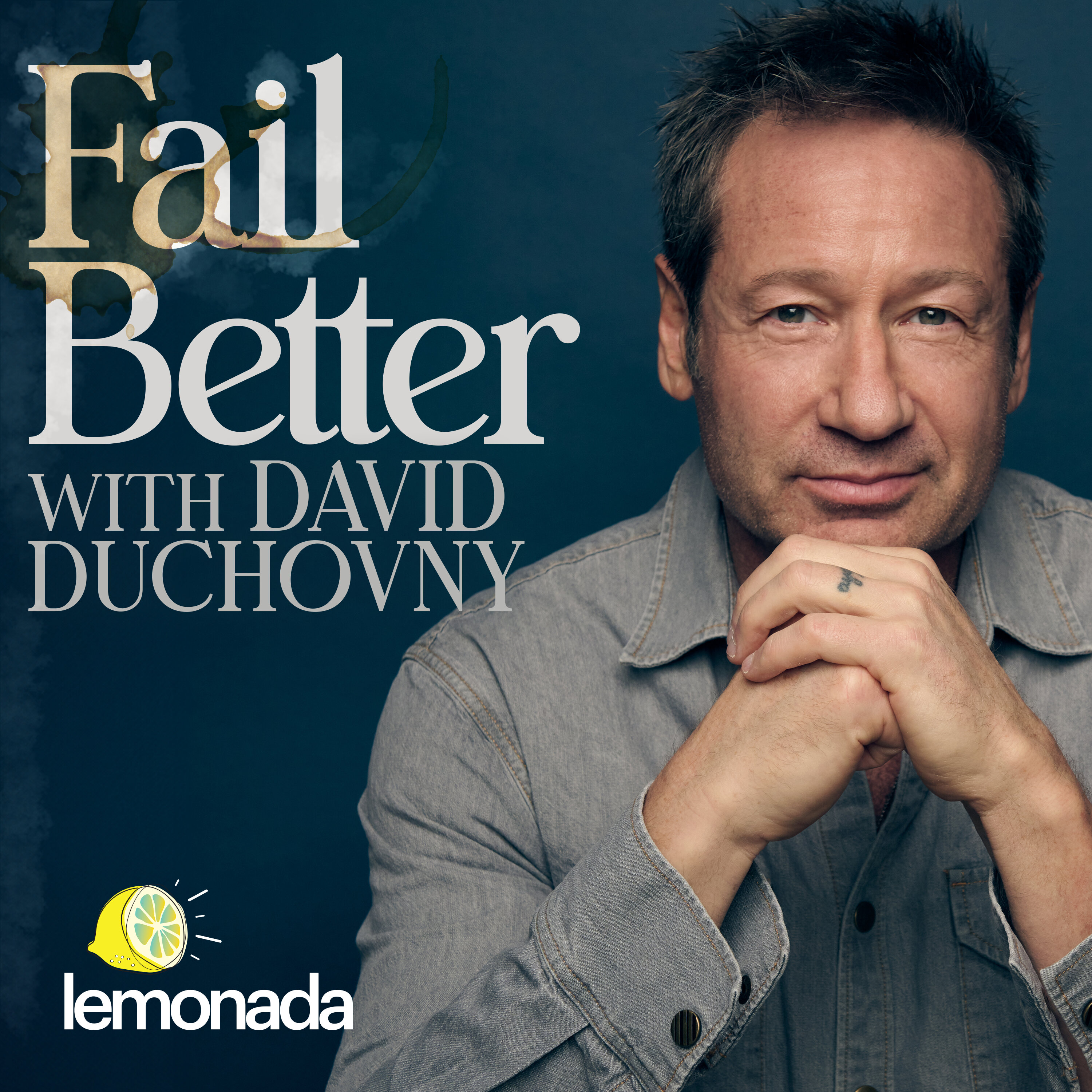
Loading summary
Transcript347 lines
- [00:01]
Reshma Sajani
Hi, I'm Reshma Sajani, founder of Girls who Code. Look, I'd consider myself a pretty successful adult woman. I've written books, founded two successful nonprofits, and I'm raising two incredible kids. But here's the thing. I still wake up wondering, is this it? And if the best years are yet to come, when's that going to start? Join me on My so Called Midlife, my new podcast with Lemonada Media, where we're building a playbook for navigating midlife one episode at a time. Each week, I'll chat with extraordinary guests who've transformed their midlife crisis into opportunities for growth and newfound purpose. At some point, we all ask ourselves, is there more to life? I'm here to discover how to thrive in my second act, right alongside you. My so Called Midlife is out now, wherever you get your podcasts.
- [01:01]
Ellie Kemper
Hi, I'm Ellie Kemper from the Office and Unbreakable Kimmy Schmidt. And this is my fantastically funny friend, Scott Eckert.
- [01:07]
Scott Eckert
Hi, everyone.
- [01:08]
Ellie Kemper
We host a podcast called Born to Love. It's a show where we talk to the people we love about the things they love. Each week we bring on a celebrity guest to discuss their secret passion. Did you know that my friend Jenna Fisher loves Keanu Reeves movies?
- [01:23]
Scott Eckert
She does? She does.
- [01:24]
Ellie Kemper
And how about Al Roker, Samantha Bee, Tony Hawk, Jane Lynch?
- [01:28]
Scott Eckert
What do they love?
- [01:29]
Ellie Kemper
Ellie? You have to listen to the show to find out. So check out Born to Love wherever you get your podcast from Lemonada Media.
- [01:39]
Scott Eckert
Lemonada.
- [01:43]
David
Hey, everyone. David here. Taking a break this week, and when I say we, I mean I. So instead I'm going to share an episode from the award winning the viral sensation, the revolutionary apple podcast of the year, Wiser Than Me, hosted by Julia Louis Dreyfus. If you haven't heard the show, it's absolutely phenomenal. The concept is simple. Julia wanted to hear from older women. So she sits down with all these incredible women who share the wisdom they've gained throughout their lives and careers. And check this out. They're coming back tomorrow with a new season, their third season. More fabulous guests, even more wisdom. Here is one of my favorites from season two, Julia's conversation with tennis legend Billie Jean King. As a tennis fan and as a fan of Billy's, I just love this interview and I think you'll really enjoy it too. If you do, go check out all the other episodes from the last two seasons. Just search Wiser Than Me wherever you get your podcasts and follow the show. I'll be back next week.
- [02:43]
Ellie Kemper
I don't exactly know how I became a sports fan because I was not an athlete when I was young. I was born in New York, and early on I learned to ride a tricycle. And I was good at that trike. I rode it in the hallway of our building. How much fun is an apartment hallway on a tricycle? It's like, you know, just imagine it's being on a racetrack. Up and down and up and down. Although, as I say this, I am now remembering the Shining. And of course, not so fun in that movie, but in reality is in fact a lot of fun. But I lived in the city, and so I never learned to ride a bike until I was like, I don't know, 8. And everybody was riding bikes by then, you know, by eight. But I kind of missed that window. And I was so embarrassed because I had to have training wheels. I was always unsure of myself on a bike, and I still am. Really. I don't really love riding bikes. They scare me. And bikes were the gateway to sports in elementary school. And so I was just kind of fucked. And I just didn't play sports. I went to an all girls school, and the sports that were available to us were field hockey, basketball, tennis and gymnastics. I did not excel at any of these things at a girls school. You know, the sports girls were popular. And I think that's one of the great things about an all girls school. Women are the very top of the sports world. You cheer for girls. And all my best friends were athletic, so I wanted in on that. So I tried gymnastics. I even competed in an event. I think this was in fifth or sixth grade or something. It was a big meet. Is that what it would be, a gymnastics meet? I don't know. Anyway, I had to do this routine on the balance beam that I practiced and practiced. So I got up on the beam, big smile and everything, probably pretending I'm Olga Corbett or whatever, and there's a crowd there. And at that moment, I swear to Lord Jesus, the whole routine went out of my head completely. Just, I mean, just telling you this right now, it's making my palms sweat. I could remember nothing, so I just started to make things up. You know, in the movie version of this, I improvise this great routine and, you know, everybody applauds, but in real life, I got the lowest score ever on a beam. It was like less than one out of ten, by the way. That's my big sports memory. Oh, wait a minute, here's another one. Okay, so we had two gym teachers, Mrs. Nevitt, who everybody loved, and Mrs. Moody, who was English. And this is probably the best moment of my high school sports career. We were in PE and it was tennis day. And all of a sudden I hear Mrs. Moody, the English one, she goes, cover your eyes, girls. Cover your eyes. And a bunch of boys were streaking. Anybody remember streaking? Running around naked? It was the thing back then. It's a federal offense now, of course, but anyway, a bunch of boys were streaking naked across the field by the tennis courts. I don't know who these boys were. This was an all girls school, so I suppose it was fertile ground for teenage male streakers. So, like, anyway, four boys go running by. And I did just as Mrs. Moody instructed. I covered my eyes, but I remember I was laughing so hard that, you know, I mean, it's not a great come from behind victory. It's not a championship game. This is the kind of sports memory that I have. And the funny thing is that I consider myself athletic now. I mean, sports and exercise are a huge part of my life. And our family life is totally sporty. My kids are great athletes. My husband is a sports nut. He's always riding a bike or a surfboard or kite, foiling or snowboarding or something. And I work out literally every day, and I love it. And growing up, my dad used to bet on a lot of sports. He had a bookie and everything, and he'd throw fits about the Mets and the New York Giants and the Knicks. And I paid no attention at all, except when he'd get an envelope full of cash, which was great. That was always very exciting. But then my kids started playing high level sports and I started to see what it meant to them and started to get to know the other kids and their personalities and the stories that came along with the game. And I became a pretty knowledgeable basketball fan and I fell in love with college basketball and abracadabra. I'm a sports fan. You know, in our current time, when everything is fragile and unsteady and so complicated and where so many things seem like lose, lose proposition. Here are sports, which, despite the dubious character of some of the participants and the corruption of the leagues and, you know, sports always come down to a definable contest. There's a great line in that old Walter Hill B movie cult film, the Driver, Bruce Stern, who's always so good, I love Bruce Stern. He plays this rough cop and at one point he says, you know what I do first thing every morning? Read the sports page. You know why? Best part of the newspaper Winners, losers, how it happened. Final score. I love that. The clarity of that. God, is that appealing. No, bullshit. You can't editorialize a final score. Winners, losers, heroes, heartbreak, elation. What's not to love? That's why I'm so glad that today we get to talk to one of the greatest of all champions, Billie Jean King. Hi, I'm Julia Louis Dreyfus, and this is Wiser Than Me, the podcast where I get schooled by women who are wiser than me. Okay, let me set the stage here. In 1966, when today's guest first reached number one in the world in tennis, women couldn't serve on juries in any of the 50 states. They couldn't get an undergraduate degree from almost any Ivy League college. They couldn't run the Boston Marathon. They couldn't legally refuse sex with their husbands. Of course, there were some things they could do. They could get fired for being pregnant. They could be denied a credit card without a male co signer. And they could play any sport they wanted, just none professionally except golf. And that's in 1966, not 1866. Then along came Billie Jean King. 39 Grand Slams, 20 Wimbledon titles. A lifetime of battling for and winning women's right to equal pay, not just in tennis, but way, way beyond. She founded and led the women's Tennis associ and is the first female athlete ever to receive the Presidential Medal of Freedom. Not to mention, over 90 million people worldwide watched the match we now call the battle of the sexes. I mean, seriously, folks, let that sink in. Almost a quarter of Americans tuned in to watch her beat Bobby Riggs in 1973 in three straight sets. Might I add, she's a sports icon, she's an LGBTQ icon, a feminist icon, and let's face it, she's just basically iconic. It's no exaggeration to say that Billie Jean King has changed the world. She is arguably the most important athlete of our time. I could not be more thrilled to talk to a woman who is so much wiser than me. The one and only Billie Jean King. Hi.
- [10:42]
Scott Eckert
Hi. After that, I'm going to stop.
- [10:45]
Ellie Kemper
Don't stop. You gotta keep going. You gotta keep going.
- [10:48]
Scott Eckert
Oh, no, I'm not done yet. Are you kidding? Everybody says, well, now that you're so old, you know, what are you gonna do? And I said, I'm not done yet. You know, you haven't even started. No, I still have. I still have a lot of energy, you know, so I'm.
- [11:00]
Ellie Kemper
Well, so speaking of age, are you comfortable? If we say your real age.
- [11:03]
Scott Eckert
Oh, yeah, I love it. I never. I'm 80. I just turned 80 last November. November 22nd.
- [11:10]
Ellie Kemper
But how old do you feel?
- [11:11]
Scott Eckert
I don't know what 80's supposed to feel like. I always ask myself, like, when I was 60, when I was 50, when I was 40, when I was 30, when I was 20, I'm like, what am I supposed to feel? I don't know. I am what I am. The number is there, but it's really, how is my health, I think.
- [11:26]
Ellie Kemper
Right, yeah, your health.
- [11:27]
Scott Eckert
Your health and how you feel and how do you feel? How do I feel physically, emotionally, mentally? You know, I ask myself those questions. I mean, I still do therapy every week. Psychotherapy, psychotherapy.
- [11:40]
Ellie Kemper
What about physical therapy?
- [11:42]
Scott Eckert
I don't need physical therapy. Well, Ilana, my wife, got me out during COVID to hit tennis balls again. I hadn't for 20 years. I had a lot of knee operations and shoulder everything. And I said, okay, let's try, because I just love it so much. I mean, I love to hit the ball. So we do two or three times a week now. She hits. You know, Lana was number one in the world in doubles, and she still plays a lot. So she's. She's younger. She's in her late 60s, so she hits the ball right. To me, it's just amazing. I meet people who are playing, and we have a 100 and under event category for people that are 100 and under, and it is hilarious. You know what shot they use all the time is a drop shot because you can't move, and it's hilarious.
- [12:31]
Ellie Kemper
But wait a minute, wait a minute. Who's the oldest?
- [12:33]
Scott Eckert
I don't know who the oldest one is. I don't know. I've got to find out. No, I don't know.
- [12:37]
Ellie Kemper
You got to find out.
- [12:38]
Scott Eckert
I will find out.
- [12:39]
Ellie Kemper
Somebody's got to be in their 90s, right?
- [12:41]
Scott Eckert
Oh, for sure. Oh, no, no. They're just like, probably 98, 99 in there. Yeah, for sure.
- [12:47]
Ellie Kemper
Hey, so what's your relationship with your body like now, Billie Jean? I mean, has it changed as you've gotten older? Is your brain moving faster than your body? How does that work?
- [12:56]
Scott Eckert
Oh, the brain definitely goes a little faster than the body now, but my brain's slower, too. I think I've always been in tune with my body. My brother, just so everybody knows, a lot of people do know this, A lot of people do not. I have a younger brother. He's five years, almost five years younger. Four years, 11 months. Randy Moffatt. Moffatt's our birth name, and he plays professional baseball for 12 years, most of those with the San Francisco Giants. But the third word we learned was ball. You know, mommy, ball, daddy, ball. We just. We are infatuated. They can roll it on the ground, they can throw it in the air. We didn't care. And then if you. As you get older, though, you start to realize it's science and art together and you want to be playing in front of people. You're a performer. It's so much fun. It's very expressive. It's like, I love dance, I love ballet. I love all that I like to.
- [13:47]
Ellie Kemper
My son Charlie was a D1 athlete. He played basketball. He had a teacher when he was in sixth grade, he had real trouble sitting still. By the way, his first word was also ball.
- [13:59]
Scott Eckert
Uh, oh.
- [14:00]
Ellie Kemper
And Right. And so he had this teacher who was incredibly intuitive, and she let him bounce a ball during class.
- [14:07]
Scott Eckert
Smart.
- [14:08]
Ellie Kemper
Smart, right?
- [14:09]
Scott Eckert
Very.
- [14:09]
Ellie Kemper
So he was able to concentrate as a result. Tracy. Shout out to Tracy.
- [14:14]
Scott Eckert
That was inspiring.
- [14:15]
Ellie Kemper
That let him do that. Yeah. Brilliant.
- [14:18]
Scott Eckert
That's very interesting because in school I got demoted with my grades when I did too well in sports because I'm a girl.
- [14:25]
Ellie Kemper
Demoted with grades.
- [14:26]
Scott Eckert
Yeah. I got unsatisfactory instead of satisfactory in fourth grade because Ms. Pawlachek said that I had done too well in sports and, you know, kind of like braggy o show, I guess, to her. I didn't say anything. I just did it. And she said, I'm gonna give you an unsatisfactory because of that. Now, that would never. To a boy. He would be honored and.
- [14:48]
Ellie Kemper
Yeah, he would be lauded for it.
- [14:50]
Scott Eckert
Correct. That's the difference growing up. Always getting negative feedback for doing what I wanted to do.
- [14:56]
Ellie Kemper
But wait, how did your parents react to that when you got the unsatisfactory?
- [15:00]
Scott Eckert
They just let it go. They said, just ignore it. Don't worry, just keep going. My mother didn't want me to play football and other sports because she wanted me to be a lady at all times. And I said, mommy, what does that mean? And she said, oh, you know. And I said, no, Mommy, I don't know what that means. And so I just remember that. So when I was playing tennis, she was happier. Happier. But my dad understood totally. He was. Basketball's our first love, so he was a basketball player. And he got asked back in the 40s to join the NBA, and he didn't because there wasn't any money in it at the time. And he's very risk adverse that generation with the depression, World War II. But no, he came home and became a firefighter and. Which. I love that he was a firefighter. Oh, God.
- [15:49]
Ellie Kemper
Yeah, I love that, too.
- [15:50]
Scott Eckert
I loved it. But it was very difficult when he'd go to work because I never knew if he's going to come back.
- [15:57]
Ellie Kemper
So he was a proper hero, right?
- [15:59]
Scott Eckert
Well, to me he was, because he believed in me as much as my brother, as well.
- [16:02]
Ellie Kemper
Yeah.
- [16:03]
Scott Eckert
I mean, he told me to go for it. And everybody else around me is saying, huh, they didn't really care. But I really wanted to change the world through sports, through my sport.
- [16:14]
Ellie Kemper
I know you did.
- [16:15]
Scott Eckert
And that's really what, you know, it's. I wanted us to be a pro sport. We were an amateur sport. It was so terrible. I used to just go crazy.
- [16:24]
Ellie Kemper
Hey, listen, let me ask you something, just because I'm interested about this, because you're obviously so fit, and here you are, 80 years old. You are.
- [16:32]
Scott Eckert
You're right, I am fit for an 80 year old. But I don't. You know, I don't.
- [16:35]
Ellie Kemper
Come on, give me a break.
- [16:36]
Scott Eckert
Oh, I'm also lifting again. I'm also doing a lot of weight work.
- [16:39]
Ellie Kemper
This is. Okay, so that's my question. What's your exercise regime? Besides playing tennis two to three times a week with Ilana, what else are you doing? Lifting weights?
- [16:47]
Scott Eckert
I've started lifting weights again. I made a promise this year. Instead of doing it sporadically, I'd be pretty consistent, which I have been. But we're still working full time and work itself and traveling like we do, I think, also keeps me fit, also keeps my mind active, solving challenges, not problems. And I am so happy I was in sports because it's made me strong. It's just helped me be strong in every way. There's something. Well, it must be like you and your acting. I always wonder what actors go through.
- [17:19]
Ellie Kemper
In terms of what.
- [17:20]
Scott Eckert
Like the pressure that's on you. Like they say, let's go, you know, and you have to start the scene. And of course, if it's not live, which I'm sure you're thrilled with Seinfeld and others that you didn't work live, because I don't know how you guys get through a scene without cracking up at each other.
- [17:37]
Ellie Kemper
Well, sometimes we did. But having said that, there are endorphins that are, you know, the butterflies, whatever you want to call them, that are racing through. It's the same racing through your body when you're working.
- [17:50]
Scott Eckert
Yes.
- [17:50]
Ellie Kemper
I mean, even now, talking to you, I can feel that you know, I want to have a good conversation with you. I can feel that driver, you know, that's in place, and it can paralyze you, but it can also be great fuel, and I usually use it for fuel.
- [18:05]
Scott Eckert
To tell you the truth, I'm a fuel person. I like pressure. I have a saying. Pressure's a privilege.
- [18:10]
Ellie Kemper
I know. I love that saying. It is a privilege.
- [18:13]
Scott Eckert
It is a privilege to have our opportunities for you to do what you have done and continue to do. And what I do and what I did.
- [18:19]
Ellie Kemper
Yeah.
- [18:19]
Scott Eckert
You know what I don't like about getting older is people give up on you.
- [18:23]
Ellie Kemper
Oh, come on. Who's given up on you?
- [18:25]
Scott Eckert
No, there's ageism involved. There really is.
- [18:27]
Ellie Kemper
Talk about that. Talk about that.
- [18:28]
Scott Eckert
All right. Let's take commercials on television. Let's just take commercials. And not just television. Obviously. It's everything now. Yeah. I'd like people to, when they watch commercials, to really pay attention to who's in them. Let's just talk about the ones athletes are in. It's usually male athletes. They're older, but they are the ones who get the ads. If you'd see a woman, she's usually a lot younger, probably around 30. They don't give us the same opportunities. Right. Do you know how many times they'll have a woman, woman athlete, or any woman, and they'll say, she's such a great role model for women. Now go to a male. If a male's a role model, they don't say, oh, he's a great role model for men.
- [19:10]
Ellie Kemper
They don't say, he's a great role model model.
- [19:13]
Scott Eckert
I mean, hello. It's like, everyone can be a role model for somebody if that's what the person likes. Like, for me, Althea Gibson was my first shero, and she was the first to win. And I didn't think of her that way. I thought of her as the number one player. And if you can see it, you can be it.
- [19:31]
Julia Louis-Dreyfus
Right.
- [19:32]
Scott Eckert
So I saw her live when I was 13, and I realized how good I'd have to be, and I went, oh, my gosh. I'm gonna have to be that. Oh, I'm gonna have to practice so hard. Oh, my God.
- [19:43]
Ellie Kemper
But you knew you were gonna do it.
- [19:45]
Scott Eckert
Yeah. Well, I certainly hope to. Of course, that was my goal since the time I was 11, to be number one in the world, there was no question. But still, to see Althea made a huge difference in my life in that she was number one. And if you can see it, you can be it. You know, how good you have to be and what made her great.
- [20:04]
Ellie Kemper
That's right. I'm just so struck by the realization that you had when you were 12 that mean you saw that so many people were being excluded from tennis and you decided to work on changing that.
- [20:15]
Scott Eckert
No, it wasn't tennis. It was life. It was like watching Little Rock and like the Little Rock Nine, or watching that black kids couldn't go to school with the white kids. And I asked my dad, why is that? That's ridiculous. He says, well, it's the south, and because in Southern California, that never happened to me. I mean, it didn't matter. And that really bothered me.
- [20:37]
Ellie Kemper
Yeah, of course. And you also noticed that it was like only white people playing tennis, right, when you went to that country?
- [20:43]
Scott Eckert
Yeah, absolutely. Everybody wore white clothes, everybody played with white balls, and everybody played was white. I said, that's not right. This belongs to everyone. It's such a great sport. All I didn't have the know how at 12 years old that there were black people playing, but I had never seen them, but there were. They formed their own association, the ATA, in 1916. So they had their tournaments, but they weren't allowed to play in the white tournaments. And just like if you go to the US Open today, which a lot of people do, it's huge. It's one of the majors.
- [21:16]
Ellie Kemper
Yeah.
- [21:16]
Scott Eckert
And while black people weren't allowed to play until 1950, and that's when Althea was a player of the 50s, and that's when she won everything and she won the U.S. nationals. Now that would be the U.S. open, and she was the first to win. Without her, there wouldn't have been an Arthur Ashe or Zena Garrison or Serena or Venus or all these great players. And so I think that was a good example.
- [21:43]
Ellie Kemper
It's time for a quick break, but don't worry, there's more with Billie Jean King in just a bit.
- [21:58]
David
Today's podcast is sponsored by Strawberry Me. We talk a lot about the value of failure on this show, but working past setbacks can be a difficult process and one where you might want a little help. When most people think of coaching, they probably think it's just for CEOs or high powered executives. And the coaches are guys with muscles bulging out of their blazers, delivering cliches about achievement. At Strawberry Me, we believe everyone deserves access to personal coaching. With coaches who are trained to help you navigate life's challenges, they can help you set and achieve your goals, whether that's improving your relationships, boosting confidence, or choosing the next move in your career. Whatever you need to help unlock your full potential. A StrawBerry membership offers one on one video sessions with your coach and secure messaging in between to keep you on track. This is real coaching with real people and real results. Accessible to everyone who wants to find out how far they can go. Visit Strawberry Me Failbetter and take a short quiz to get matched with the perfect coach. Plus get 20% off your first month membership. That's Strawberry Me Failbetter.
- [23:15]
Billie Jean King
Struggling to make healthier choices or stick with your goals? You're not alone. We all know it's tough to create lasting changes in our lives, especially when it comes to eating and exercise habits. That's where NOOM comes in. NOOM isn't about quick fixes or strict diets. It's a flexible psychology based program that helps you build healthy habits that fit into your life. With noom, you'll learn how your mind works and why you make the choices you do. You'll have personalized lessons, a support system and tools that track your progress, all designed to guide you on your journey. NOOM uses psychology. That's why they say losing weight starts with your brain, but it also takes into account your unique biological factors which also affect weight loss success. What makes NOOM stand out is that it's not just about the number on the scale. NOOM helps you change your mindset so these healthier habits stick long term. Ready to feel more in control of your health? Take the first step today. Stay focused on what's important to you with noom's psychology and biology based approach. Sign up for your trial today@noom.com that's n o o m dot com.
- [24:22]
Ellie Kemper
Hi, I'm Emily Deschanel. And I'm Carla Gallo. And we're excited to tell you about.
- [24:28]
Scott Eckert
Boneheads, our new Bones Rewatch podcast.
- [24:33]
Ellie Kemper
I played Dr. Temperance Brennan. And I played Daisy Wick. And we are gonna watch from the very beginning. We're gonna watch the episodes. We're gonna reminisce, we're going to laugh, we're going to cry, we're going to tell behind the scenes stories.
- [24:45]
Scott Eckert
We're going to go on tangents.
- [24:47]
Ellie Kemper
A lot of tangents.
- [24:48]
Scott Eckert
So whether you're a seasoned Bones fanatic.
- [24:50]
Ellie Kemper
Or a newcomer looking to dip your.
- [24:52]
Scott Eckert
Toes into the wild world of forensic.
- [24:55]
Reshma Sajani
Anthropology, this show is for you.
- [24:57]
Ellie Kemper
Boneheads from Lemonada Media is out now wherever you get your podcasts. But what I'm so struck by is that you were so sensitive to sort of the disenfranchised at a very young Age. And I'm wondering where you think, how did that happen? Where did that sort of intuition that you had, where did that come from? Was that the culture in your family or what?
- [25:24]
Scott Eckert
I think my parents were good to each other, kind to each other, which I think was huge. Just watching how they related. Not to say it was perfect or anything. God knows that, but they get into it. But not. They're very good to each other and very kind and thought about others. But also, you know, leaders don't choose followers. Followers choose leaders. And a lot of times in sports, you need somebody to choose a team, for instance. And the kids always chose me to be the leader or the captain. And I was on a bicycle committee, and I was only supposed to be the secretary, but they ended up always saying, you lead, you do this. I go, no, no, no, you do, you do.
- [26:05]
Ellie Kemper
Wait a minute, wait a minute, wait a minute. Bicycle committee.
- [26:08]
Scott Eckert
Yeah, we had a clean in elementary school, which. I have no idea what it means now. No, I think we had to keep our bikes in a certain area. We had to take care of them. We had to put them in these racks. You know, you gotta just do the right thing and all that at the school, keep them in the right place.
- [26:23]
Ellie Kemper
I love that.
- [26:24]
Scott Eckert
So I was on that committee, and then, you know, But I was always. I was always pushed into leadership positions. And finally in Tennessee, when we're older, you know, the players said, no, you're the one. You're the one. I go, no, no, no. Why not? You? Why not? You know, typical girls, you know, when they're trying to go out to dinner, where do you want to go to eat? Oh, I don't care.
- [26:45]
Ellie Kemper
Where do you want to go?
- [26:45]
Scott Eckert
What do you want? So if there's a guy in the group, I always ask the guy, go, where do you want? And he goes, I want to go. Here we go. Great. Someone made a decision because we're taught always to think about somebody else, okay? Always take care of the other. So anyway, the players pushed me. And finally, I just remember one night, just kind of daydreaming, lying down on the bed and just thinking, you know what? I'm going to not only accept this, I'm going to thrive on it. Because I meant to. You know, I thought back to my epiphany as a kid, how I felt about everything. I go, what am I doing? I'm meant to do this. And that was it. I just embraced it and absolutely decided to be the best leader I could be. But to be a great leader to me, Means, for instance, it can't be a me. You have to be we or you can't be I. You have to be us, you know, or you have to include others in your. It's always about what can I do to help the people have a better life? How can I make it better for all of us, but particularly them first? And that's what makes me tick, is creating opportunities for others. That's really what I love. Like starting the Women's Sports Foundation. I founded it 50 years ago and we have our 50th anniversary this year. I am so stoked. We've given out over, over $100 million of just helping kids, especially girls of color. Also, we work with the National Women's Law center over title nine. Those are the things that matter to me a lot.
- [28:17]
Ellie Kemper
Have you ever very deeply doubted yourself as a leader?
- [28:21]
Scott Eckert
Oh, for sure. You always wonder, especially when you didn't make it happen. You know, if I didn't make it happen, I go, God, where did I go wrong? But you know what? You're only as good as the team is. Also, relationships are everything. They really are.
- [28:38]
Ellie Kemper
Yeah, right. It starts from that. But like when was an example where it didn't go the way you wanted and then you had doubts. What would be an example of that, Billie Jean?
- [28:49]
Scott Eckert
Well, the thing I love the most probably in tennis is world team Tennis started in 1974. Ilana and I ended up running it over time, over the last part of it. We sold it to billionaires because we thought we really need more money in this if we're going to do it right. And they wanted it, so we sold it to them. But you know, they let it go eventually. And so I was very upset with myself and I thought, God, if I could start over. Of course it's so easy in hindsight. You know, there wasn't, there wasn't the money in 74 that there is now. Now people are investing in women's sports. They're actually investing in it, not helping us. They think it's a great investment. Now for the very first.
- [29:28]
Ellie Kemper
Yeah, they think it's an economic opportunity. Yes, it is, by the way, which it is.
- [29:33]
Scott Eckert
We're over 100 years late. I mean, it's like it is really a lot of work and long term investment, but it's worth it because it gives women and girls a platform they didn't have.
- [29:45]
Ellie Kemper
Yeah.
- [29:45]
Scott Eckert
And to help these kids, I keep telling them, every one of you is a leader in your town, your state, your country, your world. You, if you decide whatever Makes you happy to do things, but look how much you can give back to kids coming up. But more importantly, it's about how can we help others that don't have as much. And women should try to make a lot of money. I tell women to be ambitious. We need to have more women on boards.
- [30:12]
Ellie Kemper
Yes, we do. We need more women on boards. We need more women in positions of leadership. We need more women, period, making decisions.
- [30:20]
Scott Eckert
Oh, yeah.
- [30:21]
Ellie Kemper
Which. Oh, God, this reminds me, by the way, I wanted to ask you about Renee Richards, the first transgender woman to play for the WTA back in the 70s.
- [30:29]
Scott Eckert
Correct.
- [30:30]
Ellie Kemper
Can you tell us that story about how you convinced the players at the WTA to allow Renee to come on board? Can you tell us that story? So good.
- [30:39]
Scott Eckert
Yes. Ilana, my wife, she's the only person ever to play Renee as a male, and Renee as a woman. I keep. It is amazing.
- [30:50]
Ellie Kemper
Okay. That's, by the way, an incredible fact. But tell. I mean, how did you get the other women on the tour to let Renee play? Tell that part.
- [31:00]
Scott Eckert
Well, I went and talked to doctors. I said, how should we perceive this? I'm very ignorant. And they said, no, she's considered a woman. I said, okay. I said, do you think she should be able to play as a woman? And they said, yes. I called Renee, which for me is hard to call if you know me well. I'm very actually shy, and I have a hard time calling people, so.
- [31:22]
Ellie Kemper
Okay. I have a. I do have a problem believing what you just said.
- [31:25]
Scott Eckert
Well, you can ask Alana. She'll tell you I sucked it up. And also, it's not about me here. It's about others. I'm good when it's about the team. Okay.
- [31:33]
Ellie Kemper
Yeah, I hear that.
- [31:34]
Scott Eckert
And I called her, and I said, can I listen to you and talk to you and ask. She's great. So we talked for four hours. I listened to her, and I went back to the women. I said, you guys, we really should let her play. According. I've gone to the doc, I've done some homework, and they said, no. And I said, okay, I hear you. And I had this thing with the women that always used to work. I finally figured it out, which is I said, how about if we try to let her play for two weeks? I would cut the time down really tight, short. So it's like a sample.
- [32:05]
Ellie Kemper
Yeah.
- [32:06]
Scott Eckert
And it won't be too much for them psychologically, emotionally to handle. And they go, okay, we'll try that. Okay. So she comes on the tour, and within three or four days, they come On. She is so nice. She is so great. Because they were worried about the locker room. You know, there's a lot of things go through your mind that we're so ignorant. We don't understand. Oh, they loved her. They were fine. They were fine after that. That was fine. Now it's very different, though, because there's a lot more transgender athletes and should they be allowed to play in elite competition? Some people are very emphatic about it, that they shouldn't. I'm on the side of inclusion is my first want, and so I don't want anyone to be excluded. So we gotta figure this out. So.
- [32:54]
Ellie Kemper
Yeah, we gotta figure it out.
- [32:55]
Scott Eckert
Yeah. Cause I don't want anyone not to be able to participate. That's what kills me.
- [32:59]
Ellie Kemper
So you've spent so much of your life making the world, as you continue to do today, a better place for everybody else. Have you always taken care of yourself? Do you think that this is a way of putting off taking care of yourself to a certain extent?
- [33:16]
Scott Eckert
Oh, for sure, when I was younger. But I took care of myself when I was playing because it was part of the goal, like, eat so many calories a day, work out, take good care of myself. That have to. It's part of my job.
- [33:29]
Ellie Kemper
I see.
- [33:30]
Scott Eckert
I was very good then. But then, you know, I have an eating disorder, and I'm a binge eater. Every morning I wake up, I tell myself, I have an eating disorder. I still go to therapy. I still think about it. It's interesting with the new injections, you know, with the ozempics of the world. And it's very interesting because my doctor wants me to try it.
- [33:55]
Ellie Kemper
Do you want to?
- [33:56]
Scott Eckert
I don't want to lose weight fast because I think it looks horrible. I don't think it's healthy. I would like to lose it slowly. But the important thing my therapist asked me, which I hadn't thought about, is that she said, has it quieted your mind? Because I've taken a few injections now. I went, whoa, that's interesting, because with an eating disorder, I have, like, two voices in my head sometimes that argue.
- [34:26]
Ellie Kemper
And what do they say?
- [34:28]
Scott Eckert
It's two sides. Let's say, I want a quart of an ice cream. One side will say, yeah, baby, I'm gonna have that ice cream no matter what. And the other side says, no, don't do that. It's not healthy. You don't need it. You're not gonna miss it. The other side goes, screw you. I'm having this ice cream. So I Have this. To this discussion that goes on in my head. And sometimes it's very elevated. I mean, it really elevates. And that's why I thought it was very interesting, because this is. We talk about this in eating disorders. And it was such a great question. Because if it does do that, quiet the voices. Quiet the voice. If that's a part of it now, I'm on it. Because that would be really great. Because that gets exhausting and tiring, and I don't want to fight over these things. You know, it's like, God, do I have to go through this again every day? It's not every day.
- [35:24]
Ellie Kemper
Right.
- [35:25]
Scott Eckert
It's just different moments. And then I say, am I under more stress? Is that why this is happening? No, that doesn't follow at all. No, I've tried that. So the point is, I still get it. It doesn't matter. So I gotta pay attention. That's the main thing.
- [35:38]
Ellie Kemper
When exactly did you start to sort of look after yourself? Take.
- [35:43]
Scott Eckert
Really? I'd say when I was around 50 and I was going through all my sexuality stuff like, oh, my God, it was a mess. And that, I think, caused a lot of my eating disorder as well.
- [35:53]
Ellie Kemper
So what happened at 50?
- [35:55]
Scott Eckert
I went to Renfrew in Philadelphia back in 95ish. And I went to therapy, and I lived there for six weeks. And when you go there, you cannot communicate with the outside world. Really. And I would go to therapy three times a week. I would go to. There's also couples you have to go to, which Ilana about fainted. She's what? She goes, what?
- [36:18]
Ellie Kemper
Wait a minute. Renfrew is an eating disorder clinic, Is it?
- [36:22]
Scott Eckert
Yes. You go and live there.
- [36:23]
Ellie Kemper
Okay. Yeah.
- [36:25]
Scott Eckert
And every Friday, you have family. Oh, boy, it's rough. And then you have. Every hour on the hour, you have a different. Like, movement therapy, sculpture therapy, everything. Therapy, whatever.
- [36:38]
Ellie Kemper
Did your parents come?
- [36:39]
Scott Eckert
They finally came after. I just kept pleading with them to come. They came once.
- [36:43]
Ellie Kemper
And how did that go?
- [36:44]
Scott Eckert
It went all right. It went pretty good, except my dad leaned over to me and he's so cute. And he goes, billy, you're not like these other girls here. And I looked at him and I go, dad, I'm exactly like these girls here. What? He started laughing. I started laughing because we always had a sense, you know, you'd always laugh at anything. We started howling, and I go, dude, wait. And there's this. What do you mean? No? Because he thinks I'm fine. He thinks I'm great. And I go, dad. Oh, I go, dad, I'm just like them. I'm. I'm struggling. And he goes, okay, honey, I hear you. Or sis, you'd call. When things were good with sis, when it was Billie Jane, if I came to the door, I knew I was in big trouble.
- [37:24]
Ellie Kemper
And what about your mom? What was that like to have her?
- [37:27]
Scott Eckert
There was a harder time than my dad with my being gay or trying to figure out who I am. Bisexual in the beginning, I don't know. But no. And I noticed you call your mother Mommy. I call my mother Mommy, too. And I love calling my mother Mommy.
- [37:42]
Ellie Kemper
I know.
- [37:42]
Scott Eckert
She also loved hearing it and receiving it.
- [37:45]
Ellie Kemper
Yeah, it's cozy, isn't it?
- [37:47]
Scott Eckert
Oh, it's like a big hug. It's just adorable.
- [37:49]
Ellie Kemper
It's like a big hug. That's exactly right. And my boys call me Mommy. And I love it.
- [37:53]
Scott Eckert
I love Mommy. I call my mom and Mommy up to the end of her life.
- [37:56]
Ellie Kemper
Yeah. And you call your daddy Daddy, right?
- [37:58]
Scott Eckert
I call him Daddy. Yeah. I call him Daddy.
- [38:00]
Ellie Kemper
Yeah, yeah, yeah.
- [38:01]
Scott Eckert
Obviously. I'm 80. They're not alive anymore, unfortunately. I wish they were. They were. I got ran. My brother and I talk about how fortunate we were to have them, and they never really ask us if we won. You know, so many parents go, did you win? Did you win? Did you win?
- [38:15]
Ellie Kemper
I know.
- [38:16]
Scott Eckert
They go, how'd your day go? Of course, if I lost, I was just crazed. I said, I lost my match. I lost my match. I was so bad. My dad would go, I just have one question. Did you try your best? I said, of course I tried my best. He goes, that's good enough.
- [38:33]
Ellie Kemper
Yeah, you're lucky. I'm very lucky. I have to say. Our son that I mentioned to you.
- [38:38]
Scott Eckert
Yes.
- [38:38]
Ellie Kemper
He was a basketball player when he was young, and if he lost a game, my husband and I would negotiate who was going to drive him home if we were there in separate cars, which we often were.
- [38:47]
Scott Eckert
I love it.
- [38:49]
Ellie Kemper
That is so funny, because he would be screaming and writhing in the backseat if they lost.
- [38:56]
Scott Eckert
Oh, I should have been with him. We would have had a great time.
- [38:59]
Ellie Kemper
He was hysterical. I mean, it was so fucking bad with him in the backseat, I'm telling you.
- [39:04]
Scott Eckert
So how did you decide you want to be in entertainment? Can I ask you this?
- [39:07]
Ellie Kemper
Yeah, you can ask me anything.
- [39:09]
Scott Eckert
Yeah, I'd rather ask you questions, really.
- [39:12]
Ellie Kemper
I just always wanted to be an actor. Just like, from my earliest memory, I was always performing.
- [39:19]
Scott Eckert
Yeah, you were, because your mother explained that you asked her how was I as a girl. Remember in one of Your interviews.
- [39:25]
Ellie Kemper
Yeah.
- [39:25]
Scott Eckert
When you talked to her and she said you were dialogue. You had dialogue going and you had this going. And she said you were always. You were always basically acting. But she didn't stand up.
- [39:38]
Ellie Kemper
When we were in nursery school, they used to have nap time, you know, and I would get. I would stand on my blanket and I would dance for people during nap time.
- [39:51]
Scott Eckert
Yeah. So you like dancing too?
- [39:53]
Ellie Kemper
Well, I liked performing. So my naptime dance was. It seemed to be a big hit among the nursery school.
- [39:59]
Scott Eckert
It would have been great. Oh, my God. I remember kindergarten. That's what we were supposed to have these little naps. I'm like, huh? I want to go out and play. Can I go play basketball? Can I go play baseball? Softball? Can I go?
- [40:10]
Ellie Kemper
You know, I was. I have to tell you, when I was in. I didn't play much tennis because I. The one thing that I get. I get when I start to compete physically in a sport, I get very anxious. It's not for me. And. But I did go to tennis camp when I was in eighth grade or seventh grade and they gave awards out at the end and they gave me Miss Congeniality.
- [40:36]
Scott Eckert
Okay. But it's like, I could just see that. But it's interesting that you feel anxious and when I listen to you, how, when you, how you feel when you perform. It's how I feel when I play tennis. I don't feel that anxiety that you feel at the tennis camp at all.
- [40:56]
Ellie Kemper
Yeah, right.
- [40:57]
Scott Eckert
I want to be where I am. I love it. I love the. I want. In fact, I'd love tennis to be more boisterous. I think it's too quiet. I think we should have names on the back of the shirt. I think we are just so out of it because, you know, they keep. I keep saying, you guys, everybody. I said, you're talking to 40 year olds. You're talking to 50 year olds. I said, what about the seven 10 year olds? Their concentration span's seven seconds now. I mean, yeah, no kidding. We gotta do different. We gotta do. But I've wanted this forever for our sport. Okay. Cause I grew up in the other sports. Like having. Hey, how about having. You know, and Wimbledon went backwards. They go, oh, no, we're gonna go back to all white. What? I said, oh, great. So now you turn on.
- [41:38]
Ellie Kemper
You made all white clothes.
- [41:39]
Scott Eckert
Yeah. All white. All white. No, no predominantly white anymore. So I turn it on, I go, oh, great. Both people have white at each end. Okay, great. Who's. Who?
- [41:47]
Ellie Kemper
Mm.
- [41:48]
Scott Eckert
It's ridiculous.
- [41:50]
Ellie Kemper
It's ridiculous.
- [41:50]
Scott Eckert
We're out to lunch.
- [41:51]
Ellie Kemper
How do you make that change? That's actually an interesting change to try.
- [41:55]
Scott Eckert
To, you know, I'm just gonna keep trying, right, because we have the Billie Jean King cup, which is the World cup of women's tennis now, they renamed it after me. And now we're involved in that. And we want to make that, you know, like the soccer World Cup. It's the World cup of tennis. And the men's. It's Davis cup. And we're working with them. And I think there's a real culture to it that we are missing out on. That would be fun for the audience because. Because when you perform, as you know, everything is about your audience. And that tennis court is our stage. When I look at a tennis court, I go, oh, that's my stage. Yeah, baby, give me the ball. You know, type of feeling. And so when you walk out there, it's, you know, here's what most players think, or athletes, they think everyone's there for them. No, we're there for the audience. Our job is to make the audience have a great day. And when they go home at night, they go, God, that was great. That was whatever. And I want to go back or I want to take up this or I want to do that. You know, it's like, we are there for them. And everybody in tennis thinks the audience is there for them. And I'm like, oh, my God, you're so. I, I, I. It's we them, you know, like, I don't know. That's how I think.
- [43:05]
Ellie Kemper
So can we just. Let's talk about for a second female empowerment. Have you always in your life felt equal to men?
- [43:14]
Scott Eckert
I've never felt equal to men.
- [43:16]
Ellie Kemper
Aha. Talk about that. Billie Jean King.
- [43:23]
Scott Eckert
Let me correct that. I do feel equal. The world doesn't feel we're equal. That's what it is. The world looks at us differently. I don't particularly look at us that much differently, just personally, on a personal level. But every single day I have to.
- [43:37]
Ellie Kemper
Deal with some misogyny.
- [43:41]
Scott Eckert
If I'm around a male athlete, I'm definitely in the background, you know. And yet people who are in the know sometimes will say, hey, bud, you should move over. You're not even close to what she's done or something occasionally. But I don't. We're second class citizens all the time.
- [43:58]
Ellie Kemper
Yeah.
- [43:59]
Scott Eckert
In pay, in attention. The money we make is always less. That's why I want women's sports to do well, because I know the more we make, the more people appreciate Us. The more they think about every single job, though, it's about thinking, oh, women deserve to have the same. Yeah, we shouldn't have to be going through this. But the way the law, what you started, how you started the program is exactly what the challenge is, you know, not to be able to get a credit card when I was playing. And also in 1966, actually, Title IX hadn't happened. Title IX happened in 72. So I didn't get a scholarship. I didn't get paid to go to college. I worked two jobs and nobody gave. I think it had been reversed. Let's say I'm the one that got to go to school, to college, on a scholarship and the guys didn't. I guarantee you, everybody be absolutely crazed that the men don't.
- [44:52]
Ellie Kemper
Right.
- [44:52]
Scott Eckert
When the men don't get something, they go crazy. Well, they need to do that more and more for us.
- [44:58]
Ellie Kemper
And they're listened to. You know, it's funny, I was talking to my friend Paula about this just yesterday and we were saying, you know, it's interesting how many times in conversations, just in social conversations, if a man starts speaking and holding forth. Right?
- [45:11]
Scott Eckert
Yeah, Everybody shuts up.
- [45:12]
Ellie Kemper
Everyone. Right, Everyone shuts up. And including myself, by the way, which I'm now, as I say this, very irritated with myself about that. But there is this sort of unspoken. Well, that makes sense that he's bloviating and.
- [45:29]
Billie Jean King
Right.
- [45:30]
Scott Eckert
That's too big a word for me.
- [45:32]
Ellie Kemper
But isn't it a good. No. Isn't that a good word, though? Doesn't that totally describe what it is?
- [45:37]
Scott Eckert
Yeah, it does. But here's what happens, happens in boards. A woman will have an idea, she comes up with it. But until the guy says exactly the same thing she did, they go, oh, Joe, that was a great idea, even though the woman had said it earlier. And they steal the ideas all the time and take credit for it.
- [45:55]
Ellie Kemper
I mean, and in my own life, I mean, of course there's misogyny.
- [45:59]
Scott Eckert
Well, in entertainment. It's unbelievable.
- [46:01]
Ellie Kemper
It's unbelievable. And I had to struggle enormously and really push back to try to get credit as producer on various projects I've worked on. And I got big time pushback despite the fact that I had had decades, decades of experience.
- [46:20]
Scott Eckert
Yeah, you were, and you truly were the producer of the show. One of the producers, at least of the show.
- [46:25]
Ellie Kemper
Exactly. And I got pushback from studios, from various other producers. I mean, it was a. It's infuriating. And it's also, sometimes it's just, I'm not gonna lie. It's intimidating.
- [46:38]
Scott Eckert
Yeah, it is.
- [46:39]
Ellie Kemper
You know, Cause there is that little voice that says, oh, really should do I not deserve this? Am I wrong to be asking?
- [46:45]
Scott Eckert
You know, I hope you don't get that, that much anymore, that part.
- [46:49]
Ellie Kemper
No, I don't, I don't. But it has been there.
- [46:51]
Scott Eckert
It's been there. Look how much you've won. I mean, we'd say win in sports. I mean, you know, all the Emmys and the awards and. Yeah, I mean, you really have to suck it up. I suck it up all the time. I just.
- [47:03]
Ellie Kemper
Yeah.
- [47:03]
Scott Eckert
Cause sometimes you can't. You just have to keep quiet. Cause you're not gonna win. You know that too. There's certain times you just go, okay, I'm gonna have to let this one go. I don't like it, but I'm gonna have to let it go.
- [47:16]
Ellie Kemper
We'll get more wisdom from Billie Jean King after this super quick break. Stay tuned. Hey, everyone, it's me, Ricki Lake. Despite all my success, I've been through some serious challenges. Struggles with my weight, with hair loss, grief, everything.
- [47:42]
Julia Louis-Dreyfus
But despite it all, I have managed.
- [47:43]
Ellie Kemper
To create a life filled with ease and a whole lot of fun. Finally, in midlife, I feel like I have mastered the art of choosing happiness. And I want to share that hope, love and good health with you. Listen to the High life with Ricki Lake from Lemonada Media. Out now. Wherever you get your podcast masks.
- [48:09]
Scott Eckert
I love me some me.
- [48:11]
Reshma Sajani
And my nipples are touching my gut.
- [48:13]
Ellie Kemper
Yes, girl. Welcome to the Body Collective podcast. I'm Katie Sterino. We're here to change the conversation about weight. We're going to take everything we've learned about shame, unlearn it and transform it into a source of power. And I'm doing it with some of my greatest girlfriends. I'm Hunter McGrady.
- [48:30]
Scott Eckert
Ashley Longshore.
- [48:31]
Ellie Kemper
My name is Tracy Moore. From Lemonada Media and Weight Watchers. The Bodi Collective is out now.
- [48:42]
Billie Jean King
Get ready for a wild mythical adventure. Melissa McCarthy leads an all star cast in a hilarious new podcast, Hilde the Barback and the Lake of Fire. In this fantastical fictional tale, McCarthy stars as Hildy, an unlikely hero from the land of Golgorath who must embark on an epic quest with an unlikely team of warriors to save the world. Starring Melissa McCarthy, Ben Falcone, Octavia Spencer, Glenn Close and more, Hildy the Barback and the Lake of Fire spins a legendary laugh out loud tale you won't want to miss. Hildy the Barback and the Lake of Fire is out now, wherever you get your podcasts.
- [49:22]
Ellie Kemper
Okay, let's go back in time for a second for our listeners. Okay, so it's 1973. That's Roe v. Wade and the Equal Rights Amendment era. And women are in a real fight for equality at this time. And you, Billie Jean, you get approached by this guy, Bobby Riggs, who had been a good player back in the day, but at this point was really more of a showman. Right. And he challenges you to an internationally televised matched. The battle of the sexes. And this is after he'd already beaten the formidable Margaret Court. So you had to win.
- [49:57]
Scott Eckert
Yeah.
- [49:58]
Ellie Kemper
And people, you really have to understand how big this was. It was huge. And you played him and thank God. Oh, my God, I am so happy you won that, Billie Jean.
- [50:07]
Scott Eckert
So am I. That was big. It was a huge turning point, really, because Title IX had just been passed the year before.
- [50:12]
Ellie Kemper
Yeah.
- [50:13]
Scott Eckert
We were in our third year of women's professional tennis. It was very crucial that I win because we had our tour. And I think if I'd lost, I don't know if the tour would have made it or not, because it really helped enhance what we were trying to do. Also, men's professional tennis was young as well. The day after that match, you couldn't get on a tennis court. That's when we had the big tennis boom. That's just for tennis, but for Society. Finally, in 75, we were allowed to get a credit card on our own. Whoopi. Yeah.
- [50:44]
Ellie Kemper
Congratulations.
- [50:45]
Scott Eckert
But what it did is it piqued the interest of people. Both genders were. Well, all genders, we'd say now, but then both genders, men and women and women. It really helped their self confidence. I could not believe how they changed. They would run up to me, thanking me, and then they go, you know what? I've been wanting a raise for 10 years, and I finally have the courage to ask for it, you know? And I said, well, more importantly, did you get it? And she said, I did get it. Because girls are taught not to ask for what we want and need.
- [51:18]
Ellie Kemper
Right.
- [51:18]
Scott Eckert
We are taught, do not go there. Okay? Do not ask. And they did.
- [51:24]
Ellie Kemper
Well, there was a cultural shift because you won and did, you know, did you keep in mind what was sort of on the line, or did you have to sort of tuck that away and focus on the. How did that work in your head as you were actually planning?
- [51:37]
Scott Eckert
Well, I knew six weeks out, and six weeks out, I'm a mess. I'm thinking about all the consequences. I'm picturing Myself running every ball down. I'm picturing myself making every shot. I'm picturing bad calls. I picture how I'm going to react to that. I'm not going to react. I'm going to stay. I'm going to get in the next point right away. I'm going to stay focused. I'm not going to talk. I picture myself making every shot, running every shot down. I picture my shot getting every servant, everything, but also responding to things that aren't great. I also go out the day before and meet all the security guards. I meet all the administrators. I meet everybody there and nothing. This is an Astrodome. Nothing's worse than not is getting lost in an arena. I get to know everybody. I went in the stands, I went up to the top and the cheap seats to see what it would feel like as a fan. In other words, I totally prepare. I'm really big on preparation. I think process is just how you win. You stay in the now, you stay in the present. Well, I know when you're acting, aren't you in the present?
- [52:45]
Ellie Kemper
Totally.
- [52:45]
Scott Eckert
And when you don't do well, we're.
- [52:47]
Ellie Kemper
Not right in that sense. It's like a meditation.
- [52:50]
Scott Eckert
Correct.
- [52:50]
Ellie Kemper
Because it's just a singular focus, right?
- [52:53]
Scott Eckert
Yes. If you talk to other people that are the best in what they do, it always comes down to being in the present. I call it in the now.
- [53:03]
Ellie Kemper
Do you meditate, by the way?
- [53:04]
Scott Eckert
Yeah, I do meditate, yes.
- [53:06]
Ellie Kemper
Every day, probably.
- [53:07]
Scott Eckert
Yeah, I think so. And I can meditate for 15 seconds. Even help?
- [53:12]
Ellie Kemper
Yeah.
- [53:12]
Scott Eckert
And even in a match, if you're changing ends and you sit down, that's a great time to meditate for 15, 20 seconds. You get about. You get 90 seconds. So take a part of that and just meditate. Just get. Just get your breathing down. Get, you know, here, just be. Just be. And yes, I can do that, but I can compartmentalize very quickly. My brain goes very fast. I can compartmentalize really quickly, which I didn't realize others couldn't do, which I think has been a big help to me. I also knew that if I were going. If this were going to be my life to try to make this world a better place, that I wouldn't win as many titles, and I was willing not to win as many titles if off the court, if it would make the world a better place, that to me is winning more than ever, winning a match, like against Bobby Riggs.
- [54:03]
Ellie Kemper
But by the way, you've done both. You've made the world a better place. And you've won a gazillion titles.
- [54:09]
Scott Eckert
I'm not finished yet.
- [54:10]
Ellie Kemper
I know you're not. Okay.
- [54:12]
Scott Eckert
I'm kidding. No, I'm kidding you.
- [54:14]
Ellie Kemper
So it sounds like. I mean, you are obviously an incredibly competitive person, and certainly as a tennis player, but also as a business and as a leader, you have a sense of, let's get it done. Let's win this thing. Am I right?
- [54:29]
Scott Eckert
Yes, you're right. And to me, what does that mean? Creating opportunities for the generation now and the generations that will follow. That gives them opportunity. It gives them hope. It gives them. And then get scholarships. Just helps them be a better player, a better person, better human being. Yeah, but because there's, you know, as an athlete, you're done early. So what are you gonna do with the rest of your life? Singers can keep singing. You can keep working in comedy forever. Forever. We know that at a very young age we cannot do that. Okay, so what are we gonna do? So those are the kinds of things we have to think about.
- [55:04]
Ellie Kemper
Yeah, exactly. Which, by the way, leads me to this question, though. So this is from. I have a niece who's a D3 athlete at Emory. She plays soccer.
- [55:13]
Scott Eckert
Emory's great.
- [55:14]
Ellie Kemper
Yes, great. And I texted her, her name is Grace. And I texted her yesterday, and I said, gracie, I'm talking to Billie J.E. king tomorrow. And I said, do you have any questions? And she said the following to your point. She said, what advice do you have for young athletes transitioning into the working world and leaving behind life as student athletes? Because, you know, I think she feels, you know, sort of untethered without the sport that she's been playing her whole life.
- [55:40]
Scott Eckert
Well, there's two things, okay, that she could think about. I can stay in soccer, but not play soccer. There's a thousand jobs. That's another great thing. There's jobs all around your sport if you want to stay in it. There's three things that Ed Willard and I. You know, our mentor Ed Willard, who's the president of DuPont and CEO and dear friend who just passed, he and I. I said to Ed, I need three things for graduations, but I need three things I can give them that'll help them the rest of their lives. You know, I want to do this. I want this to make it simple, easy. And the three things are. And they do not have to be in this order. Relationships are everything. So while Gracie's playing soccer, meet as many people as you can. Get to know everyone. Really enjoy them as human beings. Get to know them, because you never know, okay? You just don't know. And it's fun. I think it's fun and it's fun. Well, I love people, so it works for me. But the second one, to keep learning and to keep learning how to learn, like technology for my age group is rough. Okay. So I'm always asking an 8 year old, come over here, help me. Yes. And then the third one is be a problem solver and an innovator. And that means in real life and in work or whatever you do. And those three things, I think as I go through each day, I know I hit on those, at least one of them every day.
- [57:06]
Ellie Kemper
This is great wisdom, what you're imparting. I mean, for real.
- [57:09]
Scott Eckert
Do you think that'll help Gracie, though? That's why I'm. I did it for.
- [57:11]
Ellie Kemper
I'll let you know. I know. I really appreciate it. I'm going to tell her, but being.
- [57:16]
Scott Eckert
In a sport, she can stay in the sport in a different capacity if she loves it. Like, doesn't want to leave soccer.
- [57:22]
Ellie Kemper
Yes.
- [57:22]
Scott Eckert
But more importantly, what else does she want to do? But those three things, I think will cover just about any direction she wants to go.
- [57:31]
Ellie Kemper
Okay, so now listen, I want to ask you something. I'd like to know if there's something you'd go back and tell yourself at 21.
- [57:38]
Scott Eckert
21. Let me think where I was. 21. Okay. 21's right before I went to Wimbledon and all that. I probably didn't understand enough at that time about being my authentic self. Like, who am I? I didn't know who I was yet. And nowadays I think that's the one great thing with today, is that I think I would have had a chance, a bigger chance, a better chance to be my authentic self being a younger person today.
- [58:06]
Ellie Kemper
Got it.
- [58:07]
Scott Eckert
Not to say it wouldn't be difficult.
- [58:09]
Ellie Kemper
Sure.
- [58:09]
Scott Eckert
Or whatever, because we never know. I think trans people have a really hard time today. I think the LGBT community is having a harder time. Again, I don't like it. I think that we should just be kind and good to each other as human beings. First, we all bleed red. Doesn't matter what color our skin is. Doesn't matter what how we self identify sexually. It doesn't matter that we be right, that we just start. I always think when I meet somebody that I think of it as a. I go blank. I try to go blank in my head to start with a blank piece of paper in a way, before I start drawing who this person is, and that I really always want to think the best of them first. And then if they prove differently over time, then that's a whole nother discussion. But I think it's really important to start out with just being kind and good to whoever you meet. And don't have any preconceived ideas about them. And we're all biased. But the important thing is to do a gut check when we are. I always go, stop. Start with nothing first. Just be kind of good. Unless they prove to you that they're just. They're bad news. They're bad news.
- [59:24]
Ellie Kemper
But is there anything before we go, is there anything that you want me to know about aging?
- [59:32]
Scott Eckert
You know what I found? I think aging has been in some ways the greatest. In some ways is tough. Tough physically, there's no question. And also your mind mentally. I don't want to get dementia, for instance. I'm scared of that because my parents had it, things like that. But I'll tell you what's really been fantastic.
- [59:52]
Ellie Kemper
What.
- [59:53]
Scott Eckert
And that is emotionally, I am so happy compared to this, my young days. I cannot tell you really, but I've worked at it through therapy, through thinking, through just going through tough times. But I just emotionally am in such a great place now.
- [60:11]
Ellie Kemper
Oh, my God, I hope you are now, too.
- [60:14]
Scott Eckert
But I don't know where everyone is.
- [60:15]
Ellie Kemper
Yes, I am. No, I am. I'm in a very, you know, touch wood. I'm in a very good place.
- [60:20]
Scott Eckert
Sounds like you are. Yeah.
- [60:21]
Ellie Kemper
Yeah, I am. I totally am. And I'm. But I'm so happy that you say that. And you're not actually, you know, because on this show, we speak to older women about their wisdom, and that's. You're not the first person who has said that. There's something that you're able to sort of sit comfortably in and let go of a lot at a certain age, which is a complete blessing. Right?
- [60:44]
Scott Eckert
Yes. And also, when you're older, you have perspective that you didn't have as a younger person. You have perspective, you've lived longer, things don't bother you as much.
- [60:54]
Ellie Kemper
Right.
- [60:54]
Scott Eckert
That's why kids love their grandparents so much.
- [60:57]
Ellie Kemper
Right.
- [60:57]
Scott Eckert
Because the grandparent goes, yeah. And they say, oh, my God, I gotta tell them this, but oh, my God. And then you tell them, they go, okay. And they go, yeah. You're not upset or anything? No. Are you okay? Whereas a parent. What? You know, it's so different.
- [61:11]
Ellie Kemper
Yeah. A lot of hand wringing. Yeah, that's right. Yeah, completely. Yeah.
- [61:15]
Scott Eckert
They're more understanding.
- [61:16]
Ellie Kemper
It's true. It's completely true. I can't. Thank you Enough for talking with me today. I really enjoyed every second of this conversation.
- [61:22]
Scott Eckert
Yeah, too. It's been great. I really appreciate it. Say hi to everybody and tell, tell your team of people. Because everything starts with team. Really?
- [61:28]
Ellie Kemper
Totally.
- [61:29]
Scott Eckert
Tell them thanks again for all their help. I really appreciate it. Good luck in your lives. Go for it.
- [61:36]
Ellie Kemper
Oh my God. Billie Jean King. That woman is just so impressive. That human is impressive. Oh, my mom is going to love to hear about this one. It's time to get her on a zoom call. Hi mommy.
- [61:59]
Julia Louis-Dreyfus
Hi love.
- [62:00]
Ellie Kemper
How are you?
- [62:01]
Scott Eckert
Good.
- [62:01]
Julia Louis-Dreyfus
It's rainy. Rainy here. Is it raining there?
- [62:04]
Ellie Kemper
I wish. No, it's full sun. But we talked to Billie Jean King today.
- [62:10]
Julia Louis-Dreyfus
Uh huh. Wow.
- [62:13]
Ellie Kemper
And you would just love this woman, Billie Jean King. Mom. It was just. She is such a positive human being. Let's talk about the Bobby Riggs match because you know, he originally wanted to have this match with her. Billie Jean King is obviously a serious professional athlete, has no time for this bullshit match with Bobby Riggs. And then Margaret Court, who was another professional tennis player at the time and she did play him and she lost. And so then when Bobby Riggs came to Billie Jean and say, now I'm gonna beat you, Billie Jean King realized what was at stake here. She knew that what the symbolism of this match was critical and that she had to win it.
- [63:02]
Julia Louis-Dreyfus
I mean it was sort of a joke match, you know, in many ways. And then it wasn't because.
- [63:08]
Ellie Kemper
Right, exactly.
- [63:09]
Julia Louis-Dreyfus
Because she won and. And then that it sort of, in a humorous way, it changed the flow of history.
- [63:18]
Ellie Kemper
Well, it did, didn't it? I mean, she says that generally speaking, women's self confidence was lifted up in a way. And it's funny because I think it really seeped into the win, really seeped into the culture in terms of feminism and women's empowerment and sense of self.
- [63:39]
Julia Louis-Dreyfus
And he was such a braggadocio. And he was going to win and he was going to win and he was going to win. And that made it even more delicious. The fact that she just played the.
- [63:48]
Ellie Kemper
Game and she played him and killed him in three straight sets. And I asked her, does she feel equal to men? And she says she feels equal to men, but that the world doesn't feel that way. What has been your experience as a woman in. In a world where men are in charge?
- [64:10]
Julia Louis-Dreyfus
From my generation, I would say that one thing. In the beginning I just went along with it. I mean it just. I accepted that. And you know, when I went to Duke, I went as a pre med. Well, all I had to do in the south at that time in the 50s, was say I was going to go to med school. And they'd say, no, oh, women don't go to med school. And I said, oh, okay. So. So, I mean, that's, that shows you that, that I was. Whatever they said was fine. And it's, it's only I said to a friend of mine one time that I think my generation was sort of sideswiped by feminism, the feminist movement. In other words, it sort of happened to us. We didn't. Well, people like Billie Jean King made it happen. But what. But most of us were sort of living, living with the reality of it and sort of keeping our skills and our power to ourselves. So women with other women could be. Do all kinds of things, but it let a man enter the room and it was a very charged and different atmosphere.
- [65:19]
Ellie Kemper
And describe what that means, like, how is it charged and how is it different?
- [65:23]
Julia Louis-Dreyfus
The women were sort of the generators when they were together and talking. But if a man came in, there was a kind of a giving over. It's like, oh, well, we had to say, what do you have to say? What do you think that's what's really important. And then in so many instances, even now in a room, it'll be the men that. I mean, for a woman to be heard in a room sometimes even is like people sort of sit back and I mean, it's sort of noticed. Not so much now maybe because of course we've had.
- [65:59]
Ellie Kemper
Maybe now, mom, maybe now. I mean, I. Yeah, I'm. I'm certainly aware of that. You know, I'm, I'm certainly aware of the fact that if, like in a, in a writer's room, for example, male writers are much more comfortable taking charge and, and saying what's what and speaking up in a way that women aren't necessarily. I mean, I realize that's a big generalization and of course it's not always the case, but it's funny how it's sort of that inequity has tiny little roots that have filtered into the culture in a way that is poisonous without our even realizing.
- [66:47]
Julia Louis-Dreyfus
I think that's really a wonderful way to put it. And you know, what's interesting is that when you get older, and I would say that there are more women now living longer than men.
- [66:57]
Ellie Kemper
Yeah.
- [66:58]
Julia Louis-Dreyfus
And they are taking charge. I mean, they, they do, they take charge and they don't think too much about it. I mean, it's just like I've sort of been waiting always. I'VE always done this or I've been waiting to do this, or they. It's within them as something that hasn't always been tapped and it makes.
- [67:17]
Ellie Kemper
So just waiting for the guys to die and then they're gonna.
- [67:22]
Julia Louis-Dreyfus
That's one way. But, you know, one thing, one thing that I'm excited about, you having talked to Billie Jean King is because she truly was iconic. Is iconic. I mean, she's a figure that represents so much right turning, correct being. And she, she seemed to have that, like a motor in her that was just going to go, you know, she's got the life force in her. And I, I say there's a woman that has used it all of her life.
- [67:52]
Ellie Kemper
All of her life. And for the greater good, by the way.
- [67:55]
Julia Louis-Dreyfus
Well, thanks to her for, you know, women getting paid in athletics now. Thanks to women getting looked up to in athletics.
- [68:05]
Ellie Kemper
Women in athletics, period, even, you know, back in the day, the only professional sport women could play was golf.
- [68:12]
Julia Louis-Dreyfus
Yeah, right.
- [68:13]
Ellie Kemper
That was it. You can play any sport professionally, I. E. Be paid for it. And by the way, she loves that I call you mommy.
- [68:22]
Julia Louis-Dreyfus
Oh.
- [68:23]
Ellie Kemper
Because she calls her mom or call. Her mother's passed away now, but she called her mom mommy and her dad Daddy, just like we do.
- [68:32]
Julia Louis-Dreyfus
I love that. There's something so cozy about that.
- [68:34]
Ellie Kemper
You know, that's what I said to her. She says it's like a giant hug.
- [68:40]
Julia Louis-Dreyfus
It is, it is. And when. And when you hear mommy, you know, like when you hear. I don't know what your boys call you, but mommy.
- [68:47]
Ellie Kemper
They call me mommy.
- [68:48]
Scott Eckert
Yeah.
- [68:49]
Ellie Kemper
Or mama.
- [68:49]
Julia Louis-Dreyfus
Yeah, right. It's just. It's too wonderful. It's too wonderful. So, yeah, keep it up for all. For everything.
- [68:57]
Ellie Kemper
100%, Mommy. I always will. All right, mama, I'm going to say goodbye to you. I love you.
- [69:02]
Julia Louis-Dreyfus
Thank you. I love you too, honey.
- [69:13]
Ellie Kemper
There's more Wiser Than Me with Lemonada. Premium subscribers get exclusive access to bonus content from each episode of the show. Subscribe now in Apple Podcasts. Follow the show at Wiser Than Me on Instagram, TikTok and Facebook, too. Wiser Than Me is a production of Lemonade Media, created and hosted by me, Julia Louis Dreyfus. This show is produced by Chrissy Pease, Jamilah Zirah Williams, Alex McEwen and Oja Lopez. Brad hall is a consulting producer. Rachel Neal is VP of new content, and our SVP of weekly content and production is Steve Nelson. Executive producers are Paula Kaplan, Stephanie Whittleson Wax, Jessica Cordova Kramer, and me. The show is mixed by Joni Vince Evans with engineering help from James Farber, and our music was written by Henry hall, who you can also find on Spotify or wherever you listen to your music. Special thanks to Will Schlegel and of course, my mother, Judith Bowles. Follow Wiser Than Me wherever you get your podcasts. And if there's a wise old lady in your life, listen up. Hi everyone. Gloria Riviera here, and we are back.
- [70:33]
Scott Eckert
For another season of no One Is.
- [70:35]
Ellie Kemper
Coming to Save Us, a podcast about America's childcare crisis. This season we're delving deep into five critical issues facing our country through the lens of childcare, poverty, mental health, housing, climate change, and the public school system.
- [70:51]
Scott Eckert
By exploring these connections, we aim to.
- [70:53]
Ellie Kemper
Highlight that childcare is not an isolated issue, but one that influences all facets of American life.
- [71:00]
Scott Eckert
Season 4 of No1 Is Coming to.
- [71:02]
Ellie Kemper
Save Us is out now, wherever you get your podcasts.
- [71:06]
Reshma Sajani
Are you in bed by 10? Can you feel your hormones raging more than ever? Do you wake up every day wondering, is this it? Guess what? You're not alone. Welcome to my so Called Midlife, a weekly podcast hosted by me, Reshma Sajani. On this show, we're going to expose the con we've been sold about middle age, figure out what the fuck we want from our lives and how to get there. We'll have help from guests like Julia Louis Dreyfus, Supreme Court Justice Ketanji Brown Jackson, and Ilana Glaser. You can listen to my so Called Midlife ad free on Amazon Music.