← Fail Better with David Duchovny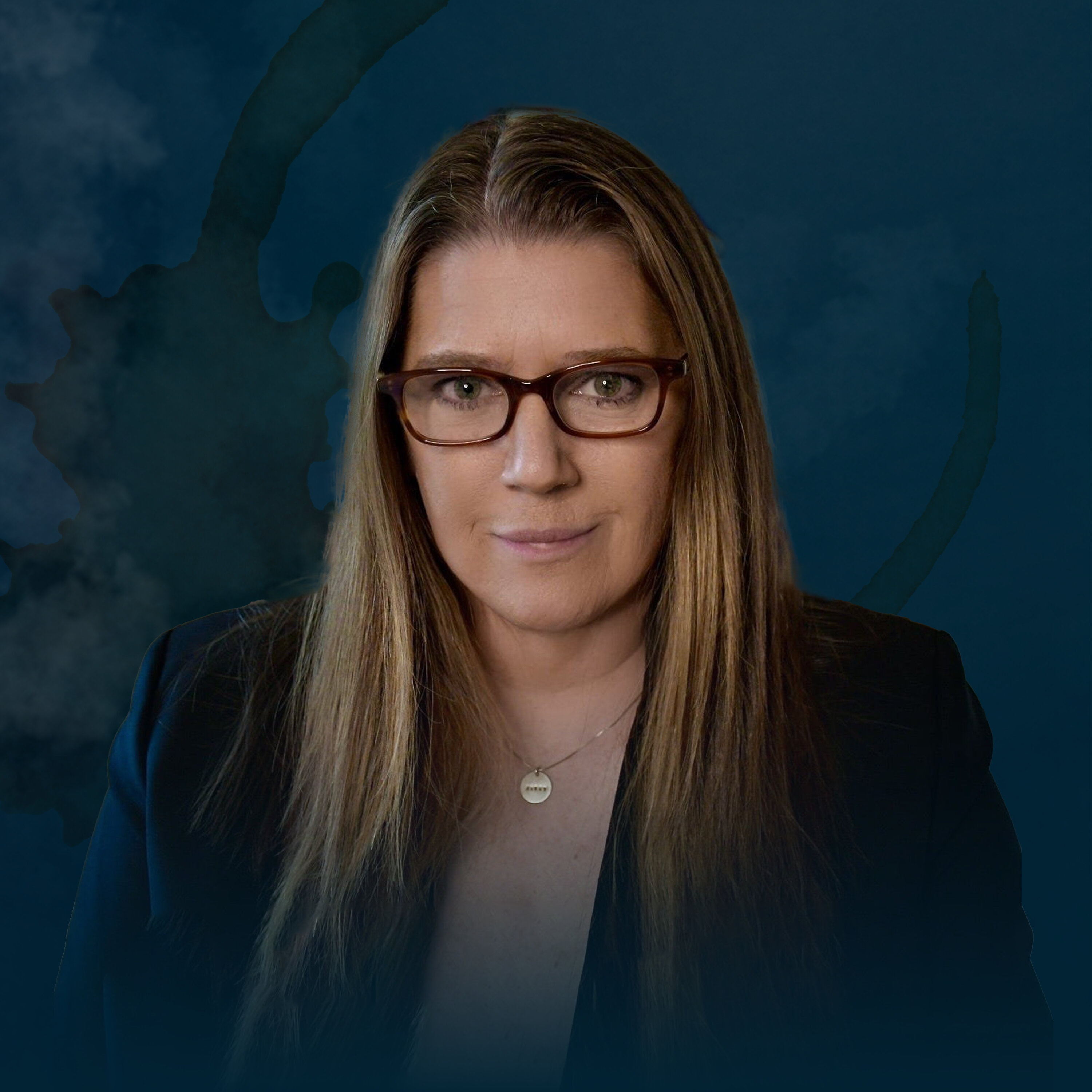
Loading summary
Transcript118 lines
- [00:01]
Reshma Sajani
Hi, I'm Reshma Sajani, founder of Girls who Code. Look, I'd consider myself a pretty successful adult woman. I've written books, founded two successful nonprofits, and I'm raising two incredible kids. But here's the thing. I still wake up wondering, is this it? And if the best years are yet to come, when's that going to start? Join me on my so Called Midlife, my new podcast with Lemonada Media, where we're building a playbook for navigating midlife one episode at a time. Each week, I'll chat with extraordinary guests who've transformed their midlife crisis into opportunities for growth and newfound purpose. At some point, we all ask ourselves, is there more to life? I'm here to discover how to thrive in my second act, right alongside you. My so Called Midlife is out now, wherever you get your podcasts.
- [01:00]
Nicola Coughlan
I'm Nicola Coughlan, and for BBC Radio 4, this is History's Youngest Heroes. Rebellion, Risk, and the radical power of youth.
- [01:10]
David Duchovny
She thought, right, I'll just do it. She thought about others rather than herself.
- [01:15]
Reshma Sajani
Twelve stories of extraordinary young people from across history.
- [01:19]
Nicola Coughlan
There's a real sense of urgency in them. That resistance has to be mounted. It has to be mounted now.
- [01:24]
Reshma Sajani
Follow History's Youngest Heroes wherever you get your podcasts. Lemonada.
- [01:36]
David Duchovny
My mother was born in Queens. I grew up thinking my mother was Scottish. She told me she was Scottish. But the fact is that her parents emigrated from Scotland to the states in the 1930s. They came for the Depression. And then when they didn't get enough of the Depression, that's when they went back to Scotland, where the Depression continued for even longer than it was in America. So I couldn't believe it to think of my mother with a queen's accent, which she never had, but I think she was three or four, maybe seven when they. When they left Queens, where I believe my grandfather was a, he was working for the building that they lived in. I think he was the superintendent for the building in Queens that they had moved into. So my mother, much like Mary Trump, born in Queens. I'm David Duchovny, and this is Fail Better, a show where failure, not success, shapes who we are. Mary Trump is an author and psychologist, as well as the outspoken niece of Donald Trump. What you might not know is that Donald Trump had four siblings, none of whom got nearly as much attention At a certain point. Their father made it his mission to shape Donald into the winner he wanted him to be. And the rest is history, I guess. Obviously, it's much more complicated than that. But this is a family that needs to be reckoned with, and Mary is the person to take us through this family. The upbringing of the Trump children had huge psychological and financial effects, some of which have gone on to impact the whole world. Not every family can say that, and not every family would want to either. Mary captures so much of this in her book Too Much and Never Enough, as well as her upcoming book, who Could Ever Love youe? Which focuses more on Mary's story and her attempts to overcome the trauma of her upbringing in the Trump household. When I recorded my discussion with Mary, it was a week, maybe a little more than a week after the assassination attempt on Trump and maybe a couple days after or a day after Biden quit the race. But I wanted to try to stay away from just the hot takes of the day and try to drill down into the depth of why we are and where we are as a country vis a vis this Trump family. Hi, Mary, Nice to meet you.
- [04:04]
Nicola Coughlan
Hey, it's very good to meet you too.
- [04:06]
David Duchovny
Thank you. I want to start by just saying, you know, reading, reading your books and just seeing the word Jamaica. It just brought back a lot to me because I, I grew up on 11th street and 2nd Avenue and oh my gosh, my mom, not the best with the, the trans at the subways, not the best. And I loved dinosaurs as a kid. That was like a lot of, a lot of kids. And I always wanted to go to the Museum of Natural History. And so we had one great weekend where we were heading to the Museum of Natural History by the subway. And all of a sudden we were on this train and it's above ground now and we had no idea what the hell was going on. And finally it stops and the doors open and it said Jamaica. And I turned to my mother and I said, that was the wrong train because I thought too, that we were.
- [05:00]
Nicola Coughlan
On the is how did we get to the Caribbean? My goodness, what an efficient transit system.
- [05:05]
David Duchovny
What a great subway. If only, right? Let's dig into the family then. In terms of how you see now as you look back, as you continue to look back. I mean, I'm sure this is a organic, ongoing process of unlocking these things, but this is kind of where I want to settle in just for a moment, because what I've been thinking about when I wanted to talk to you was, you know, it's very tempting to try and see divisive figures in the public as one offs or as whether you want to call them evil or great or whatever. They're like sui generis. They're of their own. But the truth is they come from a family. And the truth is that that family, while maybe extreme in some way, is not aberrant. You know, is not aberrant, but is actually within the customer of families at the time. And maybe still. And that's kind of what I want to talk to you about, if that makes any sense.
- [06:09]
Nicola Coughlan
Oh, oh, that's so spot on. A couple of things that are kind of fascinating. First of all, as you said, there is a lot of sort of laying the groundwork for helping people see that families are families. And one family may have a lot more power or a lot more money or a lot more infamy. But there are so many commonalities among these closed systems we call families. And one of the most gratifying things to me after my first book came out was people leaving comments saying, I see my mother in your dad, I see my grandfather in your uncle, or what have you. Like, it resonated with people in really deep and personal ways. And that's what I was trying, one of the things I was trying to get across because it's true. Like we can't understand somebody if we think that they are unique to the history of the world. Right? There's no context.
- [07:21]
David Duchovny
Then that's not analysis. That, that's, that's not, we're not going to get anywhere with that. We can, we can try to try to push them aside and move on, but that's it. And we're going to confront the same thing if we don't process it.
- [07:34]
Nicola Coughlan
You know, that's exactly, exactly right. So it's a huge mistake to say, and I think I've been saying this since 2020, Donald's not the problem. He's a symptom of a problem. And that's the path half of this country is going to go down. Whether he's leading or not leading. Using the term very loosely.
- [08:03]
David Duchovny
Can you give some examples for people that haven't read the book of how this not so crazy family, but difficult family would have shaped you and your uncle? Because I'm looking at stuff and I'm seeing the Calvinist gospel of prosperity. You, you go back to Calvin and you're going to see somebody that is saying, if you are rich, that is a sign of God's favor and therefore if you are poor, that is a sign of God's disfavor. This is not new stuff and this is not evil stuff. This is not stuff that we consider evil. This is actually Mainstream shit. So I'd love for you to kind of unpack that for us.
- [08:43]
Nicola Coughlan
Sure. So my grandfather was, and I mean this technically, a sociopath.
- [08:51]
David Duchovny
Can you just explain what you mean by that quickly?
- [08:55]
Nicola Coughlan
Sure. So a sociopath is somebody who doesn't experience empathy, who sees other people, including his children, as a means to an end. He sees other people as needing to be of use to him, or if they're not, then he doesn't care about them. He basically was very controlling and had no. Didn't experience love, had very little humor. And I mean, honestly, if you met him in a casual way, you would think, oh, you know, he seems a cheerful enough guy. He's clearly very convinced of his own power, and he's very, very confident and successful. But, you know, you wouldn't think that he was a sociopath, and you probably wouldn't think that he was humorless. But that's also because everything always went his way, because he was in complete control of his world. His world was his business and his home, and he rarely ventured outside of that. And everybody in those two systems belonged to him, basically.
- [10:12]
David Duchovny
That is not so unlike the portrait of a successful man up until. Up until fairly recently, you know what I'm saying?
- [10:22]
Nicola Coughlan
That's right. He didn't seem different. He was sort of the ideal of the man in the 40s and 50s.
- [10:31]
David Duchovny
Right.
- [10:32]
Nicola Coughlan
So according to the casual observer, he was fulfilling the American dream in the way a man should. And that just allowed him to get away with a lot of things that, you know, he probably shouldn't have been allowed to get away with. So you couple that with the fact that my grandmother was somebody who had a fair number of personality disorders, by which I mean she was. And again, you made such a great point. A lot of her behavior echoed what was expected of a woman back in those days. A wife, a mother, running the home, et cetera. But she was a fairly dependent personality. She also had some emotional limitations. She was not particularly affectionate. But the biggest problem when my dad and his siblings were younger is that she was very ill. After my Uncle Robert was born, and he was the youngest, she almost died. She had several surgeries in a very short period of time, and she was essentially absent for about a year. Either she was in the hospital or when she was home, she was incapable of caring for her children. And this happened when my dad was old enough to escape the brunt of that. But Donald was, like, right in the sweet spot of development. He was two and a half. So you. You leave a two and A half year old with a sociopathic father and a mother who, for no fault of her own, because of her physical illnesses, is incapable of caring for him. And that, that's a recipe for disaster, because the other thing that didn't happen, and this is something every human being needs and everybody can relate to, very young children need to be mirrored by their primary caregiver. They need to see themselves in their. Usually it's the mother, certainly back then. They need to have their emotions reflected back to. They need to be seen and nurtured. And honestly, I don't think my grandmother was very good at that anyway. And I say that because my dad had certain issues that suggest that she wasn't very good at it. But Donald got none of it because she was just not there. And instead he had Fred Trump, the sociopath, essentially not thinking it was worth his while to give his children the time of day, partially because he wasn't interested in children, but also partially because he, to the extent that he was interested in children, it was in one child, and that was his oldest son and namesake, who was the one who was supposed to take over the empire, your father, My dad. And you can imagine what kind of pressure that put on him and how that became problematic when my dad turned out not to be exactly the kind of kid my grandfather had hoped he would be. And, you know, by the time Donald was old enough to be conscious of what was going on, my dad was almost a teenager. And he saw what happened to you if you didn't fall in line with Fred Trump's view of how you should be, who you should be, what you should be succeeding at, etc. And he only saw that my father was a failure and was punished accordingly. And there was no way on this earth that Donald was going to be anything like my dad. Now, you could say, well, that helped him because certain things about my dad that drove my grandfather crazy, maybe you don't necessarily need to succeed in the world my grandfather created. He was very sensitive, he was very funny, he was very generous.
- [14:54]
David Duchovny
Sounds like a terrible guy.
- [14:56]
Nicola Coughlan
I mean, right? He's terrible. Terrible. But then there's this stuff that you really kind of do need if you want to, like, live in the greater world.
- [15:03]
David Duchovny
Yeah.
- [15:03]
Nicola Coughlan
But he was also very kind, and he was smart and intuitive and skilled. Right. And so Donald just, like, got none of that because none of it did my father any good at all. And then the stuff that the. The defense mechanisms he developed to survive his very early years, as he grew older, became the bullying, the brashness we often hear it referred to as brashness. The. The not giving a shit.
- [15:36]
David Duchovny
I have this. I have this idea, too, and correct me if I'm wrong, that your books, they're speaking to the general public, for sure. And that's what I want to continue talking about, because it's a lot about pedagogy. It's not just about your position in the Trump family or Donald Trump. It's really about how we educate, how we raise our kids, really is what I see your mission ultimately as. But I can't help but feel you're trying to speak to the man as well. And I wonder if you've ever, ever thought, wow, if I can only get him. If I can only corner him and just say, look, I know you didn't get these things. I know you didn't get. And this is not, you know, whatever. Some kind. Are you trying to reach him? You know, is that in any way in the back. Back of your mind when you're. When you're writing?
- [16:30]
Nicola Coughlan
David, I think you just blew my mind. That's fascinating. And the reason it just kind of sent a bit of a chill down my spine is because it's not that. It's because that's the case. It's why it's not the case. And this is a tragedy, and it has become everybody's tragedy. At this point. It would be useless. And that's the saddest thing, because he's decades past that kind of intervention. I wish, for everybody's sake, but particularly for that little boy's sake, that somebody had intervened when it would have made a difference, you know, that it's somebody who just, like, hugged him and taught him how to find joy and taught him that it's okay to laugh at yourself and that it's okay to be vulnerable because vulnerability opens you up to a world of extraordinary beauty and all sorts of other things. We need to be fully realized human beings who can be moved by things like a sunset or being by the sea. You know, he doesn't experience any of that. And it's the emptiest, saddest life. But unfortunately, it also has made him a deeply cruel person. And the reason he's so cruel is because he's never been loved. And that's a hole that you can never fill. So you've got to try to fill it with something. So here we are. And my saying that wouldn't. It would be meaningless to him, and he's just incapable of having that kind of conversation. So maybe to the extent that I was trying to reach anybody. It's like it's the future parents who maybe don't think that every single thing they do matters because everything, everything you do as a parent matters. I don't mean you have to be perfect. There's no such thing. But you do have to be good enough, as Winnicott said. And my grandparents didn't even come close to that. My grandparents had five children and every single one of them was a destroyed human being.
- [19:09]
David Duchovny
If your child could use some extra help in a particular subject or isn't feeling challenged enough, I've got something great to share with you. IXL IXL Learning is a versatile online resource that complements any homeschool setup beautifully, covering subjects from math and language arts to science and social studies, it's designed to adjust to each student's learning pace and style. It's all about sparking curiosity and making learning click for every child One of my favorite things about IXL is its ability to customize lessons based on where your kids are in their learning journey. Getting them excited about studying can be a struggle at times, but IXL really changes the game. It helps them build a deeper understanding of subjects and keeps them engaged. It takes the stress out of homework time, giving you peace of mind. With ixl students have shown real improvement in their grades, and research proves they consistently perform better on exams nationwide. It's truly an investment in your child's academic future. IEXCEL is used in 95 of the top 100 school districts in the US make an impact on your child's learning. Get IEXCEL now and fail. Better listeners can get an exclusive 20% off an Iexcel membership when they sign up today at ixcel.com failbetter visit ixl.com failbetter to get the most effective learning program out there at the best price.
- [20:34]
Mary Trump
Are you still quoting 30 year old movies? Have you said cool beans in the past 90 days? Do you think Discover isn't widely accepted? If this sounds like you, you're stuck in the past. Discover is accepted at 99% of places that take credit cards nationwide. And every time you make a purchase with your card, you automatically earn cash back. Welcome to the now it pays to Discover. Learn more@discover.com credit card based on the February 2024 Nielsen report, in my experience.
- [21:07]
David Duchovny
When it comes to New Year's resolutions, failure can have a field day. I remember one time telling myself I would quit sugar and that lasted two days. But there are things you can do to help stay on track towards your goals, especially when it comes to money. Today's episode is sponsored by Acorns. Acorns makes it easy to start automatically saving and investing so your money has a chance to grow for your kids and your retirement. You don't need to be an expert. Acorns will recommend a diversified portfolio that fits you and your money goals. You don't need to be rich. Acorns lets you invest with the spare money you've got right now. You can start with $5 or even just your spare change. And you know what else? You don't need a ton of time. You can create an Acorns account and start investing in about five minutes. Then Acorns handles keeping your money on track. So $5, five minutes. That doesn't sound so daunting, right? Head to acorns.com failbetter or download the Acorns app to start saving and investing for your future today. Paid non client endorsement compensation provides incentive to positively promote Acorns Tier 1 compensation provided investing involves risk. Acorns Advisors, LLC, an SEC registered investment advisor. View important disclosures@acorns.com Acquisition fail better one other thing we have in common. You are a refugee from English literature program.
- [22:57]
Nicola Coughlan
I just found that out about you. Actually, I'm kind of amazed that I didn't end up in that profession.
- [23:03]
David Duchovny
Well, that's what I wanted to ask you because, you know, I, when I made whatever pivot, I it wasn't. I don't know how you were as a young person, but I didn't make like solid decisions. It was more like gut directional decisions. And I think I'd been studying English literature, which I think of as philosophy, religion, everything rolled into one. Yep. And I hadn't. And this may resonate with you, I hadn't. I had never in my family been taught or validated for emotional kind of growth.
- [23:40]
Nicola Coughlan
And it sounds like we grew up in the same family actually.
- [23:44]
David Duchovny
And well, that's actually a lot of what I want to talk about because I saw acting to me as like, oh, this is where they're gonna, they're actually gonna praise me for losing my shit. They're gonna praise me for being unreasonable. They're gonn me for crying and doing all these things that I'm not supposed to do or I, I wasn't, you know, taught how to do.
- [24:06]
Nicola Coughlan
Yeah.
- [24:07]
David Duchovny
And that was. I, I feel like the pivot I made was an instinctual one. And I'm wondering how you felt that pivot because you pivoted to, to psychology or, or you know, Is that right? And, and yeah, I'm just wondering how that felt. And, and were there. You know, for me, there was a sense of failure because I was like, oh, this is where I was going. I was in a PhD program and I was like, shit, now I've thrown all this stuff away and I'm going to go over here and I wonder what it was like for you.
- [24:38]
Nicola Coughlan
You know, in a weird way, I had a. I had the benefit of growing up in a family that actually didn't care what I did one way or the other, which obviously has its downsides.
- [24:48]
David Duchovny
Sure.
- [24:48]
Nicola Coughlan
But, you know, the expectations were all mine.
- [24:54]
David Duchovny
Just quickly, why did they not care? Was it your birth order? Was it your sex? What was it?
- [24:59]
Nicola Coughlan
Mostly it was a gender thing. And then, I mean, there's sort of my extended family in which it was just misogyny, but also the fact that my, my father had already been judged a failure, so his children didn't matter to the larger family. And then with my parents, you know, they had both struggled so much that I just don't think that it occurred to them to have expectations for us. Plus, I was the second and my older sibling was a boy. So like, he was the more important one, which was, you know, very common back then. That was, you know, I was born in the, in 1965. That was not unusual. Also, I was very different. I had extremely different interests. I learned how to read when I was very, very young. And that became the way I negotiated my sometimes fairly challenging childhood.
- [26:10]
David Duchovny
Did you teach yourself how to read?
- [26:12]
Nicola Coughlan
I actually one of our next door neighbors taught me how to read.
- [26:16]
David Duchovny
Isn't that amazing?
- [26:17]
Nicola Coughlan
Because I learned how to read when I was like three and a half, so wasn't even in school. And suddenly it's like, oh my gosh, I'm in these other worlds. I can inhabit these other worlds that have nothing to do with the day to day of what's actually going on around me. And then as my reading material became more complex and challenging, I started realizing I could do that too. So I really, I wanted to be a writer. And that's what led me to study English. And I had a very clear idea. It was my favorite subject, was my best subject. That's what I was going to major in in college. I was going to go to graduate school. But then I came up against this thing called literary theory. And as you probably remember, back then, it was deconstruction. Jacques Derrida and Derrida Lacan, Paul Demand, all those guys. Yeah, how did that did not Suit me.
- [27:17]
David Duchovny
How to take the fun out of reading.
- [27:20]
Nicola Coughlan
How did it like totally destroy a text in. In 10, 10 easy lessons, right? Or. Or not easy lessons at all because it was so dense and unuser friendly. I mean, did you have that experience?
- [27:31]
David Duchovny
Absolutely. I. It was like learning a whole new language. It was almost as if you were in opposition to the book. You know, it was like, okay, this book thinks it's about this thing, but I'm going to teach it something different and I'm going to, I'm going to explode it from within and I'm going to show the author what he really means and I'm going to, I'm going to politicize. I'm going to put it in a political, you know, every kind of context that you can imagine. And it was, it was tough because reading became almost like hunting, you know, in this weird way. And I didn't like it. No.
- [28:04]
Nicola Coughlan
That is so incredible because I have been trying to figure out how to describe that process. And you're saying that you're right. It was a violence committed against texts that I loved. And there's one thing to grapple with a text, it's another thing to rip it apart. And that's what was happening in the 80s and the late 80s and early 90s. And I didn't have enough. I don't. I think confidence is the wrong word. I didn't have the wherewithal to go out on what seemed like a very insecure limb and say, I'm going to be a writer. Because that's not like, it's like, it's not really a career choice because there's no safety net. Right. You don't get paid unless you're really lucky.
- [28:57]
David Duchovny
Well, that's why, that's why I went to graduate school, because I wanted to. I thought I was going to be a writer. My dad was kind of a writer and my mother was a teacher. So it was kind of in my bones. But I didn't have the courage or the wherewithal, as you say, at the age of 18 or 21 to put my shingle up and say I'm a writer. So I thought, okay. The easier way, even though it wasn't that easy, was that I'll get my PhD, I'll go get a tenure track position somewhere. And I'm not belittling this by any means. It's a great career. But I was thinking of it as, that will give me the structure and at least enough money to live and eat and have a house. And then I can write because you got great vacations. There's four months off a year, basically. And I could see that happening. That was my plan, anyway.
- [29:56]
Nicola Coughlan
Yeah, that's pretty much how I plan to do it. And then I got my master's at Columbia, and I did not get into the PhD program because I was terrible at deconstruction. So it was probably a good thing. But because I wasn't happy, I was not happy. I wasn't doing the kind of writing I wanted to do. I wanted to be a novelist, actually, not a literary theorist. So the one good thing that came out of Columbia was that I took a class in psychoanalytic theory. And that made sense to me.
- [30:33]
David Duchovny
Right.
- [30:34]
Nicola Coughlan
That made a lot of sense to me. Now, granted, it's through a very narrow, specific lens and there are all sorts of criticisms to be made about it, but it had a lot of explanatory power. And I don't know how long it was after that that I thought, you know what? Maybe I should take some courses and see. See what it's all about.
- [30:57]
David Duchovny
Well, it sounds to me, and correct me if I'm wrong, but, you know, it's chiming with me and my. My kind of journey because I was. I was searching out myself in a way. And it sounds to me like you're going out, but you're. You're looking back. You know, you're looking back and trying to figure out who the hell am I and where did I come from? And that that was the pivot to me out from literature, which was inhospitable to you because of deconstruction or the clinical nature of it, and into psychology and into the psyche.
- [31:29]
Nicola Coughlan
Yeah. And I. You know, again, I think all of these things are very much related, not literary theory in. From a deconstructionist point of view, but literature, as we said earlier, like, I think literature is everything. It explains everything about the human condition. Everything is contained within it. But you can also make similar claims about drama, acting, psychology. These are all things we do to come to a deeper understanding. I mean, not necessarily all the time, of course, and not necessarily consciously, but things we do to make sense of.
- [32:12]
David Duchovny
Absolutely.
- [32:13]
Nicola Coughlan
To get a deeper understanding of who we are, how we exist in the world, how we exist in relation to other people, and how to make sense of other people from their point of view, not just from ours.
- [32:28]
David Duchovny
I had a great professor at Yale named Harold Bloom who wasn't really a deconstructionist, more of a close reader, more of a humanist, probably more up your alley. Certainly more up mine as well. And he used to say, Freud is a literary critic and when you think about his theories, it's the Oedipal complex. It comes from. Everything comes from Greek literature for him. And it was really the translation of Freud by. I think it was Lytton Strachey or, you know, it was that they really wanted to make it way more scientific so that people would buy it as a science, you know, so the American. The English translation of Freud is way more scientific and difficult than the actual writings of Freud, which are, when you break it down, literary. Literary criticism, which is fascinating to think about.
- [33:13]
Nicola Coughlan
Yeah, I totally agree with that. It's very true. And it should be accessible to everybody.
- [33:18]
David Duchovny
Right. I went two places that I want to go from here. One is quickly answered, and I know what the answer is, but I just wonder if you had the thought. And the other is the deeper conversation, which is about this country and the way this country has been reared. Yeah, yeah. When he survived an assassination attempt, did you have the fleeting thought, he's going to wake up, he's going to. It's like Dostoevsky. It's like that moment you're shaking your head, you're just. You're just shaking your head.
- [33:54]
Nicola Coughlan
That doesn't really work on a podcast, does it?
- [33:58]
David Duchovny
I can't even finish.
- [33:59]
Nicola Coughlan
I can't help it. No, I know.
- [34:02]
David Duchovny
Not even wake up call. I was thinking, you know, literature, Dostoevsky. It's like, you know, now I'm really gonna live. Now I know what it's about now I get it.
- [34:15]
Nicola Coughlan
No, I mean, I don't think it was my first thought, but one of my first thoughts was, this is going to make him worse. Oh, because he survived and he's surrounded by a bunch of people who were desperate to turn him into some kind of messiah or martyr. And we knew pretty soon after that that was exactly the direction he was going to go in for a couple of reasons. One, he. He literally said things like, God was there. God spared me. God also, by the way, he doesn't believe in God. So that. That whole thing is just a complete manipulation of the evangelicals who, for reasons I may never understand, follow him. So, you know, I. Sadly, I don't. He is beyond. Even something like that is not going to change him.
- [35:13]
David Duchovny
Sadly, the second part to my thoughts on what you were saying, and I'm trying to hold on to them because everything you're saying is making me have seven or eight and I'm not really good at that. I want to talk about Child pedagogy, rearing children and this country. And why it is that a man like your uncle resonates with people, because we can't deny that he resonates with millions of people. And what is it familiar to them about him? Now, I'll tell you, like my initial, you know, and I. I hate to be so partisan, but my. My initial distaste to your uncle's presidential run. Forget about policy, whatever it was, this focus on winning. And as you can tell, my podcast is about losing. It's about failure. And. And I was really offended by this American notion of exceptionalism and winning, and it didn't originate with him. And we can go back to Norman Vincent Peale and all that stuff that we talked about, the stuff that was in your household, you know, and I just kind of want to sit in that for a moment. Is there is also something in this country that really wants that, you know, that really wants to believe that we are winners and we are chosen and we're gonna keep winning. And that's how many of us were raised.
- [36:37]
Nicola Coughlan
Yeah. And honestly, I think it's one of the most dangerous strains in American. Not just politics, but life. It's similar to. What's the word I'm looking for? White privilege. It's. It's this completely unearned but very real power that people have in their lives because we're so racist. And being white truly is an advantage in this country, and it confers upon people this, in a lot of cases, unconscious, but in a lot of cases, not sense of their own superiority because they share in this specialness. It goes back to what you mentioned a while. A while ago. The. The whole Calvinist doctrine sort of predestination and then manifest destiny. And then suddenly you have presidents like Reagan talking about us against the evil empire as if this is some Manichean fight between us, the absolute good, and them, the absolute evil. And it's just. It's really. It's unproductive. In addition to being dangerous, it's really unproductive. So.
- [37:50]
David Duchovny
But I think what they're speaking to, they're speaking to the storytelling part of your soul, you know, and that part of people's souls needs to be spoken to. And I think it's a good need. I think it's an empathetic need. I think everybody wants to join in the story of man, but we have to figure out a way and say we don't have the answers in our pseudoscientific therapeutic jargon. This is just our attempt. You don't have the answers in your religious jargon. That's your attempt. We've got to figure out a way to talk to one another, which we're not doing. How do we do it, Mary Trump?
- [38:27]
Nicola Coughlan
Well, let me solve all. You have two minutes history right now.
- [38:30]
David Duchovny
Two minutes.
- [38:32]
Nicola Coughlan
Two minutes. All right. Two minutes. Well, okay, so a lot of it goes back to the myths you. You referenced earlier, including the myth of rugged individualism, which is complete nonsense. And that being strong is more important than anything else. And I think Donald, with his sort of muscular language, definitely spoke to that. Not because he's strong, he's actually very, very weak person, but because he came from a family that was in large part informed by the positivity doctrine as embodied at that time by Norman Vincent Peale, which, honestly was just toxic positivity. And if you have any weaknesses, you are a moral failure, and it's your responsibility. That's how my grandfather viewed himself on the one hand and viewed my father on the other. And because he also viewed life as a zero sum game, there could only be one son who could be successful because the. The two girls didn't matter. My aunt was a federal judge, and at her swearing in, my grandfather, his only comment was, well, at least you'll have good benefits now. So he didn't really care about his daughter's success or lack thereof.
- [39:53]
David Duchovny
Yeah, it's. You say in one of the books, he's been institutionalized his entire life, and that. That was just a stroke of brilliant writing to me. And can you say what you mean by that?
- [40:07]
Nicola Coughlan
Yeah, because I do think it. It answers a lot of questions if you think about it like that. Let's, you know, leave the developmentals issues and the psychopathologies aside. He grew up in a family that was headed by an extremely wealthy and in a very narrow circle, but still an extremely powerful man.
- [40:28]
David Duchovny
That's the first institution is the family.
- [40:30]
Nicola Coughlan
That's the first institution. And Donald, who learned fairly early on that he needed to convince his father not just that he wasn't Freddie, the older brother and the. The damaged namesake, but he. Donald, was better than everybody else. So when you think you're great, like, for no reason, just like as a.
- [40:57]
David Duchovny
As a protective device, your father called him the. The Great I am. Was that your father's nickname?
- [41:02]
Nicola Coughlan
The Great I Am? Exactly. You never have to strive to be good because you're already great. So my grandfather saw that Donald could be of use to him because he had that kind of attitude where, you know, Donald would walk in any room Think he's the smartest guy in the room. Even if he was the least smart person, he would think he was the most talented, even though he had no talent. And he would get his way because he would throw temper tantrums or he would have get enraged at people or what have you. And he always had my grandfather's backing, so he didn't have to be an entrepreneur. My grandfather would just fund his projects and my grandfather would in many cases run them. And the first instance we saw when that this was the case was when Donald, against my grandfather's advice and wishes, went to Atlantic City and bankrupted three casinos. That was his first real independent venture. But then he always got bailed out. The banks had to bail him out because they needed for him to have the lifestyle so that his properties maintain their value. They would put him on an allowance for $450,000 a month so he could live the high life and pay his debts. And then the Republic, then what's his name? Mark Burnett. Mark Burnett bailed him out by giving him his show. Stupid reality show. The White House became an institution for him.
- [42:33]
David Duchovny
Well, that's what I was thinking. That's the final one and the final one. But I think that when he says it's rigged, you know, I'm not talking about the election, he just says the system is rigged. He knows what he's talking about.
- [42:47]
Nicola Coughlan
He does. He really does. And what's interesting about him is he actually means it both ways because it is unfathomable to him that he can lose anything, even even though you would think by now he's had so much practice. But that's another defense mechanism. Losing was like fatal in my family.
- [43:11]
David Duchovny
Right.
- [43:12]
Nicola Coughlan
So even when he does legitimately lose, he can't wrap his head around.
- [43:28]
Emily Deschanel
This message is brought to you by Cologuard, a non invasive colon cancer screening test. Currently, colon cancer is the second leading cause of cancer related deaths in the US and it's on the rise in people under the age of 50. But when caught at early stages, colon cancer is survivable in 90% of people. So screening and early detection are key to reducing overall colon cancer deaths. And a great one of a kind way to feel more in control of your colon cancer. Screening is through the Cologuard test, a prescription based test with none of the prep that's required of a colonoscopy. The Cologuard test is the only FDA approved non invasive option that looks for both altered DNA and blood in your stool, which can indicate the presence of abnormal cells. This test offers convenience and ease of use and is delivered right to your door. Plus, it's more affordable. Most insured patients pay $0 and if you do need a colonoscopy as a follow up, if you receive a positive cologuard test, most insurance plans will cover it. So if you're 45 or older and at average risk, ask your healthcare provider about screening for colon cancer with the Cologuard test. You can also request a cologuard prescription today@cologuard.com podcast. The Cologuard test is intended to screen adults 45 and older at average risk for colorectal cancer. Do not use a cologuard test if you have had adenomas, have inflammatory bowel disease and certain hereditary syndromes, or a personal or family history of colorectal cancer. The cologuard test is not a replacement for colonoscopy in high risk patients. Cologuard test performance in adults ages 45 to 49 is estimated based on a large clinical study of patients 50 and older. False positives and false negatives can occur. Cologuard is available by prescription only.
- [45:01]
Nicola Coughlan
Hi, I'm Emily Deschanel. And I'm Carla Gallo. And we're excited to tell you about Boneheads, our new Bones Rewatch podcast. I played Dr. Temperance Brennan. And I played Daniel. And we are gonna watch from the very beginning. We're gonna watch the episodes, we're gonna reminisce, we're gonna laugh, we're gonna cry, we're gonna tell behind the scenes stories. We're gonna go on tangents. A lot of tangents. So whether you're a seasoned Bones fanatic or a newcomer looking to dip your toes in to the wild world of forensic anthropology, this show is for you. Boneheads from Lemonada Media is out now. Wherever you get your podcasts.
- [45:47]
Mary Trump
Get ready for a wild mythical adventure. Melissa McCarthy leads an all star cast in a hilarious new podcast, Hildy the Barback and the Lake of Fire. In this fantastical fictional tale, McCarthy stars as Hildy, an unlikely hero from the land of Golgorath who must embark on an epic quest with an unlikely team of warriors to save the world. Starring Melissa McCarthy, Ben Falcone, Octavia Spencer, Glenn Close, and more, Hildy the Barback and the Lake of Fire spins a legendary laugh out loud tale you won't want to miss. Hildy the Barback and the Lake of Fire is out now wherever you get your podcasts.
- [46:42]
David Duchovny
Okay, let's get back to you we.
- [46:46]
Nicola Coughlan
Really don't have to.
- [46:48]
David Duchovny
No, I think. I think you offer hope because you're speaking from inside the belly of the beast, you know, and I'm looking for a way to talk to everybody. I'm looking for a common. A common. Not a common language, but just a way. Like I said, you know, if, if, if we can admit that a lot of what we are saying is gut driven, then we can accept that a lot of what the other side is saying is gut driven. We are not the people of science. I mean, maybe sometimes we have science, but for. In general, it's our gut, too. And it's like, how do we talk? Is what I'm saying. And what I. You can't answer that. Nobody can. But let's get back to you. Jesus.
- [47:41]
Nicola Coughlan
Well, actually, I do have something to say about that. We are at a crossroads. And like right before the 2020 election, when anybody said to me, what do you say to somebody who's going to vote for Donald for the second time? I said, you said, don't say anything. Don't waste your time on them. Oh, there's too much at stake here. We need to focus our energy on people whose minds we can change. Right. And I think I would say the same thing now, but I don't. That's. I know that sounds cynical, but the problem is we're constantly in this situation where we have to be almost cruelly pragmatic because there continues to be so much at stake. We're literally, and this might sound hyperbolic, but if we just define things, our terms properly, we're looking at a country that will either continue to be a liberal democracy or it will become a fascist dictatorship. And that will change things in way people cannot imagine. So we need to focus on the very, very short term. However, we do need to find ways to talk to each other, and we do need to get back to a place where we share, where words have the same meaning. And I think that's part of the problem. We don't define things the same way anymore. We don't define fairness the same way, or we don't understand fairness in the same way. There's a poll recently that said the majority of Americans, democracy is their number one issue. A lot of Republicans said that. So clearly we don't mean the same thing.
- [49:22]
David Duchovny
And even if you go down to the Founding Fathers, which everybody loves to hold up, if you look at the Electoral College, that's obviously a way to thwart democracy they were afraid of. Otherwise, why not just have it be a popularity Contest. It's a tough thing to define, but I guess why I see you as a beacon of hope is because you're coming out of this family very, very differently. And I'm. And I think what your book does, the new book is it shows or it chronicles, you know, how not how you escaped, but how you heal in a way. And I think that that's an important story to tell because as I started this conversation, the family that you're coming out of is not so aberrant. It's a pretty recognizable American family, at least from the 1960s, you know, 50s, 60s, 70s, whatever. And so if you could just. It's impossible. Amy wrote a whole book on it, but if you could just speak on the consciousness that got out of it. You know, we're always like looking at history and saying, well, you know, they were just trapped by their, their present day consciousness. They couldn't, you know, I forgive them, you know, but some people can look outside of where they're at. How did you get that?
- [50:46]
Nicola Coughlan
Yeah, I mean, I think, you know, we've seen this in the last eight years. Trauma really wears us down. If it's not dealt with and if we're already traumatized and then we get re traumatized as we saw happening during COVID then you can heal from the previous trauma and it makes the current one even worse and it makes the impact of the new trauma more severe than it might otherwise have been. And of course, you can't heal from trauma while you're in the process of being actively traumatized. And this was my experience in 2016. You know, Donald's getting into the White House kind of had nothing to do with me, and yet it had this massive impact on my life. And I think that's what we've seen in this country as we've kind of gotten through the last eight years. Like these things that are sort of beyond our, our day to day experience keep happening. And if we're sincere, empathetic people who care about other human beings, it has an impact. You know, seeing children put in cages, for example, has an impact, especially when it's something that your own country is doing. So it creates this level of helplessness that begins to just sort of trickle down into our, into our, our lives and our day to day experiences. So in a way, like when 2016 came around, I was already prepared. Like, I already had PTSD and I knew what to look for.
- [52:23]
David Duchovny
Yeah.
- [52:23]
Nicola Coughlan
So in a way, it, I mean, I'm not saying it made it easy, but it at least sometimes it's better to know than not to know.
- [52:31]
David Duchovny
And I think I'm not a therapist. I'm just somebody that thinks sometimes. But, you know, trauma, it's broad term, but I think another feeling around trauma is failure. You know, like I should have been able to not be traumatized. You know, I should have been able to win this traumatic situation or whatever it is. And that's one of the things that I've. I've been interrogating on this, this podcast here, as well as shame around failure, you know, and it's all kind of. It's all wrapped up in the stuff we're talking about with your family. Almost, almost uncannily, you know, and. And again, the question to you before we end is just tell me a little of how you got. Of how you healed yourself in a way and how you see it almost specifically you're raising a child. How you see it almost specifically in the way you are raising this child. You know, because we're all terrified we're going to perpetrate the same mistakes that were perpetrated on us.
- [53:38]
Nicola Coughlan
Yeah. And that is the circumstance for those of us with children in which it is the most troubling. What is this going to do to my child? What is this going to do to somebody who's dependent on me? And how can I not. How do I not have the strength to make things okay for her, no matter what's going on with me? And guess what? Sometimes you can't. And sometimes. And this. I had to learn this the hard way. I was really, really struggling in 2017, after the inauguration, and I knew I was losing it. I just knew it. And what do you mean?
- [54:25]
David Duchovny
I finally mean losing it.
- [54:27]
Nicola Coughlan
Oh, I mean, I was unraveling. I was obsessed with the news. I would just get completely enraged about what Donald was doing and getting away with. I was horrified at what the Republican Party was enabling. I was horrified at the helplessness of. At anybody else who I felt, you know, the Democrats should be doing something. I don't know. I was just completely doomed. I was doom scrolling on Twitter all day long. And I lost a lot of my friends after the election because I lived in a Republican town. So I was very isolated and, you know, I was not doing well. And I knew it. And I finally realized I had. The best thing I could do for my child was to go away. And that was devastating. I had to go into treatment for ptsd. I was away. I went twice. So I was away for about total of eight weeks. And having to come to that was just. It was one of the hardest things I've ever done. It's like the best thing for my kid is for me not to be here. That's not where you want to be. However, if that's what you have to do, that's what you have to do sometimes.
- [55:41]
David Duchovny
Yeah.
- [55:42]
Nicola Coughlan
I think what keeps us from making those choices, though, is. And you've used this word a lot, and it's. It's the right word, is shame. That. That sense that, why can't I handle this? Other people seem to be handling this just fine, by the way. A lot of people are, but that's what it feels like. Why is it just me? Why am I so weak that I can't be the mother I want to be? I can't be the friend I want to be, I can't be the creative I want to be or, you know, fill in the blank? So sometimes, though, it takes the extreme situation to force your hand. Like, that's sort of where I was in 2017. It's like, I want to be able to leave here under my own power. I don't want things to get so bad that I'm going to have to be taken away in an ambulance.
- [56:31]
David Duchovny
What a crazy position to be in. Where your personal trauma is, is being mirrored in the country at large, in the world at large. What a crazy making. You must have to check yourself and go, am I a total narcissist right now? Because I think, you know, like, is this really happening? That what's.
- [56:52]
Nicola Coughlan
Well, narcissism does run into that place. Yeah. Honestly, it's surreal. It's quite surreal. And, you know, the fact of the matter is, I'm very far from being healed.
- [57:06]
David Duchovny
Yeah. I was going to ask, how are you doing now? You know, because it's. It's happening again. You know, we're in it again, and you're no doubt stimulated again.
- [57:15]
Nicola Coughlan
You know, I think, obviously things have changed, and there was a very dark period even. Was it two years ago? I don't know. I had a really rough couple of years. You would have thought that my first book coming out and feeling like, okay, I'm part of the conversation, and I can actually make a difference.
- [57:44]
David Duchovny
You have agency.
- [57:45]
Nicola Coughlan
Yeah, that's the word I was looking for. I have agency. That would have turned things around, but it was the height of COVID so I suddenly had this opportunity to meet. Meet virtually people. But I, like, never. You know, I never met anybody in person, and that obviously, that's very different. And then I just kind of Went into this very dark period because one, because of being isolated, but. But even more because the country was worse off than it had been. And I was like, how. How is this happening? How is it possible that this man is still. Still has all of this power? And he's gotten away not just with his own, you know, financial crimes and his fraud, but he's getting away with these massive crimes that he committed against our country. And he's the head of the Republican Party, and they want him to be president again, what is happening? So, you know, there are all sorts of reasons that happened, but it didn't make it less crazy making. And it didn't make it less. It still feels like this violence that's being committed against us, much like, you know, Derrida committed violence against literature. And in the same way, I don't want to be part of this. You know, it's making it very difficult to live in the world. However, I think in the last writing, my most recent book was extraordinarily difficult, but it definitely helped. Just feeling more connected to the process of what's happening in politics and feeling like I'm finding my voice again. And I know, like, we don't always have control over these things, obviously, but I think part of it is just reminding yourself what you have and taking that leap of faith you talked about earlier, which we all need to do sometimes, even if we're not entirely sure we're going to get to the other side.
- [60:12]
David Duchovny
Well, I think that what I would end with you is I hope you change your mind about talking to the people that want to vote for Trump three times. I hope you continue to try to find a language to reach out. And then I also hope for you that this book, this new book, which is about you, whereas the other book was more about the family and. And Donald, you know, that you're finding your voice. I'm not saying you have to turn your back on history. You know, obviously you're engaged and you want to make a difference, but you started all this journey wanting to be a writer, you know, and do you. I guess my last question would be, do you. Do you see yourself no longer writing about the family, writing something else, you know, freeing yourself in that way from revisiting this trauma again and again and again and again, which I don't want for you to be honest.
- [61:14]
Nicola Coughlan
Thank you. Yeah, it's not a good. It's not a good way to be, especially, you know, if you want to be a creative person in the world. Trauma doesn't help. Like when people say that, oh, well, it gives you material, I'm like, shut up. It makes everything harder. You know, if you're creative, you don't need to be traumatized in order to think of material. But I just want to. I want briefly to get back to the first thing you said when you pointed out or when you said that you hope I can find a way to talk to people who are planning to vote for Donald a third time. I actually, I. I felt ashamed.
- [61:51]
David Duchovny
Yes.
- [61:51]
Nicola Coughlan
Because finally, well, your work here is done.
- [61:55]
David Duchovny
I'm spreading shame everywhere I go. That's what I do.
- [61:57]
Nicola Coughlan
No, but I mean, honestly, it made me realize that, you know, if. If I want to be this person in this situation who tries to make a difference, well, then guess what? Sometimes that means doing things that seem impossible and even unpleasant, and that means taking risks that you don't want to take. And it means being somebody who can or who's willing to speak to the humanity and other people instead of just writing them off because they disagree with you in a way that's so profound. And, you know, sometimes I put it this way. You guys want people like me dead, and I just want you to have health care. And, you know, so. So it does feel like it's not exactly a level playing field, but you're right. I mean, if we don't try, it's never going to happen. And I need to try. So thank you for that. It was a good wake up call. I don't feel ashamed anymore. Now I feel empowered.
- [63:09]
David Duchovny
Yeah, Now I feel ashamed for making you feel ashamed.
- [63:13]
Nicola Coughlan
No, no.
- [63:15]
David Duchovny
Well, Mary, thank you so much. I really appreciate your candor and just going back into it all again, I know it can't be easy to talk about this stuff all the time, but that's kind of the position you're in right now. So. But thank you. Thank you for responding to questions which I'm sure you've heard millions of times and acting like it's the first time you've heard them. And I appreciate that.
- [63:38]
Nicola Coughlan
Well, first of all, you'd be amazed at how many times I've not heard any of these questions. This was a fascinating. This is the kind of conversation I want to have and I never get to have, so thank you. I'm not kidding. Like, this was amazing.
- [63:52]
David Duchovny
I appreciate that. All right, so I'm back from England, where I was playing the Latitude Festival. But what I wanted to try to get down on paper or on the airwaves is my thoughts about the Mary Trump discussion, which I very much enjoy. Very much liked meeting Mary and talking to her, having watched her, you know, on my television for a long time. With Mary, you know, we're talking about the institutions of the world that we come into, you know, and we talk about institutions that are too big to fail. And we're interrogating the family too. Because if, like Mary, you're born into a family that is somewhat broken and not broken in a way that's outrageous to the culture, broken in an exaggerated way to the culture, but part of what, you know, for better or for worse, we now call toxic patriarchy. And I don't really like the word toxic. I think it's overused. But anyway, let's just use it as shorthand right now. So what happens when you're, you know, firmly ensconced in the toxic patriarchy of a family? How do you get out? And this goes for not just women, goes for men too, obviously. That's where you go to the other cliche. It can take a village. It can take a teacher, like my mom, like my sister. It can take a mentor. As you see a kid looking out from the family for help, for hope, for another way a kid looking to transform him or herself, as Mary did through literature, through clinical psychology, got herself out of this rut of a family, of an institution, of a way of thinking and raising kids that is from the last century and maybe from a couple, three centuries ago, when you really sit down and think about it, it there's more Fail Better with Lemonada Premium subscribers get exclusive access to bonus content like more of my behind the scenes thoughts on this episode. Subscribe now and Apple Podcasts. Fail Better is a production of Lemonada Media in coordination with King Baby. It is produced by Keith Megan, Zema, Aria Bracci, Donnie Matias and Paula Kaplan. Our engineer is Brian Castillo. Our SVP of weekly is Steve Nelson. Our VP of new content is Rachel Neal. Special thanks to Carl Ackerman, Tom Krupinski and Brad Davidson. The show is executive produced by Stephanie Whittles Wax, Jessica Cordova Kramer and me, David Duchovny. The music is also by me and my band, the lovely Colin Lee, Pat McCusker, Mitch Stewart, Davis Rowland and Sebastian Modak. You can find us online at Lemonada Media and you can find me at David Duchovny. Follow Fail Better wherever you get your podcasts or listen. Ad free on Amazon Music with your prime membership.
- [67:35]
Gloria Rivera
Hi everyone. Gloria Rivera here and we are back for another season of no One Is Coming to Save Us, a podcast about America's child. Care crisis. This season, we're delving deep into five critical issues facing our country through the lens of childcare, poverty, mental health, housing, climate change, and the public school system. By exploring these connections, we aim to highlight that childcare is not an isolated issue, but one that influences all facets of American life. Season 4 of No1 Is Coming to Save Us is out now. Wherever you get your podcasts, Are you.
- [68:11]
Reshma Sajani
In bed by 10? Can you feel your hormones raging more than ever? Do you wake up every day wondering, is this Guess what? You're not alone. Welcome to My so Called Midlife, a weekly podcast hosted by me, Reshma Sajani. On this show, we're gonna expose the con we've been sold about middle age, figure out what the fuck we want from our lives and how to get there. We'll have help from guests like Julia Louis Dreyfus, Supreme Court Justice Ketanji Brown Jackson, and Elana Glaser. You can listen to My so Called Midlife ad free on Amazon Music.