← Fail Better with David Duchovny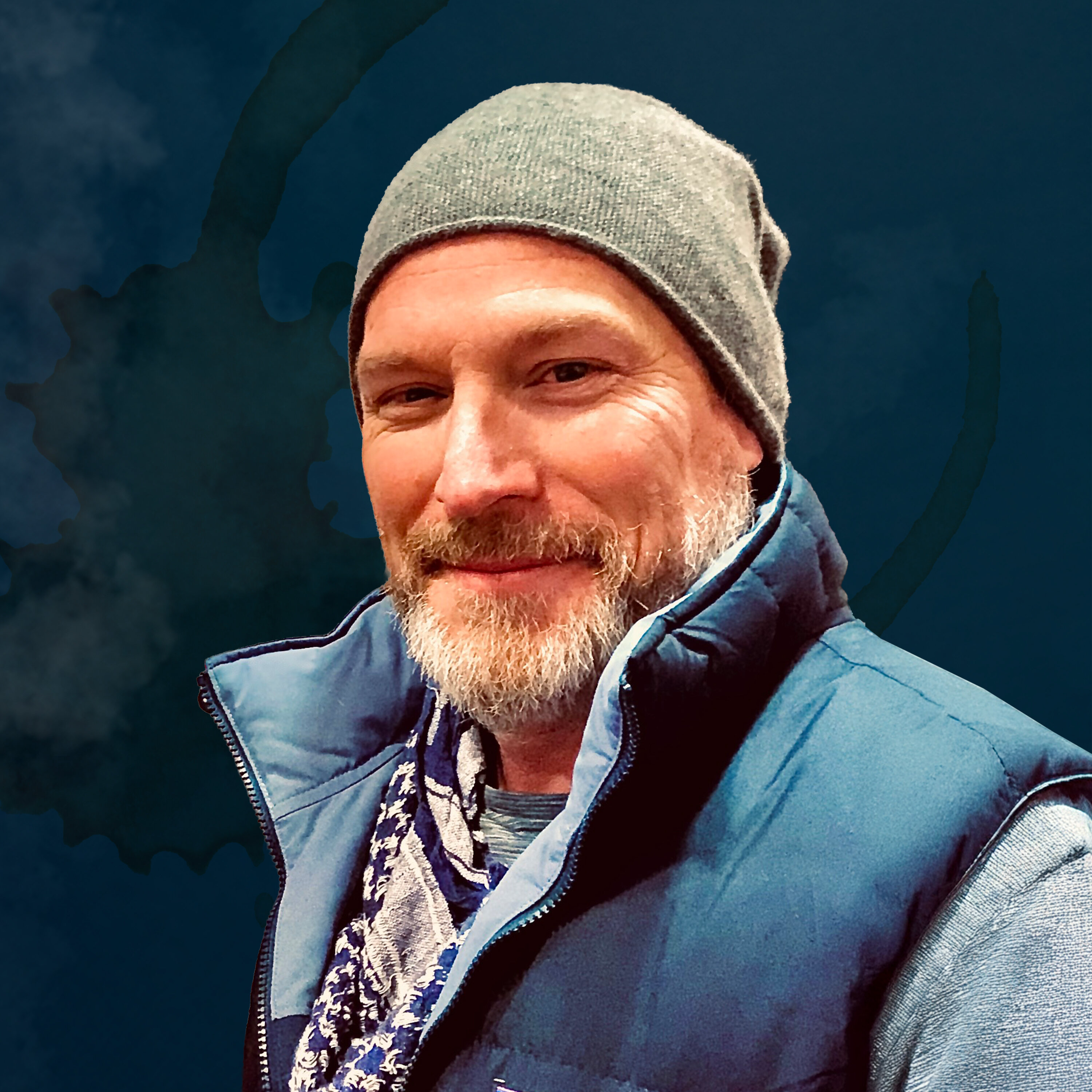
Loading summary
Transcript202 lines
- [00:01]
David Duchovny
The Defender 110 is a vehicle made for the modern explorer. It's built with purpose and it's naturally capable and ready for expeditions. The Defender 110 has the endurance to take you further than you thought possible and you'll drive with on road presence and off road prowess. This is a vehicle that looks tough because it is tough. Its exterior is designed for optimum durability and the raised hood and sculpted grille give the defender 110amodern edge on the inside. It's ready for the whole crew with five seats and the option of expanding to seven. That's capability, meeting comfort and the tech is no joke. 3D surround cameras with Clearsight Ground View let you see underneath the vehicle. You can anticipate obstacles and rough terrain, anything you encounter on your adventures, and Clearsight Rear View offers unobstructed views even when you can't see through the back window. Driver aid technologies also make driving and parking simpler and the next generation infotainment system helps you make even more of your experience. You can also customize the driver display to match your needs and your journey. Design your Defender 110@landroverusa.com.
- [01:15]
Julia Louis-Dreyfus
Want to listen to your favorite Lemonada shows without the ads? Subscribe to Lemonada Premium on Apple Podcasts. You'll get ad free episodes and exclusive bonus content from shows like Wiser Than Me with Julia Louis Dreyfus, Fail Better with David Duchovny, the Sarah Silverman Podcast, and so many more. It's a great way to support the work we do and treat yourself to a smoother, uninterrupted listening experience. Just head to any Lemonada show feed on Apple Podcasts and hit subscribe. Make Life Suck Less with fewer Ads with Lemonada Premium.
- [01:51]
Jake Clark
Lemonada.
- [01:55]
David Duchovny
Hey, just a quick message before we get started. You can now listen to every episode of Fail Better Ad Free with Lemonada Premium Premium on Apple Podcasts. You'll also get ad free access to and exclusive bonus content from shows like Wiser Than Me with Julia Louis Dreyfus, the Sarah Silverman Podcast, and so many more. It's just 5.99amonth and a great way to support the work we do. Go ad free and get bonus content when you hit subscribe on this show in Apple Podcasts. Make Life Suck Less with Fewer Ads with Lemonada Premium. I'm David Duchovny and this is Fail Better, a show where failure, not success, shapes who we are. Before we get into today's episode, I wanted to give you all just a bit more context than usual today, I'm talking to my friend Jake Clark. Now, Jake is many things. A U.S. army veteran, a former member of the Secret Service and the lapd. And while I've been known to play one on tv, he's been an actual agent in the FBI. But what you need to know for our discussion is that Jake is the president and founder of Save a Warrior or Saw, an organization helping to address the suicide epidemic in the veteran community. The main component of this is a three day program that has been honed by Jake and his team over the years to help heal those suffering from post traumatic stress. A few weeks before we sat down together in the studio, I had the privilege of joining one of these programs myself. Seeing firsthand how powerful and transformative it was for the people in attendance. We spent a large portion of this conversation debriefing on the experience I had, what I got out of it, and how Jay came to develop it. While the nature of the program means we can't really get into specifics, hopefully listening in can give you some sense of the collective aha. Moments we shared. One thing we do discuss is how the fundamental trauma experienced by the men and women in the program actually happened before they saw any combat. You'll hear Jake talk about something called ACEs. ACEs, which stands for Adverse Childhood Experiences and is a scientific way of categorizing events and circumstances that can have a detrimental impact on a child's development. We touch on some pretty heavy subject matter in this conversation, like child abuse and suicidal ideation. I felt honored to be able not only witness Jake in action, he's quite amazing during the Sable Warrior program, but sit down with him, decompress and contextualize everything that happened. And of course, then to share with all of you. So here you go. My conversation with Jake Clark. Thank you for coming in and thanks for having me. What I wanted to do, I was withholding this. Cause I wanted to give you a gift. Aw. I wanted to give you a gift when we started. And it goes a little something like this.
- [04:50]
Jake Clark
You still have this? Can I see it?
- [04:52]
David Duchovny
I gotta do it again.
- [04:53]
Jake Clark
You did it perfect. Yeah. It was so weird the way you would do that.
- [04:56]
David Duchovny
Okay, there it is.
- [04:59]
Jake Clark
This is. This is what we would do. When I was in the F. You and I were in the FBI at the same time.
- [05:03]
David Duchovny
At the same time.
- [05:04]
Jake Clark
You got paid a little bit more being the FBI than I did, but we would do this.
- [05:07]
David Duchovny
So when I met Jake and he was telling me that he was a fan of the X Files and that he Particularly liked. No, that's yours.
- [05:15]
Jake Clark
That's for me to keep. Oh, come on.
- [05:17]
David Duchovny
Yeah, yeah, that's yours. No, no, it's not really.
- [05:19]
Jake Clark
Can I put it in the center where you visited?
- [05:23]
David Duchovny
Yeah, yeah, of course.
- [05:23]
Jake Clark
Thank you. This will mean a lot. I'm gonna put these with the boots.
- [05:26]
David Duchovny
And Jake said that. That he loved the way that I presented my badge, like, slowly and very methodically. And I told him that that's because it was a focus puller kind of a thing. Like, if I had to get the badge in focus, I was. I was getting it out of my coat pocket, and I go kind of like that, and like. And focus puller would go, you know, when I was there. So there was always, like, a weird stop to it.
- [05:48]
Jake Clark
Yeah, well, we thought it was some kind of.
- [05:50]
David Duchovny
You thought it was a choice, like.
- [05:51]
Jake Clark
A David Lynchian thing or that maybe you were this alien, right. That you were an alien and that you were natural. But there was. There was an awkwardness about your trying to be human, and you were just doing something where, you know, as cops were like this. You know, we're like, put it away. And you throw them a business card if they want to call and complain.
- [06:12]
David Duchovny
I was laughing because, you know, the descriptions of the acting were alien and awkward. And I appreciate that.
- [06:17]
Jake Clark
This is such a. I was a younger actor. This is like a full circle moment for me here.
- [06:21]
David Duchovny
Yeah, yeah, yeah. I thought I'd lay that on you. But thank you for being here. Thank you for doing what you do and what I wanted to try and get to today or get around or whatever it is. I want to know how you came to be where you're at a little bit. And I also want to talk about the process of the cohorts as well, of Save a Warrior. You speak a lot about to me and to the guys. You speak a lot about not necessarily the trauma of war, which is definitely a trauma, but you speak of childhood trauma. When I had Gabor Mate on the podcast, he spoke of, he said, if you can get your kid past three without really fucking him up. And I am paraphrasing because Gabor Mate didn't say if you could get your kid past three without fucking him up, he said something like that, that that's the major thoroughfare of trauma there. 0 to 3.
- [07:23]
Jake Clark
Actually, from 0 to 4, 85% of the brain is forming, and from 4 to 26, the last 15% is coming online. So you're looking at kind of like three levels. Reptilian, mammalian, and then this neocortex. This executive front part of the brain that takes about 22 years to fully wire in. And so if you can get the first four years right, there's a lot of gains to be had there. And in my early childhood that I would come to learn about as an adolescent, I found out that I spent the first three of my first three and a half years in a Catholic orphanage. Like at six months to three and a half years old, I was in a Catholic orphanage with a brother I have who's 15 months older. And I had a mother who was mentally ill. So my childhood was shot full of neglect, abuse and dysfunction.
- [08:24]
David Duchovny
But this is like pre verbal. So you don't have access to those memories, nor do you have any words to put on what was going on between 0 and 4. That's the big mystery as well.
- [08:34]
Jake Clark
Correct. And you know, this is preverbal. But there is an internal language that occurs for infants, and these things are known as breaks in affinity. And the first one that is common is something here is wrong. And probably when I was separated from my mother, who was mentally ill, who was a paranoid, clinically diagnosed paranoid schizophrenic, there was this onset of symptoms about six months after I was born. And her Russian, Jewish, Irish, Catholic family on Long island made the executive decision to remand my brother and myself to the care of the state of New York through St. Christopher. So when I found out as a younger, you know, as an adolescent, when I was about 9 or 10 years old, when they told me you were at St. Christopher's I literally thought I lived with St. Christopher for three years. You had no memory, I had no frame of reference. And they were like, no, it's a Catholic orphanage on Long island because your mother couldn't take care of you. And everybody had a story on either side of the family about that. But I had this dad who was a Vietnam era Marine, blackout drinking, compulsive gambler. But to me, he was my hero, right? And he got me involved in sports and made sure that I got good grades and went to the dentist three times a year and all the things that needed to happen. But there was an inordinate amount of neglect, abuse and dysfunction. And I would come to understand that as my studies progressed later on in life and I looked into all things child development, the. So what of it? All the people that I work with have childhood post traumatic stress. That's what qualifies them to come to our experience. We determine that in the screening process.
- [10:17]
David Duchovny
You see, that's what was Shocking to me or surprising is when I realized, I thought going in, we were gonna be. We were gonna be. I was gonna be witnessing people dealing with the horrors of war.
- [10:28]
Jake Clark
And we don't talk about any of that. No, rarely. But by the time there was some of that. But it was really incidental.
- [10:35]
David Duchovny
That's the later. Yeah, that's the later disturbance. Correct. And as you say, it's more of a moral injury.
- [10:41]
Jake Clark
So now we're talking about complex post traumatic stress. When you collapse a moral injury on top of a childhood post traumatic stress issue injury. I don't like that D word. I don't think they're disordered. I think it's more of an occurrence. You collapse that and now you have this complex post traumatic stress. And the way one presents typically is with chemical and process addictions. That's a real hallmark of someone with complex post traumatic stress. It can look like borderline. It can look like narcissistic personality disorder. It can look like dissociative identity disorder. But if you really pull the lens back and look at the ACES score, which I think is an incredible biomarker and an indicator.
- [11:23]
David Duchovny
Adverse Childhood Experiences surveys.
- [11:25]
Jake Clark
So the average adverse childhood experience survey score, which measures neglect, abuse, can you.
- [11:31]
David Duchovny
Can you just give the history of that?
- [11:32]
Jake Clark
Sure.
- [11:32]
David Duchovny
That was an interesting. It was, it was. The study or the creation of the questionnaire was made by an insurance company, Right.
- [11:40]
Jake Clark
Well, it was actually done with the CDC and Kaiser Permanente, but there was a doctor, I believe his name was Vincent Felitti, and they asked these 10 questions prior to your 18th birthday. And these 10 questions deal with neglect, abuse and dysfunction in the family of origin. And what we determined over a body of about a population size of about 3,000 respondents was an average ACEs score of 7, which is the same ASA score as a convicted felon in the United States penitentiary system. So that told me the problem was centered in the person's non thinking. Thinking it was centered. We actually could determine the thing under the thing, the thing that was holding the problem in place. And from there begin to ask, whose voice is still missing from the conversation. And then that led us toward internal family systems and the work of Dr. Richard Schwartz. And but, you know, prior to that, we had platformed this off of things that were already existent in the American culture, which is we, we invented recovery, we invented integration.
- [12:42]
David Duchovny
And you're talking about Americans.
- [12:43]
Jake Clark
Talking about Americans. Like we took Judeo Christianity and blended it with Zen Buddhism and came up with these models of recovery. And then as the Vietnam War was winding down the human potential movement was really picking up and conversations were happening in San Francisco and a conversation was happening in New York City. And when you blend and synthesize the parts of those evidence based models as they made their way into the culture, some pretty magical things can happen in a very short period of time, as you witnessed.
- [13:13]
David Duchovny
I did witness, and that was the shocking thing because I come from kind of the world of like, oh, people go to therapy and they're in therapy for years or they expect to be in therapy for their entire lives. And what you guys did in 72 hours. And of course you're not claiming that it's all done, you're claiming there's work to be done, there's an affiliation that remains from the guys to you. There's a network of support that they have. It's not like this is a fix, but this is the beginning of a mode of a fix. And you're giving them the, what you say is we talk funny. That's what you like to say up there. We talk funny because you're giving them a vocabulary. If you're talking about their. This was a preverbal injury, the break in affinity.
- [13:56]
Jake Clark
Yes.
- [13:56]
David Duchovny
And so how do you, how do you put a vocabulary on that? Well, you know, it's made up, but it's getting closer. And you give them a way to talk about those things that they didn't know how to talk about.
- [14:07]
Jake Clark
But there's a little bit more of a challenge here because of what's holding the thing in place. What the thing under the thing that we're dealing with are these gouged experiences of. Look, I, I'm just going to tell you, 95% of the people that I work with were sexually abused as children. And see, that's the part where 90% 5, 95, 95%. 100% of the women, about 85, 90% of the men.
- [14:33]
David Duchovny
Good time to just say there are female cohorts.
- [14:35]
Jake Clark
Yes.
- [14:35]
David Duchovny
There's no co ed cohorts.
- [14:37]
Jake Clark
Correct. I've never taken a woman through this experience.
- [14:40]
David Duchovny
You have not never. You have other women that do it.
- [14:43]
Jake Clark
But I'm saying no, I know. I work with the women. I see them in the tunnel of tears and I do their 500 day plan. I'm saying over the last 13 years, I have never taken a woman through the Civil War experience who was not sexually abused as a child or didn't experience sexual abuse on the job or sexual harassment. What's shocking is the rate of the men who were sexually abused as children. And it's one of the questions, it's the third question in the Adult Childhood Experiences Survey questionnaire. And what's crazy is a couple of years later these memories start coming back because people aren't numbing as much as they used to. They're titrating off their meds, they're using our meditation practice, they're working with their doctors to supplant these dozen meds that they're on with a, with a solid patented mindfulness, you know, stress reductive meditation technique. They're in 12 step, they're in other therapy, they're in communities of practice. They're engaged in purpose greater than self. And they start to come off these meds and these memories come back between the denial and the dissociation and the numbing. And now they have the wherewithal, not the tools, I hate that word, tools. They have this internal wherewithal to be with that with which they cannot be. And the degree, and the degree to which they can be with that with which they cannot be is the degree to which they experience freedom, power and full self expression. Because I don't have this, I don't have the same fear of expressing to appropriate parties the what happens without getting into a big story about it, because I've experienced it out.
- [16:25]
David Duchovny
One of the things that both inspires me and gets in my way is the simplicity of your approach. Even though your sources are coming from the multiverse, you're picking from so many different places. And in a way that was one of the things that was also when I first started to do like 12 step type thinking was, can this really be one size fits all? I'm special man, you know, I'm super complicated, I'm super smart, you know, like, I can't do this simplistic thing. It can't work for Mr. Complicated.
- [17:02]
Jake Clark
Don't you know who I think I am?
- [17:04]
David Duchovny
Don't you know who I think I am? So. And on the other hand, I think we live in a culture that's always offering quick fixes and simple fixes. So I'm trying to thread the needle here with you because you're coming at it with that simplicity, but you're actually getting shit done. It's not this, the simple promise of lose your fat in 30 days or whatever. All the shit that we're bombarded with, the bullshit and the self help bullshit that we get. I see you guys as real and you as really doing the work, and yet it's simple. And that's the hardest thing for people to understand it's not going to cost anything. What? It can't work if it doesn't cost anything. And it's simple. It can't work. It can't work if it's simple, but it is.
- [17:48]
Jake Clark
You know, I live in an era. I live in a time where I'm drowning in information and starved for wisdom. And, you know, that discernment is part of the promises of when one is chemically addicted. That's considered stage one recovery. And the outcome can be the ability to be with life on life's terms. But it takes, unfortunately, a lot of pain and a lot of disappointment and a lot of failure. I know your program.
- [18:19]
David Duchovny
Hey, we got to it.
- [18:21]
Jake Clark
It really takes this failure. But really, it is this heroic journey that we're all on. It's a little different for women and men. You know, women get this thing much quicker than men.
- [18:32]
David Duchovny
Really?
- [18:32]
Jake Clark
Yeah, absolutely. Because they just have so much more power than men do. They're the vessel that life has created and comes through from the universe. And, you know, they're just a little more attuned, obviously, not a little bit more. They're more attuned than men when it comes to this, and they're tougher.
- [18:49]
David Duchovny
So the cohort journey that you take women through is a slightly different form, slightly different that I went through.
- [18:54]
Jake Clark
Slightly different, a little more relational, little more focused on relation, different film that we use for them. But otherwise it approximates. It's both. Both 72 hours. I remember one time, the men's experience was five days. The woman was four. And one woman said to me, she said, why do the men get five days when we get four? And I said, well, you women, you get it quicker than the men. And she goes, we knew that. We just wanted to make sure you did. Jesus Christ.
- [19:19]
David Duchovny
You mentioned. You said 95% of the men and women that you're dealing with sexually abused as children.
- [19:27]
Jake Clark
Yeah.
- [19:28]
David Duchovny
What is it about this culture? What's happening? What happened? Why is that happening?
- [19:34]
Jake Clark
Well, Alice Miller writes about that. The drama, the gifted child and banished knowledge, and thou shalt not be aware. Look, when people live in close proximity to each other and their own boundaries were broken, you know, hurt people, hurt people. There's people will cross lines and do things that they'll deny having done or that they can't imagine. Their own challenges and drift have brought them to listen. If I had told my father, if I had said to my dad, and this is how I got complete with my dad, it was after he passed away. It was just came out of nowhere. I was taking somebody through the work in the kitchen of the place where you visited. And I've heard the voice in my head three times and this was the third time. And the voice said, you know, she touched him, too. And I got my dad like that. I was complete with my father because it never occurred to me that what his mother was doing with me that she would have done with my dad. The thought never crossed my mind, and it explained my dad. And I got complete with him in the sense that I was okay with who he was and who he wasn't. And if I had gone to my father, David, as a young boy or even as a young man and said, you know, Graham, when she would bathe me, he would have killed me. He would have murdered me. I can tell you the first thing he would have done would have been to reach for my throat and choked me. He would have choked that tube, you know, and that's the depth of denial in this culture. But I can't deny having 3,000 people tell me the same story. And not only that, we give the ACEs survey twice in the fifth hour and in the 71st hour, and 40% of the scores go up, same 10 questions. And then if I bring them back a year later and do some intensive work with them to do some of the clarifying material, that maybe they've slacked on. 50% of the scores go up because I'm not numbing as much. The memories are coming back. But yet there is an issue in this culture, and I live in the reality of that every day. And I have a lived experience of that now. It doesn't owe me like it once did, because not too many men in their 20s and 30s looking for help want to sit in a room of strangers and say, look, my grandma used to jerk me off when I was a little kid. But that. That compared to what I've heard in those rooms of what's happened between young men and young women and their families of origins, you think of the scenario. It's been expressed in a container, and nobody is saying it for a fact. It's.
- [22:05]
David Duchovny
Yeah, well, you're also not vilifying. You're also not saying, I want these people brought to justice. You're saying, I'm trying to expiate this.
- [22:11]
Jake Clark
I'm trying to get a complete. I'm trying to get you complete.
- [22:13]
David Duchovny
And I go back to this a lot with my love of Jesus turning the other cheek. It's like I'm trying to break the chain. I'm trying to break the chain here. So I'm not going to slap back.
- [22:22]
Jake Clark
Yeah, yeah. And listen, I have people that are parents that come through, right? The majority of these folks are parents and their concern is, you know, how do I unfuck the damage I've done? And I say, listen, there's a maxim here. It's called Saul Maxim number two. If I really want to help those closest to me, the best thing I can do is focus on my own healing. There is something that a child picks up and instinctually and intuits when their parents begin their own healing journey. There's a different level of regard toward that parental figure that they love no matter what. But it transforms the relationship in the sense that you don't have to do anything other than get a good seal on your own mask before you start worrying about getting a seal on somebody else's.
- [23:14]
Julia Louis-Dreyfus
Hey, Julia, Louis Dreyfus here. If you listen to me on my Wiser Than Me podcast, you probably already know that I'm an investor and an evangelist for the mill food recycler. There are a lot of reasons to love mill, but for me it's all about the impact. Keeping food out of the garbage is one of the most powerful things we can do to help the planet. Every single day. We're talking banana peels, carrot tops, old takeout. When that stuff heads to the landfill, it becomes a huge driver of climate change. If you already compost, great. But of course there's the smell, the flies, the running to the curb every day with a little leaking compost bag made of cornstarch. That's where mill comes in. It makes keeping food out of the trash as easy as dropping it in. It can handle nearly anything from a turkey carcass to like 20 avocado pits. It works automatically while you sleep. You can keep filling it for weeks and it never ever smells. Mill makes dry, nutrient rich grounds that you can use in your garden, add to your compost feed to your chickens, or mill can get them back to a small farm for you. But you kind of have to live with mill to really get it. And that's why they offer a risk free trial. Go to mill.comweiser for an exclusive offer.
- [24:28]
David Duchovny
The Defender 110 is a vehicle made for the modern explorer. It's built with purpose and it's naturally capable and ready for expeditions. The Defender 110 has the endurance to take you further than you thought possible. And you'll drive with on road presence and off road prowess. This is a vehicle that looks tough because it is tough. Its exterior is designed for optimum durability, and the raised hood and sculpted grille give the Defender 110amodern edge. On the inside, it's ready for the whole crew with five seats and the option of expanding to seven. That's capability, meeting comfort and the tech is no joke. 3D surround cameras with Clearsight Ground View let you see underneath the vehicle. You can anticipate obstacles and rough terrain, anything you encounter on your adventures, and Clearsight Rear View offers unobstructed views even when you can't see through the back window. Driver aid technologies also make driving and parking simpler, and the next generation infotainment system helps you make even more of your experience. You can also customize the driver display to match your needs and your journey. Design your Defender 110@Land RoverUSA.com when it comes to growing your business, engaging with your customers is crucial. How else will they know about your business or decide whether it's a good fit for them? But the question remains, how do I do it? Not everyone has the time, skills or money to keep up with marketing every day. That's why there's Constant Contact, like a mini marketing team just for you. But the impact is far from many. Constant Contact lets you manage website landing pages, social media campaigns, texts and email marketing all in one place. Over half a million small businesses use those tools to stay connected, top of mind and ahead of the competition. Constant Contact is helping the small stand tall. Pricing is transparent and based on your contact list, so you're only paying for what you need. And they have a friendly phone support team to help with any questions that come up. Looking at the tools, I can see just how comprehensive the approach of Constant Contact is. They really pack it all in there and they still let you call the shots even while they're doing a lot of the hard work behind the scenes. Get a free 30 day trial when you go to constant contact.com try constant contact. Free for 30 days at constant contact.com constantcontact.com I want to go back to like your teen years. Like when you're. When you're. You joined the military at 17, right?
- [27:23]
Jake Clark
And I was conscripted. My father. My father insisted. Like I was terrified of my father. I did not voluntarily enlist. I was made aware. Listen, the day after you graduate high school, I'll never forget this conversation. You talk about a break in Affinity 1 coming lagging. You know, it's I'm defective, I'm helpless, I'm alone. When he said June 7, your bags are on the porch within a week In September of 1983, within a week, I was sworn into the delayed entry program for the U.S. army. And I thought my life was over, that my dreams were shot. Look, I either.
- [27:57]
David Duchovny
What were your dreams?
- [27:58]
Jake Clark
I wanted to either be a professional baseball player or a Secret Service agent because I saw Mr. Reagan get shot on television when I was 15. And I saw the way my dad reacted to the reaction of the Secret Service agents. I thought the Secret Service was these two guys that lived on a train out west, James Garner and Artemis Gordon. They chased this little guy around the desert, Dr. Loveless.
- [28:18]
David Duchovny
And.
- [28:19]
Jake Clark
And my dad said to me, do they educate you in that school you go to? And when I saw what the Secret Service really was from age 15 until I was 29, I actually ended up in the Secret Service at 22. But when I reapplied to go back as an agent, when I met the education requirements after being a police officer here in Los Angeles, like I knew more about the Secret Service than the dudes who were interviewing me. And they said as much. They said, my God. I said, well, I've been studying this agency since I was 15 years old because it was a sexy gig. You're chasing counterfeiters to live and die in la. You're guarding dignitaries. There's an opportunity to maybe work on the President's detail one day, travel the world, do sexy stuff. So it was all look good, dominate, look good, dominate. It was all what Young talked about, like it was all athlete, warrior, look good, dominate, look good, Dominique. There's no statesman, spirit at that point. It was just, it was all about if, if I do this, as in an order to, then all the other things that come along with being a normal person will fall into my life. And I was, I was completely wrong about that. Completely wrong. I got that all wrong. And then I ended up in the FBI.
- [29:22]
David Duchovny
And well, yeah, so at 17, military.
- [29:25]
Jake Clark
Military secret Service uniform division.
- [29:28]
David Duchovny
Then the Secret Service spent.
- [29:30]
Jake Clark
Spent a year at the uniform division. I walked into work one night, there was a pamphlet for the lapd and all of us wanted to be cops now since we had all great training. So I came out west in 1989. I was a street cop in skid row. That was very impactful. South Central. And then I ended up.
- [29:45]
David Duchovny
Was this not speaking to your sense of service?
- [29:51]
Jake Clark
Because you say, oh, it was all self service. It was all self service. Oh, no, there was. I. I did not understand the value of service until I was about 51 years old.
- [30:00]
David Duchovny
Right. So that's not.
- [30:02]
Jake Clark
No, this, this was all about more, better, different, you know, how do I, how do I garner status in this culture that places a high premium on it? Because inside, you know, I'm defective, helpless and alone. I'm the, I'm the biggest piece of. Around which the world revolves. Who would lie if telling the truth would get him out of trouble. And I've got non shareable problems. So I, I'm fraudulent. I've got non shareable problems. I have no declaration, I have no purpose in my life and I'm. I'm just existing. But it looks good. I can take care of myself. I, I'm desperately trying not to be like the family of origin I come from. But inside I can't lose that. I can't turn that tape off.
- [30:43]
David Duchovny
Were you afraid of mental illness?
- [30:46]
Jake Clark
After I worked skid row, I was. When I worked skid row as a police officer, I thought that a punishing God was playing some cosmic joke on me, showing me the ultimate end. Like you think the mental institution was bad for your mother, which was horrific. Going to these mental institutions, this is where you're gonna end up. But I felt like these were my people and that I was being called one day to be out there with them, that this is how my life was going to ultimately end up. Was going to be on skid row in downtown Los Angeles and they'd recognize.
- [31:17]
David Duchovny
You as that was that cop.
- [31:19]
Jake Clark
Well, they'd look at me like there was the way people would regard me. There was a knowing, like they didn't look at me like they really felt that. Yeah, I sensed this connection with them and I don't know if I was projecting my mother onto them and it didn't ruin my day. It just was like, wow, okay, this is where the story ends for me.
- [31:44]
David Duchovny
But it didn't almost. How so?
- [31:47]
Jake Clark
Well, I crashed my life at 31. I ultimately ended up not going back to the Secret Service. I pulled the trigger too quick. I applied for and was accepted to the FBI in the fall of 97. And halfway through the FBI Academy, the Secret Service calls me and says, we have a class date for you. Now here I am in the middle of the FBI Academy with about seven weeks to go and the dream job of all dream jobs is calling, saying, listen, go sign out resign, which I've never been a quitter, resign. We will send a car for you, go back to la, pack your stuff and you're going to go to the Federal Law Enforcement Training center back in Georgia and you're going to Be a Secret Service agent. And I'll never forget. I can see myself at the bank of payphones.
- [32:32]
David Duchovny
How old are you?
- [32:34]
Jake Clark
30. And I could see myself seeing myself taking this phone call from a pay phone. For you younger folks, that's a thing that hangs on a wall. It's got buttons on it and a thing you talk into and listen. And John Gill, who was on Mr. Reagan's detail at the time, who was also one of the recruiters, it was still a very boutique agency. It was here. Here was a dream coming true. And I can't believe that I'm telling him, I'm not going to do it. Like, that's the one decision sometimes I wished I had back in life.
- [33:02]
David Duchovny
Did you have a mentor at this time? Was it.
- [33:04]
Jake Clark
Do you have an older him, John Gill? And I had a mentor from the police department, a Detective Ed Medlock, who to this day is still a trusted advisor who guided me and shaped me because I was going to school at night. Like, you had to meet certain requirements to be in the Secret Service. You had to have a certain amount of education and experience. And what they were, I had, I checked every block they were looking for. Like, this was this was it. This was gonna be what I wanted to do. But I couldn't quit the FBI. But when I graduated from the academy a couple of months later, as I'm walking across the stage shaking hands with Mr. Free, I knew that this wasn't gonna work out. Like, the guy beside me, Mike Costanzi, was bawling, he was so overcome with his accomplishment. And I'm sitting there numb, and I'm thinking to myself, you just made a really big mistake. You made a really big mistake. Because I'm like, this is it. Like, this is. After focusing on being a federal agent for 15 years and everything I went through as a soldier and everything I went through as a street cop and a detective, and, you know, I was a really good student, took it very seriously. Like, this is it. And I never. I could never figure out what we were doing at the FBI. Like, I knew the Secret Service mission backwards and forwards because I had done some cases with them in la. And it just spoke to me. It was more family, like more boutique. And there was. There was a lot more room for rookie mistakes at a place like that. Whereas the beer, they were in the two year probationary period. You say the wrong thing to the wrong person on the wrong day, which I did. And they're like, we're done. So here I am at 31, kicked out of my own life with a self inflicted wound and unbelievably suicidal. I don't know what to do. I don't know what's wrong with me. I know there's something very wrong with me because I'm looking at my own behavior and the ways I'm acting out in my life. And then I found myself walking into rooms of recovery. And that's when things started to turn around. It took 20 years, but it could have happened a lot more quickly for me. But I could not be honest with myself or others about my dishonesty.
- [35:05]
David Duchovny
What was it about the rooms.
- [35:09]
Jake Clark
The courage of the people's vulnerability? I couldn't believe what they were sharing and I couldn't believe they would look you right in the eye. And I struggled to understand that, that I could still have a life that was worth living, that it was salvageable. You know, if the Ghost of Christmas Future had come in and said, listen, you're a slow learner, you're a tire kicker, you know, you're hard headed, but there's going to be a day where you really get this and you will have no regrets that all these other things didn't work out. Like you're really going to get your life, but we're going to have to kill off some parts of you that are not constructive, they're not productive, they're not appropriate, they don't contribute. I wouldn't have believed it. I wouldn't have believed it. But you know, I'm what M. Scott Peck calls thrice broken. And he says that's the limit for a human being. If you get broken three times in life, you're unbreakable. And I live a life today where I don't have any of the concerns that I once did and the worries that I once did with respect to am I going to be okay? Is my life going to work out? Can I manage my life? How are my relationships going to be? And I've learned to be honest about my dishonesty.
- [36:20]
David Duchovny
Thrice broken.
- [36:21]
Jake Clark
Thrice broken. First time at the Bureau. Second time.
- [36:26]
David Duchovny
First time as a child.
- [36:28]
Jake Clark
No, I don't. No, that's. I had an American childhood to be in an orphanage.
- [36:33]
David Duchovny
No, I don't, I don't know.
- [36:34]
Jake Clark
I don't have language for that like that. That break in affinity, you know what? Then maybe, maybe I had a round tripper. You know, I look at the first break in affinity. The real, the first breaking was at 31, getting myself kicked out of my life about five years later, losing a relationship with A woman I was engaged to, who I was very much in love with. And then thirdly, when my marriage ended in 2017, where these repeated what's known as a katabasis, it was just the universe kind of saying, look, we have something for you. You have some gifts to give away. But until we know you are qualified for this position, and we are trying to. There's an old saying, God doesn't call the qualified, he qualifies the cold. Until we can get you to submit to where we're trying to take this train and ride in the direction that it's going, you're going to keep, you're going to stay in this vicious circle and it's just going to be more of the same and more of the same. And I got tired of letting myself down. I got tired of efforting so hard in a direction only to let myself down again. And I had enough sense about me to say that if you don't get this sorted out, you will kill yourself and you're going to miss the rest of this show. You're going to miss packing something into the stream of life. Because I was very selfish, very self centered, very self seeking. And I got tired of this act. I just got tired of letting myself down. I was just tired of being disappointed and not being able to look myself in the eyes in the mirror. But there was also the story back there that who the fuck are you? What do you think you have to contribute. That was a big issue for me too. I don't have anything to give away.
- [38:16]
David Duchovny
Well, it seems to me that when you walked into the rooms, you go into a 12 step room, you go on your autodidactical journey at that point and it seems to me that you.
- [38:29]
Jake Clark
Start reading everything and I'm in the right town too. I'm in la. You can't swing a dead cat without hitting somebody that's drenched in patchouli and granola that's got some esoteric insight into something.
- [38:41]
David Duchovny
They're gold in those places.
- [38:42]
Jake Clark
Oh my God. And here's the thing, guys like me don't walk into places like that. And not because we think we're badass tough, we're just so ashamed that, that we don't feel that, you know, we're going to be welcomed or invited. And I just found myself in these rooms with the most incredible mystics and metaphysicists and ontologists. And it real, I really got what they were saying. Like there was some part of me that was filling up and there was a. And early on, I was like, I wonder if I could do this. I wonder if I could do it for people like me who end up in places where people like me end up in the space of warrior, what have you, and give them a proper versus a pseudo initiation into adult philosophy. And then you realize when you do the deep research that this conversation has been around for 4,000 years. It's just been passed through the ages, and it finds the zeitgeist of the time in which to be delivered. And I think that's what happened for us at Save a Warrior. And trust me, I'm the last guy who ever thought that he would be cast in this role. And I asked this very famous actor one time about his breakthrough role, and I was kind of fangirling over him and I said, man, how did you get that part? And he looked at me and he said, I fit the suit. I loved that. I fit the suit. And I had young warriors telling me, you were just so ideally trained and developed to do this. But I don't think they understood how much work I had done in the background and in those. In that long, dark night of the soul. Like, I never stopped studying. I read myself blind to try to get down to the heart of this thing and to see, like, what is holding this problem in place. What is the thing under the thing? And that's where, you know, I, I focused my attention. An Australian hiker travels to the American west to walk a wilderness trail.
- [40:47]
David Duchovny
Wasn't afraid to be out on his own.
- [40:49]
Jake Clark
But Eric Robinson vanished in the Hyuinta Mountains.
- [40:53]
David Duchovny
I remember thinking, Eric, what were you thinking, mate?
- [40:57]
Jake Clark
I'm Dave Cawley. Join me on my podcast Uinta Triangle, where I travel the world to answer the question, what happened to Eric Robinson? Follow Uinta Triangle. That's Uinta Triangle on Apple podcasts or wherever you listen. I'm Josh Mankiewicz and I hope you'll join us for season four of Dateline Missing in America. In each episode of Dateline's award winning series, we will focus on one missing persons case and hear from the families, the friends and the investigators, all desperate to find them. You will want to listen closely. Maybe you could help investigators solve a mystery.
- [41:36]
David Duchovny
DATELINE Missing in America. Listen now, wherever you get your podcasts.
- [41:43]
Jake Clark
Hey, I'm Dr. Maya Shankar.
- [41:45]
Julia Louis-Dreyfus
I host a podcast called A Slight.
- [41:47]
David Duchovny
Change of Plans that combines behavioral science and storytelling to help us navigate the.
- [41:52]
Julia Louis-Dreyfus
Big changes in our lives. I get so choked up because I feel like your show and the conversations are what the world needs. Encouraging, empowering, counter Programming that acts like a lighthouse when the world feels dark. Listen to a slight change of plans wherever you get your podcasts.
- [42:29]
David Duchovny
So Jake and I met at. In a health food store. And he approached me because he recognized me from the X Files. And we talked about the FBI for a moment and then he started telling me about what was, at that point, saw or what was soon to become.
- [42:44]
Jake Clark
Soon to become. I was developing it and I was just all excited and there you were. And I remembered you from.
- [42:49]
David Duchovny
Yeah.
- [42:49]
Jake Clark
You know, and you were very kind, you know, and I'm just. I was like one of those. Those things you attach to a garden hose with holes in it just like flopping all over the place. It was just coming out of me that. And here you were, here's Fox Mulder.
- [43:01]
David Duchovny
Yeah. So at that point, you're trying to figure out how to become, how to get up and running. Right? Is that right?
- [43:10]
Jake Clark
Yes. But I had enough sense about me to grab local practitioners that were doing this with high end, high high thread count recovery centers in Malibu.
- [43:22]
David Duchovny
Right.
- [43:22]
Jake Clark
And I was hiring them to do a part of it was I was avoiding my own responsibility. But I wanted to see what they would do in this, what was then 120 hour experience. Like, I had this idea that it was going to be meditation education and motivation and this would be enough to unstick people again. I didn't know what I didn't know at the time. This was the 13 years ago. Now I've got 3,000, you know, participants under my belt. 282 iterations of this piece of performance theater. And that was the beginning in Malibu in the summer and the fall of 2012.
- [43:55]
David Duchovny
You call it performance theater. I found that to be interesting when I was going through it with you with the guys and you call the guys who lead these cohorts Red Xers for the red X on the stage where the actor stands, you know. So you trace the origins of what you're doing to Greek drama, right?
- [44:15]
Jake Clark
Totally.
- [44:16]
David Duchovny
This kind of psychodrama, or I guess most people would know, would think of it as role playing or whatever in the therapist's office. But can you speak a little about.
- [44:25]
Jake Clark
Well, you know, from what I studied, and I tend to, I don't want to say make caricature or parody, but my understanding is that when the Greeks came home from the Trojan War and got their shit kicked in, someone went to Socrates and said, man, these dudes, we can't get these cats home. Like, we can get them home, but we can't get them home. And he's like, okay, we're gonna act this out, we're gonna put you up on this stage, but you're going to portray your enemy. And they're like, wait, wait a second. What are we talking? He's like, just, just trust me. Just trust me. And they. This was the origin of Greek tragic theater was these soldiers who were struggling to reintegrate themselves back into their culture were living in the skin of their enemy. And by doing so, going through some transformational experience by way of paradox. And there's something really, really powerful about doing that kind of psychodrama. And you saw some of that when you were with us, and we do it very, very slowly. But yeah, the person delivering the content is known as the red Xer. And somebody said something to me one day, they gave me a compliment and I was like, well, there's a reason they let me stand on the red. And it just kind of right, stuck.
- [45:40]
David Duchovny
Right?
- [45:40]
Jake Clark
But yeah, we train our red Xers to lead these experiences. And, you know, the thing that I would want to convey is, you know, really to hear this the right way. These folks that come through this experience, these are some bad. I mean, these are dudes that are shit hot warriors with significant time on target, but they are. So there is something in their DNA that just responds to that kind of a practicum. Like they really take it on and it's almost like some part of them that they didn't knew they had access to. And it's really, really powerful to see people get something like that.
- [46:21]
David Duchovny
And it doesn't come down to what I would think it's gonna come down to, which is forgive your opponent, forgive the enemy. It goes back to mom and dad always.
- [46:32]
Jake Clark
Well, but forgiving oneself for making mom and dad wrong. See, this is the biggest hur. Because of what's happened. And the story I have about what happened and the complication and the compression and the collapse of that.
- [46:44]
David Duchovny
This is something we talk about on the podcast a lot is like the possibility of forgiveness or forgetting. And this is something that I was struck by during our process was you're like, forgiveness is not possible.
- [46:56]
Jake Clark
No, it's not.
- [46:57]
David Duchovny
Can you explain that?
- [46:58]
Jake Clark
Sure. When you look at the word forgive, if you look at something like a course in miracles, which has been around for 50 years and has found it's popped up here and there. And it started in Columbia University back in the early 70s. There's some people say it's the. The elaboration of the lost gospel of St. Thomas. And there's this Idea that to forgive is to give oneself ahead of time, to pull oneself out outside of time and to move into this. Emerge into this other space where possibility of possibility exists. If I say to you, I forgive you, I'm assuming the power of a deity, of a God. I can't do that. What I can do that's very, very powerful, that can open up that space is. It goes back to St. Thomas, right, or of Aquinas. He said St. Francis. It was either St. Thomas or St. Francis.
- [47:56]
David Duchovny
One of those saints.
- [47:56]
Jake Clark
One of those saints said, it is better, you know, it's better to seek forgiveness than to forgive.
- [48:06]
David Duchovny
Right?
- [48:06]
Jake Clark
Like this is ancient.
- [48:08]
David Duchovny
That's not culture either.
- [48:10]
Jake Clark
No, no, but see, I. I can't forgive you because it doesn't move. It doesn't move the action forward. When I humble myself and I say, listen, will you forgive me for making you wrong for being human? It. It. It stops time. It.
- [48:24]
David Duchovny
It freezes people say that again because that's something I heard over and over.
- [48:27]
Jake Clark
Will you forgive me for making you wrong for being human? When I do that, there is an immediate connection because it requires humility, is recognizing one owns limitation and asking for support. I'm asking you, I'm asking you to do something for me. And the hardest thing a human being will ever say no to is a request for help from another person. Listen, listen, I need you to help me. Can you help me? Will you forgive me for making you wrong for being human? If nothing else, it knocks the ultimate pause in the other person's ass. Like, wait, what just happened here? There's, see, novelty. Novelty applied to a situation that otherwise appears frozen. And now you've just created this alternate reality game between you and this person with whom you have an affinity. And it really gives the other person, it empowers the other person to make this profound contribution to you. And it restores. It restories the affinity that. That's been lost. Because if I say I forgive you, it's. It's just. There's an arrogance to that. It's like I'm. And the other person immediately can put them on the defense. Like, forgive me for what? What? For feeding you?
- [49:50]
David Duchovny
For.
- [49:51]
Jake Clark
For changing your clothes, your diapers, for bathing you, for protecting you, for sheltering you. See, now I just hit their receipts. Whereas if I paradox that, that's the breakthrough, that's the miracle that our folks again and again and again and people forget to remember that, you know, I went home and I forgave my parents. I went, oh, fuck, no, no, no, no, no. Listen, I'm gonna tell you in English.
- [50:15]
David Duchovny
Well, could they understand the formulation if you gave it. Did you say that to your dad? At some point, actually. But during the process, during the cohort, we say that in a role play.
- [50:28]
Jake Clark
Sure.
- [50:28]
David Duchovny
So we say, usually to you or somebody else who's playing the father or.
- [50:33]
Jake Clark
The mother, I got to do it with my father on his deathbed, and I got to do it with my father in the late 90s.
- [50:40]
David Duchovny
But you don't need to.
- [50:41]
Jake Clark
No, no, I don't need to do.
- [50:42]
David Duchovny
It with the actual person. No.
- [50:44]
Jake Clark
Because if you can create. There's an ecology of transformation. If you can create the context for these enactments to occur, which is what we do at Saul, you need submission, containment, enactment to have a proper secular spiritual initiation. This is ancient. You gotta have that. You gotta have that. You gotta have that. And if I can introduce that archetype of mother and father, and you saw with your own eyes, when I bring up mom, when I bring up dad.
- [51:15]
David Duchovny
You have the guys stand with their palms out, right?
- [51:18]
Jake Clark
Well, usually, yes. Mom and dad standing with the palms out. They're there to receive, right?
- [51:24]
David Duchovny
Correct. That's the image you're giving. Correct.
- [51:26]
Jake Clark
But there's this moment with the participant. There's this antipathy, or there's this regret, but there's always grief.
- [51:36]
David Duchovny
Always.
- [51:36]
Jake Clark
And grief is what holds these problems in place. And there's no power in saying, look, I need you to forgive Mom. I need you to forgive dad. But when we ask their forgiveness, my God, the solvency of those tears. You see the person transform right in front of you. It's immediate.
- [51:51]
David Duchovny
It was. Yeah.
- [51:52]
Jake Clark
And now the problem is, I'll pick it back up and I'll have this issue with mom and dad again. So this completion sometimes takes some repetition again and again and again.
- [52:00]
David Duchovny
Well, that gets back to what happens after the 72 hours are over. But I'm sure you're like, this is 48 hours in. You're seeing these tough guys rolling around.
- [52:10]
Jake Clark
On the floor, screaming, sobbing.
- [52:13]
David Duchovny
And it is. It's not forgiving them. And that's kind of what we've been taught in this situation.
- [52:20]
Jake Clark
What you're seeing there is when they're saying. When they're saying, will you forgive me for making you wrong for being human? Here's what's not said. That said, mom, I love you. Dad, I love you. The only thing that matters to me is that I love you. And you see that? Completion. That's what. And I'll ask them, you're never going to see them again. What do you want to say? It's always the same thing. I love you.
- [52:40]
David Duchovny
You.
- [52:40]
Jake Clark
I love you. It is without fail, that is the language that is evoked, that comes forth and it just. You feel something in the room, something really, really powerful. Because that person has been withholding that declaration for maybe decades.
- [52:57]
David Duchovny
Well, they haven't known how to formulate it.
- [52:59]
Jake Clark
No. They haven't had the container for it. They haven't had a courageous space in which to express it. And we create the ideal conditions for that to occur.
- [53:08]
David Duchovny
But I think it's important to say too now, because you're not saying, hey, I'm gonna give you guys a talent that you're gonna go out there and get what you want.
- [53:15]
Jake Clark
You know, I'm gonna give you access.
- [53:17]
David Duchovny
Nothing like that.
- [53:18]
Jake Clark
Listen, we're gonna give you access to a world where you're gonna have the possibility and the opportunity for what you really want. And hear this the right way. It's not gonna look anything like you think it will because you're not gonna show up as this athlete warrior with this backtrack in your mind of defective, helpless and alone running you as a game. If I continue to clarif this experience, and it's going to take some time, I have to introduce and emerge different language, repeat, relate, repeat, reframe, relate, repeat, reframe. And it, it, because this is something.
- [53:52]
David Duchovny
That you talk, that you talked about a lot that resonated with me is like, there's the thing that happened. There's no denying that right? Happens. It happened. And then there's the story that you've been living with that you told yourself about.
- [54:04]
Jake Clark
And the story isn't true. This, what happened is what happened. The story I make up is never.
- [54:09]
David Duchovny
True, no matter what that story is, no matter what.
- [54:11]
Jake Clark
And people struggle with. Wait, you're. And it's like right back to the mind. It's like right back to the mind trap. You're not listening. You don't understand. Listen, I overstand. I overstand. Okay? Not my first rodeo. Me too. You know, I had adults in my childhood who, who broke my boundaries and interfered with me in ways that should not happen to a child. But it's the story I make up about the what happened that isn't true. Because I'm telling, I'm talking about something that, that did happen. And it is never exactly what happened. If, if I get it down to the basic language, it disappears the story. And now there's a breaking open, there's a space for Being complete with the source of this break in affinity and bang. I'm into another dimension. Time has stopped. I'm outside of time. Transformation has occurred. And I want more of this because this is where the satisfaction and the fulfillment comes in.
- [55:01]
David Duchovny
It's not about telling a new story story, is it?
- [55:04]
Jake Clark
I think it's about creating a new story. I think it's about creating a story that's powerful, that creates agency, that elevates one's consciousness, that allows one like I live a life today that someone like me doesn't get to live with. Those biomarkers as a 9 out of a 10 on the aces scale, I'm someone that ends up institutionalized or on skid row or in prison. Prison. And I think that's why I was drawn to the places I was drawn to. And not because there's a trope out there where people say, well, people join the military because they don't have any better options in life. No, let's clarify that. I joined the military first of all, because I was forced to. But I went into law enforcement unknowingly, seeking out opportunities to recreate the abandonment of my childhood. Now, that's some sick shit. And I.
- [55:57]
David Duchovny
It doesn't seem sick to me as an actor. I mean, that is the hero's journey so often. And you talk a lot about Joseph Campbell in your work as well, so. Yeah, no, I think that's. Returning to the scene of the crime is the nature of human psychology.
- [56:13]
Jake Clark
It's so devastating to feel so powerless to do anything about one's circumstances other than be in this vicious circle.
- [56:22]
David Duchovny
Right.
- [56:23]
Jake Clark
And that's why people kill themselves.
- [56:25]
David Duchovny
Well, what I'd like to end with is something that's been, you know, kind of not gnawing at me. But I've been thinking about since I went through this weekend with you guys is I just kept thinking, everybody should do this. Sure. And I know that what you're doing is helping people with these acute problems, and that's where it should be. And I'm just sitting there thinking, everybody, everybody should go through this week. You know, and that's just my thinking. You know, I think anybody could benefit greatly by being exposed to the kind of the process, the simple, intense, short process that you take people through. There's so much a part of me that doesn't believe that it could work. How could 72 hours change my life? You know, I'm just.
- [57:19]
Jake Clark
Just.
- [57:19]
David Duchovny
I'm too complicated again and too fucked up for that to work. And yet there's magic in what you do.
- [57:28]
Jake Clark
Thank you.
- [57:28]
David Duchovny
And you're a superstar. And I think that there takes one to know one.
- [57:33]
Jake Clark
I had great trainers.
- [57:34]
David Duchovny
Yeah. And I think that you're training great people as well.
- [57:37]
Jake Clark
Sure, I'm working. Listen, I'm turning wrenches on Bugattis. There's nothing wrong with a Toyota Camry, but that's not what's showing up in the shop. I'm working with people who are profoundly courageous.
- [57:48]
David Duchovny
But I, you know, when I say everybody should do this, I don't want to take the focus off what you are doing.
- [57:56]
Jake Clark
No, I get it.
- [57:57]
David Duchovny
Yeah.
- [57:57]
Jake Clark
But I'm working with human beings. I'm not looking at people sitting across from me in those experiences. As you know, that was a soldier, that was a Marine, that person was in the Coast Guard. They're a police officer, they're a firefighter, they're a dispatcher. I see adult children that are stuck in an emotionality of a five or a six year old that got knocked off course and are now moving toward an apparent death of despair. And that's the humanistic side of this experience. I don't see that. And the good news is there are platforms and vectors out there that we seek to grow into. When Campbell did the interviews with Bill Moyer, that was powerful. Powerful, right. Tens of thousands of people wrote into PBS and said, my God, just watching this transform my life. And you are sitting as a witness, as a valued participant, which we've had since the beginning. And you're having what's known as an others having gotten just by experiencing someone else's transformation. It's having an analogous effect on you as the Percipian witness. And that's the power of this work, is that we are moving into an era where that technology is available. But I would just, I would say to people, listen, what you seek seeks you. And, and the, the greatest gift we can give ourselves is this desire to be curious about what's going on for us internally and knowing that that's maybe, just maybe that's not who we are. And as we continue to inquire into those spaces, things open up for us in our world that begin to lead us to what we're called to, because we're all called, called to heal and, and emerge into what we were sent here to be. I really believe that. And I've seen that in, in people. I've been in the rooms of Recovery now for 27 years and you know, we just. Yeah, I wish I had a magic wand and I don't. But I'm grateful for the opportunities I am given even to sit here and talk with you about this because it's so kismet 13 years later, after I first met you, almost almost to the day, to circle back. And that's what I believe that there are that this is where the culture's going, that this is the zeitgeist that we are looking to heal as a nation.
- [60:15]
David Duchovny
That's going through a lot right now as we end. Can you show me your id? Can you present it to me? Sure. In the way that one is supposed to. I don't think it was quite that slow, but.
- [60:29]
Jake Clark
Oh, oh, how I would do it. I would just do a little.
- [60:31]
David Duchovny
No, I know, I know.
- [60:32]
Jake Clark
Like you do. By the way. I would do it like this. I listen. I would get a lot of laughs in the office.
- [60:36]
David Duchovny
Oh, okay.
- [60:38]
Jake Clark
Yeah. Thank you for this gift. This is really. This is special.
- [60:41]
David Duchovny
Thank you for this gift.
- [60:42]
Jake Clark
You're welcome.
- [60:57]
David Duchovny
Trying to get some thoughts down on Jake Clark. My friend, My new friend. Let me give you this book list because I asked Jake give me a book list. Let me send people in the right direction. The Spirituality of Imperfection by Kurtz and Ketchum. The Body keeps the Score by Vander Koch. The Drama of the Gifted Child, Alice Miller, How God changes your Brain, Newberg and Waldman. Quantum Change, Change or die Fleischman. Occult of one Grannon Awareness by De Mello. The Three Laws of Performance, Zafron and Logan. That's the EST stuff, I believe. No bad parts, Schwartz. Seems like a lot of homework. Fail Betterers out there. Take it slow, read around, see what sticks. Then start telling your own story. Thanks so much for listening to Fail Better. If you haven't subscribed to Lemonade Premium yet, now's the perfect time. Because guess what? You can listen completely ad free. Plus you'll unlock exclusive bonus content like the full version of my post in Interview thoughts that you won't hear anywhere else. That's more of my recaps on interviews with guests like Chris Carter and Emily Deschanel. Just tap that subscribe button on Apple Podcasts or head to lemonade premium.com to subscribe on any other app. That's lemonade premium.com don't miss out. Fail Better is production of Lemonada Media in coordination with King Baby. It is produced by Keegan Zen, Aria Bracci and Donnie Matias. Our engineer is Brian Castillo. Our SVP of weekly is Steve Nelson. Special thanks to Carl Ackerman, Tom Kupinski and Brad Davidson. The show is executive produced by Stephanie Whittles, Wax, Jessica Cordova Kramer and me, David Duchovny. The music is also by me and my band, the lovely Colin Lee, Pat McCusker, Mitch Stewart, Davis Rowan and Sebastian Modak. You can find us online at Lemonada Media and you can find me at David Duchovny. Follow Fail Better wherever you get your podcasts or listen. Ad free on Amazon Music with your prime membership.