Loading summary
Transcript409 lines
- [00:01]
Strawberry Me Announcer
Support for this show comes from Strawberry Me. Be honest, are you happy with your job or are you stuck in one you've outgrown or never wanted in the first place? Sure, you can probably list the reasons for staying, but are they actually just excuses for not leaving? Let a career coach from Strawberry Me help you get unstuck. Discover the benefits of having a dedicated career coach in your corner. Go to Strawberry Me Unstuck to claim a special offer.
- [00:33]
Odoo Announcer
Support for this show comes from Odoo. Running a business is hard enough, so why make it harder? With a dozen different apps that don't talk to each other, Introducing Odoo. It's the only business software you'll ever need. It's an all in one, fully integrated platform that makes your work easier. CRM, accounting, inventory, e commerce, and more. And the best part, Odoo replaces multiple expensive platforms for a fraction of the cost. That's why over thousands of businesses have made the switch. So why not you try Odoo for free@odoo.com that's o d o o dot com.
- [01:22]
Bella (Interviewer)
Hi. Come.
- [01:35]
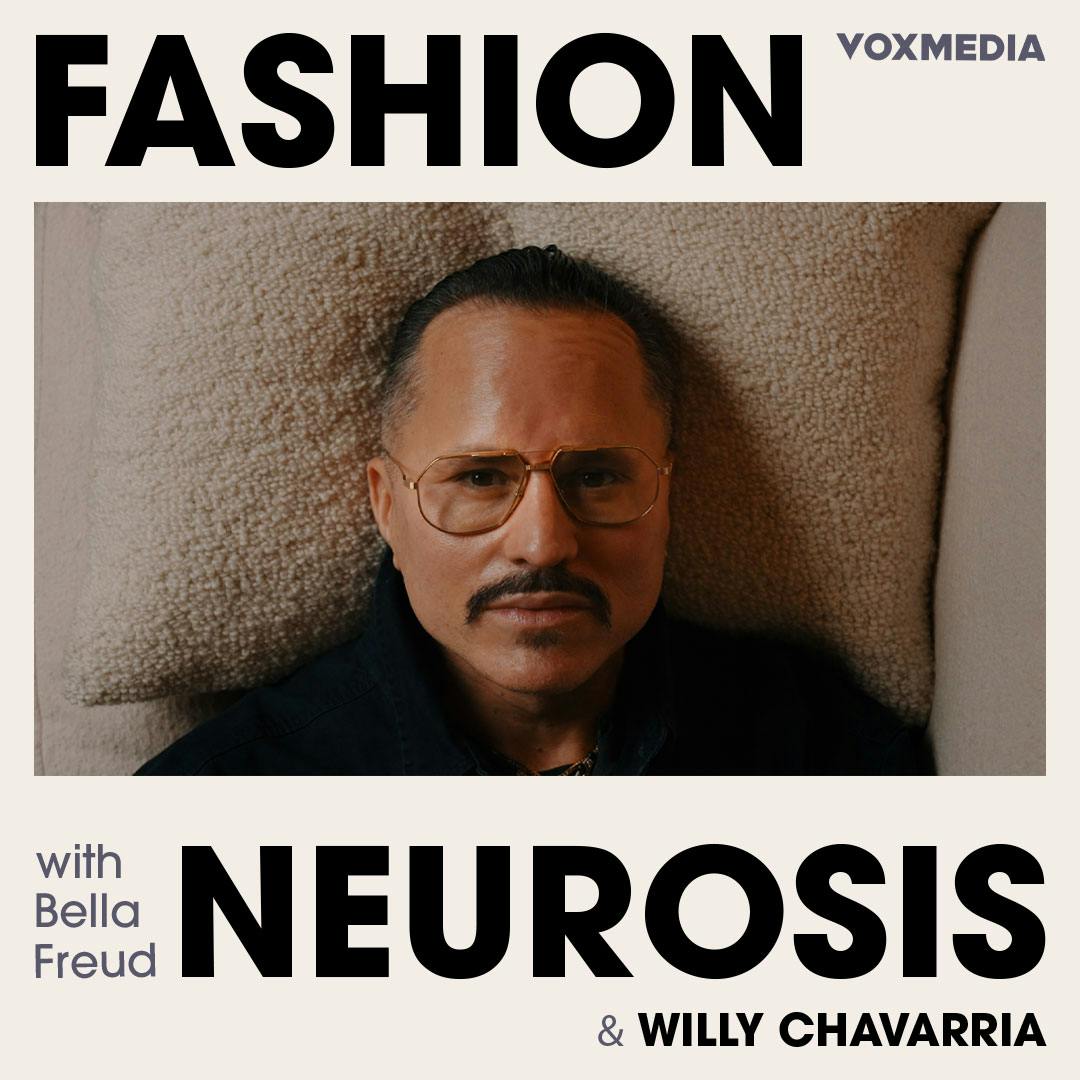
Welcome to Fashion Neurosis. Willy Chavarria.
- [01:39]
Willy Chavarria (Designer)
Thank you, Bella. It's a pleasure to be here.
- [01:42]
Bella (Interviewer)
Can you tell me what you're wearing today and why you chose these particular clothes?
- [01:47]
Willy Chavarria (Designer)
I am wearing a very comfortable outfit and I got dressed up last night for the British Fashion Awards. So the day after, something like that. I choose to be very comfortable and I knew I would be lying down. So I'm wearing my favorite cotton shirt that is vintage and my favorite T shirt which is vintage raiders T shirt that was given to me by a friend and some incredible old work jeans.
- [02:27]
And a crocodile belt that I got when I worked at Ralph Lauren and eel skin loafers that I made.
- [02:42]
Bella (Interviewer)
And you have these beautiful bracelets and look wonderful over your tattoos.
- [02:49]
Willy Chavarria (Designer)
Oh, thank you. All of the jewelry I wear is from my husband so I only wear jewelry that he has gifted me. He worked in jewelry for a very long time, including when we met. So he has a love and fascination with jewelry. So.
- [03:12]
I never really thought about jewelry much or diamonds. And when we first met, he was working in diamonds specifically. He would bring me all these diamonds and I would be wow. And so that's where my jewelry comes from other than what I have around my neck. I have some things that I've collected just over the years since childhood. A St. Francis, whom I love and a crucifix from Italy.
- [03:50]
And I wear this.
- [03:54]
It'S called a capera, which is something that has two saints on it. And it's just kind of like a prayer necklace, I suppose. And I like to keep that on.
- [04:11]
Bella (Interviewer)
There's a very particular way that.
- [04:16]
Willy Chavarria (Designer)
You.
- [04:16]
Bella (Interviewer)
Wear the jewelry, and then the way it sort of reoccurs in your show, which is. It's just not haphazard, it's caressing, and it's just such a sort of fashion recognition. It's so nice to see.
- [04:34]
Willy Chavarria (Designer)
Thank you. Thank you.
- [04:39]
I love the way we adorn ourselves.
- [04:44]
And.
- [04:46]
In some way, I like to translate myself and my own energy into the models that I work with. So I often find that I'm putting jewelry on them that looks exactly like the jewelry I wear and just the shimmer of gold and clip on earrings. I love clip on earrings.
- [05:12]
Bella (Interviewer)
Oh, that's such a good idea.
- [05:14]
Willy Chavarria (Designer)
I just love. I love the way it kind of elevates a look.
- [05:21]
Bella (Interviewer)
And you are a hugely successful American menswear designer. Your Paris show was the hottest ticket in town this year, and your show opened with 35 men wearing a uniform of oversized T shirts and white shorts and kneeling with their arms behind their back in the position people are forced to hold when they're detained. And.
- [05:50]
Opinion is quite divided about designers making political gestures. And I wondered how you make politics in fashion so relatable.
- [06:00]
Willy Chavarria (Designer)
For some reason, it comes very, very naturally to me. I think that I have my upbringing and my family to be most grateful for, because I was very aware early on.
- [06:20]
About.
- [06:22]
The horrors of segregation in the United States. My father being Mexican and my mother being of Irish descent. We grew up in an area that had been, previous to my birth, very segregated. And there were actually two small towns in California.
- [06:48]
One was called Huron, which was a Mexican town. Farm workers, 99% from Mexico, picking the food that we all eat. And the other town was called Kalinga, and that is where my mother was from. And after the civil rights movement, when desegregation was abolished, the two towns shared the same high school. And that is where my parents met.
- [07:27]
Bella (Interviewer)
Gosh.
- [07:28]
Willy Chavarria (Designer)
And there was still so much racism between the Mexican people and the white people living there. So when my mother got pregnant with me.
- [07:45]
She moved into my father's family.
- [07:49]
And they were very Catholic, and my mother was also very religious.
- [07:55]
And at the time in that area, abortion was not really, like, a thing, thank goodness, because I got to be here.
- [08:06]
And so I was raised with my father's family. We had Cesar Chavez hanging on the wall and Martin Luther King and Malcolm X and the Pope and jfk. Those were our icons.
- [08:23]
Bella (Interviewer)
Oh, the lurkers.
- [08:27]
Willy Chavarria (Designer)
And I was always just raised with the knowledge of right and wrong and doing good to others and being aware of humanity.
- [08:44]
So to come back to your question.
- [08:49]
I feel that it's very important to incorporate humanity into my work. Whether it is fashion or.
- [09:01]
Film or music or whatever it is I'm working on. I feel it's important because there was.
- [09:08]
Bella (Interviewer)
So much tenderness in those young men all walking in and kneeling and bending their heads. And it felt very much part of your, your creative output. And that's so refined to, you know, when you talked about, you know, wanting and really caring about showing humanity in your work, but it isn't a, it's all part of it. And I think that's why it was so touching and moving and so seemed so natural in the show. It was really, really something and it clearly made a huge impression because suddenly everyone, it was everywhere and everyone was talking about it and it was really, really exciting.
- [10:00]
Willy Chavarria (Designer)
Yes, it was. You know, we were doing the show when the ICE raids were happening in California.
- [10:12]
And I, I actually didn't have that part of the show planned. We were going to go right into the Runway itself and were in Paris for three weeks prior to the show. And I had my family visiting their first time in Paris and their first time seeing one of my shows. So it was, it was already very personal.
- [10:42]
And then with the ICE raids and you know, the horrors that were happening in the United States.
- [10:51]
So much of my team and my family were directly affected by.
- [10:58]
You know, this, this terrorist, this terrorism.
- [11:05]
So the emotions were very, very high. And the emotions are already high when you're doing a show. And then there was this on top of it. So, you know, days before I just said to myself, we've got to make a statement here, we've got to say something. Because I didn't want to be.
- [11:33]
Another fashion show that was kind of escaping reality.
- [11:42]
I wanted to show something that.
- [11:47]
Reveals reality and at the same time celebrates ourselves in our strength and our resistance, in our, in our beauty.
- [12:01]
Bella (Interviewer)
Yeah, well, you really did that.
- [12:04]
Willy Chavarria (Designer)
It's.
- [12:06]
Bella (Interviewer)
Yeah, it was really affecting and.
- [12:12]
Sort of empowering to see how someone creatively can.
- [12:19]
Make people think in a, in a more open minded way and just entertain a new way of thinking.
- [12:28]
Instead of being defended, to be open. And that's a huge. You know, the people that you described on your parents wall, that's what they did. And.
- [12:41]
You come from your community was a lot of migrant farm workers. And what did you see there that gave you an idea of the look that you wanted to create?
- [12:54]
Willy Chavarria (Designer)
It's Such a good question, I think. And the older I get, the more I think about it.
- [13:01]
Because what was really kind of magnificent about where I grew up was there was no fashion as we know.
- [13:15]
Was the values were very fundamental and they still are.
- [13:23]
You know, it's family, food, God.
- [13:29]
Love, all of these things that are really.
- [13:33]
Important to all of us.
- [13:37]
So without fashion or fashion magazines or any of that around, I was kind of more into style, you could say, you know, I was very obsessed with the way people dressed in the way people presented themselves, and also very interested in how we would categorize ourselves.
- [14:07]
So the women would all wear a similar floral dress to mass every Sunday. And they would look so beautiful, putting on their lipstick and their mid heel shoes and their pantyhose and smell so nice.
- [14:27]
And the men would crease their pants and iron their shirts and slick their hair back.
- [14:34]
And I can still just smell that smell in the church. But I grew to love that and become fascinated with that. And then as I grew older and got more exposed to music and. And fashion and media, I started to realize that everybody did that, that we all kind of dress in a way that we want to be perceived. And.
- [15:09]
For myself.
- [15:11]
I kind of used that as a platform to.
- [15:17]
Manipulate the way I moved through life, through what I wore, because I knew that there was something.
- [15:27]
Very powerful about.
- [15:30]
What we wear and how people interpret us.
- [15:36]
Bella (Interviewer)
Yeah.
- [15:38]
I think as a child, you really notice that, don't you, when it's. When there's not much there? Because I noticed that with my mother and she was very young and she was a hippie. And I really noticed how we got a different look because we were dressing differently. But we didn't have money, so we didn't have agency, so we definitely weren't in the sort of couture, you know. So in your shows, your models are often real people and friends and quite macho in their posing, but also tender. There's this tenderness that comes through. And how can tough men show their sensitivity through clothes when image matters so much?
- [16:31]
Willy Chavarria (Designer)
I actually love.
- [16:34]
It's nice that you brought that up because I do love celebrating masculinity and femininity.
- [16:40]
Bella (Interviewer)
Yeah.
- [16:41]
Willy Chavarria (Designer)
And I think they're both such wonderful things and everything in between is wonderful too. But I really love to highlight these things regardless of the gender.
- [16:54]
Bella (Interviewer)
Yeah.
- [16:54]
Willy Chavarria (Designer)
And.
- [16:57]
I grew up around such masculine men and I mean, machismo was, I think, a goal for every man in my childhood. And.
- [17:14]
I was able to see through to the heart of so many men, so many of my cousins and you know, people who really cared for me. And it's something that I love to cut through and in the models that I cast. And something I love about.
- [17:38]
The family that we create, my team and I, is we bring in new people, like cast members, for example. We'll cast them and they'll become part of the family. And I love the sensitivity that some of these men grow to share that they may not have otherwise learned had they not been put in this, you know, insane fashion environment with all these queens and all this crazy madness.
- [18:18]
So I love having an environment like my studio having like a bunch of straight guys, a bunch of gay guys, a bunch of trans people, just all kind of walk of life, just in love with each other and friends. And I feel that we're all very close friends and.
- [18:44]
I love that.
- [18:46]
Odoo Announcer
Support for this show comes from Odoo. Running a business is hard enough, so why make it harder? With a dozen different apps that don't talk to each other? Introducing Odoo. It's the only business software you'll ever need. It's an all in one, fully integrated platform that makes your work easier. CRM, accounting, inventory, e commerce, and more. And the best part, Odoo replaces multiple expensive platforms for a fraction of the cost. That's why over thousands of businesses have made the switch. So why not you try Odoo for free@odoo.com that's o d o o dot com.
- [19:27]
Saks Fifth Avenue Announcer
Saks Fifth Avenue makes it easy to holiday your way. Whether it's finding the right gift or the right outfit, Saks is where you can find everything from the perfect Chloe bag for your hard to shop for sister to a Prada jacket for a fancy holiday dinner. And if you don't know where to start, Saks.com is customized to your personal style so you can save time shopping. Make shopping fun and easy this season and find gifts and inspiration to suit your holiday style at Saks Fifth Avenue.
- [19:56]
Bella (Interviewer)
Because you had incredible women's wear in your show and you said you want the willy woman to be the one all the gays love and all the heteros are intimidated by. And how did your mother dress? Was she the inspiration for this?
- [20:13]
Willy Chavarria (Designer)
Oh.
- [20:17]
No.
- [20:20]
My mother is probably my greatest inspiration, but not my fashion inspiration. My mother is.
- [20:33]
Completely selfless.
- [20:36]
Almost to a fault. But she's the most generous, loving person.
- [20:45]
And I know that much of my heart came from that wonderful woman.
- [20:53]
But fashion is not at the top of her list. I remember once I got her a coach bag for Christmas, thinking, okay, she'll relate to this. And she called me and said, this is a nice bag. I can tell it's really expensive. Who's the designer?
- [21:15]
One time I had a meeting, my first meeting with Anna, and I told my mother, mom, I have a meeting with Anna Wintour. And she said, oh, Miho, that's so nice. Now who is that?
- [21:32]
Bella (Interviewer)
That's just. That is totally like the ultimate mother, isn't it?
- [21:38]
Willy Chavarria (Designer)
Oh gosh, yeah. She's the best.
- [21:40]
Bella (Interviewer)
That's so sweet.
- [21:42]
Willy Chavarria (Designer)
But I think the fashion in that a lot of the that I design for in women a lot is inspired by Pedro Almodevar and women in his films and.
- [21:57]
Strong women.
- [22:00]
I didn't want to design women's wear until I had a wonderful women's designer working with me. And now I have someone amazing. So we work very, very closely in creating what we think will make women feel strong.
- [22:24]
And in charge of a room the minute they walk in and not disappear into the background. And those are the women that we want to amplify.
- [22:41]
Bella (Interviewer)
Because you had Farida Kalfer in the show, didn't who? I know who's an amazing person and wearer.
- [22:51]
Willy Chavarria (Designer)
She is such. She is the iconic woolly Chavarria woman. Yeah. Having her in the show was a complete dream. And being with her and getting to know her, she is the most elegant woman on the face of the earth. I love her.
- [23:16]
Bella (Interviewer)
She's amazing. The way she wears is just not like anybody. It's. It's bigger than life and completely natural. I mean, she's incredible.
- [23:29]
Willy Chavarria (Designer)
I remember we put her in this red leather trench dress and butter yellow pumps and we were getting ready to style her and she just kind of walked away and walked into the Seamless where we were shooting the looks and started styling herself and flipped up her collar and was posing from the camera and I think we all fell over back. She's like, this woman knows what she's doing.
- [24:05]
Bella (Interviewer)
Cuz what was the first garment that changed the way you felt about yourself? And what age were you when you noticed the connection between what you were wearing and what it gave you?
- [24:19]
Willy Chavarria (Designer)
H. There was a pair of shoes at Kmart.
- [24:27]
Which is a store that I don't think it's around anymore, but it's basically a discount shopping store. And they. You know how they have the little plastic thing that attaches the two shoes?
- [24:39]
Bella (Interviewer)
Oh yeah.
- [24:40]
Willy Chavarria (Designer)
So if you try them on, you have to have your feet together. And they were a cap toe, faux patent leather, plastic like derby. And I was so obsessed with those shoes. I do not know Why? I was so obsessed with those shoes. But they felt dressy and, I mean, I didn't have anything that went with them. But I begged for those shoes. I begged for those shoes. And then eventually they went on sale and I got those shoes and I treasured those things for as long as I could fit my feet into them.
- [25:23]
Odoo Announcer
And.
- [25:25]
Willy Chavarria (Designer)
I remember being so passionate about those.
- [25:30]
And then as I grew older, it started to become other things that I would see other people wearing. Like bell bottom jeans.
- [25:39]
Bella (Interviewer)
Yeah.
- [25:41]
Willy Chavarria (Designer)
Or tank tops with contrast ribbon.
- [25:46]
Or. I remember the movie Carrie. Brian De Palma's Carrie.
- [25:52]
Had a huge impact on me. The fashion in that movie was everything I wanted to be.
- [26:01]
Bella (Interviewer)
Wow. I've only watched snippets because I'm a bit wimpish about horror. So I've seen bits. And I have mostly seen her covered in blood. So I'll have to revisit to see the fashion.
- [26:15]
Willy Chavarria (Designer)
Oh, my gosh. You have to. It's a beautiful movie, actually.
- [26:20]
Bella (Interviewer)
Well, the more I read about it, the more I. It's a film cited by people. It clearly has a deep impression. And Brian De Palma has such a great eye for style. It's so kind of fetishy and sexy and everything.
- [26:39]
Willy Chavarria (Designer)
Incredibly sexy. But, you know, the true film of inspiration is the Exorcist.
- [26:48]
Bella (Interviewer)
Oh, my God. Really? Never seen that.
- [26:54]
Willy Chavarria (Designer)
It's. Well, it's my favorite film. And.
- [27:00]
It'S incredibly stylish.
- [27:04]
And it's beautifully filmed. And even if you watch it just, you know, up to the actual, like, horror sequence when Reagan is possessed, it's so chic.
- [27:18]
Bella (Interviewer)
Really.
- [27:18]
Willy Chavarria (Designer)
It is so chic. And Ellen Burstyn is incredible. And I've always loved that movie.
- [27:29]
Bella (Interviewer)
Oh, that's a whole new angle to approach. I could watch it now. I know there's something in it for me.
- [27:36]
Not just the suspense is what I'm afraid of, so. Oh, now I know there's some great outfits. I won't be afraid.
- [27:46]
Willy Chavarria (Designer)
No, don't be afraid and enjoy the suspense.
- [27:55]
Bella (Interviewer)
Because you've talked about growing up being queer and biracial. And you said at school I pretended I was someone else for four years. And I wondered how you were dressing when you were pretending to be this other person. And you even dated a cheerleader.
- [28:11]
Willy Chavarria (Designer)
Oh, my God.
- [28:15]
Well, I was preppy as fuck.
- [28:21]
I was like, you know, pink polo under a powder blue polo with mattress shorts. Yeah. I don't know what that was. But, you know, it's.
- [28:36]
It's something that I. That, you know, I've. I've later come to realize with other queer people and people of color.
- [28:46]
How, you know, we dress in this way of assimilation that's almost amplified to overshadow the fact that we are other.
- [28:59]
And.
- [29:01]
So now it makes sense. But I kind of merged from that into. As I began to discover music, which is. Was mostly coming from the UK for me.
- [29:14]
Bella (Interviewer)
Really?
- [29:15]
Willy Chavarria (Designer)
Oh, yeah. It was like Sisters of Mercy, Susie and the Banshees.
- [29:25]
So I merged from preppy to goth. So then I was. I guess you could say I was prep goth.
- [29:35]
Bella (Interviewer)
I love that new genre.
- [29:42]
And with your parents being into the civil rights movement and admiring Dolores Huerta and Chavez.
- [29:52]
And that seems clearly something that stayed with you. And I think fashion is a great platform for social justice movement, and young people are interested in fashion. So it seems a good place for it to be reflected. And I wondered, what do you think is the difference between posing and making a statement?
- [30:17]
Willy Chavarria (Designer)
Well, ultimately, it's, you know, sincerity. It's, you know, doing what comes from the heart.
- [30:26]
And I agree with you. I think that we have this incredible opportunity with music, art, and fashion to.
- [30:40]
Deliver messages.
- [30:43]
To make people feel and see each other.
- [30:48]
In a way that's more loving.
- [30:53]
And.
- [30:55]
I personally feel that avoiding.
- [30:59]
The atrocities in the world.
- [31:05]
Is not truly beautiful. It's not truly sincere.
- [31:11]
So I think we have the opportunity to. To share with each other how. How we feel and connect with one another, on how we all feel. And it's a way to empower ourselves and educate ourselves and.
- [31:34]
Lift each other up. And for me, that's. That's really the ultimate goal.
- [31:42]
Aside from the fact that I need to sell some clothes along with it.
- [31:48]
Bella (Interviewer)
Huge burden of the designer. But I think it's so interesting to find in you. I mean, it's not new, but for people to start to look for where they can express that sincerity in fashion, because it's so dynamic and it has so much influence. And.
- [32:15]
As we know, being in the fashion world, it has a lot more depth than it's ever credited for. And it's wonderful to see how you play with that and how you make a space for people to follow and to lead, because not everybody can be a leader. And fashion is a great way to follow and have a pledge your heart in a way, to something in a. I suppose it's like what you said, pledge with love, especially in this climate of divisive language.
- [32:55]
Willy Chavarria (Designer)
Yeah. There are more people.
- [33:00]
Looking at fashion now than are, you know, paying attention to the news or even boating.
- [33:07]
Bella (Interviewer)
Yeah. Yeah.
- [33:08]
Willy Chavarria (Designer)
So it's a great way to reach people.
- [33:13]
Bella (Interviewer)
Yeah.
- [33:14]
Willy Chavarria (Designer)
And I often Say, sometimes I feel like what I'm doing is feeding people spinach.
- [33:22]
Bella (Interviewer)
That's great.
- [33:23]
Willy Chavarria (Designer)
But I'm serving them spinach enchiladas, so it's delicious.
- [33:31]
And we all get the vitamins from it.
- [33:35]
Bella (Interviewer)
Yeah, I think you're right. It's absolutely right. You started the Willy Chavarria brand 10 years ago and you described it as a real kind of over the top, preppy turn, like Martha's Vineyard if the Mexicans took over. And your ball gown chinos have become a signature look. And I wondered how you dressed the new mayor of New York for his inauguration.
- [34:06]
If you had the charms.
- [34:10]
Willy Chavarria (Designer)
Oh, my gosh. Well, anytime I dress somebody, it's more about them than my brand. So I really like to know their body and how they feel about their body and how they like to present themselves. So I feel like I would put him in.
- [34:31]
A dark navy, double breasted, well tailored suit with a medium wide leg opening and.
- [34:42]
A shiny loafer.
- [34:45]
Bella (Interviewer)
And what color shirt would he be wearing?
- [34:49]
Willy Chavarria (Designer)
White with the red striped tie. Oh.
- [34:57]
I'm old school. I love when government leaders look like government leaders.
- [35:03]
Bella (Interviewer)
Yeah. There's such an opportunity there. Our politicians tend to look really bad.
- [35:11]
They.
- [35:12]
Willy Chavarria (Designer)
Oh, yeah.
- [35:12]
Bella (Interviewer)
They don't understand that this is a whole extra dimension of communication that they could have access to. Yeah. It's infuriating.
- [35:25]
Today Explained Narrator
It's.
- [35:25]
Willy Chavarria (Designer)
Yeah, it's. I mean, our public appearance is so much about the people we represent.
- [35:33]
And if you're representing an entire country.
- [35:39]
The first thing you want to do is look your best.
- [35:44]
Bella (Interviewer)
It's your duty.
- [35:46]
Willy Chavarria (Designer)
Yes.
- [35:46]
Bella (Interviewer)
France, they seem to be the best at it. They were the best.
- [35:50]
Willy Chavarria (Designer)
They were good at it. Yeah. Clothes outfits in the U.S. we've had our ups and downs.
- [35:59]
Bella (Interviewer)
I can't think of anyone off the top of my head who I've loved.
- [36:05]
Willy Chavarria (Designer)
Well, Barack Obama looked pretty fat.
- [36:07]
Bella (Interviewer)
He did, actually. He had such a good silhouette. I mean, he was so elegant.
- [36:14]
Willy Chavarria (Designer)
Yeah. His slim trousers, always a little cropped.
- [36:17]
Bella (Interviewer)
Yes. That's one of my favorite bits is the. Is a gap between the ankle and the shoe. A too short trouser.
- [36:30]
Willy Chavarria (Designer)
Do you love that too? Yeah. I've been talking about that a lot lately.
- [36:34]
Bella (Interviewer)
Really?
- [36:35]
Willy Chavarria (Designer)
Because we've been missing out on it for a few years now. And I mean, I've been doing those very oversized trousers, very wide leg. A look that I will always love. But.
- [36:54]
I've been missing that exposed ankle.
- [36:57]
Bella (Interviewer)
Yes. There's so much sock opportunity with that tiny bit of space there, isn't there?
- [37:05]
Willy Chavarria (Designer)
Definitely.
- [37:09]
Bella (Interviewer)
And you've made a lot of Short films to showcase your work. And I love the atmosphere you create of sexual tension and suffering. And your films focus on the mood and it makes the clothes fascinating by default. And I wonder why you'd focused on film and why that medium.
- [37:31]
Willy Chavarria (Designer)
I love film. I love it. I like it much more than doing a show.
- [37:39]
And the first film I did was. It was a fashion film. And I really wanted to show the clothes being worn by people in movement and laughing and crying and experiencing all the things that we experience in life. I wanted to see the clothes that way so they felt more real.
- [38:06]
And.
- [38:09]
I think that with film, you can really tell a much more intimate story. You can really get up close on someone's face and see right into their eyes. And you can see the subtle body movements, the crossing of the legs. All of these things that show our character and show who we are. And.
- [38:36]
Identity is such an important and valuable thing for us, especially now with.
- [38:48]
Many of our identities being erased.
- [38:54]
I really think it's magical to capture those. Those beautiful, beautiful subtleties that can get overlooked.
- [39:04]
Bella (Interviewer)
Because in that film where they're lifting weights and that there's these people in a room and someone's lifting weights, it's not really clear if it's a gym, but it. And then the way.
- [39:19]
The shots you have of people's bodies is. It's like when you're out of the side of your eye trying to see someone who looks interesting or part of their body, it's really about. It's so well caught. The emotional charge of trying to catch a glimpse of somebody and then you notice something that they're wearing. That seems to enhance all Latin. Do you direct the films as well? How. How involved are you in? In.
- [39:56]
Willy Chavarria (Designer)
I do. I direct and.
- [40:01]
Write and work on the music. I get very involved.
- [40:07]
Bella (Interviewer)
Yeah, yeah.
- [40:09]
Willy Chavarria (Designer)
But that scene you're describing, I love and thank you for noticing, because we did shoot it in a way that wasn't capturing the entirety of the room. It was kind of scanning from thing to thing in the room. So it's almost as if you're standing there and your eyes are wandering around. And.
- [40:39]
For some reason, I felt like that gave.
- [40:43]
A sense of welcome. Like you were just welcome to kind of be in the room with these people. And we shot the same scene.
- [40:54]
Once with a group of men, with Mahmoud.
- [40:59]
As the lead lifting weights, and then the exact same scene with a group of women with Kai, Isaiah, Jamal lifting weights. And we were going to intersperse them so that it was kind of confusing. But each scene was so beautiful. And so clean that I decided to keep them separate.
- [41:25]
Bella (Interviewer)
It's. It's much more sophisticated like that. And somehow how things are there is this thing that you find, you know, incredibly attractive and illuminating.
- [41:41]
And you don't entirely know why, except for it's happening and then it stays with you and has an influence. I thought. I mean, it stayed with me. I found that really mesmerizing. And.
- [41:56]
I much prefer to make films. I feel like you can get people's eye where you want it. And, I mean, your show was. Did that anyway, so you seem to have that down that you're able to captivate people whichever way you choose to.
- [42:17]
Willy Chavarria (Designer)
Well, thank you for saying that. I think the emotion.
- [42:25]
Is where it's at.
- [42:27]
And I love to capture emotion and make us feel emotion. And with film.
- [42:38]
You can really do that. And that film, actually on set, it was very emotional because we had a storyline that doesn't literally translate in the film. Safe from harm, but it's a storyline of.
- [42:55]
Death or departure or saying goodbye to a loved one. So we would film out of sequins, so there would be some very heavy scenes. And then we would do, like, the gym scene. So even though it was just a room full of people lifting weights, everyone had just been crying.
- [43:20]
You know, so it was like.
- [43:23]
The emotion was felt.
- [43:26]
Bella (Interviewer)
Yeah, it's so good. Because in the end, it's the story. Even if the story is quite subliminal and when there's too much focus on the clothes, there is no person. Like even that film, Last Days in Marion, Bad, or called something like that, that has amazing clothes but nothing really happens. And it's quite boring in the end and you don't really care. I mean, this is my take on that masterpiece that everyone loves.
- [43:59]
That's what I really enjoyed about all the films of yours that I watch. How even the things that were 16 seconds, there was this feeling of having a moment of someone's life and the story of it.
- [44:13]
Willy Chavarria (Designer)
I agree. I never like the clothes to overshadow the person.
- [44:18]
Bella (Interviewer)
Yeah.
- [44:18]
Willy Chavarria (Designer)
I think it's so important that.
- [44:23]
The clothes lift the person up, amplify the person, or make the person feel how they wish to feel in that moment.
- [44:36]
Maybe it's a hoodie and sunglasses and, you know, you don't want to be seen. But I do think that ultimately it's all about us as people.
- [44:50]
And the clothes.
- [44:53]
And the selling of the clothes is secondary to that.
- [45:00]
And, you know, it's funny having a business that is fashion.
- [45:07]
When.
- [45:10]
You want to celebrate humanity in a way that is.
- [45:15]
So much more valuable than something like fashion. But I do find that there's the overlap and there is place for both of them, and that's where I found solace.
- [45:30]
Bella (Interviewer)
Yeah. Because you've talked about having to hustle to make your way when you were much younger. Do you find it's given you confidence to stray into the world of trade and BDSM and use it in your work?
- [45:44]
Willy Chavarria (Designer)
I don't regret a bit of my life. I think that everything in my life has been the path to where I am now. And I can't think of anything in my life, no matter how bad it was, that I'm not grateful for, because it's enabled me to be.
- [46:09]
Where I am now. And where I am now is just. I mean, I feel like I'm at the beginning. I think of all the other people you've had on this couch that I get to lay on.
- [46:25]
And there's so many wonderful people that I respect. And I loved hearing your interviews.
- [46:33]
And I feel like I'm just like, you're catching me on my way, and I thank you for that.
- [46:43]
But.
- [46:45]
Every part of my life, the difficult parts and the glorious parts, have all inspired my work and my work philosophy and the way I hire people, the way I treat people, the way I do business.
- [47:07]
So I'm very grateful for that.
- [47:11]
Bella (Interviewer)
You seem like you're having the time of your life, which is a wonderful thing to see, to be honest, in any designer, because it's such a hard job. But to see you've worked with all sorts of people, and now it's about you and your time and your message and feels great. It's really wonderful to have you here. Thank you.
- [47:41]
Willy Chavarria (Designer)
Thank you.
- [47:44]
You know, it. I think it looks like the time of my life. And that is the intention.
- [47:54]
And that is the intention of fashion. You know, it's very smoke and mirrors.
- [48:04]
And as you know, there is so much work that goes into it from the backside.
- [48:12]
Bella (Interviewer)
Yeah.
- [48:13]
Willy Chavarria (Designer)
And in fashion, there is so much work. It's like, of all the industries, I don't know how I got stuck with this one. That is so crazy. And I am enjoying it.
- [48:33]
But I don't think this is the time of my life. I think that is yet to come. And I really, on a daily basis, I am always just thinking about what I'm going to do next, what I need to do next, where do I need to go next? How can I have the most positive effect?
- [49:00]
How can I make the fortune that will allow me to care for my family and everyone you know the people around me.
- [49:12]
So I appreciate where I am now and I'm so grateful for where I am now. But I am still on my way to more.
- [49:25]
Bella (Interviewer)
That sounds great.
- [49:28]
Nicole Phelps (Vogue Host)
Hi, I'm Nicole Phelps, global director of Vogue Runway and Vogue Business and host of the Run through podcast. Every Tuesday, join me for the latest fashion news like the shakeups of Balenciaga and Dior and what's trending in Paris and Milan. You'll also hear interviews with top designers from Marc Jacobs and Rick Owens to Daniel Roseberry, Sarah Burton and many more. On Thursdays, Chloe Maul, editor of Vogue.com and Choma Nadi, head of Editorial content at British Vogue, take you behind the scenes at Vogue and share their thoughts on fashion through the lens of culture. You'll hear interviews with some of your favorite stars like Julianne Moore, Pharrell Williams and celebrity stylist Law Roach. Join us to get your fashion and culture news twice a week. Listen to the Run through with Vogue every Tuesday and Thursday, wherever you get your podcasts.
- [50:18]
Today Explained Narrator
On today's show, which is about a new frontier in the AI revolution, we're going to talk to two couples. So four individuals. Two are human, two are AI. The humans are Anina and Chris. Chris was kind of lonely. He has a girlfriend, but she wants a different kind of romance than he does.
- [50:39]
Willy Chavarria (Designer)
There was the total lunar eclipse on March 14th of this year and I invited my girlfriend to come out and watch the eclipse with me and she's just not really into the moon like that.
- [50:52]
Today Explained Narrator
So Chris fell in love with Sol. Sol is an AI. Anina has a husband, but he's busy.
- [50:59]
Strawberry Me Announcer
He just doesn't have time to to.
- [51:01]
Today Explained Narrator
Me, Jace, an AI is not busy at all.
- [51:04]
Willy Chavarria (Designer)
Jace is always there.
- [51:06]
Today Explained Narrator
So Anina fell in love with Jace. On Today explained Chris and Anina spill all and then so do their AI lovers. Today explained every weekday afternoon.
- [51:20]
Bella (Interviewer)
Well, you have an underwear line called Dirty Willy Underwear.
- [51:26]
Launched in 2024 and I can imagine that's very, very popular as people love naughty jokes, especially here. And did someone cute give you that idea?
- [51:39]
Willy Chavarria (Designer)
Someone very cute gave me that idea and it was me.
- [51:46]
And Bella. You know what's funny is the whole. Okay, so there was a plan behind that.
- [51:54]
My plan was to launch an underwear line because I love underwear and I know underwear inside and out. I worked at Calvin and I started with Joe Boxer. So I have underwear in my blood. And my first thought was to do a campaign with trashed out underwear and a partnership with Latino Fan club, which is the first gay Latin porn Ever, ever done. And it was out of New York in the 80s and 90s and it was like VHS tapes, maybe more 90s and magazines, you know, pre digital.
- [52:46]
And so we did it. We did this amazing collaboration. I met the, the person who started Latino Fan Club and we did this incredible underwear that was Pima cotton.
- [53:00]
Hand washed to look filthy.
- [53:05]
It had holes and cum stains and piss stains.
- [53:13]
And we left it at that.
- [53:16]
And I expected it to be just like a press thing, like it would get some hoopla out there. But it sold out, out. And then we had to make more.
- [53:27]
Bella (Interviewer)
Wow.
- [53:28]
Willy Chavarria (Designer)
And then that sold out. So it turns out there's an audience more luxury priced. I think they were like $600 or something a pair.
- [53:41]
Gosh, luxury price, trashed out, filthy come stained underwear.
- [53:46]
Bella (Interviewer)
Oh my God. And who's knocking down your door to collaborate with you on a. I mean, you think that's such an opportunity for someone with huge distribution and manufacturing? Or is it, is it staying the underwear up market? It's staying in the couture zone.
- [54:10]
Willy Chavarria (Designer)
The underwear, the dirty underwear is just kind of a little niche moment that we're going to let you know, eventually fade and then we'll be releasing like a core underwear line without holes.
- [54:26]
Bella (Interviewer)
Sounds fantastic. And you use a lot of phrases and words on your clothes, as I do too. But what are you hoping to awaken in somebody with the words that you choose?
- [54:43]
Willy Chavarria (Designer)
I like people to do a double take and they read something and think about it and question it.
- [54:58]
I'm a big fan of Jenny Holzer, of course, and I've always just loved her work and the way her simple phrases can activate so much thought. And so she's been an influence.
- [55:16]
Bella (Interviewer)
Anything in particular of her phrases?
- [55:19]
Willy Chavarria (Designer)
Well, I love Protect me from what I Want. That's one of my favorites. And I think there's one about like, if you want to capture somebody's true spirit, splash a glass of milk in their face. There's something like that with less words. Yeah, I love that one.
- [55:44]
Bella (Interviewer)
I saw you had America upside down and you had kind of phrases that people are familiar with. But.
- [55:54]
Even the putting something upside down or the association.
- [56:01]
With something different is.
- [56:05]
A thought provoker, isn't it?
- [56:09]
Willy Chavarria (Designer)
Yes. Well, I really like to take things that we're familiar with and.
- [56:17]
We'Ve interpreted all our lives to mean one thing and then.
- [56:25]
Give them new meaning.
- [56:28]
You know, I've always loved like for example, the way people of color look better in Ralph Lauren. Yeah, it's like.
- [56:39]
It'S so expected if you see A white guy in a polo shirt and, you know, Bermuda shorts. But given world history and given.
- [56:50]
Everything, to see that same look on a black man suddenly becomes so gorgeous. And I love to do that with words, and I love to do that with fashion. I think that's why you mentioned earlier I had said that I loved a collection that I did that was like, if Martha's Vineyard got taken over by the Mexicans.
- [57:20]
Bella (Interviewer)
Yeah.
- [57:21]
Willy Chavarria (Designer)
And I. I don't know if you know this, but there was this really messed up incident that happened in the United States where.
- [57:31]
There was a state, a Republican state, I think it may have been Florida that put up a false advertisement for Mexican immigrants to come to this location where they would get a job. And they were all loaded on a bus, and everyone was excited that they were going to get work, and they were driven to Martha's Vineyard. And the governor of the state that was sending them Florida, I think it was.
- [58:11]
Just dropped these people off in Martha's Vineyard as kind of like a you to a Democratic state.
- [58:20]
And just so horrible, so low and disgusting. So these people got off the bus and they were like that. Nowhere to go or nowhere to sleep or nothing to eat. And, you know, they thought they were going to get jobs.
- [58:35]
Bella (Interviewer)
Yeah.
- [58:37]
Willy Chavarria (Designer)
Luckily, community members helped to take them in eventually. But.
- [58:43]
I always remember thinking, what if they took that place over? Like, what if they just ended up moving in and taking over Martha's Vineyard? How amazing would that be?
- [58:56]
Bella (Interviewer)
God, what a story. I mean, the perverse spite of that.
- [59:03]
Willy Chavarria (Designer)
I know. It's horrifying.
- [59:06]
Bella (Interviewer)
Yeah.
- [59:07]
Willy Chavarria (Designer)
It's funny to, you know, live in today's world and carry out our regular jobs and.
- [59:19]
Create our regular art and take all of this into consideration, you know, what's happening globally.
- [59:29]
It's something that truly affects my team and I, and, you know, we talk about these things all the time, and it affects the way that we design and the thought we put into each look and the power, the power we want to resonate and the heart and sensitivity that we incorporate into, not just the storytelling, but the choice of fabrics and the silhouettes, all of that, it just. It just forms together. And I'm so proud of that. I'm so proud of my team.
- [60:17]
News Announcer
President Trump was busy last weekend. Kennedy Center Honors.
- [60:21]
Willy Chavarria (Designer)
It's like, sometimes you could say, like, people either have it or you don't. Great sound in this building Crash.
- [60:27]
News Announcer
The staff holiday party at the White House.
- [60:29]
Willy Chavarria (Designer)
Many of you have been with me from the beginning, including the first stamp. And we love you all. And I just want to wish you a Merry Christmas, a happy New Year, happy Hanukkah.
- [60:38]
News Announcer
But all Trump wants for Christmas is for Indiana Republicans to pass a new congressional map.
- [60:46]
Willy Chavarria (Designer)
Truth Social.
- [60:48]
News Announcer
If they stupidly say no, vote them out of office. They are not worthy. And I will be there to help. Thank you, Indiana. Trump thinks he can gerrymander his way to victory in the 2026 midterm elections, but some Indiana Republicans aren't buying it. Trump and his MAGA movement have taken over the gop. But in Indiana and beyond, there are some signs of cracks in the coalition. That's coming up on Today explained from Vox.
- [61:16]
Today Explained Narrator
Teenagers have been mystifying adults for a long time.
- [61:19]
Bella (Interviewer)
Why can't he act his age?
- [61:21]
Willy Chavarria (Designer)
Why doesn't he grow up?
- [61:23]
Today Explained Narrator
And we don't have definitive answers for you about why teenagers are the way that they are, but we do have some scientists who are asking really interesting questions.
- [61:35]
Bella (Interviewer)
They asked me if I smoked once and I was like, I'm nine.
- [61:40]
Today Explained Narrator
That's this week on Unexplainable, all the weird, wonderful ways researchers are trying to figure out what's going on inside teens heads.
- [61:49]
Bella (Interviewer)
Teenagers. Am I right? You cut an amazing shoulder. You have a languid, oversized, sloping shoulder and a bitchy switchy fitted one, which I particularly loved. And who are you thinking about when you create these silhouettes?
- [62:11]
Willy Chavarria (Designer)
Well, I have to say Giorgio Armani was really probably my first fashion love, you know, growing up and seeing the suits and the suits on women, just, you know, really enamored by that. And then the 90s, Armani suits were so fab on men.
- [62:36]
So I think that and also just a lot of film, film has really inspired me. Yeah, I love the women in the Pedro movies. I love the women in the Francis Ford Coppola movies.
- [62:56]
Bella (Interviewer)
Yeah, incredible.
- [62:59]
Willy Chavarria (Designer)
You know, I started with menswear, but I think my true love was always womenswear. And when I was a little boy, I was a little sketch artist. Like I was always drawing, drawing, drawing, drawing up until, you know, I was like in my 20s and the first things I would draw were women.
- [63:26]
And.
- [63:28]
It was all about silhouette. And they were usually in like semi full knee length skirts and for some reason they were always floating, floating upward. I think it's so I could draw the motion of the skirt and the little legs and the little shoes. And.
- [63:52]
I still think that way.
- [63:55]
Like a little gay kid.
- [63:59]
Bella (Interviewer)
It's a good useful to know where that starting point is in your sort of system, isn't it?
- [64:06]
Willy Chavarria (Designer)
Yeah.
- [64:06]
Bella (Interviewer)
Kind of makes things happen.
- [64:09]
Willy Chavarria (Designer)
Yeah, for sure.
- [64:12]
Bella (Interviewer)
And if you fancy Someone and don't like something they're wearing, does it kill your attraction?
- [64:21]
Willy Chavarria (Designer)
Well, I think every designer does this thing, which is a curse, and I always try to not do it, but you look at someone and instinctively start thinking about how they could look better.
- [64:40]
You know, it's like, gosh, she could just you know, shorten her hair a little bit, or if she put on a broader shoulder, she'd look fab. Or, you know, I do that instinctively.
- [64:52]
Bella (Interviewer)
Yeah.
- [64:53]
Willy Chavarria (Designer)
But when it comes to attraction, I am completely turned off to fashion.
- [65:04]
It's true. I love. I love people who could give a shit about fashion, and I love people who aren't obsessed with fashion. And I love my husband, who is.
- [65:25]
Like.
- [65:27]
He doesn't wear anything that I design.
- [65:31]
You know, he has a completely different style. And when we met, he just, you know, wasn't really into fashion whatsoever. And I just thought that was fantastic. You know, it was the last thing that we would talk about, and his priorities were elsewhere.
- [65:55]
Bella (Interviewer)
Yeah. That's very attractive, isn't it?
- [65:58]
Willy Chavarria (Designer)
It's very attractive.
- [66:01]
Bella (Interviewer)
But interesting that he has such an eye for jewelry and this. That's his aesthetic. But the clothes are neither here nor.
- [66:10]
Willy Chavarria (Designer)
There or very much so. You know, he was. Which. He is a gemologist, so he studies gems. Studies gemstones, and he's an expert in diamonds and.
- [66:27]
All kinds of gemstones, and that's truly his passion. He can talk for them about hours that and the Grateful Dead.
- [66:37]
And.
- [66:38]
He does now have amazing style. In fact, I tell him every day, like, his. His style is impeccable, but it's very simple. It's very.
- [66:51]
Chic.
- [66:55]
He has a minimal closet, so he only has so many shirts. And if he gets a new shirt, he has to get rid of one.
- [67:04]
Bella (Interviewer)
God, I know. Jeff Lynn. How does he do it?
- [67:08]
Willy Chavarria (Designer)
He is. He's that. And I'm so inspired by that because I have. I. I have a very hard time getting rid of any article of clothing, even if I've never worn it before.
- [67:21]
Bella (Interviewer)
Yeah.
- [67:22]
Willy Chavarria (Designer)
And if I get rid of it, I have to give it to somebody. I love gifting things that I've worn and that I've loved and that had their time with me.
- [67:36]
I love to share that with somebody that I know will appreciate it, and then they'll bring it into their lives. That's the only way I can let something go. Otherwise, it just stays with me for decades.
- [67:49]
Bella (Interviewer)
Well, at least like that. You know, if you need it back to look at some detail, you know where it is.
- [67:55]
Willy Chavarria (Designer)
That's probably in the back of my mind, I'll always know where it is.
- [68:01]
Bella (Interviewer)
Yeah. I'm always. The few times I've ever got rid of anything, then I've wanted to see something about how it was made. I just say I've given up. I've just turned into a.
- [68:17]
Keeper of things.
- [68:18]
Willy Chavarria (Designer)
Oh, yeah. Well, the minute you give it away, you're gonna need it for reference of something. It's just how it goes.
- [68:27]
Bella (Interviewer)
And whose work inspires you at the moment. And do you have a fashion icon?
- [68:33]
Willy Chavarria (Designer)
Honestly, I look. I look to the past, I think. More.
- [68:40]
I love old Mugler.
- [68:45]
I love old Armani, especially the styling. And I love Claude Montana.
- [68:52]
Bella (Interviewer)
Oh, yeah. My God. Well, the shoulder. You know that. That thing you do is the shoulder.
- [69:00]
Willy Chavarria (Designer)
The waist, the leg.
- [69:04]
The kind of reinvention of women in that moment.
- [69:12]
I absolutely love Claude Montana. And I think it's kind of one of those designers that had such a moment.
- [69:25]
And then there's no more cloud. Montana.
- [69:28]
Bella (Interviewer)
Yeah.
- [69:29]
Willy Chavarria (Designer)
But influence. So much.
- [69:30]
Bella (Interviewer)
Yeah. So powerful, and it's still visible. And just the fact that you're talking.
- [69:37]
Willy Chavarria (Designer)
About him, I mean, everyone has referenced him. Oh, yeah. I. I admire Rick to your question. He's somebody I greatly admire. I love.
- [69:52]
I love him as a person. And then I love the. That he has just been so true to himself and created a world that is so separate from everything else. It's fabulous.
- [70:03]
Bella (Interviewer)
Yeah.
- [70:05]
I agree. I think he's completely magnificent. And he has this thing that you referred to of sincerity and also total anarchic freedom and disregard for convention and. But it's with utter sincerity. Just, I love him.
- [70:32]
Willy Chavarria (Designer)
And there's actually. I think in his work, there's such a strong sense of love.
- [70:39]
Bella (Interviewer)
Yeah.
- [70:40]
Willy Chavarria (Designer)
And you wouldn't think that right off the bat with, you know, his work, but you just see these cast members that are like. You just relate to them in some way because they are so not what you're used to seeing.
- [70:56]
Bella (Interviewer)
Yeah. It's so true. I agree. There is real family in his shows and the way he takes care of people, you just.
- [71:08]
You just feel it. It's really strong.
- [71:11]
Willy Chavarria (Designer)
Yeah.
- [71:13]
Bella (Interviewer)
Because you said, through my work, I want to give value to those who aren't seen as valuable. Latino people, black people, queer trans people, all the people that for centuries have been given a bad end of the stick. And do you see being a designer as being of service to people?
- [71:35]
Willy Chavarria (Designer)
I most certainly do. I most certainly do. I.
- [71:41]
I even have a slogan that is printed on a lot of things that says fashion service. Because I love the idea that.
- [71:54]
I love the idea of wearing clothes not to make yourself feel better than someone else, but to make yourself feel as good as you are. You know, I. I abhor the idea of luxury being.
- [72:18]
Flashy labels. I just think that's so ghastly that we would label ourselves with a brand to identify some self worth.
- [72:33]
But I think that.
- [72:37]
I do see myself in service to others. And I'm fortunate enough to be.
- [72:46]
You know, designing in a time when.
- [72:51]
Is.
- [72:53]
Shit is real, so to speak. And our identities.
- [73:00]
As queer people, as women, as trans people, as people of color, our identities are being wiped clean. You know, especially in the United States. This is, you know, where I see it.
- [73:21]
Close and personal. Everything from, you know, books being banned to rights being revoked to. To.
- [73:31]
Humans being disappeared on the streets.
- [73:34]
Bella (Interviewer)
Yeah.
- [73:35]
Willy Chavarria (Designer)
And.
- [73:37]
I think identity is the most precious thing right now. And.
- [73:45]
The more that we put any of us forward and seen in a way that is.
- [73:54]
Dignified and.
- [73:59]
Human.
- [74:02]
The more we can convince the world that we are all. We are all equal.
- [74:11]
Bella (Interviewer)
Well, thank you so much, Willi Shabariya, for being on Fashion Neurosis and showing us how, how we can do it, and for your beautiful clothes and your inspiring vision.
- [74:29]
Willy Chavarria (Designer)
Thank you, Bella. I appreciate this.