Loading summary
Transcript145 lines
- [00:00]
Rhea
Hotels.com knows that planning your book club's annual field trip can get chaotic. Rhea, the romance reader, wants to stay in Prince Charming's castle Self improvement. Steve needs a hotel gym. Lila and Jeff, the horror fans, ghosted the group chat about budget and you've read enough True Crime to know that murdering them isn't a real option. With the Hotels.com app, invite all your friends to collaborate and find the perfect hotel together. Share properties, vote on your favorites, and book all in one place. Find your Perfect somewhere with Hotels.com this.
- [00:31]
Steve
Podcast is brought to you by Aura. By the time you hear about a data breach, your information has already been exposed for months. On average, companies take 277 days to report a breach. That's nine months where hackers have access to your personal data. That's why we're thrilled to partner with Aura. Aura is an all in one digital safety solution that monitors the dark web for your phone number, email and Social Security number, sending real time alerts if your info is found. It also includes a vpn, password manager and data broker removal to help keep you safe for a limited time. Aura is offering a 14 day free trial plus a dark web scan to check if your personal information has been leaked. All for free@aura.com safety that's aura.com safety to sign up and protect your loved ones. That's a u r a.com safety terms apply. Check the site for details.
- [01:23]
Jen Sullivan
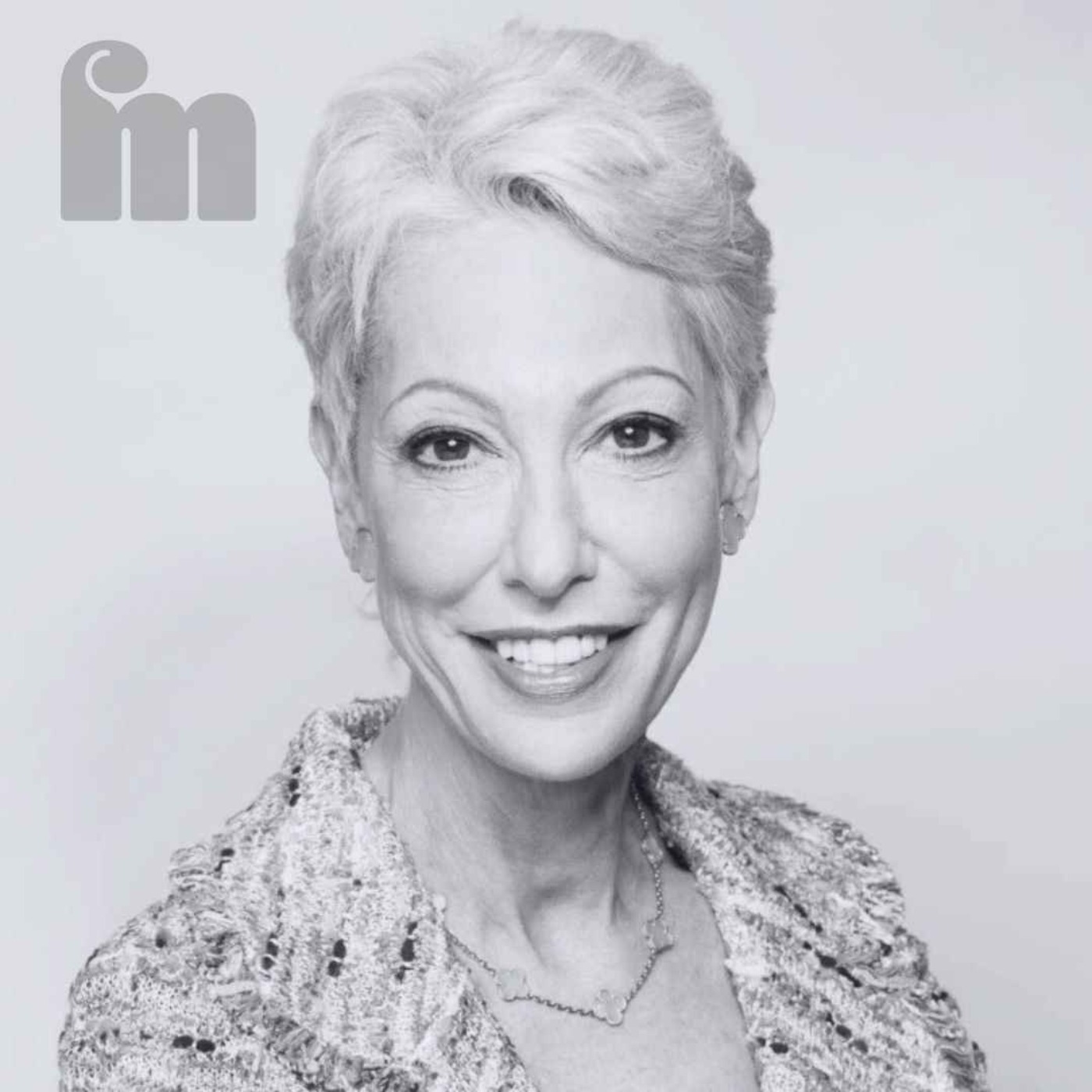
Get this Adults with financial literacy skills have 82% more wealth than those who don't. From swimming lessons to piano classes, us parents invest in so many things to enrich our kids lives. But are we investing in their future financial success? With Greenlight you can teach your kids financial literacy skills like earning, saving and investing. And this investment costs less than their after school treat. Start prioritizing their financial education and future today with a risk free trial@greenlight.com listen greenlight.com listen hello everyone. Happy Friday. Happy Fat Mascara day. Happy all the things. It's Jen Sullivan. Jess will be here in a second for our interview. But the sunshine is here so this interview is very appropriate to the sunny weather. But before we get into that, do you like fat mascara? Do you like listening to us? I would love if you go over to wherever you listen to us, YouTube. You know we have a YouTube channel. We have an audio only version of the podcast plus video clips there. So YouTube, Spotify, Apple Podcasts, wherever you listen to us and throw us a review or some stars that helps other people find the podcast. And maybe I'll read your comment. If you leave a comment too. Let me see what we've got today over in Spotify. Comments. We have comments on our most recent episode. Jess and I did episode 575. Oh, this is the one Atlas was on. Listener Julia says, Atlas is hilarious. Thank you so much, Julia. And then Bagelmer says, pausing the pod to comment on the device topic, I love a beauty tool. However, they're an investment and you need to know if they'll be worth it for you. Will they save me time, money, provide a great result? Then they're in. I mean, I agree. She goes on to say, personally, I cannot live without my Clarisonic with a super soft brush, my silk epple. Epilator. I have not heard that word. In a minute, guys. Epilator. Yes. Okay. And I also have a Forea Luna cleanser for traveling. I was so sad to see Klarisana close its doors. They had a truly fantastic product that I hold onto dearly. Okay, so you have multiple devices and we're out here trying to, like, condense into one device. But thank you for your comment. You too can leave comments on Spotify. Just scroll down after the episode and there's a little comment bar there. All right, getting into today's episode. So guess what today is besides the day the fat mascara comes out. It is the second day of Skin Cancer Awareness Month, though of course we should be aware all year long. But to kick it off, we're chatting with Dr. Deborah Sarnoff in an interview that first aired on episode 169 of Fat Mascara. So Dr. Sarnoff is still the president of the Skin Cancer foundation, but she's so much more, including director of dermatology at Cosmetique Dermatology, the president of the International Society for Dermatologic Surgery, and she's the co editor in chief of the Journal of Drugs and Dermatology. She's also co authored books like Beauty and the Beam, your complete guide to cosmetic laser surgery, and Instant Beauty Getting gorgeous on your lunch break. I mean, Dr. Sarnoff, do you take time off because it doesn't look like it from your resume. We're so excited to have you back in the virtual studio for a replay of this interview. Let's welcome her in so we can talk about protecting our skin in the sun. Welcome to Fatmas.
- [04:48]
Jess
Welcome, Dr. Sarno.
- [04:49]
Dr. Deborah Sarnoff
Thank you.
- [04:51]
Jen Sullivan
Let's just talk first. Skin Cancer Foundation. What does it do? Why did they make you the president? Why are you here, Dr. Debra?
- [04:57]
Dr. Deborah Sarnoff
Okay, so the Skin Cancer foundation was founded 40 years ago by my mentor, Dr. Perry Robbins. Perry was ahead of his time when people were out there laying in the sun and saying, the sun is great. You gotta get the sun. You need your vitamin D. You should just get great sun. He was saying to himself, you know, he thinks that really the sun can cause cancer. And he specialized in something, Mohs surgery, which is one of the treatments for skin cancer. And back in 1985, I studied with him. I was his fellow. He took one person a year. It was competitive to get to be with him, and I got that honor. So I started to specialize in skin cancer and Mohs surgery, as well as other cosmetic techniques. And so the rest is history because he founded the foundation really 40 years ago now. He was president for many, many years. And then two years ago, he decided to pass the bat to me because I'm passionate about trying to get the word out that this is a kind of cancer that for the large part, is in our control. And if we know what to do to protect ourselves, we are going to have a better chance at not getting skin cancer.
- [06:10]
Jen Sullivan
So you get the word out. You also do research grants for scientists and things.
- [06:14]
Dr. Deborah Sarnoff
Yes, and that's had great breakthroughs too, because we're coming up on new drugs, new immunotherapy for melanoma. We are saving lives, we're prolonging lives. We have better quality of lives. And our real mission at the foundation is early detection, protection and also treatments. And so the research dollars are great because they're really, really helping new inroads and treatment.
- [06:38]
Jen Sullivan
You're not just out there being like, put on your sunscreen.
- [06:40]
Dr. Deborah Sarnoff
Exactly.
- [06:41]
Jen Sullivan
Okay, so before we get into skin cancer, can we talk about you? Sure. You sound like a badass back in the 80s studying skin cancer.
- [06:48]
Jess
Elegant lady. I just wish you guys could see her. She's so elegant.
- [06:51]
Dr. Deborah Sarnoff
Oh, you sweet.
- [06:52]
Jen Sullivan
Okay, so you've been doing this for. I guess that makes it more than 30 years. About 30 years. Tell us, what is the weirdest thing you've removed from someone's body? And this. We're not talking about skin cancer yet. I just want to know because I love to pick the brains of dermas.
- [07:05]
Dr. Deborah Sarnoff
Well, if any of you watch Dr. Pimple Popper, it's real. What's going on on that show is what's happening any given day in my office. And my husband's a plastic surgeon. We've worked together for 30 years. And that's what we see basically, things like that. Lumps, bumps, things that are ignored. And our Share of skin cancer. Got it. Got it.
- [07:27]
Jess
Things that are ignored. I mean, I feel like that leaves it wide open.
- [07:31]
Dr. Deborah Sarnoff
Yeah.
- [07:32]
Jess
So I'll use my imagination. So would you ever, you know, as somebody who's such an expert in recognizing issues, do you ever stop people on the street or be like, look, I don't mean to say something, but you really need to get that checked out?
- [07:44]
Dr. Deborah Sarnoff
I do, and I think it's an important thing. And there was a waitress once in Bethesda, Maryland, and I, of course, practice on Park Avenue in New York. So I didn't have any financial interest in telling her, but I couldn't leave the meal without telling her that she had a really suspicious lesion on her neck and to please, please go take care of it. She did. It turned out to be melanoma. She thanks me to this day for saving her life, and I'm really glad that I did speak up.
- [08:12]
Jess
Wow. And then, okay, just about skin cancer in general, you know, you mentioned, like, in 1985, people thought the sun was great. And certainly before I meant, you know, people thought that it was healthy for you. You're sick, you know, go out and get some sun. I understand that it's. We know that it's bad now, but has it gotten worse? Like, has the sun gotten worse? Is this skin cancer and all of this disease, is it more prevalent today?
- [08:38]
Dr. Deborah Sarnoff
Yes, there's a lot of factors. You know, first of all, with our pollution, the ozone layer is disappearing. That's the blanket of protection in the atmosphere that's disappearing. We're to a large degree responsible because of pollution. The second thing is people are living longer. You know, it's not unusual. People go to 90, 95. I have a few patients that are over 100. So the reality is that the longer you live, the more the chance that something will go wrong in the skin cells.
- [09:06]
Jess
Yeah. Cause I'm thinking like, okay, you know, people who spent their lives working in the fields, you know, I mean, people are still doing this, you know, but, you know, when we were more like agrarian society, did they all have skin cancer at the age of 30 because they were outside or. Well, now if you go outside and just hang out at the beach a couple of summers, you could get skin cancer.
- [09:25]
Dr. Deborah Sarnoff
Well, part is that they used to die of tuberculosis, other infections, internal cancers, so that they weren't living long enough, but heart attacks. But we have a lot of great meds, as you know, to even help with that. But the second thing is that short bursts of bad sun are also bad. So even if you're not out there every day taking that vacation and not really reapplying your sunscreen or going to the Hamptons and laying out or trying to get that tan or going to the tanning salon, these are all real bad things that are going to bump up the possibility of getting skin cancer.
- [10:01]
Jen Sullivan
Okay, so skin cancer, what is it? Because I think we all just think about, oh, it's a weird looking mole. But like, what is happening to your skin cells that they're can't like.
- [10:08]
Dr. Deborah Sarnoff
Sure. So we all have skin. Okay. It's the biggest organ in the body.
- [10:11]
Jen Sullivan
We start there. Everybody's on the same page.
- [10:13]
Dr. Deborah Sarnoff
Everybody's got it. And we have a top layer called the epidermis, and underneath is the dermis. The epidermis is made up of cells. One of the cells are called squamous cells. That's what most of the epidermis is made up of. If one of the squamous cells has a little glitch, if the ultraviolet light comes down and somehow changes the DNA in that cell, it's going to mutate and it's going to start to proliferate, make more bad cells, and eventually it's going to make a growth. It's going to be a growth that looks like it's bleeding, oozing, it's crusty, it just won't heal. It looks for no reason. Then in the epidermis, we have basal cells. Basal cells are cells that are kind of at the junction of the epidermis and the dermis. They're the germinative cells. Well, you know, what if the ultraviolet light comes down on them and causes a little glitch or a little mutation in one of the basal cells? They proliferate unchecked. And you also can get a bump, a crusty area. And we call that a basal cell because it originated from one of the normal bas that we all have going wrong.
- [11:24]
Jen Sullivan
Okay.
- [11:25]
Dr. Deborah Sarnoff
The final skin type or cell type that you need to know about is the melanocyte. That's a cell that sounds really fancy melanocyte, but it's the pigment cell.
- [11:35]
Jen Sullivan
We actually talked about those early on in the episode. We called them the ink cells, but.
- [11:38]
Dr. Deborah Sarnoff
You said they're much more professional and they give us pigment. And you know what? Those pigment cells are important because they do give us melanin, which is kind of protection from the sun. But sometimes the ultraviolet A or the ultraviolet B, the bad rays can shine down and make a glitch once again. Oftentimes, maybe it was a bad sunburn and it can then morph one of the melanocytes into proliferating and going wrong. Now it might be a pre existing mole that goes wrong and it changes and it morphs into unchecked behavior that's potentially dangerous. Or it could be that nothing was wrong, but a normal melanocyte suddenly got a gl. This occurred. And that's the scary thing because, you know, one day you can just look down and there can be something that previously was not there. It may be black, it may be weird, or it might even be a pink bump that you never had before that's growing rapidly. And that would be what we call an amelanotic melanoma in some cases because it may lack pigment.
- [12:45]
Jen Sullivan
When you see all these different bumps, that's three types of skin cancers. Because you've been doing this, can you just be like, oh, I know right away? Or it's always you're taking a biopsy. But can you tell just by looking what it is?
- [12:55]
Dr. Deborah Sarnoff
I'd say most board certified dermatologists almost know right away because do we need.
- [13:00]
Jen Sullivan
To get naked right now and have a skin check? I don't know.
- [13:03]
Dr. Deborah Sarnoff
But the truth is, at least once a year, even if you've never had skin cancer, you should see the dermatologist and you should have the skin check. Because you know what? You can't see your backside, you can't see your back, your lower back. There are areas where the sun never shines that you really can't see on yourself. Your scalp is another area. So it's good to have an educated pair of eyes looking because that could save your life.
- [13:36]
Jen Sullivan
Listen, there are so many skincare products on the market and you know, I will try most of them once. But for me to use something more than once and make a real habit of it, it's got to work. That's why I love Ritual's Ha. It's a multi step skincare in one daily supplement and it features two of the best clinically studied ingredients shown to help minimize wrinkles and hydrate skin. And now it's part of my everyday skincare routine. I got in the habit of taking it daily by putting the cute little purple jar right next to my sunscreen. It looks nice on my vanity and let's be honest, I love that. But once I stuck with the habit, I really noticed a difference in my skin. I am not the only one. In a clinical study, subjects reported an improvement in skin elasticity, glow and radiance in 90 days and ritual hyacinth led to a 2.9 times increase in skin smoothness within 90 days as compared to placebo. I also like that they're easy to swallow. The capsules sort of taste like vanilla. They're not all weird and fishy like some other supplements. Plus Ritual works with world class certification bodies to validate their products and it's a certified B core with supplements that are vegan, gluten free and made traceable. Start Ritual Hyacinth to support your glow without compromising on clean science. Get 25% off your first month for a limited time at ritual.com mascara start ritual or add hyacara to your subscription today. That's ritual.com mascara for 25% off.
- [14:58]
Dr. Deborah Sarnoff
Strap in. You're in the race with F1TV Premium see what the race director sees with custom multiview. Watch every jaw dropping moment in Live 4K UHD across up to 6 screens. Uninterrupted experience. Ultimate Live Immersion with F1TV Premium available.
- [15:24]
Rhea
On selected devices@hotels.com we know some travelers crave an ocean breeze. Others don't want to deal with sand. And oftentimes those two people end up together. Compare properties side by side to find yourself poolside, oceanside and still in a relationship. Find your perfect somewhere with hotels.com.
- [15:51]
Dr. Deborah Sarnoff
You.
- [15:51]
Jess
Mentioned a few different skin cancers. I'm sure it's different for all, but generally someone comes in, you see something odd. How do you treat it? First you eyeball it like you were just saying. But then what comes next?
- [16:02]
Dr. Deborah Sarnoff
So what comes next is some of us will use something called a dermatoscope, which is kind of like a glorified magnifying glass. But there are certain signs that we know to look for when we magnify. And then there's always what we call a skin biopsy. Now, it's not rocket science. It's not like you have to it's not brain surgery. It's the simplest thing. It's putting a little numbing medicine right in the skin and taking a tiny little piece of skin. So it's very, very simple. And every dermatologist knows how to do that within a few minutes. And so it's a simple thing. And by putting that little piece of tissue in a bottle and sending it to a laboratory, such as maybe NYU or a laboratory that specializes in dermatopathology will get a definitive diagnosis. And that's what we need to really be sure that that is a cancer or not.
- [16:52]
Jen Sullivan
But it's not like then you start taking pills, you gotta cut it out, right? Or is that always the treatment?
- [16:56]
Dr. Deborah Sarnoff
Well, not always. Cutting. You know, it depends.
- [16:59]
Jen Sullivan
That was my laboratory.
- [17:00]
Jess
Lasering, maybe. Lasering, freezing.
- [17:02]
Dr. Deborah Sarnoff
All different methods, you know, basilisk.
- [17:05]
Jen Sullivan
But you gotta get rid of it.
- [17:06]
Dr. Deborah Sarnoff
You have to get rid of it and you have to kind of quote, unquote, kill off the last bad cell. And you can do that sometimes with topical age, depending if it's superficial, you can do that with lasering, you can do that with freezing, burning, scraping, or the more precise way, if you really want to make sure that a squamous cell or a basal cell is fully removed, is to excise. And in many cases, Mohs surgery just means excising in thin layers while a technician is with you on the premises. So that's kind of like the highest cure rate. Cause you're looking at all the margins for melanoma. You want to make sure you got a safety margin, you got the whole thing out. And in some cases, if the melanoma turns out to be deep, then we have to look further. We have to do CAT scan, we have to do maybe a PET scan. We have to look at the lymph nodes, because that's very important. If the melanoma was deep, if it's.
- [18:04]
Jess
A superpower, so that means it's been around for a while, that means then.
- [18:07]
Jen Sullivan
You could get cancer in other parts of your body.
- [18:09]
Jess
So this is a highly specific question, but I think it's important a lot of people don't protect and myself included, like your eye area, because you're putting on sunscreen and sometimes it's uncomfortable, stingy to put it there. You put in your sunglasses, you think you're all good. But I remember going to a beauty event and I was haunted. I just caught one glimpse of a slide haunted by some of the Mohs surgeries around the eye. Can you just comment, like, what we can do to help protect ourselves? That's like my biggest fear.
- [18:44]
Dr. Deborah Sarnoff
So eyelids are an area where we do see basal cell and squamous cell skin cancer. And I think that sunglasses is a key thing. And sunglasses today, the lenses are treated to block out the uva, the uvb. If you use sunscreen, if you stick to ones that are what we call the mineral sunscreens, things like titanium dioxide or zinc oxide, they typically don't really burn or sting the eye. And if you don't know what to do, you can maybe even choose. A children's sunscreen tends to be less stingy around the eyes, but it is important to really try to protect and a visor maybe a brimmed hat that kind of shields your eyes as well.
- [19:27]
Jen Sullivan
All important tips, you're talking about prevention and obviously sunscreen's one of the ways. What are other ways you tell patients to prevent skin cancer? What can they do? What can our listeners do?
- [19:38]
Dr. Deborah Sarnoff
Sure. Well, one of the biggest sins is to forget to reapply. And I think that people have to realize if you're sweating, if you're swimming, if you're just outside and it's really, really hot, you're gonna be sweating to a degree every hour and a half, two hours. You should really do a little check and maybe reapply if you're exposed. The other thing is there is nice clothing today that's lightweight, but it's been treated specially to protect against the ultraviolet rays. And so covering parts of the body would be a great thing to do. Avoiding peak hours. If you wanna play tennis, that's great, but maybe go early in the morning, go later in the afternoon. What are the, well, the peak hours? Maybe I'd say between like 12 and 4. Because the sun's pretty bad, it's high up and it's straight up and you get the direct rays, you know, so you can do that and hats and sunglasses and, you know, trying to really be cognizant of the fact that you really should reapply and protect as much as possible, clothing.
- [20:38]
Jess
One thing I have to ask you, we talked about this earlier in the year. You know, Jen and I are in an office. A lot of our listeners, I'm sure they go to work and then they maybe go out for, for lunch or run a quick errand and then they leave at 6:00, something like that. Do we have to reapply to go out for lunch?
- [20:56]
Dr. Deborah Sarnoff
I think on a normal day, if you put on a moisturizer that has at least an SPF 15, I think if you've had a history of skin cancer, you might want to bump that up and try to do an SPF of 30. That's a measure of how well it blocks the UVB, but it doesn't take care of the UVA. And the UVA can even go through the glass in your office if you happen to be lucky enough to have the corner office or a window. So you really need a broad spectrum sunscreen that'll block the UVA and the uvb. I don't think you have to reapply it every five minutes. But it's not a bad idea if you're going out to lunch to maybe even use one of those powders that they have today or a little bit more foundation to try to block, especially the face, because the rays will find you if you're running around. Comes from above. And the most common place as a Mohs surgeon that I see skin cancer is really the nose because it's an essential part of the face and the rays come down.
- [21:59]
Steve
This podcast is brought to you by Aura. By the time you hear about a data breach, your information has already been exposed for months. On average, companies take 277 days to report a breach. That's nine months where hackers have access to your personal data. That's why we're thrilled to partner with Aura. Aura is an all in one digital safety solution that monitors the dark web for your phone number, email and Social Security number, sending real time alerts if your info is found. It also includes a vpn, password manager and data broker removal to help keep you safe for a limited time. Aura is offering a 14 day free trial plus a dark web scan to check if your personal information has been leaked, all for free@aura.com safety that's aura.com safety to sign up and protect your loved ones. That's a u r a.com safety terms apply. Check the site for details.
- [22:52]
Dr. Deborah Sarnoff
Your customers are scrolling past your social ads, using ad blockers and paying for ad free streaming. But when they're listening to a podcast, they're hearing Acast ads, which are 4.4 times more engaging than with display ads. So if you want real attention, start advertising on podcasts with Acast. Start today at go.acast.com ads.
- [23:25]
Jen Sullivan
Can we talk about dermatologists and getting to see one? I heard recently this stat like I was so surprised that only 4% of Americans have seen a dermatologist. A lot of communities don't have derms or you don't have health care, so you can't get to the derm if you have like a weird thing on your skin. And I'm sure you've seen people have waited too long. Is there any like telemedicine services you can use to be like, hey, look at my mole?
- [23:48]
Dr. Deborah Sarnoff
Well, first of all, I'm proud to tell you that the Skin Cancer foundation has a program called Destination Healthy Skin. We have a van, we have an RV with treatment rooms that goes across the country. And for anyone that can't afford or can't get in the van, hopefully will be coming to your area soon. And you could actually arrange to have a skin check, like a free screening? Yes. And we have volunteer dermatologists all over the country that are volunteering so that it's a pair of skilled eyes looking at you. The other thing that people can do is, yes, telemedicine is starting. One of the biggest problems with telemedicine is insurance reimbursement. But once they work the kinks out, I think that dermatology is very visual. And what we can at least do is look at the photo online, let's say and say, yes, that has the warning signs. It's problematic enough that you need to come in and get the biopsy. We can't biopsy remotely, but we could certainly either calm somebody down or say it looks problematic, get it checked out.
- [24:48]
Jen Sullivan
That's good to know. Do you know any telemedicine services? We can always look some up to put on our website. But are there multiple ones? Not all doctors do them.
- [24:55]
Dr. Deborah Sarnoff
I imagine it's getting close, but for instance, I'm affiliated with nyu. There's one I'm gonna tell you. It sounds like Criterion, but that may be the wrong name. So you gotta look it up.
- [25:05]
Jen Sullivan
We'll look it up for sure. And then I wanted to ask you about. Do you know what percentage of skin cancers have nothing to do with sun exposure? Because we beauty editors always hear about the famous case of Bob Marley. His skin cancer had on his toe, underneath his toenail, had nothing to do with the sun. It was genetic. Is that something we should all be worried about as well?
- [25:25]
Dr. Deborah Sarnoff
I think we don't really have a percentage. Maybe it would be 10% or less. The sun is responsible for probably 90% of skin cancers. But that said, there are hidden parts of the body where we have melanin. Any place you have melanin or pigment is fair game for melanoma. You may not think about this, but in the retina and behind the eye. Iris of your eye has color. Yeah.
- [25:51]
Jen Sullivan
What about your hair? Can you get hair cancer?
- [25:53]
Dr. Deborah Sarnoff
Well, you can get it on the scalp, and it can be pretty deadly on the scalp because the way the vasculature is the circulation, it can often spread to the brain from scalp. So we have to have a healthy respect for that around the anus. The vulva, our private vulva.
- [26:08]
Jen Sullivan
She never sees the sun.
- [26:09]
Dr. Deborah Sarnoff
Never sees the sun. But yet a lot of us know if you look at your own body parts, that even if you're a white person, Caucasian, you still have a little more pigment in those areas. And so that's fair game. And what happens, sadly, in the case of Bob Marley is that people of color, they have less pigmentation on their hands and on their feet. However, they still have pigment cells. And unfortunately, when it presents, they're not thinking about melanoma. They're thinking they have a fungus. They're thinking that they got tar on.
- [26:40]
Jen Sullivan
He thought he hurt his foot from.
- [26:41]
Dr. Deborah Sarnoff
A car accident, so he thought it.
- [26:42]
Jen Sullivan
Was like a bru.
- [26:43]
Dr. Deborah Sarnoff
So tragic. And sadly, if it's diagnosed late, that's the problem. And that's why you die. Because it has the potential to spread to another part of the body if you catch it early. 100% curable. That's why it's so important. If you get something funky and new and it's just not going away, you gotta check it out.
- [27:02]
Jen Sullivan
Okay, this is a weird Jen question and Jess is gonna kill me, but can people who have albinism get skin cancer if they don't have melanin?
- [27:08]
Dr. Deborah Sarnoff
Well, they don't have melanin. Okay, but they still have skin. So it's fair game for basal cell carcinomas, but not the melanin carcinoma. Well, there's also something called amelanotic melanoma. So, you know, albino. I mean, they have no inborn protection. So very often they have a ton of basal and squamous cell carcinoma.
- [27:27]
Jen Sullivan
What are some other myths that you want to dispel about sun protection or skin cancer? Because I feel like we hear them all day long. You must too, like old wives tales that you're just like, ugh, it's not true.
- [27:38]
Jess
The sunscreen gives you cancer.
- [27:40]
Dr. Deborah Sarnoff
Well, yeah, that's the latest hot button, sadly, and all that. That is just for you all to know is the FDA recently came out, there's an acronym, you may have heard of it, GRACE G R A S E. It stands for generally kind of like accepted and safe and effective. And generally recognized as safe, recognizes safe and effective. And they basically said the bottom line is that there are two sunscreen ingredients right now that are titanium dioxide and zinc oxide that are safe. The FDA totally agrees. Those are physical blocks. They're mineral blocks. Go ahead and use them. We're not worried about them. Then there's a group that is dangerous. They're not, Grace. Like paba. They kind of took that off the market. Yeah, they're all right. But then you've got a group of 10 ingredients. Oxybenzone is the latest one that you've heard in the news that the FDA says, look, we're absorbing some of it. They have data to show that if you're going to reapply sunscreen as I told you to do every hour and a half or two hours. Sooner or later, it's gonna go through the pores and you're gonna absorb it. But absorbing it into your system does not mean it's dangerous. The jury's out, and we have to do a few more studies before we're really gonna know for sure. What does it mean? Just because we're absorbing it, because we absorb moisturizer, we absorb things that we put on our skin all the time. We absorb makeup.
- [29:06]
Jen Sullivan
So you cannot say this definitely causes skin, right?
- [29:08]
Dr. Deborah Sarnoff
Absorb lipstick. It's not a lot.
- [29:09]
Jen Sullivan
How many times a day do you have this discussion with a patient?
- [29:12]
Dr. Deborah Sarnoff
Well, a lot lately. Cause unfortunately, it's like the kids game Te they heard it, and now it gets construed as, oh, my God, I'm going to get cancer from the sunscreen. We at the foundation, at the Skin Cancer foundation and the FDA still recommend, please use sunscreen. It's great if you can cover your body and use protective clothing and a hat, but still use sunscreen. We are not saying don't use sunscreen. It is certainly better than the risk of getting skin cancer.
- [29:38]
Jess
So, side question. UV manicures. Yay.
- [29:42]
Dr. Deborah Sarnoff
Or I am a girl. I love great nails. I have little gloves. They just have the little cutouts for my fingertips. The gloves stay in the salon. They have my name on them. I advise every woman do that.
- [29:55]
Jess
And as for sunscreens, again, just, you know, sun protection products, whether it's a little hat or whatever. What are some of your favorites and what are some that you feel like your patients have been like, okay, I.
- [30:05]
Dr. Deborah Sarnoff
Like this one truth, honestly, I tell everybody. What do you like? The smell and the feel of.
- [30:11]
Jess
It's true.
- [30:12]
Jen Sullivan
It's like, then you'll use it, right?
- [30:13]
Dr. Deborah Sarnoff
I mean, I might like Ben and Jerry's chocolate ice cream. You might like Harvel. You might like.
- [30:17]
Jen Sullivan
You know, what does Deborah like? Like, are you a cool bar hat person? Like Jess, she loves those hair.
- [30:22]
Jess
I love my Cooley bar hat.
- [30:24]
Dr. Deborah Sarnoff
I think those are adorable and great. Yes, wonderful. And I think that in terms of putting something on your skin, I'm more of a lotion. I like lightweight. I don't like anything too tacky. I think I like sprays because they're quick. But you have to be careful that you don't miss areas and you don't do it in the. And you don't inhale the skin.
- [30:41]
Jess
Can you rub the. I put it on the spray, and then I rub it in.
- [30:43]
Dr. Deborah Sarnoff
Is that the normal.
- [30:44]
Jen Sullivan
I see People apply it like perfume, and I'm like. You're just like. It's not like a protective bubble around you.
- [30:50]
Jess
It's so funny. Or like it's just like flying behind them.
- [30:53]
Jen Sullivan
I see it on the beach. It's windy.
- [30:55]
Dr. Deborah Sarnoff
I know.
- [30:55]
Jen Sullivan
I always try and apply before I even get to the beach.
- [30:58]
Dr. Deborah Sarnoff
And that's very smart because.
- [31:00]
Jen Sullivan
Well, thank you.
- [31:00]
Dr. Deborah Sarnoff
If you're using a, quote, chemical sunscreen, you have to do it at least 20 minutes to a half hour ahead of time. It's gotta react with your. What we call the stratum corneum, the top layer of your skin, to give you that protection. If you don't do that, it's kind of useless. So that's really important. That's important to dispel.
- [31:18]
Jen Sullivan
If you get to the beach, put on your Sunscreen, you have 15 minutes, basically unprotected. If you were using a chemical sunscreen.
- [31:23]
Dr. Deborah Sarnoff
Exactly.
- [31:24]
Jen Sullivan
Well, that's a good reason to use a physical blocker, I guess, too.
- [31:27]
Dr. Deborah Sarnoff
And there are other myths out there people are really gonna defend. Well, we need the vitamin D. And you know what? We do need vitamin D. But we can get that from milk. We can get that from. Orange juice is fortified. We can get that from fish, certain oilier fish, salmon, mackerel. There are other ways to get vitamin.
- [31:45]
Jen Sullivan
D. I think it has to be wild caught, too. I've read that they're higher in vitamin D than.
- [31:49]
Dr. Deborah Sarnoff
That's good. Or you can take supplements. You can take a little pill.
- [31:52]
Jen Sullivan
Last question. How do you keep your lovely white hair white? Cause I have a lot of white hair, and it gets yellow very easily. Since we're talking about sun and oxidation, you have, like, nice, shiny white hair. How do you keep it?
- [32:02]
Dr. Deborah Sarnoff
Oh, aren't you sweet?
- [32:03]
Jess
That highlight on it, it's so pretty.
- [32:06]
Dr. Deborah Sarnoff
Well, actually, they gave me the bad news. I can't do highlights anymore. It's a single process. But you wear a hat and you just try to.
- [32:11]
Jen Sullivan
Oh, so that's like a. That's like a platinum blonde. Not a white.
- [32:15]
Dr. Deborah Sarnoff
Yeah, no, yeah, it's a platinum blonde.
- [32:18]
Jen Sullivan
I should just let it come all in and be platinum blonde like Dr. Sarno.
- [32:21]
Jess
It's so beautiful.
- [32:21]
Dr. Deborah Sarnoff
Aren't you guys sweet? You both are beautiful, and I can see you protecting your skin. And you know what? The last thing I want to just say?
- [32:28]
Jess
Sure.
- [32:29]
Dr. Deborah Sarnoff
It's not just for skin cancer. Part of my practice, in the afternoon, I change my hat. And it's about beauty. It's about wrinkles, it's about fillers. It's about lasers. It's about neurotoxins. And you know why? If you protect from the sun, you're gonna look 20 years younger than your friends. And that's the best advice I can give. Because you would be amazed at people who say, but I don't sit in the sun. I never go out in the sun. And you know what? Your skin doesn't get crinkled and wrinkled by itself. And if you don't believe me, look at your tush. Look at your inner aspects of your arm.
- [32:58]
Jen Sullivan
Your armpits are amazing.
- [32:59]
Jess
My tummy? Yeah. I'm not like a bikini person that one day that often. Yeah.
- [33:03]
Jen Sullivan
Yeah. Okay. Wear your sunscreen, wear your Coola bar. All that good stuff.
- [33:07]
Dr. Deborah Sarnoff
All that good stuff. And you know what? Start embracing your beautiful color skin, your.
- [33:12]
Jen Sullivan
Melanin as you have it. Nice.
- [33:14]
Dr. Deborah Sarnoff
Exactly.
- [33:14]
Jen Sullivan
Thank you doctor.
- [33:16]
Dr. Deborah Sarnoff
Thank you so much. Thanks for having me. You guys were great.
- [33:21]
Jess
We hope you enjoyed the show.
- [33:22]
Jen Sullivan
It's your reviews and feedback that help us make the podcast even better. Head over to itunes to rate and review us or email your thoughts to infoatmascara.com we also want to answer your.
- [33:33]
Jess
Beauty questions and hear what products you love, to share a Razoon product product review or to ask a beauty question. Email us at infoatmascara.
- [33:41]
Jen Sullivan
If you send it as a voice memo file, we can even share your voice on the podcast. You can also do that by leaving us a voice message. Our phone number in the United States is 646-481-8182.
- [33:52]
Jess
Thanks so much for listening.
- [33:58]
Rhea
Hotels.com knows that planning your book club's annual field trip can get chaotic. Rhea the romance reader wants to stay in Prince Charming's castle. Self improvement. Steve needs a hotel gym. Leela and Jeff the horror fans ghosted the group chat about budget and you've read enough True crime to know that murdering them isn't a real option. With the Hotels.com app, invite all your friends to collaborate and find the perfect hotel together. Share properties, vote on your favorites and book all in one place. Find your Perfect somewhere with Hotels.com this.
- [34:28]
Steve
Podcast is brought to you by Aura. By the time you hear about a data breach, your information has already been exposed from on average companies take 277 days to report a breach. That's nine months where hackers have access to your personal data. That's why we're thrilled to partner with Aura. Aura is an all in one digital safety solution that monitors the dark web for your phone number, email and Social Security number. Sending real time alerts if your info is found. It also includes a vpn, password manager and data broker removal to help keep you safe for a limited time. Aura is offering a 14 day free trial plus a dark web scan to check if your personal information has been leaked. All for free@aura.com safety that's aura.com safety to sign up and protect your loved ones. That's a u r a.com safety terms apply. Check the site for details.
- [35:22]
Dr. Deborah Sarnoff
ACAST Powers the World's Best Podcasts Here's.
- [35:26]
Jen Sullivan
A show that we recommend.
- [35:30]
Dr. Deborah Sarnoff
Daniel I can't tell you how integrated into my life Taylor Swift is. I use all Too Wells, my 10 minute timer. When I drive into New York, I listen to welcome to New York.
- [35:41]
Jen Sullivan
I mean, she just has a song for everything. It kind of fits into every part of our lives.
- [35:46]
Dr. Deborah Sarnoff
Yes, and that premise is the basis of our podcast, let's Ask Taylor Swift. We are going to ask Taylor Swift to speak to our lives. Lives.
- [35:56]
Jen Sullivan
Every episode we're going to be choosing.
- [35:58]
Jess
A Taylor Swift song and bringing a question to it.
- [36:01]
Jen Sullivan
Questions like how do we want our exes to remember us? Or do we believe in love at first sight? So join us for our new show.
- [36:09]
Jess
Let'S Ask Taylor Swift. And make sure to subscribe so you.
- [36:12]
Jen Sullivan
Never miss an episode.
- [36:16]
Dr. Deborah Sarnoff
ACAST helps creators launch, grow, and monetize their podcasts everywhere. Acast.com.