Podcast
FDD Events Podcast
Hosted by FDD · EN
Listen in on FDD Events featuring discussions on today’s most pressing national security and foreign policy challenges and opportunities with top policymakers and leading experts.
Webpage: https://www.fdd.org/events/
14episodes
Episodes
Newest firstAll episodes

Iran's economic damage from Operation Epic Fury
Apr 2300:50:11Tap to summarizeU.S. and Israeli strikes under Operation Epic Fury have inflicted severe economic damage on the Iranian regime — damage that now shapes the landscape of ongoing ceasefire negotiations. FDD's Center on Economic and Financial Power has produced the first systematic, model-based estimate of Iran's economic losses, projecting that Tehran has lost roughly $144 billion, or approximately 40 percent of its pre-war GDP, in under two months. The losses are not evenly distributed: some sectors have been hit harder than others, and critically, much of what has been destroyed — including Iran's F-14 fleet, its nuclear scientific personnel, and its advanced centrifuge supply chains — cannot be replaced under continued sanctions. These are not recoverable line items; they represent permanent degradation of Iran's strategic and industrial capacity.The economic picture was already dire before the war began. Iran's economy was in deep recession, its population bearing the cost of decades of mismanagement and sanctions pressure. The question now is how much more the clerical regime can absorb — and whether conventional assumptions about Iran's leverage, including its ability to threaten the Strait of Hormuz, hold up under scrutiny. FDD's analysis suggests that leverage may be more of a weakness than a weapon.To walk journalists through their economic model and discuss the implications for nuclear negotiations, FDD hosts three experts from its Center on Economic and Financial Power: Elaine Dezenski, Senior Director and head of CEFP, Miad Maleki, Senior Fellow specializing in economic sanctions, and Daniel Swift, CEFP Senior Research Analyst. The discussion is moderated by Joe Dougherty, FDD's Senior Director of Communications.For more, check out: https://www.fdd.org/analysis/2026/04/23/irans-economic-damage-from-operation-epic-fury/
Transcribe →
Hezbollah at War: What Comes Next for Lebanon and the Region
Apr 901:03:33Tap to summarizeIsrael's military escalation against Hezbollah — an Iran-backed terrorist organization based in Lebanon that recently reignited conflict with Israel in solidarity with Iran — has created a rare opening for Lebanese sovereignty. The Lebanese government under Prime Minister Nawaf Salam has taken unprecedented steps, formally stripping Hezbollah of its long-standing "right of resistance" designation and voting to disband its military wing — the first Lebanese government in 30 years to do so. However, these decisions remain unenforceable: the Lebanese Armed Forces have declined to confront Hezbollah directly, the Iranian ambassador declared persona non grata remains in Beirut, and Hezbollah has responded with open defiance.Iran is now attempting to bundle a Lebanon ceasefire into its own nuclear negotiations — a move rejected by both Israel and, notably, the Lebanese government itself, which is insisting on direct bilateral talks with Israel rather than being negotiated over by Tehran. This represents a generational opportunity: Israeli military operations have severely degraded Hezbollah, while U.S. and Israeli strikes on Iran have exposed the Islamic Republic's vulnerabilities and rattled its regional proxy network. The central question now is whether Lebanon can translate its political declarations into action — and whether the U.S. can help it do so — before a ceasefire allows Hezbollah to regroup and rearm, as it has done repeatedly since 2006.To discuss these developments with journalists, FDD hosts three of its scholars: Jonathan Schanzer, executive director and Middle East scholar, David Daoud, senior fellow focused on Lebanon and Hezbollah, and Hussain Abdul-Hussain, research fellow on Israel and Gulf Arab states. The discussion is moderated by Joe Dougherty, FDD’s senior director of Communications.
Transcribe →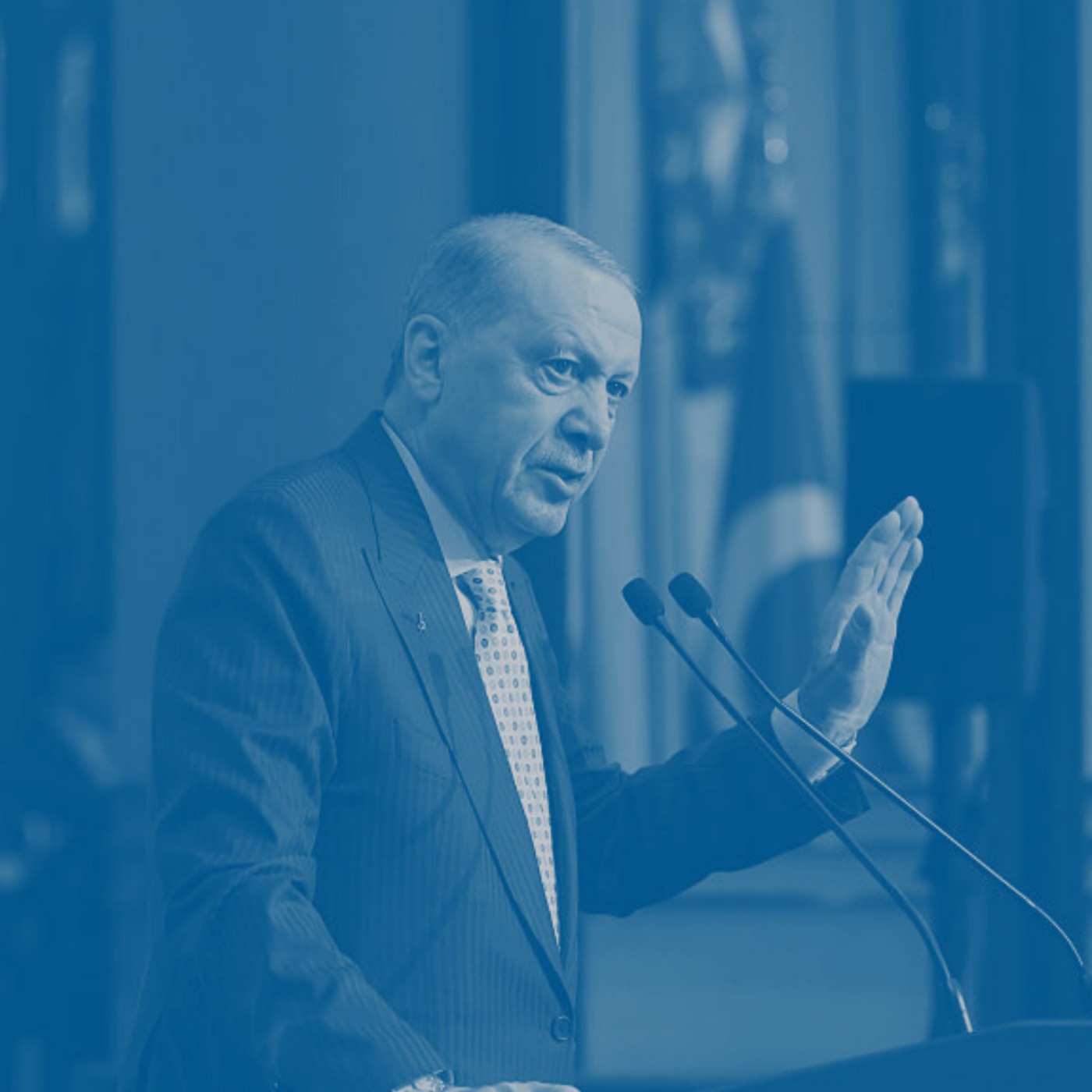
Between Ally and Adversary: Turkey’s Strategic Calculus in the Iran War
Mar 1200:59:54Tap to summarizeAs the war involving Iran reshapes the strategic landscape of the Middle East, Turkey finds itself navigating one of the most complex geopolitical dilemmas in its modern history. Sharing a long border with Iran and balancing its role as a NATO member with its regional ambitions, Ankara is attempting to manage the fallout of a conflict that could dramatically alter the balance of power across the region. Turkish leaders have condemned U.S. and Israeli military strikes on Iran while simultaneously warning Tehran against expanding the conflict, reflecting a delicate strategy of hedging between competing interests.For Ankara, the stakes extend well beyond diplomacy. The prospect of regime collapse in Iran raises fears of refugee flows, border instability, and the emergence of new security threats along Turkey’s eastern frontier. At the same time, the conflict presents opportunities for Turkey to expand its regional influence and position itself as a mediator between global and regional powers. Meanwhile, recent incidents demonstrate how quickly the war could draw Turkey directly into the crisis.What does Ankara want from this conflict? Is Turkey seeking to prevent the collapse of the Iranian regime, contain regional chaos, or exploit the turmoil to advance its own geopolitical ambitions? And how should the United States and its allies interpret Turkey’s actions at this critical moment?For a timely discussion on Turkey’s priorities, anxieties, and strategic calculations as the war in Iran unfolds, FDD hosts Henri J. Barkey, adjunct senior fellow for Middle East studies at the Council on Foreign Relations; and Steven A. Cook, senior fellow for Middle East studies at the Council on Foreign Relations. The discussion will be moderated by Sinan Ciddi, director of FDD’s Turkey Program.For more, check out: https://www.fdd.org/events/2026/02/26/beyond-erdogan-turkeys-political-future-under-new-leadership/
Transcribe →
Surveying Foreign Influence in AI Tools
Mar 400:59:49Tap to summarizeAuthoritarian regimes are gaining influence over how Americans understand the world through the AI tools trusted to be neutral arbiters of information. By optimizing authoritarian propaganda for AI consumption, adversarial governments are shaping the narratives in AI tools relied on by millions for research, education, and everyday information. This event will explore how propaganda outlets are strategically filling legacy media’s void by positioning content to be cited by large language models, analyze Russia's campaigns to influence AI training data and embed Kremlin-aligned narratives into chatbot responses, and discuss the repercussions for the growing deployment of Chinese-built AI models in the United States.To discuss these emerging vulnerabilities and the options available to policymakers, technologists, and the media ecosystem, FDD hosts Joseph Bodnar, senior research manager at the Institute for Strategic Dialogue, and Jamil Jaffer, founder and executive director of George Mason University’s National Security Institute. The discussion is moderated by Leah Siskind, FDD director of impact & AI research fellow.For more, check out: https://www.fdd.org/events/2026/03/04/surveying-foreign-influence-in-ai-tools/
Transcribe →