← Federalist Radio Hour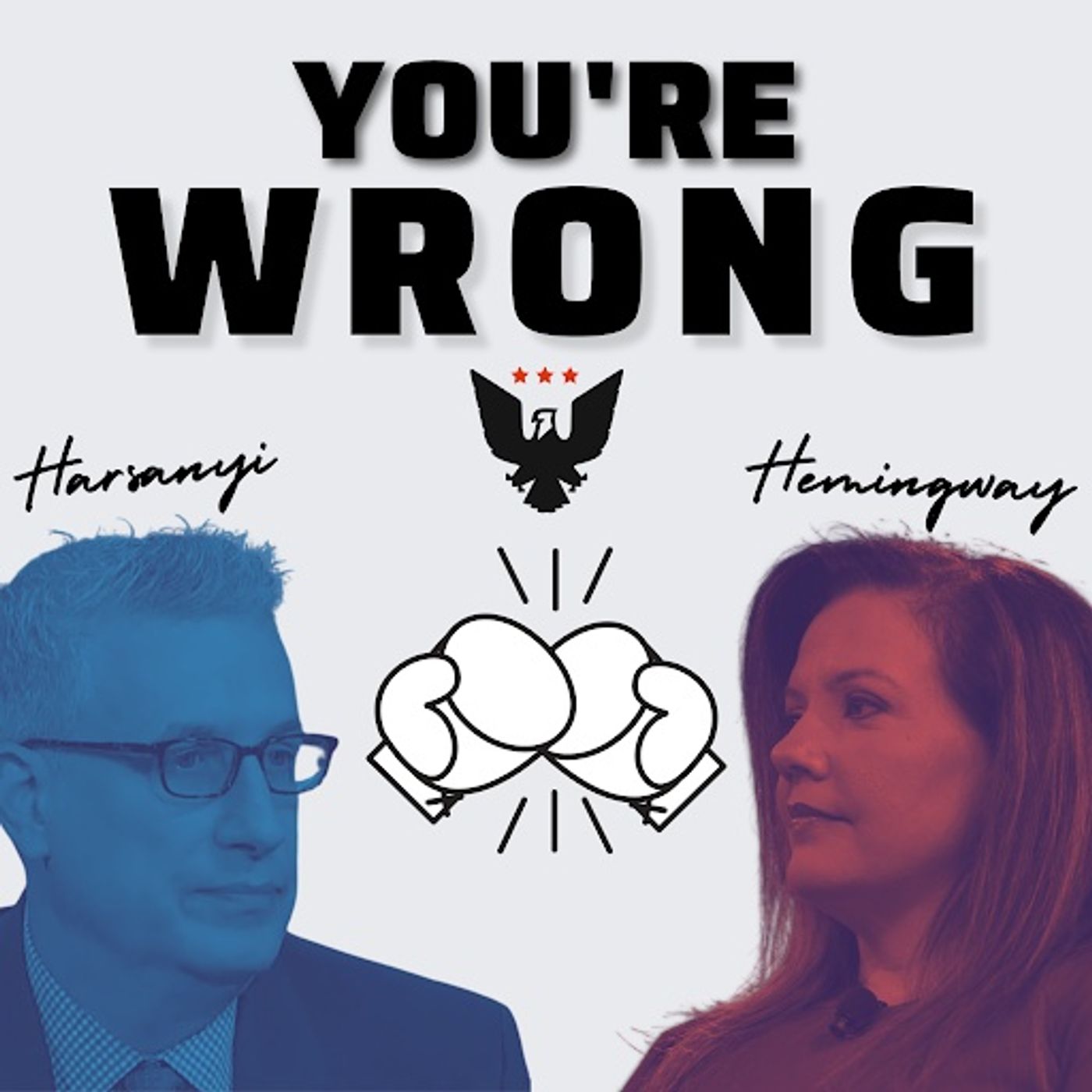
Federalist Radio Hour
'You're Wrong' With Mollie Hemingway And David Harsanyi, Ep. 140: Deportation
01:07:34
Join Washington Examiner Senior Writer David Harsanyi and Federalist Editor-In-Chief Mollie Hemingway as they discuss the Trump administration's deportation order for Mahmoud Khalil over his role in pro-Hamas demonstrations at Columbia University,...
Loading summary
Transcript190 lines
- [00:00]
Bowen Yang
This is Bowen Yang and Matt Rogers from Las Culturistas with Matt Rogers and Bowen Yang. JBL Wireless Earbuds are for those who are the first to try something unique. The first wireless earbuds on the market with a touchscreen case which allows you to control your audio without reaching for your phone. They also have a touchscreen smart charging case for one touch control. I love being able to touch my buds and control the volume with a built in wireless transmitter that lets you plug and play with any device you want. JBL Wireless Earbuds connects you to all your favorite music, movies and games. JBL Wireless Earbuds Grab a pair@jbl.com we.
- [00:38]
Delta SkyMiles Advertiser
Know no one's journey is the same. That's why Delta SkyMiles moves with you. From earning miles on reloads for coffee runs, shopping and things you do every day to connecting you to new experiences, a SkyMiles membership fits into your lifestyle, letting you do more of what makes you you. It's more than travel, it's the membership that flies, dines, streams, rides and arrives with you. Because when you have a membership that's as unique as you are, there's no telling where your journey will take you next. Learn more@delta.com SkyMiles.
- [01:28]
Molly Hemingway
Welcome back everyone, to new episode of youf're Wrong with Molly Hemingway, editor in chief of the Federalist, and David Harsanyi, senior writer at the Washington Examiner. Just as a reminder, if you'd like to write us here at the show, please do so at radio at the Federalist. We love to hear from you. How are you, Molly?
- [01:45]
David Harsanyi
Great. How are you doing?
- [01:46]
Molly Hemingway
I'm doing great. I'm excited that the deportations have begun, especially Mahmoud Khalil, a Colombian. A Colombian, a graduate, a former graduate student at Columbia University and I'd say a ringleader of a lot of the quote, unquote protests that went on recently is being hopefully deported from the United States. The Trump administration moving on the president's executive order to. Well, I forgot how it was worded. Maybe stop anti Semitism or whatever it was.
- [02:26]
David Harsanyi
To put this in context, after October 7, we started to see this growing student movement, particularly at elite colleges, of opposing Israel's response to the October 7th massacre. Is that the context that's needed here?
- [02:45]
Molly Hemingway
I would say that that's right, except that in places like Harvard and probably Columbia, I don't remember the protests began before Israel even responded to it. They were basically rationalizing and justifying the resistance of Hamas. And they viewed October 7th, the rape and killing of innocent civilians as part of that movement. I think that's fair to say.
- [03:11]
David Harsanyi
So it's been an interesting story to me because we've had a lot of left wing student movements, including ones that have the support of this same group of people that did not result in a great deal of attention from high Republican leaders. So for instance, if you went to the BLM site on day one of the BLM protests and riots, you saw that they had as one of their key beliefs, opposition to Israel and support for Palestinian, like complete takeover of from. From the river to the sea, as they say. And yet you had like Mitt Romney marching with blm. And as these groups did so much damage on campuses for years, if not decades, nobody really cared. And then when they went after Israel for its response, or even as you note, really, they just started going after Israel almost like to celebrate what had happened on October 7. Is that too much to say, or did kind of like they were celebrating it?
- [04:23]
Molly Hemingway
I think they were all of them, but many of them, all of a.
- [04:26]
David Harsanyi
Sudden you see like Republicans spring into action and say, we've got a problem on our campuses. It's a little weird that they waited until that point to do anything about it, but it's just hard. So I've seen some. I think you and I are both pretty strongly free speech, right?
- [04:43]
Molly Hemingway
I think so. I think I'm. I'm. Yeah.
- [04:47]
David Harsanyi
And so I kind of want to talk just like about that part of it because I've seen some free speech people being really upset that the Trump administration is deporting a guy with a green card over his speech. Do you agree that that's what's going on? Or do you think there's more to it? Or do you think that even if that's true, but that is a problem.
- [05:10]
Molly Hemingway
Okay, well, let's take a step back on the BLM aspect that you just mentioned. This is not an excuse for anyone. I think when BLM broke out, the world was still a bit of a different place. Right. And Republicans are very nervous and have always been. Been nervous of being portrayed as being racist or white supremacists or whatever. So they've always been cowardly when it comes to racial issues, even clearly racialist, identitarian issues like blm. But it seems to me like BLM is dead now. That's why I think it's different. Whereas when you see people championing terrorists, that's something a lot easier, frankly, to stand up against. I mean, you think it would be, but not that everyone does as far as the free speech issue. Free speech is, you know, protected by the First Amendment. And it's also, I think you and I have agree on this. A virtue right that we believe should be virtue or an ideal that should be protected no matter where people are. I think it's a natural right. So I support Khalil's right to free speech in Algeria and Syria. I hope it goes unfettered and he can say all the things he wants to say. But you don't have a constitutional right to be in the United States. And not only is it illegal for you to support a terrorist organization here while you're have a green card. And by the way, the green card system, the entire immigration system and the levels of protection. Green card is the highest level of protection before you're a citizen. Were created as a vetting process to give us time to see if you're a good citizen. If you are an insurrectionist and you are stoking bigotry and you are supporting a group that is on the DOJ terrorist list, we would be insane to give you citizenship. It's like inviting a fifth column to live in the United States. No country should ever do that. So I. I think speech should be protected, but your right to be here is not protected. And he broke the law. Now, is it constitutional to have a law that says you're not allowed to espouse support for certain groups? I guess we can take that to the Supreme Court, but. Sorry to be ranting here, but one last thing. I've told you many times, my parents were defectors from Eastern Europe, right? Or Central Europe, a communist country. When they got here, they had to renounce communism. They had to promise not to be involved in insurrections and not to undermine the Constitution. Does Khalil meet any of those standards? No. So I just don't even understand why we would want someone like this here in the first place. And one more thing. Khalil also was the ringleader of groups that targeted Jewish students on the Columbia campus that took over buildings, vandalized them, destroyed buildings. He was the negotiator for the Columbia Divest from Israel organization, whatever it was that had taken Hamilton Hall. He led protests where they put up big signs that said death to America. Now, that's a speech issue. And the thing is that a lot of Democrats claim that he was not convicted of a crime. Thus he has done nothing wrong. First of all, you can lose your immigration status over things that aren't, you know, without criminal conviction. But more than that, Alvin Bragg will not Convict anyone in New York who does this sort of thing. He let rioters out of jail without any charges. So what are we supposed to do? Because there's a socialist DA now who allows these graduate students and others to target Jewish students. We're now. So what, we're just supposed to sit here and let a bunch of anti Semites come into this country, into schools that are already propped up by Qatari money? I mean, it's. It's just insanity. It's suicidal, I think.
- [09:07]
David Harsanyi
So I'm about to sneeze. So if I. If that happens, I apologize. But, yeah, I have a few different thoughts on this, and they largely align with yours. I do care that people are not punished for their speech, and I believe that freedom of speech is a natural right. I also don't think that means that foreigners, whether they are here, like, on this status or another status, have the same right to be free from government action in response to speech that American citizens do. And it's a privilege to have a green card. It's a beautiful privilege. It's like an amazing, wonderful privilege to have a green card. And people who are guests in a country that is not their own should be respectful of that, I think. And I was thinking about this, like, let's say, you know, someone came in from Scotland and they were a pro life activist that was causing problems, or that they were associated with a group that was engaged in some terrorist activity against abortion clinics. Even though I'm pro life, not that I would ever support any violence in defense of that, but even though I'm pro life, I wouldn't say that someone who was coming into our country to do this kind of protest that they should be free from any repercussions that the government wouldn't have a right to deport. I always try to come up with something in my mind that's more sympathetic than a Hamas supporter. And it surprised me somewhat how many people, like Ann Coulter was saying how this was a violation of free speech rights. I think I just don't. I don't see it that way. And I don't care about the issue at the level that some other people do. I saw that over at the Volok Conspiracy. Ilya Soman was also talking about the importance of protecting the First Amendment or like, in making sure the First Amendment protections extend to people who support Hamas. And he was, you know, quite. He's Jewish and an Israel supporter and not in any way sympathetic to this guy. But it's just I ultimately didn't find.
- [11:24]
Rebel.com Advertiser
Did you know you can save up to 70 on the best brands just by shopping at from rebel.com we're talking about strollers, car seats, high chairs, espresso machines, cookware, everything you need for way less. Here's how it works. Every single day, REBBL drops thousands of new products on the site for up to 70% off. It is a constant stream of endless deals from top brands like Uppababy, Nuna, Baby bjorn, Breville, Nespresso, KitchenAid, Le Creuset and more. But you have to act fast because every deal is one of a kind. So if you see something you love, make sure you add to cart fast. So stop paying full price when you don't have to. Whether it's baby gear, kitchen upgrades or a treasure for your home you didn't know you needed, Rebel has it for way less. Up to 70% less. Shop from rebel.com and save big.
- [12:22]
Podcast Host
I've got Dan Morgan here on the pod. Say hi Dan.
- [12:25]
Dan Morgan
Hey, how's it going today?
- [12:26]
Podcast Host
It's going good, man. Tell us who you are and what you do.
- [12:29]
Dan Morgan
I'm Dan Morgan. I'm an attorney and a managing partner at Morgan and Morgan, which is America's largest injury law firm.
- [12:35]
Podcast Host
That's pretty awesome. Why do you guys think you win so many cases?
- [12:40]
Dan Morgan
The insurance companies and other companies that we go against know that we're going to take it to the end that we believe in the case. So we fight for every dollar and we're not afraid to go that extra mile for our clients.
- [12:48]
Podcast Host
Are insurance companies like actually afraid of you guys?
- [12:51]
Dan Morgan
We don't bluff. We take it to trial. And we are not strangers of getting very, very, very large verdicts.
- [12:57]
Molly Hemingway
Awesome.
- [12:58]
Podcast Host
So how does someone get in contact with Morgan and Morgan? What would I do if I got into an accident?
- [13:02]
Dan Morgan
Probably the easiest way is dialing pound law. That's £529 from your cell phone. Our call center is always waiting to take your call 24 7.
- [13:12]
Molly Hemingway
Wow.
- [13:12]
Podcast Host
Dan Morgan from Morgan and Morgan, America's large injury law firm. Thanks for coming by the show.
- [13:16]
Dan Morgan
Thanks for having me. Visit forthepeople.com for an office near you.
- [13:20]
David Harsanyi
I did not find it as compelling as I thought I might.
- [13:26]
Molly Hemingway
I mean, Ilya Sohman's argument was, and I like him very much as a commentator and he's a lawyer and all that. But it was propped up by the idea that we shouldn't really even have borders at all. I mean he's a full blown libertarian. I'm pretty libertarian guy. But I think the only way we're going to preserve freedom is by actually having borders and not letting in people who want to destroy them here. I think that's part of defending liberties. But more than that, I think people should read Ilya Shapiro's piece at the Manhattan Institute explaining the legalities of there. He's also a libertarian lawyer, and I think he made a more compelling case.
- [14:05]
David Harsanyi
We're only going to let men named Ilya debate this going forward. Well, so Glenn Reynolds also said that he didn't think that people should be deported for speech reasons, but that he just didn't think this was a speech issue. He thinks this is a support for terrorism issue. Yeah, I, I think definitely I agree on that part about how support for terrorism is, is a different category than your normal free speech stuff. But I actually, I'm not even sure if I would extend First Amendment protections to people who are here on green card status.
- [14:41]
Molly Hemingway
If. Why do we even have green cards then? I mean, why do we have this vetting process if we're supposed to allow everyone in now? If, if it was 1940 and some German Nazi type was here and there were Nazis here and they had big, you know, events at Madison Square Garden, but a German is here saying that the United States needs to be destroyed, the west needs to be, you know, the, the Anglosphere needs to be destro. Destroyed and this and that will we give him citizenship. It's just insanity. I am for protecting the First Amendment rights of people who are here, even people like Khalil. But if you're going to, you know, create insurrection here and side with America's enemies that are literally America's enemies, I don't think we should give you citizenship. And I, I don't know, I hate to even say these, this phrase, but it's just common sense, right? Isn't it?
- [15:34]
David Harsanyi
So there's another angle that I think is interesting about. Well, there are multiple angles that I find interesting about it. And one is something else you just referenced about Alvin Bragg will not hold people accountable for crimes committed as part of these pro Hamas, anti Israel protests. And that is true. And also true is that Colombia should have done more to make sure that their Jewish students were protected as they went to classes. I mean, Colombia is, is the worst of all the schools. I think they are threatening the operation of the school. They're not protecting students. There's been violence. There's been major disruption to the classes themselves in a way that I don't think we would tolerate for a different group that was targeted and had the schools done A better job of creating sure places for people to protest while also protecting the rest of the students. I don't think we'd be seeing this deportation. And it is a big incentivizer for other schools, including Columbia and other schools to think about whether turning their campus over to the worst fringe elements who disrupt the proceedings of the school, whether that turned out to be such a good idea. Columbia has lost some obscene number of grants worth a lot of money as part of their support of these protests. And now their student leader has been deported. And you know, it's just maybe their strategy of how to handle it wasn't so great.
- [17:15]
Molly Hemingway
That's a very good point. I saw, I can't remember the school, some school, you know, had shut down some forthcoming, you know, so called protest. Losing 400, $300 million is not nothing even for these institutions. Honestly, I don't think taxpayers should be subsidizing these schools with these giant bank accounts of billions of dollars. They could give free tuition to everyone if they felt like it. Another angle, Trump mentioned masks and everyone's like, what's he talking about? Well, I don't know. Before COVID I'm not sure people realize this. Most or many cities had anti masking laws because people who wear masks, like the Klan and the Kaffirs of the pro Hamas people do it to intimidate other people, minorities, usually they do it because they want to engage in criminality. Now we suspended a lot of these laws during COVID when the government forced us to wear masks. But this is not some outlandish thing that Trump just dropped in. I'm not saying he doesn't drop outlandish things sometimes in his tweets, but this actually had a basis in law, huge.
- [18:23]
David Harsanyi
Basis in law that's going back like 150 years. I don't know exactly how I feel about that either. Yeah, like, but it was done for definite common good, public interest reasons. The Ku Klux Klan was intimidating people and engaged in, you know, bad behavior, violence, property damage with its protests and riots. And so there. I forget what it was called. It's like I want to, might even be called like the KKK Act. It's right after the Civil War that we.
- [19:01]
Molly Hemingway
Yeah, yeah, like in 1871, I think the law, I forgot what the law was called. But yeah, it, it was about the Klan, but yeah.
- [19:08]
Delta SkyMiles Advertiser
And yeah.
- [19:09]
David Harsanyi
And so there are reasons why cities don't allow that. Cities and other municipalities don't let people wear masks as they commit violence or engage in.
- [19:21]
Molly Hemingway
I agree with you I don't know if that's constitutional. Like, I don't know why I shouldn't be able to wear a mask if I want to. It seems like a free speec. But we understand why people wear masks. We understand that they're going to be involved in something that they don't want to be identified being involved in anyway. So there's also a larger issue that I think is quite interesting. If Khalil is not deported and there's a chance he's going to go in front of an immigration judge, he has lawyers, there's due process here. Then shouldn't we start thinking maybe we don't let people. So many people in from places where liberalism is so popular, where people who want to destroy this country, who hate the west, who stoke bigotry in our schools and of higher education. Why are we letting them in? If I can never say you, you can't be here for the things that you're doing, then why are we letting you in in the first place? I think that's something we should.
- [20:19]
Chris Markowski
New York State has a new recruitment process for Democrat voters. The Watchdog on Wall street podcast with Chris Markowski. Every day, Chris helps unpack the connection between politics and the economy and how it affects your wallet. After Doge's purge of the federal workforce, Governor Kathy Hochul is recruiting federal workers to move to New York. Does she really want employment or just more votes? Whether it's happening in D.C. or down on Wall street, it's affecting you financially. Be informed. Check out the Watchdog on Wall street podcast with Chris Murkowski on Apple, Spotify, or wherever you get your podcasts.
- [20:51]
Podcast Host
I've got Dan Morgan here on the pod. Say hi, Dan.
- [20:54]
Dan Morgan
Hey, how's it going today?
- [20:55]
Podcast Host
It's going good, man. Tell us who you are and what you do.
- [20:59]
Dan Morgan
I'm Dan Morgan. I'm an attorney and a managing partner at Morgan and Morgan, which is America's largest injury law firm.
- [21:05]
Podcast Host
That's pretty awesome. I think I saw a billboard of yours recently that said 20 billion. 120 billion is an insane number.
- [21:14]
Dan Morgan
Yeah, 20 billion recovered. It's actually, I think somewhere north. Probably closer to 22, 23 after this year. And each year we get bigger and badder and our army grows. So the number will hopefully keep getting bigger and bigger as time goes on.
- [21:26]
Podcast Host
Awesome. So how does someone get in contact with Morgan and Morgan? What would I do if I got into an accident?
- [21:31]
Dan Morgan
Probably the easiest way is dialing pound law. That's £529 from your cell phone. We are always open. Our call center is always waiting to take your call. 247 365.
- [21:41]
Molly Hemingway
Wow.
- [21:41]
Podcast Host
Dan Morgan from Morgan and Morgan, America's large injury law firm. Thanks for coming by the show.
- [21:46]
Dan Morgan
Thanks for having me. Visit forthepeople.com for an office near you.
- [21:53]
Molly Hemingway
And just tied to that, I saw a CNN poll this morning that had Trump on the right side of immigration policy for the first time ever. Why? Because it's clear now that the Biden administration wanted to allow anarchy at the border because crossings have plunged since the day Donald Trump became president. So clearly Democrats didn't want to secure the border.
- [22:20]
Dan Morgan
Right?
- [22:20]
David Harsanyi
Yeah. Actually, one thing that's interesting about border crossings is that you see the change happen usually before a certain individual becomes president. So the moment Biden won re election in 2020, you start seeing a big increase in the numbers of people crossing the border. Likewise, the moment Trump wins, not when he takes office, but when he wins, you start to see a decrease because people understand that different enforcement means different things. And while it is, I would say, good and notable that you've seen crossings drop to a trickle under Trump, there are so many millions of illegal immigrants here improperly that we were told would be deported. And you have to deport a really large number each day, each week to stay on top of the promise to deport all of the like 12 million illegal immigrants from Biden's time plus all the others. And they're just not meeting those numbers. That's a little bit of a side topic. But before we talk about what it means to be American and what it means about who should be given this great privilege of being able to be part of our country, whether as a citizen or as a green card holder or otherwise. I do want to just point out one thing that you mentioned about legal representation in due process. So everything is proceeding according to how you would expect it to when they are deporting someone. Actually, that reminds me of one thing they did. Apparently when they, when they grabbed him, they didn't like immediately say where he was. But you kept hearing people on the left say that he'd been disappeared and it was a matter of hours before people knew where he was. A disappearing is a different thing than, you know, not knowing exactly what facility he's in for a brief period of time. I mean, I, I totally believe he has, you know, that the way that the system is set up, that we have said that his lawyer should have access to that. And I'm not, I'm not downplaying that, but the other thing I want to point out is that we had our Department of Justice engaged in what by its own admission was the biggest like, attack on any protest group ever in the history of our country with the J6 protests. And when that happened and hundreds and hundreds, more than thousand people were rounded up and were overcharged according to the Supreme Court, and were dealing with horrible conditions for protesting in a manner that's roughly similar to how left wing protest movements have been allowed to proceed with barely any oversight for decades. No lawyers. No lawyers. And by the way, no lawyers on the right, like none of our prestigious conservative legal community stood up to defend these largely poor or not like wealthy people who were rounded up by an absolutely out of control Department of Justice. Here we have a terrorist sympathizer who is facing deportation and he has a veritable who's who of top shelf left wing attorneys ready to, to defend him every step of the way. And I don't know exactly who I'm angry at here, but, you know, because I think legal representation is good. The left is very good about defending its people, whether they are terrorist sympathizers or terrorists. Like when everyone was being held at Gitmo, every major left wing law firm went to bat and took their cases all the way to the Supreme Court defending people who had killed Americans and, or who were involved in plots to kill Americans. And when J6 protesters were rounded up where the bleep was, the conservative legal community. And I think it's going to come back and haunt them that they were so not there because people help people who help them. And not having helped at the time of greatest need, when Democrats were just doing lawfare against Trump, against entire Republican Party establishments in Georgia and other states, against the, the voters. They did nothing to help these people. And now they're like, but please make sure you vote for us so we can get our judges or other people in. It was a really bad strategy on the part of, you know, the conservative legal establishment. And I'm kind of curious to see how that will play out. Sorry, that was a little bit of a no.
- [26:55]
Molly Hemingway
Could we also talk for a second about this ridiculous idea that Democrats are super and Chris Murphy, one of the leaders of the Mahmoud Khalil defense front, care about free, express political free expression. I mean, that's a joke, right? They've spent years trying to censor political speech. They've spent years undermining the idea of neutrality in speech. They wanted to weaponize the government, to shut people down constantly through pressuring big tech Working with big tech, et cetera. It's a joke.
- [27:34]
David Harsanyi
I was thinking about that when people were attacking Supreme Court justices houses or going to their homes to protest them and their kids. And Joe Biden and Merrick Garland were like, there is nothing we can do. These are free speech protests. And it was like, you people hate free speech. You have organized large cabals of censorship organizations that all operate to suppress speech. And yet when it suits you, you say, oh, this is a free speech issue.
- [28:07]
Molly Hemingway
There are laws, aren't there, that say you have to stay a certain distance away from judges, not to intimidate them or something like that. I don't know what the law says. But abortion clinics, you can't even be nearby. And, you know, and they're fine with that. I mean, they have such a loose, inconsistent defense of speech that you start to think that maybe they only think one kind, one side should have free speech.
- [28:31]
David Harsanyi
Yeah. Because a lot of people get very angry when their cases don't go the way that they want. And sometimes they take it out on judges or their spouses or their children. There are all sorts of laws and regulations, like according to each state and then also in the federal, you know, according to the federal government, of not protesting judges with the intent of getting them to change their minds on a certain topic or to otherwise interfere.
- [29:00]
Molly Hemingway
And one last thing I wanted to talk about was immigration and everything you mentioned the. The. Yeah. You have something to say? I was just going to say sometimes you think the Democrats believe the only American ideal is immigration. Right. That's all they talk about. They're quoting new Colossus poem from the Statue of Liberty and so on, but yet they're willing to just hand this sacred right, this citizenship that protects you and your natural rights to people who hate this country. It tells me they're not actually serious. In the same way they're not serious about voting. Voting and democracy are the most sacred thing ever, but yet they don't even want you to have an ID when you do it. So it tells me they're not serious about these things.
- [29:42]
David Harsanyi
So that's what I lit up. Because you had previously made reference to allowing people in from countries where maybe their values don't align with ours. And I do think that is an issue that Americans are realizing is more important than they ever did before, that there are cultural differences. For instance, support for Hamas that could come into play based, you know, different people should be screened for whether they support, you know, that terrorist movement or other terrorist movements, and whether people who do support Things like that. Whether they are good matches for a country that really does have tolerance for different viewpoints built into it. Yeah, like, it only works if, you know, it isn't just that, like, anyone can come here. It's like, well, anyone could come here who adopts our approach and our constitution.
- [30:39]
Molly Hemingway
Like I mentioned my parents and thousands of others who came from Eastern Europe and communist countries, they did not want to import those ideas into this country. They were escaping those ideas and that illiberalism. So, yeah, we can ask Mahmoud Khalil when he's being interviewed, do you support Hamas? And he can lie, he can say, no, I don't support Hamas or anyone like that. That's why we have the green card process and the process of getting your citizenship. If you say that and then you're here putting up signs and saying that you believe, telling the New York Times, your organization, telling the New York Times that they believe in resistance, armed resistance and global intifada, then we send you home. You remember, I'm sure you do. In January, a ISIS inspired terrorist rammed his car into a New Orleans crowd and killed 15 people. That day. That day there was a giant protest in Times Square with people with huge signs that said, globalize the Intifada. And one of the groups there was the Colombia divest group, which this guy was a leader of. The day 15Americans were killed. Is this really who we want here? I mean, I don't. Not me, I don't. Yeah.
- [31:51]
David Harsanyi
Thank you. So, I mean, I wish that I was disagreeing with you more, but I just, I cannot be made to care that much about this particular case. I'm not saying that I wouldn't monitor restrictions on speech or other, you know, speech related activity, but I think that Columbia should have done a better job. The city of New York, the state of New York should have done a better job managing these things. And that had they done that, you wouldn't be seeing this. So they really only have themselves to blame.
- [32:24]
Molly Hemingway
I am sympathetic to the argument that there is a slippery slope here that we have to be careful about because, yeah, one day a Democrat's gonna be president and they're gonna start deporting people who say things they don't like.
- [32:35]
David Harsanyi
Perhaps.
- [32:36]
Molly Hemingway
I'm not saying that that can't happen, but it's also a slippery globe to just let anyone come here who hates this country. We have to have some kind of immigration process where we're, we're making this a better country where we're bringing people here who, like, there's a Big movement to say we should only bring people here who we need, who have degrees, who have money, whatever. I don't think so. I think we should be bringing people here who are going to make good Americans because a lot of people in the world don't have opportunities to succeed because they live in terrible places, or as Donald Trump had a different name for those places. But that doesn't mean we just allow anyone to come here. We don't let them define. We don't let them tell us who's coming. We decide who's coming. And this is a perfect example of that.
- [33:18]
David Harsanyi
Yes, people make it so much about economic growth, and they should care far more about cultural identity and the strength of the country going forward based on shared understanding of shared values.
- [33:31]
Molly Hemingway
It's because it's that culture that makes the economic part happen. It's the stability.
- [33:36]
David Harsanyi
Not just because of that, though. I mean, yes, wealth is important, but.
- [33:41]
Molly Hemingway
No, no, I'm not saying that I'm.
- [33:42]
David Harsanyi
Wealth that matter even more than financial wealth.
- [33:46]
Molly Hemingway
No, I'm not arguing about that. I'm saying that the culture that we have that doesn't think about money first, despite what people think, is what even allows you to take the risks to have a, a career that you, you know, you love. Not just that makes you money, that allows you to make money, if that's what you want to do. I mean, it's the culture that allows.
- [34:04]
David Harsanyi
That we should move on. But I just want to have two more quick things that I was thinking of while you were talking. One is that the mayor of Washington, D.C. removed the black Lives Matter paint on the, on the street in front of the White House and the plaza that had been erected there to obstruct traffic so that Black Lives Matter would be forever honored for what it is in our nation's capital. And she did this. Or maybe it was a city council, I don't know. They were not asked to do it. They just did it. And it's kind of like what we're talking about with border crossings or how New York didn't step up like they should. They're just worried they're going to lose home rule. So D.C. constitutionally is under the federal government, and they're allowed to govern themselves, and they do a very bad job with it. So Congress is always thinking about taking it back, but they're just so terrified of that. They were like, okay, we'll just take down. Will take this down right away. The other thing is that Chris Murphy, like so many members of Congress, left and right, Sadly, Republican and Democrat has left his wife for a younger woman. And the younger woman that he's left his wife for is a censorship proponent who also runs actual propaganda news sites. I forget what they're called, but she runs, like a series of propaganda news sites that are all about spreading propaganda. Like they pretend they do local news just so that they can spread Democrat propaganda. And he's with her now. And so everyone's like, why are we seeing so much of Chris Murphy? And it's because he's now with this Tara McGowan dark money operative lady who. Who runs propaganda sites, and she's made him her number one project.
- [35:52]
Molly Hemingway
Don't even get me started on that guy. I'm going to lose my bleep. I cannot handle that guy. He is such a fraud. To take a step back, I suggest that D.C. rename Black Lives Matter Plaza, All Lives Matter Plaza, and just write All Lives Matter. But what makes makes me laugh is that you said that the denizens or of DC can't govern themselves or govern themselves poorly. They. These are literally the people governing the whole country and they cannot govern their own city. They do not deserve home rule. It should be taken away constitutionally. I think this should be con. Under Congress's purview, and they should be making laws in D.C. it's not supposed to be a state. It's not supposed to be its own city in this way. And it was a big mistake. Home rule, I think at least.
- [36:38]
David Harsanyi
Yeah, I think they should just do what they did with the Virginia portion of Washington D.C. which is just hand the actual land back to the state or commonwealth that it came from, and then let Maryland have whatever, another congressional seat.
- [36:54]
Podcast Host
I've got Dan Morgan here on the podcast. Say hi, Dan.
- [36:57]
Dan Morgan
Hey. How's it going today?
- [36:58]
Podcast Host
It's going good, man. Tell us who you are and what you do.
- [37:02]
Dan Morgan
I'm Dan Morgan. I'm an attorney and a managing partner at Morgan and Morgan, which is America's largest injury law firm.
- [37:08]
Podcast Host
That's pretty awesome. Why do you guys think you win so many cases?
- [37:12]
Dan Morgan
The insurance companies and other companies that we go against know that we're going to take it to the end, that we believe in the case, so we fight for every dollar, and we're not afraid to go that extra mile for our clients.
- [37:21]
Podcast Host
Are insurance companies, like, actually afraid of you guys?
- [37:24]
Dan Morgan
We don't bluff. We take it to trial. And we are not strangers of getting very, very, very large verdicts. Awesome.
- [37:30]
Podcast Host
So how does someone get in contact with Morgan and Morgan? What would I do. If I got into an accident, probably.
- [37:35]
Dan Morgan
The easiest way is dialing pound law. That's £529 from your cell phone and our call center is always waiting to take your call. 24. 7 365.
- [37:44]
Molly Hemingway
Wow.
- [37:44]
Podcast Host
Dan Morgan from Morgan & Morgan, America's large injury law firm. Thanks for coming by the.
- [37:48]
Dan Morgan
Show. Thanks for having me. Visit forthepeople.com for an office near.
- [37:52]
Molly Hemingway
You. My AMEX Blue Cash Everyday card is my go to accessory. When I shop, I can earn 3% cash back on US online retail purchases. Try on the Blue Cash Everyday card. Learn more at americanexpress.com explore-bce terms and cash back cap apply. Yeah, keep it really, maybe just keep it super small right around where you know the from, you know, around the mall. Yep. Yeah. Now, speaking of D.C. there was a kind of a little bit of a kerfuffle or a little anger, I would say, last week at Amy Coney Barrett, who I guess it was a 54 decision against the Trump administration that dealt.
- [38:36]
David Harsanyi
With there are more than 100 cases, so forgive me if I get some of this wrong, but this particular situation dealt with $2 billion in grant funds that the Trump administration had put on hold. And it was related to USAID funding. And some of the people who are beneficiaries of this taxpayer largesse filed a claim in the D.C. i think it was, yeah, D.C. circuit Court saying that they needed to be paid these monies and it's a legitimate case. You know, when Congress appropriates funds, they're supposed to be paid by the executive branch. There's some leeway in how and when they do that. And usually such cases are actually handled in like the, in a federal court of claims rather than the D.C. circuit. The judge, I think it was D.C. circuit, forgive me, I'm so sorry that I don't remember which circuit it was. It could have been. In fact, I'm like in my mind, it's not the D.C. circuit. The judge who was not, not D.C. circuit, sorry, it was a district court. I don't remember which district court. The judge who was handling it, just like an individual judge had been on the bench about two weeks and is a crazy left winger. And he instituted some global injunctions against the Trump administration right away that they were appealing. Like, he basically, I think, said that they had to continue operations that there would be an injunction against a pause of the funding. And then he felt like they weren't following his ruling as much as he would have liked them to. And so he then said that they had to pay up everything in 36 hours. Now, many people had a problem with these temporary restraining orders because they were so much more than what should be done by a district court judge. And the Trump team immediately appealed this to the Supreme Court. And so I think a lot of people thought that the thing to do when a judge is kind of out of control is just to, to put a pause on everything while the case gets worked. You know, it'll. He'll make a ruling at the district court level, and then it will be reviewed by wherever his circuit is, and then it will go up to the Supreme Court. It was like a normal procedure. And instead, the Supreme Court said, like in a 5, 4 decision, with the four people who didn't agree all putting their name to the dissent. So, you know who the five were, or, you know, they said they had a, they had an order, I should say, that said, no, let this district judge run wild. Basically, it's, it's. I'm leaving out a bunch. And technically, they kind of chastised the judge a little bit or encouraged him to rein it in. And it was just shocking to people, including Justice Alito, who wrote the dissent, because there were so many ways around what they did, and what they did was not one of them. So it was alarming to a lot of observers. And Amy Coney Barrett and Justice John Roberts were both part of.
- [41:45]
Molly Hemingway
That. Right. So she got, you know, there was a lot of anger directed at her online, I saw, comparing her to, like, Suter or other judges that were nominated by Republican presidents who went native, I guess you'd say. I think it's incredibly premature to start talking that way. She has been great on a ton of huge cases, including overturning Roe, affirmative action, gun rights, you know, pro gun rights. The idea that a lot of people were spreading was that she's basically antagonistic toward Donald Trump, engineers decisions to undermine him. I, I just, I don't see that at all. And then I think CNN broke this story and it was, you know, that, that she had arranged for someone to sing songs from the show, Broadway show Hamilton, when Katanji Brown Jackson first came in as a welcome party. And who does that? You know, she's, this was supposed to tell me that she's a crypto, you know, leftist or something. I just don't buy it. That just seems like a normal thing that a nice person would do for someone who's starting work, you know, who's going to be a colleague.
- [43:11]
David Harsanyi
Yeah. The defense of Amy Coney Barrett on that last Point is even stronger than what you say, because the Supreme Court has had. Has long had a tradition. Okay, let's even back it up a little bit. The Supreme Court operates with seniority. The Chief justice is always senior, whether he got there yesterday or he's been there for 25 years. Other than that, it goes by length of time at the Supreme Court. So the Junior justice goes through a little bit of hazing in different ways. Like, they have to serve on the cafeteria committee, and they have to go to monthly meetings to see how the cafeteria operations are being run. There's a cafeteria in the Supreme Court that feeds the justices, their clerks, the permanent staff and visitors. And so it needs to be run well. And the Junior Justice, I think, chairs that committee. And when they're in conference, which means when it's just the justices and they're discussing things alone inside the inner sanctum, if someone knocks on the door because someone lost their glasses or, you know, someone needs a filing somewhere, someone knocks on the door, the Junior justice is the only person who can get the door. The Junior justice speaks last. I mean, there are all sorts of weird traditions associated with being the Junior Justice. Now, when a new Junior justice comes, the. The previous Junior justice always throws a party. They organize the party. It's a dinner. Dinner and entertainment. And so I can't remember what they all were like when Justice Kavanaugh came on the court. Justice Gorsuch threw him a dinner. And the entertainment was that the racing presidents, the Washington Nationals, have this thing, racing presidents who come out and compete with each other. And they showed up at the court, and they did a race down the hallway of the Supreme Court. So that's like an example. Or when Justice Alito came on the court, Justice Breyer had the Phillies fanatic. Why are these all baseball? I don't know. But the Phillies fanatic burst into the room and started, like, hugging Clarence Thomas and. And Justice Alito. And it was, you know, because Justice Alito loves the Philadelphia Phillies. It's not that Justice Breyer loved Justice Alito. You can read his memoir. And he doesn't really say much about him, but he followed this tradition. And so when Amy Coney Barrett was put on the court in 2020, she was the Junior justice for a few years. And when Katanji Brown Jackson came on in 2023, she throws a party, and it involves Hamilton. Not because Amy Coney Barrett loves Ketanji Brown Jackson, although she might, or because she loves Hamilton. It's because Ketanji Brown Jackson loves show tunes. We Know this, that she just appeared on a Broadway stage, which was a lifelong dream of hers. And so it was very specific. Oh, yeah. When Kavanaugh hosted the dinner for Amy Coney Barrett, because she's from Louisiana, I think they had Cajun food and they had, like, a Mardi Gras type theme, I think. So. My point just being the idea that you would attack Amy Coney Barrett for participating in the same process that everybody else does is ludicrous. Or another ludicrous thing that you saw was that people were trying to say that she. She glared at Trump at the State of the Union. I don't think that's accurate. Can I say a little bit on that? I don't want to.
- [46:43]
Molly Hemingway
Be. Yeah, no, I saw that video. I don't think that's accurate at all, but go.
- [46:46]
David Harsanyi
On. Yeah. I mean, if you met her, she's kind of a reserved person. All the. Many of the justices at least attempt to have some type of judicial temperament in their interactions. And going to the State of the Union is a thankless, awful gig. You might have noticed there were only four justices there. Well, five if you count Anthony Kennedy coming back to, like, reclaim some former.
- [47:10]
Molly Hemingway
Glory. Is that new? Did they. I think they all used to show up, right? Is it new that they're not showing up anymore, or am I.
- [47:16]
David Harsanyi
Wrong? You're wrong. It's not true that they all used to show up. Many justices have always had a problem with it. And I'm talking about justices who are long dead now. Interestingly enough, Justice Alito was confirmed the day of the State of the Union. So he went to his first State of the Union in 2006 and sat there. But it was during Obama's presidency that Obama gave a State of the Union address where he lied about the Supreme Court. He said that they had. He mischaracterized the results of the Citizens United decision. And, I mean, nobody disagrees with that. Linda Greenhouse, who's a communist, agreed that Obama mischaracterized what he was talking.
- [48:02]
Molly Hemingway
About. It was also unprecedented to attack justices who are sitting right in front of you during the State of the.
- [48:07]
David Harsanyi
Union. But, yeah, so already a lot of justices just didn't like it. Like, you know, they'll say, what are you supposed to do? The president praises America, you clap. Then he attacks the opposing party, and you sit on your hands like you'd sort of. It's just not a very fun experience to know what you should support and what you shouldn't. And then if you just sit there solemnly the whole time, Everyone thinks you're a stick on a log, bump on a log. But when Obama did that, Alito says, he mouths the words, that's not true, or simply not true, something like that. And of course, the cameras are all on the justices because they know that Obama is talking about them, and, and people thought that was rude. I think that was the last time Alito went to a State of the Union. But Clarence Thomas doesn't go, and it's not a partisan thing. Plenty of Democrat nominated justices don't go. Obviously didn't go last night or that night. And so I think it's a difficult thing when the president comes up to shake your hand. Like, what are you supposed to do? Are you supposed to be really, like, effusive? And then you rule against him the next day and it looks like you're a phony? Or do you just try to be reserved? Which is, I think what Amy was doing, Justice Barrett was doing. And I think it's. There's so much to criticize her about her decisions that I think it's foolish to criticize on the stuff like.
- [49:26]
Molly Hemingway
That. Yeah. I mean, if a justice is like, hey, buddy, you know, and hugs the President, I mean, you don't want that. This is their separation of powers. You know, it's, it's, it's. It's ridiculous for them to appear to be buddies and best friends, don't you.
- [49:40]
David Harsanyi
Think? I don't know. I feel like a Justice Scalia would have been able to be jovial with.
- [49:45]
Molly Hemingway
Everybody. Yeah. With everybody.
- [49:46]
David Harsanyi
Yeah. Still.
- [49:47]
Molly Hemingway
Different.
- [49:48]
David Harsanyi
Yeah. You know, make his decisions the way he wanted to. So I don't have a problem. But I just. I do want to say, though, there is simmering discontent with Amy Coney Barrett for good reasons. And I think that people are allowed to notice that. For instance, on that decision to let the district court judge run wild, what did Alito write? He was stunned. I mean, and four justices signed on to that statement that they were stunned because it was so weirdly inappropriate and there were so many other things they could have done that would have caused less damage than the permanent immediate payout of $2 billion in an. In a case that's not even really begun to be litigated or I think a good example that explains. Or. So I'm, you know, writing this book on the court. I've spoken with many people, and these are people who generally like her, but they are frustrated with how she's handling the position she's in, in terms of her understanding of what needs to be done and how quickly it needs to be done. So I want to give an example of this. Are you familiar with Employment Division B. Smith, the 1990 case authored by Justice.
- [51:05]
Podcast Host
Scalia? I've got Dan Morgan here on the pod. Say hi.
- [51:10]
Dan Morgan
Dan. Hey, how's it going.
- [51:12]
Podcast Host
Today? It's going good, man. Tell us who you are and what you.
- [51:15]
Dan Morgan
Do. I'm Dan Morgan. I'm an attorney and a managing partner at Morgan and Morgan, which is America's largest injury law.
- [51:21]
Podcast Host
Firm. That's pretty awesome. I think I saw a billboard of yours recently that said 20 billion. Wonderful. 20 million is an insane.
- [51:29]
Dan Morgan
Number. Yeah, 20 billion recovered. It's actually, I think somewhere north, probably closer to 22, 23 after this year. And each year we get bigger and badder and our army grows. So the number will hopefully keep getting bigger and bigger as time goes.
- [51:42]
Podcast Host
On. Awesome. So how does someone get in contact with Morgan and Morgan? What would I do if I got into an.
- [51:47]
Dan Morgan
Accident? Probably the easiest way is dialing pound law. That's £529 from your cell phone. We are always open. Our call center is always waiting to take your call. 24, 7, 365.
- [51:58]
Podcast Host
Wow. Dan Morgan from Morgan and Morgan, America's large injury law firm. Thanks for coming by the.
- [52:02]
Dan Morgan
Show. Thanks for having me. Visit for the people.com for an office near.
- [52:05]
Molly Hemingway
You. No, I don't think so. Yeah, I don't know that 1990.
- [52:11]
David Harsanyi
Case. Well, it's. It's one of the most famous decisions in part because it's like controversial. It's not Roe v. Wade level.
- [52:17]
Molly Hemingway
Controversial, but perhaps once you tell me what it was about.
- [52:20]
David Harsanyi
I'll. People who love Scalia widely consider it his worst decision and that pretty much from the moment it was signed, people have been looking to overturn it. So the way that religious liberty cases have been handled over time has changed a bit in the Supreme Court. I mean, first off, Bill of Rights never used to be understood to apply to the states. Then after the 14th amendment is passed, quite slowly, case by case, it starts getting applied to the states. And when it gets applied to the states, there were different standards that they used to judge something. And that has kind of changed over time as well. Do people who are making a religious liberty claim have advantage with that claim? Or as it said in Employment Division v. Smith, if there's a generally held law that doesn't have a religious exemption, that is not seen as necessarily a violation of religious liberty. So it gave a huge advantage against religious liberty claims. And people were so outraged by it that on left and right, they disagreed with it. Within a few years, they passed the Religious Freedom Restoration act, which was authored by Chuck Schumer, signed by Bill Clinton. Clinton got nearly unanimous support in both chambers, which, which said which sort of restored this privilege that was given to religious liberty issues. Still, though, this has been a contentious issue that keeps on bubbling up in the court. And people have been trying to overturn Employment Division V. Smith since 1990. So for 35 years, couple of years ago, the court gets a case called Fulton versus The City of Philadelphia, which is general law that Philadelphia said that if you don't place children in gay homes, then you can't participate in the foster care process. And the Roman Catholic Charities said that that was a violation of their religious liberty. So the court ends up holding in favor of the Roman Catholic Charities, but they don't do it. They don't overturn Employment Division v. Smith, even though they were active, asked to look at it, and they should have had five votes to do so. And Amy Coney Barrett was one of the people who didn't vote to overturn Employment Division v. Smith. And she's like, well, I just don't know how that would work out and we can leave that for another day. And I think that's a great example of her and the frustration that people have with her that she's reluctant to have the best court in the history of the United States actually do things. And I understand she's a young lady, she might be there for decades, and so she might think she has all the time in the world. Whereas these, like, old guys, Thomas and Alito, have been building the case for doing some of this stuff for decades. And they know that time is mysterious and they, either of them could die or they're, you know, whatever could happen and that the court could fund that there could be a major change in the composition of the court. Court. And so you're seeing that bubble up, that frustration with her, just like no one can really name a case that she authored that's super impressive. And she's only been there for a few years, and that's fine, but there are so many examples of her being a little more reluctant than the other justices to do things that should be done. And she was prompt. I think the problem is, like, John Roberts was on the wrong side of this decision too. Right. But everyone has known since the first Obamacare case that he's kind of not to be trusted and will come up with weird ways to come to the wrong decision. Whereas with Amy Coney Barrett. We were promised the best justice in the history of the world. And so I think people over promised what she would be and so the disappointment is greater. Does that make.
- [56:10]
Molly Hemingway
Sense? Yeah. I'm not saying she's perfect. Reading about this last case and others, sometimes I'm suspect of. I don't understand what she's going for, though. I've read that, that people who defend her talk about how she is very skeptical, for instance, of emergency dockets. She's, she doesn't like to rule on big cases unless there is a really clear understanding of how it's going to affect other laws. Like it's not like anarchy. It's not partisan. It's just a philosophy maybe. Do you.
- [56:43]
David Harsanyi
Agree? Yeah, I totally agree. I mean, I think that she has not done well. Okay. Except in her write up of some of these censorship cases where she actually got some of the facts wrong about censorship. But again was reluctant to have the court do anything to protect speech. She's like, reluctance can be phrased as judicial restraint or it can be something worse. And I think every single one of her things is somewhat defensible. Like declining to overturn Employment Division v. Smith in 1992 is a little different than in 2022 or whenever that was, 2024. I'm losing track of time. I think she's, yeah, she's hesitant and there, there is a case for it. And the one thing I wish that people would, I mean I, I'm going to naturally defer to Alito and Thomas. I think they've kind of built up their credibility and done it under difficult circumstances. So when they say this is frustrating, you know, or they're, they're shocked, stunned by some of her decisions, I think that means something. But I also wish people would think even on the issue of Chief Justice John Roberts, he is certainly not as good of a Chief justice as William Rehnquist was. Fine. There have been many not great Chief Justices. If you look at it a different way. He's the new swing vote on the court. Right. And sometimes he can drag Kavanaugh or Barrett with him. Wouldn't you rather have a John Roberts as the swing vote than like, he's still pretty good. He, he's always voting in the majority. That's, that's, that's how you know he's the swing vote. He's so much.
- [58:32]
Molly Hemingway
Better. I worry about him because he tries. He is in the majority quite often, but maybe he's tempering those decisions in a way that they shouldn't be Tempered, you know what I.
- [58:41]
David Harsanyi
Mean? So that's all he's.
- [58:42]
Molly Hemingway
Doing. Yeah. So I'm not sure how great that is. Definitely better than having Merrick Garland as Chief justice or whatever. Right. So where they just grab philosophies out of the ether and make them part of the.
- [58:55]
David Harsanyi
Constitution. We just remember Amy Coney Barrett replaced Ruth Bader Ginsburg. They're both actually really good on statutory interpretation there. I've said something nice about Ruth Bader Ginsburg. I think it's through no fault of her own that she was not influential, meaning she served on the Court at the same time as Anthony Kennedy. Your influence depends completely on who else is there. And so because Kennedy was the middle justice at that time, he has this outsized importance and, and, and kind of undeservedly. Right. He doesn't. He writes all these, like this.
- [59:33]
Molly Hemingway
Purple prose talking about.
- [59:34]
David Harsanyi
Kennedy. Yeah. All of his decisions, they're a muddled mess. Whether it's the Casey decision that that re. Established abortion in a way that made no sense, or Obergefell, which is just like a romantic description of his own thoughts as opposed to based in the law. Like if Ruth Bader Ginsburg had written Obergefell, it would have actually had some basis in.
- [59:58]
Molly Hemingway
Law. That's fair enough. You know, with Roberts, I mean, we know for a long time that he is shy about involving himself in democratic decisions. I'd say. Right. He does. He just doesn't think. He just restrains the Court from being activist in a way. Right. And I don't always agree with it because I think the Court's job is to uphold the Constitution, not worry about that sort of thing, but he is worried about that sort of.
- [60:23]
David Harsanyi
Thing. So. So I, I think the Chief justice has special needs there. He does. You know, every Chief justice sort of cares about the institution. You see Rehnquist even tone it down after he becomes Chief Justice. Like, he used to be the lone dissenter, the lone wolf who would be out there explaining why the Court was full of it. And then when he becomes Chief justice, his tone changes, but his. His rulings didn't. And I think the problem with Roberts is he claims to not, not want to. He claims he wants to be deferential to the legislative process. He's not like the Obamacare rulings were about him being like a personal legislature of one redrafting a law to make it constitutional. That's not deference to Congress. That's usurping its role. And then the other thing is when you place institutional concerns ahead of the Law. You actually, again, if you show that you're willing to be bullied by public pressure and you are not letting the. Not letting the law just work its way, you make the court more susceptible to attack. And I think some of these attacks we saw on the court after the Dobbs decision, there is kind of a straight line between succumbing to the pressure Obama put him under with the first Obamacare decision, you know, and to remind everyone, he changed his vote on the Obamacare decision. And a lot of people think it was in response to a massive public pressure.
- [61:50]
Molly Hemingway
Campaign. Did you know I was in the court that.
- [61:52]
David Harsanyi
Day?
- [61:52]
Molly Hemingway
No. Yeah, I was in the court working at human events when it was not what it is now, covering it. And I was so happy when he started talking. And then all of a sudden it took a U turn and I was like, this is the.
- [62:06]
David Harsanyi
Worst. It must have been very confusing. Yeah. It starts off great, right? Like for the first time ever, establishes that Congress can't force people's participation. Yeah. Can't force people's participation in, in an area of commerce. So you're thinking, well, Obama cares over. And then he's like, but if you rewrite the law, then we can preserve.
- [62:28]
Molly Hemingway
It. I have to say, you've always, you know, you've always been interested in the court and known a lot about the court and you wrote a book about the court. It was fantastic. But now your knowledge is like, up here, like you are, you're an expert. The way you're speaking, I'm very.
- [62:42]
David Harsanyi
Impressed. Sorry.
- [62:44]
Molly Hemingway
Sorry. You're like the 1919 decision.
- [62:46]
David Harsanyi
Jacksonville. No, but okay, so I do love the court. Like you said, you're not a constitutional scholar, but you're interested in it. That's how I would describe myself as well. And it is so fun to write about it because sometimes you're interviewing these really high profile people, like deans of law schools, and they'll use some legal jargon and you don't know what they're talking about. And you get to just say, I'm sorry, I don't know what you're talking about. And then they're like giving you a personalized tour through case law. It's like going to law school without having to incur the debt. It's so.
- [63:19]
Podcast Host
Awesome. I've got Dan Morgan here on the pod. Say, hi.
- [63:24]
Dan Morgan
Dan. Hey, how's it going.
- [63:25]
Podcast Host
Today? It's going good, man. Tell us who you are and what you.
- [63:28]
Dan Morgan
Do. I'm Dan Morgan. I'm an attorney and a managing partner at Morgan and Morgan, which is America's largest injury law.
- [63:34]
Podcast Host
Firm. That's pretty awesome. Why do you guys think you win so many.
- [63:38]
Dan Morgan
Cases? The insurance companies and other companies that we go against know that we're going to take it to the end, that we believe in the case. So we fight for every dollar and we're not afraid to go that extra mile for our.
- [63:47]
Podcast Host
Clients. Are insurance companies like actually afraid of you.
- [63:50]
Dan Morgan
Guys? We don't bluff. We take it to trial. And we are not strangers of getting very, very, very large.
- [63:56]
Podcast Host
Verdicts. Awesome. So how does someone get in contact with Morgan and Morgan? What would I do if I got into an.
- [64:01]
Dan Morgan
Accident? Probably the easiest way is dialing pound law. That's £529 from your cell phone. Our call center is always where you waiting to take your call. 24, 7.
- [64:10]
Molly Hemingway
365.
- [64:11]
Podcast Host
Wow. Dan Morgan from Morgan & Morgan, America's large injury law firm. Thanks for coming by.
- [64:15]
Dan Morgan
The show. Thanks for having me. Visit forthepeople.com for an office.
- [64:18]
Molly Hemingway
Near you. Are we done with that.
- [64:22]
David Harsanyi
You.
- [64:22]
Molly Hemingway
Think? Sure. Thank you. I'm sure that your lesson will be appreciated by many people listening. I was interested last topic before culture. Just touch on it. I know you did because we spoke about it. But Ruth Marcus, who was a longtime column and reporter before that at the Washington Post, resigned because the op editor, the new op editor, I'm not sure, would not run her column, which basically was critical of the newspaper for owner Jeff Bezos's dictat that that the paper defend free markets and individual freedoms which offends lots of people for some reason. And she quit. What'd you make.
- [65:14]
David Harsanyi
Of that? I don't understand when people think that they can write pieces against the person who employs them and that it won't be.
- [65:21]
Molly Hemingway
A problem. But aren't you, aren't you the least bit impressed that she walked away, that she took.
- [65:32]
David Harsanyi
A stand? I am unable to be impressed by anything related to Ruth Marcus. And I'm so sorry, but she lost me forever when she said that she would have killed any of her children if they had down syndrome. It's just hard to listen to someone like that about anything or view anything they're doing as ethical when they have openly, proudly said they would kill a child if the child weren't perfect according to their perverted understanding of what.
- [65:59]
Molly Hemingway
Perfection is. I have to say this. I am. I read her column that was killed. It ran in the New Yorker magazine along with a piece by her explaining herself. And I thought the column should have run. I am a Big fan of free markets and personal freedoms. I think it's a weakly argued column. It could have sparked a debate on the editorial pages, and it could have even allowed Jeff Bezos to come and write and defend his position. I get why someone wouldn't want to put up, you know, put up a piece criticizing their boss, but it wasn't very barbed or anything, you know, seemed fine to me. But anyway, your husband Mark had tweeted out something I thought was quite interesting. He noted that since Trump won the election, Ruth Marcus, Jim Acosta, Nora Mc Nor o', Donnell, Chuck Todd, Andrea Mitchell, Joy Reed, Jonathan Capehart, Lester Holt were all gone from their perched, you know, their perches in. In. In big media. I'm not sure if you mentioned another one. I just thought it was Paul Krugman who left the New York Times because it wasn't left wing enough for him. He doesn't like to be edited, apparently. I read his piece on why he left. Welcome to journalism. But why do you think all that happened? Why do you think all these people have gone? Is it an economic reason that these outlets are like, you know, we need better journalists, or what's.
- [67:38]
David Harsanyi
Driving it? I don't know. I mean, it is good that some of these people are gone. Like, Chuck Todd was, like, materially bad at what he did, and he was unethical. Big promoter of the Russia collusion hoax and a daily promoter of that conspiracy theory and was allowed to stay on air. So it's good that he's gone, but I haven't really seen a material improvement from any of these or it seems like the level of change that's happening in a lot of these newspapers just isn't sufficient to what's needed. And I wonder if it isn't just that both owners and participants, employees at these outlets, are seeing the weakening of their power. And so it's not the worst thing in the world for these employees to leave. Although, man, do they lose a voice when they leave. Like, Chuck Todd is kind of like an unhinged Twitter User X poster, just saying some crazy stuff. You didn't realize that he was checking himself and he gets very little engagement, which I just find interesting. But I don't know. I. I also have to imagine that there was just a grind involved, like maybe Ruth Marcus is happy to retire, or, you know, she's been doing this for a.
- [68:52]
Molly Hemingway
Long time. Same thing with Jim Acosta. I see him now, you know, on. He has some kind of YouTube show or whatever, where he's just completely unhinged, not Very bright, though he was not exactly a bright guy. I think someone like Paul Krugman is wrong and misleads people. But he's a, you know, he's not a dumb man like Jim Acosta. I don't think any of these people who left were particularly talented. Joy Reid, for instance, I think is an insane person. I mean, the thing she and a racist, you know, and just a terrible human being. But you're right, I have not seen an upgrade in the newer people they're hiring. Exactly. So I do wonder what's going on. Maybe, maybe it takes a long time to fix these things. I don't know. Maybe it's an.
- [69:35]
David Harsanyi
Evolving situation. I do want to, I do want to thank Ruth Marcus for something, which is the first book that I wrote, which I co wrote with Carrie Severino, I did because of Ruth Marcus. So after the Brett Kavanaugh confirmation hearings, which I'd covered extensively for the Federalist, she announced that she was going to do a book about him. And it just seemed wrong that someone who had been a participant, you know, the Washington Post, was kind of the purveyor of the, of the Brett Kavanaugh hoax. And it seemed wrong that someone affiliated with that paper would be running that, that would be writing a book about it. It's kind of like Jake Tapper writing a book about how the media covered up Joe Biden's dementia. You know, it's a confession, but it's inappropriate to be making money off of it. So I thought that the real story should be written accurately. And it was because I knew she was going to write what she ended up writing, which I have right here. Ruth Marcus Supreme Ambition. And it ended up being like a long, actually pretty well written book, but it didn't go anywhere and make any, didn't have the sales that our book did. But anyway, so I, I followed.
- [70:47]
Molly Hemingway
Ruth Marcus. Yeah, I followed Ruth Mar. I mean, I, I honestly give an earnest good faith effort in trying to understand the people, you know, the, the opposition's arguments. And it feels like there are fewer and fewer people that I can read or aren't just unhinged on the left. I, I, and I think that Tran, that mirror that's mirrored in the Democratic Party itself, where they're out there defending Mahmoud Khalil and not Americans were taken hostage by Hamas. I mean, there's something demented about that. There's something demented about people can't stand up for a kid with brain cancer, but can stand up for a pro terrorist graduate student from Syria, you know what I mean? Or wherever he's from.
- [71:28]
David Harsanyi
Algeria.
- [71:29]
Molly Hemingway
Yep. Right. We're done with that. Let's talk about culture. I am on a Gene Hackman kick, just so you know. So I was. When he passed away, I went to Amazon, you know, a Prime or whatever it is, and the other streaming services. I'm looking for Gene Hackman movies. There were none on. But one day, like last week, prime had all, like, every single Gene Hackman movie. And I watched Hoosiers, which we spoke about last week. I watched it with my wife, who didn't remember if she had seen it or not. It is such a, such a great movie. Such a great movie and a timeless movie. It takes place, I think, 1951, maybe. Just great, great movie. Then I watched the Poseidon Adventure. Have you ever seen The Poseidon.
- [72:18]
David Harsanyi
Adventure? 1972? Not in a long time. My mom used to talk about it all the time. I think that movie really stuck.
- [72:24]
Molly Hemingway
With her. It stuck with me, too. It scared me when I was a kid. It's about a boat capsizing, like a, what do they call them, luxury cruisers or whatever. Cruise ship. It's funny. One thing about it is that the cruise ship looks so tiny compared to the ones they have now, which are like 20 stories high or whatever. But it, it, I believe maybe it wasn't the Poseidon Adventure, but the movie Airport, which kind of spark. This slew of disaster film, which I, I, I was like, towering Inferno Airport. I think they have like 71, 72, 75, 76. Earthquake, avalanche, meteor. But anyway, the Poseidon Adventure has Gene Hackman. And what really cracked me up is that he is. They don't say which church he is a priest with exactly. I think it might be the Catholic Church. But he's a complete heretic. In the beginning, they, they have stripped his priesthood away. He's going to Africa and he's like, like, so no. And then I'm like, no wonder this wave hit the boat. Like, he's blaspheming against God. Yeah. So it's probably him. It has Shelley Winters in it, who's great, and Ernest Borgnine and Jack Albertson, who is the grandfather in Willy Wonka. And it's just about these people trying to get to the hull of the ship to escape. I'm sure most people know, you know, who are older. No spoilers have seen it. Yeah, no spoilers. So that was really fun. That was really fun.
- [73:54]
David Harsanyi
To watch.
- [73:55]
Molly Hemingway
You.
- [73:57]
David Harsanyi
Nothing. Okay. I'm so sorry. My cousin came into town from Texas and I asked her 7 year old son what his favorite color was and he said red, white and blue. I liked that. But I spent some time with them on Sunday, but other than that it's just been work.
- [74:16]
Molly Hemingway
Work, work. Red, white and blue. Gotta love that. All right, just a reminder, if you'd like to email us, give Molly some suggestions. Maybe you should watch one of your suggestions @radio the federalist.com you can also, if I may add, sign up for my substack where I send out this podcast and other things that I'm doing. So it's great seeing you Molly and we'll see the rest of you next week. Until then, be lovers of freedom and anxious for.
- [74:46]
David Harsanyi
The fray. There's got to be a morning after if we can hold on through.
- [74:55]
Delta SkyMiles Advertiser
The night. We know no one's journey is the same. That's why Delta SkyMiles moves with you. From earning miles on reloads for coffee runs, shopping and things you do every day to connecting you to new experiences, a SkyMiles membership fits into your lifestyle, letting you do more of what makes you you. It's more than travel. It's the membership that flies, dines, streams, rides and arrives with you. Because when you have a membership that's as unique as you are, there's no telling where your journey will take you next. Learn more@delta.com SkyMiles this is.
- [75:33]
Molly Hemingway
Julian Edelman from Dudes on Dudes with Gronk and Jewels. Sunday mornings I've got my game day ritual. Coffee, lucky socks, and now new Morning.
- [75:45]
Dan Morgan
Uncrustable sandwiches. It's all about that 12 gram protein boost with the new uncrustables. Bright Eyed Berry or up and.
- [75:54]
Molly Hemingway
Apple flavors. Bright Eye Berries got a feisty receiver energy up.
- [76:01]
Dan Morgan
An apple. Your classic do it all.
- [76:03]
Molly Hemingway
Tight end, soft pillowy, packed with protein and easy enough for Gronk to grab from.
- [76:10]
Dan Morgan
The freezer. Whether you're on the couch, driving to the tailgate or heading to the locker room, New Morning Uncrustable sandwiches are the MVP.
- [76:23]
Molly Hemingway
Of snacks. Your new Sunday kickoff ritual starts here with new Morning Uncrustable sandwiches packed with 12 grams.
- [76:33]
David Harsanyi
Of protein. Guys, thanks for helping me carry my.
- [76:36]
Molly Hemingway
Christmas tree. Zoe, this thing weighs a ton. Brisky lift with your.
- [76:39]
David Harsanyi
Legs, man. Santa, did you get.
- [76:41]
Molly Hemingway
My letter? He's talking to you, Bridges.
- [76:43]
David Harsanyi
I'm not. Of course.
- [76:45]
Molly Hemingway
He did. Right, Santa, you know my elf Drew Ski here. He handles the nice list. And elf, I'm six' three. What everyone wants is iPhone 17 and at T mobile. You can get it on them that center stage front camera is amazing for group selfies, right.
- [76:58]
David Harsanyi
Mrs. Claus? I'm Mrs. Claus's much younger.
- [77:02]
Delta SkyMiles Advertiser
Sister and AT T Mobile there's no.
- [77:03]
David Harsanyi
Trade in needed when you switch so.
- [77:05]
Molly Hemingway
You can keep your old phone or give it as.
- [77:07]
Delta SkyMiles Advertiser
A gift. And the best part, you.
- [77:08]
David Harsanyi
Can make the switch to T Mobile from your phone in just.
- [77:10]
Molly Hemingway
15 minutes. Guys, my side of the tree is slipping. Timber. The holidays are better. AT T Mobile switch in just 15 minutes and get iPhone 17 on us with no trade in needed. And now T Mobile is available in US cellular stores with 24 monthly bill credits for well qualified customers plus tax and $35 vice connection charge. Credit and balance due if you pay off earlier. Cancel Finance agreement. 256 gigs $830 eligible ordered in a new line $100 plus a month plan without our payments, taxes and fees required. Check out in 15 minutes or less per line. Visit t mobile.