← Federalist Radio Hour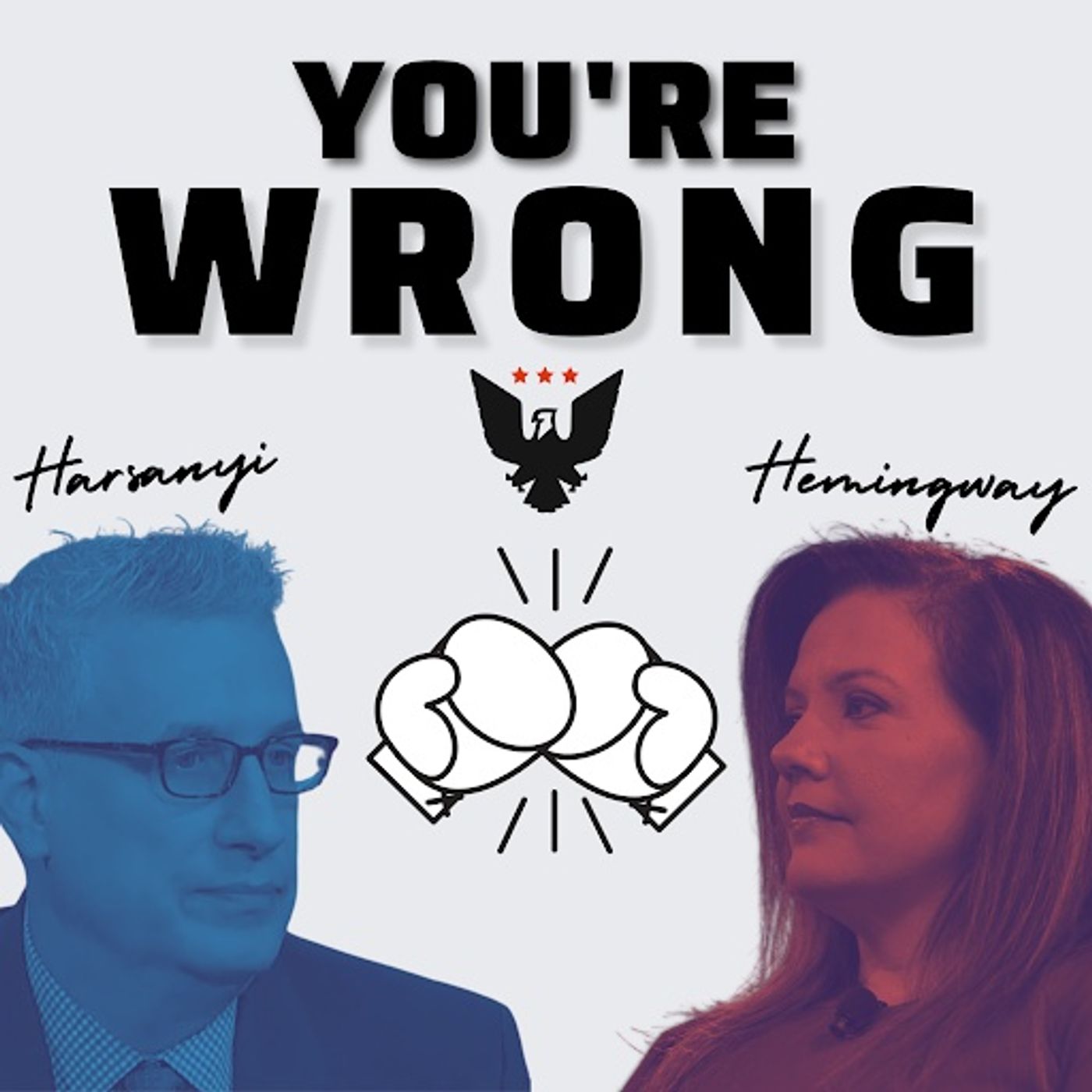
Federalist Radio Hour
‘You're Wrong' With Mollie Hemingway And David Harsanyi, Ep. 187: AOC’s Munich Flop
01:00:48
Join Washington Examiner Senior Writer David Harsanyi and Federalist Editor-In-Chief Mollie Hemingway as they examine Rep. Alexandria Ocasio-Cortez's embarrassing performance at the Munich Security Conference, discuss President Barack Obama's radical...
Loading summary
Transcript170 lines
- [00:00]
Venmo Advertiser
Rewards programs are a lot like pop culture. They can be hard to keep up with. But with Venmo's new rewards program, Venmo Stash Rewards are so easy because the more you do, the more you get. And you choose the bundle of brands you get cash back at. It's giving fiscal queen, it's giving star. It's giving up to 5% cash back at your favorite brands. Just pick a bundle of your Go to spots to shop with your Venmo debit card and earn cash back at them. Do more get more with Venmo stash the Venmo MasterCard is issued by the Bancorp Bank NA Venmo Stash bundle terms and exclusions apply. Max $100 cash back per month. See Terms at Venmo Me Stash Terms.
- [00:46]
Lowe's Advertiser
At Lowe's get up to 35% off select major appliances plus members get free delivery, install and more when you spend $2,500 on select major appliances. Lowe's we help you Save valid through 225 while supplies last election varies by location. Excludes Massachusetts, Maryland, Wisconsin, New Jersey, Florida loyalty programs subject to terms and conditions. Visit lowe's.com terms for details. Subject to change.
- [01:10]
Molly Hemingway
Visit your nearby Lowe's on Colorado street in Kennewick.
- [01:30]
David Harsany
Welcome back, everyone, to a new episode of youf're Wrong with Molly Hemingway, editor in chief of the Federalist, and David Harsany, senior writer at the Washington Examiner. Just as a reminder, if you'd like to email the show, please do so at radio the federalist.com we'd love to hear from you, Molly. Let's start this week with a AOC appearance at the Munich Security Conference. Obviously, she was there to burnish her foreign policy credentials. I don't think she really has any yet, right. So. But I think it's fair to say she embarrassed herself pretty badly there. It was excruciating to watch the clips for me, even though I dislike her. I'm just. I just. It's hard for me to watch someone when they embarrass themselves in public for some reason, even if I dislike them. But in a normal society, in a normal world, in a healthy country, this would put the this would be the end of any kind of presidential aspiration for her, don't you think?
- [02:31]
Molly Hemingway
I you are a better person than I am to feel so badly for her because I just loved every minute of it. I like her attitude where she acts like she knows so much more than everybody else. She was mocking Marco Rubio. What was for? I mean, it was an amazing thing where she didn't seem to understand the relationship between the country of Spain and the country of Mexico. Her last name.
- [03:00]
David Harsany
She didn't seem to know that horses were actually brought here by Spaniards or reintroduced here after 10,000 years or whatever it was.
- [03:07]
Molly Hemingway
I'm not sure she understands why we call the Spanish language the Spanish language. She seems to not have a strong understanding of the relationship between Spain and the New World. Her last name, as Sha Davis pointed out on Twitter she is her last name is Cortez and she does not know anything about Cortez and him bringing horses to, to America. She My favorite thing though was when she said that the Americans had seized the dictator of Venezuela solely because it was south of the equator. And I am not the world's best at geography myself, but there's not even a tiny bit of Venezuela below the equator. Like that's bad to not know your own near neighbors.
- [04:03]
David Harsany
It's bad for someone who wants to be president. It's bad for someone who went to an elite conference of foreign policy minds who couldn't ask, you know, answer basic questions. I, I had more pro, I had other problems that made me angrier. One was that AOC repeated the blood libel that Israel had committed genocide in Munich where the Nazi party started, which is mile a few miles away from Dachau. And she had no problem doing that. What was also interesting to me, I read this story. Her advisor, his name is Matt Dust, he's one of these unhinged America hating leftists on foreign policy. Used to be, I think Bernie Sanders is main adviser on foreign policy that had been coaching her for four months to prepare for this conference so that she would not and she was nervous that they would nitpick her answers. Now you have to hear, I think we don't do clips on this show, but you have to like, listen, everyone gets tongue tied. I am, you know, I'm not the greatest speaker on earth. But she could not coherently answer a question. It was likes and ums throughout the answers. And I, I, she's not a serious person. The only thing she knows less about, I think is economics probably. But the idea that she's going to be running for president scares me because I don't know that people won't vote for her. I just don't know that. I think she, you know, she fits in for, you know, progressive politics actually fit in very well with where the Democratic Party is right now. I think the world would be in serious danger if she was president. I mean that I think would be. It would be an existential threat to world order if she became the President of the United States.
- [05:51]
Molly Hemingway
So, yes and no. I think that generally speaking, Democrats no longer elect people who have their own views. They elect people who they think can be elected, and then they run everything through the bureaucracy. So she's not strong enough to battle the bureaucracy. Almost no Republican is either. So not. Not to downplay how much of a threat she might be, but I just think, you know, we had Biden for four years. It was pretty dangerous for the country, but he was not running a single thing. Right.
- [06:27]
David Harsany
Well, you're actually making a good case that the bureaucracy should exist in some sense where it is.
- [06:33]
Molly Hemingway
I'm not where it is a.
- [06:35]
David Harsany
Where it is a government. But when. When the president does make foreign policy decisions. But it's good that there are other people who can tell him when or her when they're wrong or. Or explain things to them in a different way. You don't think.
- [06:50]
Molly Hemingway
Yeah, let me. Let me be clear. I actually think the harm to the country is in the blob, the foreign policy consensus. The. They've done bad work for a few decades. She would not be able to resist that. So in that sense, she would be a problem. But I also want to just say something about the media coverage of her. Part of the problem with her inability to answer basic questions on foreign policy is that the media love her, and so they never give her tough questions at all. And it can be something of a barrier to success when you are treated with kid gloves. We've seen that with Kamala Harris, even Hillary Clinton. You know, the moment they face any actual real opposition, they struggle. Oh, wait. Tim Kaine, who was supposed to be this, like, amazing person and was a disaster when anyone interacted with him. And my favorite example of this, though, happens after the Munich security conference. AOC realizes she is getting roasted. You know, she messed up her answer about Taiwan, did a horrible job. You know, didn't know basic geography, didn't know basic history about her own region. And so she called a friend at the New York Times and basically said, hey, could you help me? Like, could you run a piece where we redo everything and you kind of give my perspective? And that reporter, Kellen Browning was like, yes, ma', am, I got you. Lets her just, like, uncritically respond to everything. And then he also adds his own, like, cushiness and help. He says something about how she hesitated in her answers. It wasn't hesitation that was the problem. It was just the wrong Answers. But if you are a lefty, the New York Times is there to help you and help your party, no matter how bad of a job you do.
- [08:46]
David Harsany
Well, I like, I saw people defending her Taiwan answer, which I don't think could be called an answer. It was just a bunch of. It was a word salad. And it is a complicated question, I admit. What do we do with Taiwan? Right. If you're getting ready for this for four months, don't you think you'd have some kind of answer to that question? She could not come up with one. So what?
- [09:11]
Molly Hemingway
Yeah, I just want to point out how the New York Times falsely characterized this. They said she stalled for roughly 20 seconds before offering a response that reflected the United States longtime policy of strategic ambiguity. I want whatever drugs Kellen Browning is on, because that's an amazing restatement of reality into something that, like nobody else experienced.
- [09:42]
David Harsany
It's almost like The Kamala Harris 60 Minutes interview being, you know, being put together to make sense, like her, her drawn out answers. But it is funny that Browning says that Ocasio Cortez was worried about having her message microscopically dissected and that the messaging was. Would being lost in all the commotion around this. What was her messaging? There is no messaging. There is no. She had no, nothing to say of substance at all.
- [10:15]
Molly Hemingway
I think her message, which did come through loud and clear, is that the United States is evil. It does evil things. Other countries are great. We have no right to be doing anything we're doing. I got that. Did you not get that?
- [10:29]
David Harsany
I guess that's inherent in, in her, her philosophy. Yeah, I guess My, my question, I guess, is how much does it matter in broader politics today? I feel like we're, we're in an idiocracy in many ways. Oh, actually, I want to go back to one thing. There are many times when Donald Trump will go on these rants where he's not making a lot of sense, in my view. And it will happen with foreign policy sometimes. Do you think he could call the New York Times and they would fix it up for him? I mean, the idea. They would, they, they love to point out to, to quote him verbatim, you know, all the ums and all the spinning. But they did not do that to aoc, whose answers are, you know, are just crazy.
- [11:15]
MacKenzie
So my name is MacKenzie, and I started a GoFundMe for the adoptive mother of a nonverbal autistic child. The mother had lost her job because she wasn't able to find adequate care for this autistic child. So she really needed some help with living expenses, paying some back bills. So I launched a GoFundMe to help support them during this crisis. And we raised about $10,000 within just a couple of months. I think that the surprising thing was by telling a clear story and just like really being very clear about what we needed, we had some really generous donations from people who were really moved by the situation that this family was struggling with.
- [12:02]
David Harsany
GoFundMe is the world's number one fundraising platform, trusted by over 200 million people. Start your GoFundMe today at gofundme.com that's gofundme.com gofundme.com this podcast is supported by GoFundMe.
- [12:16]
Molly Hemingway
Just real quick. When CBS interviewed Joe Biden the week that Israel was attacked by Hamas, it was also the week that I think the special counsel said that he wasn't fit to stand trial. I could be wrong on that, but he blumbered through the interview. When CBS ended up, like, settling with Trump over a different problem that they'd done, one of the reasons they gave was that they were worried they would have to explain what they did in the Joe Biden interview. I interviewed people who said it was a, quote, monster edit to get it done. And they began by saying Joe Biden had had a rough week and he had shown signs of tiredness. You go back to the first administration and Trump is like, yelling at Katherine Herridge, who's a great reporter, I think, but he was, like, yelling at her on behalf of CBS and everything. There was no such introduction. Like, Donald Trump had had a rough week and was fed up with all of our lies about him. You know, there was no cushioning of it, to your point.
- [13:23]
David Harsany
No. Yeah. Never. Never. A lot of these politicians on the left, but on the right, too, they don't really have complex or, you know, they haven't thought about foreign policy, you know, deeply, let's say. But they can get through messaging because they're politicians. They know how to speak well. They just BS their way through it. Like, she can't even do that. I think that's like a minimal skill you need as a politician. On the other hand, there's Marco Rubio. He gave a speech as well on foreign policy this week. Gosh, now I forget. Was it at the same conference or. Yes, yeah, okay, same conference. And I read that speech and I didn't hear him give it. People, some people were very impressed. People I adm. You know, I lean on for foreign policy quite often. Are we impressed. But I know what the messaging was. The messaging of that speech was that the, that Western civilization is better than the others and that it needs to protect itself.
- [14:22]
Molly Hemingway
It was a, it was a beautiful speech. But I would like to also point out how the New York Times responded to it. And yes, he's talking about, we always hear about the special relationship that we have with Europe, and that's undoubtedly true. We have a special relationship with Europe because we come from Europe originally and our country's founding is so tied to Europe and our wars and, you know, both being at war against them and then being at war with them with various countries there. And he talks about that and the New York Times said, oh, that's actually not true because now Europe has been overrun by Muslims. So everything he said was false. It was like, I think you might have missed the point of the speech. New York Times.
- [15:09]
David Harsany
Yeah, yeah, yeah. I mean, I wrote a book about this. I think we're compatible. We have a special relationship because we come from them, but our morality is very comports well with each other. So, you know, we have the same outlook on the world, or we used to. And I thought it was fine speech when I read it, you know, I liked it. I, you know, I don't know. I mean, he, I think Marco Rubio is really good at this job. I don't know if he's going to run for president one day, whatever. I think this has been the best job for him, better than being a senator, frankly. And when he's asked questions, he has learned to give super coherent, compelling answers, in my view, to the big questions that people ask him.
- [15:51]
Molly Hemingway
So I really like him and I loved this speech and I have really loved him in this role as Secretary of State. Sometimes it's hard for me to reconcile who he is right now with who he was when he was doing like Gang of Eight and immigration stuff. It's just weird to me that this is the same guy. I don't know if the real person is now or if it was then or if it's just a reflection of how we all grow and change over time. Do you know what I mean?
- [16:25]
David Harsany
Yeah, I, I, I said all those nice things about Rubio, but I don't have great respect for him as a politician because to me, he seems like a trend follower in many ways. He started as a tea partier. He became, you know, then the Gang of Eights. Then he was, then he turned to the populist economics when everyone did, like, I'm not saying that any of Those positions are wrong. I just have suspicions.
- [16:48]
Molly Hemingway
So I do think, though, that there's a difference between. I don't know how to say it. Like, you have views, you also have ambition. And I'm not saying this is what happened or anything, because I think, actually, who's the. Mitch McConnell, I think, opposed Marco Rubio in his primary to become the senator from Florida. But let's say he wins the primary and. And McConnell says, okay, just so you know, like, we'll give you money, but here's what you have to do. And so he does it, understanding that sometimes you have to work with people who you don't totally agree with in order to help people in general. If it's something like that, I think that's more understandable than if it really is, as you're saying, just like a following, whatever the moment is. But he did run as a Tea Party challenger, and that does indicate something. I mean, it's populist, but it's good, in my view.
- [17:54]
David Harsany
Yeah, that's the only populism I've ever liked. But I'm not saying it's premeditated. I don't know that Marco Rubio sits down saying, wow, this is going to be my next step, because this will help me politically. I actually don't. I don't know him or anything, but I. I don't think that's it. I just think he has the inclination, maybe he's not very ideological underneath it all, and it just kind of goes where the. Where the action is kind of. I don't know. I do know that on foreign policy, he's been pretty consistent, and maybe he cares about that more than he cares about other stuff, and maybe that's why he's good at this job.
- [18:26]
Molly Hemingway
That was another thing I really liked about the speech, and I would encourage people to read it showing that Trump's foreign policy is in line with traditional Republican foreign policy. You know, Reagan, Eisenhower, all that in between. So many of us came of age in that blip of. I mean, there are always streams of thought that are happening in. In any party or any movement, but I think we have overstated how, quote, unquote, Republican neocon interventionism is, when really it's more in line with Wilsonian progressivism because it was such a major part of, like, the late 90s through. Well, really for the Republicans, it began after 911 and lasted for another 15 years.
- [19:17]
David Harsany
Yeah, we disagree on this. I. Not that I. Maybe we don't disagree, actually, but I don't think Trump's foreign Policy. I think Trump's foreign policy is as far away from like Lindbergh isolationism and stuff that it is from neoconservatism. I don't, I don't, I don't.
- [19:30]
Molly Hemingway
Away from Eisenhower, who is very much like, be strong and be restrained. Reagan also, somebody blow stuff up. But you're not like looking for long term interventions.
- [19:41]
David Harsany
Yeah, I'm not, I'm not saying, I'm not saying that. I'm not saying it's neoconservatism. I'm saying that a neoconservative would probably be happy with Trump's foreign policy.
- [19:51]
Molly Hemingway
Yeah, I, I think so too. And I think that's important for people thinking going forward. People who act like it is this idea that you never use your military just because you don't get involved in stupid wars. They're wrong. And there's not really an appetite for that in the American people. The American people might not vote a lot on foreign policy, but they tend to be pretty consistent in understanding we are this great power. We do need to exert what is to our advantage globally, but we just want to be smart about it and understand that there's a high financial cost, there's a high cost in human life, there's a high cost in terms of what you're not doing at home when you're doing things abroad. That doesn't mean that the American people don't support smart military intervention. We do.
- [20:41]
David Harsany
Barack Obama was on a podcast called no Lie with this guy named Brian Tyler Cohen. The funny thing is I see this guy lying all the time online, so I find that the name of the podcast, pretty funny. But in it, Barack Obama said a couple of things and one of them was kind of, he claimed that conservatives. Well, let me quote it. He claimed that conservatives do quote the mean, angry, exclusive us, them divisive politics. That's their home court. Our home court is coming together. Isn't that nice? Now I'm just a mere mortal. I'm not Barack Obama. But I disagree that that's what the left does. In fact, I'm not sure I can find a people out there who show more antipathy towards people who aren't like them than the urban progressive or the active left wing activists. I mean, we've run across them. You, you see it when you look at polls. One after the next shows us that the left is less inclined to want to have friends or family members who are, who disagree with them. I guess that's what he means by exclusive, not welcoming. Right. So that's the first part of it we could get into this. The second part is he is the last person who should be talking about this. He changed American politics for the worst forever. He was the most divisive president in history, I believe, or in modern history for many reasons. It's not to say no one else has said bad things or people who came out or presidents who came after him weren't divisive as well. It's that he changed how we. He made everything about politics and his. His allies. It was terrible for America and we can get into. But what were. What was your reaction when you heard the great Obama talking about divisiveness?
- [22:32]
Podcast Host
I've got Dan Morgan here on the pod.
- [22:34]
Commercial Announcer
Say hi, Dan.
- [22:35]
Dan Morgan
Hey, how's it going today?
- [22:36]
Podcast Host
It's going good, man. Tell us who you are and what you do.
- [22:39]
Dan Morgan
I'm Dan Morgan. I'm an attorney and a managing partner at Morgan and Morgan, which is America's largest injury law firm.
- [22:46]
Podcast Host
That's pretty awesome. I think I saw a billboard of yours recently. It said 20 billion. 20 million is an insane number.
- [22:54]
Dan Morgan
Yeah, 20 billion recovered. It's actually, I think somewhere north. Probably closer to 22, 23 after this year. And each year we get bigger and badder and our army grows. So the number will hopefully keep getting bigger and bigger as time goes on.
- [23:07]
Podcast Host
Awesome. So how does someone get in contact with Morgan and Morgan? What would I do if I got into an accident?
- [23:12]
Dan Morgan
Probably the easiest way is dialing pound law. That's £529 from your cell phone. We are always open. Our call center is always waiting to take. Take your call. 24, 7, 365.
- [23:22]
David Harsany
Wow.
- [23:22]
Podcast Host
Dan Morgan from Morgan and Morgan, America's largest injury law firm. Thanks for coming by the show.
- [23:27]
Dan Morgan
Thanks for having me. Visit forthepeople.com for an office near you.
- [23:31]
Molly Hemingway
I find it interesting that the left needs to feel that it's true that they are uniters and that their opponents are dividers. I mean, a casual trip through Facebook with your lefty friends will just, you know, it's. It's kind of. I don't know if people on the left understand how much people who aren't on the left talk about how intolerant and divisive and spiteful they are in their social media while the rest of us are kind of just operating with our family and friends as normal humans who understand that there are differences and it's okay. It's like a. It's a fetish or something. They, they need to believe that if they say that they're not divisive and that their opponents are. That it will mean that that's true. It shows a shocking lack of. There's nothing realistic about that assessment of the Obama presidency to not realize and even maybe embrace how divisive it was. He and Michelle very strongly opposed the country and they thought it was bad. And they worked to convince a lot of people that it was bad. And it worked, which is divisive. I mean, racially, I think it put the country back. It makes me sad that I got to grow up in an era where you'd seen, like, steady progress in terms of racial harmony and then just these horrific setbacks leading up to the 2020 race riots and the transfer of $100 billion in corporate wealth for reparations. It's very unhealthy for the country. What the. What Obama did.
- [25:23]
David Harsany
Yeah.
- [25:23]
Molly Hemingway
Might feel guilty about it. And he thinks if he says this, then people will also. He knows if he says that, the media will say yes. Isn't that true? He's not divisive. I saw that on Twitter. People said it is true. He was very non divisive. He was very unifying. It's like. Yeah.
- [25:39]
David Harsany
Where I pined for the days when Obama was president and everything. We lived harmoniously together. Yeah. That I guess I could. I want to get to the core of the problem I have with Obama is that it goes back. If you remember, he started his presidency by saying that people who disagree with him cling are bitter and cling to guns and. And religion and. Yeah. And people who. Who hate him. The core problem with him and what differentiated him, I think, from other presidents was that he did not. If you disagree, he wanted unity, but unity meant that you had to drop all your beliefs and accept his. He made. No, he made. If you disagreed with him, you were a racist. There was something nefarious about you. You were clinging to the old gods. You didn't understand how great the future could be. He left no room for good faith debate. He left no room for people to dis. Why he had no qualms about going after nuns, little sisters of the poor. It was an example he was making to other religious people to. To. To. It was kind of like a progressive cultural supremacy. Right. If you didn't do what he wanted, and that's how all his allies treated people. They treated them like they were traitors. He came up with a new idea of America. And if you didn't accept that new idea of America, you were a bad person. When people were killed by Islamists. And you wanted to say something about it. You were Islamophobic. That stupid neologism came up with. And they didn't come up with it, but he made it popular, right? It is. He was one of the worst. I wrote a book called Obama's Four Horsemen. When I wrote, predicted all the things that would. I predicted what I thought was going to happen after his presidency. And I thought the title was way, way over the top at the time. I fought my editors not to have it. Boy, I think it's a great title because almost every, you know, the, the, the, the extremism on abortion, the hate of America. I mean, this guy went, he went to Egypt and he said the future must not belong to those who slander the prophet of Islam. But slandering Christians was fine with him. And he did it all the time. He was also, incidentally, as far as presidents go, the first one. And I went back and looked. It wasn't my imagination who popularized the idea of dual loyalty because of, because Jewish Democrats wouldn't support his Iranian plan. He was constantly doing that. And when before he became president, it was Americans, for the most part, both parties supported the Jewish state. Not everything it did, but in concept and all that, that is no longer the case after him. I mean, I have so many complaints about him. It's crazy. But what drives me or makes me angriest is that this revisionism about him being a uniter, that he has a scandal free presidency. It was the opposite. The way they passed Obamacare blew up Washington in a way we will never recover from. He, the Democrats unilaterally passed a national reform without any party of the American people.
- [28:39]
Molly Hemingway
I mean, it was strong opposite.
- [28:41]
David Harsany
They, they pulled out every trick. They did everything to undermine goodwill. Right. And, and they did it. And everything that people warned about that would happen with that bill has happened and worse. And all the Swiss Guard media called you a liar. They call, they said you were trying to murder people if you didn't support him. They changed American. I'm not saying it was all great before. We were all nice to each other. We weren. But I think it was a dramatic change and I think he laid the foundations for the Trump presidency and for what we have now. I really do. So I don't know. That's a rant, but it just reminds.
- [29:16]
Molly Hemingway
Me, Megan McArdle, who was at the Washington Post and might still be, wrote a great piece with that about that point that the passage of Obamacare ruined politics in D.C. it does make me angry that we just Spent much of the last year trying to rescue Obamacare. And I don't understand why we all have to rescue something that was passed over the opposition of the American people and in complete opposition to the Republican Party. And then the Republican Party is like, well, we got to save it, which is why people hate the Republican Party.
- [29:53]
David Harsany
Well, the, the problem with these kind of left wing welfare programs, that's all Obamacare really was, is that once you hook people on it and once you have it implemented, it's very hard to take it away. We're still dealing with, with, with programs passed in the 60s, massive entitlement programs that are bad for Americans, that don't work, that cost more than they, you know, billions, trillions more than they were initially predicted to cost. And it's impossible, it's very difficult to extricate yourself from them. I'm not making excuses for these Republican. But there's a painful political price to pay. Probably like you remember when George Bush tried to reform Social Security. Literally, it was such a tepid. Like you would be able to keep. Young people would have been able to keep more of their money. They could have chosen to stay on the program and you would have thought he was Hitler right At the time. I mean, it probably ruined his president, helped ruin his presidency with the, with Iraq. Right. And it was crazy. I don't know. I'm ranting and raving today about things.
- [30:50]
Molly Hemingway
I just want to say, this is so unimportant, but I can't help but think about it. Every time Barack Obama's name comes up, first off is that he, whatever we, whatever you want to say about him, he is so loving toward his wife and daughters. He always praise them, speak well of them. I don't think I've ever publicly heard him give even a tiny indication that he's anything other than completely elated that they are his family. And then his wife, it's the opposite. She's just constantly tearing him down about how he kind of ruined her life. And it's weird, right? Like, why is she, she's one of the most privileged people. I think we talked about that last week. The other thing is, I can't quite get out of my mind, this is a little bit in contradiction to what I just said, but that biography of him which revealed his multiple times of writing down his fantasy about having sex with men and that, that's very, I am, I can say with a pretty high degree of confidence that I have not encountered that among the vast, vast, vast majority of men in my life. Kind of, kind of close to the opposite. And it's so weird. Right.
- [32:07]
David Harsany
When you're a straight man, you don't talk about wanting to be in gay relationships. That's something, I think the book is called Rising Star, the Making of Barack Obama. It's a, it's a doorstopper. It's like, thousand two hundred pages or something. I've not read the whole thing, but I've read into it, and it has a lot of incredible information, and it's.
- [32:28]
Molly Hemingway
Kind of difficult to move past that in particular. Right. Like, it's just, and it's weird that nobody talks about it when it's, it's right there. Okay.
- [32:37]
David Harsany
I, I think, Molly, there's so much to talk about with him that we don't need to go back into his youth. I, I don't know. I mean, you know, O. But, yeah, yeah. His wife, I don't, you know, his wife is just so bitter about, about her life. I, I just, it's hard for me to understand. By the way, I think people like Barack Obama on a personal level. I mean, it got grading with his supercilious, like, lecturing constantly. Oh, my Lord. I did not, I do not want to go back to that. But he was, he seemed like a good family man, which is weird. So I ask you this question I've asked lots of people. Like, I, I, I'll say this about myself, actually. I would rather vote for a sociopath if he's going to do the right thing when he gets elected than a good person who does all the wrong things.
- [33:21]
Molly Hemingway
Oh, yeah.
- [33:21]
David Harsany
Yeah. And when I say this or write this, people go berserk on me, but I don't really care that much. I mean, I think when you're a bad person in your personal life, you're probably going to be a bad person anyway in politics, but that might not be the case. The reverse isn't the case.
- [33:35]
Molly Hemingway
I would strongly prefer a good person who is also good and wise about the direction of the country. It's probably hard to be a sociopath and care about the direction of the country, but, yeah, not. It's not even close.
- [33:51]
David Harsany
I love lazy. Lazy politicians are my favorite because they don't want to do anything. And that's a good, good way to be.
- [33:59]
Molly Hemingway
Right.
- [34:00]
David Harsany
How good could Obama be where his whole career, like, early career was hitched to Reverend Wright, where he takes pictures with Farrakhan, you know, all that stuff? I mean, is he really a good person? I don't know.
- [34:13]
Chris Markowski
CNBC needs to start being honest with themselves. The Watchdog on Wall street podcast with Chris Markowski. Every day, Chris helps unpack the connection between politics and the economy and how it affects your wallet. CNBC's calls are not just wrong, they're really wrong. The fast money circus on cnbc. The fast money circus on CNBC has gone too far. Whether it's happening in D.C. or down on Wall street, it's affecting you financially.
- [34:37]
Commercial Announcer
Be informed.
- [34:38]
Chris Markowski
Check out the Watchdog on Wall street podcast with Chris Mark on Apple, Spotify or wherever you get your podcast.
- [34:45]
Podcast Host
I've got Dan Morgan here on the pod.
- [34:47]
Commercial Announcer
Say hi, Dan.
- [34:48]
Dan Morgan
Hey. How's it going today?
- [34:49]
Podcast Host
It's going good, man. Tell us who you are and what you do.
- [34:53]
Dan Morgan
I'm Dan Morgan. I'm an attorney and a managing partner at Morgan and Morgan, which is America's largest injury law firm.
- [34:59]
Podcast Host
That's pretty awesome. I think I saw a billboard of yours recently that said 20 billion. 1. 20 billion is an insane number.
- [35:08]
Dan Morgan
Yeah, 20 billion recovered. It's actually, I think somewhere north. Probably closer to 22, 23 after this year. And each year we get bigger and badder and our army grows. So the number will hopefully keep getting bigger and bigger as time goes on.
- [35:20]
David Harsany
Awesome.
- [35:20]
Podcast Host
So how does someone get in contact with Morgan and Morgan? What would I do if I got into an accident?
- [35:25]
Dan Morgan
Probably the easiest way is dialing pound law. That's £529 from your cell phone. We are always open. Our call center is always waiting to take your call. 24 7, 360.
- [35:35]
David Harsany
Wow.
- [35:35]
Podcast Host
Dan Morgan from Morgan and Morgan, America's largest injury law firm. Thanks for coming by the show.
- [35:40]
Dan Morgan
Thanks for having me. Visit forthepeople.com for an office near you.
- [35:47]
David Harsany
All right. Sorry about that. Let's talk about. Oh, another person.
- [35:54]
Molly Hemingway
I was like, this would be a good transition to talk about race.
- [35:57]
David Harsany
Let's talk about Jesse Jackson. I was, I, I noted on Twitter how quaint, how quaint the term hymie town was now, you know, compared to what's going. But Jesse Jackson was the original, one of the original race hustlers. So he shook down. He died today. He was 84, I believe. Shook down companies all the time. He ran for president in 84. Was it. I forget exactly.
- [36:23]
Molly Hemingway
I think a couple of times I could be wrong. And he gave great speeches. He's one of the great speech givers.
- [36:29]
David Harsany
Fantastic speaker. A lot of rhyming going on get you really worked up. He was, he was in one of the great. Actually, I think Mark retweeted this. He was one in one of the great Saturday Night Live skits. The question is moot. Where he's a game show host and no matter what anyone says, the answer to the trivia, he says the question is moot and then goes into some political tirade. It's very funny. You know, he was a fixture in American politics for a very long time, not so much in recent years. And he passed away. And I, you know, I don't want to rip a guy the day he died, really, but I was not a fan of overall of Jesse Jackson's politics or the way he handled himself or the kind of racial strife he caused in this country needlessly quite often. And I don't know. You have anything to say?
- [37:15]
Molly Hemingway
Oh, I do.
- [37:16]
David Harsany
Okay, go for it.
- [37:17]
Molly Hemingway
So this morning, okay, so I'm, I'm still in Colorado with my mom. We talked last week about how my dad died and I've been going through all the paperwork and stuff, and my parents have this like massive California king size bed. Like it's so big. So I've just been staying in that bed with my mom. And this morning when I woke up, she said, your friend died. I'm like, who? Jesse Jackson? And I was like, oh, you know, because I knew he'd been in hospice for several months and I knew that there was like a death watch even a few months ago where they thought it was quite imminent. But back in 1992, he led. He was a big proponent of what has become a very common, usually Democrat scheme to help drive votes for the Democrat party, which is early voting. And he had even part of a coalition that got early voting into Colorado in 1992. And he was leading a march to go early vote. And I do. I loved watching political conventions when I was quite young. And I distinctly remember, I'm pretty sure it was 84, given the age. I think I was a speech he gave and also 88. I'm almost positive he ran at least twice in those years. And I'd always just kind of followed him and found him interesting. And I decided to join the march to early vote, holding a sign for my candidate who was not the same candidate as everybody else in the march to early vote. So I joined the march. There were a few other people who also had signs for this was George H.W. bush and Dan Quayle. And they all got kind of kicked out of the march early, but I was a little smaller and scrappier and so I just kind of went into the middle and I. And I kept marching. It was from the, you know, the CU Denver campus to the City and County building, I think, so how far that is. And this one guy named Albertus Simmons was like a big guy and a close associate of. Of Jesse Jackson's. Tried to get me out of the march. He literally would stand in front of me and tell me to leave the march, tell me I was not welcome in the march. And I just kept declining to leave the march, but he kept coming after me. And finally he takes my sign and rips it up into a bunch of different pieces. Side note, I kept the sign and I have it. I'll show it to you. I kept all the pieces. So I just kind of knew that my voice had been taken at that point. And I just stood on the sidewalk crying, oh, no. And I'm also like, was not like the world's most street savvy 18 year old. So I was far from campus. I didn't know, like, like it had all been kind of chaotic. All my friends had gotten kicked out early. And I'm just standing there crying and holding my sign and. And I hear someone say, can you tell us how you feel? And I look up and it's like TV cameras and reporters with notebooks. And I said, I thought this was the Rainbow Coalition. I guess it's for everyone but me.
- [41:04]
David Harsany
That's fantastic. Did they run with it? No.
- [41:08]
Molly Hemingway
Oh, yes. Major news coverage. Rush Limbaugh, who also died on this date, by the way.
- [41:16]
David Harsany
Oh, wow.
- [41:17]
Molly Hemingway
Limbaugh called my house, had me on his show. It was the first time that, like, I was ever mentioned on the show. Oh, it makes me cry because I love Rush so, so much. And then the Reverend Jesse Jackson called my parents because he wanted to apologize. And I don't know what his claim to that title is, but my dad, who is a pastor and, you know, went to seminary and is a reverend, he does not like it when people call themselves Reverend when they're not actually leading a congregation. And so he calls my dad and he's like Reverend Ziegler, you know, trying to get a hold of Molly. And my dad just kept calling him Mr. Jackson, which cracked me up. Anyway, I did end up having dinner with him and he did apologize. It was a nice dinner, kind of like a. That's like a. That's like a. A lame ending to the story. But we, we ate at this soul food place in Five Points that was really good. I can't remember the name of it. And he apologized for real.
- [42:34]
David Harsany
This story blows my mind that I have not. I've known you this long. And I've never heard this story, the Rush Limbaugh. It kept getting better. It kept getting better. Yeah. So he called you. Did he rhyme in real life? Like, did he speak the way he speaks in real life? Was he nice? Like, tell us more. You had a dinner with him.
- [42:53]
Molly Hemingway
You know, I mean, it was a real bad thing he did. Probably almost certainly violated my civil rights by how they handled that march. Right. And it. If I were a litigious person or if people were smarter about how to handle it, they would have gotten sued very badly. So I'm not downplaying. He really did seem sincere in his apology, but he also had to apologize before it got much work and.
- [43:24]
David Harsany
Yeah, well, here is. Jackson got a B.S. in sociology in 1964. Then he attended the Chicago Theological Seminary on a scholarship. He left the seminary in 66, three classes short of earning his master's degree to focus full time on the civil rights movement. He was ordained a minister in 68. But it doesn't look like he earned it. It looks like he was given to him by the Chicago.
- [43:54]
Molly Hemingway
I mean, I think for my dad, it was more the issue that he didn't have a church pastor should have blocks.
- [44:00]
David Harsany
Right?
- [44:01]
Molly Hemingway
They should be. And that it's okay to do other stuff. Like, my dad ended up getting very involved in politics himself, but not as a pastor. As a pastor, he cared about his flock. So. Yeah, I. I also. My husband was reminding me that Ryan Lizza wrote a great. A really monumental takedown of Jackson as it related to blood diamonds somewhere in Africa. The Clintons had put Jackson in charge of negotiating treaties in Africa, and he. Something somehow had something to do with blood diamonds. I have to reread that story with the caveat that I have never found Ryan Lizza to be the most accurate in his description of events.
- [44:50]
David Harsany
Yeah, I'm gonna look that up. We could talk about him in the future. I mean, you know, he just passed away. It's kind of. I detested him when I was younger, but other characters have emerged that make him less detest. Like Al Sharpton came, and he was worse, in my view, you know, and then obviously, the Black Lives Matter stuff and other leaders of those kind of movements were. Were far more extreme and divisive. And then he was. So I guess now, looking back at his history, he does. He seems bad, but not as bad somehow.
- [45:27]
Molly Hemingway
Yeah, I mean, I. I think that the. Maybe the better thing to say would be that once he admitted that he'd had all those affairs and different children from different women.
- [45:36]
David Harsany
Oh, Right.
- [45:37]
Molly Hemingway
He kind of stepped out of that arena where he had been treated as a reverend who was this like moral voice of a nation. He just, I think that was like 25 years ago. He just kind of faded away. So it's easier to let things go when you, when you forget the race hustling and you forget the anti Semitism and you forget the partisan politicking under the guise of Christianity or whatnot.
- [46:02]
David Harsany
But do you remember during the Monaco Lewinsky scandal, there would be pictures of Clinton walking with Jesse Jackson, who was his spiritual advisor at the time, where he too was having affairs with younger women and you know, making children else elsewhere. And he was often a spiritual advisor and often the place that Democratic president, presidential candidates would go to get permission basically to run. And that was later handed off to Al Sharpton where every single Democrat goes to Al Sharpton and gets his blessing to run. Not good. All right.
- [46:38]
Commercial Announcer
Are you a fraud paying American? It's a fact that one in four honest, hard working, taxpaying Americans has been a victim of identity theft. With Lifelock Identity theft Protection though, if your identity is stolen, they fix it guaranteed and get you your money back. Last year the IRS flagged over $16 billion in refunds for identity fraud. That's billions of dollars that could come from your salary, overtime or second job. But this year you don't need to stay a victim. LifeLock monitors millions of data points per second for your personal information and alerts you to threats to you could easily miss on your own. And if your information does fall into the wrong hands, only LifeLock has US based restoration specialists who are backed by the million dollar protection package. Because this tax season, fraud paying American is something no American should have to claim. Visit lifelock.com iheart and save up to 40% your first year. That's 40% off. @lifelock.com iheart Terms apply.
- [47:40]
Podcast Host
I've got Dan Morgan here on the pod.
- [47:41]
Commercial Announcer
Say hi, Dan.
- [47:42]
Dan Morgan
Hey, how's it going today?
- [47:44]
Podcast Host
It's going good, man. Tell us who you are and what you do.
- [47:47]
Dan Morgan
I'm Dan Morgan. I'm an attorney and a managing partner at Morgan and Morgan, which is America's largest injury law firm.
- [47:53]
Podcast Host
That's pretty awesome. I think I saw a billboard of yours recently that said 20 billion. 120 billion is an insane number.
- [48:02]
Dan Morgan
Yeah, 20 billion recovered. It's actually, I think somewhere north, probably closer to 22, 23 after this year. And each year we get bigger, badder and our army grows. So the number will hopefully keep getting bigger and bigger as time Goes on.
- [48:14]
Podcast Host
Awesome. So how does someone get in contact with Morgan and Morgan? What would I do if I got into an accident?
- [48:19]
Dan Morgan
Probably the easiest way is dialing pound law. That's £529 from your cell phone. We are always open or a call center is always waiting to take your call. 247 365.
- [48:29]
Ryan Seacrest
Wow.
- [48:30]
Podcast Host
Dan Morgan from Morgan and Morgan, America's largest injury law firm. Thanks for coming by the show.
- [48:34]
Dan Morgan
Thanks for having me. Visit forthepeople.com for an office near you.
- [48:37]
David Harsany
You. We've spoken about a lot of interesting personalities. Personalities today. Let's talk about Robert Duvall, who passed away. Actually, first, let's talk about the Olympics for a second.
- [48:49]
Molly Hemingway
Okay.
- [48:50]
David Harsany
I'm sorry about that. We have two topics I'd like to touch on. Both involve communist countries. One is Canada and the other is China. Canada has been embroiled in the cheating scandal in curling, which I watch. I love. I watch all the curling I can. And there's a lot Americans are doing okay. The Canadians cheat. Did you see this?
- [49:17]
Molly Hemingway
Yes, I can believe it. Like, they did it so brazenly. They're not even denying it.
- [49:24]
David Harsany
Well, initially he did. He cursed at the Swedish guy. One of the Canadian curlers cursed at the Swedish guy and said. And then the Swedish person told him to look at the videotape, which than they showed. But what I didn't know about curling, let's be honest, I didn't know anything about curling pill about a week ago, even though I watched it last time. But a lot of it's sportsmanship. A lot of it. There's no ref there. There's. They come in, they'll measure, they'll do certain things. But it's basically up to the players to exhibit good sportsmanship and follow the rules. And one of the rules is when you're throwing the stone, it's called Molly. That big 46 pound. Is it 46 for 42 pound rock. You cannot. You. You let it go where there's a line. I think it's a green line. But these Canadians would, like, push it again against the rules. And not just the men's team did this, but the women's team as well. I think they should be kicked out of the Olympics.
- [50:24]
Molly Hemingway
Yeah, I think I thought that before I saw they cheated. So I definitely. I feel that way. I loved how the Canadians said that they were upset with the Swedes for catching them cheating.
- [50:38]
David Harsany
Is that what they said? Yeah. Gosh. Just. Just embarrassing.
- [50:46]
Molly Hemingway
You should be able to win on your own merits on curling. I When I went to Oregon for Thanksgiving, my husband's family is from the mountains, Bend. And we drove into Bend and It was like 11pm and there was major curling going on in the open air ice rink or I think it's closed. And I was like, this is cool spread to Bend, Oregon.
- [51:11]
David Harsany
It looks like a fun game.
- [51:12]
Molly Hemingway
Yeah, I think it's a cool thing. I think it's also the only sport that they should let women play with men or men play with women. I should say so.
- [51:21]
David Harsany
No tennis? No. Don't they have women, women, couples?
- [51:25]
Molly Hemingway
Like a mixed. A mixed doubles. That'll work too, but.
- [51:29]
David Harsany
Okay, I'm not trying to undermine you here. I'm just.
- [51:32]
Molly Hemingway
Despite my general dislike of Canada, I've seen a bunch of people saying recently that their estimation of Canada has decreased and things like the cheating in curling has not helped them. But I started hating Canada when I was a teenager because I read this book by this guy who was an AEI scholar. Oh, man, what was his name? Benjamin something. He kind of like did analysis of polls and stuff.
- [51:58]
David Harsany
Oh, yeah.
- [52:00]
Molly Hemingway
He showed this one poll where they asked Americans what they thought of Canadians and the top 10 responses were like, awesome, nice, neighborly, cool, funny, we love them. You know, like that kind of thing. And then they asked Canadians what they thought of Americans and it was all jerks, mean, awful losers, whatever. So I decided I would be the one American who didn't like Canadians. And then my brother married a Canadian and they have, you know, oh, children and stuff. And she's wonderful, of course, but I try to keep it up. Anyway, my dislike of Canada, I will say a Canadian, I believe, took the gold in the competition with the other Communist that you're talking about, Elaine Goo, who's worse. Worse than an average Communist. She's got a really weird backstory and is an American because we all know that if your mom conspires to have you born in America and has no intention of you of actually being a citizen of America, that you are just as American as you and me. So she's an American and she competes for China, Communist China, and is really into it, loves to celebrate communist China and her family all work for the ccp. And I think her mom, you know, was an agent of the CCP prior to pretending to become American.
- [53:24]
David Harsany
This woman, by the way, is loaded. She's worth $23 million. And now we learn that she that the Chinese gave around 14 million to American athletes to play for them. Probably she was given around $6 million. Reportedly there's another Figure skater, I think Juyi is her name. And she was also given a bunch of money. It's like the Chinese. They steal your technology, they steal your athletes. Goo says. Is it. I don't know. Goo says that she is trying to inspire women in China, young girls in China, to ski and so on. And I say she should be skiing for Taiwan then. But mostly I think she should be skiing for the United States because she goes to Stanford. She is a beneficiary of capitalist system, none of the Chinese system. And it is very. I don't know. I don't know what can be done.
- [54:22]
Molly Hemingway
Her mom raised her as a single mother with an unknown or like, possibly sperm donor father in one of the wealthiest areas of the United States. Yeah, came her. Her grandfather was high up with the ccp. It's just kind of weird to me. Like, if I'm. She loves China, that's fine. She should just live there and not benefit from all of what we do here.
- [54:52]
David Harsany
I mean, this Goo is on the COVID of Time magazine. We talked about this last week. Yeah.
- [54:59]
Molly Hemingway
And the New York Post of all publications said that when she failed to win the gold again, that it was a heartbreaker. And I'm like, a heartbreaker for people who love treason and communist China. Like, who's the. Who's heartbroken over a bad person not getting gold but getting silver? Like, it's still too high.
- [55:21]
David Harsany
Yeah. I don't know. Should deport her. Should make a special trump. Should sign a special executive order and deport her. So as I get older, people have been part of my life. I don't know them, but they're in my cultural life. Are dying. Robert Duvall has been in my life since I'm a kid. You know, in. In so many great movies. He described himself. I love this quote. I wish I had in front of me. But he described himself as a character actor, which I think is perfect. He was like a character actor who was a star. He wasn't, you know, he wasn't Robert Redford. He didn't have like the obvious good looks or anything like that, but he had a real presence on screen and he had a real ability to play all kinds of interesting characters, from bad guys to heroes to. To anything. Right. I mean, he was just one of the greats. That's like my cue to you. Do you agree?
- [56:23]
Molly Hemingway
I love Robert Duvall. Love him partly, I think, because he looks like a member of my dad's family. I mean, he. If you told me that he was an uncle, I would say totally. Believe it. And I love his acting. I love his humility in his acting. And I love that he just was steadily working for 60 years, doing great work in so many things. Did you see. I know we talked about it, but I can't remember if you saw it. The Judge?
- [56:56]
David Harsany
Yeah. With Robert Downey Jr. Maybe. Was that it?
- [56:59]
Molly Hemingway
Yes, highly, highly recommend it, but yeah, there's so many things I really, really liked. Also, I love the Apostle. Have you ever seen that?
- [57:12]
David Harsany
Yeah, not in a long time. I mean, when I think of him and I was. I sat down, I'm like, what? Was he great? And obviously the Godfather comes to mind. Even though I would say that that's not like his most impressive role, Apocalypse Now. He just was Charlie, don't surf the whole. That whole scene. He's just so amazing. I think he steals a movie, really. And. And I love that movie. And he.
- [57:35]
Molly Hemingway
Do you remember him in. In the Natural?
- [57:39]
David Harsany
Yes, he was in the Natural. I hadn't even thought about that. Yeah.
- [57:43]
Molly Hemingway
And. And then I also love Tender Mercies. It's also a great soundtrack if you. If you ever get a chance to hear that.
- [57:49]
David Harsany
But did you ever see the Great Santini?
- [57:52]
Molly Hemingway
No. I'm sure we will see it soon because there's something about that that my husband has always felt like that movie so perfectly captured his grandfather. I think it was that he was suspicious about whether it was maybe actually about his grandfather.
- [58:10]
David Harsany
The paper. Do you. Have you ever seen this movie?
- [58:13]
Molly Hemingway
No. Didn't you just watch this again?
- [58:16]
David Harsany
Maybe. I love this movie. It's got Michael Keaton as an editor of like a New York Post style paper. And the New York Times is trying to hire him for their Metro page. And it's got Marisa Tomei and Robert Duvall is the editor in chief of the paper. Glenn Close is in it. Randy Quaid is the columnist. People always trying to kill him because he's upset them so badly. It's great.
- [58:37]
Ryan Seacrest
It's.
- [58:37]
David Harsany
If, you know, if you worked in journalism, it's just like, that's fun. First of all, it's nothing like really working at a paper, but it is a lot of fun. And he's great in it. He's great in it. Okay, Molly, do you have anything else culture related?
- [58:54]
Molly Hemingway
Not really. I have been knee deep in papers and taking care of everything for my dad. Although, wait, I might have mentioned this last week. I probably did my dad's odd love of lbj.
- [59:08]
David Harsany
Yeah. Yes. It surprised you.
- [59:14]
Molly Hemingway
Totally surprised me. But I also by going through his papers, which has been so Fun. I've divided them into, you know, he has a lot of sermons, Bible studies things. He's written prayers, just beautiful things that will be a treasure for my family. There are also a lot of mementos from his crazy childhood in the 60s in Denver when it was much less populated. He was on the board of the Douglas County Parks and Recreation and was for, you know, at least a decade. And his love of nature and Colorado animals, wildlife fishing, parks and preserving them. And then he was also actually active in the Republican Party toward the end of his life. So he clearly made a change. And he was a district captain in the Republican Party and he like his notes on getting out the vote. I'm kind of surprised I didn't talk to him about it more. I'm not saying I didn't talk to him about it at all, but he was, was more focused on GOTV earlier than a lot of people on the right were. I think you sent me.
- [60:24]
David Harsany
No, you sent me a picture of one corner of his office. Just pile books to the ceiling, papers everywhere. When I see something like that, my heart just warms. I love it. Like that's how I love. I love to be surrounded by books in that way. I often wonder what is going to happen when I die to all the crap I've collected, all the books that I will probably never read again. I wrote a column about this once. It was basically me making the argument an excuse for why I have like 9,000 books. And part of it is that it tells your intellectual history, like your, what you were thinking about, what things interested you. High minded stuff, but pretentious stuff sometimes, you know, and just I think that now as you go through your dad's stuff, that's what you're, you're seeing.
- [61:07]
Molly Hemingway
It is such a gift. And then also it's funny, what I value is different than what my brother and sister value.
- [61:15]
David Harsany
It's interesting.
- [61:18]
Molly Hemingway
Like early on, when we first started this, I said to my brother something about how we could donate all of these books on American history. And he looked at me like I was insane. He's like, that's literally mostly what I want. He has complete collections of Luther's works and other really amazing theological books. That's what I want. Or to make sure they go to the right person. And then he has so much stuff on the west, on the history of Denver, on the history of Colorado, history of other places he's interested in, and lots of Westerns, you know, complete Zane Gray and Louis Lamour. And it's funny because My sister, who's like, you've met her. She's such a force of nature. Like, I'm getting those. I'm like, okay. Like, I like them too. But she's like, no, I read them to dad and dad read them to me, so I'm getting those. And I love that she has that connection with, with that fiction, that Western fiction. So we all will make sure that the books go to the right place, even if that is to be donated to someone else who will appreciate them. Like, he appreciated his. But yeah, I've been like, taking pictures, like books he has that were written by people I know. It's just fun to take a picture and be like, my dad was reading your book or your. I, I sent you a picture of an article you had of yours, which I thought was funny.
- [62:42]
David Harsany
I appreciated it. Yeah.
- [62:43]
Molly Hemingway
Yeah.
- [62:44]
David Harsany
It's nice to know someone's reading, right? It is funny. Just last word on this is that when I was, you know, when you're young, you think you're not like your parents at all. And I remember one day going to my dad's library has a lot of books as well. I'm being like, all these books are so interesting. I love all of these books. Like, oh, just my dad right now. You know, we had a lot of the same books we had bought, so. But it's interesting that your dad's book collection and his papers appeal to the three of you in different ways. And you all, you know, came, you know, you all grew up with him and all that.
- [63:16]
Molly Hemingway
So it's wonderful and it's so cool, too. Just one last thing. It's gratuitous here, but he. I'm the youngest of my parents children, and my mom had very difficult pregnancies and deliveries with my siblings. And we were living in Wyoming at the time that I was to be born. And I can't remember exactly what the situation was if the hospital there did not have adequate facilities, if there even was a hospital, if the doctor was going to be on vacation, something like that. So she moved with my brother and sister down to Denver for a few weeks to prepare to give birth to me. So I happen to have continued my dad's lineage in Colorado, unlike my siblings, because of this health reasoning. And he wrote letters to my mom, and it's just so cool to see him talking about the family and about the baby, because, of course, they didn't know whether I would be a boy or a girl. And you just get to transport yourself to where your parents were at a different part of their lives. And it's. It's just such a gift that my parents do love each other. Did love each other, and that they had a beautiful marriage and that they wrote stuff down too.
- [64:32]
David Harsany
I guess we're going to lose something. I have some letters as well from, you know, relatives and etc, but I think that having email will kind of take that away from future generations. And it also doesn't let you, I think, a letter. I don't know if you did this in elementary school, but we used to have to write like pen find. We have pen pals and they would make us write letters and stuff. You really think through what you're going to say when you're writing a letter in ways you probably don't in email. Right. Like, it's just an art that you don't have when you're in so instantaneous connections with people. Now, people, like emails are antiquated. My kids just text each other. Right. All right. Thank you for listening. We'll be.
- [65:13]
Molly Hemingway
You didn't have. You didn't have any other culture to talk about.
- [65:16]
David Harsany
I did sort of want that. That seemed like such a nice topic. But I will mention I watched a movie that I think is the worst, the best, worst movie maybe ever made called the thirteenth Warrior. Have you ever seen this movie?
- [65:28]
Molly Hemingway
Oh, I love bad movies, though.
- [65:31]
David Harsany
It's bad, but great in a way. It stars Antonio Banderas, who's an Arab chronicler and diplomat who goes. Hooks up with these Vikings, and then you're like, this is pretty awesome already. And then they're fighting like zombies up in Viking territory in a war. And then you're like, this is amazing. I wish the movie was about an hour longer because this is one of the few movies I don't think has enough exposition or it doesn't have enough background because you don't know what's going on. It's based on a Michael Crichton book called Eaters of the Dead. It was a huge. It's directed by the guy who directed Die Hard. It was a. It was a big failure, but I think it has cult status now. Yeah. Yeah. John McTierney. McTiernan, I think. But has. It's a cult classic, I think. I think a lot of people enjoy watching it because when I tweeted about it, there were many men of a certain age who are very interested in this. That's it for me this week, though. I didn't have much time. If you'd like to email the show, tell me what you think of the 13th Warrior. Please do so at radio the federalist.com we'll be back next week. Until then, you love.
- [67:03]
Ryan Seacrest
Hey, it's Ryan Seacrest for Albertsons and Safeway. Are you feeling those winter blues? Well, do not worry, they've got you covered with ways to boost your mood. Add a little sweetness to your day with big savings on all your favorite sweets. Shop in store or online and save on items like Gummy Savers five Flavors, Reese's Peanut Butter Cup, Sour Patch Watermelon, M M's Party Size Stand Up Bags and Ferrero Rocher Mixed Variety squares. Offer ends February 24th. Restrictions apply. Offers may vary. Visit albertsons or safeway.com for more details.
- [67:33]
Commercial Announcer
Are you a fraud paying American? 1 in 4 tax paying Americans has been a victim of identity fraud with Lifelock. If your identity is stolen, they fix it, guaranteed or your money back. Last year, billions in refunds were stolen. Could be from your salary, overtime or second job gone. But this year you don't need to stay a victim because this tax season, fraud paying American is something no American should have to claim. Save up to 40% your first year. Visit lifelock.com iheart Terms apply.
- [68:04]
David Harsany
Quick choose a meal deal with McValue, the $5 McChicken meal deal, the $6 McDouble meal deal or the new $7 Daily Double each with its own small fries, drink and Four Piece McNuggets. There's actually no rush. I'm just excited for McDonald's for a limited time only. Parts of participation may vary. Not Belgium McDelry.