← Financial Tea with Mrs. Dow Jones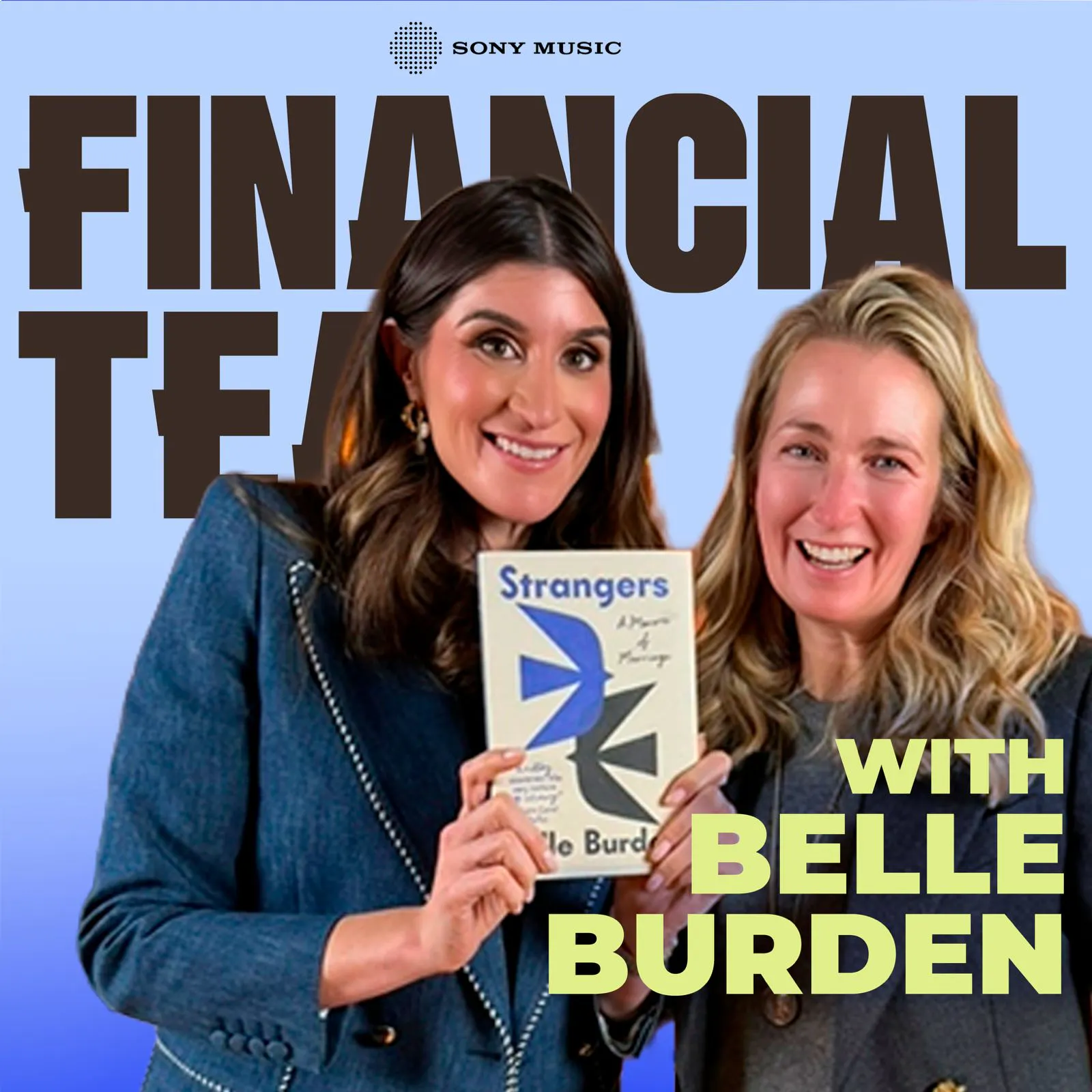
Financial Tea with Mrs. Dow Jones
How One Woman Turned Divorce and Financial Collapse Into a Bestselling Memoir (ft. Belle Burden)
01:10:39
Loading summary
Transcript252 lines
- [00:00]
A
I think it's a real red flag. It doesn't mean your husband is going to walk out the way mine did. But if you ask the questions and ask to be included and ask to understand where the assets are and whose name is on them and they don't want to tell you, that is a real red flag and you should really talk to some like a professional to try and understand what's going on financially in your marriage.
- [00:26]
B
What's up rich people? It's me, Haley aka Mrs. Dow Jones and this is is Financial Tea. Okay, quick money tip. Because this is actually smart banking. I want to talk to you about Chime because it is changing the way that people bank. It's fee free Smarter Banking built for you. It's not like those old school banks that still hit you with overdraft fees and monthly fees and minimum balance requirements. What makes Chime different is that it's actually designed for everyday people so you can get paid up to two days early with direct deposit and with my pay you can Access up to 500 of your paycheck when you need it. So some traditional banks still don't offer anything close to that. And let's talk fees or the lack of them. There are no overdraft fees, no monthly fees, no random charges that make you afraid to check your balance. Honestly, younger Hailey would have really benefited from something like this. Chime isn't just smarter banking. It's the most rewarding way to bank join the millions who are already banking fee free today. It just takes a few minutes to sign up. Head to chime.com financialtea that is chime.com financialtea Chime is a financial technology company, not a bank. Banking services a secured Chime Visa credit card and MyPaid line of credit provided
- [01:38]
A
by the Bancor Bank NA or Stride Bank NA.
- [01:40]
B
MyPay eligibility requirements apply and credit limit ranges $20 to $500. Optional services and products may have fees or charges. See chime.com feesinfo advertised annual percentage yield with Chime+status only. Otherwise 1.00% APY applies. No min balance required. Chime Card on time Payment history may
- [01:50]
A
have a positive impact on your credit score.
- [01:52]
B
Results may vary. See chime.com for details and applicable terms. This episode of Financial Tea is brought to you by Ancient and Brave. They have been an iconic and trusted well UK for years and now that they've launched in the US across the pond I have been integrating two of their HERO products into my daily routine. I like their True Creatine plus and their True collagen. And let's start with the True Creatine plus baby because suddenly everyone is taking creatine. But what's interesting is that women naturally store 70 to 80% less creatine than men, which means we can actually experience more noticeable benefits from supplementation. And Ancient and Braves True Creatine plus not only helps enhance physical performance but it has added taurine, vitamin D and magnesium. So it also helps support energy, improve cognitive function and just overall well being. It's neutral tasting and I take it daily even on my non workout days. I've been stacking that with their best selling clinically studied True collagen which is a hero product for positive aging, active lifestyles and just like that, beauty from within. Go to ancientandbrave.com planet and use code T for $10 off any purchase that's ancient and brave.com planet code T for $10 off. Welcome back to Financial Tea Sippers. This is the podcast where I teach you how to build wealth with a side of market drama, money scandals and of course financial pop culture. Now if you follow Mrs. Dow Jones, you know that a prenup is my Roman Empire. Like I always say, I'm doing PR for prenup. I love them. I think everyone should have one. It's a non negotiable. But in today's episode we're going to explore what happens when you have the elite education, the high society pedigree, the trust funds, yes, plural and the quote unquote perfect life, only to realize that you have been locked out of your own damn bank account. In 2020, a modern love column in the New York Times went absolutely nuclear. It introduced the world to Bell Burden, a woman who is essentially American royalty, like we' talking Vanderbilt descendant, granddaughter of the iconic Babe Paley and a literal lawyer. On paper, Belle was the person least likely to be financially vulnerable. But overnight, at the start of the global pandemic, the narrative exploded. Her husband of 20 years left and Bell was forced to confront the most terrifying financial reality that she had completely abdicated her agency. Despite the fancy vacations and the Martha's Vineyard house, she was standing on a trap door with basically no cord to pull. She had signed a bad prenup and was on the verge of having to leave her home while her husband got to keep everything that he made during the marriage and give her nothing. And he had made a lot of money. And I just want to say like kudos to Bell because it's rare, and I do mean rare, that someone from this level of wealth. I mean, it's rare that anyone is so open financially. But I do feel, especially when you are come from a lot of money, it's rare to really find someone who's willing to get into the messy, unvarnished details of their financial collapse. Like, some people might even find it embarrassing or shameful. But Bell owned this completely. And she wrote her memoir, Strangers, which if you haven't read it, it's incredible. You will read it in one day. And it's not just a bestseller. Like, it is truly a manual on why trusting him is not a financial strategy. And by the way, there's a huge Hollywood war for the rights and the rumors are that Gwyneth Paltrow wants to play the lead, which if you're watching this on YouTube, you will totally get because Bell, like, has Gwyneth Paltrow energy. She is Georgina. But yeah, I guess the cat's out of the bag. Bell is here to talk to us about what it actually feels like to rebuild your entire financial identity from scratch when the world thinks that you have it all and then have a hit memoir come from it that Hollywood is fighting over. But first, let's get into the MDJ Market report to see where the money is moving this week. Okay, first things first, because I know that if you are watching this, you are a sipper and you like a good deal. When you pre order my book, Future Rich Person the new rules for building Wealth. Even if you are stuck broke and that billionaire won't text you back, you get over $700 of freebies as a thank you. Like you are going to get access to my top free guides and courses that are going to help you get even more rich. Like my Step by step guide to traveling for free with credit card points. My viral tax guide that helps you pay less to Uncle Sam, all my buyers rent calculators. The list goes on and on. We are releasing new freebies every week. So seriously, when you pre order, you really do sort of unlock the keys to the Mrs. Dow Jones Castle and you get access to so many products. Plus you will be helping me achieve my goal of becoming a New York Times bestseller, which would just make little Haley so proud.
- [06:52]
A
So.
- [06:53]
B
So I'm really excited. Make sure that you go to Mrs. Dow Jones.com book to pre order also, like the book is so necessary. I'm sorry this is not our parents economy. Times have changed so much. But financial advice is stuck in the past and that is why I wrote this. It teaches you how to grow wealth in 2026 the modern way. Whether you wanna rent instead of buy, you wanna have kids later, you want to start your own business. And everything that's not covered in traditional finance books, including how to deal with such an unstable economy, is in future rich person. So go to mrsdowjones.com booktoget and get those $700 worth of freebies ASAP. Thank you so much. Okay, so now let's get into the market report because we have some really juicy tea this week. First of all, I just want to talk about Tom Brady because guys like he is giving gold. Like, Tom Brady and gold have a lot in common. Like, obvious. And just go with me on this because this is sort of where I cook when we bring a pop culture analogy in with some financial information. Like that is the Mrs. Dow Jones way. So let's do this. Tom Brady was obviously spotted with Alex Earl starting New Year's and then multiple times after that, right after she broke up with Braxton Barrios. And now this last week he was seen leaving a party at Jeff and Lauren Bezos's LA mansion with the AEL Cohen Braun, AKA Scooter Braun's ex wife. And like, obviously Scooter Braun is running around town with Sydney Sweeney. So pretty much the only way to get back at him is to hook up with Tom Brady. And that's what made me think like, Tom Brady, if he was an asset, would be gold. Because, like, when markets get volatile, investors flee to gold. And when relationships end and you need to get back at your ex, apparently you flee to Tom Brady. Like, gold doesn't grow your portfolio either. It doesn't disrupt anything. It just is. It's stable, it's shiny, it's universally recognized as valuable. And you don't also build a future with gold. Like, it's not a growth asset. And I feel like the same thing is true with Tom Brady. Like, no one is getting with Tom Brady being like, yeah, we're going to be together forever. You're just with him for a moment. And because he is a store of value until you are ready for your next move. So I really feel like we need to think about Tom Brady not as a growth stock. He's not a risky bat. He is the flight to safety. He is that shiny store of value that you park your feelings in while you figure out what's next. He doesn't really have any yield. Just like gold, you don't earn anything from it. It just basically like stops the bleeding and looks good in the meantime, because let's be Real. When you're coming off a loss, the last thing that you want is another risky investment. You want something liquid, stick, stable, shiny, that looks good. And right now in the breakup market, Tom Brady is basically the gold standard. So remember, store of value, not a growth asset, but something that's just like good in the portfolio. Nice to have if you could afford it, but not what you're going to retire with. Our second story on the market report is about everyone's favorite boy with a lower back tattoo, Ben Affleck. Yes. Netflix is acquiring Inter Positive, the AI filmmaking startup that he co founded in a deal with that could reach $600 million, making it one of the streaming giant's largest acquisitions ever. Oh, and the entire 16 person team is going to join Netflix and Affleck is going to serve as a senior advisor. But here's what makes this actually interesting. Like, Inter Positive has been in stealth mode since Affleck started it in 2022. Like, I don't know about you, but I didn't know Ben Affleck was quietly building an AI company for three years. Like, you mean the guy best known for being photographed looking miserable at Dunkin Donuts was secretly a tech founder? Like what? But it's not generative AI that's going to like replace writers and directors. It's a post production tool for filmmakers. So in a moment where Hollywood is like terrified of AI, Affleck built something with the message of like, we're here to protect creative choice. We're not going to replace it. And I feel like that's a really calculated good move. And what's also sort of exclusive is that Netflix plans to offer access to Inter Positive tech only to its creative partners, but won't sell it commercially. So I feel like it's another reason that people will want to work with Netflix. Very interesting stuff. And also like shout out to Ben Affleck and Jen Gardner because she just like had her company go public on the New York Stock Exchange. So I just feel like as a divorced couple, they are killing it. But mostly I'm obsessed with their son Samuel, because he once asked them for $2,000 to buy shoes. But that's for another market report. Okay, our third story honestly makes me really nervous and should be illegal. Like, you guys know that I hate buy now pay. Well, my new enemy of state is prediction markets and specifically how they are targeting women. There was an article in the Wall Street Journal about this. Female users now make up 26% of Kalsho's participant base, which is up 13% from just 10 months ago. And the way that they have been doing this is by paying female influencers to post their trades publicly. And they have been throwing events built around pop culture themes. And of course, hiring Kendall Jenner for a Super bowl ad didn't hurt either. This honestly sucks because it's wor like Kalshee's Oscar trading volume hit 48.4 million this year and polymarket hit $57 million. And I just feel like the end game is sort of your rent money. And this is something that we do need to stay away from and villainize at all costs. And it's annoying because they took the thing that we enjoy as women pop culture and they made it about predictions and having opinions and turned it into a customer acquisition strategy. But obviously, as a sipper, you are too smart to fall. We keep our money in the actual market, not the prediction market. Do not bet on things. Buy stocks instead. Trust me, it's going to make you way more rich in the long term. Data shows that you are literally throwing away money when you do this. Like, you will not win. And then the fourth story is, unfortunately, the war of Iran, which is ongoing, no end in sight as of Monday morning. Oil prices are through the roof. The Trump administration is giving us no clear understanding of what their plan is here. I don't even know if they have a plan. And if you're like me, you probably feel a little helpless because there's not really much to do except pray for our troops and the Iranian people. Book flights as soon as possible because prices are going up. And honestly, fill our gas tanks because prices are also going up on that too. But you know, oil shocks are not going to just stay at the pump here. Like, shipping costs are also going to go up. Consumer goods are going to go up. Like inflation that we finally thought was cooling down is going to come back with vengeance. And I just feel like this is the worst because people just started feeling okay a little bit about prices again. And this is the thing that is going to unravel that. And so I don't know, there's not a lot that you can control right now. One lever that we do have is our personal finances. So I would say, like, lock in prices where you can, if you can, buy in bulk now, good idea. And don't make emotional money decisions. Remember that like this macro chaos is exactly when having a financial foundation also matters the most. So bulk up that emergency fund and make sure that you focus on creating your own safety net because of all this instability you can actually make sure that your life vest is on just by doing that. Okay, now let's get into our interview with Bell Burden. Because, you guys, this was, like, the best interview that I've ever done. I think that my jaw was on the floor the entire time. She is truly so vulnerable. I learned so much about her. I feel like she's teaching us all something so important about finances. And if you have not read her book Strangers or listen to it, she does audiobook. It's so good. Make sure that you do that, because it is like, you'll finish it in a day or two. It's so good, you're gonna binge it. Okay, let's go talk to Belle. Welcome to Financial Te, Belle Burden.
- [15:11]
A
I'm so happy to be here. I'm really excited about this.
- [15:14]
B
This is like my white whale interview. Like, I. I am so excited that you're here. Your book, Strangers, I literally read it, I think, in one day, every. I cannot go to a dinner to talk to anyone, like, without someone saying, oh, have you read this book? Oh, I just finished Strangers, like, everyone recommending it to the other person. As though. I don't know. As though I wasn't like, you know,
- [15:40]
A
you were very early.
- [15:41]
B
I was early. I was. Let it be known, like, I knew about this book and, like, it is on the COVID We have it over here. It says, a memoir of marriage. But why I wanted to have you on the show is because to me, it is a memoir of money.
- [15:55]
A
Yes, I agree with that, Haley. I think it is probably the most important storyline in the book, which is part of why I was so excited to come on your podcast, because I think you're doing such important work in getting an entire generation excited about being. Having autonomy over their money. And that's really an important part of my growth in this book.
- [16:19]
B
For the three people listening who haven't read your incredible memoir, and it's going to be zero by the time this airs, because they're going to hear this and want to read it. Can you give us a high level of Strangers and what happened?
- [16:31]
A
Sure. So it opens In March of 2020, the second week of COVID lock down. I believed I was very happily married. I was on Martha's Vineyard with my husband and my two daughters, very cozy time. And I got a call from someone saying that his wife was having an affair with my husband. And initially, my husband was very apologetic, but by the morning, he had packed a bag. He said he thought he was happy, but he wasn't. He thought he Wanted our life, but I didn't. He didn't. And he walked out of our house and left the island and became someone I did not recognize at all. But part of my story is a financial story and what I agreed to before we got married in our prenup, what I went through in our divorce to keep what was mine, and then how I rebuilt my own financial autonomy after divorce.
- [17:24]
B
Let's start, like, with what your life was like before the divorce, because you were living, like, a fabulous New York life. Sort of like, we had apartment in Tribeca. We had House of Martha's Vineyard. Like, where were we vacationing? Like, give us, like, the scoop of, like, what the lifestyle was.
- [17:39]
A
Sure. I think it was a life that people would envy. We were married. We got married in 1999. We had three children.
- [17:49]
B
He's like, hot, tall, lawyer. You meet him, you're like, yeah. Like, okay.
- [17:53]
A
I had a boyfriend when we met who was unemployed. And then I started working. I was at a big corporate law firm called Davis Polk in midtown Manhattan. And I started working in the group that my future husband was in. And we started working on an IPO together. And we got in, engaged within three months, got married within the year. The kids went to private school in the city downtown. We went on vacations to Hawaii, to the Caribbean, that kind of thing. My husband left the law and started working for a fund of funds and then moved to a hedge fund. And he had this big career that we were very, very focused on. It kind of became the family enterprise.
- [18:40]
B
Yeah, it was all, like, in service
- [18:42]
A
of, like, all in service.
- [18:44]
B
Yeah. Like, let him do his work.
- [18:46]
A
Like, it's, like, came first.
- [18:47]
B
Yes. Always so crazy.
- [18:50]
A
And I had decided to keep my law license. I worked for a time for my brother, and I always did volunteer work, sometimes actually doing legal cases. But I was very focused on the kids, on raising the kids. So, yes, like, his work came first. It came before parent teacher conferences. He worked on weekends. It was the family enterprise.
- [19:15]
B
Talk us through what it was like to go through the prenup process with him.
- [19:20]
A
Yes. So I had two trust funds. My father had died two years earlier, in 1996. My dad was a spender. Yeah, he was a real spender. So actually, when he died, he was very much in debt. We sold his company, and we ended up being fine. But I had trusts from my grandfather on my mother's side and my grandfather on my father's side. And my family was. Was known in New York, you know, in some circles. And so when I met my Future husband. And we fell in love. He had almost no money, and I had these two big trust funds. So there was sort of this inequity. My mother, when she inherited money from her stepfather, made my brother and I sign a contract actually agreeing that the three of us would have prenups when we got married. And my brother and I did not even have serious relationships at that point. But we had agreed to this, which, in retrospect, was actually quite smart, because I just said, I have to have a prenup. I signed an agreement that I would have a prenup. Really smart. But he was very upset by it. He did not want to. Like, he was this young man arriving to this relationship. And like, the prenup was a statement that I needed to be protected from him. So he did, which, yes, which, yeah, it turns out I did. But that was hurtful to him, as prenups can be very hurtful to people entering a marriage because they feel like they're suddenly suspected of something. But really they are a way to kind of force a conversation about money and what will happen if the relationship ends, which I think we should all be having that conversation. So my lawyer sent my then fiance a copy of a prenup. Very standard prenup. Same one my brother and his wife had signed. And he got his own lawyer. And then they sat on it for a while, for a good two months.
- [21:27]
B
That's would make me so anxious.
- [21:29]
A
Yes, it made me really anxious. And so the wedding date is coming, right? It's coming really fast. It's like three weeks away.
- [21:34]
B
That's right. Really crazy. And invites are out.
- [21:38]
A
And it's like, invites are out. And you feel so much pressure.
- [21:41]
B
Yeah. You're like, well, I want. I'm. I want to do this.
- [21:44]
A
Yep. And if we don't, then it's a huge. It's a huge problem. The change that he asked for was that anything earned during the marriage would not be marital property would not be split unless we affirmatively decided to put it into joint name. So the way he explained it made sense to me. He said, we, you know, we'll just keep what's ours, but then we'll make decisions during the course of the relationship whether to put things in joint name or not. So it made sense to me. But I called my lawyer, who's at a big New York law firm, and he said, do not do that. That is really not smart. You're planning to be home with kids. He's going into finance. This could really hurt you. But I'm listening to him. I'm looking at the man I love who's going to be my husband, the father of my children. He was a mild mannered, very kind man and I trusted him and I wanted to get married.
- [22:39]
B
Yeah.
- [22:39]
A
So after some conversation, my lawyer said, okay, if this is what you want. And we made the change. And I have all the, you know, black lines and everything from that time where I made this change and I was married to my husband for 20, almost 21 years. And for those entire 21 years, I, somewhere in my head I knew that change was really bad for me. And you know, when you're like, just have something that like continues to bother you and worry you and haunts you, even if it's not at the forefront front of your brain. And I knew it was there. And we had discussed, we discussed over the years getting rid of it, but we never actually got rid of it.
- [23:21]
B
That was something I thought was so interesting in the book was you had a big financial aha moment.
- [23:28]
A
Yes.
- [23:28]
B
Which I talk a lot about in my book that's coming out, which is like, I think every person has to have when they decide to take control of their finances. And we'll get to what that was for you.
- [23:36]
A
Yeah.
- [23:37]
B
But like before that, you were definitely like the, you know, veil was over your eyes. It was, you know, you were living like you weren't aware of things in the same way that you are now. Correct? Yes.
- [23:49]
A
Yes. And I think that there was something, I think because my father had died, I think that there was something romantic almost about handing this over to him. It felt like this. He was, he was like the man in the gray flannel suit who had arrived.
- [24:07]
B
Yes.
- [24:08]
A
And he said to me, I'm going to take care of you. So there was something that felt like wonderful about that. And I think also because of our financial inequity, I was conscious of wanting to make him feel good and feel important. Ugh. And I think as women, we do that.
- [24:23]
B
Right.
- [24:24]
A
It becomes connected to their self esteem.
- [24:28]
B
You want to make yourself a little smaller so they can feel bigger.
- [24:32]
A
And for us, that was really around
- [24:34]
B
money because he had all that trauma too. He came in with his own shit.
- [24:37]
A
He came in with his own financial trauma, which was that his family essentially went broke when he was a child. And he grew up around a lot of wealth, but really the, the family really struggling and trying to hide it.
- [24:52]
B
Trying to hide it?
- [24:53]
A
Yes. And like trying, you know, going to expensive schools but not being able to pay bills, that kind of thing. And so that was in him. And over the course of our marriage, as I kind of handed that off to him, you start to. Or. I started to believe I couldn't understand it. Even though I'm a former corporate lawyer. I paid our bills, but I signed our tax returns, but I didn't read them, and I didn't ask him what his bonuses were. And I just trusted and trusted and trusted. And I thought, oh, it's just so complicated. Only he can understand it.
- [25:33]
B
Yes. A hundred percent. I think that that is, like, so textbook.
- [25:37]
A
Yes.
- [25:37]
B
Before you have that financial aha. Where you just sort of feel like, this is not for me. I don't have the right DNA for it. I used my version of. It was like, I. I didn't think that, like. Like, there was always, like, those girls in school, like, the perfect handwriting and, like, the organized backpacks, and, like, they were just so on top of things. And I was always such a mess. Like, I was, you know, the most, like, type B person using my passport to get into the bar because I don't know where my license was. Like, what? Like, they're just everything pointed to. Like, this is not a girl who's gonna be good with her money.
- [26:03]
A
Right?
- [26:03]
B
So I thought, okay, fine, let. My dad will take care of it. I'll marry somebody. Someone who will do it, whatever. And then whatever. Something happens. You get. You heard or something, and you realize, okay, no, actually, I have to do this. Right?
- [26:16]
A
You're forced.
- [26:16]
B
You're forced. And then you actually realize, wait, this is not that hard.
- [26:19]
A
It's not that hard.
- [26:21]
B
It's not hard at all.
- [26:22]
A
Like, and it's fantastic.
- [26:23]
B
Yeah.
- [26:24]
A
Fantastic. In charge of it.
- [26:25]
B
Both things, so true. Like, but the not that hard is, like, the biggest one, where I'm like, you could have totally understood a tax return. Like, come on.
- [26:32]
A
I did. I worked on, like. Like, you know, procedures, spectacles. Like, I can read a text a million percent. But he would hand it to me, and I would sign it, and he
- [26:39]
B
probably was like, ooh. Like, you don't. Like, that's not for you.
- [26:41]
A
Yeah. It's very subtle.
- [26:43]
B
Yeah.
- [26:43]
A
You know, there was a little happens,
- [26:45]
B
but they're like, it's a beautiful.
- [26:46]
A
Don't worry about it. Don't worry about it.
- [26:51]
B
Okay. I want to tell you guys about a beauty product I have been completely obsessed with lately. I am not that good at doing my makeup, despite the fact that I've done it basically every day for tens of years. It's just never clicked. And that's why I have been loving Jones Road beauty. It is founded by the legendary makeup artist herself, Bobbi Brown. The person, not the Bobbi Brown cosmetics brand. And the product that I have been really loving is their miracle balm. It gives you what I call a miracle glow. Like I use my skincare and then I tap it on my fingers like where you would put blush and suddenly I look alive. I looked a little snatched because it adds that little bit of contour and it just enhances my skin instead of covering it up. For a limited time, our listeners are getting a free shimmer face oil with their first when you use code Financial T at checkout. So all you have to do is go to Jones roadbeauty.com and use code Financial tea. And then after your purchase they're going to ask you where you heard about them. Please support the damn show and tell them Financial T set you stay rich. I used to be someone who like didn't really think that much about my mattress. Like a bed is a bed, right? Wrong. Because once I started actually sleeping on my birch mattress, I realized I had been robbing myself for years. And Birch makes their mattresses with organic fair trade cotton, organic wool, natural latex. And the research is not subtle like quality. Sleep restores your body, it sharpens your memory, it regulates your mental health, it makes you richer because you can perform better. And every single one comes with an 120 night risk free trial free shipping straight to your door in a box and a limited lifetime warranty. That's what we like to hear. And because I want all of my sippers to get a de restful night's sleep on a birch mattress right now you could get 20 off site wide. All you have to do is go to birchliving.com financial tea. That's birchliving.com financial tea for 20 off site wide. Birchliving.com financialtea do you think that when he added that provision into the prenup he knew you well enough to know that like you would never have those conversations with him about like, oh, well, with this specific deal, we'll make it so it's joint property.
- [29:11]
A
I think that it's hard to know how much he was planning. Yeah, that must be hard to think about. Yeah. And I try to hold both things in my head that we really loved each other and had a very happy marriage for a long period of time, but that he was pretty much programmed from long before the time he met me to really protect himself financially. And I think that was at play in the prenup. I Think that was at play at every stage in our marriage. And I think that when he earned money, like, when he got a bonus, there was no part of him that was ever going to put it into joint name.
- [29:49]
B
No. Like, you were using your trust to pay for the children's school, for the. For the houses. And he was building, like, a vintage Rolex collection.
- [29:59]
A
He was building his. The things that he cared about. And I come from a family where people are just very generous. We always pick up the checks, and the men are very generous. And I assumed that that's what I was marrying as well. And when we bought our apartment In Tribeca in 2000, I had to apply essentially write a formal letter to the trustees of the trust to release funds for me to buy the apartment. You had to, like, make the case that it was a legitimate purpose and they released the funds, and instead of actually, the trust could have actually bought the apartment and it would have stayed in trust. But I had the funds withdrawn, and I immediately decided to put both of our names on the deed because I thought that's what you do in a marriage, and I thought we were both going to share everything. So your listeners, your viewers are probably seeing where this is going if they haven't read the book, which is that I did that again with my other trust for house. So I have moved all of my primary assets into real estate. And again with the house and Martha's Vineyard, I put both our names on the deed. And I felt like I was doing something so important for our marriage, for our family, that I was curing something for him where he had lost real estate and that I was giving him a home. And this, you know, this wonderful thing that I, because I wasn't working, that I could contribute this. Meanwhile, I was splitting all expenses, too.
- [31:45]
B
And he was making you, like, talk through every expense, but he never had to, like, explain that the accounting, because that was so crazy.
- [31:53]
A
With credit cards. We had a bookkeeper, and so. And I assumed he was doing it for the bookkeeper, too. But I would write down what every single charge was for.
- [32:04]
B
That would drive me crazy.
- [32:05]
A
Yeah, it was like a subtle thing that feels protective. Like, he was very, like, had a strong hand on our spending, like, did not want us to spend too much, which felt like protection. But the flip side of that is that it is controlling. It's really controlling of what. What I, you know what? It just was, like, these eyes on me, and I didn't have the same eyes on him.
- [32:32]
B
And it's also so interesting because, like, you Were you didn't need to have any eyes on you because you had your own money. Yes. Like, it's like you were like, okay, I'll have some eyes on me. Like, whatever you want, babe. Like, yes, I want you to be comfortable. Yes, I totally got that. I think that's such an easy trap to fall into. At what point do you think that, like, your partnership did turn sort of into financial abdication? Like, was there a specific moment? You're saying it sort of happened slowly where you, like, stopped. You know, you realized you had stopped looking at the statements, or was it, you know, the slow fade into the background?
- [33:05]
A
I don't know if I can point to a specific moment, but it happened fairly quickly. You know, it happened, like, as soon as we started having kids, and I was focused on that. And I think I would attend financial meetings, like, quarterly meetings, but I always felt like the financial advisors were speaking to him.
- [33:26]
B
Oh, I hear that all the time too, from people.
- [33:28]
A
Yeah.
- [33:29]
B
Yep. Yeah.
- [33:29]
A
And with language that I couldn't quite follow.
- [33:32]
B
Yeah.
- [33:34]
A
And I now have a financial adviser who speaks to me, you know, which,
- [33:38]
B
by the way, like, if you are in any situation with, like, a financial professional or a lawyer or anything where you or accountant that you feel like they aren't making sense to you, ask questions or get a different one. I agree. I had to switch accountants. I've had to switch lawyers because I'm like, look, I'm the boss. Yes. I'm paying the bill. Like, I'm gonna get someone who can talk to me the way that I understand. Like, that's okay to ask for. I was at an event with Kelly Rowland from Destiny's Child who has, like, a crazy financial story. And she said that, like, a big moment in her financial life that changed everything was when she just started to feel really comfortable, like, looking stupid, like, asking those questions.
- [34:19]
A
But you do feel stupid. You're like, I don't know what. What this return means, and I don't know what this bond means. And just asking those questions. And I finally. I have someone now who I can ask any question. Nothing is too dumb. And she's never condescending, and it really feels so great. But at that time, so I was focused on kids. When I would go to meetings, I didn't really. No one was speaking to me. I didn't really understand what was happening. And that just builds on itself. That really builds on itself. And I don't think I'm alone in this. I've now been at book groups and different things. Contemporaries who have done the same thing. And what's exciting to me is they are now pushing their partners to have more transparency, to go to the meeting, to hopefully read the tax returns. I think for some people, it will lead to change. For others, there will be resistance from their partners. I think there is. You know, there is a discomfort when we ask a lot of questions and want to be included and want. Because that means you have, like, a real partnership. And that can be uncomfortable for some men in particular,
- [35:36]
B
like, if you ever got married again, like, you would obviously get a firmer prenup. But, like, would you see it as a red flag if someone acted the way that your husband did?
- [35:45]
A
Oh, 100%. I think it's. I think it's a real red flag. I don't think I will get married again. I feel like the idea of commingling assets again is really unappealing to me. I'm so happy being in control of my own. So if I was in another relationship, I think I would keep it very separate. But, yes, I do see it as a red flag, and I think it doesn't mean your husband is going to walk out the way mine did. But if you ask the questions and ask to be included and ask to understand where the assets are and whose name is on them and they don't want to tell you, that is a real red flag. And you should really talk to some like a professional to try and understand what's going on financially in your marriage.
- [36:29]
B
Two things. First of all, what you don't realize if you're married is that you have the right to know all these things. And it's like you legally have that right. Even if your husband or your partner is being shady, you're married. You can look. Yep.
- [36:41]
A
And especially if you're filing a joint return and 100%, it's hard to be a cautionary tale. But I'm also happy to be a cautionary tale tale, because I think what happened to me, if you read the book or just listen to my story, I had every reason to trust, every reason to feel like it was all going to be okay. And I ended up in my divorce having it threatened until 45 minutes before trial that I would lose half of my house and half of my apartment and have to sell them. And that he had accumulated a lot of assets in his own name, a fortune, really. And he left the marriage with those assets. And luckily I was able to keep my homes.
- [37:28]
B
First of all, I want you to know that I wasn't. I was in Martha's Vineyard during COVID So we could have really. We could have gone on walks.
- [37:34]
A
Oh, my God.
- [37:35]
B
So I was going on so many walks, and it was so lonely and, like, weird.
- [37:37]
A
And it wasn't it weird?
- [37:38]
B
It was so weird there. And so, like. Like, let's just talk about the COVID pandemic. Like everyone always says in Sex and the City, the city is the fourth kid character, the fifth character. Like, I feel like Covid was, like, the third person in your marriage, sort of. So, like, how did the backtrack of the backdrop of the pandemic affect your experience?
- [37:55]
A
I think it was an accelerator and an intensifier in all ways. I do believe I probably would have gotten that phone call anyway. The marriage probably would have ended anyway. But it just kind of added this fuel to it that. That just, I think, made him really snap and.
- [38:15]
B
And leave, because there's no escape route.
- [38:17]
A
There was no escape. He was going to be stuck in that house with me, with us doing therapy on Zoom, and, like, it would
- [38:23]
B
have been working on it.
- [38:24]
A
He was like, oh, don't want to do it. I don't want to do that.
- [38:27]
B
What about if I left?
- [38:29]
A
Exactly. And that would have been not fun. But I was prepared to do it. And then for me.
- [38:34]
B
But even that, like, you would have done all the. I would have never left.
- [38:38]
A
I don't. It's hard to know. I would have felt so betrayed by this affair. It's hard to know if I would have stayed in it. It really would. I would have tried. And if he had come to that conversation, very regretful and saying, I really want to stay in it.
- [38:54]
B
Yes. So stressed. I want to be different.
- [38:57]
A
Exactly. Then I would have. Exactly. I would have tried. And I was in love with him. I really loved him. And then the pandemic really made it emotionally a lot harder for me because my family and friends could not get to me. I wish I'd known you were there. I was all alone. I would have been over.
- [39:16]
B
We could have done our walks together.
- [39:17]
A
Exactly.
- [39:18]
B
I love that. We'll get to that. But the way that you picked yourself up, I just feel like it's such a compelling part of the book.
- [39:23]
A
Yes. And literally had to pick myself up. I talk about the bathroom floor as kind of a metaphor, but I was literally on the bathroom floor because it's the one place that kids can't find you. It's cold. You feel like you're not gonna fall through the earth. But the benefit of the pandemic was that I had this protected time, like, I would walk down the street crying. And I didn't have to go to school pickup. I didn't have to go to meetings. I could just really walk through the pain and feel it, all of it, like every inch of it. And I think if I was in New York, having to get dressed and like, yeah, I would have been more avoidant of it. I think I would have had to have an audience for the whole thing. Would have been really painful. So in a way, even though I think looking back on that time, it's so painful, there's something that feels like almost lovely about it, which sounds crazy, but just that I had this piece on this beautiful island where we watched spring arrive and the nature and the ospreys which I write about. It was the right place for me to go through this.
- [40:31]
B
I think for women who are going through something similar, like. Like it is so easy to distract yourself.
- [40:39]
A
Yes.
- [40:39]
B
Cuz who wants to deal with this? It's.
- [40:42]
A
It's so unpleasant.
- [40:43]
B
Like anything but like, let me like do literally anything but. But it's like that's the only way through.
- [40:50]
A
So the only way through is like right through it.
- [40:53]
B
And you had, of course you had your therapist, but like you really did the work yourself. So like, what advice would you give in terms of like how to face something so head on? Because it's quite brave.
- [41:02]
A
It was, it was. It could have gone either direction. Right. You could really just like. It was very hard to get. Yes. Get out of bed. It was very hard to just move and keep going. I decided not to drink, which I would recommend to anybody, because I just felt like it was gonna make me sadder during that period. I do not like the phone, but I stayed in touch with really close friends who called me every single day. My family particularly my stepmother, who's a family therapist, was very helpful as a character in the book. She's amazing. Really great advice. And then a friend really encouraged me to start walking. And I think there is something very meditative, very like soothing about walking. And I would go one direction eight miles one day and the other direction eight miles the next day. And just every single day I did it. And the other thing that really made a huge difference for me was starting to work again, which was doing. I do pro bono immigration cases and I had to file a case in family court in April. He left in March and I was a mess at first, but I think even just like refilling the paper tray, like having to write something, having to do a zoom, it just brought me back to Life a little bit to who I am and to the writing that ended up figuring later. I think all of those things really help. But I'll say one other thing which was critical to my recovery, I think, which was about a week into it, he said, I think we should tell people that our split was amicable, that it was a joint decision. And I knew in that moment I'm shy and private. You would have expected me to agree to that because it would be more flattering, right, to say we both wanted to get divorced.
- [42:53]
B
Us thing.
- [42:54]
A
Yes. But I just was like, I will not survive this if I lie about it. I cannot lie about it. So I said no to him, which shocked him. And then whenever I ran into people as they came back to the island, I would just be completely honest and say, he left, he walked out, and I don't know why, and I'm not doing well. And that was a theme that continued because it led to me writing about it. But I just have faced this openly and honestly from the first days. And to me, that felt like life and death. And I think it's why I have ended up where I am instead of hiding it, instead of carrying the shame of it. I just have been really. I think it's made all the difference.
- [43:41]
B
And talk to me a little bit like, obviously your ex husband's betrayal is really at the crux of the story, but. But there were a lot of other betrayals that followed. Like, there is something really weird that happens when you go through something like this, which is, like, other people's reactions. Like, I'm thinking of your gynecologist, who, while you can speak to this while you're in the stirrups, was like, well, if you were working, he would never have left you. Like, are you kidding me? The guy at dinner next to you, like, talk to us about these crazy characters.
- [44:12]
A
There are, I think when, and this is true for anyone going through a divorce, you suddenly go from being one thing, which is like, married woman with kids, and you're, like, included in things and you're safe and people know what to do with you, to being something very different, which is, in my case, not just a single woman, a divorced woman or divorcing woman, but an abandoned woman. And some people are so wonderful and move towards you and, like, embrace you. And then it makes other people uncomfortable and they don't know what to do about it. So I had had situations at the club where I'm a member where that were very hurtful. You know, people saying it wasn't Clear who should remain a member. I had things in New York where people were, you know, helping my ex find, like, a lawyer.
- [45:03]
B
Yeah.
- [45:03]
A
Shark lawyer.
- [45:05]
B
Just what you want to hear from someone.
- [45:06]
A
Yes.
- [45:08]
B
I just helped your husband find, like, the hardest, toughest lawyer.
- [45:11]
A
The toughest lawyer in New York. Good.
- [45:13]
B
Good luck.
- [45:14]
A
Exactly.
- [45:14]
B
So crazy.
- [45:15]
A
It was really. I just. And I was so vulnerable. I was raw and vulnerable. And you. You could say, like, oh, she was so sensitive. But I look back on them and I'm like, no, that was, like, really? That was hard.
- [45:27]
B
Yeah.
- [45:28]
A
No, and the gynecologist absolutely said that. And I. Other. Other people said the same thing about working. And I think people do that because it makes them feel safe.
- [45:38]
B
Right.
- [45:38]
A
Like, to say they could.
- [45:39]
B
They could solve it for free.
- [45:40]
A
I'm working, so it's not going to happen to me. I have a new gynecologist. You'll be happy to hear I did
- [45:45]
B
not go back here. Yes. We could dox the other one.
- [45:48]
A
So, yes, there were these smaller betrayals that really put me off balance and put me back on the floor for a period of time, but I just kept going. And then I had to move into the actual divorce, which was its own sort of series of shocks and, you know, financial awakenings that were painful and hard to face. But getting to the other side of that was the best thing.
- [46:20]
B
Yeah. I mean, Stella got her group back.
- [46:22]
A
Yes.
- [46:22]
B
Stella's got the best seller. Stella's got a Hollywood movie deal. Like, Hostela's killing it. But, like, you've publicly owned your financial shame, which is really rare, so. Well, actually, let's start first at, like, the actual divorce.
- [46:34]
A
Yes.
- [46:34]
B
So. So you. At what point did you realize, like, you were obviously really upset that he left, you were heartbroken, but then was there also, like, a part of you where you were like, ooh, and I may be totally fucked financially.
- [46:46]
A
Yes.
- [46:46]
B
Like, when did you realize that? And, like, talk through, like, how that played out. Because the divorce was messy.
- [46:52]
A
The divorce was. It was surprisingly quick, but it was quick and messy and terrifying for me.
- [47:01]
B
Terrifying for me, a reader. Yes.
- [47:04]
A
Really, really terrifying. So I knew that there. The prenup. He was looking for the prenup with the number.
- [47:10]
B
He came to back to Martha's Vineyard and was, like, rifling through all the stuff you were, like, saying, telling the
- [47:15]
A
kids about the divorce. He found the prenup. He asked the court to enforce the prenup. And I realized, and at the same time, we get discovery, you know, so all of his accounts that are not yet mark to Market or anything. But they're. I get a sense, sense of the wealth that he has built, which is
- [47:37]
B
probably like 20 figures of wealth at least.
- [47:40]
A
Yes, yes.
- [47:40]
B
I know we can't say exact things, but I think we can say.
- [47:43]
A
But at least eight figures for sure.
- [47:45]
B
At least we're saying could be none.
- [47:47]
A
And he, he had built that up. And every account I just started, you know, I was going through the discovery and I was like, every single account is in his name. Like, of course it's all in his name. And none of it's in my name. And my assets are in this real estate.
- [48:06]
B
And it's totally legal that this happened because I said that it was okay,
- [48:10]
A
I signed it, my name is on that prenup. And I had some assets outside of those trusts, but his way more dwarfed. And then when he asked for the prenup to be enforced, he was claiming his half of both those properties. And I did not have enough money, that was the worst to buy him out of those properties. So I would have had to sell them while I'm trying to keep my kids stable, lives stable. And I'm always conscious of saying as I talk about this that still my situation is so much better than 99% of the world. Like, I had cushion. I had, you know, it was going to be okay. I knew I was going to be okay. But it was very devastating because I thought we were pulling in the same direction. I thought he valued my contributions to his career, to our family over 20 years. And when I saw what had happened and what he was asking the court to do, I just thought he never valued it. He never. He wants to take every single thing that he's entitled to and is not concerned at all about my financial well being. And in fact may view this as almost a contest to win, like he is playing to win in this. And I felt tremendous shame because this was money that my father and grandfather had given me and entrusted to me and I was going to lose half of it. And I had been in this marriage for all these years and had never asked the questions I should have asked about getting rid of the prenup, about what his bonuses were, about where that money sat, about how we were going to equalize the fact that you were at home.
- [50:05]
B
Yeah.
- [50:06]
A
And that I was at home and that I had put assets into our homes and that my family had paid for all of tuition and all those things. And I just had really gotten comfortable and avoidant and had not really thought about what would happen if the marriage ended and I think everyone, everyone should. No matter how happily married they are, they should look into what will happen to them if the marriage ends.
- [50:31]
B
Well, I always say that a prenup is like health insurance. It's like you don't get it. Being like, yeah, let me get sick. I really want to get sick. You got it. In case you get sick. And like, for that little glimpse, a moment, you think about, okay, what would happen if I did get sick? And you make sure that you're protected.
- [50:46]
A
Exactly. Yeah, exactly.
- [50:47]
B
And it needs to be non emotional. Like, in a way, I sort of think that people should steal. Feel what your line of like, oh, I signed something. Like, if you don't feel confident enough to ask for a prenup, just say that. Like, your grandma made you sign a legal document that said you have to get.
- [51:02]
A
Promised my grandma that I might do it. Yes.
- [51:04]
B
Sorry. Yikes. Okay, so I think it's really interesting that with the prenup, he waited till three weeks before to get you the final draft. And then with the settlement agreement of the divorce, it was two months before the court date that finally he sent you something about, okay, like, we can settle. Do you think that was a strategy? Like, why do you think that he was always like, playing it so fast and loose and last minute.
- [51:34]
A
Yes, I think it was actually weeks in both cases. So, like, weeks? Yeah, weeks. He requested the change of the pre and up weeks before we were married and said that he was willing to settle weeks before. Probably just two weeks before we had our court date.
- [51:52]
B
My trial is so different than two months.
- [51:54]
A
Sorry. So I think it does put you in a position where you are more likely to cave. So I can't read his mind, but it definitely, in both cases, put me at a disadvantage to have it so time compressed. So perhaps, I mean, I mean, people in business have all sorts of negotiating strategies, and that might have been one.
- [52:20]
B
Yeah. You took away your leverage.
- [52:22]
A
Took away my leverage. Which is why I was really proud of how I handled the settlement discussions and the divorce, because I just stayed calm.
- [52:31]
B
Yeah, you were so unemotional. It was amazing.
- [52:34]
A
I really knew what was important to me and what I could give up. And I just stayed really focused on that and not. And was very careful not to inflame him.
- [52:43]
B
Do you think, though, if you had asked him something while you were in the marriage about this stuff, he would have responded? Well, like, I feel like it would have. That would have just led to more mayhem. Like, that could have even led to divorce in that moment because he was so financially like protective. I don't.
- [52:58]
A
I could have lived in that victim place, okay? He's been self protective. He has not been looking out for me. I've ended up in this place. I could have ended up just in that angry place. But what switched it for me was really looking at my own decisions. And not in a, like, I'm to blame for this, I'm to blame for this divorce, but in what decisions did I make over 20 years, both about finances, about the prenup, about career, about his career that put me in this place that where I am right now in 2020.
- [53:31]
B
Like, what.
- [53:32]
A
What did I decide that put me here? And when I did that, it kind of unlocked me, right? It just kind of switch the whole conversation in my head from him to me. And I think it's really important to like take responsibility for your own decisions. And that allowed me to really look forward again and to say,
- [54:01]
B
where do
- [54:02]
A
I need to get in this divorce to be okay? And where do I. What do I want my life to look like going forward? And I started to have this glimpse of myself not as a sad, discarded wife, but as like a matriarch of her family. I love that. Fully in charge, you know, and is going to welcome grandchildren and is going
- [54:26]
B
to be like sexy older rich woman with a boyfriend.
- [54:29]
A
Yes, exactly. Chic French divorce, as my sister in law said. And once I did that and I knew, I knew pretty early on that I wanted to return to my maiden name, that felt really important to me. And then I could just kind of see, I could see where I needed to get in the divorce to the point where when he finally kind of said he was willing to settle, I had a wonderful lawyer, but I had to kind of navigate to get there. And once I got there, I knew that I wanted to be completely financially separate from him. I think in some divorces, women stayed tied to the the because they paid for kids and they. And I didn't want that. I was like, send me a check for child support, but otherwise we are completely separate. And then I had to start the process of rebuilding, which is really challenging and a headache, to like refinance your mortgage, to change the deeds, to change your Social Security, to like all those things that you have to do, especially when you change your name, but so busy. Yeah, it's really, really hard. But I found that, like, each time I accomplished something, each time, like something arrived in the mail, like my new driver's license with my name on it, I felt like just this surge of energy because it was like Autonomy. And that was so exciting. I love that, you know, to be
- [55:59]
B
in charge and you had never really been in charge. Like, it was almost like before you got married, you were just looking for someone to be in charge of you.
- [56:05]
A
Yes, I had a very brief period of not being like a daughter and earning my own salary and paying my own rent to being a wife, you know, and so that I. I'm finally that person now, you know. So cool.
- [56:23]
B
Yeah. I mean, you talked a little bit about like what disentangling financially from your ex husband entailed, but did you have to tighten the belt? Like, were like, what were some of the sacrifices that you had to make when you're going through the divorce financially?
- [56:35]
A
I would say I had to really budget a little bit more, but the truth is that he was very tight with.
- [56:43]
B
Yeah. So it's not like you were used to being like so.
- [56:45]
A
No, he was not like buying jewelry for me. He was not. We were not flying first class. We were not. So it was a pretty.
- [56:53]
B
And then you saw the numbers of his accounts and you were like, are you having any jewelry?
- [56:58]
A
Are you kidding? So it was not one first class ticket. It was a very nice life, but it was not like this extravagant life. The extravagant life I thought was coming. Right. Like he was about to make partner at a hedge fund where the money was, would be enormous. And I never, I had to give up that fantasy of that life. That life was not coming for me and will not be coming for me. But I was able. Yes, this life is definitely better.
- [57:31]
B
Okay, real talk, rent is expensive. It's annoying. And for a long time it just sort of felt like that money was disappearing into a void every single day, month. There was no reward, no return. It was just gone. But Bild actually makes paying rent feel a little better. It is the loyalty program for renters that rewards you for your biggest monthly expense, which is rent. Here's how it works. Every rent payment earns you bill points that you can redeem towards flights, hotels, Lyft rides, Amazon purchases and so much more. Build members can now earn points on mortgage payments too, for the first time at ever. Plus, you can unlock exclusive benefits from over 45,000 restaurants, fitness studios, pharmacies and neighborhood partners. Personally, I would 100 be redeeming my points through flights and hotels. Because if rent money is going somewhere, I want it to eventually take me somewhere too. Paying rent is just better with built. I've been using them forever and now owning a home can be better. With built too Earn rewards, get something Back wherever you live. Join the loyalty program for renters@joinbuilt.com t that's J O I N B I L T.com t. Make sure to use our URL so they know we sent you. Okay. So when I started Mrs. Dow Jones I low key was a clothing company. Like I was literally running a full like e commerce business. Honestly the right tool that I use that was a total game changer was Shopify. That powered the business back then and it still powers it today. And it is the commerce platform behind millions of businesses and 10% of all E commerce in the US basically think about it as like the business partner you always wish you had. So like it tackles everything in one place. Inventory, payments, analytics. There's no more tab hopping or like trying to remember which platform hosts what. And they have award winning 24. 7 support so you're never figuring out a loan. I know that I use that a ton. Start your business today with the industry's best business partner Shopify and start hearing. Sign up for your $1 per month trial at shop shopify.com financialtea go to shopify.com financialtea that's shopify.com financialtea can you walk us through what happened exactly with the divorce findings?
- [59:53]
A
Yes. So the prenup was enforced. We were set for trial in October of 21 and that would have decided ownership of the house and it would have decided ownership of the apartment and it would have decided. Decided child support. He decided like within days before the trial that he was willing to settle but only on his terms and without our lawyers involved. So we had an email exchange. Very, you know, I had to be very careful.
- [60:25]
B
Yeah.
- [60:26]
A
And what I said and didn't say and, and making sure that he felt that I was agreeing to his terms. But I kept my eye on the prize which was keeping my homes.
- [60:35]
B
Yes.
- [60:36]
A
And having enough child support to be able to support my kids.
- [60:40]
B
People need to plan with the end in mind because this is like, it's so. I know so many women who are in similar situations where it's like they've had kids with guys that they didn't have good legal agreements with or like just any of this and they don't think it through and then they're in the situations and it is so hard to get there. Oh my gosh.
- [60:56]
A
And I'd given up the fantasy of having any settlement from him. He was not, he was not going to give me any of his money. So I just kept my eye on those prizes and we ended up there and we signed an agreement 45 minutes before trial. And I made a decision right in that moment as I signed that I was just not gonna live in this divorce anymore. Which comes as a surprise because I
- [61:21]
B
did write a book.
- [61:21]
A
And I'm talking to you about it now.
- [61:23]
B
Yeah, but that's not what the book's about.
- [61:24]
A
But I really don't. I don't spend a lot of time thinking about what I didn't get or what was lost financially. I really just focus on what I have now and all of those things. And the writing came in soon afterwards because I think that in divorces like this, a lot of different narratives float around about what happened. And I just wanted to write down the truth of it. And then I had wanted to be a writer when I was in high school, and I had an older classmate in college tell me I couldn't write. And I stopped writing for 30 years, became a lawyer instead. It's all it takes. Like some guy who forgot about it 10 seconds later. I changed the course of my life.
- [62:04]
B
You really got it. Okay, I guess I'll.
- [62:06]
A
I guess I'll just stop. And so I got interested in the art of it again. And I. And like how to build suspense and all those things. And I submitted it to the slush email at Modern Love, which is the Times column that's been around for a long time thinking nothing would come of it. But nine months later, they picked it to run it. We went back and forth in editing. They asked me to get my husband's. My then ex husband's reaction to the piece, which was shocking to me. He ended up approving it, which shocked me even more. It ran in July of 2023. And I thought that was like this wonderful finish line. I was a published writer and then I didn't imagine anything after that. And then two editors contacted me and said, this needs to be a book. You need a literary agent. And a friend said, well, you're not going to write a book. And I thought, actually, I am going to write a book. I have much more to say. And so I got an agent. And then we worked on a proposal and had a bidding war for the book and sold the book and started writing it.
- [63:22]
B
You were at that point a no name writer. How did it become a bidding war and what did the book deal with look like?
- [63:28]
A
Well, the proposal that we prepared was both like the Modern Love text. And then I had written a few other things about my father dying, about the ospreys. And we kind of combined it into like about 40 pages, which is what book proposals often are if you haven't written the entire manuscript. And then my agent went out to a number of different editors at different publishing houses and they all submit bids. And then we decided on the best combination of bid and editor.
- [64:03]
B
Editor's so important.
- [64:04]
A
So then I signed a contract and I had a deadline and I was given an advance. And I'm a real nerd. And once I was given, you get quarter on signing, quarter on turning in your first draft, and then a quarter on hardcover and a quarter on page paperback. So. But once I had money in my account, I just thought I have got to execute on this. So I really approached it as a full time job, plus I was writing like seven hours a day.
- [64:31]
B
And I'm gonna ask you a question that might make you cringe, but I wanna know how much the, how much the book deal was worth because it is now I wanna understand the finances of what happens when you like completely out earn your book deal. Do you know what I mean? I'm sure like it's like so crazy.
- [64:46]
A
So I probably can't give the amount, but it was definitely high six figures. And yes, you do not get a. You get in the contract you're entitled to a percentage of royalties, but you have to earn out, which means that you have to sell enough books so that the publisher recoups what they have paid you plus their expenses. Yes. So it is very rare for an author to earn out and to start earning royalties. But my, my hope is because it's done so well and will hopefully continue to do well, that I may.
- [65:23]
B
Oh, I think it will earn royalties, yeah, 100%. Now I'm seeing every day in the New York Post that it's like a bidding war again for the movie rights. Like what does that look like? Is that you own the story completely. So like the publisher doesn't get a piece of that. Like what's the, what are the economics of turning a book into a movie? How involved are you going to be in the movie?
- [65:45]
A
I actually don't know how it works. Like with the publisher's rights and my rights and all. We have not gotten that far. But I do have film agents and there has been a lot of interest to sell the film rights. You're paid an option and that option usually is a year to 18 months. And then if they don't get it made within that period of time, they may pay you again for an option extension, which they've also agreed to that price. And then if the film is greenlit and going to be made. Then you're paid for the rights. And that's all agreed to upfront how much that will be. And I'm learning right now what that range is. There has been talk of a bidding war. That bidding war has not yet happened, but there is a lot of interest. And I'm kind of figuring out, because it's like, get another. It's another stage. It's another thing. My kids will have to be comfortable with it. And what are the economics? Because the economics have to be good enough for me to take this step.
- [66:50]
B
Well, first of all, what would good economics mean to you in this situation? What would be your dream number for it?
- [66:56]
A
For selling the rights? I would definitely want a seven figure, of course.
- [67:01]
B
Are we talking four mil or we want.
- [67:03]
A
No, I don't think I would get that one.
- [67:05]
B
Milk. I don't know what the baseline is.
- [67:08]
A
I actually don't know either. You would have to ask my film agents. We're literally not at that stage yet. So I don't have any offer that would give me a six of that yet.
- [67:17]
B
I feel like it should be. It has to be seven figures. I also could see it as a miniseries. I sort of want more than just a movie. I wanna be with the character for longer.
- [67:26]
A
Most people see it as a film because it's just sort of this one arc. And if it was series, you'd have to add a lot more, I think, to have cliffhangers in every episode, maybe. And I would like to. I don't want to write it. I don't want to spend the next years of my life writing this story. And there are a lot of great screenwriters out there. But I would love to stay involved and be a part of scripts because there are ways that it could change that would be really uncomfortable for me. And then there are ways that it could change that would actually create some distance that would be helpful, Right? Like maybe one kid instead of three kids or, you know, something like. Like that. So it's interesting. I never. When I wrote Modern Love, I didn't imagine the book. And when I wrote the book, I did not imagine this stage a bit. So it's really interesting. It's a real adventure for me.
- [68:15]
B
Now you're gonna, like, have to start imagining the Oscars, right?
- [68:18]
A
Exactly. Like, we gotta. What are we gonna wear? Exactly.
- [68:22]
B
But what has it meant for you to now have this new income stream? Like, that must feel so exciting.
- [68:28]
A
It's really, really exciting. And when Modern Love came out, they sent. The Times, sent me a check for $500. And I. And I have it framed and on my wall because it's the first money I've earned in a very, very long time. And it felt great. And earning money on the book, on my blood, sweat and tears and writing, this feels amazing. And the fact that I could earn more and also have a life as a writer with income is the most exciting thing I can imagine. I'm 56 years old. I'll turn 57 in May. And I love that my life is expanding so much so, and not contracting. You know, I think you can go one of two ways as you get into later middle age. And I just love that I'm gonna have meaningful work and income during these years of my life.
- [69:19]
B
I wanted to talk a little bit about your family because your children specifically, because some of the criticism there's not much, but wielded against you, like, is sort of in protection of your children. And so I'd love to give you the chance to respond to that critique and sort of talk a little bit about how you saw your children's place in the telling of the story. And, you know, that breaking up the cycle.
- [69:43]
A
And I understand that criticism a lot, and it definitely came up around Modern love. And it's the thing that affects me the most, that I am doing something that is bad for my kids, that it is bad for children to speak so openly about a story about their father. So I wrestle with that every day. But as we spoke about the generational legacy in my family and his family, his father left my understanding as his father left the family for a period of time and came back. And it was never spoken about in my family. There was a lot of male infidelity. Again, never spoken about. And I think when you don't talk about these things, when you're not open about them, they get repeated across generations. They get stored in our bones and our DNA. And I really think the only way to stop that, to stop that pattern is to talk about it. But all of that said, I know it's a lot to have a book come out, and it's a lot for kids, and time will tell whether it's helpful for them. I've had a lot of adults write me about their experience being kids in the kind of situation that happened to me. And obviously, I don't hear from anyone. But these letters have been so poignant because they say how much it helps them to read what I've written and how much it would have helped them if their parents had been open about or Tried to explain what had actually happened. Because there's always so much mystery. You're like, wait, did my dad leave and what know? And that mystery, I think can be not so great for kids, but we'll see. I know, I know. It'll.
- [71:28]
B
It will.
- [71:30]
A
You know, it may take decades to. To decide whether this was a good thing to do or not.
- [71:38]
B
I think what's interesting too is there is a consensus among readers and myself and my friends I've talked about the book with that you could have been so much harsher on your ex in the writing of the book. Like, you were really, like, not that bad to him. Like, what made you decide to take the approach you did? Because some people write a memoir and they are burning that. It's like Taylor Swift vibes, like, yeah, freaking like going after them both in
- [72:03]
A
Modern Love and in the book. It felt like the equilibrium was so hard to achieve and it can tip so easily into building a case against your ex. And so I just kept taking things out. I was just like, okay, I'm going to take out that detail. Even though it's true. I'm going to take out that detail
- [72:22]
B
like wherever it was a judgment you took out.
- [72:24]
A
Yes. Or just like one more detail. Oh, he used to do this and like, whatever.
- [72:28]
B
Not want to just like freak for it and.
- [72:32]
A
But I find that there are some great divorce memoirs out there, but some of them really are building that case and they become, I think people have a right to be angry and there's a place for anger. It becomes like kind of this. You become an unreliable narrator. I think when you tip too far into that. And I wanted mine to be very even handed, fair and so much so that you kind of absorb a lot of the messages in it without really realizing it. Do you know what I mean? It's like more digestible. And my hope is that it will have more of an impact because it's not sort of this screeching diatribe against what happened to me.
- [73:21]
B
Well, you are truly, like, have shifted so much of the narrative around money. And I think that the work that you did with this book is going to, like you told me before that it's like already shifting the culture of private school schools in New York that there's going to be financial curriculums and you've done so much for the cause of increasing financial literacy, increasing the talk about prenups and equity in marriage and how to deal with generational wealth and generational money trauma. And just like, girl, you really did something.
- [73:54]
A
Thank you. That means a lot.
- [73:56]
B
And not only that, you've, like, really gotten yourself back on your feet. And I think that is the most epic part of the whole story. Because you can't keep a good woman down.
- [74:06]
A
No. You can try, but you'll never succeed.
- [74:09]
B
We'll come back stronger. So thank you for being here, Belle.
- [74:12]
A
Thank you so much.
- [74:13]
B
I hope I to your movie career.
- [74:15]
A
Absolutely.
- [74:15]
B
Premiere. Sorry. Definitely going to play you. We can't wait. Lifelock. How can I help?
- [74:30]
A
The IRS said I filed my return, but I haven't.
- [74:32]
B
One in four taxpaying Americans has paid the price of of identity fraud. What do I do? My refund though.
- [74:38]
A
I'm freaking out.
- [74:39]
B
Don't worry. I can fix this. LifeLock fixes identity theft guaranteed and gets your money back with up to $3 million in coverage.
- [74:45]
A
I'm so relieved.
- [74:46]
B
No problem. I'll be with you every step of the way. One in four was a fraud. Paying American. Not anymore. Save up to 40% your first year. Visit lifelock.com podcast terms apply.