← Fintech Leaders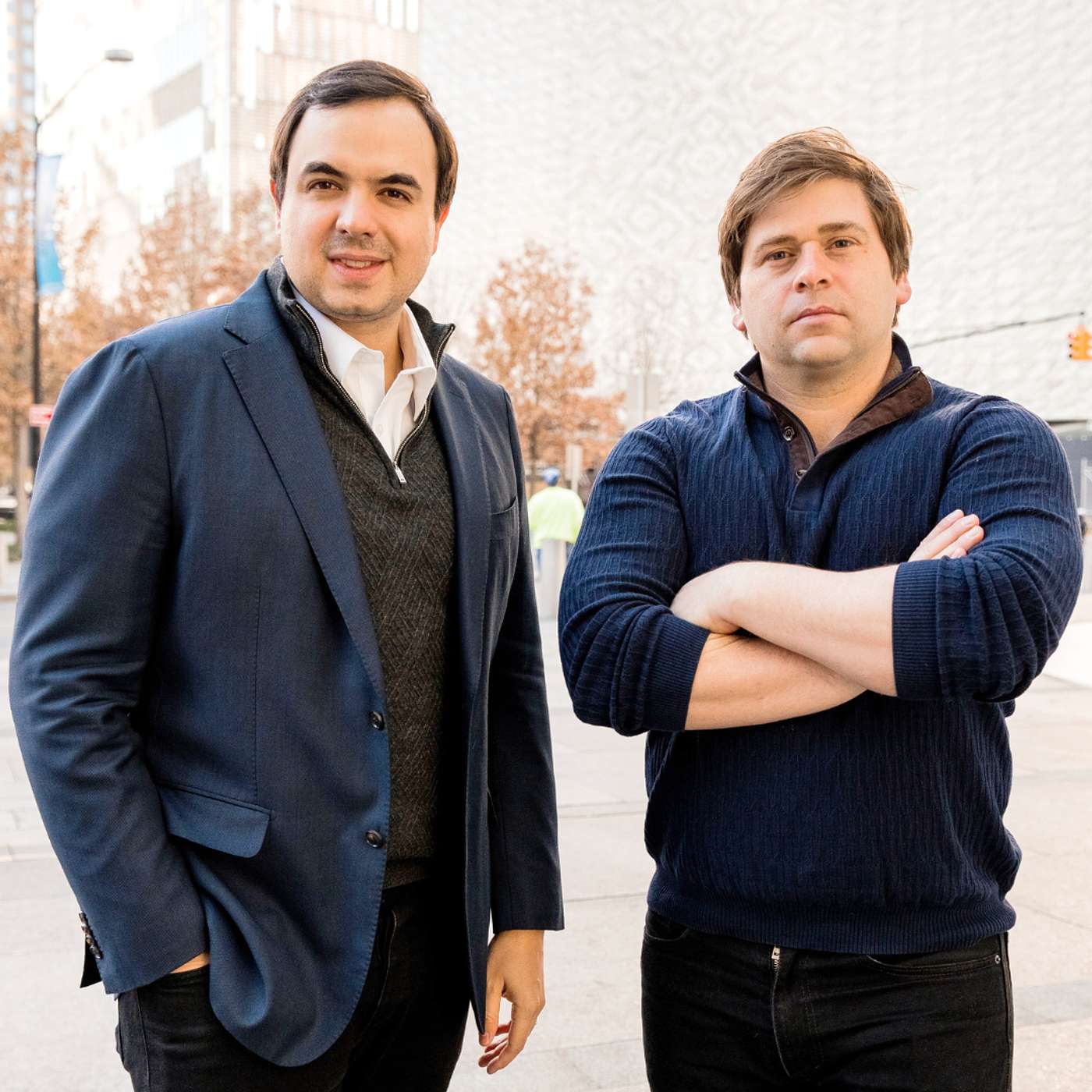
Loading summary
Transcript40 lines
- [00:00]
Andrew Endicott
Starting a company and fundraising for the first times in 2023, 2020, it was harder than if you were doing it in 2019. And I think this, these alums of these fintech families, these dynasties, I think that they've been on the inside, they see how sausage is made and it's not always pretty and you've got to chew a little glass to build something and you're going to encounter hard times.
- [00:20]
Miguel Almasa
It's so interesting because one of the co founders of PayPal was Max Lefgin, right? While at PayPal, he pioneered some of the anti fraud methods that we still use today. And then he goes on to build Affirm. And guess what? Affirm has spun out. Some of the Affirm employees have built some of the leading anti fraud companies today.
- [00:55]
Podcast Host
Hello everyone and welcome to Fintech Leaders coming to you. You from New York City. I'm your host Miguel Almasa and I'm a co founder of Gilgamesh Ventures, a venture capital fund that backs early stage fintech entrepreneurs in the US and Latin America. If you enjoyed this conversation, I invite you to leave a review on Apple Podcast or Spotify so more people can learn about Fintech Leaders. In this episode, I sit down with Andrew Endicott, who's my co founder at Gilgamesh Ventures and also previously built Petal, a New York fintech company. Andrew and I discussed a research report we recently published in collaboration with the Wharton School of Business. We examined the incredible impact that 15 leading fintech companies are having on the broader fintech ecosystem by helping train the next generation of foundation founders in fintech and tech in the Americas. Interestingly, we found that these 15 companies have spawned almost 2,600 founders in the Americas, 12% of which left to build fintech companies, while others are building in AI, SaaS, health tech and beyond. The founders building in FinTech have raised $4.3 billion collectively, with Square, Zillow and SoFi alumni representing 60% of this total product and engineering leaders represent 50% of all FinTech founders and 48% of the founders we studied launched their fintech companies in 2022 and 2023. For more details please visit our website or the Fintech Leaders newsletter.
- [02:47]
Miguel Almasa
What are the best companies in fintech doing when it comes to producing new founders out of their employee base? And I think you would agree that when we started doing this, both of us had a strong suspicion that there's more PayPal mafias being created. And this data kind of confirms. I don't know if you have any initial reactions about what we started to do.
- [03:17]
Andrew Endicott
Yeah, I think that the just stepping back, I think you and I, but myself in particular, I've wanted to do this for a long time to look at kind of the organizations and the things that create leaders in fintech. These things just show up in so many places, whether it's sports or music. In sports you've got the, in college football you've got the University of Alabama which has created almost 30 head coaches. In D1 football and music you've got these bands that just lead to other bands being created. And so I find it fascinating these things exist and it's very clear, just even superficially this exists in fintech. Everybody's familiar with the PayPal mafia or at least everybody in our world and the alums of that world organization just having such a huge impact on fintech. Yeah, it's the doing this research with Kirsty, Chris and Josh and and Dave from Wharton was really exciting and I think the takeaways are fascinating. We've identified companies that really have defined a lot of fintech through the people that have almost graduated from them and the implications are really big. Yeah.
- [04:30]
Miguel Almasa
And just for everyone to know, we started by looking at a big sample of companies. I believe we first started with companies that had reached, that had crossed over $250 million in revenue. And then from then on we started reducing it and we narrowed it down to 15 companies.
- [04:53]
Andrew Endicott
Right.
- [04:53]
Miguel Almasa
And I'll actually, I'll list them out very quickly. We have Mercado Libre, Zillow, Credit Karma, Carta, Venmo, Square Stripe, Sofi, Gusto, Affirm, Creditas, Nubank, Robinhood, Rappi and Brex. Obviously pretty meaningful companies. And I think we can start by talking about just the scale of the number of founders coming out of these companies. Just in the Americas alone, we narrowed down our focus on founders are building in the Americas, which essentially means North America and South America or mainly the US and Latin America, sorry, Canada, but it's 2600 founders. And the interesting part is that it's not that all these founders have left this fintech companies to build in fintech. Right. A good number of them in fact the majority of are building in other industries. Right. But you know, about 300 of them are building in fintech. And that's what we want to zoom in on. I don't know if we want to start talking about the momentum. Right. And what I mean by that is in the last two years, so 2022 and 2023, we saw 50% of these fintech founders leave this company and start to build their own. From your point of view, Andrew, what is driving that momentum? People have been building fintech companies for a while. What was it that in 2022 and 2023 you saw this surge of founders leave to build specifically in fintech?
- [06:37]
Andrew Endicott
Yeah. What is. Albert Einstein said the most powerful force in the universe is compound interest. I think that's what we're seeing. I think you're seeing a human capital snowball effect where you can draw the line on where fintech kind of began, at least in its current kind of era. And I think a lot of it probably really started after the financial Crisis and the 2000 teens, which a lot of the companies in the sample were looking at, started around then. And it takes time. I think leaders are made, not born, in my opinion. And the. You had this period from 2010 to 2020, roughly speaking, where you just had an amazing cultivation of talent and leadership and knowledge and expertise of people at a wide variety of companies. But there's some major trends in the data that we've looked at, but that has really matured now, like you said, it's beginning. I don't know if we know if it's peaked, but it is. Compared to the past, it's at its highest level. 2023 was the biggest kind of class of alums of the fintech families that we analyze. And I think it really has to do with just this continued maturity of the human capital base of fintech. You have a lot of people, a lot more than you used to have, who understand how to build companies, understand how to build fintech companies with the operational, the regulatory, the technological complexity that the category has and they've been studying under the great people like Max Levchin and Mike Cagney and others, the trailblazers. And the trailblazers have now taught the future trailblazers, which are now at the very top of their game. So I think that's what's happening. I think it's going to. There's a chance that this continues to accelerate.
- [08:29]
Miguel Almasa
And by the way, you and I see this in our day to day as, as venture capitalists, as investors, I think if we think of the last 12 companies we've invested in, probably 11 out of 12 or maybe 12 out of 12 were started by insiders, meaning people coming out of successful fintech companies to build and solve a problem that they encountered in their last company. Right. So we're seeing this. I think there's a lot of that. There might be something that we also talked about and I suspect it might be true. There might be a little bit of the effect of layoffs forcing people to think hard about whether they want to go back to another big company or, or just this is the forcing function that's leading them to go out and build. I think 2022 and 2023 were also some of the biggest years when starting.
- [09:30]
Andrew Endicott
A company and fundraising for the first times in 2023, 2020, it was harder than if you were doing it in 2019. And I think this these alums of these fintech families, these dynasties, I think that they've been on the inside, they see how sausage is made and it's not always pretty and you've got a too little glass to build something and you're going to encounter hard times.
- [09:50]
Miguel Almasa
It's so interesting because one of the co founders of PayPal was Max Levchin, right? While at PayPal, he pioneered some of the anti fraud methods that we still use today. And then he goes on to build a firm and guess what? Affirm has spun out. Some of the Affirm employees have built some of the leading anti fraud companies today.
- [10:18]
Andrew Endicott
Foreign.
- [10:25]
Podcast Host
And welcome to Fintech Leaders coming to you from New York City. I'm your host Miguel Almasa and I'm a co founder of Gilgamesh Ventures, a venture capital fund that backs early stage fintech entrepreneurs in the US And Latin America. If you enjoyed this conversation, I invite you to leave a review on Apple Podcasts or Spotify so more people can learn about Fintech Leaders. In this episode, I sit down with Andrew Endicott, who's my co founder at Gilgamesh Ventures and also previously built Petal, a New York fintech company. Andrew and I discussed a research report we recently published in collaboration with the Wharton School of Business. We examined the incredible impact that 15 leading fintech companies are having on the broader fintech ecosystem by helping train the next generation of founders in fintech and tech in the Americas. Interestingly, we found that these 15 companies have spawned almost 2,600 founders in the Americas, 12% of which left to build fintech companies, while others are building in AI, SaaS, health tech and beyond. The founders building in FinTech have raised $4.3 billion collectively, with Square, Zillow and SoFi alumni representing 60% of this total. Product and engineering leaders represent 50% of all FinTech founders, and 48% of the founders we studied launched their FinTech companies in 2022 and 2020 23. For more details, please visit our website or the Fintech Leaders newsletter.
- [12:16]
Miguel Almasa
What are the best companies in fintech doing when it comes to producing new founders out of their employee base. And I think you would agree that when we started doing this, both of us had a strong suspicion that there's more PayPal mafias being created. And this data kind of confirms. I don't know if you have any initial reactions about what we started to do.
- [12:47]
Andrew Endicott
Yeah, I think that the. Just stepping back, the. I think you and I, but myself in particular, I've wanted to do this for a long time to look at kind of the organizations and the things that create leaders in. In fintech, these things just show up in so many places, whether it's sports or music and sports, you've got the. In college football, you've got the University of Alabama which has created almost 30 head coaches. In D1 football and music, you've got these bands that just lead to other bands being created. And so I find it fascinating these things exist and it's very clear, just even superficially, this exists in fintech. Everybody's familiar with the PayPal mafia, or at least everybody in our world and the alums of that organization just having such a huge impact on fintech. Yeah, it's the. Doing this research with Kirsty, Chris and Josh and Dave from Wharton was really exciting and I think the takeaways are fascinating. We've identified companies that really have defined a lot of fintech through the people that have almost graduated from them. And the implications are really big. Yeah.
- [13:59]
Miguel Almasa
And just for everyone to know, we started by looking at a big sample of companies. I believe we first started with companies that had reached. That had crossed over $250 million in revenue. And then from then on we started reducing it and we narrow it down to 15 companies. Right. And I'll actually, I'll list them out very quickly. We have Mercado Libre, Zillow, Credit Karma, Carta, Venmo, Square Stripe, Sofi, Gusto, Affirm, Creditas, Nubank, Robinhood, Rappi and Brex. Obviously pretty meaningful companies. And I think we can start by, by talking about just the scale of the number of founders coming out of these companies. Just in the Americas alone, we narrowed down our focus on founders that are building in the Americas, which essentially means North America and South America or mainly the US and Latin America, sorry, Canada, but it's 2,600 founders. And the interesting part is that it's not that all these founders have left these fintech companies to build in fintech. Right. A good number of them, in fact, the majority are building in other industries. Right. But you know, about 300 of them are building in fintech and that's what we want to zoom in on. I don't know if we want to start talking about the momentum.
- [15:33]
Andrew Endicott
Right.
- [15:34]
Miguel Almasa
And what I mean by that is in the last two years, so 2022 and 2023, we saw 50% of these fintech founders leave this company, start to build their own. From your point of view, Andrew, what is driving that momentum? People have been building fintech companies for a while. What was it that in 2022 and 2023 you saw this surge of founders leave to build specifically in fintech?
- [16:06]
Andrew Endicott
Yeah. What has Albert Einstein said the most powerful force in the universe is compound interest? I think that's what we're seeing. I think you're seeing a human capital snowball effect where you can draw the line on where fintech kind of began, at least in its current kind of era. And I think a lot of it probably really started after the financial crisis in the 2000 teens, which a lot of the companies in the sample were looking at, started around then. And it takes time. I think leaders are made, not born in my opinion. And the you had this period from 2010 to 2020, roughly speaking, where you just had amazing cultivation of talent and leadership and knowledge and expertise of people at a wide variety of companies. But there's some major trends in the data that we've looked at, but that has really matured now like you said, it's beginning. I don't know if we know if it's peaked, but it is. We're compared to the past. It's at its highest level. 2023 was the biggest kind of class of alums of the fintech families that we analyze. And I think it really has to do with just this continued maturity of the human capital base of fintech. You have a lot of people, a lot more than you used to have, who understand how to build companies, understand how to build fintech companies with the operational, the regulatory, the technological complexity that the category has. And they've been studying under great people like Max Levchin and Mike Cagney and others. The trailblazers and the trailblazers have now taught the future trailblazers, which are now at the very top of their game. So I think that's what's happening. I think it's going to. There's a chance that this continues to accelerate.
- [17:58]
Miguel Almasa
And by the way, you and I see this in our day to day as venture capitalists, as investors, I think if we think of the last 12 companies we've invested in probably 11 out of 12 or maybe 12 out of 12 were started by insiders, meaning people coming out of successful fintech companies to build and solve a problem that they encountered in their last company. Right. So we're seeing this. I think there's a lot of that. There might be something that we also talked about and, and I, I suspect it might be true. There might be a little bit of the effect of layoffs forcing people to think hard about whether they want to go back to another big company or just this is the forcing function that's leading them to go out and build. I think 2022 and 2023 were also some of the biggest years when it comes to layoffs, unfortunately. So do you think this plays a big role?
- [19:03]
Andrew Endicott
Yeah, the points in time where people start companies, I think are. That's probably a whole other topic, like what life events need to occur to unlock that next step. But one thing is to be freed up to do it. So I think the. There, there was some, some kind of dynamic where a lot of people now had, were able to have the freedom to think about what's next. I think, personally, I think a lot of. There was some of it also on the flip side, where companies did well enough during some of these boom times to get some liquidity through IPOs and other things like that to where people felt they had the financial security to start a company, which you can't deny that is helpful as you're thinking about going out and taking risk. To me, the biggest thing with the, the timing is just the underscores a lot of resilience. The. I think starting a company and fundraising for the first times in 2023, 2020, it was harder than if you were doing it in 2019. And I think this, the, these alums of these fintech families, these dynasties, I think that they've been on the inside. They see how sausage is made and it's not always pretty and you've got to chew a little glass to build something and you're going to encounter hard times. And so there wasn't as much fear, I think, going out and striking out on your own to build something. Yeah, it's really interesting kind of the timing. I think part of it also is, I think it's. I think we'll see what happens in the entirety of this year because I think that you should see the same thing. It really could just be this continued kind of compounding effect that I mentioned early on, but we'll see.
- [20:35]
Miguel Almasa
Yeah. And by the way, on that same point, they're getting funded, they're getting, they're getting their companies capitalized. Right. Just if you look at the entire sample of almost 300 fintech founders as a whole, they've raised a combined $4.3 billion in equity alone. We're not even talking about crazy. Companies are giving out credit. So equity alone, 4.3 billion. Interestingly, a big chunk of that is coming from the alums of Square, Zillow and Sofi. And Sofi. Of course a lot of that can be attributed to our good friend Mike Cagney who left so and went on to start figure. But just, you know, I think that's also an important point. There's people, not only have they learned how to build a company, not only have they learned how to build a company in fintech, but they have the credibility to go out and raise from the markets and de risk their venture from the beginning.
- [21:46]
Andrew Endicott
Yeah, it's not, I think it's credibility. I think part of it is also knowledge and networks. If you look at, you look at Square for instance, which like I said, almost a billion dollars coming from Square in capital. If you look at the list of who's on there, I think one of them Persona and Persona very much a core B2B fintech business around identity and the like. To build that business. It's a lot easier if you've been working in it. The problems, the people and you've got a Rolodex of people that you can go out and sell to. And so I think that we see that in a couple other places in the list. I think if you look at a firm, similar things. Unit 21 CenterLink. So we're seeing a lot of B2B businesses I think come even from like these large consumer business. Square and Affirm. Square's not totally consumer but it's got major consumer components. A firm definitely is a consumer brand but nonetheless it's leading to the development of these B2B businesses and it's because the people in these companies understand the problems that they're facing.
- [22:48]
Miguel Almasa
Can I say something about Affirm? It's so interesting because one of the co founders of PayPal was Max Levchin, right. While at PayPal he pioneered him and the team of course some of the anti fraud methods that we still use today. And then he goes on to build a firm and guess what? A firm has spun out. Some of the upperm employees have built some of the leading anti fraud companies today. You just mentioned them. Unit 21 centling there might be more that we're not listing here. So I find it fascinating how it all connects.
- [23:28]
Andrew Endicott
Yeah and it's not just in the US too. I think you can see these dynamics outside the US too. I think if you look at Mercado Libre and the alums of it. Mercado Libre massive consumer brand Atlanta America. Right. Like it's the Amazon if you will. It's got huge fintech components too. With Mercado Pago. What's one of the most prominent companies come out of there? Palmillo. It's a B2B business and selling to to. To fintechs and financial institutions the issue processing and so you've got the. The same dynamics at play. Yeah. I think the knowledge and the expertise created within these companies some of which is drives their success like you said the figuring out fraud Paypal and a firm hugely important that the people learn it and they go out and apply it in different ways. Maybe not for consumer brand but you apply it to. To make it available to everybody else and the like. And yeah it's absolutely interesting goes back to the point you made earlier is that the power of insiders is real that you just. You have so much more nuance and depth to your understanding and your networks to be able to build effectively when you come from the inside of one of these big companies that have done challenging big things that become increasingly difficult with scale.
- [24:44]
Miguel Almasa
Can I ask you something? Wearing your former fintech founder hat having managed big teams in the past at battle I found it interesting that 50% of the founders in our data set where enrolls in product and engineering before leaving to start their own companies. Was that surprising to you to see specifically those organizations being responsible for half of the founders in our data set?
- [25:21]
Andrew Endicott
It's not I think the most fintech founders operators that you talk to there's a lot of frustration with the kind of the legacy infrastructure providers in finance and fintech. And so if you're a product engineering specialist at one of these companies you're building new stuff but you're often having to work with other vendors or infrastructure providers that are so behind you and it is in particularly if you have that skill set it's almost mind boggling kind of the scale of the opportunity that there's these incredibly valuable businesses moving money and doing these critical functions that you know when in their technology is just very antiquated. You had a similar experience I think when you were in banking as well seeing some of the software that was used. But I think the the people that are doing the Hand to hand combat with these infrastructure providers daily, which is your product and engineering folks. It's just seared into their minds and their souls that somebody's got to fix this. And I think that drives a lot of them to go start companies. I think it's just so obvious that there's an entire new generation of companies that are going to provide the foundations of the financial system. These people want to go out and do it and I think they're pretty excited about it too. Just given that they, they've. There's a lot of frustration that you have to deal with having to work with technology that's not very good.
- [26:57]
Miguel Almasa
And there's also an argument that for, at least for product roles, you're like a mini CEO for your domain. Right. So it can be really good training.
- [27:07]
Andrew Endicott
Totally. You're in the, you're in the middle of having to, to deal with a lot of different. One of the biggest ones in Fintech that some people talk about but it's not talked about a ton is you have to overlay a couple additional challenges that in a lot of businesses like a pure software or kind of consumer, most businesses you don't have to deal with. So regulation is a big part of it. A product leader almost in most parts of Fintech is going to have a pretty good understanding of regulation. A product leader is also going to have a pretty good understanding of risk. And these people figure out that they have real expertise that they've developed from having to make the trade off decisions for the product roadmap and things like that. That's really good training. You're aware that you've got a special skill set that puts you in a good position to either be the CEO or the technical leader of another company and to go on and do that and you know that you're going to be much more, much better positioned to do it than somebody who didn't come from within this world. So I think absolutely it, it makes sense that you've got a disproportionate number of people with technical backgrounds starting companies. Even though a lot of the challenges in Fintech are non technical issues, there's a significant enough kind of burden to lift on those technical issues, particularly when you get to infrastructure and a lot of these B2B that it's very sensible that, that you've got this disproportionate share of people creating the companies.
- [28:39]
Miguel Almasa
I want to go back to talk about something I, I mentioned at the beginning and that's the fact that a lot of the People are leaving this FinTech companies, this 15 companies in our data set, they're actually not starting fintech companies. Right. They in fact, and this is very surprising to me, at least this is not what I expected. It makes sense after you read it, but 88% of founders started non fintech companies.
- [29:12]
Andrew Endicott
Right.
- [29:12]
Miguel Almasa
Let's focus first on the 12%, the ones that did start fintech companies, which is almost 300 people. It wasn't evenly distributed across companies.
- [29:23]
Andrew Endicott
Right.
- [29:23]
Miguel Almasa
So the youngest is Brex. They've built an amazing brand and grew extremely fast. I think it was founded in 2017 and they already are starting to create their own fintech family. Right. Their own group of founders and actually About a quarter 23% of founders coming out of Brex are building in fintech specifically. And it was carta affirming and Venmo have also much higher than average levels. Right. But the reality is that fintech employees, fintech operators, they're experiencing a lot of challenges that have nothing to do with the industry. Right. And they're going out to, to build companies that are, I don't know, develop developer tools.
- [30:16]
Andrew Endicott
Right.
- [30:16]
Miguel Almasa
Or direct to consumer companies. Right. So I thought there's a very interesting stat. Right. It just also shows, I think for anyone thinking of joining a fintech company, it's not an industry where you get pigeonholed. Right. You actually build some amazing skill sets that you can take to multiple different industries.
- [30:39]
Andrew Endicott
Right.
- [30:39]
Miguel Almasa
I don't know if what was your reaction to this specifically?
- [30:42]
Andrew Endicott
Yeah, so finance, just to begin with, finance is what, like a quarter, quarter of the world economy? So it makes sense that it's gonna, it's gonna have some pretty broad themes that cut across it just because it's so big. But you're totally right there, there's a ton of being at a fast growing company, period. Creates and all these companies are fast growing companies or at one time works.